
- Home
- »
- Consumer F&B
- »
-
Matcha Tea Market Size, Share & Trends Report, 2026-2033GVR Report cover

Matcha Tea Market (2026 - 2033)
Size, Share & Trends Analysis Report By Nature (Organic, Conventional), By Product (Powder, Ready-to-drink Beverage, Instant Premixes), By Type (Unflavored/Regular, Flavored), By Price Range, By Distribution Channel, By Region, And Segment Forecasts
Market Size, 2025
$965.8MMarket Estimate, 2026
$1,033.5MMarket Forecast, 2033
$1,748.2MCAGR, 2026–2033
7.8%Matcha Tea Market Summary
The global matcha tea market size was valued at USD 965.8 million in 2025 and is projected to grow from USD 1,033.5 million in 2026 to USD 1,748.2 million by 2033, at a CAGR of 7.8% from 2026 to 2033. Asia Pacific dominated the matcha tea market with the largest revenue share of 51.2% in 2025. The market is expanding due to increasing consumer demand for health-conscious products, driven by matcha’s antioxidant and energy-boosting properties.
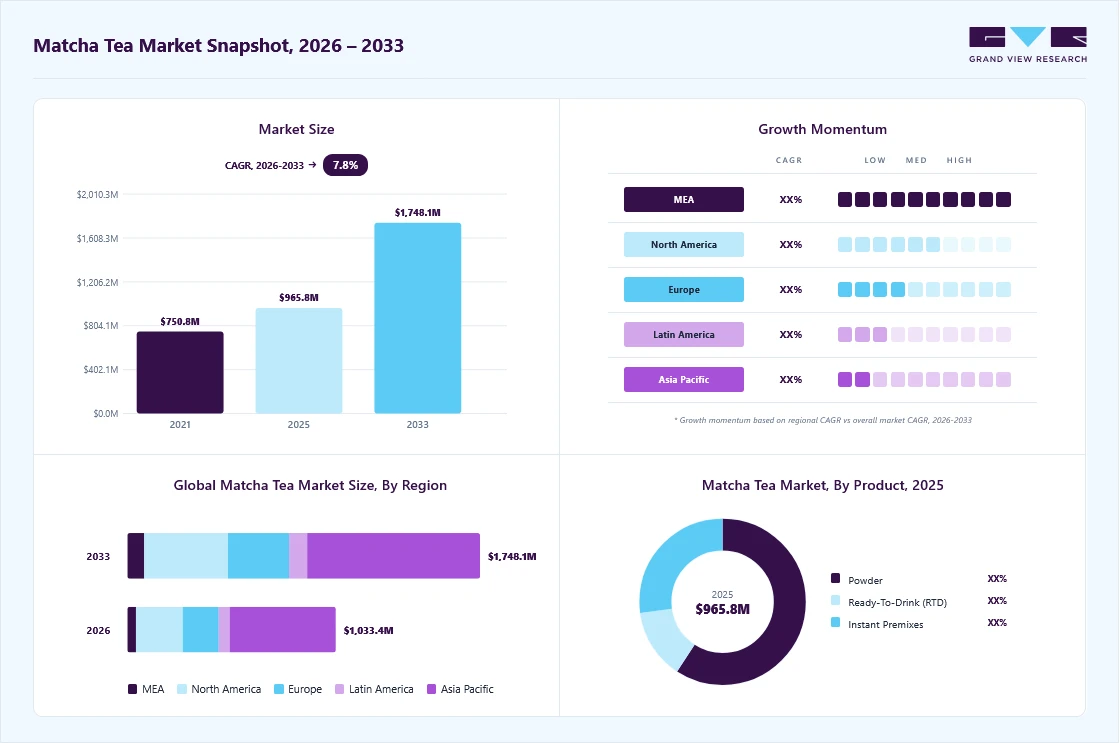 Source: Grand View Research, IR Documents, Primary Interviews, Paid DatabasesTo learn more about this report,
 Download Free Sample Report
 Key Market Trends & Insights
- By nature: Conventional matcha tea segment held the largest market share of 58.6% in 2025.
- By product: Powder segment held the largest market share of 59.1% in 2025.
- By type: Unflavoured/regular segment held the largest market share of 63.6% in 2025.
Regional Highlights
- Largest regional market: Asia Pacific (51.2% revenue share, 2025)
- Fastest-growing regional market: Middle East & Africa (highest CAGR, 2026-2033)
- By country: China held the largest market share in 2025
Market Size & Forecast
- Market size in 2025: USD 965.8 Million
- Estimated market size in 2026: USD 1,033.5 Million
- Projected market size by 2033: USD 1,748.2 Million
- CAGR (2026-2033): 7.8%
Three ways to get this report
Buy it, customize it, or ask a question.Ask an Analyst
Analyst response in 1 business day
- AccessReport author, directly
- Reply timeWithin 1 working day
- No sales callDirect answer only
- FormatEmail reply
- CostFree, no cost
Get the Full Report
What the study covers
- FormatsPDF · Excel · Dashboard
- Timeline2026–2033 annual, 2025 base
- Coverage20+ countries, 5 regions
- Companies10+ key players profiled
Customize the Report
20% free customization
- IncludeCountries, segments, points
- TailorTo your product definition
- ExtendDeeper competitor detail
- OrA fully bespoke study
- Turnaround5–10 working days
The growing interest in organic, natural, and plant-based foods, combined with rising awareness of Japanese culture and wellness trends, further accelerates market growth. The market for functional drinks, including matcha tea, is experiencing strong growth due to shifting consumer preferences toward healthier, more natural beverages. As people become increasingly aware of the importance of nutrition and wellness, they are actively seeking drinks that offer additional benefits beyond simple hydration. Matcha tea, known for its high antioxidant content, natural energy boost, and stress-relieving properties, has gained significant popularity among health-conscious consumers.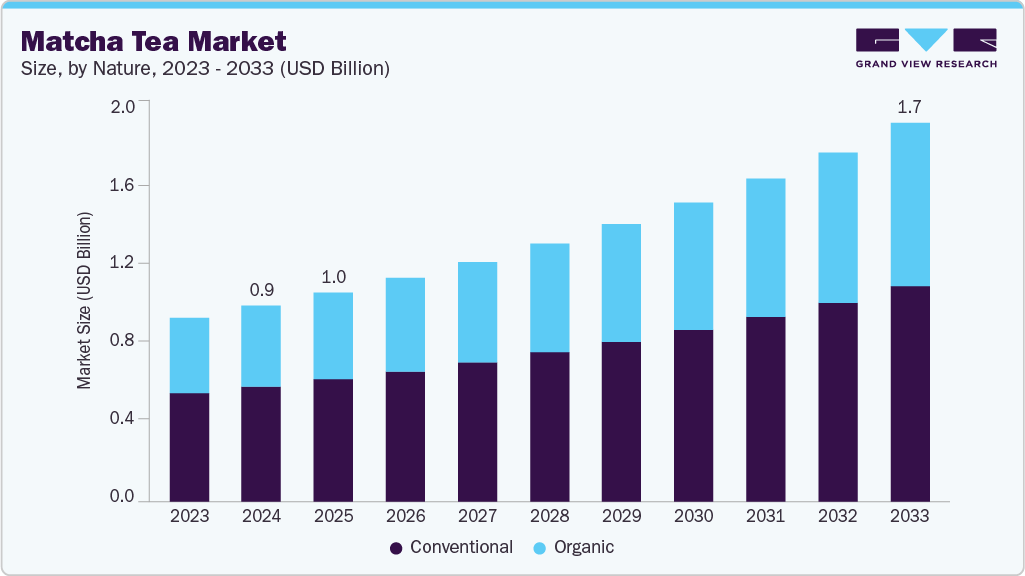 To learn more about this report, Download Free Sample Report
 One key driver behind this trend in the matcha tea industry is the growing demand for natural energy boosters. Many consumers are turning away from high-caffeine, sugar-laden energy drinks due to concerns about side effects, such as energy crashes and jitters. In contrast, matcha provides a sustained energy release due to its combination of caffeine and L-theanine, which simultaneously enhances focus and relaxation. This makes it an appealing choice for students, professionals, and athletes looking for a clean, plant-based energy source.
The rise of functional and adaptogenic beverages has also played a crucial role in the growth of matcha. Consumers now prioritize drinks that support immune health, mental clarity, digestion, and metabolism. Matcha tea is rich in catechins and polyphenols, which provide anti-inflammatory and metabolism-boosting benefits. Additionally, brands are introducing matcha-infused blends with other superfoods, such as turmeric, collagen, and ashwagandha, further expanding its appeal.
Another major factor driving demand in the matcha tea market is the increasing preference for plant-based and clean-label products. Consumers are actively seeking organic, sustainably sourced, and additive-free beverages. Since matcha tea is naturally vegan, gluten-free, and free from artificial preservatives, it aligns perfectly with these expectations. Consumers are also showing interest in ethically sourced matcha, preferring brands that emphasize fair trade and eco-friendly packaging.
Product innovation is significantly boosting the growth of the market for matcha tea by introducing diverse flavors and convenient formats that cater to evolving consumer preferences. Manufacturers are expanding their offerings beyond traditional matcha to include ready-to-drink (RTD) options and unique flavor combinations.
Format matters because it makes the functional benefits of matcha more easily accessible. For a busy person, mixing a sachet or grabbing an RTD is far more likely than starting a full tea ritual with a bowl and whisk. Thus, format innovation serves adoption, not just packaging.
While traditional unflavored matcha remains popular among health-conscious consumers, flavored variations are attracting new demographics. Some of the most sought-after flavors include vanilla matcha, which adds a creamy, aromatic twist; chocolate matcha, which blends cacao with matcha’s natural bitterness; and berry-infused matcha, incorporating fruits like blueberry, raspberry, and acai for a sweet-tart balance. Additionally, coconut matcha is gaining traction among dairy-free consumers, while spiced matcha variations with turmeric, ginger, and cinnamon appeal to those seeking functional wellness benefits. Honey and caramel matcha are also becoming popular for their naturally sweetened profiles. In December 2024, Zarraffa’s Coffee introduced a new matcha range, featuring a variety of matcha-infused beverages to cater to the growing demand for green tea flavors. Their lineup includes matcha fusion, iced matcha fusion, and matcha latte, offering a balance of smooth, earthy matcha with creamy textures. This launch reflects the rising popularity of matcha, driven by its health benefits and unique taste.
Market Dynamics
The global matcha tea market is experiencing sustained expansion as consumers increasingly seek natural beverages associated with wellness, clean-label ingredients, and functional nutrition. Matcha, a finely ground powder made from specially cultivated green tea leaves, is widely incorporated into beverages, bakery products, confectionery, dietary supplements, and ready-to-drink formulations. Growing awareness of antioxidant-rich foods, combined with rising interest in plant-based lifestyles and premium tea experiences, is supporting demand across developed and emerging markets. Continued product innovation and expanding retail availability are expected to contribute to long-term market growth.
Demand for matcha tea is benefiting from changing dietary habits and growing interest in health-oriented products. Consumers are actively replacing sugar-laden soft drinks with beverages perceived to offer nutritional value and natural ingredients. Matcha contains catechins, amino acids, and naturally occurring caffeine, making it an attractive option for individuals seeking sustained energy and antioxidant intake. The popularity of wellness routines, fitness culture, and preventive nutrition has encouraged manufacturers to introduce matcha-infused drinks, snacks, and supplements, broadening the product’s appeal across multiple consumer groups.
Despite favorable demand trends, the market faces challenges related to pricing and supply availability. Authentic ceremonial and high-grade matcha require specialized cultivation methods, shade-growing techniques, and labor-intensive processing, resulting in comparatively high production costs. Seasonal variations, limited cultivation areas, and fluctuations in agricultural yields can restrict supply and create price volatility. These factors may discourage price-sensitive consumers and limit adoption in regions where conventional tea alternatives remain significantly more affordable.
Manufacturers have substantial opportunities to expand beyond traditional tea consumption by incorporating matcha into innovative food and beverage applications. Cafés, quick-service restaurants, bakeries, and dessert brands increasingly feature matcha-flavored beverages, ice creams, chocolates, pastries, and smoothies to attract younger consumers. Growth in e-commerce platforms and premium packaged goods further enables brands to reach international markets while educating consumers about preparation methods and quality grades. The introduction of convenient ready-to-drink and instant formats is expected to strengthen future market penetration.
Analyst Perspective
The matcha tea market is positioned at the convergence of growing consumer interest in functional beverages, increasing preference for natural ingredients, and expanding adoption of wellness-focused lifestyles. Rising awareness of matcha’s antioxidant content, perceived energy-enhancing properties, and versatility across beverages, food products, and dietary supplements continues to broaden its appeal among health-conscious consumers. The key competitive advantage will belong to brands that secure premium-quality sourcing, maintain product authenticity, and diversify applications beyond traditional tea consumption into ready-to-drink products, specialty foods, and nutraceutical formulations. As demand for clean-label and plant-based products accelerates globally, companies capable of balancing quality, supply chain transparency, and product innovation are expected to capture the greatest long-term value.
Consumer Insights for Matcha Tea Market
Matcha tea has witnessed a significant rise in popularity among consumers in recent years, both in its traditional form and as a flavored beverage. This growing demand is largely driven by its numerous health benefits, unique flavor profile, and increasing visibility in the wellness and social media space.
 To learn more about this report, Download Free Sample Report
 Matcha is particularly rich in antioxidants, such as epigallocatechin gallate (EGCG), which supports cardiovascular health, and L-theanine, an amino acid known for promoting relaxation and enhancing mental clarity. Unlike coffee, matcha provides a sustained energy boost without causing jitters, making it an attractive alternative for health-conscious individuals seeking both functional benefits and enjoyable flavors.
Nature Insights
Based on nature, the conventional segment led the market with the largest revenue share of 58.6% in 2025. The consumer demand for conventional matcha tea is growing due to factors such as affordability, a stronger flavor profile, and greater versatility. Conventional matcha is more cost-effective compared to organic variants, making it a more accessible and economical option for regular consumption. Its rich flavor appeals to consumers who prefer a traditional tea experience, while its ability to blend seamlessly into various drinks enhances its overall popularity. The growing popularity of tea-based beverages and innovations in matcha tea offerings at the global level further drive the product demand. According to a report published by the Food and Agriculture Organization of the United Nations, global tea consumption increased by approximately 2.0% in 2022 compared to 2021. In addition, over the last decade, the world tea intake increased annually by 3.3%.
 To learn more about this report, Download Free Sample Report
 The organic segment is projected to grow at the fastest CAGR of 8.4% from 2026 to 2033. Organic matcha tea is a finely ground powder made from shade-grown green tea leaves cultivated without synthetic fertilizers, pesticides, or chemicals. Unlike regular green tea, matcha uses the entire leaf, offering higher levels of antioxidants, vitamins, and amino acids, including L-theanine. Its organic certification ensures eco-friendly farming practices, making it a healthier and more sustainable beverage choice. Furthermore, rising global health awareness and growing interest in natural, antioxidant-rich beverages are driving demand for these products. Consumers value its energy-boosting and stress-reducing properties, which are derived from caffeine and L-theanine. Increasing health consciousness is also encouraging people to replace sugary and processed beverages with natural and functional options, such as organic matcha. The rise of vegan, clean-label, and plant-based lifestyles has further made organic matcha a preferred choice among consumers worldwide.
Product Insights
By product, the powder segment led the market with the largest revenue share of 59.1% in 2025. Powdered matcha tea offers numerous health benefits, including a high antioxidant content, improved metabolism, and enhanced mental focus, due to the combination of caffeine and L-theanine. Since the whole tea leaf is consumed in powdered form, it provides more nutrients, including vitamins A, C, and E, making it a powerful superfood for modern health-conscious consumers.
 To learn more about this report, Download Free Sample Report
 Powdered matcha is highly versatile and is widely used in smoothies, bakery products, confectionery, ice creams, and dairy alternatives such as matcha-flavored yogurt and lattes. In the foodservice sector, it has become a popular ingredient in cafés and restaurants, appealing to consumers seeking both taste and wellness in their beverages and desserts. The powdered form also allows easy blending in both hot and cold recipes, making it suitable for use in ready-to-drink formats, dietary supplements, and energy mixes.
The ready-to-drink (RTD) segment is expected to register faster growth during the forecast period, with a CAGR of 9.7% from 2026 to 2033. Ready-to-drink (RTD) matcha tea is gaining strong traction worldwide due to its convenience, functional health benefits, and alignment with the growing demand for natural and clean-label beverages. It offers the same antioxidant-rich, energy-boosting properties as traditional matcha, but in an easily consumable form, catering to busy, health-conscious consumers. The combination of caffeine and L-theanine in RTD matcha provides sustained energy and focus, making it a preferred alternative to coffee and sugary soft drinks.
Type Insights
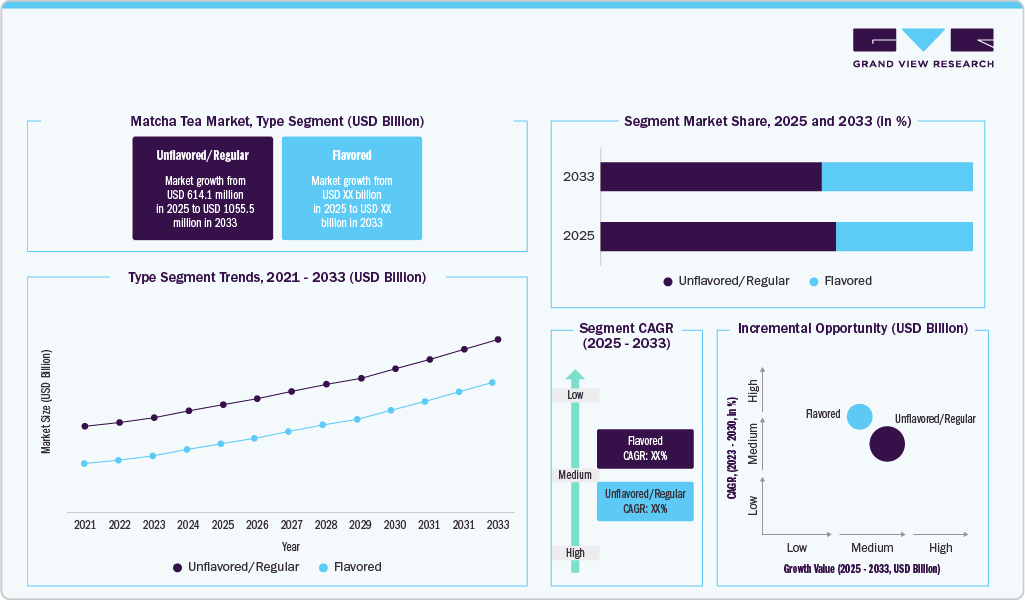
The unflavored/regular accounted for the highest share, at 63.6%, of the global revenue in 2025, driven by rising consumer awareness of its extensive health benefits and a growing preference for natural, minimally processed products. Health-conscious consumers worldwide are turning toward clean, functional beverages that promote energy, focus, and overall well-being. Unflavored matcha, rich in antioxidants, catechins, and L-theanine, has gained popularity as a pure and nutrient-dense option that supports metabolism, mental clarity, and immunity. As global lifestyles shift toward holistic wellness, consumers are increasingly opting for unflavored matcha to experience its authentic taste and full nutritional value, free from additives or sweeteners.
 To learn more about this report, Download Free Sample Report
 The global market for flavored matcha tea is experiencing robust growth, driven by the rising consumer focus on health, wellness, and flavor innovation. Consumers worldwide are increasingly seeking beverages that combine functional health benefits with enjoyable taste profiles. While traditional matcha is valued for its rich antioxidant content, metabolism-boosting effects, and mental clarity support through L-theanine, its naturally earthy flavor can be intense for some consumers. Flavored matcha, enhanced with natural ingredients such as vanilla, honey, mint, or fruit extracts, offers a more approachable taste, expanding its appeal to a wider audience.
Price Range Insights
The mid-range matcha tea segment led the matcha tea market, with the largest revenue share of 45.9% in 2025, driven by rising consumer awareness and demand for affordable yet high-quality products. The economy segment is expanding rapidly as it offers cost-effective matcha options that make the product accessible to a wider audience. Consumers across the globe are becoming increasingly health-conscious and price-sensitive, leading to a growing preference for affordable yet nutritious options such as matcha tea.
The premium segment is expected to grow at a CAGR of 8.5% from 2026 to 2033. The premium segment’s growth is driven by the rising consumer preference for high-quality, ceremonial-grade matcha that delivers superior taste, authenticity, and health benefits. As health-conscious consumers worldwide increasingly value purity, craftsmanship, and origin, the demand for premium matcha sourced from traditional Japanese tea-growing regions such as Uji and Nishio continues to rise. This global shift toward premium and artisanal beverages aligns with broader lifestyle trends emphasizing wellness, mindfulness, and authenticity.
Distribution Channel Insights
The offline distribution channel held the largest global market share of 64.5% in 2025, driven by the strong presence of traditional retail outlets, including supermarkets, hypermarkets, health food stores, and specialty tea shops. These brick-and-mortar stores continue to play a vital role in consumer purchasing decisions, as they allow buyers to physically evaluate products, read ingredient labels, and seek guidance from in-store experts. This tangible shopping experience builds brand trust and loyalty, particularly for premium and health-focused products like matcha tea.
 To learn more about this report, Download Free Sample Report
 The online segment is expected to register faster growth during the forecast period, with a CAGR of 10.6% from 2026 to 2033. A major driver behind the success of online platforms globally is their ability to reach diverse and geographically dispersed audiences. Through social media marketing, influencer collaborations, and targeted advertising, matcha brands effectively engage with consumers, educate them on product benefits, and build strong digital communities. Online sales also enable brands to implement subscription models, personalized recommendations, and loyalty programs, which encourage repeat purchases and brand loyalty among regular matcha consumers.
Regional Insights
Asia Pacific dominated the matcha tea market with the largest revenue share of 51.2% in 2025. The demand for matcha tea in North America has been steadily rising as consumers seek healthier, natural, and more functional beverage options. The growing wellness culture in the region, driven by increasing awareness of healthy foods, antioxidant-rich ingredients, and plant-based alternatives, is further propelling market growth. Cafés and restaurants across the U.S. and Canada have introduced creative matcha-based beverages to cater to this rising demand. Millennials and Gen Z consumers are particularly drawn to matcha for its vibrant color, social media appeal, and health halo. The increasing popularity of Japanese culture and wellness rituals has also made matcha a symbol of authenticity and mindfulness.
U.S. Matcha Tea Market Trends
The matcha tea market in the U.S. held the largest share in the North America region in 2025. Demand for matcha tea is growing steadily in the U.S. as consumers increasingly prioritize health, natural ingredients, and functional beverages. Matcha is valued for its high antioxidant levels, metabolism-supporting properties, and its ability to provide calm, sustained energy without the crash associated with coffee, making it an appealing choice for wellness-focused individuals. The rising preference for clean-label beverages and nutrient-dense alternatives is encouraging more U.S. consumers to incorporate matcha into their daily routines, further supporting market expansion.
Europe Matcha Tea Market Trends
The matcha tea industry in Europe accounted for 17.3% of revenue in 2025. The increasing emphasis on clean-label and organic products is another major factor driving the market growth. Consumers are becoming more conscious of the ingredients in their beverages and are actively seeking products that are natural, minimally processed, and free of artificial additives or preservatives. This growing awareness has led to a rising preference for matcha tea made from organically grown tea leaves, cultivated without the use of pesticides or chemicals. For instance, in October 2023, Clearspring Shop Limited launched a limited-edition Organic Japanese Okumidori Matcha - Ceremonial Grade in Europe, featuring sustainably grown, natural, and minimally processed premium-quality matcha sourced from Wazuka, Uji (Kyoto), Japan.
The Germany matcha tea market accounted for the largest revenue share of 22.2% in 2025, supported by strong consumer interest in premium, natural, and functional beverages. The country has a well-established tea-drinking culture that has shifted toward healthier, antioxidant-rich alternatives such as matcha. Rising awareness of matcha’s benefits, including sustained energy, detoxification, and metabolic support, continues to fuel adoption. The expansion of specialty cafés, the growing availability of matcha-infused products, and the increasing influence of Japanese wellness trends have further strengthened market growth. Additionally, the preference for organic, clean-label, and low-sugar beverages aligns with Germany’s broader health-conscious consumer base.
Asia Pacific Matcha Tea Market Trends
The Asia-Pacific matcha tea industry accounted for the largest revenue share, at 51.2%, in 2025. The region remains the largest and most influential market for matcha tea, owing to its deep cultural roots, growing health awareness, and the rapid modernization of traditional tea consumption patterns. Matcha has evolved from a ceremonial beverage into a mainstream health and lifestyle product across countries such as Japan, China, South Korea, India, Thailand, and Australia. Consumers in the region are increasingly turning toward functional beverages that offer both taste and wellness benefits, such as high antioxidant content and metabolism-boosting properties.
 To learn more about this report, Download Free Sample Report
 Middle East and Africa Matcha Market Trends
The Middle East and Africa (MEA) matcha tea market is gaining visibility as matcha becomes more popular in cafes and specialty beverage outlets, especially across the Gulf region. In 2025, a cafe in Riyadh sold around 350 matcha cups per branch on weekends, showing the growing demand for matcha-based drinks in Saudi Arabia. Additionally, in the UAE, matcha has become more visible on café menus, with businesses offering traditional and flavored iced matcha drinks to appeal to younger consumers. These developments show that the matcha tea market is being supported by growing adoption in cafés and new matcha-based drink options.
Key Matcha Tea Company Insights
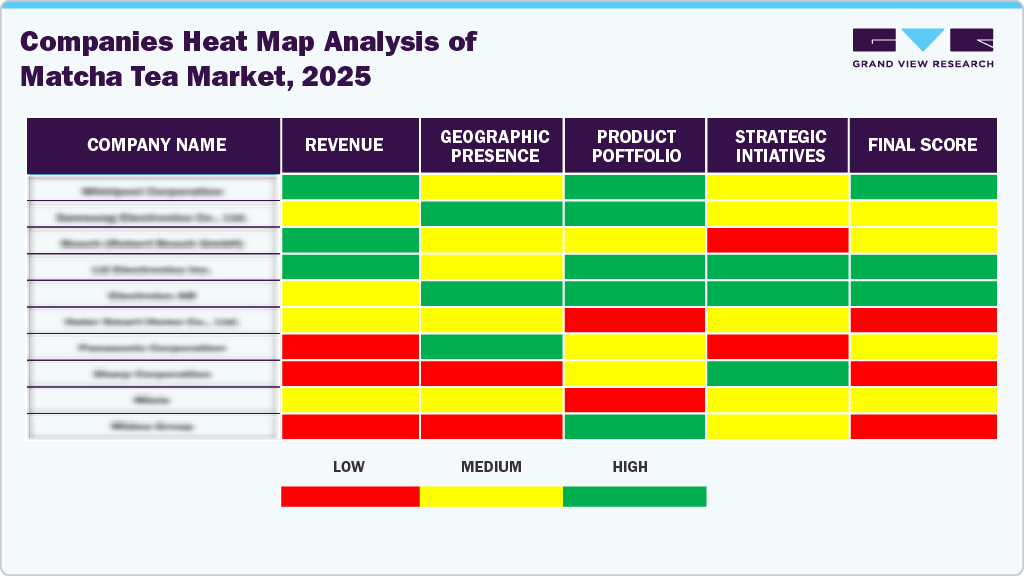
Several leading brands in the matcha tea market have recognized significant growth potential across their portfolios and are implementing targeted strategies to leverage these opportunities. Companies are emphasizing novel product formats, increased personalization, and refined marketing initiatives that align with changing consumer habits and cultural trends. By focusing on niche segments and adapting to evolving demand patterns, these players are strengthening their market footprint and enhancing their competitive position globally.
 To learn more about this report, Download Free Sample Report
  To learn more about this report, Download Free Sample Report
 Key Matcha Tea Companies
The following key companies have been profiled for this study on the matcha tea market.
-
Nestlé S.A.
-
Tata Global Beverages Ltd.
-
Lipton Teas and Infusions
-
The AOI Tea Company
-
Green Foods Corporation
-
Marukyu-Koyamaen Co. Ltd.
-
Encha
-
Tenzo Tea, Inc.
-
Aiya America Inc.
Competitive Benchmarking
Operating Strategies
Competitive Edge
Weaknesses
Established Players (Nestlé S.A., Tata Global Beverages Ltd., Lipton Teas and Infusions)
- Expand mass-market penetration through ready-to-drink (RTD) innovations, instant matcha powders, and flavored blends for mainstream consumers.
- Leverage global distribution networks and strategic retail partnerships. Invest in sustainable sourcing and large-scale certification programs.
- Massive global brand credibility, extensive supply chain infrastructure, and high consumer trust.
- Significant R&D budgets for product diversification. Ability to drive category growth through aggressive marketing and pricing power.
- Slower innovation cycles and limited agility in responding to premium, artisanal, or single-origin trends.
- Products often perceived as lower-quality or less authentic compared to heritage brands.
Emerging Players (Encha, Tenzo Tea, Inc.)
- Focus on niche health-conscious segments through organic and functional matcha offerings.
- Leverage social media marketing, influencer partnerships, and community-led engagement. Use subscription models and educational content to drive customer acquisition.
- Faster product innovation and the ability to address underserved consumer needs.
- Agile digital-first operations with personalized user experiences and responsive customer engagement.
- Limited financial resources and challenges in scaling user acquisition profitably.
- Lower consumer trust and weaker heritage credibility compared to established Japanese suppliers or legacy tea brands. Vulnerable to supply chain disruptions and quality inconsistencies.
Recent Developments
-
In October 2025, PureHealth Research announced the launch of its new matcha green tea capsules supplement, a single-ingredient formula designed to deliver the benefits of authentic Japanese matcha. The simple, convenient capsule enables health-conscious consumers to incorporate the superfood into their daily routines without the complex preparation required for traditional matcha tea.
-
In May 2025, Zenkyu Matcha, a Tokyo-based wellness brand rooted in Zen philosophy and the Japanese tea ceremony, announced its global launch. With a mission to elevate matcha from a drink to a ritual for health and mindfulness, Zenkyu Matcha offers Japan's finest ceremonial matcha, made from first-harvest Kyoto leaves, blended by Japan's top tea master, and stone-ground using traditional methods.
-
In December 2024, Zarraffa’s Coffee introduced a new matcha range in Australia, featuring a variety of matcha-infused beverages to cater to the growing demand for green tea flavors. Their lineup includes Matcha Fusion, Iced Matcha Fusion, and Matcha Latte, offering a balance of smooth, earthy matcha with creamy textures. This launch reflects the rising popularity of matcha in Australia, driven by its health benefits and unique taste.
-
In October 2024, Aiya America, a leader in premium matcha products, launched its latest innovation: Sweetened Matcha Latte Pods. These convenient pods feature a smooth, high-quality Matcha blend with rich notes of vanilla, appealing to both Matcha enthusiasts and newcomers alike.
Matcha Tea Market Report Scope
Report Attribute
Details
Market size in 2025
USD 965.8 million
Estimated market size in 2026
USD 1,033.5 million
Projected market size by 2033
USD 1,748.2 million
Growth rate
CAGR of 7.8% from 2026 to 2033
Base year for estimation
2025
Historical data
2021 - 2024
Forecast period
2026 - 2033
Quantitative units
Revenue in USD million/billion and CAGR from 2026 to 2033
Report coverage
Revenue forecast, company ranking, competitive landscape, growth factors, and trends
Segments covered
Nature, product, type, price range, distribution channel, and region
Regional scope
North America; Europe; Asia Pacific; Latin America; MEA
Country scope
U.S.; Canada; Mexico; Germany; UK; France; Italy; Spain; China; Japan; India; Australia & New Zealand; Brazil; South Africa
Key companies profiled
Nestlé S.A.; Tata Global Beverages Ltd.; Lipton Teas and Infusions; The AOI Tea Company; Green Foods Corporation; Marukyu-Koyamaen Co. Ltd.; Encha; Tenzo Tea, Inc.; Aiya America Inc.
Customization scope
Free report customization (equivalent to up to 8 analysts' working days) with purchase. Addition or alteration to country, regional & segment scope.
Pricing and purchase options
Avail customized purchase options to meet your exact research needs. Explore purchase options
Global Matcha Tea Market Report Segmentation
This report forecasts revenue growth at the global, regional & country levels and provides an analysis of the latest industry trends and opportunities in each of the sub-segments from 2021 to 2033. For this study, Grand View Research has segmented the matcha tea market report based on nature, product, type, price range, distribution channel, and region:
-
Nature Outlook (Revenue, USD Million, 2021 - 2033)
-
Organic
-
Conventional
-
-
Product Outlook (Revenue, USD Million, 2021 - 2033)
-
Powder
-
Ready-To-Drink (RTD)
-
Instant Premixes
-
-
Type Outlook (Revenue, USD Million, 2021 - 2033)
-
Unflavored/Regular
-
Flavored
-
-
Price Range Outlook (Revenue, USD Million, 2021 - 2033)
-
Economy
-
Mid-range
-
Premium
-
-
Distribution Channel Outlook (Revenue, USD Million, 2021 - 2033)
-
Offline
-
Online
-
-
Regional Outlook (Revenue, USD Million, 2021 - 2033)
-
North America
-
U.S.
-
Canada
-
Mexico
-
-
Europe
-
UK
-
Germany
-
France
-
Italy
-
Spain
-
-
Asia Pacific
-
China
-
India
-
Japan
-
Australia & New Zealand
-
-
Latin America
-
Brazil
-
-
Middle East & Africa
-
South Africa
-
-
Research Methodology
The matcha tea market figures in this report are based on a proven research process that combines executive interviews with secondary research from proprietary databases, company filings, and recognized regulatory and institutional sources. Market size is built through value-chain sizing-reconciling supply-side and demand-side estimates-and triangulated with bottom-up and top-down approaches. Every estimate passes multiple levels of expert validation before publication, with each matcha tea segment quantified using the revenue-capture definitions in the table below.
Segment Definition
Segment - Nature
Revenue capture definition
Organic
This segment includes the sales of matcha tea produced from tea leaves cultivated without synthetic pesticides, chemical fertilizers, or genetically modified inputs. Products are typically certified organic and marketed toward consumers seeking natural, environmentally friendly, and clean-label beverages.
Conventional
This segment includes the sales of matcha tea manufactured using standard agricultural practices. It covers a broad range of products supplied to retail, foodservice, and industrial customers, offering wider availability and competitive pricing compared to organic alternatives
Segment – Product
Revenue capture definition
Powder
This segment includes the sales of finely milled matcha powder intended for traditional tea preparation as well as use in smoothies, bakery products, desserts, and functional foods. It represents the most widely consumed and versatile product format in the market.
Ready-To-Drink (RTD)
This segment includes the sales of bottled, canned, or packaged beverages containing matcha that are formulated for immediate consumption. These products are designed for convenience and are commonly available in retail stores, cafés, and vending channels.
Instant Premixes
This segment includes the sales of pre-formulated matcha blends that require only the addition of water or milk for preparation. The category includes sachets and powdered mixes that may contain sweeteners, creamers, or complementary ingredients for enhanced taste and ease of use.
Segment – Type
Revenue capture definition
Unflavored/Regular
This segment includes the sales of pure matcha products that preserve the original flavor, aroma, and characteristics of green tea without added flavoring agents. These products are widely used for traditional consumption and culinary applications.
Flavored
This segment includes the sales of matcha products blended with ingredients such as vanilla, chocolate, mint, fruit extracts, spices, or other natural and artificial flavors. They are developed to appeal to consumers seeking differentiated taste profiles and innovative beverage experiences.
Segment – Price Range
Revenue capture definition
Economy
This segment includes the sales of affordable matcha products targeted at cost-conscious consumers and high-volume applications. These offerings generally emphasize accessibility and everyday use while maintaining acceptable quality standards.
Mid-range
This segment includes the sales of moderately priced matcha products that balance quality, taste, and affordability. They are commonly purchased by regular consumers and are widely distributed through supermarkets, specialty stores, and online platforms.
Premium
This segment includes the sales of high-quality matcha sourced from carefully selected tea leaves and processed to achieve superior color, texture, and flavor. Products in this category are often positioned for specialty retail, gifting, ceremonial use, and discerning consumers seeking authentic experiences.
Segment – Distribution Channel
Revenue capture definition
Offline
This segment includes the sales of matcha tea through physical retail outlets such as supermarkets, hypermarkets, specialty tea stores, health food stores, cafes, and other brick-and-mortar locations where consumers purchase products directly.
Online
This segment includes the sales of matcha tea through e-commerce websites, brand-owned online stores, digital marketplaces, and subscription platforms. The channel provides consumers with convenient access to a wide range of products, product information, and home delivery services.
Estimation Model
Layer Name
Key Question
Description
Consumer Base Layer
Who is the potential consumer?
Identify the population of tea drinkers, health-conscious consumers, millennials, Gen Z buyers, and functional beverage users across key markets to define the potential customer base.
Accessibility Layer
Who can access matcha products?
Apply regional retail penetration, e-commerce availability, specialty café presence, and supermarket distribution to estimate the addressable consumer population.
Adoption Layer
Who regularly purchases matcha?
Apply category adoption rates, repeat-purchase behavior, premium beverage preferences, and wellness-driven consumption patterns to estimate the number of active matcha consumers.
Revenue Layer
How much revenue is generated?
Multiply active consumers by average annual spending on matcha products, including premium, ready-to-drink, and ingredient-based applications.
Frequently Asked Questions About This Report
The global matcha tea market is expected to grow at a CAGR of 7.8% from 2026 to 2033 to reach USD 1.7 billion in 2033.
Asia Pacific dominated with a 51.2% revenue share in 2025.
The Middle East & Africa are the fastest-growing regions over the forecast period.
The powder segment held the largest revenue share of 59.1% in 2025.
The unflavored segment held the largest revenue share of 63.6% in 2025.
The global matcha tea market size was valued at USD 965.8 million in 2025 and is estimated at USD 1.0 billion for 2026.
The conventional segment led the market with a 58.6% revenue share in 2025.
Key players include Nestlé S.A., Tata Global Beverages Ltd., Lipton Teas and Infusions, The AOI Tea Company, Green Foods Corporation, Marukyu-Koyamaen Co. Ltd., Encha, Tenzo Tea, Inc., and Aiya America Inc.
Key factors include growing consumer awareness of the health benefits of matcha tea, rising demand for antioxidant-rich beverages, and increasing preference for natural and plant-based wellness products.
About the Author(s)
Consumer F&B Research Team
Consumer Goods · Consumer F&BThis report was authored by the consumer f&b research team at Grand View Research - comprising two research analysts, one senior research analyst, and one industry expert - with specialized expertise in the consumer f&b segment of the consumer goods industry. All findings are based on proprietary consumer goods databases, executive interviews, and regulatory analysis, subject to internal peer review prior to publication.
Last Updated:
Speak to Analyst

Customize this report to your needs - add regions, segments, or data points, with 20% free customization.
Or view our licence options:


ISO 9001:2015 & 27001:2022 Certified
We are GDPR and CCPA compliant! Your transaction & personal information is safe and secure. For more details, please read our privacy policy.


