
- Home
- »
- Plastics, Polymers & Resins
- »
-
Micro-perforated Food Packaging Market Report, 2026-2033GVR Report cover

Micro-perforated Food Packaging Market (2026 - 2033)
Size, Share & Trends Analysis Report By Material (PE, PP, PET), By Application (Fruits & Vegetables, Bakery & Confectionery, Ready-to-Eat), By Region (North America, Europe, Asia Pacific, Latin America, Middle East & Africa), And Segment Forecasts
Market Size, 2025
$2.0BMarket Estimate, 2026
$2.1BMarket Forecast, 2033
$3.1BCAGR, 2026–2033
5.9%Micro-perforated Food Packaging Market Summary
The global micro perforated food packaging market size was valued at USD 2.0 billion in 2025 and is projected to grow from USD 2.1 billion in 2026 to USD 3.1 billion by 2033, at a CAGR of 5.9% from 2026 to 2033. North America dominated the market, accounting for a revenue share of 31.1% in 2025. The growth is driven by rising demand for extended shelf life and freshness in packaged foods, particularly fresh produce, bakery, and ready-to-eat meals.
 Source: Grand View Research, IR Documents, Primary Interviews, Paid DatabasesTo learn more about this report,
 Download Free Sample Report
 Key Market Trends & Insights
- By material: PE segment led the market with the largest revenue share of 56.0% in 2025.
- By application: Fruits & vegetables segment led the market with the largest revenue share of 49.2% in 2025.
Regional Highlights
- Fastest-growing regional market: Asia Pacific (highest CAGR, 2026-2033)
- By country: The U.S. held the largest market share in 2025.
- Largest regional market: North America (31.1% revenue share, 2025)
Market Size & Forecast
- Market size in 2025: USD 2.0 Billion
- Estimated market size in 2026: USD 2.1 Billion
- Projected market size by 2033: USD 3.1 Billion
- CAGR (2026-2033): 5.9%
Three ways to get this report
Buy it, customize it, or ask a question.Ask an Analyst
A direct answer, usually in 1 working day
- AccessReport author, directly
- Reply timeWithin 1 working day
- No sales callDirect answer only
- FormatEmail reply
- CostFree, no cost
Get the Full Report
What the study covers
- FormatsPDF · Excel · Dashboard
- Timeline2026–2033 annual, 2025 base
- Coverage20+ countries, 5 regions
- Companies10+ key players profiled
Customize the Report
20% free customization
- IncludeCountries, segments, points
- TailorTo your product definition
- ExtendDeeper competitor detail
- OrA fully bespoke study
- Turnaround5–10 working days
Increasing consumer preference for convenient, breathable, and sustainable packaging solutions further boosts the growth of the micro-perforated food packaging industry. Consumers are increasingly seeking packaging solutions that extend shelf life while maintaining the freshness, texture, and nutritional value of fruits, vegetables, and bakery products. Micro-perforated films enable controlled gas exchange, reducing moisture build-up and slowing down the ripening process, which directly helps in minimizing food spoilage. For example, companies such as Amcor plc and Sealed Air have developed advanced micro-perforated solutions for fresh produce packaging, which supermarkets widely adopt to reduce waste and improve product presentation. This trend aligns with the global shift toward reducing food wastage, further accelerating market growth.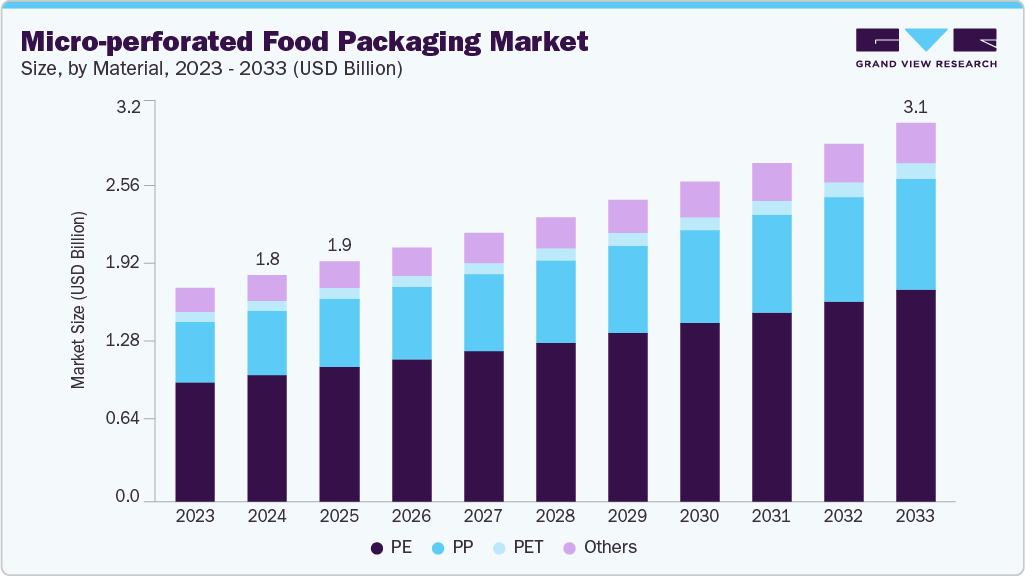 To learn more about this report, Download Free Sample Report
 The expansion of the packaged fresh food and ready-to-eat (RTE) segments is also contributing to market growth. With the busy lifestyles of urban populations, demand for convenience foods such as sandwiches, salads, and bakery items is rising, especially in developed and emerging economies. Micro-perforated packaging offers the advantage of maintaining product integrity without compromising taste or texture. For instance, Tesco in the UK uses micro-perforated film for its pre-packed bakery products, ensuring they stay fresh while preventing sogginess. This capability meets consumer expectations for quality and convenience while supporting the retail sector’s efforts to maintain consistent product quality across supply chains.
Sustainability and the growing preference for eco-friendly packaging solutions also play a crucial role in driving the market. Manufacturers are focusing on developing recyclable or compostable micro-perforated films to meet regulatory requirements and consumer demand for sustainable materials. This shift is supported by stringent packaging waste regulations in regions like the European Union, where single-use plastics are being phased out, prompting food brands to adopt greener packaging solutions.
Moreover, technological advancements in laser and mechanical perforation processes are enhancing product performance and broadening application areas. Precision laser perforation allows for consistent hole size and placement, which optimizes gas transmission rates for specific food types, extending shelf life and improving visual appeal. This technological edge is especially relevant in global supply chains where fresh products are transported over long distances.
Market Dynamics
The micro perforated food packaging market is experiencing steady growth, driven by increasing demand for extended shelf life, reduced food waste, and improved freshness of packaged food products. Growing consumption of fresh produce, bakery items, and ready-to-eat foods, along with the rising adoption of modified atmosphere packaging (MAP), is supporting market expansion. Technological advancements in perforation techniques and increasing focus on food safety and sustainable packaging solutions are further contributing to growth. However, raw material price volatility and environmental concerns related to packaging materials may restrain market development.
One of the primary drivers of the micro perforated food packaging market is the growing demand for packaging solutions that extend the shelf life of fresh and perishable food products. Consumers increasingly prefer fresh fruits, vegetables, bakery products, and ready-to-eat meals that maintain their quality, texture, and nutritional value for longer periods. Micro perforated packaging enables controlled gas exchange, helping to regulate oxygen and carbon dioxide levels within the package and creating an optimal environment that slows product deterioration. This capability reduces spoilage and ensures that food products remain fresh throughout storage and distribution.
The expansion of modern retail channels, e-commerce grocery platforms, and global food supply chains has further increased the need for effective freshness-preserving packaging. Food manufacturers and retailers are adopting micro perforated packaging to minimize product losses, improve inventory management, and enhance customer satisfaction. Furthermore, growing concerns regarding food waste and sustainability are encouraging the use of packaging technologies that help preserve food quality and reduce disposal rates. Consequently, the demand for micro perforated food packaging continues to rise across a wide range of food applications.
A significant restraint for the micro perforated food packaging market is the growing environmental concern surrounding the use of plastic-based packaging materials. Many micro perforated packaging solutions rely on plastic films due to their durability, flexibility, and ability to maintain controlled permeability. However, increasing regulatory pressure on single-use plastics, rising consumer preference for eco-friendly alternatives, and stricter sustainability requirements are prompting food manufacturers to reduce plastic consumption. Moreover, developing recyclable or biodegradable micro perforated materials that maintain the required performance and shelf-life benefits can be technically challenging and costly, potentially limiting market adoption and growth.
A key opportunity in the micro perforated food packaging market lies in the development of sustainable and high-performance packaging materials. As food manufacturers and retailers increasingly focus on reducing environmental impact, demand is rising for recyclable, biodegradable, and compostable packaging solutions that can also maintain product freshness and shelf life. Innovations in bio-based films and advanced perforation technologies are enabling packaging producers to meet both sustainability and performance requirements. This trend is creating significant growth opportunities for companies that can offer environmentally responsible micro perforated packaging solutions while supporting food preservation and waste reduction objectives.
Analyst Perspective
The micro perforated food packaging market is expected to grow steadily, driven by increasing demand for extended shelf life, reduced food waste, and improved freshness of packaged food products. Rising consumption of fresh produce, bakery items, and ready-to-eat foods is boosting the adoption of packaging solutions that enable controlled gas exchange and product preservation. Furthermore, advancements in micro perforation technologies and growing interest in sustainable packaging materials are supporting market growth. Companies focused on innovative, high-performance, and eco-friendly packaging solutions are expected to strengthen their market position.
Market Concentration & Characteristics
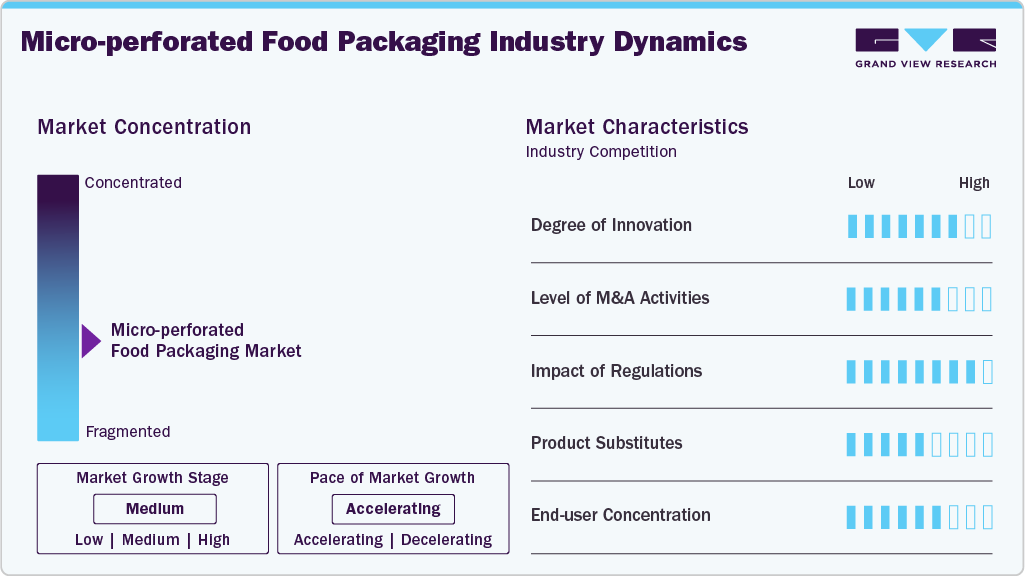
The global micro-perforated food packaging industry is characterized by its strong focus on food preservation and quality enhancement, with a primary role in extending the shelf life of perishable products. The industry operates at the intersection of food science, materials engineering, and supply chain logistics, catering to sectors such as fresh produce, bakery, dairy, meat, and ready-to-eat meals. Its value proposition lies in controlled gas exchange through precisely engineered perforations, enabling optimal moisture and oxygen levels for different food types. This highly specialized functionality makes micro-perforated packaging a critical enabler in reducing food wastage and supporting the growing fresh food retail sector worldwide.
 To learn more about this report, Download Free Sample Report
 The micro-perforated food packaging market is closely linked to global supply chain dynamics and consumer behavior trends. Growth in online grocery delivery, cross-border fresh produce trade, and the expanding retail presence in emerging markets have amplified demand for micro-perforated packaging that can handle longer transit times without compromising freshness. The industry’s growth trajectory is thus shaped by macro factors like urbanization, increasing disposable incomes, shifting dietary habits toward fresh and healthy foods, and governmental initiatives to curb food waste. This creates an ecosystem where packaging innovation directly influences market competitiveness and end user satisfaction.
Material Insights
Based on material, the PE segment led the market with the largest revenue share of 56.0% in 2025. PE is one of the most widely used materials in micro-perforated food packaging due to its excellent flexibility, moisture resistance, and cost-effectiveness. PE films, including LDPE and HDPE, are commonly used for packaging fresh produce, bakery items, and frozen foods. PE’s compatibility with a variety of printing techniques also makes it a preferred choice for brand visibility in retail environments. The demand for PE-based micro-perforated packaging is driven by its affordability, lightweight nature, and adaptability to both food and non-food applications.
The PP segment is expected to grow at the fastest CAGR of 6.2% during the forecast period. PP offers superior transparency, rigidity, and heat resistance compared to PE, making it an ideal choice for fresh food packaging where product visibility and shelf appeal are crucial. PP micro-perforated films are commonly used for salads, herbs, fresh-cut fruits, and snacks, where controlled moisture and oxygen levels help maintain texture and prevent spoilage. PP films are also valued for their ability to withstand higher sealing temperatures, enabling faster packaging line speeds in industrial operations. The growth of PP in micro-perforated packaging is supported by the increasing demand for high-clarity films that enhance product presentation, especially in premium retail food segments.
Application Insights
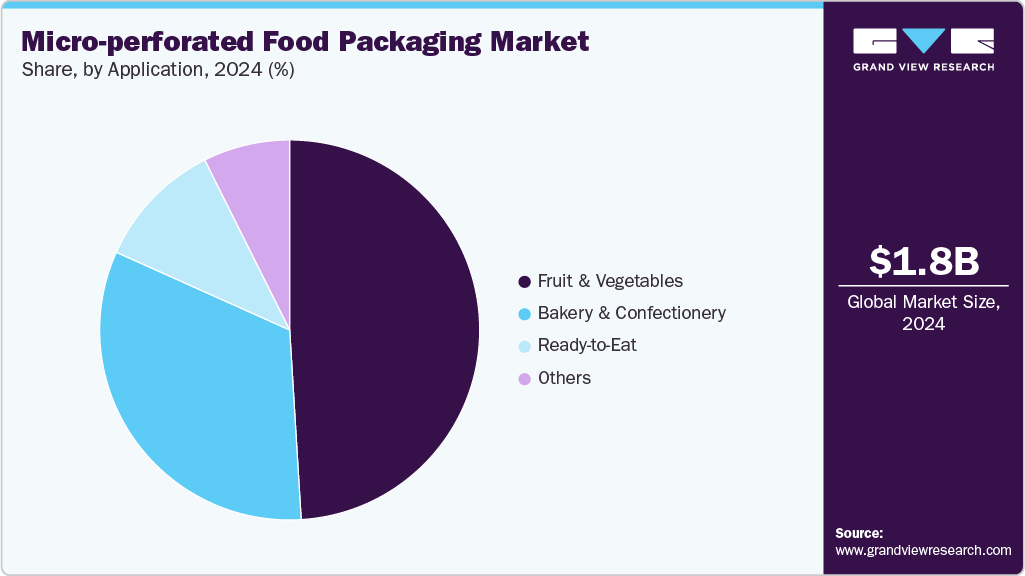
Based on application, the fruits & vegetables segment led the market with the largest revenue share of 49.2% in 2025. The fruits & vegetables segment is a major consumer of micro-perforated food packaging due to its ability to extend shelf life while maintaining product freshness. Rising demand for fresh and minimally processed produce, coupled with the growth of organized retail and cross-border fruit & vegetable exports, is driving adoption. Increasing consumer awareness about food waste reduction and the role of packaging in maintaining quality also contributes to growth.
 To learn more about this report, Download Free Sample Report
 The ready-to-eat segment is expected to grow at the fastest CAGR of 6.7% during the forecast period. Ready-to-eat meals, salads, and fresh-cut fruits heavily rely on micro-perforated packaging to maintain freshness while accommodating specific respiration rates of food items. Micro-perforation also supports modified atmosphere packaging (MAP) for RTE products. The growing urban workforce, busy lifestyles, and preference for convenience foods are accelerating the demand for RTE meals, driving the need for efficient micro-perforated packaging. The rapid expansion of online food delivery services and meal kit subscriptions also fuels market growth.
Regional Insights
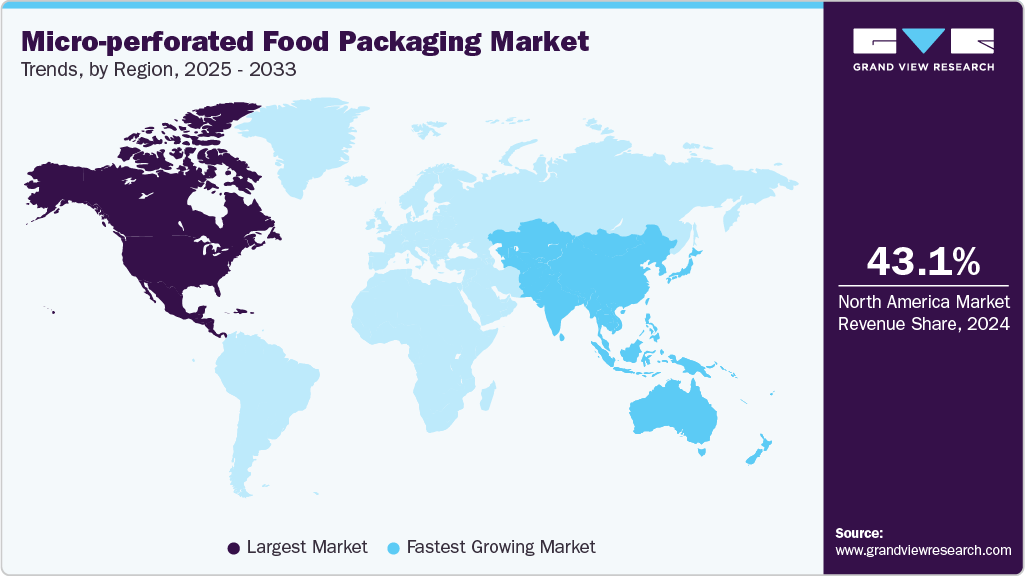
North America dominated the micro perforated food packaging market with the largest revenue share of 31.1% in 2025. This positive outlook is due to high consumer demand for convenience foods, stringent food safety standards, and advanced packaging technologies. The U.S. and Canada have a well-established retail sector where brands such as Sealed Air (Cryovac) and Amcor plc offer micro-perforated films for meat, poultry, and bakery products to maintain freshness. The rise of organic and fresh food trends, particularly in the U.S., has increased the need for breathable packaging that prevents spoilage. For instance, Whole Foods and Walmart use micro-perforated packs for pre-cut fruits and salads. Additionally, sustainability concerns are pushing manufacturers toward eco-friendly perforated films, further accelerating market growth.
 To learn more about this report, Download Free Sample Report
 U.S. Micro-perforated Food Packaging Market Trends
The micro perforated food packaging market in U.S. held the largest share in the North America region in 2025. The U.S.micro-perforated food packaging industry dominates North America due to the high demand for convenience foods, technological advancements, and strong retail infrastructure. The growth of meal kit delivery services (e.g., HelloFresh, Blue Apron) has also increased the need for breathable packaging to maintain food freshness during transit. Furthermore, sustainability trends are pushing companies to develop compostable micro-perforated films, aligning with consumer preferences for eco-friendly packaging.
Europe Micro-perforated Food Packaging Market Trends
Europe is a major market for micro-perforated food packaging, driven by strict EU regulations on food waste reduction and sustainable packaging. Countries such as Germany, France, and the UK are at the forefront, with retailers such as Tesco and Lidl adopting micro-perforated solutions for fresh produce and dairy products. The European market emphasizes biodegradable and recyclable films, with companies such as Coveris and Constantia Flexibles developing eco-friendly perforated packaging. For example, modified atmosphere packaging (MAP) with micro-perforations is widely used for berries and leafy greens to extend shelf life. The region’s focus on reducing food waste and carbon footprints makes it a key player in advancing micro-perforation technology.
Asia Pacific Micro-perforated Food Packaging Market Trends
The Asia Pacific micro-perforated food packaging industry is expected to grow at the fastest CAGR of 6.3% during the forecast period. This outlook is due to rapid urbanization, increasing disposable incomes, and growing demand for fresh and packaged food. Countries such as China, India, and Japan are witnessing a surge in supermarket and e-commerce grocery sales, where micro-perforated packaging extends the shelf life of perishables such as fruits, vegetables, and ready-to-eat meals. Additionally, government initiatives promoting sustainable packaging and food safety regulations further boost adoption. The region’s large population and expanding middle class make it a high-growth market for innovative packaging solutions.
Key Micro-perforated Food Packaging Company Insights
The competitive environment of the micro-perforated food packaging industry is characterized by moderate to high rivalry, driven by the presence of both global packaging giants and regional players focusing on niche applications. Companies compete on factors such as innovation in perforation technology, customization capabilities for specific food categories, sustainability credentials, and cost efficiency. Technological advancements, like laser micro-perforation for precise gas exchange control, are key differentiators, while strategic partnerships with food producers and retailers strengthen market positions. The industry also sees frequent product innovation to meet the rising demand for extended shelf life, reduced food waste, and eco-friendly materials, creating an environment where continuous R&D investment is essential to maintain competitiveness.
-
In January 2024, Sev-Rend expanded its macro- and micropreforating product offerings as part of its broader strategy to enhance packaging solutions, including the acquisition of Wolarmann Enterprises, which strengthens its market presence in North America and broadens its product portfolio. This expansion is aimed at delivering more flexible, high-performance packaging options that meet evolving retailer requirements and sustainability goals, supporting customers with innovative and customizable solutions across various packaging needs.
-
In January 2023, PerfoTec developed laser micro-perforated bags that extend fresh produce shelf life by precisely regulating air exchange to slow respiration, keeping items like spinach fresh for up to 21 days and bananas for three weeks. Integrated with packing machines and using a feedback camera for accuracy, the system reduces food waste, costs, and carbon emissions.
Key Micro-perforated Food Packaging Companies
The following key companies have been profiled for this study on the micro-perforated food packaging market.
-
Amcor plc
-
Sealed Air
-
Constatia Flexibles
-
Uflex Limited
-
Huhtamaki
-
A·ROO Company
-
Specialty Polyfilms
-
Prism Pak, Inc.
-
Greendot Biopak Pvt. Ltd.
-
Crystal Vision Packaging
-
Sev-Rend
-
Perfo Tec
-
KM Packaging Services Ltd.
Competitive Benchmarking
Operating Strategies
Competitive Edge
Weaknesses
Established Players (Amcor plc, Sealed Air, Constantia Flexibles, Uflex Limited, Huhtamaki, KM Packaging Services Ltd., and Sev-Rend Corporation)
- Focus on large-scale production, global distribution networks, and long-term supply agreements with food producers, retailers, and packaging converters.
- Invest heavily in R&D, automation, and advanced micro perforation technologies to enhance packaging performance, shelf life, and sustainability compliance.
- Strong manufacturing capabilities, established customer relationships, and extensive geographic presence enable consistent supply and market leadership.
- Broad product portfolios and significant financial resources support continuous innovation, regulatory compliance, and customized packaging solutions.
- Large operational structures may reduce flexibility and slow response times to niche customer requirements or emerging market trends.
- Higher fixed costs and complex global supply chains can increase exposure to raw material price fluctuations and economic uncertainties.
Emerging Players (A·ROO Company, Specialty Polyfilms Pvt. Ltd., Prism Pak, Inc., Greendot Biopak Pvt. Ltd., Crystal Vision Packaging, and PerfoTec BV)
- Concentrate on specialized micro perforated packaging solutions, targeting niche applications such as fresh produce, organic foods, and sustainable packaging segments.
- Utilize technological innovation, customized product development, and strategic partnerships to strengthen market penetration and brand recognition.
- Greater operational agility allows faster adaptation to changing customer requirements, packaging trends, and sustainability demands.
- Specialized expertise in micro perforation technologies and focused product offerings enable differentiation in specific application areas.
- Limited financial resources and manufacturing scale may restrict expansion capabilities and large-volume order fulfillment.
- Lower brand visibility and narrower distribution networks can create challenges in competing with established multinational packaging companies.
Micro-perforated Food Packaging Market Report Scope
Report Attribute
Details
Market size in 2025
USD 2.0 billion
Estimated market size in 2026
USD 2.1 billion
Projected market size by 2033
USD 3.1 billion
Growth rate
CAGR of 5.9% from 2026 to 2033
Base year for estimation
2025
Historical data
2021 - 2024
Forecast period
2026 - 2033
Quantitative units
Revenue in USD million/billion and CAGR from 2026 to 2033
Report coverage
Revenue forecast, company ranking, competitive landscape, growth factors, and trends
Segments covered
Material, application, region
Regional scope
North America; Europe; Asia Pacific; Latin America; MEA
Country scope
U.S.; Canada; Mexico; Germany; UK; France; Italy; Spain; China; Japan; India; South Korea; Australia; Brazil; Argentina; Saudi Arabia; South Africa; UAE
Key companies profiled
Amcor plc; Sealed Air; Constantia Flexibles; Uflex Limited; Huhtamaki; A·ROO Company; Specialty Polyfilms; Prism Pak, Inc.; Greendot Biopak Pvt. Ltd.; Crystal Vision Packaging; Sev-Rend; PerfoTec; KM Packaging Services Ltd.
Customization scope
Free report customization (equivalent up to 8 analysts' working days) with purchase. Addition or alteration to country, regional & segment scope.
Pricing and purchase options
Avail customized purchase options to meet your exact research needs. Explore purchase options
Global Micro-perforated Food Packaging Market Report Segmentation
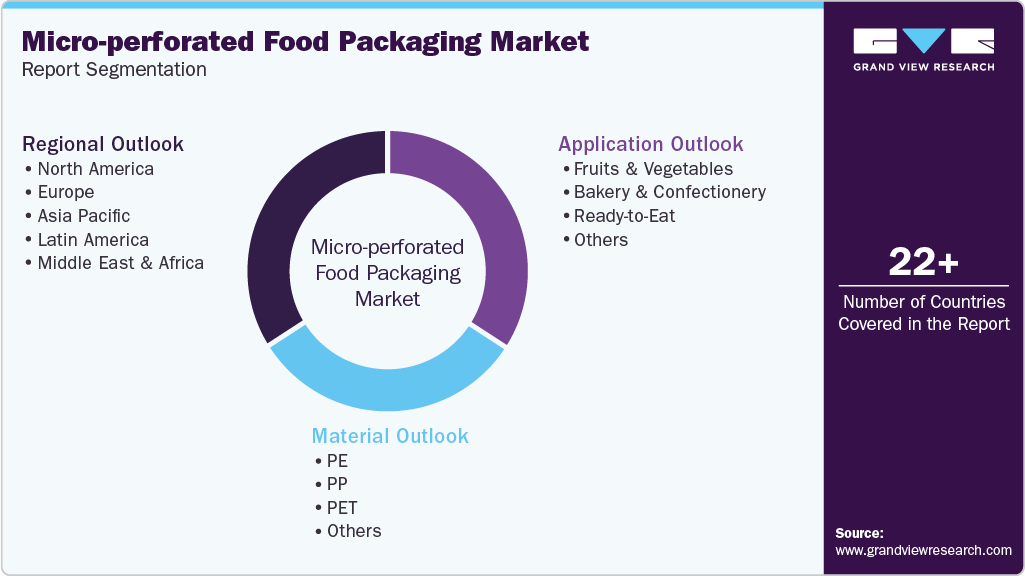
This report forecasts revenue growth at the global, regional & country levels and provides an analysis of the latest industry trends in each of the sub-segments from 2021 to 2033. For this study, Grand View Research has segmented the global micro-perforated food packaging market report based on material, application, and region:
 To learn more about this report, Download Free Sample Report
 -
Material Outlook (Revenue, USD Million, 2021 - 2033)
-
PE
-
PP
-
PET
-
Others
-
-
Application Outlook (Revenue, USD Million, 2021 - 2033)
-
Fruits & Vegetables
-
Bakery & Confectionery
-
Ready-to-Eat
-
Others
-
-
Regional Outlook (Revenue, USD Million, 2021 - 2033)
-
North America
-
U.S.
-
Canada
-
Mexico
-
-
Europe
-
Germany
-
France
-
UK
-
Italy
-
Spain
-
-
Asia Pacific
-
China
-
India
-
Japan
-
Australia
-
South Korea
-
-
Latin America
-
Brazil
-
Argentina
-
-
Middle East & Africa
-
South Africa
-
Saudi Arabia
-
UAE
-
-
Research Methodology
The micro-perforated food packaging market figures in this report are based on a proven research process that combines executive interviews with secondary research from proprietary databases, company filings, and recognized regulatory and institutional sources. Market size is built through value-chain sizing-reconciling supply-side and demand-side estimates-and triangulated with bottom-up and top-down approaches. Every estimate passes multiple levels of expert validation before publication, with each micro-perforated food packaging segment quantified using the revenue-capture definitions in the table below.
Segment Definition
Segment - Material
Revenue capture definition
PE (Polyethylene)
Revenue generated from the sale of micro perforated food packaging manufactured using polyethylene (PE) films, designed to provide controlled gas exchange, moisture management, and product protection. This segment includes packaging solutions used for fresh produce, bakery products, and other perishable food applications requiring extended shelf life.
PP (Polypropylene)
Revenue generated from the sale of micro perforated food packaging made from polypropylene (PP) films, offering enhanced clarity, durability, and breathability. This segment includes packaging used for fruits, vegetables, ready-to-eat foods, and bakery products where freshness preservation and product visibility are important.
PET (Polyethylene Terephthalate)
Revenue generated from the sale of micro perforated food packaging produced using polyethylene terephthalate (PET) materials, known for their strength, transparency, and barrier properties. This segment includes packaging solutions for premium fresh food products, prepared meals, and applications requiring superior packaging performance.
Others
Revenue generated from the sale of micro perforated food packaging made from alternative materials, including biodegradable films, compostable polymers, paper-based materials, and specialty plastics. This segment includes packaging solutions developed to address specific performance, sustainability, or regulatory requirements.
Segment - Application
Revenue capture definition
Fruits & Vegetables
Revenue generated from the sale of micro perforated food packaging used for fresh fruits and vegetables. These packaging solutions enable controlled respiration, maintain optimal humidity levels, and extend product shelf life during storage, transportation, and retail display.
Bakery & Confectionery
Revenue generated from the sale of micro perforated food packaging used for bakery and confectionery products, including bread, pastries, cakes, and sweet snacks. This segment includes packaging designed to balance moisture retention and ventilation to preserve product texture and freshness.
Ready-to-Eat
Revenue generated from the sale of micro perforated food packaging used for ready-to-eat meals, fresh-cut produce, salads, and convenience food products. This segment includes packaging solutions that help maintain product quality, freshness, and safety throughout distribution and consumption.
Others
Revenue generated from the sale of micro perforated food packaging used in other food applications, including meat, seafood, dairy products, frozen foods, and specialty food products. This segment includes packaging solutions tailored to specific preservation and shelf-life requirements.
Estimation Model
Layer Name
Key Question
Description
Food Consumption Base Layer
What forms the demand base?
Identify global consumption volumes of fresh and packaged food products that utilize micro perforated packaging, including fruits & vegetables, bakery & confectionery, ready-to-eat meals, and other perishable food categories. This layer establishes the total addressable demand for micro perforated packaging solutions across food processing, retail, and distribution channels.
Packaging Adoption Layer
Where is micro perforated packaging utilized?
Estimate the penetration of micro perforated packaging across different food applications and regions. Assess adoption levels among food manufacturers, fresh produce suppliers, bakery producers, and ready-to-eat meal providers, considering factors such as shelf-life requirements, food waste reduction initiatives, and packaging performance needs.
Packaging Volume Layer
How much packaging volume is consumed?
Analyze the volume of micro perforated packaging materials consumed across food categories. Evaluate packaging usage rates, product turnover, storage requirements, distribution distances, and freshness preservation needs. Packaging intensity varies based on food type, respiration requirements, shelf-life expectations, and retail packaging formats.
Revenue Layer
How is market revenue generated?
Market revenue is quantified through the sale of micro perforated packaging films, bags, pouches, wraps, trays, and related packaging solutions used across food applications. Revenue is generated from recurring demand by food processors, fresh produce suppliers, bakery manufacturers, ready-to-eat meal producers, retailers, and food distribution companies seeking enhanced freshness and shelf-life extension.
Delivered Customizations
This report has been delivered with the following In-depth customizations
Client Request
Customization Delivered
Value Adds
Regional Segmentation Analysis
Delivered a detailed market assessment across North America, Europe, Asia Pacific, Central & South America, and Middle East & Africa, covering market size, growth trends, regulatory environment, consumption patterns, and adoption of micro perforated food packaging solutions.
Enabled identification of high-growth regional markets, strategic expansion opportunities, and region-specific demand trends for informed decision-making.
Cross-Segmentation Analysis
Provided an in-depth cross-analysis of Material (PE, PP, PET, Others) and Application (Fruits & Vegetables, Bakery & Confectionery, Ready-to-Eat, Others) across key regions, highlighting revenue contribution, growth potential, and emerging demand pockets.
Assisted in identifying the most lucrative material-application combinations and high-opportunity market segments for product development and portfolio optimization.
Competitive Benchmarking
Conducted benchmarking of leading market participants based on product offerings, material expertise, geographic presence, manufacturing capabilities, innovation initiatives, sustainability strategies, and competitive positioning within the micro perforated food packaging market.
Offered actionable insights into competitor strengths, market gaps, and differentiation opportunities to support strategic planning and market positioning.
Frequently Asked Questions About This Report
The global micro-perforated food packaging market size was valued at USD 2.0 billion in 2025 and is estimated at USD 2.1 billion in 2026.
The global micro-perforated food packaging market is expected to grow at a CAGR of 5.9% from 2026 to 2033, reaching USD 3.1 billion by 2033.
North America dominated the micro-perforated food packaging market with a 31.1% revenue share in 2025. This is attributable to the confluence of increased consumer incomes and year-round demand for fresh produce have encouraged manufacturers across the globe to develop innovative packaging solutions and offerings.
Some key players operating in the micro-perforated food packaging market include Amcor plc; Sealed Air; Constantia Flexibles; Uflex Limited; Huhtamaki; A·ROO Company; Specialty Polyfilms; Prism Pak, Inc.; Greendot Biopak Pvt. Ltd.; Crystal Vision Packaging; Sev-Rend; PerfoTec; and KM Packaging Services Ltd.
Key factors driving the micro-perforated food packaging market include rising demand for extended shelf life, growing consumption of fresh and ready-to-eat foods, increasing focus on food waste reduction, and wider adoption of advanced food preservation packaging solutions.
Asia Pacific is the fastest-growing region in the micro perforated food packaging market with a CAGR of 6.3% over the forecast period.
The PE segment led the micro-perforated food packaging market with a 56.0% revenue share in 2025.
The fruits & vegetables segment led the micro perforated food packaging market with a 49.2% revenue share in 2025.
Ready-to-eat is the fastest-growing application segment in the micro perforated food packaging market with a CAGR of 6.7% over the forecast period.
About the Author(s)
Plastics, Polymers & Resins Research Team
Bulk Chemicals · Plastics, Polymers & ResinsThis report was authored by the plastics, polymers & resins research team at Grand View Research - comprising two research analysts, one senior research analyst, and one industry expert - with specialized expertise in the plastics, polymers & resins segment of the bulk chemicals industry. All findings are based on proprietary bulk chemicals databases, executive interviews, and regulatory analysis, subject to internal peer review prior to publication.
Last Updated:
Speak to Analyst

Customize this report to your needs - add regions, segments, or data points, with 20% free customization.
Or view our licence options:


ISO 9001:2015 & 27001:2022 Certified
We are GDPR and CCPA compliant! Your transaction & personal information is safe and secure. For more details, please read our privacy policy.


