
- Home
- »
- Advanced Interior Materials
- »
-
Mining Equipment Rental Market Size, Share Report, 2033GVR Report cover

Mining Equipment Rental Market (2026 - 2033)
Size, Share & Trends Analysis Report By Equipment (Underground Mining Equipment, Surface Mining Equipment), By Power Output (<500 HP, 500-2000 HP), By Rent Type, By Application, By Region, And Segment Forecasts
Market Size, 2025
$112.1BMarket Estimate, 2026
$116.9BMarket Forecast, 2033
$173.6BCAGR, 2026–2033
5.8%Mining Equipment Rental Market Summary
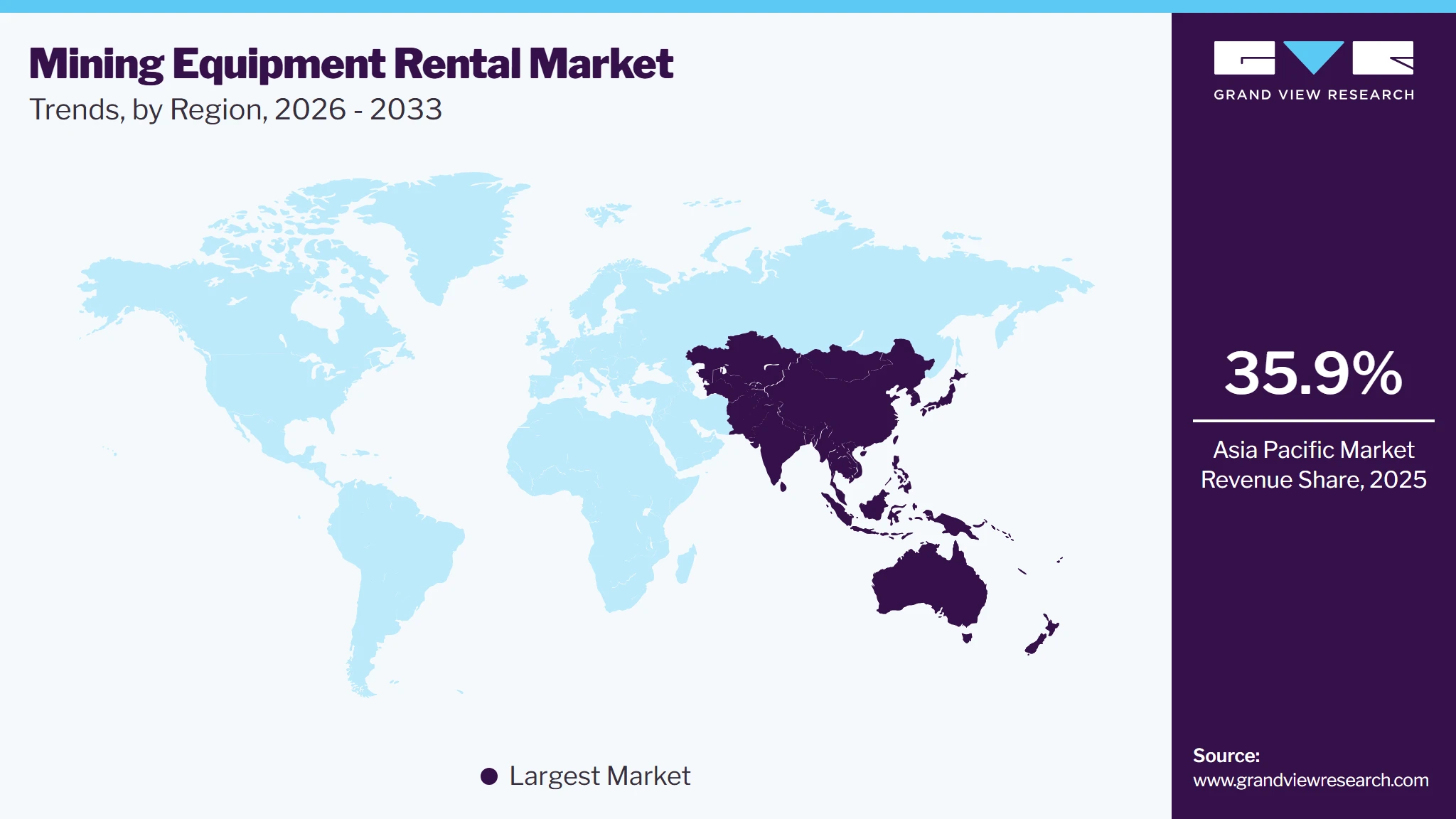
The global mining equipment rental market size was valued at USD 112.1 billion in 2025 and is projected to grow from USD 116.9 billion in 2026 to USD 173.6 billion by 2033, at a CAGR of 5.8% from 2026 to 2033. Asia Pacific dominated the market, accounting for a revenue share of 35.9% in 2025. The industry is experiencing significant growth driven by various factors such as cost-effective solutions, technological advancements, and increasing mining activities globally.
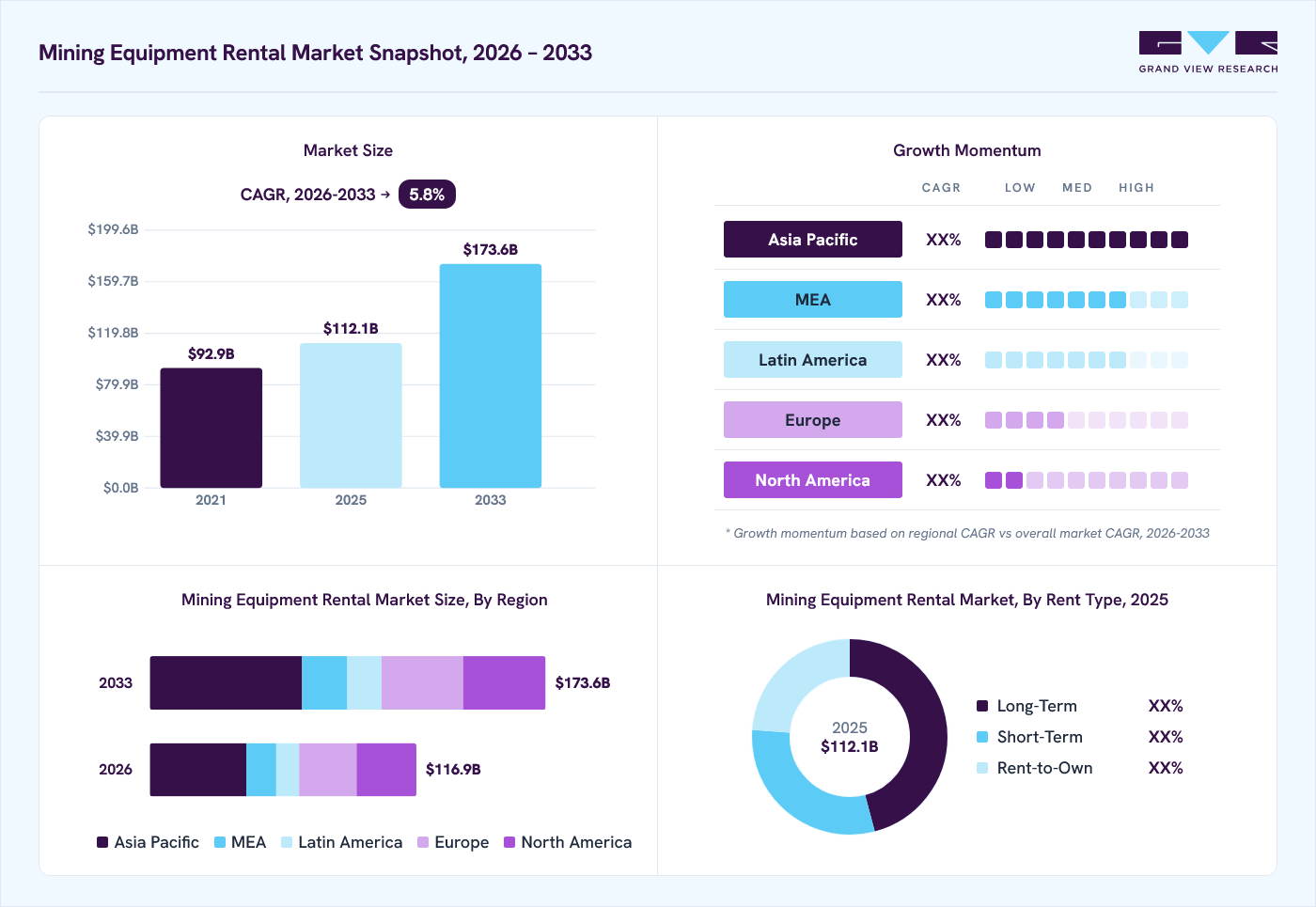 Source: Grand View Research, IR Documents, Primary Interviews, Paid DatabasesTo learn more about this report,
 Download Free Sample Report
Key Market Trends & Insights
- By equipment: Surface mining equipment segment led the market with the largest revenue share of 39.0% in 2025.
- By power output: <500 HP segment led the market with the largest revenue share of 41.9% in 2025.
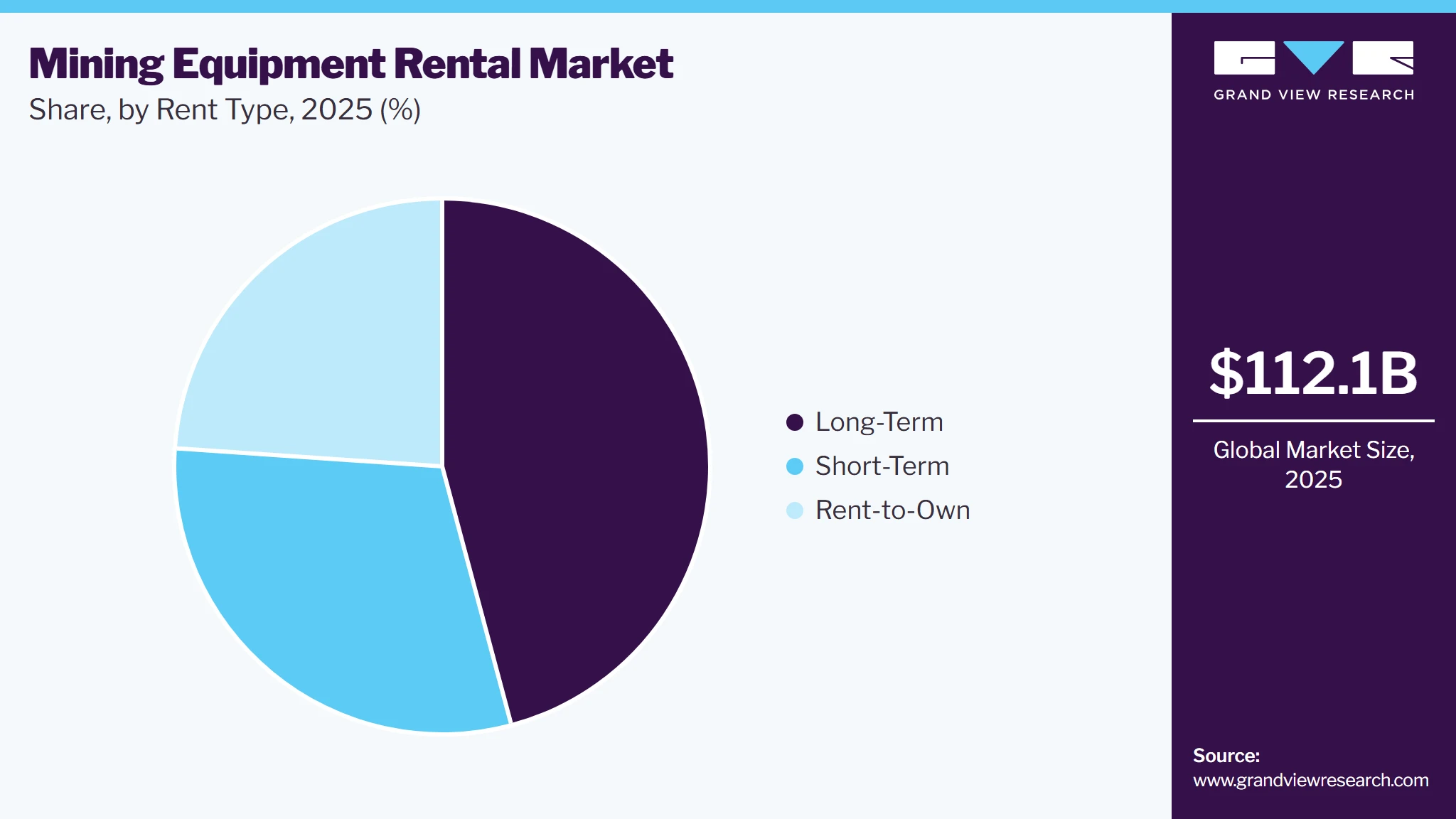
- By rent type: Long-term segment led the market with the largest revenue share of 45.8% in 2025.
- By application: Coal mining segment led the market with the largest revenue share of 39.8% in 2025.
Regional Highlights
- Largest regional market: Asia Pacific (35.9% revenue share, 2025)
- By country: China held the largest market share in 2025.
Market Size & Forecast
- Market size in 2025: USD 112.1 Billion
- Estimated market size in 2026: USD 116.9 Billion
- Projected market size by 2033: USD 173.6 Billion
- CAGR (2026-2033): 5.8%
Prism AI by Grand View Research Free to tryAsk a question about the mining equipment rental marketTry asking✓Every figure cited from GVR research Prefer the report? Download free sample →
One of the primary drivers of the mining equipment rental market is the cost savings that come with renting rather than purchasing equipment. Renting allows mining companies to avoid large capital expenditures on expensive machinery, which can be especially beneficial in regions with fluctuating commodity prices. Additionally, rental options provide operational flexibility, allowing companies to scale up or down based on the demand for mining operations.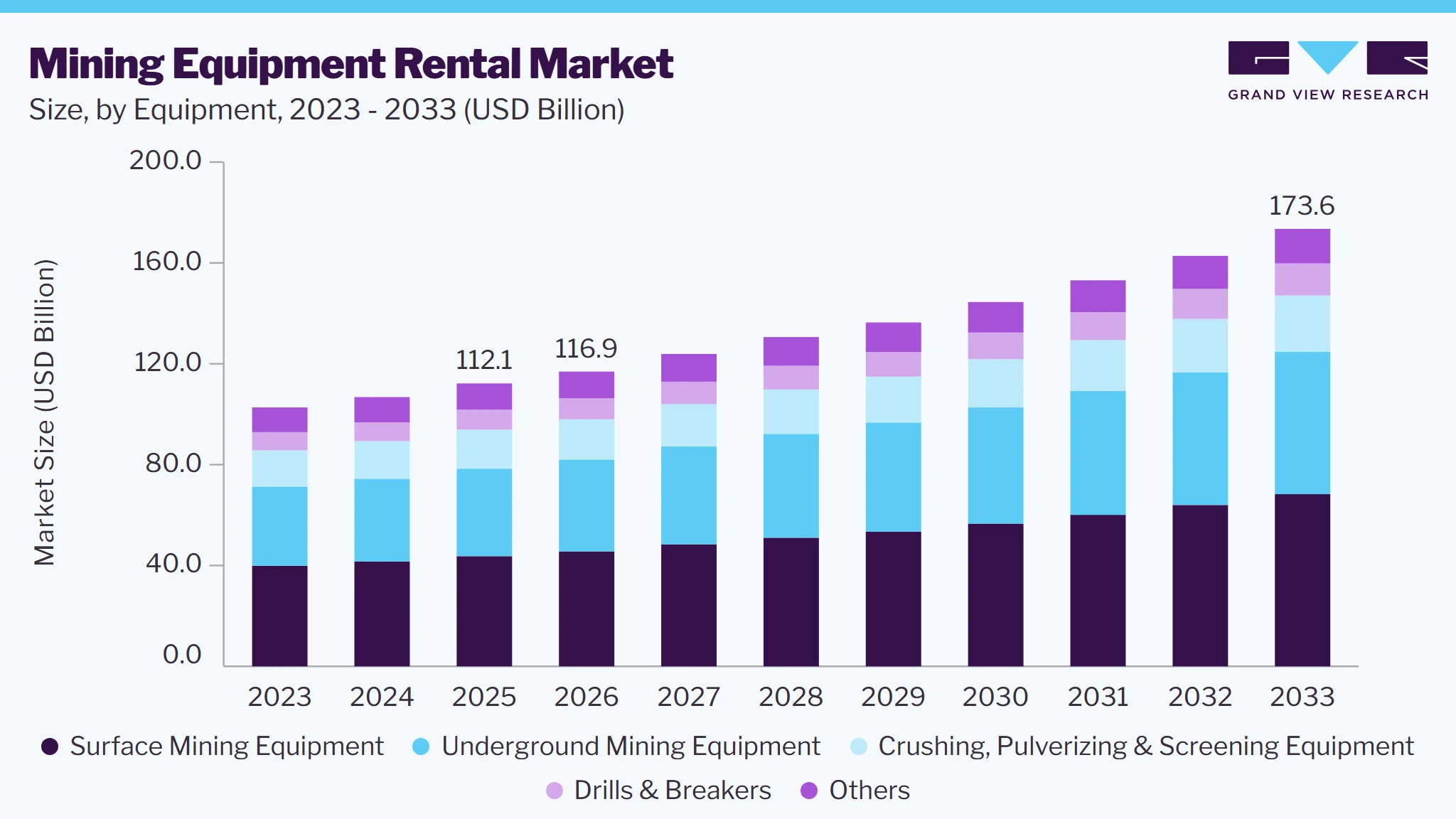 To learn more about this report, Download Free Sample Report
Growing mining activities in emerging economies like India, China, and Latin America have created opportunities for rental companies to expand their operations. These regions are rich in mineral deposits and are increasing investments in mining infrastructure, boosting demand for equipment rental services.
Market Dynamics
The mining equipment rental market is shaped by commodity price cycles, mining capital expenditure trends, and the pace of exploration and mine development activities. Fluctuations in demand for minerals and metals influence equipment utilization rates and rental demand, while the high acquisition and maintenance costs of heavy mining machinery encourage operators to adopt rental models to improve financial flexibility. Advancements in fuel-efficient, automated, and telematics-enabled equipment are enhancing fleet productivity and attracting rental customers seeking access to the latest technologies without significant capital investment. In addition, stringent safety and emissions regulations, increasing focus on sustainable mining practices, and the expansion of mining projects in emerging economies continue to influence fleet modernization, rental offerings, and overall market growth.
The growing preference for asset-light business models is a key driver of the mining equipment rental market, as mining companies seek to optimize capital allocation and improve operational flexibility. The high acquisition cost of heavy mining equipment, coupled with ongoing maintenance, repair, and depreciation expenses, encourages operators to rent rather than own machinery. Rental solutions allow mining companies to preserve capital, scale fleets according to project requirements, and gain access to modern equipment without long-term ownership commitments. This approach is particularly attractive in a cyclical mining industry, where fluctuating commodity prices and project-based operations make financial and operational flexibility increasingly important.
Volatility in commodity prices remains a significant restraint for the mining equipment rental market. Fluctuations in the prices of metals, coal, and industrial minerals directly influence mining companies' investment decisions, production levels, and expansion plans. During periods of declining commodity prices, mining operators often postpone exploration activities, delay new projects, or reduce production, resulting in lower demand for rented equipment. This cyclical nature of the mining industry creates uncertainty for rental providers and can impact fleet utilization rates and revenue generation.
Growing investments in the extraction of critical minerals such as lithium, copper, nickel, cobalt, and rare earth elements present a significant opportunity for the mining equipment rental market. Increasing demand for these minerals, driven by electric vehicles, renewable energy systems, and energy storage technologies, is accelerating the development of new mining projects worldwide. Many of these projects require flexible access to specialized mining equipment during exploration, construction, and early production phases, making rental solutions an attractive alternative to outright equipment purchases. This trend is expected to create sustained demand for modern, high-capacity rental fleets in the coming years.
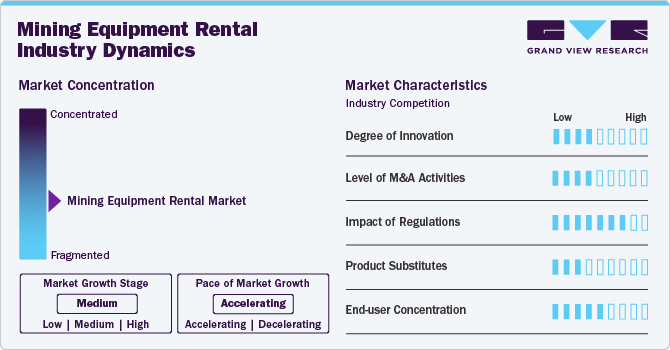
Market Concentration & Characteristics
Environmental regulations and sustainability goals are becoming stricter across the mining industry. Many mining companies are adopting more eco-friendly and energy-efficient equipment to reduce their environmental footprint. Renting these newer, sustainable machines is often a more viable solution than investing in new machinery, especially for short-term projects or projects that require specialized equipment.
The mining industry is gradually shifting toward more sustainable equipment options, including electric and hybrid-powered machinery. Rental companies are investing in electric mining trucks, battery-powered loaders, and other eco-friendly equipment to meet growing demand from mining operations seeking to reduce their carbon emissions.
 To learn more about this report, Download Free Sample Report
The integration of digital technologies such as GPS tracking, remote monitoring, and automated machinery is increasingly being seen in mining equipment rentals. Rental companies are leveraging these technologies to enhance machine efficiency, improve fleet management, and provide value-added services to mining clients. Digitalization is also improving maintenance schedules and reducing operational downtimes.
Drivers, Opportunities & Restraints
The rise of EVs is directly tied to the growing demand for key battery metals, such as lithium, cobalt, and nickel, which are predominantly sourced through mining. As demand for these materials surges, mining companies are scaling up their operations to meet the need. To support this, the demand for specialized mining equipment, including drills, loaders, haul trucks, and processing equipment, has increased. Mining equipment rental services are benefiting from this demand, as companies seek to access the necessary machinery without the heavy capital investment of purchasing.
Mining companies are increasingly seeking equipment that offers enhanced safety features and automation capabilities. Autonomous mining trucks, automated drilling rigs, and remote-controlled loaders are gaining traction. As these technologies become more mainstream, rental companies are offering equipment with advanced safety and automation features to attract mining clients.
Increasing global focus on sustainability and green energy is pushing mining companies to adopt environmentally friendly practices. As part of this shift, there is an emphasis on reducing energy consumption and carbon emissions. Rental companies are responding by offering more fuel-efficient and low-emission equipment, ensuring they align with the industry’s sustainability goals.
Equipment Insights
Based on equipment, the surface mining equipment segment led the market with the largest revenue share of 39.0% in 2025. Surface mining involves the extraction of minerals and ores located close to the earth’s surface. This method includes open-pit mining, strip mining, and mountaintop removal, where large volumes of earth are removed to access the underlying resources.
The underground mining equipment segment is significantly driven by the increasing demand for the extraction of valuable minerals or ores located deep within the earth. Underground mining is benefiting from automation, advanced safety features, and green technologies that cater to the growing demand for precious metals and compliance with stringent environmental regulations.
Power Output Insights
Based on power output, the <500 HP segment led the market with the largest revenue share of 41.9% in 2025. The segment includes smaller mining machines that are often used for light-duty tasks or operations in confined spaces. These equipment pieces are typically compact, more fuel-efficient, and ideal for operations where less power is needed. The segment growth is attributed to small-scale mining operations or niche sectors, such as gemstone mining or artisanal mining, where only limited resources and lower power are required.
The >2000 HP segment is likely to have opportunistic growth over the forecast period. This equipment encompasses the largest and most powerful mining equipment, typically used for large-scale mining operations in open-pit mines or major extraction projects. These machines are designed for maximum performance, capable of handling high-volume operations and heavy-duty tasks.
Rent Type Insights
Based on rent type, the long-term segment led the market with the largest revenue share of 45.8% in 2025. Long-term rentals typically involve leasing equipment for extended periods, from several months to several years. This model is common for large-scale mining operations or ongoing projects where equipment is required for continuous use over a longer period.
 To learn more about this report, Download Free Sample Report
Short term segment is expected to witness the fastest growth potential over the forecast period. Short-term rentals typically involve leasing mining equipment for a period of a few days to a few months. These rentals are ideal for temporary projects or when mining companies need additional equipment to support specific tasks or seasonal operations. Rent-to-own segment refers to the agreements that allow mining companies to rent equipment with the option to purchase it at the end of the rental period.
Application Insights
Based on application, the coal mining segment led the market with the largest revenue share of 39.8% in 2025. Coal mining involves the extraction of coal for energy production and industrial applications. The equipment used in coal mining ranges from surface mining machinery (for open-pit mining) to underground mining equipment (for deep coal seams).
Metal mining focuses on the extraction of valuable metals such as gold, copper, aluminum, zinc, and other precious and base metals. The equipment required in metal mining is specialized to handle the unique demands of extracting metals from ore, processing them, and ensuring efficiency in the operation.
Regional Insights
North America mining equipment rental market is driven by significant advancements in mining technologies, including autonomous vehicles, smart equipment, and IoT-enabled systems. As mining companies adopt these innovations to improve productivity, safety, and efficiency, they often prefer renting the latest technology instead of purchasing expensive equipment.
U.S. Mining Equipment Rental Market Trends
The mining equipment rental industry in the U.S. is projected to expand at a CAGR of 3.8% over the forecast period. In the U.S., public land leases and resource extraction agreements are common for mining companies. These policies are helping to facilitate access to mineral-rich regions, which in turn drives demand for mining equipment rentals for exploration, drilling, and development work.
Asia Pacific Mining Equipment Rental Market Trends
The mining equipment rental industry in Asia Pacific dominated the global market in 2024, accounting for a global revenue share of 35.6%. The Asia Pacific mining equipment rental market is expected to see continued growth, driven by the region's expanding mining industry and the increasing demand for mining machinery across both traditional and emerging sectors.Australia is likely to remain a strong market for mining equipment rentals due to its robust mining industry, especially in coal, iron ore, and precious metals.
 To learn more about this report, Download Free Sample Report
China mining equipment rental industry is projected to expand at a CAGR of 6.3% over the forecast period. China is the world’s largest producer and consumer of coal, as well as a major player in the mining of other critical resources such as gold, copper, iron ore, and rare earth metals. The country’s vast mining operations, coupled with ongoing infrastructure development and technological advancements, have driven the growth of the mining equipment rental market in China.
The mining equipment rental industry in India is expected to grow at a CAGR of 6.4% over the forecast period, fueled by the country’s initiatives. The mining equipment rental market in India is poised for steady growth driven by cost efficiency, regulatory compliance, and the increasing demand for technological advancements.
Europe Mining Equipment Rental Market Trends
The mining equipment rental industry in Europe plays a critical role in the global mining value chain, with the region being home to several major producers of metallic minerals, industrial minerals, and energy resources. The mining equipment rental market in Europe has been growing steadily, driven by technological innovations, the push for sustainability, and increasing demand for cost-effective, flexible equipment solutions.
Germany mining equipment rental industry is projected to expand at a CAGR of 4.4% over the forecast period. Germany remains one of the top producers of coal, salt, and potash in Europe. Despite a growing transition to renewable energy sources, the mining of minerals and aggregates remains vital to the industrial sector. The need for specialized equipment, including excavators, haul trucks, drills, and conveyors, continues to drive demand for equipment rental in Germany.
The mining equipment rental industry in UK is projected to expand at a CAGR of 3.9% over the forecast period. The UK mining equipment rental market is evolving due to a variety of factors, including regulatory pressures, growing demand for technological advancements, and the shift toward sustainability in the mining sector.
Middle East & Africa Mining Equipment Rental Market Trends
The mining equipment rental market in the Middle East and Africa is witnessing significant growth, fueled by increasing demand for minerals, government infrastructure initiatives, and the adoption of sustainable practices.
Saudi Arabia mining equipment rental industry is expected to grow at a CAGR of 6.0% over the forecast period. Saudi Arabia, a leading economic powerhouse in the Middle East, has substantial mineral reserves, including gold, copper, phosphates, and other base metals. The mining sector in the country is undergoing significant transformation as part of the Vision 2030 initiative, which aims to diversify the economy away from oil dependency.
Latin America Mining Equipment Rental Market Trends
The mining equipment rental market in Latin America has witnessed significant growth, fueled by increasing mining activities, the adoption of cost-effective practices, and a focus on sustainability and environmental compliance. Latin America is one of the world’s most resource-rich regions, boasting vast mineral deposits, including copper, gold, silver, lithium, and iron ore. The mining sector plays a vital role in the region’s economic growth, and as such, the demand for mining equipment is a significant contributor to its industrial development.
Brazil mining equipment rental industry is projected to expand at a CAGR of 5.3% over the forecast period. Brazil is home to some of the world's largest mineral deposits, particularly in iron ore, gold, nickel, and bauxite, making the mining sector a key pillar of the economy. With the increasing global demand for these minerals, Brazil’s mining industry is poised for continued growth, which in turn drives the need for specialized mining equipment.
Key Mining Equipment Rental Company Insights
Some of the key players operating in the market include Komatsu Rentals and Caterpillar among others.
-
Komatsu Rental provides a vital service to the mining industry by offering high-quality, reliable, and flexible rental options for mining equipment. With access to Komatsu's extensive fleet of machinery, mining companies can enhance their operational efficiency without the burden of owning large equipment. The rental division ensures that mining businesses can meet the growing demands of their operations while maintaining cost-efficiency and minimizing downtime.
-
Caterpillar’s mining equipment rental services are designed to help mining companies reduce costs while gaining access to the latest and most reliable machinery available. With a wide variety of machines suited for every aspect of mining, from exploration to extraction, Caterpillar provides flexible, high-quality rental options that enable companies to meet the demands of their projects without the capital investment required for purchasing equipment.
Key Mining Equipment Rental Companies:
The following key companies have been profiled for this study on the mining equipment rental market.
- United Rentals
- Hertz Equipment Rental
- Caterpillar
- Loxam
- MacAllister Machinery
- Barton & Sons
- Trident Equipment
- Ritchie Bros.
- Epiroc
- Komatsu Rental
- SANY Group
- BOMAG
- Doosan Infracore
- XCMG
- Liebherr
Competitive Benchmarking
Category
Operating Strategies
Competitive Edge
Weakness
Established Players (e.g., United Rentals, Caterpillar.)
- Focus on expanding diversified rental fleets, strengthening dealer and branch networks, integrating telematics and fleet management technologies, and securing long-term agreements with mining operators.
- They also emphasize value-added services such as maintenance, equipment monitoring, and operator support to maximize fleet utilization and customer retention.
- Extensive equipment fleets, broad geographic coverage, strong brand recognition, established customer relationships, robust financial resources, and comprehensive aftermarket support enable them to serve large-scale mining projects efficiently.
- High fleet ownership and maintenance costs require significant capital investment, while their standardized rental offerings may provide less flexibility for highly specialized or regional mining requirements.
Emerging & Regional Players (e.g., Trident Equipment, McDowell Equipment, regional players)
- Focus on regional market expansion, specialized mining equipment rentals, and customized service offerings tailored to specific customer and project requirements.
- They compete by providing responsive support, flexible rental terms, and application-specific equipment solutions.
- Strong regional expertise, greater operational agility, customized rental packages, and faster decision-making allow them to effectively address niche mining applications and local customer needs.
- Smaller fleet sizes, limited international presence, lower financial resources, and narrower service networks restrict their ability to compete for large multinational mining contracts and major infrastructure projects.
Recent Developments
-
In October 2023, Lou-Tec, a Quebec-based rental company, acquired Torcan Lift Equipment, an Ontario-based provider of aerial lift rentals. This strategic acquisition is part of Lou-Tec's efforts to strengthen and expand its footprint in Ontario.
-
In December 2024, Sumitomo Corporation, via its subsidiary Aver Asia, acquired 100% of the shares of PT. Resource Equipment Indonesia (REL), a company specializing in the rental of large pumps for mining operations in Indonesia.
Mining Equipment Rental Market Report Scope
Report Attribute
Details
Market size in 2025
USD 112.1 billion
Estimated market size in 2026
USD 116.9 billion
Projected market size by 2033
USD 173.6 billion
Growth rate
CAGR of 5.8% from 2026 to 2033
Base year for estimation
2025
Historical data
2021 - 2024
Forecast period
2026 - 2033
Quantitative units
Revenue in USD billion and CAGR from 2026 to 2033
Report coverage
Revenue forecast, company ranking, competitive landscape, growth factors, and trends
Segments covered
Equipment, power output, rent type, application, region
Regional scope
North America; Europe; Asia Pacific; Latin America; Middle East & Africa
Country scope
U.S.; Canada; Mexico; Germany; UK; Poland; Sweden; Finland; Japan; China; India; Australia; South Korea; Brazil; Argentina; Saudi Arabia; UAE
Key companies profiled
United Rentals, Hertz Equipment Rental, Caterpillar, MacAllister Machinery; Trident Equipment, Ritchie Bros., McDowell Equipment, Komatsu Ltd, SANY Group, Doosan Infracore, XCMG, Liebherr
Customization scope
Free report customization (equivalent up to 8 analysts' working days) with purchase. Addition or alteration to country, regional & segment scope.
Pricing and purchase options
Avail customized purchase options to meet your exact research needs. Explore purchase options
Global Mining Equipment Rental Market Report Segmentation
This report forecasts revenue growth at global, regional & country levels and provides an analysis of the industry trends in each of the sub-segments from 2021 to 2033. For this study, Grand View Research has segmented the global mining equipment rental market on the basis of equipment, power output, rent type, application, and region:
-
Equipment Outlook (Revenue, USD Billion, 2021 - 2033)
-
Underground Mining Equipment
-
Surface Mining Equipment
-
Crushing, Pulverizing & Screening Equipment
-
Drills & Breakers
-
Others
-
-
Power Output Outlook (Revenue, USD Billion, 2021 - 2033)
-
<500 HP
-
500-2000 HP
-
>2000 HP
-
-
Rent Type Outlook (Revenue, USD Billion, 2021 - 2033)
-
Short-Term
-
Long-Term
-
Rent-to-Own
-
-
Application Outlook (Revenue, USD Billion, 2021 - 2033)
-
Metal Mining
-
Non-metal Mining
-
Coal Mining
-
-
Regional Outlook (Revenue, USD Billion, 2021 - 2033)
-
North America
-
U.S.
-
Canada
-
Mexico
-
-
Europe
-
Germany
-
UK
-
Poland
-
Finland
-
Sweden
-
-
Asia Pacific
-
China
-
India
-
Japan
-
South Korea
-
Australia
-
-
Latin America
-
Brazil
-
Argentina
-
-
Middle East & Africa
-
Saudi Arabia
-
UAE
-
-
Research Methodology
The mining equipment rental market figures in this report are based on a proven research process that combines executive interviews with secondary research from proprietary databases, company filings, and recognized regulatory and institutional sources. Market size is built through value-chain sizing - reconciling supply-side and demand-side estimates - and triangulated with bottom-up and top-down approaches. Every estimate passes multiple levels of expert validation before publication, with each mining equipment rental segment quantified using the revenue-capture definitions in the table below.
Segment Definition
Segment - Equipment
Revenue Capture Definition
Underground Mining Equipment
Underground mining equipment is designed for mineral extraction in underground mines, including machinery for excavation, hauling, drilling, and material handling. This segment captures revenue from the renting of underground mining equipment supplied for underground mining operations.
Surface Mining Equipment
Surface mining equipment is used for the extraction of minerals through open-pit, strip, and quarry mining operations. This segment captures revenue from the renting of surface mining equipment used for overburden removal, excavation, loading, and hauling activities.
Crushing, Pulverizing & Screening Equipment
This equipment is used to reduce ore size and separate materials during mineral processing. This segment captures revenue from the renting of crushing, pulverizing, and screening equipment used across mining and mineral processing operations.
Drills & Breakers
Drills and breakers are used for rock drilling, blasting preparation, and rock fragmentation in mining operations. This segment captures revenue from the renting of drilling rigs, hydraulic breakers, and related equipment used in surface and underground mining.
Others
This segment includes auxiliary mining equipment such as loaders, dozers, graders, water trucks, and other specialized machinery not covered under the above categories. Revenue is captured from the renting of these equipment types for mining operations.
Segment - Power Output
Revenue Capture Definition
<500 HP
This segment includes mining equipment with engine power below 500 horsepower, typically used for light-duty mining and support operations. Revenue is captured from the renting of equipment within this power output category.
500-2000 HP
This segment comprises mining equipment with engine power ranging from 500 to 2,000 horsepower, commonly used for medium- to heavy-duty mining applications. Revenue is captured from the renting of equipment within this power output range.
>2000 HP
This segment includes high-capacity mining equipment with engine power exceeding 2,000 horsepower, primarily deployed in large-scale mining operations. Revenue is captured from the renting of equipment within this power output category.
Segment - Rent Type
Revenue Capture Definition
Short-Term
Short-term rentals are equipment leasing arrangements for temporary or project-specific mining requirements. This segment captures revenue from equipment rented for short-duration contracts.
Long-Term
Long-term rentals involve equipment leased for extended periods under recurring contractual agreements. This segment captures revenue from long-term mining equipment rental contracts.
Rent-to-Own
Rent-to-own agreements allow customers to lease equipment with the option to purchase it at the end of the contract period. This segment captures revenue generated from rent-to-own mining equipment agreements.
Segment - Application
Revenue Capture Definition
Metal Mining
This segment includes mining operations involved in the extraction of metallic minerals such as iron ore, copper, gold, nickel, and bauxite. Revenue is captured from the renting of mining equipment used in metal mining activities.
Non-metal Mining
This segment covers the extraction of industrial minerals such as limestone, gypsum, phosphate, potash, and silica. Revenue is captured from the rented mining equipment used in non-metal mining operations.
Coal Mining
This segment includes surface and underground coal extraction activities. Revenue is captured from the rented mining equipment used for coal mining operations.
Estimation Model
Layer Name
Key Question
Description
Mining Activity Assessment Layer
Which mining activities generate demand for rental equipment?
Assess mining activity across metal, non-metal, and coal mining by region, considering production volumes, exploration activity, mine development projects, and capital expenditure trends to establish the addressable market for rental equipment.
Rental Penetration Layer
What proportion of mining equipment demand is fulfilled through rentals?
Estimate the adoption of rental equipment across mining applications based on project duration, mine size, contractor participation, fleet ownership trends, and preference for asset-light operating models. Allocate demand by equipment type, power output, and rent type
Rental Provider Revenue Layer
How is the market supplied by equipment rental companies?
Analyze the revenues and fleet portfolios of leading mining equipment rental providers, considering equipment categories, geographic presence, fleet utilization, strategic partnerships, and rental service offerings. Estimate the contribution of organized and regional rental companies.
Market Reconciliation Layer
How is the final market size derived?
Reconcile demand-side rental estimates with rental company revenues and fleet deployment trends. Validate segment-wise and regional allocations to derive the overall mining equipment rental market size and forecast.`
Delivered Customizations
This report has been delivered with the following In-depth customizations
Client Request
Customization Delivered
Value Adds
Competitive Benchmarking
The competitive landscape was expanded through a comparative assessment of key rental providers based on fleet capabilities, equipment portfolio, geographic presence, service offerings, and strategic initiatives. The analysis also evaluated each company's positioning across major mining applications and rental models.
The benchmarking provided stakeholders with a clear understanding of the competitive environment, enabling them to identify market gaps, evaluate competitive differentiation, and refine strategies related to fleet expansion, partnerships, pricing, and customer acquisition.
Regional Segmentation
The report was tailored with a comprehensive regional analysis, providing market estimates and forecasts across key geographies and major mining countries. The assessment evaluated mining activity, commodity production trends, equipment rental penetration, regulatory environment, and infrastructure development to highlight regional variations in demand.
This analysis enabled stakeholders to identify high-growth mining regions, prioritize geographic expansion, and align rental fleet deployment with regional demand. It also aided strategic planning by highlighting markets benefiting from new mining investments and favorable regulatory and economic conditions.
Opportunity assessment
The study was enhanced with a focused assessment of emerging growth opportunities across equipment categories, rental models, and mining applications. The analysis examined evolving industry trends, investments in critical mineral mining, technological advancements, and changing fleet ownership preferences to identify high-potential revenue areas.
The opportunity assessment aided stakeholders prioritize investments in fast-growing segments, optimize fleet composition, and align service offerings with future market demand. It also provided a framework for identifying new revenue streams driven by electrification, automation, and expanding mining activities.
Frequently Asked Questions About This Report
The surface mining equipment segment led the market with the largest revenue share of 39.0% in 2025, due to its widespread use in large-scale coal, iron ore, copper, and limestone mining operations.
The <500 HP segment accounted for the largest revenue share of 41.9% in 2025, supported by its versatility, lower operating costs, and extensive deployment across small- and medium-scale mining applications.
The long-term segment led the market with the largest revenue share of 45.8% in 2025, driven by the extended duration of mining projects and operators' preference for securing equipment availability while optimizing lifecycle costs.
The global mining equipment rental market size was estimated at USD 112.1 billion in 2025 and is expected to reach USD 116.9 billion in 2026.
The global mining equipment rental market, in terms of revenue, is expected to grow at a compound annual growth rate (CAGR) of 5.8% from 2026 to 2033 to reach USD 173.6 billion by 2033.
Asia Pacific dominated the mining equipment rental market with the largest revenue share of 35.9% in 2025, driven by extensive mining operations, abundant mineral reserves, and sustained investments in mining infrastructure across countries such as China, India, and Australia.
Some of the key players operating in the mining equipment rental market are United Rentals, Hertz Equipment Rental, Caterpillar, MacAllister Machinery, Trident Equipment, Ritchie Bros., McDowell Equipment, Komatsu Ltd, SANY Group, XCMG, and Liebherr.
Key factors include rising mining activities, increasing preference for asset-light business models, high capital costs associated with purchasing mining equipment, growing demand for flexible equipment rental solutions, and expanding mineral exploration projects.
Coal mining segment led the market with the largest revenue share of 39.8% in 2025.
About the Author(s)
Advanced Interior Materials Research Team
Advanced Materials · Advanced Interior MaterialsThis report was authored by the advanced interior materials research team at Grand View Research - comprising two research analysts, one senior research analyst, and one industry expert - with specialized expertise in the advanced interior materials segment of the advanced materials industry. All findings are based on proprietary advanced materials databases, executive interviews, and regulatory analysis, subject to internal peer review prior to publication.
Last Updated:
Speak to Analyst

Customize this report to your needs - add regions, segments, or data points, with 20% free customization.
Or view our licence options:


ISO 9001:2015 & 27001:2022 Certified
We are GDPR and CCPA compliant! Your transaction & personal information is safe and secure. For more details, please read our privacy policy.


