
- Home
- »
- Medical Devices
- »
-
Multi Modality Aesthetic Platforms Market Size Report, 2033GVR Report cover
![Multi Modality Aesthetic Platforms Market (2026 - 2033)Report]()
Multi Modality Aesthetic Platforms Market (2026 - 2033)
Size, Share & Trends Analysis Report By Product (IPL + Single Laser Platforms, IPL + Multi-Laser Platforms), By Application (Hair Removal, Skin Rejuvenation & Photorejuvenation), By End Use, By Region, And Segment Forecasts
Market Size, 2025
$513.8MMarket Estimate, 2026
$561.1MMarket Forecast, 2033
$1,064.0MCAGR, 2026–2033
9.6%Multi Modality Aesthetic Platforms Market Summary
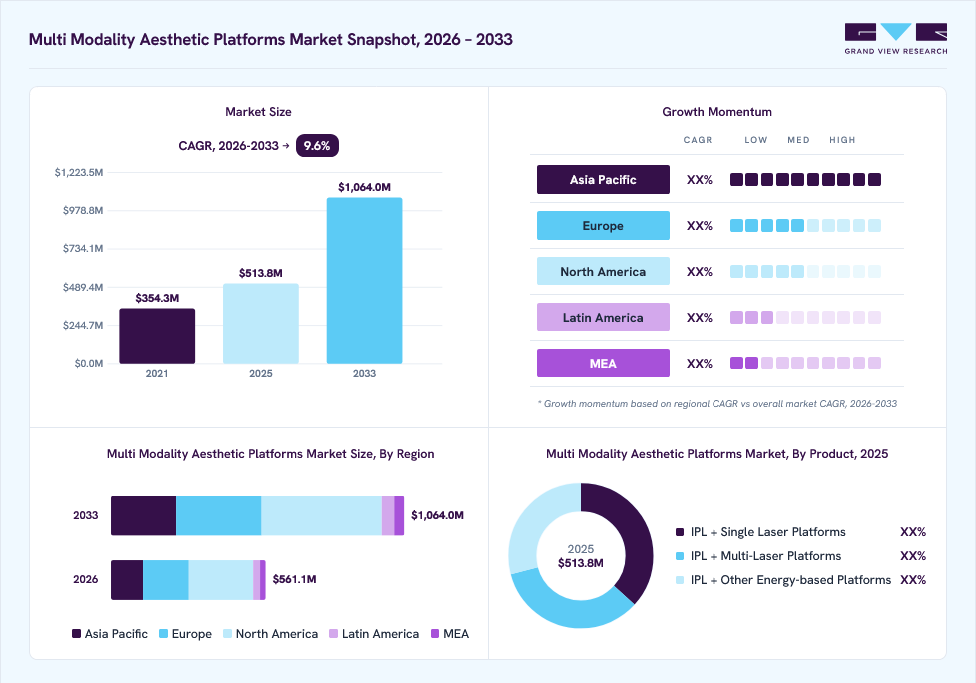
The global multi modality aesthetic platforms market size was valued at USD 513.8 million in 2025 and is projected to grow from USD 561.1 million in 2026 to USD 1,064.0 million by 2033, at a CAGR of 9.6% from 2026 to 2033. North America dominated the global market, accounting for the largest revenue share of 41.7% in 2025. The market is expanding as aesthetic practices increasingly adopt versatile energy-based systems capable of addressing multiple indications through different lasers, intense pulsed light (IPL), radiofrequency (RF), microneedling, and other energy modalities.
Key Market Trends & Insights
- By product: IPL + single laser platforms held the largest revenue share of 36.7% in 2025
- By application: Skin rejuvenation and photorejuvenation held the largest revenue share of 26.1% in 2025
- By end use: Medspas held the largest revenue share of 33.5% in 2025
Regional Highlights
- Largest regional market: North America (41.7% revenue share, 2025)
- Fastest-growing regional market: Asia Pacific (fastest CAGR, 2026-2033)
- By country: The U.S. is expected to grow significantly from 2026 to 2033
Market Size & Forecast
- Market Size in 2025: USD 513.8 Million
- Estimated Market Size in 2026: USD 561.1 Million
- Projected Market Size by 2033: USD 1,064.0 Million
- CAGR (2026-2033): 9.6%
Demand in the multi modality aesthetic platforms industry is supported by the growing preference for minimally invasive procedures that provide visible results with limited downtime, as well as by the increasing number of patients seeking treatment for skin aging, pigmentation, vascular lesions, acne scars, unwanted hair, skin laxity, and other cosmetic concerns. According to the American Society of Plastic Surgeons (ASPS), more than 28.5 million minimally invasive aesthetic procedures were performed in the U.S. in 2024, including approximately 3.70 million skin-resurfacing procedures and 3.11 million skin-treatment procedures, which include laser hair removal, IPL, tattoo removal, and laser treatment of leg veins. The large procedural volume demonstrates the broad patient demand for energy-based aesthetic treatments and supports the need for platforms that allow providers to offer multiple procedures using a single system.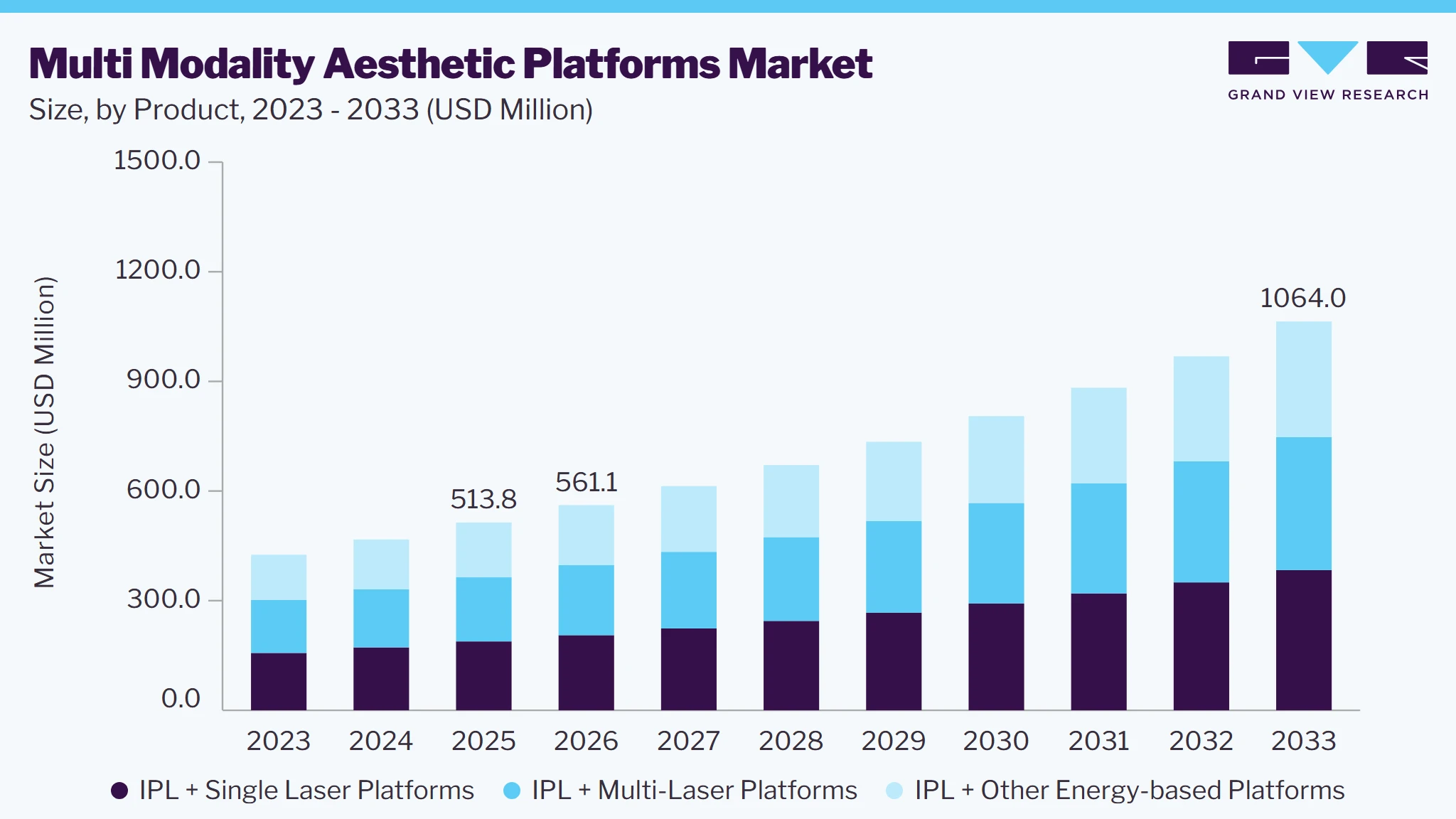
"Lasers are safe for targeting blood vessels in all skin types, but often require several treatments"
"Pigment or tattoo removal lasers can be used with varying intensity for minimal downtime with multiple treatments, or more downtime with fewer treatments"
Board-certified dermatologist, Los Angeles
A major growth driver for the multi modality aesthetic platforms market is the rising demand for skin rejuvenation and treatment of age-related skin changes, supported by global population aging. The World Health Organization (WHO) reports that the proportion of the global population aged 60 years and older is expected to increase from 12% in 2015 to 22% by 2050, with the number of people aged 60 years and older projected to reach 2.1 billion by 2050. As the aging population grows, demand is increasing for non-surgical treatments targeting wrinkles, uneven pigmentation, sun damage, skin laxity, and declining skin texture. This trend is reflected in the increasing use of combination and multi-modality approaches in aesthetic practices. ASPS notes that IPL, laser resurfacing, and other minimally invasive skin treatments can be selected according to specific concerns such as pigmentation, redness, skin texture, and signs of aging. Consequently, platforms that integrate multiple wavelengths or technologies enable providers to customize treatment intensity and modality based on the patient's skin condition, age, skin type, and desired outcome, making such systems attractive to dermatology clinics, plastic surgery practices, and medical spas.
The high prevalence of dermatological conditions that can be addressed with energy-based modalities is another important factor supporting market growth. Acne, acne scarring, rosacea, pigmentation abnormalities, vascular lesions, and unwanted hair create a large potential patient base for aesthetic laser and light treatments. A global epidemiological study published in the Journal of the American Academy of Dermatology reported an overall acne prevalence of 20.5%, increasing to 28.3% among individuals aged 16-24 years, while approximately one in five people aged 25-39 years was affected by acne. The American Academy of Dermatology (AAD) also recognizes laser and light-based therapies as treatment options for selected acne-related concerns, while laser and light treatments can reduce redness and visible blood vessels associated with rosacea. A recent systematic review covering 19 population-based studies and approximately 64.1 million individuals estimated pooled global rosacea prevalence at 3.22%, further demonstrating the sizeable population affected by conditions for which energy-based treatments may be considered. The presence of multiple indications within the same patient population encourages clinics to acquire multi-modality platforms rather than separate single-purpose systems.
Market Dynamics
The multi-modality aesthetic platforms market is witnessing steady growth as aesthetic practices increasingly adopt integrated systems that combine multiple energy-based technologies within a single platform to address a broader range of cosmetic and dermatological concerns. Demand is being supported by the growing preference for minimally invasive aesthetic procedures, shorter treatment times, limited downtime, and personalized treatment protocols that can target multiple indications during a single clinical visit. Multi-modality platforms typically integrate two or more technologies, including laser, intense pulsed light (IPL), radiofrequency (RF), ultrasound, microneedling, and other energy-based modalities, enabling practitioners to perform skin resurfacing, pigmentation correction, vascular lesion treatment, hair removal, skin tightening, wrinkle reduction, acne treatment, and body contouring using a consolidated device platform.
The growing demand for comprehensive and combination aesthetic treatments is a major driver for the multi-modality aesthetic platforms market. Consumers are increasingly looking for treatments that can address several concerns, such as wrinkles, pigmentation, skin laxity, uneven skin tone, acne scars, vascular lesions, and unwanted hair, rather than undergoing separate procedures for each concern. This is encouraging aesthetic clinics and dermatology practices to adopt platforms that combine multiple technologies, including IPL, lasers, radiofrequency (RF), RF microneedling, and high-intensity focused ultrasound (HIFU). Multi-modality systems allow practitioners to select different technologies according to the patient's skin condition and combine treatments within a customized treatment plan. A 2024 clinical report involving a multi-modality system demonstrated the use of IPL, 808-nm diode laser, HIFU, RF microneedling, and thermal RF for different facial, neck, and décolleté rejuvenation needs, supporting the increasing clinical use of combination approaches. Recent product developments further highlight this trend. In April 2025, Alma Lasers introduced the latest Alma Harmony platform, integrating five technologies: Q-Switch laser, fractional ablative laser, IPL, non-ablative laser, and green diode laser to provide treatment options for different indications and skin types. The company specifically positioned the platform around patient personalization and a broader range of treatment possibilities, demonstrating how manufacturers are responding to the need for versatile systems.
A major restraint for the growth of the multi-modality aesthetic platforms market is the high initial investment and training requirements associated with these systems. Multi-modality platforms integrate several technologies, handpieces, and treatment functions into one system, which can make the equipment expensive to purchase, maintain, and upgrade. For smaller dermatology clinics, medical spas, and aesthetic practices, the upfront investment can be difficult to justify, particularly when individual technologies may already be available as standalone devices. In addition, each modality has different operating parameters, treatment protocols, contraindications, and safety requirements, increasing the need for proper operator training. The FDA emphasizes that aesthetic devices carry procedure-specific risks and that providers should have appropriate training and experience before performing treatments. The clinical and safety risks associated with improper use further strengthen this restraint. Multimodal platforms may require practitioners to understand different energy sources and select appropriate settings based on skin type, treatment area, and patient condition. The FDA's October 2025 safety communication on RF microneedling reported serious complications, including burns, scarring, fat loss, disfigurement, and nerve damage, highlighting the importance of trained operators and appropriate device use.
Market Concentration & Characteristics
The multi-modality aesthetic platforms market is moderately concentrated, with leading companies such as Alma Lasers, Cutera, Candela, Lumenis, InMode, and Cynosure holding strong positions across different technology categories. These companies are increasingly competing through multi-technology platforms that integrate or accommodate multiple energy-based modalities, including lasers, intense pulsed light (IPL), radiofrequency (RF), RF microneedling, ultrasound, and other energy technologies. Competition is increasingly centered on platform versatility, treatment customization, clinical outcomes, ease of use, and the ability to address multiple aesthetic indications using a single system.
The multi-modality aesthetic platforms industry is characterized by a high degree of innovation, as manufacturers increasingly integrate multiple laser, intense pulsed light (IPL), radiofrequency, and other energy-based technologies into modular platforms that enable providers to address a broader range of aesthetic indications using a single system. Innovation is increasingly focused on multimodal treatment delivery, customizable treatment parameters, interchangeable handpieces, automated energy delivery, improved treatment precision, and reduced procedure and downtime requirements, allowing aesthetic practices to tailor treatments according to individual patient needs while improving equipment utilization and workflow efficiency. A notable recent development was the launch of HALO TRIBRID by Sciton in September 2025, a 3-in-1 customizable resurfacing laser that combines 2,940 nm, 1,927 nm, and 1,470 nm wavelengths within a single handpiece and is integrated with the company's multi-module JOULE X platform.
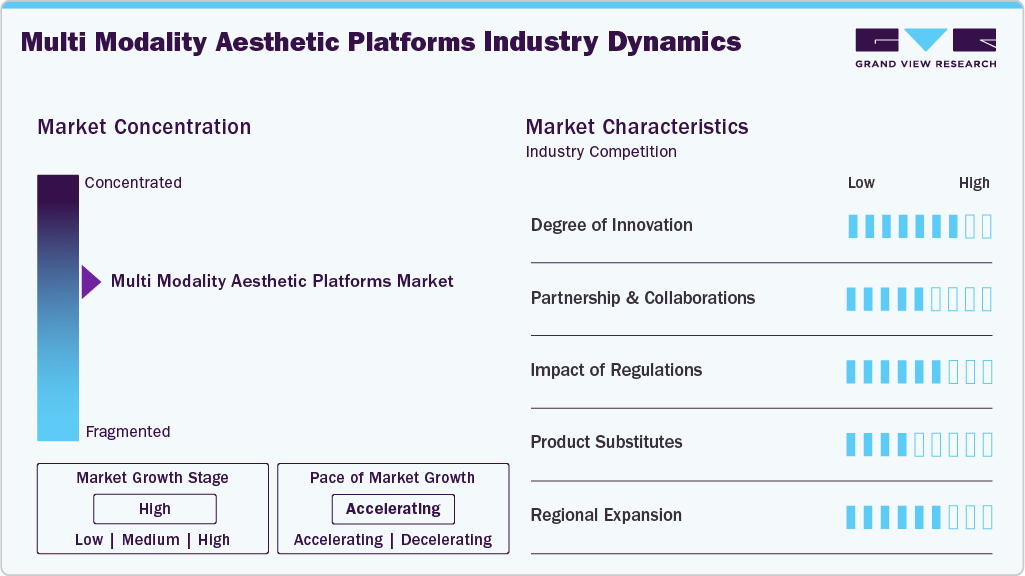
Partnerships and collaborations are becoming an important strategy in the multi-modality aesthetic platforms market as manufacturers seek to broaden treatment capabilities, combine complementary technologies, strengthen clinical expertise, and accelerate adoption of combination-treatment protocols. Rather than developing every technology internally, aesthetic device companies increasingly collaborate with technology providers, clinicians, training organizations, and other industry stakeholders to expand their treatment ecosystems and improve the clinical utilization of multi-modality platforms. For instance, in March 2026, Cartessa Aesthetics partnered with South Korea-based Classys to introduce QUADESSY in the U.S., an advanced radiofrequency microneedling platform integrating minimally invasive and non-invasive RF technologies. The platform uses a dual-depth design and multiple handpieces to deliver customized treatment across different skin layers and indications, while automated impedance measurement supports consistent energy delivery.
Regulatory oversight has a significant impact on the multi-modality aesthetic platforms industry, as manufacturers must demonstrate the safety, performance, and appropriate intended use of energy-based technologies before commercializing devices in major markets. In the U.S., aesthetic devices may fall under FDA medical device regulations, depending on their intended use and whether they affect the structure or function of the body, while devices subject to the 510(k) pathway must demonstrate substantial equivalence to a legally marketed device before commercialization. Regulatory requirements are particularly important for multi-modality platforms because a single system may incorporate different wavelengths, energy sources, handpieces, or treatment modes, requiring manufacturers to establish appropriate safety and performance characteristics for the intended applications. FDA has issued specific guidance for aesthetic laser systems, including recommendations addressing device description, performance testing, labeling, and information required in 510(k) submissions.
The multi-modality aesthetic platforms market faces substitution from standalone energy-based devices, injectable treatments, surgical procedures, and non-device-based aesthetic treatments that can deliver similar outcomes for individual indications. Standalone laser, intense pulsed light (IPL), radiofrequency (RF), ultrasound, and microneedling devices represent direct substitutes because they can address specific applications such as skin rejuvenation, pigmentation, vascular lesions, acne scars, skin tightening, and hair removal without requiring a multi-modality platform. For clinics with a narrower treatment portfolio, purchasing a single-purpose device may entail a lower initial investment and simpler operation than acquiring a platform that incorporates multiple technologies. However, multi-modality systems can offer greater treatment versatility and equipment utilization when providers manage multiple aesthetic indications.
Regional expansion is an important growth strategy in the multi-modality aesthetic platforms market as manufacturers seek to extend their geographic presence through international product launches, distribution partnerships, and expansion of energy-based technology portfolios. Companies are increasingly targeting North America, Europe, and Asia Pacific, where aesthetic practices are adopting platforms capable of addressing multiple indications while improving equipment utilization and treatment versatility. The expansion strategy is particularly evident among manufacturers originating in Asia and Europe that are entering the U.S. and other high-value markets through established aesthetic-device distributors. For instance, in July 2026, Cynosure Lutronic announced the European launch of XERF, a dual-frequency monopolar RF skin-tightening platform previously available in the U.S. and Asia Pacific.
Analyst Perspective
The multi-modality aesthetic platforms market has emerged as a rapidly evolving segment within the broader aesthetic devices industry, driven by the increasing demand for comprehensive aesthetic treatments, growing adoption of minimally invasive procedures, rising preference for personalized treatment protocols, and continuous innovation in energy-based aesthetic technologies. Unlike single-modality devices that are designed to address specific aesthetic concerns, multi-modality platforms integrate two or more technologies, such as laser, intense pulsed light (IPL), radiofrequency (RF), ultrasound, and other energy-based modalities, into a single system. This approach enables aesthetic providers to address multiple indications, including skin rejuvenation, pigmentation, vascular lesions, skin tightening, body contouring, and hair removal, through a more versatile treatment platform.
Product Insights
The IPL + single laser platforms segment dominated the multi modality aesthetic platforms industry in 2025, accounting for the largest revenue share of 36.7%. These systems provide clinics with a practical combination of two complementary energy modalities on a single platform. Within this product category, platforms generally combine IPL with a single laser technology, such as Nd:YAG, fractional laser, or Q-switched laser, allowing practitioners to address pigmentation, vascular lesions, photodamage, hair removal, skin rejuvenation, and other common aesthetic indications using a single workstation. The segment benefits from growing demand for versatile equipment that can expand a clinic's treatment menu while reducing the need to purchase and maintain several standalone systems. For example, Sciton’s mJOULE is a compact dual-module aesthetic platform combining BBL HEROic and MOXI, providing complementary light- and laser-based treatments for skin rejuvenation and maintenance. The platform is designed to provide multiple treatment capabilities on a single workstation, helping practices address different aesthetic needs while maintaining a compact footprint.
The IPL + other energy-based platforms segment is expected to grow at the fastest CAGR of 9.8% over the forecast period. The growth is supported by increasing interest in platforms that combine IPL with radiofrequency (RF), electromagnetic energy, ultrasound, or other non-laser energy modalities to address different tissue depths and aesthetic concerns within a single system. Unlike IPL + single laser platforms, these products can combine light-based treatments for pigmentation, vascular concerns, acne, or hair removal with thermal or electromagnetic technologies for skin tightening, collagen remodeling, wrinkle reduction, and body treatments, making them attractive to clinics seeking broader treatment portfolios and combination procedures. A recent example is InMode's OptimasMAX, which integrates IPL with fractional radiofrequency, bipolar RF, and laser-based technologies in an expandable workstation, reflecting the industry's shift toward multifunctional systems that address multiple aesthetic concerns on a single platform.
Application Insights
The skin rejuvenation and photorejuvenation segment dominated the multi modality aesthetic platforms market, accounting for the largest revenue share in 2025 and is expected to grow at the fastest CAGR over the forecast period. The demand is driven by the need to manage photoaging, pigmentation, uneven skin tone, vascular redness, fine lines, wrinkles, and declining skin texture. The large addressable patient base, increasing awareness of sun-related skin damage, and the preference for non-surgical procedures with limited downtime are encouraging aesthetic practices to invest in platforms that can treat multiple concerns using complementary energy technologies. This application is particularly well-suited to multimodality platforms because IPL/light technologies can target pigmentation and vascular abnormalities, while laser technologies can provide resurfacing and collagen-remodeling effects.
The acne segment is expected to grow at a significant CAGR over the forecast period. Acne remains one of the most common skin conditions, particularly among adolescents and young adults, and its effects can persist into adulthood, including post-inflammatory hyperpigmentation and acne scarring, creating demand for both active acne and corrective aesthetic treatments. Importantly, recent epidemiological evidence indicates that the global acne burden is not simply stable: a 2025 analysis of Global Burden of Disease data reported that the global age-standardized prevalence of acne vulgaris increased from 8,563.4 per 100,000 people in 1990 to 9,790.5 per 100,000 in 2021, with adolescents aged 15-19 years recording the highest age-specific prevalence and those aged 10-14 years experiencing the largest increase over the period. This expanding and persistent patient population is creating opportunities for energy-based aesthetic treatments, particularly where patients seek alternatives or complements to conventional topical and systemic therapies.
End Use Insights
The medspas segment held the largest revenue share of the multi modality aesthetic platforms industry in 2025 and is expected to grow at the fastest CAGR over the forecast period. The growth is supported by the increasing consumer preference for convenient, minimally invasive aesthetic procedures and the expansion of treatments offered by medical spas. Medspas increasingly offer a wide range of treatments, including skin rejuvenation, pigmentation correction, acne and acne-scar treatment, hair removal, vascular-lesion treatment, skin tightening, and body contouring, increasing the demand for multi-modality aesthetic platforms that combine several energy-based technologies in a single system. Compared with purchasing multiple standalone devices, multi-modality platforms can allow medspas to address a wider range of indications while improving room utilization, reducing equipment footprint, and enabling practitioners to develop combination or sequential treatment protocols. Growing demand for personalized treatments is another important factor, as patients increasingly expect treatments tailored to their skin type, condition, and desired downtime rather than a one-size-fits-all procedure.
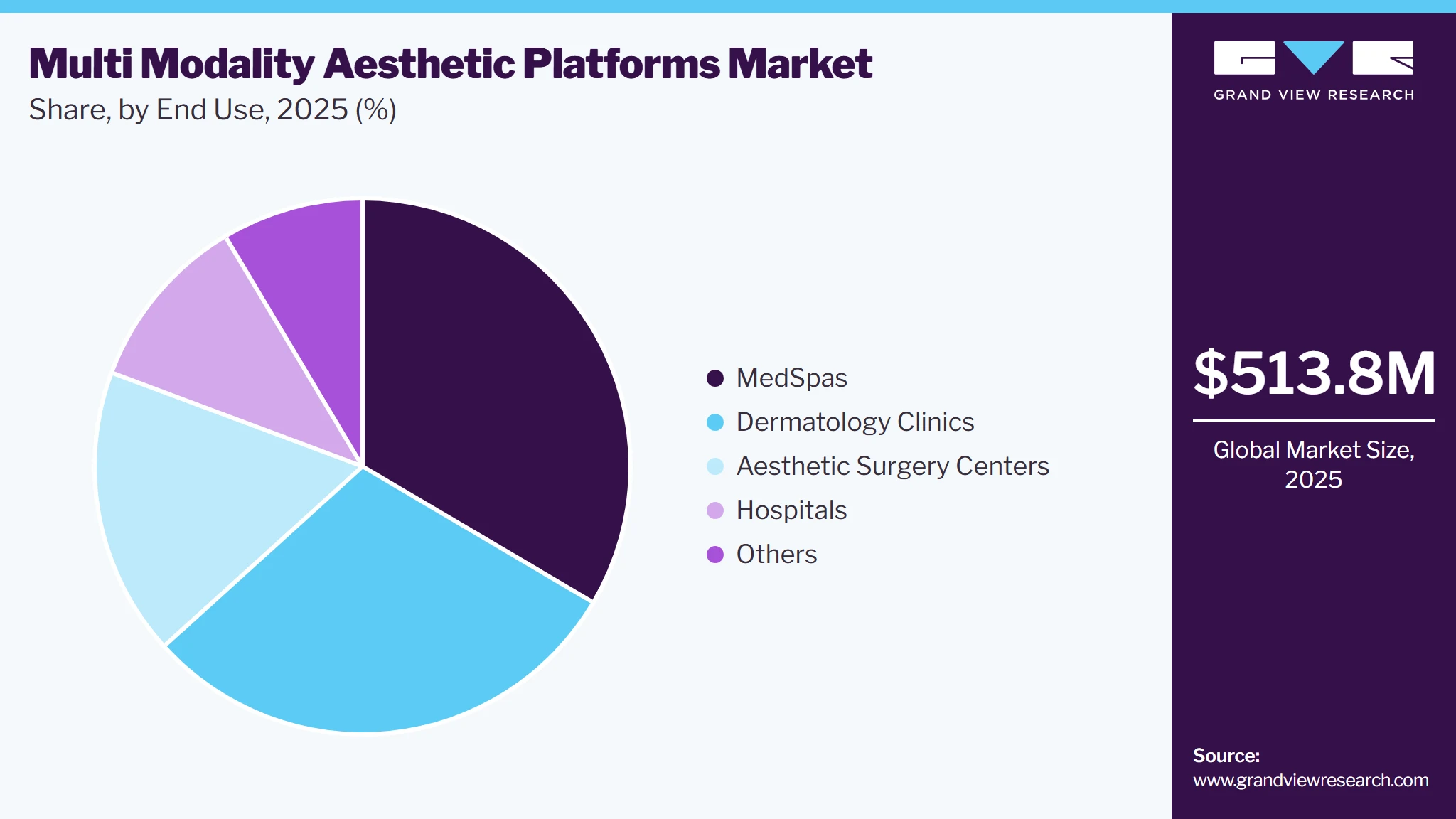
The dermatology clinics segment is anticipated to grow at the second-fastest CAGR over the forecast period. The growth is driven by the expansion of dermatology practices into cosmetic dermatology and the increasing demand for minimally invasive aesthetic procedures. Dermatology clinics treat a wide range of conditions, creating a need for platforms that can address multiple indications using different energy-based technologies. Multi modality aesthetic platforms are therefore gaining importance, as they enable dermatologists to offer multiple treatments with a single system, improve equipment utilization, reduce the need for multiple standalone devices, and support personalized treatment plans based on patients’ skin types and specific conditions. The growing adoption of combination and customized treatment approaches, along with increasing patient preference for procedures involving less downtime, is further encouraging dermatology clinics to invest in versatile aesthetic technologies.
Regional Insights
The North America multi modality aesthetic platforms market accounted for the largest revenue share of 41.7% in 2025. The region’s leading position can be attributed to the high adoption of minimally invasive and non-invasive aesthetic procedures, strong presence of established aesthetic device manufacturers, high availability of specialized dermatology and aesthetic clinics, and growing consumer willingness to spend on appearance-related treatments. The U.S. represents the major contributor to regional demand, supported by a large and well-established aesthetic services ecosystem. According to the American Society of Plastic Surgeons (ASPS), more than 28 million minimally invasive procedures were reported in the U.S. in 2024, demonstrating the substantial underlying demand for procedures that commonly use energy-based technologies such as lasers, light-based systems, and skin-resurfacing devices.

U.S. Multi Modality Aesthetic Platforms Market Trends
The U.S. multi modality aesthetic platforms industry is experiencing robust growth, driven by the high volume of aesthetic procedures, increasing preference for minimally invasive treatments, technological advancements in energy-based devices, and the expansion of aesthetic practices and medical spas. U.S. consumers increasingly favor procedures that provide visible results with limited downtime, creating demand for technologies such as laser resurfacing, IPL, RF, ultrasound, and RF microneedling. This demand is reflected in the 2024 ASPS statistics, which reported 9.88 million neuromodulator procedures, 5.33 million HA filler procedures, and 3.70 million skin-resurfacing procedures, illustrating the scale of the country's minimally invasive aesthetic treatment ecosystem. For multimodal platforms specifically, this broad mix of procedures creates an attractive environment for systems that can support multiple indications and combination treatment protocols, rather than requiring clinics to purchase separate devices for each application.
Europe Multi Modality Aesthetic Platforms Market Trends
The Europe multi modality aesthetic platforms industry is shaped by the strong adoption of non-invasive and minimally invasive aesthetic procedures, increasing consumer acceptance of aesthetic treatments, and the region’s established dermatology and medical aesthetics infrastructure. Demand is particularly supported by growing interest in skin rejuvenation, tightening, resurfacing, pigmentation correction, hair removal, and body-contouring procedures, which creates a favorable environment for platforms that combine multiple energy-based technologies. The region also benefits from stringent medical-device standards under the EU Medical Device Regulation (MDR), which support confidence in the safety and performance of compliant aesthetic devices. In addition, Europe has a strong cross-border medical aesthetics ecosystem, with countries such as Spain attracting international patients for aesthetic procedures.
The UK multi modality aesthetic platforms market is steadily growing. The growth is driven by increasing demand for non-surgical aesthetic procedures, a well-developed network of dermatology and aesthetic clinics, growing consumer preference for treatments with limited downtime, and continued adoption of advanced energy-based technologies. The UK is also an important European market for aesthetic procedures and has a growing focus on treatment safety and practitioner standards. In 2025, the Joint Council for Cosmetic Practitioners (JCCP) highlighted the importance of appropriate premises standards for non-surgical aesthetic treatments, while the UK Government continued work toward stronger regulation of higher-risk cosmetic procedures. These developments are significant for multi-modality platforms because clinics increasingly require reliable, clinically supported technologies that can be operated within professional treatment environments.
The Spain multi modality aesthetic platforms market is experiencing significant growth, driven by the country's strong aesthetic treatment sector, rising demand for non-invasive procedures, increasing medical tourism, and growing availability of aesthetic clinics equipped with advanced technologies. Spain has become an important destination for international aesthetic patients, supported by its developed healthcare infrastructure, experienced aesthetic practitioners, and relatively accessible treatment costs. The country's growing preference for non-invasive procedures is particularly relevant to multimodal platforms, as treatments such as laser hair removal, skin resurfacing, skin tightening, pigmentation correction, and body contouring can be delivered using various energy-based technologies.
Asia Pacific Multi Modality Aesthetic Platforms Market Trends
The Asia Pacific multi modality aesthetic platforms industry is gaining significant momentum and is expected to grow at the fastest CAGR of 10.7% during the forecast period. The market growth is driven by the rapid expansion of medical aesthetics, increasing consumer acceptance of non-invasive and minimally invasive procedures, rising disposable incomes, growing awareness of aesthetic treatments, and the increasing availability of advanced dermatology and aesthetic clinics across the region. Asia Pacific also has a strong base of aesthetic technology innovation, particularly in countries such as China, South Korea, Japan, and Australia. In addition, the region's growing preference for personalized treatments and combination procedures is encouraging clinics to invest in platforms capable of addressing multiple indications, including pigmentation, wrinkles, acne scars, skin laxity, vascular conditions, and unwanted hair, through different energy modalities.
China's multi modality aesthetic platforms market is experiencing rapid expansion, driven by the country's large and increasingly sophisticated medical aesthetics industry, rising consumer interest in non-invasive treatments, growing demand for skin rejuvenation, and continued development of domestic aesthetic-device technologies. The growing adoption of energy-based aesthetic procedures is creating opportunities for platforms that integrate technologies such as IPL, lasers, radiofrequency, ultrasound, and microneedling into a single system. In parallel, China's regulatory environment is placing greater emphasis on medical-device quality and lifecycle management; the National Medical Products Administration (NMPA) released a revised Good Manufacturing Practice framework for medical devices in 2025, with implementation scheduled for November 2026. These developments, together with the expansion of professional aesthetic clinics and increasing consumer demand for customized and combination treatments, are supporting the adoption of multifunctional aesthetic platforms in China.
The multi modality aesthetic platforms market in South Korea is experiencing strong growth, driven by the country's well-established medical aesthetics industry, high consumer acceptance of cosmetic procedures, strong demand for skin rejuvenation and contouring treatments, and its position as an important hub for aesthetic device innovation. The country's K-beauty culture, advanced dermatology infrastructure, high concentration of aesthetic clinics, and growing medical tourism have created a favorable environment for energy-based aesthetic technologies. South Korea is also an important source of aesthetic-device innovation, with domestic manufacturers developing laser, RF, ultrasound, and other energy-based systems for both domestic and international markets. Moreover, the availability of skilled practitioners and high demand for skin tightening, resurfacing, pigmentation correction, hair removal, and other non-surgical procedures are creating strong opportunities for multi-modality platforms that enable clinics to offer multiple treatments using a single equipment system.
Latin America Multi Modality Aesthetic Platforms Market Trends
The Latin America multi modality aesthetic platforms industry is emerging as a high-growth region, driven by the increasing adoption of non-surgical aesthetic procedures, growing consumer interest in appearance-enhancing treatments, expansion of aesthetic clinics, and rising availability of advanced energy-based technologies. According to the 2024 International Society of Aesthetic Plastic Surgery (ISAPS) Global Survey, Brazil recorded approximately 769,245 non-surgical aesthetic procedures, demonstrating the substantial demand for non-surgical treatments in the region. The growing preference for procedures with limited downtime, including skin tightening, facial rejuvenation, laser-based treatments, and body-contouring procedures, is creating opportunities for multi-modality platforms that enable providers to address several aesthetic indications using different energy technologies.
The Brazil multi modality aesthetic platforms market is growing. The growth is supported by the country's large base of aesthetic procedures, strong consumer acceptance of cosmetic treatments, an established network of plastic surgeons and dermatology clinics, and increasing demand for non-surgical and minimally invasive procedures. Brazil ranked second globally for total aesthetic procedures in 2024, with more than 3.1 million surgical and non-surgical procedures. This broad mix of aesthetic services supports demand for multifunctional equipment capable of treating different skin concerns and supporting combination treatment protocols. Furthermore, Brazil's strong aesthetic medicine culture and established professional infrastructure create favorable conditions for manufacturers offering platforms that combine laser, IPL, RF, ultrasound, and other energy-based technologies.
Middle East & Africa Multi Modality Aesthetic Platforms Market Trends
The Middle East & Africa (MEA) multi modality aesthetic platforms industry is witnessing steady growth, driven by rising demand for aesthetic procedures, increasing investment in modern healthcare infrastructure, growing medical tourism, and expanding availability of specialized dermatology and aesthetic centers. The region's medical aesthetics sector is also supported by the growing popularity of non-surgical procedures such as skin tightening, hair removal, facial rejuvenation, pigmentation treatment, and body contouring, creating opportunities for platforms capable of delivering multiple treatment modalities. The UAE and other Gulf markets are also important destinations for international aesthetic patients. As providers increasingly seek to offer broader treatment portfolios while maintaining efficient use of clinical space and capital equipment, multi-modality platforms are becoming attractive alternatives to purchasing several standalone systems.
The Saudi Arabia multi modality aesthetic platforms market is experiencing notable growth, driven by increasing consumer demand for cosmetic and dermatological treatments, expansion of private healthcare and aesthetic facilities, healthcare-sector modernization under Saudi Vision 2030, and growing adoption of advanced laser and energy-based technologies. The country's healthcare transformation is encouraging investment in modern clinical infrastructure and improving regulatory oversight of cosmetic procedures. Saudi Arabia is also developing as a regional destination for medical and aesthetic services, while consumers increasingly seek treatments for skin rejuvenation, hair removal, skin tightening, pigmentation, and body contouring. This combination of rising demand for procedures, infrastructure development, and greater emphasis on professional and compliant use of cosmetic laser technologies is creating opportunities for multimodal platforms that enable aesthetic providers to deliver multiple treatments through a single integrated system.
Key Multi Modality Aesthetic Platforms Company Insights
The multi-modality aesthetic platforms market is highly competitive, with leading manufacturers focusing on developing versatile systems that integrate multiple energy-based technologies to address a broad range of aesthetic concerns. Market participants are increasingly investing in combination treatment capabilities, modular platforms, interchangeable handpieces, advanced energy delivery systems, and personalized treatment protocols to meet the growing demand for non-invasive and minimally invasive aesthetic procedures.
Key Multi Modality Aesthetic Platforms Companies
The following key companies have been profiled for this study of the multi modality aesthetic platforms market.
-
Sciton Inc.
-
Alma Lasers
-
Lumenis Ltd
-
Candela Medical
-
InMode Ltd
-
Cutera, Inc.
-
Solta Medical
-
VYDENCE Medical
-
Cynosure
-
DEKA M.E.L.A
Competitive Benchmarking
Category
Operating Strategies
Competitive Edge
Weakness
Established Players (Sciton Inc., Alma Lasers, Lumenis Ltd, Candela Medical)
- Focus on expanding integrated aesthetic platforms combining RF, laser, IPL, ultrasound, and other energy-based technologies to address multiple aesthetic indications.
- Emphasize platform innovation, clinical validation, product upgrades, physician training, and strategic partnerships to strengthen adoption across dermatology clinics, medical spas, and aesthetic practices.
- Strong brand recognition, established physician relationships, broad technology portfolios, and extensive distribution networks support market penetration.
- Multi-modality platforms enable multiple treatments through a single system, improving treatment versatility, workflow efficiency, and equipment utilization.
- High R&D, regulatory, clinical validation, manufacturing, and quality-compliance costs increase operational complexity.
- Complex multi-modality systems may require extensive physician training, maintenance, and handpiece management, while larger organizations can have slower product-development cycles.
Emerging Players (Solta Medical, VYDENCE Medical, DEKA M.E.L.A)
- Focus on flexible, cost-effective, modular platforms that integrate complementary aesthetic technologies and address the growing demand for combination treatments.
- Prioritize differentiated technologies, simplified workflows, digital connectivity, physician education, and distributor partnerships to accelerate adoption and geographic expansion.
- Faster innovation cycles and flexible product development enable emerging companies to respond rapidly to demand for personalized and combination aesthetic treatments.
- Competitive pricing, modular configurations, compact systems, and user-friendly interfaces improve accessibility for independent clinics and medical spas.
- Limited brand recognition, installed base, financial resources, and distribution networks can restrict physician adoption and geographic penetration.
- Regulatory approval, clinical evidence requirements, physician training, and after-sales service infrastructure can delay commercialization and increase expansion costs.
Recent Developments
-
In November 2025, Lumenis launched the Stellar M22, a next-generation multi-application aesthetic platform featuring XPL (Expert Pulsed Light), ResurFX, Multi-Spot Nd, and Q-Switched Nd technologies. The platform supports more than 30 skin and hair-removal treatments and expands IPL-based treatment capabilities through advanced pulse design and in-motion treatment functionality, strengthening Lumenis’ portfolio of IPL + multi-laser platforms.
-
In March 2025, Alma Lasers announced the global debut of the new Alma Harmony, an upgraded multi-platform aesthetic system integrating IPL, Q-Switch laser, fractional ablative laser, non-ablative lasers, and green diode laser technologies. The platform expands treatment versatility through multiple energy modalities in a single system, supporting personalized treatments for skin rejuvenation, resurfacing, pigmentation, vascular lesions, hair removal, and tattoo removal, strengthening the IPL + multi-laser platform segment.
Multi Modality Aesthetic Platforms Market Report Scope
Report Attribute
Details
Market size in 2025
USD 513.8 million
Estimated market size in 2026
USD 561.1 million
Projected market size by 2033
USD 1,064.0 million
Growth rate
CAGR of 9.6% from 2026 to 2033
Base year for estimation
2025
Historical data
2021 - 2024
Forecast period
2026 - 2033
Quantitative units
Revenue in USD million/billion and CAGR from 2026 to 2033
Report coverage
Revenue forecast, company ranking, competitive landscape, growth factors, and trends
Segments covered
Product, application, end use, region
Regional scope
North America; Europe; Asia Pacific; Latin America; MEA
Country scope
U.S.; Canada; Mexico; UK; Germany; France; Italy; Spain; Denmark; Sweden; Norway; Japan; China India; Australia; Thailand; South Korea; Brazil; Argentina; South Africa; Saudi Arabia; UAE; Kuwait
Key companies profiled
Sciton Inc.; Alma Lasers; Lumenis Ltd; Candela Medical; InMode Ltd; Cutera, Inc.; Solta Medical; VYDENCE Medical; Cynosure; DEKA M.E.L.A
Customization scope
Free report customization (equivalent up to 8 analyst’s working days) with purchase. Addition or alteration to country, regional, and segment scope
Pricing and purchase options
Avail customized purchase options to meet your exact research needs. Explore purchase options
Global Multi Modality Aesthetic Platforms Market Report Segmentation
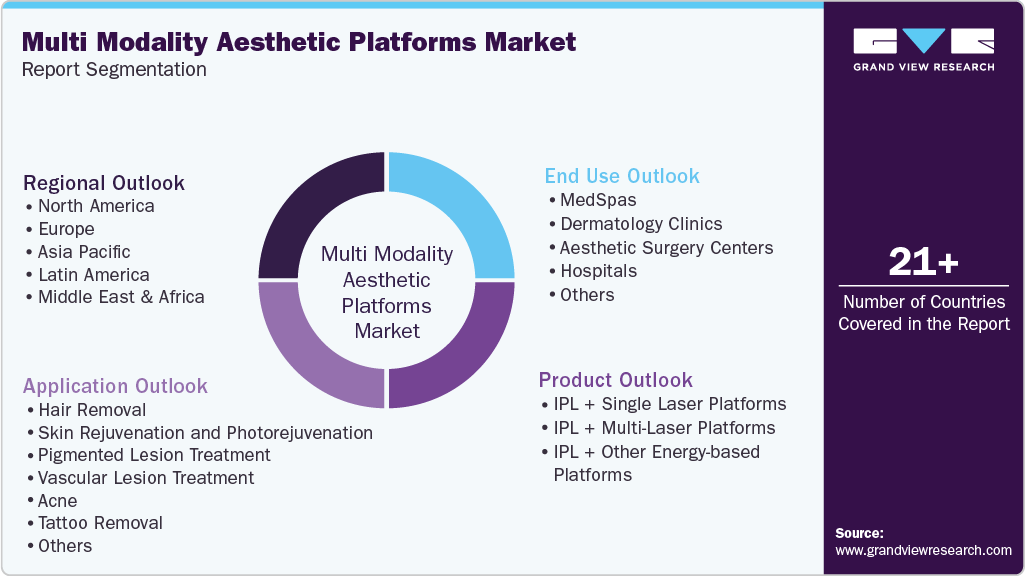
This report forecasts revenue growth at global, regional & country levels and provides an analysis of the latest industry trends in each of the sub-segments from 2021 to 2033. For this study, Grand View Research has segmented the global multi modality aesthetic platforms market report based on product, application, end use, and region:
-
Product Outlook (Revenue, USD Million, 2021 - 2033)
-
IPL + Single Laser Platforms
-
IPL + Multi-Laser Platforms
-
IPL + Other Energy-based Platforms
-
-
Application Outlook (Revenue, USD Million, 2021 - 2033)
-
Hair Removal
-
Skin Rejuvenation and Photorejuvenation
-
Pigmented Lesion Treatment
-
Vascular Lesion Treatment
-
Acne
-
Tattoo Removal
-
Others
-
-
End Use Outlook (Revenue, USD Million, 2021 - 2033)
-
MedSpas
-
Dermatology Clinics
-
Aesthetic Surgery Centers
-
Hospitals
-
Others
-
-
Regional Outlook (Revenue, USD Million, 2021 - 2033)
-
North America
-
U.S.
-
Canada
-
Mexico
-
-
Europe
-
UK
-
Germany
-
France
-
Italy
-
Spain
-
Norway
-
Denmark
-
Sweden
-
-
Asia Pacific
-
China
-
Japan
-
South Korea
-
Thailand
-
Australia
-
India
-
-
Latin America
-
Brazil
-
Argentina
-
-
MEA
-
South Africa
-
Saudi Arabia
-
UAE
-
Kuwait
-
-
Research Methodology
The multi modality aesthetic platforms market figures in this report are based on a proven research process that combines executive interviews with secondary research from proprietary databases, company filings, and recognized regulatory and institutional sources. Market size is built through value-chain sizing-reconciling supply-side and demand-side estimates-and triangulated with bottom-up and top-down approaches. Every estimate passes multiple levels of expert validation before publication, with each multi modality aesthetic platforms segment quantified using the revenue-capture definitions in the table below.
Segment Definition
Segment - Product
Revenue capture definition
IPL + Single Laser Platforms
Revenue is generated through the capital procurement of dual-technology aesthetic workstations that integrate Intense Pulsed Light (IPL) with a single, dedicated laser wavelength. Manufacturers capture upfront system sales, alongside recurring revenue from interchangeable IPL filter blocks, laser handpieces, cooling accessories, and annual preventative maintenance and service contracts.
IPL + Multi-Laser Platforms
Revenue flows from high-end, versatile aesthetic workstations that combine broadband IPL technology with two or more distinct laser wavelengths housed within a single console. Companies derive substantial capital revenue from these premium multi-application towers, supplemented by a steady stream of recurring income from modular handpiece plug-ins, laser optic recalibrations, proprietary cooling cartridges, and multi-year service warranties.
IPL + Other Energy-based Platforms
Revenue is captured through multi-modality platforms that combine broadband IPL with non-laser energy sources, such as Radiofrequency (RF), Ultrasound, or Microcurrent technologies. Market participants earn revenue by selling consolidated multi-treatment consoles to clinical practices seeking space-efficient, comprehensive treatment suites. Income is sustained through sales of disposable RF tips, contact gels, specialized transducer cartridges, and ongoing software feature upgrades.
Segment - Application
Revenue capture definition
Hair Removal
Revenue is derived from high-volume clinical treatments utilizing a combination of IPL and laser wavelengths to target follicular melanin. Device manufacturers capture strong initial console placements and ongoing aftermarket revenue from high-shot-count handpiece refurbishments, specialized cooling tips, and replacement flashlamps driven by continuous, year-round patient demand.
Skin Rejuvenation and Photorejuvenation
Revenue flows through the deployment of multi-modality platforms engineered to treat diffuse redness, fine lines, and structural skin laxity. Income is secured through high-margin equipment sales marketed to clinics targeting non-invasive, minimal-downtime procedures, generating steady pull-through for light-guide adapters, contact gels, and skin-cooling peripherals across multi-session treatment series.
Pigmented Lesion Treatment
Revenue is generated by supplying platforms optimized to deliver precise spectral wavelengths for breaking down localized epidermal and dermal melanin. Value is captured via high-margin system sales, specialized narrow-band filters, and specialized micro-spot handpiece accessories preferred by clinicians for high-precision pigment targeting.
Vascular Lesion Treatment
Revenue is captured through multi-technology platforms capable of targeting hemoglobin to treat vascular malformations, telangiectasias, rosacea, and spider veins. Manufacturers earn revenue through specialized vascular filter attachments, targeted spot-size applicators, and dynamic cooling cryogen supplies required during high-fluence vascular treatments.
Acne
Revenue flows from platforms configured to deliver short-wavelength blue/violet IPL paired with thermal energy sources to kill P. acnes bacteria and shrink hyperactive sebaceous glands. Income is driven by the placement of specialized acne-clearing handpieces, light filters, and ongoing treatment consumables across both adolescent and adult clinical demographics.
Tattoo Removal
Revenue is generated through multi-modality platforms equipped with high-peak-power Q-switched or Picosecond laser modules integrated alongside broad-spectrum light sources. Companies monetize this segment by selling high-value, specialized laser handpiece accessories, optical calibration units, and multi-wavelength optic tips designed to shatter complex, multi-colored ink pigments.
Others
Revenue encompasses alternative or expanding treatment profiles, including radiofrequency-assisted scar remodeling, body contouring/cellulite reduction, stretch mark attenuation, and specialized gynecological/feminine rejuvenation applications.
Segment - End Use
Revenue capture definition
MedSpas
Revenue is generated through fast-moving commercial aesthetic sales networks, corporate franchise procurement programs, and flexible equipment financing structures. Suppliers capture high, scalable sales volume by offering versatile, multi-modality platforms that maximize treatment offerings per square foot, driving rapid patient turnaround and strong return on investment (ROI) for non-physician-led or hybrid medical spas.
Dermatology Clinics
Revenue flows via direct physician-targeted sales pipelines, clinical buying groups (GPOs), and board-certified medical practice channels. Income is anchored on advanced, clinically backed multi-energy workstations with extensive customizable parameters, supported by long-term technical service agreements, peer-reviewed clinical protocols, and specialized handpiece attachments for medical dermatology.
Aesthetic Surgery Centers
Revenue is captured through specialized sales to plastic surgery suites and outpatient cosmetic surgery centers. Device developers earn revenue by placing high-performance multi-modality platforms used as complementary pre-procedure or post-surgical conditioning tools, backed by premium service contracts, comprehensive clinical training programs, and multi-specialty handpiece suites.
Hospitals
Revenue is derived through formal institutional healthcare procurement systems, public/private medical tenders, and rigid capital expenditure reviews. While representing a more standardized purchasing cycle, this segment delivers large, multi-unit capital orders and multi-year institutional maintenance contracts for durable, multi-application workstations deployed across dermatology, plastic surgery, and burn reconstruction departments.
Others
Revenue is captured across secondary or alternative clinical endpoints, including wellness retreats, mobile aesthetic service providers, specialized laser training institutes, and university-affiliated academic research centers requiring versatile equipment for clinical studies and certification programs.
Delivered Customizations
This report has been delivered with the following In-depth customizations
Client Request
Customization Delivered
Value Adds
Porter Analysis
Conducted a comprehensive Porter’s Five Forces analysis of the global multi-modality aesthetic platforms market, evaluating the threat of new entrants, supplier power, buyer power, threat of substitutes, and competitive rivalry. The analysis considered regulatory requirements, R&D and clinical validation costs, component suppliers, purchasing decisions of aesthetic practices, alternative treatment technologies, product differentiation, innovation, pricing, partnerships, and M&A. It also incorporated macroeconomic factors such as disposable income, aesthetic expenditure, inflation, interest rates, equipment financing, foreign exchange, and economic uncertainty influencing capital investments.
Enables stakeholders to understand the competitive structure, entry barriers, pricing pressures, supplier dependencies, and purchasing dynamics shaping the multi-modality aesthetic platforms market. The analysis supports strategic decisions related to platform development, technology sourcing, pricing, financing models, portfolio expansion, and geographic prioritization.
Competitive Landscape
Conducted a detailed competitive landscape assessment of the global multi-modality aesthetic platforms market, comparing leading manufacturers based on platform configurations, modality combinations, treatment indications, technology, clinical evidence, regulatory clearances, pricing, distribution, partnerships, product launches, and geographic presence. The analysis also evaluated strategies to expand installed bases through multifunctional platforms that can replace multiple standalone devices, considering capital expenditure, financing availability, operating costs, equipment replacement cycles, and return on investment across developed and emerging markets.
Enables stakeholders to gain a comprehensive understanding of the competitive landscape, benchmark key market participants, and identify strategic growth opportunities. The analysis supports informed decision-making related to product portfolio optimization, competitive positioning, partnership evaluation, investment prioritization, and market expansion.
Geographic Analysis
Conducted a comprehensive geographic assessment of the multi-modality aesthetic platforms market across North America, Europe, Asia Pacific, Latin America, and the Middle East & Africa, evaluating aesthetic procedure demand, clinic infrastructure, physician adoption, healthcare expenditure, disposable income, medical tourism, regulatory environments, and technology accessibility. The analysis also assessed emerging-market potential, macroeconomic conditions, distributor networks, partnerships, local manufacturing, regulatory approvals, and product launches to identify regions with favorable growth and commercialization opportunities.
Enables stakeholders to identify high-potential geographic markets, regional adoption drivers, market-entry opportunities, and economic risks influencing demand for multi-modality aesthetic platforms. The analysis supports decisions regarding regional expansion, distributor selection, localization, pricing, financing strategies, regulatory planning, and resource allocation.
About the Author(s)
Medical Devices Research Team
Healthcare · Medical DevicesThis report was authored by the medical devices research team at Grand View Research - comprising two research analysts, one senior research analyst, and one industry expert - with specialized expertise in the medical devices segment of the healthcare industry. All findings are based on proprietary healthcare databases, executive interviews, and regulatory analysis, subject to internal peer review prior to publication.
Last Updated:
Speak to Analyst


Customize this report to your needs — add regions, segments, or data points, with 20% free customization.
Or view our licence options:


ISO 9001:2015 & 27001:2022 Certified
We are GDPR and CCPA compliant! Your transaction & personal information is safe and secure. For more details, please read our privacy policy.


