
- Home
- »
- Next Generation Technologies
- »
-
Multi-Modal AI Market Size & Share Report, 2026-2033GVR Report cover

Multi-modal AI Market (2026 - 2033)
Size, Share & Trends Analysis Report By Component (Software, Service), By Data Modality (Text Data, Speech & Voice Data), By End Use (Media And Entertainment, BFSI), By Enterprise Size, By Region, And Segment Forecasts
Market Size, 2025
$2.3BMarket Estimate, 2026
$3.0BMarket Forecast, 2033
$34.0BCAGR, 2026–2033
41.4%Multi-modal AI Market Summary
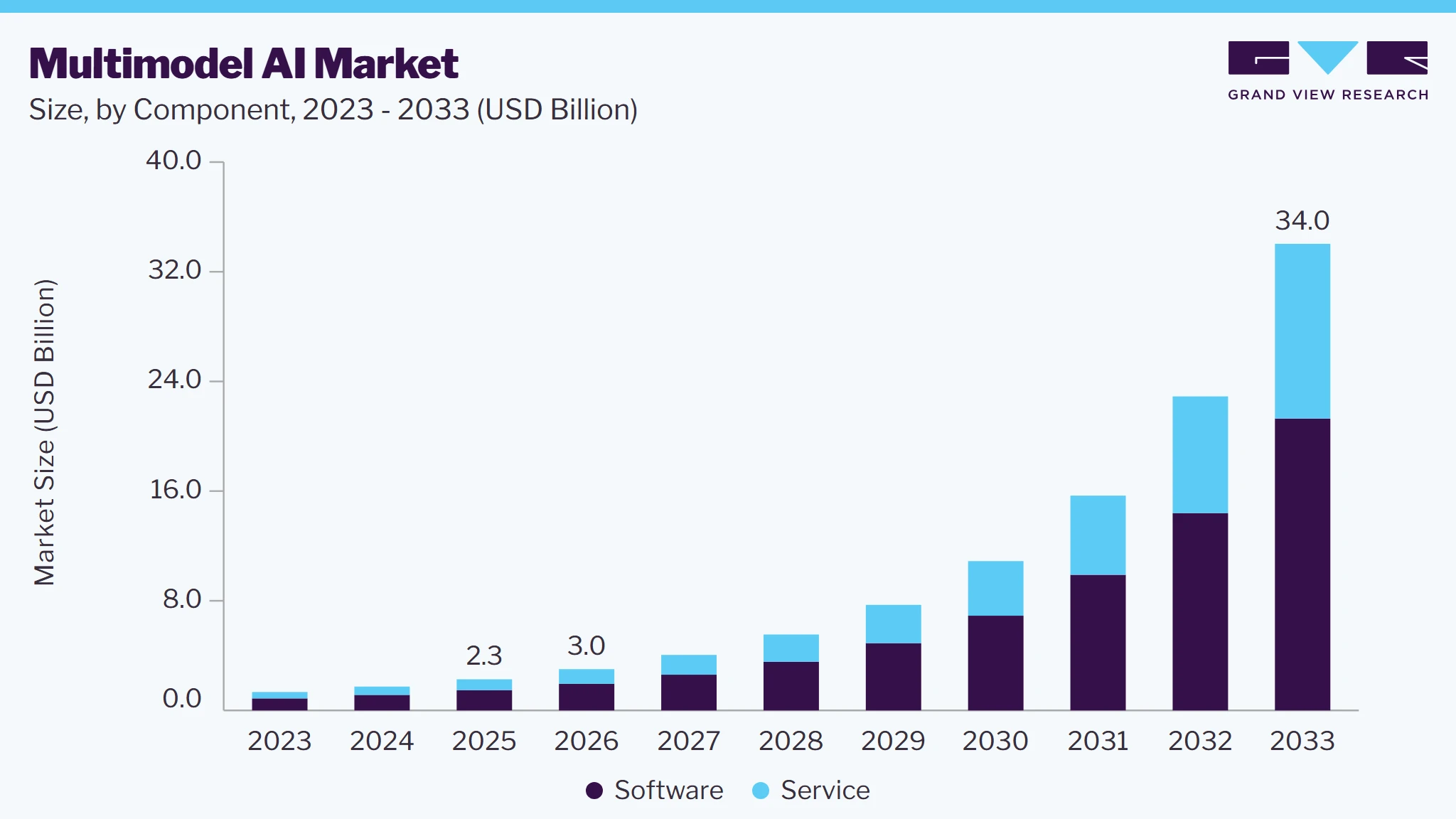
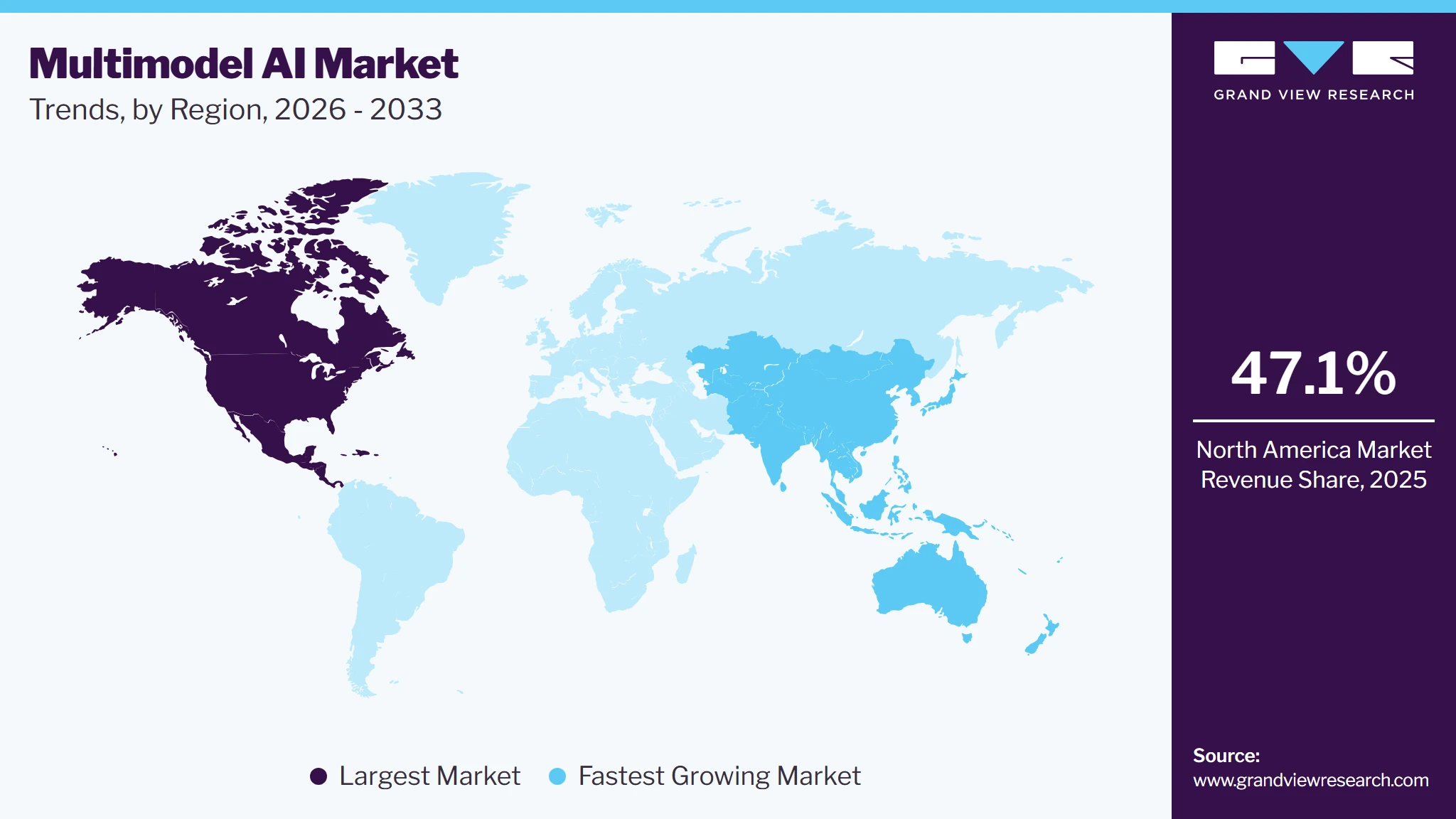
The global multi-modal AI Market size was estimated at USD 2.3 billion in 2025 and is projected to grow from USD 3.0 billion in 2026 to USD 34.0 billion by 2033, growing at a CAGR of 41.4% from 2026 to 2033. North America accounted for the largest share of 47.1% in the global Multi-modal AI Market, representing the highest revenue contribution in 2025. The region's leadership is driven by the rapid adoption of advanced artificial intelligence technologies across enterprises, strong investments in AI research and development, and the presence of leading AI technology providers and cloud infrastructure companies. Organizations across industries, including healthcare, BFSI, retail, manufacturing, automotive, and media, are increasingly deploying multimodal AI solutions to process and analyze text, images, audio, video, and sensor data within a unified framework, enabling more accurate decision-making and intelligent automation.
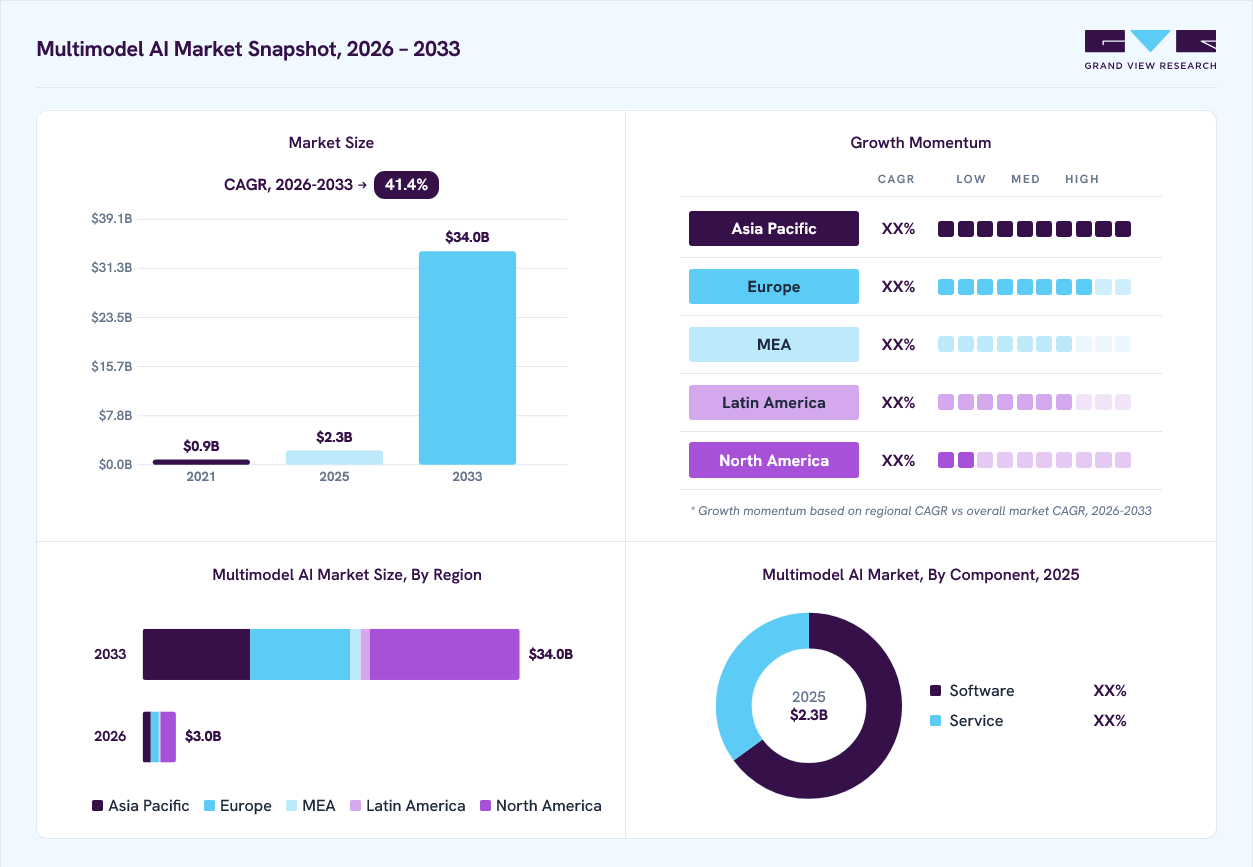 Source: Grand View Research, IR Documents, Primary Interviews, Paid DatabasesTo learn more about this report,
 Download Free Sample Report
 Key Market Trends & Insights
- North America is expected to hold a significant share of the market, with a revenue share of 47.1% by 2025.
- The global Multi-modal AI Market in U.S. led the North America market and held the largest revenue share in 2025.
- By Component, Software segment led the market and held the largest revenue share of over 64.9% in 2025.
- By Data Modality, Speech & Voice Data segment is the fastest growing segment with CAGR 42.5% during the forecast period 2026 to 2033.
Regional Highlights
- Largest regional market: North America 47.1% (revenue share, 2025)
- Fastest regional market: Asia Pacific (Highest CAGR,2025)
- By country: The U.S. held the largest market share in 2025.
Market Size & Forecast
- 2025 Market Size: USD 2.3 Billion
- 2026 Market Size: USD 3.0 Billion
- 2033 Projected Market Size: USD 34.0 Billion
- CAGR (2026-2033): 41.4%
- North America: Largest Market in 2025
- Asia Pacific: Fastest Market in 2025
Three ways to get this report
Buy it, customize it, or ask a question.Ask an Analyst
A direct answer, usually in 1 working day
- AccessReport author, directly
- Reply timeWithin 1 working day
- No sales callDirect answer only
- FormatEmail reply
- CostFree, no cost
Get the Full Report
What the study covers
- FormatsPDF · Excel · Dashboard
- Timeline2026–2033 annual, 2025 base
- Coverage20+ countries, 5 regions
- Companies10+ key players profiled
Customize the Report
20% free customization
- IncludeCountries, segments, points
- TailorTo your product definition
- ExtendDeeper competitor detail
- OrA fully bespoke study
- Turnaround5–10 working days
Multi-modal AI uses diverse data types, including video, audio, speech, images, text, and traditional numerical datasets, to improve its capability to make precise predictions, derive insightful conclusions, and offer accurate solutions to real-world issues. This strategy entails training AI systems to concurrently synthesize and process various data sources, allowing them to understand both content and context better. With the increasing adoption of multimodal AI across diverse sectors, stakeholders are presented with a significant opportunity to capitalize on the expanding market. By providing innovative multimodal AI solutions tailored to meet the specific needs of various industries, stakeholders can play an important role in driving growth within the multimodal AI industry.
 To learn more about this report, Download Free Sample Report
 With continuous advancements in AI technologies, there is an increasing awareness that multimodal AI can be tailored to meet specific needs and challenges of various industries. Whether in healthcare, education, finance, or entertainment, each sector contains unique data characteristics and specific demands. Multimodal AI is strategically positioned to deliver personalized solutions by leveraging the capabilities of multiple data modalities. For instance, Globant's Advanced Video Search (AVS) utilizes Google Cloud's Gemini models to help users search video content using text or image-based queries. AVS employs multimodal search functionality, enabling the location of specific clips, images, and moments within extensive video libraries using text or image-based queries.
Moreover, multimodal AI is utilized in developing advanced driver-assistance systems within the automotive industry. This involves integrating visual data from cameras, textual data from sensors, and audio data from in-car voice assistants to improve road safety and enhance the driving experience. For instance, in 2024, Volkswagen of America integrated a virtual assistant into the myVW app, enabling drivers to access owner's manuals and ask questions. With Gemini's multimodal capabilities, users can point their smartphone cameras at the dashboard to receive useful information about the indicator lights. This sector-specific approach is paving the way for a new generation of innovation, where each industry's distinctive challenges and opportunities are met with customized multimodal AI solutions.
Market Dynamics
The Multi-modal AI Market is experiencing strong growth, driven by the country's advanced digital infrastructure, robust semiconductor ecosystem, and increasing adoption of multimodal artificial intelligence across healthcare, manufacturing, automotive, financial services, retail, media, and public sectors. Enterprises are increasingly deploying multimodal AI models capable of understanding and generating insights from text, images, audio, video, and sensor data, enabling intelligent automation, enhanced customer experiences, and more accurate decision-making. Government initiatives supporting AI innovation, sovereign AI development, AI semiconductors, and next-generation computing infrastructure are further accelerating investments in multimodal AI technologies. However, high computational requirements, significant implementation costs, data integration complexities, and concerns surrounding AI governance, privacy, and model reliability continue to pose challenges to market growth. Nevertheless, continuous advancements in foundation models, multimodal large language models (MLLMs), edge AI, and AI accelerators are expected to create substantial growth opportunities during the forecast period.
The primary driver of the Multi-modal AI Market is the increasing adoption of multimodal AI solutions across major industries, supported by strong government initiatives promoting artificial intelligence innovation and digital transformation. Organizations are leveraging multimodal AI to combine text, image, speech, video, and sensor data for applications such as intelligent virtual assistants, medical imaging analysis, autonomous mobility, smart factories, customer service automation, and content generation. Government investments in AI infrastructure, domestic AI foundation models, semiconductor innovation, and AI research are further strengthening the country's multimodal AI ecosystem. Additionally, the growing availability of high-performance computing infrastructure and cloud-based AI platforms is accelerating enterprise adoption.
Despite strong growth prospects, the Multi-modal AI Market faces challenges related to the substantial computational resources required for developing, training, and deploying multimodal AI models. The need for high-performance GPUs, advanced AI infrastructure, and large-scale multimodal datasets increases implementation costs, particularly for small and medium-sized enterprises. Additionally, integrating diverse data types from multiple sources while ensuring data quality, interoperability, privacy, and regulatory compliance remains a significant challenge. Concerns regarding AI transparency, model bias, and cybersecurity further restrain widespread adoption.
The rapid evolution of generative multimodal AI and the increasing demand for industry-specific AI solutions present significant growth opportunities for the Multi-modal AI Market. Organizations are investing in multimodal AI for intelligent document processing, healthcare diagnostics, autonomous vehicles, robotics, smart manufacturing, digital media, education, and customer engagement applications. Furthermore, advancements in multimodal foundation models, AI semiconductors, edge AI, and collaborations among technology companies, research institutions, and government agencies are expected to accelerate innovation and create new revenue opportunities for multimodal AI solution providers throughout the forecast period.
Market Concentration & Characteristics
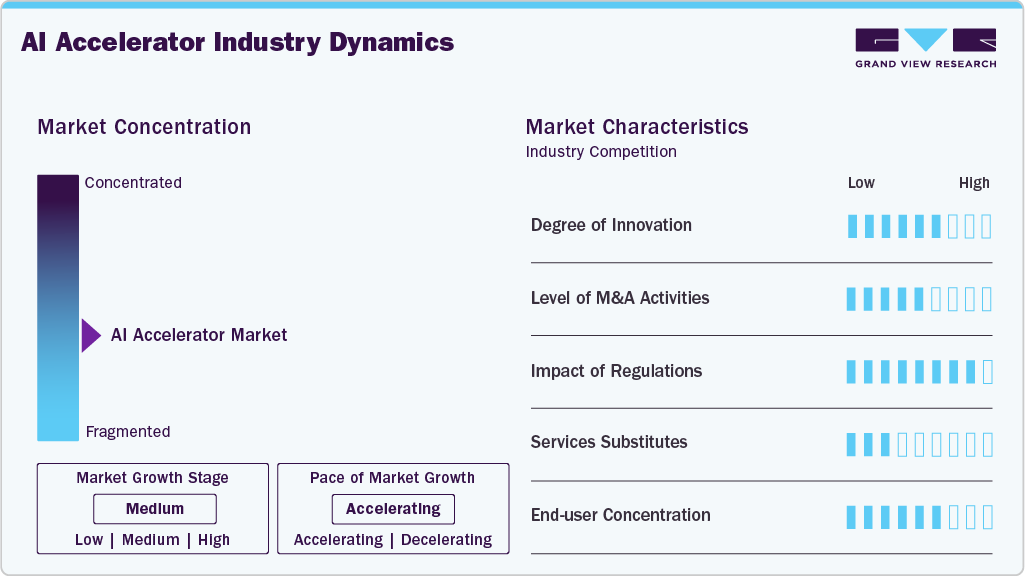
The Global Multi-modal AI Market is moderately concentrated, with competition led by global AI platform providers, foundation model developers, cloud service providers, and enterprise AI solution companies. Market participants compete based on multimodal model performance, generative AI capabilities, accuracy across text, image, audio, and video processing, cloud AI infrastructure, scalability, enterprise integration, data security, and industry-specific AI applications. Continuous advancements in multimodal large language models (MLLMs), foundation models, AI accelerators, cloud-native AI services, and intelligent automation are reshaping the competitive landscape. Strategic investments in AI infrastructure, high-performance computing, research and development, and collaborations with enterprises, research institutions, and technology partners are further strengthening market competitiveness.
 To learn more about this report, Download Free Sample Report
 Key market participants include Aimesoft, Amazon Web Services, Inc., Google LLC, IBM Corporation, Jina AI GmbH, Meta, Microsoft, OpenAI, L.L.C., Twelve Labs Inc., and Uniphore Technologies Inc. These companies are focused on expanding their multimodal AI portfolios through investments in foundation models, generative AI, cloud AI platforms, video intelligence, enterprise AI solutions, and multimodal model development. Their strategies emphasize technological innovation, strategic partnerships, continuous model improvements, expansion of AI ecosystems, and industry-specific solution development to accelerate the adoption of multimodal AI across healthcare, financial services, manufacturing, retail, automotive, media, and other enterprise applications worldwide.
Analyst Perspective
The Global Multi-modal AI Market is experiencing robust growth as enterprises increasingly adopt artificial intelligence capable of understanding, processing, and generating content across multiple data modalities, including text, images, audio, video, and sensor data. The growing demand for intelligent automation, generative AI, and context-aware decision-making is accelerating the adoption of multimodal AI across industries such as healthcare, financial services, manufacturing, retail, automotive, media, education, and telecommunications. Organizations are leveraging multimodal AI to enhance customer engagement, automate complex workflows, improve operational efficiency, and deliver more accurate and personalized AI-driven experiences.
The market is further supported by rapid advancements in multimodal foundation models, large language models (LLMs), computer vision, speech recognition, cloud AI platforms, and high-performance computing infrastructure. Continuous investments by leading technology companies in generative AI, multimodal model development, AI accelerators, and enterprise AI platforms are accelerating innovation and commercialization across global markets. Looking ahead, increasing adoption of AI copilots, intelligent virtual assistants, autonomous systems, video intelligence, multimodal search, and industry-specific AI applications is expected to create substantial growth opportunities, positioning multimodal AI as a foundational technology for the next generation of enterprise intelligence and digital transformation.
Component Insights
The software segment led the market and accounted for a 65.0% global revenue share in 2024. Multimodal AI software constitutes integrated systems created to concurrently handle and process various types of data, encompassing images, text, audio, and video. These software solutions commonly integrate advanced technologies such as machine learning, deep learning, and natural language processing to facilitate a comprehensive understanding of multimodal information. In practical terms, multimodal AI software empowers users to create, implement, and oversee AI models with the ability to manage diverse data modalities cohesively.
The service segment is expected to register the fastest CAGR of 37.9% during the forecast period. Multimodal AI services encompass a broad spectrum of offerings tailored to diverse professional and managed services requirements. Professional services involve consulting and providing strategic guidance for implementing multimodal AI solutions and specialized training and workshops to equip teams with essential skills. Multimodal data integration services facilitate the seamless blend of various data types. In managed services, comprehensive solutions are delivered, managing the entire lifecycle of multimodal AI systems. This includes continuous improvement, infrastructure management, and ensuring optimal performance, enabling organizations to harness the advantages of multimodal.
Data Modality Insights
Based on data modality, the Text Data segment led the market with the largest revenue share of 42.1% in 2025. Text data, being a fundamental component of communication and information exchange, is prevalent in various sectors, such as customer service, NLP, and content analysis. The ability of multimodal AI to effectively analyze and comprehend text data has made it a key solution for tasks such as chatbots, sentiment analysis, and document processing, driving its prominence and contributing significantly to the overall revenue within the multimodal AI industry.
The speech & voice data segment is projected to grow at the highest CAGR over the forecast period. The widespread adoption of voice-enabled devices, virtual assistants, and voice-activated applications across various industries has fueled the importance of speech and voice data. For instance, in 2024, GoTo, an Indonesian digital ecosystem, introduced “Dira by GoTo AI,” a fintech voice assistant in Indonesia, to simplify tasks within its GoPay application.
Dira allows users to navigate the GoPay app and execute functions such as money transfers and bill payments via voice commands. In addition, advancements in speech recognition technology, improved language processing algorithms, and the rising popularity of voice-driven commands in smart devices have contributed to the segment's dominance. The seamless integration of speech and voice data in multimodal AI applications has further solidified its position as a key market driver.
End Use Insights
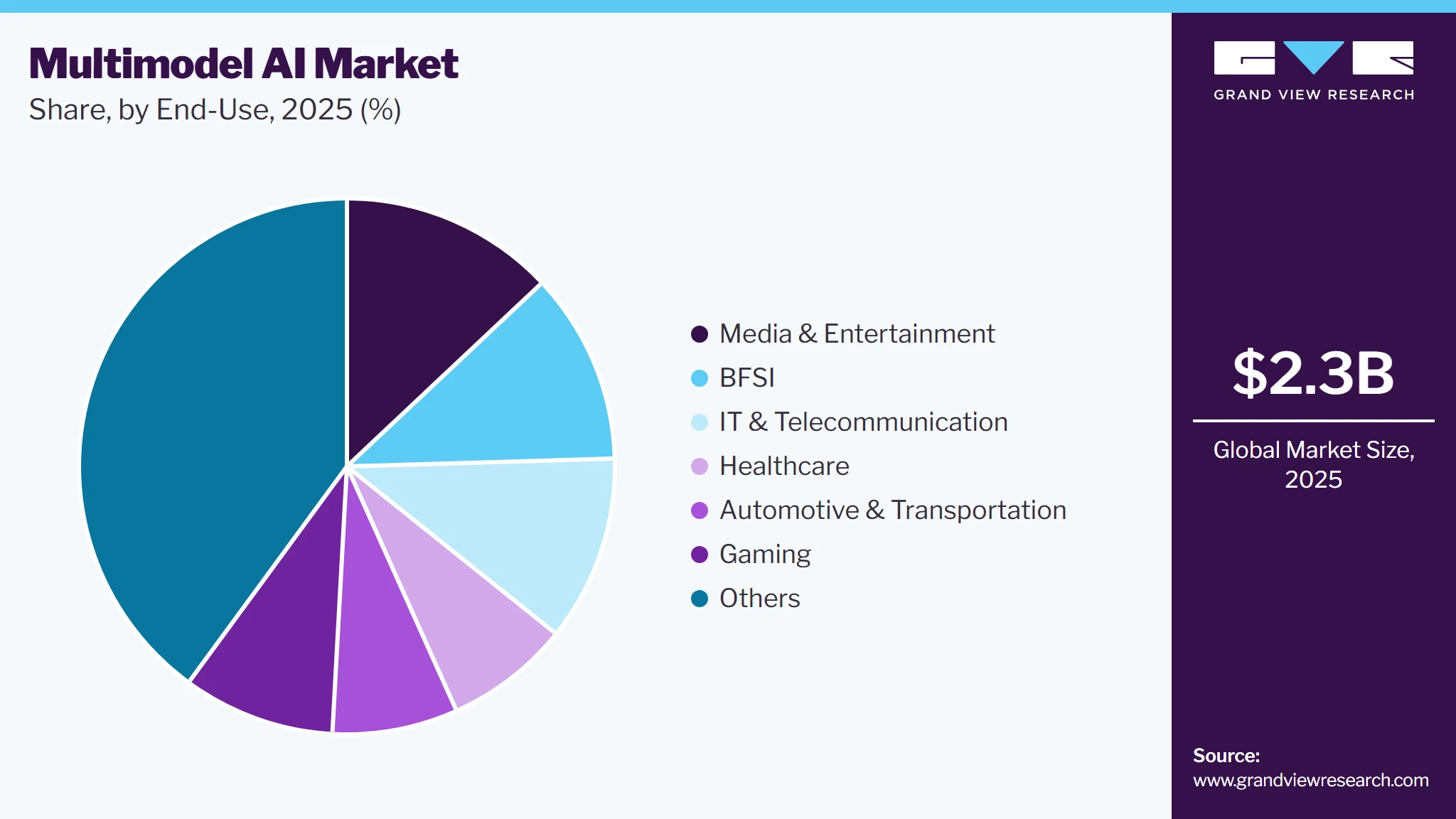
Based on end use, the Media & Entertainment segment led the market with the largest revenue share of 18.1% in 2025, owing to the industry's increasing focus on enhancing user experiences, content personalization, and creative innovation. Multimodal AI technologies are particularly well-suited for applications within media and entertainment, where the combination of text, image, audio, and video data is crucial for delivering immersive and engaging content.
The BFSI segment is expected to register the fastest CAGR during the forecast period. Multimodal AI is employed for secure and user-friendly customer authentication, especially facial recognition. This technology strengthens security protocols in mobile apps, online banking, and ATM transactions. In the BFSI sector, chatbots and virtual assistants leverage multimodal AI to comprehend and address customer queries effectively. This involves handling text-based queries, interpreting images of documents, and incorporating voice commands to ensure a smooth customer service experience. For instance, an AI-driven system can evaluate a loan applicant's credit score while analyzing social media activities to gauge financial stability. JP Morgan’s DocLLM exemplifies this approach by integrating text data, metadata, and contextual information from financial documents, facilitating automatic document processing and risk assessment.
Enterprise Size Insights
Based on enterprise size, the Large Enterprise segment led the market with the largest revenue share of 55.0% in 2025. Large enterprises generally deal with diverse data types, including text, images, videos, and audio. Multimodal AI assists in addressing the complexity of these organizations' operations by providing comprehensive solutions that can analyze and interpret various modalities. In addition, multimodal AI platforms often offer customization options, allowing large enterprises to tailor the technology to their specific requirements. This level of customization is essential for addressing the varied and intricate processes within large organizations.
 To learn more about this report, Download Free Sample Report
 The SMEs segment is projected to grow at the highest CAGR during the forecast period. Multimodal AI solutions tailored for SMEs offer cost-effective options, making these advanced technologies more accessible to smaller businesses with limited budgets. Multimodal AI platforms customized for SMEs are more adaptable to smaller-scale workflows, offering solutions that are suited to specific operations and requirements of SMEs.
Regional Insights
The North America Multi-modal AI Market accounted for the highest share, with over 47.1% of the global revenue in 2025, fueled by the convergence of technologies and a rising demand for more sophisticated and human-like interactions between machines and users. A key driving force is the widespread adoption of smartphones and smart devices, coupled with the increasing availability of high-quality data. The region's emphasis on innovation creates an environment conducive to the progress of multimodal AI. North American companies are pioneering the development and implementation of multimodal AI solutions, reflecting the region's dedication to advancing technology and pushing the boundaries of AI to enhance user engagement and problem-solving.
 To learn more about this report, Download Free Sample Report
 U.S. Multimodal AI Market Trends
The Multi-modal AI Market tin the U.S. held a dominant position in 2025 due to its position as a leader in AI innovation. This dominance stems from the presence of major technology corporations, a thriving startup ecosystem, and substantial government funding for AI initiatives. The country's strong emphasis on research and development and access to a skilled workforce accelerate the development and deployment of multimodal AI solutions. Furthermore, the widespread adoption of AI across various industries, including healthcare, retail, and manufacturing, contributes to the growth of the multimodal AI industry.
Europe Multimodal AI Market Trends
Europe multimodal AI market is expected to grow at a significant CAGR during the forecast period, fueled by increasing investments in AI research and development, particularly in countries such as Germany, France, and the UK. The rising adoption of multimodal AI in key sectors such as healthcare, automotive, and manufacturing drives expansion within multimodal AI industry. Moreover, supportive government policies and initiatives aimed at promoting AI innovation are expected to boost market growth further. Europe's focus on ethical AI development and data privacy also positions it as a leader in responsible AI deployment.
Asia Pacific Multimodal AI Market Trends
The multimodal AI market in Asia Pacific is anticipated to grow at the highest CAGR during the forecast period. One significant factor is the rapid adoption and integration of advanced technologies across various regional industries. Countries in the Asia Pacific, such as China, Japan, South Korea, and India, have witnessed substantial growth in their economies, leading to increased investments in AI. The region's large and diverse consumer base and the proliferation of smartphones and other smart devices have driven the demand for multimodal AI applications in areas such as e-commerce, healthcare, and finance. In addition, the growing focus on digital transformation initiatives by businesses and governments has further accelerated the deployment of multimodal AI solutions in the Asia Pacific region.
China multimodal AI market dominated the regional market in 2024. The country's dominance is fueled by massive investments in AI research and development, driven by the government and private sectors. For instance, in 2025, the Bank of China, a state-owned entity, declared its intention to allocate a minimum of USD 136 million over the subsequent 5 years to support companies operating within the AI sector. This financial backing is intended to bolster the AI industry's infrastructure, promote technological innovation, and facilitate the integration of AI across various sectors. Furthermore, the government's strong support for AI innovation and a rapidly growing technology sector accelerate market growth. The widespread adoption of AI across various industries, including e-commerce, finance, and transportation, also contributes to the market's dominance.
Key Multimodal AI Company Insights
Some key players operating in the market include Google LLC; Microsoft; and Amazon Web Services, Inc.
-
Google LLC has been a major player in advancing multimodal AI technologies, leveraging machine learning, deep learning, and natural language processing. The company's contributions to the field include the development of state-of-the-art models for image and speech recognition, language translation, and understanding complex data modalities.
-
Microsoft is a multinational technology company renowned for its software products, operating systems, and cloud computing services. Microsoft's Azure cloud platform provides a suite of AI services, including computer vision, speech recognition, and natural language processing. These services empower developers to build multimodal AI applications.
Clarifai, Inc., and SenseTime are some emerging market participants in the multimodal AI market.
-
Clarifai, Inc. is a prominent player in the multimodal AI industry, focusing on visual recognition and analysis. The company offers a comprehensive platform that harnesses the power of multimodal AI to interpret and analyze visual data, including images and videos.
-
SenseTime is renowned for its advancements in AI and computer vision technologies. The company specializes in a diverse range of AI applications, with a notable emphasis on facial recognition, image and video analysis, and solutions for autonomous driving.
Key Multimodal AI Companies
The following key companies have been profiled for this study on the multimodal AI market.
-
Aimesoft
-
Amazon Web Services, Inc.
-
Google LLC
-
IBM Corporation
-
Jina AI GmbH
-
Meta.
-
Microsoft
-
OpenAI, L.L.C.
-
Twelve Labs Inc.
-
Uniphore Technologies Inc.
Competitive Benchmarking
Category
Operating Strategies
Competitive Edge
Weakness
Established Players: Amazon Web Services, Inc., Google LLC, IBM Corporation, Meta, Microsoft, OpenAI, L.L.C.
Focus on developing multimodal foundation models, cloud AI platforms, enterprise AI services, AI infrastructure, developer ecosystems, and industry-specific AI applications. These companies emphasize continuous model innovation, strategic partnerships, AI infrastructure expansion, integration of multimodal capabilities into enterprise software, and commercialization of generative AI solutions across global industries.
Extensive cloud infrastructure, strong AI research capabilities, large developer ecosystems, access to massive multimodal datasets, advanced foundation models, global enterprise customer base, and significant investments in AI chips, high-performance computing, and model optimization.
High infrastructure and operational costs, increasing regulatory scrutiny related to AI governance and data privacy, substantial computing resource requirements, challenges in ensuring model transparency and reliability, and intensifying competition from emerging AI companies and open-source models.
Emerging & Innovation-Focused Players: Aimesoft, Jina AI GmbH, Twelve Labs Inc., Uniphore Technologies Inc.
Focus on developing specialized multimodal AI solutions for enterprise search, video intelligence, conversational AI, document intelligence, speech technologies, and industry-specific applications. Their strategies emphasize innovation in multimodal foundation models, API-based AI services, strategic collaborations, product differentiation, and expansion into high-growth enterprise AI use cases.
Strong innovation capabilities, specialized expertise in multimodal AI applications, agile product development, faster deployment cycles, domain-specific AI solutions, and the ability to address niche enterprise requirements with highly customized offerings.
Limited financial and infrastructure resources compared with large technology companies, lower global market presence, dependence on external cloud infrastructure, challenges in scaling enterprise deployments, and increasing competition from established AI platform providers offering integrated multimodal AI ecosystems.
Recent Developments
-
In February 2025, Google launched Gemini 2.0 Pro Experimental, its latest flagship AI model, alongside other AI updates, and began rolling out the Gemini 2.0 Flash Thinking model in the Gemini app to broaden the accessibility of its advanced AI reasoning capabilities.
-
In October 2024, India launched BharatGen, its first government-funded Multimodal Large Language Model (MLLM) initiative, designed to improve public service delivery and citizen engagement. Led by IIT Bombay under the National Mission on Interdisciplinary Cyber-Physical Systems (NM-ICPS), BharatGen aims to develop generative AI systems capable of producing high-quality multimodal content and text in various Indian languages.
-
In December 2023, Alphabet Inc., an American multinational technology conglomerate holding company, unveiled the initial phase of its advanced AI model, Gemini. This groundbreaking model represents the first instance of surpassing human experts in performance on Massive Multitask Language Understanding (MMLU), a widely recognized benchmark for evaluating the capabilities of language models.
-
In December 2023, Meta revealed its plan to introduce multimodal AI functionalities that provide information about the surroundings collected through the cameras and microphones of the company's smart glasses. By saying “Hey Meta” while wearing the Ray-Ban smart glasses, users can activate a virtual assistant capable of both seeing and hearing the events in their immediate environment.
-
In October 2023, Reka AI, Inc. unveiled Yasa-1, a groundbreaking multimodal AI assistant designed to extend its understanding beyond text to include images, short videos, and audio snippets. Yasa-1 offers enterprises the flexibility to tailor their capabilities to private datasets of various modalities, enabling innovative experiences for diverse use cases. With support for 20 languages, the assistant boasts the capacity to deliver contextually informed answers sourced from the internet, handle extensive contextual documents, and even execute code.
Multimodal AI Market Report Scope
Report Attribute
Details
Market size in 2025
USD 2.3 Billion
Estimated market size in 2026
USD 3.0 Billion
Projected market size by 2033
USD 34.0 Billion
Growth rate
CAGR of 41.4% from 2026 to 2033
Base year for estimation
2025
Historical data
2021 - 2024
Forecast period
2026 - 2033
Quantitative units
Revenue in USD Billion/Billion and CAGR from 2026 to 2033
Report coverage
Revenue forecast, company ranking, competitive landscape, growth factors, and trends
Segments covered
Component, data modality, end use, enterprise size, region
Regional scope
North America; Europe; Asia Pacific; Latin America; MEA
Country scope
U.S.; Canada; UK; Germany; China; India; Japan; South Korea; Australia; Brazil; Mexico; KSA; UAE; South Africa
Key companies profiled
Aimesoft; Amazon Web Services, Inc.; Google LLC; IBM Corporation; Jina AI GmbH; Meta.; Microsoft; OpenAI, L.L.C.; Twelve Labs Inc.; and Uniphore Technologies Inc.
Customization scope
Free report customization (equivalent up to 8 analysts' working days) with purchase. Addition or alteration to country, regional & segment scope.
Pricing and purchase options
Avail customized purchase options to meet your exact research needs. Explore purchase options
Global Multimodal AI Market Report Segmentation
This report forecasts revenue growth at global, regional, and country levels and provides an analysis of the latest industry trends in each of the sub-segments from 2021 to 2033. For this study, Grand View Research has segmented the global multimodal AI market report based on component, data modality, end-use, enterprise size, and region.
-
Component Outlook (Revenue, USD Million, 2021 - 2033)
-
Software
-
Service
-
-
Data Modality Outlook (Revenue, USD Million, 2021 - 2033)
-
Image Data
-
Text Data
-
Speech & Voice Data
-
Video & Audio Data
-
-
End-Use Outlook (Revenue, USD Million, 2021 - 2033)
-
Media & Entertainment
-
BFSI
-
IT & Telecommunication
-
Healthcare
-
Automotive & Transportation
-
Gaming
-
Others
-
-
Enterprise Size Outlook (Revenue, USD Million, 2021 - 2033)
-
Large Enterprise
-
SMEs
-
-
Regional Outlook (Revenue, USD MBillion, 2021 - 2033)
-
North America
-
U.S.
-
Canada
-
-
Europe
-
Germany
-
UK
-
France
-
-
Asia Pacific
-
China
-
Japan
-
India
-
South Korea
-
Australia
-
-
Latin America
-
Brazil
-
Mexico
-
-
Middle East and Africa (MEA)
-
KSA
-
UAE
-
South Africa
-
-
Research Methodology
The multi-modal AI Market figures in this report are based on a proven research process that combines executive interviews with secondary research from proprietary databases, company filings, and recognized regulatory and institutional sources. Market size is built through value-chain sizing - reconciling supply-side and demand-side estimates - and triangulated with bottom-up and top-down approaches. Every estimate passes multiple levels of expert validation before publication, with each multi-modal AI Market segment quantified using the revenue-capture definitions in the table below.
Segment Definition
Segment -Component
Revenue capture definition
Software
Revenue in this segment is generated through software platforms and applications that enable the development, deployment, management, and optimization of multimodal AI solutions. This includes multimodal AI model development platforms, foundation model software, AI orchestration and workflow tools, model training and inference software, data integration platforms, AI copilots, APIs, software development kits (SDKs), and model monitoring and governance solutions that process and analyze text, images, audio, video, and other multimodal data across enterprise applications.
Services
Revenue in this segment is generated through professional and managed services supporting the implementation, integration, customization, deployment, maintenance, and optimization of multimodal AI solutions. This includes AI consulting, system integration, model training and fine-tuning, cloud deployment, data preparation and annotation, technical support, managed AI services, performance monitoring, governance and compliance services, and ongoing maintenance that enable organizations to effectively deploy and scale multimodal AI across enterprise applications.
Segment -Data Modality
Revenue capture definition
Image Data
Revenue in this segment is generated through multimodal AI solutions that process, analyze, interpret, and generate insights from image data. This includes applications such as image recognition, object detection, image classification, visual search, optical character recognition (OCR), medical image analysis, quality inspection, facial recognition, and image generation, enabling organizations to automate visual understanding and enhance decision-making across various industries.
Text Data
Revenue in this segment is generated through multimodal AI solutions that process, analyze, understand, and generate insights from textual data. This includes applications such as natural language understanding, text generation, document analysis, summarization, translation, sentiment analysis, question answering, intelligent search, conversational AI, and information extraction, enabling organizations to automate language-driven workflows and improve decision-making across enterprise applications.
Speech & Voice Data
Revenue in this segment is generated through multimodal AI solutions that process, analyze, understand, and generate speech and voice data. This includes applications such as automatic speech recognition (ASR), text-to-speech (TTS), speaker identification and verification, voice assistants, real-time transcription, voice analytics, multilingual speech translation, and conversational AI, enabling organizations to enhance customer interactions, automate voice-driven workflows, and improve communication across enterprise applications.
Video & Audio Data
Revenue in this segment is generated through multimodal AI solutions that process, analyze, interpret, and generate insights from video and audio data. This includes applications such as video understanding, video search and indexing, action and event recognition, audio classification, sound detection, media content analysis, surveillance analytics, meeting intelligence, content moderation, and multimedia generation, enabling organizations to automate analysis of rich media content and improve operational efficiency across enterprise applications.
Segment -End use
Revenue capture definition
Media & Entertainment
Revenue in this segment is generated through the adoption of multimodal AI solutions across the media and entertainment industry to create, analyze, manage, and personalize digital content. This includes applications such as AI-powered content generation, video and image editing, visual effects (VFX), content recommendation, media asset management, subtitle and dubbing generation, audience analytics, content moderation, virtual production, and interactive experiences, enabling media organizations to enhance content creation, streamline production workflows, and improve audience engagement.
BFSI
Revenue in this segment is generated through the adoption of multimodal AI solutions across banking, financial services, and insurance organizations. These solutions process and analyze text, images, voice, video, and documents to support fraud detection, customer service automation, document verification, credit risk assessment, claims processing, regulatory compliance, identity verification (eKYC), financial advisory, and intelligent decision-making, enabling financial institutions to improve operational efficiency, strengthen security, and deliver personalized customer experiences.
IT & Telecommunication
Revenue in this segment is generated through the adoption of multimodal AI solutions across IT and telecommunications organizations. These solutions process and analyze text, images, voice, video, and network data to support intelligent customer service, network monitoring and optimization, IT operations automation (AIOps), cybersecurity, knowledge management, software development assistance, virtual assistants, and predictive maintenance, enabling organizations to improve service delivery, enhance operational efficiency, and optimize network performance.
Healthcare
Revenue in this segment is generated through the adoption of multimodal AI solutions across healthcare providers, hospitals, diagnostic centers, pharmaceutical companies, and life sciences organizations. These solutions process and analyze medical images, clinical text, voice recordings, videos, and patient data to support medical imaging analysis, clinical decision support, patient monitoring, drug discovery, electronic health record (EHR) analysis, virtual healthcare assistants, and personalized treatment planning, enabling healthcare organizations to improve diagnostic accuracy, enhance patient outcomes, and streamline clinical workflows.
Automotive & Transportation
Revenue in this segment is generated through the adoption of multimodal AI solutions across automotive manufacturers, mobility providers, logistics companies, and transportation operators. These solutions process and analyze camera images, video, LiDAR, radar, sensor data, voice, and textual information to support autonomous driving, advanced driver assistance systems (ADAS), fleet management, predictive maintenance, traffic monitoring, route optimization, in-vehicle virtual assistants, and intelligent transportation systems, enabling organizations to enhance vehicle safety, improve operational efficiency.
Gaming
Revenue in this segment is generated through the adoption of multimodal AI solutions across game development studios, publishers, and gaming platforms. These solutions process and analyze text, images, audio, video, and player interaction data to support intelligent NPC behavior, AI-driven content generation, voice-enabled interactions, game testing, real-time moderation, personalized gameplay, player analytics, and immersive gaming experiences, enabling developers to enhance game quality, improve player engagement, and accelerate content creation.
Others
Revenue in this segment is generated through the adoption of multimodal AI solutions across industries such as education, government, retail & e-commerce, manufacturing, energy & utilities, legal services, and hospitality
Segment -Enterprise Size
Revenue capture definition
Large Enterprise
Revenue in this segment is generated through the adoption of multimodal AI solutions by large enterprises to enhance business operations, automate complex workflows, and improve decision-making. These organizations invest in multimodal AI platforms, foundation models, cloud AI infrastructure, and enterprise AI applications to process text, images, audio, video, and sensor data across functions such as customer service, operations, cybersecurity, finance, supply chain, and product development. Large enterprises leverage these solutions to improve productivity, accelerate innovation, strengthen data-driven decision-making, and scale AI deployment across global operations.
SMEs
Revenue in this segment is generated through the adoption of multimodal AI solutions by small and medium-sized enterprises (SMEs) to automate business processes, enhance customer engagement, and improve operational efficiency. SMEs increasingly utilize cloud-based multimodal AI platforms, AI assistants, document intelligence, content generation, customer support automation, and analytics solutions to process text, images, audio, and video without significant infrastructure investments. These solutions enable SMEs to reduce operational costs, improve decision-making, increase productivity, and accelerate digital transformation.
Estimation Model
Layer Name
Key Question
Description
Addressable End-user Base Layer
Which industries generate demand for Multi-modal AI solutions?
Identify the global addressable base of organizations investing in multimodal AI technologies. This includes healthcare, BFSI, retail & e-commerce, manufacturing, automotive, media & entertainment, telecommunications, education, government, and other industries adopting multimodal AI to process and analyze text, images, audio, video, and sensor data for intelligent decision-making and automation.
Power-to-X Product Layer
Which Multi-modal AI solutions drive market demand?
Assess demand across key multimodal AI solutions, including multimodal foundation models, vision-language models, AI assistants and copilots, image and video understanding, speech and audio intelligence, document intelligence, content generation, and industry-specific multimodal AI applications that integrate multiple data modalities into a unified AI framework.
Technology & Deployment Layer
How extensively are Multi-modal AI technologies being deployed?
Estimate adoption based on the deployment of multimodal large language models (MLLMs), generative AI models, computer vision, natural language processing (NLP), speech recognition, audio processing, cloud AI platforms, edge AI, AI accelerators, high-performance computing (HPC), APIs, and enterprise AI infrastructure supporting multimodal model training, inference, and deployment.
Revenue Generation Layer
How much revenue is generated?
Calculate market revenue by assessing spending on multimodal AI software platforms, foundation models, cloud AI services, AI infrastructure, model training and inference, enterprise AI applications, implementation and integration services, subscription-based AI platforms, consulting, maintenance, and industry-specific multimodal AI solutions deployed across global enterprises and public sector organizations.
Delivered Customizations
This report has been delivered with the following In-depth customizations
Client Request
Customization Delivered
Value Adds
Competitive Intelligence & Market Positioning Assessment
Delivered a comprehensive assessment of leading multimodal AI solution providers, foundation model developers, cloud AI platform providers, and enterprise AI companies, evaluating their market positioning, technology capabilities, product portfolios, strategic partnerships, geographic presence, industry focus, and recent developments.
Helps stakeholders benchmark competitors, identify strategic growth opportunities, evaluate partnership and investment prospects, and gain a comprehensive understanding of the competitive landscape within the Global Multi-modal AI Market.
Technology Adoption & End-user Analysis
Conducted a detailed analysis of multimodal AI adoption across key end-use industries, including healthcare, BFSI, manufacturing, retail, automotive, media & entertainment, telecommunications, and government, highlighting deployment trends, enterprise AI use cases, investment priorities, and evolving adoption patterns.
Enables organizations to identify high-growth application areas, understand end-user adoption trends, prioritize target industries, and make informed decisions regarding market entry, product development, and business expansion.
Technology Advancements & Future Growth Potential Evaluation
Evaluated the impact of advancements in multimodal foundation models, generative AI, large language models (LLMs), computer vision, speech intelligence, video analytics, cloud AI platforms, and AI accelerators on market growth while identifying emerging opportunities across the global multimodal AI ecosystem.
Assists decision-makers in prioritizing technology investments, identifying emerging revenue opportunities, strengthening innovation strategies, and preparing for future developments in the Global Multi-modal AI Market.
Frequently Asked Questions About This Report
The global multimodal AI market size was estimated at USD 1.74 billion in 2024 and is expected to reach USD 2.27 billion in 2025.
The global multimodal AI market is expected to grow at a compound annual growth rate of 36.8% from 2025 to 2030 to reach USD 10.89 billion by 2030.
North America dominated the multimodal AI market with a share of 48.0 % in 2024 fueled by the convergence of technologies and a rising demand for more sophisticated and human-like interactions between machines and users.
Some key players operating in the multimodal AI market include Aimesoft; Amazon Web Services, Inc.; Google LLC; IBM Corporation; Jina AI GmbH; Meta.; Microsoft; OpenAI, L.L.C.; Twelve Labs Inc.; and Uniphore Technologies Inc.
Key factors that are driving the multimodal AI market growth include the increasing need for more immersive and context-aware user experiences in applications such as virtual assistants, customer service, and content recommendation, and growing integration of multimodal AI in industry-specific applications, such as healthcare diagnostics, autonomous vehicles, and security surveillance.
About the Author(s)
Next Generation Technologies Research Team
Technology · Next Generation TechnologiesThis report was authored by the next generation technologies research team at Grand View Research - comprising two research analysts, one senior research analyst, and one industry expert - with specialized expertise in the next generation technologies segment of the technology industry. All findings are based on proprietary technology databases, executive interviews, and regulatory analysis, subject to internal peer review prior to publication.
Last Updated:
Speak to Analyst

Customize this report to your needs - add regions, segments, or data points, with 20% free customization.
Or view our licence options:


ISO 9001:2015 & 27001:2022 Certified
We are GDPR and CCPA compliant! Your transaction & personal information is safe and secure. For more details, please read our privacy policy.


