
- Home
- »
- Medical Devices
- »
-
Nano-hydroxyapatite Toothpaste Market Size, Growth Report, 2026-2033GVR Report cover

Nano-hydroxyapatite Toothpaste Market (2026 - 2033)
Size, Share & Trends Analysis Report By Product Type (Fluoride-Free (Pure nHA), Hybrid (nHA + Fluoride), Tablet / Waterless), By Primary Benefit, By Consumer Demographic, By Price Point, By Distribution Channel, By Region, And Segment Forecasts
Market Size, 2025
$422.0MMarket Estimate, 2026
$500.9MMarket Forecast, 2033
$1,693.8MCAGR, 2026–2033
19.0%Nano-hydroxyapatite Toothpaste Market Summary
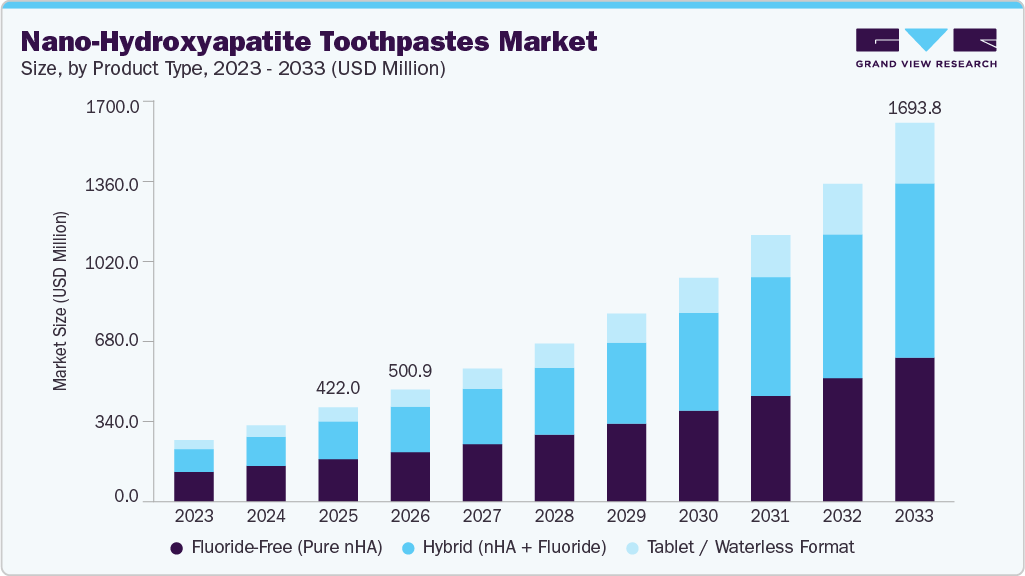
The global nano-hydroxyapatite toothpaste market size was valued at USD 422.0 million in 2025 and is projected to grow from USD 500.9 million in 2026 to USD 1,693.8 million by 2033, at a CAGR of 19.0% from 2026 to 2033. North America dominated the global market, accounting for the largest revenue share of 27.96% in 2025. The market is evolving as an innovation-driven segment within the oral care industry, driven by growing consumer interest in biomimetic, non-fluoride alternatives that closely mimic the natural structure of tooth enamel.
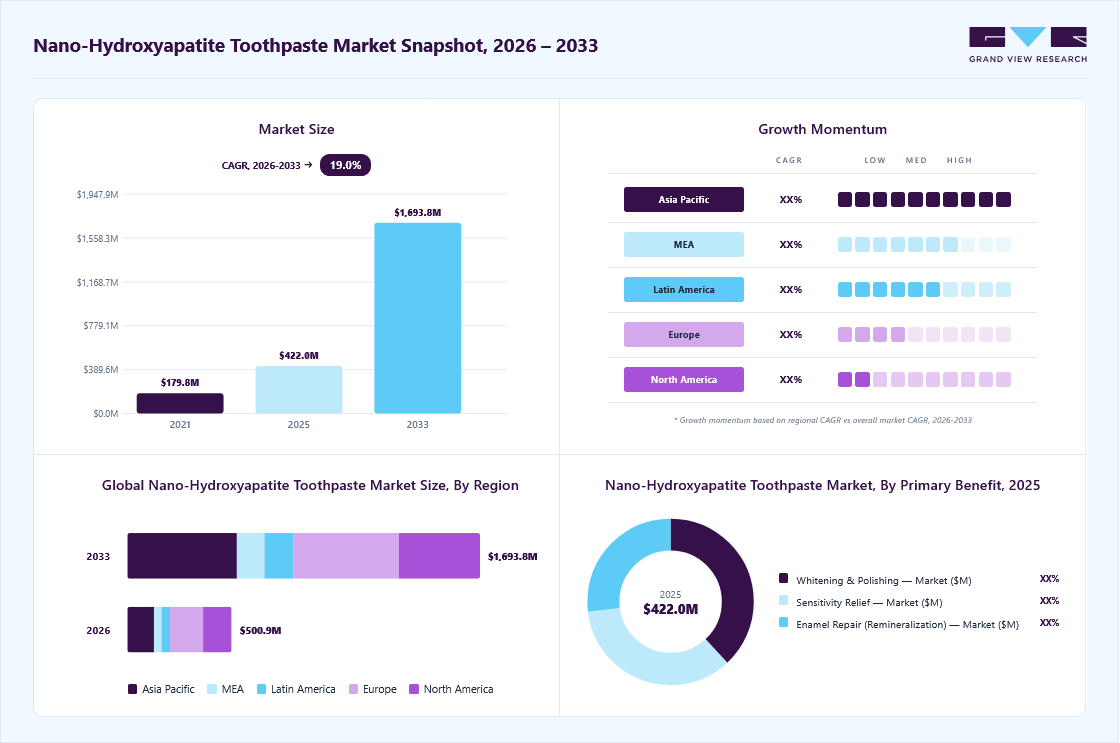 Source: Grand View Research, IR Documents, Primary Interviews, Paid DatabasesTo learn more about this report,
 Download Free Sample Report
 Key Market Trends & Insights
- By product type: Fluoride-free (pure nHA) leads the market with the largest revenue share in 2025.
- By distribution channel: E-commerce / DTC market segment led the market with the largest revenue share in 2025.
- By primary benefit: Whitening & polishing segment led the market with the largest revenue share in 2025.
Regional Highlights
- Largest regional market: North America (27.96% revenue share, 2025)
- By country: The U.S nano-hydroxyapatite toothpaste industry is a major contributor to the global market.
Market Size & Forecast
- Market size in 2025: USD 422.0 Million
- Estimated market size in 2026: USD 500.9 Million
- Projected market size by 2033: USD 1,693.8 Million
- CAGR (2026-2033): 19.0%
Three ways to get this report
Buy it, customize it, or ask a question.Ask an Analyst
Analyst response in 1 business day
- AccessReport author, directly
- Reply timeWithin 1 working day
- No sales callDirect answer only
- FormatEmail reply
- CostFree, no cost
Get the Full Report
What the study covers
- FormatsPDF · Excel · Dashboard
- Timeline2026–2033 annual, 2025 base
- Coverage20+ countries, 5 regions
- Companies10+ key players profiled
Customize the Report
20% free customization
- IncludeCountries, segments, points
- TailorTo your product definition
- ExtendDeeper competitor detail
- OrA fully bespoke study
- Turnaround5–10 working days
These toothpastes are recognized for their ability to remineralize enamel, reduce tooth sensitivity, and promote preventive dental care by repairing microscopic surface damage and forming a protective barrier against acids and bacteria. Rising awareness of enamel erosion, sensitivity concerns, and the importance of early-stage oral care is encouraging wider adoption among both consumers and dental professionals. In addition, the shift toward clean-label, minimally invasive, and science-backed personal care products is strengthening demand, particularly among health-conscious individuals.
 To learn more about this report, Download Free Sample Report
 The rising prevalence of oral health conditions such as dental caries, enamel erosion, and tooth sensitivity is significantly driving demand for nano-hydroxyapatite toothpastes, as consumers seek effective solutions that go beyond basic cleaning to address underlying tooth damage. As modern diets are high in sugars and acids, and lifestyle factors such as poor oral hygiene and stress contribute to enamel weakening, there is a growing need for products that can actively restore and protect tooth structure. Nano-hydroxyapatite toothpastes meet this need by mimicking the natural mineral composition of teeth, enabling them to repair microscopic enamel defects, reduce sensitivity, and enhance tooth strength. This functional benefit aligns with the increasing emphasis on preventive and restorative oral care, encouraging both dental professionals and consumers to adopt such formulations as part of daily routines.
"Oral health has long been neglected in global health, but many oral diseases can be prevented and treated with cost-effective measures" - WHO Director-General, Dr. Tedros Adhanom Ghebreyesus.
-
According to the WHO in 2025, oral diseases, though largely preventable, represent a significant global health burden affecting nearly 3.7 billion people worldwide, with untreated dental caries in permanent teeth identified as the most common health condition according to the Global Burden of Disease Study 2021, leading to pain, discomfort, disfigurement, and even death across the lifespan
The rising prevalence of dental caries is a key driver of the nano-hydroxyapatite toothpaste market, as increasing cases of tooth decay are prompting consumers to seek more effective and restorative oral care solutions. As dental caries progressively demineralizes tooth enamel and leads to cavity formation, there is a growing demand for products that can actively repair early-stage damage rather than prevent it. Nano-hydroxyapatite toothpastes address this need by mimicking the natural mineral structure of enamel, enabling them to remineralize weakened areas, fill microscopic lesions, and create a protective barrier against further decay. This functional advantage is gaining attention among both dental professionals and consumers, particularly as awareness of preventive and minimally invasive dental care continues to rise.
Estimated prevalence and case numbers of caries of deciduous teeth in 2019
WHO Region
Prevalence (2019)
Cases (2019, in millions)
African Region
38.61%
111.02
Eastern Mediterranean Region
45.10%
66.38
European Region
39.64%
40.85
Region of the Americas
43.21%
57.46
South-East Asia Region
43.77%
135.26
Western Pacific Region
46.20%
102.14
Global
42.71%
513.83
Source: WHO 2022
 To learn more about this report, Download Free Sample Report
 The increasing demand for fluoride-free, biocompatible oral care solutions is driving significant growth in the nano-hydroxyapatite toothpaste market, as consumers become more conscious of ingredient safety, long-term exposure, and compatibility with natural body chemistry. Concerns regarding excessive fluoride intake and its potential side effects in certain populations have encouraged a shift toward alternative formulations that maintain dental health without relying on traditional fluoride-based mechanisms. Nano-hydroxyapatite, being chemically similar to the mineral structure of natural tooth enamel, offers a biocompatible solution that supports remineralization, repairs early enamel damage, and reduces sensitivity without introducing foreign compounds of concern. This alignment with the body’s natural biology makes it particularly appealing in preventive oral care routines, especially among health-conscious users and families seeking gentler yet effective products.
-
In September 2025, MySmile Oral Care Inc. announced the launch of its Nano-Hydroxyapatite Toothpaste in the U.S. The fluoride-free formulation is designed to remineralize enamel, reduce tooth sensitivity, and provide long-lasting freshness. The product is positioned as an advanced oral care solution incorporating nano-hydroxyapatite technology, which the company describes as a modern alternative to traditional fluoride-based toothpaste.
"At MySmile, we believe oral care should be safe, effective, and sustainable. Nano-hydroxyapatite has been called the future of toothpaste, and we're excited to bring this dentist-recommended alternative to fluoride to our customers. We created this formula to not only strengthen and repair enamel but also to provide a clean, gentle option for people with sensitivity without compromising on freshness or performance." - Bobby Jacobs, Founder of MySmile.
Market Concentration & Characteristics
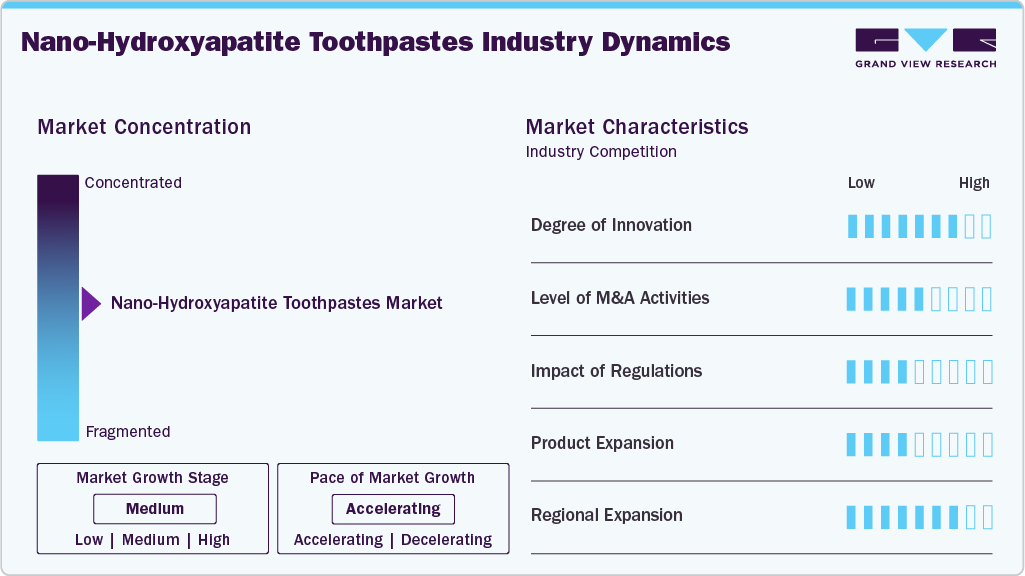
The nano-hydroxyapatite toothpaste market is characterized by a competitive landscape, with a mix of established oral care companies and specialized brands operating alongside emerging entrants focused on fluoride-free and biomimetic formulations. The industry is strongly innovation-led, with differentiation driven by advancements in nano-hydroxyapatite particle technology, formulation stability, enamel remineralization efficiency, and sensitivity-reduction performance, rather than price competition alone. It also reflects a science-oriented positioning, as companies emphasize clinical benefits and biocompatibility to distinguish their products from conventional fluoride-based toothpaste offerings. In addition, the market is shaped by continuous research and development, evolving consumer preferences toward clean-label oral care solutions, and increasing regulatory scrutiny of nanomaterial use and product safety standards, all of which influence product development strategies and market entry dynamics.
The nano-hydroxyapatite toothpaste market is characterized by strong innovation, driven by continuous advancements in biomimetic science and dental material engineering. Companies are actively developing improved nano-hydroxyapatite formulations with enhanced particle size control, improved enamel adhesion, and higher remineralization efficiency to better replicate natural tooth structure. Innovation is also evident in the integration of complementary ingredients such as natural enzymes, herbal extracts, and sensitivity-reducing agents to improve oral health outcomes while maintaining fluoride-free positioning. In addition, ongoing research into delivery systems, texture optimization, and stability enhancement supports the development of more effective, consumer-friendly products.
 To learn more about this report, Download Free Sample Report
 -
In June 2025, Remin+ featured nano-hydroxyapatite, a form of mineral that makes up tooth enamel. This ingredient was widely used in oral care products and was known for its compatibility with the tooth surface. Its purpose was to help maintain smoothness and support a strong brushing routine.
The regulatory environment plays a significant role in shaping the nano-hydroxyapatite toothpaste market by influencing product approval pathways, safety standards, and market entry conditions for manufacturers. In several regions, regulatory authorities have assessed nano-hydroxyapatite for oral care use and established specific safety criteria for particle shape, concentration limits, and formulation purity, thereby helping define acceptable product specifications and improve consumer confidence. The absence of harmonized global approvals for anti-caries claims means companies position these products under cosmetic or general oral care categories rather than therapeutic claims, which affects labeling, marketing strategies, and clinical positioning. In some markets, the lack of explicit dental-indication approval for fluoride-based products creates a greater compliance burden for manufacturers, requiring additional scientific substantiation and careful regulatory navigation.
- The European Union Scientific Committee on Consumer Safety (SCCS) in 2025, which completed its final scientific opinion confirming that hydroxyapatite (nano) is safe when used at concentrations up to 29.5% in toothpaste, and up to 10% in mouthwash.
The merger and acquisition (M&A) activity in the nano-hydroxyapatite toothpaste market is shaped by strategic consolidation efforts among large oral care multinationals and technology-driven partnerships with specialized ingredient manufacturers, aimed at strengthening portfolios in biomimetic and fluoride-free oral care solutions. Established companies in the oral care sector are acquiring or collaborating with niche brands and ingredient innovators to access proprietary nano-hydroxyapatite formulations, accelerate product development, and expand into science-backed enamel remineralization segments. In parallel, ingredient suppliers and smaller specialty oral care brands are engaging in partnerships and licensing agreements with larger consumer healthcare firms to scale distribution and global market reach.
The regional expansion of the nano-hydroxyapatite toothpaste market is being driven by increasing adoption across both developed and emerging geographies, supported by rising awareness of preventive oral care and demand for biomimetic, fluoride-free formulations. In more developed markets, growth is supported by strong consumer preference for science-backed oral care ingredients, widespread availability of advanced toothpaste formulations, and high emphasis on enamel protection and sensitivity management. In developing markets, expansion is being fueled by improving access to modern dental care products, growing awareness of oral hygiene, and rising demand for effective yet gentle alternatives to conventional toothpaste.
Product Type Insights
Fluoride-free toothpaste dominates the product type segment in 2025, due to the growing global preference for natural, biomimetic, and clean-label oral care products. Consumers are opting for fluoride-free alternatives, particularly for children and individuals with sensitivity concerns, driving demand for safer and biocompatible ingredients. Nano-hydroxyapatite closely mimics the natural structure of tooth enamel and helps repair micro-damage, making it highly effective for remineralization, whitening, and sensitivity relief without relying on traditional chemical agents. This combination of safety perception, functional benefits, and premium positioning has led to strong adoption of pure nHA formulations, enabling this segment to hold the largest market share.
Hybrid (nano-hydroxyapatite + fluoride) toothpaste is the fastest-growing segment in 2025, as it offers a dual-benefit approach, combining the well-established cavity-prevention benefits of fluoride with the enamel-repairing and sensitivity-reducing properties of nano-hydroxyapatite. This combination appeals to consumers seeking enhanced performance and comprehensive oral protection without fully abandoning fluoride-based solutions. Increasing product innovation and rising awareness of multifunctional oral care are encouraging manufacturers to develop hybrid formulations targeted at high-risk dental conditions.
Primary Benefit Insights
Whitening and polishing dominate the primary benefits segment of the nano-hydroxyapatite toothpaste market in 2025, driven by strong consumer demand for visible, immediate aesthetic results. Oral care purchasing decisions are strongly influenced by cosmetic outcomes, such as brighter teeth and stain removal, making whitening a top priority across both developed and emerging markets. Nano-hydroxyapatite meets this demand by gently polishing the tooth surface and filling microscopic enamel irregularities, enhancing light reflection and creating a naturally whiter appearance without harsh abrasives.
Enamel repair (remineralization) is a significantly growing segment in 2025, driven by rising awareness of preventive and restorative oral care and the increasing prevalence of dental conditions such as enamel erosion and sensitivity. Consumers are becoming more informed about long-term oral health, leading to a shift from purely cosmetic benefits toward functional solutions that restore tooth structure and prevent future damage. Nano-hydroxyapatite plays a key role by mimicking natural enamel and actively rebuilding weakened areas, making it highly effective for remineralization.
Consumer Demographic Insights
Biohackers and wellness enthusiasts dominate the consumer segment in the nano-hydroxyapatite toothpaste market in 2025, driven by early adoption of science-backed, functional, and preventive health products. This group actively seeks innovative solutions that optimize well-being, and nano-hydroxyapatite aligns well with their preference for biomimetic ingredients that support natural enamel repair and long-term oral health. Their willingness to invest in premium, fluoride-free, and performance-driven products, along with a strong influence on digital platforms and health communities, is accelerating product visibility and adoption.
Eco-conscious consumers are the fastest-growing segment in 2025, as sustainability and environmental responsibility become important in purchasing decisions. This group is drawn to nano-hydroxyapatite toothpaste for its alignment with clean-label, non-toxic, and environmentally friendly formulations, especially compared to traditional chemical-based alternatives. The growing availability of products with recyclable packaging, vegan ingredients, and cruelty-free certifications further supports demand.
Price Point Insights
The premium ($15-$30 per tube) segment dominates the nano-hydroxyapatite toothpaste market in 2025, as the category itself is positioned as a high-value, science-driven oral care solution. Consumers purchasing nano-hydroxyapatite toothpaste are seeking advanced benefits such as enamel repair, sensitivity relief, and whitening, which justifies higher pricing. In addition, strong demand from health-conscious and wellness-oriented consumers, along with brand positioning around clean-label, fluoride-free, and clinically inspired formulations, supports premium pricing.
The mass-market ($8-$12 per tube) segment is the fastest growing in 2025, as nano-hydroxyapatite toothpaste becomes more accessible to a broader consumer base. Increasing competition, entry of new manufacturers, and expansion into retail chains and e-commerce platforms are gradually reducing price barriers, allowing mid-range consumers to adopt these products. As awareness of nano-hydroxyapatite benefits grows, more consumers are seeking affordable alternatives that still offer enamel repair and sensitivity protection.
Distribution Channel Insights
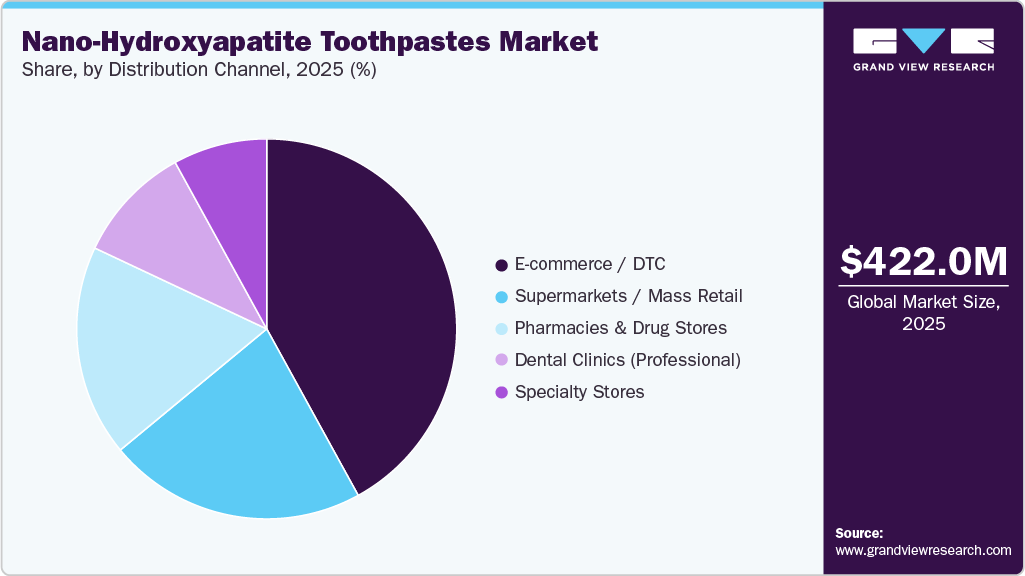
E-commerce and direct-to-consumer (DTC) channels dominate the distribution segment in the nano-hydroxyapatite toothpaste market in 2025, driven by the category’s digitally driven, premium, and niche positioning. Many nano-hydroxyapatite brands initially entered the market through online platforms, enabling them to educate consumers about the benefits of biomimetic ingredients, enamel repair, and fluoride-free formulations without relying on traditional retail channels. Digital channels also enable targeted marketing, subscription models, and direct engagement with health-conscious consumers, which is particularly effective for emerging oral care trends.
Supermarkets and mass retail channels are a significantly growing segment in 2025, as nano-hydroxyapatite toothpaste transitions from a niche product to a more mainstream oral care option. Increasing consumer awareness and demand are encouraging large retail chains to expand shelf space for premium and functional toothpaste categories. As more established oral care brands introduce nano-hydroxyapatite-based products, their presence in supermarkets is improving visibility and accessibility for everyday consumers.
 To learn more about this report, Download Free Sample Report
 Regional Insights
The North America Nano-Hydroxyapatite Toothpaste Market is growing, driven by high consumer awareness, advanced oral healthcare infrastructure, and increasing emphasis on preventive dental care. The region holds a notable share of the global market, with the United States leading due to early adoption of innovative oral care solutions and a large consumer base. Growth is supported by rising demand for premium, fluoride-free toothpaste products, as consumers prefer clean-label, biocompatible ingredients such as nano-hydroxyapatite. In addition, the presence of established oral care brands, continuous product innovation, and strong distribution channels, including e-commerce and direct-to-consumer platforms, is accelerating market expansion.
U.S. Nano-Hydroxyapatite Toothpastes Market Trends
The U.S. nano-hydroxyapatite toothpaste market is growing, driven by rising consumer preference for advanced, non-fluoride oral care solutions and by increasing cases of tooth decay and dental caries across the population. Growing awareness of enamel repair, cavity prevention, and tooth sensitivity is encouraging consumers to adopt nano-hydroxyapatite-based formulations as a safe, biocompatible alternative. The market is further supported by strong demand for premium and clean-label products, particularly among health-conscious and younger demographics. In addition, the presence of innovative oral care brands, continuous product launches, and expanding availability through e-commerce and retail channels are accelerating adoption. Higher dental care spending, along with a strong focus on preventive and cosmetic dentistry, is also contributing to the sustained growth of nano-hydroxyapatite toothpastes across the U.S.
 To learn more about this report, Download Free Sample Report
 Europe Nano-Hydroxyapatite Toothpastes Market Trends
Europe is growing in the nano-hydroxyapatite toothpaste market, driven by rising consumer preference for fluoride-free and biomimetic oral care products, and strong awareness of preventive dental health. Countries such as Germany, the UK, France, and Italy are leading adoption, supported by well-established dental care systems and high demand for premium, science-backed toothpaste formulations. The region benefits from regulatory clarity under EU cosmetic frameworks, which has helped improve confidence in the safety of nano-hydroxyapatite and encouraged more product launches and retail expansion. In addition, European consumers are shifting toward natural, biocompatible ingredients for oral hygiene, further boosting the acceptance of nano-hydroxyapatite-based toothpaste.
The UK nano-hydroxyapatite toothpaste market is driven by increasing consumer preference for fluoride-free products. These biomimetic oral care products support enamel repair, whitening, and dental health, and a broader shift toward science-backed, preventive oral care solutions. A key factor supporting this growth is the rising prevalence of dentin hypersensitivity in the UK population, a condition characterized by sharp pain triggered by hot, cold, or acidic stimuli due to enamel erosion and gum recession. As awareness of this issue increases, more consumers are seeking effective desensitizing toothpaste options, and nano-hydroxyapatite formulations are gaining strong acceptance because they help remineralize enamel and occlude exposed dentin tubules, providing long-term sensitivity relief and strengthening tooth structure, thereby accelerating market expansion in the region.
-
According to a 2025 study by the National Library of Medicine, 376 patients were included, and the prevalence of dentin hypersensitivity was 236 (62.77%; CI 95%: 57.66%-67.67%). Among those diagnosed, 138 (73.02%) were male, and 98 (52.41%) were female. The age-specific prevalence was 30 (50.85%) in patients aged 10-19 years, 73 (63.48%) in those aged 20-29 years, 42 (53.16%) in those aged 30-39 years, and 23 (51.11%) in those aged 40-49 years. The value we observed is also significantly higher than the prevalence reported in a UK study, which was only 4.1%.
The Germany nano-hydroxyapatite toothpaste market is experiencing growth, driven by increasing demand for advanced, biomimetic oral care products that promote enamel remineralization and relieve sensitivity. The country has a well-developed dental care infrastructure and high consumer awareness of preventive oral health, which is driving the adoption of fluoride-free, science-based toothpaste alternatives, such as nano-hydroxyapatite formulations. Germany also benefits from the strong presence of cosmetic and oral care manufacturers investing in innovative nanotechnology-based ingredients, further accelerating product availability across pharmacies, supermarkets, and online channels. In addition, rising cases of dental issues such as enamel erosion and dentin hypersensitivity are encouraging consumers to shift toward restorative toothpaste solutions that can strengthen enamel and reduce tooth sensitivity.
Asia Pacific Nano-Hydroxyapatite Toothpastes Market Trends
Asia Pacific is growing in the Nano-Hydroxyapatite Toothpaste Market, supported by its large population base, rising disposable incomes, and increasing awareness of advanced oral care solutions. Countries such as Japan have long-established usage of nano-hydroxyapatite, which has built strong consumer trust and accelerated adoption across neighboring markets. Rapid urbanization and the expansion of the middle class in economies such as China, India, and Southeast Asia are driving demand for premium and functional oral care products, including fluoride-free and enamel-repair formulations. In addition, the rising prevalence of dental sensitivity and oral health issues, along with the growing influence of wellness and beauty trends, is encouraging consumers to shift toward scientifically backed, biomimetic ingredients.
The India nano-hydroxyapatite toothpaste market is driven by rising awareness of advanced oral care solutions and increasing demand for fluoride-free, enamel-repairing formulations across both urban and semi-urban populations. A major growth driver is the high prevalence of dental caries in India, which remains one of the most common chronic oral health issues across all age groups, with a large proportion of children and adults affected due to poor oral hygiene practices, high sugar consumption, and limited preventive dental care access. Along with this, rising cases of enamel erosion and sensitivity-related problems are encouraging consumers to shift toward restorative toothpaste options, such as nano-hydroxyapatite, which help remineralize early carious lesions and strengthen tooth structure.
-
According to the data published by the National Library of Medicine in 2026 for the Prevalence of Dental Caries in Indian Tribal Communities: A Systematic Review and Meta-analysis, 20 studies were included in the systematic review (N = 10,059). The pooled prevalence of dental caries was 44.7% (95% confidence interval [CI]: 27.9%-61.4%), with extremely high heterogeneity (I2 = 99.77%). The prevalence was similar across adults (45.6%) and children (46.6%).
Studies included in the review are listed in order based on the year it was published
Author and Year
Location
Tribal Group
Age
Sample Size
Prevalence of Dental Caries / Mean DMFT or deft
Kumar et al. 2009
Udaipur district, Rajasthan
Bhil
15-54 years
1590
21.40%
Singh et al. 2011
Udupi district, Karnataka
Not mentioned
5 years
418
76.30%
Singh et al. 2011
Udupi district, Karnataka
Koraga
5 and 12 years
745
76.30%
Kadanakuppe et al. 2013
Ramanagara district, Karnataka
Iruligas
1-80 years
2605
7.52%
Viragi et al. 2013
Ahmednagar district, Maharashtra
Pardhi
5-16 years
185
2.04 (SD 1.564); 1.87 (SD 1.073)
Dhanappa et al. 2014
Polur Taluk, Tamil Nadu
Malayali
12, 15, 35-44, 65-74 years
710
33.38%
John et al. 2015
Palamalai and Kolli Hills, Tamil Nadu
N/m
9-12 years
206
89.32%
Mandal et al. 2015
West Bengal
Santhal
2-14 years
1205
42.07%
Sekhar et al. 2016
East Godavari district, Andhra Pradesh
Not mentioned
12-15 years
146
18.40%
Valsan et al. 2016
Kerala
Paniya
35-44, 65-74 years
420
39.76%
Kumar et al. 2016
Dhanbad district, Jharkhand
Santhal
2-74 years
921
2-5 yrs: 3.56 ± 1.93; 35-44 yrs: 5.21 ± 2.34; 65-74 yrs: 7.42 ± 4.29
Chauhan et al. 2016
Indore division, Madhya Pradesh
Bhil, Bhilala, Patelia
6-15 years
275
61.40%
Das et al. 2019
Bansapal taluk, Odisha
Juang
≥5 years
1412
34.24%
Chhaya et al. 2019
Dang district, Gujarat
Not mentioned
6-18 years
117
23.93%
Kumar et al. 2019
Ramgarh district, Jharkhand
Birhors
2-74 years
400
Males: 1.05 ± 2.59; Females: 1.02 ± 2.17
Chellappa et al. 2020
Thoothukudi district, Tamil Nadu
Narikuravars
1-8 years
164
4.4
Kumar et al. 2021
Northern Bhubaneswar, Odisha
Not mentioned
2-74 years
877
2-5 yrs: 4.13 ± 0.73; 35-44 yrs: 5.32 ± 2.36; 65-74 yrs: 7.56 ± 4.29
Khobragade et al. 2021
Maharashtra
Not mentioned
1st-4th standard
162
31.48%
Kumaraguru et al. 2023
Vellore district, Tamil Nadu
Irulars & Narikuravars
2-74 years
880
5.60 (SD 3.416)
Kumar et al. 2023
Udaipur district, Rajasthan
Not mentioned
6 months-6 years
120
22.50%
Source: NIH 2026
DMFT: decayed, missing, and filled teeth (permanent dentition index), deft: decayed, extracted, and filled teeth (primary dentition index)
The Japan nano-hydroxyapatite toothpaste market is witnessing growth due to its strong foundation in developing and early adopting this technology, along with high consumer awareness of preventive and advanced oral care. Nano-hydroxyapatite was first introduced in Japan and has since built strong trust among consumers and dental professionals for its enamel-repairing and biomimetic properties. The market is growing further as demand for fluoride-free, science-backed toothpaste formulations rises, offering benefits such as remineralization, whitening, and relief from sensitivity. In addition, Japan’s rapidly aging population is contributing significantly to this growth, as older adults are more prone to enamel erosion, dentin hypersensitivity, and other dental issues, thereby driving a higher demand for restorative oral care solutions. Continuous product innovation by domestic manufacturers, combined with high spending on premium oral care and a strong preventive dental care culture, is further driving the expansion of the nano-hydroxyapatite toothpaste market in Japan. In 2025, according to the World Economic Forum, Japan's Ministry of Internal Affairs and Communications reported that, as of 2024, the country had a record 36.25 million people aged 65 and over, accounting for 29.3% of the total population. This share is projected to rise to 34.8% in 2040 and 36.3% in 2045. Japan's proportion of elderly residents is already far higher than second-ranked Martinique (25.3%), making it the world's most aged society.
Latin America Nano-Hydroxyapatite Toothpastes Market Trends
Latin America is growing in the nano-hydroxyapatite toothpaste market, supported by rising awareness of advanced oral care solutions, increasing demand for fluoride-free and biomimetic products, and improving access through expanding retail and e-commerce channels across key countries such as Brazil, Mexico, and Colombia. A strong driver of this growth is the rising burden of dental diseases, particularly dental caries and tooth sensitivity, which are prompting consumers to seek preventive and restorative oral care solutions. For instance, Brazil faces a significant economic burden from dental caries, with treatment costs totaling $36.23 billion among individuals aged 12-65, ranging from approximately $69 per filling to $540 for dental implants. This high cost of treatment highlights the financial strain associated with restorative dental procedures. It is encouraging consumers to shift toward cost-effective preventive care options such as nano-hydroxyapatite toothpastes, which help remineralize enamel and reduce the risk of cavities and sensitivity. Thus, the growing economic impact of dental conditions, combined with rising middle-class spending and an increasing preference for long-term oral health maintenance, is accelerating the adoption of nano-hydroxyapatite toothpaste products across Latin America.
MEA Nano-Hydroxyapatite Toothpastes Market Trends
The Middle East and Africa region is growing in the nano-hydroxyapatite toothpaste market, driven by rising awareness of oral health, increasing demand for advanced and preventive dental care solutions, and improving access to healthcare products across both urban and semi-urban populations. Countries in the Gulf region, along with South Africa and parts of North Africa, are witnessing higher adoption of premium oral care products driven by rising disposable incomes and a growing preference for fluoride-free, biomimetic formulations that support enamel repair and relieve sensitivity. A key factor supporting this growth is the high prevalence of dental issues such as dental caries, gum diseases, and tooth sensitivity, linked to changing dietary habits, high sugar consumption, and limited preventive dental care in certain areas. In addition, expanding retail infrastructure, including pharmacies, supermarkets, and e-commerce platforms, is improving product availability, while increasing dental awareness campaigns and a gradual shift toward preventive healthcare are encouraging consumers to adopt innovative oral care solutions such as nano-hydroxyapatite toothpaste, thereby accelerating market growth across the region.
Key Nano-hydroxyapatite Toothpaste Company Insights
The nano-hydroxyapatite toothpastes market is highly competitive, with leading companies focusing on innovation, strategic partnerships, acquisitions, mergers, and geographic expansion to strengthen their global footprint. Manufacturers are actively investing in research and development to introduce advanced formulations that enhance enamel remineralization, reduce tooth sensitivity, and provide improved oral health protection. Growing consumer preference for fluoride-free and biomimetic oral care solutions is further driving product innovation and differentiation. Companies are also collaborating with dental professionals, research institutions, and healthcare organizations to validate product efficacy and build clinical credibility. These strategies help companies address unmet needs, expand distribution networks, and enhance product visibility across emerging and developed markets globally.
Key Nano-hydroxyapatite Toothpaste Companies:
The following key companies have been profiled for this study on the nano-hydroxyapatite toothpaste market.
- Sangi Co., Ltd.
- Group Pharmaceuticals Ltd.
- HCP Wellness Pvt. Ltd.
- NanoBite
- AHPL Labs
- Lidercare
- HYDROPĀSTE
- Boka[AD20] (Heyday)
- Davids Health Sciences, Inc.
- RiseWell
- SuperMouth
- Dr Jen Natural.
- Elims
- BioMin Technologies Ltd.
- Theodent LLC
Recent Developments
-
March 2026, Davids Health Sciences, Inc. announced the expansion of its Hydroxi nano-hydroxyapatite toothpaste line with two new flavors, Spearmint and Strawberry Watermelon, unveiled at Natural Products Expo West 2026. The updated formulations feature the brand’s proprietary Hydroxi blend, combining clinically validated nano-hydroxyapatite with naturally derived ingredients to support enamel remineralization, reduce sensitivity, fight plaque, and enhance whitening effects without the use of fluoride or harsh chemicals.
-
February 2026, Lumineux announced the launch of its new 10% nano-hydroxyapatite (n-HA) Performance Whitening Toothpaste, marking an expansion of its clean oral care portfolio. The product was introduced as part of the brand’s Smile Longevity approach, focusing on teeth whitening while also supporting enamel health through mineral replenishment.
- September 2025, Boka announced the launch of its new probiotic nano-hydroxyapatite toothpaste, expanding its oral care portfolio with two flavors: Citrus Mint and Peppermint Blossom. The product was introduced as part of the brand’s focus on holistic wellness and modern oral microbiome care.
Nano-hydroxyapatite Toothpastes Market Report Scope
Report Attribute
Details
Market size in 2025
USD 422.0 million
Estimated Market size in 2026
USD 500.9 million
Projected Market size by 2033
USD 1,693.8 million
Growth rate
CAGR of 19.0% from 2026 to 2033
Actual data
2021 - 2025
Forecast period
2026 - 2033
Quantitative units
Revenue in USD million/billion and CAGR from 2026 to 2033
Report coverage
Revenue forecast, company ranking, competitive landscape, growth factors, and trends
Segments covered
Product type, primary benefit, consumer demographic, price point, distribution channel, region
Regional scope
North America; Europe; Asia Pacific; Latin America; MEA
Country scope
U.S.; Canada; Mexico; UK; Germany; France; Italy; Spain; Denmark; Sweden; Norway; Japan; China; India; Australia; Thailand; South Korea; Brazil; Argentina; South Africa; Saudi Arabia; UAE; Kuwait.
Key companies profiled
Sangi Co., Ltd.; Group Pharmaceuticals Ltd.; HCP Wellness Pvt. Ltd.; NanoBite; AHPL Labs; Lidercare; HYDROPĀSTE; Boka (Heyday); Davids Health Sciences, Inc.; RiseWell; SuperMouth; Dr. Jen Natural; Elims; BioMin Technologies Ltd.; Theodent LLC
Customization scope
Free report customization (equivalent to up to 8 analysts working days) with purchase. Addition or alteration to country, regional & segment scope.
Pricing and purchase options
Avail customized purchase options to meet your exact research needs. Explore purchase options
Global Nano-Hydroxyapatite Toothpaste Report Market Segmentation
This report forecasts country-level revenue growth and analyzes the latest industry trends and opportunities across sub-segments from 2021 to 2033. For this study, Grand View Research has segmented the global nano-hydroxyapatite toothpaste market report based on product type, primary benefit, consumer demographic, price point, distribution channel, and region:
-
Product Type Outlook (Revenue, USD Million, 2021 - 2033)
-
Fluoride-Free (Pure nHA)
-
Hybrid (nHA + Fluoride)
-
Tablet / Waterless
-
-
Primary Benefit (Revenue, USD Million, 2021 - 2033)
-
Whitening & Polishing
-
Sensitivity Relief
-
Enamel Repair (Remineralization)
-
-
Consumer Demographic (Revenue, USD Million, 2021 - 2033)
-
Biohackers / Wellness Enthusiasts
-
Eco-Conscious Consumers
-
Pediatric (Kids)
-
General Consumer
-
-
Price Point (Revenue, USD Million, 2021 - 2033)
-
Premium ($15 - $30 / tube)
-
Mass-Market ($8 - $12 / tube)
-
-
Distribution Channel (Revenue, USD Million, 2021 - 2033)
-
E-commerce / DTC
-
Supermarkets / Mass Retail
-
Pharmacies & Drug Stores
-
Dental Clinics (Professional)
-
Specialty Stores
-
-
Region Outlook (Revenue, USD Million, 2021 - 2033)
-
North America
-
U.S.
-
Canada
-
Mexico
-
-
Europe
-
UK
-
Germany
-
France
-
Italy
-
Spain
-
Denmark
-
Sweden
-
Norway
-
-
Asia Pacific
-
Japan
-
China
-
India
-
Australia
-
South Korea
-
Thailand
-
-
Latin America
-
Brazil
-
Argentina
-
-
Middle East & Africa
-
South Africa
-
Saudi Arabia
-
UAE
-
Kuwait
-
-
Frequently Asked Questions About This Report
North America dominated the market and accounted for the largest share (over 27.0%) in 2025.
The e-commerce / DTC segment held the largest revenue share in 2025.
The whitening & polishing segment dominated the market and accounted for the largest share in 2025.
Biohackers and wellness enthusiasts segment held the largest share in 2025, while eco-conscious consumers is the fastest-growing segment.
The premium ($15-$30 per tube) segment held the largest revenue share in 2025, while mass-market ($8-$12 per tube) is the fastest-growing price point.
Key players include Sangi Co., Ltd.; Group Pharmaceuticals Ltd.; HCP Wellness Pvt. Ltd.; NanoBite; AHPL Labs; Lidercare; HYDROPĀSTE; Boka (Heyday); Davids Health Sciences, Inc.; RiseWell; SuperMouth; Dr. Jen Natural; Elims; BioMin Technologies Ltd.; Theodent LLC.
Based on product type, fluoride-free (pure nano-hydroxyapatite) toothpaste dominates the product type segment in 2025, due to the growing global preference for natural, biomimetic, and clean-label oral care products.
The growth of the nano-hydroxyapatite toothpaste market is driven by growing consumer interest in biomimetic, non-fluoride alternatives that closely mimic the natural structure of tooth enamel.
The global nano-hydroxyapatite toothpaste market size was valued at USD 422.0 million in 2025 and is estimated at USD 500.9 million for 2026.
The global nano-hydroxyapatite toothpaste market is expected to grow at a CAGR of 19.0% from 2026 to 2033, reaching USD 1,693.8 million by 2033.
About the Author(s)
Medical Devices Research Team
Healthcare · Medical DevicesThis report was authored by the medical devices research team at Grand View Research - comprising two research analysts, one senior research analyst, and one industry expert - with specialized expertise in the medical devices segment of the healthcare industry. All findings are based on proprietary healthcare databases, executive interviews, and regulatory analysis, subject to internal peer review prior to publication.
Last Updated:
Speak to Analyst

Customize this report to your needs - add regions, segments, or data points, with 20% free customization.
Or view our licence options:


ISO 9001:2015 & 27001:2022 Certified
We are GDPR and CCPA compliant! Your transaction & personal information is safe and secure. For more details, please read our privacy policy.


