
- Home
- »
- Medical Devices
- »
-
Neurostimulation Devices Market Size, Industry Report, 2033GVR Report cover
![Neurostimulation Devices Market (2026 - 2033)Report]()
Neurostimulation Devices Market (2026 - 2033)
Size, Share & Trends Analysis Report By Product (Spinal Cord Stimulators, Deep Brain Stimulators), By Applications (Parkinson’s Disease), By End Use (Hospitals & Ambulatory Surgery Centers), By Region, And Segment Forecasts
Market Size, 2025
$6.3BMarket Estimate, 2026
$6.9BMarket Forecast, 2033
$13.9BCAGR, 2026–2033
10.3%Neurostimulation Devices Market Summary
The global neurostimulation devices market size was estimated at USD 6.3 billion in 2025 and is projected to grow from USD 6.9 billion in 2026 to USD 13.9 billion by 2033, growing at a CAGR of 10.29% from 2026 to 2033. North America dominated the neurostimulation devices market with the largest revenue share of 43.37% in 2025. The growth of the market is attributed due to the rising prevalence of neurological disorders, growing preference for minimally invasive therapies, and increasing demand for long-term pain management solutions.

Key Market Trends & Insights
- By product type: Spinal cord stimulators segment led the market with the largest revenue share of 39.53% in 2025.
- By application: Parkinson’s disease segment led the market with the largest revenue share of 26.80% in 2025.
- By end use: Hospitals & Ambulatory Surgery Centers (ASCs) segment dominated the market, accounting for the largest revenue share of 52.45% in 2025
Regional Highlights
- Largest regional market: North America (43.37% revenue share, 2025)
- Fastest-growing regional market: Asia Pacific (highest CAGR, 2026-2033)
- By country: The U.S. held the largest market share in 2025
Market Size & Forecast
- Market Size in 2025: USD 6.3 Billion
- Estimated Market Size in 2026: 6.9 Billion
- Projected market size by 2033: USD 13.9 Billion
- CAGR (2026-2033): 10.29%
Technological advancements such as closed-loop stimulation, MRI-compatible devices, and improved battery life enhance treatment precision and patient outcomes, driving wider clinical acceptance. In addition, expanding applications of neurostimulation in conditions such as chronic pain, epilepsy, Parkinson’s disease, depression, and spinal cord injuries, along with supportive reimbursement policies in many regions, are further accelerating market growth.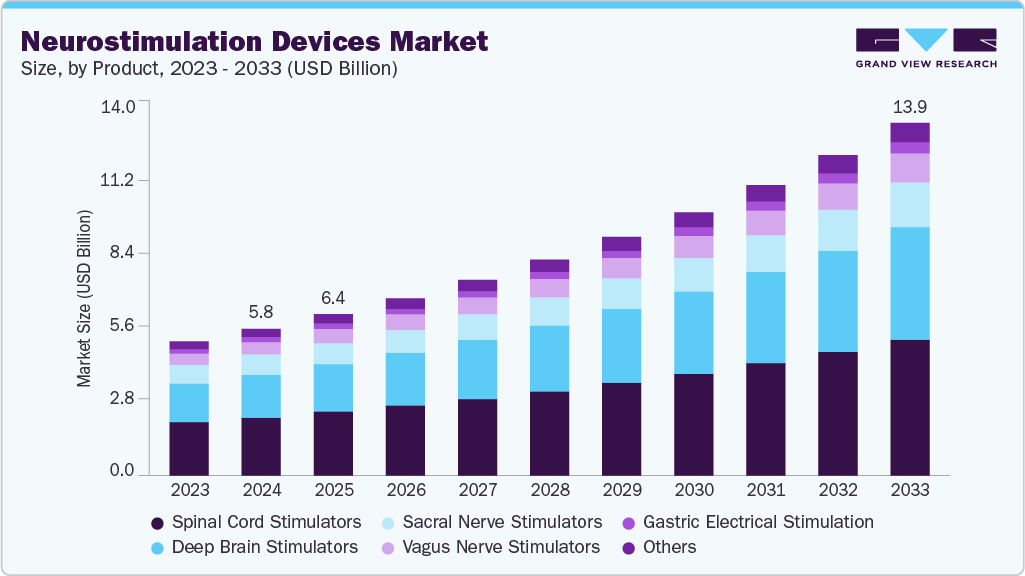
Growing government funding for neuroscience research is a key driver of the neurostimulation devices market, as it accelerates the development of advanced neurostimulation technologies and expands therapeutic applications. By allocating capital to research programs, clinical trials, and innovation initiatives, governments enable a deeper understanding of neurological disorders and support breakthroughs in treatment approaches using neurostimulation. This financial backing fosters collaboration among researchers, clinicians, and medical device developers and encourages the commercialization of next-generation systems with improved safety, precision, and patient outcomes. Furthermore, government initiatives aimed at enhancing healthcare accessibility and reducing the cost burden of neurological care indirectly promote the adoption of neurostimulation therapies, expanding their reach to a broader patient base and fueling overall market growth.
Some of the major government funding to study neurological disorders in recent years
Sr. No.
Organization
Year
Funding (USD Million)
Focused Areas
1
Government of Canada
2024
80
- Dementia
- Amyotrophic Lateral Sclerosis (ALS)
- Multiple sclerosis
- Brain and spinal cord injuries
- Brain cancer
- Stroke
2
Parkinson's Foundation
2024
3
- Parkinson’s disease
3
American Brain Foundation
2023
10
- Parkinson’s disease
- Encephalitis
- Multiple sclerosis
- Alzheimer’s disease
- Brain trauma
- Autism
- Others
4
Parkinson's Foundation
2023
2.8
- Parkinson disease
Source: Environment and Climate Change Canada, Commonwealth of Australia, GOV.UK, Parkinson's Foundation, Grand View Research
Technological advancements in neurostimulation devices are pivotal in driving market growth by improving therapeutic outcomes, patient comfort, and overall device efficiency. Continuous innovation in biocompatible materials and electrode design has enhanced signal delivery precision and durability, while the shift toward minimally invasive implant systems has reduced surgical risks and recovery time. The integration of wireless connectivity and innovative programming has enabled remote monitoring and personalized therapy adjustments, improving long-term treatment adherence and patient satisfaction. Closed-loop systems that automatically adjust stimulation based on real-time physiological feedback are also gaining traction, reflecting a broader industry shift toward intelligent, adaptive neurostimulation. These advancements expand clinical applications across chronic pain management, movement disorders, and psychiatric conditions, reinforcing the growing adoption of neurostimulation technologies worldwide. For instance, in April 2024, Medtronic received FDA approval for its Inceptiv closed-loop spinal cord stimulator, designed to treat chronic pain. This innovative device automatically adjusts real-time stimulation by sensing biological signals, ensuring optimal therapy aligned with patients' daily activities. Inceptiv is the first to offer full-body MRI access and is the smallest fully implantable spinal cord stimulator available.
"Pain is intensely personal, and stimulation therapy should meet the needs of every patient, moment to moment," said Dr. Krishnan Chakravarthy, M.D., Ph.D., Director of Innovative Pain Treatment Solutions and Surgery Center, VA San Diego Healthcare, and Chairman of the Empower You Chronic Pain Foundation. "Inceptiv listens to what the body is saying and, more quickly than you can blink, it seamlessly adjusts. This represents an important leap forward for the treatment of chronic pain."
The rising prevalence of chronic pain is a key driver of growth in the neurostimulation devices market, especially for spinal cord stimulation (SCS) systems. Chronic pain is a long-term condition that affects mobility, productivity, and quality of life, creating a strong need for effective treatment alternatives beyond conventional medications. For instance, according to the 2024 UK Pain Messages report by The British Pain Society, around 43% of adults in the UK, nearly 28 million people, experience chronic pain, with prevalence reaching 62% among individuals aged 75 and above. In this context, neurostimulation therapies are increasingly preferred because they offer targeted pain relief with fewer risks compared to long-term opioid use. These devices help reduce medication dependency and associated side effects while providing long-term, adjustable pain management, which is fueling their growing adoption worldwide.
The expansion of the neurostimulation devices market is strongly driven by their increasing applications across a wider range of neurological and psychiatric disorders. While initially focused on chronic pain and Parkinson’s disease, advances in neurostimulation now target conditions such as epilepsy, depression, and even obesity through gastric electrical stimulation. For instance, in June 2024, PathMaker Neurosystems received USD 2.16 million from the U.S. Department of Defense to support a clinical trial of its MyoRegulator device for treating Amyotrophic Lateral Sclerosis (ALS). The device suppresses motor neuron hyperexcitability via skin pads that modulate spinal circuits. Previously tested for post-stroke spasticity and ALS, this trial aims to strengthen its clinical evidence. Such diversification into new therapeutic areas improves patient outcomes and attracts further research and investment, driving growth in the neurostimulation devices market.
Market Dynamics
Neurostimulation devices are gaining significant traction as they offer targeted and minimally invasive treatment options for a wide range of neurological and chronic pain conditions, including Parkinson’s disease, epilepsy, chronic pain, spinal cord injuries, and movement disorders. These devices enable healthcare providers to modulate neural activity through electrical stimulation, helping improve symptom control, functional outcomes, and patient quality of life. The growing preference for non-pharmacological therapies, coupled with increasing prevalence of neurological disorders and continuous advancements in neurostimulation technologies, is expected to continue driving growth in the neurostimulation devices market.
The rising prevalence of Parkinson's disease is a significant driver of the neurostimulation devices market, as the condition affects the aging population worldwide. Parkinson's disease is a progressive neurological disorder characterized by tremors, rigidity, bradykinesia, and impaired motor function, which can substantially reduce patients' quality of life. As the disease progresses, many patients experience diminishing effectiveness of pharmacological therapies or developing medication-related complications, creating a need for alternative treatment options. Neurostimulation technologies, particularly Deep Brain Stimulation (DBS), have emerged as an effective therapy for managing motor symptoms and improving functional outcomes in patients with advanced Parkinson's disease. Growing clinical evidence supporting the long-term efficacy of DBS, coupled with increasing awareness among neurologists and patients, is driving the adoption of neurostimulation devices.
According to the Parkinson's Foundation, in 2024 in the U.S., approximately 1.1 million people are currently living with Parkinson's disease, and this number is projected to increase to 1.2 million by 2030. In addition, nearly 90,000 new cases are diagnosed annually in the country. Globally, more than 10 million people are estimated to have Parkinson's disease, making it the second most common neurodegenerative disorder after Alzheimer's disease.
The risk of surgical complications is a key factor restraining the growth of the neurostimulation devices market. Neurostimulation therapies such as Deep Brain Stimulation (DBS), Spinal Cord Stimulation (SCS), and Sacral Nerve Stimulation (SNS) require surgical implantation of electrodes, leads, and pulse generators, which can expose patients to complications including infection, bleeding, nerve damage, lead migration, hardware malfunction, and pain at the implant site. These potential risks may discourage patients and healthcare providers from choosing neurostimulation procedures, particularly among elderly individuals or those with underlying health conditions. In addition, concerns regarding revision surgeries, post-operative monitoring, and long-term device maintenance can increase treatment costs and healthcare burden. As a result, the perceived risks associated with implantation procedures may limit patient acceptance and slow the adoption of neurostimulation devices despite their proven clinical benefits.
Technological advancements in neurostimulation systems are creating significant growth opportunities for the neurostimulation devices market by improving therapeutic effectiveness, patient comfort, and long-term treatment outcomes. Innovations such as closed-loop stimulation, rechargeable batteries, wireless programming, MRI-compatible implants, miniaturized devices, and adaptive stimulation technologies enable more precise and personalized therapy for patients with neurological disorders and chronic pain conditions. These advancements help optimize stimulation parameters in real time, reduce the need for frequent surgical interventions, and enhance device longevity, making neurostimulation therapies more attractive to both patients and healthcare providers. Integrating remote monitoring and digital health capabilities enables clinicians to track patient progress and adjust treatment settings more efficiently, thereby supporting broader adoption across healthcare settings. As manufacturers continue to introduce next-generation neurostimulation platforms with improved safety and performance, demand for these devices is expected to increase.
- In December 2025, Nyxoah announced the commercial launch of its Genio hypoglossal neurostimulation system in the Netherlands for the treatment of Obstructive Sleep Apnea (OSA). The launch was marked by the first successful Genio implant procedures performed at OLVG West Hospital in Amsterdam and Zuyderland Hospital in Heerlen. Genio is a battery-free, leadless, bilateral hypoglossal nerve stimulation therapy designed for patients with moderate-to-severe OSA who are unable to tolerate continuous positive airway pressure (CPAP) therapy.
Market Concentration & Characteristics
The neurostimulation devices market exhibits a high degree of innovation, driven by continuous advancements in device design, materials, and functionalities. Companies are developing minimally invasive implants, wireless and rechargeable systems, closed-loop stimulators, and smart devices with real-time monitoring and remote programming capabilities. These innovations enhance precision, patient comfort, and therapeutic outcomes, while expanding applications from chronic pain and Parkinson’s disease to epilepsy, depression, and other neurological disorders. Integration of AI, advanced sensors, and personalized therapy algorithms further underscores the innovative nature of the market.
IRegulatory frameworks significantly shape the neurostimulation devices market, ensuring device safety, efficacy, and patient protection. Agencies such as the U.S. FDA, European Medicines Agency (EMA), and Japan’s PMDA set rigorous approval standards for clinical trials, manufacturing practices, labeling, and post-market surveillance. While these regulations may slow time-to-market and increase compliance costs, they also enhance patient trust, reduce device-related risks, and encourage the adoption of high-quality, clinically validated neurostimulation solutions, ultimately supporting market growth.
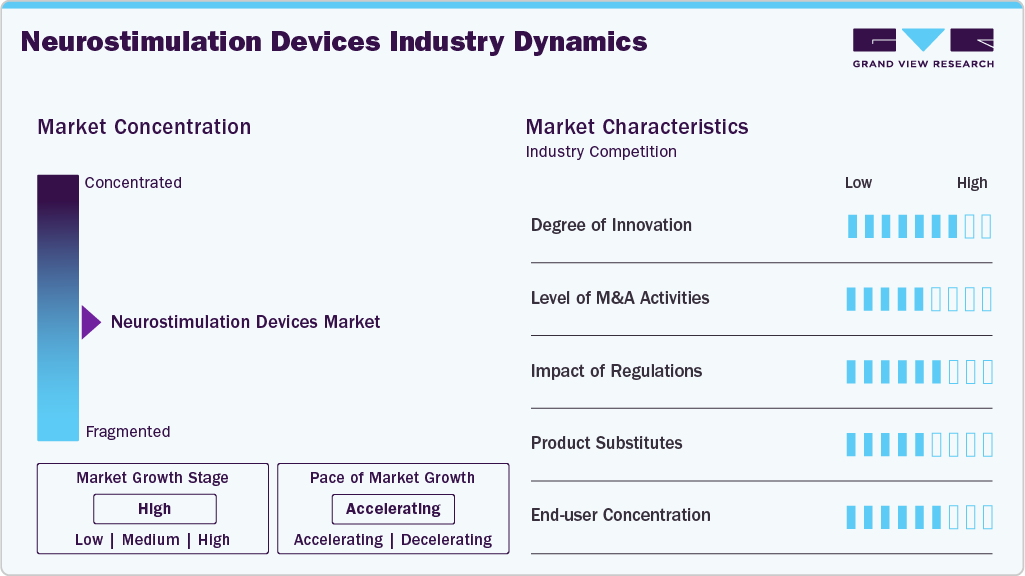
The neurostimulation devices market has witnessed a steady level of mergers and acquisitions, driven by the strategic need to expand product portfolios, access new technologies, and enter emerging markets. Large medical device companies often acquire smaller innovators to integrate novel technologies, expand clinical evidence, or gain regulatory approvals. Such consolidation activities strengthen competitive positioning and accelerate the development and commercialization of advanced neurostimulation therapies, fostering overall market expansion.
The neurostimulation devices market is moderately concentrated among hospitals, specialty clinics, and outpatient centers that perform implantations and follow-up care. Tertiary care hospitals and neurology centers remain the primary end users due to their infrastructure, specialized staff, and ability to handle complex procedures. While hospitals dominate usage, growing adoption in outpatient and pain management clinics is gradually diversifying the end-user base, improving access for patients, and supporting broader market penetration.
Analyst Perspective
The neurostimulation devices market is transitioning from a hardware-centric, implant-volume model toward a software-enabled, outcomes-driven platform economy, with established players such as Medtronic, Abbott, Boston Scientific Corporation, and Nevro Corp leveraging deep physician relationships, broad reimbursement coverage, and diversified portfolios to defend dominant positions, while agile emerging challengers including Saluda Medical are exploiting gaps in closed-loop adaptive stimulation, wireless micro-IPG architecture, and underserved indications such as treatment-resistant depression and metabolic neuromodulation, areas where incumbent scale becomes an innovation liability rather than an asset. The most consequential near-term battleground will be AI-driven closed-loop stimulation, where early clinical evidence and proprietary sensing algorithms will define the next standard of care and command sustained pricing power, even as growing payer scrutiny, value-based contracting, and rechargeable-free platform competition collectively compress ASPs in core spinal cord stimulation, making it imperative for all participants to justify device economics through real-world outcomes data and total cost of care arguments rather than hardware specifications alone.
Product Insights
Based on product type, the spinal cord stimulators segment led the market with the largest revenue share of 39.53% in 2025, and deep brain stimulators are expected to grow at the fastest CAGR over the forecast period. These devices are designed to enhance quality of life and sleep for individuals suffering from chronic pain, while reducing dependence on pain medications. The segment’s growth is supported by the expanding acceptance of SCS for a variety of conditions and the continuous development of advanced systems. For example, in May 2023, Abbott received FDA approval for its SCS systems to treat chronic back pain in patients ineligible for surgery, providing effective alternatives for those with limited treatment options.
Deep brain stimulators (DBS) segment is expected to witness the fastest CAGR over the forecast period. DBS offers a proven solution for movement disorders, including Parkinson’s disease, dystonia, and essential tremor, particularly when conventional medications are insufficient. The segment’s growth is fueled by increasing device availability and ongoing R&D efforts. For instance, in January 2024, the FDA approved Medtronic’s Percept RC DBS system for treating Parkinson’s disease and other movement disorders such as essential tremor, epilepsy, and dystonia. Featuring BrainSense technology, this system aims to improve patients’ quality of life by controlling debilitating tremors and supporting everyday activities.
Application Insights
Based on application, the Parkinson’s disease segment led the market with the largest revenue share of 26.80% in 2025. This growth can be attributed to the high prevalence of the disorder and the increasing adoption of advanced neurostimulation therapies. Deep brain stimulation (DBS) and other neurostimulation approaches have become standard treatment options for managing motor symptoms in Parkinson’s patients, especially when medications alone are insufficient. The segment’s dominance is further supported by ongoing technological advancements, such as closed-loop systems and BrainSense-enabled devices, which offer precise symptom control and improve patients’ quality of life. In addition, growing awareness of Parkinson’s disease, rising investment in research, and expanding access to specialized neurological care are reinforcing demand for neurostimulation solutions targeting this condition.
Chronic pain segment is expected to witness the fastest CAGR over the forecast period. This growth is driven by the increasing prevalence of chronic pain conditions worldwide and the rising demand for non-pharmacological treatment alternatives. Spinal cord stimulators (SCS) and other neurostimulation devices provide effective pain relief while reducing reliance on opioid medications, which has become a critical consideration amid concerns about long-term opioid use and side effects. In addition, advancements in device technology, such as minimally invasive systems, wireless programmability, and real-time monitoring, enhance patient comfort and treatment outcomes, further boosting adoption. Increasing awareness among healthcare providers and patients about the benefits of neurostimulation therapies is also expected to accelerate market growth in this segment.
End Use Insights
Based on end use, the hospitals & Ambulatory Surgery Centers (ASCs) segment dominated the market, accounting for the largest revenue share of 52.45% in 2025. Hospitals are increasingly adopting advanced neurostimulation techniques to address conditions such as chronic pain, epilepsy, and treatment-resistant depression, where traditional pharmacological approaches are not giving effective outcomes. In May 2024, AiM Medical Robotics partnered with Brigham and Women's Hospital to conduct the first human clinical study using MRI-guided device placement for deep brain stimulation (DBS) in Parkinson's patients. This collaboration aims to validate their innovative MRI-compatible surgical robot, which previously demonstrated successful results in cadaver trials by precisely delivering DBS leads while addressing brain shift issues. Such collaborative efforts between the hospitals and companies operating in the market are contributing to the segment growth.
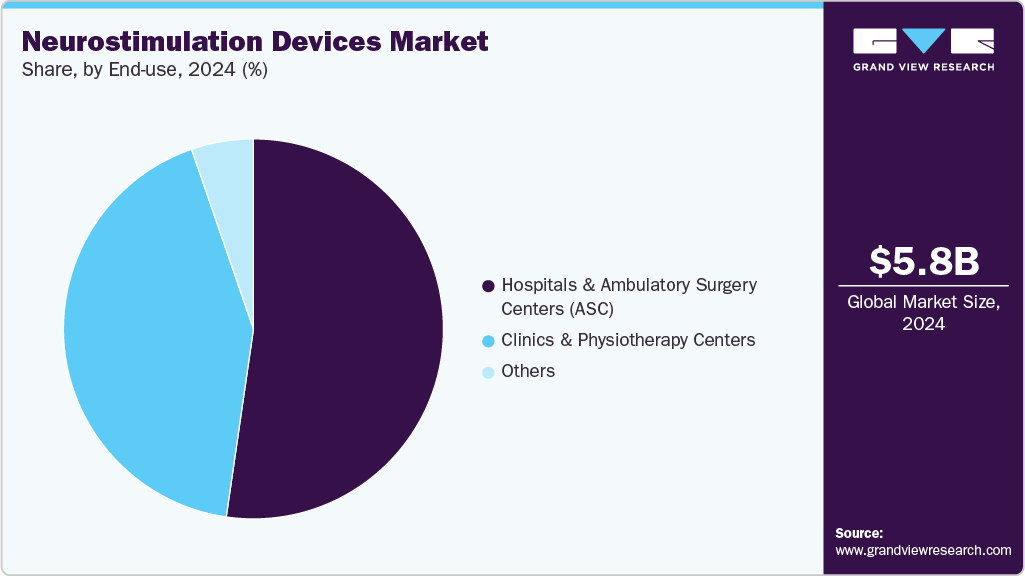
Clinics and physiotherapy centers are increasingly adopting neurostimulation devices due to their enhanced outcomes compared to traditional treatment options. This trend is significantly influenced by the limitations of medications, which often fail to provide satisfactory results for patients, leading healthcare providers to seek innovative alternatives. By focusing on patient-centered care, these facilities are well-equipped to incorporate advanced therapies, enabling them to create personalized treatment plans that improve patient outcomes and overall satisfaction.
Regional Insights
North America Neurostimulation Devices Market Trends
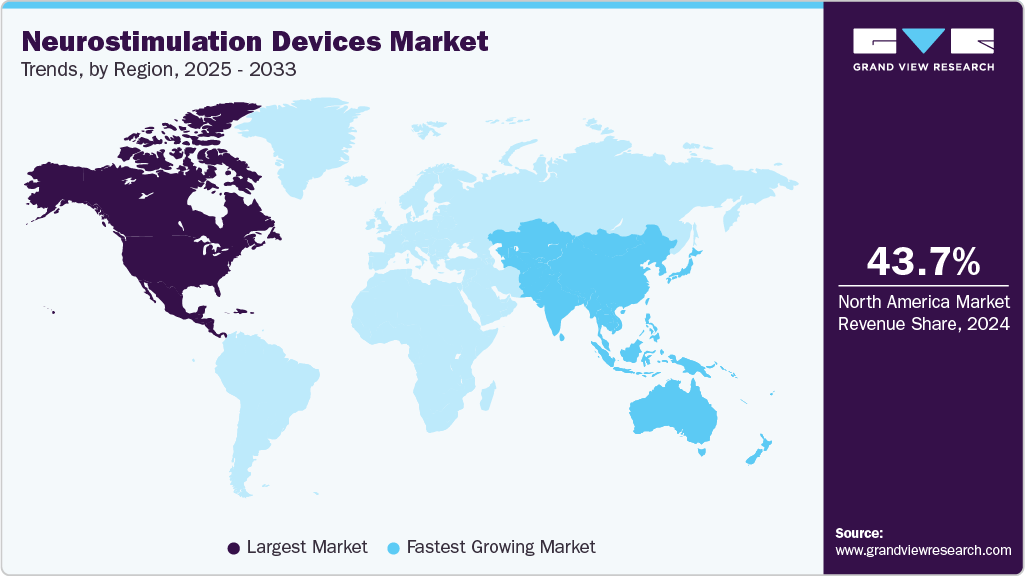
North America dominated the neurostimulation devices market with the largest revenue share of 43.37% in 2025. This growth can be attributed to the increasing prevalence of neurological disorders, including Alzheimer’s disease, Parkinson’s disease, and epilepsy, alongside a rising demand for minimally invasive neurological procedures. Furthermore, rapid technological advancements, the presence of key regional manufacturers, heightened investments in research and development, and supportive government funding and initiatives are also driving the expansion of this market.
U.S. Neurostimulation Devices Market Trends
The neurostimulation devices market in the U.S. held the largest share in the North America region in 2025. The U.S. neurostimulation devices market is primarily driven by the increasing prevalence of neurological disorders such as Parkinson's disease, epilepsy, and chronic pain, as well as a rising demand for minimally invasive treatment options. Technological advancements in neurostimulation devices, such as developing closed-loop systems and wireless capabilities, are enhancing treatment efficacy and patient outcomes. In addition, favorable regulatory policies, increased healthcare spending, and a growing focus on personalized medicine are contributing to the market's expansion.
Europe Neurostimulation Devices Market Trends
The Europe neurostimulation devices market is experiencing significant growth, driven by the increasing prevalence of neurological disorders such as Parkinson’s disease, epilepsy, and chronic pain and a rising demand for minimally invasive treatment options. Technological advancements, including the development of closed-loop systems and wireless capabilities, are enhancing the efficacy and patient-friendliness of these devices. In addition, the presence of leading neurotechnology companies in Europe, supportive regulatory environments, and increased healthcare investments are further propelling market expansion.
The UK neurostimulation devices market is steadily growing and is fueled by several important factors. This expansion is driven by the rising prevalence of neurological disorders such as Parkinson’s disease, epilepsy, and chronic pain, alongside a growing demand for minimally invasive treatment options. Technological advancements, including the development of closed-loop systems and wireless capabilities, are enhancing the efficacy and patient-friendliness of these devices. In addition, the presence of leading neurotechnology companies in the UK, supportive regulatory environments, and increased healthcare investments are further propelling market expansion.
Asia Pacific Neurostimulation Devices Market Trends
The Asia Pacific neurostimulation devices market is experiencing fastest CAGR 11.46% from 2026 to 2033. The Asia-Pacific neurostimulation devices market is fueled by the presence of numerous local manufacturers in countries like China and Japan, who are introducing innovative, region-specific products that enhance accessibility and competition. Rising awareness of treatment options for neurological disorders is further driving demand, while research and advocacy efforts by organizations such as the Asia Pacific Centre for Neuromodulation (APCN) are supporting the adoption of neurostimulation therapies across the region.
The neurostimulation devices market in China is witnessing rapid growth, driven by several key factors. Rising prevalence of neurological disorders such as chronic pain and movement disorders, combined with an aging population, is fueling demand for advanced treatment options. Technological innovations in spinal cord and sacral nerve stimulation devices are improving efficacy, patient outcomes, and overall usability. Furthermore, supportive government policies and initiatives are promoting research, innovation, and broader accessibility, encouraging both domestic and international companies to expand their presence in the Chinese market.
Latin America Neurostimulation Devices Market Trends
The neurostimulation devices market in Latin America is experiencing significant growth, driven by several key factors. The increasing prevalence of neurological disorders and chronic pain conditions is fueling demand for advanced treatment options. Patients and healthcare providers are increasingly opting for minimally invasive treatments, which neurostimulation devices offer. Technological advancements, such as the development of implantable pulse generators and wireless stimulators, are enhancing the effectiveness and appeal of these devices. In addition, the growing geriatric population and the rise of age-related diseases like Parkinson’s and Alzheimer’s are contributing to the market expansion. However, challenges such as high device costs and reimbursement limitations persist. Collaborations between medical technology companies and research institutions foster innovation and product development. The integration of artificial intelligence and remote monitoring features is also reshaping patient care, making treatments more personalized and accessible.
Middle East Africa Neurostimulation Devices Market Trends
The neurostimulation devices market in the Middle East and Africa is experiencing significant growth, driven by several key factors. The increasing prevalence of neurological disorders, such as chronic pain, Parkinson's disease, and epilepsy, is fueling demand for advanced treatment options. Technological advancements in neurostimulation therapies, including spinal cord and deep brain stimulation, enhance treatment efficacy and patient outcomes. In addition, supportive government initiatives and investments in healthcare infrastructure are facilitating the adoption of these devices across the region. Countries such as South Africa and Saudi Arabia are leading the market, with rising healthcare expenditure and a growing focus on specialized medical treatments. Despite challenges such as high device costs and reimbursement issues, the MEA neurostimulation devices market is poised to expand in the coming years.
Key Neurostimulation Devices Company Insights
The neurostimulation devices market is extremely fragmented, with both major and local market competitors. Due to the fact that the current market players are stepping up their efforts to grab the majority in neurostimulation devices market, fierce competition is anticipated, with the degree of competitiveness perhaps rising even higher. Many market participants are engaging in various strategic activities, such as product launches, mergers and acquisitions, and geographic growth, in an effort to gain a competitive edge over rivals. Thus, with various strategies adopted by the market players, the neurostimulation devices market is predicted to impel during the forecast period.
Key Neurostimulation Devices Companies:
The following key companies have been profiled for this study on the neurostimulation devices market.
- Abbott (St. Jude Medical)
- Medtronic
- Boston Scientific Corporation
- Aleva Neurotherapeutics
- Nexstim
- LivaNova PLC
- Neuropace Inc.
- Nevro Corporation
- Nalu Medical
- Mainstay Medical
- Saluda Medical Pty Ltd
- Biotronik
- electroCore, Inc.
- MicroTransponder Inc.
- tVNS Technologies GmbH
- Laborie
- Axonics, Inc.
Competitive Benchmarking
Category
Operating Strategies
Competitive Edge
Weakness
Established Players (Medtronic, Abbott, Boston Scientific, Nevro Corp)
- Expand integrated neuromodulation ecosystems through partnerships with hospital networks, pain management clinics, and rehabilitation centers.
- Invest in AI-driven closed-loop stimulation, rechargeable platform upgrades, and international market penetration
- Strong brand credibility with neurosurgeons and pain specialists, large installed device base, and high switching costs.
- Advanced R&D capabilities with diversified portfolios spanning SCS, DBS, and peripheral nerve stimulation
- Higher operational and regulatory compliance costs across FDA, CE, and international markets.
- Slower innovation cycles due to lengthy clinical trial requirements and limited agility in addressing emerging indications such as mental health and metabolic neuromodulation
Emerging Players (Saluda Medical, Nalu Medical, Stimwave, Mainstay Medical)
- Focus on niche indications such as closed-loop adaptive stimulation, micro-IPG platforms, chronic low back pain, or non-opioid pain management.
- Leverage KOL partnerships, targeted clinical evidence generation, and value-based reimbursement positioning
- Faster product innovation with differentiated technology platforms such as wireless micro-stimulators, rechargeable-free designs, and real-time feedback algorithms.
- Agile clinical and regulatory strategies with strong focus on unmet patient needs
- Limited financial resources and challenges in scaling commercial infrastructure and reimbursement coverage.
- Lower physician familiarity and weaker long-term clinical validation compared to established neuromodulation platforms
Recent Developments
-
In February 2025, Medtronic received U.S. FDA approval for the world’s first adaptive deep brain stimulation system, designed specifically for individuals with Parkinson’s disease.
-
In September 2024, Abbott announced the launch of a pivotal clinical trial named the TRANSCEND study to assess the efficacy of its DBS system in managing Treatment-resistant Depression (TRD), a severe form of major depressive disorder. The U.S. FDA has awarded Abbott Breakthrough Device designation for this research under its Breakthrough Devices Program, which accelerates the review process for innovative technologies that have the potential to significantly enhance the lives of individuals with life-threatening or irreversibly debilitating conditions.
-
In May 2024, Nexstim Plc announced that Nexstim, Inc. has entered into a nonexclusive strategic alliance agreement with Inomed Inc. This agreement aims to enhance collaboration in marketing, sales, and application support between the two companies in the U.S.
Neurostimulation Devices Market Report Scope
Report Attribute
Details
Market size value in 2025
USD 6.3 billion
Estimated Market size in 2026
USD 6.9 billion
Projected Market size by 2033
USD 13.9 billion
Growth rate
CAGR of 10.29% from 2026 to 2033
Base year for estimation
2025
Historical data
2021 - 2025
Forecast period
2026 - 2033
Quantitative units
Revenue in USD million/billion and CAGR from 2026 to 2033
Report coverage
Revenue forecast, company ranking, competitive landscape, growth factors, and trends
Segments covered
Product type, application, end use, region
Regional scope
North America; Europe; Asia Pacific; Latin America; MEA
Country scope
U.S.; Canada; Mexico; Germany; UK; France; Italy; Spain; Norway; Denmark; Sweden; Russia; Iceland; Finland; China; Japan; India; South Korea; Australia; Thailand; Singapore; Brazil; Argentina; Saudi Arabia; South Africa; UAE; Kuwait; Israel
Key companies profiled
Abbott (St. Jude Medical), Medtronic, Boston Scientific Corporation, Aleva Neurotherapeutics, Nexstim, LivaNova PLC, NeuroPace Inc., Nevro Corporation, Nalu Medical, Mainstay Medical, Saluda Medical Pty Ltd, BIOTRONIK, electroCore, Inc., MicroTransponder Inc., tVNS Technologies GmbH, Laborie, and Axonics, Inc.
Customization scope
Free report customization (equivalent up to 8 analysts' working days) with purchase. Addition or alteration to country, regional & segment scope.
Pricing and purchase options
Avail customized purchase options to meet your exact research needs. Explore purchase options
Global Neurostimulation Devices Market Report Segmentation
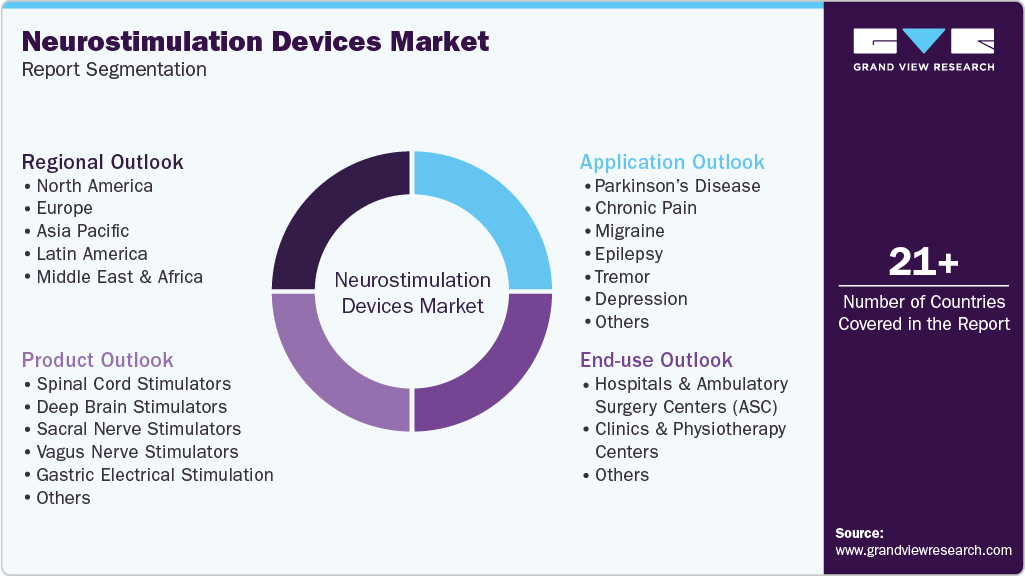
This report forecasts revenue growth at global, regional, and country levels and provides an analysis of the latest industry trends in each of the sub-segments from 2021 to 2033. For the purpose of this study, Grand View Research has segmented the global neurostimulation devices market report on the basis of product, application, end use, and region:
-
Product Outlook (Revenue, USD Million, 2021 - 2033)
-
Spinal Cord Stimulators
-
Deep Brain Stimulators
-
Sacral Nerve Stimulators
-
Vagus Nerve Stimulators
-
Gastric Electrical Stimulation
-
Others
-
-
Application Outlook (Revenue, USD Million, 2021 - 2033)
-
Parkinson’s Disease
-
Chronic Pain
-
Migraine
-
Epilepsy
-
Tremor
-
Depression
-
Urinary & Fecal Incontinence
-
Others
-
-
End Use Outlook (Revenue, USD Million, 2021 - 2033)
-
Hospitals & Ambulatory Surgery Centers (ASC)
-
Clinics & Physiotherapy Centers
-
Others
-
-
Regional Outlook (Revenue, USD Million, 2021 - 2033)
-
North America
-
U.S.
-
Canada
-
Mexico
-
-
Europe
-
UK
-
Germany
-
France
-
Italy
-
Spain
-
Denmark
-
Sweden
-
Norway
-
-
Asia Pacific
-
Japan
-
China
-
India
-
Australia
-
Thailand
-
South Korea
-
-
Latin America
-
Brazil
-
Argentina
-
-
Middle East & Africa
-
South Africa
-
Saudi Arabia
-
UAE
-
Kuwait
-
-
Research Methodology
Segment Definition
Segment - product type
Revenue capture definition
Spinal Cord Stimulators
Revenue is generated through the implantable pulse generators, stimulation leads, electrodes, external programmers, and replacement components used for chronic pain management. Additional revenue is derived from device implantation procedures, system upgrades, rechargeable battery replacements, and ongoing patient support services. Hospital procurement, ambulatory surgical center purchases, and reimbursement-backed therapy adoption remain the primary revenue channels, while expanding indications for neuropathic and refractory pain conditions contribute to market growth.
Deep Brain Stimulators
Revenue is generated through the implantable neurostimulators, electrodes, extension leads, external programmers, and replacement components used to deliver targeted brain stimulation therapy. Additional revenue comes from implantation procedures, device programming and monitoring services, battery replacements, and system upgrades. Hospitals and specialized neurology and neurosurgery centers represent the primary revenue channels, with increasing adoption for the treatment of Parkinson’s disease, essential tremor, dystonia, epilepsy, and other neurological disorders.
Sacral Nerve Stimulators
Revenue flows from the implantable stimulation devices, leads, and associated accessories used to manage urinary and bowel disorders, as well as from implantation, device replacement, and therapy management services.
Vagus Nerve Stimulators
Revenue is driven from the implantable and external vagus nerve stimulation devices, leads, and related accessories used to treat neurological and psychiatric disorders. Additional revenue comes from implantation procedures, device replacements, and therapy programming and monitoring services.
Gastric Electrical Stimulation
Revenue is derived from the implantable gastric electrical stimulation devices, advances, and related accessories used to manage gastrointestinal motility disorders. Additional revenue comes from implantation procedures, device replacements, and follow-up therapy management services.
Others
Revenue is derived from the specialized neurostimulation devices and related accessories used for emerging and niche therapeutic applications, including peripheral nerve stimulation, transcranial stimulation, and other neuromodulation therapies. Additional revenue comes from implantation procedures, device maintenance, replacements, and therapy management services.
Estimation Model
Patient Pool Identification
Diagnosis & Accessibility
Treatment Adoption
Device Penetration
Revenue Conversion
Question: How many patients have conditions treatable with neurostimulation?
Question: How many patients are diagnosed and eligible for treatment?
Question: How many eligible patients receive neurostimulation therapy?
Question: How many treatments use market-available devices?
Question: What annual revenue opportunity exists?
Chronic pain; Movement disorders; Epilepsy; Depression & OCD; Other emerging indications
Apply diagnosis rate; Consider treatment guidelines & clinician adoption; Account for healthcare access & infrastructure
Apply adoption rate by indication; Implanted vs non-implanted preference; Consider payer coverage & reimbursement
Hospital & ambulatory procedure penetration; Competitive landscape & market share; Channel mix
Apply ASP by device type; Consider pricing mix & upgrades; Multiply by addressable device volume
Output: Total Addressable Patient Pool
Output: Diagnosed & Eligible Patient Pool
Output: Treated Patient Volume
Output: Addressable Device Volume
Output: Annual Revenue Opportunity (USD)
Key assumption: Epidemiology by indication and region
Key assumption: Diagnosis & adoption rates vary by country and healthcare system
Key assumption: Reimbursement & payer policies impact access and uptake
Key assumption: Market share driven by clinical evidence, brand & innovation
Key assumption: Pricing & ASP mix determine revenue realization
Delivered Customizations
This report has been delivered with the following In-depth customizations
Client Request
Customization Delivered
Value Adds
Neurostimulation Device Technology & Platform Trends
Conducted a focused analysis of neurostimulation device platforms covering spinal cord stimulation, deep brain stimulation, peripheral nerve stimulation, closed-loop adaptive systems, wireless micro-IPG architectures, and AI-driven therapy optimization trends.
Helps stakeholders identify high-growth technology segments, evaluate device adoption and physician uptake trends, and assess commercialization opportunities in next-generation neuromodulation platforms.
Competitive Landscape & Pricing Intelligence
Evaluated competitive positioning of established players (Medtronic, Abbott, Boston Scientific, Nevro) and emerging challengers (Saluda Medical, Nalu Medical, Mainstay Medical), including GPO contract pricing, reimbursement dynamics, payer landscape evolution, and value-based contracting trends.
Provides insights into pricing pressure points, reimbursement coverage gaps, and commercially attractive device segments to support product positioning, portfolio strategy, and market entry decisions.
ASP Benchmarking & Volume Analysis
Developed indicative average selling price benchmarks and procedure volume estimates across key neurostimulation device categories including SCS, DBS, and peripheral nerve stimulation systems segmented by geography (U.S. and key international markets), device tier, and procurement channel including hospital, ASC, and GPO contract pricing.
Supports revenue forecasting, market sizing, and commercial planning by enabling stakeholders to identify pricing positioning opportunities, assess volume-driven growth potential, and benchmark device economics against competitive alternatives across care settings.
Frequently Asked Questions About This Report
The global neurostimulation devices market size was estimated at USD 6.3 billion in 2025 and is expected to reach USD 7.0 billion in 2026.
Some of the key players operating in the neurostimulation devices market include Abbott (St. Jude Medical); Medtronic; Boston Scientific Corporation; Aleva Neurotherapeutics ; Nexstim; LivaNova PLC; Neuropace Inc.; Nevro Corporation; Nalu Medical; Mainstay Medical; Saluda Medical Pty Ltd; Biotronik; electroCore, Inc.; MicroTransponder Inc.; tVNS Technologies GmbH; Laborie; Axonics, Inc.
Key factors that are driving the neurostimulation devices market growth include the increasing prevalence of chronic diseases such as migraine, epilepsy, and high unmet medical needs in these disease segments, and external funding for research and development activities.
The Parkinson’s disease segment led the market, accounting for the largest revenue share of 26.80% in 2025.
The spinal cord stimulators segment led the market, accounting for the largest revenue share of 39.53% in 2025.
The hospitals & Ambulatory Surgery Centers (ASC) segment led the market with the largest revenue share of 52.45% in 2025
The Asia Pacific region is expected to grow at the fastest CAGR rate of 11.46% from 2026 to 2033.
The global neurostimulation devices market is expected to grow at a compound annual growth rate of 10.35% from 2026 to 2033, reaching USD 13.9 billion by 2033.
North America dominated the neurostimulation devices market, accounting for 43.37% in 2025. This is attributable to the increasing prevalence of depression & epilepsy and the rise in demand for minimally invasive procedures.
About the Author(s)
Medical Devices Research Team
Healthcare · Medical DevicesThis report was authored by the medical devices research team at Grand View Research - comprising two research analysts, one senior research analyst, and one industry expert - with specialized expertise in the medical devices segment of the healthcare industry. All findings are based on proprietary healthcare databases, executive interviews, and regulatory analysis, subject to internal peer review prior to publication.
Last Updated:
Speak to Analyst

Need a Tailored Report?
Customize this report to your needs — add regions, segments, or data points, with 20% free customization.
Or view our licence options:


ISO 9001:2015 & 27001:2022 Certified
We are GDPR and CCPA compliant! Your transaction & personal information is safe and secure. For more details, please read our privacy policy.












