
- Home
- »
- Medical Devices
- »
-
Non-invasive Aesthetic Treatment Market Size Report, 2033GVR Report cover
![Non-invasive Aesthetic Treatment Market Size, Share & Trends Report]()
Non-invasive Aesthetic Treatment Market (2026 - 2033) Size, Share & Trends Analysis Report By Procedure (Skin Rejuvenation, Injectable), By End Use (Hospital/Surgery Center, MedSpa, Traditional Spa, HCP owned clinic), By Region, And Segment Forecasts
- Report ID: GVR-4-68038-034-7
- Number of Report Pages: 110
- Format: PDF
- Historical Range: 2021 - 2025
- Forecast Period: 2026 - 2033
- Industry: Healthcare
- Report Summary
- Table of Contents
- Interactive Charts
- Methodology
- Download FREE Sample
-
 Download Sample Report
Non-invasive Aesthetic Treatment Market Summary
The global non-invasive aesthetic treatment market size was estimated at USD 35.99 billion in 2025 and is projected to reach USD 64.07 billion by 2033, growing at a CAGR of 7.45% from 2026 to 2033. This is driven by rising consumer demand for low-risk cosmetic enhancements, technological advancements, and changing lifestyle preferences.
Key Market Trends & Insights
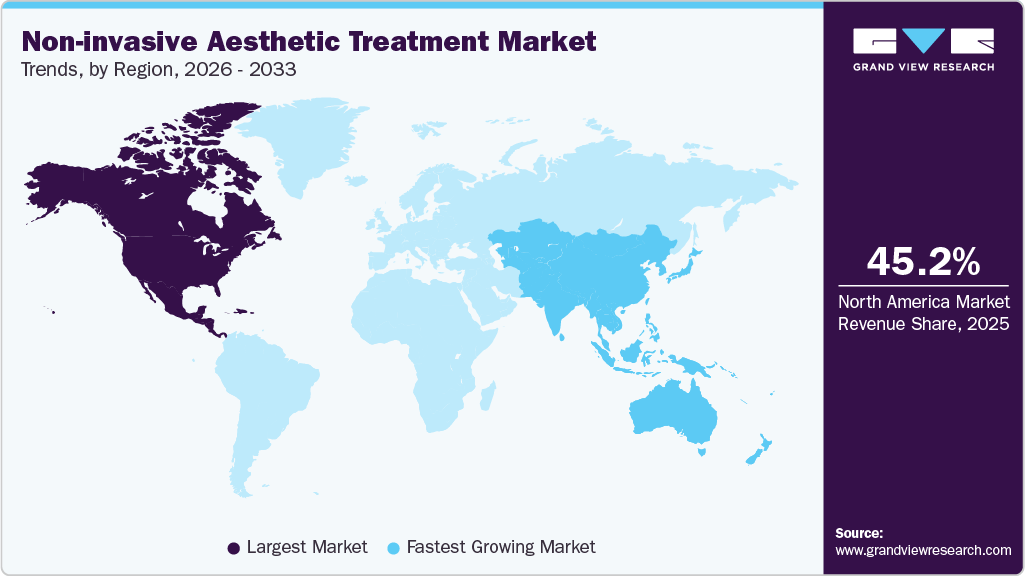
- North America non-invasive aesthetic treatment market dominated the global market in 2025 and accounted for the largest revenue share of 45.24%.
- The U.S. non-invasive aesthetic treatment market is anticipated to register the fastest growth rate during the forecast period.
- In terms of procedure, the injectables segment held the largest revenue share in 2025.
- In terms of End use, the HCP owned clinic held a significant share of 33.42% in 2025.
Market Size & Forecast
- 2025 Market Size: USD 35.99 Billion
- 2033 Projected Market Size: USD 64.07 Billion
- CAGR (2026-2033): 7.45%
- North America: Largest market in 2025
- Asia Pacific: Fastest growing market.
Social media and increased aesthetic awareness, especially among younger people, are making routine cosmetic maintenance more common. In addition, the aging population’s interest in subtle anti-aging solutions, combined with the wider availability of treatments in medical spas, dermatology clinics, and retail health settings, also contributes to market growth.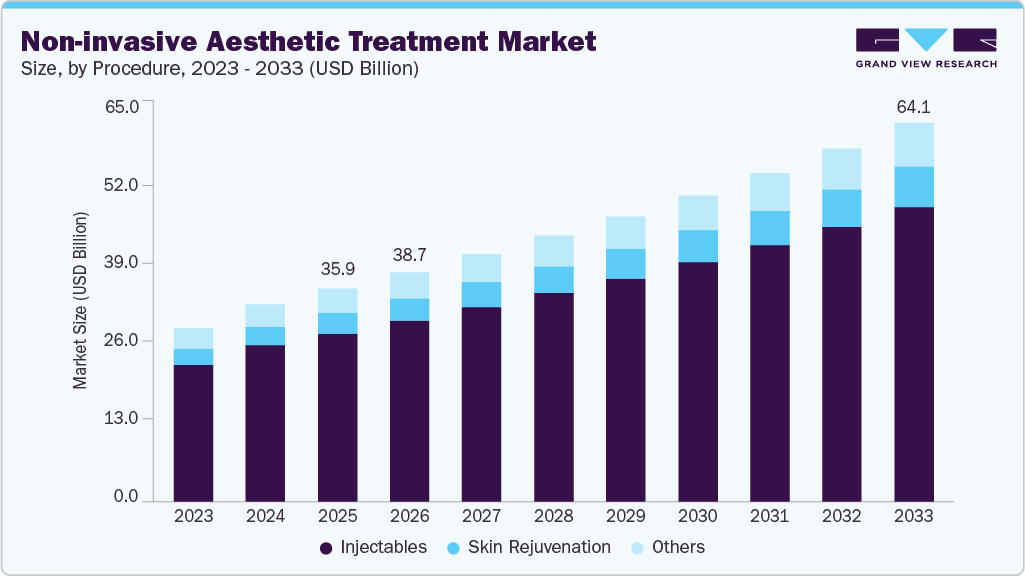
Moreover, rising disposable incomes and a focus on self-care and wellness are driving demand, making non-invasive aesthetic treatments a regular part of lifestyle and wellbeing routines.
Increasing aging population
The increasing geriatric population across the globe is expected to drive the market. According to a Population Reference Bureau article published in January 2024, the population of Americans aged 65 & older is expected to grow from 58 million in 2022 to 82 million by 2050, representing a 47% increase. In addition, this age group’s proportion of the overall population is anticipated to rise from 17% to 23%.
Moreover, the geriatric population in the U.S. is the highest compared to the past. Furthermore, as per a World Economic Forum article published in September 2023, Japan is experiencing a significant aging trend, with over 1 in 10 of its population aged 80 or older. Nearly a third of the population, approximately 36.23 million people, are aged 65 & above. In addition, the number of centenarians is at an all-time high in the country.
This demographic shift is expected to promote the development of innovative procedures, including aesthetic medicines, which cater to the needs of the rapidly aging population. This trend creates a favorable environment for the market to thrive and effectively meet the growing demand.
Shift in consumer preference toward non-invasive procedures
Consumers are increasingly opting for non-invasive aesthetic procedures, as they are safer and more convenient than traditional cosmetic surgery. Treatments such as injectables, laser therapies, radiofrequency skin tightening, and non-surgical fat reduction require little to no downtime, allowing people to resume daily activities almost immediately. These options also involve lower risks, fewer side effects, and less discomfort than surgical interventions. As technology advances and outcomes improve, non-invasive procedures have become increasingly appealing for those seeking visible results without the commitment, cost, or recovery time associated with surgery. This trend is driving strong adoption of non-surgical facial and body treatments in clinics, medi-spas, and retail wellness settings.
Cosmetic Minimally Invasive Procedures (2024 vs 2023)
Procedure Type
2024
2023
% Change (2024 vs 2023)
Neuromodulator injections (Botox, Dysport, Xeomin, Jeuveau, Daxxify)
9,883,711
9,480,949
4%
Lip augmentation (with injectable materials)
1,449,565
1,439,291
1%
Noninvasive fat reduction (CoolSculpting, Liposonix, Emsculpt, Vanquish, Zerona, Kybella)
447,581
745,967
-40%
Nonsurgical skin tightening (Pelleve, Thermage, Ulthera)
439,032
438,211
0%
Sclerotherapy
516,883
515,602
0%
Skin resurfacing (dermabrasion, chemical peel, ablative/non-ablative lasers, microdermabrasion)
3,703,305
3,501,696
6%
Skin treatment using lasers (laser hair removal, IPL treatment, laser tattoo removal, laser treatment of leg veins)
3,112,056
3,101,772
0%
HA fillers (Juvederm Ultra, Ultra Plus, Voluma, Volbella, Vollure, Restylane Lyft, Restylane Silk, Belotero, Restylane)
5,331,426
5,294,603
1%
Non-HA fillers (Radiesse, Sculptra, Bellafill, Renuva)
932,861
924,549
1%
HA fillers for lip augmentation
1,589,502
-
-
Prescribed weight loss medication (semaglutide, tirzepatide)
837,485
-
-
TOTAL
28,243,407
25,442,640
1.50%
Source: 2024 Plastic Surgery Statistics Report
Advances in technology & treatment modalities:
Advances in technology and treatment modalities are primarily driving the market demand. Ongoing innovation is making procedures more effective, safer, and more comfortable for patients. New-generation devices, including lasers, radiofrequency systems, ultrasound/HIFU platforms, cryolipolysis equipment, and improved injectables such as fillers and neuromodulators, provide more precise energy delivery, greater customization, and faster recovery times. These upgrades enhance treatment outcomes, reduce side effects, and improve patient satisfaction, which increases adoption. The rise of multi-modal and combination platforms enables practitioners to address multiple concerns, such as skin tightening, fat reduction, and skin rejuvenation, within a single session or treatment plan. This integrated approach improves efficiency, reduces the number of required visits, and delivers more comprehensive results.
New systems such as Ellacor 2.0 significantly cut treatment and healing time, setting new standards for minimally invasive skin tightening. Injectables are evolving, too. Galderma’s solutions address GLP-1-related facial volume loss, while its new neurotoxin Relfydess offers ultra-fast onset and long-lasting effects. Meanwhile, FDA-approved EvolysseForm and Smooth represent a new generation of HA fillers built for natural, durable outcomes. Together, these innovations highlight a clear trend: next-gen, customised aesthetic treatments that enhance efficiency, comfort, and overall patient experience.
Moreover, India’s aesthetic medicine market is shifting toward advanced, laser-driven non-invasive facelift technologies, as evidenced by the recent launch of EndoliftX by Spectra Medical India, in partnership with Italy's Eufoton. This reflects a broader shift toward high-precision, minimally invasive laser platforms that are transforming how clinics deliver skin-tightening, contouring, and fat-reduction treatments. The launch reflects growing demand in India for effective, surgery-free facial rejuvenation with minimal discomfort and no downtime, particularly among working professionals. EndoliftX uses ultra-thin optical fibers to target deep skin layers, delivering facelift-like results while stimulating collagen and improving skin laxity. This approach aligns with global trends, as energy-based devices increasingly offer greater convenience, natural-looking results, and shorter recovery times compared to traditional surgery.
The table below presents a comprehensive overview of cosmetic surgery procedures performed in 2024 compared to 2023, highlighting the year-over-year percentage change. The data is categorized into three major areas: breast, body, and face procedures-covering both popular and specialized treatments.
2024 Cosmetic Surgery Procedures in U.S.
Procedure Category
Procedure
2024
2023
% Change (2024 vs 2023)
Breast
Breast augmentation
306,196
304,181
1%
Breast implant removals
41,271
41,115
0%
Breast lift (mastopexy)
153,616
153,600
0%
Breast reduction
76,734
76,031
1%
Breast reduction in males (gynecomastia)
26,430
25,888
2%
Body
Abdominoplasty (tummy tuck)
171,064
170,110
1%
Buttock augmentation with fat grafting
29,466
29,383
0%
Buttock implants
1,245
1,234
1%
Buttock lift
7,954
7,748
3%
Labiaplasty
10,827
10,631
2%
Liposuction
349,728
347,782
1%
Lower body lift
10,957
10,947
0%
Thigh lift
9,914
9,600
3%
Upper arm lift (brachioplasty)
23,527
23,058
2%
Face
Buccal fat pad removal
4,903
4,866
1%
Cheek implant (malar augmentation)
9,130
8,825
3%
Chin augmentation (mentoplasty)
5,529
5,484
1%
Ear surgery (otoplasty)
4,825
4,817
0%
Eyelid surgery (blepharoplasty)
120,755
120,747
0%
Facelift (rhytidectomy)
79,058
78,482
1%
Facial fat grafting
34,260
34,216
0%
Forehead lift
13,621
13,518
1%
Liposuction (submental/chin)
24,000
23,667
1%
Neck lift
22,445
22,007
2%
Nose reshaping (rhinoplasty)
48,423
47,307
2%
Total
All procedures
1,585,878
1,575,244
1%
Source: Secondary Research, 2024 Plastic Surgery Statistics Report
Rising Disposable Income and Standard of Living
As economies expand and disposable incomes rise, individuals are more likely to invest in luxury services such as cosmetic surgeries, which are considered elective and non-essential. This trend is especially evident among middle-class and affluent people who can afford treatments such as Botox, fillers, and liposuction. Economic growth enhances access to healthcare services, advanced technology, and skilled professionals, making these procedures safer and more effective. Overall, increased financial flexibility leads to greater willingness to pursue aesthetic enhancements that align with personal and societal beauty standards.
Disposable Income per Capita 2023
Country
Gross Disposable Income Per Capita 2023
U.S.
USD 62,722
Switzerland
USD 47,124
Germany
USD 42,417
Australia
USD 41,194
UK
USD 36,077
Canada
USD 35,561
France
USD 35,001
Italy
USD 34,703
Sweden
USD 31,882
Spain
USD 31,193
Denmark
USD 30,101
Japan
USD 28,040
South Korea
USD 27,304
Mexico
USD 17,736
South Africa
USD 10,058
Source: World Population Review
Growing Awareness and Acceptance of Cosmetic Procedures
Over the past decade, enhanced access to information through digital platforms, social media, and influencer culture has been crucial in educating people about the benefits, safety, and effectiveness of various aesthetic treatments. As a result, cosmetic procedures are no longer seen as taboo or exclusive luxuries for celebrities and the elite; they have become mainstream options for individuals seeking self-improvement. Moreover, campaigns by healthcare providers, medical conferences, and patient testimonials have helped demystify these treatments, reducing anxiety and dispelling misconceptions associated with surgery and injectable therapies. With societal norms shifting toward body positivity and self-care, more people are inclined to explore procedures that enhance their confidence, improve their appearance, and address age-related concerns.
In July 2025, Covalo launched a campaign that redefines beauty through longevity, focusing on science-backed skincare for long-term health. It features innovative ingredients such as PrimalHyal UltraReverse and PRO-LONGEVIA, which promote cellular repair and rejuvenation instead of just masking aging signs. This aligns with the pro-aging trend that embraces aging naturally and emphasizes skin resilience. Covalo aims to lead in sustainable, evidence-based beauty practices, appealing to consumers seeking holistic skincare solutions.
Market Characteristics & Concentration
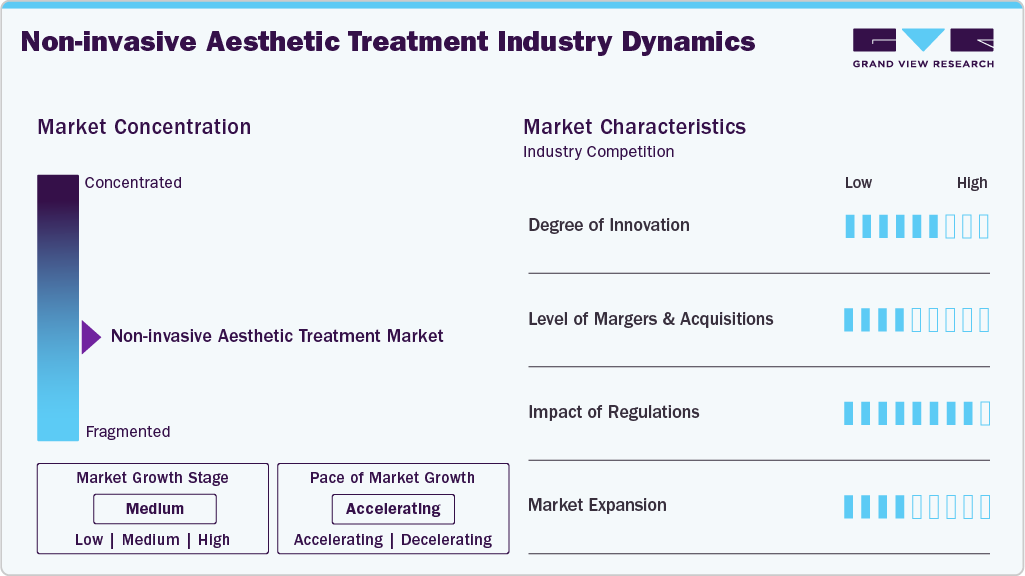
The chart below represents the relationship between industry concentration, industry characteristics, and industry participants. The industry is fragmented, with many services and end users entering the market. There is a high degree of innovation, a moderate level of merger & acquisition activities, a high impact of regulations, and market expansion of the industry.
The industry is experiencing a high degree of innovation. In September 2024, Allergan Aesthetics launched BOTOX Cosmetic (onabotulinumtoxinA) in China to treat masseter muscle prominence (MMP) in adults, marking the first neurotoxin approval for this condition by the China National Medical Product Administration. MMP, caused by genetic factors or habits such as teeth clenching, results in a broader lower face and can affect self-esteem. This move reflects Allergan's dedication to expanding BOTOX applications and plans for regulatory approvals in other markets for facial contouring solutions.
"Masseter prominence is among the top aesthetics concerns for my patients and the broader Asian population, and there is a significant unmet need for minimally invasive treatment options for patients interested in addressing their lower face shape," said Professor Sun Jiaming, lead clinical study investigator and Director of the Plastic Surgery Department of Union Hospital Affiliated to Tongji Medical College of Huazhong University of Science and Technology.
"The approval of BOTOX Cosmetic offers an effective option delivered in a single treatment dosed every six months that relaxes masseter muscles and helps patients achieve a slimmer and more defined jawline."
Several key players are actively engaging in partnerships & collaborations to promote growth & innovation and improve their competitiveness by combining the expertise & efforts of different organizations. For instance, in August 2025, Elixir MD expanded its global footprint with the launch of its new Australia and New Zealand subsidiary through an exclusive partnership with High Tech Medical Pty. Ltd., a leading distributor of aesthetic and medical technologies in the region. This strategic move strengthens Elixir MD’s presence in two fast-growing aesthetic medicine markets and ensures that clinics across Australia and New Zealand gain direct access to the company’s advanced skincare and aesthetic solutions.
The market is regulated by a variety of guidelines designed to ensure patient safety, quality of care, and ethical business practices, in countries including the UK, EU, and growingly in Asia, non-invasive procedures such as skin rejuvenation, chemical peels, injectables, laser therapies, body contouring, and radiofrequency treatments are increasingly regulated to minimize risks associated with cosmetic interventions. Regulations typically require that devices meet stringent medical-grade standards, often overseen by authorities such as the MHRA (UK), FDA (US), or CE marking requirements (EU).
In February 2025, Apollo Hospitals launched its first Cosmetic Clinic in North India, signifying a major expansion of its healthcare services. The new facility aims to provide advanced cosmetic surgery and aesthetic procedures all under one roof, ensuring high standards of safety, technology, and patient care. Focusing on both non-invasive treatments and surgical interventions, the clinic is designed to meet the increasing demand for cosmetic enhancements in the region. With its reputation for quality healthcare, experienced specialists, and strict adherence to regulatory norms, Apollo Hospitals is committed to delivering safe and effective cosmetic solutions to patients in North India.
Procedure Insights
The injectable segment held a significant share of 79.04% in 2025 and is expected to grow at the fastest CAGR during the forecast period. This growth is primarily driven by the increasing awareness and acceptance of aesthetic treatments, especially among younger demographics, which has boosted demand for injectables such as Botox, dermal fillers, and biostimulators that offer quick results with minimal downtime. Advances in formulation, longer-lasting products, and improved safety profiles have also made injectables more appealing and accessible.
The laser hair removal segment is expected to grow at a significant CAGR during the forecast period. This growth is attributed to the rising consumer demand for long-lasting, low-maintenance grooming solutions, alongside increasing awareness of advanced cosmetic technologies. A major driver is the shift toward minimally invasive and non-surgical procedures, as consumers prefer treatments with minimal downtime, reduced discomfort, and predictable outcomes. Technological innovations such as faster devices, improved cooling systems, and suitability for a wider range of skin tones have made laser hair removal safer and more effective, expanding its eligible user base.
End Use Insights
HCP owned clinic held a significant share of 33.42% in 2025. Consumers prefer safer, minimally invasive procedures with shorter recovery times, such as Botox, fillers, laser treatments, and skin rejuvenation, which aligns well with the clinical expertise of healthcare professionals (HCPs). HCP ownership adds a layer of trust, safety, and regulatory compliance, making patients more comfortable choosing medically supervised settings over beauty spas. In addition, technological advancements such as advanced laser systems, energy-based devices, and AI-driven skin diagnostics require skilled oversight, encouraging device manufacturers to partner more closely with medically trained providers.
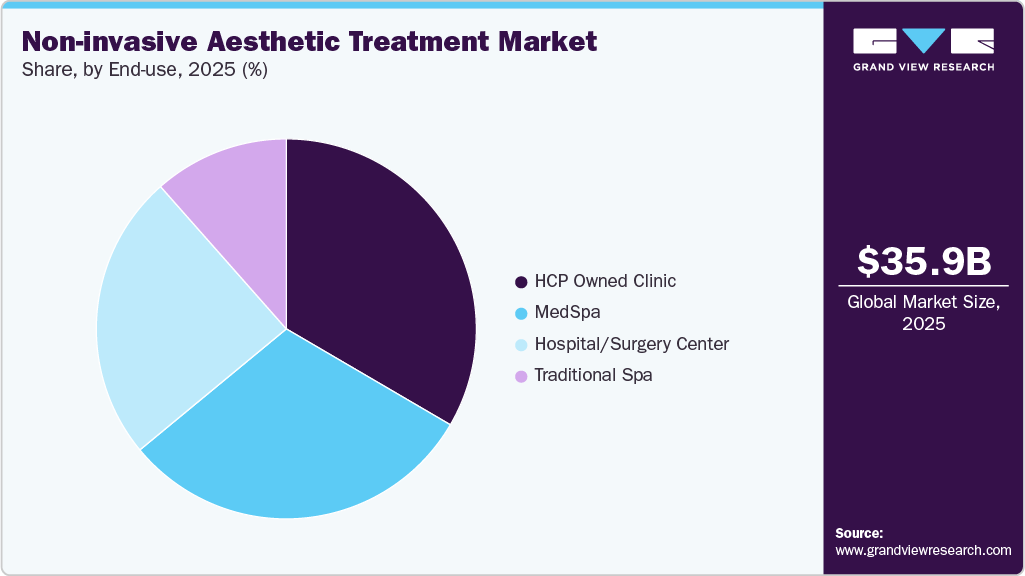
The medspa segment is expected to grow at the highest CAGR during the forecast. Consumers increasingly prefer procedures that deliver visible aesthetic improvements without surgery, long recovery times, or high costs, making non-invasive treatments such as injectables, skin rejuvenation, and body contouring highly attractive. Advances in laser technologies, radiofrequency devices, and minimally invasive tools have also made treatments safer, faster, and more effective, encouraging wider adoption.
Regional Insights
North America dominated the non-invasive aesthetic treatment market with the largest revenue share of over in 2025. Technological advancements have greatly improved the safety, effectiveness, and accessibility of both surgical and non-surgical treatments. Innovations such as 3D imaging, virtual consultations, and AI-driven personalized treatment plans have led to better patient outcomes and increased satisfaction. In addition, societal acceptance of cosmetic procedures has grown, driven by media portrayals, celebrity endorsements, and the normalization of aesthetic enhancements. Social media platforms have played a crucial role in driving beauty standards and increasing demand for procedures such as Botox, dermal fillers, and body contouring.
U.S. Non-invasive Aesthetic Treatment Market Trends
The non-invasive aesthetic treatment market in the U.S. is experiencing significant growth, driven by the growing strategic initiatives. In July 2024, Dr. Lee B. Daniel, founder of Aesthetic Plastic Surgery, The Spa Side, and The Guy Side in Eugene, Oregon, announced a partnership with Cosmetic Physician Partners (CPP), a leading network of physician-led medical aesthetic clinics in the U.S. This collaboration aims to raise the standards of aesthetic medicine by merging Dr. Daniel's dedication to personalized, high-quality patient care with CPP's operational expertise and support. Dr. Daniel emphasized that this partnership would enable his team to concentrate more on patient outcomes. It will ensure that staff members are well-trained and up to date with the latest scientific advancements, thereby enhancing their treatment capabilities and providing a more efficient, patient-centered approach.
Asia Pacific Non-invasive Aesthetic Treatment Market Trends
The non-invasive aesthetic treatment market in the Asia Pacific accounted for the largest revenue share in 2025. The expansion of cosmetic surgery facilities in developing nations, rising healthcare costs, an aging population, and an increased emphasis on aesthetics are some of the major drivers of the regional industry. The demand for cosmetic procedures in China has increased recently due to the country's growth in obesity rate, which has resulted in people opting for more extreme weight-loss techniques such as liposuction.
Japan non-invasive aesthetic treatment market held a significant revenue share in 2025. In January 2023, establishment Labs launched its innovative Mia Femtech breast enhancement procedure in Japan, partnering with Seishin Plastic and Aesthetic Surgery Clinic as its first collaborator. Seishin is a prominent network of 10 premium plastic surgery clinics and is expected to offer the Mia procedure at its flagship clinic in Roppongi and its newest location in Ginza. This collaboration marks a strategic entry into the Asian market, with plans to expand Mia Femtech offerings to additional clinics in Japan and Europe. This partnership highlights Establishment Labs' commitment to redefining breast aesthetics through innovative, patient-centric solutions.
Europe Non-invasive Aesthetic Treatment Market Trends
The non-invasive aesthetic treatment market in Europe is expected to witness high growth due to the growing popularity of aesthetic procedures, influenced by social media and celebrity culture, which has led to greater acceptance and demand for cosmetic enhancements. Economic factors also play a crucial role; rising disposable incomes and economic stability across Europe allow more individuals to afford cosmetic surgeries. Furthermore, the aging population is seeking anti-aging treatments such as facelifts and Botox, contributing to the market's expansion.
The UK non-invasive aesthetic treatment market held a significant revenue share in 2025. In August 2025, the UK government partnered with TikTok to address the growing trend of "cosmetic tourism," where residents seek cheaper procedures abroad, often leading to complications that strain the NHS. The campaign features influencers such as Midwife Marley and Doc Tally to educate the public on the risks of overseas treatments, emphasizing the importance of consulting UK professionals and verifying clinic credentials. It also advises securing travel insurance and being cautious of social media promotions, aiming to protect consumers and reduce NHS costs from treatment complications.
Latin America Non-invasive Aesthetic Treatment Market Trends
The non-invasive aesthetic treatment market in Latin America is anticipated to grow significantly due to the rise of medical tourism. It has positioned Latin America as a destination for individuals seeking affordable cosmetic procedures without compromising on quality, attracting patients from North America and beyond. The increasing acceptance of aesthetic treatments among both men and women, coupled with a growing middle class and improved access to cosmetic services, further contributes to the market's expansion.
Argentina non-invasive aesthetic treatment market held a significant market share in 2025. Argentina's recent decision to eliminate export duties on over 4,000 manufactured goods, including cosmetics and personal care products, has significant implications for Argentina's market. This policy shift enhances Argentina's competitiveness in the global beauty industry by reducing trade costs for local manufacturers, making it easier for them to access international markets. As a result, Argentina is positioned to become a more attractive sourcing hub for global beauty brands, potentially diverting some production away from Brazil.
Middle East and Africa Non-invasive Aesthetic Treatment Market Trends
The non-invasive aesthetic treatment market in the MEA is anticipated to grow significantly. Innovative funding is revolutionizing the Middle East to become a hub for healthcare progress and access. Between 2021 and 2023, the Middle East saw about USD 103 million worth of healthcare investment added to a worldwide total of USD 48 billion. Governments, particularly Saudi Arabia and the UAE, are heavily investing in digital health and infrastructure. Private sector investors, including the Abu Dhabi Investment Authority, are making large bets too, with significant commitments to medical tech. The growth of health tech startups worth more than USD 1.5 billion indicates the direction towards new-age solutions. These projects are improving healthcare infrastructure and driving the uptake of cutting-edge technologies such as AI, giving rise to a viable healthcare ecosystem in the region.
Saudi Arabia non-invasive aesthetic treatment market is driven by evolving beauty standards, increased disposable income, and advancements in medical technology. Moreover, in April 2025, Saudi Arabia launched 28 healthcare projects in Riyadh, as part of its Vision 2030 initiative. These projects aim to enhance healthcare infrastructure and services, significantly impacting the cosmetic surgery market. With advanced technologies and state-of-the-art facilities, demand for specialized services, including cosmetic procedures, is expected to rise. The increased private sector investment and promotion of medical tourism will position Saudi Arabia as a regional hub for aesthetic treatments, benefiting both local and international patients.
Key Non-invasive Aesthetic Treatment Company Insights
The market is fragmented, with the presence of many non-invasive aesthetic treatment providers.The market players undertake several strategic initiatives, such as partnerships & collaborations, product launches, mergers & acquisitions, and geographical expansion to maintain their position and grow in the market.
Key Non-invasive Aesthetic Treatment Companies:
The following are the leading companies in the non-invasive aesthetic treatment market. These companies collectively hold the largest Market share and dictate industry trends.
- Hologic, Inc.
- Allergan, Inc.
- Galderma S.A.
- Alma Lasers
- Syneron Candela
- Johnson & Johnson
- MerzPharma
- Lumenis
- Solta Medical
- Cutera Inc.
- Revance Therapeutics Inc.
Recent Developments
-
In December 2025, Galderma announced MDR certification and an expanded body indication for Sculptra, marking a significant milestone in the aesthetic medicine landscape. The EU Medical Device Regulation (MDR) certification strengthens the product’s regulatory robustness, ensuring higher standards of safety, clinical evidence, and quality, key factors that build strong physician and patient confidence.
-
In September 2025, Brown Gibbons Lang & Company (BGL) announced a strategic partnership between The Cosmetic Surgery Group (CSG) and Olympus Cosmetic Group, with the goal of expanding CSG's reach and operational capabilities. This collaboration marks Olympus' entry into its sixth state, expanding its footprint into the Midwest and providing CSG with enhanced resources to support its growth.
-
In August 2025, Aestiva Plastic Surgery opened its new facility in New Delhi,marking a strategic expansion aimed at meeting the rising demand for advanced, minimally invasive cosmetic solutions. The clinic introduces state-of-the-art scarless and non-surgical aesthetic treatments, reflecting a broader shift toward procedures that deliver effective results with minimal downtime, discomfort, or visible scarring.
Non-invasive Aesthetic Treatment Market Report Scope
Report Attribute
Details
Market size in 2026
USD 38.74 billion
Revenue forecast in 2033
USD 64.07 billion
Growth rate
CAGR of 7.45% from 2026 to 2033
Actual data
2021 - 2025
Forecast period
2026 - 2033
Quantitative units
Revenue in USD billion/million and CAGR from 2026 to 2033
Report coverage
Revenue forecast, company ranking, competitive landscape, growth factors, and trends
Segments covered
Procedure, end use, region
Regional scope
North America; Europe; Asia Pacific; Latin America; MEA
Country scope
U.S.; Canada; Mexico; Germany; UK; France; Italy; Spain; Norway; Denmark; Sweden; China; Japan; India; South Korea; Australia; Thailand; Brazil; Argentina; Saudi Arabia; South Africa; UAE; Kuwait
Key companies profiled
Hologic, Inc.; Allergan, Inc.; Galderma S.A.; Alma Lasers; Syneron Candela; MerzPharma; Lumenis; Solta Medical; Cutera Inc.; Revance Therapeutics Inc.; Johnson & Johnson
Customization scope
Free report customization (equivalent up to 8 analysts working days) with purchase. Addition or alteration to country, regional & segment scope.
Pricing and purchase options
Avail customized purchase options to meet your exact research needs. Explore purchase options
Global Non-invasive Aesthetic Treatment Market Report Segmentation
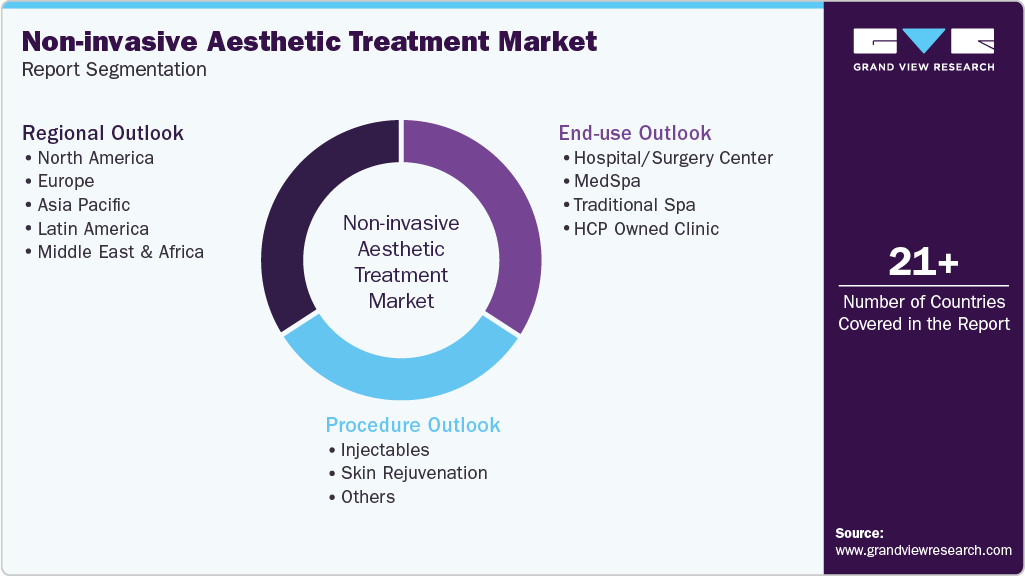
This report forecasts revenue growth at global, regional, and country levels and provides an analysis of the latest industry trends in each of the sub-segments from 2021 to 2033. For this study, Grand View Research has segmented the global non-invasive aesthetic treatment market report based on procedure, end use, and region:
-
Procedure Outlook (Revenue, USD Million, 2021 - 2033)
-
Injectables
-
Botulinum Toxin
-
Calcium Hydroxylapatite
-
Hyaluronic Acid
-
Polymer Filler
-
Collagen
-
-
Skin Rejuvenation
-
Chemical Peel
-
Laser Skin Resurfacing
-
Photorejuvenation
-
Other Skin Rejuvenation Procedures
-
-
Others
-
Hair Removal
-
Nonsurgical Fat Reduction
-
Sclerotherapy
-
Cellulite Treatment
-
-
-
End Use Outlook (Revenue, USD Million, 2021 - 2033)
-
Hospital/Surgery Center
-
MedSpa
-
Traditional Spa
-
HCP owned clinic
-
-
Regional Outlook (Revenue, USD Billion, 2021 - 2033)
-
North America
-
U.S.
-
Canada
-
Mexico
-
-
Europe
-
UK
-
Germany
-
France
-
Italy
-
Spain
-
Denmark
-
Sweden
-
Norway
-
-
Asia Pacific
-
China
-
Japan
-
India
-
South Korea
-
Australia
-
Thailand
-
-
Latin America
-
Brazil
-
Argentina
-
-
Middle East and Africa (MEA)
-
South Africa
-
Saudi Arabia
-
UAE
-
Kuwait
-
-
Frequently Asked Questions About This Report
b. The global non-invasive aesthetic treatment market size was estimated at USD 35.99 billion in 2025 and is expected to reach USD 38.74 billion in 2026.
b. The global non-invasive aesthetic treatment market is expected to grow at a compound annual growth rate of 7.45% from 2026 to 2033 to reach USD 64.07 billion by 2033.
b. Injectables procedures dominated the non-invasive aesthetic treatment market with a share of 79.04% in 2025. This can be attributed to the increasing demand for anti-aging injectables.
b. Some key players operating in the non-invasive aesthetic treatment market include Hologic, Inc.; Allergan, Inc.; Galderma S.A; Alma Lasers; Syneron Candela; Lumenis Ltd; Solta Medical; Cutera Inc; Merz Pharma; and Johnson & Johnson.
b. Key factors that are driving the non-invasive aesthetic treatment market growth include growing beauty consciousness among consumers and technological advancements in aesthetic devices.


Share this report with your colleague or friend.
Need a Tailored Report?
Customize this report to your needs — add regions, segments, or data points, with 20% free customization.


ISO 9001:2015 & 27001:2022 Certified
We are GDPR and CCPA compliant! Your transaction & personal information is safe and secure. For more details, please read our privacy policy.
Trusted market insights - try a free sample
See how our reports are structured and why industry leaders rely on Grand View Research. Get a free sample or ask us to tailor this report to your needs.













