
- Home
- »
- Consumer F&B
- »
-
Oat Milk Market Size, Share And Trends Report, 2026-2033GVR Report cover

Oat Milk Market (2026 - 2033)
Size, Share & Trends Analysis Report, By Nature (Organic, Conventional), By Product (Plain, Flavored), By Packaging (Cartons, Bottles), By Distribution Channel (Food Service, Retail), By Region (North America, Europe), And Segment Forecasts
Market Size, 2025
$4.0BMarket Estimate, 2026
$4.6BMarket Forecast, 2033
$13.7BCAGR, 2026–2033
16.8%Oat Milk Market Summary
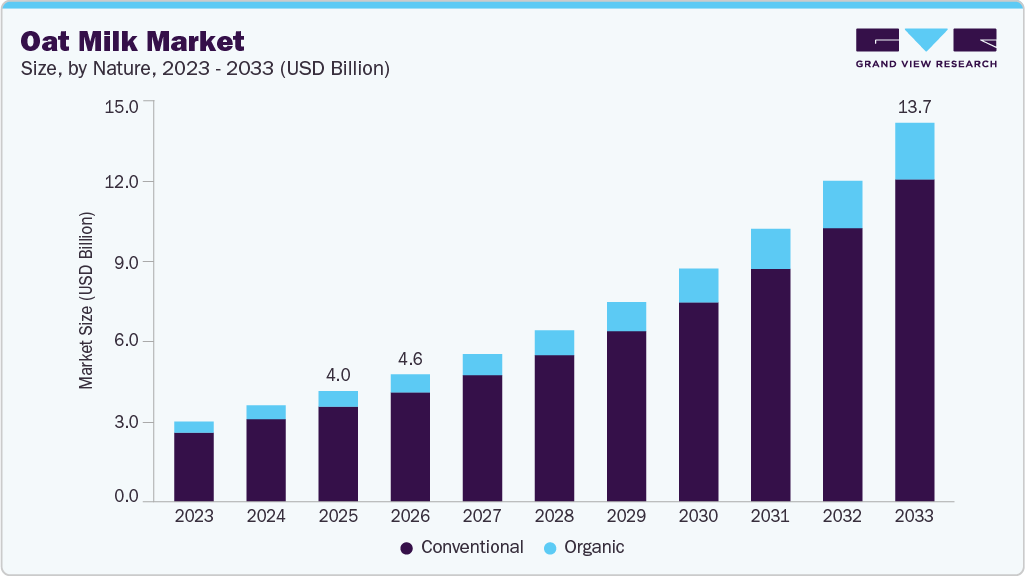
The global oat milk market size was valued at USD 4.0 billion in 2025 and is projected to grow from USD 4.6 billion in 2026 to USD 13.7 billion by 2033, at a CAGR of 16.8% from 2026 to 2033. The Europe held the largest share of 51.9% of the global market in 2025. The market growth is attributed to the rising vegan population, coupled with health-conscious consumers demanding plant-based milk with high nutritional properties.
 Source: Grand View Research, IR Documents, Primary Interviews, Paid DatabasesTo learn more about this report,
 Download Free Sample Report
 Key Market Trends & Insights
- By nature: Conventional oat milk segment held the largest market share of 85.9% in 2025.
- By product: Plain oat milk segment held the largest market share of 61.0% in 2025.
- By packaging: Cartooned oat milk segment held the largest market share of 47.5% in 2025.
- By distribution channel: Retail channels segment held the largest market share of 65.7% in 2025.
Regional Highlights
- Largest regional market: Europe (51.9% revenue share, 2025)
- Fastest-growing regional market: Middle East & Africa (highest CAGR, 2026-2033)
- By country: Germany held the largest share in 2025
Market Size & Forecast
- Market size in 2025: USD 4.0 Billion
- Estimated market size in 2026: USD 4.6 Billion
- Projected market size by 2033: USD 13.7 Billion
- CAGR (2026-2033): 16.8%
Three ways to get this report
Buy it, customize it, or ask a question.Ask an Analyst
Analyst response in 1 business day
- AccessReport author, directly
- Reply timeWithin 1 working day
- No sales callDirect answer only
- FormatEmail reply
- CostFree, no cost
Get the Full Report
What the study covers
- FormatsPDF · Excel · Dashboard
- Timeline2026–2033 annual, 2025 base
- Coverage20+ countries, 5 regions
- Companies10+ key players profiled
Customize the Report
20% free customization
- IncludeCountries, segments, points
- TailorTo your product definition
- ExtendDeeper competitor detail
- OrA fully bespoke study
- Turnaround5–10 working days
Issues such as lactose intolerance, allergies, and the rising popularity of low-cholesterol diets have pushed manufacturers to introduce a range of plant-based alternatives. This has benefited the market for oat milk, which caters to the customers’ demand for being allergen-free, along with offering several health benefits.A major demand driver is consumers shifting from traditional dairy to plant-based dairy due to digestive discomfort. Increased awareness of lactose intolerance has made plant-based milk a default substitute for households and young professionals alike. Oat milk in particular gained traction because of its high soluble fiber content, especially beta-glucan, which is publicly recognized for supporting cholesterol reduction, improved glycemic response, and satiety regulation. This positions oat milk as both a metabolic-friendly and heart-conscious milk option compared to conventional low-fat dairy substitutes. Academic heart-health dietary guidance from the American Heart Association and European dietary fiber endorsements from the European Food Safety Authority (EFSA) reinforce the role of soluble fiber in cardiometabolic wellbeing, indirectly validating oat milk’s functional appeal.
 To learn more about this report, Download Free Sample Report
 The availability of numerous substitutes also challenges the market. Dairy milk, almond milk, soy milk, and coconut milk are substitutes for oat milk. Almond milk is among the most popular plant-based milk alternatives and is among the most significant substitutes to oat milk. However, manufacturers of oat milk employ a wide variety of formulations, including organic, fortified, and barista blends, to reduce the threat of substitution for their products.
Demand has also been strengthened by sustainability and allergen-avoidance narratives. Oat farming uses less water than almond and typically triggers fewer allergenic concerns than soy, which resonates with organic, clean-label, and transparency-driven buyers. Public environmental narrative signals from sustainability programmes tracked by the United Nations Environment Programme further reinforce consumer willingness to try water-efficient plant milk.
Manufacturers such as Oatly are seeking new ways of extracting milk in an attempt to gain unique selling points and differentiate their products in the market. Manufacturers are purchasing high-quality raw materials directly from farmers, allowing the end product to be more cost-effective, thus positively impacting the market growth. The dominant trend towards the consumption of high-protein products among consumers has enhanced the growth of the plant-based milk market. With the population being inclined towards sports and fitness, the demand for protein-rich beverages has increased, which is further expected to escalate the product demand during the forecast period.
Consumer Insights for Oat Milk
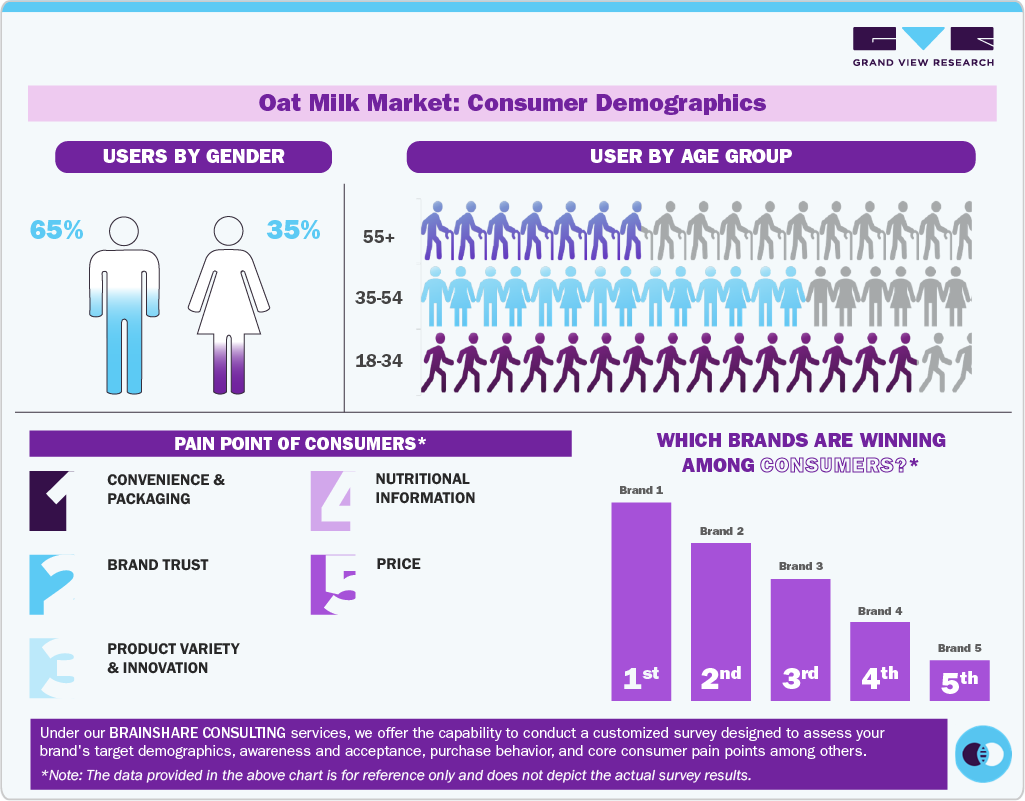
Consumer demand for oat milk has risen due to an observable and sustained shift in dietary behavior favoring digestibility, functionality, and environmental efficiency. The increasing prevalence and awareness of lactose intolerance broadened the consumer base searching for non-dairy milk alternatives.
 To learn more about this report, Download Free Sample Report
 A primary consumer trend shaping the dairy-alternative category is the emergence of hybrid dietary identities, such as flexitarian, dairy-reduced, allergen-conscious, and plant-first consumers. These groups prioritize digestive comfort without fully abandoning traditional dairy-linked rituals such as tea consumption or café-based beverage occasions. Oat milk gained traction because it is perceived as a soluble fiber-rich substitute compatible with cardiometabolic positioning, offering satiety and glycemic response associations, differentiating it from many nut-based alternatives that are frequently criticized for allergen risk or farming inefficiency. In addition, oat milk also contains beta-glucan, a type of soluble fiber that has been linked to boosting the immune system and improving heart health by helping to reduce cholesterol levels. This makes oat milk particularly appealing to individuals looking for heart-healthy alternatives to dairy milk, especially those at risk of cardiovascular diseases or seeking to maintain a balanced diet.
Moreover, oat milk is higher in fiber compared to cow’s milk and is considered healthier as it has lower saturated fats and is free from cholesterol. The nutrition profile of oat milk in comparison of cow milk is as follows:
Table 1 Nutritional profile of oat milk and cow milk
Nutrient
Oat Milk (1 cup)
Cow Milk (1 cup)
Calories
120
150
Protein
3 grams
8 grams
Fiber
2 grams
0 grams
Calcium
350 mg
300 mg
Fat
2.5 grams
8 grams
Cholesterol
0 mg
24 mg
Source: Grabenord
Retail and café channels increasingly expect milk alternatives to foam naturally, integrate into hot beverages without separation, and complement rather than dominate flavor profiles. Oat milk demonstrated comparatively higher blending compliance in these occasions, making it a default choice for baristas and urban grocery purchasing missions alike. Large retailers expanded the availability of dairy-free alternatives through mass grocery, pharmacy, and online checkout channels.
Rising lactose intolerance is a key driver in the oat milk industry, as it broadens the consumer base seeking digestively comfortable, plant-based milk alternatives. Many individuals, whether clinically diagnosed or simply experiencing lactose-related discomfort, report symptoms such as bloating, sluggishness, and perceived inflammation, leading them to avoid animal-derived dairy sugars. This shift is accelerating demand within the oat milk industry for non-dairy options that seamlessly integrate into everyday consumption habits, including tea and café beverages, while minimizing allergenic concerns and supporting perceived metabolic wellness.
Nature Insights
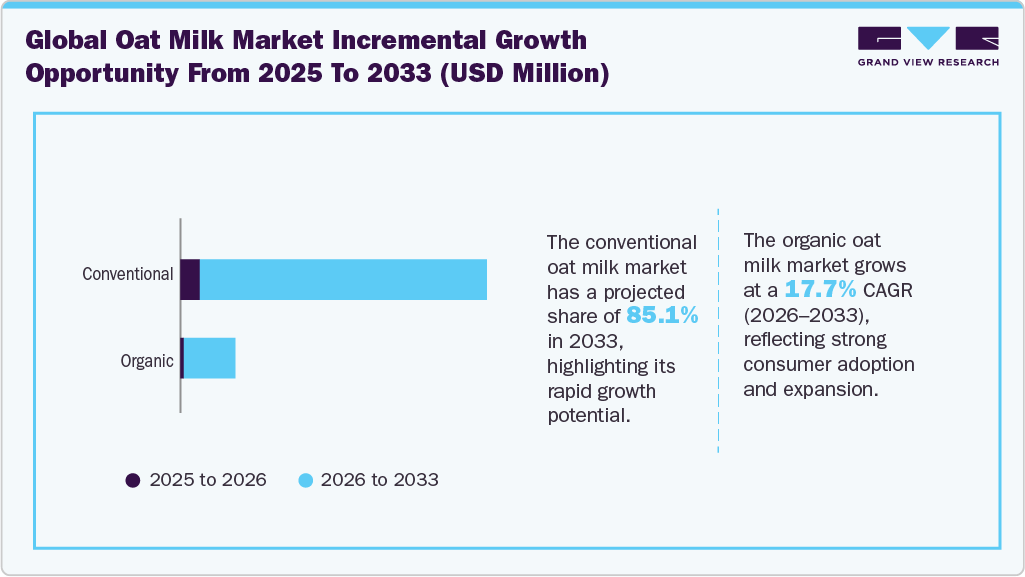
The conventional oat milk dominated the market, accounting for a 85.9% share in 2025. Demand for conventional oat milk is rising because consumers are increasingly replacing dairy milk to address digestive discomfort, including growing awareness of lactose-related bloating and post-meal sluggishness. Unlike barista or fortified variants, conventional oat milk appeals to households and everyday buyers through its clean, mild flavor, perceived naturalness, and absence of common allergens associated with soy or nuts. Oat milk is also strongly linked to metabolic-wellness perceptions due to its soluble fiber content, which consumers value for satiety and smoother energy response.
 To learn more about this report, Download Free Sample Report
 The organic oat milk is expected to grow with a considerable CAGR of 17.7% from 2026 to 2033. Demand for organic oat milk is rising because it fits consumer expectations for chemical-free farming, minimal processing, and traceable nutrition. Buyers increasingly associate “organic” with better digestive compatibility and fewer additives, especially in dairy-alternative drinks that are often consumed daily by families and café-goers. Organic oat milk benefits from public trust in oats as a soluble-fiber source while removing pesticide-residue worries from regular oat farming. In August 2024, Mooala launched its Organic Barista Blend Oatmilk, designed with baristas to deliver better frothing, steaming, and a rich, creamy texture for café-style drinks at home. The product emphasizes clean, organic ingredients without chemicals or additives, offering a healthier alternative to typical barista oat milk, and is available on Amazon and select stores.
Product Insights
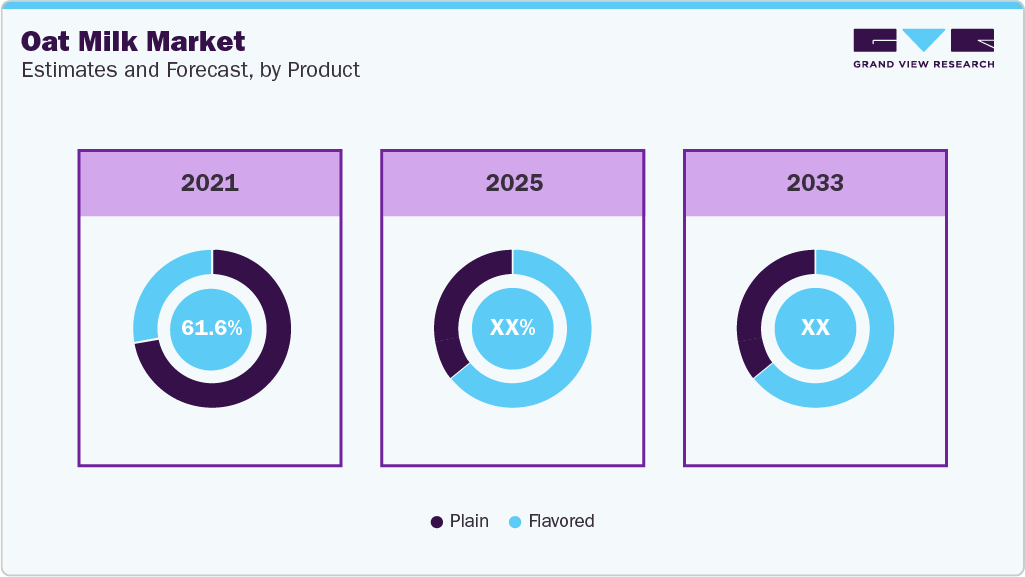
Plain oat milk dominated the market, accounting for a 61.0% share in 2025. Demand for plain oat milk is rising because consumers increasingly prefer simple, everyday substitutes to animal dairy that deliver digestive comfort without additives or flavoring. As lactose-linked discomfort becomes widely discussed in daily nutrition choices, buyers look for a neutral, clean-label option that can seamlessly replace milk across tea, cereals, and household use cases. Oats are perceived as less allergenic than soy and less water-intensive than almonds, and plain oat milk is favored for being minimally processed, naturally mild in taste, and versatile across food and beverage rituals, driving higher trials and repeat grocery purchases.
 To learn more about this report, Download Free Sample Report
 Flavored oat milk is expected to grow with a considerable CAGR of 17.2% from 2026 to 2033. Demand for flavored oat milk is increasing because consumers now expect plant-based beverages to go beyond dairy replacement and deliver a more enjoyable, indulgent moment. The oat milk base already owns compatibility in tea, coffee, and everyday household use, but flavors unlock higher purchase frequency by turning it into a snack and dessert substitute, especially for younger households and on-the-go carts. The rise of curated flavors such as chocolate, vanilla, strawberry, and regional taste notes has helped the category enter children’s nutrition missions, office pantries, and evening craving occasions, driving stronger premiumization and larger basket contribution per pack. In March 2026, Oatly launched new flavored Barista oat milk (vanilla, caramel, coconut, churros, and popcorn) in the UK, expanding its café-style product range.
Packaging Insights
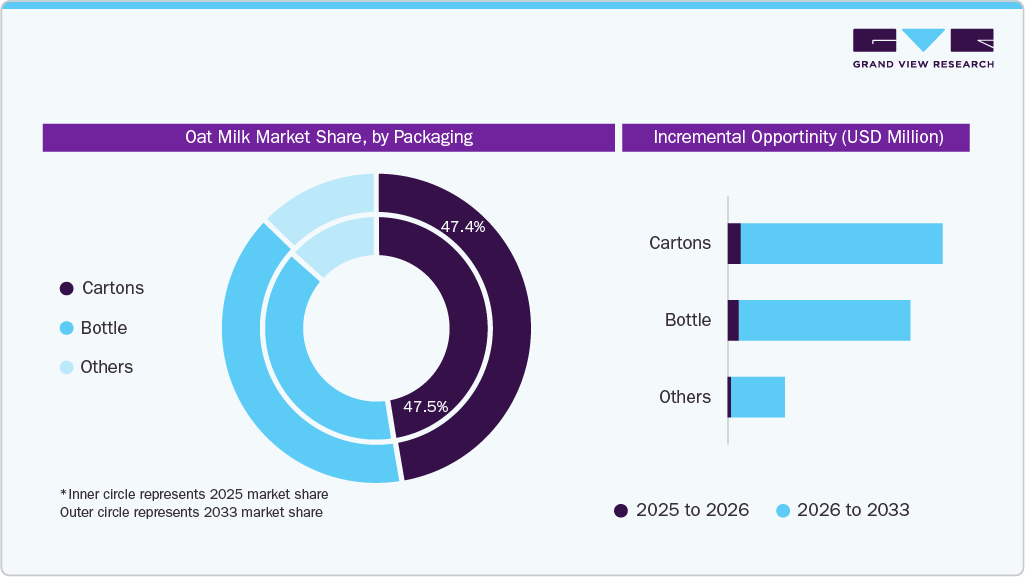
Cartooned oat milk dominated the global market, accounting for a 47.5% share in 2025. Carton packs are lightweight, easy to store, and offer better product stability for high-frequency repeat pours used in tea, coffee, and daily cereal occasions. Retailers have scaled plant milk footprints in long-shelf-life cartons as basket staples across grocery aisles and online missions. Large grocery chains such as Tesco, Sainsbury's and packaging compatibility frameworks from SIG Combibloc reinforced aseptic, long-life cartons as the baseline plant-milk format. Cartons offer clean-label communication space, keep pricing accessible, reduce spoilage risk, and fit refrigerated logistics better than bulk jugs, driving higher repeat purchase confidence across mass and online carts.
 To learn more about this report, Download Free Sample Report
 Bottled oat milk is projected to grow at a CAGR of 17.1% from 2026 to 2033. The demand for bottled oat milk is rising because consumers increasingly prioritize convenience, portability, and product longevity without compromising plant-first dietary preferences. Bottles are perceived as more durable, spill-proof, and better suited for on-the-go consumption, especially among urban households and young professionals who purchase premade lattes, smoothies, and fitness beverages. Bottled packaging also extends shelf life and supports chilled product placement in large retail chains, improving visibility and repeat purchases. Companies such as Califia Farms offer oat milk in bottle packaging with a shelf-life of 160 days. In addition, buyers associate bottles with cleaner, touch-free dispensing and better storage hygiene, making it the preferred format for higher purchase frequencies in cafés, quick-commerce carts, and household fridges.
Distribution Channel Insights
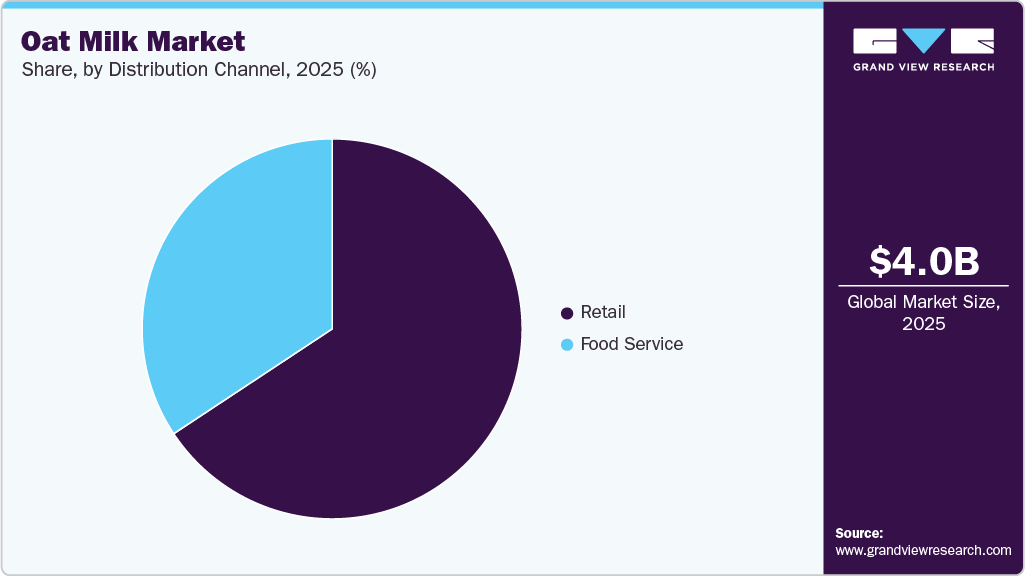
Sales of oat milk through retail channels dominated the global market, accounting for a share of 65.7% in 2025. Demand for oat milk is rising through retail because the category has transitioned from a niche dairy substitute to a mainstream wellness SKU with clear usage occasions and strong shopper pull. Post-COVID, grocery aisles and online carts saw higher trials for digestible, dairy-free options, and oats benefited disproportionately because of their neutral taste, additive-free positioning, and perceived soluble-fiber benefits that consumers associate with better metabolic comfort and satiety. Large retail chains and coffee-ritual channels have reinforced availability and price accessibility, making oat milk a default plant-milk purchase in supermarkets, drugstores, and café-linked home shopping missions, driving repeat adoption across mass and online retail footprints.
 To learn more about this report, Download Free Sample Report
 Sales of oat milk through the food service channel are estimated to grow at a CAGR of 17.0% from 2026 to 2033. Demand for oats through food-service channels is rising because cafés and QSRs have become the main trial engine for dairy alternatives, especially post-COVID. Oat milk is preferred over soy and almond in out-of-home beverages because it froths naturally, blends without separation, and complements coffee and tea without overpowering flavor. Large chains rapidly adopted oat milk to improve beverage texture consistency, reduce allergen complaints compared to soy, and increase throughput on high-margin cups and bundled breakfast occasions. Once introduced in cafés, consumers return to grocery carts looking for the same experience at home, turning food service into both a discovery channel and a sustained demand driver for plant-based milk rituals.
Regional Insights
The North American oat milk industry is expected to grow at a CAGR of 10.8% from 2026 to 2033. North America shares a significant share in the global market owing to the high consumer awareness regarding the protein content and nutritional value of oat milk. The popularity of e-commerce portals as one of the selling mediums is high, which has contributed to the growth of the dairy alternatives market in the region. North American consumers are expected to demand oat milk due to increased milk allergies and lactose intolerance cases. Food and beverage manufacturers in the region are incorporating dairy alternatives into products to appeal to a growing consumer base that is opting for plant-based products, which is further boosting the growth of the market.
U.S. Oat Milk Market Trends
The oat milk industry in the U.S. led the North American market and held the largest revenue share of 81.2% in 2025. Demand for oat milk is rising in the U.S. because it aligns with measurable shifts in consumer health priorities, dietary identities, and product functionality expectations. Increasing awareness of lactose intolerance and digestive discomfort has expanded the population actively avoiding dairy sugars, while flexitarian and plant-based eating patterns have moved from niche to mainstream adoption. The U.S. National Institute of Diabetes and Digestive and Kidney Diseases (NIDDK) reports that about 36% of people in the U.S. have lactose malabsorption, which can lead to lactose intolerance symptoms.
Europe Oat Milk Market Trends
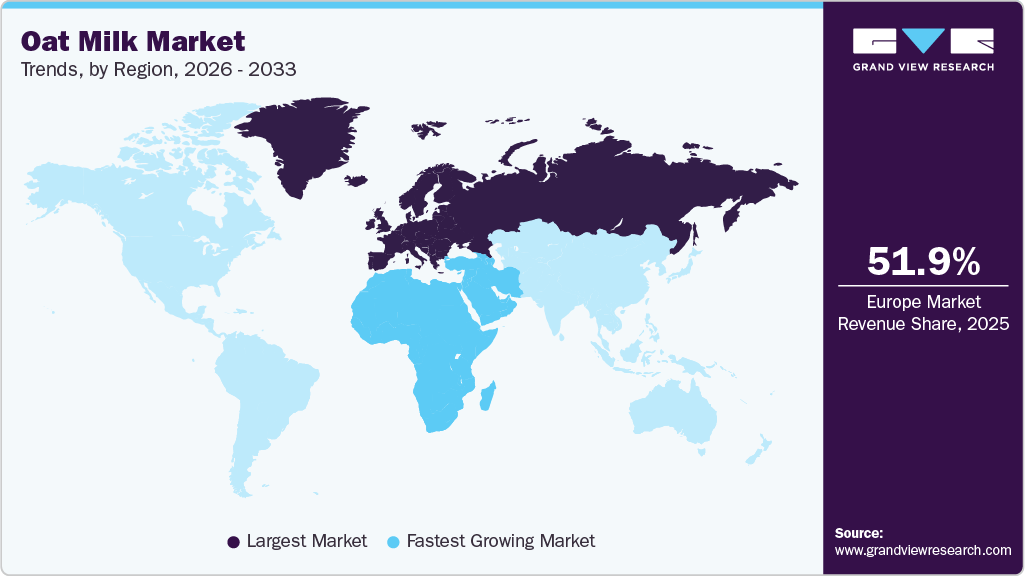
The oat milk industry in Europe accounted for the largest market share of 51.9% in 2025, owing to the high customer demand for vegan and plant-based products in the region. Manufacturers operating in the market for oat milk are targeting countries in the region to increase their market share. The growth of convenience stores as a key channel for oat milk sales in Europe is closely tied to changing consumer habits and evolving retail strategies. For instance, in March 2025, Plenish launched a clean-label, oil and additive-free oat drink fortified with key vitamins and minerals, boasting twice the calcium of other plant-based drinks, which is now available in Tesco stores nationwide and online via plenishdrinks.com, with upcoming availability on Ocado and Amazon.
 To learn more about this report, Download Free Sample Report
 The oat milk industry in Germany led the European market and held the largest revenue share of 33.0% in 2025. Germany’s market demand is driven by a strong preference for organic, clean-label, and non-GMO foods, supported by strict EU standards. Consumers are highly environmentally conscious, encouraging sustainable and carbon-neutral production practices. Oat milk also benefits from alignment with vegan and flexitarian lifestyles. In addition, innovation in fortified and minimally processed products is increasingly adopted.
The oat milk industry in the UK is expected to grow at a CAGR of 18.7% during the forecast period. Growth is fueled by changing consumption habits, especially among younger consumers shifting toward plant-based diets. Oat milk is preferred for its taste, texture, and suitability in coffee culture. Increasing availability in retail and foodservice channels supports daily usage. Affordability and local sourcing trends are also strengthening consumer preference. In June 2024, Oato introduced its 1 L Fresh Barista Whole Oat Drink, crafted entirely from British oats to Waitrose stores across the UK in June 2024, marking its first nationwide supermarket availability and expanding access to fresh (non-UHT) oat milk. The brand presents this chilled oat milk as a locally produced, barista-quality option with a low environmental impact, aiming to establish itself as a top dairy alternative in the UK
Asia Pacific Oat Milk Market Trends
The Asia Pacific oat milk industry is expected to grow at a CAGR of 20.3% from 2026 to 2033. The Asia Pacific has emerged as a significant revenue contributor to the global market driven by the growing awareness of lactose intolerance and rising environmental concerns. Lifestyle changes, urbanization, and shifting dietary preferences have led to a rise in the demand for nutritive food in Asia Pacific, which is likely to drive the market statistics. A favorable outlook toward the plant-based milk market on account of the rising prevalence of cardiovascular diseases and the number of weight management programs is expected to boost the market growth in the region. Rising disposable incomes and urbanization in the Asia Pacific have further fueled the growth of the market. As urban populations expand, particularly in China and India, consumers are increasingly seeking healthier and specialized food options. This trend is supported by the middle class’s willingness to spend on premium products that cater to dietary preferences.
The oat milk industry in China led the Asia Pacific market and held the largest revenue share of 49.9% in 2025. In China, high levels of lactose intolerance are a major factor driving consumers toward oat-based alternatives. Urban populations increasingly seek functional and digestive-friendly beverages, which boosts oat milk adoption. Rapid urbanization and busy lifestyles support the demand for ready-to-drink and convenient formats, while strong e-commerce penetration further enhances accessibility and product discovery.
Central & South America Oat Milk Market Trends
The oat milk industry in Central & South America is expected to grow at a CAGR of 19.1% during the forecast period. The Central & South America’s market growth is supported by rising health awareness in urban populations is increasing interest in dairy alternatives like oat milk. Expansion of modern retail and local manufacturing is improving product availability. Consumers are attracted to affordable and convenient plant-based options, including flavored formats. Government nutrition initiatives and local brand activity also support category growth.
Middle East & Africa Oat Milk Market Trends
The oat milk industry in the Middle East & Africa is expected to grow at the fastest CAGR of 23.5% during the forecast period. In the Middle East & Africa, demand for plant-based milk is rising among young, urban, and expatriate populations seeking lactose-free and vegan alternatives. Growing interest in diverse and functional beverages is accelerating the adoption of plant-based milk options such as oat milk. In addition, increasing cultural openness to alternative grains and plant-based diets is supporting market expansion. Ongoing innovation in fortified and health-focused plant-based milk formulations is further contributing to higher consumption levels.. In January 2026, Brookside Dairy in Kenya launched a new oat‑based unsweetened milk fortified with vitamins and high in soluble fiber to meet demand for sustainable, dairy‑free alternatives. Meanwhile, Ugandan startup Aviyo is developing enzyme‑enhanced soy and oat milk that are easier to digest and shelf‑stable without refrigeration, supporting local agriculture and rural job creation.
Key Oat Milk Company Insights
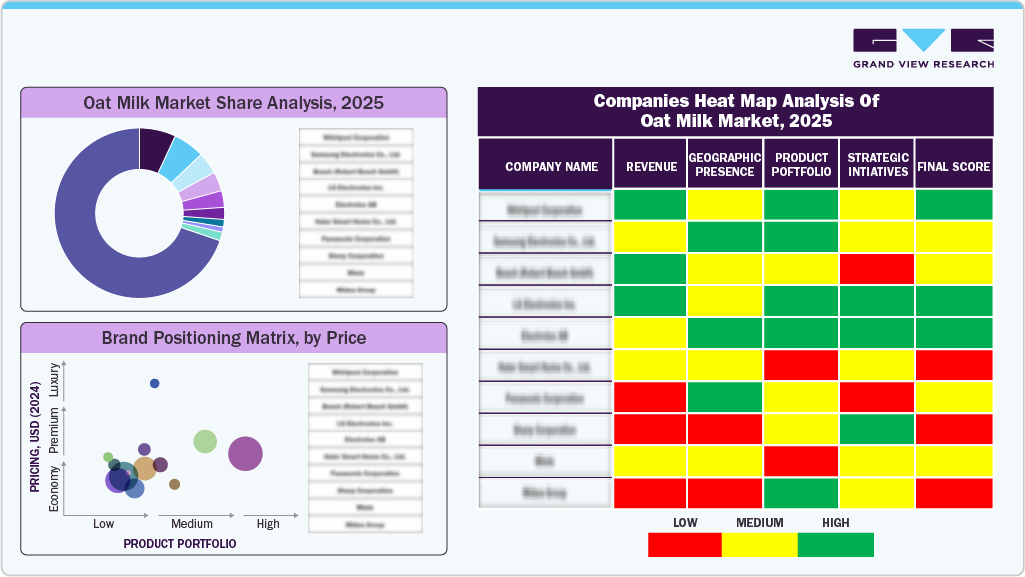
In the market for oat milk, key players are increasingly sourcing raw materials directly from farmers to ensure consistent quality and strengthen supply chain control. Companies are also prioritizing innovation through new product launches, offering diverse flavors and convenient packaging formats to appeal to a broader consumer base.
 To learn more about this report, Download Free Sample Report
 Leading participants in the oat milk industry are adopting expansion strategies and frequent product introductions to enhance their market presence and stay competitive. In addition, firms are diversifying across product segments by introducing oat milk-based ice creams, yogurts, flavored beverages, and ready-to-drink coffee, further driving demand growth. Prominent companies operating in the oat milk industry include Oatly, Happy Planet Foods, Califia Farms, among others.
Key Oat Milk Companies:
The following key companies have been profiled for this study on the oat milk market.
- Oatly
- Califia Frams
- Danone
- Pacific Foods
- Planet Oat
- Chobani Oat
- Silk Oatmilk
- Alpro Oat
- Pureharvest Oat Milk
- Elmhurst 1925 Oat Milk
Recent Developments
-
In September 2025, Oatly launched a limited-edition hot cocoa oat drink in the US for the 2025 festive season, sold chilled in 32 fl oz cartons at Whole Foods from 1 November and intended to be heated at home. The creamy, chocolate-flavoured drink is made from glyphosate-residue-free oats, is gluten-free, non-GMO, plant-based, and fortified with vitamins A, D, B12 and beta-glucans, and follows the brand’s recent Matcha Latte Oat Drink launch in the UK amid wider seasonal product activity from confectionery brands like Nomo, Gnaw and Mars Wrigley.
-
In June 2025, Country Delight launched a new oats-based beverage in India as an affordable, lactose-free, plant-based drink aimed at health-conscious and lactose-intolerant consumers, made from high-quality Australian oats and free from added sugar, preservatives, soy, and nuts, offering fiber, vitamins, and minerals for better digestion and everyday nutrition at Rs. 40 for a 400 ml pack, available via the Country Delight app.
Oat Milk Market Report Scope
Report Attribute
Details
Market size in 2025
USD 4.0 billion
Estimated market size in 2026
USD 4.6 billion
Projected market size by 2033
USD 13.7 billion
Growth rate
CAGR of 16.8% from 2026 to 2033
Base year for estimation
2025
Historical data
2021 - 2024
Forecast period
2026 - 2033
Quantitative units
Revenue in USD billion and CAGR from 2026 to 2033
Report coverage
Revenue forecast, company ranking, competitive landscape, growth factors, and trends
Segments covered
Nature, product, packaging, distribution channel, and region
Regional scope
North America; Europe; Asia Pacific; Central & South America; Middle East & Africa
Country scope
U.S.; Canada; Mexico; UK; Germany; France; Italy; Spain; China; India; Japan; South Korea; Australia & New Zealand; Brazil; South Africa.
Key companies profiled
Oatly; Califia Farms; Danone; Pacific Foods; Planet Oat; Chobani Oat; Silk Oatmilk; Alpro Oat; Pureharvest Oat Milk; Elmhurst 1925 Oat Milk
Customization scope
Free report customization (equivalent up to 8 analysts working days) with purchase. Addition or alteration to country, regional & segment scope.
Pricing and purchase options
Avail customized purchase options to meet your exact research needs. Explore purchase options
Global Oat Milk Market Report Segmentation
This report forecasts revenue growth at global, regional & country levels and provides an analysis of the latest trends and opportunities in each of the sub-segments from 2021 to 2033. For this study, Grand View Research has segmented the global oat milk market report based on nature, product, packaging, distribution channel, and region:
-
Nature Outlook (Revenue, USD Million, 2021 - 2033)
-
Conventional
-
Organic
-
-
Product Outlook (Revenue, USD Million, 2021 - 2033)
-
Plain
-
Flavored
-
Vanilla
-
Chocolate
-
Coffee
-
Others
-
-
-
Packaging Outlook (Revenue, USD Million, 2021 - 2033)
-
Cartons
-
Bottles
-
Others
-
-
Distribution Channel Outlook (Revenue, USD Million, 2021 - 2033)
-
Food Service
-
Retail
-
Hypermarkets & Supermarkets
-
Convenience Stores
-
Online
-
Others
-
-
-
Regional Outlook (Revenue, USD Million; 2021 - 2033)
-
North America
-
U.S.
-
Canada
-
Mexico
-
-
Europe
-
UK
-
Germany
-
France
-
Italy
-
Spain
-
-
Asia Pacific
-
China
-
India
-
Japan
-
South Korea
-
Australia & New Zealand
-
-
Central & South America
-
Brazil
-
-
Middle East & Africa
-
South Africa
-
-
Frequently Asked Questions About This Report
The global oat milk market size was estimated at USD 4.0 billion in 2025 and is expected to reach USD 4.6 billion in 2026.
The global oat milk market is expected to grow at a compound annual growth rate of 16.8% from 2026 to 2033 to reach USD 13.7 billion by 2033.
Cartooned oat milk dominated the global market, accounting for a 47.5% share in 2025. Carton packs are lightweight, easy to store, and offer better product stability for high-frequency repeat pours used in tea, coffee, and daily cereal occasions.
The key factors that are driving the oat milk market include the rising importance of a vegan diet coupled with increasing instances of lactose intolerance among consumers.
The conventional oat milk segment led with a 85.9% revenue share in 2025.
The plain oat milk segment led with a 61.0% revenue share in 2025.
The cartooned oat milk segment led with a 47.5% revenue share in 2025.
Retail channels segment held the largest share over 65.7% in 2025.
Some of the key players operating in the oat milk market include Oatly, Califia Farms, Danone, Pacific Foods, Planet Oat, Chobani Oat, Silk Oatmilk, Alpro Oat, Pureharvest Oat Milk, and Elmhurst 1925 Oat Milk.
About the Author(s)
Consumer F&B Research Team
Consumer Goods · Consumer F&BThis report was authored by the consumer f&b research team at Grand View Research - comprising two research analysts, one senior research analyst, and one industry expert - with specialized expertise in the consumer f&b segment of the consumer goods industry. All findings are based on proprietary consumer goods databases, executive interviews, and regulatory analysis, subject to internal peer review prior to publication.
Last Updated:
Speak to Analyst

Customize this report to your needs - add regions, segments, or data points, with 20% free customization.
Or view our licence options:


ISO 9001:2015 & 27001:2022 Certified
We are GDPR and CCPA compliant! Your transaction & personal information is safe and secure. For more details, please read our privacy policy.


