
- Home
- »
- Renewable Chemicals
- »
-
Oleyl Alcohol Market Size, Share, Trends Report, 2026-2033GVR Report cover

Oleyl Alcohol Market (2026 - 2033)
Size, Share & Trends Analysis Report By Source (Beef Fat, Fish Oil, Olive Oil), By Application (Food & Beverage, Textile, Cosmetics & Personal Care, Pharmaceutical, Surfactants), By Region (North America, Europe, MEA), And Segment Forecasts
Market Size, 2025
$1,093.5MMarket Estimate, 2026
$1,138.7MMarket Forecast, 2033
$1,555.3MCAGR, 2026–2033
4.6%Oleyl Alcohol Market Summary
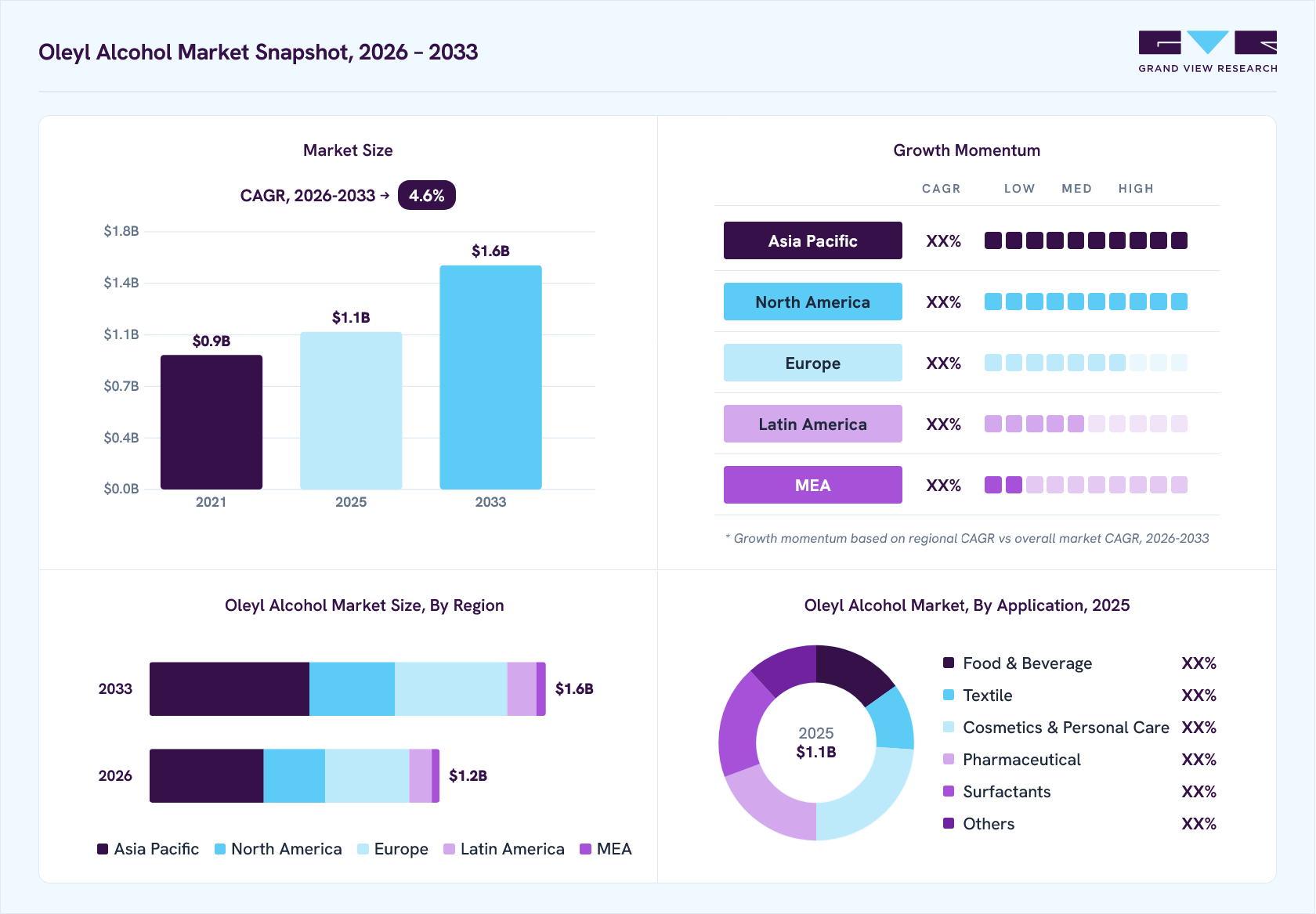
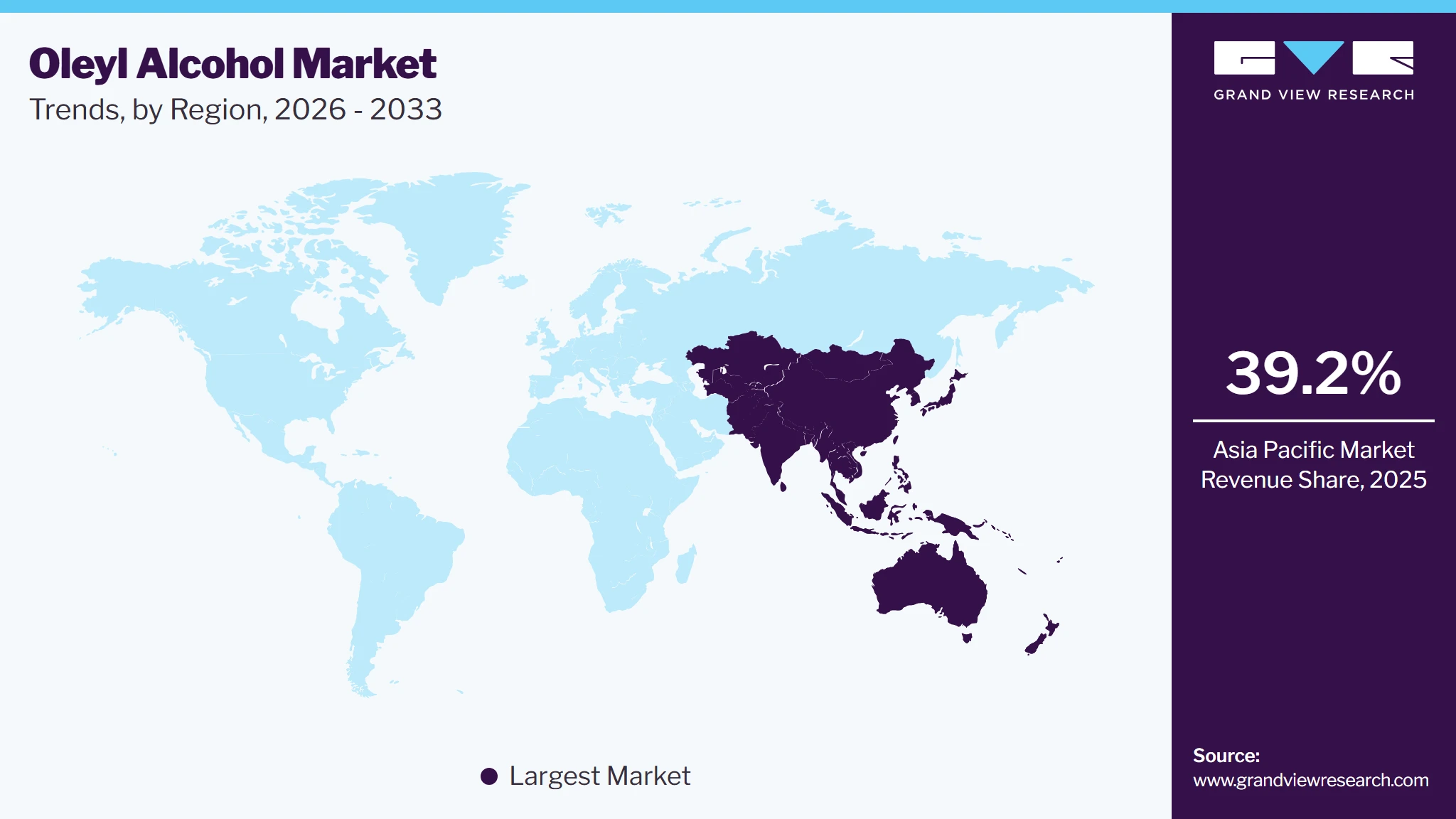
The global oleyl alcohol market size was valued at USD 1,093.5 million in 2025 and is projected to grow from USD 1,138.7 million in 2026 to USD 1,555.3 million by 2033, at a CAGR of 4.6% from 2026 to 2033. Asia Pacific dominated the market, accounting for a revenue share of 39.2% in 2025. The demand is anticipated to be driven by its eco-friendliness, purity, and high effectiveness in terms of performance and quality.
 Source: Grand View Research, IR Documents, Primary Interviews, Paid DatabasesTo learn more about this report,
 Download Free Sample Report
 Key Market Trends & Insights
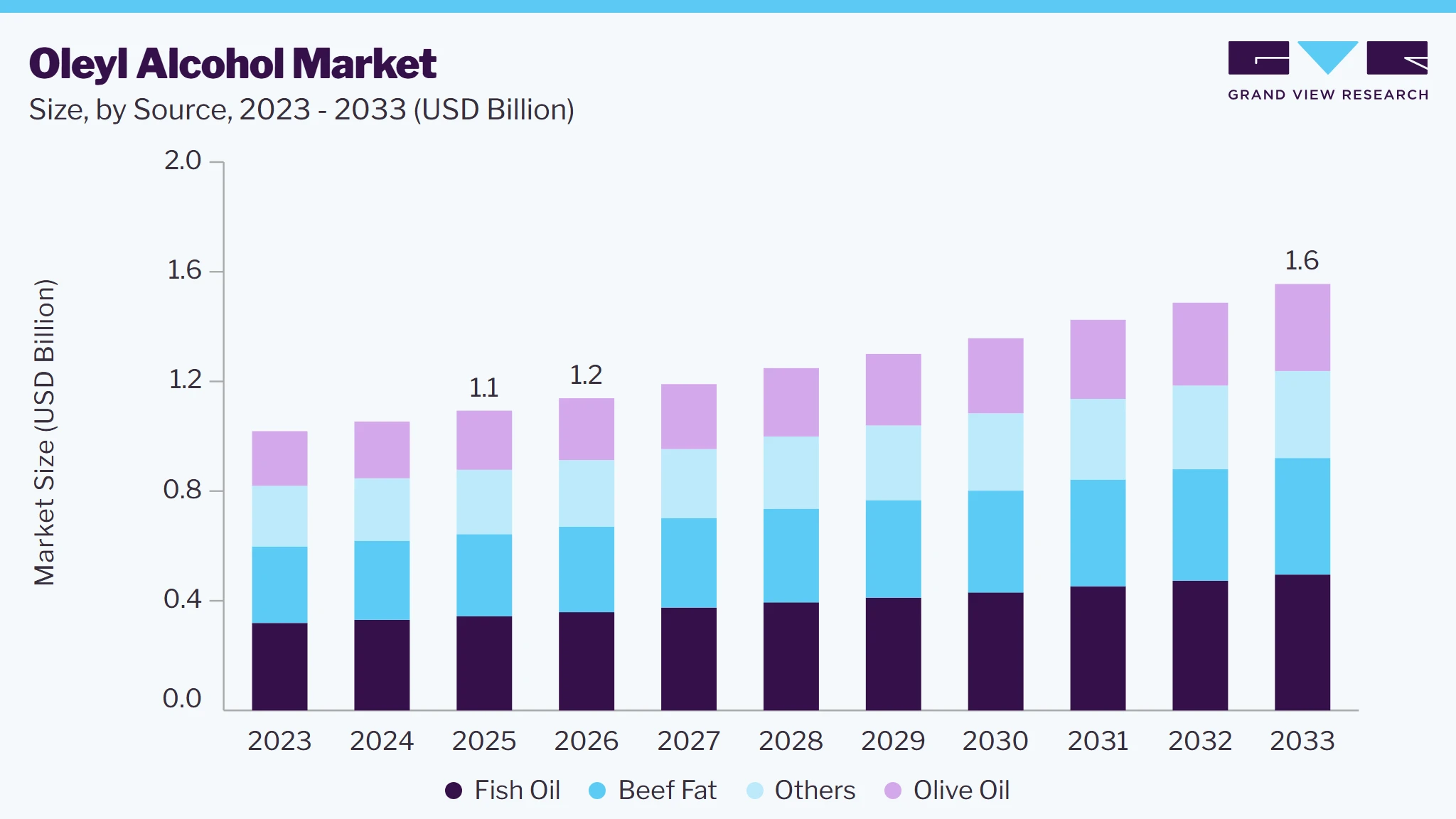
- By source: Fish oil segment accounted for the largest revenue share of 31.4% in 2025.
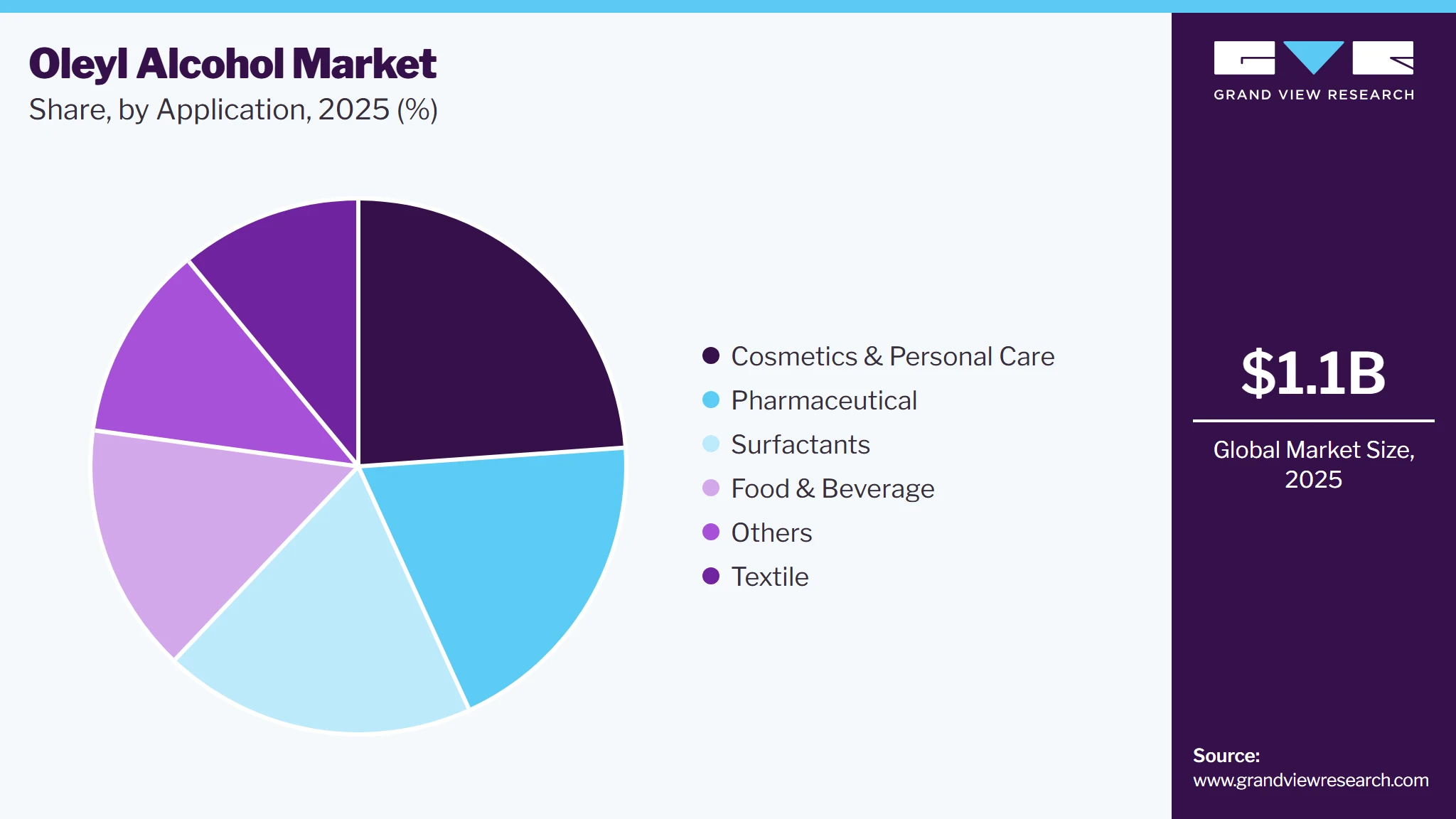
- By application: Cosmetics & personal care segment held the largest market share of 23.9% in 2025.
Regional Highlights
- Largest regional market: Asia Pacific (39.2% revenue share, 2025)
- By country: China held the largest market share in 2025.
Market Size & Forecast
- Market size in 2025: USD 1,093.5 Million
- Estimated market size in 2026: USD 1,138.7 Million
- Projected market size by 2033: USD 1,555.3 million
- CAGR (2026-2033): 4.6%
Three ways to get this report
Buy it, customize it, or ask a question.Ask an Analyst
Analyst response in 1 business day
- AccessReport author, directly
- Reply timeWithin 1 working day
- No sales callDirect answer only
- FormatEmail reply
- CostFree, no cost
Get the Full Report
What the study covers
- FormatsPDF · Excel · Dashboard
- Timeline2026–2033 annual, 2025 base
- Coverage20+ countries, 5 regions
- Companies10+ key players profiled
Customize the Report
20% free customization
- IncludeCountries, segments, points
- TailorTo your product definition
- ExtendDeeper competitor detail
- OrA fully bespoke study
- Turnaround5–10 working days
It is used as a defoaming agent, cosmetic emollient, plasticizer, rheology modifier, chemical intermediate, and automotive lubricant in numerous industrial applications. Oleyl alcohol is an organic compound derived from plant and animal sources. It is a clear liquid with a unique odor. Natural sources include soybean oil, castor oil, palm kernel oil, and rapeseed. Synthetic sources are chemically processed by the synthesis of propylene glycols and ethylene.It is manufactured by catalytic hydrogenation of oleic acid esters. It can also be formulated by the Boweault-Blanc reduction reaction of butyl oleate using butyl alcohol and sodium as key ingredients. Thus, it is naturally available in fish oil and oils of other aquatic mammals. Moreover, increasing product use in R&D activities in pharmaceutical formulations for drug delivery is estimated to offer lucrative growth opportunities to the global market in the coming years.
 To learn more about this report, Download Free Sample Report
 However, the varying prices of raw materials have been a major concern for manufacturers, making them a major barrier to the industry's growth. However, the growing development of cost-effective, biobased surfactants with the help of oleyl alcohol by major product manufacturers is likely to positively influence product demand over the forecast period.
Oleyl alcohol is supplied either directly to end users (manufacturers of cosmetic ingredients, food & beverages, cleaning chemicals, detergents, and surfactants) via direct supply channels or third-party distributors (indirect supply channel). Manufacturers offer oleyl alcohol directly to bulk volume buyers who contribute a significant portion to the revenue of the manufacturers.
Market Dynamics
Oleyl alcohol is a long-chain unsaturated fatty alcohol primarily derived from natural oils and fats or synthetic feedstocks. It is widely used as an emollient, emulsifier, lubricant, chemical intermediate, and surfactant in personal care products, pharmaceuticals, agrochemicals, textiles, lubricants, and industrial formulations. Growing demand for bio-based ingredients and multifunctional specialty chemicals continues to support market growth worldwide.
The expanding personal care and cosmetics industry is a major factor driving the oleyl alcohol market. Oleyl alcohol is extensively utilized in creams, lotions, hair care products, cosmetics, and skincare formulations due to its excellent emollient, moisturizing, and emulsifying properties. Rising consumer preference for premium personal care products and naturally derived ingredients continues to increase product demand across global markets.
In addition, growing disposable incomes, increasing awareness regarding skincare, and rapid expansion of the beauty and personal care industry are encouraging manufacturers to incorporate oleyl alcohol into a wider range of formulations. The continued shift toward sustainable and bio-based cosmetic ingredients is expected to further support market growth.
Volatility in the prices of vegetable oils, animal fats, and petrochemical feedstocks remains a significant challenge for oleyl alcohol manufacturers. Supply disruptions caused by changing agricultural production, geopolitical developments, and fluctuating commodity prices can substantially impact manufacturing costs and profit margins.
Furthermore, increasing competition for renewable feedstocks from biodiesel and oleochemical industries may tighten raw material availability. These factors can create pricing uncertainty across the value chain and affect long-term procurement strategies.
Growing demand for sustainable and renewable specialty chemicals is creating significant opportunities for oleyl alcohol manufacturers. The compound is increasingly utilized in industrial lubricants, textile auxiliaries, metalworking fluids, agrochemical formulations, and specialty surfactants as industries shift toward environmentally responsible products.
Also, the increasing regulatory support for bio-based chemicals and continuous innovation in oleochemical processing technologies are expected to broaden application areas and create new commercial opportunities over the forecast period.
Market Concentration & Characteristics
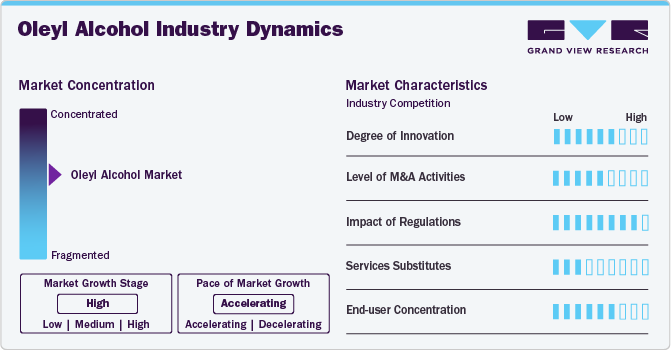
The market is moderately competitive, with key participants involved in research & development activities related to oleyl alcohol. Constant innovations by product vendors are among the most important factors for companies to perform in this market. Ecogreen Oleochemicals Pte. Ltd., Croda International Plc, Stepan Company, Sasol, and The Lubrizol Corporation, among others, are the key oleyl alcohol manufacturers operating in the market.
The market growth stage is medium, with an accelerating pace. Oleyl alcohol is a long chain of fatty alcohol used in the manufacturing of cosmetics and personal care products. When used in the formulation of skin care products, oleyl alcohol acts as a lubricant on the skin surface, providing softness and smoothness to the skin. Moreover, the growing inclination of consumers toward bio-based products is increasing the demand.
 To learn more about this report, Download Free Sample Report
 Driven by sustainability concerns, the demand for bio-based oleyl alcohol derived from renewable sources such as vegetable oils is surging. This is in line with increasing consumer preference for green cosmetics and biodegradable cleaning products.
Analyst Perspective
The oleyl alcohol market is increasingly benefiting from the global transition toward bio-based specialty chemicals and sustainable consumer products. While personal care and cosmetics continue to dominate demand, emerging opportunities are developing across pharmaceutical excipients, industrial lubricants, agrochemical formulations, and specialty surfactants. Manufacturers are investing in sustainable sourcing, process optimization, and high-purity product development to strengthen competitiveness. Furthermore, rising demand for renewable oleochemicals and environmentally responsible formulations is expected to support long-term market expansion across multiple end-use industries.
Source Insights
Based on source, the fish oil segment accounted for the largest revenue share of 31.4% in 2025. The growth of the segment can be attributed to its exceptional benefits such as reducing blood pressure, lowering risks related to heart diseases, help in increasing good cholesterol levels, and promoting the release of serotonin. Furthermore, rising awareness among consumers and medical professionals regarding the importance of omega-3 fatty acids has led to an increase in the consumption of fish oil, thereby positively influencing the overall market growth.
Oleyl alcohol is derived from a reaction between esters and oleic acid from olive oil. Various benefits associated with olive oil used in the food & beverage industry have triggered industry growth across the world. The benefits of olive oil include being rich in antioxidants, monosaturated fats, anti-inflammatory properties, and reducing risks of diabetes and heart failure. The growing consumer awareness regarding healthy eating has influenced the demand for olives, thus benefitting market growth.
Application Insights
In 2025, the cosmetics & personal care segment by application held the dominating revenue share of 23.9%. This can be attributed to increasing consumer awareness regarding personal hygiene along with the growing demand for anti-aging products at a global level, which is expected to boost the demand for oleyl alcohol in the personal care & cosmetics industry. Oleyl alcohol is found in products such as eye care creams, hair conditioners, anti-aging creams, styling gels, lipsticks, eye shadow, and lip gloss. The moisturizing and emollient properties of the product are expected to drive its demand in personal care and cosmetic applications.
 To learn more about this report, Download Free Sample Report
 The surfactants sector is projected to grow at the fastest CAGR over the forecast period. Oleyl alcohol is used as a precursor for the formulation of sulfuric ester derivatives, which are widely used as wetting agents in detergents. It is commonly used in laundry, dish, auto, and surface care products. It has cleaning ingredient functions such as a foaming agent, surface protectant, wetting agent, surfactant, and detergent additive, which are expected to boost the demand for oleyl alcohol in surfactant applications.
Oleyl alcohol can be used in numerous applications as a softening and lubricating agent for textile fabrics, manufacturing carbon paper, printing ink, and stencil paper. It is also used in several product formulations for drug delivery in the pharmaceutical industry. It is used in delivering medications via skin or mucus membranes and lungs. In addition, it is used as a precursor for the formulation of sulfuric ester derivatives, widely used in wetting agents and detergents.
Regional Insights
The oleyl alcohol market in North America is anticipated to witness significant growth. North America is a major market due to the presence of large-scale end-use industries in the region. These industries, including personal care & cosmetics, food & beverages, and textiles, are the major consumers of oleyl alcohol in North America. The U.S. Food and Drug Administration (FDA) has approved the use of oleyl alcohol as a multipurpose additive for indirect addition in food products. The Cosmetic Ingredient Review (CIR) panel has evaluated oleyl alcohol and declared it fit for usage in personal care and cosmetics products.
U.S. Oleyl Alcohol Market Trends
The oleyl alcohol market in the U.S. is majorly driven by the personal care and pharmaceutical industries along with applications in cleaning and laundry products. The rising environmental awareness among consumers in the U.S. is driving the demand for bio-based surfactants, which have a lower environmental impact.
Asia Pacific Oleyl Alcohol Market Trends
Asia Pacific dominated the global industrial starch market with the highest revenue share of 39.2% in 2025. This can be attributed to the increasing demand for bio-based products owing to growing consumer awareness coupled with stringent regulations.
 To learn more about this report, Download Free Sample Report
 The China accounted for 17.5% of the Asia Pacific oleyl alcohol market in 2025. China is the largest oleyl alcohol market in Asia Pacific, supported by its large oleochemical manufacturing base and extensive downstream demand across personal care, home care, surfactants, pharmaceuticals, and industrial applications. Demand for oleyl alcohol is further supported by China's expanding use of palm-based and other renewable oleochemical derivatives. The country's personal care industry increasingly uses fatty alcohols and related oleochemical ingredients in skincare, haircare, cosmetics, toiletries, and hygiene formulations, while growing demand for specialty surfactants is creating additional opportunities.
Key Oleyl Alcohol Company Insights
Some of the key players operating in the market include Corda International Plc, BASF SE, Tokyo Chemical Industries, and The Lubrizol Corporation.
-
BASF SE is a chemical manufacturer and supplier with a presence across Europe, North America, Asia Pacific, South America, Africa, and the Middle East.
-
The Lubrizol Corporation has a global presence across 100 countries. It operates in Europe, Asia Pacific, Latin America, and North America. The company caters to different end-use industries such as healthcare, medical, beauty, and home care
Ecogreen Oleochemicals Pte. Ltd., Acme Synthetic Chemicals, ATAMAN KIMYA, and Zhengzhou Alfa Chemical Co., Ltd. are some of the emerging participants in the market.
-
PT. Ecogreen Oleochemicals is a manufacturer and distributor of chemicals and related products worldwide. The product portfolio of the company includes short-chain glycerin, fatty acids, primary fatty amines, sugar, unsaturated fatty Alcohol (oleyl alcohol), specialty esters, and alcohol ethoxylates.
-
Acme Synthetic Chemicals is a manufacturer and supplier of organic chemicals. The company's product range includes fatty acids, high-purity lipids, and specialty chemicals based on oils and fats, including oleyl alcohol.
Key Oleyl Alcohol Companies
The following key companies have been profiled for this study on the oleyl alcohol market.
-
PT. Ecogreen Oleochemicals
-
Croda International Plc
-
The Lubrizol Corporation
-
Acme synthetic chemicals
-
SimSon Pharma Limited
-
ATAMAN KIMYA
-
Zhengzhou Alfa Chemical Co., Ltd.
-
BASF SE
-
Tokyo Chemical Industry Co., Ltd.
Competitive Benchmarking
Category
Operating Strategies
Competitive Edge
Weakness
Established Players (PT. Ecogreen Oleochemicals, Croda International Plc, The Lubrizol Corporation, BASF SE, Tokyo Chemical Industry Co., Ltd.)
- Expanding bio-based oleochemical portfolios to meet growing sustainability and specialty chemical demand.
- Strengthening global manufacturing and distribution capabilities to improve supply reliability and customer reach.
- Strong global production infrastructure supports consistent supply across multiple end-use industries.
- Extensive technical expertise enables development of high-purity and application-specific oleochemical products.
- Dependence on vegetable oil feedstocks exposes operations to raw material price volatility.
- Stringent sustainability and environmental compliance requirements may increase production costs.
Emerging Players (Acme Synthetic Chemicals, SimSon Pharma Limited, ATAMAN KIMYA, Zhengzhou Alfa Chemical Co., Ltd.)
- Focusing on regional expansion through specialized oleochemical offerings and customer-centric supply solutions.
- Strengthening distribution partnerships to improve market penetration across pharmaceutical and industrial sectors.
- Flexible manufacturing capabilities support customized product offerings for niche industrial applications.
- Strong regional presence enables responsive customer service and competitive pricing strategies.
- Limited international footprint may restrict access to large multinational customers.
- Smaller production capacities can reduce economies of scale compared to established global manufacturers.
Recent Developments
-
In October 2023, Croda International Plc recently announced a new greenfield site in Guangzhou, China. This new site will be used as a multi-purpose production facility for active beauty ingredients and fragrances, which will help the company establish a strong foothold in the Asia Pacific region and deliver its products faster. The Guangzhou facility will primarily be used for manufacturing fragrances, and the existing fragrance production in China will be consolidated at this new site. The Guangzhou site will be commissioned in 2025 including application laboratories, R&D facilities, offices, and manufacturing.
-
In October 2023, Ecogreens Oleochemicals Ltd. announced the expansion of its fatty alcohol facility in Batam, Indonesia, by 180,000 tons annually. This strategic decision is expected to elevate Ecogreen Oleochemicals Ltd.’s fatty alcohol production capability to an impressive 360,000 tons yearly, doubling its prior capacity.
-
In October 2023, BASF SE invested in the production of emollient specialties at its German site. This investment is aimed at producing skin and sun protection products. The expansion of production capacity has been made possible by installing a new reactor and upgrading the distillation units. The company also specializes in cosmetics and personal care ingredients and already offers a comprehensive portfolio of emollients. Düsseldorf is BASF's prominent production site in Europe and is the largest BASF site for the production and development of cosmetic ingredients worldwide.
Oleyl Alcohol Market Report Scope
Report Attribute
Details
Market size in 2025
USD 1,093.5 million
Estimated market size in 2026
USD 1,138.7 million
Revenue forecast in 2033
USD 1,555.3 million
Growth rate
CAGR of 4.6% from 2026 to 2033
Base year for estimation
2025
Historical data
2021 - 2024
Forecast period
2026 - 2033
Quantitative units
Revenue in USD million/billion, Volume in Kilotons and CAGR from 2026 to 2033
Report coverage
Revenue forecast, company ranking, competitive landscape, growth factors, and trends
Segments covered
Source, application, region
Regional scope
North America; Europe; Asia Pacific; Latin America; MEA
Country scope
U.S.; Canada; Mexico; Germany; UK; France; Italy; Netherlands; Russia; Switzerland; Poland; Sweden; China; Japan; India; Malaysia; Indonesia; Singapore; Taiwan; Australia; Brazil; Argentina; Saudi Arabia; South Africa
Key companies profiled
PT. Ecogreen Oleochemicals; Croda International Plc; The Lubrizol Corporation; Acme Synthetic Chemicals; SimSon Pharma Limited; ATAMAN KIMYA; Zhengzhou Alfa Chemical Co., Ltd.; BASF SE; Tokyo Chemical Industry Co., Ltd.
Customization scope
Free report customization (equivalent up to 8 analysts' working days) with purchase. Addition or alteration to country, regional & segment scope.
Pricing and purchase options
Avail customized purchase options to meet your exact research needs. Explore purchase options
Global Oleyl Alcohol Market Report Segmentation
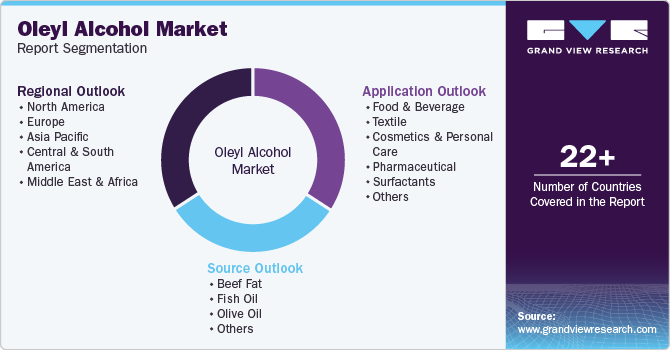
This report forecasts revenue growth at global, regional, and country levels and provides an analysis of the latest industry trends in each of the sub-segments from 2021 to 2033. For this study, Grand View Research has segmented the global oleyl alcohol market report based on source, application, and region:
 To learn more about this report, Download Free Sample Report
 -
Source Outlook (Volume. Kilotons; Revenue, USD Billion, 2021 - 2033)
-
Beef Fat
-
Fish Oil
-
Olive Oil
-
Others
-
-
Application Outlook (Volume. Kilotons; Revenue, USD Billion, 2021 - 2033)
-
Food & Beverage
-
Textile
-
Cosmetics & Personal Care
-
Pharmaceutical
-
Surfactants
-
Others
-
-
Regional Outlook (Volume. Kilotons; Revenue, USD Billion, 2021 - 2033)
-
North America
-
U.S.
-
Canada
-
Mexico
-
-
Europe
-
Germany
-
UK
-
France
-
Italy
-
Spain
-
Netherlands
-
Russia
-
Switzerland
-
Poland
-
Sweden
-
-
Asia Pacific
-
China
-
Japan
-
India
-
South Korea
-
Australia
-
Malaysia
-
Singapore
-
Indonesia
-
Taiwan
-
-
Central & South America
-
Brazil
-
Argentina
-
-
Middle East and Africa (MEA)
-
Saudi Arabia
-
South Africa
-
-
Research Methodology
The oleyl alcohol market figures in this report are based on a proven research process that combines executive interviews with secondary research from proprietary databases, company filings, and recognized regulatory and institutional sources. Market size is built through value-chain sizing - reconciling supply-side and demand-side estimates - and triangulated with bottom-up and top-down approaches. Every estimate passes multiple levels of expert validation before publication, with each oleyl alcohol segment quantified using the revenue-capture definitions in the table below.
Segment Definition
Segment - Source
Revenue capture definition
Beef Fat
Revenue is generated through the production of oleyl alcohol derived from beef fat, supplying manufacturers of lubricants, surfactants, pharmaceuticals, and industrial chemicals requiring animal-based oleochemical feedstocks.
Fish Oil
As the dominant source segment, revenue is captured through the conversion of fish oil into oleyl alcohol used across cosmetics, pharmaceuticals, surfactants, and specialty chemical formulations requiring high-purity oleochemical intermediates.
Olive Oil
Revenue is supported by oleyl alcohol produced from olive oil for premium cosmetic, personal care, pharmaceutical, and specialty industrial applications emphasizing renewable and naturally sourced ingredients.
Other Sources
This segment captures revenue from oleyl alcohol derived from various vegetable oils, animal fats, and alternative renewable feedstocks utilized across multiple industrial and consumer applications.
Segment - Application
Revenue capture definition
Food & Beverage
Revenue is generated through the use of oleyl alcohol in approved food processing applications, food additives, and specialty formulations where functional oleochemical ingredients are required.
Textile
Revenue is supported by oleyl alcohol utilization in textile processing chemicals, lubricants, softening agents, and finishing formulations that improve processing efficiency and fabric performance.
Cosmetics & Personal Care
As the dominant application segment, revenue is captured through the incorporation of oleyl alcohol into skincare, hair care, cosmetics, lotions, creams, and personal care formulations as an emollient, emulsifier, and conditioning agent.
Pharmaceutical
Revenue is generated through pharmaceutical-grade oleyl alcohol supplied for topical formulations, ointments, drug delivery systems, and excipient applications requiring high-purity specialty ingredients.
Surfactants
Revenue is driven by the use of oleyl alcohol as a key intermediate in the production of nonionic surfactants, detergents, emulsifiers, and industrial cleaning formulations.
Other Applications
This segment captures revenue from lubricants, agrochemicals, metalworking fluids, coatings, and various specialty industrial applications utilizing oleyl alcohol as a functional oleochemical intermediate.
Estimation Model
Layer Name
Key Question
Description
Feedstock Availability Layer
What forms the addressable base?
Identify global production volumes of vegetable oils, animal fats, and oleochemical feedstocks utilized for manufacturing oleyl alcohol across major producing regions.
Industrial Adoption Layer
Where is oleyl alcohol utilized?
Estimate the proportion of oleyl alcohol consumed across personal care, pharmaceuticals, agrochemicals, lubricants, textile chemicals, and other specialty industrial applications.
Consumption Intensity Layer
How much oleyl alcohol is consumed?
Analyze formulation concentrations, manufacturing volumes, product replacement cycles, and end-use demand patterns to determine annual oleyl alcohol consumption across key industries.
Revenue Layer
How is market revenue generated?
Revenue is generated through the sale of oleyl alcohol supplied to cosmetic manufacturers, pharmaceutical companies, lubricant formulators, agrochemical producers, and specialty chemical manufacturers for diverse industrial and consumer applications.
Delivered Customizations
This report has been delivered with the following In-depth customizations
Client Request
Customization Delivered
Value Adds
Regional Segmentation
The study delivers additional country-level insights covering Peru, UAE, and Morocco, evaluating oleyl alcohol demand across personal care, pharmaceuticals, lubricants, and specialty chemical applications.
Enables stakeholders to identify high-growth oleochemical manufacturing hubs, assess country-specific consumption trends, and formulate targeted expansion strategies across emerging specialty chemical markets.
Cross-Segmentation Analysis
The study delivers detailed cross-segmentation analysis assessing oleyl alcohol demand across major applications by source type, highlighting consumption patterns, market attractiveness, and growth opportunities across key end-use industries.
Helps companies identify the most attractive source-application combinations, optimize product portfolios, and prioritize investments toward high-growth industrial and consumer markets.
Opportunity Assessment
The study delivers comprehensive assessment of emerging opportunities across bio-based chemicals, premium personal care formulations, pharmaceutical excipients, and specialty surfactant applications driven by sustainability initiatives.
Supports strategic planning by identifying future revenue pockets, evaluating emerging application areas, and aligning product innovation with evolving sustainability and specialty chemical market trends.
Frequently Asked Questions About This Report
Key factors that are driving the oleyl alcohol market growth include eco-friendly, pure, and highly effective in terms of performance and quality.
The global oleyl alcohol market size was valued at USD 1,093.5 million in 2025 and is estimated at USD 1,138.7 million in 2026.
Key players include PT. Ecogreen Oleochemicals; Croda International Plc; The Lubrizol Corporation; Acme synthetic chemical; SimSon Pharma Limited; ATAMAN KIMYA; Zhengzhou Alfa Chemical Co., Ltd; BASF SE; Tokyo Chemical Industries.
The fish oil segment dominated the oleyl alcohol market in 2025, accounting for 31.4% of market revenue, owing to its high oleyl alcohol content and widespread utilization in personal care, pharmaceutical, and industrial applications.
Cosmetics & personal care segment held the largest market share of 23.9% in 2025 while surfactants segment is second fastest growing market
The global oleyl alcohol market is expected to grow at a CAGR of 4.6% from 2026 to 2033, reaching USD 1,555.3 million by 2033.
Asia Pacific dominated with a 39.2% revenue share in 2025.
About the Author(s)
Renewable Chemicals Research Team
Specialty & Chemicals · Renewable ChemicalsThis report was authored by the renewable chemicals research team at Grand View Research - comprising two research analysts, one senior research analyst, and one industry expert - with specialized expertise in the renewable chemicals segment of the specialty & chemicals industry. All findings are based on proprietary specialty & chemicals databases, executive interviews, and regulatory analysis, subject to internal peer review prior to publication.
Last Updated:
Speak to Analyst

Customize this report to your needs - add regions, segments, or data points, with 20% free customization.
Or view our licence options:


ISO 9001:2015 & 27001:2022 Certified
We are GDPR and CCPA compliant! Your transaction & personal information is safe and secure. For more details, please read our privacy policy.


