
- Home
- »
- Medical Devices
- »
-
Oral Care Market Size And Share Report, 2026-2033GVR Report cover
![Oral Care Market (2026 - 2033)Report]()
Oral Care Market (2026 - 2033)
Size, Share & Trends Analysis Report By Product (Toothbrush, Toothpaste, Mouthwash / Rinse, Denture Products, Dental Accessories), By Distribution Channel (Supermarkets / Hypermarkets), By Region, And Segment Forecasts
Market Size, 2025
$39.9BMarket Estimate, 2026
$42.3BMarket Forecast, 2033
$66.4BCAGR, 2026–2033
6.7%Oral Care Market Summary
The global oral care market size was valued at USD 39.9 billion in 2025 and is projected to grow from USD 42.3 billion in 2026 to USD 66.4 billion by 2033, at a CAGR of 6.7% from 2026 to 2033. The market in North America dominated with a revenue share of 31.2% in 2025. The oral care market is driven by rising awareness of oral hygiene, increasing prevalence of dental diseases such as caries and periodontal disorders, and growing emphasis on preventive healthcare.

Key Market Trends & Insights
- By product: The toothpaste segment led the market with the largest revenue share of 27.3% in 2025.
- By distribution channel: The supermarkets/hypermarkets segment led the market with the revenue share of 38.7% in 2025.
Regional Highlights
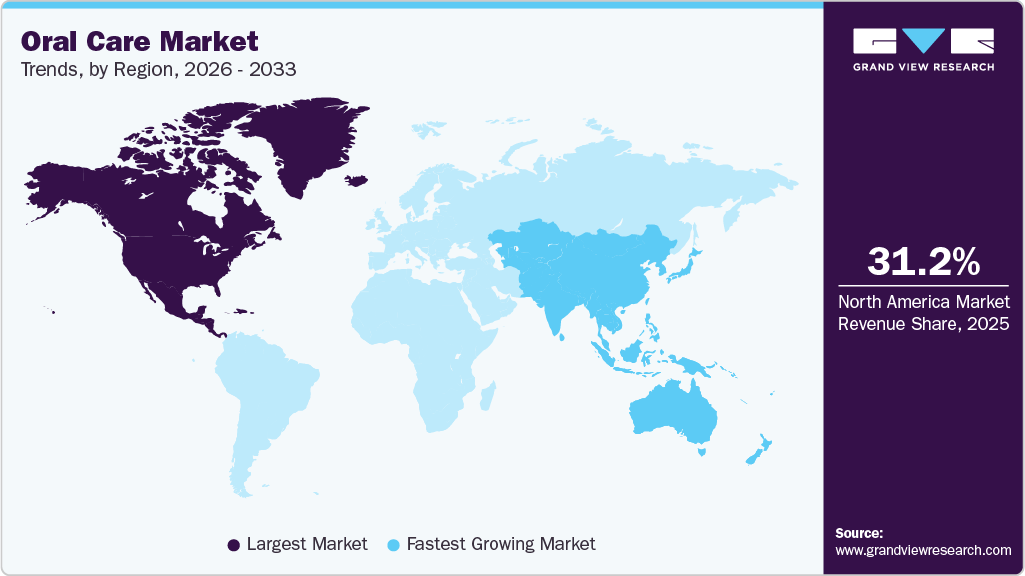
- Largest regional market: North America (31.2% revenue share, 2025)
- Fastest-growing regional market: Asia Pacific (highest CAGR, 2026-2033)
- The oral care industry in the U.S. held the largest revenue share in 2025.
Market Size & Forecast
- Market size in 2025: USD 39.9 Billion
- Estimated market size in 2026: USD 42.3 Billion
- Projected market size by 2033: USD 66.4 Billion
- CAGR (2026-2033): 6.7%
In addition, product innovation, including advanced toothpaste formulations, electric toothbrushes, and cosmetic whitening solutions, along with the expansion of urban populations and increasing disposable incomes, continues to accelerate global market growth. According to the State of America’s Oral Health and Wellness Report, preventive dental care remained a strong focus in 2025, with most parents (95%) reporting at least one dental visit for their child in the past year, for preventive purposes (94%). The report also highlights growing recognition of oral health in prenatal care, with 50% of respondents considering it essential and over half of women who are or have been pregnant (54%) prioritizing dental visits on par with routine annual physical examinations.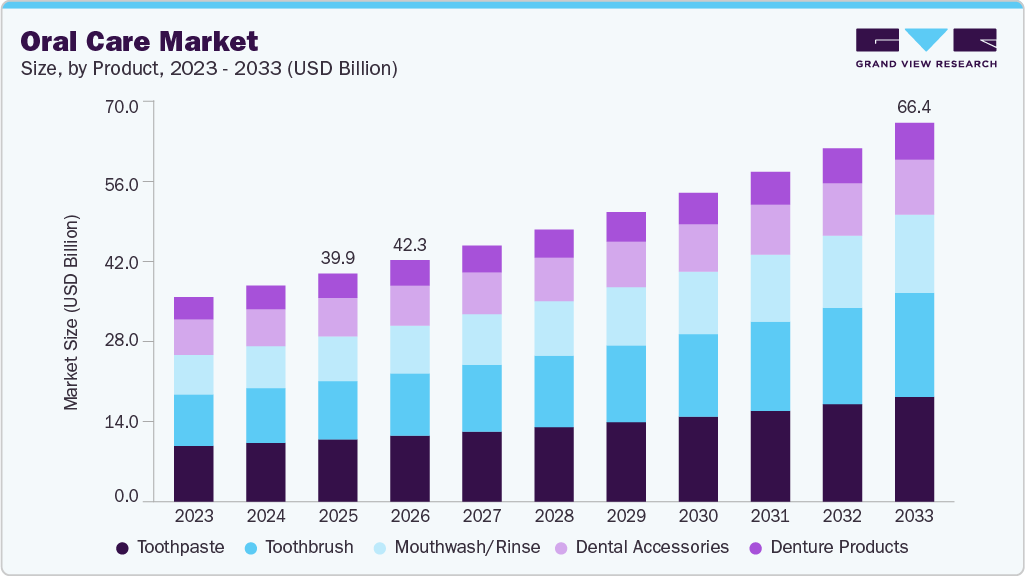
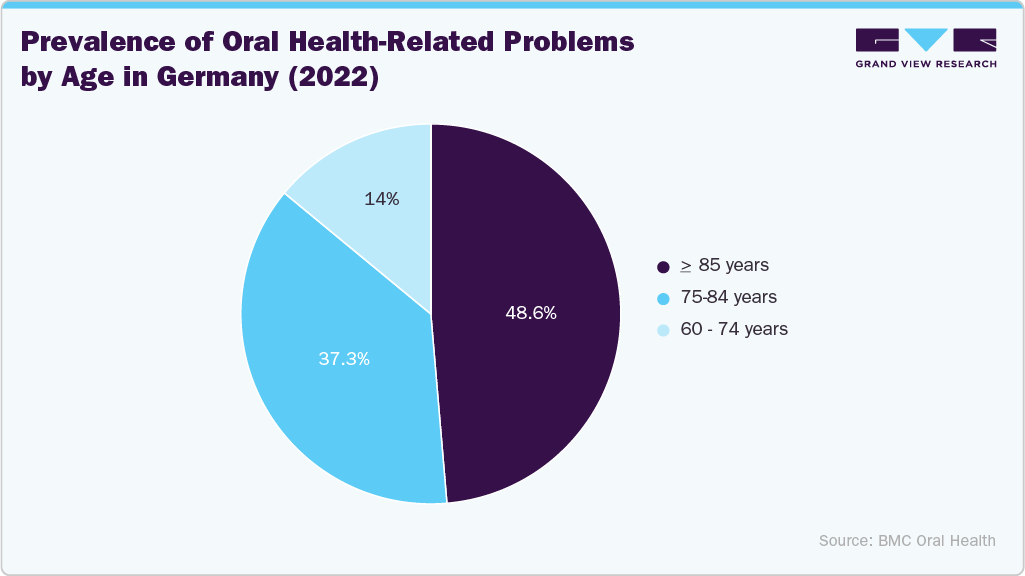
The rising awareness of the importance of oral hygiene is a key driving factor for the oral care market, as consumers increasingly recognize the connection between oral health and overall well-being. A greater emphasis on preventive care, supported by public health campaigns, dental education, and regular dental check-ups, is encouraging consistent use of oral care products. This growing awareness is driving demand for advanced toothbrushes, therapeutic toothpastes, mouthwashes, and other preventive oral hygiene solutions. According to the WHO, in 2025, oral diseases affect around 3.5 billion people worldwide, with untreated dental caries being the most prevalent.
Many advancements in the global oral health agenda have been realized through the sustained efforts of organizations such as the WHO and the FDI World Dental Federation, which play a significant role in shaping policies, guidelines, and awareness initiatives worldwide.
-
The Global Oral Health Action Plan (GOHAP) places a strong emphasis on the role of primary healthcare providers in promoting oral health and preventing oral diseases. The plan recognizes that primary healthcare providers, including physicians, nurses, and community health workers, are often the first point of contact for patients seeking healthcare, and play a crucial role in delivering oral health services and promoting good oral health practice. The GOHAP also emphasizes the need to integrate oral health into WHO noncommunicable diseases (NCD) and Universal Health Coverage (UHC) agendas, as well as into the UN SDGs.
-
FDI’s Vision 2030 is a global initiative that aims to improve oral health and prevent oral diseases through advocacy, education, and partnerships. It includes efforts to promote oral health as a key component of overall health, strengthen dental education and training, and increase access to care for underserved populations.
Healthcare professionals (HCPs), including primary care physicians, nurses, pharmacists, and community health workers, play a significant role in advancing global oral health advocacy. Through their regular contact with patients and communities, they are well positioned to increase oral health awareness and support prevention and early intervention. Their involvement also helps reduce barriers to accessing dental care and promotes a more integrated, holistic approach to healthcare delivery.
Healthcare Professionals (HCPs) Can Promote Oral Health
-
Integrating oral health education into routine practice by counseling patients and families on healthy diets, reduced sugar intake, and effective oral hygiene habits such as regular brushing and flossing.
-
Collaborating closely with dental professionals to support oral health screening, early detection, and timely referrals for patients with oral health concerns.
-
Supporting and advocating for policies and programs that strengthen oral health promotion, disease prevention, and access to affordable oral healthcare services.
-
Increasing awareness of the connection between oral diseases and overall health through patient education and community outreach initiatives.
-
Participating in interprofessional collaboration to encourage a more integrated and holistic healthcare approach that recognizes oral health as a key component of general health.
-
Promoting education and capacity-building among primary care physicians, nurses, and other healthcare providers in regions with limited dental resources and advocating for training programs that enable basic oral health prevention and interventions within their scope of practice to improve access in underserved communities.
KoL’s Opinion
Sarah McDonald, VP Sustainability, GSK Consumer Healthcare said “We are fighting every day to help eradicate preventable oral health problems and to provide people with better, more sustainable oral care solutions that don’t compromise on quality. We have made the commitment that 100% of our product packaging will be recyclable or reusable, where quality and safety permits, by 2025.This is just one part of our ongoing sustainability journey, in which we are working to address the environmental and societal barriers to everyday health.”
Karl Graves, Business Director at Albéa Tubes, said “We are extremely proud to roll out our responsible Greenleaf tube packaging solution with an inspiring market leader such as GSK. Our commitment is to make 100% of our tubes recyclable by 2025 while offering innovative solutions with PCR, paper and bio-based resins. Responsible packaging is now a must-have - and it requires close collaboration between a committed brand and a daring supplier.”
Parag Chaturvedi, VP of Operations, EPL Americas said “EPL is proud to be a critical partner towards GSK’s aspirations to have a net-zero impact on the environment by 2030. We know that sustainability will dictate innovation and be the focus of our operations, today and into the future. We are committed to leading the pack in sustainable packaging - and already are ahead on this journey with Platina, the first tube-and-cap combination to be recognized by the APR as fully sustainable and completely recyclable. We at EPL feel we have a significant role in the stewardship of the environment, and are committed to conserving resources, reducing waste, and building awareness of environmental issues.”
The increasing prevalence of dental diseases such as dental caries and periodontal disorders is another key driving factor for the oral care market. The rising consumption of sugar-rich diets, poor oral hygiene habits, and aging populations have contributed to a higher incidence of these conditions worldwide. The demand for preventive, therapeutic, and maintenance oral care products, including toothpastes, mouthwashes, and interdental solutions, continues to grow.
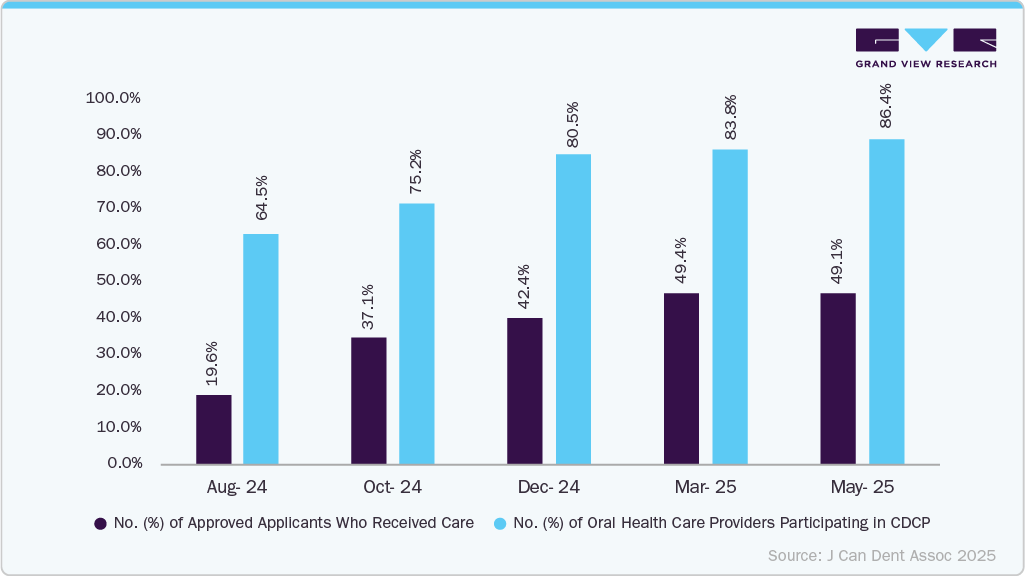
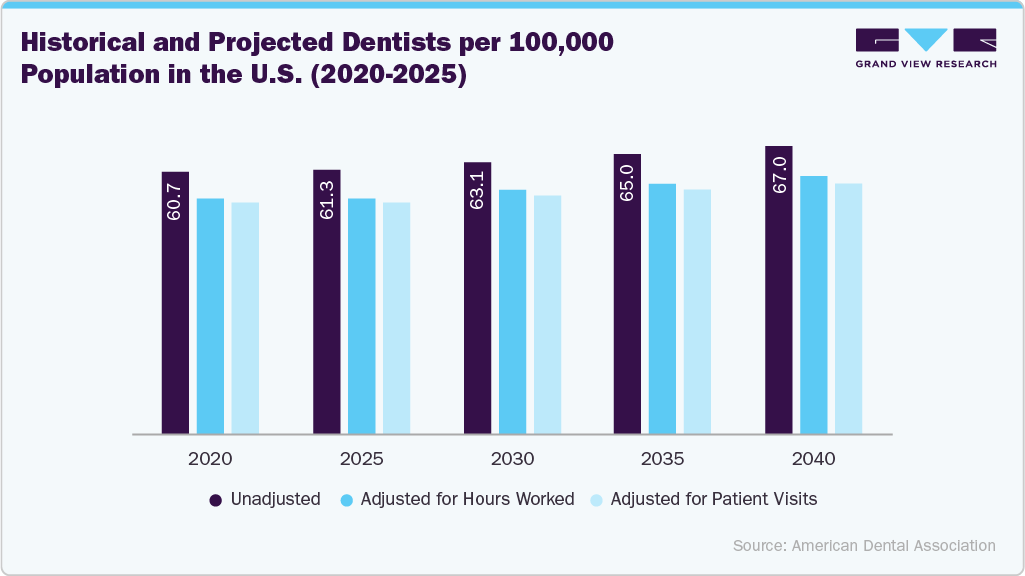
The rising number of registered dentists and their increased availability is another important driving factors for the oral care market. Growth in the dental workforce is improving access to professional oral healthcare services and increasing the frequency of dental consultations and preventive treatments. This expansion fosters higher awareness, earlier diagnosis, and increased adoption of oral care products, thereby contributing to sustained market growth.
Total number of eligible (and approved) applicants, number of those receiving care and number of oral health care providers participating in the CDCP between August 2024 and May 2025
Registration in Dental Care by Specialty (2025)
Specialty
Male
Female
Gender Unknown
Total
Dental and Maxillofacial Radiology
19
14
0
33
Dental Nurse
0
1
0
1
Dental Public Health
33
49
0
82
Endodontics
239
90
0
329
Oral and Maxillofacial Pathology
20
20
0
40
Oral Medicine
42
35
0
77
Oral Microbiology
1
4
0
5
Oral Surgery
497
266
0
763
Total
851
479
0
1,330
Source: GDC UK
Market Dynamics
The oral care market is driven by the rising prevalence of oral hygiene issues, such as dental caries, gum disease, bad breath, and tooth sensitivity, as well as increasing consumer awareness of daily oral hygiene and preventive care practices. Growing demand for personal oral care products, including toothpaste, toothbrushes (manual and electric), mouthwash, dental floss, and whitening products, is further supporting market expansion. The shift toward premium, specialized oral care solutions, such as herbal, fluoride-based, sensitivity-targeted, and enamel-strengthening formulations, is also contributing to growth. In addition, technological advancements in oral care devices, expanding retail and e-commerce distribution channels, and increasing focus on aesthetic appearance and oral wellness routines are strengthening market adoption globally.
The increasing prevalence of oral health conditions such as dental caries, tooth decay, gum disease, and enamel erosion is a key driver of growth in the global oral care market. Dental caries remains one of the most common chronic conditions worldwide, affecting children, adults, and the elderly, largely due to high sugar consumption, poor oral hygiene practices, and limited access to preventive dental services in several low- and middle-income regions. This rising disease burden is driving greater demand for daily oral care products, including toothpaste, toothbrushes, mouth rinses, and floss, as consumers focus on maintaining a daily oral hygiene routine to prevent dental problems. In addition, growing awareness of the connection between oral health and overall systemic health is encouraging preventive care practices and regular use of oral hygiene products. Increasing consumer preference for specialized solutions such as anti-cavity, anti-plaque, sensitivity relief, and enamel protection formulations is further supporting market growth.
For instance, in 2025, according to WHO, oral diseases affect around 3.5 billion people worldwide, with untreated dental caries being the most prevalent.
Adverse effects associated with certain oral care products act as a significant restraint on market growth. Some toothpaste formulations containing strong abrasives or high fluoride concentrations may cause enamel wear, tooth sensitivity, or gum irritation when used excessively or incorrectly. Similarly, alcohol-based mouthwashes can lead to dry mouth (xerostomia), altered taste perception, and irritation of oral tissues in sensitive users. In addition, whitening products such as bleaching agents and peroxide-based strips may result in temporary tooth sensitivity, gum inflammation, and enamel weakening if misused. Allergic reactions to certain chemical ingredients, preservatives, or flavoring agents can also discourage consistent use among certain consumer groups.
Rising awareness of oral hygiene presents a significant growth opportunity for the global oral care market. Increasing educational initiatives by governments, dental associations, and healthcare organizations are encouraging individuals to adopt better daily oral care habits, such as regular brushing, flossing, and mouthwash use. This growing awareness is particularly strong among younger populations and urban consumers who are more exposed to preventive healthcare information through digital media and health campaigns.
In addition, a greater understanding of the link between oral health and overall systemic health, such as its connection to diabetes, cardiovascular diseases, and respiratory infections, is further driving consumers to prioritize preventive oral care. This shift is boosting demand for a wide range of oral care products, including fluoride toothpaste, antibacterial mouth rinses, and specialized solutions for sensitivity and gum health.
Market Concentration & Characteristics
The oral care market demonstrates a moderate to high degree of innovation, driven by advancements in smart toothbrushes, AI-enabled oral monitoring, and personalized preventive care solutions. Integration of digital technologies, eco-friendly materials, and clinically validated formulations is reshaping product differentiation and enhancing consumer engagement. The collaboration between dental professionals and manufacturers continues to accelerate innovation focused on efficacy, convenience, and long-term oral health outcomes. For instance, in September 2025, Philips announced the launch of the Philips Sonicare 6300 and Philips Sonicare 7400 electric toothbrushes, introducing Next-Generation Sonicare technology to elevate oral care. Developed with dental patients in mind, these advanced devices deliver a powerful yet gentle clean, along with real-time guidance and personalized brushing feedback, helping users achieve healthier teeth and gums with greater comfort and confidence.
“Many patients worry that power toothbrushes might be too harsh for their teeth and gums, leading them to stick with manual toothbrushes they believe are ‘good enough.’ However, manual brushing can often miss plaque in hard-to-reach areas or fail to deliver consistent pressure,” said Matina Vidalis, Senior Marketing Director, Consumer & Professional Oral Healthcare, Philips Personal Health North America. “Thoughtfully designed to ease the transition from manual to power brushing, Philips Sonicare 6300 and 7400 offer gentle yet effective care for sensitive teeth and gums. These innovations empower dental professionals not only to elevate their standard of care, but also to confidently guide patients in making the switch, helping them achieve a superior clean and healthier gums with ease.”
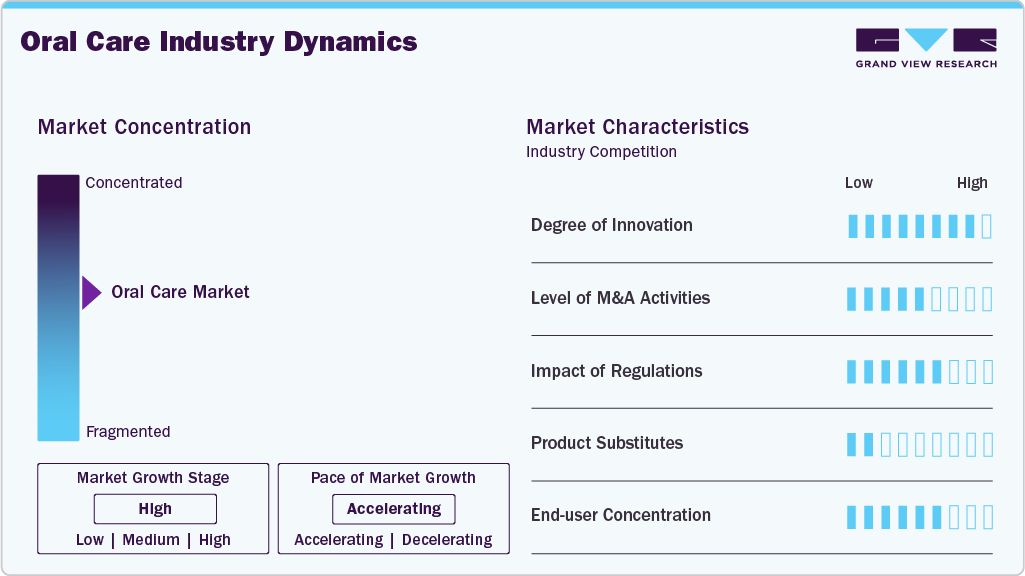
The oral care market has experienced a moderate to high level of mergers and acquisitions, as companies seek to strengthen their brand portfolios, expand into premium and therapeutic segments, and enhance their global reach. Strategic deals, including mergers, brand acquisitions, and technology-driven takeovers, are enabling manufacturers to sharpen focus, accelerate innovation, and improve competitive positioning in both consumer and professional oral care segments. For instance, in September 2025, Ken Paxton announced that he had secured a historic agreement with Colgate-Palmolive Company, following concerns that major toothpaste manufacturers were depicting excessive amounts of fluoride toothpaste in their marketing and packaging materials.
“This historic agreement with Colgate is an incredible example of what is possible when American companies are willing to take concrete steps to protect the health of our children and families. We commend Colgate for being the first major toothpaste manufacturer to make meaningful change in this space and hope other companies follow their lead,” said Attorney General Paxton.
Regulations have a significant impact on the oral care market by ensuring product safety, quality, and efficacy while shaping how products are developed, labeled, and marketed. Compliance with regulatory frameworks, such as medical device classifications for powered toothbrushes and ingredient controls for toothpaste and mouthwashes, can increase development costs and time to market. However, these regulations also enhance consumer trust and encourage manufacturers to invest in clinically validated, high-quality innovations. The table below shows the medical device classification of toothbrushes.
Device Name
Device Class
Toothbrush, Powered
Class 1
Toothbrush, Ionic, Battery-Powered
Class 1
Powered Radiofrequency Toothbrush
Class 2
Source: FDA
End-user concentration in the oral care market is largely centered on households and dental professionals, with demand driven by routine daily consumption and regular clinical recommendations. The ongoing acquisitions among major manufacturers are consolidating brand portfolios and distribution networks, enabling companies to better serve large consumer bases and strengthen their presence across retail, pharmacy, and professional dental channels.
Analyst Perspective
The oral care market benefits from strong recurring demand fundamentals driven by daily-use consumption patterns and increasing consumer focus on preventive healthcare. Growth is supported by rising oral health awareness, premiumization trends, growing demand for natural and specialty formulations, expanding e-commerce penetration, and increasing adoption of advanced products such as electric toothbrushes, whitening solutions, and fluoride-free alternatives. Unlike many healthcare categories that depend on episodic treatment events, oral care products benefit from frequent replenishment and high consumer engagement, creating a stable and recurring revenue base. The most advantaged manufacturers will be those that build diversified portfolios across toothpaste, toothbrushes, mouthwash, whitening products, and specialty oral care segments while effectively leveraging omnichannel distribution strategies. As consumers increasingly prioritize oral wellness and ingredient transparency, market leadership will depend on brand trust, product innovation, premium positioning, and the ability to address evolving consumer preferences across both mass-market and specialty oral care categories.
Product Insights
Based on product, the toothpaste segment led the market with the largest revenue share of 27.3% in 2025. Due to its essential role in daily oral hygiene and widespread adoption across all age groups. High consumer awareness, frequent repeat purchases, and the availability of diverse formulations, including anticavity, sensitivity relief, whitening, and herbal variants, supported strong demand. Continuous product innovation and extensive retail penetration further reinforced toothpaste’s leading share within the overall oral care market. For instance, in January 2026, MedicalXpress reported the development of a new toothpaste formulation capable of inhibiting periodontal pathogens, highlighting ongoing innovation aimed at improving gum health and preventing periodontal disease.
The toothbrush segment is anticipated to grow at the fastest CAGR of 7.59% in the oral care market during the forecast period, supported by rising oral hygiene awareness and increasing dental issues. The rapid adoption of electric and smart toothbrushes, which offer features such as pressure sensors and timers, is further driving growth. Shifting consumer preference toward advanced and premium oral care solutions continues to accelerate demand.
For instance, in December 2025, Great Gums Inc. announced the U.S. launch of its bioelectric toothbrush, a clinically validated oral care device that uses safe microcurrents to remove plaque from hard-to-reach areas that conventional bristles often fail to clean effectively.
“Our success in Asia has demonstrated strong market demand for effective oral health solutions,” said Young Wook Kim, co-founder of Great Gums Inc. “We are confident that U.S. consumers will respond to our scientifically validated approach without relying on increased physical force.”
Distribution Channel Insights
Based on distribution channel, the supermarkets/hypermarkets segment led the market with the largest revenue share of 38.7% in 2025. These retail formats provide easy access to essential oral care products, including toothpaste, toothbrushes, mouthwashes, and denture care items, often supported by in-store promotions and competitive pricing. Their established distribution networks and convenience for routine household shopping continue to make them the preferred purchasing channel for a large share of consumers.
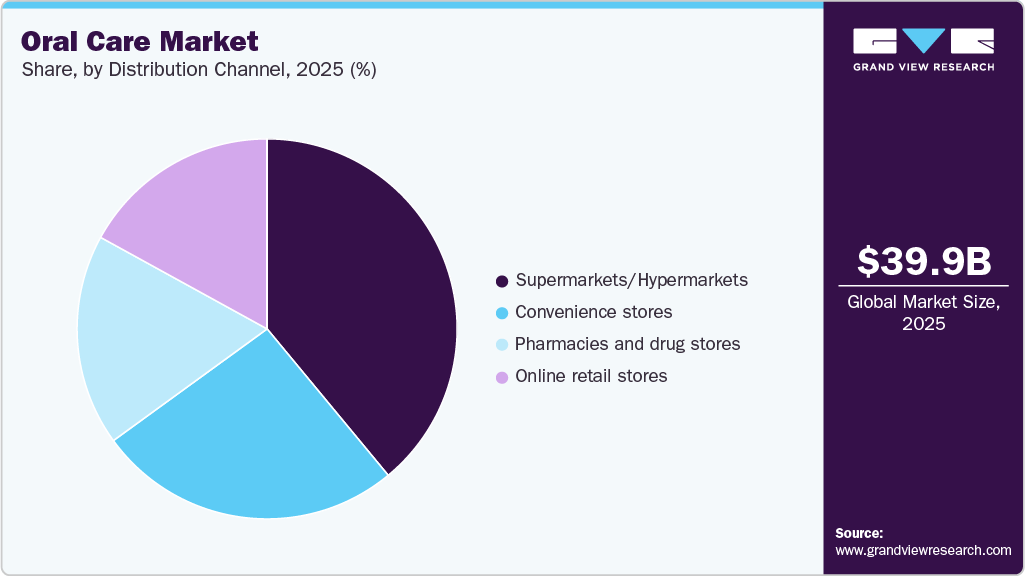
The online retail store segment is expected to grow at the fastest CAGR in the oral care market. Driven by increasing consumer preference for convenient shopping, wide product availability, and competitive pricing. The rise of e-commerce platforms, direct-to-consumer brand websites, and digital marketplaces has made it easier for customers to compare products, access detailed reviews, and receive home delivery. This shift is further supported by digital marketing, subscription models, and enhanced logistics, all of which contribute to accelerated online sales growth in the oral care sector.
Regional Insights
North America dominated the oral care market with the largest revenue share of 31.2% in 2025. This can be attributed to growth as consumers emphasize preventive dental health and advanced oral care solutions. There is strong demand for electric and smart toothbrushes, whitening products, and specialized formulations for addressing sensitivity and gum health. Interest in natural and eco-friendly products is also rising. Widespread retail availability and online channels are supporting broader market penetration.
U.S. Oral Care Market Trends
The oral care market in the U.S. held the largest share in the North America region in 2025. Demand for electric and smart toothbrushes, whitening products, and specialized toothpaste for sensitivity or enamel protection is increasing. There is also growing interest in natural and sustainable oral care options. Convenience and online shopping are further boosting product accessibility and market growth.
Europe Oral Care Market Trends
The European oral care market is experiencing significant growth as consumers increasingly prioritize dental health and preventive care. There is a growing demand for innovative products, including electric toothbrushes, whitening solutions, and natural or sensitive-care formulations. Sustainability and eco-friendly packaging are becoming more important to buyers. Strong retail infrastructure and heightened health awareness are driving broader market adoption across the region.
The UK oral care market is growing as consumers increasingly prioritize preventive dental health and overall well-being. There is strong demand for innovative products, such as electric toothbrushes, interdental cleaners, and tailored toothpaste for sensitivity or whitening. The growing preference for natural and sustainable oral care options is also influencing purchasing decisions. Broad availability through high-street retail and online channels continues to support market expansion.
Projected Oral Health Trends in the UK (2020-2050)
Condition / Population Group
2020
2050 (Projected)
Change / Trend
People living with gum disease
42% of population
54% of population
Significant increase
People with signs of gum disease (gum pockets, tissue loss)
25.7 million
28 million
Increase of 2.3 million
People with gum tissue loss alone
18.7 million
~21 million
Increase of 2.3 million
Adults aged 16-59 with tooth decay
15.7 million
15.5 million
Slight decrease (-1.5%)
Adults aged 60+ with tooth decay
5 million
9.6 million
Nearly doubled (+92%)
Source: Adult Dental Health Survey (ADHS)
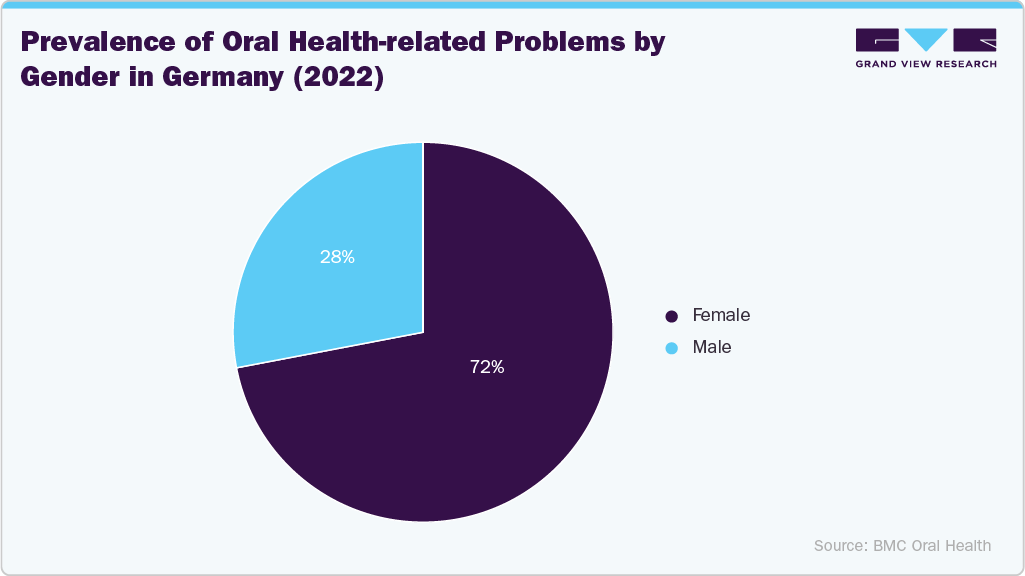
Germany’s oral care market is experiencing significant growth as consumers increasingly prioritize preventive dental health and high-quality products. There is an increasing demand for advanced solutions, such as electric toothbrushes, interdental tools, and specialized toothpaste for sensitivity or whitening. Eco-friendly and natural oral care options are also gaining popularity. Strong retail networks and health awareness continue to support market expansion.
Asia Pacific Oral Care Market Trends
The Asia Pacific oral care market is expanding significantly as consumers prioritize dental hygiene and preventive care. Demand is rising for innovative products, including electric toothbrushes, herbal and natural toothpastes, and whitening solutions. Urbanization, growing disposable incomes, and the wider distribution of products through modern retail and e-commerce are further driving market growth across the region.
Japan’s oral care market is experiencing significant growth as consumers prioritize preventive dental health and seek innovative solutions. There is a growing demand for advanced products, such as electric toothbrushes, interdental cleaners, and toothpaste specifically designed to target sensitivity and gum care. Traditional preferences for gentle, high-quality formulations coexist with interest in new technologies. Strong retail presence and health awareness support ongoing market development.
Cavity Rates Among Students in Japan (2024)
Student Group
Cavity Rate (%)
Kindergarteners
20.74
Elementary School Students
32.89
Junior High School Students
26.5
High School Students
34.7
Source: Japan Health Ministry
Latin America Oral Care Market Trends
The Latin America oral care market is witnessing consistent growth, fueled by rising consumer awareness of oral hygiene and expanding middle-class income levels. There is a growing demand for premium and innovative products such as electric toothbrushes and whitening solutions. The increasing availability through modern retail and e-commerce channels is further enhancing market penetration across the region.
MEA Oral Care Market Trends
The MEA oral care market is experiencing significant growth driven by increasing awareness of dental hygiene and a rising prevalence of oral health issues. Demand for advanced products, such as electric toothbrushes and natural oral care formulations, is gaining traction. The expanding retail channels and improved access to dental care services across the region are further supporting market development.
Key Oral Care Company Insights
Key companies in the oral care market, including major global and regional players, exert significant influence through their extensive product portfolios and distribution networks. Leading brands compete in segments like toothbrushes, toothpaste, and mouthwash, driving innovations and marketing efforts to capture market share. While established multinationals retain a large portion of the market, emerging local and niche brands are gaining traction with specialized and natural products. The competitive dynamics are shaped by product innovation, brand loyalty, and the expansion of retail and e-commerce channels.
Key Oral Care Companies
The following key companies have been profiled for this study on the oral care market.
-
Colgate-Palmolive Company
-
GSK plc
-
Johnson & Johnson
-
Church & Dwight Co., Inc.
-
Procter & Gamble
-
Unilever
-
GC America Inc.
-
Lion Corporation
-
Sunstar Suisse S.A.
-
Ivoclar Vivadent
-
Solventum
-
Koninklijke Philips N.V.
-
FOREO
-
Jordan
-
Haleon Group of Companies
-
BURST Oral Care
-
Hismile Pty Ltd.
-
Perrigo Company plc,
-
Salt Oral Care
-
Oracura
-
STIM
-
Glidewell
-
Panasonic Industry
-
Great Gums
-
Ultradent Products Inc.
-
VITA Zahnfabrik
-
Avadent
-
BISCO Inc.
-
Kuraray America, Inc
-
Prestige Consumer Healthcare Inc
-
Tokuyama Dental Corporation
Competitive Benchmarking
Category
Operating Strategies
Competitive Edge
Weakness
Established Players (Colgate-Palmolive Company, Procter & Gamble, Unilever, Haleon Group of Companies)
- Strengthening global oral care portfolios through continuous product innovation in toothpaste, toothbrushes, mouthwash, and whitening solutions.
- Expand digital and omnichannel distribution across e-commerce, pharmacies, and retail chains.
- Strong global brand equity, extensive distribution networks, and high consumer trust across mass and premium segments.
- Broad and diversified product portfolios covering preventive, therapeutic, and cosmetic oral care categories.
- Intense competition in commoditized product segments such as toothpaste and toothbrushes, leading to margin pressure.
- High marketing and advertising expenditures required to maintain brand leadership.
Emerging Players (GC America Inc., Ivoclar Vivadent, Solventum, Ultradent Products Inc., BISCO Inc.)
- Focus on advanced dental materials and professional-grade oral care solutions, including adhesives, whitening systems, restorative materials, impression systems, and preventive clinical products.
- Strengthen partnerships with dental clinics, universities, and laboratories. Invest in material science innovation and minimally invasive dentistry solutions.
- Strong expertise in dental materials and clinical applications with high acceptance among dental professionals.
- Advanced R&D capabilities and strong product performance in restorative and cosmetic dentistry.
- Limited global distribution compared to multinational FMCG companies. Lower R&D budgets and weaker long-term innovation pipelines.
- High dependence on digital marketing performance and trend-driven demand, leading to revenue volatility.
Recent Developments
-
In December 2025, Great Gums Inc. announced the U.S. launch of its bioelectric toothbrush, a clinically validated oral care device that uses safe microcurrents to enhance plaque removal, particularly in hard-to-reach areas where conventional bristles are less effective.
-
In September 2025, Philips unveiled the Philips Sonicare 6300 and Philips Sonicare 7400 electric toothbrushes, introducing next-generation Sonicare technology. Designed with dental patients in mind, these advanced devices deliver powerful yet gentle clean, real-time guidance, and personalized brushing insights, helping users achieve healthier teeth and gums with greater confidence.
-
In September 2025, Ken Paxton and Colgate-Palmolive announced a historic agreement to strengthen toothpaste safety standards, aimed at preventing excessive fluoride exposure and enhancing consumer protection across oral care products.
-
In August 2025, Lion Corporation announced the nationwide launch of Dent Health Medicated Toothpaste DX Premium, a formulation featuring the brand’s highest concentration and widest range of medicated ingredients. The product is designed to promote gum recovery and deliver comprehensive care for periodontitis, reinforcing Lion’s focus on advanced therapeutic oral care solutions.
-
In July 2022, Haleon plc announced the successful completion of the demerger of the Consumer Healthcare business from the GSK Group, resulting in the establishment of the independent Haleon Group. This corporate restructuring brought key oral care brands, such as Sensodyne, Aquafresh, and Polident, under Haleon’s standalone portfolio, reshaping the competitive dynamics in the global oral care market.
-
In May 2021, GSK Consumer Healthcare committed to making over one billion toothpaste tubes recyclable by 2025, reinforcing its long-term sustainability strategy and efforts to reduce plastic waste across its oral care portfolio.
Oral Care Market Report Scope
Report Attribute
Details
Market size in 2025
USD 39.9 billion
Estimated market size in 2026
USD 42.3 billion
Projected market size by 2033
USD 66.4 billion
Growth rate
CAGR of 6.7% from 2026 to 2033
Base year for estimation
2025
Historical data
2021 - 2024
Forecast period
2026 - 2033
Quantitative units
Revenue in USD million/billion and CAGR from 2026 to 2033
Report coverage
Revenue forecast, company ranking, competitive landscape, growth factors, and trends
Segments covered
Product, distribution channel, region
Regional scope
North America; Europe; Asia Pacific; Latin America; MEA
Country scope
U.S.; Canada; Mexico; Germany; UK; France; Italy; Spain; Norway; Denmark; Sweden; China; Japan; India; South Korea; Australia; Thailand; Singapore; Brazil; Argentina; Saudi Arabia; South Africa; UAE; Kuwait
Key companies profiled
Colgate-Palmolive Company; GSK plc; Johnson & Johnson; Church & Dwight Co., Inc.; Procter & Gamble; Unilever; GC America Inc.; Lion Corporation; Sunstar Suisse S.A.; Ivoclar Vivadent; Solventum; Koninklijke Philips N.V.; FOREO; Jordan; Haleon Group of Companies; BURST Oral Care; Hismile Pty Ltd.; Perrigo Company plc; Salt Oral Care; Oracura; STIM; Glidewell; Panasonic Industry; Great Gums; Ultradent Products Inc.; VITA Zahnfabrik; Avadent; BISCO Inc.; Kuraray America, Inc; Prestige Consumer Healthcare Inc; Tokuyama Dental Corporation
Customization scope
Free report customization (equivalent up to 8 analysts' working days) with purchase. Addition or alteration to country, regional & segment scope.
Pricing and purchase options
Avail customized purchase options to meet your exact research needs. Explore purchase options
Global Oral Care Market Report Segmentation
This report forecasts revenue growth at global, regional, and country levels and provides an analysis on the latest industry trends in each of the sub-segments from 2021 to 2033. For this study, Grand View Research has segmented the global oral care market report on the basis of product, distribution channel, and region:
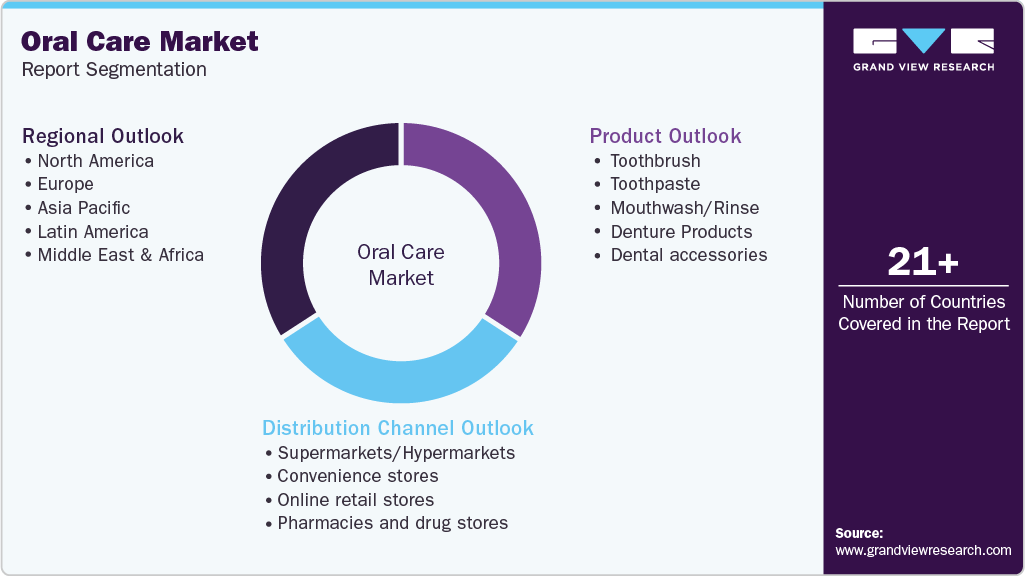
-
Product Outlook (Revenue, USD Million, 2021 - 2033)
-
Toothbrush
-
Manual
-
Electric (rechargeable)
-
Battery-powered (non-rechargeable)
-
Others
-
-
Toothpaste
-
Gel
-
Polish
-
Paste
-
Powder
-
-
Mouthwash/Rinse
-
Medicated
-
Nonmedicated
-
-
Denture Products
-
Cleaners
-
Fixatives
-
Others
-
-
Dental accessories
-
Cosmetic Whitening Products
-
Fresh Breath Dental Chewing Gum
-
Tongue Scrapers
-
Fresh Breath Strips
-
Others
-
Oral Irrigators
-
Countertop
-
Cordless
-
-
Mouth Freshener Sprays
-
-
-
-
Distribution Channel Outlook (Revenue, USD Million, 2021 - 2033)
-
Supermarkets/Hypermarkets
-
Convenience stores
-
Online retail stores
-
Pharmacies and drug stores
-
-
Regional Outlook (Revenue, USD Million, 2021 - 2033)
-
North America
-
U.S.
-
Canada
-
Mexico
-
-
Europe
-
Germany
-
UK
-
France
-
Italy
-
Spain
-
Sweden
-
Denmark
-
Norway
-
-
Asia Pacific
-
Japan
-
China
-
India
-
Australia
-
South Korea
-
Thailand
-
-
Latin America
-
Brazil
-
Argentina
-
-
Middle East & Africa
-
South Africa
-
Saudi Arabia
-
UAE
-
Kuwait
-
-
Research Methodology
Segment Definition
Segment - Type
Revenue capture definition
Manual Toothbrushes
Revenue is generated from manually operated toothbrushes used for daily oral hygiene and plaque removal. Demand is driven by widespread consumer adoption, affordability, routine replacement cycles, and increasing awareness of preventive oral healthcare practices.
Electric (Rechargeable) Toothbrushes
Revenue is earned from rechargeable electric toothbrushes designed to enhance cleaning efficiency through powered brushing technology. Market growth is supported by increasing consumer preference for premium oral care products, technological advancements, and growing awareness of oral health benefits.
Battery-Powered (Non-Rechargeable) Toothbrushes
Revenue is generated from battery-operated toothbrushes that offer powered brushing without rechargeable functionality. Demand is driven by convenience, affordability relative to rechargeable models, and increasing adoption among consumers seeking enhanced oral hygiene solutions.
Other Toothbrushes
Revenue is derived from specialty toothbrushes, including children's toothbrushes, orthodontic toothbrushes, eco-friendly toothbrushes, and travel toothbrushes. Growth is supported by product innovation and the increasing need for targeted oral care solutions.
Gel Toothpaste
Revenue is generated from gel-based toothpaste formulations designed to provide effective cleaning, fresh breath, and aesthetic appeal. Demand is supported by consumer preference for visually appealing oral care products and ongoing product innovation.
Polish Toothpaste
Revenue is earned from toothpaste products formulated to remove stains and enhance tooth appearance. Growth is driven by increasing consumer focus on cosmetic dentistry and whitening-oriented oral care routines.
Paste Toothpaste
Revenue is generated from conventional paste-based toothpaste products used for cavity prevention, plaque removal, gum health, and overall oral hygiene. Demand is supported by high household penetration and recurring daily usage.
Powder Toothpaste
Revenue is derived from powdered oral care formulations marketed as natural, herbal, or specialty alternatives to conventional toothpaste. Growth is supported by increasing consumer interest in natural ingredients and sustainable oral care products.
Medicated Mouthwash/Rinse
Revenue is generated from therapeutic mouthwashes formulated to address specific oral health conditions such as gingivitis, plaque control, dry mouth, and bacterial infections. Demand is supported by increasing oral disease prevalence and dentist-recommended treatment regimens.
Nonmedicated Mouthwash/Rinse
Revenue is earned from cosmetic mouthwashes used primarily for breath freshening and routine oral hygiene. Growth is driven by rising consumer awareness of comprehensive oral care practices and increasing product accessibility.
Denture Cleaners
Revenue is generated from cleaning solutions, tablets, and formulations used to maintain denture hygiene and longevity. Demand is supported by aging populations and growing denture usage globally.
Denture Fixatives
Revenue is earned from adhesives and fixation products used to improve denture stability, comfort, and retention. Market growth is driven by increasing denture adoption and demand for enhanced user comfort.
Other Denture Products
Revenue is derived from denture maintenance accessories and specialized care products used to support denture hygiene and functionality. Growth is supported by expanding elderly populations and long-term denture care requirements.
Cosmetic Whitening Products
Revenue is generated from whitening strips, gels, pens, trays, and related products designed to improve tooth appearance. Demand is fueled by increasing aesthetic consciousness, social media influence, and growing interest in cosmetic oral care.
Fresh Breath Dental Chewing Gum
Revenue is earned from chewing gum products formulated to freshen breath, stimulate saliva production, and support oral hygiene. Growth is driven by convenience, portability, and consumer demand for on-the-go oral care solutions.
Tongue Scrapers
Revenue is generated from tongue-cleaning devices used to remove bacteria, debris, and odor-causing compounds from the tongue surface. Demand is supported by growing awareness of comprehensive oral hygiene practices.
Fresh Breath Strips
Revenue is derived from dissolvable oral strips designed to provide immediate breath freshening. Growth is supported by convenience, portability, and increasing consumer preference for quick oral care solutions.
Other Dental Accessories
Revenue is earned from various oral care accessories not included in the major categories, including interdental cleaners, floss picks, dental mirrors, and specialty hygiene products. Demand is supported by growing preventive oral care awareness and product innovation.
Countertop Oral Irrigators
Revenue is generated from countertop water flossing systems designed to remove plaque and debris from difficult-to-reach areas. Demand is driven by increasing adoption of advanced oral hygiene technologies and dentist recommendations.
Cordless Oral Irrigators
Revenue is earned from portable battery-operated water flossing devices that offer convenience and mobility. Market growth is supported by consumer preference for compact, travel-friendly oral care solutions.
Mouth Freshener Sprays
Revenue is generated from portable breath-freshening sprays designed to provide immediate odor control and freshness. Demand is driven by convenience, lifestyle trends, and increasing focus on personal grooming and oral hygiene.
Supermarkets/Hypermarkets
Revenue is generated through large-format retail stores offering a broad range of oral care products. These channels benefit from high consumer traffic, product visibility, promotional activities, and one-stop shopping convenience.
Convenience Stores
Revenue is earned through convenience retail outlets that provide easy access to essential oral care products. Demand is supported by impulse purchases, immediate consumption needs, and widespread geographic availability.
Online Retail Stores
Revenue is generated through e-commerce platforms, brand-owned websites, and online marketplaces. Growth is driven by expanding digital adoption, product variety, subscription models, competitive pricing, and direct-to-consumer strategies.
Pharmacies and Drug Stores
Revenue is earned through pharmacies and drugstore chains that offer both over-the-counter and specialized oral care products. Demand is supported by consumer trust, healthcare professional recommendations, and access to therapeutic oral care solutions.
Estimation Model
Market Estimation Approaches
Bottom-Up Estimation
The oral care market is estimated by aggregating revenue generated across key product categories, including toothpaste, toothbrushes (manual and electric), mouthwash, dental floss, whitening products, and specialty oral care solutions. Consumer penetration rates, usage frequency, replacement cycles, and average selling prices (ASPs) are mapped to each category. Market value is then derived by evaluating category-level demand, distribution channel performance, demographic trends, and consumer purchasing behavior.
Top-Down Approach
The overall oral care and personal care expenditure landscape is assessed first, followed by estimation of the contribution attributable to oral care products. Factors such as population demographics, oral health awareness, dental care expenditure, preventive healthcare adoption, premiumization trends, and retail spending patterns are analyzed to determine category share and overall market value. Findings are further validated through secondary research and industry expert inputs.
Supply-Side Analysis
The supply-side assessment evaluates manufacturer revenues, production capacities, product portfolios, distribution networks, and average selling prices (ASPs) across leading oral care companies. Key manufacturers, private-label brands, retailers, e-commerce participants, and specialty oral care providers are analyzed using company disclosures, annual reports, retail audits, pricing databases, distributor information, and industry publications to estimate market size, competitive positioning, and market share.
Delivered Customizations
This report has been delivered with the following In-depth customizations
Client Request
Customization Delivered
Value Adds
Oral Care Product Category Analysis
Conducted a detailed assessment of key oral care product categories, including toothpaste, toothbrushes (manual and electric), mouthwash, dental floss, whitening products, and specialty oral care solutions. Evaluated market size, adoption trends, pricing dynamics, and category-specific growth drivers.
Helps stakeholders identify high-growth product segments, understand category-level demand patterns, and prioritize investment opportunities across the oral care market.
Oral Care Product Category Analysis
Conducted a detailed assessment of key oral care product categories, including toothpaste, toothbrushes (manual and electric), mouthwash, dental floss, whitening products, and specialty oral care solutions. Evaluated market size, adoption trends, pricing dynamics, and category-specific growth drivers.
Helps stakeholders identify high-growth product segments, understand category-level demand patterns, and prioritize investment opportunities across the oral care market.
Oral Care Product Category Analysis
Conducted a detailed assessment of key oral care product categories, including toothpaste, toothbrushes (manual and electric), mouthwash, dental floss, whitening products, and specialty oral care solutions. Evaluated market size, adoption trends, pricing dynamics, and category-specific growth drivers.
Helps stakeholders identify high-growth product segments, understand category-level demand patterns, and prioritize investment opportunities across the oral care market.
Frequently Asked Questions About This Report
The global oral care market size was valued at USD 39.9 billion in 2025 and is estimated at USD 42.3 billion for 2026.
The toothpaste segment led with a 27.3% revenue share in 2025, while toothbrush is the fastest-growing product.
Key factors include the rising awareness of oral hygiene, increasing prevalence of dental diseases such as caries and periodontal disorders, and growing emphasis on preventive healthcare.
Key players include Colgate-Palmolive Company; GSK plc; Johnson & Johnson; Church & Dwight Co., Inc.; Procter & Gamble; Unilever; GC America Inc.; Lion Corporation; Sunstar Suisse S.A.; Ivoclar Vivadent; Solventum; Koninklijke Philips N.V.; FOREO; Jordan; Haleon Group of Companies; BURST Oral Care; Hismile Pty Ltd.; Perrigo Company plc; Salt Oral Care; Oracura; STIM; Glidewell; Panasonic Industry; Great Gums; Ultradent Products Inc.; VITA Zahnfabrik; Avadent; BISCO Inc.; Kuraray America, Inc; Prestige Consumer Healthcare Inc; Tokuyama Dental Corporation.
North America dominated with a 31.2% revenue share in 2025.
Asia Pacific is the fastest-growing region over the forecast period.
The supermarkets/hypermarkets segment led with a 38.7% revenue share in 2025, while online retail store is the fastest-growing channel.
The global oral care market is expected to grow at a CAGR of 6.7% from 2026 to 2033, reaching USD 66.4 billion by 2033.
About the Author(s)
Medical Devices Research Team
Healthcare · Medical DevicesThis report was authored by the medical devices research team at Grand View Research - comprising two research analysts, one senior research analyst, and one industry expert - with specialized expertise in the medical devices segment of the healthcare industry. All findings are based on proprietary healthcare databases, executive interviews, and regulatory analysis, subject to internal peer review prior to publication.
Last Updated:
Speak to Analyst


Customize this report to your needs — add regions, segments, or data points, with 20% free customization.
Or view our licence options:


ISO 9001:2015 & 27001:2022 Certified
We are GDPR and CCPA compliant! Your transaction & personal information is safe and secure. For more details, please read our privacy policy.












