
- Home
- »
- Consumer F&B
- »
-
Packaged Bread Market Size & Share Report, 2026-2033GVR Report cover

Packaged Bread Market (2026 - 2033)
Size, Share & Trends Analysis Report By Product (White Bread, Brown Bread, Multigrain Bread, Whole Wheat Bread, Sourdough Bread), By Packaging (Plastic Bags, Paper Bags), By Distribution, By Region, And Segment Forecasts
Market Size, 2025
$350.1BMarket Estimate, 2026
$359.5BMarket Forecast, 2033
$432.0BCAGR, 2026–2033
2.7%Packaged Bread Market Summary
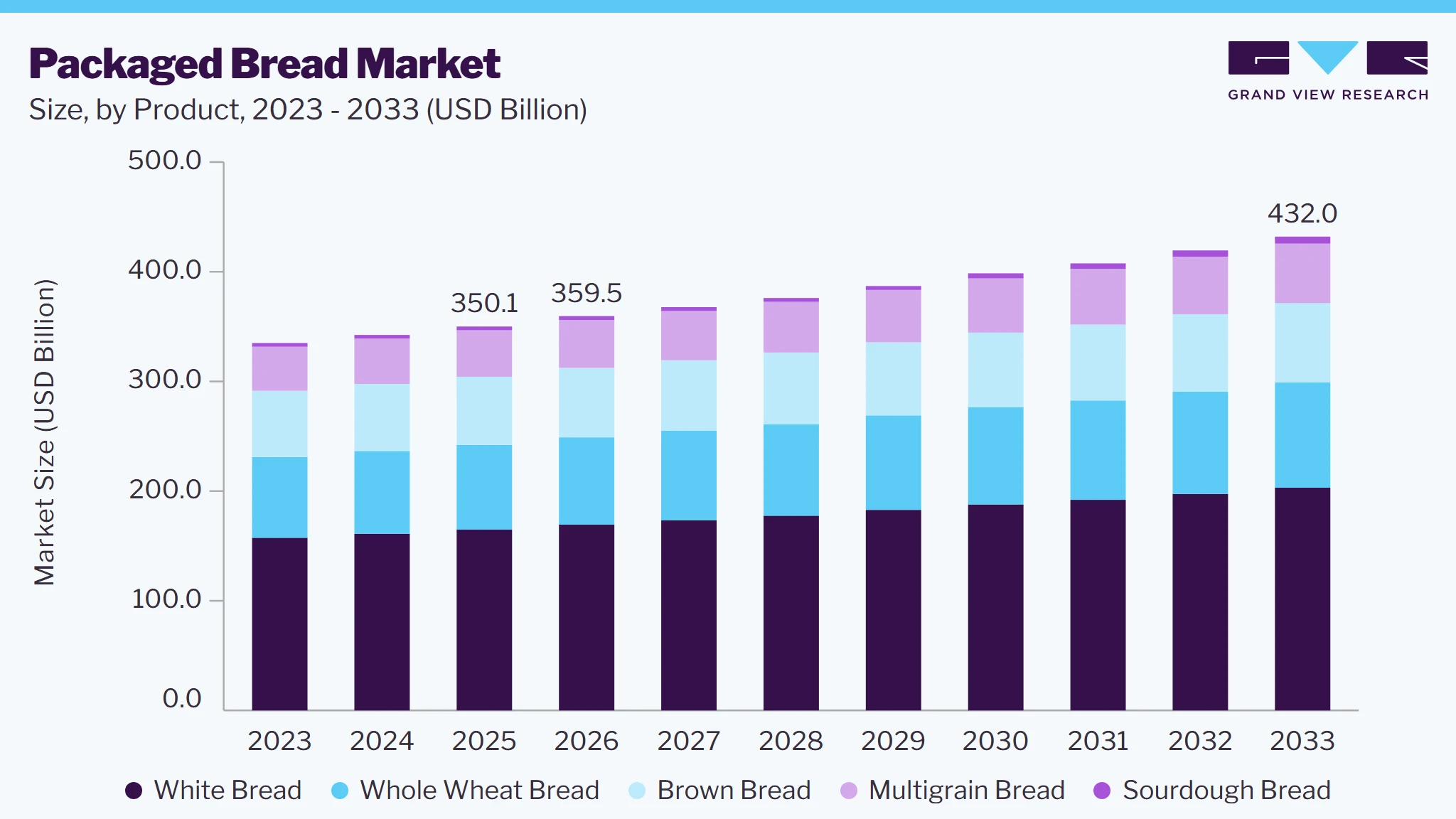
The global packaged bread market size was valued at USD 350.1 billion in 2025 and is projected to grow from USD 359.5 billion in 2026 to USD 432.0 billion by 2033, at a CAGR of 2.7% from 2026 to 2033. Europe market dominated, with a revenue share of 35.7% in 2025. This growth is expected to be driven by factors such as health trends, improved product offerings, technological advancements, and sustainability concerns.
 Source: Grand View Research, IR Documents, Primary Interviews, Paid DatabasesTo learn more about this report,
 Download Free Sample Report
Key Market Trends & Insights
- By product: White bread segment led the market with the largest revenue share of 47.0% in 2025.
- By packaging: Plastic packaging segment led the market with the largest revenue share of 52.8% in 2025.
- By distribution channel: Specialty stores segment led the market with the largest revenue share of 35.0% in 2025.
Regional Highlights
- Largest regional market: Europe (35.7% revenue share, 2025)
- Fastest-growing regional market: Asia Pacific (highest CAGR, 2026-2033)
- By country: Germany held the largest market share in 2025.
Market Size & Forecast
- Market size in 2025: USD 350.1 Billion
- Estimated market size in 2026: USD 359.5 Billion
- Projected market size by 2033: USD 432.0 Billion
- CAGR (2026-2033): 2.7%
Prism AI by Grand View Research Free to tryAsk a question about the packaged bread marketTry asking✓Every figure cited from GVR research Prefer the report? Download free sample →There is a significant shift towards health-conscious choices among consumers, with increasing demand for nutrient-rich and organic products. Options such as whole grain, multigrain, and gluten-free bread are gaining popularity as consumers seek healthier alternatives. The rise in health issues such as obesity is prompting a shift towards lower-carb and higher-protein bread options, aligning with dietary trends such as keto and low-carb diets.
Increasing urbanization is a crucial driver for market growth; as more people move to urban areas, the demand for convenient food options rises. Packaged bread offers a quick and easy meal solution for busy lifestyles, appealing to urban consumers who prioritize convenience. This, coupled with busy lifestyles and a growing trend towards on-the-go meals, has led consumers to favor packaged bread, which provides a longer shelf life and ease of use.
 To learn more about this report, Download Free Sample Report
The availability of wider varieties of bread has also increased market penetration. Demand for newer bread products such as baguettes, rolls, and sandwich bread has fueled packaged bread production. This variety caters to household consumption and B2B sectors such as quick-service restaurants (QSRs) and cafes.
Advancements in packaging technology have made bread a suitable option for consumers looking for products with longer shelf life. Innovations in baking technology and packaging solutions enhance product freshness and longevity, making packaged bread more appealing to consumers. For instance, long-life packaging is increasingly popular in markets such as Asia because it prevents spoilage.
Market Dynamics
The packaged bread market is maintaining stable growth, supported by evolving consumption patterns, rising demand for product consistency, and increasing preference for convenient staple food products. Manufacturers are focusing on portfolio diversification, ingredient enhancements, and premium product positioning to address changing consumer expectations. Continued innovation across product formulations and packaging solutions is expected to support market expansion over the forecast period.
The increasing demand for ready-to-consume food items is supporting packaged bread consumption across households. Consumers are seeking products that offer convenience, consistency, and nutritional value, encouraging manufacturers to expand offerings such as whole wheat, multigrain, and fortified bread varieties.
Packaged bread manufacturers face challenges associated with product freshness, preservation requirements, and fluctuating prices of key inputs including wheat, energy, and packaging materials. These factors can influence production efficiency and pricing strategies across the value chain.
Growing interest in balanced nutrition is creating opportunities for bread formulated with whole grains, seeds, fiber enrichment, and clean-label ingredients. Product differentiation through functional benefits, premium positioning, and innovative recipes is enabling manufacturers to address evolving consumer preferences and strengthen market presence.
Analyst Perspective
The packaged bread market is experiencing stable growth, supported by consistent consumer demand for convenient, affordable, and ready-to-consume bakery products. Increasing preference for healthier bread variants such as whole wheat, multigrain, and sourdough is encouraging product diversification, while expanding retail and online distribution networks continue to strengthen market accessibility. Manufacturers are focusing on nutritional enhancement, product innovation, and operational efficiency to maintain competitiveness and capture evolving consumer preferences.
Product Insights
Based on product, the white bread segment led the market with the largest revenue share of 47.0% in 2025. White bread is favored for its convenience, soft texture, and versatility in various packagings such as sandwiches, toasts, and breakfast items. This makes it a staple in many households, appealing to busy consumers seeking quick meal solutions. The longer shelf life of white bread compared to other products makes it a practical choice for consumers, reducing food waste and ensuring availability. White bread is generally more affordable than specialty breads, making it accessible to a wider range of consumers. This affordability drives its popularity among budget-conscious shoppers.
A key concern with white bread is the increasing nutritional scrutiny. Increasing health consciousness among consumers has led to declining demand for traditional white bread, as many seek healthier alternatives such as whole grain, multigrain, and gluten-free options. This shift is driven by concerns over high carbohydrate content and gluten intolerance, which negatively impact white bread sales. Having said this, manufacturers continue to innovate within the white bread segment by introducing fortified options that appeal to health-conscious consumers. This includes adding vitamins and minerals to enhance nutritional value.
Multigrain breads are expected to grow at a CAGR of 3.1% from 2025 to 2033, predominantly due to their perceived health benefits over white bread. Multigrain bread can offer several advantages over white bread when made with the right ingredients. It typically contains more fiber, which aids digestion and helps maintain stable blood sugar levels. Many multigrain breads have a lower glycemic index (GI) than white bread. A lower GI means that multigrain bread raises blood sugar levels more slowly, making it a better option for individuals with diabetes or those looking to manage their blood sugar levels. Multigrain bread often includes a variety of grains, such as oats, barley, and flaxseeds, which provide essential vitamins, minerals, and antioxidants. These nutrients contribute to overall health.
Sourdough breads are expected to grow at a CAGR of over 6% from 2025 to 2033. There is a growing awareness among consumers about the health benefits of sourdough bread, including its easier digestibility, lower glycemic index, and higher nutritional value compared to conventional bread. This trend is evident in North America and Europe, where consumers increasingly opt for healthier food options. The rise in demand for artisanal and authentic food products has fueled interest in sourdough. Consumers seek unique flavors and textures from traditional sourdough, contributing to its popularity as a premium product in bakeries and home baking.
Packaging Insights
Based on packaging, the plastic packaging segment led the market with the largest revenue share of 52.8% in 2025. The biggest driver for plastic packaging was its ability to prevent spoilage due to moisture. Plastic packaging creates an airtight barrier that helps retain moisture and prevents bread from drying. This extends the shelf life of bread, keeping it fresh for more extended periods compared to other materials such as paper, which can allow moisture loss and staleness. Plastic is known for its durability, providing a solid protective layer that can withstand handling, transportation, and environmental factors without compromising the integrity of the bread. This reduces the risk of damage during distribution.
Another critical advantage of plastic packaging is it's lightweight, which makes it cheaper to transport. This not only reduces shipping costs but also minimizes the carbon footprint associated with transportation. While plastics have environmental concerns, numerous products of plastic used in food packaging can be recycled. Companies are trying to improve recycling rates and develop more sustainable solutions for plastic food packaging.
Paper is one of the fastest-growing forms of packaging for bread and is expected to grow at a CAGR of 2.7% over the forecast period. Paper bags are increasingly used for bread packaging due to several advantages catering to consumer preferences and environmental considerations. Paper bags allow air circulation, which helps maintain the crustiness of freshly baked bread. This prevents moisture accumulation that can lead to mold growth, ensuring that the bread retains its desirable texture and flavor. With increasing consumer focus on sustainability, paper bags are often considered an eco-friendly alternative to plastic. They are compostable and biodegradable, breaking down faster in landfills than plastic bags, which can take hundreds of years to decompose. In addition, paper bags are easier to recycle if they are not heavily contaminated with food residues.
Cost-effectiveness is another essential facet of paper packaging. Paper is generally more affordable than plastic alternatives, making it a preferred choice for bakeries and food businesses. Its widespread availability also contributes to lower costs. Consumer preference associated with paper packaging also plays an essential role in promoting market growth. Many consumers associate paper packaging with freshness and quality, often preferring it over plastic for bakery items. Paper bags have a rustic and traditional feel that can enhance the overall customer experience.
Distribution Insights
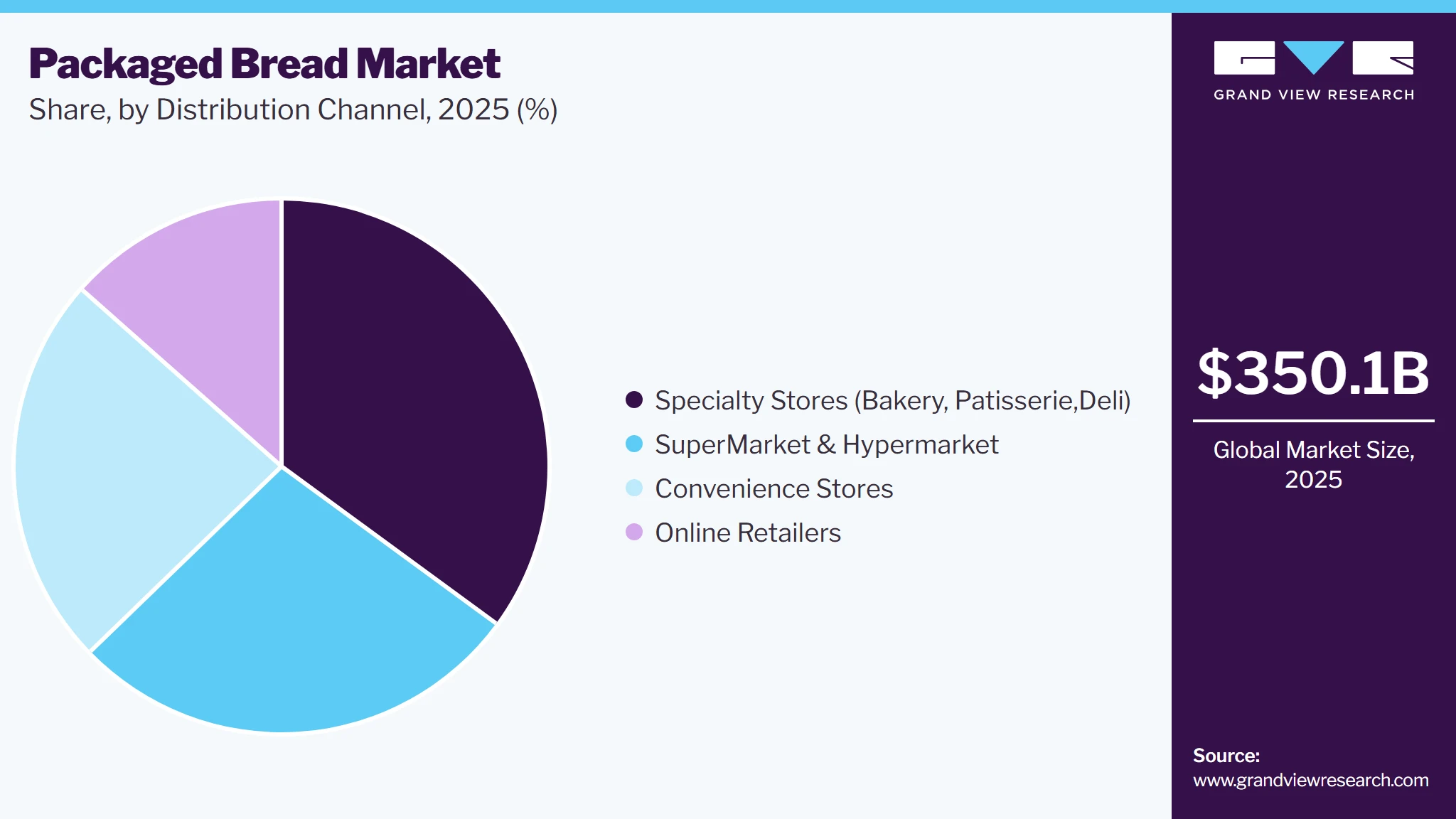
Based on distribution channel, the specialty stores segment led the market with the largest revenue share of 35.0% in 2025. There is a growing preference for artisanal breads, particularly sourdough, which has become a staple in many specialty stores. Sourdough accounts for a significant share of specialty loaves due to its perceived health benefits and unique flavor profile. Other specialty flavors such as olive and cheese-infused breads are also seeing strong growth.
 To learn more about this report, Download Free Sample Report
The convenience & customization offered by bakeries is expected to remain an important market driver in the near future. With busy lifestyles, consumers are looking for convenient options that do not compromise quality. Specialty stores have responded by offering smaller loaves, half loaves, and customizable bread options, including subscription services where consumers can select their preferred products of bread. This, coupled with expanding flavor profiles of bread in bakeries, is expected to promote market growth.
Regional Insights
The North America packaged bread market is predominantly driven by the health conscious consumer perspective in the U.S. The U.S. packaged bread market was estimated at USD 35 billion in 2023 and is expected to grow at a CAGR of 2% over the forecast period. There is a significant shift toward products beneficial for health, with consumers increasingly favoring organic, gluten-free breads made with whole grains. This trend is partly driven by rising obesity rates and health issues in the U.S.
The market is seeing increased demand for various products of bread, including smaller loaves and those enriched with grains such as quinoa. Specialty breads such as cornbread and biscuits are also gaining popularity in regions such as the Southeast. Busy lifestyles push consumers toward packaged bread due to its convenience and longer shelf life. The pandemic further accelerated this trend, as many turned to packaged options for stability during uncertain times. These factors are expected to keep a stable demand for packaged bread in the U.S.
Europe Packaged Bread Market Trends
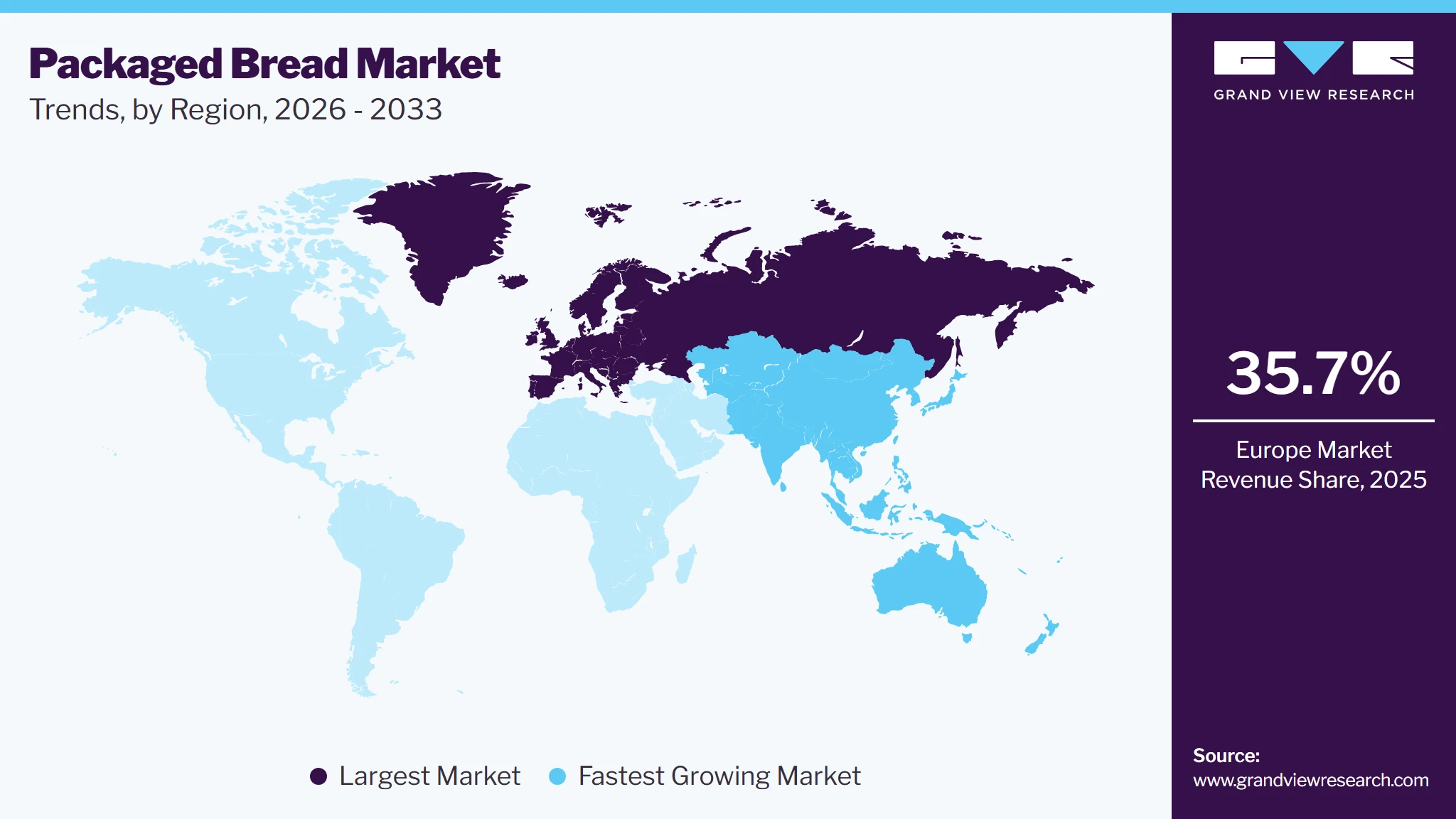
Europe dominated the packaged bread market with the largest revenue share of 35.7% in 2025. It is expected to grow at a CAGR of 2.2% over the forecast period. Bread is a staple food across many European countries and is a part of their daily diet. This popularity sustains demand for various products of packaged bread, reinforcing its market position in the near future.
 To learn more about this report, Download Free Sample Report
The packaged bread market in the Germany held the largest share in the Europe region in 2025. Germany packaged bread market dominated the European region due to its strong baking culture and diverse product offerings. France follows closely, known for its artisanal bread and pastries, while Italy emphasizes quality bread varieties. The fast-paced lifestyle of many Germans has led to a preference for convenience foods. Packaged bread offers quick solutions, appealing to busy families and individuals. The rise of e-commerce has further facilitated access to these products, allowing consumers to shop online for their preferred bread options.
Asia Pacific Packaged Bread Market Trends
Asia Pacific is expected to remain the fastest-growing market for packaged bread over the forecast period, with a CAGR of 3%. The rise of convenience food in countries such as China and India has heightened demand for ready-to-eat products. The growing acceptance of western dietary habits, particularly in countries such as China and India, influences bread consumption patterns. This shift includes an increased preference for various bread products, including sandwich bread and burger buns.
Key Packaged Bread Company Insights
Regional and emerging players characterize the global packaged bread market. The competitive landscape of the packaged bread industry is dynamic and evolving, driven by innovation, changing consumer preferences, and increased competition from private-label brands. Major players focus on health-oriented products while expanding their distribution networks to maintain market share.
Key Packaged Bread Companies:
The following key companies have been profiled for this study on the packaged bread market.
-
Grupo Bimbo
-
Flowers Foods, Inc.
-
Associated British Foods
-
Dan Cake
-
Barilla Group
-
General Mills, Inc.
-
Kraft Heinz Company
-
Yamazaki Baking Co., Ltd.
-
PepsiCo, Inc.
-
Almarai
-
Interstate Bakeries Corporation
-
CSM Bakery Solutions
-
Aryzta AG
Competitive Benchmarking
Category
Operating Strategies
Competitive Edge
Weakness
Established Players (Grupo Bimbo S.A.B. de C.V.; Flowers Foods, Inc.; Associated British Foods PLC; Barilla Group; General Mills, Inc.; Kraft Heinz Company; Yamazaki Baking Co., Ltd.; PepsiCo, Inc.; Almarai)
- Expand packaged bread portfolios through whole wheat, multigrain, sourdough, and health-focused product innovations.
- Strengthen market penetration through extensive retail distribution networks, strategic partnerships, and investments in production capacity.
- Strong brand recognition and established consumer trust across key markets.
- Large-scale production capabilities with broad distribution networks.
- High operational and supply chain management costs.
- Slower adaptation to changing consumer preferences due to large organizational structures.
Emerging Players (Dan Cake; Interstate Bakeries Corporation; CSM Bakery Solutions; Aryzta AG)
- Focus on premium, specialty, and artisanal packaged bread offerings targeting niche consumer segments.
- Expand presence through private-label manufacturing, foodservice partnerships, and regional market expansion initiatives.
- Greater flexibility to respond to evolving consumer trends and preferences.
- Ability to differentiate through unique flavors and specialty products.
- Limited financial resources compared to multinational competitors.
- Lower brand awareness and restricted distribution reach in some markets
Recent Developments
-
In April 2023, La Brea Bakery launched a plant-based brioche bun tailored for the food service sector. This product features a distinctive buttery taste and delicate crumb texture, aligning with the growing demand for plant-based options.
-
In 2022, Moulins Dumée's Chanvrine launched a flour blend incorporating hemp, designed for bakeries looking to enhance their offerings with higher protein and fiber content.
Packaged Bread Market Report Scope
Report Attribute
Details
Market size in 2025
USD 350.1 billion
Estimated market size in 2026
USD 359.5 billion
Projected market size by 2033
USD 432.0 billion
Growth rate
CAGR of 2.7% from 2026 to 2033
Base year for estimation
2025
Historical data
2021 - 2024
Forecast period
2026 - 2033
Quantitative units
Revenue in USD million/billion and CAGR from 2026 to 2033
Report coverage
Revenue forecast, company ranking, competitive landscape, growth factors, and trends
Segments covered
Product, packaging, distribution channel, region
Regional scope
North America; Europe; Asia Pacific; Central & South America and Middle East & Africa.
Country scope
U.S.; Canada; Mexico; Germany; France; UK; Italy; Spain; China; Japan; India; South Korea; Australia; Brazil; and South Africa
Key companies profiled
Grupo Bimbo S.A.B. de C.V.; Flowers Foods, Inc.; Associated British Foods PLC; Dan Cake; Barilla Group; General Mills, Inc.; Kraft Heinz Company; Yamazaki Baking Co., Ltd.; PepsiCo, Inc.; Almarai; Interstate Bakeries Corporation; CSM Bakery Solutions; Aryzta AG
Customization scope
Free report customization (equivalent up to 8 analysts' working days) with purchase. Addition or alteration to country, regional & segment scope.
Pricing and purchase options
Avail customized purchase options to meet your exact research needs. Explore purchase options
Global Packaged Bread Market Report Segmentation
This report forecasts revenue growth at the global, regional, and country levels and provides an analysis of the latest industry trends and opportunities in each of the sub-segments from 2021 to 2033. For the purpose of this study, Grand View Research has segmented the global packaged bread market report on the basis of product, packaging, and region.
 To learn more about this report, Download Free Sample Report
-
Product Outlook (Revenue, USD Billion, 2021 - 2033)
-
White Bread
-
Brown Bread
-
Whole Wheat Bread
-
Multigrain Bread
-
Sourdough Bread
-
-
Packaging Outlook (Revenue, USD Billion, 2021 - 2033)
-
Plastic Bags
-
Biodegradable Packaging
-
Paper Bags
-
Reusable Containers
-
-
Distribution Outlook (Revenue, USD Billion, 2021 - 2033)
-
Supermarket & Hypermarket
-
Convenience Stores
-
Specialty Stores (Bakery, Patisserie, Deli)
-
Online Retailers
-
-
Regional Outlook (Revenue, USD Billion, 2021 - 2033)
-
North America
-
U.S.
-
Canada
-
Mexico
-
-
Europe
-
Germany
-
UK
-
France
-
Italy
-
Spain
-
-
Asia Pacific
-
China
-
Japan
-
India
-
Australia & New Zealand
-
South Korea
-
-
Central & South America
-
Brazil
-
-
Middle East & Africa
-
South Africa
-
-
Research Methodology
The packaged bread market figures in this report are based on a proven research process that combines executive interviews with secondary research from proprietary databases, company filings, and recognized regulatory and institutional sources. Market size is built through value-chain sizing-reconciling supply-side and demand-side estimates-and triangulated with bottom-up and top-down approaches. Every estimate passes multiple levels of expert validation before publication, with each packaged bread segment quantified using the revenue-capture definitions in the table below.
Segment Definition -
Segment - Product
Revenue capture definition
White Bread
This segment includes the sales of packaged white bread products manufactured primarily from refined wheat flour, offering a soft texture and broad consumer appeal for everyday consumption.
Brown Bread
This segment includes the sales of packaged brown bread products formulated with wheat bran or blended flour ingredients, positioned as a fiber-enriched alternative to conventional white bread.
Whole Wheat Bread
This segment includes the sales of packaged whole wheat bread products produced using whole grain flour, catering to consumers seeking nutritionally balanced bakery options.
Multigrain Bread
This segment includes the sales of packaged multigrain bread products containing a combination of grains and seeds, providing enhanced texture, flavor, and nutritional diversity.
Sourdough Bread
This segment includes the sales of packaged sourdough bread products prepared through natural fermentation processes, valued for their distinctive taste, texture, and artisanal positioning.
Estimation Model
Layer
Key Question
Description
Consumer Demand Layer
Who regularly consumes packaged bread products?
Identify the target consumer base, including urban households, working professionals, students, families, and consumers seeking convenient breakfast and snack solutions. Rising demand for ready-to-eat bakery products supports market expansion.
Retail Availability Layer
Who can conveniently access packaged bread products?
Assess penetration across supermarkets, hypermarkets, convenience stores, bakeries, and online grocery platforms. Expanding organized retail networks improve product accessibility and visibility.
Health & Preference Layer
Who actively chooses packaged bread over alternatives?
Evaluate consumers purchasing whole wheat, multigrain, brown, fortified, and specialty bread products. Increasing preference for healthier ingredients, whole grains, and quality-focused bakery offerings continues to drive consumer purchase decisions.
Monetisation Layer
How much revenue is generated?
Estimate revenue by combining active consumers with average spending across product variants, retail formats, and premium bread categories, including value-added and specialty offerings.
Delivered Customizations
This report has been delivered with the following In-depth customizations
Client Request
Customization Delivered
Value Adds
Cross-Segmentation Analysis for Packaged Bread Products Across Distribution Channels
Detailed assessment of packaged bread products including white bread, brown bread, multigrain bread, whole wheat bread, and sourdough bread across supermarkets & hypermarkets, convenience stores, specialty stores (bakery, patisserie, deli), and online retail channels.
Identifies high-growth product-channel combinations, supports portfolio optimization, highlights evolving consumer purchasing patterns, and uncovers distribution expansion opportunities.
Value Chain Analysis
Comprehensive evaluation of the packaged bread value chain covering raw material sourcing, ingredient procurement, production, packaging, storage, logistics, retail distribution, and e-commerce fulfillment. Analysis assesses operational efficiencies, supply chain integration, cost structures, and key value creation points.
Supports supply chain optimization, improves operational efficiency, identifies cost-saving opportunities, strengthens distribution strategies, and enhances market competitiveness through effective value chain management.
Company Share Analysis
Detailed assessment of key packaged bread market participants, including market share, product portfolio strength, manufacturing capabilities, distribution network presence, brand positioning, and competitive strategies within the packaged bread market.
Enables competitive benchmarking, identifies market leaders, supports strategic planning, and provides actionable insights for market positioning, investment decisions, and expansion strategies.
Frequently Asked Questions About This Report
Specialty stores segment led the market with the largest revenue share of 35.0% in 2025.
Key players include Grupo Bimbo S.A.B. de C.V.; Flowers Foods, Inc.; Associated British Foods PLC; Dan Cake; Barilla Group; General Mills, Inc.; Kraft Heinz Company; Yamazaki Baking Co., Ltd.; PepsiCo, Inc.; Almarai; Interstate Bakeries Corporation; CSM Bakery Solutions; Aryzta AG
Europe market dominated, with a revenue share of 35.7% in 2025.
Asia Pacific is the fastest growing regional market.
Plastic packaging segment led the market with the largest revenue share of 52.8% in 2025.
The global packaged bread market size was valued at USD 350.1 billion in 2025 and is estimated at USD 359.5 billion in 2026.
The global packaged bread market is expected to grow at a CAGR of 2.7% from 2026 to 2033, reaching USD 432.0 million by 2033.
White bread segment led the market with the largest revenue share of 47.0% in 2025.
Growing demand for convenient breakfast options, busy lifestyles, urbanization, product innovation, and increasing preference for ready-to-eat bakery products globally.
About the Author(s)
Consumer F&B Research Team
Consumer Goods · Consumer F&BThis report was authored by the consumer f&b research team at Grand View Research - comprising two research analysts, one senior research analyst, and one industry expert - with specialized expertise in the consumer f&b segment of the consumer goods industry. All findings are based on proprietary consumer goods databases, executive interviews, and regulatory analysis, subject to internal peer review prior to publication.
Last Updated:
Speak to Analyst

Customize this report to your needs - add regions, segments, or data points, with 20% free customization.
Or view our licence options:


ISO 9001:2015 & 27001:2022 Certified
We are GDPR and CCPA compliant! Your transaction & personal information is safe and secure. For more details, please read our privacy policy.


