
- Home
- »
- Pharmaceuticals
- »
-
Parenteral Analgesics Market Size And Share Report, 2033GVR Report cover

Parenteral Analgesics Market (2026 - 2033)
Size, Share & Trends Analysis Report By Drug Class (Opioid Analgesics, Non-Opioid Analgesics), By Route Of Administration, By Application, By End User, By Region, And Segment Forecasts
Market Size, 2025
$5.0BMarket Estimate, 2026
$5.2BMarket Forecast, 2033
$7.5BCAGR, 2026–2033
5.4%Parenteral Analgesics Market Summary
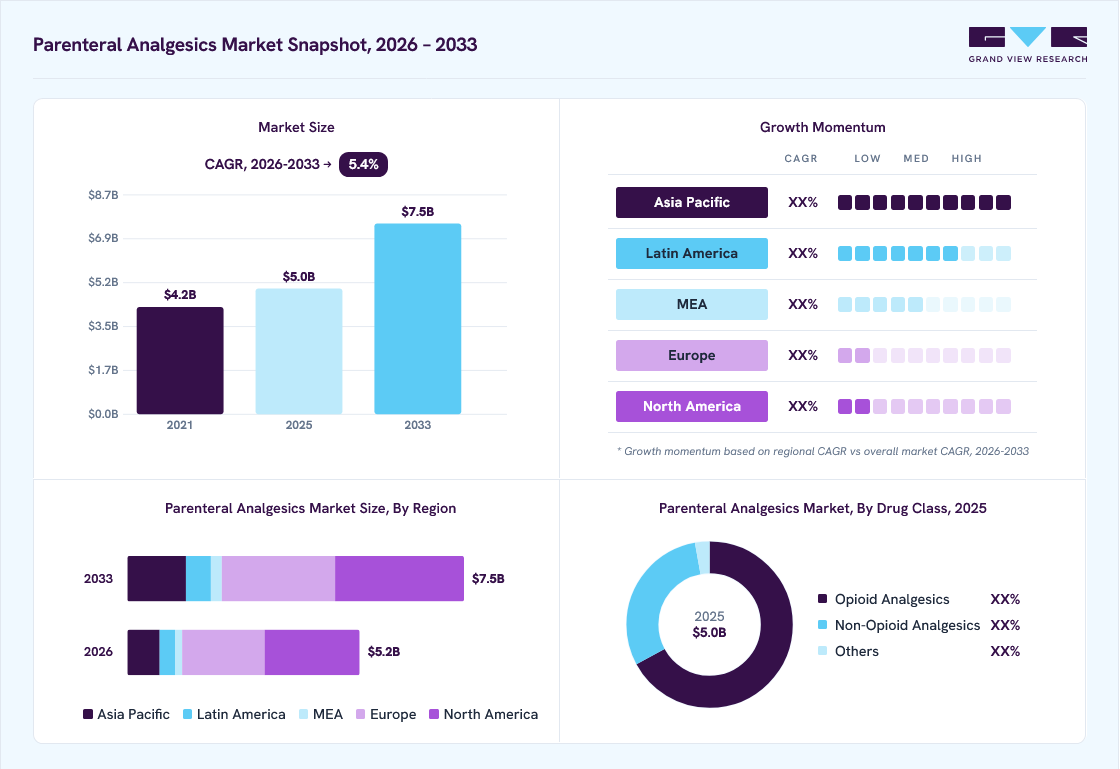
The global parenteral analgesics market size was valued at USD 5.0 billion in 2025 and is projected to grow from USD 5.2 billion in 2026 to USD 7.5 billion by 2033, at a CAGR of 5.4% from 2026 to 2033. North America dominated the market, accounting for a revenue share of 41.2% in 2025. The market growth is driven by the rising demand for pain management in surgical procedures, post-operative recovery, and emergency departments.
 Source: Grand View Research, IR Documents, Primary Interviews, Paid DatabasesTo learn more about this report,
 Download Free Sample Report
Key Market Trends & Insights
- By drug class: Opioid analgesics segment held the largest market share of 67.0% in 2025.
- By route of administration: Intravenous (IV) segment held the largest market share of 67.0% in 2025.
- By application: Acute pain segment held the largest market share in 2025.
- By end user: Hospitals segment held the largest market share in 2025.
Regional Highlights
- Largest regional market: North America (41.2% revenue share, 2025)
- Fastest-growing regional market: Asia Pacific (fastest CAGR, 2026-2033)
- By country: The U.S. held the largest market in 2025.
Market Size & Forecast
- Market size in 2025: USD 5.0 Billion
- Estimated market size in 2026: USD 5.2 Billion
- Projected market size by 2033: USD 7.5 Billion
- CAGR (2026-2033): 5.4%
Three ways to get this report
Buy it, customize it, or ask a question.Ask an Analyst
Analyst response in 1 business day
- AccessReport author, directly
- Reply timeWithin 1 working day
- No sales callDirect answer only
- FormatEmail reply
- CostFree, no cost
Get the Full Report
What the study covers
- FormatsPDF · Excel · Dashboard
- Timeline2026–2033 annual, 2025 base
- Coverage20+ countries, 5 regions
- Companies10+ key players profiled
Customize the Report
20% free customization
- IncludeCountries, segments, points
- TailorTo your product definition
- ExtendDeeper competitor detail
- OrA fully bespoke study
- Turnaround5–10 working days
The parenteral analgesics industry comprises injectable medicines used to manage pain when rapid relief is required or oral administration is unsuitable. These medicines are administered mainly through intravenous, intramuscular, and subcutaneous routes in hospitals and other clinical care settings. The market includes opioid analgesics, non-opioid analgesics, and other injectable medicines used for pain control. Product selection depends on the cause and severity of pain, the patient’s clinical condition, the required onset of action, and the duration of treatment. Parenteral analgesics are used in emergency care, surgery, post-operative recovery, and the management of pain associated with certain acute and chronic conditions. Hospitals remain an important point of use because injectable pain medicines require clinical assessment, dose selection, administration, and monitoring. Demand is also linked to surgical activity, emergency admissions, and access to healthcare services that provide supervised pain management, including recovery and critical care units.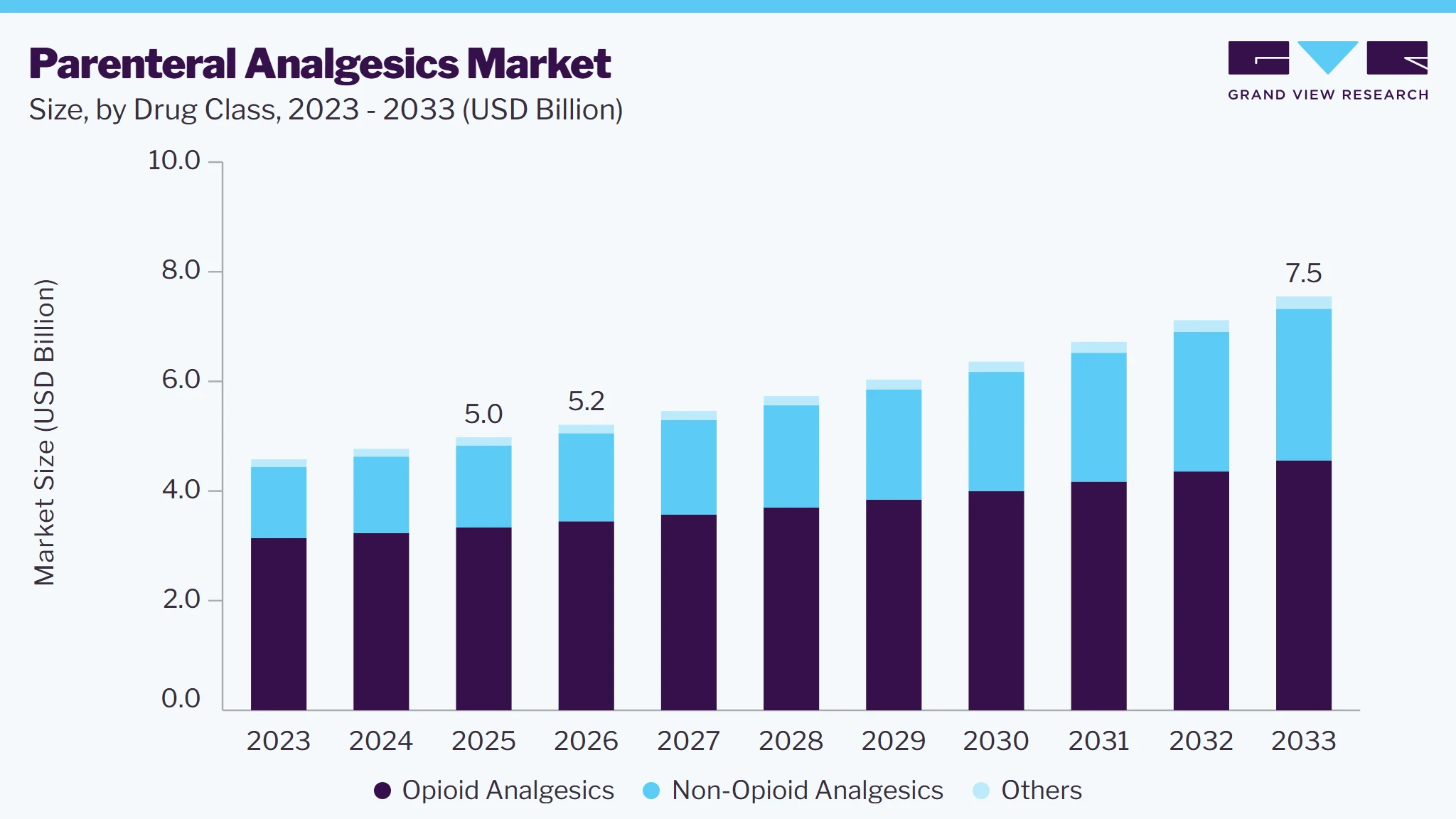 To learn more about this report, Download Free Sample Report
Acute pain management is an important area of use, particularly after surgery, trauma, and during emergency treatment. Injectable medicines are also used when patients cannot take oral medicines or when a controlled dose is required under clinical supervision. Chronic pain treatment is more varied, and parenteral analgesics are generally used for selected clinical needs rather than as a routine option for every patient with persistent pain. The wider burden of pain supports the need for effective treatment, although not all people experiencing pain require injectable medicines. Treatment decisions depend on the underlying condition, patient response, safety considerations, and the availability of alternative pain management options. Multimodal pain management, which combines medicines with different mechanisms of action, also supports the use of selected injectable analgesics in surgical and hospital care.
Market demand is shaped by clinical guidelines, product availability, hospital purchasing practices, medicine prices, and national rules for controlled substances. Opioid analgesics remain relevant for severe pain, but their use requires attention to dosage, adverse effects, dependence risks, and prescribing controls. Non-opioid injectable medicines provide options for selected pain management needs and can be used as part of multimodal treatment, depending on the patient and procedure. Manufacturers compete through product range, supply reliability, regulatory compliance, and relationships with hospitals and distributors. Shortages of active ingredients or finished injectable products can affect access, while sterile manufacturing requirements and quality controls influence production and supply. The market also differs across regions because healthcare infrastructure, surgical services, reimbursement policies, and access to pain specialists vary. Demand will depend on clinical need, safe prescribing, product supply, and the availability of injectable analgesics within hospital care.
Market Dynamics
The growing need for pain management in surgical procedures, emergency departments, and post-operative recovery supports demand for parenteral analgesics. Injectable medicines are used when patients require prompt pain relief or cannot take oral medicines. Hospitals use opioid and non-opioid analgesics according to the severity of pain, the patient's medical condition, and the required level of pain control. The use of multimodal analgesia, which combines medicines with different mechanisms of action, also supports the role of injectable non-opioid medicines in selected clinical situations. This approach helps healthcare professionals manage pain while considering the risks associated with opioid use. Surgical procedures, trauma cases, and hospital admissions remain important sources of demand, particularly where patients require supervised medicine administration. Demand also depends on the availability of injectable formulations, hospital procurement practices, and clinical guidelines. Manufacturers that supply a range of injectable analgesics can serve different treatment requirements across hospital departments. However, the selection of injectable medicines remains dependent on clinical need, patient safety, and the availability of suitable alternatives.
The risks associated with opioid analgesics restrict their use in certain patient groups and clinical situations. Injectable opioids are used to manage severe pain, including post-operative pain and pain associated with major injuries, but they require careful dose selection and patient monitoring. Adverse effects such as respiratory depression, sedation, nausea, and constipation can affect treatment decisions. The risk of misuse, dependence, and overdose also requires healthcare professionals to follow prescribing requirements and monitor patients during treatment. These considerations can limit opioid use when non-opioid medicines or other pain management options are suitable. Regulatory requirements for controlled substances also affect manufacturing, distribution, storage, recordkeeping, and dispensing. Hospitals must maintain procedures that support appropriate prescribing and prevent unauthorized access to these medicines. In addition, the need for trained healthcare professionals and monitoring facilities can restrict the use of injectable opioids in some care environments. These factors affect product selection and can increase the operational requirements associated with opioid analgesics. The restraint is particularly relevant to products intended for severe pain that require supervised administration and controlled distribution.
The development and supply of non-opioid injectable analgesics provide an opportunity for manufacturers to address pain management needs while reducing reliance on opioids in suitable patients. Medicines such as intravenous acetaminophen and injectable nonsteroidal anti-inflammatory drugs (NSAIDs) are used for selected acute pain indications and can form part of multimodal analgesia. Their use depends on the patient's condition, contraindications, and the clinical benefits and risks of each medicine. Hospitals may consider these products when developing treatment protocols for post-operative pain and other acute conditions. Generic product approvals also provide opportunities for manufacturers to supply established injectable medicines to hospital procurement channels. Manufacturers can build on this opportunity through product development, regulatory submissions, reliable sterile manufacturing, and supply agreements with hospitals and distributors. The availability of different injectable formulations can support treatment selection based on the type of pain, patient characteristics, and clinical requirements. Companies that maintain consistent product supply and comply with regulatory requirements can serve hospitals seeking non-opioid options for selected pain management needs. However, the use of these medicines remains dependent on clinical suitability, product availability, and established treatment protocols.
Market Characteristics & Concentration
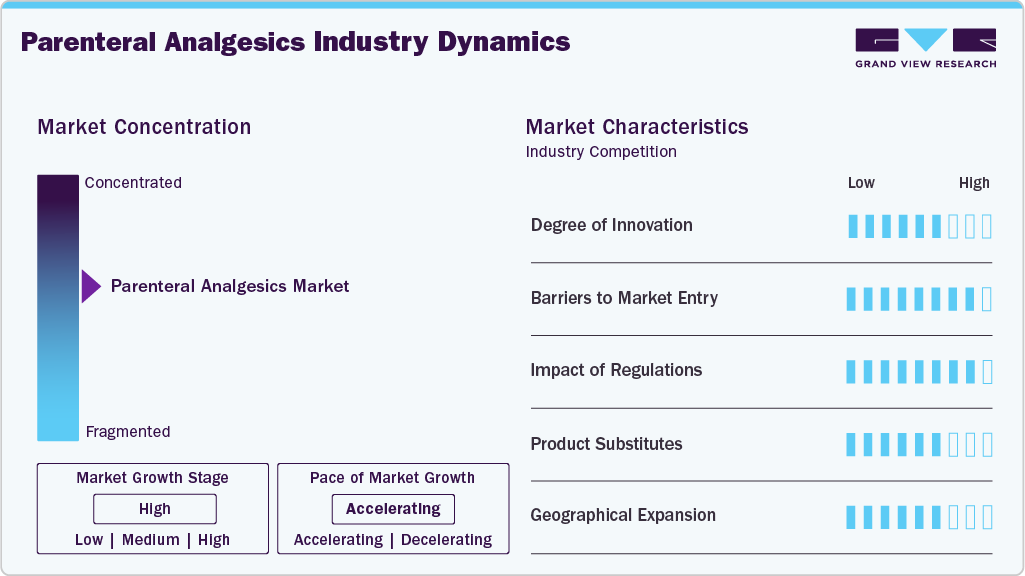
Innovation in the parenteral analgesics market is moderate because much of the product portfolio consists of established medicines, including injectable opioids, acetaminophen, and nonsteroidal anti-inflammatory drugs. Product development focuses on formulation improvements, dosing convenience, drug stability, administration methods, and manufacturing efficiency. Ready-to-administer presentations and premixed formulations can reduce preparation requirements in hospitals and support consistent medicine administration. Research into non-opioid pain management also creates opportunities for products that address pain while reducing reliance on opioids in suitable patients. However, developing new injectable analgesics requires clinical evidence, regulatory review, and investment in sterile manufacturing. Generic manufacturers also focus on developing approved equivalents of existing products. Consequently, innovation is driven by both product development and improvements in formulation and manufacturing processes rather than by frequent changes in established analgesic drug classes.
 To learn more about this report, Download Free Sample Report
Entry barriers in the parenteral analgesics industry are high because injectable medicines require specialized manufacturing processes, sterile production facilities, quality testing, and regulatory approval. Manufacturers must demonstrate product quality, safety, and consistency before supplying hospitals and other healthcare providers. Establishing sterile manufacturing capacity requires investment in equipment, environmental controls, trained personnel, and quality management systems. Products containing controlled substances also require compliance with additional manufacturing, storage, distribution, and recordkeeping requirements. New entrants must establish reliable access to active pharmaceutical ingredients, packaging materials, and distribution channels. Hospital procurement processes can further limit access for companies without an established supply record or approved products. Generic manufacturers also face competition from suppliers with existing production capacity and established customer relationships. These factors make entry difficult for companies without relevant manufacturing experience, regulatory capabilities, and sufficient financial resources.
Regulations have a high impact on the parenteral analgesics market because injectable medicines must meet requirements for product approval, sterile manufacturing, quality control, labeling, and distribution. Regulatory authorities assess the safety, quality, and efficacy of products before granting marketing authorization. Manufacturing facilities must comply with applicable good manufacturing practice requirements, while product testing helps maintain batch consistency and reduce contamination risks. Opioid analgesics face additional controls because of their potential for misuse, dependence, and overdose. These controls affect prescribing, storage, recordkeeping, and distribution. Regulatory requirements differ across countries, increasing the time and resources required to introduce products across multiple markets. Companies must also maintain compliance after approval through quality monitoring and reporting obligations. Changes in regulatory requirements can affect production costs, product availability, and market access for manufacturers supplying hospital injectable medicines.
The market faces moderate substitution pressure from oral analgesics, topical pain medicines, regional anesthesia, and other pain management methods. Oral medicines are commonly used when patients can swallow and do not require injectable administration. Topical products can serve selected localized pain conditions, while regional anesthesia techniques are used for specific surgical procedures and pain management needs. Within the parenteral segment, opioid and non-opioid analgesics can also serve as alternatives in selected clinical situations, depending on pain severity, patient characteristics, and contraindications. However, these options are not interchangeable in every case. Injectable medicines remain important when oral administration is unsuitable or when supervised treatment is required. The extent of substitution depends on clinical guidelines, treatment outcomes, safety considerations, and healthcare professional judgment. Therefore, alternatives can limit demand in certain applications but do not eliminate the need for parenteral analgesics.
Geographical expansion provides moderate growth opportunities for parenteral analgesics manufacturers, particularly in countries where hospital infrastructure, surgical services, and access to injectable medicines continue to develop. Companies can expand through product registrations, distribution agreements, local manufacturing, and partnerships with hospital suppliers. North America and Europe have established healthcare systems and regulatory frameworks, while Asia Pacific offers opportunities linked to expanding healthcare access and pharmaceutical manufacturing capacity. However, market entry requires compliance with country-specific approval procedures, pricing requirements, and distribution rules. Manufacturers must also account for local procurement practices, competition from generic suppliers, and the availability of qualified healthcare professionals. Reliable supply is important because injectable medicines are used in hospitals and emergency care, where interruptions can affect treatment availability. Geographic expansion therefore depends on regulatory readiness, supply chain capacity, local partnerships, and the ability to offer products at prices suitable for healthcare providers.
Analyst Perspective
The parenteral analgesics market is supported by demand for injectable pain medicines in surgical procedures, emergency care, and post-operative recovery. Opioid analgesics hold a leading position due to their use in severe pain management, while non-opioid formulations are gaining demand as part of multimodal pain management. Hospitals remain the primary end users, supported by established clinical infrastructure and supervised medicine administration. Product availability, generic drug competition, regulatory compliance, and the use of injectable analgesics across healthcare facilities will shape market growth.
Drug Class Insights
The opioid analgesics segment dominated the parenteral analgesics industry with a revenue share of 67.0% in 2025, supported by the use of injectable opioids for severe acute pain, post-operative recovery, trauma care, and emergency treatment. Intravenous administration allows healthcare professionals to adjust doses according to patient response and clinical requirements. These medicines are also used when oral administration is unsuitable or controlled pain relief is required. Established clinical use, hospital availability, and the presence of generic manufacturers support demand. In addition, injectable formulations serve patients who require supervised pain management in hospital environments. Hospital procurement practices and the availability of different opioid formulations also support segment demand. However, prescribing controls and the risk of adverse effects require careful monitoring. The continued use of injectable opioids in severe pain management supports their leading position.
The non-opioid analgesics segment is projected to grow at the fastest CAGR of 8.1% during the forecast period, driven by increasing use in multimodal pain management, demand for alternatives to opioids, and wider application in post-operative and acute pain treatment. Hospitals use injectable non-opioid medicines when clinically appropriate to manage pain while limiting opioid exposure. Injectable acetaminophen and nonsteroidal anti-inflammatory drugs (NSAIDs) provide options for selected pain conditions. Their use in surgical recovery and emergency care supports demand across hospital departments. Greater attention to opioid-related adverse effects also supports the use of non-opioid treatment options. Manufacturers can address this demand through generic product development, additional injectable formulations, and reliable supply to hospitals. However, product selection remains dependent on patient characteristics, clinical indications, contraindications, and treatment protocols.
Route of Administration Insights
The intravenous (IV) segment dominated the parenteral analgesics market with a revenue share of 67.0% in 2025, supported by its use in surgical procedures, emergency care, and post-operative pain management. IV administration allows rapid delivery of analgesics into the bloodstream and enables dose adjustment based on patient response. Hospitals use this route when patients cannot take oral medicines or require controlled pain relief. Its use in operating rooms, intensive care units, and emergency departments supports demand. IV formulations also support multimodal pain management through the administration of opioid and non-opioid medicines. Established clinical practices, hospital infrastructure, and the availability of generic injectable products further support segment demand. These factors maintain the role of IV administration in hospital-based pain management.
The subcutaneous (SC) segment is expected to grow at a CAGR of 8.7% during the forecast period, driven by demand for injectable medicines that can be administered into the tissue beneath the skin. This route offers an option when oral administration is unsuitable and intravenous access is not required or readily available. Subcutaneous administration can support pain management in selected palliative care and chronic pain situations, depending on the medicine and clinical protocol. Its use can reduce the need for repeated venous access and support medicine administration outside acute hospital care when appropriate. Product development focused on suitable formulations and dosing options can further support segment growth. However, adoption depends on approved indications, medicine-specific administration requirements, and clinical suitability.
Application Insights
The acute pain segment dominated the parenteral analgesics industry with a revenue share of 76.6% in 2025, supported by demand for pain management during surgery, emergency treatment, trauma care, and post-operative recovery. Injectable analgesics provide an option when patients require rapid pain relief or cannot take oral medicines. Hospitals use opioid and non-opioid formulations according to pain severity, patient condition, and clinical requirements. The need for supervised medicine administration in operating rooms and emergency departments also supports segment demand. Established treatment protocols and the availability of generic injectable products further contribute to product use. In addition, multimodal pain management supports the use of different analgesic classes during recovery. These factors maintain acute pain as a major application of parenteral analgesics across hospital care.
The chronic pain segment is projected to grow at the fastest CAGR of 7.2% during the forecast period, driven by the need for pain management in selected patients with persistent conditions and limited suitability for oral medicines. Injectable analgesics can support treatment when oral administration is difficult or when clinical circumstances require a parenteral route. Demand is also linked to palliative care, specialist pain services, and hospital treatment for patients with complex pain management needs. Subcutaneous administration can provide an option for selected patients when supported by the medicine's approved use and clinical protocol. Greater attention to individualized pain management also supports the use of different treatment options. However, parenteral analgesics are not suitable for all chronic pain conditions, and their use depends on patient assessment, safety considerations, and treatment goals.
End User Insights
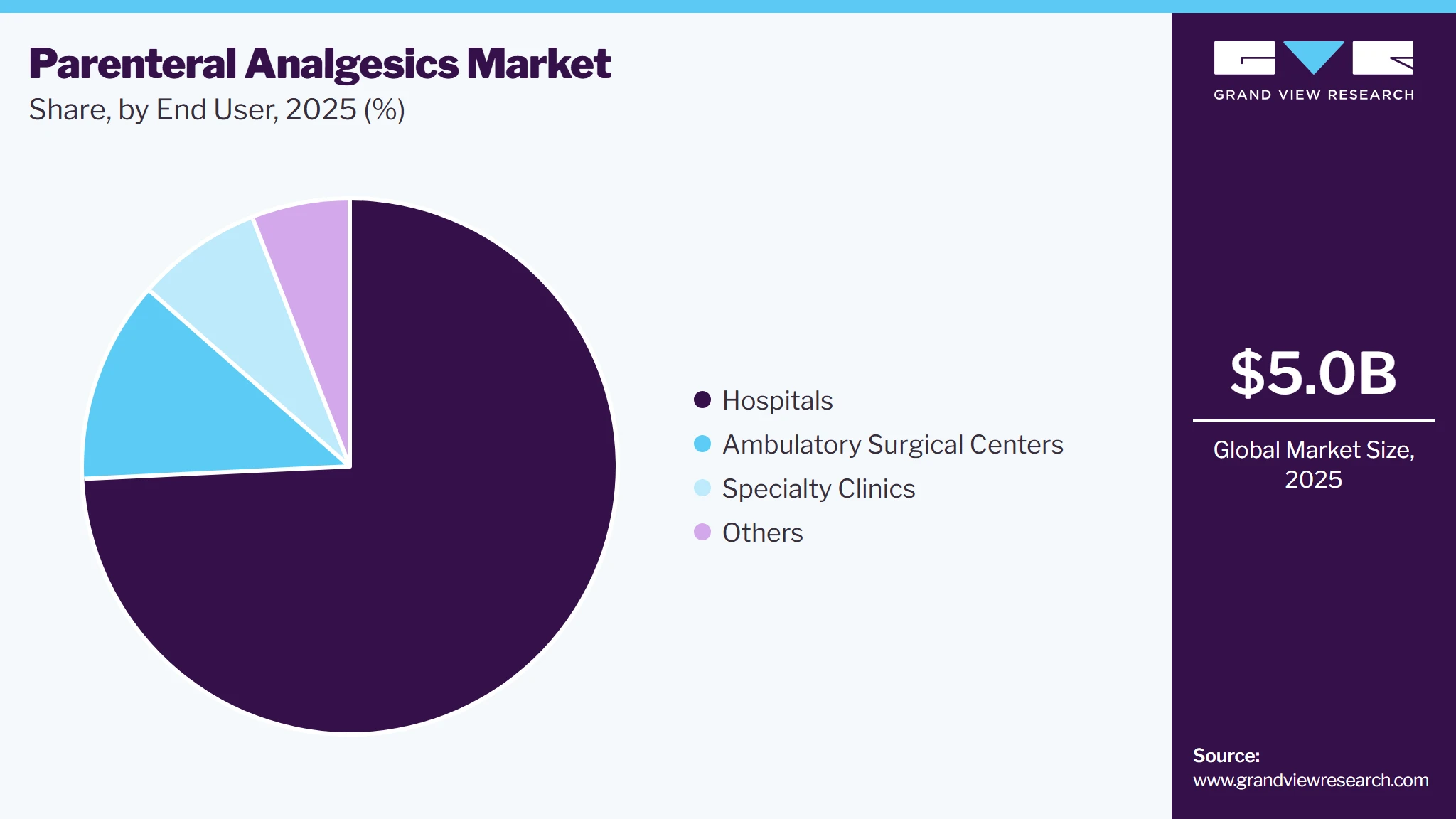
The hospitals segment dominated the parenteral analgesics market with a revenue share of 74.3% in 2025, supported by the use of injectable pain medicines in surgical procedures, emergency care, and inpatient treatment. Hospitals manage patients with severe acute pain who require supervised medicine administration and dose adjustment. The availability of operating rooms, recovery units, and intensive care facilities supports the use of intravenous and other injectable analgesics. Hospitals also treat trauma cases and patients who cannot take oral medicines. Access to opioid and non-opioid formulations allows healthcare professionals to select treatments based on clinical requirements. Established procurement systems and demand for reliable medicine supplies further support segment revenue. In addition, hospital-based monitoring helps manage adverse effects associated with injectable analgesics, supporting their use across different departments.
 To learn more about this report, Download Free Sample Report
The ambulatory surgical centers segment is projected to grow at the fastest CAGR of 8.0% during the forecast period, driven by the growing use of outpatient procedures and the need for pain control during recovery. These centers require injectable analgesics to manage pain during and after surgery, particularly when patients need supervised treatment before discharge. The use of multimodal analgesia supports the selection of opioid and non-opioid medicines according to procedure type and patient needs. Growth in outpatient surgical services also increases the need for medicines that support pain management within shorter care periods. Reliable access to ready-to-administer formulations can help reduce preparation requirements and support clinical workflows. However, product selection depends on approved indications, patient safety, and facility protocols. These factors support demand for parenteral analgesics in ambulatory surgical care.
Regional Insights
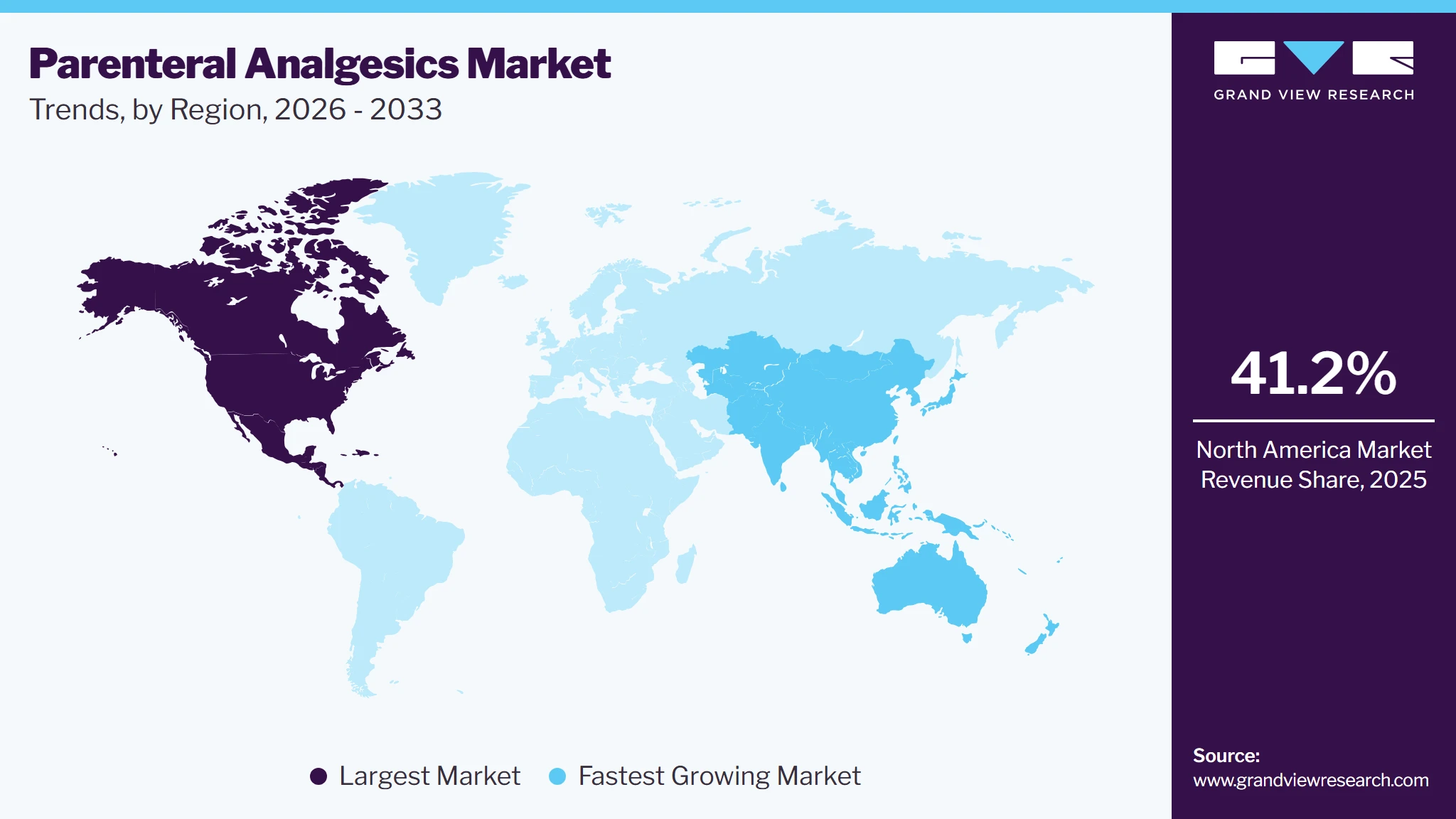
North America dominated the parenteral analgesics market with a revenue share of 41.2% in 2025, supported by established hospital infrastructure, a high volume of surgical procedures, and broad access to injectable medicines. The presence of pharmaceutical manufacturers, including Pfizer Inc., Baxter International Inc., and Mallinckrodt Pharmaceuticals, contributes to product availability across opioid and non-opioid analgesic categories. Demand is supported by the use of injectable pain medicines in emergency care, post-operative recovery, and inpatient treatment. The adoption of multimodal pain management also supports the use of non-opioid injectable formulations. In addition, established pharmaceutical distribution networks and hospital procurement systems support the supply of parenteral analgesics across the region.
 To learn more about this report, Download Free Sample Report
U.S. Parenteral Analgesics Market Trends
The United States is a key contributor to the North America parenteral analgesics industry, due to its large hospital network and established surgical care services. Demand is supported by injectable medicines used in emergency departments, operating rooms, and post-operative recovery units. The presence of pharmaceutical companies and generic injectable drug manufacturers supports product supply across different analgesic classes. Hospitals use intravenous acetaminophen, injectable NSAIDs, and opioid analgesics according to clinical requirements. The use of multimodal pain management also supports demand for non-opioid injectable options. However, opioid safety requirements and competition among generic suppliers influence prescribing and procurement decisions.
Europe Parenteral Analgesics Market Trends
Europe represents an important regional market due to its established healthcare systems, hospital services, and access to prescription injectable medicines. Surgical procedures, emergency treatment, and inpatient care support the use of parenteral analgesics across the region. Demand includes opioid medicines for severe pain and non-opioid formulations for selected acute pain conditions. Pharmaceutical manufacturers and generic drug suppliers contribute to product availability across national markets. Hospital procurement systems and medicine pricing policies influence supplier selection and product purchasing. Differences in national approval procedures, reimbursement practices, and prescribing requirements affect the availability and use of injectable analgesics across European countries.
The United Kingdom parenteral analgesics market is supported by hospital-based surgical care, emergency treatment, and the use of injectable medicines for post-operative pain. Intravenous analgesics are used when patients require supervised pain relief or cannot take oral medicines. Demand includes opioid products for severe pain and non-opioid medicines used in multimodal pain management. Established hospital procurement processes influence product selection and supplier relationships. The use of generic injectable medicines supports purchasing across healthcare facilities. Controlled drug requirements, clinical prescribing guidance, and medicine availability influence the use of parenteral analgesics in the country.
The parenteral analgesics market in Germany benefits from established hospital infrastructure, surgical services, and pharmaceutical manufacturing capabilities. Injectable analgesics are used in operating rooms, emergency departments, and inpatient wards to manage pain associated with surgery, trauma, and other acute conditions. Demand spans opioid and non-opioid formulations selected according to patient needs and treatment protocols. The presence of pharmaceutical manufacturers and generic medicine suppliers supports competition in hospital drug procurement. Sterile manufacturing standards and product quality requirements influence supplier selection. Healthcare purchasing practices, medicine prices, and the availability of approved injectable formulations affect demand across German hospitals.
France's parenteral analgesics market is supported by hospital care, surgical procedures, and the clinical use of injectable medicines for acute pain management. Parenteral analgesics are used during post-operative recovery and emergency treatment when oral administration is unsuitable or insufficient. Opioid formulations serve selected severe pain conditions, while non-opioid medicines provide additional options for multimodal analgesia. Hospital pharmacies play an important role in procurement and product distribution within healthcare facilities. The presence of generic injectable products supports competition among suppliers. Prescribing requirements, medicine safety monitoring, and the availability of approved formulations influence product selection across French healthcare facilities.
Asia Pacific Parenteral Analgesics Market Trends
The Asia Pacific parenteral analgesics industry is projected to grow at the fastest CAGR of 8.9% during the forecast period, supported by expanding hospital capacity and increasing access to surgical services. Growth in emergency care and inpatient treatment supports demand for injectable analgesics across the region. Rising access to pharmaceutical products and local manufacturing capabilities also contribute to product availability. The use of generic injectable medicines provides hospitals with options across different price levels. Demand varies across countries according to healthcare infrastructure, clinical practices, and access to pain management services. Regulatory requirements, sterile manufacturing capacity, and distribution networks remain important factors affecting regional market development.
Japan's parenteral analgesics market is supported by established hospital services, surgical care, and the use of injectable medicines for supervised pain management. Injectable analgesics are used in post-operative recovery and acute care when rapid or controlled pain relief is required. Demand includes non-opioid medicines and opioid formulations selected according to clinical needs. An established pharmaceutical industry supports the supply of approved injectable products. Hospital purchasing practices and product quality requirements influence competition among manufacturers. Prescribing controls, patient safety considerations, and the availability of alternative pain management treatments affect the use of parenteral analgesics.
The parenteral analgesics market in Chinais supported by hospital capacity, surgical treatment, emergency care, and domestic pharmaceutical manufacturing. Injectable medicines are used to manage post-operative pain, trauma-related pain, and other acute conditions requiring supervised treatment. Local manufacturers and generic drug suppliers contribute to the availability of opioid and non-opioid formulations. The development of domestic sterile manufacturing capabilities also supports product supply to healthcare facilities. Demand differs across urban and rural areas due to variations in hospital resources and access to treatment. Product approvals, controlled substance requirements, and hospital procurement practices influence competition and the availability of injectable analgesics.
Latin America Parenteral Analgesics Market Trends
Latin America's parenteral analgesics industry is supported by hospital admissions, surgical procedures, emergency care, and demand for injectable pain management. Public and private healthcare facilities use parenteral medicines for post-operative recovery and acute pain treatment. Generic injectable analgesics offer hospitals options for managing medicine procurement costs. Regional pharmaceutical manufacturers and international suppliers contribute to product availability. Differences in healthcare infrastructure and access to specialized services affect demand across countries. Import dependence, product registration requirements, distribution costs, and supply continuity influence the availability of injectable analgesics throughout the region.
Brazil's parenteral analgesics market is supported by its large healthcare system, surgical services, emergency departments, and hospital-based pain management. Injectable analgesics are used for post-operative recovery, trauma care, and acute pain conditions requiring supervised administration. Opioid and non-opioid medicines serve different treatment needs based on clinical assessment. Domestic pharmaceutical manufacturers and generic drug suppliers contribute to the supply of injectable formulations. Hospital procurement practices and medicine pricing influence product selection. Regulatory requirements, distribution coverage, and differences in healthcare access across regions affect the availability and use of parenteral analgesics.
Middle East & Africa Parenteral Analgesics Market Trends
The MEA parenteral analgesics industry is supported by hospital treatment, surgical procedures, emergency care, and demand for injectable medicines in acute pain management. Healthcare facilities use parenteral analgesics when patients require supervised administration or cannot take oral medicines. Demand varies across countries according to hospital capacity, healthcare access, and the availability of trained clinical staff. International pharmaceutical suppliers and regional distributors play an important role in product availability. Some markets rely on imported injectable medicines, making distribution and supply continuity relevant factors. Regulatory requirements, procurement budgets, and differences in healthcare infrastructure influence the use of parenteral analgesics across the region.
Saudi Arabia's parenteral analgesics market is supported by hospital infrastructure, surgical treatment, emergency services, and demand for pain management during inpatient care. Injectable analgesics are used in operating rooms, recovery units, and emergency departments for selected acute pain conditions. Both opioid and non-opioid medicines contribute to hospital treatment, depending on pain severity and patient needs. Hospital pharmacies and pharmaceutical distributors support product procurement and availability. Demand is also linked to access to specialized medical services and adherence the established clinical protocols. Controlled medicine requirements, product registration, and supply chain reliability influence the availability of injectable analgesics in the country.
Key Parenteral Analgesics Company Insights
The parenteral analgesics market has a competitive structure, with several pharmaceutical companies supplying injectable opioid and non-opioid medicines. Pfizer Inc.; Fresenius Kabi AG; Mallinckrodt Pharmaceuticals; Hikma Pharmaceuticals PLC; Baxter International Inc.; Viatris Inc.; Teva Pharmaceutical Industries Ltd.; Sun Pharmaceutical Industries Ltd.; Cipla Limited; and Dr. Reddy's Laboratories Ltd. compete through their relevant injectable product portfolios. Competition varies across drug classes, routes of administration, product availability, manufacturing capabilities, regulatory requirements, and geographic presence. Opioid analgesics serve patients requiring treatment for severe pain, while non-opioid formulations support acute pain management and multimodal treatment. Companies with established injectable products, sterile manufacturing capabilities, and hospital supply networks participate in this market.
Key Parenteral Analgesics Companies
The following key companies have been profiled for this study of the parenteral analgesics market.
-
Pfizer Inc.
-
Fresenius Kabi AG
-
Mallinckrodt Pharmaceuticals
-
Hikma Pharmaceuticals PLC
-
Baxter International Inc.
-
Viatris Inc.
-
Teva Pharmaceutical Industries Ltd.
-
Sun Pharmaceutical Industries Ltd.
-
Cipla Limited
-
Dr. Reddy's Laboratories Ltd.
Competitive Benchmarking
Market Participants Operating Strategies Competitive Edge Weaknesses Established Injectable Analgesics
Pfizer Inc.• Maintain portfolios of injectable opioids and non-opioid analgesics for surgical, emergency, and post-operative pain management.
• Develop ready-to-administer presentations and injectable formulations for hospital use.
• Maintain sterile production processes and batch testing to meet injectable medicine quality requirements.
• Manage controlled-substance manufacturing and distribution requirements for applicable opioid products.• Existing injectable medicine portfolios that serve hospital pain management needs.
• Experience in sterile manufacturing, injectable product development, and quality testing.
• Product offerings across different analgesic classes and administration routes.
• Established supply relationships with hospital pharmacies and injectable medicine distributors.• Manufacturing interruptions can affect hospital access to essential injectable analgesics.
• Opioid products face additional controls related to prescribing, handling, and distribution.
• Injectable products require strict sterility controls and specialised production facilities.
• Generic competition can place pressure on prices for established injectable analgesics.Emerging Players
Viatris Inc.• Develop generic versions of established injectable analgesics for hospital procurement channels.
• Add injectable opioid and non-opioid products where regulatory approval and commercial demand support entry.
• Use existing sterile manufacturing facilities to support production of multiple injectable medicines.
• Compete for hospital contracts through product availability, pricing, and supply continuity.• Experience in generic drug development and regulatory submissions for injectable medicines.
• Ability to supply established analgesic molecules after relevant product approvals.
• Manufacturing and distribution capabilities that support hospital-focused product supply.
• Broad product portfolios that allow participation across different injectable drug classes.• Multiple suppliers of the same injectable molecule can increase price competition.
• New product entry requires approval of the specific formulation and manufacturing process.
• Sterile manufacturing capacity and quality compliance can limit the number of products supplied.
• Dependence on hospital tenders and purchasing contracts can affect sales volumes.Recent Developments
-
In July 2025, Hikma Pharmaceuticals PLC launched morphine sulfate injection in prefilled syringes in the U.S. in 2 mg/mL and 4 mg/mL strengths for the management of severe pain requiring opioid analgesic treatment.
-
In February 2024, Hikma Pharmaceuticals PLC launched an intravenous combination of acetaminophen and ibuprofen in the U.S. for the relief of mild to moderate pain and the management of moderate to severe pain as an adjunct to opioid analgesics in adults.
-
In February 2024, Hikma Pharmaceuticals PLC launched fentanyl citrate injection in prefilled syringes in the U.S. in 25 mcg/0.5 mL and 50 mcg/mL presentations for short-duration analgesia during anesthesia and the immediate post-operative period, among other approved uses.
Parenteral Analgesics Market Report Scope
Report Attribute
Details
Market size in 2025
USD 5.0 billion
Estimated market size in 2026
USD 5.2 billion
Projected market size by 2033
USD 7.5 billion
Growth rate
CAGR of 5.4% from 2026 to 2033
Base year for estimation
2025
Historical data
2021 – 2024
Forecast period
2026 – 2033
Quantitative units
Revenue in USD million/billion and CAGR from 2026 to 2033
Report coverage
Revenue forecast, company ranking, competitive landscape, growth factors, trends
Segments covered
Drug class, route of administration, application, end user, and region
Regional scope
North America; Europe; Asia Pacific; Latin America; Middle East & Africa
Country scope
U.S.; Canada; Mexico; UK; Germany; France; Italy; Spain; Denmark; Sweden; Norway; Japan; China; India; Australia; South Korea; Thailand; Brazil; Argentina; South Africa; Saudi Arabia; UAE; Kuwait
Key companies profiled
Pfizer Inc.; Fresenius Kabi AG; Mallinckrodt Pharmaceuticals; Hikma Pharmaceuticals PLC; Baxter International Inc.; Viatris Inc.; Teva Pharmaceutical Industries Ltd.; Sun Pharmaceutical Industries Ltd.; Cipla Limited; Dr. Reddy's Laboratories Ltd.
Customization scope
Free report customization (equivalent up to 8 analysts working days) with purchase. Addition or alteration to country, regional & segment scope.
Pricing and purchase options
Avail customized purchase options to meet your exact research needs. Explore purchase options
Global Parenteral Analgesics Market Report Segmentation
This report forecasts revenue growth at the global, regional & country levels and provides an analysis of the latest industry trends in each of the sub-segments from 2021 to 2033. For this study, Grand View Research has segmented the global parenteral analgesics market report based on drug class, route of administration, application, end user, and region:
-
Drug Class Outlook (Revenue, USD Million/Billion, 2021 – 2033)
-
Opioid Analgesics
-
Non-Opioid Analgesics
-
Others
-
-
Route of Administration Outlook (Revenue, USD Million/Billion, 2021 – 2033)
-
Intravenous (IV)
-
Intramuscular (IM)
-
Subcutaneous (SC)
-
Others
-
-
Application Outlook (Revenue, USD Million/Billion, 2021 – 2033)
-
Acute Pain
-
Chronic Pain
-
-
End User Outlook (Revenue, USD Million/Billion, 2021 – 2033)
-
Hospitals
-
Ambulatory Surgical Centers
-
Specialty Clinics
-
Others
-
-
Regional Outlook (Revenue, USD Million/Billion, 2021 - 2033)
-
North America
-
U.S.
-
Canada
-
Mexico
-
-
Europe
-
UK
-
Germany
-
France
-
Italy
-
Spain
-
Denmark
-
Sweden
-
Norway
-
-
Asia Pacific
-
Japan
-
China
-
India
-
Australia
-
South Korea
-
Thailand
-
-
Latin America
-
Brazil
-
Argentina
-
-
Middle East & Africa
-
South Africa
-
Saudi Arabia
-
UAE
-
Kuwait
-
-
Research Methodology
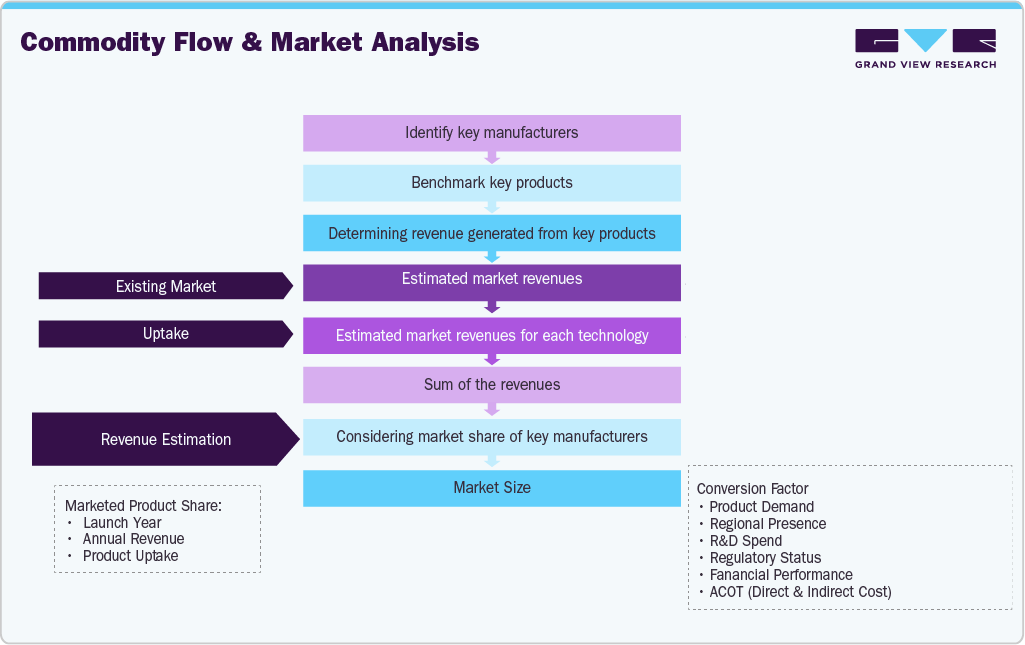
The parenteral analgesics market size is estimated using the commodity flow approach, supported by product-level revenue analysis. The study begins by identifying key manufacturers and their injectable analgesic products across opioid analgesics, non-opioid analgesics, and other drug classes. Product volumes and prices are assessed across intravenous, intramuscular, and subcutaneous formulations to estimate the value of products supplied to each country. The analysis considers imports, exports, domestic production, and product availability to assess the flow of injectable analgesics into healthcare markets. Product-level information is collected from company annual reports, regulatory databases, product disclosures, and other verified sources. The estimated value is further assessed by application, including acute and chronic pain, as well as by end users such as hospitals, ambulatory surgical centers, and specialty clinics. Country-level estimates are aggregated to calculate regional and global market size. The results are cross-checked against manufacturer revenues, generic competition, and hospital demand to maintain consistency.
Segment Definition
Segment - Drug Class
Revenue capture definition
Opioid Analgesics
This segment includes injectable opioid medicines used to manage moderate to severe pain by acting on opioid receptors. It covers approved parenteral formulations for pain relief in both acute and chronic applications.
Non-Opioid Analgesics
This segment includes injectable analgesic medicines that do not act primarily through opioid receptors, including acetaminophen and nonsteroidal anti-inflammatory drugs (NSAIDs). These products are used to manage acute or chronic pain through approved parenteral routes.
Others
This segment includes injectable medicines such as ketamine when administered primarily for analgesia in selected acute pain and perioperative applications. Ketamine use primarily for general anesthesia is excluded.
Segment - Route of Administration
Revenue capture definition
Intravenous (IV)
This segment includes analgesic medicines administered directly into a vein through injection or infusion to deliver the active ingredient into systemic circulation. It covers IV formulations used for pain management in hospitals and other eligible healthcare facilities.
Intramuscular (IM)
This segment includes analgesic medicines injected into skeletal muscle for absorption into systemic circulation. It covers IM formulations approved for pain relief and used in accordance with the patient's clinical requirements.
Subcutaneous (SC)
This segment includes analgesic medicines injected into the tissue beneath the skin for absorption into systemic circulation. It covers SC formulations approved for pain management, including selected applications requiring repeated or ongoing administration.
Others
This segment includes analgesic medicines administered via other approved parenteral routes, such as epidural or intrathecal routes, for pain management. It excludes formulations administered through IV, IM, or SC routes.
Segment - Application
Revenue capture definition
Acute Pain
This segment includes parenteral analgesics used to manage short-term pain associated with surgery, trauma, injuries, and other acute conditions. It covers products used for emergency pain relief, intraoperative or perioperative pain management, and post-operative recovery when indicated.
Chronic Pain
This segment includes parenteral analgesics used to manage persistent or recurrent pain associated with long-term conditions, including selected cancer-related and non-cancer pain conditions. It covers products used for ongoing or repeated pain management when clinically appropriate.
Segment – End User
Revenue capture definition
Hospitals
This segment includes parenteral analgesics purchased by general and specialty hospitals for administration in emergency departments, operating rooms, recovery units, intensive care units, and inpatient wards.
Ambulatory Surgical Centers
This segment includes parenteral analgesics purchased by facilities that provide surgical procedures without requiring routine overnight hospital admission. It covers medicines administered during surgery and post-operative recovery before patient discharge.
Specialty Clinics
This segment includes parenteral analgesics purchased by outpatient clinics focused on services such as pain management and oncology care. It covers injectable analgesics administered during specialist consultations or treatment when clinically indicated.
Others
This segment includes parenteral analgesics purchased by healthcare providers outside hospitals, ambulatory surgical centers, and specialty clinics. Examples include emergency medical services and other outpatient healthcare facilities that administer injectable analgesics.
Estimation Model
 To learn more about this report, Download Free Sample Report
Delivered Customizations
This report has been delivered with the following In-depth customizations
CLIENT REQUEST
CUSTOMIZATION DELIVERED
VALUE ADDS
Parenteral Analgesics Market Assessment
Conducted a detailed assessment of market size, growth drivers, restraints, opportunities, treatment patterns, and pricing factors. The study examined clinical requirements, product availability, regulatory requirements, and healthcare access affecting injectable pain management.
Helped the client understand market demand, assess growth opportunities, and identify factors affecting the use of injectable pain medicines. The analysis supported market sizing, growth assessment, and evaluation of the factors shaping demand for pain management.
Parenteral Analgesics Market Competitive Benchmarking
Assessed key market participants based on product portfolios, approved indications, regulatory developments, manufacturing capabilities, and commercial activities. The study also examined competitive positioning, product availability, supply capabilities, and developments affecting the injectable pain medicine industry.
Supported competitor profiling, product benchmarking, and evaluation of competitive positioning. The analysis helped identify differences in product offerings, manufacturing capabilities, supply availability, and business development opportunities.
Parenteral Analgesics Market Opportunity Assessment
Evaluated regional differences in healthcare infrastructure, surgical activity, emergency care requirements, product availability, pricing, and access to injectable pain medicines. The study also examined variations in healthcare purchasing practices, treatment demand, and distribution capabilities across major markets.
Supported geographic prioritization, market opportunity assessment, and identification of unmet treatment needs. The analysis helped the client evaluate differences in product access, healthcare infrastructure, pricing, and demand to support business planning and resource allocation.
About the Author(s)
Pharmaceuticals Research Team
Healthcare · PharmaceuticalsThis report was authored by the pharmaceuticals research team at Grand View Research - comprising two research analysts, one senior research analyst, and one industry expert - with specialized expertise in the pharmaceuticals segment of the healthcare industry. All findings are based on proprietary healthcare databases, executive interviews, and regulatory analysis, subject to internal peer review prior to publication.
Last Updated:
Speak to Analyst

Customize this report to your needs - add regions, segments, or data points, with 20% free customization.
Or view our licence options:


ISO 9001:2015 & 27001:2022 Certified
We are GDPR and CCPA compliant! Your transaction & personal information is safe and secure. For more details, please read our privacy policy.


