
- Home
- »
- Medical Devices
- »
-
Peptide Contract Development And Manufacturing Organization Market Report 2033GVR Report cover

Peptide Contract Development And Manufacturing Organization Market (2026 - 2033)
Size, Share & Trends Analysis Report By Category (Therapeutic Peptides), By Service, By Therapeutic Area, By End Use, By Region, And Segment Forecasts
Market Size, 2025
$2.1BMarket Estimate, 2026
$2.3BMarket Forecast, 2033
$5.0BCAGR, 2026–2033
11.7%Peptide Contract Development And Manufacturing Organization Market Summary
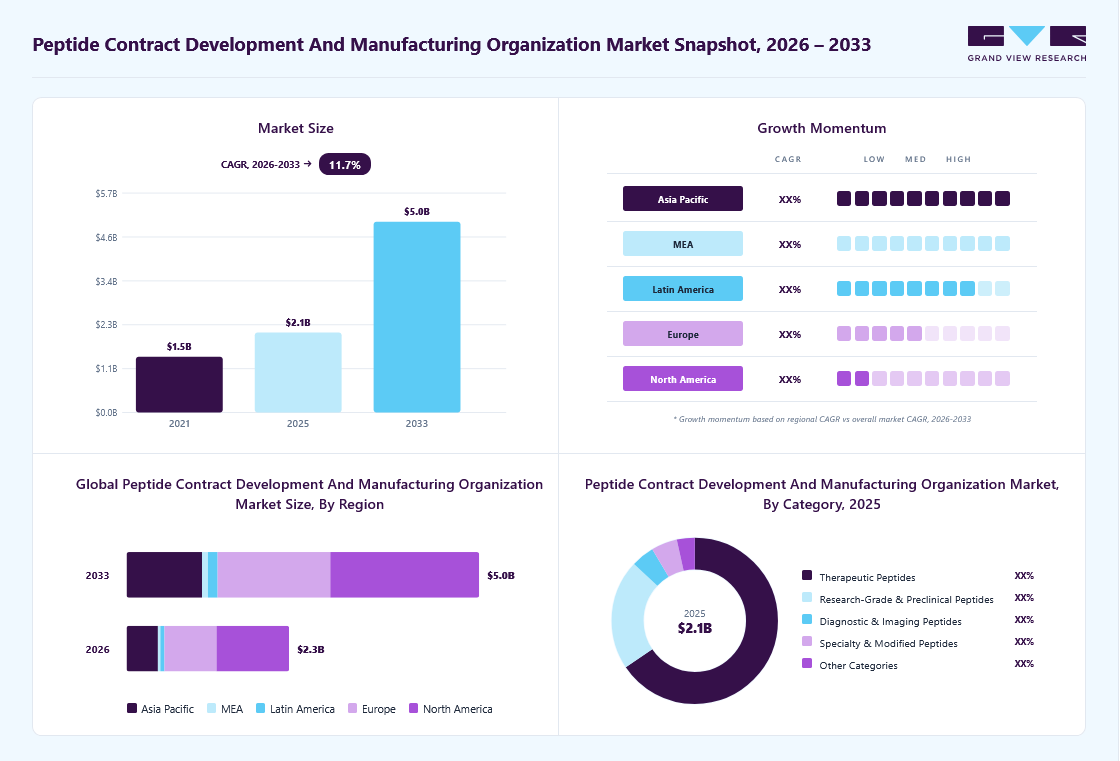
The global peptide contract development and manufacturing organization market size was valued at USD 2.1 billion in 2025 and is projected to grow from USD 2.3 billion in 2026 to USD 5.0 billion in 2033, at a CAGR of 11.7% from 2026 to 2033. North America dominated the market, accounting for the largest revenue share of 45.2% in 2025. The market is driven by growing demand for peptide therapeutics, particularly GLP-1 receptor agonists for obesity and diabetes management.
 Source: Grand View Research, IR Documents, Primary Interviews, Paid DatabasesTo learn more about this report,
 Download Free Sample Report
 Key Market Trends & Insights
- By category: The therapeutic peptides segment led the market with the largest revenue share of 65.5% in 2025.
- By service: The contract manufacturing segment led the market with the largest revenue share of 69.7% in 2025.
- By therapeutic area: The metabolic disorders segment led the market with the largest revenue share of 58.3% in 2025.
- By end use: The pharmaceutical & biopharmaceutical companies segment led the market with the largest revenue share of 50.2% in 2025.
Regional Highlights
- Largest regional market: North America (45.2% revenue share, 2025)
- Fastest-growing regional market: Asia Pacific (highest CAGR, 2026-2033)
- By country: The U.S. held the largest market share in 2025
Market Size & Forecast
- Market size in 2025: USD 2.1 Billion
- Estimated market size in 2026: USD 2.3 Billion
- Projected market size by 2033: USD 5.0 Billion
- CAGR (2026-2033): 11.7%
Three ways to get this report
Buy it, customize it, or ask a question.Ask an Analyst
Analyst response in 1 business day
- AccessReport author, directly
- Reply timeWithin 1 working day
- No sales callDirect answer only
- FormatEmail reply
- CostFree, no cost
Get the Full Report
What the study covers
- FormatsPDF · Excel · Dashboard
- Timeline2026–2033 annual, 2025 base
- Coverage20+ countries, 5 regions
- Companies10+ key players profiled
Customize the Report
20% free customization
- IncludeCountries, segments, points
- TailorTo your product definition
- ExtendDeeper competitor detail
- OrA fully bespoke study
- Turnaround5–10 working days
Expanding drug pipelines support clinical manufacturing requirements, while rising treatment adoption strengthens commercial production demand. Complex synthesis processes, stringent impurity controls, and substantial infrastructure costs encourage pharmaceutical and biotechnology companies to outsource manufacturing.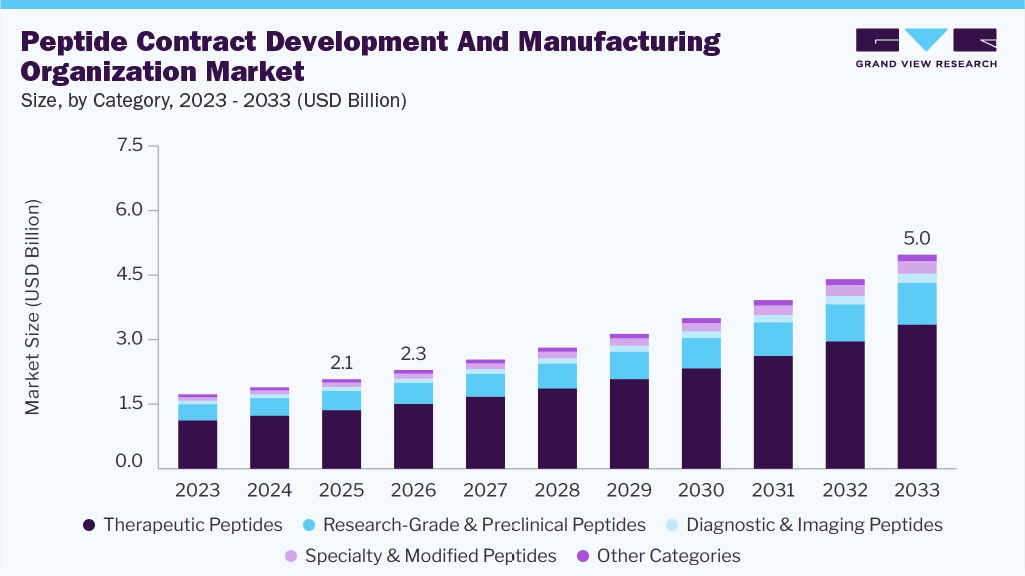 To learn more about this report, Download Free Sample Report
 Access to specialized expertise, scalable capacity, and integrated API and finished dosage services further supports outsourcing adoption. In addition, supply chain diversification and advances in solid-phase synthesis and continuous chromatography improve production reliability, efficiency, and cost competitiveness, strengthening demand for peptide CDMOs across development and commercialization stages.
Market Dynamics
The market is positioned for sustained expansion, driven by increasing demand for peptide therapeutics, growing adoption of GLP-1 receptor agonists, and greater outsourcing of specialized manufacturing. Metabolic disease prevalence provides a substantial underlying demand base. According to the U.S. CDC, adult obesity prevalence reached 40.3% during August 2021–August 2023, indicating significant potential demand for obesity therapies. Treatment uptake remains influenced by affordability, reimbursement, and access; however, the disease burden supports investment in peptide development and manufacturing infrastructure. Regulatory initiatives also facilitate modernization. The FDA’s Emerging Technology Program enables early engagement on innovative pharmaceutical manufacturing approaches, helping companies address technical implementation and regulatory considerations.
Sponsors increasingly prioritize scalable processes, consistent quality, and coordinated development services. Integrated capabilities spanning peptide synthesis, analytical development, formulation, and finished dosage manufacturing streamline supplier management and technology transfer. Technology trends include improved solid-phase synthesis, continuous chromatography, and emerging chemoenzymatic approaches. Industrial-scale continuous chromatography helps address purification bottlenecks, improve yields, and reduce solvent consumption, strengthening specialist providers’ capabilities across complex molecules and high-volume commercial programs.
Capacity investments and strategic supply agreements are reshaping competition. In March 2025, CordenPharma announced an investment exceeding USD 561.3 million (EUR 500 million) in a Swiss peptide facility within a broader program exceeding USD 1.1 billion (EUR 1 billion). Its partnership with Viking Therapeutics covers clinical and commercial supply for injectable and oral VK2735 formulations. These developments reinforce the importance of integrated capacity and long-term partnerships in securing supply, supporting commercialization, and strengthening competitive positioning across the market.
The increasing adoption of GLP-1 receptor agonists for diabetes and obesity management is strengthening demand for peptide CDMO services. These therapies require specialized API synthesis, process optimization, analytical testing, and scalable commercial manufacturing. According to the U.S. CDC, adult obesity prevalence reached 40.3% during August 2021–August 2023, indicating a substantial potential treatment population. Pharmaceutical companies increasingly engage CDMOs to secure technical expertise and production capacity while managing internal capital expenditure. As development programs advance toward commercialization, manufacturing requirements expand from clinical batches to recurring commercial supply, supporting long-term contracts. In July 2024, CordenPharma announced a USD 1,010.4 million (EUR 900 million) peptide platform expansion, backed by manufacturing contracts totaling approximately USD 3.3 million (EUR 3 billion). Such commitments demonstrate how metabolic therapy demand supports capacity investment and sustained outsourcing opportunities.
High manufacturing costs and substantial capital requirements constrain market expansion. Peptide production involves repeated synthesis cycles, specialized amino acid derivatives, considerable solvent consumption, extensive purification, and rigorous analytical testing. Complex sequences and suboptimal yields increase material consumption and processing expenses, while purification bottlenecks can limit production throughput. These factors elevate outsourcing costs, creating budget pressures for biotechnology companies with limited development funding. CDMOs also require significant upfront investment in synthesis equipment, downstream processing infrastructure, utilities, and quality systems before securing stable capacity utilization. Consequently, providers must balance competitive pricing against capital recovery and profitability requirements. The economic viability of capacity expansion, therefore, depends on process efficiency, product yields, manufacturing scale, and sustained customer commitments, particularly for facilities serving technically demanding peptide programs.
Increasing demand for integrated development and manufacturing creates opportunities for peptide CDMOs to expand revenue per customer program. Sponsors require coordinated support across API development, analytical characterization, formulation, clinical supply, and commercial dosage manufacturing. Offering these services through an integrated platform can streamline supplier management, reduce coordination requirements, and improve continuity across development stages. This opportunity is particularly relevant for injectable peptides and candidates requiring specialized oral formulations. Providers with complementary capabilities can strengthen customer retention and capture additional manufacturing expenditure. Successful execution depends on aligned quality systems, effective technology transfer, and coordinated capacity planning throughout development and commercialization.
Ensuring consistent access to qualified raw materials remains a critical operational challenge for peptide CDMOs. Manufacturing depends on specialized amino acid derivatives and other inputs whose availability, purity, and documentation directly influence process performance and product quality. Increasing production volumes intensify requirements for dependable supply without compromising material specifications. Supply interruptions or inconsistent inputs can delay manufacturing, trigger quality investigations, and affect contractual delivery commitments. Managing these risks requires robust supplier qualification, inventory planning, traceability, and coordination between procurement and quality functions. Although alternative sourcing strengthens resilience, implementing additional suppliers requires technical evaluation and change control. Strategies such as dual sourcing, internal production of critical materials, supplier audits, and long-term procurement partnerships can improve supply continuity and support reliable utilization of installed manufacturing capacity.
Impact of U.S. Tariffs on the Global Peptide Contract Development & Manufacturing Organization Industry
U.S. tariffs are influencing the market by increasing potential import costs and encouraging reassessment of manufacturing locations and sourcing strategies. Under the April 2026 pharmaceutical proclamation, covered patented medicines and associated ingredients face a 100% default tariff, subject to country-specific rates, company agreements, and exemptions. Generic pharmaceuticals and associated ingredients remain outside these Section 232 duties. Consequently, peptide products require individual assessment based on classification, origin, and eligibility.
For affected peptide APIs, higher landed costs could increase procurement expenditure, pressure manufacturing margins, and encourage renegotiation of supply contracts. Sponsors may increasingly evaluate U.S. production, alternative qualified suppliers, and geographically diversified manufacturing networks to manage exposure. This could support domestic peptide capacity investment while changing the competitiveness of overseas facilities. However, manufacturing relocation requires technology transfer, process validation, and regulatory coordination, limiting rapid supplier substitution. The anticipated market impact is therefore greater emphasis on supply-chain resilience, tariff-adjusted pricing, and contractual cost allocation.
Technological Advancements
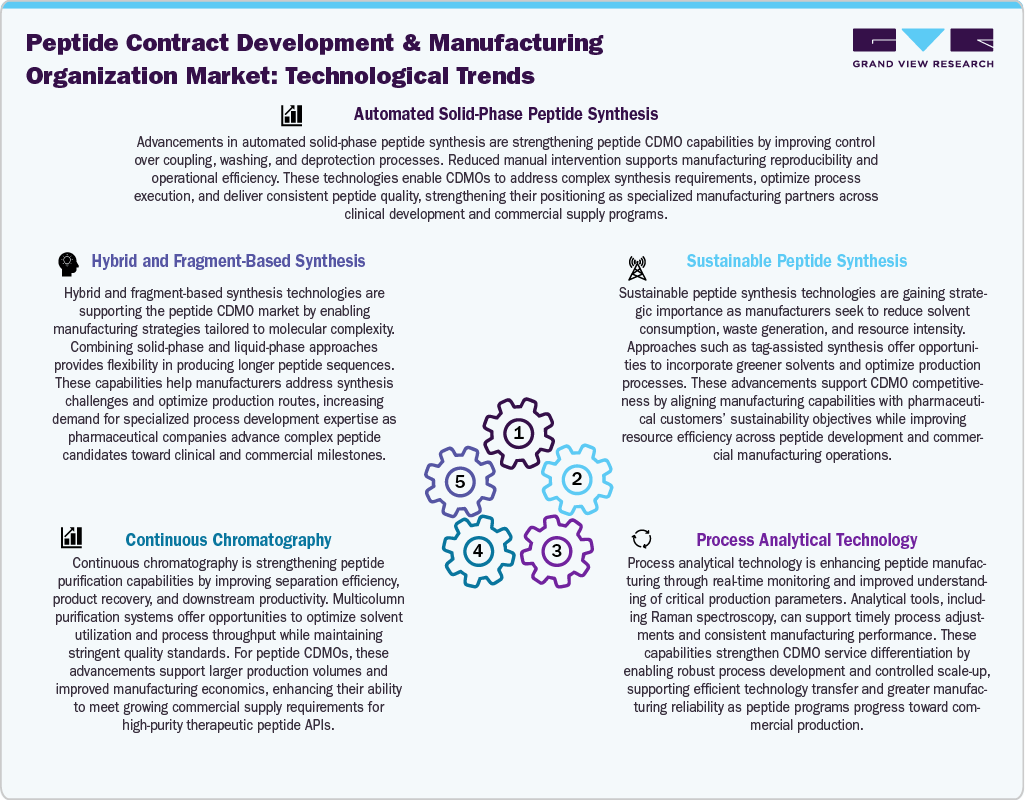
Technological advancements are strengthening the market by improving synthesis efficiency, purification performance, and manufacturing scalability. Automated solid-phase peptide synthesis supports consistent execution of repetitive processing steps, reducing manual intervention and improving reproducibility. These capabilities help CDMOs address complex sequences while maintaining reliable product quality across development and manufacturing programs. Hybrid and fragment-based synthesis approaches provide greater flexibility in selecting production routes for longer and structurally complex peptides. By combining solid-phase and liquid-phase methods, manufacturers can optimize processes according to molecular requirements, strengthening demand for specialized development expertise. Continuous chromatography is improving downstream productivity through enhanced separation efficiency and product recovery. These technologies support higher throughput and more efficient solvent utilization, creating opportunities to improve commercial manufacturing economics.
 To learn more about this report, Download Free Sample Report
 Process analytical technology further strengthens manufacturing capabilities through real-time monitoring and a better understanding of critical process parameters. Improved process control supports consistent operation, reliable scale-up, and efficient technology transfer. Sustainable synthesis technologies are also emerging as a source of competitive differentiation. Greener solvents and resource-efficient processing approaches help manufacturers address environmental objectives alongside operational requirements. Collectively, these advancements are strengthening the competitive positioning of peptide CDMOs that combine specialized technical expertise with scalable, reliable, and efficient clinical and commercial manufacturing capabilities globally.
Pricing Model Analysis
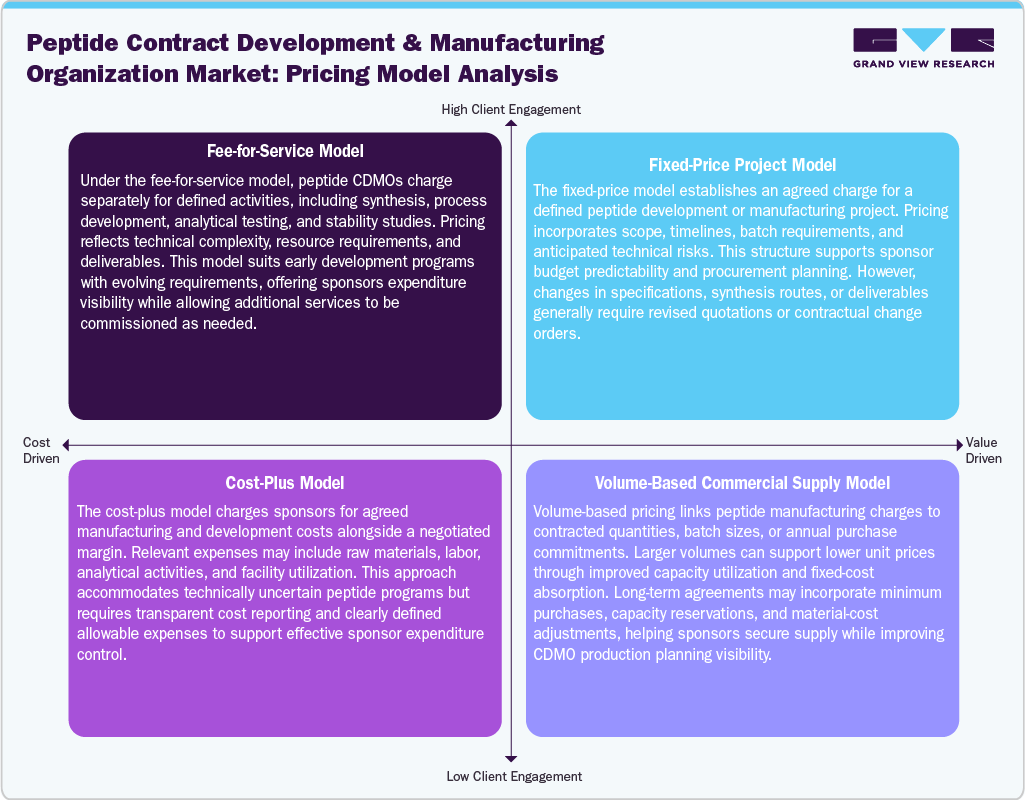
Pricing models in the market are shaped by development stage, molecular complexity, project scope, and commercial supply requirements. Fee-for-service arrangements offer flexibility for early-stage programs by charging separately for synthesis, process development, and analytical testing, with expenditure increasing as additional activities are commissioned. Fixed-price contracts provide greater budget predictability for projects with clearly defined specifications, deliverables, and timelines, although changes in scope generally require pricing adjustments. Cost-plus arrangements accommodate technically uncertain programs by reimbursing agreed project expenses alongside a negotiated margin, making transparent reporting and clearly defined allowable costs essential for expenditure control.
 To learn more about this report, Download Free Sample Report
 For commercial supply, volume-based agreements link pricing to batch sizes, annual quantities, and purchase commitments. Larger volumes can reduce unit costs through improved capacity utilization and fixed-cost absorption, while minimum orders and capacity reservations support production planning and supply continuity. Selecting an appropriate model, therefore, requires balancing flexibility, cost predictability, and execution risk. Clear assumptions, change-control provisions, and cost-adjustment mechanisms help align sponsor expectations with CDMO delivery obligations throughout the partnership.
Market Concentration & Characteristics
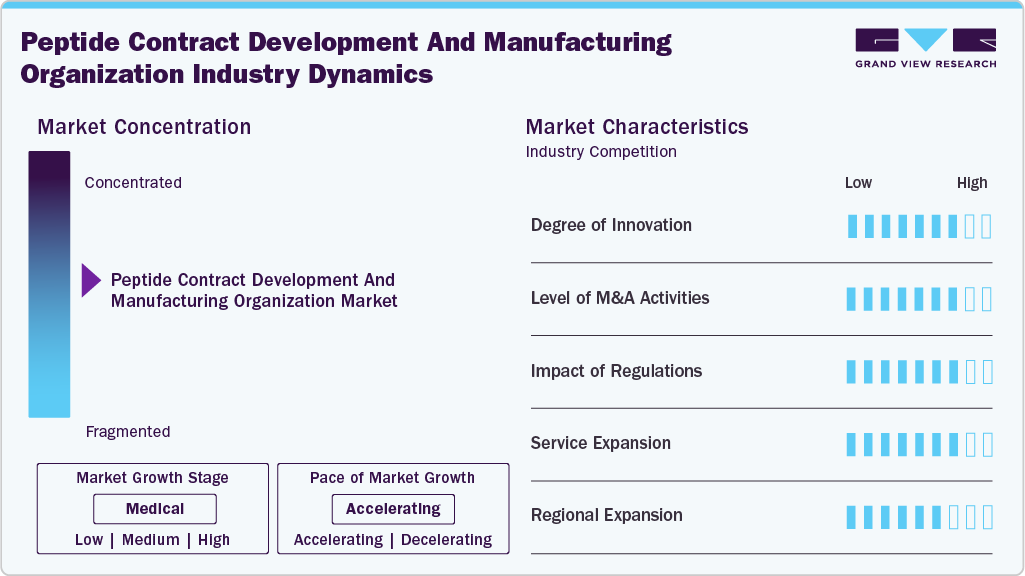
The industry is experiencing accelerating growth, supported by expanding therapeutic applications, increasing demand for GLP-1 therapies, and greater outsourcing of specialized manufacturing activities. The market is characterized by its degree of innovation, level of M&A activities, regulatory impact, service expansion, and regional expansion.
Innovation in the peptide contract development & manufacturing organization industry is advancing through automated synthesis, hybrid approaches, continuous chromatography, and process analytical technology. Capabilities in cyclization, lipidation, and complex sequence manufacturing support differentiated therapeutics. Greener solvents and efficient purification improve resource utilization, strengthening CDMO competitiveness across clinical development and commercial peptide manufacturing service offerings.
 To learn more about this report, Download Free Sample Report
 M&A and strategic partnerships support peptide CDMO capability expansion across synthesis, purification, analytical testing, and finished-dose manufacturing. Acquisitions provide access to specialized technologies, infrastructure, and customers, while partnerships support capacity planning. These activities strengthen integrated service portfolios, geographic coverage, and manufacturing readiness for pharmaceutical sponsors advancing peptide development programs globally.
Regulatory requirements shape peptide CDMO operations through GMP compliance, process validation, impurity characterization, and analytical method validation. Manufacturers must control sequence-related impurities and maintain robust documentation, raw-material traceability, and stability data. Regulatory expertise supports sponsor confidence, efficient technology transfer, submission readiness, and consistent supply throughout clinical development and commercial manufacturing.
Peptide CDMOs are expanding beyond synthesis into process development, purification, analytical testing, stability studies, and commercial API production. Providers with suitable capabilities also offer formulation, sterile fill-finish, and oral drug-product manufacturing. Integrated services reduce vendor coordination requirements and support development continuity, strengthening long-term outsourcing relationships with pharmaceutical and biotechnology sponsors.
Regional expansion involves additional peptide synthesis, purification, and manufacturing capacity across North America, Europe, and the Asia Pacific. Investment decisions reflect customer proximity, technical expertise, production economics, and supply resilience. Multiregional networks support geographic diversification and alternative sourcing, although technology transfer, facility qualification, and regulatory coordination remain necessary for supply continuity.
Analyst Perspective
The market offers growth opportunities as sponsors expand therapeutic portfolios and outsource specialized manufacturing. GLP-1 commercialization supports demand for scalable synthesis, purification, and reliable supply across clinical and commercial programs. Increasing molecular complexity strengthens the value of process expertise, impurity characterization, and consistently robust analytical capabilities. Integrated development and manufacturing services can simplify coordination and improve continuity as candidates advance toward commercialization. Competitive differentiation will depend on manufacturing reliability, efficient scale-up, regulatory execution, and responsiveness to sponsor requirements. Capacity expansion should align with contracted demand to manage utilization risk and protect long-term investment returns. Automated synthesis and continuous purification offer opportunities to improve productivity, reproducibility, and economics across manufacturing operations. Sustainable processing can strengthen customer relationships by addressing solvent consumption, waste generation, and broader environmental objectives. Geographically diversified networks provide sourcing flexibility, although technology transfers require careful qualification and coordination across facilities. Providers combining technical specialization with disciplined investment and dependable delivery are positioned to secure lasting partnerships.
Category Insights
The therapeutic peptides segment led with the largest revenue market share of 65.5% in 2025. The segment growth is supported by demand for outsourced manufacturing of peptide-based medicines across metabolic disorders, oncology, and other chronic conditions. These products require controlled synthesis, purification, analytical characterization, and consistent quality throughout clinical development and commercialization. Pharmaceutical companies engage specialized CDMOs to access technical expertise, expand production capacity, and maintain reliable supplies without substantial internal infrastructure investment. Commercialized therapies generate recurring manufacturing requirements, strengthening this segment’s revenue contribution. In addition, increasingly complex peptide structures and stringent product specifications support demand for experienced outsourcing partners capable of delivering scalable, reproducible, and compliant manufacturing.
The research-grade & preclinical peptides segment is projected to grow at a significant CAGR during the forecast period. The segment is driven by expanding discovery programs and increasing evaluation of peptide candidates before clinical development. Biotechnology companies, academic laboratories, and research organizations require customized peptides for screening, target validation, pharmacological studies, and early safety assessments. Outsourcing provides access to synthesis capabilities, specialized modifications, and analytical support while enabling researchers to manage multiple candidates efficiently. Demand is further supported by investigations into novel delivery approaches and complex peptide formats. Although individual orders remain relatively small, increasing project volumes and customization requirements create growth opportunities for CDMOs serving early-stage research.
Service Insights
The contract manufacturing segment led the market with the largest revenue share of 69.7% in 2025. The segment is driven by expenditure associated with clinical and commercial peptide production. Manufacturing involves specialized synthesis equipment, purification systems, quality control infrastructure, and compliance procedures that require considerable capital and operational resources. Sponsors outsource these activities to secure production capacity, access established manufacturing expertise, and support supply continuity. Commercial supply agreements provide recurring revenue through repeat production campaigns and longer-term purchasing commitments. As peptide therapies advance through development, larger batch requirements increase manufacturing expenditure. CDMOs offering reliable scale-up, consistent purity, and efficient production processes are positioned to capture demand.
The contract development segment is anticipated to register the fastest growth during the forecast period due to increasing demand for expertise in transforming peptide candidates into manufacturable products. Development activities include synthesis route selection, process optimization, analytical method development, impurity characterization, and scale-up planning. Structurally complex peptides create challenges involving yield, solubility, stability, and purification, encouraging sponsors to engage experienced development partners. Emerging biotechnology companies particularly benefit from outsourced capabilities when internal technical resources are limited. Early collaboration also helps identify manufacturing risks before clinical expansion. Consequently, growing peptide pipelines and emphasis on efficient development pathways support demand for specialized contract development services.
Therapeutic Area Insights
The metabolic diseases accounted for the largest share of 58.3% the market. The metabolic diseases segment is supported by demand for peptide therapies used in diabetes, obesity, and related metabolic conditions. GLP-1 receptor agonists and other peptide-based treatments generate requirements for specialized synthesis, purification, process optimization, and analytical testing. Pharmaceutical and biotechnology companies outsource these activities to access technical expertise and scalable manufacturing capacity. As therapies advance toward commercialization, production requirements shift from clinical batches to recurring, larger-volume supply. Expanding treatment adoption and development of next-generation metabolic peptides strengthen demand for reliable manufacturing partners, while long-term supply agreements and capacity investments support the segment’s contribution to peptide CDMO revenues.
The cardiovascular diseases segment is projected to grow at a significant CAGR duringthe forecast period. The segment is driven by increasing investigation of peptide-based approaches targeting cardiovascular function and related disease pathways. Development programs require specialized synthesis, formulation support, analytical testing, and scalable manufacturing to progress from discovery into clinical evaluation. Sponsors engage CDMOs to address challenges associated with peptide stability, delivery, and reproducible production. Research into selective therapeutic mechanisms creates opportunities for outsourcing partners offering integrated development and manufacturing capabilities. As cardiovascular peptide candidates advance, demand for clinical supplies and process optimization is expected to increase, supporting segment growth from a comparatively smaller revenue base.
End Use Insights
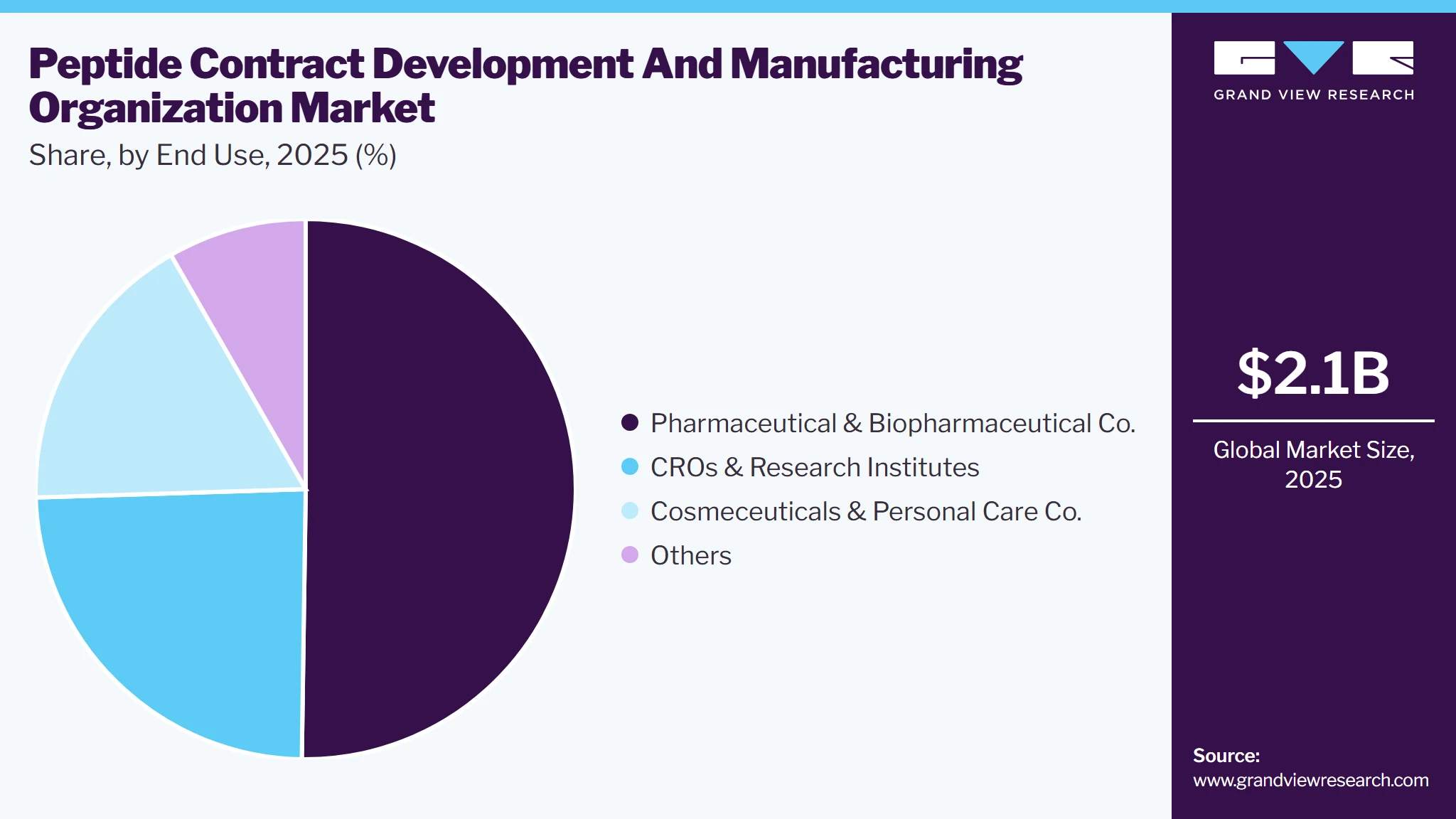
The pharmaceutical & biopharmaceutical companies segment led the market with the largest revenue share of 50.2% in 2025. The growth is driven by their extensive development pipelines and commercial manufacturing requirements. These companies outsource peptide synthesis, process development, analytical testing, and production to obtain specialized expertise and additional capacity. Established pharmaceutical manufacturers generate significant demand through commercial supply contracts, while biotechnology companies rely on CDMOs to advance candidates without building dedicated manufacturing facilities. Outsourcing also supports flexible resource allocation across development programs. Larger project budgets, recurring production requirements, and long-term partnerships strengthen this segment’s revenue contribution, particularly as peptide therapies transition from clinical development to commercialization.
 To learn more about this report, Download Free Sample Report
 The CROs and research institutes segment is anticipated to register the fastest growth during the forecast period due to expanding peptide research and outsourced preclinical investigation. These organizations require customized peptides for assay development, biological screening, target validation, and experimental studies. Specialized CDMOs provide synthesis expertise, sequence modifications, purification, and analytical verification, helping research teams obtain materials suited to specific study requirements. Demand benefits from collaborative drug discovery programs and increasing exploration of novel peptide applications. Although procurement volumes are generally smaller than commercial pharmaceutical orders, rising project numbers, diverse customization needs, and repeated research purchases support growth in demand from these customers.
Regional Insights
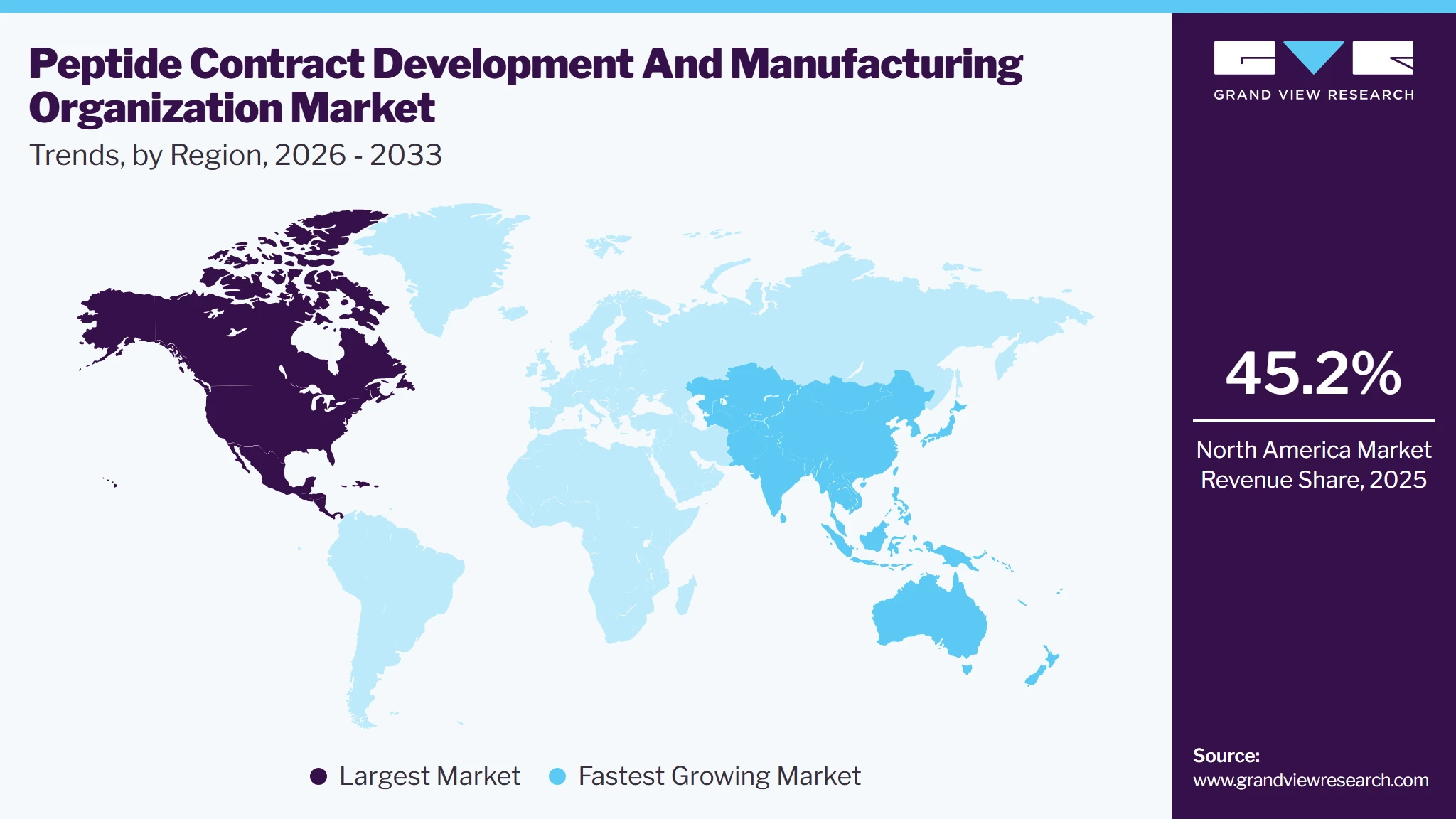
North America dominated the peptide contract development and manufacturing organization market with the largest revenue share of 45.2% in 2025, driven by pharmaceutical research expenditure, an established biotechnology ecosystem, and demand for specialized manufacturing. Development of peptide therapies for metabolic disorders, oncology, and other chronic conditions creates opportunities across process development, analytical testing, and commercial production. Sponsors increasingly outsource technically demanding synthesis and purification activities to access expertise and scalable capacity. Requirements for consistent quality, impurity control, and reliable supply strengthen demand for experienced providers. Investment in manufacturing infrastructure and integrated development capabilities supports regional competitiveness, while commercial peptide programs generate recurring production requirements and longer-term partnerships with sponsors.
 To learn more about this report, Download Free Sample Report
 U.S. Peptide Contract Development And Manufacturing Organization Market Trends
The peptide contract development & manufacturing organization market in the U.S. held the largest share in the North America region in 2025. The country’s growth is supported by extensive pharmaceutical development activity, biotechnology funding, and demand for outsourced clinical and commercial manufacturing. Companies developing peptide medicines require expertise in synthesis optimization, purification, analytical characterization, and technology transfer. Growing interest in metabolic therapies and complex peptide structures creates opportunities for providers offering scalable processes and consistent product quality. Sponsors also evaluate domestic manufacturing capacity to support supply continuity and closer operational coordination. Integrated service offerings help advance candidates from early development into commercial production. Competition increasingly centers on technical capabilities, delivery reliability, regulatory compliance, and available capacity for sustained commercial supply requirements.
Canada peptide contract development and manufacturing organization market is driven by biotechnology research, academic drug discovery, and collaborations between pharmaceutical developers and specialized service providers. Research institutions and emerging biotechnology companies require customized peptides, analytical characterization, and process development support for early-stage therapeutic programs. Access to outsourced capabilities helps sponsors advance candidates while managing infrastructure expenditure and technical resource requirements. Connections with the U.S. pharmaceutical ecosystem create opportunities for cross-border development and manufacturing partnerships. Market opportunities are concentrated in research-grade synthesis, preclinical supply, and clinical development services. Expansion of specialized expertise and compliant manufacturing capacity could strengthen Canada’s participation in higher-value peptide outsourcing contracts.
Europe Peptide Contract Development And Manufacturing Organization Market Trends:
The peptide contract development & manufacturing organization market in Europe accounted for a significant share of the global market in 2025, driven by established pharmaceutical manufacturing networks, advanced synthesis expertise, and specialized development capabilities. Regional providers serve sponsors requiring peptide API production, purification, analytical testing, and clinical-to-commercial scale-up. Demand for metabolic and other peptide therapies encourages investment in manufacturing capacity and process efficiency. Pharmaceutical companies increasingly assess outsourcing partners on technical competence, quality systems, and dependable commercial supply. Complex sequences and demanding impurity specifications create opportunities for providers with differentiated development expertise. European competitiveness also benefits from established regulatory experience and integrated service platforms supporting technology transfer, product development, and long-term commercial manufacturing partnerships.
The UK peptide contract development and manufacturing organization market is expected to grow significantly over the forecast period. The market growth is supported by academic research, biotechnology innovation, and the development of novel therapeutic candidates. Emerging companies frequently require outsourced peptide synthesis, analytical testing, and process optimization because internal manufacturing resources remain limited. Collaboration between research institutions, drug developers, and service providers creates opportunities across discovery, preclinical development, and clinical supply. Demand for complex and modified peptides strengthens the importance of specialized chemistry and purification expertise. Providers can improve their competitive position by connecting early development services with scalable GMP manufacturing. Growth depends on pipeline progression, sponsor funding, and reliable execution of technically demanding peptide programs.
The peptide contract development and manufacturing organization market in Germany held the largest share of the European market in 2025. The country benefits from pharmaceutical manufacturing expertise, advanced chemical processing, and established quality-control infrastructure. Sponsors require specialized support for peptide synthesis, purification, analytical method development, and production scale-up. The country’s scientific workforce and manufacturing capabilities support programs involving complex sequences, challenging impurities, and demanding product specifications. Demand extends across clinical development and commercial supply, encouraging integrated service offerings and efficient technology transfer. Germany’s position within European pharmaceutical supply chains facilitates collaboration with multinational sponsors. Continued emphasis on process reproducibility, manufacturing reliability, and regulatory compliance supports opportunities for specialized peptide outsourcing providers.
Asia Pacific Peptide Contract Development And Manufacturing Organization Market Trends
The peptide contract development & manufacturing organization market in the Asia Pacific is projected to register the fastest CAGR during the forecast period, driven by expanding pharmaceutical development, competitive manufacturing economics, and investment in specialized production capabilities. China, India, Japan, and South Korea contribute scientific expertise and outsourcing infrastructure to the regional ecosystem. Sponsors seek partners offering peptide synthesis, purification, analytical development, and scalable manufacturing for clinical and commercial programs. Growing demand for metabolic therapies creates opportunities for capacity expansion and process improvement. Competitive differentiation increasingly depends on quality, regulatory compliance, technical capabilities, and delivery reliability. Integrated development and manufacturing services strengthen the region’s appeal to international pharmaceutical customers.
China peptide contract development and manufacturing organization market is rapidly growing due to expanding biotechnology pipelines, established pharmaceutical outsourcing infrastructure, and investment in synthesis and manufacturing capabilities. Domestic and international sponsors require customized peptides, process development, analytical testing, and clinical-to-commercial production services. Demand for metabolic therapies and structurally complex peptides encourages providers to improve purification efficiency, impurity control, and production scalability. Integrated service models help sponsors coordinate development activities and manufacturing transitions. Competitive positioning increasingly depends on technical expertise, consistent quality, regulatory readiness, and dependable delivery. Providers seeking international contracts must demonstrate suitable documentation, reproducible processes, and the ability to meet demanding commercial supply requirements consistently.
The peptide contract development and manufacturing organization market in Japan is driven by the established pharmaceutical industry, research capabilities, and demand for specialized development and manufacturing support. Pharmaceutical companies evaluating peptide candidates require synthesis expertise, analytical characterization, process optimization, and reliable clinical supply. Interest in complex therapeutic structures creates opportunities for providers capable of managing modifications, purification challenges, and demanding quality specifications. Outsourcing enables sponsors to supplement internal resources and access flexible production capacity. Collaboration with international development and manufacturing partners can support technology transfer and commercialization. Competitive advantage depends on scientific expertise, documentation quality, process reproducibility, and consistent delivery throughout the peptide product development lifecycle stages.
India peptide contract development and manufacturing organization market is supported by a pharmaceutical outsourcing infrastructure, a skilled scientific workforce, and competitive development and manufacturing costs. Increasing interest in complex APIs creates opportunities for manufacturers to extend existing chemistry capabilities into specialized peptide services. Providers can attract international customers through reliable execution, suitable quality systems, and transparent project management. Further investment in dedicated equipment, impurity characterization, and commercial manufacturing capacity will strengthen competitiveness. Integrated development and production offerings can support sustained partnerships as customer programs progress toward commercialization.
Latin America Peptide Contract Development And Manufacturing Organization Market Trends
The peptide contract development & manufacturing organization market in Latin America is expected to witness significant growth, supported by pharmaceutical development, clinical research, and efforts to strengthen domestic manufacturing capabilities. Regional sponsors and research institutions require customized peptides, analytical support, and development services for therapeutic investigation. Brazil and other established pharmaceutical markets provide opportunities for partnerships connecting local research with international manufacturing expertise. Specialized commercial peptide production remains an emerging opportunity, making technical capability development important for regional growth. Technology transfer and infrastructure investment could expand participation in synthesis, purification, and clinical supply. Providers offering consistent quality and dependable delivery may benefit as regional peptide programs advance through successive development stages.
Brazil peptide contract development and manufacturing organization market is driven by pharmaceutical research, academic biotechnology activity, and interest in strengthening domestic medicine production. Developers require outsourced synthesis, analytical characterization, and process optimization for peptide candidates progressing through discovery and preclinical evaluation. Collaboration between local institutions and experienced international manufacturers can provide access to specialized capabilities and support technology transfer. Opportunities also include clinical supply and development services aligned with domestic pharmaceutical programs. Expansion into commercial peptide API manufacturing requires dedicated infrastructure, reproducible processes, and robust quality systems. Continued capability development could improve Brazil’s position within regional outsourcing networks and support longer-term pharmaceutical manufacturing partnerships.
MEA Peptide Contract Development And Manufacturing Organization Market Trends
The peptide contract development & manufacturing organization market in MEA is projected to grow steadily, driven by the pharmaceutical localization initiatives, biotechnology investment, and developing research capabilities. Sponsors exploring peptide therapies require access to specialized synthesis, analytical testing, and development expertise, often through partnerships with international providers. Regional opportunities include research supply, process development collaboration, and technology transfer supporting emerging manufacturing capabilities. Commercial peptide API production requires dedicated equipment, trained personnel, and established quality systems. Investment in these capabilities could gradually increase regional participation in outsourcing contracts. Market development depends on the progression of local therapeutic programs and partnerships connecting pharmaceutical demand with reliable, specialized manufacturing services.
The UAE peptide contract development and manufacturing organization market is anticipated to be driven by life sciences investment, pharmaceutical localization ambitions, and growing interest in biotechnology research. Partnerships with international CDMOs can provide access to synthesis expertise and facilitate technology transfer. Opportunities may develop around research supply, clinical development coordination, and selective manufacturing capabilities. The country’s regional business connections could support outsourcing partnerships, while sustained investment and local pipeline development determine future manufacturing demand growth.
Key Peptide Contract Development And Manufacturing Organization Company Insights
The key players operating across the market are adopting strategic initiatives such as service launches, mergers & acquisitions, partnerships & agreements, and expansions to gain a competitive edge in the market. For instance, in May 2026, CordenPharma announced an agreement to acquire AmbioPharm, a peptide CDMO with facilities in South Carolina, U.S., and Shanghai, China. The transaction was designed to expand peptide API development and manufacturing capabilities across solid-phase, liquid-phase, and hybrid synthesis, alongside purification and lyophilization. This initiative supports broader clinical-to-commercial services, increased manufacturing capacity, and geographically diversified supply options for pharmaceutical and biotechnology customers.
Key Peptide Contract Development And Manufacturing Organization Companies
The following key companies have been profiled for this study on the peptide contract development and manufacturing organization market:
-
Bachem Holding AG
-
PolyPeptide Group AG
-
CordenPharma
-
WuXi AppTec (WuXi TIDES)
-
AmbioPharm — part of CordenPharma
-
CPC Scientific Inc.
-
Asymchem Laboratories
-
Pharmaron
-
Piramal Pharma Solutions
-
Neuland Laboratories
-
BCN Peptides
-
Sinopep Biopharma
-
Senn Chemicals — part of Granules India
-
Aurigene Pharmaceutical Services
-
CSBio
Competitive Benchmarking
Category
Operating Strategies
Competitive Edge
Weakness
Established Players (Bachem, PolyPeptide Group, CordenPharma, WuXi AppTec)
Established participants focus on expanding peptide synthesis and purification capacity, integrating development with commercial manufacturing, and securing long-term supply agreements. Investments emphasize automated synthesis, hybrid manufacturing approaches, advanced analytical capabilities, and efficient technology transfer. Multisite production networks support geographic diversification and continuity of clinical-to-commercial supply.
Extensive GMP infrastructure, specialized process expertise, regulatory experience, and access to capital support complex peptide programs and larger production volumes. Integrated synthesis, purification, analytical development, and manufacturing services simplify sponsor coordination. Established customer relationships and qualified manufacturing networks strengthen their ability to support recurring commercial supply requirements.
Large manufacturing networks can involve complex scheduling, higher project costs, and longer decision cycles. Capacity commitments to commercial customers may reduce flexibility for smaller programs. Significant infrastructure investment also creates utilization risk if anticipated demand develops slowly, while transferring processes between facilities requires qualification and regulatory coordination.
Emerging Players (CPC Scientific, Sinopep Biopharma, BCN Peptides, Neuland Laboratories)
Specialist and expanding participants emphasize customized peptide synthesis, process optimization, analytical characterization, and selective capacity investment. Strategies include supporting biotechnology customers, developing complex or modified peptides, and strengthening GMP capabilities. Partnerships and phased infrastructure expansion help providers extend services from research and clinical supply toward commercial manufacturing.
Focused peptide expertise can support close technical collaboration, tailored synthesis routes, and responsive project execution. Flexible development models suit sponsors requiring customized sequences, specialized modifications, or smaller batches. Providers with differentiated purification and process-development capabilities can compete effectively for technically demanding programs and build longer-term relationships as candidates advance.
Depending on the provider, smaller manufacturing networks, limited supply redundancy, or developing commercial capacity may restrict larger contracts. Capital requirements can constrain expansion, while reliance on partners may increase coordination needs. Commercial competitiveness depends on validated scale-up, regulatory readiness, and the ability to sustain consistent supply as customer volumes grow.
Recent Developments:
-
In August 2026, CordenPharma completed its acquisition of AmbioPharm. The transaction added peptide manufacturing facilities in South Carolina, U.S., and Shanghai, China. It expanded synthesis, purification, and lyophilization capabilities, strengthening CordenPharma’s geographic coverage and ability to support clinical-to-commercial peptide API supply.
-
In July 2026, Bachem announced plans for a large-scale production facility in Sisslerfeld, Switzerland. Commercial production is expected to begin in 2030. The development supports long-term manufacturing capacity expansion and strengthens Bachem’s positioning as a supplier for growing peptide and oligonucleotide programs.
-
In March 2026, Neuland Laboratories announced plans for a commercial peptide facility at Bonthapally, India. The first module was designed to provide 6,370 liters of combined solid-phase and liquid-phase synthesis reactor capacity, with provision for further expansion. The initiative targets scalable manufacturing for complex peptide programs; an August update indicated Phase I was approaching validation.
Peptide Contract Development And Manufacturing Organization Market Report Scope
Report Attribute
Details
Market size in 2025
USD 2.1 billion
Estimated market size in 2026
USD 2.3 billion
Projected market size by 2033
USD 5.0 billion
Growth rate
CAGR of 11.7% from 2026 to 2033
Actual data
2021 – 2025
Forecast period
2026 - 2033
Quantitative units
Revenue in USD billion and CAGR from 2026 to 2033
Report coverage
Revenue forecast, company ranking, competitive landscape, growth factors, and trends
Segments covered
Category, services, therapeutic area, end use, region
Regional scope
North America; Europe; Asia Pacific; Latin America; MEA
Country scope
U.S.; Canada; Mexico; UK; Germany; France; Italy; Spain; Denmark; Sweden; Norway; China; India; Japan; Australia; South Korea; Thailand; Brazil; Argentina; South Africa; UAE; Saudi Arabia; Kuwait; Qatar; Oman
Key companies profiled
Bachem Holding AG; PolyPeptide Group AG; CordenPharma; WuXi AppTec (WuXi TIDES); AmbioPharm — part of CordenPharma; CPC Scientific Inc.; Asymchem Laboratories; Pharmaron; Piramal Pharma Solutions; Neuland Laboratories; BCN Peptides; Sinopep Biopharma; Senn Chemicals — part of Granules India; Aurigene Pharmaceutical Services; CSBio
Customization scope
Free report customization (equivalent up to 8 analysts working days) with purchase. Addition or alteration to country, regional & segment scope.
Pricing and purchase options
Avail customized purchase options to meet your exact research needs. Explore purchase options
Global Peptide Contract Development And Manufacturing Organization Market Report Segmentation
This report forecasts revenue growth at global, regional, and country levels and provides an analysis of the latest industry trends in each of the sub-segments from 2021 to 2033. For this study, Grand View Research has segmented the global peptide contract development and manufacturing organization market report based on category, service, therapeutic area, end use, and region:
-
Category Outlook (Revenue, USD Million, 2021 - 2033)
-
Therapeutic Peptides
-
Research-Grade & Preclinical Peptides
-
Diagnostic & Imaging Peptides
-
Specialty & Modified Peptides
-
Others
-
-
Service Outlook (Revenue, USD Million, 2021 - 2033)
-
Contract Development
-
Process Development and Optimization
-
Formulation Development
-
Analytical and Quality Control Services
-
Scale‑up & tech‑transfer
-
Others
-
-
Contract Manufacturing
-
Clinical Manufacturing
-
Commercial Manufacturing
-
-
Packaging and Labeling
-
Supply Chain & Logistics
-
Others
-
-
Therapeutic Area Outlook (Revenue, USD Million, 2021 - 2033)
-
Oncology
-
Metabolic Disorders
-
Cardiovascular Diseases
-
Infectious Diseases
-
Neurological Disorders
-
Others
-
-
End Use Outlook (Revenue, USD Million, 2021 - 2033)
-
Pharmaceutical & Biopharmaceutical Companies
-
Cosmeceuticals and Personal Care Companies
-
CROs & Research Institutes
-
Others
-
-
Regional Outlook (Revenue, USD Million, 2021 - 2033)
-
North America
-
U.S.
-
Canada
-
Mexico
-
-
Europe
-
UK
-
Germany
-
France
-
Italy
-
Spain
-
Denmark
-
Sweden
-
Norway
-
-
Asia Pacific
-
China
-
India
-
Japan
-
Australia
-
South Korea
-
Thailand
-
-
Latin America
-
Brazil
-
Argentina
-
-
Middle East & Africa
-
South Africa
-
UAE
-
Saudi Arabia
-
Kuwait
-
Qatar
-
Oman
-
-
Research Methodology
The peptide contract development and manufacturing organization market figures in this report are based on a proven research process that combines executive interviews with secondary research from proprietary databases, company filings, and recognized regulatory and institutional sources. Market size is built through value-chain sizing—reconciling supply-side and demand-side estimates—and triangulated with bottom-up and top-down approaches. Every estimate passes multiple levels of expert validation before publication, with each peptide contract development & manufacturing organization segment quantified using the revenue-capture definitions in the table below.
Segment Definition
Categories
Definition
Therapeutic Peptides
The segment captures revenue generated by providing contract development and manufacturing services for peptides intended for disease treatment or prevention. Services include synthesis, process optimization, formulation development, analytical testing, and clinical or commercial production of therapeutic peptide APIs and associated drug products, where included within the study scope.
Research-Grade & Preclinical Peptides
The segment captures revenue generated by providing outsourced development, synthesis, purification, and characterization of peptides used in laboratory research and preclinical studies. Applications include biological screening, target validation, assay development, pharmacological evaluation, and nonclinical safety assessment before progression into human clinical development.
Diagnostic & Imaging Peptides
The segment captures revenue generated by providing contract development and manufacturing services for peptides used in diagnostic assays and medical imaging. Coverage includes peptide probes, targeting ligands, and peptide precursors for imaging agents, alongside synthesis, modification, purification, analytical characterization, and relevant manufacturing support.
Specialty & Modified Peptides
The segment captures revenue generated by providing contract development and manufacturing services for peptides requiring specialized structural modifications or synthesis approaches. Examples include cyclic, stapled, lipidated, PEGylated, and non-natural amino acid-containing peptides. To prevent overlap, this segment covers specialty products not allocated to therapeutic, research-grade, or diagnostic categories.
Others
The segment captures revenue generated by providing contract development and manufacturing services for peptide products not included in the preceding categories. Coverage may include cosmetic, industrial, and other specialized peptide applications, involving customized synthesis, purification, characterization, and production according to customer specifications.
Service
Definition
Contract Development
The segment captures revenue generated by providing outsourced development services for peptide products to pharmaceutical, biotechnology, and other end users. It includes process development and optimization, formulation development, analytical and quality control services associated with development, scale-up, and technology transfer, and other activities preparing peptide candidates for manufacturing.
Process Development and Optimization
The subsegment captures revenue generated by developing and optimizing peptide synthesis and purification processes. Activities include synthesis route selection, reaction-condition optimization, cleavage and deprotection development, purification strategy design, yield improvement, impurity reduction, and process characterization to establish reproducible and economically viable manufacturing procedures.
Formulation Development
The subsegment captures revenue generated by developing formulations suitable for peptide stability, delivery, and administration. Activities include excipient selection, solubility enhancement, stability assessment, dosage-form development, lyophilization development, and evaluation of delivery approaches appropriate to the peptide product and its intended application.
Analytical and Quality Control Services
The subsegment captures revenue generated by providing peptide analytical development, characterization, and quality testing within development engagements. Services include method development and validation, identity and purity testing, impurity profiling, potency assessment where applicable, and stability testing. Testing bundled into manufacturing contracts is allocated consistently to avoid double-counting.
Scale-up & Technology Transfer
The subsegment captures revenue generated by adapting peptide development processes to larger manufacturing scales and transferring them between facilities or organizations. Activities include equipment-fit assessment, process parameter adjustment, transfer documentation, technical training, engineering batch support, and verification of process reproducibility at the receiving manufacturing site.
Others
The subsegment captures revenue generated by peptide development activities not included in the specified development subsegments. Services may include peptide sequence feasibility assessment, specialized modification development, raw material suitability studies, manufacturing-related regulatory documentation support, and other technical activities supporting progression toward clinical or commercial manufacturing.
Contract Manufacturing
The segment captures revenue generated by providing outsourced production and associated manufacturing support for peptide APIs and peptide drug products, where included within scope. It encompasses clinical manufacturing, commercial manufacturing, packaging and labeling, supply chain and logistics, and other manufacturing activities performed under customer contracts.
Clinical Manufacturing
The subsegment captures revenue generated by manufacturing peptide APIs and applicable drug products for human clinical trials. Activities include GMP synthesis, purification, batch production, manufacturing-associated testing, and release documentation. Coverage includes supplies for different clinical phases and associated qualification or validation activities required by the development program.
Commercial Manufacturing
The subsegment captures revenue generated by manufacturing peptide APIs and applicable drug products for marketed products or commercial applications. Activities include routine synthesis, purification, production campaigns, manufacturing-associated quality testing, process validation, and release documentation supporting consistent product quality and recurring customer supply requirements.
Packaging and Labeling
The subsegment captures revenue generated by providing contracted packaging and labeling services for peptide APIs, intermediates, and applicable finished products. Activities include container preparation, filling into appropriate storage or transport containers, primary and secondary packaging, labeling, and clinical supply packaging according to customer and applicable regulatory requirements.
Supply Chain & Logistics
The subsegment captures revenue generated by providing contracted storage, inventory management, distribution, and transportation services for peptide materials and products. Coverage includes temperature-controlled handling where required, shipment coordination, traceability, and delivery of clinical or commercial supplies between manufacturing facilities, sponsors, distribution centers, and designated recipients.
Others
The subsegment captures revenue generated by peptide manufacturing services not included in clinical manufacturing, commercial manufacturing, packaging and labeling, or logistics. Coverage may include standalone intermediate production, peptide reprocessing or repurification, and other specialized production activities, provided these revenues are not already included in another manufacturing subsegment.
Therapeutic Area
Definition
Oncology
The segment captures revenue generated by providing contract development and manufacturing services for peptide products intended for cancer-related applications. Coverage includes therapeutic peptides and peptide components used in cancer-targeting approaches, alongside diagnostic or imaging peptides for oncology, where these applications fall within the study scope.
Metabolic Disorders
The segment captures revenue generated by providing contract development and manufacturing services for peptide products addressing metabolic conditions, including diabetes, obesity, and other disorders of metabolic regulation. Services support peptide candidates and marketed products through process development, analytical testing, formulation, and clinical or commercial manufacturing.
Cardiovascular Diseases
The segment captures revenue generated by providing contract development and manufacturing services for peptide products intended for cardiovascular applications. Coverage includes peptides targeting conditions such as hypertension, heart failure, and thrombosis, along with relevant diagnostic applications, supported by synthesis, characterization, development, and manufacturing services.
Infectious Diseases
The segment captures revenue generated by providing contract development and manufacturing services for peptide products targeting infectious diseases. Coverage includes antimicrobial and antiviral peptides, peptide vaccine components, and relevant diagnostic peptides, with services spanning synthesis, process development, analytical characterization, and clinical or commercial production.
Neurological Disorders
The segment captures revenue generated by providing contract development and manufacturing services for peptide products intended for neurological applications. Coverage includes candidates addressing neurodegenerative diseases, neurological dysfunction, and related conditions, supported by specialized synthesis, modification, formulation development, analytical testing, and manufacturing services.
Others
The segment captures revenue generated by providing contract development and manufacturing services for peptide products addressing indications outside the specified therapeutic areas. Coverage may include immunological, gastrointestinal, respiratory, reproductive, dermatological, and other conditions. Nontherapeutic applications may be allocated here where necessary to reconcile the complete market scope.
End Use
Definition
Pharmaceutical & Biopharmaceutical Companies
The segment captures revenue generated by providing peptide contract development and manufacturing services to pharmaceutical and biopharmaceutical companies. These customers outsource activities supporting proprietary or generic peptide products, including process development, formulation, analytical testing, clinical supply, and commercial production for therapeutic and relevant diagnostic applications.
Cosmeceuticals and Personal Care Companies
The segment captures revenue generated by providing peptide contract development and manufacturing services to cosmeceutical and personal care companies. Coverage includes customized synthesis, modification, purification, characterization, and production of peptide ingredients used in skincare, haircare, and other personal care formulations.
CROs & Research Institutes
The segment captures revenue generated by providing peptide contract development and manufacturing services to contract research organizations, academic institutions, and other research institutes. Services include customized peptide synthesis, purification, analytical characterization, and research or pre-clinical supply supporting discovery programs, experimental studies, and outsourced research activities.
Others
The segment captures revenue generated by providing peptide contract development and manufacturing services to customers outside the specified end-use groups. Coverage may include diagnostic developers, industrial biotechnology companies, government laboratories, and other organizations procuring outsourced peptide development, synthesis, characterization, or production services.
Estimation Model
Peptide CDMO Market Estimation Models
No.
Market Estimation Model
Description / Methodology
1
Bottom-Up Market Estimation
• The bottom-up model estimates the peptide CDMO market by aggregating peptide-specific revenues of contract development and manufacturing providers.
• Reported revenues are assessed against service portfolios, customer contracts, manufacturing capabilities, and business disclosures.
• Estimates are developed for private companies and providers without separate peptide revenue reporting.
• Adjustments address smaller participants, bundled services, and inter-provider subcontracting to prevent double counting and establish a consolidated market estimate.
2
Peptide Production Volume-Based Model
• The production volume-based model estimates peptide manufacturing revenue by multiplying outsourced production quantities by applicable contract manufacturing prices.
• Volumes are assessed separately for research, clinical, and commercial requirements, while pricing reflects peptide complexity, purity specifications, synthesis technology, batch size, and service scope.
• Manufacturing capacity and utilization provide supporting checks.
• Development fees and ancillary services are assessed separately where excluded from production pricing to maintain consistency.
3
Peptide Development Pipeline-Based Model
• The pipeline-based model evaluates active peptide programs by development stage and assigns estimated annual outsourced expenditure to relevant services.
• These include process optimization, formulation development, analytical testing, technology transfer, and clinical manufacturing.
• Estimates reflect program complexity, supply requirements, development timelines, and outsourcing practices.
• Forecasts incorporate stage progression, attrition, and potential stage commercialization, while research-grade and nontherapeutic peptide demand is assessed separately to capture the broader market.
4
Outsourcing Penetration Model
• The outsourcing penetration model estimates the externally contracted portion of total peptide development and manufacturing expenditure.
• Outsourcing shares are assessed across peptide categories, services, development stages, end users, and geographies, considering internal capabilities, technical complexity, capacity requirements, and sponsor procurement practices.
• These shares are applied to corresponding expenditure pools, with adjustments for mixed captive and outsourced operations.
• Results are reconciled with provider revenues and production-based estimates.
5
Market Validation and Triangulation
The peptide CDMO market estimates are validated by reconciling provider revenues, outsourced production volumes, development pipeline expenditure, and outsourcing penetration assumptions. This triangulation accounts for differences in peptide complexity, service scope, manufacturing scale, and regional capabilities. Adjustments for bundled services, captive production, and subcontracting minimize double counting, providing a consistent foundation for market sizing, segment analysis, and forecasts across geographies.
Customization Table:
Client Request
Customization Delivered
Value Adds
Extensive Segmentation & Cross-Segmentation Analysis
The study can be customized to provide deeper segmentation across peptide type, service, synthesis technology, therapeutic area, end use, development stage, and manufacturing scale. Cross-segmentation may include service-by-peptide type, synthesis technology-by-development stage, therapeutic area-by-service, and end use-by-manufacturing scale. Additional analysis can cover solid-phase, liquid-phase, and hybrid synthesis; purification; analytical development; and clinical versus commercial manufacturing requirements.
Identifies attractive peptide outsourcing opportunities, supports prioritization of service and technology combinations, and helps CDMOs and pharmaceutical sponsors assess capability gaps across development and manufacturing.
Regional Extension & Peptide Manufacturing Opportunity Mapping
The report can include country-level or subregional analysis across North America, Europe, Asia Pacific, Latin America, and the Middle East & Africa. Customization may assess peptide development activity, specialized synthesis infrastructure, GMP manufacturing capacity, outsourcing adoption, regulatory requirements, facility expansions, and clinical-to-commercial manufacturing readiness. Analysis can also examine local supplier availability and demand-supply gaps, distinguishing manufacturing locations from sponsor demand markets.
Supports geographic expansion, manufacturing-site selection, capacity allocation, and identification of underserved markets requiring peptide process development, analytical testing, and commercial manufacturing services.
Market Entry Strategy & Competitive Dynamics
The study can assess opportunities for established peptide CDMOs, specialized synthesis providers, API manufacturers, and new entrants. Analysis may include market attractiveness, capability benchmarking, pricing models, customer requirements, competitive intensity, partnership opportunities, and acquisition targets. Additional customization can evaluate differentiation through complex peptide synthesis, impurity control, scale-up expertise, manufacturing efficiency, and integrated development-to-commercial services, alongside build-versus-partner strategies.
Helps evaluate market entry feasibility, competitive positioning, partnership or acquisition opportunities, pricing flexibility, required capability investments, and strategies for expanding peptide outsourcing service portfolios.
Frequently Asked Questions About This Report
The global peptide contract development and manufacturing organization market size was valued at USD 2.1 billion in 2025 and and is estimated at USD 2.3 billion in 2026.
The global peptide contract development and manufacturing organization market is expected to grow at a CAGR of 11.7% from 2026 to 2033, reaching USD 5.0 billion by 2033.
Which category segment leads the peptide contract development and manufacturing organization market?The therapeutic peptides segment led with a 65.5% revenue share in 2025, while research-grade & preclinical peptides segment is the fastest-growing segment.
North America dominated with a 45.2% revenue share in 2025.
What are the factors driving the peptide contract development and manufacturing organization market?The market is driven by increasing demand for by growing demand for peptide therapeutics, particularly GLP-1 receptor agonists for obesity and diabetes management. Expanding drug pipelines support clinical manufacturing requirements, while rising treatment adoption strengthens commercial production demand. Such factors are expected to drive the market growth.
Some key players operating in the peptide contract development and manufacturing organization include Bachem Holding AG, PolyPeptide Group AG, CordenPharma, WuXi AppTec (WuXi TIDES), AmbioPharm — part of CordenPharma, CPC Scientific Inc., Asymchem Laboratories, Pharmaron, Piramal Pharma Solutions, Neuland Laboratories, BCN Peptides, Sinopep Biopharma, Senn Chemicals — part of Granules India, Aurigene Pharmaceutical Services, and CSBio, among others.
The contract manufacturing segment led the market with the largest revenue share of 69.7% in 2025. The segment is driven by expenditure associated with clinical and commercial peptide production.
The metabolic disorders segment led with a 58.3% revenue share in 2025 and cardiovascular diseases segment is the fastest-growing segment.
Asia Pacific is the fastest-growing region over the forecast period.
About the Author(s)
Medical Devices Research Team
Healthcare · Medical DevicesThis report was authored by the medical devices research team at Grand View Research - comprising two research analysts, one senior research analyst, and one industry expert - with specialized expertise in the medical devices segment of the healthcare industry. All findings are based on proprietary healthcare databases, executive interviews, and regulatory analysis, subject to internal peer review prior to publication.
Last Updated:
Speak to Analyst

Customize this report to your needs - add regions, segments, or data points, with 20% free customization.
Or view our licence options:


ISO 9001:2015 & 27001:2022 Certified
We are GDPR and CCPA compliant! Your transaction & personal information is safe and secure. For more details, please read our privacy policy.


