
- Home
- »
- Plastics, Polymers & Resins
- »
-
Polyvinyl Chloride In Water Service Lines Market Report 2033GVR Report cover

Polyvinyl Chloride in Water Service Lines Market (2026 - 2033)
Size, Share & Trends Analysis Report By Product (PVC Pipes, PVC Fittings & Couplings, PVC Valves), By Application (Residential, Commercial, Commercial Water Service Lines), By Region, And Segment Forecasts
Market Size, 2025
$2.6BMarket Estimate, 2026
$2.8BMarket Forecast, 2033
$3.6BCAGR, 2026–2033
4.0%Polyvinyl Chloride In Water Service Lines Market Summary
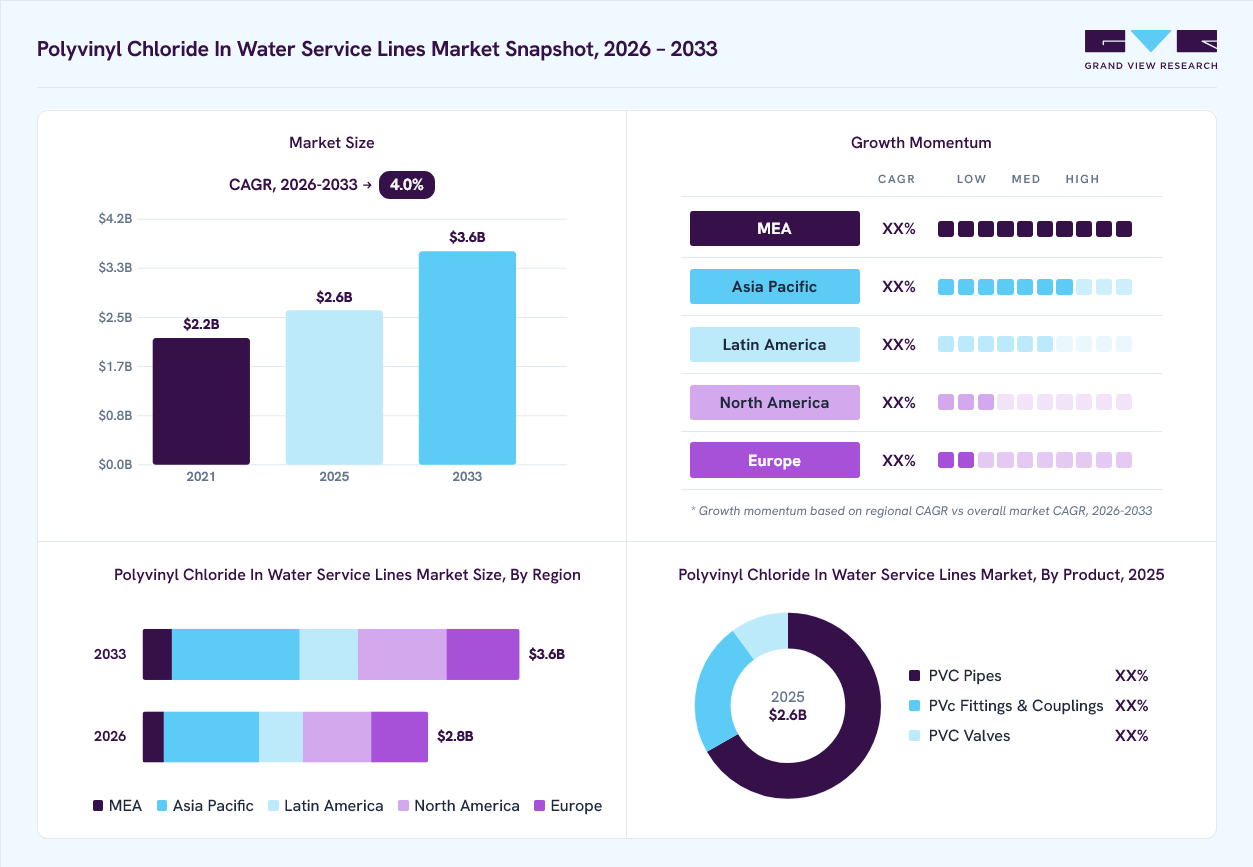
The global polyvinyl chloride in water service lines market size was valued at USD 2.6 billion in 2025 and is projected to grow from USD 2.8 billion in 2026 to USD 3.6 billion by 2033, at a CAGR of 4.0% from 2026 to 2033. Asia Pacific dominated the market with the largest revenue share of 33.2% in 2025. The growth of the agriculture sector significantly influences the polyvinyl chloride (PVC) pipes market for water service lines, driven by the increasing need for efficient irrigation and water management solutions.
 Source: Grand View Research, IR Documents, Primary Interviews, Paid DatabasesTo learn more about this report,
 Download Free Sample Report
Key Market Trends & Insights
- By product: PVC pipes segment led the market with the largest revenue share of 64.1% in 2025.
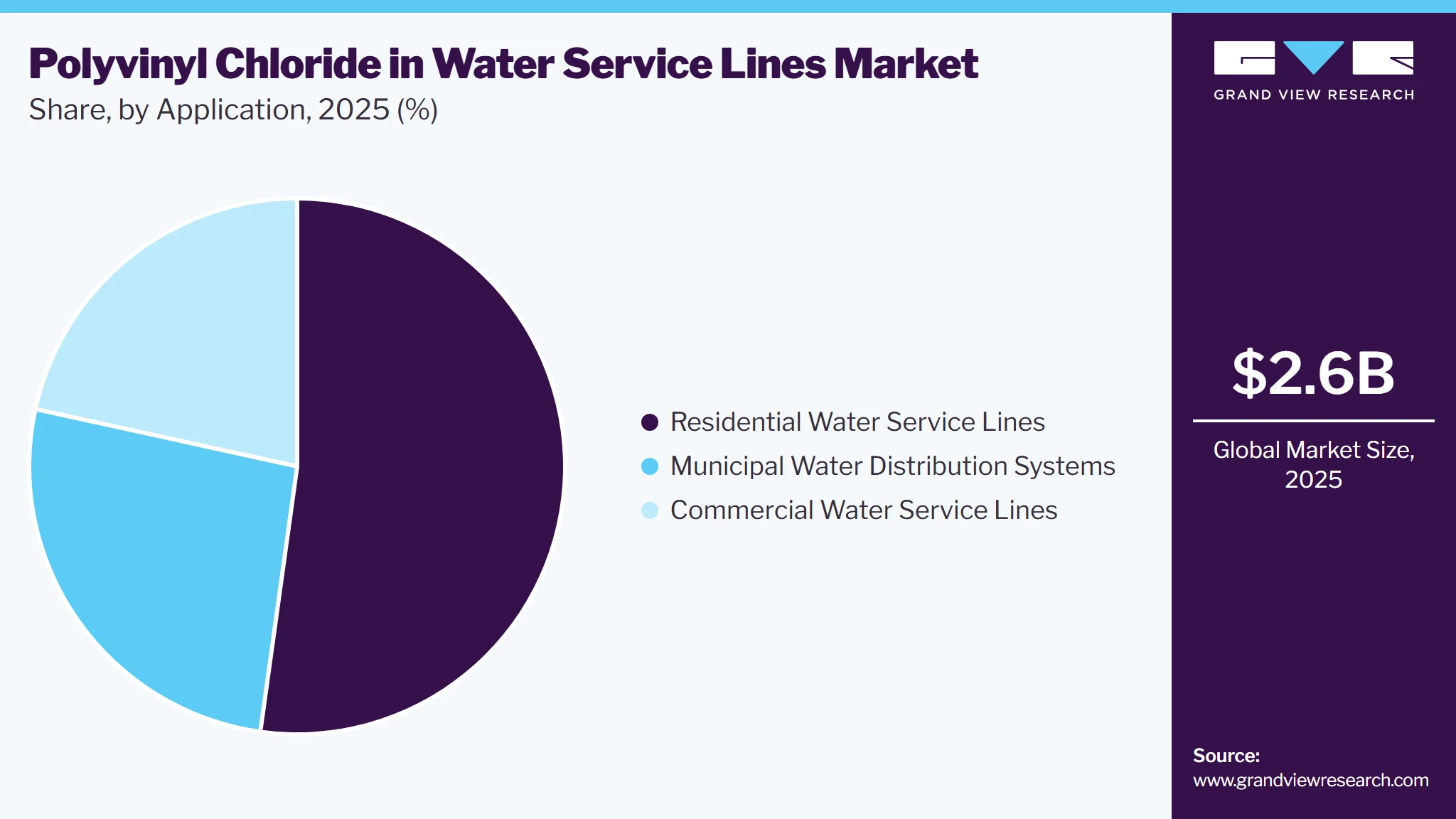
- By application: Residential water service lines segment led the market with the largest revenue share of 52.2% in 2025.
Regional Highlights
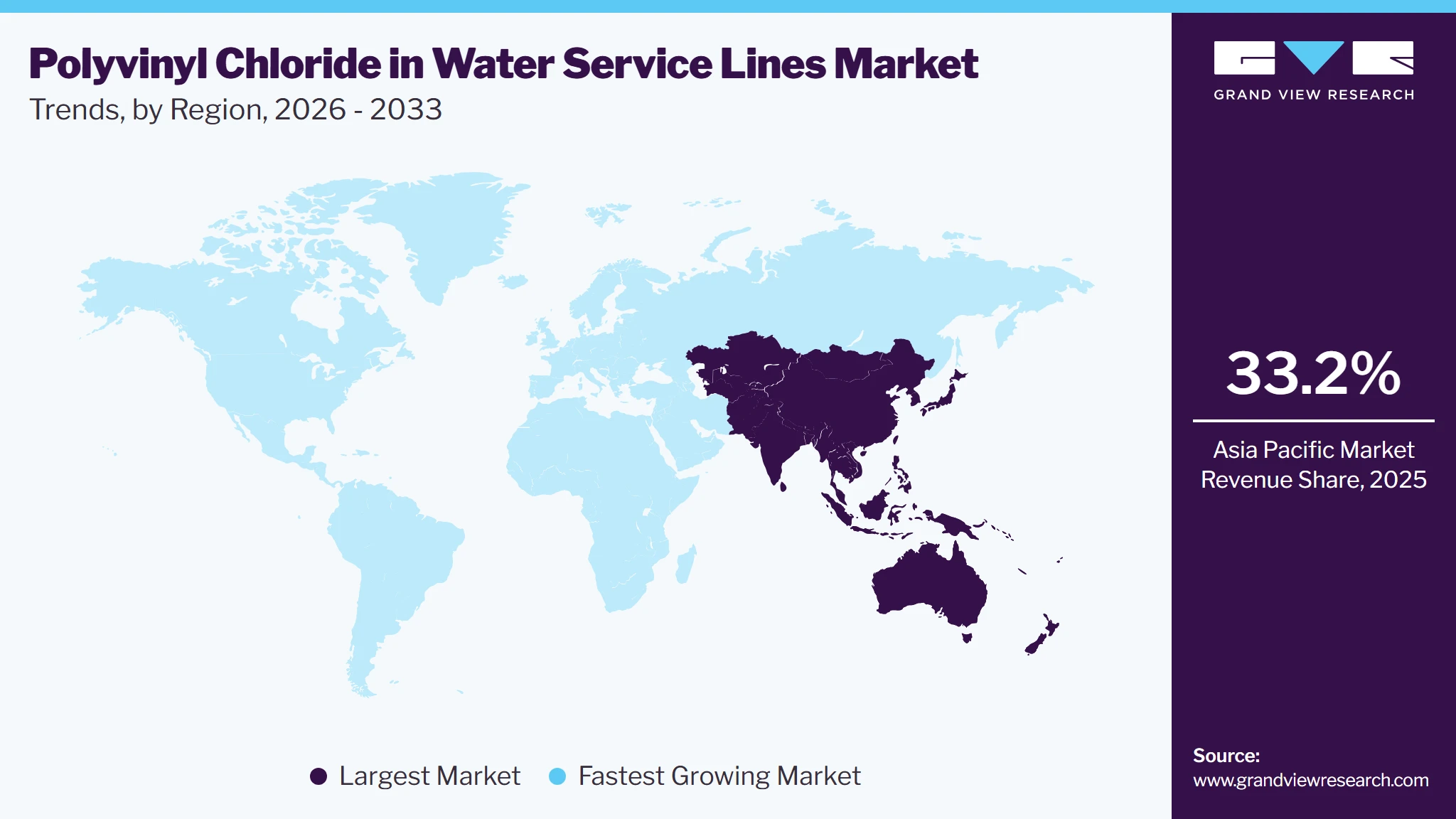
- Largest regional market: Asia Pacific (33.2% revenue share, 2025)
- By country: Japan held the largest market share in 2025
Market Size & Forecast
- Market size in 2025: USD 2.6 Billion
- Estimated market size in 2026: USD 2.8 Billion
- Projected market size by 2033: USD 3.6 Billion
- CAGR (2026-2033):4.0%
Prism AI by Grand View Research Free to tryAsk a question about the polyvinyl chloride in water service lines marketTry asking✓Every figure cited from GVR research Prefer the report? Download free sample →
Increasing urbanization, expanding agricultural activities, and rising demand for efficient irrigation and water management systems are driving the growth of the polyvinyl chloride (PVC) in water service lines market. Its superior durability, corrosion resistance, and cost-effectiveness are accelerating adoption in water distribution and sanitation networks, while ongoing investments in modern water infrastructure and expanding municipal development continue to support market growth during the forecast period.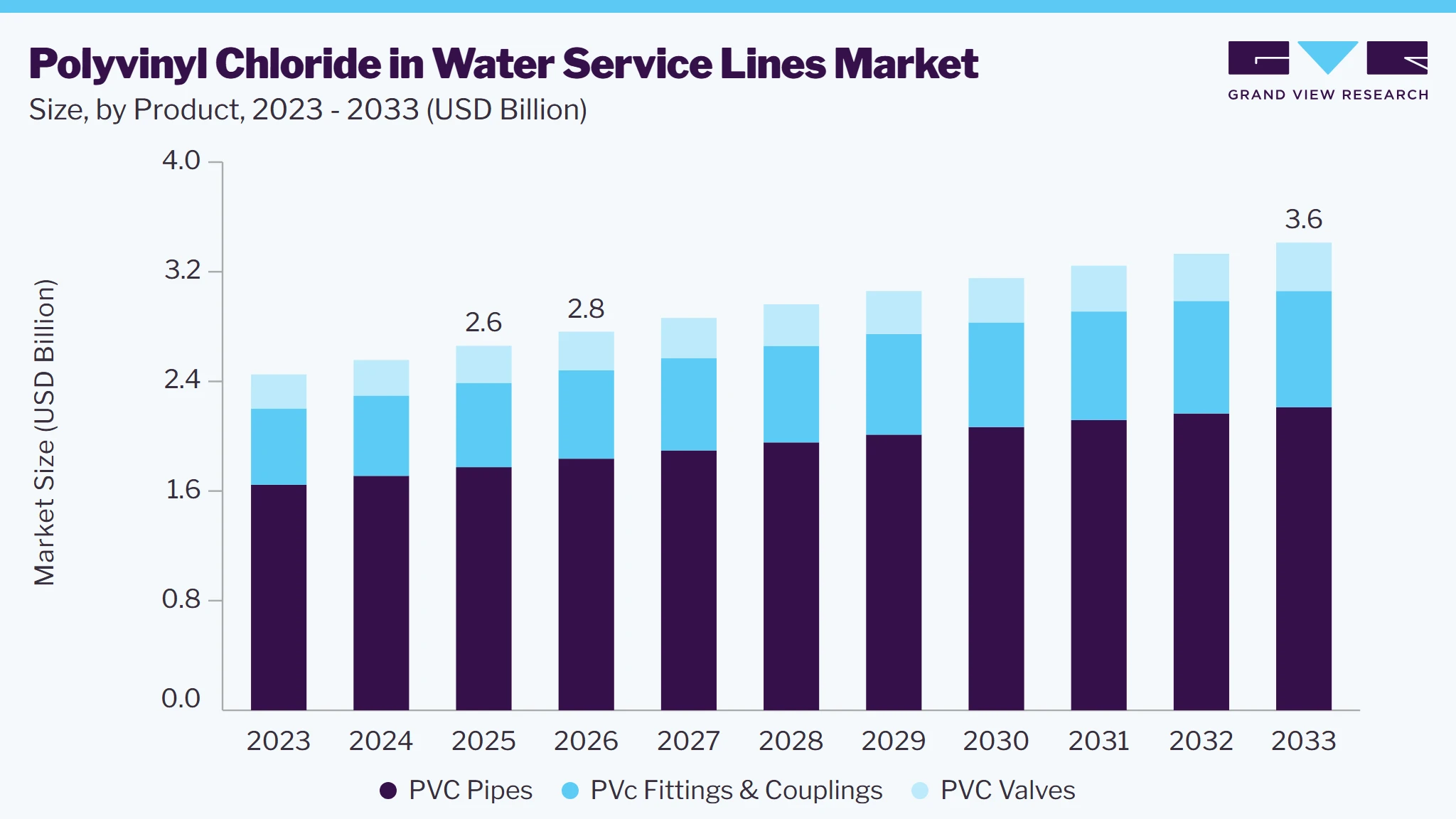 To learn more about this report, Download Free Sample Report
The growth of the PVC in water service lines market is fueled by increasing urbanization and the urgent need for modern water infrastructure. As global populations migrate to urban areas, the demand for efficient and reliable water distribution systems rises significantly.PVC pipes, known for their durability, corrosion resistance, and cost-effectiveness, have become the preferred choice for various applications in water supply and sanitation.
Market Dynamics
The PVC in water service lines market is driven by the increasing demand for durable and high-performance piping solutions, the modernization of water distribution infrastructure, and the growing need for efficient water supply systems. The superior temperature resistance and chemical durability of chlorinated polyvinyl chloride (CPVC), along with the enhanced pressure strength, thinner wall design, and improved hydraulic performance of molecularly oriented PVC (PVC-O), are accelerating their adoption across municipal and industrial water networks. Additionally, continuous product innovations and infrastructure investments are enhancing system efficiency, reliability, and long-term performance, supporting sustained market growth during the forecast period.
The polyvinyl chloride in water service lines market is experiencing steady growth, driven by rapid urbanization, expanding municipal infrastructure, and increasing demand for reliable water distribution systems, where long-term operational efficiency and durability are essential. PVC pipes are increasingly adopted owing to their corrosion resistance, lightweight construction, high mechanical strength, and long service life, enabling efficient water transportation with lower installation and maintenance requirements.
Market growth is further supported by rising investments in urban development, replacement of aging water infrastructure, and expanding residential and commercial construction activities. Increasing focus on improving water supply reliability, reducing lifecycle costs, and enhancing distribution network performance has significantly strengthened market demand. As governments and utilities continue to prioritize modern water infrastructure and sustainable pipeline solutions, the polyvinyl chloride in water service lines market is expected to witness sustained growth during the forecast period.
Stringent environmental regulations and growing sustainability concerns remain significant restraints for the polyvinyl chloride in water service lines market. Regulatory authorities are implementing stricter policies to reduce plastic waste, improve recyclability, and encourage the adoption of sustainable materials in infrastructure projects. Regulations such as the European Union's Single-Use Plastics Directive and evolving environmental compliance standards increase regulatory obligations, material certification requirements, and sustainability-related investments for manufacturers. These factors can raise production costs, limit PVC adoption in certain applications, and slow project approvals, thereby restraining the long-term growth of the polyvinyl chloride in water service lines market.
The increasing pace of urbanization and growing investments in water infrastructure are creating significant growth opportunities for the polyvinyl chloride in water service lines market. Rising demand for safe, reliable, and efficient water distribution systems is accelerating the adoption of PVC pipes across municipal water supply and urban development projects. Expanding smart city initiatives, population growth, and government investments in modernizing aging water networks are further supporting market growth, while continuous advancements in pipe design, manufacturing technologies, and installation efficiency are expected to drive sustained demand during the forecast period.
Analyst Perspective
The PVC in Water Service Lines market is expected to grow through investments in water infrastructure, replacement of aging networks, urbanization, and rising demand for safe water. Demand will be supported by municipal, residential, commercial, and industrial applications, while advanced, durable, and sustainable PVC solutions will gain importance. However, feedstock volatility, pricing pressure, environmental concerns, and alternative materials may challenge profitability. Companies focusing on cost efficiency, innovation, sustainability, reliable sourcing, and strong distribution networks can capitalize on long-term opportunities.
Product Insights
Based on product, thePVC pipes segment led the market with the largest revenue share of 64.1% in 2025. PVC pipes are essential for water service lines, due to their affordability, durability, and resistance to corrosion. Schedule 40 PVC pipes are designed for low-pressure applications and are typically used in residential and light commercial water systems. These pipes are lightweight, easy to handle, and provide excellent flow capacity for transporting water. They are commonly employed in underground water distribution and drainage systems, offering a cost-effective solution for non-pressurized applications.
PVC Fittings & Couplings segment is expected to grow at the fastest CAGR over the forecast period. PVC fittings and couplings are vital components in water service lines, allowing for the seamless connection and direction of pipes within a water distribution system. These fittings, such as elbows, tees, and reducers, ensure smooth transitions between pipes of different sizes or directions without compromising the system’s integrity.
Application Insights
Based on application, theresidential water service lines segment led the market with the largest revenue share of 52.2% in 2025. The residential segment accounted for the largest revenue share of 52.58% in 2024,driven by the material’s cost-effectiveness, durability, and ease of installation. Increasing urbanization, particularly in emerging economies, and the need for reliable infrastructure to meet the demands of growing populations have also fueled the adoption of PVC pipes in residential water service lines.
 To learn more about this report, Download Free Sample Report
Moreover, commercial water service lines in the PVC water service lines market play a vital role in ensuring efficient water distribution across large buildings and industrial facilities. These lines typically require pipes of greater dimensions compared to residential applications due to higher water usage and pressure demands.
Regional Insights
North America polyvinyl chloride in water service lines market is experiencing steady growth, driven by increasing infrastructure development and the need for efficient, cost-effective materials in water distribution systems.These infrastructure upgrades, particularly in water and sewage systems, drive demand for PVC pipes as municipalities prioritize replacing aging pipelines to improve water quality and reduce leakage.
U.S. Polyvinyl Chloride In Water Service Lines Market Trends
The polyvinyl chloride (PVC) in the water service lines market in the U.S. is a significant market as its construction sector remains one of the largest in the region. The market is driven by the increasing need to upgrade aging water infrastructure and the demand for durable, cost-effective piping solutions. PVC pipes have become a favored choice in the U.S. due to their corrosion resistance, ease of installation, and long lifespan, which make them ideal for water service applications.
Asia Pacific Polyvinyl Chloride In Water Service Lines Market Trends
Asia Pacific dominated the polyvinyl chloride in water service lines market with the largest revenue share of 33.2% in 2025. PVC pipes are widely used in water distribution networks across Asia Pacific, due to their durability and corrosion-resistant properties. Governments in countries like China, India, and those in Southeast Asia are heavily investing in water management infrastructure, particularly as urban populations continue to grow.
 To learn more about this report, Download Free Sample Report
Europe Polyvinyl Chloride In Water Service Lines Market Trends
The polyvinyl chloride (PVC) in water service lines market in Europe is witnessing steady growth, driven by the region's ongoing water and wastewater infrastructure investments. Countries across Europe are focusing on modernizing their water distribution systems to improve efficiency and meet rising environmental standards.
China polyvinyl chloride (PVC) in water service lines market is expanding rapidly due to the country's continuous investments in infrastructure and the rising demand for clean and reliable water supply systems.With the Chinese government prioritizing the improvement of water infrastructure in both urban and rural areas, the demand for PVC in water service lines is expected to register sustained growth.
Key Polyvinyl Chloride In Water Service Lines Company Insights
The PVC in water service lines market is highly competitive, with several key players dominating the landscape. Major companies include Arkema S.A., Formosa Plastics Corporation, INEOS AG, KEM ONE, and LG Chem, Ltd. The Polyvinyl Chloride (PVC) in Water Service Lines Market is characterized by a competitive landscape with several key players driving innovation and market growth. Major companies in this sector are investing heavily in research and development to enhance the performance, cost-effectiveness, and sustainability of their products.
Key Polyvinyl Chloride In Water Service Lines Companies:
The following key companies have been profiled for this study on the PVC in water service lines market.
- Arkema S.A.
- Formosa Plastics Corporation
- INEOS AG
- KEM ONE
- LG Chem, Ltd.
- Mitsubishi Chemical Group Corporation
- Occidental Petroleum Corporation
- Shin-Etsu Chemical Co., Ltd.
- Sinochem Holdings Corporation Ltd
- Solvay
- Westlake Corporation
- Xinjiang Zhongtai Chemical Co., Ltd.
Competitive Benchmarking
Category
Operating Strategies
Competitive Edge
Weakness
Established Players (Formosa Plastics Corporation, INEOS AG, Occidental Petroleum Corporation (OxyChem), Shin-Etsu Chemical Co., Ltd., Westlake Corporation, Xinjiang Zhongtai Chemical Co., Ltd.)
- Focus on strengthening their position in the polyvinyl chloride in water service lines market through the production and commercialization of high-performance PVC pipes, fittings, couplings, and valves for residential, commercial, and municipal water distribution systems.
- Strong emphasis is placed on expanding PVC product portfolios with advanced formulations offering enhanced pressure resistance, corrosion resistance, durability, and long service life. Continuous investments in manufacturing capacity expansion, process optimization, product innovation, and strategic collaborations with utilities, infrastructure developers, and construction companies support global market penetration and long-term commercial growth.
- Extensive expertise in PVC resin production, pipe manufacturing technologies, and integrated value chain operations enables the commercialization of high-performance polyvinyl chloride in water service lines products with superior durability, hydraulic efficiency, chemical resistance, and cost-effectiveness. Strong research and development capabilities, globally recognized brands, vertically integrated manufacturing facilities, diversified product portfolios, established relationships with infrastructure contractors and distributors, and extensive global distribution networks provide sustainable competitive differentiation and recurring revenue opportunities across water infrastructure applications.
- High capital investment requirements for PVC resin production, pipe manufacturing, capacity expansion, and continuous product innovation increase operational complexity and production costs. Stringent environmental regulations, fluctuating raw material prices, increasing competition from regional manufacturers, and pricing pressure from infrastructure projects influence market growth. Additionally, substantial investments in sustainability initiatives, recycling technologies, regulatory compliance, and manufacturing modernization may affect profitability and long-term market share.
Emerging Players (KEM ONE, LG Chem, Ltd., Mitsubishi Chemical Group Corporation, Sinochem Holdings Corporation Ltd, Arkema S.A., Solvay)
- Focus on expanding their presence in the polyvinyl chloride in water service lines market through the development of innovative, application-specific, and cost-effective PVC materials and piping solutions for residential, commercial, and municipal water infrastructure.
- Emphasis is placed on improving product performance, developing advanced PVC formulations, enhancing manufacturing efficiency, and strengthening collaborations with pipe manufacturers, distributors, utilities, and infrastructure developers. Strategic partnerships, regional capacity expansion, and targeted commercialization initiatives support product innovation, business growth, and entry into high-growth domestic and international markets.
- Strong flexibility in product innovation, advanced polymer technologies, customized material solutions, and responsive technical support enables these companies to address evolving water infrastructure requirements effectively. Their ability to rapidly commercialize new PVC grades, optimize manufacturing processes, deliver application-specific solutions, and offer competitive pricing strengthens adoption among pipe manufacturers and infrastructure contractors. Agile business models and customer-focused product development further enhance their competitive positioning in the polyvinyl chloride in water service lines market.
- Limited manufacturing scale in finished water service line products compared with leading multinational competitors, relatively smaller distribution networks in certain regions, and comparatively lower market penetration may restrict competition in large-scale infrastructure projects. Dependence on regional demand, increasing environmental compliance requirements, and pricing pressure from established PVC suppliers can constrain market expansion. Additionally, substantial investments in production capacity, advanced processing technologies, sustainability initiatives, regulatory certifications, and global customer acquisition are required to compete effectively in the polyvinyl chloride in water service lines market.
Recent Developments
-
In August 2024, Johnson Controls announced an agreement to sell its commercial PVC pipe and fittings business, which caters to light commercial and residential sprinkler systems, to Belgium-based Aliaxis SA. This sale involves the manufacturing assets in Huntsville, Alabama. The sale is also part of Johnson Controls' ongoing strategy to streamline its operations and focus on engineered solutions.
-
In May 2024, Westlake Pipe & Fittings, a division of Westlake Corporation, unveiled plans to construct a new PVCO pipe manufacturing plant at its existing facility in Wichita Falls, Texas. This expansion underscores Westlake's dedication to fostering growth, driving innovation, and generating employment opportunities in the local community.
Polyvinyl Chloride In Water Service Lines Market Report Scope
Report Attribute
Details
Market size value in 2025
USD 2.6 billion
Estimated market size in 2026
USD 2.8 billion
Projected market size by 2033
USD 3.6 billion
Growth rate
CAGR of 4.0% from 2026 to 2033
Base year for estimation
2025
Historical data
2021 - 2024
Forecast period
2026 - 2033
Quantitative units
Revenue in USD million/billion, volume in kilotons, and CAGR from 2026 to 2033
Report coverage
Revenue forecast, company ranking, competitive landscape, growth factors, and trends
Segments covered
Product, application, region
Regional scope
North America; Europe; Asia Pacific; Central & South America; Middle East & Africa
Country scope
U.S.; Canada; Mexico; Germany; U.K.; Italy; France; Spain; China; India; Japan; South Korea; Australia; Brazil; Argentina; South Africa; Saudi Arabia
Key companies profiled
Arkema S.A.; Formosa Plastics Corporation; INEOS AG; KEM ONE ; LG Chem, Ltd.; Mitsubishi Chemical Group Corporation; Occidental Petroleum Corporation; Shin-Etsu Chemical Co., Ltd.; Sinochem Holdings Corporation Ltd; Solvay; Westlake Corporation; Xinjiang Zhongtai Chemical Co., Ltd.
Customization scope
Free report customization (equivalent to up to 8 analysts' working days) with purchase-addition or alteration to country, regional & segment scope.
Pricing and purchase options
Avail customized purchase options to meet your exact research needs. Explore purchase options
Global Polyvinyl Chloride In Water Service Lines Market Report Segmentation
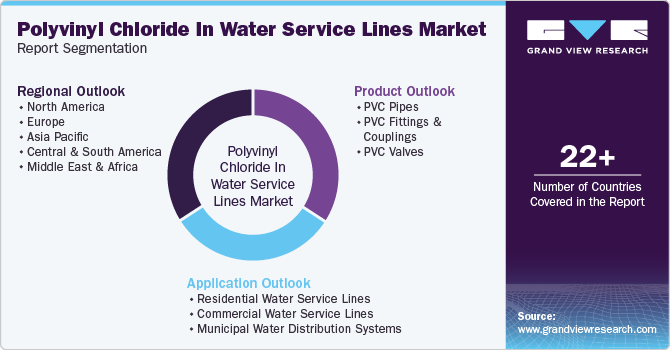
This report forecasts revenue and volume growth at the global, regional, and country levels and provides an analysis of the latest industry trends in each of the sub-segments from 2021 to 2033. For this study, Grand View Research has segmented the global polyvinyl chloride in water service lines market report on the basis of product, application, and region:
 To learn more about this report, Download Free Sample Report
-
Product Outlook (Volume, Kilotons; Revenue, USD Million, 2021 - 2033)
-
PVC Pipes
-
Schedule 40
-
Schedule 80
-
C900 Pipes (Pressure-rated Pipes)
-
-
PVC Fittings & Couplings
-
PVC Valves
-
-
Application Outlook (Volume, Kilotons; Revenue, USD Million, 2021 - 2033)
-
Residential Water Service Lines
-
Commercial Water Service Lines
-
Municipal Water Distribution Systems
-
-
Regional Outlook (Volume, Kilotons; Revenue, USD Million, 2021 - 2033)
-
North America
-
U.S.
-
Canada
-
Mexico
-
-
Europe
-
Germany
-
France
-
UK
-
Italy
-
Spain
-
-
Asia Pacific
-
China
-
India
-
Japan
-
South Korea
-
Australia
-
-
Central & South America
-
Brazil
-
Argentina
-
-
Middle East & Africa
-
South Africa
-
Saudi Arabia
-
-
Research Methodology
The polyvinyl chloride in water service lines market figures in this report are based on a proven research process that combines executive interviews with secondary research from proprietary databases, company filings, and recognized regulatory and institutional sources. Market size is built through value-chain sizing - reconciling supply-side and demand-side estimates - and triangulated with bottom-up and top-down approaches. Every estimate passes multiple levels of expert validation before publication, with each polyvinyl chloride in water service lines segment quantified using the revenue-capture definitions in the table below.
Segment Definition
Segment - Product
Revenue capture definition
PVC Pipes
Revenue is captured through the production and sale of PVC pipes used in residential, commercial, municipal, and industrial water service line installations. Demand is driven by superior corrosion resistance, long service life, lightweight construction, high hydraulic efficiency, cost-effectiveness, and increasing investments in water infrastructure modernization, urban development, and drinking water distribution networks.
PVC Fittings & Couplings
Revenue is captured through the commercialization of PVC fittings and couplings used to connect, redirect, branch, and repair water service line networks. Growth is supported by excellent leak-proof performance, chemical resistance, ease of installation, dimensional stability, compatibility with PVC piping systems, and increasing demand for reliable water distribution and maintenance solutions across residential, commercial, and municipal applications.
PVC Valves
Revenue is captured through the production and sale of PVC valves used to regulate, isolate, and control water flow in residential, commercial, and municipal water service line systems. Demand is driven by superior corrosion resistance, lightweight design, low maintenance requirements, reliable flow control, long operational life, and growing investments in efficient water management and distribution infrastructure.
Segment - Application
Revenue capture definition
Residential Water Service Lines
Revenue is captured through the production and sale of PVC pipes, fittings, couplings, and valves used in residential water service line installations connecting municipal water supplies to homes. Demand is driven by increasing housing construction, urbanization, replacement of aging pipelines, superior corrosion resistance, cost-effectiveness, and growing investments in reliable drinking water infrastructure.
Commercial Water Service Lines
Revenue is captured through the commercialization of PVC piping systems used in commercial buildings, including offices, retail complexes, hospitals, educational institutions, and hospitality facilities. Growth is supported by rising commercial construction, demand for durable and low-maintenance water distribution systems, excellent hydraulic performance, and increasing adoption of corrosion-resistant piping solutions.
Municipal Water Distribution Systems
Revenue is captured through the production and sale of PVC pipes, fittings, couplings, and valves used in municipal water transmission and distribution networks. Demand is driven by expanding urban infrastructure, replacement of aging water pipelines, government investments in public water supply projects, superior durability, leak resistance, high flow efficiency, and the growing need for safe, reliable, and long-lasting water distribution systems.
Estimation Model
Layer Name
Key Question
Description
Top-Down Polyvinyl Chloride in Water Service Lines Demand Assessment Layer
What defines market boundaries?
This layer begins with global demand for polyvinyl chloride in water service lines across residential, commercial, municipal, and utility water infrastructure applications. Demand is filtered based on new pipeline installations, replacement of aging water distribution networks, urbanization, population growth, investments in water infrastructure, expanding residential and commercial construction, and increasing access to safe drinking water worldwide.
Product and Application Validation Layer
Where is demand generated?
This layer evaluates demand distribution across PVC pipes, PVC fittings & couplings, and PVC valves used in residential water service lines, commercial water service lines, and municipal water distribution systems. Market revenue is aligned with critical performance requirements, including corrosion resistance, pressure strength, leak-proof performance, hydraulic efficiency, durability, long service life, ease of installation, and compliance with potable water quality standards across diverse water infrastructure applications.
Technology and Revenue Conversion Layer
Who captures market revenue?
This layer converts application-level demand into the polyvinyl chloride in water service lines market revenue by applying product mix ratios across PVC pipes, PVC fittings & couplings, and PVC valves. Revenue allocation considers material grade, pressure rating, manufacturing technology, product specifications, installation complexity, regulatory compliance, production costs, product pricing, application-specific requirements, and supplier positioning across the global water infrastructure value chain.
Regional Commercial Cross-Check Layer
How are assumptions validated?
This layer validates demand concentration by comparing North America's growth supported by replacement of aging water infrastructure and regulatory compliance; Europe's demand driven by sustainable water management initiatives, infrastructure modernization, and stringent potable water standards; and Asia Pacific's rapid expansion fueled by urbanization, population growth, government investments in water supply projects, and large-scale residential and municipal infrastructure development.
Delivered Customizations
This report has been delivered with the following In-depth customizations
Client Request
Customization Delivered
Value Adds
Regional Segmentation
Detailed market assessment across North America, Europe, Asia Pacific, Latin America, and Middle East & Africa, including country-level demand analysis, infrastructure investments, replacement of aging water networks, urbanization trends, regulatory landscape, and regional growth forecasts for PVC water service lines.
Enables clients to identify high-growth regions, prioritize investments, optimize regional expansion strategies, and align sales efforts with country-specific infrastructure development opportunities.
Cross-Segmentation
Comprehensive analysis across Product (PVC Pipes, PVC Fittings & Couplings, PVC Valves) and Application (Residential Water Service Lines, Commercial Water Service Lines, Municipal Water Distribution Systems), including revenue contribution, demand trends, growth rates, and adoption patterns across key end-use sectors and regions.
Supports targeted product positioning, identifies high-growth application areas, improves portfolio planning, and enables data-driven market entry and expansion strategies.
Trade Assessment
Comprehensive evaluation of global import-export trends, production and consumption balance, trade flows, tariff structures, regulatory standards, supply chain dynamics, major exporting and importing countries, and the impact of international trade policies on the PVC water service lines market.
Enables clients to optimize sourcing strategies, evaluate supply chain risks, identify new trade opportunities, and make informed decisions regarding international expansion and procurement.
Frequently Asked Questions About This Report
The polyvinyl chloride in water service lines market was estimated at around USD 2.6 billion in the year 2025 and is expected to reach around USD 2.8 billion in 2026.
The polyvinyl chloride in water service lines market is expected to grow at a compound annual growth rate of 4.0% from 2026 to 2033 to reach around USD 3.6 billion by 2033.
Some key players operating in the PVC in water service lines market include Arkema S.A.; Formosa Plastics Corporation; INEOS AG; KEM ONE ; LG Chem, Ltd.; Mitsubishi Chemical Group Corporation; Occidental Petroleum Corporation, and others.
The PVC pipes led the polyvinyl chloride in water service lines market in 2025 with a 64.1% share. Rising investments in water infrastructure, expanding urbanization, and increasing demand for safe and reliable water distribution systems are accelerating PVC pipes adoption due to their superior corrosion resistance, long service life, lightweight construction, high hydraulic efficiency, and cost-effectiveness across residential water service lines, commercial water supply networks, and municipal water distribution applications.
The growth of the agriculture sector significantly influences the PVC pipes market for water service lines, driven by the increasing need for efficient irrigation and water management solutions.
The Asia Pacific Polyvinyl Chloride in Water Service Lines market accounted for the largest share of 33.2% market size in 2025.
Middle East & Africa was the leading Polyvinyl Chloride in Water Service Lines market and is expected to grow at a compound annual growth rate of 4.7%.
Based on application, the residential water service lines segment accounted for the largest share of 52.2% market size in 2025. Rising residential construction, rapid urbanization, and increasing demand for safe and reliable drinking water supply are accelerating residential water service lines adoption due to the superior corrosion resistance, long service life, lightweight construction, leak-proof performance, and cost-effectiveness of polyvinyl chloride in water service lines across single-family homes, multi-family residential developments, and housing infrastructure projects.
The commercial water service lines segment, based on technique, is expected to grow at a CAGR of 5.5% for the forecast period.
About the Author(s)
Plastics, Polymers & Resins Research Team
Bulk Chemicals · Plastics, Polymers & ResinsThis report was authored by the plastics, polymers & resins research team at Grand View Research - comprising two research analysts, one senior research analyst, and one industry expert - with specialized expertise in the plastics, polymers & resins segment of the bulk chemicals industry. All findings are based on proprietary bulk chemicals databases, executive interviews, and regulatory analysis, subject to internal peer review prior to publication.
Last Updated:
Speak to Analyst

Customize this report to your needs - add regions, segments, or data points, with 20% free customization.
Or view our licence options:


ISO 9001:2015 & 27001:2022 Certified
We are GDPR and CCPA compliant! Your transaction & personal information is safe and secure. For more details, please read our privacy policy.


