
- Home
- »
- Beauty & Personal Care
- »
-
Pore Strips Market Size, Share & Growth Report, 2025-2030GVR Report cover
![Pore Strips Market (2025 - 2030)Report]()
Pore Strips Market (2025 - 2030)
Size, Share & Trends Analysis Report By Ingredient (Non-charcoal, Charcoal), By End-use (Salon, Home), By Region (North America, Europe, Asia Pacific, Central & South America, MEA), And Segment Forecasts
Market Size, 2024
$1.7BMarket Estimate, 2026
$1.9BMarket Forecast, 2030
$2.4BCAGR, 2025–2030
6.1%Pore Strips Market Size & Trends
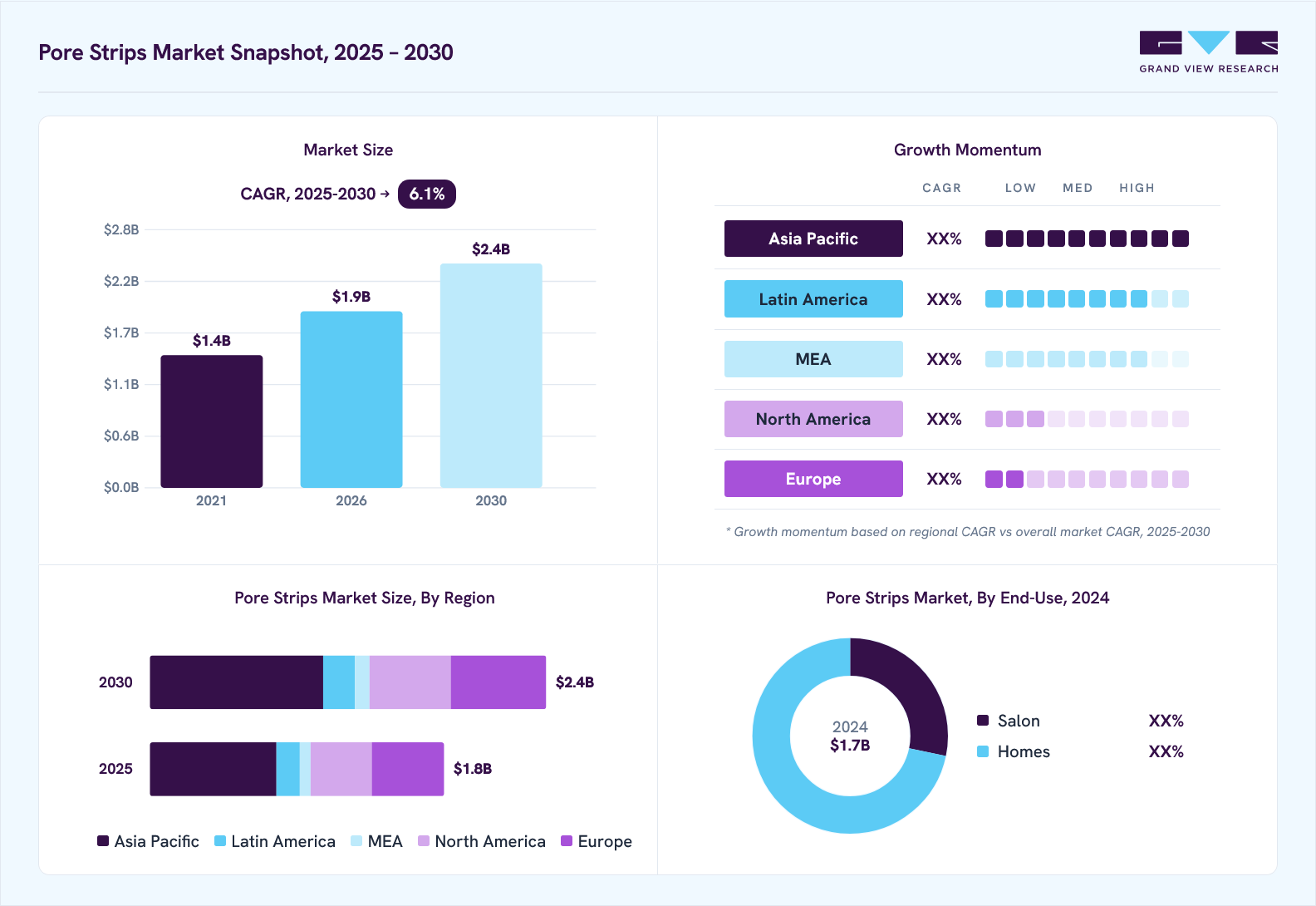
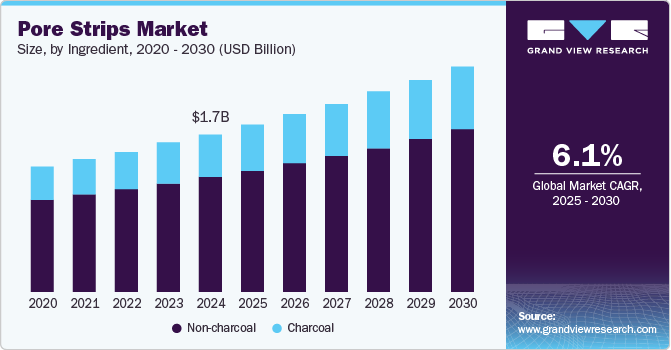
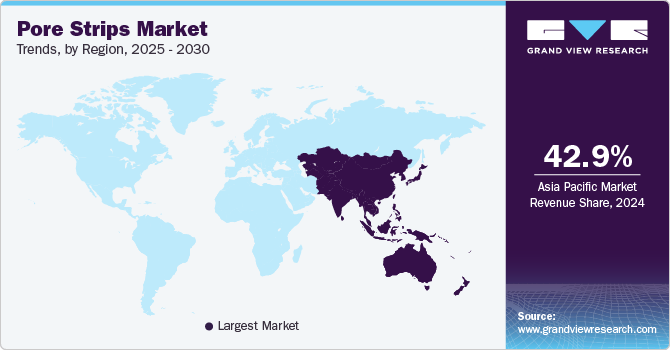
The global pore strips market size was valued at USD 1.7 billion in 2024 and is projected to grow from USD 1.9 billion in 2026 to USD 2.4 billion by 2030, at a CAGR of 6.1% from 2025 to 2030. Asia Pacific dominated the market, accounting for a revenue share of 42.9% in 2024. Pore strips are perceived to be easy and fast-acting.
Substitutes such as clay masks and scrubs require a certain amount of time and a lengthy process before showing the desired results. Rapid urbanization, hectic lifestyle, and facial aesthetic ideals are some factors that are expected to drive product demand in the near future, especially among young consumers who prefer quick solutions.
Pore strips are now being marketed as gender-neutral, targeting both men and women, reflecting the beauty industry's broader shift towards inclusivity as men increasingly invest in skincare. The expansion of retail channels from some of the prominent brands, such as Estée Lauder, Sephora, and Shiseido Co., will also positively influence the market growth over the next few years. As consumer awareness of skin health continues to grow, driven by platforms like YouTube and social media, the demand for skincare products, including pore strips, has increased. Brands in the beauty sector have embraced strategies like subscription models and beauty boxes to expand their reach and engage directly with consumers, further contributing to market growth.
Sustainability has become a major concern in the industry, with increasing regulatory pressure to create eco-friendly products. In response, brands like Nykaa are focusing on sustainable packaging and environmentally conscious ingredients to meet both consumer expectations and legal requirements. Moreover, inflation has impacted production costs and consumer purchasing power, altering market dynamics. Despite these challenges, the growing demand for accessible skincare solutions has allowed pore strips to reach a larger audience, hence fueling the industry's growth.
Ingredient Insights
Non-charcoal pore strips dominated the market with a share of 72.9% in 2024. Changing consumer perception toward organic products, coupled with the growing utilization of environmentally sustainable products, has fueled the demand for naturally derived ingredients. Non-charcoal pore strips help soothe dry skin and reduce itching and irritation, which drives the segment. For instance, tea tree oil acts as an antiseptic and is one of the popular choices for treating acne due to its anti-microbial and anti-inflammatory properties. Tea tree oil-based pore strips effectively adhere to the skin to remove dirt and oil, which clog pores and instantly improve the appearance of the skin. Due to the beneficial properties of tea tree extract, the strips assist in the tightening of the pores. The aforementioned factors are anticipated to fuel the segment growth during the forecast period.
The charcoal segment is expected to grow at the fastest CAGR during the forecast period. The activated charcoal strips help unclog and tighten pores and remove bacteria that lead to spots, thereby helping consumers achieve healthier skin. Such factors are projected to drive product demand, especially among consumers who spend most of their time in the sun and outdoors. To boost their market position, most corporations are focusing on mergers and acquisitions, acquiring shares in regional companies to expand their geographical presence, broadening their product ranges, and expanding customer reach. For instance, in 2024, L'Oréal acquired a stake in Dr.G, a leading Korean skincare brand. This strategic investment allowed L'Oréal to enhance its presence in the Asian skincare market.
End-use Insights
The home segment dominated the market in 2024. Growing fashion awareness and a stronger focus on skincare has driven more consumers to adopt at-home beauty routines. Pore strips have become especially popular due to their convenience and simplicity. They offer an easy alternative to more time-consuming skincare methods. Consumers stock these products to use at home as per their work schedules and free time. However, a growing number of product manufacturers, such as Sephora USA, Inc. and Kao (UK) Limited, are marketing their products through multiple platforms in order to target a larger number of consumers. Such efforts are likely to drive product sales through Homes in the upcoming years.
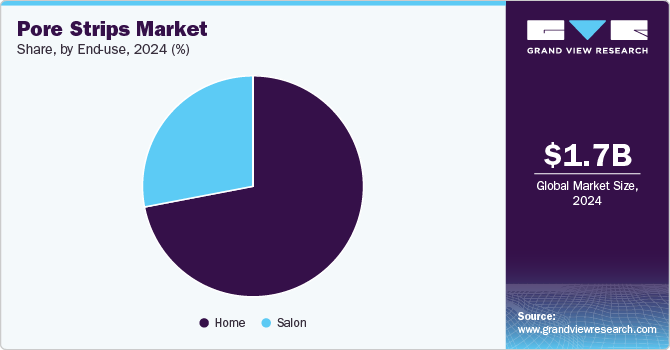
The salon segment is expected to grow rapidly as pore strips evolve from a temporary path to part of comprehensive skincare treatments. Consumers, especially younger generations, are seeking long-term solutions for concerns like sun damage and pollution. Advancements in skincare technology have made pore strips more effective, allowing salon to use them in facials and deep cleansing routines. These key drivers, including increased consumer demand for high-quality and long-lasting skincare results, will boost the home segment in the long run.
Regional Insights
North America pore strips market share is projected to grow at a significant CAGR from 2025 - 2030. The growing consumer awareness of skincare, fueled by social media and beauty trends, is driving demand for pore strips in the region. Rising disposable income, urbanization, and advancements in product technology are also key factors fueling regional market growth.
U.S. Pore Strips Market Trends
The U.S. dominated the North America pore strips industry in 2024. In the U.S., skincare and self-care have become integral parts of daily routines, driving the popularity of pore strips as a quick and easy solution. With widespread availability both in stores and online, they are easily accessible to consumers. Growing awareness about skincare and its importance has further fueled the demand. These factors collectively make the U.S. a leading market for pore strips.
Europe Pore Strips Market Trends
The Europe pore strips industry accounted for a significant revenue share in 2024. Changing climate conditions, including humidity, pollution, and seasonal changes, are resulting in increased skin sensitivity and clogged pores, which can contribute to acne. This has led to a higher demand for skincare solutions like pore strips that help remove impurities and prevent breakouts.
Asia Pacific Pore Strips Market Trends
The Asia Pacific pore strips market held the largest share of 42.9% in 2024. Pore strips, which are gender-neutral and easy to use, have become popular across all age groups and genders. Japanese and South Korean male grooming products are popular among consumers across Chinese and other Southeast Asian markets. These products have strong adhesive properties, which make them effective and are likely to boost their use among consumers in the region. BTS, the world’s leading pop act and “Kings of K-pop,” have set the trend by leveraging gender-fluid imagery, carefully curated fashion, hairstyles, and skincare routines. BTS is signing endorsement deals with leading Korean skincare and cosmetics brands.
The China pore strips industry held a substantial market share in 2024. In early 2024, China’s air quality improved, with the environmental ministry reporting a 2.9% reduction in pollution. This improvement was followed by 2023, when PM2.5 levels increased by 3.4%, ending a ten-year decline in air pollution. However, long-term exposure to pollution and higher population density have led to more skin problems, especially those related to clogged pores. As a result, there is increasing demand for skin care products that offer effective cleansing and protection and are also easy and quick to use.
Key Pore Strips Company Insights
Some of the key companies in the pore strips industry include Kao Corporation (Japan), Procter & Gamble (USA), Unilever (UK/Netherlands) and others. Key players are taking several strategic initiatives, such as mergers and acquisitions, and partnerships with other major companies.
-
Kao Corporation is a Japanese multinational company specializing in personal care, beauty, and household products. The company is known for its high-quality skincare, haircare, and cosmetic brands, including Bioré, Kanebo, and Jergens.
-
Procter & Gamble (P&G) is known for its wide range of products in health, hygiene, and homecare. The company owns popular brands such as Tide, Gillette, Pampers, and Olay, serving millions of consumers globally. P&G is committed to sustainability, innovation, and improving everyday lives through trusted, high-quality products.
Key Pore Strips Companies:
The following are the leading companies in the pore strips market. These companies collectively hold the largest market share and dictate industry trends.
- Kao Corporation
- Walgreen Co.
- Ulta Beauty, Inc.
- Earth Therapeutics.
- Sephora
- L'Oréal
- TONYMOLY.
- boscia, LLC
- HipHop Skincare
Pore Strips Market Report Scope
Report Attribute
Details
Market size in 2024
USD 1.7 billion
Estimated market size in 2026
USD 1.9 billion
Projected market size by 2030
USD 2.4 billion
Growth rate
CAGR of 6.1% from 2025 to 2030
Base year for estimation
2024
Historical data
2018 - 2023
Forecast period
2025 - 2030
Quantitative units
Revenue in USD million/billion and CAGR from 2025 to 2030
Report coverage
Revenue forecast, company ranking, competitive landscape, growth factors, and trends
Segments covered
Ingredient, end-use, region
Regional scope
North America; Europe; Asia Pacific; Central & South America; Middle East & Africa
Country scope
U.S.; Canada; Germany; France; U.K; Italy; Spain; Japan; China; India; Australia; South Korea; Brazil; Turkey
Key companies profiled
L’Oréal S.A.; Kao Corporation; Walgreen Co.; Ulta Beauty; Earth Therapeutics; Sephora; Tonymoly Co. Ltd.; Boscia; Hip Hop
Customization scope
Free report customization (equivalent up to 8 analysts working days) with purchase. Addition or alteration to country, regional & segment scope.
Pricing and purchase options
Avail customized purchase options to meet your exact research needs. Explore purchase options
Global Pore Strips Market Report Segmentation
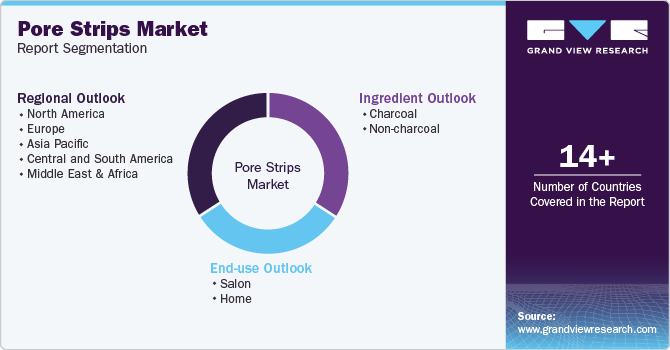
This report forecasts revenue growth at global, regional, and country levels and provides an analysis of the latest industry trends in each of the sub-segments from 2018 to 2030. For this study, Grand View Research has segmented the global pore strips market report based on ingredient, end-use, and region:
-
Ingredient Outlook (Revenue, USD Million, 2018 - 2030)
-
Charcoal
-
Non-charcoal
-
-
End-use Outlook (Revenue, USD Million, 2018 - 2030)
-
Salon
-
Home
-
-
Regional Outlook (Revenue, USD Million, 2018 - 2030)
-
North America
-
U.S.
-
Canada
-
-
Europe
-
Germany
-
France
-
U.K.
-
Italy
-
Spain
-
-
Asia Pacific
-
China
-
Japan
-
India
-
Australia
-
South Korea
-
-
Central and South America
-
Brazil
-
-
Middle East and Africa
-
Turkey
-
-
Frequently Asked Questions About This Report
Some key players operating in the global pore strips market include are L’Oréal S.A.; Kao Corporation; Walgreen Co.; Ulta Beauty; Earth Therapeutics; Sephora; Tonymoly Co. Ltd.; Boscia; and Hip Hop.
Key factors that are driving the pore strips market growth include t6he fact that pore strips are perceived to be easy and fast-acting and especially among young consumers who prefer quick solutions.
The global pore strips market size was valued at USD 1.7 billion in 2024 and is estimated at USD 1.9 billion for 2026.
The global pore strips market is expected to grow at a CAGR of 6.1% from 2025 to 2030, reaching USD 2.4 billion by 2030.
Asia Pacific region dominated the global pore strips market with a share of 42.9% in 2024. This is attributable to increasing number of men are integrating these products in their personal care routines, as men tend to have visible larger pores due to excessive oil formation on their skin.
About the Author(s)
Beauty & Personal Care Research Team
Consumer Goods · Beauty & Personal CareThis report was authored by the beauty & personal care research team at Grand View Research - comprising two research analysts, one senior research analyst, and one industry expert - with specialized expertise in the beauty & personal care segment of the consumer goods industry. All findings are based on proprietary consumer goods databases, executive interviews, and regulatory analysis, subject to internal peer review prior to publication.
Last Updated:
Speak to Analyst -


Customize this report to your needs — add regions, segments, or data points, with 20% free customization.
Or view our licence options:


ISO 9001:2015 & 27001:2022 Certified
We are GDPR and CCPA compliant! Your transaction & personal information is safe and secure. For more details, please read our privacy policy.


