
- Home
- »
- Pharmaceuticals
- »
-
Preclinical Bioanalytical Testing Services Market Report 2033GVR Report cover

Preclinical Bioanalytical Testing Services Market (2026 - 2033)
Size, Share & Trends Analysis Report By Molecule (Small, Large), By Test (ADME, PD, PK, Bioavailability, Bioequivalence, Biomarker Testing), By Workflow, By End Use, By Region, And Segment Forecasts
Market Size, 2025
$1.2BMarket Estimate, 2026
$1.3BMarket Forecast, 2033
$2.6BCAGR, 2026–2033
10.2%Preclinical Bioanalytical Testing Services Market Summary
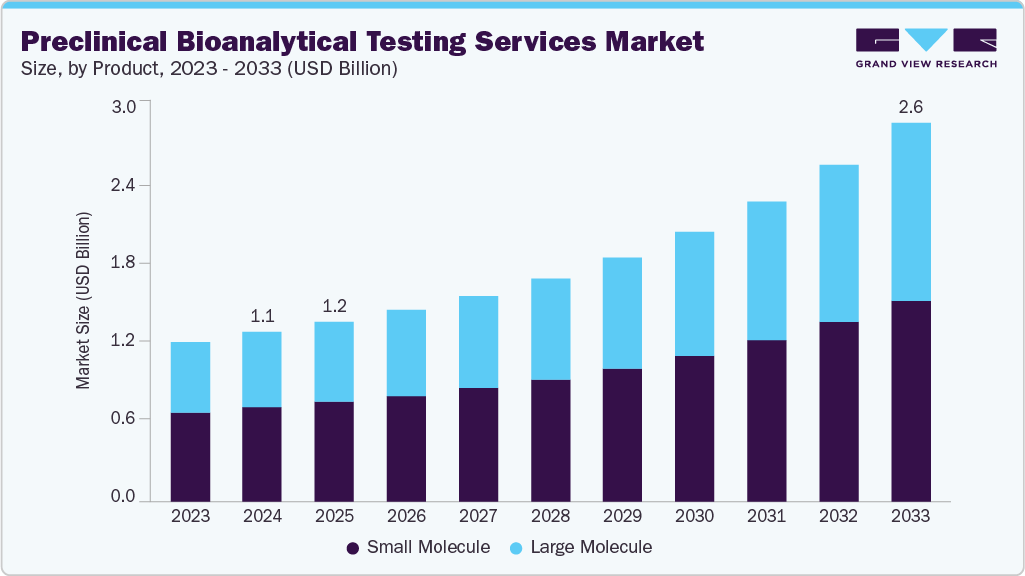
The global preclinical bioanalytical testing services market size was valued at USD 1.2 billion in 2025 and is projected to grow from USD 1.3 billion in 2026 to USD 2.6 billion by 2033, at a CAGR of 10.2% from 2026 to 2033. North America dominated the market, accounting for a revenue share of 47.4% in 2025. The market's growth is driven by the rising demand for new drug development, the increasing prevalence of chronic & rare diseases, and the expansion of biologics and cell & gene therapy development.
 Source: Grand View Research, IR Documents, Primary Interviews, Paid DatabasesTo learn more about this report,
 Download Free Sample Report
 Key Market Trends & Insights
- By molecule: Small molecule segment dominated the market, with a revenue share of 55.5% in 2025.
- By test: Bioavailability segment held the largest market share of 18.4% in 2025.
- By workflow: Sample analysis segment held the largest revenue share of 45.4% in 2025.
- By end use: Pharma & biopharma companies segment accounted for the largest revenue share of 52.6% in 2025.
Regional Highlights
- Largest regional market: North America (47.4% revenue share, 2025)
- Fastest-growing regional market: Asia Pacific (highest CAGR, 2026-2033)
- By country: The U.S. held the largest market share in 2025.
Market Size & Forecast
- Market size in 2025: USD 1.2 Billion
- Estimated market size in 2026: USD 1.3 Billion
- Projected market size by 2033: USD 2.6 Billion
- CAGR (2026-2033): 10.2%
Three ways to get this report
Buy it, customize it, or ask a question.Ask an Analyst
A direct answer, usually in 1 working day
- AccessReport author, directly
- Reply timeWithin 1 working day
- No sales callDirect answer only
- FormatEmail reply
- CostFree, no cost
Get the Full Report
What the study covers
- FormatsPDF · Excel · Dashboard
- Timeline2026–2033 annual, 2025 base
- Coverage20+ countries, 5 regions
- Companies10+ key players profiled
Customize the Report
20% free customization
- IncludeCountries, segments, points
- TailorTo your product definition
- ExtendDeeper competitor detail
- OrA fully bespoke study
- Turnaround5–10 working days
Furthermore, stringent regulatory requirements have heightened the need for precise pharmacokinetic and toxicokinetic analyses during preclinical studies, thereby fueling the demand for specialized bioanalytical testing services. Other factors contributing to growth include rising advances in bioanalytical technologies, such as LC-MS/MS and immunoassays, increasing cost efficiency, and the growing adoption of advanced bioanalytical technologies.The rapid expansion of biologics, biosimilars, monoclonal antibodies, and cell and gene therapies is fueling the requirement for advanced preclinical bioanalytical testing services. The most complex molecules require highly sensitive, specific, and validated analytical methods to assess their pharmacokinetics, immunogenicity, and safety. Besides, the drug pipelines are increasingly shifting towards large-molecule therapeutics, and bioanalytical laboratories must develop innovative assays and platforms to meet regulatory expectations. This expansion drives the need for specialized expertise, validation processes, and technologies in preclinical bioanalysis to support the accurate and efficient development of drugs.
 To learn more about this report, Download Free Sample Report
 Moreover, advancements in high-sensitivity platforms transform preclinical bioanalytical testing services by enabling precise detection and quantification of low-abundance biomarkers, proteins & drug molecules. In addition, LC-MS/MS, ligand-binding assays, and hybrid technology platforms are enhancing the analytical accuracy, reproducibility, and throughput. These innovations support the characterization of complex biologics and cell or gene therapies with improved sensitivity and lower detection limits. In addition, automated sample preparation, microfluidics & multiplexing further streamline workflows, reduce variability, increase efficiency, and ensure reliable data generation, critical for early-stage drug development and regulatory compliance.
Furthermore, regulatory agencies such as the FDA, EMA, and PMDA enforce stringent guidelines for bioanalytical validation, pharmacokinetic analysis, toxicology profiling, and biomarker quantification to ensure the safety and reliability of drugs before human trials. Pharmaceutical companies rely on certified preclinical bioanalytical testing partners with GLP-compliant infrastructure, validated technologies, and robust reporting capabilities to meet regulatory expectations. This increases outsourcing preferences to minimize compliance risks, avoid delays in trial approvals, and enhance submission accuracy. As adherence to strict validation protocols becomes essential, demand for high-quality, audit-ready bioanalytical services surges, accelerating market expansion.
Opportunity Analysis
The preclinical bioanalytical testing services market presents strong growth opportunities driven by favorable regulatory environments, the rising development of biologics and advanced therapies, increased outsourcing by small and mid-sized biopharmaceutical companies, technological advancements in analytical platforms, and growing expansion into emerging markets. In the market, rising biologics and advanced therapy development are creating demand for specialized analytical solutions to support the expanding pipeline of therapies, further expanding the need for high-quality, regulatory-compliant preclinical testing services. Moreover, increasing outsourcing by small and mid-sized biopharma companies fuels the market growth, as most companies lack the infrastructure and technical expertise for in-depth bioanalytical work, further creating collaboration with CROs and CDMOs to accelerate drug development. Furthermore, expanding into emerging markets such as Asia Pacific and Latin America is expected to offer new growth opportunities supported by cost advantages, skilled scientific talent, and rising local R&D investments, positioning these regions as key growth frontiers for global preclinical bioanalytical service providers.
Technological Advancements
The preclinical bioanalytical testing services industry presents significant growth opportunities, driven by enhancements in precision, efficiency, and data integrity. High-sensitivity LC-MS/MS systems enable the detection of trace-level compounds, thereby improving quantification accuracy in pharmacokinetic and toxicokinetic studies. In addition, the market has increased requirements for ligand-binding and hybrid assays that combine the strengths of LC-MS and immunoassay techniques, enabling the sensitive analysis of complex biologics and biosimilars. Moreover, the growing integration of automation and robotics streamlines sample handling and data processing, reducing human error and fueling productivity for large-scale studies.
 To learn more about this report, Download Free Sample Report
 The digital data management and AI-driven tools are expected to enhance data traceability, support predictive modeling, and ensure regulatory compliance through real-time monitoring and analytics. Furthermore, multiplex and high-throughput platforms enable the simultaneous analysis of biomarkers, optimizing resource utilization and accelerating study timelines. Thus, these technological advancements are expected to increase testing speed, accuracy, and reproducibility, further supporting the service providers in meeting the growing demand for high-quality preclinical bioanalysis in biologics, biosimilars, and advanced therapies while maintaining cost efficiency and compliance with stringent global regulatory standards.
Pricing Analysis
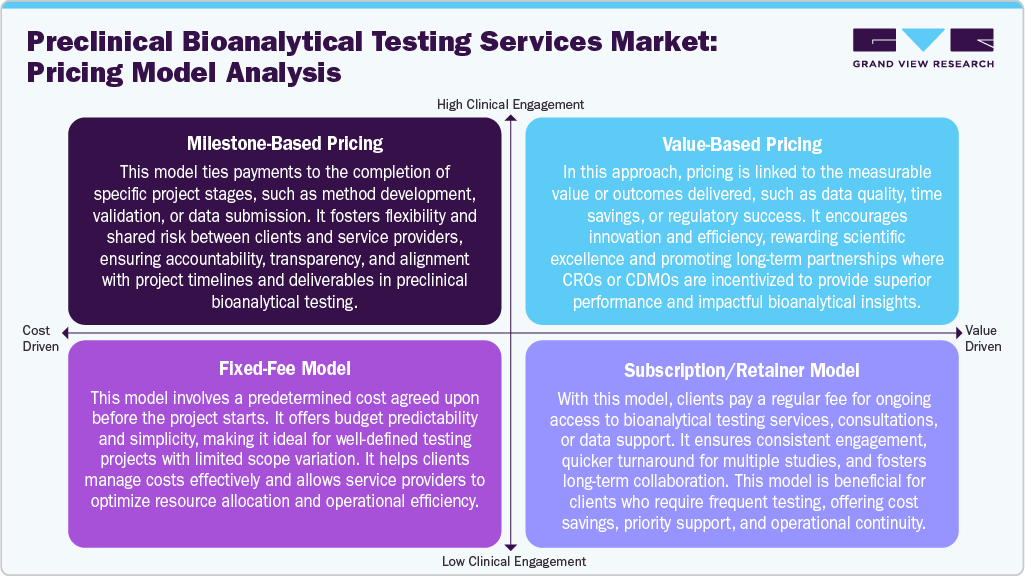
The preclinical bioanalytical testing services market utilizes a range of pricing models tailored to project scope and client requirements. Ideally, milestone-based pricing links payments to specific project stages, such as method validation or report submission, promoting accountability and shared risk. In addition, the value-based pricing ties costs to delivered outcomes, such as data quality or regulatory success, rewarding performance and innovation.
 To learn more about this report, Download Free Sample Report
 Moreover, the fixed-fee models offer a predetermined price for clearly defined projects, ensuring budget predictability and cost control. Furthermore, the subscription model offers clients ongoing access to testing services and scientific support for a recurring fee, facilitating long-term collaboration and expedited project execution. These pricing structures enable CROs and CDMOs to attract diverse clients while maintaining transparency, efficiency, and profitability. Such factors are expected to drive market growth.
Market Dynamics
The preclinical bioanalytical testing services market is witnessing significant growth driven by the increasing number of drug candidates entering preclinical development, the rising outsourcing of laboratory services by pharmaceutical and biotechnology companies, and the growing complexity of biologics, cell and gene therapies, and other advanced therapeutics. Drug developers are increasingly relying on specialized contract research organizations (CROs) for bioanalytical method development, pharmacokinetic (PK), toxicokinetic (TK), immunogenicity, biomarker, and bioanalysis testing to accelerate drug development while reducing operational costs and maintaining regulatory compliance. Furthermore, stringent regulatory requirements from global health authorities for high-quality bioanalytical data, combined with continuous advancements in analytical technologies such as LC-MS/MS, ligand-binding assays, flow cytometry, and molecular bioanalysis, are improving testing accuracy, sensitivity, and efficiency. The growing adoption of large-molecule therapeutics, biosimilars, and personalized medicines is further increasing demand for specialized preclinical bioanalytical testing capabilities across global drug development programs.
The growing trend of outsourcing preclinical research activities is a major driver of the preclinical bioanalytical testing services market. Pharmaceutical and biotechnology companies are increasingly partnering with specialized CROs to conduct bioanalytical testing, pharmacokinetic studies, biomarker analysis, immunogenicity assessments, and method validation, thereby reducing infrastructure investments and speeding up development timelines. As drug pipelines become more diversified and complex, particularly with biologics, antibody-drug conjugates (ADCs), oligonucleotides, and cell and gene therapies, companies require advanced analytical expertise and specialized laboratory capabilities that are often more efficiently accessed through outsourcing. In addition, smaller biotechnology companies with limited internal laboratory infrastructure increasingly depend on external bioanalytical service providers to support regulatory submissions and preclinical decision-making. This expanding outsourcing model continues to strengthen demand for comprehensive pre-clinical bioanalytical testing services worldwide.
The preclinical bioanalytical testing services market faces challenges due to stringent regulatory expectations and the complexity of developing validated bioanalytical methods. Regulatory agencies require laboratories to comply with Good Laboratory Practice (GLP), rigorous method validation guidelines, data integrity standards, and comprehensive documentation throughout preclinical studies. Bioanalytical assays must demonstrate high levels of accuracy, precision, sensitivity, reproducibility, and stability across diverse biological matrices, making assay development both time-consuming and resource intensive. Furthermore, testing complex biologics, gene therapies, and novel molecular modalities often requires customized analytical methods and highly skilled scientific personnel. These technical and regulatory complexities increase operational costs, extend project timelines, and create barriers for smaller laboratories seeking to expand their service capabilities.
The rapid expansion of biologics, biosimilars, cell and gene therapies, RNA therapeutics, and other advanced drug modalities presents substantial growth opportunities for the preclinical bioanalytical testing services market. These therapies require sophisticated bioanalytical approaches for pharmacokinetic profiling, immunogenicity assessment, biomarker evaluation, and biodistribution studies that exceed the capabilities of conventional analytical methods. As pharmaceutical companies continue investing in precision medicine and innovative biologic drug development, demand for specialized bioanalytical expertise is expected to rise significantly. In addition, increasing adoption of advanced analytical technologies, automation, high-throughput platforms, digital laboratory solutions, and AI-enabled data analysis is enhancing laboratory efficiency and expanding service capabilities. Continued investments by CROs in laboratory expansion, advanced instrumentation, and global testing capacity are expected to further strengthen the market while supporting increasingly complex preclinical drug development programs.
Analyst Perspective
The preclinical bioanalytical testing services market is growing steadily due to the expanding global drug development pipeline. Increasing outsourcing by pharmaceutical and biotechnology companies is strengthening demand for specialized CROs. Complex biologics, biosimilars, and cell and gene therapies require advanced bioanalytical capabilities. Demand for PK, PD, ADME, biomarker, and immunogenicity testing continues to increase. Service providers help developers ensure compliance, control costs, and shorten timelines. Stringent GLP and method-validation requirements are encouraging laboratory investments. CROs are adopting LC-MS/MS, ligand-binding assays, and flow cytometry. Automation and digital platforms are improving laboratory efficiency. AI-enabled analysis is enhancing data interpretation and study turnaround. Investments in precision medicine and rare disease research are creating new opportunities. In addition, the demand is expanding across North America, Europe, and Asia Pacific. Companies with advanced technologies and global laboratory networks are expected to drive the market
Market Concentration & Characteristics
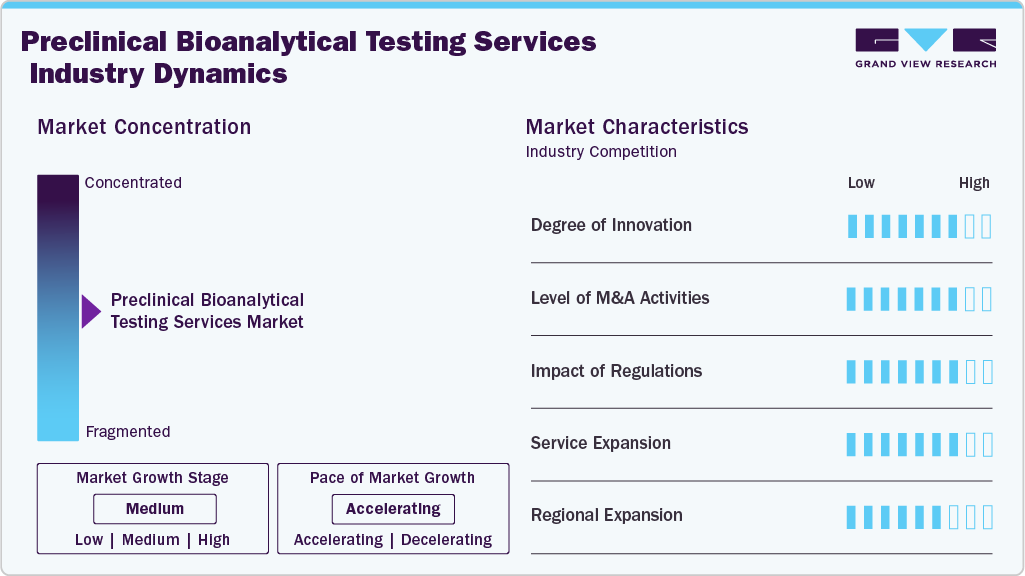
The preclinical bioanalytical testing services market growth stage is moderate, and the pace of growth is accelerating. The market is characterized by the degree of innovation, level of M&A activities, regulatory impact, service expansion, and regional expansion.
In preclinical bioanalytical testing services, innovation is driven by the implementation of advanced technologies, including high-sensitivity LC-MS/MS, ligand binding assays, and novel biomarker analytics. Integrating digital platforms, automation, and AI-enabled data analysis significantly enhances accuracy, efficiency, and throughput. Thus, CROs adopting these technologies can provide faster and more reliable bioanalytical results, which are essential for supporting complex biologics, biosimilars, and gene and cell therapy programs.
 To learn more about this report, Download Free Sample Report
 The preclinical bioanalytical testing services market has seen an increase in M&A activities, as many companies seek to broaden their capabilities, expand their regional footprint, and incorporate complementary technologies. With M&A activities, the CROs and CDMOs can enhance their service offerings with specialized knowledge in bioassay development, mass spectrometry, and biomarker validation, ultimately providing comprehensive bioanalytical solutions.
Stringent regulatory frameworks governing preclinical bioanalytical testing for biologics and small molecules have a significant influence on market operations. Adhering to GLP and evolving guidelines from the FDA, EMA, and OECD are essential for ensuring data integrity, assay validation, and accurate pharmacokinetic/toxicokinetic reporting.
CROs are extending their offerings beyond traditional small-molecule bioanalysis to encompass biologics, biomarkers, and studies related to gene and cell therapies. This approach enables CROs to offer comprehensive continuity from preclinical to clinical bioanalytical services, attracting a broader client base and strengthening their global market positions.
Global CROs are increasingly broadening their preclinical bioanalytical testing operations into emerging markets like India, China, and Singapore, motivated by cost efficiency and scientific expertise. By establishing GLP-compliant laboratories across Asia-Pacific, Europe, and North America, they can improve client access, reduce turnaround times, and ensure localized regulatory compliance, thereby enabling efficient support for multinational preclinical development programs.
Molecule Insights
Based on molecule, the small molecule segment led the market with the largest revenue share of 55.5% in 2025. The growth of the segment can be attributed to rising demand for early drug development support and increasing outsourcing by pharma and biotech companies. Besides, bioanalytical testing of small molecules is crucial for gaining insights into their ADME properties, determining the appropriate dosage, evaluating the therapeutic effectiveness, and safeguarding patient well-being. Other factors contributing to segment growth include advancements in analytical technologies, stringent regulatory requirements for data accuracy, and the growing pipeline of small-molecule therapeutics targeting complex diseases.
The large molecule segment is projected to grow at the fastest CAGR over the estimated period. Rising requirements for monoclonal antibodies, peptides, and gene therapies drive the segment growth. Additionally, the increasing outsourcing by pharmaceutical and biotech companies, rising investment in R&D for complex diseases, and the need for advanced and sensitive analytical techniques all contribute to segment growth. Moreover, stringent regulatory requirements, a focus on immunogenicity assessment, and the expansion of global biologics pipelines are expected to drive the segment's growth.
Test Insights
Based on test, the bioavailability segment led the market with the largest revenue share of 18.4% in 2025. The segment’s growth is primarily driven by its significant role in enhancing the need to evaluate absorption, distribution, metabolism, and excretion (ADME) profiles of new drug candidates early in development and during regulatory approval activities. The growing focus on optimizing drug delivery systems and enhancing oral bioavailability allows pharmaceutical and biotechnology companies to invest significantly in advanced analytical platforms such as LC-MS/MS and HPLC. Furthermore, rising investment in drug innovations and the increasing number of generic drug launches are expected to drive demand for bioavailability studies to establish therapeutic equivalence. Regulatory agencies, such as the U.S. FDA and EMA, have also mandated comprehensive bioavailability testing for new and reformulated drugs, strengthening the need for specialized analytical services. Such factors are expected to drive the market.
The bioequivalence segment is expected to grow at the fastest CAGR during the forecast period. This growth is attributed to the increasing demand for generic and follow-on drug products, which necessitate early-stage pharmacokinetic comparisons with reference drugs. The increasing outsourcing by pharmaceutical companies, stringent regulatory requirements, and the need for accurate and reproducible data in preclinical studies are anticipated to support the market's growth.
Workflow Insights
Based on workflow, the sample analysis segment led the market with the largest revenue share of 45.4% in 2025. The segment growth is driven by increasing demand for accurate and rapid drug development, especially for biologics, biosimilars, and gene therapies. As drug pipelines grow more complex, the demand for precise and high-throughput sample analysis is expected to boost the segment growth. In addition, stringent regulatory requirements, the need for specialized CROs, reducing costs, accelerating timelines, and ensuring high-quality preclinical study outcomes contribute to segment growth.
The sample collection and preparation segment is expected to grow at the fastest CAGR during the forecast period. This growth is due to the increasing complexity of drug development processes and the rising need for efficient sample collection and preparation in preclinical bioanalytical testing to ensure accurate and reproducible results. Advancements in extraction and purification techniques are enhancing the efficiency and reliability of sample preparation, making it a critical component in preclinical bioanalytical workflows.
End Use Insights
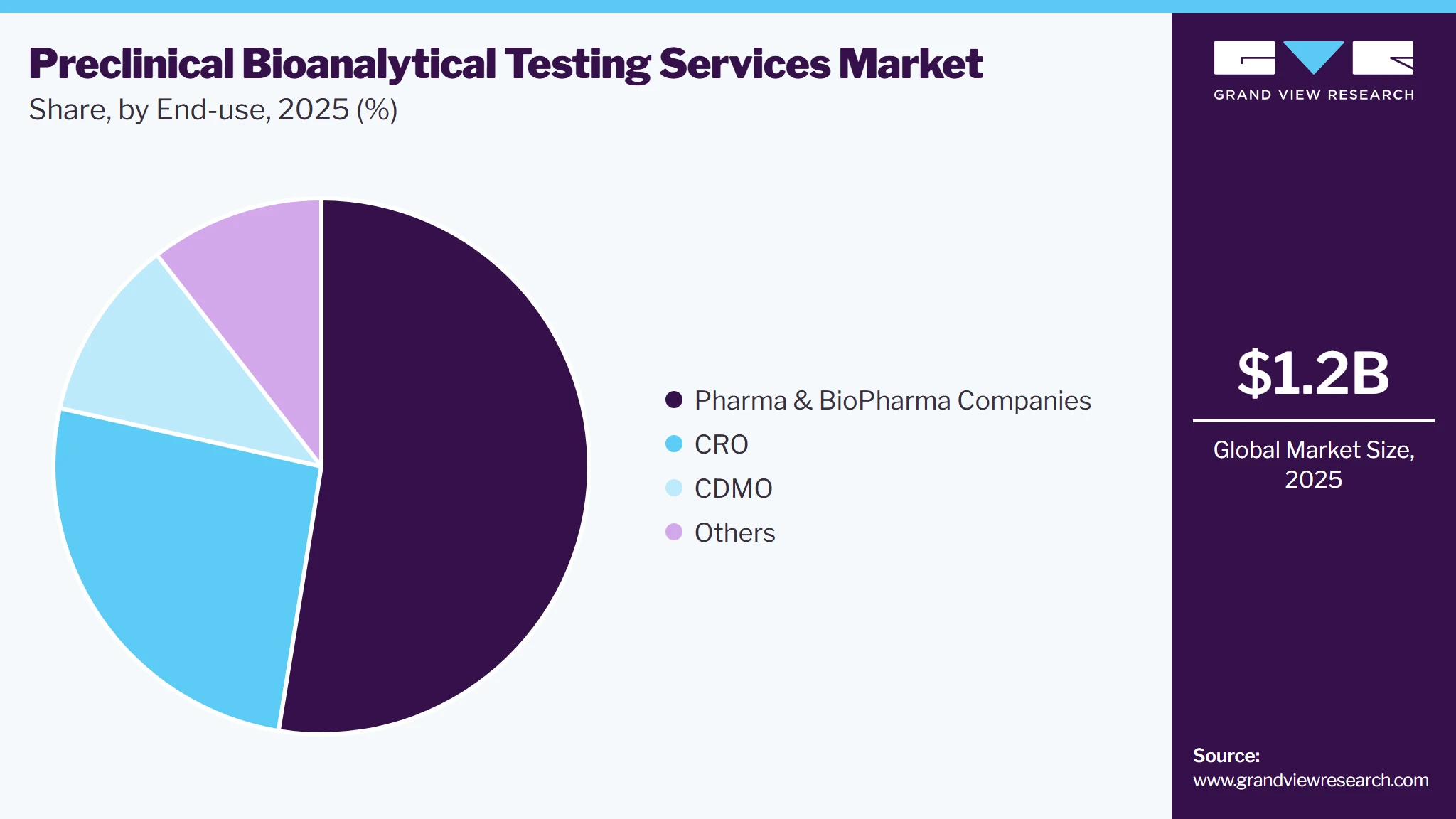
Based on end use, the pharma & biopharma companies segment led the market with the largest revenue share of 52.6% in 2025. The segment's growth is driven by the increasing demand for robust, high-quality analytical solutions that support drug development across the discovery, preclinical, and clinical stages. Some of the major service providers are expanding their capabilities and geographical presence to meet the client requirements. For instance, in August 2024, SGS introduced its new specialized preclinical bioanalytical testing services in Hudson, New Hampshire, North America. The company provides advanced bioanalytical services to biopharmaceutical and pharmaceutical companies. The new services, including discovery, preclinical research, and Phase 1-3 clinical trials, support the drug development spectrum. The capabilities will include method transfer, development, and validation, as well as pharmacodynamic (PD) and pharmacokinetic (PK) bioanalysis, immunogenicity testing, ELISA and multiplex assays, bioassays, and additional related analyses.
 To learn more about this report, Download Free Sample Report
 The CRO segment is expected to grow at the fastest CAGR in the coming years due to the increasing demand for preclinical bioanalytical testing, driven by the rising complexity of drug candidates, including biologics, biosimilars, and gene therapies. In addition, most CROs offer specialized expertise, regulatory compliance, and integrated services across preclinical and clinical phases, enabling companies to accelerate drug development while maintaining quality and precision. Moreover, stringent regulatory requirements from the FDA and EMA necessitate high-quality, reliable testing, contributing to segment growth.
Regional Insights
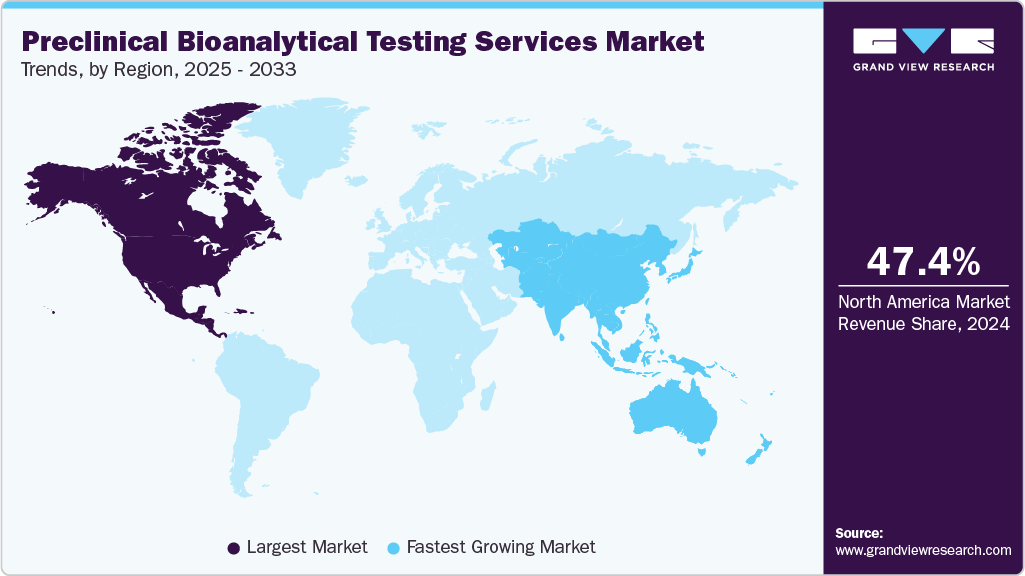
North America dominated the preclinical bioanalytical testing services market with the largest revenue share of 47.4% in 2025. A robust pharmaceutical and biopharmaceutical industry, strong R&D investment, and the presence of leading CROs drive the growth in the region. Additionally, the expansion of biologics, gene therapies, and novel drugs requires precise analytical testing, further supporting market growth. Moreover, growing innovations, rising demand for highly sensitive advanced analytical technologies, and increasing outsourcing trends enable companies to reduce costs, accelerate timelines, and leverage specialized expertise for preclinical studies. Such factors are expected to drive market growth.
 To learn more about this report, Download Free Sample Report
 U.S. Preclinical Bioanalytical Testing Services Market Trends
The preclinical bioanalytical testing services market in the U.S. held the largest share in the North America region in 2025. The preclinical bioanalytical testing services industry in the U.S. is driven by the expansion of contract research organizations, increased investment in biopharmaceutical research and development, a rising number of clinical trials, growing demand for personalized medicine, and stringent regulatory oversight by the FDA. The presence of top-tier CROs in the country further promotes the high-quality analytical standards. In addition, the growing demand for biopharmaceutical products and rising drug safety requirements have increased reliance on preclinical bioanalytical testing services, allowing companies to access cost-effective expertise. Such factors are expected to drive the market growth.
Europe Preclinical Bioanalytical Testing Services Market Trends
The preclinical bioanalytical testing services industry in Europe is experiencing growth owing to technological advancements, strong pharmaceutical and biotech R&D, and increasing development of biologics, gene therapies, and novel drugs. In addition, the country has stringent regulatory standards from the EMA for clinical research, further supporting the market. Besides, the region has become a hub for clinical research due to its diverse patient populations and well-established regulatory frameworks.
The preclinical bioanalytical testing services market in the UK held a significant share in 2024. The country's market growth is driven by a strong pharmaceutical and biotech sector, growing investment in R&D, and the development of biologics. Besides, increasing advancements in bioanalytical techniques further drive collaboration among CROs and academic institutions, along with government support for life sciences innovation. This accelerates the need for secure, compliant, and reliable bioanalytical testing services to meet quality standards and compliance requirements.
The Germany preclinical bioanalytical testing services market is anticipated to grow due to strong pharmaceutical and biotechnology sectors, advanced R&D infrastructure, highly skilled workforce, and stringent regulatory standards. In addition, the increasing prevalence of chronic diseases has led to a rising demand for biologics, biosimilars, and specialty drugs, further creating a growing need for reliable and compliant preclinical bioanalytical testing services.
The preclinical bioanalytical testing services market in France is driven by the expansion of biologics in the pharmaceutical industry, such as cell and gene therapies and biosimilars, which has intensified the need for outsourced services such as bioanalytical testing. According to an article published by NCBI in February 2024, 44 new cell and gene therapies are anticipated to enter the French market by 2030, and an estimated annual number of treated patients is expected to rise from 1,653 in 2023 to over 69,400 by 2030. These complex products require rigorous testing for safety, efficacy, and quality, further driving the demand for specialized preclinical bioanalytical services.
Asia Pacific Preclinical Bioanalytical Testing Services Market Trends
The Asia Pacific preclinical bioanalytical testing services industry is projected to grow at the highest CAGR over the forecast period. The market's growth is driven by increasing pharmaceutical and biotechnology activities, rising healthcare expenditures, lower service costs, adherence to evolving GDP standards, improved access to medicines, and a growing focus on regulatory compliance and technological advancements.
China's preclinical bioanalytical testing services market is expected to grow over the forecast period. China has become an increasingly attractive destination for outsourcing clinical trials, driven by the growing expansion of domestic and international pharmaceutical and biopharmaceutical manufacturing capabilities. Strong government initiatives aimed at improving healthcare accessibility and efficiency have led to a significant increase in the outsourcing of preclinical bioanalytical testing services operations.
The preclinical bioanalytical testing services market in Japan is expected to witness significant growth over the forecast period. The country's growth is driven by the rising prevalence of chronic diseases and lifestyle-related conditions, which has increased the demand for high-quality analytical services that comply with established regulatory frameworks aligned with PMDA and ICH guidelines. In addition, government policies aimed at improving healthcare access and the country's emphasis on quality and precision operations have fueled the market growth.
India preclinical bioanalytical testing services market is witnessing considerable growth, and the growth is attributed to the expansion of the biopharmaceutical and biotechnology sectors, growing clinical trial activities, and increasing demand for high-quality bioequivalence and bio-similarity studies. Such factors are expected to drive the market.
Latin America Preclinical Bioanalytical Testing Services Market Trends
The Latin America preclinical bioanalytical testing services industry is projected to grow over the forecast period. The growth in the region is driven by the increasing expansion of regional drug manufacturing and growing government initiatives aimed at enhancing access to essential medicines. Besides, the presence of major countries such as Brazil and Argentina is expected to drive high demand for drug discovery across the globe, leading to an increasing need for advanced analytical techniques to improve the accuracy and efficacy of testing.
Brazil's preclinical bioanalytical testing services market is expected to grow over the forecast period. The country's growth is driven by the developing pharmaceutical/biopharmaceutical & biotechnology industries, increasing investments in clinical research and drug development, and growing favorable regulatory requirements that attract international CROs, further strengthening the market capabilities.
Key Preclinical Bioanalytical Testing Services Company Insights
Key players in the preclinical bioanalytical testing services market are actively expanding their service portfolios, investing in advanced analytical technologies, and pursuing strategic partnerships to strengthen their global presence. Leading contract research organizations (CROs) and specialized laboratories are enhancing their capabilities in complex assay development, large molecule analysis, and cell and gene therapy testing to meet evolving client needs. For instance, in October 2024, SGS introduced its new specialized preclinical bioanalytical testing services in Hudson, New Hampshire, North America. Through these services, the company provides advanced bioanalytical services to both biopharmaceutical and pharmaceutical companies.
Key Preclinical Bioanalytical Testing Services Companies:
The following key companies have been profiled for this study on the preclinical bioanalytical testing services market.
- Labcorp
- Eurofins Scientific SE
- SGS SA
- Charles River Laboratories International
- Syneos Health
- KCAS Bio
- ICON plc
- WuXi AppTec
- Thermo Fisher Scientific Inc (PPD, Inc.)
- Parexel International
- Pharmaron
- BioAgilytix Labs
- QPS Holdings
- Altasciences
Competitive Benchmarking
Category
Operating Strategies
Competitive Edge
Weakness
Established Players (Labcorp Drug Development, Eurofins Scientific SE)
- Mature players focus on expanding comprehensive preclinical bioanalytical testing capabilities across small molecules, biologics, biosimilars, cell & gene therapies, and vaccines. These companies offer integrated services including ADME studies, pharmacokinetic (PK) and pharmacodynamic (PD) analysis, biomarker testing, immunogenicity assessment, method development & validation, sample analysis, and regulatory-compliant laboratory services. They continuously invest in advanced analytical technologies such as LC-MS/MS, ligand-binding assays, flow cytometry, molecular diagnostics, laboratory automation, and global laboratory expansion while pursuing strategic acquisitions and partnerships to strengthen their service portfolios.
- Established players benefit from extensive global laboratory networks, diversified client bases, experienced scientific personnel, and comprehensive regulatory expertise. Their ability to support drug development from discovery through clinical development, combined with advanced analytical platforms, standardized quality systems, and strong regulatory compliance, enables them to secure long-term contracts with large pharmaceutical and biotechnology companies.
- Established players face challenges related to high operating and infrastructure costs, continuous investment requirements for advanced analytical instrumentation, and increasing complexity of regulatory compliance. Large organizational structures may also reduce operational flexibility, lengthen project initiation timelines, and increase pricing compared to smaller specialized bioanalytical laboratories.
Emerging Players (BioAgilytix Labs)
- Emerging players primarily focus on specialized bioanalytical services such as biomarker analysis, ligand-binding assays, immunogenicity testing, large-molecule bioanalysis, cell & gene therapy bioanalysis, and customized analytical method development. Many invest in niche scientific expertise, laboratory automation, high-sensitivity analytical platforms, and flexible project management while expanding through strategic collaborations with biotechnology companies and regional laboratory capacity expansion.
- Emerging players gain competitive advantages through specialized technical expertise, flexible service delivery, rapid turnaround times, customized analytical solutions, and close customer engagement. Their focused capabilities in complex biologics, biomarker testing, and emerging therapeutic modalities enable them to efficiently support early-stage biotechnology companies and niche drug development programs.
- Emerging players often face limitations in global laboratory presence, financial resources, and large-scale project capacity. They may have limited ability to manage multinational drug development programs or high-volume studies and often depend on a relatively small client base. Increasing competition from integrated global CROs, ongoing capital investment requirements, and evolving regulatory expectations may constrain long-term market expansion.
Recent Developments
-
In November 2024, Bioneeds India joined the Contract Laboratory Network, offering pharmacology, toxicology, analytical, and regulatory services, supporting pharmaceutical, biotech, and medical device clients with GLP- and ISO-certified preclinical research capabilities.
-
In November 2024, Altasciences mentioned that it has enhanced its bioanalytical service portfolio, offering flexible, high-quality analytical solutions supporting preclinical and clinical studies, reinforcing its 30-year commitment to accelerating global drug development and client success.
-
In October 2023, CEBIS mentioned the offering of end-to-end solutions for clinical research from study start-up to clinical study reports across phases I to IV. Their services include preclinical testing, drug safety, biostatistics, clinical trial supply management, and software solutions such as IRT and EDC, all delivered with competitive efficiency and a strong focus on patient-centric outcomes.
Preclinical Bioanalytical Testing Services Market Report Scope
Report Attribute
Details
Market size in 2025
USD 1.2 billion
Estimated market size in 2026
USD 1.3 billion
Projected market size by 2033
USD 2.6 billion
Growth rate
CAGR of 10.2% from 2026 to 2033
Historical data
2021 - 2025
Forecast period
2026 - 2033
Quantitative units
Revenue in USD million/billion and CAGR from 2026 to 2033
Report coverage
Revenue forecast, company ranking, competitive landscape, growth factors, and trends
Segments covered
Molecule, test, workflow, end use, region
Regional scope
North America; Europe; Asia Pacific; Latin America; MEA
Country scope
U.S.; Canada; Mexico; Germany; UK; France; Italy; Spain; Norway; Denmark; Sweden; China; Japan; India; South Korea; Australia; Thailand; Brazil; Argentina; Saudi Arabia; South Africa; UAE; Kuwait; Oman; Qatar.
Key companies profiled
Labcorp; Eurofins Scientific SE; SGS SA; Charles River Laboratories International; Syneos Health; KCAS Bio; ICON plc; WuXi AppTec; Thermo Fisher Scientific Inc (PPD, Inc.); Parexel International; Pharmaron; BioAgilytix Labs; QPS Holdings; Altasciences
Customization scope
Free report customization (equivalent up to 8 analysts' working days) with purchase. Addition or alteration to country, regional & segment scope.
Pricing and purchase options
Avail customized purchase options to meet your exact research needs. Explore purchase options
Global Preclinical Bioanalytical Testing Services Market Report Segmentation
This report forecasts revenue growth and provides an analysis of the latest trends in each of the sub-segments from 2021 to 2033. For this report, Grand View Research has segmented the preclinical bioanalytical testing services market report based on molecule, test, workflow, end use, and region:
-
Molecule Outlook (Revenue, USD Million, 2021 - 2033)
-
Small Molecule
-
Large Molecule
-
-
Test Outlook (Revenue, USD Million, 2021 - 2033)
-
ADME
-
In-vivo
-
In-vitro
-
-
Pharmacokinetics (PK)
-
Pharmacodynamics (PD)
-
Bioavailability
-
Bioequivalence
-
Biomarker Testing
-
Cell-based Assay
-
Virology Testing
-
Other Tests
-
-
Workflow Outlook (Revenue, USD Million, 2021 - 2033)
-
Sample Collection and Preparation
-
Sample Collection, Handling and Storage
-
Protein Precipitation
-
Liquid-Liquid Extraction
-
Solid Phase Extraction
-
Others
-
-
Method Development and Validation
-
Sample Analysis
-
Hyphenated technique
-
Chromatographic technique
-
Electrophoresis
-
Ligand Binding Assay
-
Mass Spectrometry
-
Spectroscopic Techniques
-
Genomic and Molecular Techniques
-
-
Other processes
-
-
End Use Outlook (Revenue, USD Million, 2021 - 2033)
-
Pharma & BioPharma Companies
-
CDMO
-
CRO
-
Others
-
-
Regional Outlook (Revenue, USD Million, 2021 - 2033)
-
North America
-
U.S.
-
Canada
-
Mexico
-
-
Europe
-
UK
-
Germany
-
France
-
Italy
-
Spain
-
Denmark
-
Sweden
-
Norway
-
-
Asia Pacific
-
Japan
-
China
-
India
-
Australia
-
Thailand
-
South Korea
-
-
Latin America
-
Brazil
-
Argentina
-
-
Middle East & Africa
-
South Africa
-
Saudi Arabia
-
UAE
-
Kuwait
-
Oman
-
Qatar
-
-
Research Methodology
The preclinical bioanalytical testing services market figures in this report are based on a proven research process that combines executive interviews with secondary research from proprietary databases, company filings, and recognized regulatory and institutional sources. Market size is built through value-chain sizing - reconciling supply-side and demand-side estimates - and triangulated with bottom-up and top-down approaches. Every estimate passes multiple levels of expert validation before publication, with each preclinical bioanalytical testing services segment quantified using the revenue-capture definitions in the table below.
Segment Definition
Segment - Molecule
Revenue capture definition
Small Molecule
The segment captures revenue generated by preclinical bioanalytical testing services provided for small-molecule drug candidates. Services include ADME studies, pharmacokinetic (PK) and pharmacodynamic (PD) analysis, bioavailability and bioequivalence testing, biomarker analysis, metabolite identification, and quantitative bioanalysis using chromatographic and mass spectrometry-based techniques to support preclinical drug development.
Large Molecule
The segment captures revenue generated by preclinical bioanalytical testing services provided for biologics and other large-molecule therapeutics, including monoclonal antibodies, recombinant proteins, peptides, biosimilars, vaccines, oligonucleotides, and cell & gene therapies. Services include ligand-binding assays, immunogenicity testing, PK/PD studies, biomarker analysis, molecular characterization, and regulatory-compliant bioanalysis.
Segment - Test
Revenue capture definition
ADME
The segment captures revenue generated by bioanalytical testing services evaluating the absorption, distribution, metabolism, and excretion (ADME) properties of drug candidates to support preclinical pharmacology and toxicology studies.
In-vivo
The segment captures revenue generated by bioanalytical testing performed on biological samples collected from animal models to evaluate pharmacokinetics, pharmacodynamics, toxicology, and therapeutic efficacy during preclinical development.
In-vitro
The segment captures revenue generated by laboratory-based bioanalytical testing conducted using cultured cells, tissues, enzymes, and biological matrices to evaluate drug metabolism, toxicity, efficacy, and biological interactions.
Pharmacokinetics (PK)
The segment captures revenue generated by bioanalytical testing services that quantify drug concentrations over time to evaluate absorption, distribution, metabolism, elimination, clearance, and systemic exposure during preclinical studies.
Pharmacodynamics (PD)
The segment captures revenue generated by bioanalytical testing services that assess the biological effects, mechanism of action, target engagement, and dose-response relationship of drug candidates.
Bioavailability
The segment captures revenue generated by bioanalytical studies that determine the rate and extent to which an active pharmaceutical ingredient reaches systemic circulation after administration.
Bioequivalence
The segment captures revenue generated by comparative bioanalytical testing services evaluating whether different formulations of a drug exhibit equivalent bioavailability and pharmacokinetic performance.
Biomarker Testing
The segment captures revenue generated by analytical testing services for the identification, quantification, and validation of biomarkers used to evaluate disease progression, therapeutic response, safety, and efficacy during preclinical studies.
Cell-based Assay
The segment captures revenue generated by bioanalytical testing services utilizing living cell systems to evaluate biological activity, potency, cytotoxicity, receptor binding, immunological responses, and mechanism of action of drug candidates.
Virology Testing
The segment captures revenue generated by bioanalytical testing services supporting antiviral drug and vaccine development through viral load quantification, infectivity studies, neutralization assays, and other virological analyses.
Other Tests
The segment captures revenue generated by specialized bioanalytical testing services including immunogenicity testing, toxicokinetic studies, anti-drug antibody analysis, metabolite profiling, and other customized analytical evaluations.
Segment - Workflow
Revenue capture definition
Sample Collection and Preparation
The segment captures revenue generated by services associated with the collection, processing, preparation, and preservation of biological samples prior to bioanalytical testing to ensure sample integrity and analytical accuracy.
Sample Collection, Handling and Storage
The segment captures revenue generated by services involving biological sample collection, labeling, transportation, processing, storage, and chain-of-custody management throughout preclinical studies.
Protein Precipitation
The segment captures revenue generated by sample preparation services that remove proteins from biological matrices to improve analyte recovery and analytical performance.
Liquid-Liquid Extraction
The segment captures revenue generated by sample preparation services utilizing solvent extraction techniques to isolate target analytes from biological matrices before quantitative analysis.
Solid Phase Extraction
The segment captures revenue generated by sample purification services using solid sorbent materials to selectively isolate analytes from complex biological samples.
Others
The segment captures revenue generated by additional sample preparation techniques including filtration, centrifugation, dilution, derivatization, evaporation, and automated extraction methods.
Method Development and Validation
The segment captures revenue generated by services involving the development, optimization, qualification, and validation of bioanalytical methods to ensure regulatory compliance, analytical accuracy, precision, sensitivity, and reproducibility.
Sample Analysis
The segment captures revenue generated by analytical testing services that quantify and characterize drugs, metabolites, biomarkers, proteins, peptides, and nucleic acids using validated bioanalytical methods.
Hyphenated Technique
The segment captures revenue generated by bioanalytical testing using integrated analytical platforms such as LC-MS/MS, GC-MS, LC-NMR, and related hyphenated techniques for highly sensitive analyte identification and quantification.
Chromatographic Technique
The segment captures revenue generated by analytical testing using chromatographic technologies including HPLC, UHPLC, GC, and ion chromatography for compound separation and quantitative analysis.
Electrophoresis
The segment captures revenue generated by analytical testing utilizing capillary electrophoresis, gel electrophoresis, and related techniques for the separation and characterization of proteins, peptides, and nucleic acids.
Ligand Binding Assay
The segment captures revenue generated by immunoassay-based analytical services including ELISA, ECL, and related ligand-binding techniques used for quantifying biologics, biomarkers, cytokines, and anti-drug antibodies.
Mass Spectrometry
The segment captures revenue generated by analytical testing services utilizing mass spectrometry platforms for highly sensitive qualitative and quantitative analysis of pharmaceutical compounds, metabolites, proteins, and biomarkers.
Spectroscopic Techniques
The segment captures revenue generated by analytical testing services employing UV-Visible spectroscopy, fluorescence spectroscopy, infrared spectroscopy, nuclear magnetic resonance (NMR), and related spectroscopic methods for molecular characterization.
Genomic and Molecular Techniques
The segment captures revenue generated by molecular bioanalytical testing services utilizing PCR, qPCR, digital PCR, next-generation sequencing (NGS), and related genomic technologies to evaluate nucleic acid-based therapeutics and molecular biomarkers.
Other Processes
The segment captures revenue generated by additional analytical workflows including flow cytometry, multiplex assays, imaging-based analysis, immunochemical techniques, automated bioanalysis, and customized laboratory procedures.
Segment - End Use
Revenue capture definition
Pharma & BioPharma Companies
The segment captures revenue generated by preclinical bioanalytical testing services provided to pharmaceutical and biotechnology companies developing small molecules, biologics, biosimilars, vaccines, cell & gene therapies, and other innovative therapeutics.
CDMO
The segment captures revenue generated by bioanalytical testing services provided to contract development and manufacturing organizations (CDMOs) supporting integrated drug development, process development, formulation development, and preclinical analytical studies.
CRO
The segment captures revenue generated by specialized bioanalytical testing services provided to contract research organizations (CROs) that outsource laboratory analysis as part of broader preclinical research and drug development programs.
Others
The segment captures revenue generated by preclinical bioanalytical testing services provided to academic research institutions, government laboratories, nonprofit organizations, hospitals, and other research organizations supporting biomedical and translational research.
Estimation Model
Bottom-Up Revenue Model
Drug Pipeline Demand Model
Study Volume-Based Revenue Model
Outsourcing Penetration Model
Market size is estimated by identifying major and emerging contract research organizations (CROs), bioanalytical providers and specialized testing service providers offering prescriptive clinical trial services, including ADME, pharmacokinetics (PK), pharmacodynamics (PD), biomarker analysis, immunogenicity testing, and method development & validation.
Revenue attributable to prescriptive bioanalytical testing services is derived from annual reports, investor presentations, company financial disclosures, service portfolios, management commentary, and primary interviews. Company-level bioanalytical testing revenues are aggregated and validated by comparing laboratory footprint, scientific workforce, client base, service offerings, and industry benchmarks to estimate the overall market size.
Market size is derived by evaluating the number of drug candidates progressing through discovery and preclinical development across small molecules, biologics, biosimilars, vaccines, cell & gene therapies, oligonucleotides, and other advanced therapeutics.
Average bioanalytical testing expenditure is assigned to each developing program based on the scope of services required, including preclinical development, PK/PD studies, ADME evaluation, biomarker testing, immunogenicity assessment, and regulatory bioanalytical services. The number of active preclinical drug programs is multiplied by the estimated outsourced bioanalytical testing spend and aggregated across therapeutic areas such as oncology, infectious diseases, immunology, neurology, cardiovascular diseases, metabolic disorders, and rare diseases.
Market value is estimated by evaluating the annual number of preclinical bioanalytical studies outsourced globally across pharmaceutical, biotechnology, and academic research organizations.
Key parameters evaluated include the number of ADME studies, pharmacokinetic (PK) studies, pharmacodynamic (PD) studies, biomarker analyses, bioavailability and bioequivalence studies, immunogenicity assessments, and other specialized bioanalytical tests, along with their average contract pricing.
Total study volumes are multiplied by the average revenue generated per study and validated against historical project volumes, and outsourcing trends.
Market size is estimated by assessing the proportion of pharmaceutical and biotechnology companies that outsource preclinical bioanalytical testing to specialized CROs instead of maintaining in-house analytical laboratories.
Outsourcing rates are determined through primary interviews, CRO partnership announcements, pharmaceutical company disclosures, industry publications, and R&D outsourcing trends.
The addressable market is calculated by applying outsourcing penetration rates to the total preclinical bioanalytical testing spending allocated to specialized testing, including sample preparation, method development, biomarker analysis, ADME studies, PK/PD analysis, and regulatory-compliant bioanalytical testing, thereby illustrating the overall outsourcing opportunity.
Delivered Customizations
This report has been delivered with the following In-depth customizations
Client Request
Customization Delivered
Value Adds
Industry Outlook, Value Chain, and Business Model Assessment
Conducted a comprehensive evaluation of the preclinical bioanalytical testing services ecosystem, covering pharmaceutical and biotechnology companies, contract research organizations (CROs), bioanalytical laboratories, analytical instrument manufacturers, reagent and consumable suppliers, sample collection and logistics providers, laboratory information management system (LIMS) providers, and regulatory agencies. Assessed prevailing business models, outsourcing trends, revenue streams, pricing dynamics, laboratory workflows, service delivery models, and value creation opportunities across sample collection & preparation, method development & validation, bioanalysis, biomarker testing, and regulatory support.
Provides a holistic understanding of the industry structure, outsourcing ecosystem, profit pools, laboratory value chain, and key growth drivers, enabling stakeholders to identify attractive investment opportunities and formulate effective expansion strategies within the global preclinical bioanalytical testing services market.
Competitive Benchmarking and Technology Capability Analysis
Performed an in-depth benchmarking of leading preclinical bioanalytical testing service providers based on analytical capabilities, therapeutic expertise, regulatory compliance, laboratory capacity, geographic footprint, scientific workforce, instrumentation portfolio (LC-MS/MS), ligand-binding assays, flow cytometry, genomic platforms, turnaround time, service portfolio, digital laboratory capabilities, and strategic collaborations with pharmaceutical and biotechnology companies. Included comparative positioning of global CROs and specialized bioanalytical laboratories supporting both small- and large-molecule drug development.
Enables identification of competitive gaps, technology differentiation opportunities, and best-in-class analytical capabilities to support strategic planning, vendor selection, and long-term market positioning.
Global Regulatory Landscape and Compliance Assessment
Conducted a comprehensive assessment of regulatory frameworks governing preclinical bioanalytical testing services across North America, Europe, Asia Pacific, Latin America, and the Middle East & Africa. The analysis covered Good Laboratory Practice (GLP) regulations, bioanalytical method validation guidelines, data integrity and electronic record management standards, and laboratory accreditation requirements. Assessed the impact on laboratory operations, study execution, and outsourcing decisions.
Enables CROs, pharmaceutical companies, and investors to understand regional regulatory variations and compliance requirements, thereby supporting risk mitigation, laboratory accreditation, and expansion strategies aligned with regional regulatory expectations.
Frequently Asked Questions About This Report
The global preclinical bioanalytical testing services market size was valued at USD 1.2 billion in 2025 and is estimated at USD 1.3 billion in 2026.
Key factors include rising demand for new drug development, the increasing prevalence of chronic & rare diseases, and the rapid expansion of biologics, biosimilars, monoclonal antibodies, and cell and gene therapies.
North America dominated with a 47.4% revenue share in 2025.
Asia Pacific is the fastest-growing region over the forecast period.
The bioavailability segment led with a 18.4% revenue share in 2025.
The small molecule segment led with a 55.5% revenue share in 2025.
The sample analysis segment held the largest revenue share of 45.4% in 2025.
Key players include Labcorp, Eurofins Scientific SE, SGS SA, Charles River Laboratories International, Syneos Health, KCAS Bio, ICON plc, WuXi AppTec, Thermo Fisher Scientific Inc (PPD, Inc.), Parexel International, Pharmaron, BioAgilytix Labs, QPS Holdings, Altasciences, among others.
The global preclinical bioanalytical testing services market is expected to grow at a CAGR of 10.2% from 2026 to 2033, reaching USD 2.6 billion.
The pharma & biopharma companies segment held the largest revenue share of 52.6% in 2025.
About the Author(s)
Pharmaceuticals Research Team
Healthcare · PharmaceuticalsThis report was authored by the pharmaceuticals research team at Grand View Research - comprising two research analysts, one senior research analyst, and one industry expert - with specialized expertise in the pharmaceuticals segment of the healthcare industry. All findings are based on proprietary healthcare databases, executive interviews, and regulatory analysis, subject to internal peer review prior to publication.
Last Updated:
Speak to Analyst

Customize this report to your needs - add regions, segments, or data points, with 20% free customization.
Or view our licence options:


ISO 9001:2015 & 27001:2022 Certified
We are GDPR and CCPA compliant! Your transaction & personal information is safe and secure. For more details, please read our privacy policy.


