
- Home
- »
- Medical Devices
- »
-
Preterm Birth And PROM Testing Market Report, 2026-2033GVR Report cover
![Preterm Birth And PROM Testing Market (2026 - 2033)Report]()
Preterm Birth And PROM Testing Market (2026 - 2033)
Size, Share & Trends Analysis Report By Type (Pelvic Exam, Ultrasound, Biochemical Markers, Uterine Monitoring, Nitazine Test), By Application (PROM, Preterm Labor, Chorioamnionitis), By Region, And Segment Forecasts
Market Size, 2025
$1.7BMarket Estimate, 2026
$1.8BMarket Forecast, 2033
$3.3BCAGR, 2026–2033
8.7%Preterm Birth And PROM Testing Market Summary
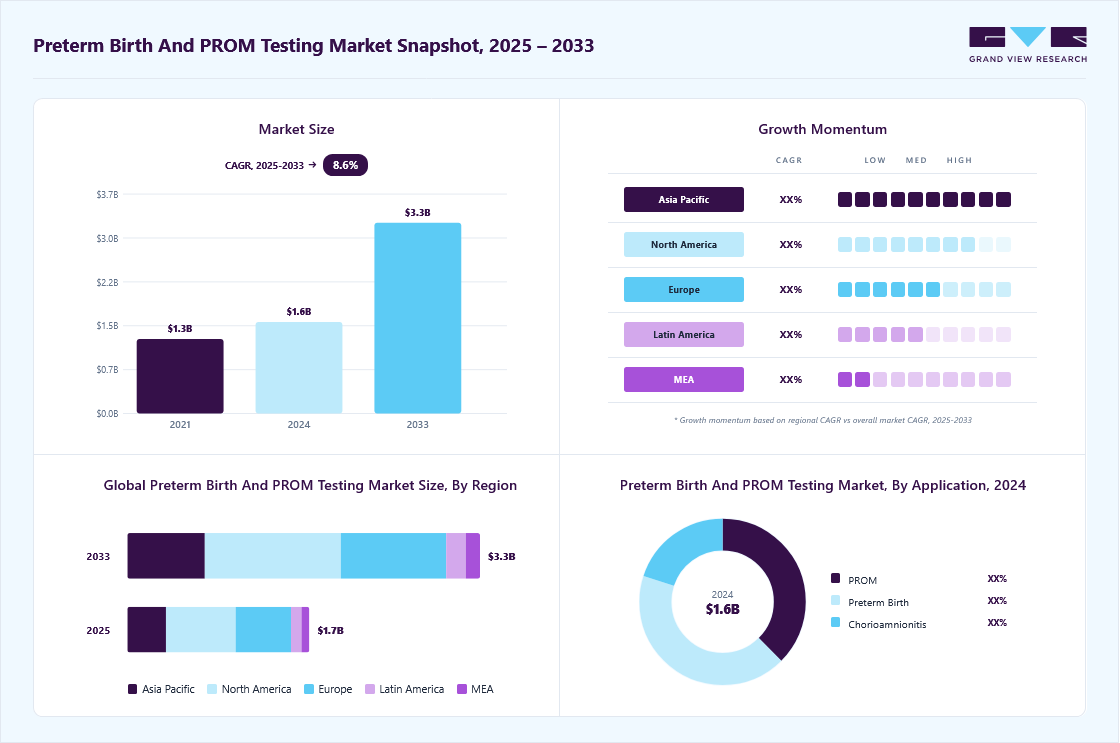
The global preterm birth and PROM testing market size was valued at USD 1.7 billion in 2025 and is projected to grow from USD 1.8 billion in 2026 to USD 3.3 billion by 2033, at a CAGR of 8.7% from 2026 to 2033. North America dominated the market with the largest revenue share of 38.3% in 2025. Increasing advancements in point-of-care diagnostics are expected to have a positive impact on the preterm birth and PROM testing market.
Key Market Trends & Insights
- By type: Ultrasound segment dominated the market, with a revenue share of 31.5% in 2025.
- By application: Preterm birth segment held the largest market share of 42.5% in 2025.
Regional Highlights
- Largest regional market: North America (38.3% revenue share, 2025)
- Fastest-growing regional market: Asia Pacific (highest CAGR, 2026-2033)
- By country: The U.S. held the largest market share in 2025.
Market Size & Forecast
- Market size in 2025: USD 1.7 Billion
- Estimated market size in 2026: USD 1.8 Billion
- Projected market size by 2033: USD 3.3 Billion
- CAGR (2026-2033): 8.7%
Three ways to get this report
Buy it, customize it, or ask a question.Ask an Analyst
A direct answer, usually in 1 working day
- AccessReport author, directly
- Reply timeWithin 1 working day
- No sales callDirect answer only
- FormatEmail reply
- CostFree, no cost
Get the Full Report
What the study covers
- FormatsPDF · Excel · Dashboard
- Timeline2026–2033 annual, 2025 base
- Coverage20+ countries, 5 regions
- Companies10+ key players profiled
Customize the Report
20% free customization
- IncludeCountries, segments, points
- TailorTo your product definition
- ExtendDeeper competitor detail
- OrA fully bespoke study
- Turnaround5–10 working days
The increasing average age of pregnant women, leading to an exponential rise in the number of early births, and the delay in parenthood due to sociodemographic factors, including education/career goals, the growing impact of women’s empowerment movements, and financial barriers, are key factors driving the adoption of tests in the market. According to research conducted by a group of researchers in Southern Ethiopia in December 2021, hypertension during pregnancy and a history of either abortion or cesarean section are the major causes of complications during childbirth. The study recommended that early identification tests and treatment can minimize the risk of premature rupture of fetal membranes. Other factors that raise the probability of PROM in pregnant women are low socioeconomic conditions, sexually transmitted infections, and cigarette smoking during pregnancy.According to UNICEF, India accounts for 25.0 million births each year and witnesses the death of one child every minute, with the mortality rate due to premature birth at 35.0%. While substantial development in Special Newborn Care Units (SNCUs) has led to a decline in neonatal mortality, the socio-cultural barriers in healthcare access for female infants remain a major factor behind higher female premature deaths. However, India has witnessed a consistent reduction in child mortality rates, driven by initiatives prioritizing newborn and maternal safety.

Governments and regulatory bodies are taking considerable measures to increase access to PROM testing across several regions. For instance, in March 2022, Sera Prognostics Inc. announced that the Centers for Medicare & Medicaid Services established a Medicare payment rate of USD 750 for its PreTRM test, a proteomic blood test designed to measure preterm birth risk. The test has gained additional traction, with ongoing commercial collaboration between Sera and Elevance Health regarding coverage for its PreTRM test, which improves affordability for high-risk pregnant women and encourages broader adoption among hospitals and maternal-fetal medicine specialists.
Similarly, Actim PROM is a U.S. FDA-approved POC rapid test, to detect PROM. It provides rapid accurate results for preterm births. More than 7 million tests have been distributed in over 70 countries since they are highly reliable with 97% sensitivity and specificity. Actim Prom helps detect the protein biomarker Insulin-like Growth Factor Binding Protein-1 (IGFBP - 1). The advancements in POC diagnostics for PROM can encourage pregnant women to test for PROM more frequently when compared to a long procedure of testing held in hospitals and clinics.
Market Dynamics
The preterm birth and PROM testing market is experiencing growth due to the increasing incidence of preterm births and the rising emphasis on early identification of pregnancy related complications that can adversely affect maternal and neonatal outcomes. Healthcare providers are increasingly incorporating biomarker-based diagnostics, fetal fibronectin testing, PAMG 1 immunoassays, and advanced prenatal monitoring tools into routine obstetric care to support timely clinical decision making. The market is also benefiting from expanding access to prenatal healthcare services and the growing adoption of risk assessment strategies aimed at reducing preterm delivery associated complications. Industry participants are focusing on developing predictive diagnostic solutions that enable earlier intervention and more effective pregnancy management. For instance, in February 2025, Sera Prognostics reported positive outcomes supporting the commercialization of its PreTRM Test, reinforcing the clinical adoption of blood-based biomarker testing for assessing spontaneous preterm birth risk. Increasing integration of evidence based diagnostic approaches into maternal healthcare pathways is expected to support continued demand for preterm birth and PROM testing solutions during the forecast period.
The increasing focus on reducing the burden of preterm births is driving demand in the preterm birth and PROM testing market. Healthcare providers are expanding the use of diagnostic tools that enable earlier identification of women at risk of preterm labor and pregnancy related complications, supporting informed clinical decision making and patient management. The growing incorporation of biomarker-based testing, fetal fibronectin assays, and prenatal monitoring technologies into obstetric care pathways reflects the broader shift toward preventive maternal healthcare. In addition, healthcare systems are emphasizing strategies that improve pregnancy outcomes while reducing neonatal intensive care utilization and associated healthcare expenditures. This is encouraging the adoption of diagnostic solutions that support risk stratification and timely clinical intervention. Market participants continue to invest in technologies designed to enhance diagnostic performance and strengthen clinical utility. For instance, in September 2025, Hologic launched an updated Fetal Fibronectin (fFN) test to support the prediction and management of preterm labor, reflecting ongoing industry efforts to improve early risk assessment and maternal healthcare outcomes.
Variability in reimbursement coverage and clinical adoption continues to restrain growth in the preterm birth and PROM testing market. While advancements in biomarker-based diagnostics and predictive testing have expanded the availability of risk assessment tools, their incorporation into routine prenatal care remains uneven across healthcare systems. Differences in reimbursement frameworks, clinical practice guidelines, and healthcare spending priorities can limit the utilization of advanced testing solutions, particularly in regions with budget constraints and restricted access to specialized maternal healthcare services. Furthermore, healthcare providers and payers often require robust clinical and health economic evidence before supporting widespread adoption of emerging diagnostic technologies. The lack of standardized testing pathways across healthcare settings may also affect utilization rates and market expansion. As the market evolves, the generation of additional clinical validation data remains important for strengthening confidence among stakeholders. For instance, in September 2025, NX Prenatal reported progress in validating novel biomarker panels for spontaneous preterm birth prediction, underscoring the continued importance of clinical evidence in supporting broader adoption and reimbursement of advanced prenatal diagnostic tests.
The increasing emphasis on early detection and management of pregnancy related complications is creating growth opportunities in the preterm birth and PROM testing market. Healthcare providers are adopting diagnostic technologies that support timely risk assessment and enable informed clinical decision making across prenatal care settings. The growing integration of point of care testing and biomarker-based diagnostics into obstetric workflows is enhancing the ability to identify patients at risk of preterm birth and membrane rupture at earlier stages of pregnancy. In addition, expanding maternal healthcare infrastructure and increasing access to prenatal screening services in developing markets are supporting the adoption of advanced diagnostic solutions. Market participants are investing in product development and commercialization initiatives to address the demand for rapid, reliable, and clinically actionable testing. Furthermore, the increasing focus on improving pregnancy outcomes and reducing healthcare resource utilization is expected to support long term market expansion. For instance, in May 2025, Abbott launched the Actim PROM test for the detection of premature rupture of fetal membranes, highlighting the industry's focus on expanding access to diagnostic solutions that support timely clinical intervention and patient management.
Type Insights
Based on test type, the ultrasound segment led the market with the largest revenue share of 31.5% in 2025. Ultrasound imaging remains one of the most widely adopted modalities for assessing the risk of preterm childbirth, particularly through transvaginal measurement of cervical length. Recent market progression is shaped by digital innovation, as clinical researchers and companies increasingly integrate AI analytics with ultrasound platforms. In March 2022, Ultrasound AI Inc. received its first patent for Preterm AI, software that combines ultrasound data and machine learning to improve preterm birth prediction.
The PAMG-1 immunoassay segment is projected to register the fastest CAGR of 9.5% during the forecast period. Placental Alpha Microglobulin-1 (PAMG-1) is a highly specific biomarker used to confirm membrane rupture, where concentrations rise sharply (2,000-25,000 ng/mL) in the case of PROM or PPROM. Recent literature shows PAMG-1 may be useful as part of preterm-birth risk pathways (combined with cervical length, clinical risk) - creating new use cases beyond the classic PROM indication. That improves the addressable market.
Application Insights
Based on application, the preterm birth segment led the market with the largest revenue share of 42.5% in 2025. According to a Lancet publication (September 2021), China has the second-highest burden of preterm births, with a 1.3% annual increase in preterm rate from 2012 to 2018. Approximately 29.5% of preterm births originate from spontaneous preterm labor, while 27.8% are associated with preterm premature rupture of the fetal membranes (PPROM).
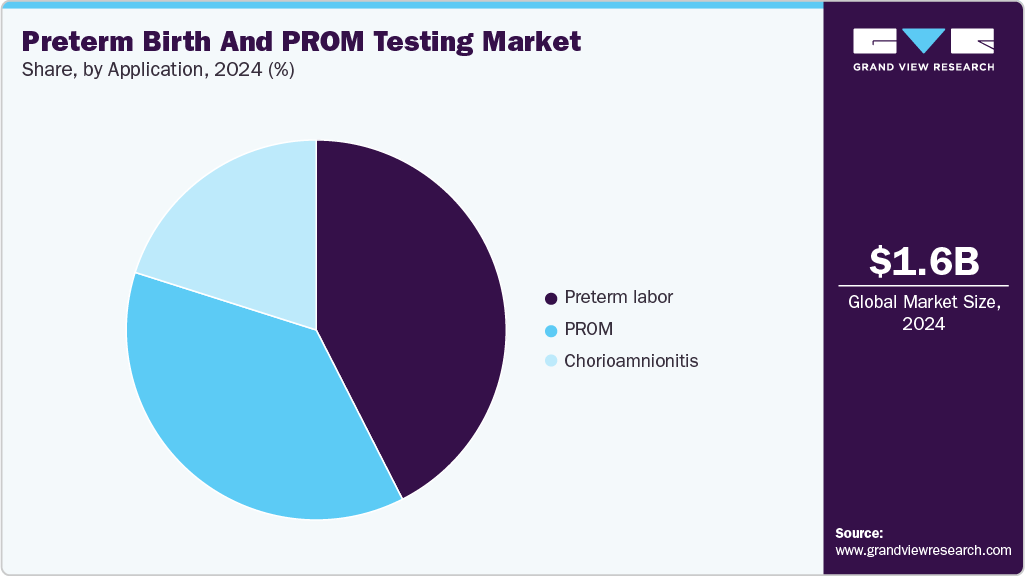
The Premature Rupture of Membranes (PROM) application segment is estimated to register a significant CAGR during the forecast period. According to data published in the NCBI in June 2021, the PROM condition occurs in 8% to 10% of pregnancies worldwide. For accurate and timely management of PROM, it is important to emphasize efficient diagnosis.
Regional Insights
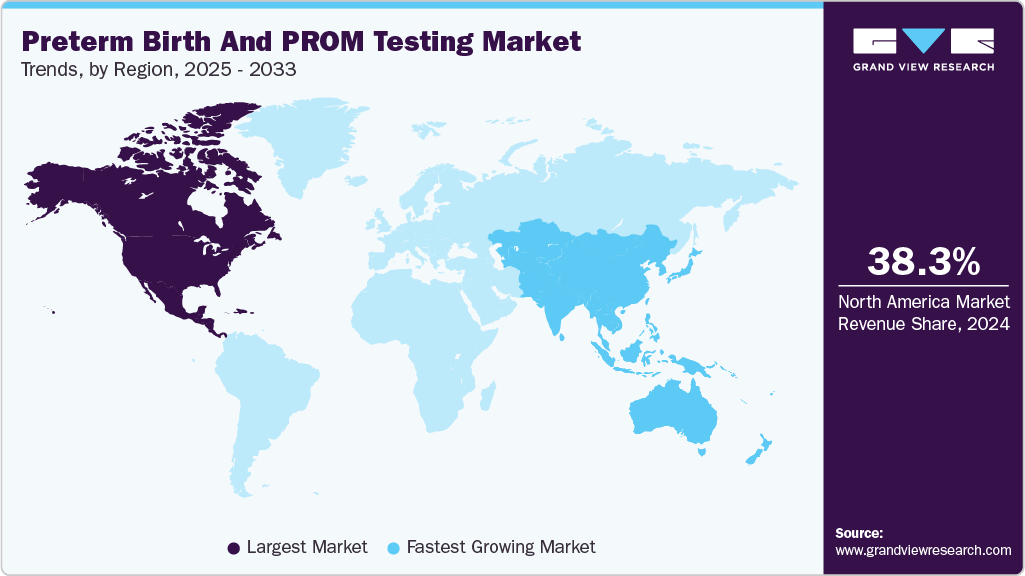
North America dominated the preterm birth and PROM testing market with the largest revenue share of 38.3% in 2025 due to the changes in lifestyle factors such as excessive alcohol consumption & sedentary lifestyles, and high prevalence of preterm births in the region. The market is supported by strong institutional adoption of advanced prenatal diagnostics and well-established maternal healthcare systems.
U.S. Preterm Birth And PROM Testing Market Trends
The preterm birth and PROM testing market in the U.S. held the largest share in the North America region in 2025, driven by a high clinical burden of preterm births and the rapid integration of innovative biomarker-based tests in routine obstetric care. Broader insurance coverage for diagnostic solutions, including risk-prediction assays and PROM POC kits, has improved patient access while supporting earlier clinical intervention.
Europe Preterm Birth And PROM Testing Market Trends
The Europe preterm birth and PROM testing market represented a significant market growth in 2024, supported by widespread use of established screening practices and stringent clinical management guidelines for high-risk pregnancies. Countries such as Germany, Italy, and the UK demonstrate strong uptake of PAMG-1 and IGFBP-1 biomarker testing as part of standardized care pathways.
Asia Pacific Preterm Birth And PROM Testing Market Trends
The Asia Pacific preterm birth and PROM testing market is expected to grow at the fastest CAGR of 9.2% over the forecast period, driven by the presence of a large population in India and China. Moreover, the rising number of preterm births in developing countries of the region is creating a significant potential market, thereby leading to high market growth. Rapid technological advancements and an increase in the number of awareness campaigns & nonprofit organizations supporting preterm infants and their families are some of the vital factors positively impacting the market.
The China preterm birth and PROM testing market held the largest revenue share in the Asia-Pacific region, driven by its high preterm birth burden, large patient population, and expanding network of advanced maternity hospitals. According to a Lancet publication (September 2021), China has the second-highest burden of preterm births, with a 1.3% annual increase in preterm rate from 2012 to 2018.
The India preterm birth and PROM testing market is emerging as a significant market within the Asia Pacific due to its high newborn population and ongoing efforts to reduce preventable preterm complications. Preterm births are one of the major causes of neonatal death in India. India enhanced high-risk pregnancy screening through programs such as LaQshya and SUMAN in 2023, expanding diagnostic access at district and community health levels.
Latin America Preterm Birth And PROM Testing Market Trends
Latin America presents steady growth opportunities driven by increasing utilization of point-of-care diagnostics in maternity emergency units and tertiary obstetric hospitals. Countries such as Brazil and Mexico are strengthening maternal-fetal health policies, encouraging the shift from traditional examinations toward more accurate biomarker testing for suspected membrane rupture.
Middle East & Africa Preterm Birth And PROM Testing Market Trends
MEA preterm birth and PROM testing market represents significant opportunities over the forecast period owing to a notable burden of risk factors such as maternal malnutrition, infectious diseases, and other socio-economic challenges in parts of Africa, which could increase preterm birth and PROM incidence. In addition, the rising awareness of preterm birth complications in selected African markets and GCC countries is pushing the demand for early detection and interventions.
Key Preterm Birth And PROM Testing Company Insights
The market is highly competitive with the presence of many international and local players. The major companies are focusing on strategies such as new product development, product enhancements, and regional expansion in an attempt to capture a large share of the market. For instance, in February 2023, Sera Prognostics announced positive results for its PreTRM Preterm Birth Test, a biomarker test based on blood used for predicting the risk of preterm birth. The individuals were managed with the test-and-treat approach, which resulted in a reduction of neonatal death and decreased length of hospital stay.
Key Preterm Birth And PROM Testing Companies:
The following are the leading companies in the preterm birth and PROM testing market. These companies collectively hold the largest market share and dictate industry trends.
- QIAGEN
- Hologic, Inc.
- CooperSurgical Inc.
- Abbott
- Medix Biochemica
- Sera
- Laborie
- Biosynex SA
- NX Prenatal Inc.
- IQ Products
Competitive Benchmarking
Category
Operating Strategies
Competitive Edge
Weakness
Well-Established Players (QIAGEN, Hologic, Inc., CooperSurgical Inc., Abbott, Laborie, Biosynex SA)
- Focus on expanding preterm birth and PROM testing portfolios through investments in fetal fibronectin testing, PROM diagnostic assays, prenatal screening technologies, and point of care diagnostic solutions. Emphasize product launches, commercialization initiatives, geographic expansion, and collaborations with hospitals, maternity centers, and diagnostic laboratories. Strengthen market position through regulatory approvals, clinical evidence generation, and integration of diagnostic solutions into maternal healthcare pathways.
- Established brands, extensive distribution networks, strong relationships with healthcare providers, broad diagnostic portfolios, and significant experience in women's health and prenatal diagnostics. Ability to support large scale commercialization, clinical adoption, and market expansion across developed and emerging healthcare markets.
- Dependence on regulatory approvals and reimbursement support may affect adoption of new testing solutions. Large organizational structures can slow product commercialization and responsiveness to evolving clinical requirements. Competition from specialized prenatal diagnostics companies may also create pricing and market share pressures.
Emerging and Specialized Players (Sera, Medix Biochemica, NX Prenatal Inc., IQ Products)
- Focus on developing innovative biomarker-based diagnostics, predictive testing solutions, and specialized assays for preterm birth risk assessment and PROM detection. Emphasize clinical validation studies, strategic partnerships, technology development, and expansion of evidence based prenatal testing solutions. Invest in targeted commercialization efforts and collaborations with research institutions and maternal healthcare providers to increase market penetration.
- Specialized expertise in preterm birth prediction and maternal fetal health diagnostics, strong focus on innovation, agility in product development, and ability to address unmet clinical needs through differentiated testing technologies. Greater flexibility in advancing novel biomarker based diagnostic approaches.
- Limited commercial scale, narrower product portfolios, and lower geographic presence compared with established multinational companies. Dependence on successful clinical validation, reimbursement acceptance, and external funding may restrict expansion and large-scale market adoption.
Recent Developments
-
In May 2025, Mirvie launched Encompass, a predictive solution that uses a novel blood test analyzing cell-free RNA to identify personalized preeclampsia risk months before symptoms appear.
Preterm Birth And PROM Testing Market Report Scope
Report Attribute
Details
Market size value in 2025
USD 1.7 billion
Market size value in 2026
USD 1.8 billion
Revenue forecast in 2033
USD 3.3 billion
Growth rate
CAGR of 8.7% from 2026 to 2033
Historical data
2021 - 2024
Forecast period
2026 - 2033
Quantitative units
Revenue in USD million/billion and CAGR from 2026 to 2033
Report coverage
Revenue forecast, company ranking, competitive landscape, growth factors, and trends
Segments covered
Test Type, application, region
Regional scope
North America; Europe; Asia Pacific; Latin America; MEA
Country scope
U.S.; Canada; Mexico; UK; Germany; France; Italy; Spain; Russia; Denmark; Sweden; Norway; China; Japan; India; Australia; South Korea; Singapore; Thailand; Brazil; Argentina; South Africa; Saudi Arabia; UAE; Kuwait
Key companies profiled
QIAGEN, Hologic, Inc., CooperSurgical Inc., Abbott, Medix Biochemica, Sera Prognostics, Laborie, Biosynex SA, NX Prenatal Inc., IQ Products.
Customization scope
Free report customization (equivalent up to 8 analysts' working days) with purchase. Addition or alteration to country, regional & segment scope.
Pricing and purchase options
Avail customized purchase options to meet your exact research needs. Explore purchase options
Global Preterm Birth And PROM Testing Market Report Segmentation
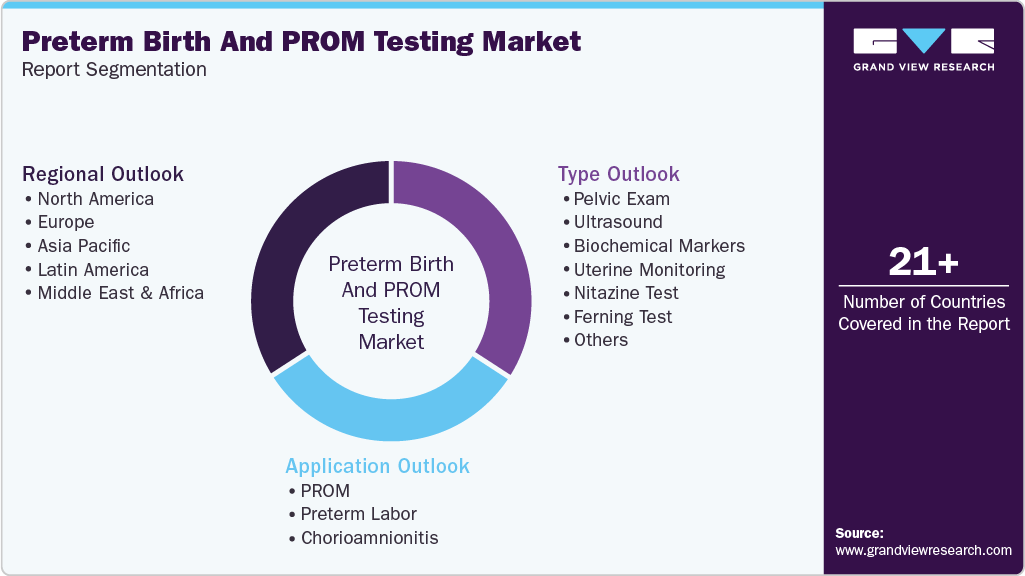
This report forecasts revenue growth at global, regional, and country levels and provides an analysis of the latest industry trends in each of the sub-segments from 2021 to 2033. For this study, Grand View Research has segmented the global preterm birth and PROM testing market report based on type, application, and region:
-
Type Outlook (Revenue, USD Million, 2021 - 2033)
-
Pelvic Exam
-
Ultrasound
-
Biochemical Markers
-
Interleukin (IL)-6
-
C-Reactive Protein (CRP)
-
IL-1, IL-2, IL-8, TNF-a
-
Corticotropin-Releasing Hormone (CRH)
-
AFP (Alpha fetoprotein)
-
-
Uterine Monitoring
-
Nitazine Test
-
Ferning Test
-
Pooling
-
PAMG-1 Immunoassay
-
IGFBP Test
-
Fetal Fibronectin (fFN)
-
Others
-
-
Application Outlook (Revenue, USD Million, 2021 - 2033)
-
PROM
-
Preterm Labor
-
Chorioamnionitis
-
-
Regional Outlook (Revenue, USD Million, 2021 - 2033)
-
North America
-
U.S.
-
Canada
-
Mexico
-
-
Europe
-
UK
-
Germany
-
France
-
Italy
-
Spain
-
Russia
-
Denmark
-
Sweden
-
Norway
-
-
Asia Pacific
-
Japan
-
China
-
India
-
Australia
-
South Korea
-
Singapore
-
Thailand
-
-
Latin America
-
Brazil
-
Argentina
-
-
Middle East & Africa
-
South Africa
-
Saudi Arabia
-
UAE
-
Kuwait
-
-
Research Methodology
The preterm birth and PROM testing market figures in this report are based on a proven research process that combines executive interviews with secondary research from proprietary databases, company filings, and recognized regulatory and institutional sources. Market size is built through value-chain sizing - reconciling supply-side and demand-side estimates - and triangulated with bottom-up and top-down approaches. Every estimate passes multiple levels of expert validation before publication, with each preterm birth and PROM testing segment quantified using the revenue-capture definitions in the table below.
Segment Definition
Segment - Test Type
Revenue capture definition
Pelvic Exam
Revenue is captured from clinician performed pelvic examinations used to assess cervical dilation, effacement, and membrane status in suspected preterm labor or PROM cases across hospitals, clinics, and maternity care settings.
Ultrasound
Revenue flows from obstetric ultrasound procedures, imaging systems, and associated diagnostic services used to evaluate cervical length, fetal condition, amniotic fluid volume, and pregnancy complications linked to preterm birth risk.
Biochemical Markers
Revenue is primarily captured through laboratory-based biomarker assays measuring analytes such as IL 6, CRP, CRH, AFP, and other inflammatory or pregnancy related markers used for preterm birth and infection risk assessment.
Uterine Monitoring
Revenue is captured from uterine activity monitoring devices, consumables, and related diagnostic services used to detect contractions and assess the likelihood of preterm labor progression.
Nitrazine Test
Revenue flows from nitrazine paper kits and associated consumables utilized to determine amniotic fluid leakage through pH-based testing in patients with suspected membrane rupture.
Ferning Test
Revenue is captured through microscopy based diagnostic procedures and related laboratory supplies used to identify crystallization patterns in vaginal fluid samples for PROM confirmation.
Pooling
Revenue is primarily derived from clinical examination procedures performed to visually identify amniotic fluid accumulation within the vaginal vault as evidence of membrane rupture.
PAMG-1 Immunoassay
Revenue flows from proprietary placental alpha microglobulin 1 immunoassay kits, analyzers, and consumables used for rapid and accurate detection of premature rupture of fetal membranes.
IGFBP Test
Revenue is captured from insulin like growth factor binding protein based diagnostic kits and associated testing services used to confirm amniotic fluid leakage and support PROM diagnosis.
Fetal Fibronectin (fFN)
Revenue is generated through fetal fibronectin testing kits, laboratory analysis services, and related consumables used to assess the risk of spontaneous preterm birth in symptomatic pregnant women.
Others
Revenue flows from emerging and alternative diagnostic approaches, including cervical biomarkers, molecular assays, combination risk assessment tests, and novel prenatal diagnostic technologies not classified within the specified categories.
Segment - Application
Revenue capture definition
PROM
Revenue is captured from diagnostic tests, immunoassays, clinical procedures, and associated services used to detect and confirm premature rupture of fetal membranes, enabling timely obstetric intervention and pregnancy management.
Preterm Birth
Revenue flows from predictive and diagnostic testing solutions, including biomarker assays, fetal fibronectin tests, ultrasound assessments, and monitoring procedures used to evaluate the risk of spontaneous preterm delivery.
Chorioamnionitis
Revenue is primarily derived from laboratory tests, biomarker evaluations, microbiological assessments, and related diagnostic services used to identify intrauterine infection associated with membrane rupture and preterm labor complications.
Estimation Model
The Preterm Birth and PROM Testing Market was estimated using a bottom-up methodology that involved identifying key market participants and evaluating their diagnostic product portfolios related to preterm birth risk assessment and premature rupture of membranes testing. Revenue generated from major testing technologies, including fetal fibronectin assays, PAMG 1 immunoassays, IGFBP tests, ultrasound-based assessments, biochemical marker tests, and other diagnostic solutions, was analyzed to determine segment level market estimates. These estimates were further validated through assessment of technology adoption trends, patient utilization rates, and the market presence of leading manufacturers across key regions to derive the overall market size.
Delivered Customizations
This report has been delivered with the following In-depth customizations
Client Request
Customization Delivered
Value Adds
Preterm Birth and PROM Testing Competitive Landscape & Market Assessment
Assessed the global preterm birth and PROM testing market landscape, covering fetal fibronectin testing, PAMG 1 immunoassays, IGFBP tests, biomarker-based diagnostics, ultrasound-based assessments, and other PROM testing solutions. Analyzed key market participants, product portfolios, commercialization strategies, technology adoption trends, and competitive positioning across maternal healthcare and prenatal diagnostics markets.
Helped the client identify growth opportunities across prenatal diagnostics, evaluate competitive positioning of leading companies, benchmark testing technologies, and prioritize strategic investments, partnerships, and market expansion initiatives within the preterm birth and PROM testing industry.
Preterm Birth and PROM Testing Technology & Product Benchmarking Study
Delivered a comprehensive benchmarking assessment of preterm birth and PROM testing technologies, including fetal fibronectin assays, PAMG 1 immunoassays, IGFBP tests, biochemical marker testing, and emerging biomarker-based risk prediction platforms. Evaluated diagnostic performance, clinical utility, adoption trends, product differentiation, and commercialization potential among leading market participants.
Enabled the client to assess technology competitiveness, identify innovation gaps, benchmark product development strategies, and prioritize investments in predictive diagnostics, biomarker discovery, point-of-care testing, and maternal healthcare solutions.
Maternal Healthcare Infrastructure & Commercialization Feasibility Assessment
Assessed maternal healthcare infrastructure, prenatal screening programs, hospital networks, diagnostic laboratories, reimbursement frameworks, regulatory pathways, and clinical adoption patterns supporting preterm birth and PROM testing. Evaluated healthcare access, physician adoption trends, commercialization opportunities, and market readiness across major regional markets.
Supported commercialization planning by identifying market access opportunities, evaluating reimbursement and regulatory considerations, assessing adoption barriers, mitigating operational risks, and strengthening long-term growth strategies across prenatal diagnostics and maternal healthcare markets.
Frequently Asked Questions About This Report
Asia Pacific is the fastest-growing region over the forecast period.
The preterm birth segment led the market with the largest revenue share of 42.5% in 2025.
Key factors that are driving the market growth include the growing incidence of preterm births, increasing geographical foothold of market players, high demand for effective preterm diagnosis, and improvement in point-of-care (POC) diagnostics.
The global preterm birth and PROM testing market size was estimated at USD 1.7 billion in 2025 and is expected to reach USD 1.8 billion in 2026.
The global preterm birth and PROM testing market is expected to grow at a compound annual growth rate of 8.7% from 2026 to 2033 to reach USD 3.3 billion by 2033.
North America dominated the preterm birth & PROM testing market with a share of 38.3% in 2025.
Ultrasound segment led the market with the largest revenue share of 31.5% in 2025 while PAMG-1 immunoassay segment is expected to be the fastest-growing market.
Some key players operating in the preterm birth and PROM testing market include Qiagen; Hologic; Cooper Surgical; Abbott Laboratories; Medixbiochemica; Sera Prognostics; Biosynex; and IQ Products.
About the Author(s)
Medical Devices Research Team
Healthcare · Medical DevicesThis report was authored by the medical devices research team at Grand View Research - comprising two research analysts, one senior research analyst, and one industry expert - with specialized expertise in the medical devices segment of the healthcare industry. All findings are based on proprietary healthcare databases, executive interviews, and regulatory analysis, subject to internal peer review prior to publication.
Last Updated:
Speak to Analyst


Customize this report to your needs - add regions, segments, or data points, with 20% free customization.
Or view our licence options:


ISO 9001:2015 & 27001:2022 Certified
We are GDPR and CCPA compliant! Your transaction & personal information is safe and secure. For more details, please read our privacy policy.


