
- Home
- »
- Clinical Diagnostics
- »
-
Procalcitonin Testing Market Size & Share Report, 2026-2033GVR Report cover

Procalcitonin Testing Market (2026 - 2033)
Size, Share & Trends Analysis Report By Product (Reagents & Consumables, Software & Services), By Test Setting, By Technology, By Clinical Application, By End-use, By Region, And Segment Forecasts
Market Size, 2025
$309.4MMarket Estimate, 2026
$327.9MMarket Forecast, 2033
$519.5MCAGR, 2026–2033
6.8%Procalcitonin Testing Market Summary
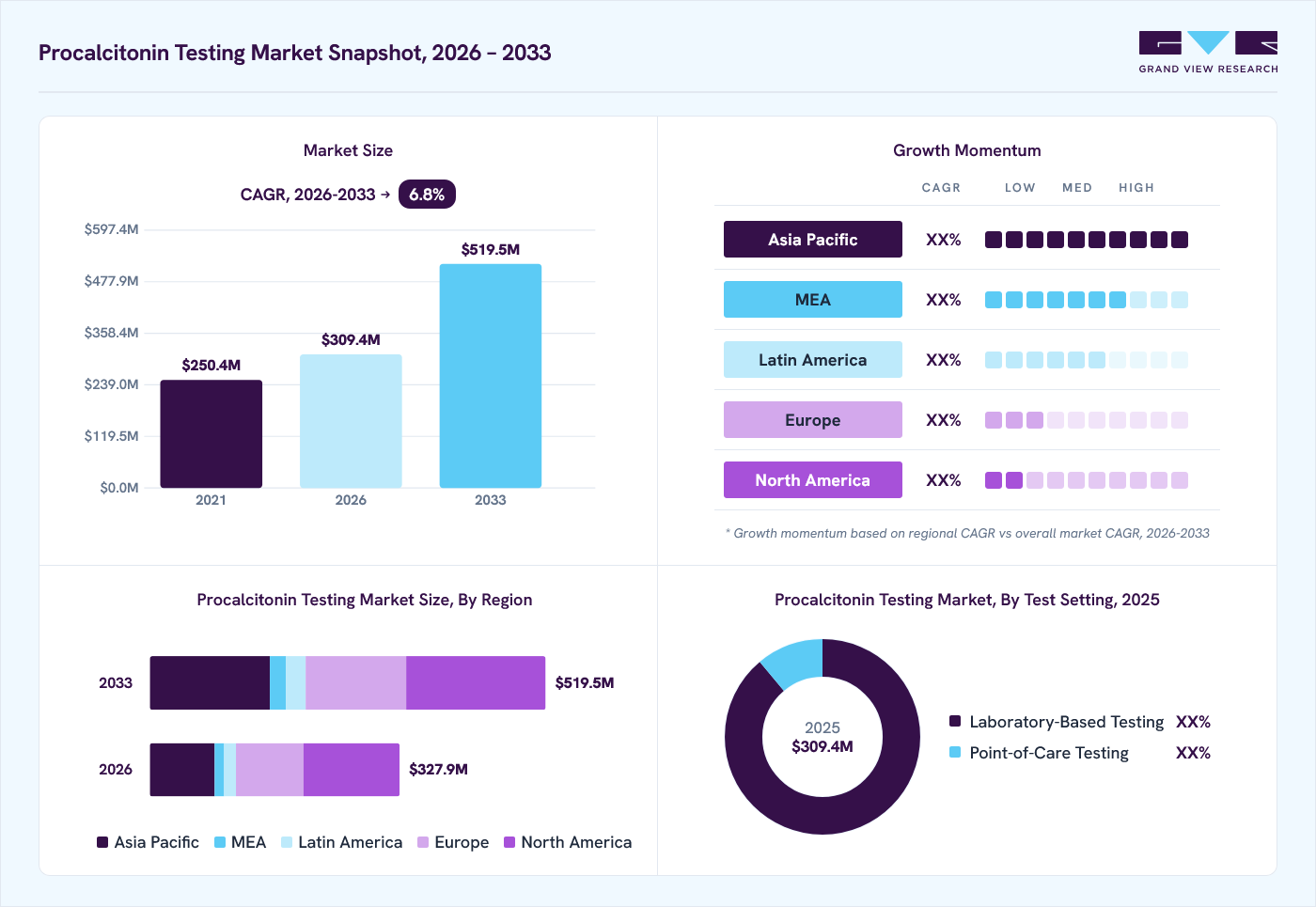
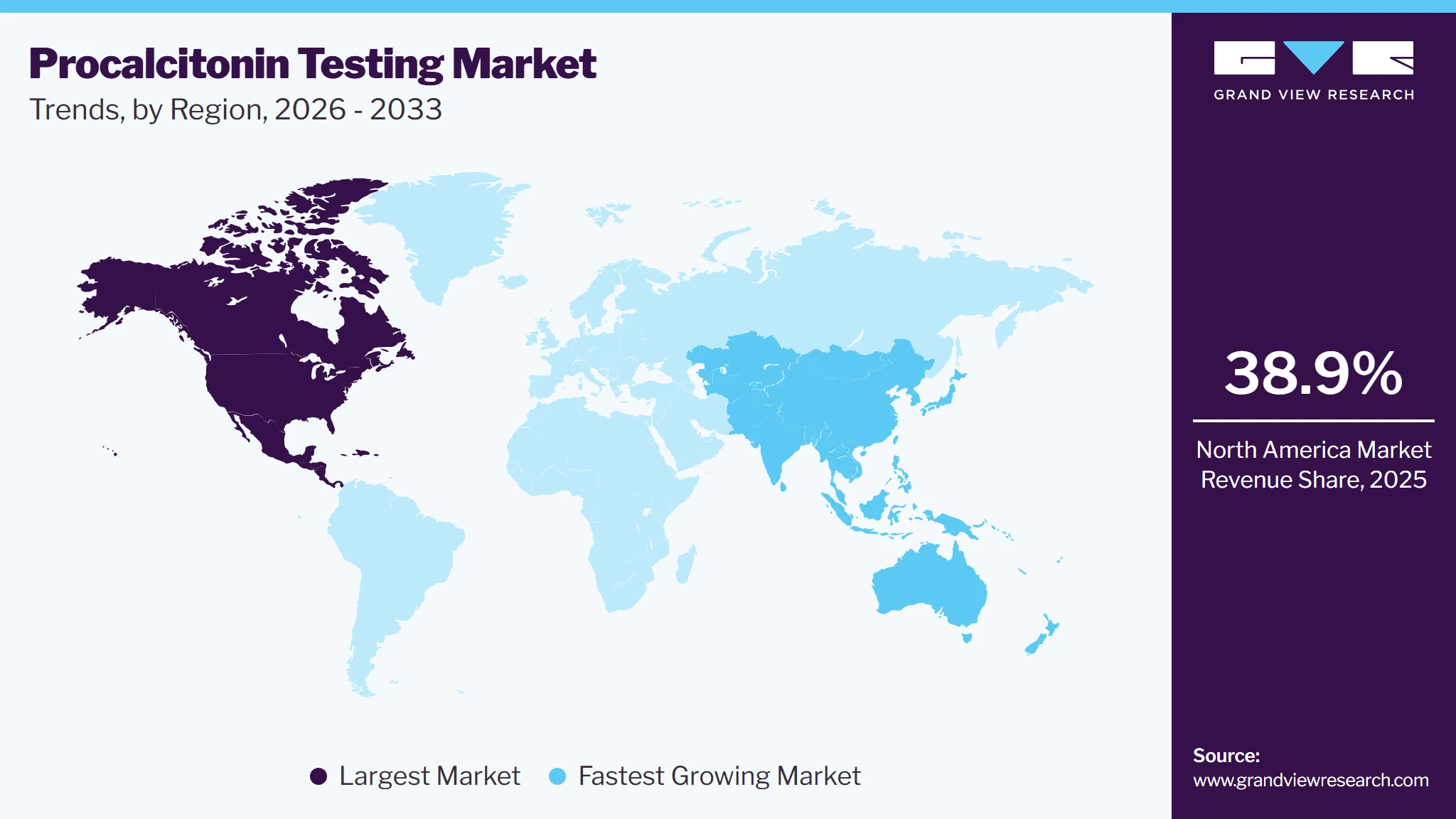
The global procalcitonin testing market size was valued at USD 309.4 million in 2025 and is projected to grow from USD 327.9 million in 2026 to USD 519.5 million by 2033, at a CAGR of 6.8% from 2026 to 2033. North America dominated the market, accounting for a revenue share of 38.9% in 2025. Market growth is primarily driven by the substantial clinical burden of sepsis and systemic bacterial infections, the increasing emphasis on antimicrobial stewardship, the broader availability of automated PCT immunoassays, and the continued development of rapid and decentralized testing formats.
 Source: Grand View Research, IR Documents, Primary Interviews, Paid DatabasesTo learn more about this report,
 Download Free Sample Report
 Key Market Trends & Insights
- By product: Reagents & consumables held the largest revenue share of 80.4% in 2025.
- By test setting: Laboratory-based testing held the largest revenue share of 88.8% in 2025.
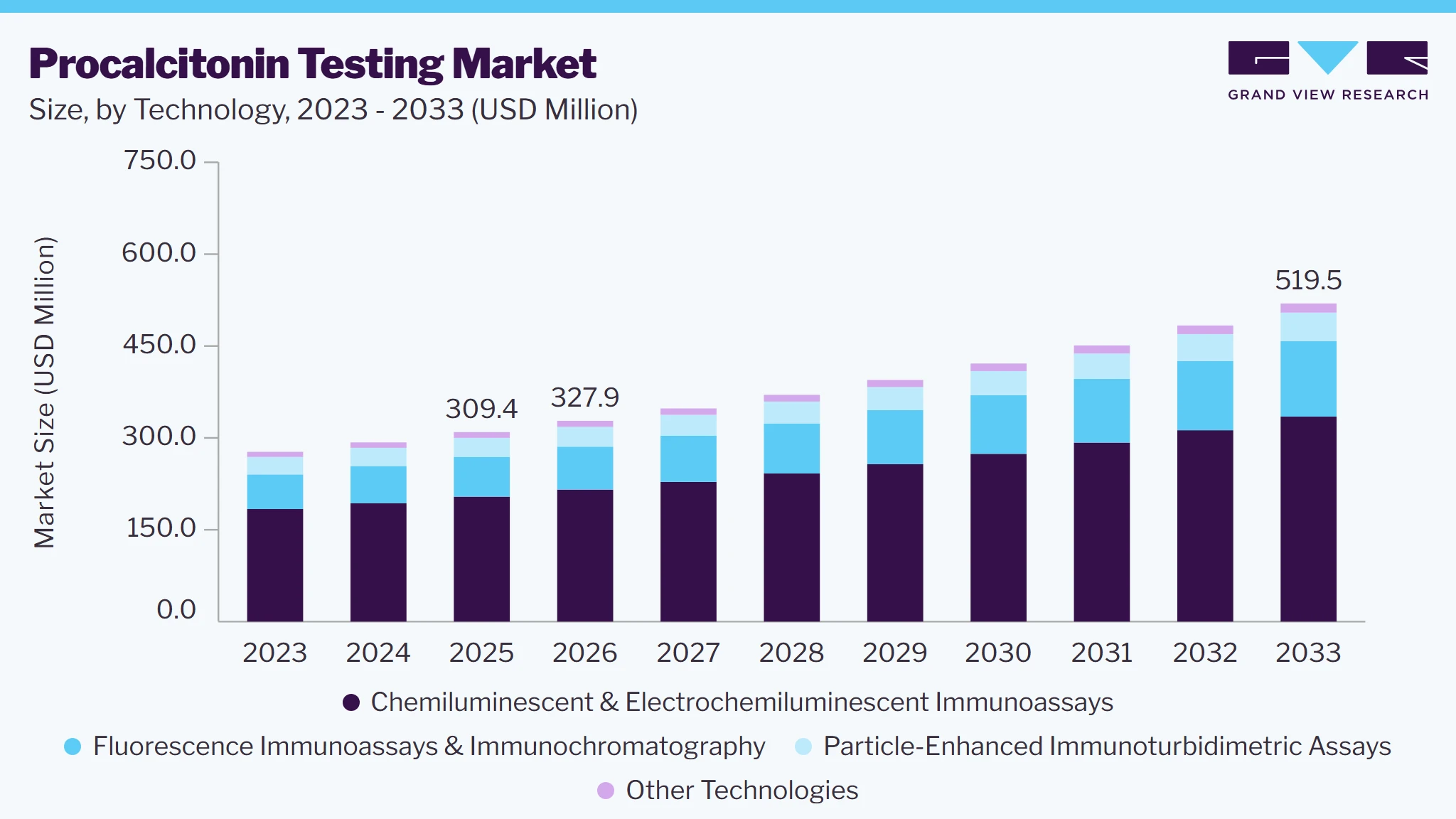
- By technology: Chemiluminescent & electrochemiluminescent immunoassays held the largest revenue share of 65.9% in 2025.
- By clinical application: Sepsis & systemic bacterial infection assessment held the largest revenue share of 49.0% in 2025.
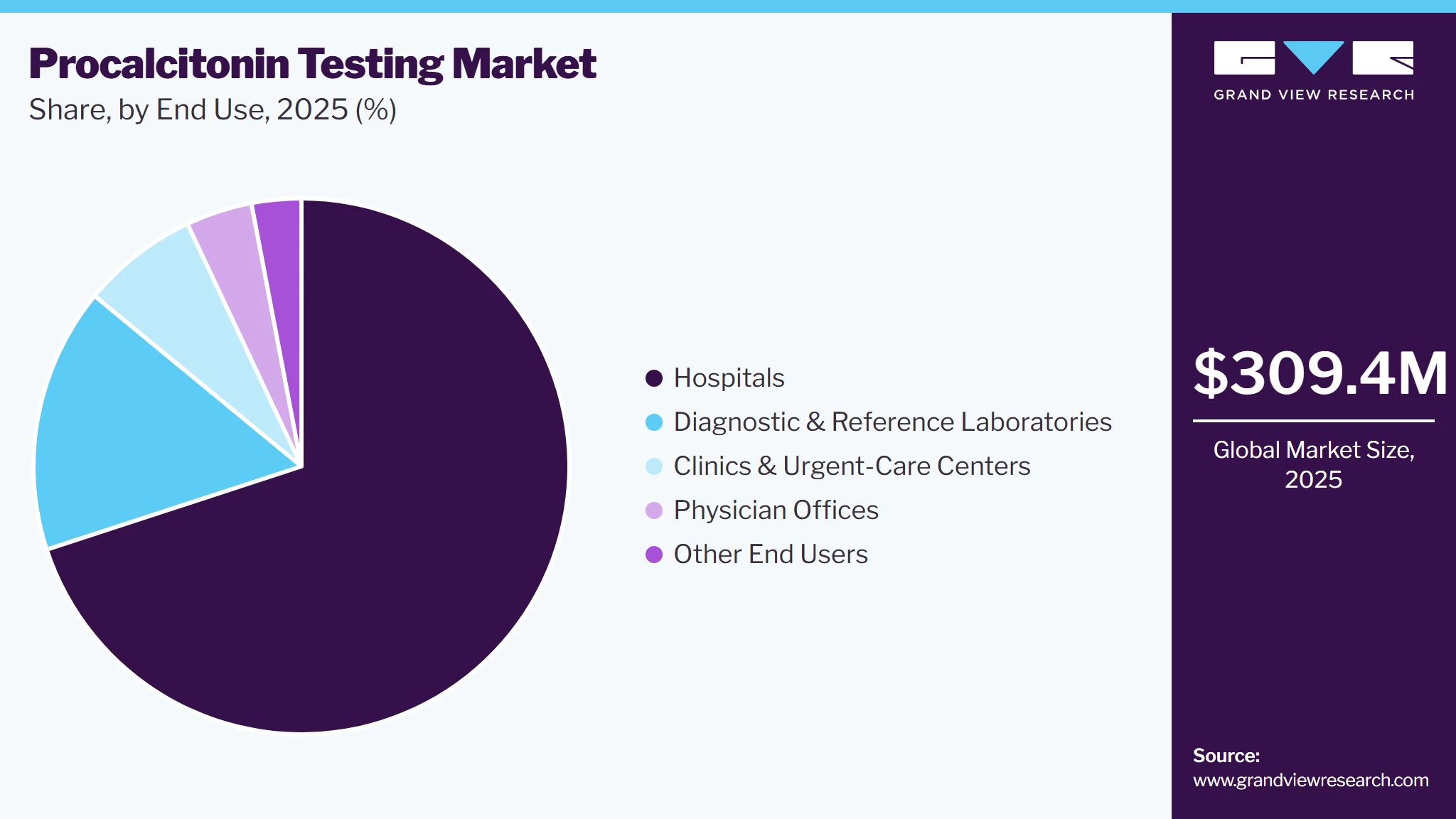
- By end use: Hospitals held the largest revenue share of 70.0% in 2025.
Regional Highlights
- Largest regional market: North America (38.9% revenue share, 2025)
- Fastest-growing regional market: Asia Pacific (highest CAGR, 2026-2033)
- By country: The U.S. held the largest market share in 2025.
Market Size & Forecast
- Market Size in 2025: USD 309.4 Million
- Estimated Market Size in 2026: USD 327.9 Million
- Projected Market Size by 2033: USD 519.5 Million
- CAGR (2026-2033): 6.8%
Three ways to get this report
Buy it, customize it, or ask a question.Ask an Analyst
A direct answer, usually in 1 working day
- AccessReport author, directly
- Reply timeWithin 1 working day
- No sales callDirect answer only
- FormatEmail reply
- CostFree, no cost
Get the Full Report
What the study covers
- FormatsPDF · Excel · Dashboard
- Timeline2026–2033 annual, 2025 base
- Coverage20+ countries, 5 regions
- Companies10+ key players profiled
Customize the Report
20% free customization
- IncludeCountries, segments, points
- TailorTo your product definition
- ExtendDeeper competitor detail
- OrA fully bespoke study
- Turnaround5–10 working days
 To learn more about this report, Download Free Sample Report
 Market Dynamics
The high clinical burden of sepsis and systemic bacterial infections is a major driver of the procalcitonin testing market. Procalcitonin (PCT) is used alongside clinical assessment and other laboratory findings to support evaluation of suspected bacterial infection, sepsis severity, prognosis, and treatment response. The need for rapid assessment is particularly important in emergency departments and intensive care settings, where delays in recognizing sepsis can adversely affect outcomes. The World Health Organization reports an estimated 48.9 million sepsis cases and 11 million sepsis-related deaths globally, representing approximately 20% of worldwide deaths. WHO also emphasizes that early diagnosis and timely, appropriate clinical management are essential for improving survival. This sustained disease burden supports routine and repeat use of PCT testing in acute-care pathways.
The continuing expansion of clinically validated PCT assays strengthens this demand environment. For instance, in May 2025, the U.S. FDA granted 510(k) clearance to DiaSys Diagnostic Systems GmbH for Procalcitonin FS, together with its TruCal Procalcitonin Calibrator Set and TruLab Procalcitonin Bi-Level Controls. The FDA decision, issued on May 9, 2025, under K242294, classified the product as substantially equivalent for PCT measurement, supporting risk assessment of critically ill patients. The assay requires 10 µL of sample and provides readings in approximately 10 minutes, with a measurement range extending from 0.23 to 50 ng/mL. The clearance expands the number of clinically available PCT testing alternatives and supports broader integration of the biomarker into established laboratory workflows.
Variation in analytical performance and incomplete standardization across PCT assays represent an important restraint on the procalcitonin testing market. Clinical algorithms frequently rely on defined PCT concentration thresholds, making analytical comparability important when results are used to support infection assessment or antibiotic-management decisions. Differences in calibration, analytical sensitivity, measurement ranges, platform methodology, and traceability can complicate direct interpretation across instruments. A 2025 analytical evaluation comparing commercial PCT assays specifically noted that not all available assays are traceable to the B·R·A·H·M·S PCT standard and examined whether established clinical cut-offs could be applied consistently across non-B·R·A·H·M·S systems. Such variability increases validation requirements for laboratories and can slow switching between platforms or adoption of newer decentralized assays.
Post-market quality requirements further demonstrate the sensitivity of this market to analytical reliability. For instance, in February 2025, the U.S. FDA database recorded a Class II recall involving a Beckman Coulter PCT assay product under the PTF product classification. FDA's Total Product Life Cycle database identifies the recall as posted on February 5, 2025. PCT assays under this classification are Class II devices regulated under 21 CFR 866.3215 for use in assessing critically ill patients at risk of progression to severe sepsis and septic shock. Although a single recall does not characterize the broader performance of commercial PCT products, it demonstrates the importance of post-market surveillance, quality control, calibration reliability, and manufacturer corrective actions. These requirements can increase compliance costs and reinforce conservative procurement practices among clinical laboratories.
Expansion of rapid and point-of-care PCT testing represents a significant market opportunity, particularly in emergency, outpatient, community, and resource-constrained settings where access to centralized laboratory infrastructure can delay bacterial infection assessment. Decentralized PCT formats can potentially reduce sample transportation and processing time while supporting earlier decisions on referral, additional testing, and antimicrobial management. The opportunity is reinforced by antimicrobial resistance. In October 2025, the WHO reported that approximately one in six laboratory-confirmed bacterial infections worldwide was resistant to antibiotics in 2023, while resistance was observed in around one in three reported infections in the South-East Asian and Eastern Mediterranean regions. Improving access to quality-assured diagnostics is therefore increasingly linked to global strategies for more appropriate antimicrobial use.
Clinical evaluation of PCT near the patient is increasingly extending into settings with limited conventional diagnostic capacity. For instance, in November 2025, researchers published a prospective evaluation of point-of-care PCT testing to identify bacterial causes of acute febrile illness in Northwest Ethiopia. The study was conducted in an environment where limited access to bacterial diagnostic testing contributes to empirical antibiotic prescribing and evaluated PCT as a potential rapid tool for differentiating bacterial illness. The development is important because it demonstrates active assessment of decentralized PCT testing in a population and healthcare environment distinct from high-income hospital laboratories. Continued validation of affordable, rapid PCT formats could broaden the addressable market to primary care and lower-resource settings while supporting antimicrobial stewardship objectives.
Market Concentration & Characteristics
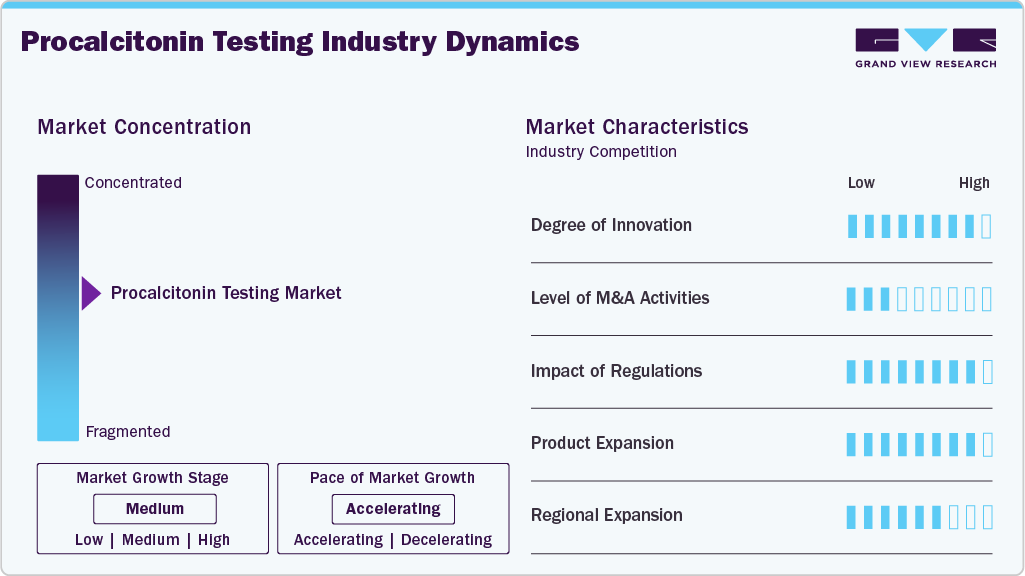
The procalcitonin testing market demonstrates a medium degree of innovation, driven by improvements in assay sensitivity, analytical speed, miniaturization, alternative detection technologies, and expansion toward decentralized testing. PCT is already an established biomarker, meaning innovation is increasingly concentrated on improving analytical performance and workflow rather than introducing the biomarker itself. Emerging approaches include rapid fluorescence assays, microfluidic immunoassays, advanced biosensors, aptamer-based methods, and highly sensitive molecular-signal amplification techniques. For instance, in November 2025, researchers from the University of Missouri developed an enhanced CRISPR-Cas12a fluorescence assay for detecting trace concentrations of PCT, as reported in ACS Applied Bio Materials. The development remains research-stage rather than a commercially approved diagnostic product, but it demonstrates continuing technological exploration aimed at improving sensitivity and potentially enabling future compact PCT testing formats.
The procalcitonin testing market demonstrates a low level of direct PCT-specific M&A activity. The market is largely served by diversified diagnostics manufacturers that commercialize PCT within broader immunoassay, clinical chemistry, infectious-disease, and critical-care portfolios, reducing the frequency of transactions involving PCT assets alone. Acquisition activity is instead occurring in adjacent rapid immunoassay and point-of-care technologies that could influence the future competitive environment. For instance, in January 2025, bioMérieux completed its acquisition of the remaining 80% of SpinChip Diagnostics ASA, increasing its ownership from 20% to 100%. bioMérieux's 2025 financial statements reported approximately EUR 112 million of cash outflow for the remaining interest, while the transaction valued SpinChip at an enterprise value of EUR 138 million. SpinChip is initially focused on cardiac biomarkers rather than PCT; therefore, the transaction represents adjacent POC immunoassay consolidation and is not classified as a direct PCT acquisition.
 To learn more about this report, Download Free Sample Report
 Regulations have a significant impact on the U.S. procalcitonin testing market. PCT assays are in vitro diagnostic medical devices whose market entry depends on demonstrating analytical and clinical performance for specified intended uses. The U.S. FDA classifies relevant PCT assays as Class II devices under 21 CFR 866.3215, with products reviewed through the 510(k) pathway. Regulatory requirements affect assay validation, labeling, manufacturing quality systems, clinical claims, and post-market surveillance, thereby creating meaningful technical and financial barriers to entry. For instance, in May 2025, the U.S. FDA cleared DiaSys Procalcitonin FS under 510(k) K242294, with a substantially equivalent decision dated May 9, 2025. The clearance demonstrates that manufacturers entering the U.S. market must provide performance evidence against appropriate predicate devices before commercialization for specified PCT applications.
Product expansion is strengthening the procalcitonin testing market. Manufacturers are extending PCT availability across automated clinical chemistry, immunoassay, and rapid testing workflows, with an emphasis on shorter turnaround times, smaller sample volumes, ready-to-use reagents, platform consolidation, and reduced dependence on dedicated analyzers. These developments allow laboratories to incorporate PCT into existing testing infrastructure while expanding competition beyond traditional proprietary platforms. For instance, in 2025, DiaSys presented Procalcitonin FS within its clinical chemistry portfolio at ADLM 2025. The fluid-stable particle-enhanced immunoturbidimetric assay is designed for serum and plasma, provides a 0.2-50 ng/mL measurement range, and can be implemented on clinical chemistry analyzers. Its format broadens access to PCT testing by allowing laboratories to use established chemistry infrastructure rather than relying exclusively on dedicated PCT or immunoassay platforms.
Regional expansion is broadening the global footprint of the procalcitonin testing industry. International manufacturers increasingly offer PCT assays across multiple instrument platforms and distribution networks, while locally accessible chemistry and rapid-testing formats are supporting penetration beyond large tertiary laboratories. Expansion is particularly relevant in markets where decentralized infection assessment and more efficient antibiotic use are public-health priorities. This global push is reflected in recent activity: For instance, DiaSys India has expanded availability of Procalcitonin FS within its SYS clinical chemistry product range in India, offering the liquid-stable particle-enhanced immunoturbidimetric reagent for use on a range of clinical chemistry analyzers. The company specifies a measurement range of 0.2-50 ng/mL. Availability through established chemistry workflows can improve access for laboratories without dedicated PCT platforms and increase competitive intensity in emerging diagnostic markets.
Analyst Perspective
The procalcitonin testing market is expected to witness steady growth over the forecast period, supported by the persistent sepsis burden and increasing emphasis on antimicrobial stewardship. The market combines a mature clinical biomarker with continued incremental innovation in assay sensitivity, turnaround time, automation, chemistry-platform compatibility, and point-of-care formats. Regulatory requirements maintain relatively high barriers to commercialization in developed markets, while newer, rapid, and open-platform assays are expanding competition. Direct PCT-specific consolidation remains limited, indicating that growth is more likely to arise from assay-menu expansion and platform penetration than from extensive standalone PCT acquisitions. In the near term, adoption is expected to increasingly extend beyond initial sepsis assessment to include serial treatment monitoring and decentralized infection evaluation, while greater assay harmonization and clinical validation will remain important for broader utilization.
Product Insights
The reagents & consumables segment dominated the procalcitonin testing market, accounting for a revenue share of 80.4% in 2025. The segment's dominance is primarily attributable to recurring utilization of PCT reagent packs, assay kits, cartridges, calibrators, controls, cassettes, and other single-use materials required for every test performed. Unlike analyzers, which are purchased periodically, consumables generate recurring demand throughout an instrument's installed life and benefit directly from increasing test volumes and serial patient monitoring. The large installed base of automated immunoassay and clinical chemistry platforms further supports sustained reagent consumption. The May 2025 FDA clearance of DiaSys Procalcitonin FS also included its dedicated TruCal calibrators and TruLab controls, demonstrating the consumable ecosystem required to support routine PCT measurement. This recurring-use model is expected to preserve the segment's leading revenue contribution.
The software & services segment is expected to grow at the fastest CAGR of 9.4% over the forecast period. Growth is supported by increasing connectivity of PCT-enabled analyzers, remote technical support, instrument maintenance, middleware integration, quality management, and clinical decision-support applications associated with antimicrobial stewardship. As PCT becomes embedded in structured treatment pathways, laboratories require stronger integration between analyzers, laboratory information systems, electronic health records, and utilization-monitoring systems. Software can also support standardized ordering and interpretation protocols, particularly where serial PCT measurements are incorporated into antibiotic-management algorithms. Increasing automation across hospital laboratories is consequently expanding the service component associated with PCT-enabled platforms. The segment remains relatively small compared with recurring reagents, but its higher growth reflects increasing digital integration, service intensity, and demand for connected laboratory workflows rather than growth in standalone software products alone.
Test Setting Insights
The laboratory-based testing segment dominated the procalcitonin testing market, accounting for a revenue share of 88.8% in 2025. Central and hospital laboratories remain the principal setting for PCT measurement because automated immunoassay and chemistry platforms provide standardized quality control, high throughput, broad analytical menus, and integration with established sample-processing workflows. Laboratory PCT testing is particularly important for emergency and critically ill patients, whose results are interpreted alongside microbiology, hematology, chemistry, and other clinical findings. Large platforms also facilitate serial measurements without requiring separate PCT instrumentation. Beckman Coulter's commercial Access PCT assay, for example, operates on Access immunoassay systems and provides a first result in approximately 20 minutes, with 50-test reagent packs and a 35 µL sample requirement. Such established laboratory infrastructure supports the segment's continuing dominance.
The point-of-care testing segment is expected to grow at the fastest CAGR of 10.2% over the forecast period. Growth is supported by demand for faster assessment of bacterial infections near patients in emergency departments, acute-care units, clinics, and settings where centralized laboratory access is limited. Compact fluorescence and immunochromatographic platforms can reduce specimen transportation requirements and shorten the interval between clinical presentation and PCT availability. In June 2025, a peer-reviewed analytical evaluation compared point-of-care PCT assays from Wondfo and Getein with the B·R·A·H·M·S PCT sensitive KRYPTOR reference assay. The study reported a manufacturer-stated turnaround time of approximately 15 minutes for the Wondfo system and evaluated performance around clinically relevant low-concentration thresholds. Continued validation of these rapid formats is expected to expand PCT testing beyond conventional centralized laboratory workflows.
Technology Insights
The chemiluminescent & electrochemiluminescent immunoassays segment accounted for the largest market share of 65.9% in 2025. The segment benefits from an extensive installed base of automated immunoassay analyzers, high analytical sensitivity, scalable throughput, and the ability to consolidate PCT with broader infectious-disease, cardiac, endocrine, and critical-care assay menus. Consolidation reduces the requirement for dedicated instrumentation and supports routine use in high-volume hospital laboratories. Roche's Elecsys B·R·A·H·M·S PCT, for example, is an electrochemiluminescence immunoassay available on automated Roche Elecsys, Modular, and cobas e platforms, including the cobas e801. The assay is CE-marked and FDA 510(k)- cleared. Continued utilization of these large installed analyzer bases is expected to sustain chemiluminescent and electrochemiluminescent technologies as the principal PCT testing format.
The fluorescence immunoassays & immunochromatography segment is expected to grow at the fastest CAGR of 8.4% over the forecast period. Expansion is supported by compact analyzer formats, rapid turnaround, simplified workflows, and suitability for decentralized testing environments. Fluorescence-based lateral-flow systems allow quantitative PCT measurement without the infrastructure requirements of large centralized immunoassay platforms, making them relevant to emergency, outpatient, and lower-throughput facilities. In June 2025, researchers evaluated commercial PCT assays from Wondfo and Getein using lateral-flow immunofluorescence against the B·R·A·H·M·S PCT-sensitive KRYPTOR assay. The study assessed their performance around clinically relevant PCT decision thresholds and highlighted the increasing availability of commercial rapid PCT platforms. Continued improvements in analytical alignment and low-concentration sensitivity are expected to accelerate the adoption of fluorescence-based testing formats.
Clinical Application Insights
The sepsis & systemic bacterial infection assessment segment accounted for 49.0% revenue share of the procalcitonin testing industry in 2025. PCT is most firmly established as a biomarker for assessing systemic bacterial infection, sepsis severity, progression risk, and prognosis when interpreted alongside clinical findings and other laboratory tests. Critically ill patients may require repeat testing during hospitalization, further increasing test utilization. Regulatory indications also reinforce this clinical position. The U.S. FDA defines relevant PCT assays under 21 CFR 866.3215 as devices used to detect and measure PCT in human specimens to aid assessment of patients with suspected sepsis, including risk assessment for progression to severe sepsis and septic shock. The persistent global burden of sepsis and the need for timely infection assessment are expected to maintain this application as the largest source of demand for PCT testing.
The antibiotic stewardship & treatment monitoring segment is expected to grow at the fastest CAGR of 7.8% over the forecast period. Serial PCT measurement can complement clinical assessment by helping clinicians evaluate changes in bacterial inflammatory response during therapy, making the biomarker relevant to antibiotic continuation and discontinuation protocols. Growth is reinforced by increasing global pressure to reduce unnecessary exposure to antimicrobials. In May 2025, the World Health Assembly approved a decision to update the WHO Global Action Plan on antimicrobial resistance, with international commitments including a 10% reduction in deaths associated with bacterial AMR by 2030. WHO reported approximately 4.71 million deaths associated with bacterial AMR in 2021. Greater institutional emphasis on antimicrobial stewardship is expected to support increasing incorporation of repeat PCT measurements into structured treatment-monitoring pathways.
End Use Insights
The hospitals segment dominated the procalcitonin testing market, accounting for a revenue share of 70.0% in 2025. Hospitals concentrate the patient populations most likely to require PCT measurement, including emergency, intensive care, respiratory, infectious disease, surgical, and neonatal patients. They also maintain the laboratory infrastructure and multidisciplinary antimicrobial stewardship programs required for initial and serial PCT testing. The U.S. CDC reported in 2025 that approximately 1.7 million American adults develop sepsis each year and at least 350,000 die during hospitalization or are discharged to hospice. Such a substantial acute-care burden supports high PCT test volumes within hospital systems. The combination of high prevalence of severe infection, access to automated laboratory platforms, repeated testing during treatment, and centralized procurement of assay reagents is expected to keep hospitals as the principal end-use segment throughout the forecast period.
 To learn more about this report, Download Free Sample Report
 The clinics & urgent-care centers segment is expected to grow at the fastest CAGR of 8.8% over the forecast period. Growth is supported by decentralization of acute diagnostic services and increasing availability of compact PCT testing technologies that can potentially provide results during an outpatient encounter. These facilities frequently assess fever, respiratory infections, and suspected bacterial illness, creating opportunities for PCT to complement clinical evaluation where rapid differentiation of bacterial infection may influence referral or antimicrobial decisions. Continued miniaturization is particularly important because traditional laboratory immunoassay systems are generally unsuitable for lower-throughput outpatient environments. Recent research into rapid PCT detection, including microchannel and optical biosensor approaches, demonstrates continued technological effort to reduce assay complexity and turnaround time. As commercially validated rapid platforms become more accessible, clinics and urgent-care centers are expected to become an increasingly important setting for incremental testing.
Regional Insights
North America dominated the global procalcitonin testing market, accounting for a revenue share of 38.9% in 2025. Growth is supported by extensive hospital laboratory infrastructure, high adoption of automated immunoassays, established antimicrobial stewardship programs, and substantial sepsis-related healthcare utilization. The U.S. CDC reports approximately 1.7 million adult sepsis cases annually, with at least 350,000 affected adults dying during hospitalization or being discharged to hospice. The region also benefits from continuing regulatory activity in PCT diagnostics. In May 2025, the FDA cleared DiaSys Procalcitonin FS under K242294, adding another assay option to the U.S. market. Continued sepsis awareness, laboratory automation, and availability of multiple FDA-cleared PCT platforms support North America's leading position.
 To learn more about this report, Download Free Sample Report
 U.S. Procalcitonin Testing Market Trends
The U.S. procalcitonin testing industry accounted for the largest share of North America in 2025, driven by high sepsis-related hospitalization and extensive adoption of automated clinical laboratory testing. PCT assays are used across emergency, intensive-care, and hospital laboratory environments as adjuncts to clinical infection assessment and treatment monitoring. According to the CDC, around 1.7 million U.S. adults develop sepsis annually. The regulatory environment also supports a defined commercial pathway: PCT assays for sepsis-related applications are regulated by the FDA as Class II devices under 21 CFR 866.3215 and generally require 510(k) clearance. This combination of large acute-care volumes, mature laboratory infrastructure, established regulatory pathways, and antimicrobial stewardship programs supports sustained U.S. demand for both initial and serial PCT testing.
Europe Procalcitonin Testing Market Trends
Europe represents a significant procalcitonin testing industry, supported by extensive hospital diagnostic infrastructure and increasing policy emphasis on antimicrobial stewardship. PCT testing is used within acute-care and hospital laboratory pathways across major European healthcare systems. ECDC reported in 2025 that more than 35,000 people in the EU die annually from infections involving antimicrobial-resistant microorganisms, while approximately 4.3 million EU/EEA hospital patients acquire at least one healthcare-associated infection each year. ECDC also reported that total antibiotic consumption in 2024 remained 2% above the 2019 baseline, underscoring the need for stronger stewardship measures. These public-health pressures support technologies that can assist bacterial infection assessment and treatment monitoring, including PCT testing, while continued laboratory automation sustains demand for established immunoassay formats.
The UK procalcitonin testing market is supported by established hospital laboratory infrastructure and continued efforts to improve recognition and management of severe bacterial infections. Sepsis remains an important cause of mortality. The Office for National Statistics reported that 4,372 deaths registered in England and Wales in 2024 had streptococcal or other sepsis, ICD-10 A40-A41, as the underlying cause. UK healthcare policy also places substantial emphasis on antimicrobial stewardship and reducing inappropriate antibiotic exposure, providing a relevant clinical environment for biomarker-supported treatment decisions. PCT adoption nevertheless depends on local clinical protocols, laboratory availability, and evidence supporting its use in specific patient populations. Continued demand for infection diagnostics and stewardship tools is expected to sustain the UK as an important European PCT testing market.
The procalcitonin testing market in Germany is expected to represent significant growth, driven by substantial sepsis burden and advanced hospital laboratory infrastructure. The Robert Koch Institute reported in September 2026 that at least 230,000 people develop sepsis in Germany each year and at least 85,000 die from the condition, equivalent to approximately one sepsis death every six minutes. RKI also emphasizes that delayed treatment increases the risk of severe or fatal outcomes and that increasing antimicrobial resistance can impair treatment success. Germany's broad adoption of automated clinical chemistry and immunoassay systems provides an established infrastructure for laboratory-based PCT testing. Continued emphasis on early infection recognition, quality improvement in sepsis management, and appropriate antibiotic use is therefore expected to support sustained utilization of PCT assays.
Asia Pacific Procalcitonin Testing Market Trends
The Asia Pacific procalcitonin testing industry is expected to grow at the fastest CAGR over the forecast period, driven by expanding diagnostic infrastructure, large patient populations, and a substantial antimicrobial resistance burden. The region contains major differences in laboratory access, creating demand for both high-throughput hospital systems and decentralized rapid-testing formats. WHO's 2025 antibiotic-resistance surveillance findings indicate that approximately one in three reported infections in the South-East Asian Region was resistant to antibiotics, among the highest regional levels globally. Increasing hospital capacity, adoption of automated immunoassays, and demand for tools that can support more targeted antimicrobial use are consequently expanding the addressable market for PCT testing. Growth is expected to be particularly strong where rapid and affordable fluorescence or clinical-chemistry formats can extend testing beyond large tertiary hospitals.
The China procalcitonin testing market represents a high-potential growth opportunity, driven by a large hospital diagnostic base and strong domestic participation in rapid immunoassay technologies. Commercial PCT testing spans centralized immunoassay systems and compact fluorescence-based platforms, supporting adoption across different tiers of healthcare facilities. A 2025 peer-reviewed evaluation conducted by investigators at Shanghai Jiahui International Hospital examined commercial PCT assays from Wondfo, Getein, and Snibe against the B·R·A·H·M·S PCT sensitive KRYPTOR reference assay. The study reported that these manufacturers held substantial positions in China's point-of-care sector and specifically assessed their suitability for established low-range PCT clinical thresholds. Continued domestic platform development, hospital laboratory modernization, and demand for rapid infection assessment are expected to support China's expanding contribution to the global market.
The procalcitonin testing market in Japan is important, supported by a highly developed hospital system, automated laboratory infrastructure, and established adoption of advanced in vitro diagnostic technologies. PCT testing is suited to Japan's centralized acute-care laboratory environment because large automated systems can integrate infection biomarkers with broader chemistry and immunoassay menus. Demand is linked primarily to severe bacterial infection assessment and treatment monitoring among hospitalized patients. Japan's aging population and high utilization of hospital diagnostic services provide an underlying clinical base for infection-related biomarker testing. Competition is expected to remain concentrated among established multinational and domestic diagnostic manufacturers with regulatory authorization and distribution capabilities. Continued laboratory automation and focus on efficient antimicrobial management are expected to support steady rather than disruptive growth in Japanese PCT testing.
The India procalcitonin testing market is supported by expanding diagnostic infrastructure, increasing availability of automated clinical chemistry platforms, and substantial demand for bacterial infection assessment. The market spans large tertiary hospitals, private diagnostic laboratories, and an expanding network of smaller laboratories where flexible assay formats are particularly relevant. DiaSys India currently offers Procalcitonin FS, a fluid-stable, particle-enhanced immunoturbidimetric assay that can be programmed on multiple clinical chemistry analyzers and measures PCT over a range of 0.2-50 ng/mL. This format can reduce reliance on dedicated PCT instrumentation and potentially broaden access to testing among laboratories already operating clinical chemistry systems. Continued investment in laboratory capacity, antimicrobial stewardship, and accessible infection diagnostics is expected to support increasing PCT utilization across India's hospital and independent laboratory sectors.
Latin America Procalcitonin Testing Market Trends
Latin America represents an emerging market for procalcitonin testing, supported by expansion of hospital diagnostics and increasing emphasis on appropriate antimicrobial use. Adoption remains concentrated in larger urban hospitals and private laboratory networks, while affordability and uneven laboratory access constrain broader penetration. PAHO's Treatment of Infectious Diseases 2024-2026 guidance includes an updated review of sepsis and sepsis syndrome and emphasizes early detection and treatment to reduce morbidity and mortality. The guidance also addresses antimicrobial prescribing in the context of regional resistance patterns. These priorities create a favorable clinical rationale for infection biomarkers such as PCT, particularly where testing can support sepsis assessment and antibiotic management decisions. Expansion of automated chemistry and immunoassay platforms is expected to gradually broaden PCT access across the region.
Middle East and Africa Procalcitonin Testing Market Trends
The Middle East & Africa procalcitonin testing industry is expected to develop gradually, supported by hospital infrastructure expansion, antimicrobial stewardship initiatives, and increasing demand for rapid infection diagnostics. Access remains heterogeneous, with advanced automated testing concentrated in major hospitals while many lower-resource settings have limited laboratory capacity. WHO reported in 2025 that one in five infections in the African Region was resistant to antibiotics. WHO Africa also reported that 47 Member States had developed national AMR action plans, 52 countries had joined GLASS, and 32 Member States were implementing antimicrobial stewardship initiatives. These programs increase the need for improved bacterial infection diagnostics. Expansion of affordable, rapid, and point-of-care PCT formats could therefore materially improve testing penetration in underserved settings.
Key Procalcitonin Testing Company Insights
The procalcitonin testing market is characterized by the presence of diversified global diagnostic manufacturers and specialized assay suppliers, including Thermo Fisher Scientific/B·R·A·H·M·S, Roche Diagnostics, Siemens Healthineers, bioMérieux, Abbott, Beckman Coulter, DiaSys Diagnostic Systems, and other regional immunoassay manufacturers. Competition is based on installed analyzer base, assay sensitivity, turnaround time, platform consolidation, reagent pricing, regulatory approvals, clinical indications, and geographic distribution. Thermo Fisher's B·R·A·H·M·S PCT technology has an important position in the market through direct products and licensed assays used on several major manufacturers' platforms. However, publicly disclosed PCT-specific company revenue is limited; therefore, exact company market shares should be treated as modeled estimates rather than presented as directly reported corporate sales.
Key Procalcitonin Testing Market Companies
The following key companies have been profiled for this study on the procalcitonin testing market.
-
Thermo Fisher Scientific Inc.
-
F. Hoffmann-La Roche Ltd
-
Siemens Healthineers AG
-
bioMérieux SA
-
Abbott Laboratories
-
Danaher Corporation
-
QuidelOrtho Corporation
-
Fujirebio Holdings, Inc.
-
PHC Holdings Corporation
-
DiaSys Diagnostic Systems GmbH
-
Diazyme Laboratories, Inc.
-
Shenzhen Mindray Bio-Medical Electronics Co., Ltd.
Competitive Benchmarking
Operating Strategies
Competitive Edge
Weaknesses
Mature Players: F. Hoffmann-La Roche Ltd
- Expand procalcitonin testing through established automated immunoassay platforms and broader critical-care assay menus.
- Leverage the installed base of cobas analyzers to support laboratory-based adoption.
- Maintain emphasis on assay performance, clinical validation, automation, and integrated laboratory workflows. Expand access through established hospital and diagnostic-laboratory distribution networks.
- Strong global brand and extensive laboratory presence.
- Established Elecsys BRAHMS electrochemiluminescence assay.
- Large installed base of automated cobas immunoassay platforms.
- Strong regulatory, clinical-development, and commercialization capabilities.
- Greater dependence on centralized laboratory infrastructure than compact POC-focused competitors.
- High-end automated platforms require capital investment and trained laboratory personnel.
- Large-system economics may be less attractive for low-volume decentralized facilities.
- Faces competition from open-channel chemistry assays and lower-cost rapid immunoassays.
Emerging Players: Getein Biotech, Inc.
- Expand quantitative PCT testing through compact fluorescence immunoassay and point-of-care platforms.
- Target emergency, outpatient, smaller laboratory, and decentralized testing environments. Ø Broaden immunoassay menus to increase utilization of installed analyzers.
- Compete through rapid turnaround, relatively simple workflows, and compact instrument formats.
- Strong focus on fluorescence immunoassay and rapid diagnostic technologies.
- PCT assays are compatible with compact Getein fluorescence immunoassay platforms.
- Product formats are suited to decentralized and lower-throughput environments.
- Ability to offer PCT alongside other inflammatory and infection-related biomarkers.
- Smaller global commercial footprint than Roche and other major multinational diagnostics companies.
- Lower installed analyzer base in developed hospital laboratory markets.
- Greater reliance on distributors for international commercialization.
- Brand recognition is comparatively lower in major Western clinical laboratory markets.
Recent Developments
-
In May 2025, DiaSys Diagnostic Systems GmbH received U.S. FDA 510(k) clearance (K242294) for Procalcitonin FS, together with the TruCal Procalcitonin Calibrator Set and TruLab Procalcitonin Bi-Level Controls. The particle-enhanced immunoturbidimetric assay is intended for quantitative PCT measurement on the Abbott ARCHITECT c8000 and supports risk assessment of critically ill patients for progression to severe sepsis and septic shock. The assay requires 10 µL of sample, provides readings in approximately 10 minutes, and covers a measurement range of 0.23-50 ng/mL. This clearance expands PCT testing options on established clinical chemistry infrastructure.
-
In February 2025, the U.S. FDA posted a Class II recall involving a Beckman Coulter procalcitonin assay under product code PTF. The FDA's Total Product Life Cycle database lists the recall date as February 5, 2025. The development highlights the importance of assay quality control and post-market surveillance, as PCT results can inform clinical risk assessment in critically ill patients with suspected sepsis.
-
In April 2026, HyTest expanded its PCT assay-development offering by highlighting a portfolio of PCT antigens and monoclonal antibodies designed to support different immunoassay architectures and calibration strategies. The offering addresses assay developers working with different PCT epitope combinations and formats and is relevant to ongoing efforts to improve analytical performance and assay comparability. The development reflects continued upstream innovation in PCT reagents and assays as manufacturers seek alternatives and improvements across immunoassay platforms.
Procalcitonin Testing Market Report Scope
Report Attribute
Details
Market size in 2025
USD 309.4 million
Estimated market size in 2026
USD 327.9 million
Projected market size by 2033
USD 519.5 million
Growth rate
CAGR of 6.8% from 2026 to 2033
Actual data
2021 - 2025
Forecast period
2026 - 2033
Quantitative units
Revenue in USD million and CAGR from 2026 to 2033
Report coverage
Revenue forecast, company ranking, competitive landscape, growth factors, and trends
Segments covered
Product, test setting, technology, clinical application, end use, region
Regional scope
North America; Europe; Asia Pacific; Latin America; MEA
Country scope
U.S.; Canada; Mexico; UK; Germany; France; Italy; Spain; Norway; Denmark; Sweden; China; Japan; India; Australia; Thailand; South Korea; Brazil; Argentina; South Africa; Saudi Arabia; UAE; Kuwait
Key companies profiled
Thermo Fisher Scientific Inc.; F. Hoffmann-La Roche Ltd; Siemens Healthineers AG; bioMérieux SA; Abbott Laboratories; Danaher Corporation; QuidelOrtho Corporation; Fujirebio Holdings, Inc.; PHC Holdings Corporation; DiaSys Diagnostic Systems GmbH; Diazyme Laboratories, Inc.; Shenzhen Mindray Bio-Medical Electronics Co., Ltd.
Customization scope
Free report customization (equivalent up to 8 analyst working days) with purchase. Addition or alteration to country, regional & segment scope.
Pricing and purchase options
Avail customized purchase options to meet your exact research needs. Explore purchase options
Global Procalcitonin Testing Market Report Segmentation
This report forecasts revenue growth at the global, regional & country levels and provides an analysis of the latest industry trends and opportunities in each of the sub-segments from 2021 to 2033. For this study, Grand View Research has segmented the global procalcitonin testing market report based on product, test setting, technology, end use, and region:
-
Product Outlook (Revenue, USD Million, 2021 - 2033)
-
Instruments & Analyzers
-
Reagents & Consumables
-
Software & Services
-
-
Test Setting Outlook (Revenue, USD Million, 2021 - 2033)
-
Laboratory-Based Testing
-
Point-of-Care Testing
-
-
Technology Outlook (Revenue, USD Million, 2021 - 2033)
-
Chemiluminescent & Electrochemiluminescent Immunoassays
-
Fluorescence Immunoassays & Immunochromatography
-
Particle-Enhanced Immunoturbidimetric Assays
-
Other Technologies
-
-
Clinical Application Outlook (Revenue, USD Million, 2021 - 2033)
-
Sepsis & Systemic Bacterial Infection Assessment
-
Respiratory Tract Infection Assessment
-
Antibiotic Stewardship & Treatment Monitoring
-
Other Applications
-
-
End Use Outlook (Revenue, USD Million, 2021 - 2033)
-
Hospitals
-
Diagnostic & Reference Laboratories
-
Physician Offices
-
Clinics & Urgent-Care Centers
-
Other End Users
-
-
Regional Outlook (Revenue, USD Million, 2021 - 2033)
-
North America
-
U.S.
-
Canada
-
Mexico
-
-
Europe
-
UK
-
Germany
-
France
-
Italy
-
Spain
-
Norway
-
Denmark
-
Sweden
-
-
Asia Pacific
-
Japan
-
China
-
India
-
Australia
-
South Korea
-
Thailand
-
-
Latin America
-
Brazil
-
Argentina
-
-
Middle East & Africa
-
South Africa
-
Saudi Arabia
-
UAE
-
Kuwait
-
-
Research Methodology
The procalcitonin testing market figures in this report are based on a proven research process that combines executive interviews with secondary research from proprietary databases, company filings, and recognized regulatory and institutional sources. Market size is built through value-chain sizing - reconciling supply-side and demand-side estimates - and triangulated with bottom-up and top-down approaches. Every estimate passes multiple levels of expert validation before publication, with each procalcitonin testing segment quantified using the revenue-capture definitions in the table below.
Segment Definition
Segment - Product
Revenue capture definition
Instruments & Analyzers
Includes dedicated and multipurpose analyzers used to perform PCT assays. Revenue flows from instrument sales, placements, and attributable analyzer value based on PCT utilization. Excludes assay reagents, consumables, software, maintenance, and testing-service charges.
Reagents & Consumables
Includes dedicated and multipurpose analyzers used to perform PCT assays. Revenue flows from instrument sales, placements, and attributable analyzer value based on PCT utilization. Excludes assay reagents, consumables, software, maintenance, and testing-service charges.
Software & Services
Includes PCT-attributable diagnostic software, middleware, connectivity, maintenance, technical support, and testing-related services sold separately from instruments and reagents. Market inflow reflects standalone service and software charges attributable to PCT testing.
Segment - Test Setting
Revenue capture definition
Laboratory-Based Testing
Includes PCT tests performed within central, hospital, diagnostic, and reference laboratories using laboratory analyzers and established laboratory workflows. Commercial value reflects instruments, reagents, consumables, and attributable services supporting tests conducted in these laboratory settings.
Point-of-Care Testing
Includes PCT tests performed at or near the patient using rapid or compact testing systems outside centralized laboratory workflows. Market value is captured through POC analyzers, cartridges, test kits, consumables, and directly attributable services.
Segment - Technology
Revenue capture definition
Chemiluminescent & Electrochemiluminescent Immunoassays
Includes PCT assays using chemiluminescent or electrochemiluminescent signal detection on automated or semi-automated immunoassay platforms. Revenue is primarily captured through PCT assay reagents, consumables, and the attributable value of supporting instrumentation and services.
Fluorescence Immunoassays & Immunochromatography
Includes PCT testing using fluorescence-based immunoassays or immunochromatographic/lateral-flow formats, particularly rapid and POC systems. Commercial proceeds arise from dedicated test cartridges, cassettes, reagent kits, and attributable reader or analyzer utilization.
Particle-Enhanced Immunoturbidimetric Assays
Includes PCT assays using antibody-coated particles and turbidimetric measurement, typically adaptable to clinical chemistry analyzers. Market capture comprises PCT-specific reagents, calibrators, controls, consumables, and the attributable utilization of compatible analyzer platforms.
Other Technologies
Includes qualifying commercial PCT testing technologies not classified under chemiluminescence/ECLIA, fluorescence/immunochromatography, or particle-enhanced immunoturbidimetry. Revenue flows from technology-specific PCT assays, consumables, instrumentation, and directly attributable services. Experimental and RUO-only methods are excluded.
Segment - Clinical Application
Revenue capture definition
Sepsis & Systemic Bacterial Infection Assessment
Includes PCT testing primarily used to support assessment, risk stratification, or monitoring of suspected sepsis and systemic bacterial infections. Commercial value is assigned to PCT tests performed principally for these systemic infection-related clinical purposes.
Respiratory Tract Infection Assessment
Includes PCT testing primarily used to evaluate suspected bacterial respiratory tract infections, including lower respiratory tract infections and pneumonia. Revenue capture reflects PCT testing principally ordered to support respiratory infection assessment and clinical decision-making.
Antibiotic Stewardship & Treatment Monitoring
Includes PCT testing primarily performed serially or according to PCT-guided algorithms to support antibiotic initiation, continuation, discontinuation, or treatment-response monitoring. Market value is determined by the principal antibiotic-management purpose of testing.
Other Applications
Includes qualifying PCT testing for clinical applications not appropriately classified under sepsis/systemic infection, respiratory infection, or antibiotic stewardship and treatment monitoring. This residual category excludes research-only and nonclinical PCT testing.
Segment - End Use
Revenue capture definition
Hospitals
Includes PCT testing products and services purchased or utilized by inpatient hospitals, hospital laboratories, emergency departments, and hospital-based critical-care facilities. Commercial value reflects PCT testing attributable to these hospital-based end users.
Diagnostic & Reference Laboratories
Includes PCT testing performed commercially by independent diagnostic, centralized, and reference laboratories. Revenue is captured through PCT instruments, assays, consumables, and attributable testing services used within these independent laboratory organizations.
Physician Offices
Includes PCT testing products used directly within physician practices and office-based diagnostic settings. Market inflow primarily comprises compact analyzers, POC test cartridges, kits, consumables, and directly attributable services purchased for physician office testing.
Clinics & Urgent-Care Centers
Includes PCT testing conducted through independent outpatient clinics, ambulatory care facilities, and urgent-care centers. Commercial contribution derives from PCT analyzers, rapid assays, cartridges, consumables, and related services used within these facilities.
Other End Users
Includes qualifying PCT testing purchased or performed by end users outside the specified hospital, independent laboratory, physician-office, and clinic/urgent-care categories, including research and academic institutions where commercially qualifying.
Estimation Model
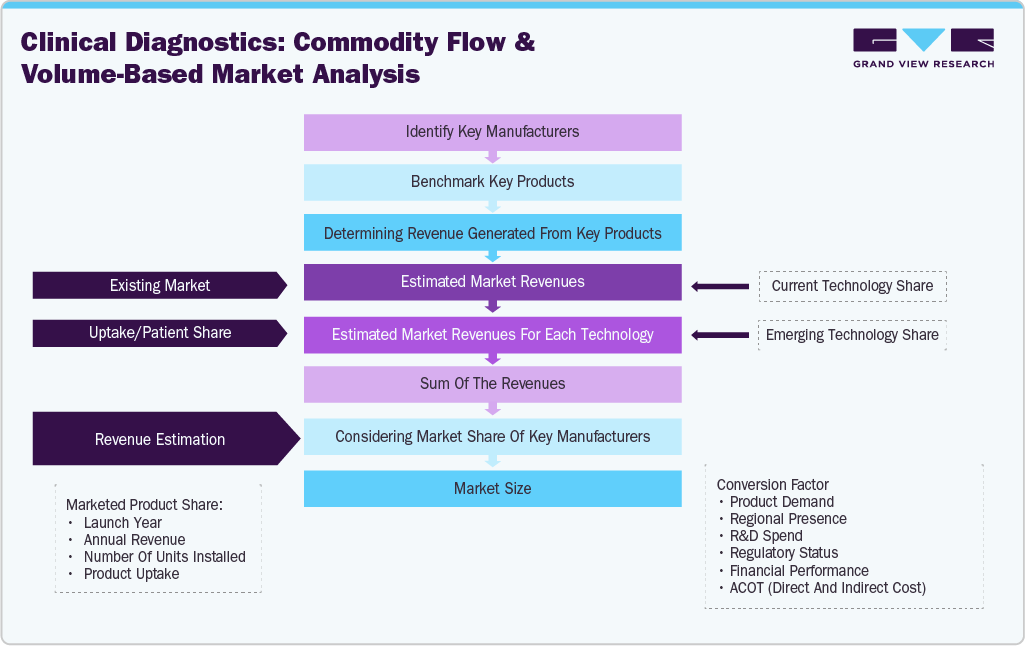
The procalcitonin testing market was estimated by identifying key manufacturers, benchmarking major PCT testing products, and assessing product-level revenues across laboratory-based and point-of-care testing technologies. Market estimates were further validated using PCT testing volumes, patient/testing uptake, technology-level revenues, and key manufacturers’ market shares to derive the overall market size.
 To learn more about this report, Download Free Sample Report
 Delivered Customizations
This report has been delivered with the following In-depth customizations
Client Request
Customization Delivered
Value Adds
Procalcitonin Testing Market Competitive Landscape & Technology Assessment
Assessed the competitive landscape across chemiluminescent and electrochemiluminescent immunoassays, fluorescence immunoassays and immunochromatography, particle-enhanced immunoturbidimetric assays, and other PCT testing technologies. Evaluated key manufacturers based on PCT assay portfolios, analytical platforms, turnaround time, laboratory and point-of-care capabilities, regulatory approvals, installed base, partnerships, and geographic presence.
Enables the client to benchmark leading procalcitonin testing companies, assess technology differentiation, identify high-potential PCT testing platforms, and evaluate competitive positioning across centralized laboratory and point-of-care testing environments.
Procalcitonin Test & Product Benchmarking Analysis
Conducted comparative benchmarking of PCT instruments, analyzers, reagents, consumables, and assay solutions across laboratory-based and point-of-care settings. Assessed assay technology, sample requirements, turnaround time, analytical performance, platform compatibility, testing throughput, workflow requirements, and clinical positioning across sepsis, respiratory infections, and antibiotic stewardship applications.
Helps the client identify product and technology gaps, compare PCT assay performance and positioning, and evaluate opportunities across high-throughput laboratory immunoassays, rapid point-of-care platforms, and PCT-guided infection-management workflows.
Procalcitonin Testing Commercialization & Market Entry Assessment
Assessed commercialization strategies, regulatory pathways, reimbursement considerations, distribution models, diagnostic infrastructure, adoption barriers, and market-access conditions across North America, Europe, Asia Pacific, Latin America, and Middle East & Africa. Evaluated adoption across hospitals, diagnostic and reference laboratories, physician offices, clinics, and urgent-care centers.
Supports market entry and expansion planning by identifying high-potential regions, clinical applications, and end users; evaluating regulatory and diagnostic infrastructure requirements; assessing laboratory and point-of-care testing opportunities; and developing commercialization strategies for procalcitonin testing products.
Frequently Asked Questions About This Report
North America dominated the market with a revenue share of 38.9% in 2025, supported by established diagnostic infrastructure, extensive automated analyzer adoption, and hospital-based infection management.
Asia Pacific is projected to register the fastest CAGR of 9.2% during 2026–2033, driven by expanding diagnostic infrastructure, increasing healthcare investment, and broader access to procalcitonin testing.
The U.S. represented the largest country-level market in 2025, generating USD 110.55 million, supported by advanced hospital laboratories, established assay availability, and antimicrobial stewardship programs.
Key growth drivers include the substantial burden of sepsis and systemic bacterial infections, increasing emphasis on appropriate antibiotic use, expanding automated assay availability, and demand for timely infection assessment.
Reagents & Consumables held the largest revenue share of 80.4% in 2025, supported by recurring demand for assay kits, reagent packs, cartridges, calibrators, and controls.
Major market participants include Thermo Fisher Scientific Inc., F. Hoffmann-La Roche Ltd, Siemens Healthineers AG, bioMérieux SA, and Abbott Laboratories, among others.
The global procalcitonin testing market was valued at USD 309.4 million in 2025 and is estimated at USD 327.9 million for 2026.
The market is expected to grow at a CAGR of 6.8% from 2026 to 2033, reaching USD 519.5 million by 2033, supported by increasing sepsis assessment, antimicrobial stewardship, and adoption of automated and rapid testing platforms.
Chemiluminescent & electrochemiluminescent immunoassays held the largest revenue share of 65.9% in 2025.
About the Author(s)
Clinical Diagnostics Research Team
Healthcare · Clinical DiagnosticsThis report was authored by the clinical diagnostics research team at Grand View Research - comprising two research analysts, one senior research analyst, and one industry expert - with specialized expertise in the clinical diagnostics segment of the healthcare industry. All findings are based on proprietary healthcare databases, executive interviews, and regulatory analysis, subject to internal peer review prior to publication.
Last Updated:
Speak to Analyst

Customize this report to your needs - add regions, segments, or data points, with 20% free customization.
Or view our licence options:


ISO 9001:2015 & 27001:2022 Certified
We are GDPR and CCPA compliant! Your transaction & personal information is safe and secure. For more details, please read our privacy policy.


