
- Home
- »
- Consumer F&B
- »
-
Protein Bar Market Size, Share & Growth Report, 2026-2033GVR Report cover

Protein Bar Market (2026 - 2033)
Size, Share & Trends Analysis Report By Type (Sports Nutritional Bars, Meal Replacement Bars), By Protein Source (Animal-Based, Plant-Based), By Distribution Channel (Hypermarkets & Supermarkets), By Region, And Segment Forecasts
Market Size, 2025
$15.8BMarket Estimate, 2026
$16.7BMarket Forecast, 2033
$24.2BCAGR, 2026–2033
5.5%Protein Bar Market Summary
The global protein bar market size was valued at USD 15.8 billion in 2025 and is projected to grow from USD 16.7 billion in 2026 to USD 24.2 billion by 2033, at a CAGR of 5.5% from 2026 to 2033. The market in North America dominated with a revenue share of 37.5% in 2025. The demand for protein bar among consumers is rapidly increasing owing to rising health awareness, busy lifestyles, and the need for convenient, on-the-go nutrition.
 Source: Grand View Research, IR Documents, Primary Interviews, Paid DatabasesTo learn more about this report,
 Download Free Sample Report
 Key Market Trends & Insights
- By type: Sports nutritional bars segment held the largest market share of 49.2% in 2025.
- By protein source: Animal-based protein bars segment held the largest market share of 75.1% in 2025.
- By distribution channel: Hypermarkets & supermarkets segment held the largest market share of 38.4% in 2025.
Regional Highlights
- Largest regional market: North America (37.5% revenue share, 2025)
- Fastest-growing regional market: Asia Pacific (highest CAGR, 2026-2033)
- By country: The U.S. held the largest market share in 2025.
Market Size & Forecast
- Market size in 2025: USD 15.8 Billion
- Estimated market size in 2026: USD 16.7 Billion
- Projected market size by 2033: USD 24.2 Billion
- CAGR (2026-2033): 5.5%
Three ways to get this report
Buy it, customize it, or ask a question.Ask an Analyst
A direct answer, usually in 1 working day
- AccessReport author, directly
- Reply timeWithin 1 working day
- No sales callDirect answer only
- FormatEmail reply
- CostFree, no cost
Get the Full Report
What the study covers
- FormatsPDF · Excel · Dashboard
- Timeline2026–2033 annual, 2025 base
- Coverage20+ countries, 5 regions
- Companies10+ key players profiled
Customize the Report
20% free customization
- IncludeCountries, segments, points
- TailorTo your product definition
- ExtendDeeper competitor detail
- OrA fully bespoke study
- Turnaround5–10 working days
Increasing interest in fitness, weight management, and high-protein diets, along with the availability of diverse flavors and functional ingredients, is further driving global market growth. Protein bars are widely recognized for their ability to offer a quick protein boost essential for muscle recovery, weight management, and overall health, making them especially popular among athletes and fitness enthusiasts. The modern lifestyle's emphasis on convenience also plays a significant role. With busy schedules, consumers are opting for portable and easy-to-consume options that fit seamlessly into their daily routines. The rise in health-conscious eating further fuels this trend, as people become more selective about their food choices, preferring products high in protein and low in sugar or artificial ingredients. For instance, in May 2024, Gelita launched OptiBar, a collagen-based ingredient designed for soft, sugar-free protein bars, improving texture and protein content. It targets the growing demand for high-protein, low-sugar snacks with clean-label appeal.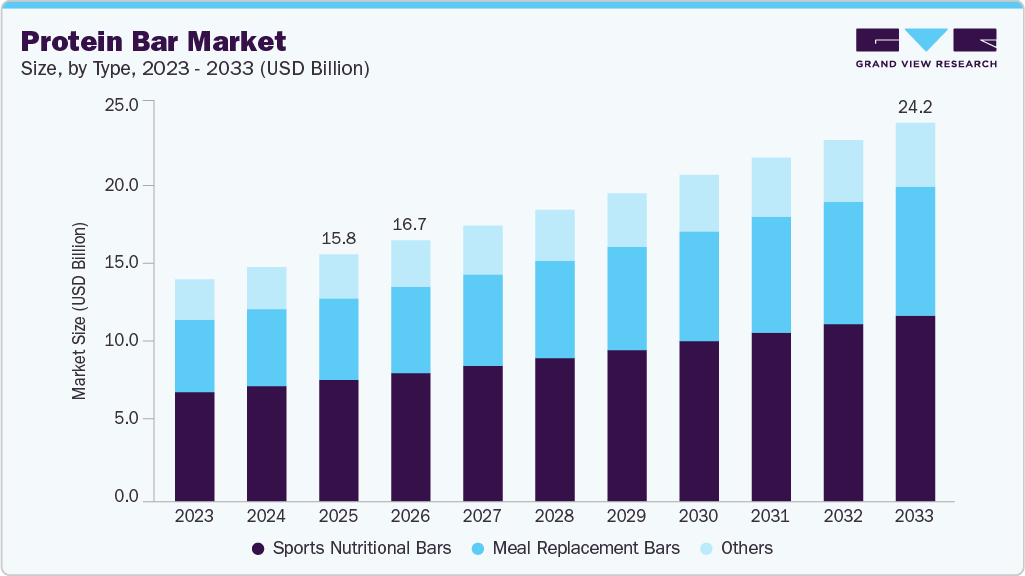 To learn more about this report, Download Free Sample Report
 Moreover, innovations in the protein bar industry have also contributed to its growth, with a wide array of flavors, formulations, and dietary options available. For instance, in February 2026, RAW Nutrition introduced protein bars offering up to 21 g of protein while mimicking the taste of candy bars. The launch aims to combine indulgent flavor with high-protein, convenient snacking. This diversity caters to various dietary preferences and health needs, such as plant-based or gluten-free options, expanding the appeal of protein bars to a broader audience.
Dietary trends, including high-protein and ketogenic diets, are gaining traction among consumers, supporting demand for healthy protein bars that align with evolving nutritional preferences. In parallel, the growing emphasis on personalized nutrition is driving interest in protein bars formulated to address specific needs, including muscle recovery, satiety, weight management, and active lifestyles. These trends, combined with consumers’ preference for convenient and functional nutrition, are strengthening demand for protein bars and contributing to the evolution of the category toward higher-protein, healthier, and performance-oriented formulations.
According to SPINS, the U.S. market has witnessed particularly strong momentum in high-protein bar formulations, with bars containing 25-30g of protein recording 280% growth. The trend indicates that taste and performance are important purchase drivers, with consumers demonstrating a willingness to prioritize protein functionality even when Clean Label attributes are not the primary consideration.
Market Dynamics
Growing consumer interest in protein-rich diets is supporting demand for protein bars as convenient options for snacking, meal replacement, and active lifestyles. Manufacturers are expanding beyond traditional sports nutrition through new product launches targeting mainstream consumers. For instance, in August 2026, Mondelēz International introduced CLIF High Protein Bars, offering 20 g of protein per bar in two flavors. Such launches are broadening the availability of protein-focused snack options and strengthening the integration of high-protein products into everyday consumption occasions.
Premium pricing remains a key constraint for the global market because higher-protein formulations often require specialized ingredients, functional additives, and more complex processing than conventional snack bars. Consumers may also reject products when elevated protein content compromises taste, texture, sweetness, or chewiness. Competition from lower-cost snacks, nutrition powders, ready-to-drink beverages, and naturally protein-rich foods further increases substitution pressure. Consequently, manufacturers must improve sensory quality and nutritional performance while controlling formulation and production costs to encourage repeat purchases.
Manufacturers can capture additional demand by developing protein bars that combine high protein content with clean-label ingredients, lower sugar, fiber, and recognizable plant-based protein sources. SPINS indicates that categories associated with trending nutrients, particularly protein, are experiencing elevated innovation activity, while consumers prioritize convenient nutritional benefits rather than focusing solely on protein origin. This creates opportunities for brands to target flexitarian, vegan, active-lifestyle, and wellness-oriented consumers through differentiated formulations, new flavors, convenient formats, and broader retail and e-commerce distribution.
Analyst Perspective
The market is evolving from a niche sports nutrition category into a broader convenient nutrition segment. Increasing consumer emphasis on protein intake, active lifestyles, and healthier snacking is encouraging brands to diversify formulations and target mainstream consumers. Established companies benefit from strong distribution and brand recognition, while emerging players compete through plant-based ingredients, clean-label formulations, and differentiated flavors. Future growth will depend on balancing protein content with taste, texture, affordability, and convenience while expanding availability across retail, foodservice, and e-commerce channels.
Consumer Insights
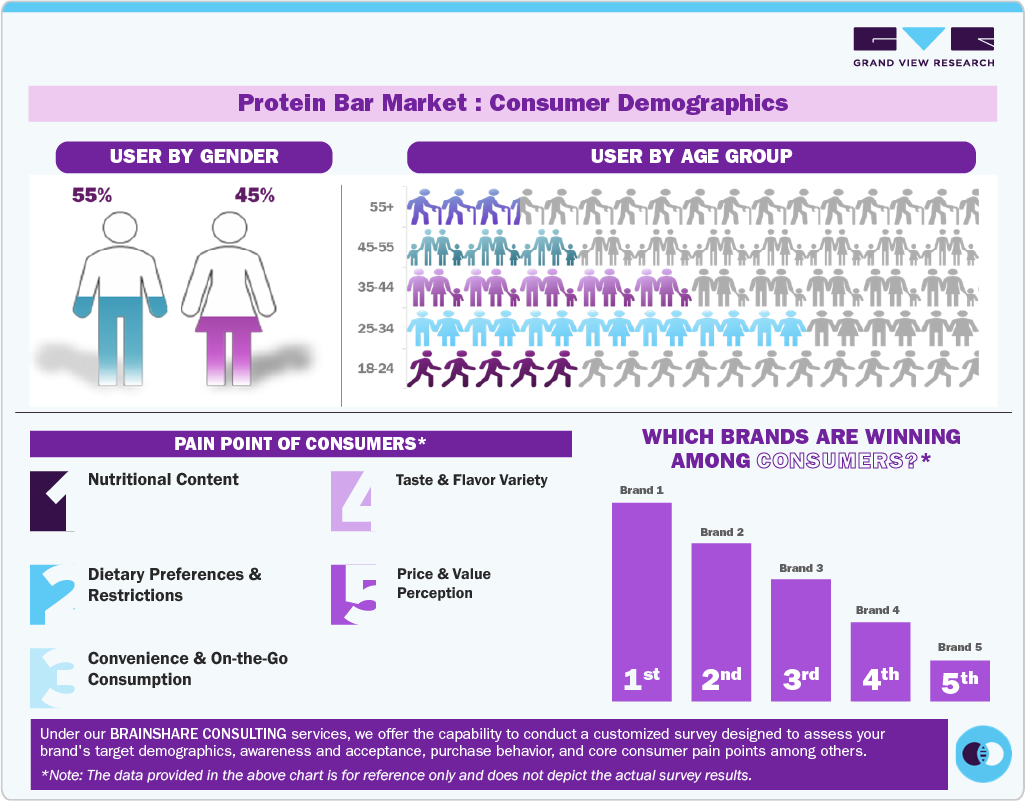
Consumer trends and preferences in the market have evolved considerably in recent years. One major trend is the growing demand for high-protein, low-sugar snacks that support fitness goals, weight management, and sustained energy. Consumers are actively seeking protein bars that can function as both a healthy snack and a quick meal replacement, fitting easily into busy daily routines.
 To learn more about this report, Download Free Sample Report
 Another important shift is the rising preference for natural and wholesome ingredients. Buyers are being drawn to protein bars made with recognizable components such as nuts, seeds, oats, and natural sweeteners, while avoiding artificial preservatives, flavors, and excessive processing. Clean-label products with simple ingredient lists are becoming a key factor in purchase decisions.
Type Insights
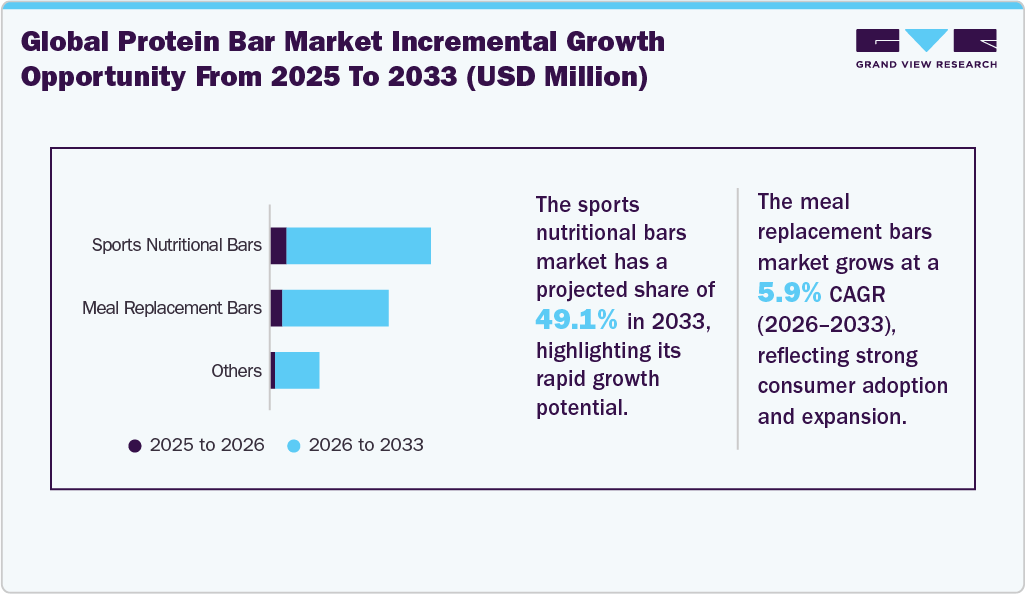
The sports nutritional bars segment accounted for the leading share of 49.2% in 2025. The rising interest in fitness and sports activities has driven the demand for products that support athletic performance and recovery. Sports nutritional protein bars are specifically designed to meet the protein needs of athletes and active individuals, helping them achieve their fitness goals and improve overall performance. As more people engage in regular exercise and sports, the need for effective nutritional support has increased. Companies such as HYP Protein Snacks offer newly launched high protein bars in three variants: salted caramel (with 20 grams of protein), chocolate (with 10 grams of protein), and banana split (with 20 grams of protein).
 To learn more about this report, Download Free Sample Report
 The meal replacement bars segment is expected to grow at a CAGR of 5.9% from 2026 to 2033. As consumers become more health-conscious and seek healthier alternatives to traditional fast food or high-calorie snacks, meal replacement protein bars have gained popularity. They offer a convenient and healthier option that aligns with various dietary goals, including high-protein diets, low-carb diets, and balanced nutrition, appealing to those who are focused on maintaining a healthy lifestyle. HYP Protein Snacks offer meal replacement whey protein bars in variants: salted caramel, almond fudge, peanut butter, and cookies & cream with 20 grams of protein and 5 grams of fiber.
Protein Source Insights
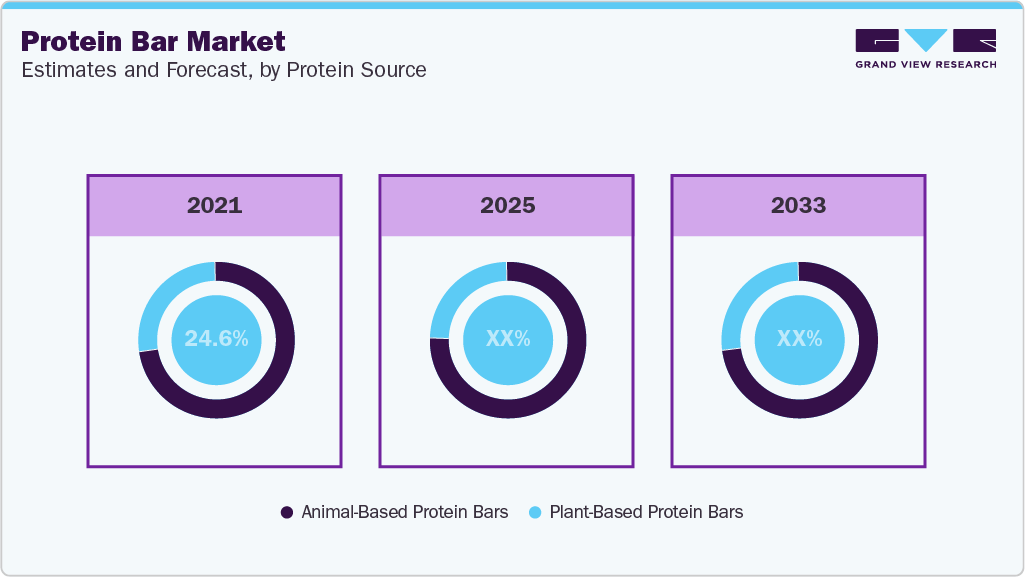
The animal-based protein bars segment accounted for a revenue share of 75.1% in 2025. Animal-based protein sources, such as whey, casein, and egg protein, are known for their complete amino acid profiles and high biological value. This means they provide all essential amino acids required for muscle growth, recovery, and overall health. Consumers, particularly those focused on fitness and muscle building, prefer animal-based protein bars for their effectiveness in meeting high protein needs and supporting optimal performance.
 To learn more about this report, Download Free Sample Report
 The plant-based protein bars segment is expected to grow at a CAGR of 5.8% from 2026 to 2033. The increase in dietary preferences and restrictions, such as veganism, vegetarianism, and lactose intolerance, has driven the demand for plant-based protein bars. These bars offer a suitable protein source for individuals who avoid animal products or have specific dietary needs, providing an inclusive option that meets a wide range of consumer requirements.
Distribution Channel Insights
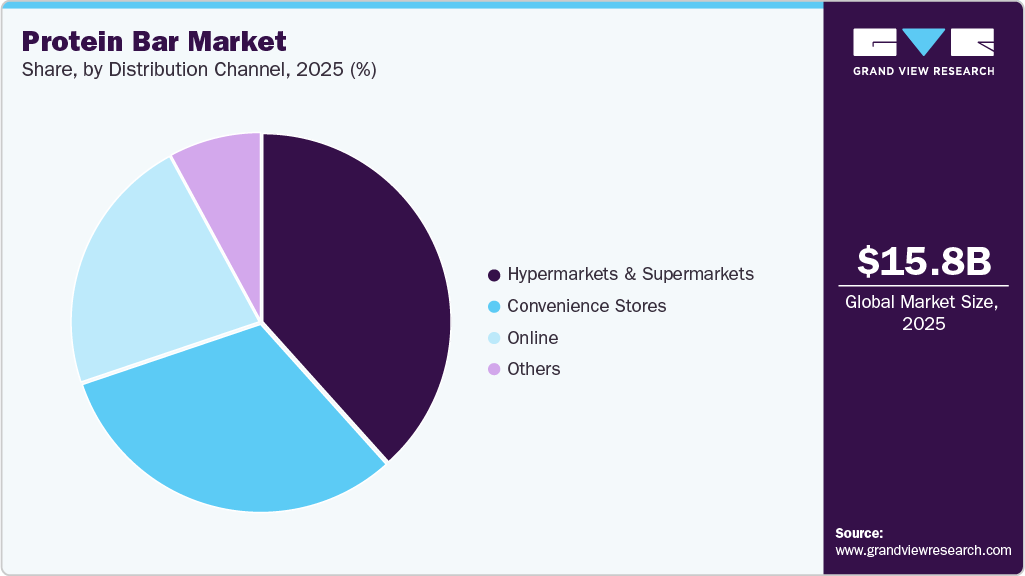
The hypermarkets & supermarkets segment accounted for a revenue share of 38.4% in 2025. Supermarkets and hypermarkets offer a wide selection of protein bar brands, flavors, and formulations under one roof. This variety allows consumers to compare products easily and choose according to their preferences, dietary needs, or health goals. The availability of different options increases consumer satisfaction and encourages repeat purchases.
 To learn more about this report, Download Free Sample Report
 The online segment is expected to grow at a CAGR of 6.1% from 2026 to 2033. Online platforms offer competitive pricing due to reduced overhead costs compared to brick-and-mortar stores. Additionally, consumers can easily compare prices across multiple retailers and take advantage of discounts, promotional codes, and subscribe-and-save options, making online purchases of protein bars more cost-effective than traditional retail channels.
Regional Insights
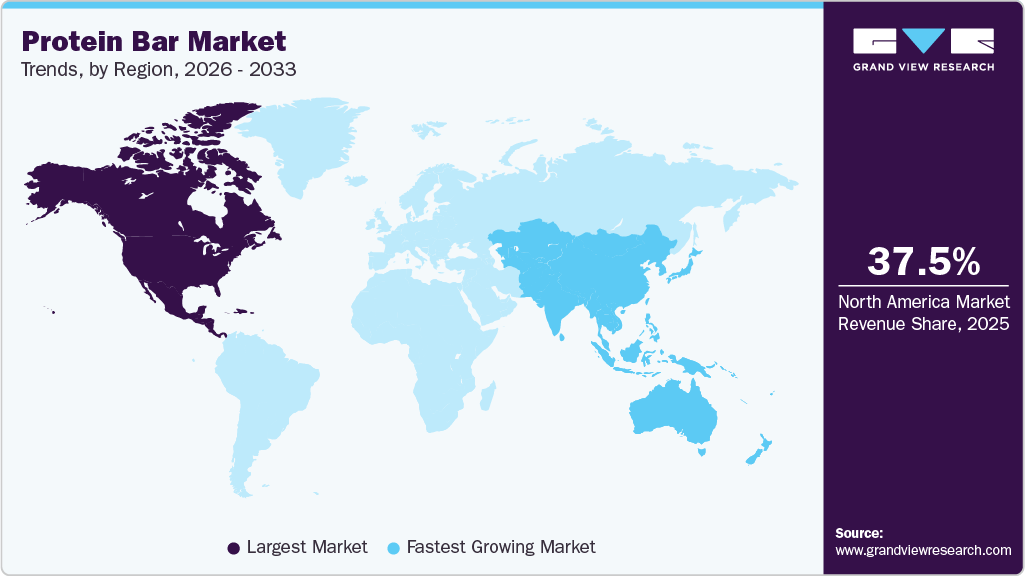
The North America protein bar industry accounted for the largest revenue share of 37.5% in 2025. North American consumers lead busy lives, balancing work, family, and personal commitments. Protein bars offer a convenient, portable, and quick solution for on-the-go nutrition. They serve as an easy meal replacement or snack that fits into hectic schedules, meeting the needs of individuals who require a quick and nutritious option without compromising their health goals.
 To learn more about this report, Download Free Sample Report
 U.S. Protein Bar Market Trends
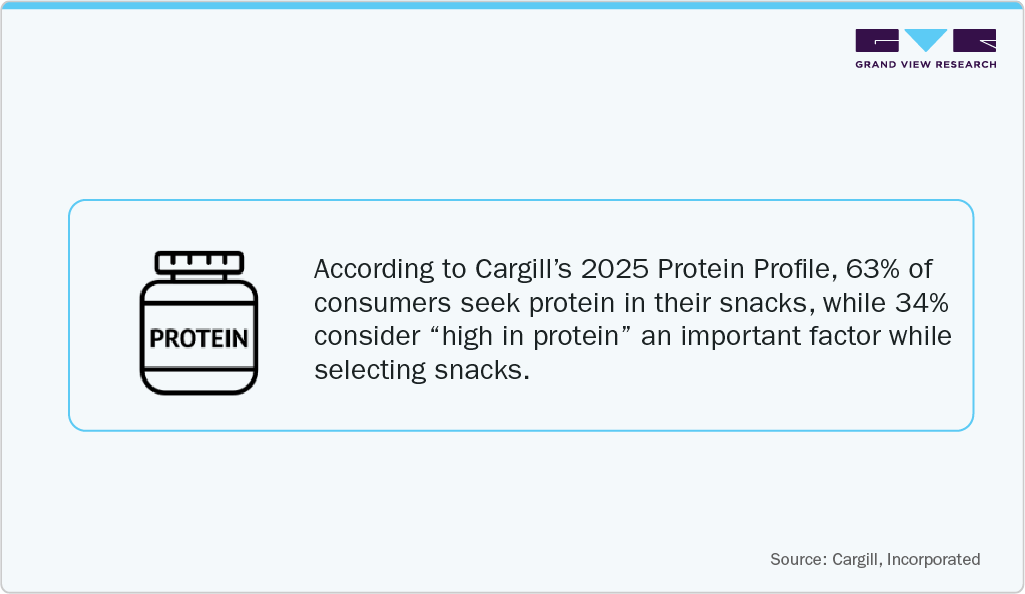
The U.S. protein bar market is experiencing strong competitive activity, supported by continuous product innovation and increasing consumer interest in nutrition and wellness. Consumers are becoming more attentive to the nutritional composition of their diets and are looking for convenient foods that align with their health and fitness objectives. According to Circana, 41% of U.S. adults are actively seeking to increase their protein intake, indicating the growing importance of protein as a nutritional priority. This shift is supporting stronger demand for products positioned around protein benefits, including protein bars.
 To learn more about this report, Download Free Sample Report
 The Canada protein bar market is driven by a strong culture of fitness and preventive health, with consumers actively seeking convenient, nutrient-dense snacks that align with active lifestyles. Busy daily routines and the need for on-the-go nutrition further encourage adoption, especially as protein bars double as meal replacements. High disposable income and a well-developed retail network make such products easily accessible. Additionally, increasing interest in low-sugar, plant-based, and clean-label options is shaping product preferences.
Europe Protein Bar Market Trends
The protein bar market in Europe is expected to grow at a CAGR of 5.7% during the forecast period. European consumers are becoming more health-conscious and are seeking convenient, nutritious snacks that align with their fitness and wellness goals. They are drawn to the diverse and innovative protein sources and types being introduced in protein bars, which makes them an appealing choice for those looking to explore new and exciting food options. Flavor preferences are also shaping product demand, with chocolate emerging as the most preferred protein bar flavor among European consumers at 51%, followed by salted caramel at 34%, highlighting the importance of indulgent taste alongside nutritional functionality.
The UK protein bar market is benefiting from greater consumer attention toward weight management, balanced nutrition, and healthier eating habits. According to NielsenIQ (NIQ), cereal bars carrying a protein claim recorded a 20% sales boost in the U.K., highlighting the positive impact of protein positioning on demand within the bar category. The broad availability of protein bars through supermarkets, gyms, convenience outlets, and online channels further improves accessibility and supports consumption across different occasions. In April 2025, TREK launched a new range of high-protein, low-sugar bars made entirely from natural ingredients, avoiding artificial sweeteners and additives. Each bar delivers 12-15g plant-based protein with up to 47% less sugar, targeting growing demand for healthier, clean-label snacks.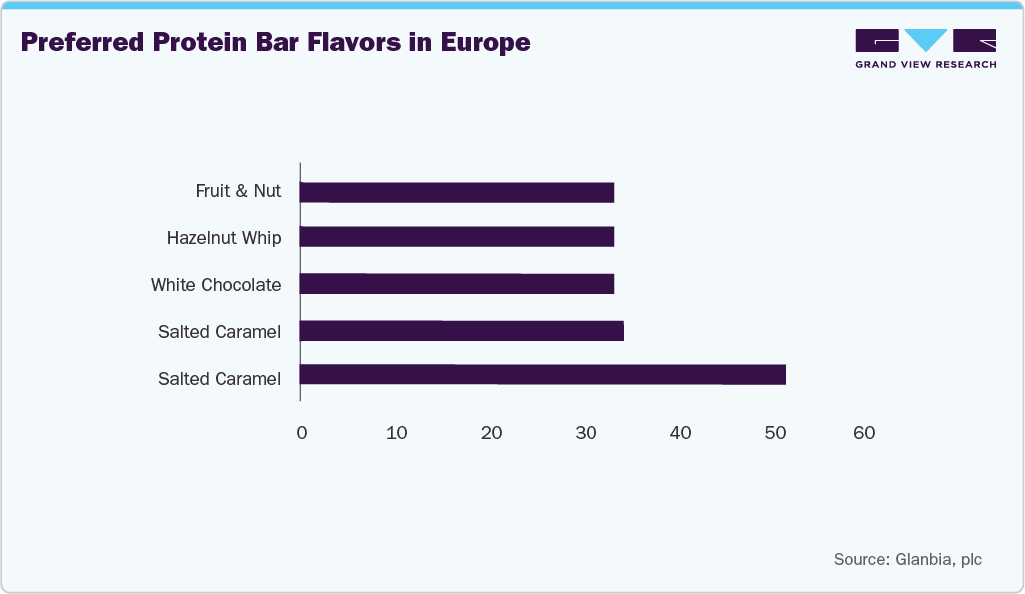 To learn more about this report, Download Free Sample Report
 The protein bar market in Germany is fueled by a highly health-conscious population and increasing participation in sports and fitness activities. Consumers prefer convenient nutrition formats that support active lifestyles and muscle maintenance. There is a strong inclination toward clean-label, natural, and plant-based ingredients, along with low-sugar and gluten-free variants. Sustainability concerns and ethical sourcing also play a role in shaping purchasing decisions in the country.
Asia Pacific Protein Bar Market Trends
The protein bar market in Asia Pacific is expected to grow at the fastest CAGR of 6.3% from 2026 to 2033. Rapid urbanization and busy lifestyles in many Asia-Pacific countries drive the need for convenient food solutions. Protein bars offer a quick and portable snack or meal option for individuals with hectic schedules. As Western dietary trends influence eating habits in the Asia-Pacific region, the popularity of protein bars is increasing. The appeal of these products is growing among consumers who are adopting Western-style diets and looking for high-protein snacks.
The China protein bar market is propelled by a rapidly growing health and fitness culture, where more consumers recognize the nutritional benefits of high‑protein diets for muscle maintenance, weight management, and overall well‑being. Urbanization and rising disposable incomes, especially in first‑ and second‑tier cities, are enabling a broader demographic to invest in convenient, ready‑to‑eat nutrition options like protein bars. According to the Glanbia plc data published in August 2025, protein has become the top ingredient Chinese consumers look for in snacks, with over half checking nutrition labels and new launches increasingly featuring protein claims to meet rising demand. The busy lifestyles of urban consumers and the expansion of e‑commerce and diversified retail channels make these products highly accessible.
The protein bar market in India is driven by changing lifestyles and increasing awareness of fitness and nutrition, which are encouraging consumers to adopt convenient, healthy snacking options. The expansion of fitness centers reflects a broader shift toward active living. Additionally, the influence of Western dietary trends and the growth of e-commerce platforms are accelerating product adoption. In January 2026, Zydus Wellness launched millet-based wafer protein bars under RiteBite Max Protein, combining 10g protein with traditional grains such as jowar in a light, wafer format. The launch and ad campaign highlight a shift toward “healthy indulgence” snacks, blending taste with nutrition, clean ingredients, and everyday consumption beyond just fitness use.
The Japan protein bar market is supported by an aging population that seeks protein-rich foods to maintain muscle health and prevent age-related conditions. Government-backed nutrition awareness further promotes protein intake among consumers. Busy urban lifestyles also create demand for quick, convenient snack options. At the same time, growing health consciousness and interest in functional foods are encouraging steady adoption of protein bars.
Latin America Protein Bar Market Trends
The protein bar market in Latin America is expected to grow at a CAGR of 3.3% during the forecast period. The growing awareness of health and fitness in urban areas is fueling protein bar consumption. Rising gym memberships and participation in sports have increased demand for convenient post-workout nutrition. A surge in e-commerce platforms has made protein bars more accessible across the region. Additionally, local manufacturers are introducing flavors and ingredients tailored to regional tastes, boosting consumer adoption.
Middle East & Africa Protein Bar Market Trends
The protein bar market in the Middle East & Africa is expected to grow at a CAGR of 1.7% during the forecast period. Increasing health consciousness due to rising obesity rates is motivating healthier snack choices. Expatriate communities and Western lifestyle influences are shaping dietary preferences toward functional foods. Retail expansion in supermarkets and convenience stores improves the availability of protein bars. Climate-related concerns also encourage shelf-stable, portable nutrition solutions for travelers and workers.
Key Protein Bar Company Insights
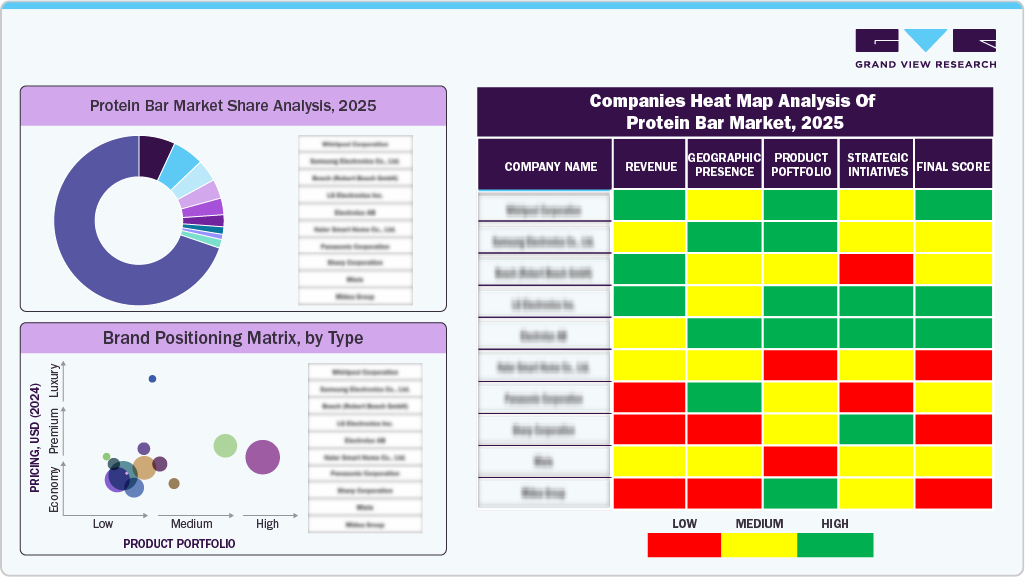
The global protein bar market is characterized by dynamic competitive dynamics shaped by a combination of factors including product innovation, regional production capabilities, and evolving consumer preferences. Leading manufacturers invest in R&D and technological advancements to provide cost-effective and quality products.
Market players are entering into joint ventures, partnerships, mergers, agreements, and acquisitions to strengthen their market position and expand their geographical reach. Companies are also focusing on raising consumer awareness of the ambiguity of the types used while strictly adhering to international regulatory standards.
 To learn more about this report, Download Free Sample Report
 Key Protein Bar Companies
The following key companies have been profiled for this study on the protein bar market.
-
Clif Bar & Company
-
Quest Nutrition
-
Kellogg Company (RXBAR)
-
General Mills (Nature Valley)
-
MusclePharm
-
GNC (General Nutrition Corporation)
-
ThinkThin (Think Products)
-
Larabar (General Mills)
-
Orgain
-
PowerBar
Competitive Benchmarking
Category
Operating Strategies
Competitive Edge
Weakness
Established Players (Clif Bar & Company, Kellogg Company (RXBAR), General Mills (Nature Valley), Larabar (General Mills), GNC (General Nutrition Corporation), PowerBar)
- Leverage large-scale manufacturing and global supply chains, expand product portfolios across flavors and protein sources, invest heavily in mass-retail and grocery distribution, and use strong marketing budgets to maintain shelf presence across mainstream and specialty channels.
- Deep brand equity built over decades, extensive multinational distribution networks, backing from major food conglomerates that enable cross-category leverage, and economies of scale that support competitive pricing.
- Slower response to fast-changing clean-label and functional-nutrition trends, product lines sometimes perceived as less innovative than newer entrants, and exposure to margin pressure from private-label and niche competitors.
Emerging Players (Quest Nutrition, MusclePharm, ThinkThin (Think Products), Orgain)
- Focus on differentiated nutritional positioning (high-protein/low-sugar, sports-performance, organic/clean-label), build strong e-commerce and DTC channels, partner with gyms, fitness influencers, and specialty nutrition retailers, and pursue rapid product innovation to target specific consumer segments.
- Strong appeal among fitness and performance-focused consumers, agile innovation and faster product launches, credibility built through targeted athlete and influencer partnerships, and clear differentiation through specialized formulations.
- Smaller distribution footprint compared to multinational rivals, greater reliance on niche consumer segments, higher vulnerability to changing fitness/wellness trends, and limited resources for large-scale marketing versus established conglomerate-backed brands.
Recent Developments
-
In February 2026, UFC partnered with FoodStory Brands to develop a nutritionist‑backed high‑performance protein bar under the UFC Performance Institute, aimed at athletes and performance‑focused consumers. The new protein bar line, featuring research‑driven functional ingredients, is expected to debut later in 2026 across major retail and e‑commerce channels.
-
In November 2025, Fermenta announced plans to launch Solein-powered Gutsy protein bars in the U.S. during Q1 2026. The gluten-free, animal-free bars target digestive wellness and offer high protein, lower sugar, and vegan-friendly positioning using Solein® protein.
Protein Bar Market Report Scope
Report Attribute
Details
Market size in 2025
USD 15.8 billion
Estimated market size in 2026
USD 16.7 billion
Projected market size by 2033
USD 24.2 billion
Growth rate
CAGR of 5.5% from 2026 to 2033
Actual data
2021 - 2025
Forecast period
2026 - 2033
Quantitative units
Revenue in USD billion, and CAGR from 2026 to 2033
Report coverage
Revenue forecast, company ranking, competitive landscape, growth factors, and trends
Segments covered
Type, protein source, distribution channel, region
Regional scope
North America; Europe; Asia Pacific; Latin America; Middle East & Africa
Country scope
U.S.; Canada; Mexico; UK; Germany; France; Italy; Spain; China; Japan; India; South Korea; Australia & New Zealand; Brazil; South Africa
Key companies profiled
Clif Bar & Company; Quest Nutrition; Kellogg Company (RXBAR); General Mills (Nature Valley); MusclePharm; GNC (General Nutrition Corporation); ThinkThin (Think Products); Larabar (General Mills); Orgain; PowerBar
Customization scope
Free Report customization (equivalent up to 8 analysts working days) with purchase. Addition or alteration to country, regional & segment scope.
Pricing and purchase options
Avail customized purchase options to meet your exact research needs. Explore purchase options.
Global Protein Bar Market Report Segmentation
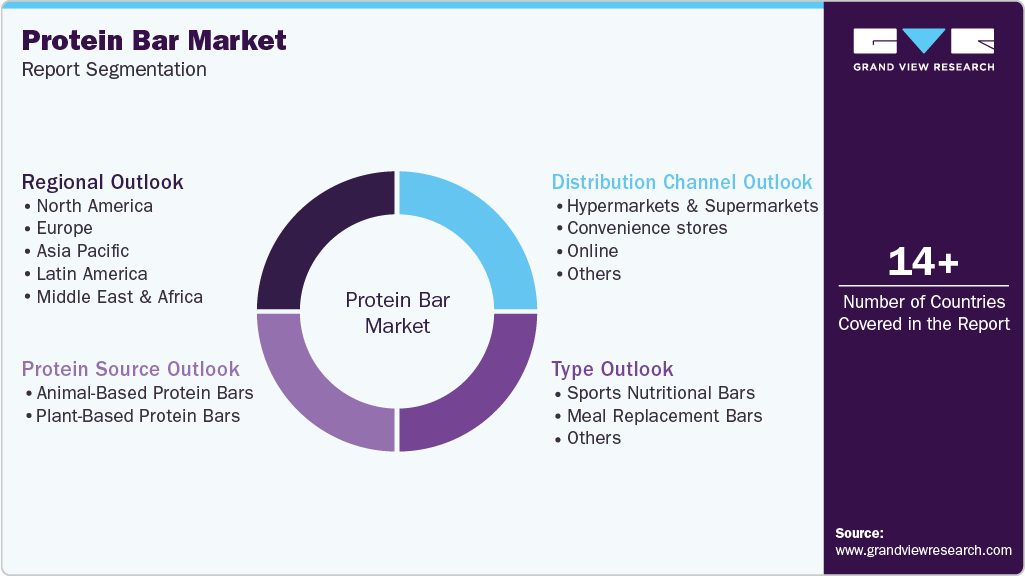
This report forecasts revenue growth at the global, regional, and country levels and provides an analysis of the latest industry trends and opportunities in each of the sub-segments from 2021 to 2033. For this study, Grand View Research has segmented the global protein bar market report based on type, protein source, distribution channel, and region:
 To learn more about this report, Download Free Sample Report
 -
Type Outlook (Revenue, USD Billion, 2021 - 2033)
-
Sports Nutritional Bars
-
Meal Replacement Bars
-
Others
-
-
Protein Source Outlook (Revenue, USD Billion, 2021 - 2033)
-
Animal-Based Protein Bars
-
Plant-Based Protein Bars
-
-
Distribution Channel Outlook (Revenue, USD Billion, 2021 - 2033)
-
Hypermarkets & Supermarkets
-
Convenience stores
-
Online
-
Others
-
-
Regional Outlook (Revenue, USD Billion, 2021 - 2033)
-
North America
-
U.S.
-
Canada
-
Mexico
-
-
Europe
-
UK
-
France
-
Germany
-
Spain
-
Italy
-
-
Asia Pacific
-
China
-
Japan
-
India
-
South Korea
-
Australia & New Zealand
-
-
Latin America
-
Brazil
-
-
Middle East & Africa
-
South Africa
-
-
Research Methodology
The protein bar market figures in this report are based on a proven research process that combines executive interviews with secondary research from proprietary databases, company filings, and recognized regulatory and institutional sources. Market size is built through value-chain sizing - reconciling supply-side and demand-side estimates - and triangulated with bottom-up and top-down approaches. Every estimate passes multiple levels of expert validation before publication, with each protein bar segment quantified using the revenue-capture definitions in the table below.
Segment Definition
Protein Source
Revenue capture definition
Animal-Based Protein Bars
This segment includes the sales of protein bars formulated with animal-derived protein sources, such as whey, milk, casein, egg, or collagen.
Plant-Based Protein Bars
This segment includes the sales of protein bars formulated with plant-derived protein sources, such as soy, pea, rice, chickpea, lentil, or other plant-based proteins.
Estimation Model
Layer Name
Key Question
Description
Consumption Universe Layer
Who consumes protein bars globally?
Total population consuming protein bars across different occasions, including on-the-go snacking, post-workout nutrition, meal replacement, and convenient high-protein eating.
Access & Availability Layer
Where can they access protein bars?
Consumers can access protein bars through supermarkets, hypermarkets, convenience stores, specialty nutrition and health food stores, gyms and fitness centers, pharmacies, and e-commerce platforms.
Purchase & Usage Layer
Who buys protein bar regularly?
Frequent buyers include fitness enthusiasts, athletes, bodybuilders, health-conscious consumers, and busy professionals seeking convenient, on-the-go high-protein nutrition.
Revenue Conversion Layer
How is revenue generated?
Revenue is generated through global sales of protein bars across retail, foodservice, fitness, and e-commerce channels, capturing monetization from both everyday snacking and performance-nutrition purchase occasions.
Delivered Customizations
This report has been delivered with the following In-depth customizations
Client Request
Customization Delivered
Value Adds
Global Protein Bar Market Share Analysis
Analyzed the competitive positioning and market shares of leading protein bar companies, assessing their presence across protein sources, product types, distribution channels, and key geographic markets.
Provides a clear view of the competitive landscape, market concentration, leading players, and opportunities for companies to strengthen positioning and identify high-potential market segments.
Global Protein Bar Market Sizing & Growth Assessment
Developed a market assessment by product type, protein source, distribution channel, and geography, incorporating historical market performance, consumption patterns, and forward-looking growth indicators.
Provides a fact base for market entry, investment planning, growth prioritization, and resource allocation while highlighting high-growth product, channel, and regional opportunities.
Global Protein Bar Product Development & Competitive Benchmarking
Benchmarked leading protein bar products based on protein source, protein content, ingredients, flavors, format, nutritional profile, pricing, packaging, claims, and positioning, while identifying recent product launches and emerging concepts.
Supports product strategy, competitive differentiation, pricing decisions, innovation planning, and development of distinctive protein bar formulations aligned with evolving consumer preferences.
Frequently Asked Questions About This Report
Asia Pacific is the fastest-growing region over the forecast period.
Animal-based protein bars held the largest revenue share 75.1% in 2025, while plant-based protein bars are the fastest-growing area.
Hypermarkets & supermarkets held the largest share (over 38.4%) in 2025, while the online channel is the fastest-growing channel.
The global protein bar market is expected to grow at a CAGR of 5.5% from 2026 to 2033 to reach USD 24.2 billion by 2033.
Key players include Clif Bar & Company; Quest Nutrition; Kellogg Company (RXBAR); General Mills (Nature Valley); MusclePharm; GNC (General Nutrition Corporation); ThinkThin (Think Products); Larabar (General Mills); Orgain; and PowerBar.
Key factors include rising consumer focus on high-protein diets, growing demand for convenient on-the-go nutrition, increasing health and fitness awareness, and expanding preference for nutrient-dense snacks with clean-label, low-sugar, and plant-based formulations.
The sports nutritional bars led with a 49.2% revenue share in 2025, while meal replacement bars are the fastest-growing segment.
The global protein bar market size was valued at USD 15.8 billion in 2025 and is estimated at reach USD 16.7 billion in 2026.
North America dominated with a 37.5% revenue share in 2025.
About the Author(s)
Consumer F&B Research Team
Consumer Goods · Consumer F&BThis report was authored by the consumer f&b research team at Grand View Research - comprising two research analysts, one senior research analyst, and one industry expert - with specialized expertise in the consumer f&b segment of the consumer goods industry. All findings are based on proprietary consumer goods databases, executive interviews, and regulatory analysis, subject to internal peer review prior to publication.
Last Updated:
Speak to Analyst

Customize this report to your needs - add regions, segments, or data points, with 20% free customization.
Or view our licence options:


ISO 9001:2015 & 27001:2022 Certified
We are GDPR and CCPA compliant! Your transaction & personal information is safe and secure. For more details, please read our privacy policy.


