
- Home
- »
- Clinical Diagnostics
- »
-
Rapid Point-of-Care Testing For Sickle Cell Anemia Market Report 2033GVR Report cover
![Rapid Point-of-Care Testing For Sickle Cell Anemia Market Size, Share & Trends Report]()
Rapid Point-of-Care Testing For Sickle Cell Anemia Market (2026 - 2033) Size, Share & Trends Analysis Report By Type (Lateral Flow Immunoassay, Paper-Based Rapid Diagnostics), By Technology, By Age Group, By Sector Type, By Distribution Channel, By End-use, By Region, And Segment Forecast
- Report ID: GVR-4-68040-567-0
- Number of Report Pages: 150
- Format: PDF
- Historical Range: 2021 - 2024
- Forecast Period: 2026 - 2033
- Industry: Healthcare
- Report Summary
- Table of Contents
- Interactive Charts
- Methodology
- Download FREE Sample
-
 Download Sample Report
Rapid PoC Testing For Sickle Cell Anemia Market Summary
The global rapid point-of-care testing for sickle cell anemia market size was estimated at USD 328.69 million in 2025 and is projected to reach USD 735.35 million by 2033, growing at a CAGR of 10.91% from 2026 to 2033. The market is driven by advancements in diagnostic technology and the rising demand for accessible healthcare solutions.
Key Market Trends & Insights
- North America dominated the global rapid point-of-care testing for sickle cell anemia market with the largest revenue share of 44.00% in 2025.
- The rapid point-of-care testing for sickle cell anemia market in the U.S. accounted for the largest market revenue share in North America in 2025.
- Based on the type, the lateral flow immunoassay segment led the market with the largest revenue share of 51.89% in 2025.
- Based on technology, the hemoglobin electrophoresis segment accounted for the largest market revenue share in 2025.
- Based on age group, the newborn screening (12 months and below) segment accounted for the largest market revenue share in 2025.
Market Size & Forecast
- 2025 Market Size: USD 328.69 Million
- 2033 Projected Market Size: USD 735.35 Million
- CAGR (2026-2033): 10.91%
- North America: Largest Market in 2025
POC tests provide faster, more accurate, cost-effective diagnosis, especially in resource-limited areas, a high prevalence of sickle cell anemia. These innovations enable early detection, improving patient outcomes. In addition, growing investments, partnerships with global health organizations, and expanding healthcare in developing nations are accelerating market growth and fostering widespread adoption. According to a report from the CDC in May, around 100,000 individuals in the U.S. are impacted by sickle cell anemia; over 90% of these cases are among non-Hispanic Black or African American individuals, while an estimated 3%-9% are of Hispanic or Latino descent.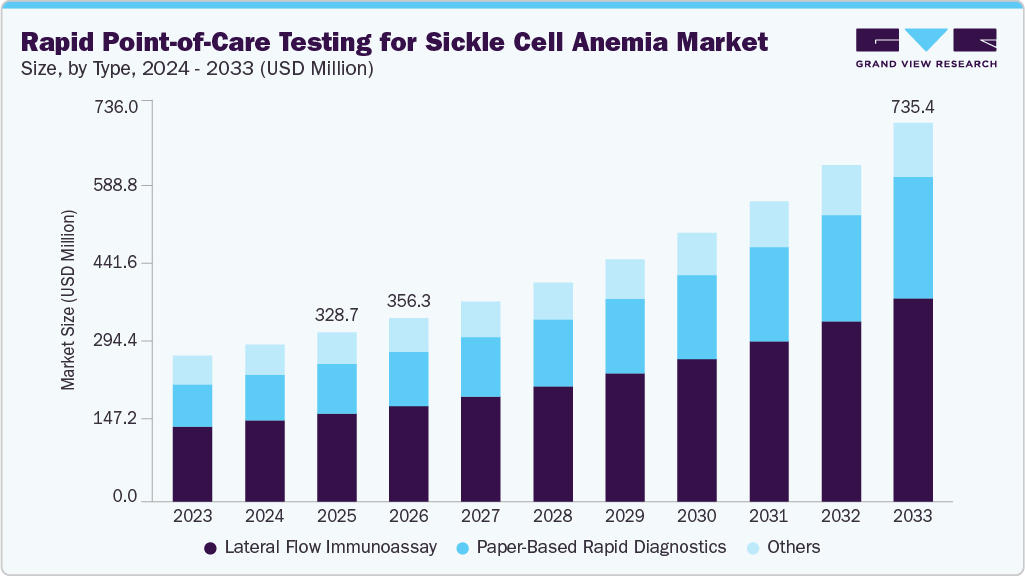
Sickle cell anemia is a hereditary blood disorder characterized by the production of abnormally shaped red blood cells. These sickle-shaped cells can cause severe pain, anemia, and potential organ damage due to their tendency to block blood flow. According to the Journal of Hematology and Allied Science (JHAS), India has one of the highest reported frequencies of the sickle β-globin allele. It ranks as the second most affected country in terms of sickle β-globin thalassemia. The World Health Organization (WHO) estimates that 4.5% to 5% of the global population carries hemoglobinopathy traits. In India alone, approximately 30 million individuals are carriers, with a national prevalence of 3.3% on average. The incidence of sickle cell anemia in India varies significantly, ranging from 1% to 44% in different regions.
The birth prevalence of sickle cell anemia, which measures the rate of affected infants (≤ 1 year old) through newborn screening programs, is highest in sub-Saharan Africa (500-2000 per 100,000 population), followed by South America and the Caribbean Islands (20-1000 per 100,000). In contrast, the birth prevalence in the U.S. and European countries remains lower at ≤500 per 100,000. Global SCD hotspots include India, the Middle East, North-East Africa, and sub-Saharan Africa, with mortality rates disproportionately high in low-resource regions such as India and Africa. As per the World Health Organization, in India, there are 30 million individuals who are carriers, with an average prevalence of 3.3% throughout the country. The occurrence of sickle cell anemia in India ranges from 1% to 44%.
Early and precise detection of sickle cell anemia is essential for effective disease management and treatment. Conventional diagnostic methods often require well-equipped laboratories and specialized healthcare facilities, which can be difficult to access in resource-limited regions. This challenge has accelerated the adoption of rapid point-of-care (POC) testing technologies, which offer an efficient and accessible alternative for diagnosing sickle cell anemia.
The rapid point-of-care testing for sickle cell anemia industry has seen significant growth in recent years, driven by advancements in diagnostic technologies. These innovations have resulted in faster, more accurate, and cost-effective testing solutions, making early diagnosis and treatment of sickle cell anemia more accessible, particularly in resource-limited settings. Unlike traditional methods, modern POC devices are designed to be compact, user-friendly, and provide rapid results-typically within 15 to 30 minutes, making them ideal for use in remote and underserved areas with a high prevalence of sickle cell disease. For example, Sickle SCAN-EZ is a multiplexed, qualitative point-of-care immunoassay designed for the rapid diagnosis of sickle cell anemia. It can test for sickle cell trait, sickle cell anemia, and HbSC disease, with a test time of just 5 minutes.
In addition, global efforts aimed at reducing the cost of diagnosing sickle cell disease and enhancing the availability of rapid testing are significantly enhancing the rapid point-of-care testing market for sickle cell anemia. Improved affordability, a rise in donor contributions, and initiatives to expand testing in resource-limited environments are promoting broader use, facilitating early identification, and increasing the need for dependable point-of-care solutions globally.
For instance, in May 2025, the Clinton Health Access Initiative (CHAI) announced a groundbreaking agreement with Silver Lake Research Corporation aimed at providing affordable sickle cell disease diagnosis in low- and middle-income countries. This reduction in price will facilitate the global expansion of detection for a condition that can claim the lives of up to 90 percent of affected children before they reach age five without adequate care. Silver Lake Research Corporation will provide its HemoTypeSC rapid diagnostic test for an ex-works price of USD 1.00 per test, marking a significant advancement in the affordability of sickle cell disease testing.
Market Concentration & Characteristics
The rapid point-of-care testing for sickle cell anemia industry demonstrates a high degree of innovation. Recent advancements in lateral flow immunoassays (LFIA) have further enhanced the diagnosis of sickle cell anemia, particularly in low-resource areas. One notable innovation is the multiplexed, allele-specific recombinase polymerase amplification (RPA) assay, which uses a lateral flow readout. This technology detects multiple mutations in the β-globin gene, the primary cause of sickle cell anemia, providing a highly efficient and accurate method for rapid diagnosis. Moreover, optical nanoparticles integrated into LFIA platforms have significantly improved the sensitivity and specificity of these tests, positioning them as powerful tools for diagnosing various diseases, including sickle cell anemia. Another example of innovative progress is the E-junction lateral flow immunoassay, specifically designed for large-scale screening in low- and middle-income countries (LMICs). This low-cost, user-friendly POC device can diagnose healthy individuals, patients, and carriers from just a single drop of whole blood. Its affordability and reliability make it ideal for regions with limited access to traditional diagnostic methods, effectively addressing the high mortality rates associated with delayed diagnosis.
The rapid point-of-care testing for sickle cell anemia industry experiences a high level of mergers and acquisitions (M&A), as major players seek to broaden their technological capabilities, enhance their product portfolios, and enter new regional markets. Several market players are acquiring smaller players to strengthen their market position. This strategy enables companies to increase their capabilities, expand their product portfolios, and improve their competencies. Key players engaged in this growth strategy include Sysmex Corporation and others.
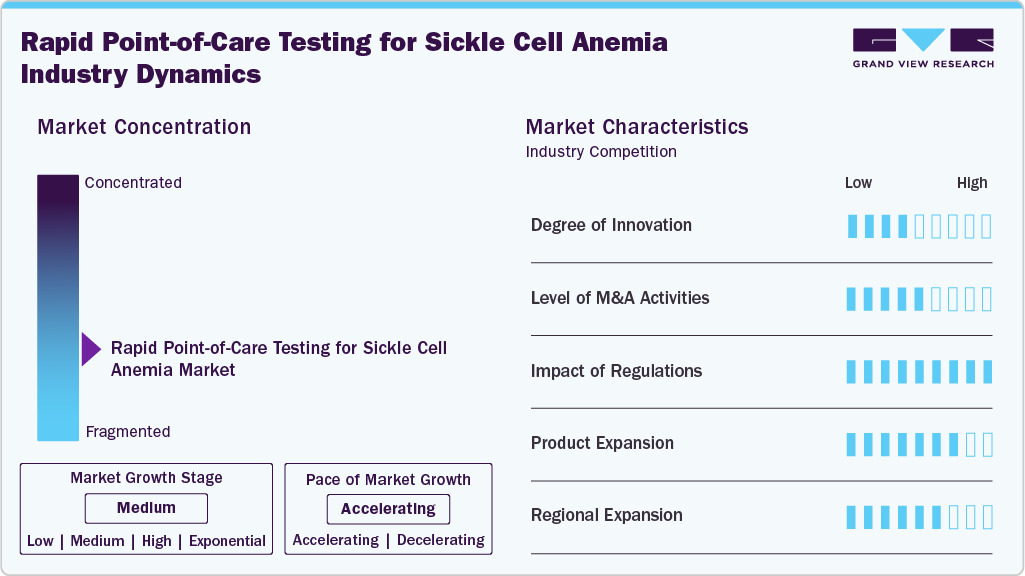
The rapid point-of-care testing for sickle cell anemia industry is regulated and driven by government support. Alongside governmental efforts, non-governmental organizations (NGOs) play a crucial role in expanding the reach and effectiveness of early screening initiatives. NGOs, including both international health organizations and local community groups, frequently partner with government agencies to fund and implement screening programs. These organizations contribute essential resources such as healthcare worker training, technical support for POC device usage, and logistical assistance to reach remote areas. For instance, in June 2025, a comprehensive evaluation conducted by the ICMR-National Institute for Research in Reproductive Health, in collaboration with PGI Chandigarh and NIIH, concluded that point-of-care testing for sickle cell disease/trait in high-risk groups in India would be cost-effective if the tests were purchased for Rs 100 or less each.
Product expansion in the rapid point-of-care testing for sickle cell anemia industry is at a high level. For instance, in June 2024, BioMedomics announced the launch of a three-year grant program aimed at enhancing the testing and management of sickle cell anemia in Sub-Saharan African countries. Commencing on June 19, 2024, coinciding with World Sickle Cell Disease Day, this initiative reflects BioMedomics' commitment to improving global health through innovative diagnostics and education. The program aims to raise awareness about sickle cell anemia and facilitate the availability and affordability of point-of-care testing in the region, with BioMedomics collaborating with local distributors for implementation.
The rapid point-of-care testing for sickle cell anemia industry is witnessing a medium to high level of regional expansion as companies aim to tap into growth opportunities in emerging markets while solidifying their presence in established regions. The Asia-Pacific, Latin America, and the Middle East are emerging as key targets due to rising healthcare investments, increasing awareness of diagnostic testing, and expanding healthcare infrastructures. Market leaders are establishing local manufacturing units, forming partnerships with regional distributors, and tailoring product offerings to meet specific market requirements. However, regional expansion efforts are often challenged by varying regulatory landscapes and market access barriers, requiring tailored strategies for each geography.
Type Insights
The lateral flow immunoassay segment led the market with the largest revenue share of 51.89% in 2025, driven by a combination of product innovation, affordability, technological advancements, and increasing demand for decentralized diagnostic solutions. As global awareness of sickle cell anemia and sickle cell trait (SCT) increases-particularly in high-prevalence regions such as sub-Saharan Africa, India, and the Middle East-there is a growing need for rapid, reliable, and accessible screening tools that can be deployed at the grassroots level. A key factor in the growth of this market is the launch of next-generation LFA products that improve upon earlier diagnostic methods.
For instance, in December 2024, BioMedomics introduced Sickle SCAN EZ, a major advancement built on the success of the original Sickle SCAN, the world’s first point-of-care test for sickle cell disease and SCT. The new Sickle SCAN EZ is designed with a bulk strip configuration specifically optimized for high-volume screening, maintaining the same robust technology but tailored for mass public health initiatives, school screenings, and antenatal clinics. This product is expected to accelerate screening programs by reducing costs and simplifying logistics significantly.
The paper-based rapid diagnostics segment is expected to grow at the fastest CAGR over the forecast period, driven by the growing demand for low-cost, easy-to-use diagnostic solutions in underserved and remote regions. These tests provide an affordable and accessible alternative to conventional laboratory methods, enabling early detection and timely intervention-essential for effectively managing sickle cell disease. Unlike lateral flow assays, paper-based tests such as HemoTypeSC utilize vertical flow technology to detect hemoglobin variants (HbA, HbS, and HbC) from a small blood sample. They require no electricity, refrigeration, or specialized training, making them ideal for deployment in resource-limited healthcare systems across sub-Saharan Africa, South Asia, and other regions with high prevalence. Priced at less than USD 2 per test, HemoTypeSC is widely recognized for its accuracy and utility in field-based screening programs.
Technology Insights
The hemoglobin electrophoresis segment led the market with the largest revenue share of 49.14% in 2025. The hemoglobin electrophoresis segment is experiencing notable growth within the rapid point-of-care testing for sickle cell anemia industry. This expansion is driven by technological advancements that have transformed traditional electrophoresis into portable, efficient, and user-friendly formats, making them suitable for diverse healthcare settings. Another prominent innovation is the Gazelle Hb Variant Test, which has gained attention for its diagnostic precision and practical utility. In October 2024, findings presented at the 19th Annual Scientific Conference of the Academy for Sickle Cell and Thalassemia (ASCAT) highlighted the test’s effectiveness in both newborn and premarital screenings. In Ghana, it enabled the cost-effective and rapid identification of common hemoglobin variants directly at the point of care.
The PCR segment is expected to grow at the fastest CAGR over the forecast period. Polymerase Chain Reaction (PCR) technology has significantly enhanced the diagnostic landscape for Sickle Cell Anemia (SCA) by enabling precise identification of mutations in the β-globin gene responsible for the disease. PCR's ability to amplify specific DNA sequences facilitates accurate differentiation between various forms of sickle cell anemia, which is essential for effective patient management.
Age Group Insights
The newborn screening (12 months and below) segment led the market with the largest revenue share of 42.47% in 2025, driven by the high incidence of SCA among newborns, the implementation of newborn screening programs, and advancements in POCT technologies. According to a March 2024 report by the Centers for Disease Control and Prevention (CDC), approximately one in every 365 Black or African American newborns in the U.S. is born with sickle cell disease, a condition associated with complex health needs. This high prevalence underscores the critical need for early detection and intervention to improve health outcomes.
The other age groups (1 to 25 & above 60 years) segment is anticipated to grow at the fastest CAGR over the forecast period. The Adult Screening (25 to 60 years) segment is witnessing notable growth in the Rapid Point-of-Care Testing (POCT) market for Sickle Cell Anemia (SCA). This expansion is driven by increased awareness, advancements in testing technologies, and collaborative efforts aimed at enhancing the understanding of the disease. A primary tool in adult screening is the Sickle Cell Solubility Test (SCST), which detects the presence of hemoglobin S (HbS) in blood samples. The SCST is valued for its affordability, rapid results, and high sensitivity and specificity. However, it cannot quantify HbS levels and requires confirmatory tests to differentiate between sickle cell trait and sickle cell disease. Despite these limitations, the SCST remains a standard screening method in various settings, including the U.S. military and the National Collegiate Athletic Association.
Sector Type Insights
The government labs segment accounted for the largest market revenue share in 2025. Government laboratories are playing a crucial role in expanding access to rapid point-of-care testing for sickle cell anemia, particularly in low- and middle-income countries (LMICs). Governments in Africa, such as Nigeria and Ghana, keep introducing national programs to introduce cost-effective and decentralized testing methods to combat high sickle cell prevalence. For instance, Nigeria's Ministry of Health partnered with global organizations to roll out the HemoTypeSC test kits in rural areas, enabling early detection. In the U.S., federal and state-funded health labs are increasingly investing in rapid diagnostics, spurred by newborn screening mandates and funding from the Centers for Disease Control and Prevention (CDC). These efforts aim to reduce diagnostic delays and improve early intervention.
The private labs segment is anticipated to grow at the fastest CAGR over the forecast period. Private laboratories make significant contributions to the market by offering advanced diagnostic services and driving innovation in point-of-care (POC) testing technologies. Their agility enables them to adopt emerging technologies swiftly, deploy state-of-the-art diagnostic tools, and provide effective testing services, thereby enhancing patient access to prompt diagnosis and tailored care. This adaptability, along with investments in R&D, establishes private labs as significant contributors to the expansion of the rapid POC testing market for sickle cell anemia.
Distribution Channel Insights
The B2B (Business-to-Business) segment accounted for the largest market revenue share in 2025. The B2B channel is the dominant distribution model for rapid point-of-care tests for sickle cell anemia, primarily involving sales to hospitals, diagnostic labs, governments, and NGOs. Manufacturers such as BioMedomics, PerkinElmer, and DIAsource are securing large procurement contracts with ministries of health and international organizations like UNICEF and WHO. These bulk purchases are often tied to national screening initiatives, especially in Sub-Saharan Africa and Southeast Asia. For instance, in October 2024, the battle against sickle-cell disease in the Democratic Republic of the Congo (DRC) achieved an important milestone at the close of September. During the formal opening event for the multi-country seminar, Drep.ACCI, organized by the Fondation Pierre Fabre, officials from the DRC's Ministry of Health revealed that the government purchased 500,000 rapid testing kits for sickle-cell disease. This action reflects a robust commitment to public health by the nation.
The B2C (Business-to-Consumer) segment is anticipated to grow at the fastest CAGR over the forecast period. The B2C market for sickle cell rapid testing is still in its early stages but is growing steadily, especially in North America and parts of Europe. Consumers are becoming more proactive about genetic and chronic disease screening, driving interest in direct-to-consumer (DTC) health solutions. Startups and e-commerce platforms now offer at-home genetic screening kits that include hemoglobin variants as part of broader health panels.
End-use Insight
The hospitals & clinics segment led the market with the largest revenue share of 61.59% in 2025. Hospitals and clinics are primary end-users of rapid POC tests for sickle cell anemia. The integration of such tests into routine practice enhances patient care by reducing diagnostic delays and enabling prompt management of the disease. In emergency settings, rapid POC tests are invaluable for quickly assessing patients presenting with symptoms suggestive of sickle cell crises. This capability enables healthcare providers to make informed decisions quickly, thereby improving patient outcomes and optimizing resource utilization within the hospital or clinic.
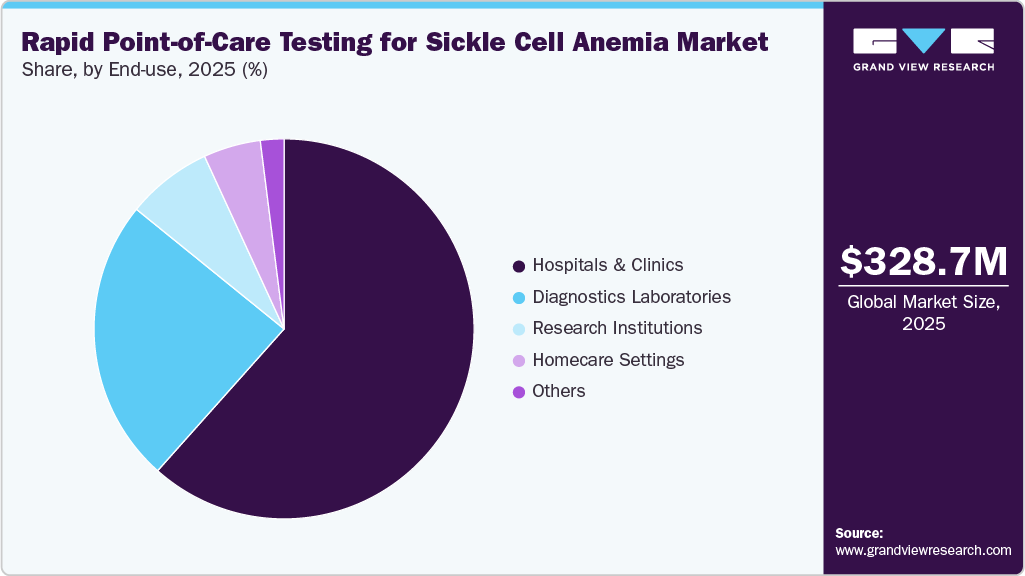
The homecare settings segment is expected to grow at the fastest CAGR during the forecast period. Home-based testing for sickle cell anemia is emerging as a niche but growing segment, especially in high-income countries. The increasing prevalence of diseases has accelerated interest in at-home diagnostics, and now similar models are being explored for chronic conditions, such as sickle cell disease. Companies are working on expanding their test menus to include hemoglobinopathy panels for home collection. The launch of point-of-care (POC) sickle cell testing in home care settings, such as Sickle SCAN EZ, offers rapid and reliable diagnostics, empowering clinicians and facilitating early diagnosis and management of sickle cell disease and sickle cell trait (SCT).
Regional Insights
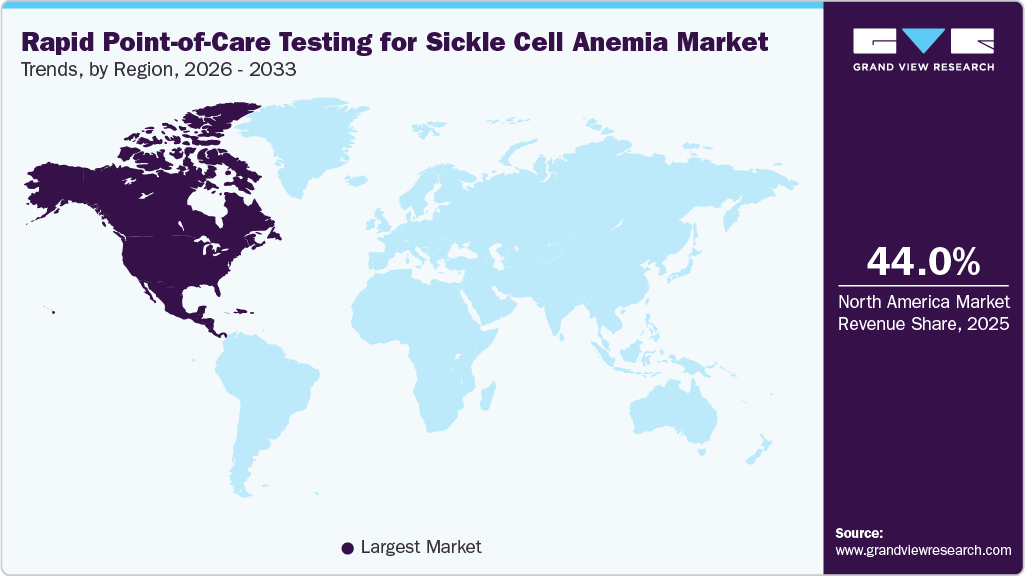
North America dominated the rapid point-of-care testing for sickle cell anemia market with the largest revenue share of 44.00% in 2025, owing to the growing prevalence of blood illnesses amongst the population and the rising demand for hematology diagnostic test kits and equipment. For instance, the American Society of Hematology highlighted that Sickle cell trait, a blood disorder, affects 1 million to 3 million Americans, and more than 100 million people worldwide carry the sickle cell trait. The presence of several pharmaceutical and medical device companies is expected to boost the demand for the hematology diagnostics market. One study in the US found that despite universal newborn screening, only 31% of sickle cell disease cases receive long-term follow-up after diagnosis.
U.S. Rapid Point-of-Care Testing For Sickle Cell Anemia Market Trends
The rapid point-of-care testing for sickle cell anemia market in the U.S. accounted for the largest market revenue share in North America in 2025, driven by the rising awareness, increasing prevalence of the disorder, particularly among African American populations, and the growing emphasis on early diagnosis and intervention. Rapid POC diagnostics offer significant advantages, including quick turnaround times, ease of use in diverse healthcare settings, and reduced reliance on laboratory infrastructure, which makes them especially valuable in both rural and urban community clinics. The cost-effectiveness of these tests further supports their adoption, particularly in initiatives aimed at expanding newborn screening and school-based health programs. Moreover, public-private partnerships, funding support, and innovations from companies like BioMedomics and Silver Lake Research are driving market penetration. As healthcare systems increasingly prioritize personalized and preventative care, the demand for efficient and scalable POC solutions is expected to continue rising, creating robust growth opportunities in the forecast period.
Europe Rapid Point-of-Care Testing For Sickle Cell Anemia Market Trends
The rapid point-of-care testing for sickle cell anemia market in Europe is rapidly evolving due to healthcare systems in countries such as France, Italy, and the UK expanding their screening programs. The availability of such portable and efficient diagnostics is improving access and uptake, particularly in underserved communities and rural areas. This aligns with Europe's broader commitment to preventive care and rare disease management, thereby strengthening the market potential for rapid POC tests for sickle cell anemia.
The UK rapid point-of-care testing for sickle cell anemia market is experiencing significant growth growing clinical needs, a surge in hospital admissions, and the NHS's heightened emphasis on early and accessible testing. NHS data indicates that there were slightly more than 32,000 hospital admissions in England related to sickle cell disorders between 2023 to 2024. of these, nearly 14,000 admissions were specifically due to sickle cell anemia crises. The NHS's commitment to innovative testing underscores the importance of efficient diagnostic tools in managing sickle cell disease. In addition, a 2025 report in MedRxiv highlighted that newborn screening (NBS) for sickle cell disease is acknowledged as a crucial public health approach to lessen the impact of the disease by ensuring early diagnosis and the prompt implementation of preventive measures, such as in the UK.
The rapid point-of-care testing market for sickle cell anemia in Germany is growing due to the increasing prevalence of the disease, heightened clinical awareness, and a rising need for quick and reliable diagnostic solutions. Moreover, there is an increasing demand for fast, dependable, and decentralized testing methods that can provide precise results at or near the point of care, thereby reducing diagnostic delays and enabling timely treatment decisions. Investments in cutting-edge diagnostic technologies, as well as supportive healthcare infrastructure and government measures to encourage early disease screening, are driving the increase in the adoption of fast point-of-care tests in Germany. As a result, healthcare practitioners are increasingly relying on these tests to expedite processes, improve patient management, and enhance overall clinical efficiency.
Asia Pacific Rapid Point-of-Care Testing For Sickle Cell Anemia Market Trends
The rapid point-of-care testing for sickle cell anemia market in the Asia Pacific is anticipated to witness significant growth. The region is emerging as a promising frontier for rapid point-of-care testing for sickle cell anemia, driven by increasing awareness, advancements in healthcare infrastructure, and rising demand for accessible diagnostics in rural and underserved areas. Countries such as India, Thailand, and parts of Southeast Asia are witnessing a growing prevalence of hemoglobinopathies like sickle cell anemia and beta thalassemia, particularly among tribal and ethnic minority populations.
The China rapid point-of-care testing for sickle cell anemia market held a substantial share in 2025. In China, sickle cell anemia is extremely rare due to the low prevalence of the responsible genetic mutations within the indigenous population. Consequently, there is minimal demand for rapid POC testing for sickle cell anemia. However, with increasing globalization and potential migration from regions where sickle cell anemia is more common, healthcare providers should remain vigilant. Implementing targeted screening programs for at-risk individuals, particularly those of African or Mediterranean descent residing in China, could be beneficial.
The rapid point-of-care testing for sickle cell anemia market in Japan is progressing steadily, because sickle cell anemia remains a niche due to the low domestic prevalence of the disease. However, multinational companies such as Siemens Healthineers, Roche Diagnostics, and Sysmex, Japan’s leading diagnostics company, are focusing on developing advanced diagnostic tools, including molecular-level POC tests. The level of market competition is low to moderate but driven by high innovation standards, regulatory rigor, and a strong demand for high-quality diagnostics in clinical and academic settings.
Latin America Rapid Point-of-Care Testing For Sickle Cell Anemia Market Trends
The rapid point-of-care testing for sickle cell anemia market in Latin America is witnessing increasing attention due to the region's growing focus on genetic blood disorders and improved diagnostic infrastructure. Moreover, the increasing focus on providing equitable healthcare access in underprivileged and remote areas underscores the need for rapid and reliable testing tools. As local healthcare programs enhance newborn screening and community-oriented testing efforts, the demand for effective point-of-care solutions is growing rapidly.
The Brazil rapid point-of-care testing for sickle cell anemia market is witnessing substantial growth. Brazil has one of the highest incidences of sickle cell anemia outside Africa, particularly among Afro-Brazilian populations. According to Brazil’s Ministry of Health, sickle cell anemia is a significant public health issue in Brazil, affecting an estimated 60,000 to 100,000 individuals. Approximately 4% of the population carries the sickle cell trait. The incidence is around 45.92 cases per 100,000 live births.
Middle East & Africa Rapid Point-of-Care Testing For Sickle Cell Anemia Market Trends
The rapid point-of-care testing for sickle cell anemia market in the Middle East and Africa (MEA) is poised for growth. Sickle cell anemia is a major public health concern across several Middle Eastern and African countries, especially due to genetic predisposition in specific populations and consanguineous marriages in certain regions. The World Health Organization (WHO) identifies Sub-Saharan Africa as bearing over 75% of the global sickle cell burden. At the same time, Saudi Arabia, Kuwait, and the UAE have recognized regional clusters of the disease primarily in Eastern Provinces and among certain tribal communities.
The Saudi Arabia rapid point-of-care testing for sickle cell anemia market is experiencing robust growth. Saudi Arabia has implemented a national premarital screening program targeting genetic diseases, including sickle cell anemia and thalassemia. This creates a solid foundation for market demand in early-stage and rapid diagnostics. The country is open to advanced healthcare technologies, including AI-driven diagnostics. Major players, including Siemens Healthineers, Abbott, and Bio-Rad, are active in the market, which favors innovative and certified technologies. There are ample opportunities for strategic partnerships with hospitals and government health programs.
Key Rapid Point-of-Care Testing For Sickle Cell Anemia Company Insights
Some of the key players operating in the rapid point-of-care testing for sickle cell anemia industry include BioMedomics Inc., Silver Lake Research Corporation, Bio-Rad Laboratories, Inc., Trivitron Healthcare, Hemex Health, Sysmex Corporation, EKF Diagnostics Holdings plc, and HemoCue America (a subsidiary of Danaher Corporation). These established companies are driving innovation through robust R&D capabilities, portable diagnostic platforms, and user-friendly rapid test kits that enable early and accurate detection of sickle cell disease. Their strategies are centered around continuous product development, geographic expansion, and strategic collaborations with healthcare providers and public health programs to improve accessibility in high-prevalence regions.
Companies like BioMedomics and Silver Lake Research are leading the way with highly sensitive and specific tests, such as Sickle SCAN and HemoTypeSC, respectively. Meanwhile, others are leveraging global distribution networks to reach underserved populations. The market is poised for growth as these players work to enhance diagnostic capabilities, reduce turnaround times, and support early intervention efforts for sickle cell disease.
Key Rapid Point-of-Care Testing For Sickle Cell Anemia Companies:
The following are the leading companies in the rapid PoC testing for sickle cell anemia market. These companies collectively hold the largest market share and dictate industry trends.
- BIOMEDOMICS INC.
- Silver Lake Research Corporation
- Bio-Rad Laboratories, Inc.
- Trivitron Healthcare
- Hemex Health
- Sysmex Corporation
- EKF Diagnostics Holdings plc.
- HemoCue America (Danaher)
- Transasia Bio-Medicals
- Mylab Discovery Solutions
- Biogenix Inc.
- HALCYON Biomedical Incorporated
Recent Developments
-
In September 2025, MedAccess announced a working capital facility of USD 2.5 million to assist diagnostics innovator Hemex Health Inc. in expanding access to its revolutionary Gazelle platform for diagnosing sickle cell disease. This funding will allow Hemex to increase production to meet the rising demand for Gazelle in India, as well as in African and Middle Eastern countries heavily affected by sickle cell disease. Gazelle is a portable, battery-operated point-of-care (POC) device that provides precise results from a small blood sample within minutes. This enables patients to receive immediate counseling and treatment.
-
In December 2024, BioMedomics Inc. developed the Sickle SCAN test, a rapid, point-of-care diagnostic tool for sickle cell disorders. This immunoassay detects hemoglobins A, S, and C using a small blood sample, providing results in under five minutes without the need for electricity or advanced equipment. Clinical studies have demonstrated its high sensitivity and specificity, making it suitable for newborn screening and genetic counseling. The test has received CE Mark approval, indicating compliance with European health, safety, and environmental standards.
-
In November 2024, Hemex Health unveiled new product offerings for its Gazelle Diagnostic Device. The next-generation Snap Cartridge simplifies sample preparation, enabling minimally trained health workers to perform tests for hemoglobin variants, including sickle cell disease and beta-thalassemia. In addition, the Gazelle Ferritin FIA Test offers accurate measurement of ferritin levels for improved diagnosis of iron deficiency anemia.
-
In September 2024, the CSIR-Centre for Cellular & Molecular Biology (CSIR-CCMB) has created a molecular test that is precise, quick, and cost-effective for screening sickle cell anaemia (SCA). This test employs locally developed reagents and aims to improve the detection of the prevalence of this genetic disorder, which impacts a substantial number of individuals in both tribal and mainland populations across the country.
Rapid Point-of-Care Testing For Sickle Cell Anemia Market Report Scope
Report Attribute
Details
Market size in 2026
USD 356.30 million
Revenue forecast in 2033
USD 735.35 million
Growth rate
CAGR of 10.91% from 2026 to 2033
Base year for estimation
2025
Historical data
2021 - 2024
Forecast period
2026 - 2033
Quantitative units
Revenue in USD million/billion, and CAGR from 2026 to 2033
Report coverage
Revenue forecast, company ranking, competitive landscape, growth factors, and trends
Segments covered
Type, technology, age group, sector type, distribution channel, end-use, region
Regional scope
North America; Europe; Asia Pacific; Latin America; MEA
Country scope
U.S.; Canada; Mexico; UK; Germany; France; Italy; Spain; Norway; Sweden; Denmark; Japan; China; India; Australia; South Korea; Thailand; Brazil; Argentina; South Africa; Saudi Arabia; UAE; Kuwait
Key companies profiled
Biomedomics Inc.; Silver Lake Research Corporation; Bio-Rad Laboratories, Inc.; Trivitron Healthcare; Hemex Health; Sysmex Corporation; EKF Diagnostics Holdings plc and HemoCue America (Danaher); Transasia Bio-Medicals; Mylab Discovery Solutions; Biogenix Inc.; HALCYON Biomedical Incorporated
Customization scope
Free report customization (equivalent up to 8 analysts’ working days) with purchase. Addition or alteration to country, regional & segment scope
Pricing and purchase options
Avail customized purchase options to meet your exact research needs. Explore purchase options
Global Rapid Point-of-Care Testing For Sickle Cell Anemia Market Report Segmentation
This report forecasts revenue growth and provides an analysis of the latest trends in each of the sub-segments from 2021 to 2033. For this study, Grand View Research has segmented the global rapid point-of-care testing for sickle cell anemia market report based type, technology, age group, sector type, end-use, distribution channel, and region:
-
Type Outlook (Revenue, USD Million, 2021 - 2033)
-
Lateral Flow Immunoassay
-
Paper-Based Rapid Diagnostics
-
Others
-
-
Technology Outlook (Revenue, USD Million, 2021 - 2033)
-
Hemoglobin Electrophoresis
-
Polymerase Chain Reaction (PCR)
-
Isothermal Amplification Assays
-
Others
-
-
Age Group Outlook (Revenue, USD Million, 2021 - 2033)
-
Newborn Screening (12 months and below)
-
Adult Screening (25 to 60 years)
-
Other Age Groups (1 to 25 & Above 60 years)
-
-
Sector Type Outlook (Revenue, USD Million, 2021 - 2033)
-
Government Labs
-
Private Labs
-
Corporate Labs
-
PPP (Public-Private-Partnerships)
-
-
Distribution Channel Outlook (Revenue, USD Million, 2021 - 2033)
-
Hospitals & Clinics
-
Diagnostics Laboratories
-
Research Institutions
-
Homecare Settings
-
Others
-
-
End-use Outlook (Revenue, USD Million, 2021 - 2033)
-
B2B (Business-to-Business)
-
B2C (Business-to-Consumer)
-
-
Regional Outlook (Revenue, USD Million, 2021 - 2033)
-
North America
-
U.S.
-
Canada
-
Mexico
-
-
Europe
-
UK
-
Germany
-
France
-
Italy
-
Spain
-
Denmark
-
Sweden
-
Norway
-
-
Asia Pacific
-
Japan
-
China
-
India
-
Australia
-
South Korea
-
Thailand
-
-
Latin America
-
Brazil
-
Argentina
-
-
Middle East & Africa
-
South Africa
-
Saudi Arabia
-
UAE
-
Kuwait
-
-
Frequently Asked Questions About This Report
b. The global rapid point-of-care testing for sickle cell anemia market size was estimated at USD 328.69 million in 2025 and is expected to reach USD 356.30 million in 2026.
b. The global rapid point-of-care testing for sickle cell anemia market is expected to grow at a compound annual growth rate of 10.91% from 2026 to 2033 to reach USD 735.35 billion by 2030.
b. North America dominated the rapid point-of-care testing for sickle cell anemia market and accounted for a 44.00% share in 2025. Owing to the growing prevalence of blood illness amongst the population, there is a rising demand for hematology diagnostic test kits and equipment.
b. Some of the key players operating in the Rapid Point-of-Care Testing for Sickle Cell Anemia market include BioMedomics Inc., Silver Lake Research Corporation, Bio-Rad Laboratories, Inc., Trivitron Healthcare, Hemex Health, Sysmex Corporation, EKF Diagnostics Holdings plc, and HemoCue America (Danaher Corporation).
b. Key factors driving the market growth include advancements in diagnostic technology and the rising demand for accessible healthcare solutions. POC tests provide faster, more accurate, and cost-effective diagnosis, especially in resource-limited areas with a high prevalence of Sickle Cell Disease (SCD).


Share this report with your colleague or friend.
Need a Tailored Report?
Customize this report to your needs — add regions, segments, or data points, with 20% free customization.


ISO 9001:2015 & 27001:2022 Certified
We are GDPR and CCPA compliant! Your transaction & personal information is safe and secure. For more details, please read our privacy policy.
Trusted market insights - try a free sample
See how our reports are structured and why industry leaders rely on Grand View Research. Get a free sample or ask us to tailor this report to your needs.













