
- Home
- »
- Homecare & Decor
- »
-
Real Estate Market Size And Share, Industry Report, 2033GVR Report cover
![Real Estate Market Size, Share & Trends Report]()
Real Estate Market (2026 - 2033) Size, Share & Trends Analysis Report By Property (Residential, Commercial, Industrial, Land), By Type (Sales, Rental, Lease), By Region (North America, Europe, Asia Pacific, Latin America, Middle East & Africa), And Segment Forecasts
- Report ID: GVR-2-68038-354-6
- Number of Report Pages: 110
- Format: PDF
- Historical Range: 2021 - 2025
- Forecast Period: 2026 - 2033
- Industry: Consumer Goods
- Report Summary
- Table of Contents
- Interactive Charts
- Methodology
- Download FREE Sample
-
 Download Sample Report
Real Estate Market Summary
The global real estate market size was estimated at USD 4,332.38 billion in 2025 and is projected to reach USD 7,351.30 billion by 2033, growing at a CAGR of 7.1% from 2026 to 2033. The global market is undergoing a structural transformation, driven by urbanization, demographic shifts, and capital reallocation into income-generating assets.
Key Market Trends & Insights
- The Asia Pacific real estate market accounted for a market share of 53.4% in 2025.
- By property, residential real estate accounted for a market share of 35.5% in 2025.
- By type, rental type accounted for a market share of 51.3% in 2025.
Market Size & Forecast
- 2025 Market Size: USD 4,332.38 Billion
- 2033 Projected Market Size: USD 7,351.30 Billion
- CAGR (2026-2033): 7.1%
- Asia Pacific: Largest market in 2025
Institutional investors continue to scale exposure to logistics, multifamily housing, and alternative assets such as data centers and healthcare properties. Companies like Prologis have expanded aggressively to capture sustained demand from e-commerce-driven warehousing. In residential markets, build-to-rent platforms across the U.S. and UK are institutionalizing rental housing as a core asset class. Meanwhile, mixed-use megaprojects in cities such as Dubai and Singapore illustrate continued investor appetite for integrated urban developments. Capital flows are increasingly targeting resilient sectors with long-duration leases and inflation-hedged income profiles.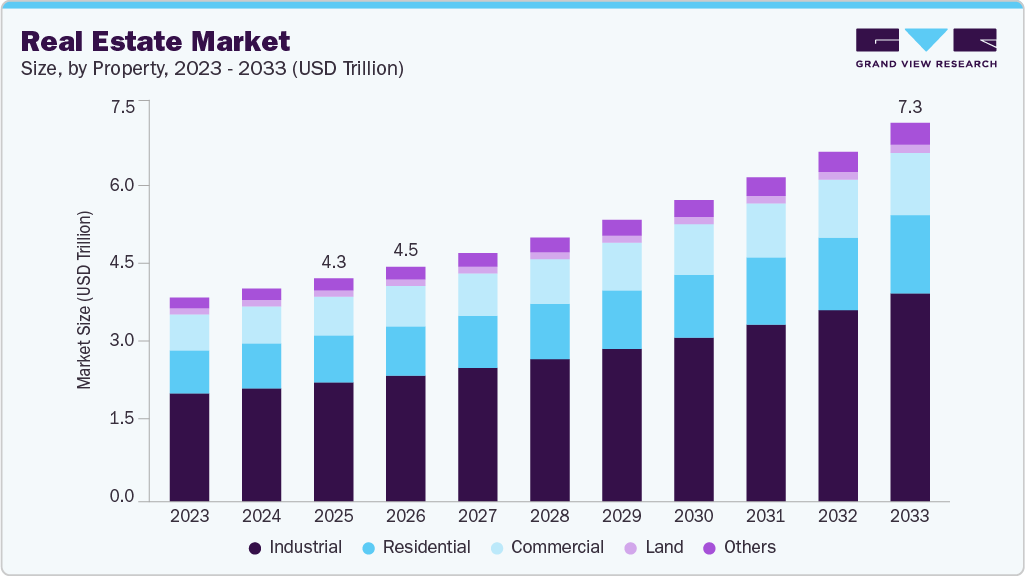
Simultaneously, the market is recalibrating around post-pandemic usage patterns and sustainability mandates.
Flexible office formats and life sciences campuses are gaining relevance as corporations reassess space utilization. Major developers such as China Vanke Co., Ltd. are diversifying portfolios beyond traditional residential sales into rental housing and logistics parks. ESG compliance, green building certifications, and energy-efficient retrofits are becoming central to valuation metrics globally. Cross-border capital deployment remains active despite interest rate volatility, particularly in gateway cities with transparent regulatory environments. As real estate evolves from a cyclical asset class to a strategic infrastructure-like investment, long-term fundamentals continue to underpin global expansion.
According to the United Nations, nearly 56% of the world’s population currently lives in urban areas, a figure projected to rise to 68% by 2050, structurally reinforcing long-term demand for residential, commercial, and social infrastructure. In the U.S., data from the U.S. Census Bureau indicates that total construction spending surpassed USD 2 trillion annually in recent years, highlighting the scale of ongoing development activity. Emerging economies are equally pivotal; India’s housing and infrastructure push under government-backed urban missions continues to catalyze large-scale residential and transit-oriented projects. These macro drivers position real estate as a foundational asset class closely linked to population concentration and economic output.
The commercial market remains a key contributor to overall industry growth. Expansion in e-commerce has increased demand for warehouses and logistics parks, while evolving work models continue to reshape office real estate requirements. At the same time, improving consumer mobility and tourism activity have supported recovery across retail and hotel real estate segments. Similar structural adjustments are visible in mature economies, where investors are actively repositioning assets to align with changing consumption and workplace patterns, reinforcing the role of the commercial market in the broader current market.
Beyond structural trends, broader economic and demographic factors continue to support demand across the real estate housing market. Rising disposable incomes, improving access to mortgage financing, and greater financial awareness are encouraging long-term homeownership, supporting transaction activity in the housing market, and maintaining liquidity within the property market. Simultaneously, changing household structures, delayed homeownership among younger populations, and increased workforce mobility are sustaining demand in the rental housing market. On the commercial side, steady business expansion and urban employment growth are reinforcing occupier demand across the commercial market, particularly for modern office real estate, destination-oriented retail real estate, and experience-driven hotel real estate, collectively strengthening momentum in the current market.
Digitalisation is further transforming how properties are marketed and transacted across the property market. Growing internet penetration and higher consumer comfort with virtual platforms have accelerated the adoption of technology-enabled property showcasing. For instance, in January 2025, Square One launched Blackboxx Real and Blackboxx VR, advanced marketing solutions designed to deliver immersive virtual walkthroughs and interactive property experiences. These platforms enable buyers to explore residential and commercial assets remotely, improving engagement and decision-making efficiency across both the housing market and the commercial market, as developers and brokers seek differentiation in an increasingly competitive environment.
Policy support and monetary conditions continue to play a critical role in sustaining market momentum. On December 5, 2025, the Reserve Bank of India (RBI) announced a repo rate reduction of 25 basis points, lowering it from 5.5 % to 5.25 % after its three-day Monetary Policy Committee review. This move, the fourth rate cut in 2025, was taken with a neutral policy stance amid easing inflation and steady growth. The rate cut is expected to make home loans more affordable as banks revise lending rates, which could lead to lower equated monthly instalments or shorter loan tenures for borrowers. The overall aim is to boost financial conditions, strengthen buyer confidence, and support demand in the housing sector by reducing borrowing costs for both homebuyers and developers. Lower interest rates have a direct impact on housing demand, encouraging purchases and supporting transaction volumes across the real estate housing market. In parallel, government-led urban development initiatives, including smart city programmes and infrastructure investments, are creating long-term opportunities across residential assets and the commercial market, reinforcing growth prospects in the current market.
Sustainability and demographic aging are reshaping asset allocation within the sector. The International Energy Agency notes that buildings account for nearly 30% of global final energy consumption, intensifying regulatory focus on green construction and retrofitting. At the same time, the World Bank emphasizes that global life expectancy improvements are accelerating demand for senior housing and healthcare facilities. In advanced markets such as Japan, where more than a quarter of the population is aged 65 or older, real estate development is increasingly aligned with eldercare and accessible housing formats. Collectively, these structural forces, urban concentration, capital depth, and sustainability mandates, are reinforcing real estate’s role as both an economic growth engine and a long-duration, infrastructure-linked investment platform.
Consumer Surveys & Insights
According to the Homebuyer Sentiment Survey H1 2025, published in September 2025, consumer demand in the market is increasingly shaped by age-linked affordability and lifestyle priorities. The survey, which captured responses from over 8,000 homebuyers across major cities, indicates that Millennials account for nearly 60% of active homebuyers, reflecting their transition into mid-career and family-forming stages. Budget sensitivity remains pronounced within this group, with around 36% of respondents preferring homes priced between USD 110,000 and USD 185,000, while only 17% showed interest in homes below USD 55,000, highlighting a clear shift toward mid-segment housing. Space preferences are also evolving, as approximately 45% of buyers favoured larger 3-bedroom homes, driven by work-from-home needs and long-term livability considerations.
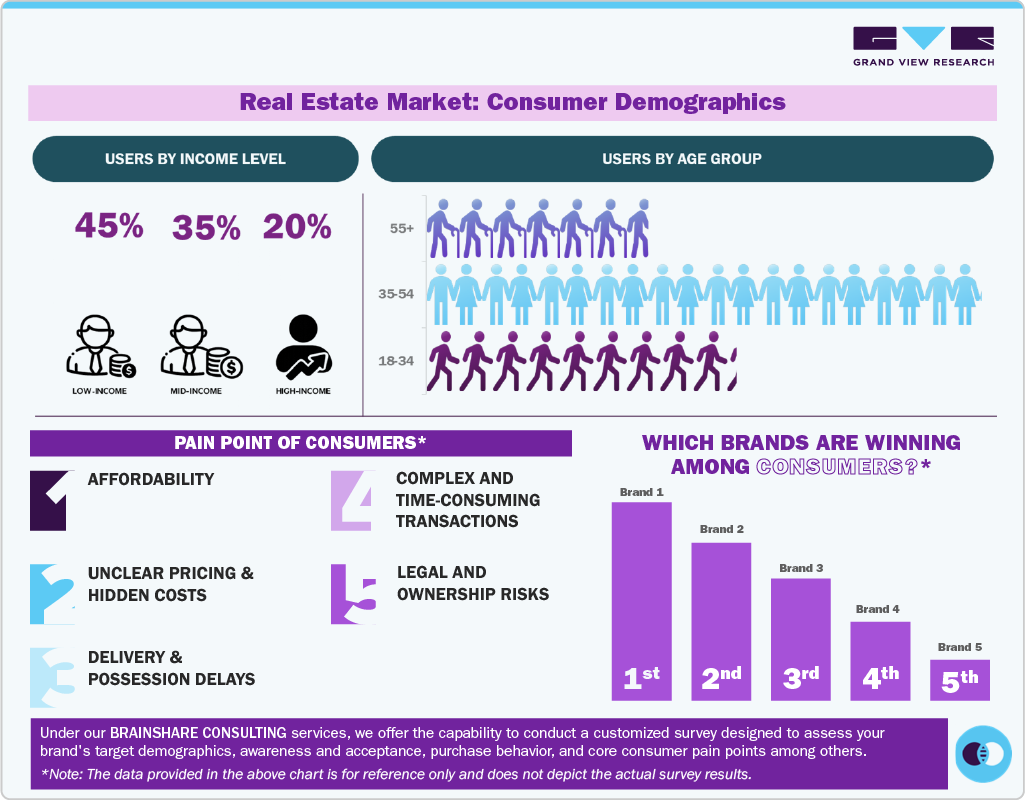
The survey also highlights contrasting behaviour among older buyers, particularly Baby Boomers, who represent a smaller but financially influential segment of demand. This cohort demonstrates a stronger interest in stability, lifestyle comfort, and asset security, with a higher inclination toward ready or near-completion homes and long-term ownership. A growing share of respondents aged 55 and above view residential property as a low-volatility investment and a hedge against inflation, supported by accumulated wealth and reduced debt exposure. Across demographics, the survey notes rising concern around affordability due to price appreciation. Yet, overall buyer confidence remains resilient, with real estate continuing to be perceived as a preferred asset class for both end-use and long-term value preservation.
Trump Tariff Impact
In early 2025, President Trump's tariff policies, particularly those targeting imported construction materials such as Canadian lumber, Chinese steel, and aluminum, led to a noticeable increase in construction costs across the U.S. market. For instance, tariffs on imported building materials, such as Canadian softwood lumber and Mexican drywall, have raised construction expenses. For instance, a 25% tariff on $200,000 worth of Canadian lumber adds $50,000 in costs, often passed on to homebuyers, leading to higher home prices. The residential sector felt the impact through higher homebuilding expenses, which translated into increased home prices for buyers. Developers, facing elevated material costs, either passed these costs onto consumers or delayed projects to reassess budgets. In addition, inflationary pressure caused by tariffs contributed to rising mortgage rates, which weakened affordability and discouraged some buyers from entering the market.
In the commercial real estate sector, tariffs disrupted the supply chain and raised material costs, affecting everything from office buildings to industrial warehouses. These increased development expenses often resulted in higher rents for tenants and tighter profit margins for developers. The uncertainty surrounding international trade policy also made foreign investors more cautious, reducing cross-border investments in U.S. real estate. While the tariffs aimed to boost domestic production, their indirect effects introduced volatility and increased costs, slowing momentum in both residential and commercial real estate development.
Property Insights
Residential real estate held a market revenue share of 35.5% in 2025, supported by steady demand across both ownership and leasing segments of the housing market. Population growth, urbanisation, and rising household formation continue to drive the need for residential spaces, while improved access to mortgage financing has strengthened homebuying activity, particularly among working-age consumers. At the same time, the rental housing market remains resilient due to increased workforce mobility, delayed homeownership, and affordability pressures in major urban centres, encouraging sustained occupancy and investment in rental-focused developments.
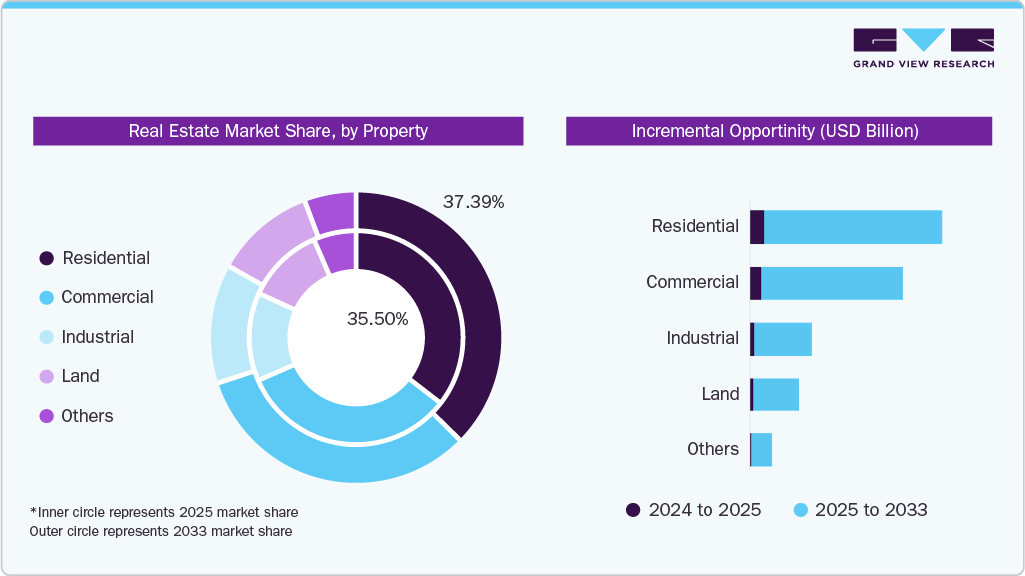
Commercial property is projected to register a CAGR of 6.9% from 2026 to 2033. supported by sustained expansion across the commercial market. Demand for office real estate continues to be driven by corporate expansion, growth in professional and technology-led services, and the gradual stabilisation of hybrid work models in major economic centres. At the same time, improving consumer spending and urban footfall are supporting recovery in retail real estate, particularly within mixed-use developments and high-traffic locations. Growth in global tourism and business travel is further accelerating investment activity in hotel real estate, as rising occupancy rates and new hotel launches strengthen demand for commercial assets linked to hospitality and leisure.
Type Insights
In terms of revenue, the rental type held a significant market share of about 51.3% in 2025, reflecting the growing importance of the rental housing market within the broader residential sector. The rise of remote and hybrid work models has increased demand for rental homes, particularly in cities offering strong digital infrastructure, employment opportunities, and lifestyle amenities. Many consumers are prioritising flexibility and geographic mobility over long-term ownership, a trend further reinforced by rising home prices in several developed economies. As affordability pressures limit first-time homeownership, the rental housing market continues to expand, supported by sustained tenant demand and higher occupancy levels.
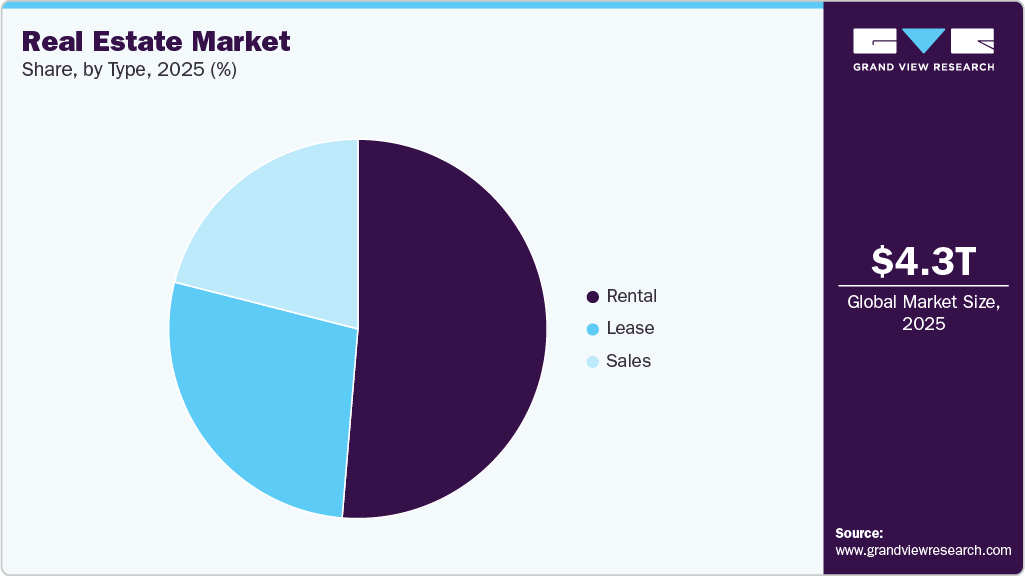
Sales type is estimated to grow at a CAGR of 8.1% from 2026 to 2033. Rapid urbanisation and continued migration toward economic centres are increasing the need for owned housing, while changing household structures are encouraging buyers to seek long-term residential stability. Rising disposable incomes, greater access to home financing, and increasing awareness of real estate as a wealth-preservation asset are further strengthening purchase intent. In addition, growing preference for larger, amenity-rich homes and planned developments is supporting sales activity across both primary and secondary markets, reinforcing sustained growth in the sales segment over the forecast period.
Regional Insights
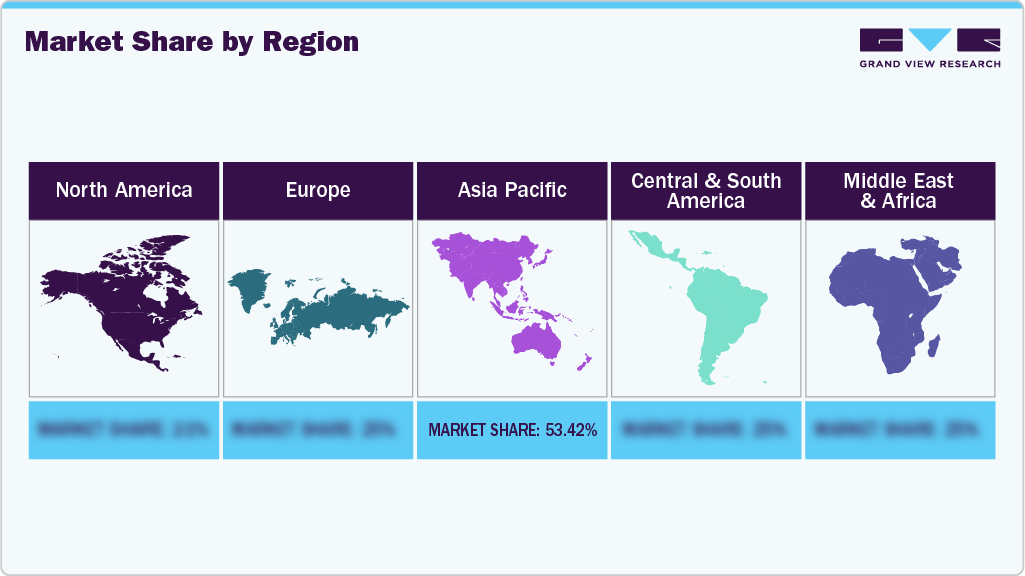
The real estate market in North America held a market share of 21.0% of the overall global market in 2025. The North America real estate industry is largely driven by steady homeownership levels, strong employment markets, and continued household formation, particularly in urban and suburban areas. In the U.S. commercial market, investor activity remains resilient due to moderate interest rate conditions, access to institutional capital, and ongoing demand for income-generating assets. Office leasing trends are shaped by a flight toward high-quality, energy-efficient buildings, while logistics and industrial assets continue to benefit from e-commerce expansion and supply chain reconfiguration.
U.S. Real Estate Market Trends
The real estate market in the U.S. held a significant market share of 62.6% of the North American market in 2025. Growth is driven by population inflows into high-growth states, strong employment creation in sectors such as technology, healthcare, and professional services, and continued suburban expansion supporting housing demand. Within the U.S. commercial market, investor interest remains firm due to transparent market structures, access to institutional capital, and demand for income-generating assets.
Mexico real estate market is expected to witness a CAGR of 6.8% from 2026 to 2033, supported by steady population growth, rising urbanisation, and expanding middle-income households across major metropolitan regions. Growth is being driven by increasing employment opportunities in manufacturing, logistics, automotive, and nearshoring-led industrial activities, which are strengthening demand for both residential and commercial properties. Expanding infrastructure investment and improved connectivity around industrial corridors and urban centres are further supporting housing development and commercial absorption.
Europe Real Estate Market Trends
The real estate market in Europe accounted for a share of 17.3% of the global industry in 2025. The European market is being driven by urban regeneration initiatives, cross-border workforce mobility, and sustained demand for rental housing in large metropolitan areas, particularly as affordability constraints limit homeownership in several cities. Aging residential stock in Western Europe is encouraging renovation and redevelopment activity, while on the commercial side, demand is increasingly concentrated in energy-efficient and ESG-compliant assets due to tightening environmental regulations.
Germany real estate market held a significant market share of 18.4% in 2025 in the European market. Demand for real estate in Germany is supported by consistent population concentration in major economic hubs, long-term preference for renting over ownership, and strong tenant protection frameworks that sustain stable occupancy levels. Ongoing investment in infrastructure and public transport is reinforcing the attractiveness of urban and secondary cities, while redevelopment of underutilised land and brownfield sites is supporting new residential supply.
The real estate market in the UK is expected to witness a CAGR of 6.2% from 2026 to 2033. Growth is primarily driven by limited housing supply, rising population density in urban areas, and sustained demand for rental accommodation due to affordability constraints. Residential demand is further supported by the redevelopment of existing housing stock and brownfield sites to meet long-term housing requirements. On the commercial side, demand remains stable for logistics and industrial assets, supported by e-commerce activity, while office demand is concentrated in prime locations with modern infrastructure, collectively supporting market growth.
Asia Pacific Real Estate Market Trends
The real estate market in the Asia Pacific held a significant market share of 53.4% in 2025. The Asia Pacific market is being driven by rapid city development, large-scale housing demand, and government-led infrastructure investment across both developed and emerging economies. Strong domestic consumption and manufacturing activity are supporting demand for residential and commercial properties, while ongoing urban migration continues to expand housing requirements in metropolitan and secondary cities. In addition, cross-border capital flows remain active as investors target stable markets with long-term growth visibility, supported by improving regulatory frameworks and economic resilience.
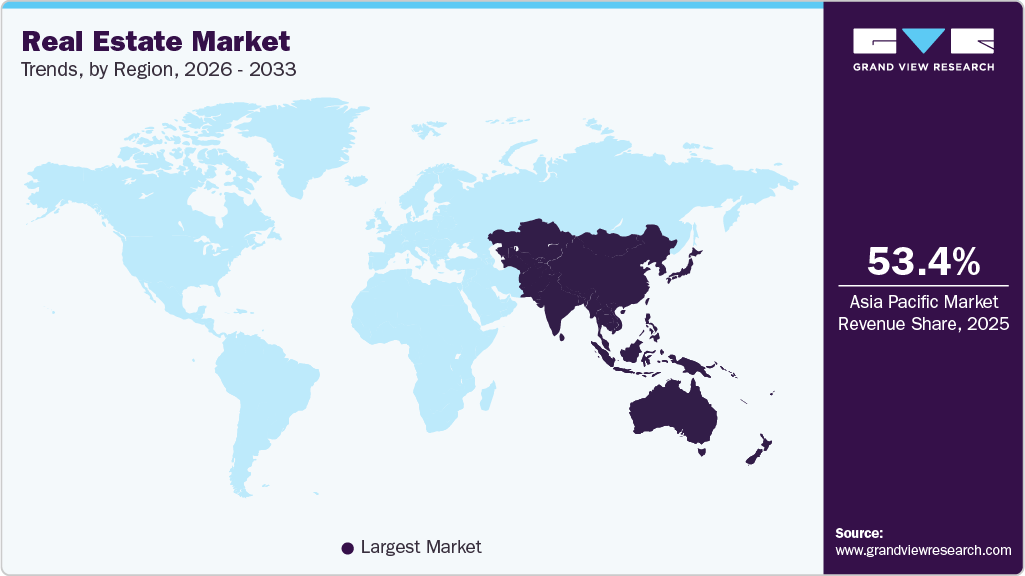
China real estate market is anticipated to showcase a CAGR growth of 7.8% from 2026 to 2033. Growth in the market is driven by ongoing urban migration, sustained residential replacement demand, and large-scale infrastructure and transit-led development that supports new housing clusters. Strong domestic consumption and industrial activity continue to underpin demand for both residential and commercial properties, particularly in economic and manufacturing hubs. In addition, policy-led urban renewal initiatives and redevelopment of older housing stock are supporting construction activity, while gradual regulatory stabilisation is improving market confidence and reinforcing long-term growth prospects in the Chinese market.
The real estate market in India is expected to witness a CAGR of 8.1% from 2026 to 2033. The market in India is driven by rapid urbanisation, rising household formation, and expanding employment opportunities across both metropolitan and non-metro regions. Large-scale government investment in infrastructure, including highways, metro rail networks, airports, and industrial corridors, is improving connectivity and accelerating real estate development in Tier-2 and Tier-3 cities. In parallel, policy initiatives focused on affordable housing and market regulation are strengthening buyer confidence and increasing supply in the budget and mid-income segments. Growing adoption of formal housing finance, combined with rising disposable incomes and increased preference for organised developments, continues to support sustained residential and commercial real estate growth across India.
Latin America Real Estate Market Trends
The real estate market in Latin America is expected to witness a CAGR of 3.3% from 2026 to 2033, supported by steady urban population growth, expanding housing needs, and ongoing investment in city infrastructure across major economies. Rising demand for residential housing in metropolitan areas is being driven by household formation and gradual improvement in affordability, while commercial real estate activity is supported by growth in service-oriented industries and retail expansion. Tourism-led development continues to support demand for hospitality properties in key destinations, while increasing adoption of mixed-use and master-planned developments is shaping new project supply.
Middle East & Africa Real Estate Market Trends
The real estate market in the MEA is expected to witness a CAGR of 8.1% from 2026 to 2033. The market is driven by rapid urban population growth, expanding housing requirements, and sustained investment in large-scale infrastructure and city development projects. Rising tourism activity and growth in service-oriented economies are supporting demand for hospitality, retail, and office spaces, while increasing preference for master-planned communities is shaping residential supply. In addition, greater focus on sustainable construction, smart infrastructure, and technology-enabled developments is influencing project design and attracting long-term investment, collectively supporting steady expansion across the Middle East & Africa market.
Key Real Estate Company Insights
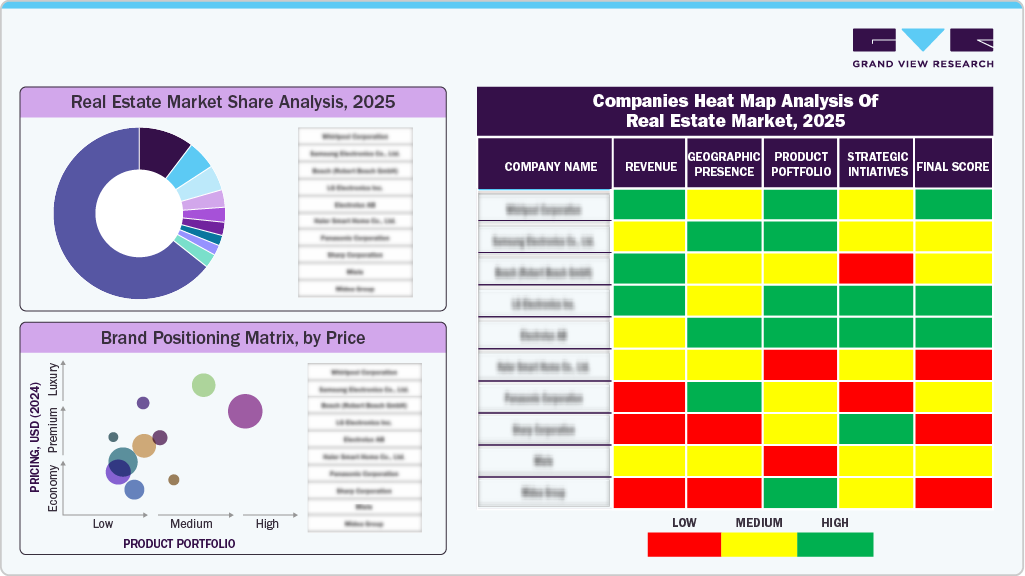
The global market is characterised by the presence of large, established developers, institutional investors, and real estate investment trusts operating alongside regional builders, private equity players, and asset-specific specialists, all competing to address evolving demand across residential, commercial, and mixed-use segments. Market participants are increasingly focused on next-generation development strategies, supported by data-driven site selection, sustainable construction practices, energy-efficient design, and technology-enabled property management. In parallel, developers and investors are diversifying portfolios across asset classes, including housing, logistics, offices, retail, and hospitality, while expanding into emerging urban centres and secondary cities. These strategies are aimed at improving asset performance, enhancing occupier experience, and strengthening long-term value creation across core real estate segments spanning mass housing, mid-income developments, and premium commercial assets.
Key Real Estate Companies:
The following key companies have been profiled for this study on the real estate market
- Brookfield Asset Management Inc.
- ATC IP LLC.
- Prologis, Inc.
- SIMON PROPERTY GROUP, L.P.
- Coldwell Banker
- RE/MAX, LLC.
- Keller Williams Realty, Inc.
- CBRE Group, Inc.
- Sotheby’s International Realty Affiliates LLC.
- Colliers
Recent Development
-
In January 2026, Compass, Inc. announced that it had completed its previously disclosed all-stock combination with Anywhere Real Estate Inc., bringing together two major residential brokerage platforms under a unified corporate structure. The transaction marked a significant consolidation within the U.S. real estate sector, expanding Compass’s national footprint, brand portfolio, and agent network. Following the closing, the combined entity stated that it intended to integrate operations onto a shared technology platform aimed at enhancing agent productivity, streamlining transaction workflows, and improving client service capabilities.
-
In May 2025, Legal & General (L&G) strategically acquired a 75% ownership interest in Proprium Capital Partners, a globally recognized real estate private equity firm with assets under management totaling $3.5 billion. This transaction marks a significant step in L&G’s broader initiative to deepen its presence in private markets and further diversify its real estate investment platform through enhanced global exposure and asset management capabilities.
-
In February 2025, CoStar Group, Inc.-a prominent provider of online marketplaces, data intelligence, and analytics-formally concluded its acquisition of Matterport, Inc., a global leader in 3D digital twin solutions. This strategic integration unites two innovation-driven enterprises with the shared objective of advancing the deployment of AI-enabled digital twin technologies throughout the global real estate sector. The acquisition is expected to enhance the digital transformation of property visualization, marketing, and management across commercial and residential markets.
Real Estate Market Report Scope
Report Attribute
Details
Market size value in 2026
USD 4,557.66 billion
Revenue forecast in 2033
USD 7,351.30 billion
Growth rate (revenue)
CAGR of 7.1% from 2026 to 2033
Actuals
2021 - 2025
Forecast period
2026 - 2033
Quantitative units
Revenue in USD million/billion and CAGR from 2026 to 2033
Report coverage
Revenue forecast, company ranking, competitive landscape, growth factors, and trends
Segments covered
Property, type, region
Regional scope
North America; Europe; Asia Pacific; Latin America; and Middle East & Africa
Country scope
U.S.; Canada; Mexico; Germany; France; UK; Spain; Italy; China; India; Japan; South Korea; Australia/New Zealand; Brazil; Saudi Arabia
Key companies profiled
Brookfield Asset Management Inc.; ATC IP LLC; Prologis, Inc.; SIMON PROPERTY GROUP, L.P.; Coldwell Banker; RE/MAX, LLC.; Keller Williams Realty, Inc.; CBRE Group, Inc.; Sotheby’s International Realty Affiliates LLC.; Colliers
Customization scope
Free report customization (equivalent up to 8 analysts working days) with purchase. Addition or alteration to country, regional & segment scope.
Pricing and purchase options
Avail customized purchase options to meet your exact research needs. Explore purchase options
Global Real Estate Market Report Segmentation
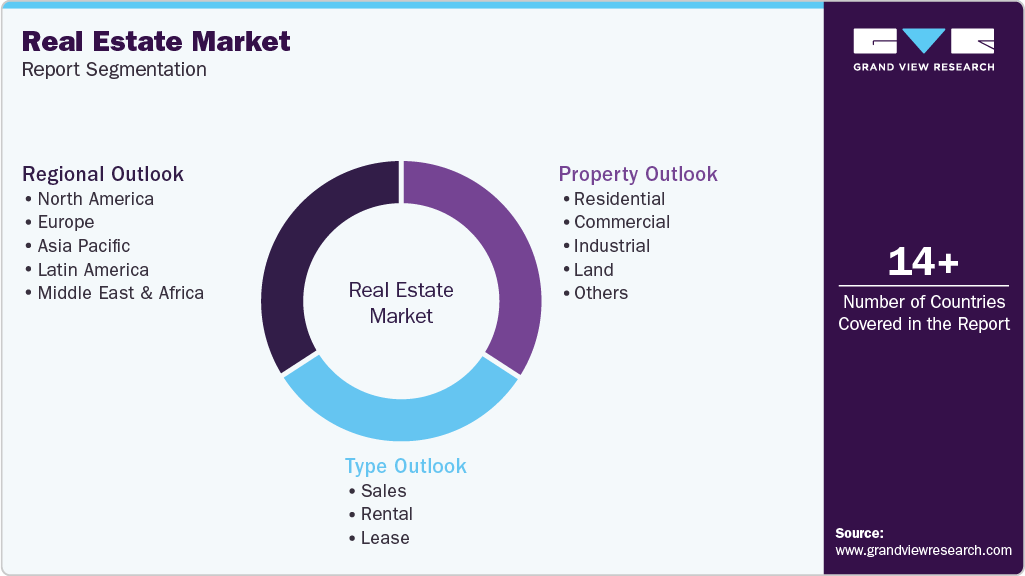
This report forecasts revenue growth at global, regional & country levels and provides an analysis of the latest trends and opportunities in each of the sub-segments from 2021 to 2033. For this study, Grand View Research has segmented the global real estate market based on property, type, and region:
-
Property Outlook (Revenue, USD Billion, 2021 - 2033)
-
Residential
-
Commercial
-
Industrial
-
Land
-
Others
-
-
Type Outlook (Revenue, USD Billion, 2021 - 2033)
-
Sales
-
Rental
-
Lease
-
-
Regional Outlook (Revenue, USD Billion, 2021 - 2033)
-
North America
-
U.S.
-
Canada
-
Mexico
-
-
Europe
-
Germany
-
UK
-
France
-
Italy
-
Spain
-
-
Asia Pacific
-
China
-
India
-
Japan
-
South Korea
-
Australia/New Zealand
-
-
Latin America
-
Brazil
-
-
Middle East & Africa (MEA)
-
Saudi Arabia
-
-
Frequently Asked Questions About This Report
b. Some of the key players operating in the real estate market include Brookfield Asset Management Inc.; ATC IP LLC; Prologis, Inc.; SIMON PROPERTY GROUP, L.P.; Coldwell Banker; RE/MAX, LLC.; Keller Williams Realty, Inc.; CBRE Group, Inc.; Sotheby’s International Realty Affiliates LLC.; and Colliers, among others.
b. The key factors that are driving the global real estate market are the rising population and a desire for personal household space, the rapid rise of e-commerce, which drives demand for warehouses and logistics centers; the evolution of workplaces due to hybrid work models, prompting redesigns and upgrades of office spaces; and the recovery of retail and hospitality sectors in many regions.
b. Asia Pacific dominated the real estate market with a revenue share of 53.4% in 2025 due to the rising homeownership rates, economic resilience, moderated interest rates, and investor interest in value-add opportunities .
b. The global real estate market was estimated at USD 4,332.38 billion in 2025 and is expected to reach USD 4,557.66 billion in 2026.
b. The global real estate market is expected to grow at a compound annual growth rate of 7.1% from 2026 to 2033 to reach USD 7,351.30 billion by 2033.


Share this report with your colleague or friend.
Need a Tailored Report?
Customize this report to your needs — add regions, segments, or data points, with 20% free customization.


ISO 9001:2015 & 27001:2022 Certified
We are GDPR and CCPA compliant! Your transaction & personal information is safe and secure. For more details, please read our privacy policy.
Trusted market insights - try a free sample
See how our reports are structured and why industry leaders rely on Grand View Research. Get a free sample or ask us to tailor this report to your needs.













