
- Home
- »
- Paints, Coatings & Printing Inks
- »
-
Reclaimed Rubber Market Size And Share Report 2026-2033GVR Report cover

Reclaimed Rubber Market (2026 - 2033)
Size, Share & Trends Analysis Report Product (Whole Tyre Reclaim, Butyl Reclaim Rubber, EPDM Reclaim Rubber), By End-use (Automotive & Aircraft Tyres, Retreading), By Region, And Segment Forecasts
Market Size, 2025
$1.6BMarket Estimate, 2026
$1.8BMarket Forecast, 2033
$4.8BCAGR, 2026–2033
15.3%Reclaimed Rubber Market Summary
The global reclaimed rubber market size was valued at USD 1.6 billion in 2025 and is projected to grow from USD 1.8 billion in 2026 to USD 4.8 billion by 2033, at a CAGR of 15.3% from 2026 to 2033. Asia Pacific dominated the market, accounting for a revenue share of 53.2% in 2025. The reclaimed rubber market is experiencing steady growth, driven by supportive government regulations promoting sustainable and environmentally friendly materials as alternatives to conventional virgin rubber.
 Source: Grand View Research, IR Documents, Primary Interviews, Paid DatabasesTo learn more about this report,
 Download Free Sample Report
 Key Market Trends & Insights
- By product: Whole tyre reclaim rubber segment led the market with the largest revenue share of 45.7% in 2025.
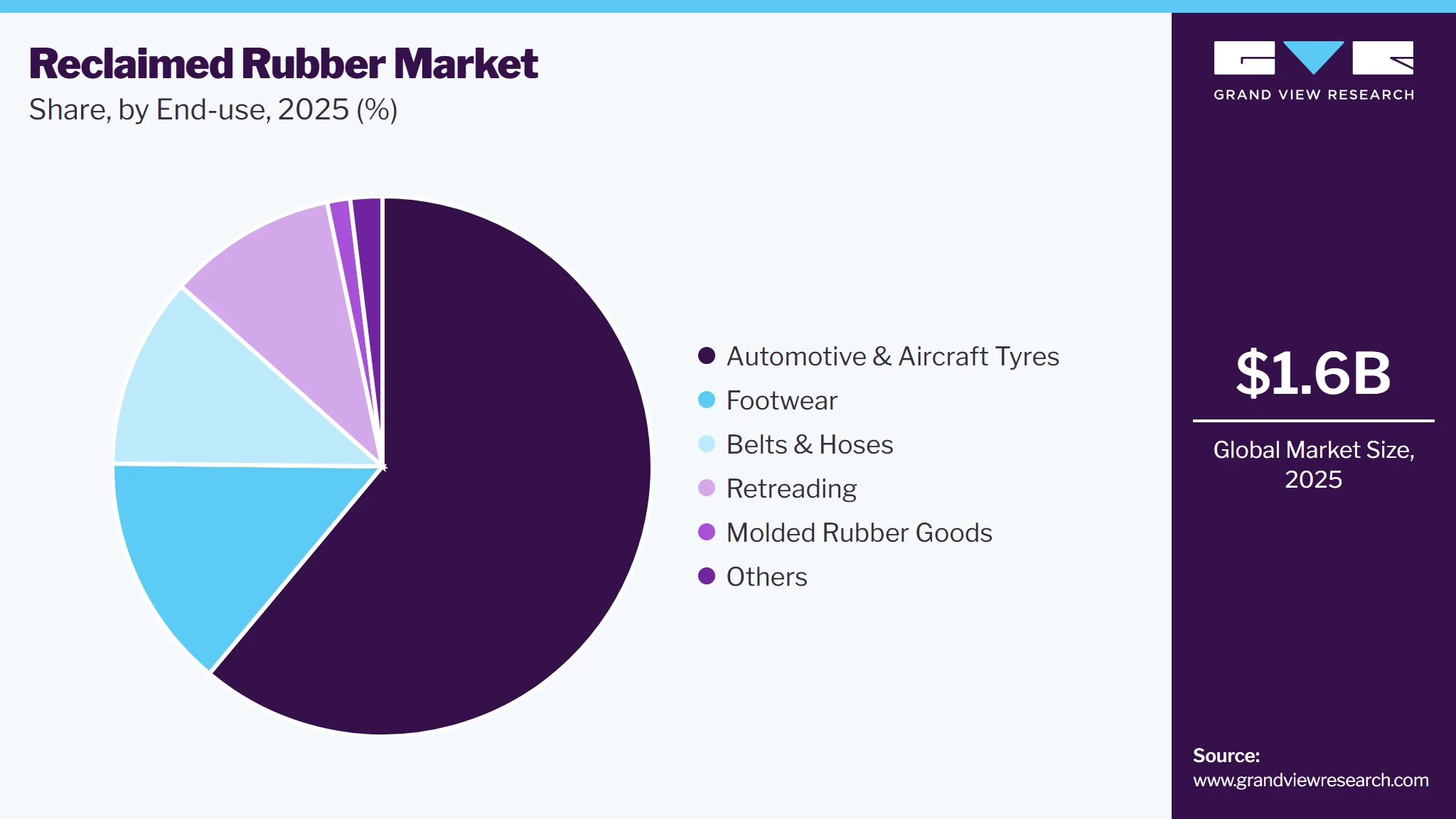
- By end use: Automotive & aircraft tyres segment led the market with the largest revenue share of 61.1% in 2025.
Regional Highlights
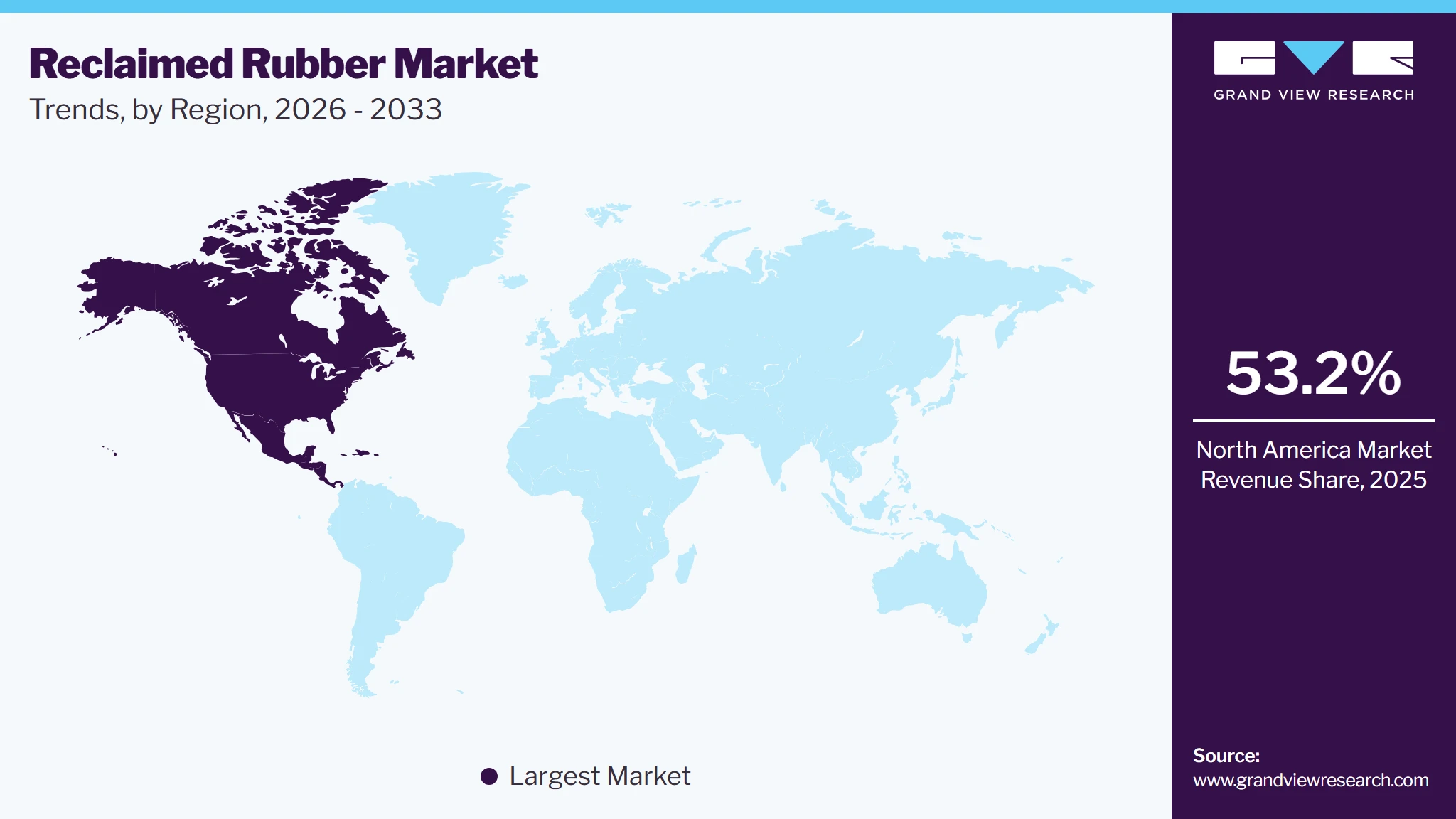
- Largest regional market: North America (53.2% revenue share, 2025)
- By country: The U.S. held the largest market share in 2025.
Market Size & Forecast
- Market size in 2025: USD 1.6 Billion
- Estimated market size in 2026: USD 1.8 Billion
- Projected market size by 2033: USD 4.8 Billion
- CAGR (2026-2033): 15.3%
Three ways to get this report
Buy it, customize it, or ask a question.Ask an Analyst
Analyst response in 1 business day
- AccessReport author, directly
- Reply timeWithin 1 working day
- No sales callDirect answer only
- FormatEmail reply
- CostFree, no cost
Get the Full Report
What the study covers
- FormatsPDF · Excel · Dashboard
- Timeline2026–2033 annual, 2025 base
- Coverage20+ countries, 5 regions
- Companies10+ key players profiled
Customize the Report
20% free customization
- IncludeCountries, segments, points
- TailorTo your product definition
- ExtendDeeper competitor detail
- OrA fully bespoke study
- Turnaround5–10 working days
In recent years, global demand for reclaimed rubber has been driven by favorable regulations implemented by governments across the globe to promote sustainable materials as a substitute for conventional virgin rubber and the rising demand for reclaimed rubber from end use sectors such as automotive & aircraft tyres, footwear, belts & hoses, retreading, and molded rubber goods manufacturing. Additionally, increasing demand for reclaimed rubber across key end-use industries, including automotive and aircraft tires, footwear, belts and hoses, retreading, and molded rubber goods manufacturing, is supporting market expansion. Growing emphasis on resource conservation, waste reduction, and circular economy practices, coupled with the cost-effectiveness and performance benefits of reclaimed rubber, is further creating significant growth opportunities for the market globally.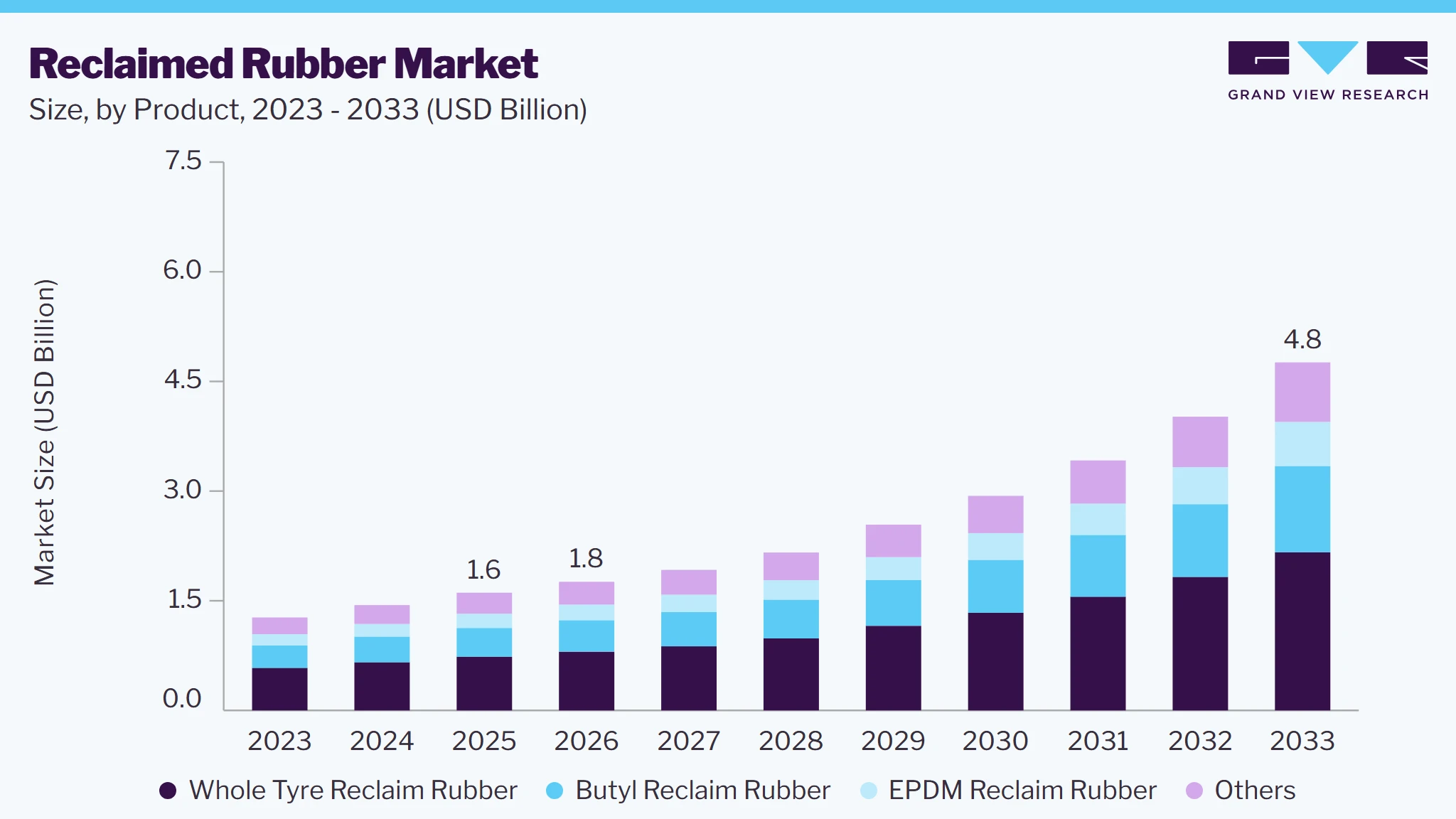 To learn more about this report, Download Free Sample Report
 The market has witnessed collaborations between end users and chemical manufacturers to develop new products from used tyres. For instance, as of December 2021, Ralf Bohle GmbH, a bicycle tyre manufacturer, Pyrum Innovations AG, and TH Köln University entered into a collaborative partnership to develop new bicycle tyres from old tyres. Initiatives such as these are expected to help companies source raw materials and manufacture reclaimed rubber at economical costs.
According to the International Organization of Motor Vehicle Manufacturers (OICA), the U.S. was the leading producer of commercial vehicles in the world in 2020. Despite the outbreak of the pandemic, the country witnessed a rise in demand for pickup trucks in 2020. Ford Motor’s F-Series truck retained its dominance followed by pickups from Fiat Chrysler and General Motors.
Market Dynamics
The reclaimed rubber market is experiencing notable growth, driven by increasing collaborations between tire manufacturers, recycling companies, and research institutions to develop innovative products from end-of-life tires. Such partnerships are supporting the advancement of sustainable raw material sourcing and cost-effective reclaimed rubber production processes, enhancing overall industry efficiency. Additionally, strong automotive and commercial vehicle manufacturing activities, particularly the sustained demand for pickup trucks and other high-volume vehicle segments, are contributing to the generation of used tires that serve as key feedstock for reclaimed rubber production. Continuous efforts toward circular economy practices, resource recovery, and sustainable material utilization are further creating significant growth opportunities for the market globally.
The reclaimed rubber market is witnessing strong growth due to the increasing preference for cost-effective and sustainable raw materials across multiple manufacturing industries. Reclaimed rubber offers significant cost advantages over virgin rubber, enabling manufacturers to reduce material expenses while maintaining the required performance characteristics for a wide range of applications. It is widely utilized in the production of automotive components, footwear, consumer goods, belts, hoses, tires, and molded rubber products. These economic benefits help manufacturers improve operational efficiency and remain competitive in price-sensitive markets, supporting the growing adoption of reclaimed rubber across industrial sectors.
Demand is further supported by the lower energy requirements associated with reclaimed rubber processing compared to virgin rubber production. Reclaimed rubber contributes to reduced overall manufacturing costs by minimizing energy consumption and optimizing resource utilization throughout the production cycle. Continuous advancements in recycling technologies and material recovery processes are improving product quality, consistency, and application versatility, expanding the use of reclaimed rubber in both traditional and emerging end-use industries. As manufacturers increasingly seek economical, sustainable, and high-performance material solutions, reclaimed rubber is emerging as a critical component of circular manufacturing strategies, strengthening its role in industrial production and market growth.
Quality consistency and performance limitations remain key challenges for the growth of the reclaimed rubber market. Since reclaimed rubber is produced from different waste rubber sources, variations in material composition and properties can occur, making it difficult to maintain uniform quality across production batches. This requires additional processing, testing, and quality control efforts, increasing manufacturing complexity. Furthermore, reclaimed rubber may not always deliver the same strength, elasticity, durability, and long-term performance as virgin rubber, limiting its use in high-performance applications such as heavy-duty tires and industrial components. As industries demand reliable, compliant, and high-quality materials, improving reclamation processes and product consistency remains essential for wider market adoption.
Rapid industrialization and urban growth in emerging economies are creating strong growth opportunities for the reclaimed rubber market. Industries such as automotive, construction, footwear, consumer goods, and manufacturing are increasingly adopting reclaimed rubber as a cost-effective and sustainable alternative to virgin rubber. Expanding infrastructure projects and industrial investments are further driving demand for environmentally responsible materials. The market also benefits from the abundant availability of waste tires and rubber scrap, which ensures a steady raw material supply. In addition, improvements in recycling technologies, growing recycling infrastructure, and supportive government initiatives promoting waste management and circular economy practices are strengthening long-term market growth.
Analyst Perspective
The reclaimed rubber market is evolving from a cost‑driven recycling industry into a sustainability‑focused materials market. Demand will remain strong across automotive, tire, construction, footwear, industrial goods, and consumer products. Advancements in devulcanization, material recovery, and processing are improving quality and enabling higher‑value applications. Regulatory focus on waste reduction, circular economy, and sustainable manufacturing is strengthening market penetration globally. Leaders will differentiate through technological expertise, secure feedstock access, integrated recycling, distribution networks, and partnerships with tire and rubber manufacturers. Challenges include fluctuations in waste tire availability, material quality variability, pricing pressure, and rising competition. Future growth lies in high‑performance reclaimed grades, advanced recycling technologies, and application‑specific solutions aligned with sustainability and performance needs.
Product Insights
Based on product, the whole tyre reclaim rubber segment led the market with the largest revenue share of 45.7% in 2025. Whole tyre reclaimed rubber is manufactured from tread peelings and end-of-life tyres. The product exhibits better elongation and tensile strength, good abrasion resistance, tear resistance, long shelf life, and energy efficiency while mixing. These above-mentioned properties make it suitable for use in the production of tyre sidewalls, tyre piles, and tyre treads & retreads.
Butyl reclaim rubber is manufactured from used butyl tubes through desulfurization. It is a synthetic rubber, a copolymer of isobutylene with isoprene, and exhibits impermeability to air. This allows it to be used in applications requiring airtight rubber. Butyl reclaimed rubber has a faster vulcanization rate and higher polarity as compared to virgin butyl rubber, which provides it higher compatibility with other types of rubber and better aging resistance.
EPDM rubber is a terpolymer of propylene, ethylene, propylene, and a diene component. It has ethylene content in the range of 45% to 85% and higher ethylene content offers better mixing and extrusion. EPDM reclaim rubber is manufactured from manufactured EPDM factory reject profiles used in insulators for dust protection, weather channels, aluminum profiles, UPVC profiles, and door packing.
End-use Insights
Based on end use, the automotive & aircraft tyres segment led the market with the largest revenue share of 61.1% in 2025. Aircraft tyres are made from conductive elastomer, which consists of natural rubber, and are subjected to extreme conditions. They are reinforced with strong and flexible materials such as Kevlar to absorb more of the shock of landing and support the natural rubber. Natural rubber exhibits excellent abrasion resistance, tear resistance, and excellent green strength & tack, which allows it to stick to other materials.
 To learn more about this report, Download Free Sample Report
 Aircraft tyres have conducting strips built into the tyre grooves, which discharge any static electricity charges that may have built up. Natural rubber in the tyres acts as an insulator because of its ability to limit the transfer of electricity. The growing international logistics business and passenger travel post the relaxation of travel restrictions on a regional and country basis has revamped the demand for aircraft tyres. Many aviation companies do not purchase tyres but have set up contracts with tyre manufacturing companies to replace tyres upon requirement. Retreading is a common practice in aircraft tyres since the tyres are expensive.
Tyre companies such as Dunlop Tyres provide tyre retreading services to aviation companies under the inspection of airworthiness authorities such as the EASA and FAA. Thus, the growing aviation industry along with the high cost of aircraft tyre replacement is expected to positively impact the market.
Regional Insights
Asia Pacific dominated the reclaimed rubber market with the largest revenue share of 53.2% in 2025, which is attributable to the rapid growth of the automotive and construction industries, fueled by increasing urbanization and infrastructure development. Countries such as India, Indonesia, and Thailand are experiencing a surge in demand for cost-effective materials, with reclaimed rubber gaining prominence due to its affordability and environmental benefits. In addition, the region’s strong focus on recycling initiatives, supported by government policies and incentives, has created a robust supply chain for reclaimed rubber production, positioning Asia Pacific as a key market hub.
 To learn more about this report, Download Free Sample Report
 China Reclaimed Rubber Market Trends
The reclaimed rubber market in China accounted for the largest market revenue share in the Asia Pacific in 2025. China’s reclaimed rubber market benefits significantly from government-led recycling initiatives aimed at managing the country’s substantial tyre and rubber waste. The Chinese government’s focus on reducing environmental pollution has resulted in the implementation of strict policies that promote tyre recycling and resource recovery. Additionally, the booming automotive and industrial manufacturing sectors in China provide a consistent demand for cost-efficient and sustainable materials such as reclaimed rubber, making it a crucial market for both domestic and international producers.
North America Reclaimed Rubber Market Trends
In North America, the adoption of reclaimed rubber is propelled by the region’s growing emphasis on circular economy practices. Companies across industries are actively seeking ways to reduce waste and improve resource efficiency, aligning with stringent environmental regulations. The availability of advanced recycling technologies and the strong presence of tyre retreading facilities have further facilitated the use of reclaimed rubber in various applications, including automotive, footwear, and industrial components.
The U.S. reclaimed rubber market is driven by a strong push for green manufacturing practices as businesses aim to meet stringent federal and state-level environmental standards. The rise in consumer demand for eco-friendly products has also encouraged manufacturers to integrate sustainable materials such as reclaimed rubber into their production processes. Moreover, the country’s robust infrastructure for collecting and processing end-of-life tyres has ensured a steady supply of raw materials for reclamation, supporting market growth.
Europe Reclaimed Rubber Market Trends
The reclaimed rubber market in Europe is heavily influenced by the adoption of stringent environmental regulations aimed at minimizing landfill waste and promoting recycling. Countries in the region, particularly Germany, France, and the UK, are leading initiatives to repurpose waste materials such as used tyres into valuable resources. The European Union’s focus on achieving carbon neutrality has further incentivized industries to switch to sustainable materials, with reclaimed rubber becoming a key solution for meeting these goals in the automotive, construction, and industrial sectors.
Key Reclaimed Rubber Company Insights
The Reclaimed Rubber market is highly competitive, with several key players dominating the landscape. Major companies GRP Ltd.; J. Allcock & Sons Ltd.; Rolex Reclaim Pvt. Ltd.; Fishfa Rubbers Ltd.; HUXAR; Tianyu (Shandong) Rubber & Plastic Products Co., Ltd.; Swani Rubber Industries; Minar Reclaimation Private Limited; and SRI Impex Pvt. Ltd. The reclaimed rubber polymers market is characterized by a competitive landscape with several key players driving innovation and market growth. Major companies in this sector are investing heavily in research and development to enhance the performance, cost-effectiveness, and sustainability of their types.
Key Reclaimed Rubber Companies:
The following key companies have been profiled for this study on the reclaimed rubber market.
-
GRP Ltd
-
J. Allcock & Sons Ltd
-
Rolex Reclaim Pvt. Ltd.
-
Fishfa Rubbers Ltd.
-
HUXAR
-
Tianyu (Shandong) Rubber & Plastic Products Co., Ltd.
-
Swani Rubber Industries
-
Minar Reclaimation Private Limited
-
SRI Impex Pvt. Ltd.
-
SNR Reclamations Pvt. Ltd.
-
High Tech Reclaim Pvt. Ltd.
-
Balaji Rubber Industries (P) Ltd.
-
Star Polymers Inc.
Competitive Benchmarking
Category
Operating Strategies
Competitive Edge
Weakness
Established Players (GRP Ltd.; J. Allcock & Sons Ltd.; Rolex Reclaim Pvt. Ltd.; Fishfa Rubbers Ltd.; Swani Rubber Industries; Minar Reclaimation Private Limited; SNR Reclamations Pvt. Ltd.; High Tech Reclaim Pvt. Ltd.)
- Broad portfolios of reclaimed rubber products serving automotive tires, retreading, footwear, belts and hoses, molded rubber goods, construction materials, and industrial rubber applications.
- Strong focus on the collection, processing, and reclamation of end-of-life tires and rubber waste to produce whole tyre reclaim rubber, butyl reclaim rubber, EPDM reclaim rubber, and specialty reclaim grades. Continuous investments in recycling technologies, quality improvement initiatives, process optimization, and capacity expansion support growing demand from tire manufacturers, rubber product producers, and industrial end users.
- Strategic partnerships with waste tire suppliers, distributors, automotive component manufacturers, and rubber goods producers further strengthen raw material security, commercial reach, and market penetration across domestic and international markets.
- Extensive expertise in rubber reclamation processes, waste tire management, material recovery technologies, and rubber compounding enables the production of cost-effective reclaimed rubber with reliable processing characteristics and performance properties.
- Established sourcing networks for waste tires and rubber scrap, combined with long-standing relationships with tire manufacturers, retreaders, footwear companies, and industrial rubber processors, support recurring demand and business stability.
- Strong manufacturing capabilities, operational scale, recycling infrastructure, and experience in meeting diverse customer specifications provide significant competitive differentiation while supporting sustainable material utilization and circular economy objectives.
- Dependence on the availability, quality, and consistency of waste tire feedstock exposes manufacturers to raw material supply fluctuations and variability in reclaimed rubber properties.
- Significant investments are required for advanced reclamation technologies, environmental compliance, quality control systems, waste management infrastructure, and production upgrades, increasing operational expenditures.
- The market is also influenced by volatility in virgin rubber prices, stringent environmental regulations, quality performance limitations compared to virgin rubber, and increasing competition from regional recyclers and alternative sustainable materials, which may impact profitability and long-term market expansion across certain high-performance applications.
Emerging Players (HUXAR; Tianyu (Shandong) Rubber & Plastic Products Co., Ltd.; SRI Impex Pvt. Ltd.; Balaji Rubber Industries (P) Ltd.; Star Polymers, Inc.)
- Focus on strengthening their position in the reclaimed rubber market through the production of whole tyre reclaim rubber, butyl reclaim rubber, EPDM reclaim rubber, and customized reclaimed rubber compounds for automotive tires, retreading, footwear, belts & hoses, molded rubber goods, and industrial applications.
- Emphasis is placed on expanding recycling capacities, improving reclamation technologies, enhancing product consistency, and increasing the utilization of waste tires and rubber scrap as sustainable raw material sources.
- Strategic collaborations with tire manufacturers, rubber product producers, distributors, and recycling partners support market penetration and long-term supply agreements.
- Continuous investments in process optimization, quality control systems, resource recovery technologies, and cost-efficient manufacturing capabilities further reinforce competitiveness in regional and international markets.
- Strong expertise in rubber reclamation processes, cost-effective manufacturing operations, and flexible production capabilities supports participation in a wide range of industrial applications.
- Competitive advantage is enhanced through access to abundant waste tire feedstock, lower production costs compared to virgin rubber, and the ability to supply customized reclaim rubber grades tailored to customer requirements.
- Established relationships with regional tire manufacturers, retreaders, footwear producers, and industrial rubber goods manufacturers support customer retention and market expansion. Their focus on sustainability, recycling efficiency, and circular economy practices further strengthens competitiveness as demand for environmentally responsible materials continues to grow.
- Exposure to fluctuations in waste tire availability, raw material quality variability, and changing environmental regulations can increase operational complexity and affect product consistency.
- Dependence on cost-sensitive end-use industries may result in pricing pressures and margin constraints. Compared with large multinational rubber and tire companies, limited production scale, research and development resources, and geographic reach may restrict access to premium market segments and large-volume supply contracts.
- In addition, challenges associated with maintaining consistent material performance, meeting stringent quality standards, and investing in advanced reclamation technologies may create barriers to long-term growth and market differentiation.
Recent Developments
-
In November 2024, Ecore International received a significant investment from General Atlantic's BeyondNetZero fund to enhance its rubber recycling operations. This funding aims to support Ecore's efforts in developing sustainable solutions for recycling rubber materials. The investment aims to expand the company’s capabilities and contribute to a circular economy by reducing waste and promoting the reuse of rubber products.
-
In November 2022, Tyromer partnered with Continental Tyres to incorporate reclaimed & recycled rubber materials into tyre production. This collaboration marks a significant shift in the tyre industry, which has been hesitant to use recycled materials. The recycled rubber is produced through Tyromer's environmentally friendly process that avoids chemicals and focuses on devulcanizing end-of-life tyres.
Reclaimed Rubber Market Report Scope
Report Attribute
Details
Market size in 2025
USD 1.6 billion
Estimated market size in 2026
USD 1.8 billion
Projected market size by 2033
USD 4.8 billion
Growth rate
CAGR of 15.3% from 2026 to 2033
Base year for estimation
2025
Historical data
2021 - 2024
Forecast period
2026 - 2033
Quantitative units
Revenue in USD million/billion, volume in kilotons, and CAGR from 2026 to 2033
Report coverage
Revenue forecast, company ranking, competitive landscape, growth factors, and trends
Segments covered
Product, end-use, region
Regional scope
North America; Europe; Asia Pacific; Central & South America; Middle East & Africa
Country scope
U.S., Canada; Mexico; Germany; UK; France; Italy; China; India; Japan; Brazil; GCC Countries
Key companies profiled
GRP Ltd.; J. Allcock & Sons Ltd.; Rolex Reclaim Pvt. Ltd.; Fishfa Rubbers Ltd.; HUXAR; Tianyu (Shandong) Rubber & Plastic Products Co., Ltd.; Swani Rubber Industries; Minar Reclaimation Private Limited; SRI Impex Pvt. Ltd.; SNR Reclamations Pvt. Ltd.; High Tech Reclaim Pvt. Ltd.; Balaji Rubber Industries (P) Ltd.; Star Polymers, Inc.
Customization scope
Free report customization (equivalent up to 8 analysts' working days) with purchase. Addition or alteration to country, regional & segment scope.
Pricing and purchase options
Avail customized purchase options to meet your exact research needs. Explore purchase options
Global Reclaimed Rubber Market Report Segmentation
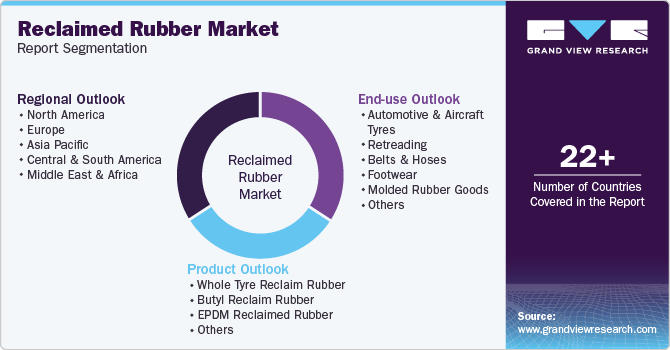
This report forecasts revenue growth at global, regional, and country levels and provides an analysis of the latest industry trends in each of the sub-segments from 2021 to 2033. For the purpose of this study, Grand View Research has segmented global reclaimed rubber market report on the basis of product, end-use, and region:
 To learn more about this report, Download Free Sample Report
 -
Product Outlook (Volume, Kilotons; Revenue, USD Million, 2021 - 2033)
-
Whole Tyre Reclaim Rubber
-
Butyl Reclaim Rubber
-
EPDM Reclaimed Rubber
-
Others
-
-
End-use Outlook (Volume, Kilotons; Revenue, USD Million, 2021 - 2033)
-
Automotive & Aircraft Tyres
-
Retreading
-
Belts & Hoses
-
Footwear
-
Molded Rubber Goods
-
Others
-
-
Regional Outlook (Volume, Kilotons; Revenue, USD Million, 2021 - 2033)
-
North America
-
U.S.
-
Canada
-
Mexico
-
-
Europe
-
Germany
-
UK
-
France
-
Italy
-
-
Asia Pacific
-
China
-
India
-
Japan
-
-
Central & South America
-
Brazil
-
-
Middle East & Africa
-
GCC Countries
-
-
Research Methodology
The reclaimed rubber market figures in this report are based on a proven research process that combines executive interviews with secondary research from proprietary databases, company filings, and recognized regulatory and institutional sources. Market size is built through value-chain sizing - reconciling supply-side and demand-side estimates - and triangulated with bottom-up and top-down approaches. Every estimate passes multiple levels of expert validation before publication, with each reclaimed rubber segment quantified using the revenue-capture definitions in the table below.
Segment Definition
Segment - Product
Revenue capture definition
Whole Tyre Reclaim Rubber
Revenue is captured through the production and sale of whole tyre reclaim rubber derived from end-of-life tires and utilized in automotive tires, retreading compounds, footwear products, belts, hoses, molded rubber goods, and industrial rubber applications. Demand is driven by its cost-effectiveness, availability, good processing characteristics, and ability to partially replace virgin rubber while supporting sustainable manufacturing and circular economy initiatives.
Butyl Reclaim Rubber
Revenue is captured through the commercialization of butyl reclaim rubber used in tire inner liners, tubes, curing bladders, sealing products, vibration dampening components, and various industrial rubber applications. Growth is supported by its excellent air retention properties, chemical resistance, flexibility, and compatibility with virgin butyl rubber, enabling manufacturers to reduce material costs while maintaining functional performance.
EPDM Reclaim Rubber
Revenue is captured through the supply of EPDM reclaim rubber utilized in automotive weatherstrips, roofing membranes, construction materials, seals, gaskets, hoses, and insulation products. Demand is driven by its superior weather resistance, ozone resistance, thermal stability, and durability, supporting the development of cost-efficient and environmentally sustainable rubber products across automotive and construction sectors.
Others
Revenue is captured through the production and sale of specialty reclaim rubber grades, including nitrile, natural rubber, neoprene, and blended reclaim rubber materials used in industrial components, flooring products, adhesives, mats, conveyor belts, and customized rubber applications. Growth is supported by increasing demand for sustainable raw materials, enhanced recycling technologies, and expanding utilization across diverse end-use industries requiring economical rubber alternatives.
Segment - End Use
Revenue capture definition
Automotive & Aircraft Tyres
Revenue is captured through the utilization of reclaimed rubber in the manufacturing of automotive and aircraft tires, including tire compounds, sidewalls, tread components, and supporting rubber formulations. Demand is driven by the need to reduce production costs, improve resource efficiency, support sustainability objectives, and minimize dependence on virgin rubber while maintaining acceptable performance characteristics.
Retreading
Revenue is captured through the commercialization of reclaimed rubber used in tire retreading operations for commercial vehicles, passenger vehicles, industrial equipment, and transportation fleets. Growth is supported by increasing demand for cost-effective tire life extension solutions, reduced raw material consumption, and growing emphasis on sustainable tire management practices across transportation industries.
Belts & Hoses
Revenue is captured through the production and sale of reclaimed rubber utilized in industrial belts, conveyor belts, transmission belts, hydraulic hoses, and fluid transfer systems. Demand is driven by its ability to provide cost savings, satisfactory mechanical performance, and enhanced material utilization while supporting manufacturing activities across automotive, industrial, agricultural, and construction sectors.
Footwear
Revenue is captured through the supply of reclaimed rubber used in shoe soles, sandals, sports footwear, safety footwear, and other footwear components. Growth is supported by increasing demand for affordable and durable footwear products, rising sustainability initiatives within the footwear industry, and the material’s ability to reduce manufacturing costs while maintaining functional performance.
Molded Rubber Goods
Revenue is captured through the utilization of reclaimed rubber in the manufacturing of molded rubber products, including mats, gaskets, seals, bushings, vibration dampers, flooring materials, and industrial components. Demand is driven by growing requirements for cost-efficient rubber products, advancements in rubber processing technologies, and expanding adoption of recycled materials across industrial and commercial applications.
Others
Revenue is captured through the commercialization of reclaimed rubber across diverse applications such as adhesives, rubber sheets, sports surfaces, agricultural products, construction materials, insulation products, and miscellaneous industrial goods. Growth is supported by increasing awareness of sustainable manufacturing practices, expanding recycling infrastructure, and continuous development of value-added applications for reclaimed rubber in global markets.
Estimation Model
Layer Name
Key Question
Description
Top-Down Reclaimed Rubber Demand Scan Layer
What defines market boundaries?
This layer begins with global demand for reclaimed rubber used in the production of automotive tires, retreaded tires, footwear products, belts, hoses, molded rubber goods, construction materials, and industrial rubber components. Demand is filtered based on vehicle production volumes, tire replacement rates, industrial manufacturing activity, footwear consumption, infrastructure development, waste tire generation, recycling rates, and government initiatives promoting sustainable materials and circular economy practices.
End-Use Application Validation Layer
Where is demand generated?
This layer evaluates demand distribution across automotive & aircraft tires, retreading, belts & hoses, footwear, molded rubber goods, and other industrial applications. Market revenue is aligned with key performance requirements such as durability, elasticity, abrasion resistance, tensile strength, processability, cost efficiency, environmental compliance, and compatibility with existing rubber manufacturing processes across diverse end-use sectors.
Product & Material Conversion Layer
Who captures market revenue?
This layer converts application-level consumption into reclaimed rubber revenue by applying product mix ratios across whole tyre reclaim rubber, butyl reclaim rubber, EPDM reclaim rubber, and other specialty reclaim rubber grades. The analysis incorporates raw material availability, reclamation technologies, quality standards, mechanical performance characteristics, manufacturing efficiencies, blending requirements with virgin rubber, and supplier pricing structures throughout the rubber recycling value chain.
Regional Commercial Cross-Check Layer
How are assumptions validated?
This layer validates demand concentration by comparing Asia Pacific’s large tire manufacturing base, abundant waste tire availability, and expanding industrial activities, North America’s strong focus on sustainability and tire recycling programs, and Europe’s stringent environmental regulations and circular economy initiatives. It also evaluates emerging opportunities in Latin America, the Middle East, and Africa, driven by increasing industrialization, automotive sector growth, infrastructure development, expanding recycling infrastructure, and government support for sustainable waste management and resource recovery practices.
Delivered Customizations
This report has been delivered with the following In-depth customizations
CLIENT REQUEST
CUSTOMIZATION DELIVERED
VALUE ADDS
Regional Segmentation
Developed a detailed regional breakdown of the reclaimed rubber market across Asia Pacific, North America, Europe, Central and South America, and the Middle East & Africa. Each region was analyzed based on demand drivers such as automotive production, tire replacement cycles, industrial activity, waste tire availability, and regulatory frameworks promoting recycling and circular economy practices.
Enables clients to identify high-growth geographies, optimize regional expansion strategies, and align investments with regions offering strong feedstock availability and demand concentration.
Cross-Segmentation
Integrated multi-dimensional segmentation covering product types (whole tyre reclaim rubber, butyl reclaim rubber, EPDM reclaim rubber, others) and end-use industries (automotive & aircraft tyres, retreading, belts & hoses, footwear, molded rubber goods, others). Cross-analysis highlights demand flow across applications and material usage patterns.
Provides deeper visibility into product-end use alignment, helping stakeholders optimize product portfolios, target high-value application areas, and improve demand forecasting accuracy.
Trade Assessment
Assessed global trade flows of reclaimed rubber and related raw materials, including waste tire imports/exports, regional supply chains, and cross-border movement of rubber scrap and finished reclaimed rubber products. Focused on key exporting and importing regions and logistics cost structures.
Enables better supply chain planning, identification of sourcing hubs, and risk mitigation related to trade restrictions, logistics disruptions, and raw material availability fluctuations.
Frequently Asked Questions About This Report
The reclaimed rubber market was estimated at around USD 1.6 billion in the year 2025 and is expected to reach around USD 1.8 billion in 2026.
The reclaimed rubber market is expected to grow at a compound annual growth rate of 15.3% from 2026 to 2033 to reach around USD 4.8 billion by 2033.
Some key players operating in the reclaimed rubber market include GRP Ltd.; J. Allcock & Sons Ltd.; Rolex Reclaim Pvt. Ltd.; Fishfa Rubbers Ltd.; HUXAR; Tianyu (Shandong) Rubber & Plastic Products Co., Ltd.; Swani Rubber Industries; Minar Reclaimation Private Limited; SRI Impex Pvt. Ltd.; and SNR Reclamations Pvt. Ltd., among others.
Key factors that are driving the reclaimed rubber market growth include the shift in trend towards rubber recycling to improve sustainability in the automotive tires industry and expanding automotive & aerospace industries in emerging economies such as Thailand, Malaysia, India and China.
The Asia Pacific Reclaimed Rubber market accounted for the largest share of 53.2% market size in 2025.
Based on product, the whole tyre reclaim rubber segment accounted for the largest share of 45.7% market size in 2025. Growing demand for cost-effective, high-performance, and sustainably produced rubber materials across automotive tires, retreading, footwear, belts, hoses, and molded rubber goods is driving the adoption of whole tyre reclaim rubber due to its strong balance of mechanical performance, processability, elasticity, and abrasion resistance.
The automotive & aircraft tyres led the reclaimed rubber market in 2025 with a 61.1% share. Growing demand for high-performance, durable, and cost-efficient tire solutions across automotive and aircraft applications is driving the adoption of reclaimed rubber due to its ability to enhance material efficiency, reduce production costs, and support sustainable manufacturing practices.
About the Author(s)
Paints, Coatings & Printing Inks Research Team
Bulk Chemicals · Paints, Coatings & Printing InksThis report was authored by the paints, coatings & printing inks research team at Grand View Research - comprising two research analysts, one senior research analyst, and one industry expert - with specialized expertise in the paints, coatings & printing inks segment of the bulk chemicals industry. All findings are based on proprietary bulk chemicals databases, executive interviews, and regulatory analysis, subject to internal peer review prior to publication.
Last Updated:
Speak to Analyst

Customize this report to your needs - add regions, segments, or data points, with 20% free customization.
Or view our licence options:


ISO 9001:2015 & 27001:2022 Certified
We are GDPR and CCPA compliant! Your transaction & personal information is safe and secure. For more details, please read our privacy policy.


