
- Home
- »
- Semiconductors
- »
-
RF And Microwave Diodes Market Size Report, 2026-2033GVR Report cover

RF And Microwave Diodes Market (2026 - 2033)
Size, Share & Trends Analysis Report By Diode Type, By Frequency, By Material, By End Use, By Region, And Segment Forecasts
Market Size, 2025
$2.4BMarket Estimate, 2026
$2.6BMarket Forecast, 2033
$3.6BCAGR, 2026–2033
5.2%RF And Microwave Diodes Market Summary
The global RF and microwave diodes market size was valued at USD 2.4 billion in 2025 and is projected to grow from USD 2.6 billion in 2026 to USD 3.6 billion by 2033, at a CAGR of 5.2% from 2026 to 2033. The global market is undergoing structural expansion, driven by the rapid commercialization of high-frequency wireless communications and non-line-of-sight sensing applications. The ongoing densification of 5G-Advanced networks, alongside early R&D investments into 6G testbeds, serves as a primary catalyst, accelerating worldwide demand for low-loss, high-speed PIN and Schottky switching components in sub-6 GHz and millimeter-wave (mmWave) radio access networks. Concurrently, the proliferation of 77/79 GHz radar systems within Advanced Driver Assistance Systems (ADAS) and Vehicle-to-Everything (V2X) platforms is embedding RF microelectronics directly into high-volume automotive assembly lines, diversifying growth beyond traditional telecommunication architectures.
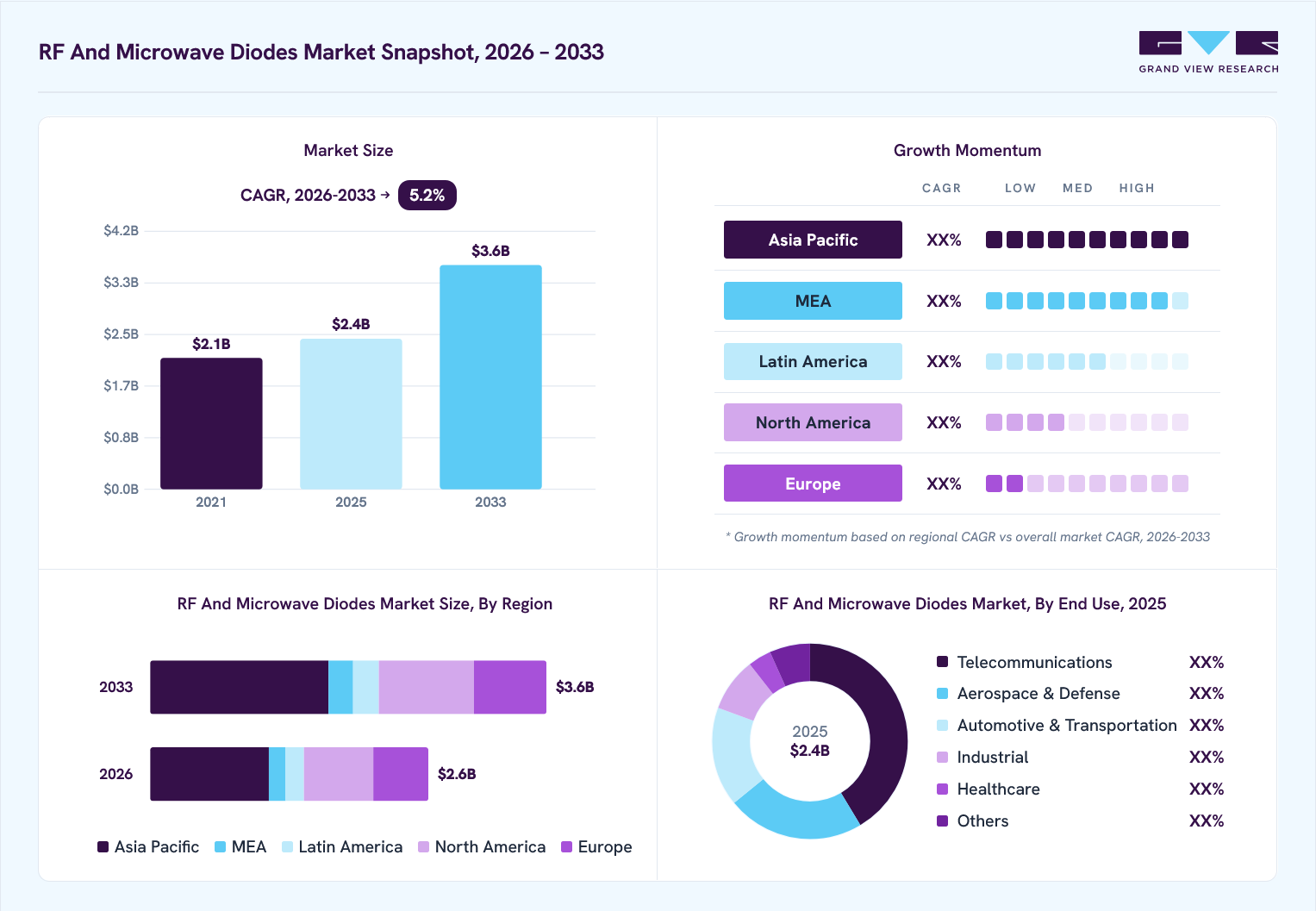 Source: Grand View Research, IR Documents, Primary Interviews, Paid DatabasesTo learn more about this report,
 Download Free Sample Report
Key Market Trends & Insights
- By Diode Type: The Schottky Diodes segment held the largest market share of around 36.7% in 2025.
- By Frequency: UHF (Ultra High Frequency) segment held the largest market revenue share in 2025.
- By Material: Silicon (Si) segment led the market with the largest revenue share in 2025.
- By End Use: Telecommunications segment held the largest market revenue share in 2025.
Regional Highlights
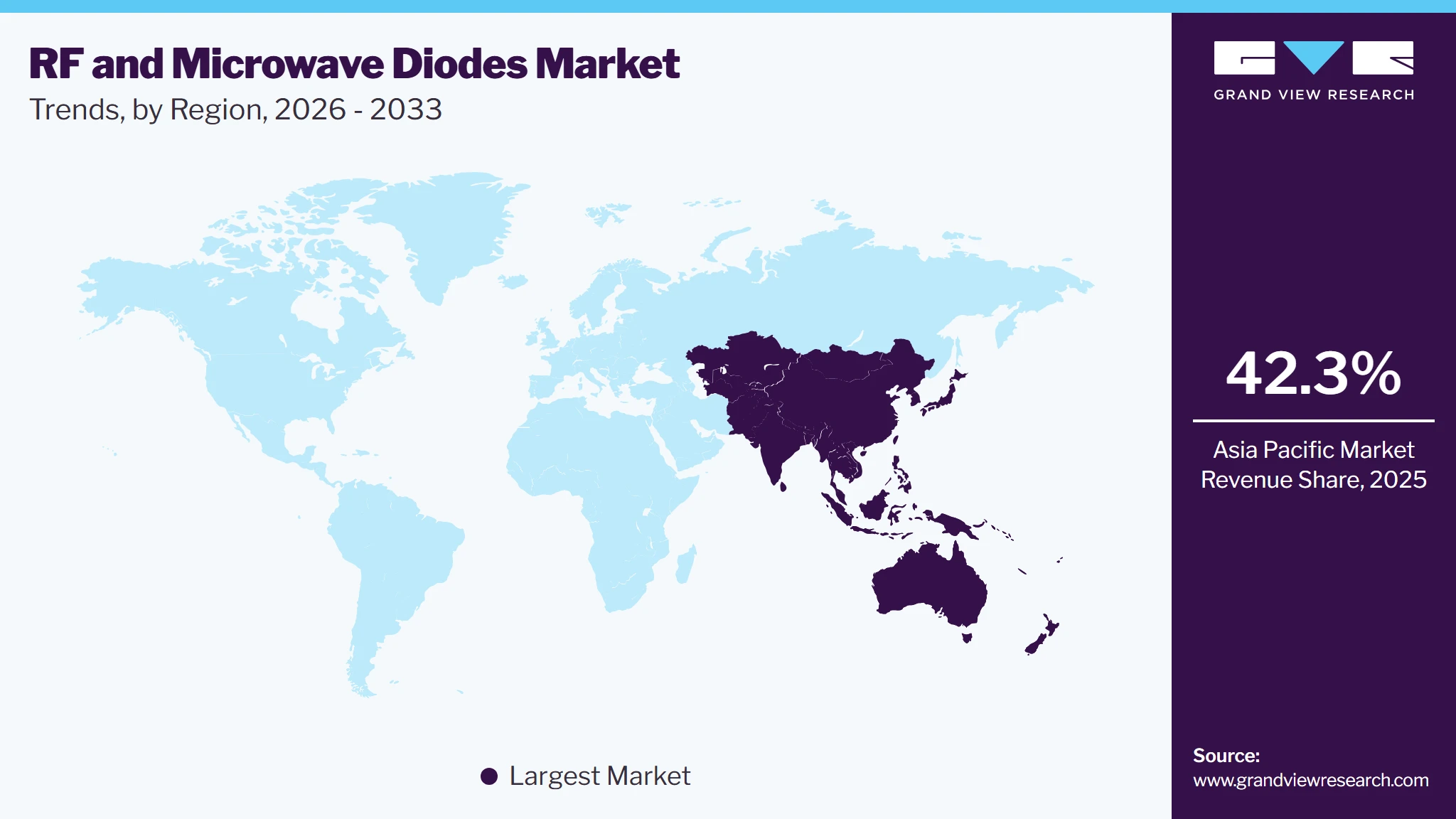
- Largest regional market: Asia Pacific (42.3% revenue share, 2025)
- Fastest-growing regional market: Asia Pacific (highest CAGR, 2026-2033)
- Leading country: China held the largest share in 2025
Market Size & Forecasts
- Market size in 2025: USD 2.4 Billion
- Estimated market size in 2026: USD 2.6 Billion
- Projected market size by 2033: USD 3.6 Billion
- CAGR (2026-2033): 5.2%
Prism AI by Grand View Research Free to tryAsk a question about the RF and microwave diodes marketTry asking✓Every figure cited from GVR research Prefer the report? Download free sample →
Technological evolution within the market is defined by a material transition from conventional Silicon (Si) substrates toward Wide Bandgap (WBG) semiconductors, specifically Gallium Nitride (GaN) and Silicon Carbide (SiC). Wide bandgap compounds deliver elevated breakdown voltages, superior thermal conductivity, and high power-added efficiency, addressing severe operating constraints in Active Electronically Scanned Array (AESA) defense radars, satellite earth stations, and electronic countermeasure (ECM) suites. Additionally, original equipment manufacturers (OEMs) are shifting toward advanced multi-chip modules and substrate-integrated flip-chip packaging to reduce parasitic capacitance, minimize physical footprint, and lower signal attenuation across Super High Frequency (SHF) and Extremely High Frequency (EHF) bands.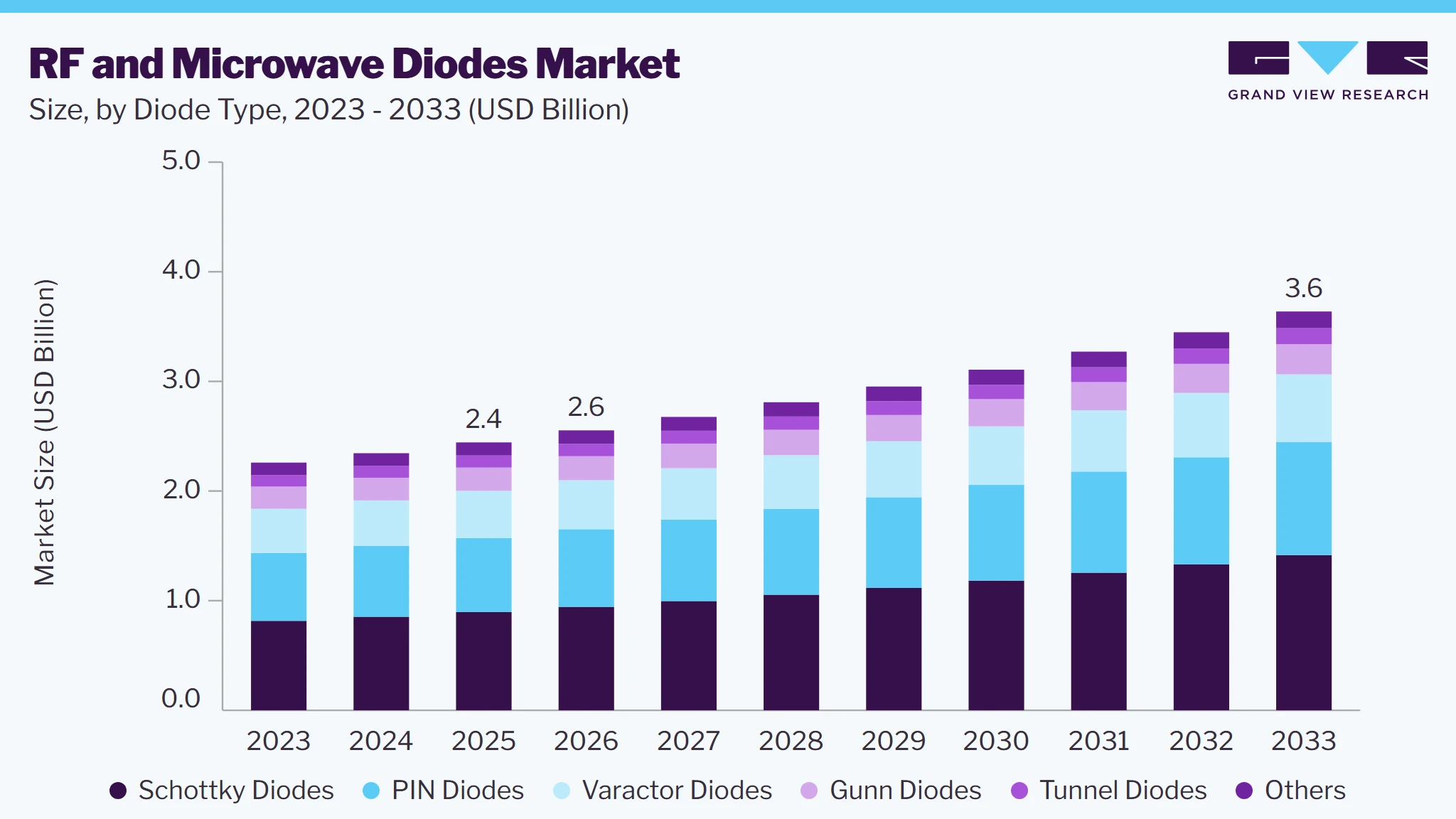 To learn more about this report, Download Free Sample Report
Geopolitically and regionally, supply chain dynamics reflect an increasing focus on national semiconductor sovereignty, regional fab capacity expansions, and defense budget allocations. While the Asia-Pacific region maintains leadership in overall production volume and front-end integration, spurred by government incentive programs in India (such as the PLI scheme) and extensive manufacturing ecosystems across China and East Asia, North America and Europe retain significant positions in high-reliability, defense-grade RF engineering. As commercial satellite constellations, defense modernization mandates, and industrial automation networks scale, component suppliers are optimizing portfolio yields, prioritizing thermal endurance, broadband frequency compliance, and system-level energy efficiency to capture emerging opportunities.
Market Dynamics
The widespread standardization of Advanced Driver Assistance Systems (ADAS) and autonomous driving architectures (Level 2+ through Level 4) serves as a primary driver for high-frequency discrete component growth. Automotive original equipment manufacturers (OEMs) are integrating short, medium, and long-range radar sensors across vehicle platforms to support automatic emergency braking, adaptive cruise control, and blind-spot monitoring. Operating within the 77 GHz to 79 GHz millimeter-wave spectrum requires specialized high-frequency Schottky detector diodes and PIN switching diodes that provide low parasitic capacitance, extreme thermal stability, and automotive-grade reliability under broad operating temperature ranges.
The technical transition from conventional Silicon (Si) to Wide Bandgap (WBG) and compound semiconductors such as Gallium Nitride (GaN), Silicon Carbide (SiC), and Gallium Arsenide (GaAs) presents significant fabrication and cost barriers. Wide bandgap substrates involve higher crystal defect rates, specialized epitaxy processes, and low wafer yields relative to mature silicon manufacturing processes. These material and processing complexities result in significantly higher unit costs for high-power, high-frequency PIN and Schottky diodes, limiting rapid adoption in price-sensitive consumer electronics and low-cost IoT edge hardware.
Opportunity: Expansion of Commercial LEO Satellite Constellations and Satellite-to-Cell Connectivity
The rapid scaling of Low Earth Orbit (LEO) satellite broadband constellations (such as SpaceX Starlink, Amazon Kuiper, and Eutelsat OneWeb) alongside direct-to-cell satellite connectivity presents a major growth opportunity. LEO satellite payloads and ground-based user terminals rely heavily on high-frequency Ku-band (12–18 GHz) and Ka-band (26.5–40 GHz) RF front-ends. Component manufacturers have a significant opportunity to develop low-noise, radiation-hardened Schottky mixer diodes, PIN diode switches, and varactor tuning circuits optimized for beamforming networks and satellite communications transceivers.
Market Concentration & Characteristics
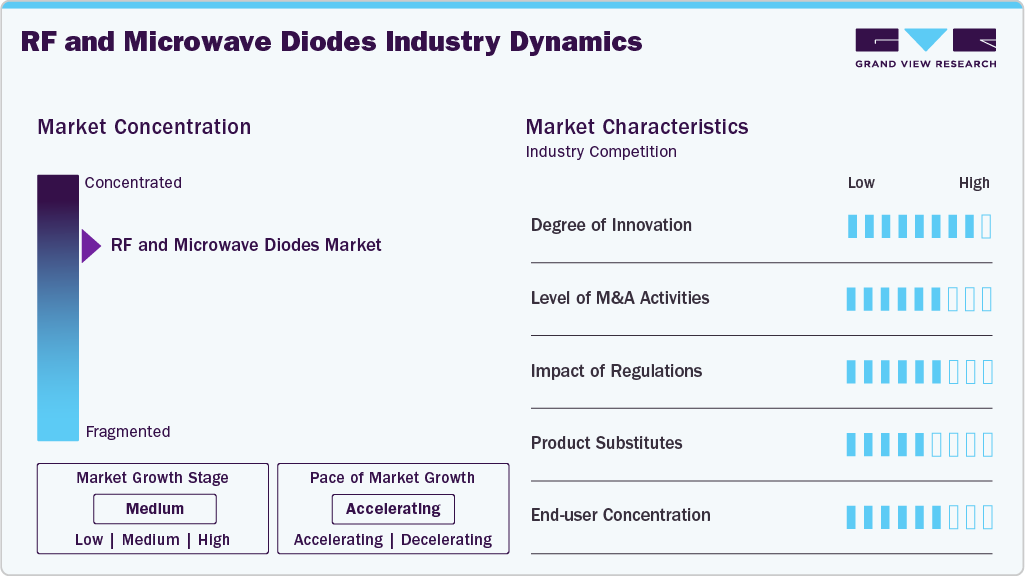
The global RF and microwave diodes market exhibits moderate-to-high market concentration, dominated by global semiconductor manufacturers, integrated device manufacturers (IDMs), and specialized radio frequency component suppliers. Competition is driven by discrete device performance parameters including ultra-low insertion loss, high power-handling thresholds, minimal parasitic capacitance, fast switching speeds, and thermal dissipation alongside strict reliability qualifications across automotive (AEC-Q certification) and defense (MIL-STD compliance) standards. Many discrete RF diode technologies are increasingly co-packaged or monolithically integrated into multi-chip modules, system-in-package (SiP) structures, and RF front-end (RFFE) architectures alongside low-noise amplifiers and switches. Tier-1 component suppliers leverage broad IP portfolios and high-volume manufacturing scale, while specialized compound foundries compete through custom substrate engineering and high-frequency design expertise.
 To learn more about this report, Download Free Sample Report
The market is characterized by an ongoing technological transition toward wide bandgap (WBG) materials, strict adherence to high-frequency spectrum standards, complex epitaxy packaging requirements, and long qualification cycles for mission-critical applications. As telecommunications networks transition to millimeter-wave frequencies, satellite broadband constellations expand, and automotive architectures standardize 77/79 GHz radar systems, high-frequency RF diodes are becoming increasingly vital for signal control, frequency conversion, and system protection. However, discrete RF component suppliers face ongoing technical and operational challenges, as high-frequency capabilities are progressively integrated directly into complex RF system-on-chip (SoC) architectures and front-end modules, making standalone discrete components harder to isolate in volume commercial applications. Wafer substrate production costs, thermal management in high-power applications, raw material supply chain security, and strict OEM automotive and defense qualification timelines remain central considerations for manufacturers and enterprise adopters.
Analyst Perspective
The RF and microwave diodes market is transitioning from traditional discrete silicon components toward wide bandgap (GaN, SiC) compound semiconductors and highly integrated system-in-package solutions. Driven by structural demand across 5G-Advanced mmWave networks, LEO satellite constellations, and 77/79 GHz automotive radar deployments, market value is shifting heavily toward high-frequency, low-loss Schottky and PIN diode architectures. Consequently, Tier-1 integrated device manufacturers with strong compound foundry access and multi-chip module packaging capabilities are best positioned to capture expanding margins in next-generation aerospace, defense, and automotive electronics platforms.
Diode Type Insights
Schottky diodes maintained the dominant revenue position in the market, accounting for a 36.7% market share in 2025 as wide bandgap adoption accelerates across high-efficiency power architectures. Market expansion is driven by semiconductor manufacturers introducing advanced Silicon Carbide (SiC) Schottky diode portfolios engineered to deliver high power density, negligible reverse recovery losses, and elevated thermal efficiency. For instance, in April 2025, Diodes Incorporated expanded its wide-bandgap product lineup by launching 650V SiC Schottky barrier diodes designed with an industry-leading Figure of Merit (FOM) to optimize system-level efficiency across demanding telecom power, industrial, and data center applications. This rapid commercialization of next-generation wide-bandgap devices solidifies the segment's market leadership and accelerates the replacement of traditional silicon diodes in high-frequency power conversion systems.
PIN diodes are projected to register a significant CAGR over the forecast period, driven by their critical role as current-controlled variable resistors and high-speed switches across broadband RF front-ends, defense electronics, and medical systems. Demand is expanding rapidly as component manufacturers introduce advanced packaging architectures engineered to enhance power handling and thermal dissipation in multi-frequency transceivers, phased-array radars, and Magnetic Resonance Imaging (MRI) RF coil systems. For instance, in November 2024, Microchip Technology introduced its MPP4000 series of PIN diodes featuring Monolithic Microwave Surface Mount (MMSM) packaging, delivering high-speed switching capabilities from UHF through the X-band to optimize thermal management and electrical performance in telecommunications, electronic countermeasures (ECM), and medical imaging devices. As high-frequency communications densify and healthcare imaging technologies demand lower insertion loss, ongoing surface-mount integration continues to propel market expansion for PIN diode architectures.
Frequency Insights
UHF (Ultra High Frequency) maintained the leading market position, accounting for largest revenue share in 2025 as sub-3 GHz wireless communications remain the operational standard across broad commercial and industrial architectures. Segment growth is primarily propelled by extensive worldwide deployments of 5G sub-6 GHz base stations, legacy LTE networks, Wi-Fi 6/6E routers, and automotive telemetry systems that heavily rely on high-volume PIN switching and Schottky protection diodes. For instance, major telecommunications and networking original equipment manufacturers (OEMs) rely on silicon- and GaAs-based PIN diodes designed specifically for low insertion loss, fast response times, and high power-handling capacity within UHF transmit/receive modules and antenna tuning networks. Consequently, the vast installed base of consumer smart devices, mobile handsets, and cellular infrastructure ensures that UHF components remain the cornerstone of total market volume, sustaining stable demand throughout the forecast period
Above 300 GHz components are projected to register a significant CAGR over the forecast period as next-generation ultra-high-frequency applications transition from experimental physics laboratories to commercial wireless architectures. Market growth is primarily driven by expanding R&D investments into early 6G sub-THz communication testbeds, high-resolution non-destructive industrial imaging scanners, spaceborne radio astronomy receivers, and sub-millimeter electronic warfare platforms. The market deployment of specialized sub-micron zero-bias Schottky barrier diodes and GaAs/InP planar Schottky mixer diodes enables precise ultra-low-noise signal detection, frequency multiplication, and down-conversion in the sub-terahertz regime. Consequently, ongoing technological breakthroughs in sub-micron compound epitaxy and sub-THz component integration position the segment as the fastest-scaling frequency tier across the overall RF microelectronics landscape.
Material Insights
Silicon (Si) accounted for the largest revenue share in 2025 due to its cost-effective manufacturability, mature fabrication ecosystem, and widespread deployment across high-volume sub-6 GHz consumer electronics and standard switching architectures. Market expansion continues to be anchored by semiconductor manufacturers introducing high-voltage silicon fast recovery diodes and ultrafast rectifiers engineered to minimize dynamic turn-off losses in demanding industrial power and automated switching applications. For instance, discrete semiconductor suppliers like Vishay Intertechnology, Littelfuse, and STMicroelectronics expanded their silicon power diode portfolios to deliver ultrafast reverse recovery times below 100 nanoseconds and enhanced thermal stability for industrial automation, EV battery management systems, and high-frequency communication modules. Consequently, the unmatched economy of scale and established high-yield silicon wafer production continue to anchor baseline component demand across volume-driven commercial applications.
Gallium Nitride (GaN) components are projected to register a significant CAGR over the forecast period as wide bandgap technology rapidly displaces legacy substrates in high-frequency, high-power electronics. Market expansion is accelerated by strategic partnerships between leading semiconductor IDMs and specialized foundries aimed at scaling next-generation GaN device manufacturing for high-power density telecommunications, AI data center power infrastructure, and automotive applications. For instance, in December 2025, onsemi announced a strategic collaboration with GlobalFoundries to develop and manufacture next-generation 650V GaN power devices, utilizing thermally enhanced packaging and integrated control to optimize high-switching-speed performance across 5G infrastructure, industrial power, and automotive systems. Consequently, continuous improvements in GaN epitaxy yield, high voltage tolerance, and integration capabilities position the segment as a critical catalyst for next-generation RF front-ends and high-efficiency power architectures.
End Use Insights
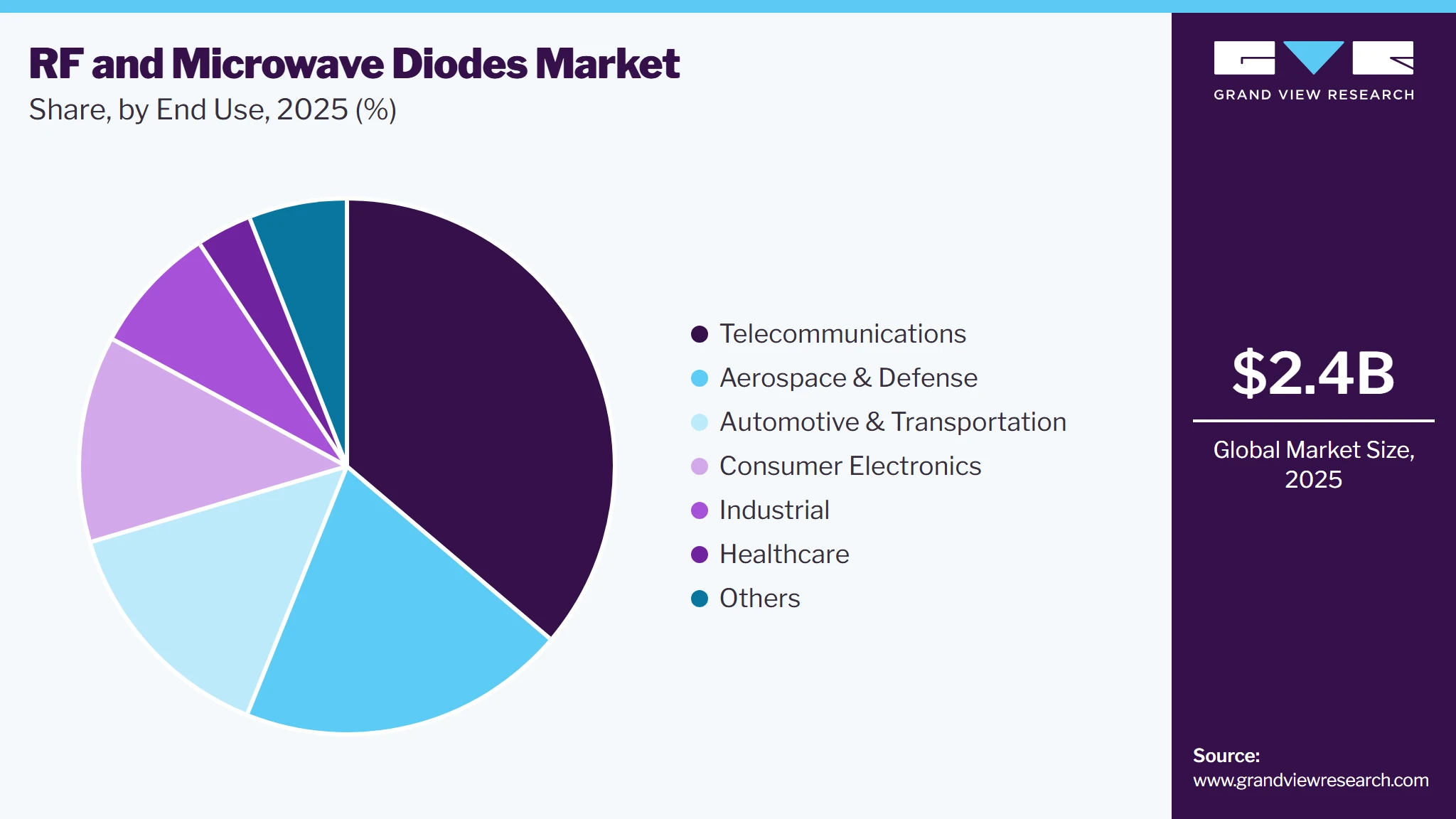
Telecommunications maintained the dominant end-use market share, accounting for largest market revenue in 2025 due to widespread infrastructure rollouts and massive component volumes required for cellular communication networks. Market expansion is propelled by global telecommunication operators accelerating the deployment of 5G-Advanced macro base stations, massive MIMO active antenna systems, and millimeter-wave small cells. For instance, leading telecom equipment providers such as Ericsson, Nokia, and Huawei rely heavily on ultra-low insertion loss PIN switching diodes, varactor tuning diodes, and Schottky detectors inside remote radio heads (RRHs) and RF front-end modules to handle multi-band signal routing and high-frequency power attenuation. Consequently, continuous investments in global wireless infrastructure and optical transport networks ensure that telecommunications remains the primary anchor of baseline demand across the RF and microwave semiconductor landscape.
 To learn more about this report, Download Free Sample Report
Automotive & transportation applications are projected to register a significant CAGR over the forecast period as vehicle electrification and advanced driver assistance systems demand higher-efficiency power and high-frequency components. Segment growth is accelerated by component suppliers launching high-reliability, automotive-grade diode technologies designed to reduce power loss and improve thermal management in onboard electronics, battery systems, and radar modules. For instance, in September 2026, Diodes Incorporated launched a family of automotive-compliant field-plated Super Barrier Rectifier (SBRFP) products featuring high avalanche ruggedness and low forward voltage to optimize efficiency across DC-DC converters, LED lighting, and battery charging systems. Consequently, the rapid integration of advanced power and high-frequency diodes in next-generation electric and autonomous vehicles secures the automotive segment as a primary growth driver for the market.
Regional Insights
North America RF and Microwave Diodes Market Trends
North America maintains a dominant position in the global RF and microwave diodes market, driven by heavy U.S. Department of Defense spending on next-generation phased-array radar, electronic warfare systems, and space-hardened satellite communication payloads. Regional market dynamics are further accelerated by extensive local fab expansions and supply chain localization supported by the CHIPS and Science Act, encouraging Tier-1 IDMs like Qorvo, Skyworks, and MACOM to scale domestic wide-bandgap (GaN and SiC) compound semiconductor manufacturing. Additionally, rapid commercial adoption of 77/79 GHz automotive radar systems for autonomous driving coupled with major carrier investments in 5G-Advanced millimeter-wave infrastructure sustain high localized demand for ultra-low-loss PIN switching and high-frequency Schottky diodes.
The U.S. RF and microwave diodes market is experiencing robust growth due to the sustained expansion of military modernization programs, domestic semiconductor supply chain initiatives, and rapid network infrastructure densification. The U.S. Department of Defense continues to allocate substantial annual funding toward research, development, and procurement of advanced active electronically scanned array (AESA) radars, missile guidance systems, and radiation-hardened satellite communications platforms, which directly fuels local demand for high-reliability PIN and Schottky diodes. Furthermore, federal strategic incentives under the CHIPS and Science Act have accelerated domestic capital investments by major semiconductor players to expand onshore wide bandgap (GaN and SiC) compound fabrication capabilities. Concurrently, nationwide carrier deployments of 5G-Advanced and millimeter-wave infrastructure, coupled with the integration of 77/79 GHz radar sensors across automotive ADAS platforms, reinforce consistent high-volume component absorption across commercial, defense, and industrial sectors.
Asia Pacific RF and Microwave Diodes Market Trends
The Asia Pacific region represents the fastest-scaling geographic market for RF and microwave diodes, propelled by massive smartphone assembly hubs, rapid 5G-Advanced base station rollouts, and booming electric vehicle production across China, Japan, South Korea, Taiwan, and India. Regional dynamics are heavily shaped by accelerated OEM adoption of 77/79 GHz automotive radar systems and vehicle-to-everything (V2X) platforms, driving high-volume procurement of AEC-Q qualified PIN switches and low-loss Schottky barrier diodes. Furthermore, strategic national semiconductor policies and heavy foundry capital investments in wide bandgap (GaN and SiC) compound epitaxy, particularly across Greater China and Japan, are localizing component supply chains to feed high-frequency consumer electronics, industrial automation, and expanding sub-THz satellite communications infrastructure.
 To learn more about this report, Download Free Sample Report
The China RF and microwave diodes market is witnessing steady growth due to aggressive nationwide 5G/5G-Advanced base station rollouts, accelerating domestic self-reliance initiatives in wide bandgap (GaN and SiC) compound semiconductors, and booming high-volume production of electric and connected vehicles equipped with sub-6 GHz and 77/79 GHz radar systems. State-backed semiconductor funds and strategic national policy frameworks continue to incentivize domestic foundries and component manufacturers to scale high-yield production of GaAs and SiC substrates, reducing import dependency for high-frequency RF front-end components. Concurrently, massive investments in satellite internet constellations, smart grid industrial automation, and expanding consumer electronics manufacturing hubs across the country maintain high baseline absorption for low-loss PIN switching, varactor tuning, and high-performance Schottky diodes.
The India RF and microwave diodes market is at an emerging stage due to the expansion of 5G telecommunications infrastructure, increasing demand for high-frequency components in radar and electronic warfare systems, and growing investments in indigenous semiconductor technologies. The development of gallium nitride (GaN) and silicon carbide (SiC) technologies by India's Defence Research and Development Organisation (DRDO) is strengthening domestic capabilities in high-frequency electronics for defense, aerospace, and satellite communications. Additionally, government initiatives to develop domestic semiconductor fabrication, assembly, and packaging capabilities are creating opportunities for local suppliers, although dependence on imported specialized components remains a constraint.
Europe RF and Microwave Diodes Trends
Europe holds a prominent position in the global RF and microwave diodes market, anchored by robust automotive production, strict electromagnetic compatibility (EMC) regulations, and accelerating defense modernization initiatives across NATO member states. Regional demand is heavily propelled by Tier-1 automotive suppliers, such as Bosch and Continental, integrating AEC-Q qualified PIN switches and wide bandgap (SiC and GaN) Schottky barrier diodes into 77/79 GHz ADAS radar modules and 800V electric vehicle power architectures. Furthermore, major regional semiconductor IDMs, including Infineon Technologies and STMicroelectronics, are expanding domestic 200 mm wide bandgap wafer fab capacity under the EU Chips Act, reinforcing localized supply chains for high-frequency telecommunications, industrial automation, and European Space Agency (ESA) satellite payloads.
Key RF and Microwave Diodes Company Insights
Key players operating in the RF and microwave diodes market include Analog Devices, Inc.; Broadcom Inc.; Infineon Technologies AG; Kyocera Corporation; Littelfuse, Inc.; MACOM Technology Solutions; Microchip Technology Inc.; Murata Manufacturing Co., Ltd.; NXP Semiconductors N.V.; Qorvo, Inc.; Renesas Electronics Corporation; ROHM Co., Ltd.; Skyworks Solutions, Inc.; STMicroelectronics N.V.; Toshiba Corporation.
-
Analog Devices offers a broad RF and microwave product portfolio covering RF mixers, power detectors, switches, frequency converters, phase shifters, and transceivers. Its solutions serve communications infrastructure, aerospace and defense, industrial applications, and electronic test and measurement. These capabilities position the company in the broader RF and microwave ecosystem; however, its publicly presented portfolio is predominantly focused on integrated and functional RF components rather than discrete RF and microwave diodes.
-
Broadcom has a documented history of supplying discrete RF PIN and Schottky diodes for switching, attenuation, limiting, and signal detection applications. Its diode technologies support wireless LAN, cellular infrastructure, satellite communications, automotive electronics, and test and measurement equipment. The company's historical Avago product documentation identifies dedicated RF diode families, including PIN diodes for RF switching and Schottky diodes for detection and mixing.
-
Infineon Technologies offers dedicated RF diode product families, including PIN diodes, Schottky diodes for RF mixing and detection, and tuning diodes. Its products are designed for high-frequency performance, with characteristics such as low parasitic inductance, low diode capacitance, and compact packaging.
Key RF and Microwave Diodes Companies
The following key companies have been profiled for this study on the RF and Microwave Diodes market.
-
Analog Devices, Inc.
-
Broadcom Inc.
-
Infineon Technologies AG
-
Kyocera Corporation
-
Littelfuse, Inc.
-
MACOM Technology Solutions
-
Microchip Technology Inc.
-
Murata Manufacturing Co., Ltd.
-
NXP Semiconductors N.V.
-
Qorvo, Inc.
-
Renesas Electronics Corporation
-
ROHM Co., Ltd.
-
Skyworks Solutions, Inc.
-
STMicroelectronics N.V.
-
Toshiba Corporation
Competitive Benchmarking
Operating Strategies
Competitive Edge
Weaknesses
Mature Players: Infineon Technologies, MACOM Technology Solutions, Microchip Technology, NXP Semiconductors, Qorvo, Skyworks Solutions, STMicroelectronics
- Accelerating the transition from traditional silicon to wide bandgap substrates to achieve higher thermal conductivity, elevated breakdown voltages, and lower insertion losses across high-power RF front-ends.
- Expanding in-house 200 mm compound semiconductor fabrication and System-in-Package (SiP) integration to supply high-reliability discrete diodes and co-packaged front-end modules directly to automotive, defense, and telecom OEMs.
- Extensive global fab infrastructure, vertically integrated compound semiconductor manufacturing, and deep capital resources support high-yield, high-volume diode production with strict parametric consistency.
- Robust global distribution channels, localized technical support centers, and direct co-development relationships with Tier-1 defense contractors, telecommunications equipment vendors, and automotive OEMs.
- High fixed operational expenses and massive capital expenditures required for 200 mm GaN/SiC fab conversions expose profitability to cyclical downturns in global semiconductor demand.
- Complex organizational structures and long product qualification cycles can slow down rapid custom diode development relative to nimble specialized fabless design firms.
Emerging Players: Akon Inc., AMCOM Communications, United Semiconductor, Custom MMIC, Sanan IC, Central Semiconductor
- Developing specialized, application-specific RF and microwave diodes engineered for niche ultra-high-frequency (sub-THz/Above 300 GHz), high-power density, and extreme-environment radar platforms.
- Partnering with specialized aerospace, defense R&D laboratories, and regional telecom module makers to deliver tailored diode solutions and custom packaging options for low-volume, high-margin applications.
- Lower structural overhead enables cost-competitive pricing for targeted high-frequency niche components without the burden of maintaining legacy silicon fab lines.
- Specialized expertise in compound semiconductor epitaxy and sub-millimeter wave packaging addresses emerging 6G R&D and specialized electronic warfare needs unserved by volume-focused IDMs.
- Limited capital resources, smaller manufacturing scale, and reliance on third-party foundries constrain high-volume enterprise production and create supply chain bottleneck risks.
- Higher vulnerability to foundry pricing fluctuations, capacity constraints, and aggressive price competition or strategic acquisitions by established semiconductor giants.
Recent Developments
-
In October 2026, Infineon’s collaboration with NVIDIA to focus on gallium nitride (GaN)-based power conversion for 800 VDC AI data centers, highlighting growing demand for high-efficiency power semiconductors.
-
In August 2026, Micross Components announced the QPL qualification and release of its MIL-PRF-19500/240 axial leaded rectifier diode series (including 1N645-1, 1N647-1, and 1N649-1) for high-reliability military and aerospace environments. This drop-in replacement portfolio addresses DMSMS supply chain risks by providing JAN- to JANS-screened devices capable of withstanding severe thermal shock and mechanical vibration in defense power management systems.
-
In June 2026, MACOM launched a chip-scale hot via process on its AlGaAs diode platform, eliminating traditional wire bonds to deliver low insertion loss, high isolation, and sub-20 ns switching up to millimeter-wave (60–110 GHz) frequencies. This packaging innovation reduces assembly parasitics and complexity, enabling higher signal integrity for ultra-high-frequency switches and limiters in advanced radar and telecommunications modules.
RF and Microwave Diodes Market Report Scope
Report Attribute
Details
Market size in 2025
USD 2.4 Billion
Estimated market size in 2026
USD 2.6 Billion
Projected market size by 2033
USD 3.6 Billion
Growth rate
CAGR of 5.2% from 2026 to 2033
Actual data
2021 - 2025
Forecast period
2026 - 2033
Quantitative units
Revenue in USD Billion and CAGR from 2026 to 2033
Report coverage
Revenue forecast, company share, competitive landscape, growth factors, and trends
Segments covered
Diode Type, Frequency, Material, End Use, and Region
Regional scope
North America; Europe; Asia Pacific; Latin America; Middle East and Africa
Country scope
U.S.; Canada; Mexico; U.K.; Germany; France; China; Japan; India; South Korea; Australia; Brazil; UAE; KSA; South Africa
Key companies profiled
Analog Devices, Inc.; Broadcom Inc.; Infineon Technologies AG; Kyocera Corporation; Littelfuse, Inc.; MACOM Technology Solutions; Microchip Technology Inc.; Murata Manufacturing Co., Ltd.; NXP Semiconductors N.V.; Qorvo, Inc.; Renesas Electronics Corporation; ROHM Co., Ltd.; Skyworks Solutions, Inc.; STMicroelectronics N.V.; Toshiba Corporation
Customization scope
Free report customization (equivalent to up to 8 analyst working days) with purchase. Addition or alteration to country, regional & segment scope.
Pricing and purchase options
Avail customized purchase options to meet your exact research needs. Explore purchase options
Global RF and Microwave Diodes Market Report Segmentation
This report forecasts revenue growth at global, regional, and country levels and provides an analysis of the latest industry trends in each of the sub-segments from 2021 to 2033. For this study, Grand View Research has segmented the global RF and microwave diodes market report based on diode type, frequency, material, end use, and region.
-
Diode Type Outlook (Revenue, USD Billion, 2021 - 2033)
-
PIN Diodes
-
Schottky Diodes
-
Varactor Diodes
-
Gunn Diodes
-
Tunnel Diodes
-
Others
-
-
Frequency Outlook (Revenue, USD Billion, 2021 - 2033)
-
UHF (Ultra High Frequency)
-
SHF (Super High Frequency)
-
VHF (Very High Frequency)
-
EHF (Extremely High Frequency)
-
HF (High Frequency)
-
Above 300 GHz
-
-
Material Outlook (Revenue, USD Billion, 2021 - 2033)
-
Silicon (Si)
-
Gallium Arsenide (GaAs)
-
Gallium Nitride (GaN)
-
Silicon Carbide (SiC)
-
Others
-
-
End Use Outlook (Revenue, USD Billion, 2021 - 2033)
-
Telecommunications
-
Aerospace & Defense
-
Automotive & Transportation
-
Consumer Electronics
-
Industrial
-
Healthcare
-
Others
-
-
Regional Outlook (Revenue, USD Billion, 2021 - 2033)
-
North America
-
U.S.
-
Canada
-
Mexico
-
-
Europe
-
U.K.
-
Germany
-
France
-
-
Asia Pacific
-
China
-
Japan
-
India
-
South Korea
-
Australia
-
-
Latin America
-
Brazil
-
-
Middle East and Africa
-
UAE
-
KSA
-
South Africa
-
-
Research Methodology
The rf and microwave diodes market figures in this report are based on a proven research process that combines executive interviews with secondary research from proprietary databases, company filings, and recognized regulatory and institutional sources. Market size is built through value-chain sizing-reconciling supply-side and demand-side estimates-and triangulated with bottom-up and top-down approaches. Every estimate passes multiple levels of expert validation before publication, with each rf and microwave diodes segment quantified using the revenue-capture definitions in the table below.
Segment Definition
Segment - Diode Type
Revenue Capture Definition
PIN Diodes
Revenue generated from discrete PIN diodes, packaged devices, and die-level components operating as current-controlled variable resistors, high-speed RF switches, attenuators, limiters, and phase shifters across wireless and microwave platforms.
Schottky Diodes
Revenue generated from discrete Schottky barrier diodes (metal-semiconductor junction devices) used for high-frequency RF detection, power rectification, mixing, frequency multiplication, and low forward voltage protection circuits.
Varactor Diodes
Revenue generated from varactor (variable capacitance) diodes utilized for voltage-controlled electronic tuning, parametric amplification, phase modulation, and frequency synthesis in voltage-controlled oscillators (VCOs) and tunable RF filters.
Gunn Diodes
Revenue generated from Gunn diodes (transferred electron devices) utilizing the Ridley-Watkins-Hilsum effect to generate and amplify microwave and millimeter-wave signals in high-frequency local oscillators and radar transmitters.
Tunnel Diodes
Revenue generated from tunnel diodes (Esaki diodes) utilizing quantum mechanical tunneling for ultra-high-speed switching, low-noise microwave amplification, frequency conversion, and specialized high-frequency oscillator circuits.
Others
Revenue generated from other specialized RF and microwave diode types, including Step Recovery Diodes (SRD), Backward Diodes, Zener Diodes, Transient Voltage Suppression (TVS) diodes, and custom multi-function RF diode assemblies.
Segment - Frequency
Revenue Capture Definition
UHF (Ultra High Frequency)
Revenue generated from RF and microwave diodes optimized for operation within the 300 MHz to 3 GHz frequency spectrum, supporting standard sub-3 GHz cellular networks, legacy wireless protocols, broadcasting, and telemetry applications.
SHF (Super High Frequency)
Revenue generated from RF and microwave diodes optimized for operation within the 3 GHz to 30 GHz frequency spectrum, supporting 5G C-band deployments, satellite communications, X-band and Ku-band radar systems, and point-to-point microwave links.
VHF (Very High Frequency)
Revenue generated from RF diodes optimized for operation within the 30 MHz to 300 MHz frequency spectrum, supporting tactical defense communications, land mobile radio (LMR), aviation navigation, and FM/VHF radio broadcasting equipment.
EHF (Extremely High Frequency)
Revenue generated from RF and microwave diodes optimized for operation within the 30 GHz to 300 GHz frequency spectrum, supporting millimeter-wave 5G networks, 77/79 GHz automotive ADAS radar, Ka/V/W-band satellite links, and military imaging systems.
HF (High Frequency)
Revenue generated from RF diodes optimized for operation within the 3 MHz to 30 MHz frequency spectrum, supporting long-range over-the-horizon (OTH) communications, military HF radio transceivers, maritime electronics, and industrial RF heating equipment.
Above 300 GHz
Revenue generated from sub-millimeter wave and terahertz (THz) RF diodes optimized for operation above 300 GHz, supporting experimental 6G sub-THz testbeds, sub-mm wave radio astronomy receivers, atmospheric sensing, and high-resolution industrial non-destructive testing platforms.
Segment - Material
Revenue Capture Definition
Silicon (Si)
Revenue generated from RF and microwave diodes fabricated on standard silicon semiconductor substrates, serving cost-sensitive, high-volume sub-6 GHz switching, tuning, and low-power detection applications.
Gallium Arsenide (GaAs)
Revenue generated from RF and microwave diodes fabricated on compound Gallium Arsenide substrates, offering higher electron mobility, lower noise figures, and superior switching speeds for high-frequency microwave and millimeter-wave front-ends.
Gallium Nitride (GaN)
Revenue generated from wide bandgap Gallium Nitride RF and microwave diodes, engineered to deliver ultra-high power density, high breakdown voltages, high thermal conductivity, and elevated efficiency in high-power RF switching and limiting architectures.
Silicon Carbide (SiC)
Revenue generated from wide bandgap Silicon Carbide RF and power diodes, utilized for high-temperature, high-voltage, and fast-recovery power rectification and high-power microwave control systems.
Others
Revenue generated from RF and microwave diodes fabricated on other emerging or specialized semiconductor substrates, including Indium Phosphide (InP), Silicon-Germanium (SiGe), and Diamond-based compound semiconductors.
Segment - End Use
Revenue Capture Definition
Telecommunications
Revenue generated from RF and microwave diodes integrated into cellular base stations, remote radio heads (RRHs), small cells, optical transceivers, satellite ground stations, and wireless infrastructure modules.
Aerospace & Defense
Revenue generated from high-reliability, military-grade (MIL-PRF-19500 screened) RF and microwave diodes utilized in active electronically scanned array (AESA) radars, electronic warfare (EW), missile guidance, and spaceborne satellite payloads.
Automotive & Transportation
Revenue generated from AEC-Q qualified RF and microwave diodes integrated into 77/79 GHz ADAS radar sensors, vehicle-to-everything (V2X) communication modules, infotainment systems, and onboard high-efficiency power architectures.
Consumer Electronics
Revenue generated from RF and microwave diodes integrated into volume commercial end-user devices, including smartphones, tablets, Wi-Fi 6/6E/7 routers, laptops, wearables, and smart home connected appliances.
Industrial
Revenue generated from RF and microwave diodes utilized in industrial automation, RF heating and plasma generators, non-destructive test and measurement instruments, smart grid infrastructure, and factory automation systems.
Healthcare
Revenue generated from specialized RF and microwave diodes integrated into medical equipment, including Magnetic Resonance Imaging (MRI) surface coil PIN switches, RF ablation systems, and telemetry-enabled patient monitoring devices.
Others
Revenue generated from RF and microwave diodes utilized in other end-use sectors, including radio astronomy research facilities, public safety communications, maritime navigation platforms, and smart energy grid monitoring systems.
Estimation Model
Layer
Key Questions
Description
RF and Microwave Diodes Infrastructure Layer (TAM)
Who might require RF and microwave diodes?
Industries and organizations manufacturing or using RF and microwave systems, including telecommunications equipment, radar systems, satellite communication devices, aerospace and defense electronics, automotive electronics, and test and measurement equipment.
RF and Microwave Diodes Addressable Market Layer (SAM)
Who can technically and commercially adopt RF and microwave diodes?
Manufacturers and equipment developers requiring specialized diodes, such as PIN, Schottky, varactor, and step-recovery diodes, for high-frequency switching, signal detection, mixing, tuning, and frequency multiplication.
Active RF and Microwave Diodes Adoption Layer (SOM)
Who actively uses or purchases relevant products today?
Semiconductor manufacturers, OEMs, electronic component distributors, and equipment manufacturers actively purchasing or integrating RF and microwave diodes into communication infrastructure, radar, satellite systems, and other high-frequency electronic applications.
Revenue Realization Layer
How is revenue generated?
Revenue generated from the sale of discrete RF and microwave diodes, including packaged devices and diode dies, through direct sales and distribution channels. Revenue from RF integrated circuits, amplifiers, transceivers, and complete modules should be excluded unless specifically attributable to standalone diodes.
Delivered Customizations
This report has been delivered with the following in-depth customizations
Client Request
Customization Delivered
Value Adds
RF and Microwave Diodes Market Assessment and Industry Adoption Analysis
- Assessment of global demand for RF and microwave diodes used in high-frequency signal switching, detection, mixing, tuning, attenuation, frequency multiplication, and microwave signal generation.
- Evaluation of market adoption across telecommunications, aerospace and defense, automotive electronics, consumer electronics, industrial equipment, and test and measurement applications.
- Developed a market assessment framework covering specialized diode technologies, including PIN, Schottky, varactor, Gunn, IMPATT, tunnel, and step-recovery diodes.
- Identified growth opportunities driven by 5G infrastructure expansion, increasing radar and satellite communication requirements, and rising demand for high-frequency electronic components.
RF and Microwave Diodes Technology and Vendor Benchmarking
- Comparative assessment of key industry participants, including Broadcom Inc., Infineon Technologies AG, Microchip Technology Inc., MACOM Technology Solutions Holdings, Inc., and other relevant diode manufacturers, based on product portfolios, diode technologies, frequency capabilities, and application coverage.
- Evaluation of product differentiation across RF switching, signal detection, frequency conversion, tuning, and microwave signal generation applications.
- Delivered a structured vendor benchmarking framework to assess product specialization, technology capabilities, application coverage, and competitive positioning.
- Identified differentiation opportunities based on high-frequency performance, low parasitic capacitance, switching speed, packaging, and suitability for telecommunications, aerospace and defense, and other specialized applications.
RF and Microwave Diodes Application, Technology, and Regional Adoption Assessment
- Assessment of key applications, including RF switching and attenuation, signal detection, frequency mixing, frequency tuning, harmonic generation, and microwave oscillation.
- Evaluation of regional demand across North America, Europe, Asia Pacific, Latin America, and the Middle East and Africa, considering telecommunications infrastructure, electronics manufacturing, defense modernization, and satellite communication investments.
- Identified high-potential growth areas based on expanding wireless connectivity, advanced radar systems, satellite communications, and increasing integration of RF components into electronic systems.
- Assessed regional opportunities, with emphasis on Asia Pacific's electronics manufacturing ecosystem and the growing demand for specialized RF components across telecommunications, aerospace and defense, and industrial applications.
About the Author(s)
Semiconductors Research Team
Semiconductors & Electronics · SemiconductorsThis report was authored by the semiconductors research team at Grand View Research - comprising two research analysts, one senior research analyst, and one industry expert - with specialized expertise in the semiconductors segment of the semiconductors & electronics industry. All findings are based on proprietary semiconductors & electronics databases, executive interviews, and regulatory analysis, subject to internal peer review prior to publication.
Last Updated:
Speak to Analyst

Customize this report to your needs - add regions, segments, or data points, with 20% free customization.
Or view our licence options:


ISO 9001:2015 & 27001:2022 Certified
We are GDPR and CCPA compliant! Your transaction & personal information is safe and secure. For more details, please read our privacy policy.


