
- Home
- »
- Biotechnology
- »
-
RNA Editing Market Size, Share & Growth Report, 2026-2033GVR Report cover

RNA Editing Market (2026 - 2033)
Size, Share & Trends Analysis Report By Offering (Therapeutics Development & Licensing, Research Tools & Reagents, Services), By Technology, By Delivery Modality, By Application, By End-use, By Region, And Segment Forecasts
Market Size, 2025
$157.9MMarket Estimate, 2026
$184.8MMarket Forecast, 2033
$588.4MCAGR, 2026–2033
18.0%RNA Editing Market Summary
The global RNA editing market size was valued at USD 157.9 million in 2025 and is projected to grow from USD 184.8 million in 2026 to USD 588.4 million by 2033, at a CAGR of 18.0% from 2026 to 2033. North America dominated the market, accounting for the largest revenue share of 58.0% in 2025. The market growth is driven by rising partnership and licensing activity between large pharmaceutical companies and RNA editing developers, the first clinical evidence of therapeutic RNA editing in humans, and growing interest in reversible editing approaches that correct disease-causing mutations at the RNA level without permanently changing the genome.
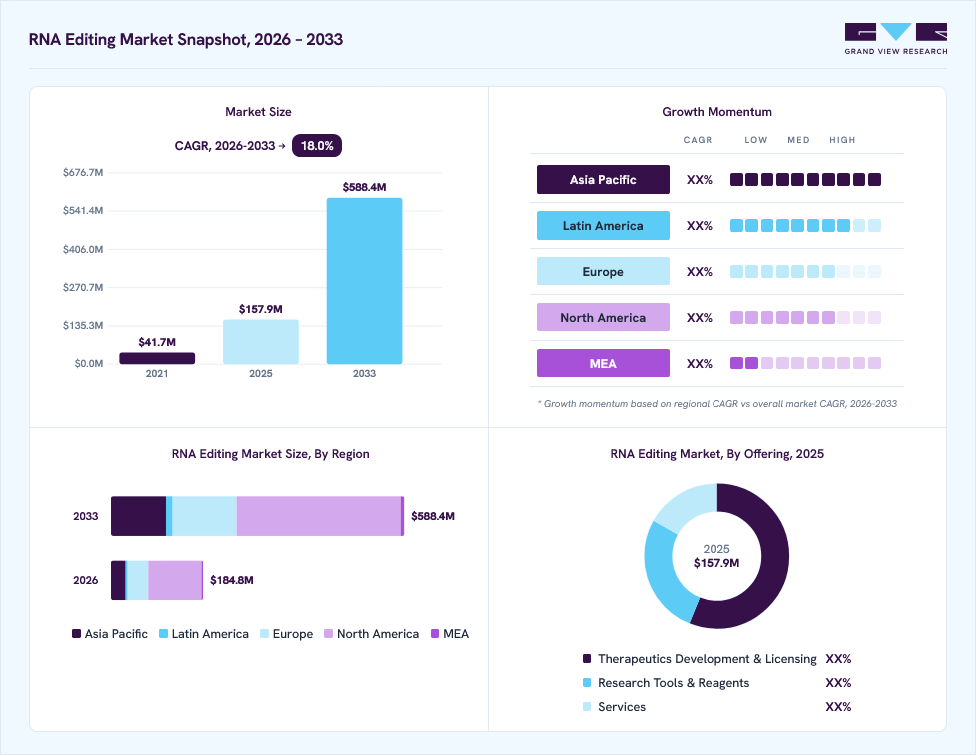 Source: Grand View Research, IR Documents, Primary Interviews, Paid DatabasesTo learn more about this report,
 Download Free Sample Report
Key Market Trends & Insights
- By offering: Therapeutics development & licensing segment held the highest market share of 56.0% in 2025.
- By technology: ADAR-mediated (A-to-I) editing segment held the highest market share of 77.8% in 2025.
- By delivery modality: Oligonucleotide-based segment held the highest market share of 62.0% in 2025.
- By application: Rare genetic disorders segment held the highest market share of 43.1% in 2025.
- By end use: Pharmaceutical & biotechnology companies segment held the highest market revenue share of 70.6% in 2025.
Regional Highlights
- Largest regional market: North America (58.0% revenue share, 2025)
- Fastest-growing regional market: Asia Pacific (highest CAGR, 2026-2033)
- By country: The U.S. held the largest market share in 2025
Market Size & Forecast
- Market size in 2025: USD 157.9 Million
- Estimated market size in 2026: USD 184.8 Million
- Projected market size by 2033: USD 588.4 Million
- CAGR (2026-2033): 18.0%
Prism AI by Grand View Research Free to tryAsk a question about the RNA editing marketTry asking✓Every figure cited from GVR research Prefer the report? Download free sample →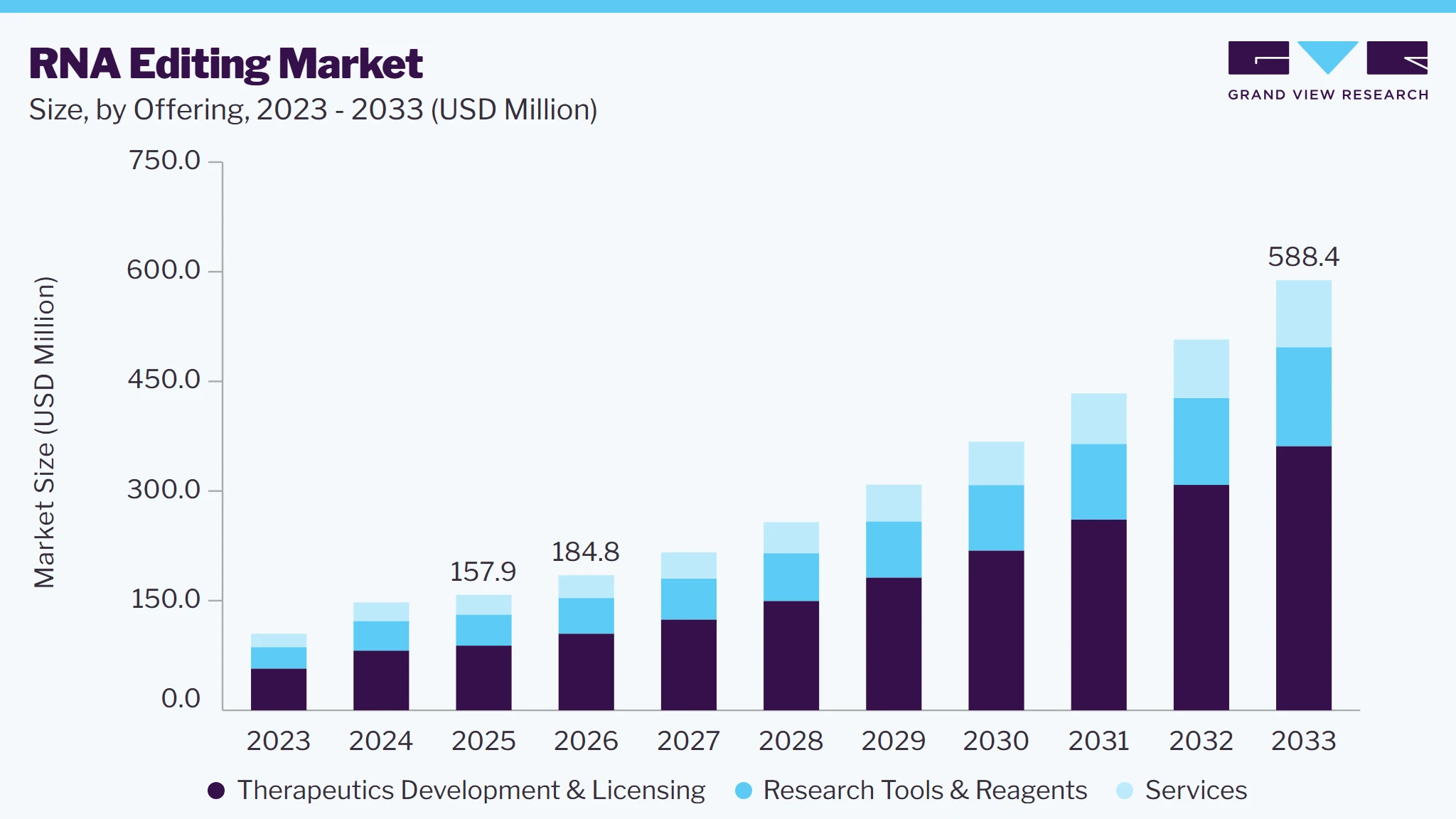 To learn more about this report, Download Free Sample Report
Market Dynamics
The market is in an early but fast-moving stage, with revenue currently generated mainly through collaboration, licensing, and milestone payments, along with sales of research tools and contract services that support editing programs. RNA editing uses the cell's own deaminase enzymes, mainly ADAR, guided by chemically modified oligonucleotides or engineered guide RNAs, to correct single-letter mutations in messenger RNA. Because the edit does not alter DNA and fades as the RNA turns over, dosing can be adjusted or stopped, which is attracting drug developers seeking safer and more controllable genetic medicines. According to BioPharma Dive in October 2024, about a dozen companies, ranging from privately held startups to established biotechnology firms, were pursuing RNA editing, and the number of programs entering clinical development has risen steadily since then.
Growing partnership and licensing activity between large pharmaceutical companies and RNA editing developers is a key market driver, as upfront payments, research funding, and milestones form the main revenue stream for editing companies ahead of product approvals. For instance, in June 2024, Ascidian Therapeutics signed a research collaboration and license agreement with Roche to develop RNA exon editing medicines for neurological diseases, including USD 42 million upfront and up to USD 1.8 billion in milestone payments. Similarly, in May 2025, Rznomics granted Eli Lilly a global license to develop RNA editing therapeutics for inherited sensorineural hearing loss, using its trans-splicing ribozyme platform, in a deal worth more than USD 1.3 billion. Such agreements validate RNA editing platforms and provide funding to advance programs into the clinic.
In addition, RNA editing offers clear advantages over other genetic medicine approaches. Approximately 60% of genetic disorders are caused by single-nucleotide variants, and G-to-A changes, which can be reversed through ADAR-mediated A-to-I editing, account for nearly 28% of these variants, according to a review published in Genes in January 2025. A comparison of RNA editing, DNA base editing, and RNA knockdown approaches highlights differences in permanence, safety, delivery, and the range of diseases that can be addressed.
Comparison of RNA editing with other genetic medicine approaches
Feature
RNA Editing (ADAR / APOBEC)
DNA Base Editing
RNA Knockdown (siRNA / Antisense)
Target
Messenger RNA: corrects or changes single bases or whole exons
Genomic DNA; permanent single-base change
Messenger RNA reduces or blocks expression
Permanence
Transient and reversible; effect fades as RNA turns over
Permanent, one-time edit
Transient; requires repeat dosing
Safety profile
No risk of permanent off-target DNA changes; uses the cell's own ADAR enzyme
Risk of irreversible bystander and off-target edits
Well established; no sequence correction
Delivery
Oligonucleotides (incl. GalNAc conjugates), AAV, or LNP
Mainly LNP or AAV delivery of editor proteins
Oligonucleotides and GalNAc conjugates
Therapeutic scope
Repairs mutations, restores protein function, or introduces protective variants
Repairs or disrupts genes permanently
Limited to reducing harmful proteins
Source: Company Press Releases, Journal Articles, Secondary Research, Grand View Research Analysis
Delivery limitations and variable clinical results may restrain the market, as reaching therapeutic editing levels in target tissues remains difficult, and early data have not been uniformly positive. For instance, in November 2025, Korro Bio reported that its LNP-delivered candidate KRRO-110 for alpha-1 antitrypsin deficiency (AATD) produced a peak total AAT level of about 10 µM in seven patients, below the 11 µM protective threshold. Following the results, the company reduced its workforce by about 34% and shifted its focus to GalNAc-conjugated candidates. In addition, revenue for most RNA editing companies still depends on partner milestones, which may limit market growth until the first products are approved.
The expansion of RNA editing from rare genetic disorders into common liver and cardiometabolic diseases is creating significant market opportunities, as these conditions affect much larger patient populations. For instance, in October 2024, Wave Life Sciences announced three wholly owned GalNAc-conjugated RNA editing programs targeting PNPLA3 I148M for liver disease, and LDLR and APOB for cardiovascular disease. According to the company, the PNPLA3 I148M variant affects more than 9 million homozygous individuals in the U.S. and Europe, while the LDLR and APOB programs address about 1 million patients with heterozygous familial hypercholesterolemia, with the potential to expand to about 30 million patients. Such programs are expected to broaden the commercial potential of RNA editing beyond orphan indications.
Market Concentration & Characteristics
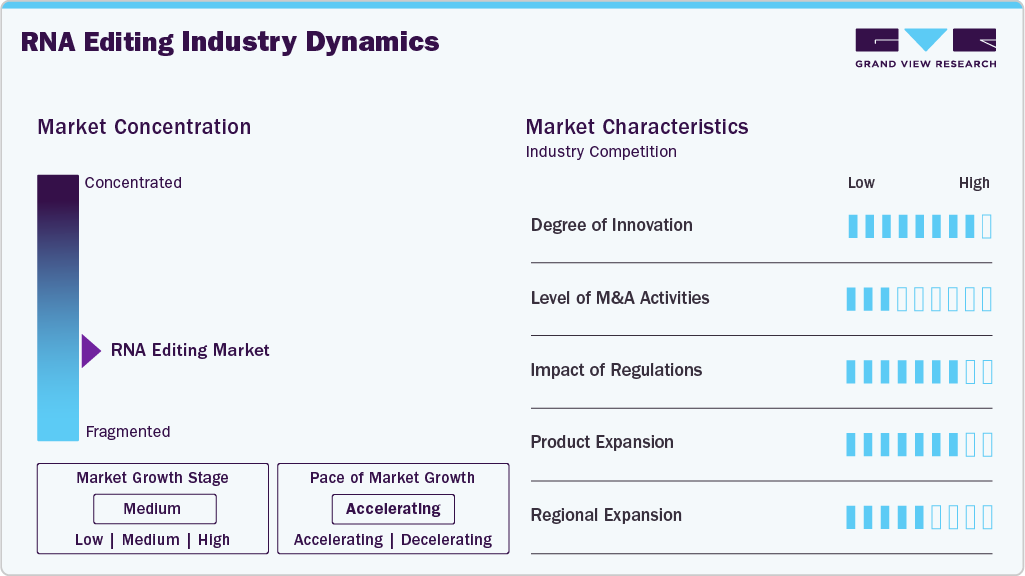
The degree of innovation in the RNA editing industry is high, driven by advances in guide oligonucleotide chemistry, engineered guide RNAs, exon-scale editing, and AI-enabled design. For instance, in April 2026, ProQR Therapeutics partnered with Ginkgo Bioworks to access its autonomous laboratory for high-throughput data generation to support AI-enabled discovery on its Axiomer RNA editing platform. In addition, in July 2026, the National Natural Science Foundation of China reported LEAPER 3.0, developed at Peking University, which uses engineered guide RNA structures to reduce bystander edits and achieved about 40% sustained correction of the AATD-causing PiZZ mutation in preclinical models.
 To learn more about this report, Download Free Sample Report
The RNA editing industry is witnessing a low level of M&A activity, as large pharmaceutical companies prefer licensing, option agreements, and equity investments over outright acquisitions of RNA editing developers. For instance, in June 2026, Eli Lilly invested USD 9.2 million in a private placement by its partner ProQR Therapeutics. Investors also continue to back private developers; in April 2025, AIRNA raised an oversubscribed USD 155 million Series B financing led by Venrock Healthcare Capital Partners to fund clinical development of its AATD candidate, AIR-001.
“Patients with AATD have limited therapeutic options, and AIRNA is developing a potentially best-in-class medicine that has been optimized for potency, durability, and safety.”
- Ken Greenberg, M.D., Partner, Venrock Healthcare Capital Partners
Regulations have a moderate to high impact on the RNA editing industry, as RNA editing therapeutics are regulated as new drugs and require extensive safety and efficacy data. At the same time, regulators are creating more flexible pathways for genetic medicines. For instance, in November 2025, U.S. FDA leaders proposed a "plausible mechanism" pathway that could allow marketing authorization of individualized therapies for rare, serious diseases after a small number of patients are treated, when randomized trials are not feasible. Such initiatives are anticipated to support the development of RNA editing therapies for ultra-rare mutations.
The RNA editing industry is witnessing product expansion as new RNA editing candidates enter clinical development. For instance, in April 2026, AIRNA dosed the first patient in its global Phase 1 RepAIR1 trial of AIR-001, an RNA editing therapy for AATD that has received FDA Orphan Drug Designation. The study plans to enroll about 54 patients at about 20 sites across 11 countries.
“Promising preclinical data indicate AIR-001 has the potential to increase functional AAT levels to address both the lung and liver manifestations of AATD, with a reversible and repeatable dosing approach.”
- Jacob S. Elkins, M.D., Chief Medical Officer, AIRNA
The RNA editing industry is witnessing regional expansion as pharmaceutical companies outside the U.S. and Europe enter the field through partnerships. For instance, in April 2025, Japan-based Ono Pharmaceutical announced a research collaboration with U.S.-based Jorna Therapeutics to generate new RNA editing therapeutics using Jorna's generative AI design platform, with exclusive worldwide option rights to develop and commercialize the resulting candidates.
“We highly value Jorna's unique generative AI technologies, which combine large-scale amino acid sequence information and language models to design desired proteins.”
- Seishi Katsumata, Corporate Officer, Executive Director, Discovery & Research, Ono Pharmaceutical
Analyst Perspective
The market is expected to witness strong growth, supported by rising pharmaceutical partnerships, positive clinical data in AATD and other inherited diseases, and expansion into larger liver and cardiometabolic indications. ADAR-mediated editing delivered by GalNAc-conjugated oligonucleotides remains the leading approach, while exon editing and LNP-delivered programs are expected to grow fastest. The first product approvals, expected from around 2028, are anticipated to shift revenue from milestones toward product sales. Market participants are focusing on clinical progress, AI-enabled guide design, new delivery approaches, and partnerships to expand the reach of RNA editing.
Offering Insights
The therapeutics development & licensing segment accounted for the largest revenue share of 56.0% in 2025 and is expected to grow at the fastest CAGR of 19.3% over the forecast period, as upfront, milestone, and research funding payments from pharmaceutical partners form the main source of revenue for RNA editing developers, and product sales are expected to start from around 2028. For instance, in June 2026, Ascidian Therapeutics entered a research collaboration with Eli Lilly to develop RNA exon editors for genetic kidney diseases, in a deal worth up to USD 1.9 billion, including development and commercial milestones.
The research tools & reagents segment is expected to grow at a CAGR of 15.7% during 2026-2033, driven by demand for guide RNAs, ADAR-recruiting oligonucleotides, editing assays, and engineered cell lines from drug developers and academic laboratories. The services segment is projected to grow at a CAGR of 16.7%, supported by outsourcing of guide design, screening, preclinical testing, and oligonucleotide and vector manufacturing to specialized providers.
Technology Insights
The ADAR-mediated (A-to-I) editing segment accounted for the largest revenue share of 77.8% in 2025, as most clinical and partnered programs recruit the cell's own ADAR enzyme, avoiding the need to deliver a foreign editing protein. For instance, in June 2026, ProQR Therapeutics reported Phase 1 data for AX-0810, which showed dose-dependent increases of up to 8-fold in total serum bile acids with no serious adverse events, providing the first clinical validation of its Axiomer ADAR editing platform.
The others segment, which includes exon editing and pseudouridylation, is projected to grow at the fastest CAGR of 21.5% during 2026-2033, as exon editing allows replacement of whole sections of RNA and can address diseases caused by many different mutations in the same gene. For instance, in January 2024, Ascidian Therapeutics received the first-ever FDA IND clearance for an RNA exon editor, ACDN-01, for Stargardt disease, along with Fast Track designation. The APOBEC-mediated (C-to-U) editing segment is expected to grow at a CAGR of 19.2%, supported by preclinical work on engineered deaminases that expand the range of correctable mutations.
Delivery Modality Insights
The oligonucleotide-based segment accounted for the largest revenue share of 62.0% in 2025, as chemically modified and GalNAc-conjugated guide oligonucleotides can be given by subcutaneous injection and reach the liver efficiently. For instance, in May 2026, Wave Life Sciences reported that its GalNAc-conjugated RNA editing oligonucleotide WVE-006 achieved an MZ-like phenotype in AATD patients across both biweekly and monthly dosing, with total AAT levels of up to 14.0 µM.
The LNP-delivered segment is expected to grow at the fastest CAGR of 21.5% over the forecast period, as lipid nanoparticles allow delivery of engineered guide RNAs and editing enzyme mRNA to tissues that oligonucleotides cannot efficiently reach. The AAV-delivered segment is expected to grow at a CAGR of 17.4%, supported by programs in the eye and central nervous system that require long-lasting expression of guide RNAs.
Application Insights
The rare genetic disorders segment accounted for the largest revenue share of 43.1% in 2025, as most advanced RNA editing candidates target inherited diseases caused by single-point mutations, such as AATD. According to Wave Life Sciences, about 200,000 individuals in the U.S. and Europe are homozygous for the SERPINA1 Z mutation that causes AATD. In October 2024, the company reported the first-ever therapeutic RNA editing in humans, with WVE-006 producing wild-type M-AAT protein in AATD patients after a single dose.
The cardiometabolic diseases segment is projected to grow at the fastest CAGR of 21.5% during 2026-2033, as developers extend RNA editing to large patient populations with cardiovascular risk. For instance, in May 2026, AIRNA presented preclinical data on cardiometabolic RNA editing programs targeting LDLR and APOB at the ASGCT annual meeting. The liver diseases segment is expected to grow at a CAGR of 20.9%, supported by programs such as Wave Life Sciences' WVE-008 for PNPLA3 I148M liver disease, with a clinical trial application expected in the second half of 2026.
End Use Insights
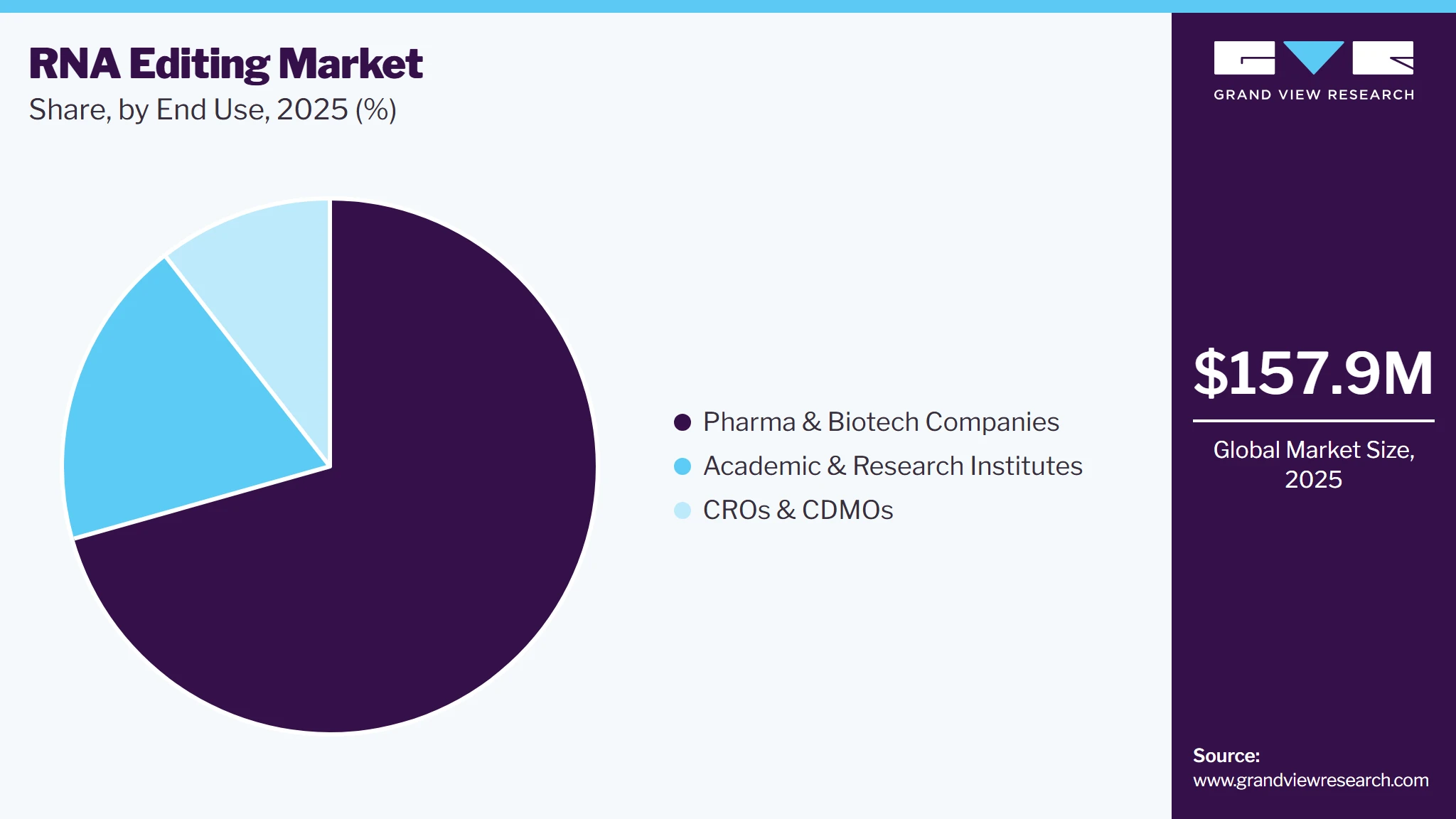
The pharmaceutical & biotechnology companies segment accounted for the largest revenue share of 70.6% in 2025, as drug developers and their large pharmaceutical partners account for most licensing payments and purchases of tools and services. For instance, in September 2024, Korro Bio entered a collaboration with Novo Nordisk to develop two RNA editing candidates for cardiometabolic diseases, in a deal worth up to USD 530 million.
 To learn more about this report, Download Free Sample Report
The CROs & CDMOs segment is projected to witness the fastest CAGR of 19.2% during 2026-2033, as developers outsource discovery, screening, and manufacturing of editing oligonucleotides and vectors. The academic & research institutes segment is expected to grow at a CAGR of 16.3%, supported by public funding for RNA editing research, such as grants from the National Natural Science Foundation of China for the LEAPER platform.
Regional Insights
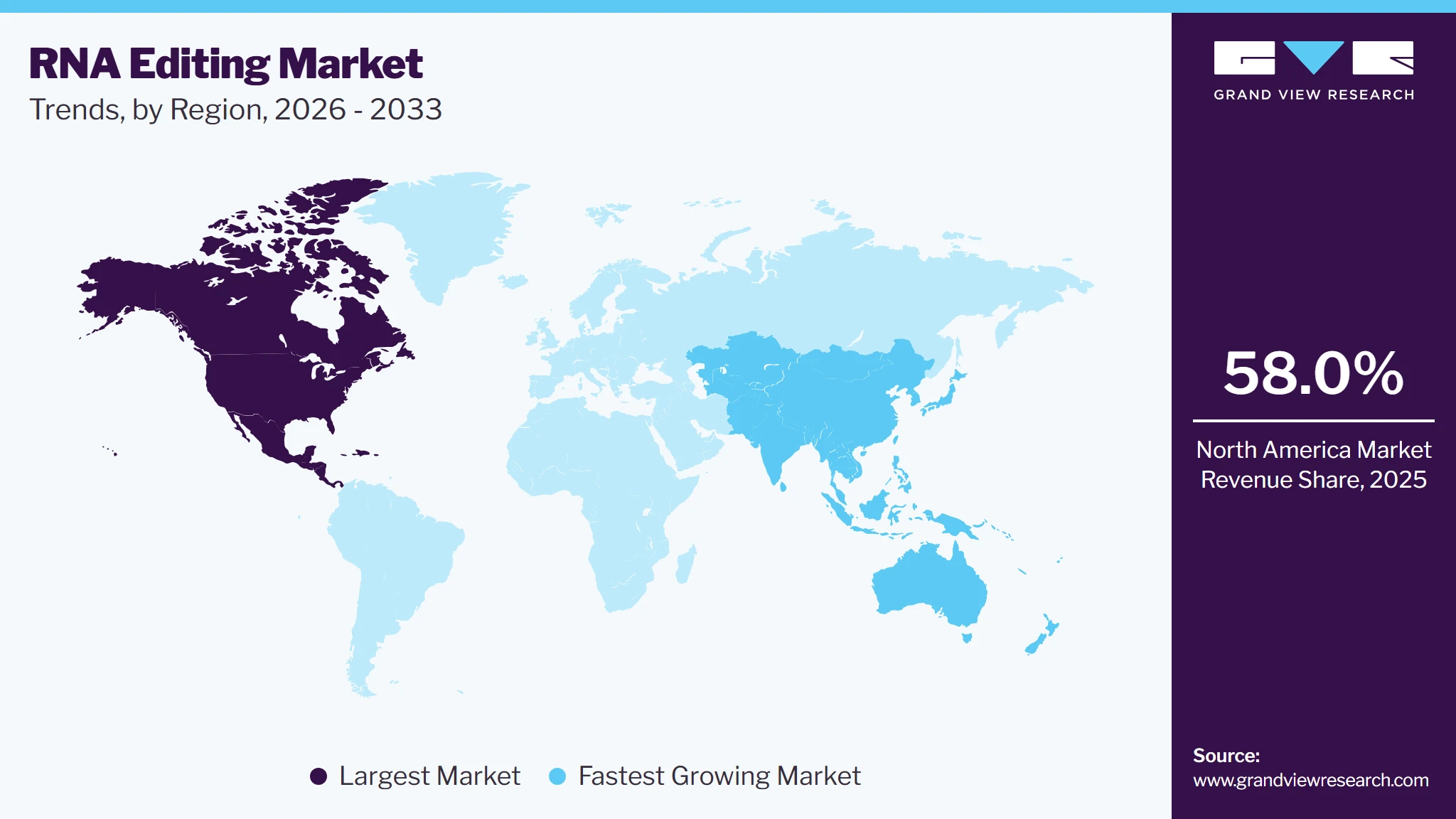
North America dominated the RNA editing market, accounting for the largest revenue share of 58.0% in 2025, supported by the presence of most leading RNA editing developers, strong venture and partnership funding, and active FDA engagement on genetic medicines. The region also hosts the most advanced clinical programs, including candidates for AATD, Stargardt disease, and cardiometabolic diseases.
 To learn more about this report, Download Free Sample Report
U.S. RNA Editing Market Trends
The RNA editing market in the U.S. is expected to grow over the forecast period, supported by clear regulatory guidance for RNA editing candidates. For instance, in October 2026, Wave Life Sciences aligned with the U.S. FDA on a single two-year registrational trial for WVE-006 in AATD, in which a one-year interim analysis of AATD biomarkers could support accelerated approval without a separate confirmatory trial.
“WVE-006 avoids the irreversible bystander edits, indels, and other off-target edits associated with DNA base editing.”
- Christopher Wright, M.D., Ph.D., Chief Medical Officer, Wave Life Sciences
Europe RNA Editing Market Trends
The RNA editing market in Europe is anticipated to grow significantly over the forecast period, supported by the presence of RNA editing developers and growing clinical activity in the region. For instance, in June 2025, Netherlands-based ProQR Therapeutics submitted a clinical trial application for a first-in-human Phase 1 study of AX-0810, the first program from its Axiomer RNA editing platform to enter clinical development, at a single site in the Netherlands.
The UK RNA editing market is expected to grow over the forecast period, driven by the country's role as an early clinical trial location for RNA editing therapies. For instance, in April 2024, Wave Life Sciences received approval of its first clinical trial application for the RestorAATion-2 trial of WVE-006, sponsored by Wave Life Sciences UK Limited, with a UK research ethics committee opinion issued in May 2024.
The RNA editing market in Germany is anticipated to grow significantly over the forecast period, supported by strong academic research in RNA editing. For instance, in November 2025, researchers at the University of Tübingen, together with Bar-Ilan University in Israel, received a European Research Council Synergy Grant of about EUR 10 million over six years to develop RNA editing-based therapies for fatty liver disease, liver inflammation, and liver cancer.
Asia Pacific RNA Editing Market Trends
The RNA editing market in the Asia Pacific is expected to grow at the fastest CAGR of 20.8% during the forecast period, supported by growing clinical trial activity, research funding, and partnerships. For instance, in December 2024, Korro Bio received Australian ethics approval and Therapeutic Goods Administration clinical trial notification clearance to start its Phase 1/2a REWRITE trial of KRRO-110. In addition, Australia's RNA Blueprint, released in July 2024, estimates that the RNA sector could add up to AUD 8 billion to the country's GDP over ten years, which is anticipated to propel the market in the region.
China RNA editing market is expected to grow over the forecast period, supported by domestic platform development and clinical research. For instance, in June 2026, researchers from Peking University and Changping Laboratory published results in Cell describing the first clinical use of the Chinese-developed LEAPER RNA editing technology, in which three children with Duchenne muscular dystrophy showed sustained improvement in motor function at one year. In addition, ProQR Therapeutics expects an investigator-initiated first-in-human trial of AX-2911 for MASH to start in China in the first half of 2027.
The RNA editing market in Japanis expected to grow steadily, supported by public funding for RNA editing research. For instance, the Japan Agency for Medical Research and Development (AMED) is funding a project led by Fukuoka University and Tokyo University of Science to develop cancer cell-selective RNA editing, combining RNA editing with a folate receptor-targeted delivery system.
Latin America RNA Editing Market Trends
The RNA editing market in Latin America is expected to grow steadily over the forecast period, supported by the improving diagnosis of rare genetic diseases. For instance, Brazil's Ministry of Health announced an investment of more than BRL 30 million per year in 2024 to expand the National Newborn Screening Program, adding mass spectrometry and reference services for rare diseases. In Argentina, rare diseases affect about 1 in 13 people, and about 80% of them are genetic. Better identification of patients with inherited diseases is anticipated to propel the market in the region.
MEA RNA Editing Market Trends
The RNA editing market in MEA is growing steadily, supported by national genomics programs that are improving the identification of inherited diseases. For instance, from January 2025, the UAE made genetic testing a part of mandatory premarital screening, covering 570 genes and more than 840 genetic disorders, under the Emirati Genome Programme. Such initiatives are expected to increase the diagnosed pool of patients eligible for RNA editing therapies, which is anticipated to propel the market in the region.
“Genetic testing contributes to the health and well-being of the community, providing a healthier future for generations to come.”
- Dr. Noura Al Ghaithi, Undersecretary, Abu Dhabi Department of Health
Key RNA Editing Company Insights
The market is moderately consolidated, with a small number of clinical-stage developers leading, followed by a growing group of private companies with platform technologies. Leading players include Wave Life Sciences Ltd., ProQR Therapeutics N.V., Korro Bio Inc., Ascidian Therapeutics, Shape Therapeutics, AIRNA, ADARx Pharmaceuticals, Rznomics Inc., and Amber Bio. These companies focus on advancing clinical candidates, signing partnerships with large pharmaceutical companies, raising capital, and expanding into new therapy areas and delivery approaches.
Key RNA Editing Companies
The following key companies have been profiled for this study on the RNA editing market:
-
Wave Life Sciences Ltd.
-
ProQR Therapeutics N.V.
-
Korro Bio Inc.
-
Ascidian Therapeutics
-
Shape Therapeutics
-
AIRNA
-
ADARx Pharmaceuticals
-
Rznomics Inc.
-
Amber Bio
Competitive Benchmarking
Category
Operating Strategies
Competitive Edge
Weakness
Established Players (Wave Life Sciences Ltd., ProQR Therapeutics N.V., Korro Bio Inc.)
Advancing clinical-stage candidates, expanding into liver and cardiometabolic diseases, and monetizing platforms through partnerships with large pharmaceutical companies.
Clinical data in humans, proprietary oligonucleotide chemistry, and long-standing partnerships with companies such as GSK, Eli Lilly, and Novo Nordisk.
Revenue dependent on partner milestones; exposure to clinical setbacks and limited cash runway.
Emerging Players (Ascidian Therapeutics, Shape Therapeutics, AIRNA, ADARx Pharmaceuticals, Rznomics Inc., Amber Bio)
Focusing on differentiated platforms such as exon editing, engineered guide RNAs, and trans-splicing ribozymes, supported by venture funding and licensing deals.
Novel technologies that expand the range of correctable mutations and strong investor and partner interest.
Early-stage pipelines, limited clinical data, and dependence on external financing.
Recent Developments
- In March 2026, ProQR Therapeutics reported its full-year 2025 results, highlighting the advancement of AX-0810 for cholestatic diseases into a Phase 1 trial, the selection of development candidates AX-2402 for Rett syndrome and AX-2911 for MASH, and USD 4.5 million in milestones achieved under its collaboration with Eli Lilly.
“2025 was a year of meaningful clinical progress for ProQR as we advanced AX-0810 for Cholestatic Diseases into a Phase 1 trial and continued to expand the reach of our Axiomer RNA editing platform and pipeline.”
- Daniel A. de Boer, Founder and Chief Executive Officer, ProQR Therapeutics
- In January 2026, Ascidian Therapeutics and Forge Biologics announced a manufacturing partnership under which Forge will provide process and analytical development and cGMP AAV manufacturing for ACDN-01, Ascidian's RNA exon editing therapy for Stargardt disease.
“Partnering with Forge Biologics equips us with deep AAV expertise, scalable manufacturing capabilities, and significant capacity, enabling us to rapidly advance ACDN-01 into late-stage clinical development.”
- Michael Ehlers, M.D., Ph.D., President and Chief Executive Officer, Ascidian Therapeutics
- In September 2025, Wave Life Sciences announced positive multidose data from its RestorAATion-2 trial of WVE-006 in AATD, in which the 200 mg multidose cohort achieved a mean total AAT of 11.9 µM, with wild-type M-AAT accounting for 64.4% of total AAT, supporting monthly or less frequent subcutaneous dosing.
“Today's data represent a significant clinical milestone for individuals living with AATD, as well as the field of RNA editing, with WVE-006 enabling the dynamic generation of wild-type M-AAT protein when needed.”
- Paul Bolno, M.D., MBA, President and Chief Executive Officer, Wave Life Sciences
RNA Editing Market Report Scope Table
Report Attribute
Details
Market size in 2025
USD 157.9 million
Estimated market size in 2026
USD 184.8 million
Projected market size by 2033
USD 588.4 million
Growth rate
CAGR of 18.0% from 2026 to 2033
Historical data
2021 - 2025
Forecast period
2026 - 2033
Quantitative units
Revenue in USD million, and CAGR from 2026 to 2033
Report coverage
Revenue forecast, company ranking, competitive landscape, growth factors, and trends
Segments covered
Offering, technology, delivery modality, application, end use, region
Regional scope
North America; Europe; Asia Pacific; Latin America; MEA
Country scope
U.S.; Canada; Mexico; Germany; UK; France; Italy; Spain; Denmark; Sweden; Norway; Japan; China; India; Australia; South Korea; Thailand; Brazil; Argentina; Saudi Arabia; South Africa; UAE; Kuwait
Key companies profiled
Wave Life Sciences Ltd.; ProQR Therapeutics N.V.; Korro Bio Inc.; Ascidian Therapeutics; Shape Therapeutics; AIRNA; ADARx Pharmaceuticals; Rznomics Inc.; Amber Bio
Customization scope
Free report customization (equivalent up to 8 analysts' working days) with purchase. Addition or alteration to country, regional & segment scope.
Pricing and purchase options
Avail customized purchase options to meet your exact research needs. Explore purchase options
Global RNA Editing Market Report Segmentation
This report forecasts revenue growth and provides an analysis of the latest trends in each of the sub-segments from 2021 to 2033. For this report, Grand View Research has segmented the global RNA editing market report based on offering, technology, delivery modality, application, end use, and region:
-
Offering Outlook (Revenue, USD Million, 2021 - 2033)
-
Therapeutics Development & Licensing
-
Research Tools & Reagents
-
Services
-
-
Technology Outlook (Revenue, USD Million, 2021 - 2033)
-
ADAR-mediated (A-to-I) Editing
-
APOBEC-mediated (C-to-U) Editing
-
Others (Exon Editing, Pseudouridylation)
-
-
Delivery Modality Outlook (Revenue, USD Million, 2021 - 2033)
-
Oligonucleotide-based
-
AAV-delivered
-
LNP-delivered
-
Others
-
-
Application Outlook (Revenue, USD Million, 2021 - 2033)
-
Rare Genetic Disorders
-
Neurological Disorders
-
Oncology
-
Liver Diseases
-
Cardiometabolic Diseases
-
Others
-
-
End Use Outlook (Revenue, USD Million, 2021 - 2033)
-
Pharmaceutical & Biotechnology Companies
-
Academic & Research Institutes
-
CROs & CDMOs
-
-
Regional Outlook (Revenue, USD Million, 2021 - 2033)
-
North America
-
U.S.
-
Canada
-
Mexico
-
-
Europe
-
Germany
-
UK
-
France
-
Italy
-
Spain
-
Denmark
-
Sweden
-
Norway
-
-
Asia Pacific
-
Japan
-
China
-
India
-
Australia
-
South Korea
-
Thailand
-
-
Latin America
-
Brazil
-
Argentina
-
-
Middle East and Africa (MEA)
-
Saudi Arabia
-
South Africa
-
UAE
-
Kuwait
-
-
Research Methodology
The RNA editing market figures in this report are based on a proven research process that combines executive interviews with secondary research from proprietary databases, company filings, and recognized regulatory and institutional sources. Market size is built through value-chain sizing-reconciling supply-side and demand-side estimates-and triangulated with bottom-up and top-down approaches. Every estimate passes multiple levels of expert validation before publication, with each RNA editing segment quantified using the revenue-capture definitions in the table below.
Segment Definition
Segment - Offering
Revenue Capture Definition
Therapeutics Development & Licensing
This segment includes revenues generated by the sale of licenses, development rights and research collaborations for RNA editing therapeutic candidates, received as upfront payments, milestone payments, research funding and royalties, and, after approval, by the sale of RNA editing therapies.
Research Tools & Reagents
This segment includes revenues generated by the sale of research tools and reagents designed for RNA editing work, such as guide RNAs and ADAR-recruiting oligonucleotides, editing reporter assays, on- and off-target detection kits, engineered ADAR or APOBEC cell lines and guide design software.
Services
This segment includes revenues generated by the sale of contract services for RNA editing programs, including guide design and screening, preclinical efficacy and safety testing, and contract manufacturing of editing oligonucleotides, AAV vectors and LNP formulations.
Segment - Technology
Revenue Capture Definition
ADAR-mediated (A-to-I) Editing
This segment includes revenues generated by the sale of therapeutics, licenses, tools and services based on ADAR-mediated adenosine-to-inosine (A-to-I) editing, where a guide oligonucleotide or guide RNA recruits the cell's own or a delivered ADAR enzyme to the target transcript.
APOBEC-mediated (C-to-U) Editing
This segment includes revenues generated by the sale of therapeutics, licenses, tools and services based on APOBEC-mediated cytidine-to-uridine (C-to-U) editing, including engineered APOBEC or dual-function deaminase systems.
Others (Exon Editing, Pseudouridylation)
This segment includes revenues generated by the sale of therapeutics, licenses, tools and services based on other RNA editing approaches, mainly exon editing (RNA trans-splicing, which replaces whole exons) and targeted pseudouridylation.
Segment - Delivery Modality
Revenue Capture Definition
Oligonucleotide-based
This segment includes revenues generated by the sale of RNA editing therapeutics, licenses, tools and services in which the editing guide is delivered as a chemically modified oligonucleotide, either free or conjugated (for example GalNAc conjugates for the liver), that recruits the cell's own ADAR enzyme.
AAV-delivered
This segment includes revenues generated by the sale of RNA editing therapeutics, licenses, tools and services in which the guide RNA, and in some cases an engineered deaminase, is encoded in an adeno-associated virus (AAV) vector for longer-lasting expression, mainly in the eye and central nervous system.
LNP-delivered
This segment includes revenues generated by the sale of RNA editing therapeutics, licenses, tools and services in which guide RNAs or editing enzyme mRNA are delivered in lipid nanoparticles (LNP).
Others
This segment includes revenues generated by the sale of RNA editing therapeutics, licenses, tools and services using other delivery routes, such as polymer and peptide carriers, extracellular vesicles and ex vivo cell editing.
Segment - Application
Revenue Capture Definition
Rare Genetic Disorders
This segment includes revenues generated by the sale of RNA editing therapeutics, licenses, tools and services for rare inherited diseases caused by single point mutations, such as alpha-1 antitrypsin deficiency (AATD), Stargardt disease, Rett syndrome and inherited retinal diseases.
Neurological Disorders
This segment includes revenues generated by the sale of RNA editing therapeutics, licenses, tools and services for neurological and neurodegenerative disorders, such as Parkinson's disease, Alzheimer's disease, amyotrophic lateral sclerosis and chronic pain.
Oncology
This segment includes revenues generated by the sale of RNA editing therapeutics, licenses, tools and services for cancer, including editing of tumour-related transcripts and immune-related targets.
Liver Diseases
This segment includes revenues generated by the sale of RNA editing therapeutics, licenses, tools and services for acquired liver diseases, such as metabolic dysfunction-associated steatohepatitis (MASH) and cholestatic liver diseases. Inherited liver disorders such as AATD are counted under Rare Genetic Disorders.
Cardiometabolic Diseases
This segment includes revenues generated by the sale of RNA editing therapeutics, licenses, tools and services for cardiovascular and metabolic diseases, such as hypercholesterolemia, hypertension, obesity and type 2 diabetes.
Others
This segment includes revenues generated by the sale of RNA editing therapeutics, licenses, tools and services for other therapy areas, such as ophthalmology outside inherited diseases, pulmonary, infectious and inflammatory diseases, and general-purpose research tools not tied to a therapy area.
Segment - End Use
Revenue Capture Definition
Pharmaceutical & Biotechnology Companies
This segment includes revenues generated by the sale of RNA editing licenses, collaborations, therapeutics, tools and services to pharmaceutical and biotechnology companies, including large pharma partners and RNA editing developers buying tools and outsourced services.
Academic & Research Institutes
This segment includes revenues generated by the sale of RNA editing tools, reagents and services to universities, research institutes and government laboratories.
CROs & CDMOs
This segment includes revenues generated by the sale of RNA editing tools, reagents and licenses to contract research and contract development and manufacturing organizations that use them to serve their own clients.
Estimation Model
Category
Project / Model Title
Description
Top-Down
Commodity Flow Analysis
Market value was estimated by assessing revenues of RNA editing developers, including upfront, licensing, milestone and research funding payments from pharmaceutical partners, together with sales of research tools and reagents and contract research and manufacturing services for RNA editing programs. Company financials, partnership terms, pipeline milestones, and quantity revenue were analyzed to estimate delivery modality, application, and end use.
Benchmark
Parent Market, Company Share & Literature Benchmarking
The market was benchmarked against the RNA editing share of the GRV genome editing market, company share analysis of leading RNA editing developers, and a literature-based build-up of private company revenues. Research tools, and academic spending, published estimates were reviewed and normalized to a common base year and definition.
Segmentation
Country-Level Segment Share Modeling
Country-level shares were estimated using the location of RNA editing developers and their partners, clinical trial activity, research funding, rare disease prevalence, and regulatory support for genetic medicines. Differences in pharmaceutical partnering, academic research output, and access to advanced therapies were incorporated to determine country and regional distributions across all segments.
Validation
Data Triangulation & Validation Model
Market estimates were reconciled using company revenues, partnership disclosures, the parent genome editing market, literature-based estimates, and pipeline data. The results were cross-checked across offering, technology, delivery modality, application, end use, country, and region to ensure consistency between supply-side and demand-side calculations.
Forecasting
Forecasting & CAGR Modeling
Future demand was projected using the clinical pipeline and expected data readouts, timing of first product approvals from around 2028, partnership milestones, expansion into new and democratizable disease areas, and growth in research tool and service demand. Delivery advances and new editing approaches were incorporated into segment-level growth assumptions.
Delivered Customizations
This report has been delivered with the following In-depth customizations
Client Request
Customization Delivered
Value Adds
Partnership & Deal Benchmarking
Analysis of upfront payments, milestones, royalties, and option terms in RNA editing collaborations with pharmaceutical companies across therapy areas.
Helps clients value their platforms and benchmark deal terms when negotiating partnerships.
Pipeline & Clinical Landscape Assessment
Tracking of RNA editing candidates by mechanism (ADAR, APOBEC, exon editing), delivery route, indication, and development stage, with expected data readouts.
Helps clients identify white spaces, competing programs, and potential partners or licensing targets.
Tools & Services Opportunity Sizing
Estimation of demand for guide RNA design, editing assays, oligonucleotide and AAV manufacturing, and contract research services for RNA editing programs.
Helps tools and service providers prioritize offerings and target customers in the RNA editing space.
Frequently Asked Questions About This Report
The global RNA editing market size was estimated at USD 157.9 million in 2025 and is estimated at USD 184.8 million in 2026.
The global RNA editing market is expected to grow at a CAGR of 18.0% from 2026 to 2033, reaching USD 588.4 million by 2033.
The market is driven by growing partnership and licensing deals between large pharmaceutical companies and RNA editing developers; the first clinical evidence of therapeutic RNA editing in humans; and the rising interest in reversible editing approaches that correct mutations at the RNA level without permanently changing DNA.
Key players in the RNA editing market include Wave Life Sciences Ltd., ProQR Therapeutics N.V., Korro Bio, Inc., Ascidian Therapeutics, Shape Therapeutics, AIRNA, ADARx Pharmaceuticals, Rznomics Inc., and Amber Bio.
The rare genetic disorders segment accounted for the largest revenue share of 43.1% in 2025.
The oligonucleotide-based segment accounted for the largest revenue share of 62.0% in 2025.
The ADAR-mediated (A-to-I) editing segment accounted for the largest revenue share of 77.8% in 2025
The therapeutics development & licensing segment held the largest revenue share of 56.0% in 2025. This is because upfront, milestone and research funding payments from pharmaceutical partners are the main source of revenue for RNA editing developers.
North America dominated the RNA editing market with a revenue share of 58.0% in 2025. This is supported by the presence of most leading RNA editing developers, strong partnership and venture funding, and the most advanced clinical programs.
About the Author(s)
Biotechnology Research Team
Healthcare · BiotechnologyThis report was authored by the biotechnology research team at Grand View Research - comprising two research analysts, one senior research analyst, and one industry expert - with specialized expertise in the biotechnology segment of the healthcare industry. All findings are based on proprietary healthcare databases, executive interviews, and regulatory analysis, subject to internal peer review prior to publication.
Last Updated:
Speak to Analyst

Customize this report to your needs - add regions, segments, or data points, with 20% free customization.
Or view our licence options:


ISO 9001:2015 & 27001:2022 Certified
We are GDPR and CCPA compliant! Your transaction & personal information is safe and secure. For more details, please read our privacy policy.


