
- Home
- »
- Medical Devices
- »
-
Robotic Ultrasound System Market Size Report, 2026-2033GVR Report cover

Robotic Ultrasound System Market (2026 - 2033)
Size, Share & Trends Analysis Report By Product (Trolley-based Robotic Ultrasound Systems & Compact/Portable Robotic Ultrasound Systems), By Clinical application (Cardiology), By End Use, By Region, And Segment Forecasts
Market Size, 2025
$783.4MMarket Estimate, 2026
$897.8MMarket Forecast, 2033
$2,203.7MCAGR, 2026–2033
13.7%Robotic Ultrasound System Market Summary
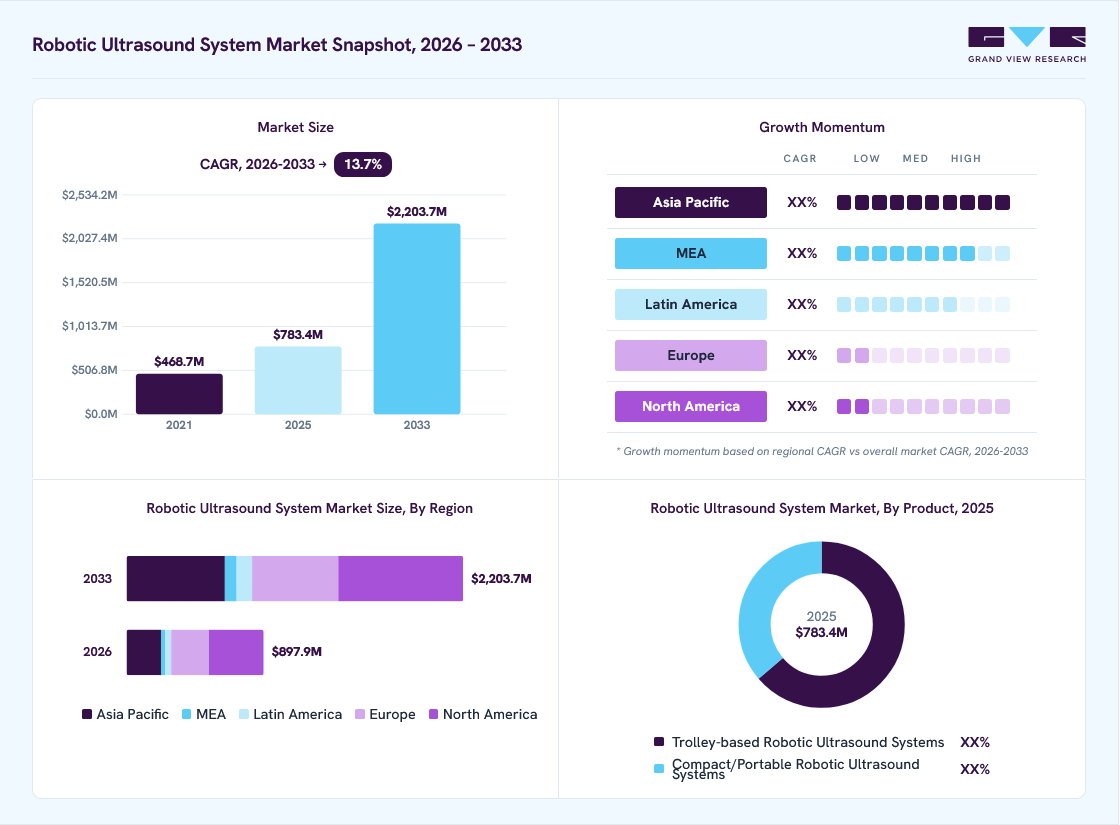
The global robotic ultrasound system market size was valued at USD 783.4 million in 2025 and is projected to grow from USD 897.8 million in 2026 to USD 2,203.7 million by 2033, at a CAGR of 13.7% from 2026 to 2033. North America dominated the market, accounting for a revenue share of 40.4% in 2025. Rising demand for standardized diagnostic imaging and increasing adoption of remote healthcare are accelerating the deployment of robotic ultrasound systems.
 Source: Grand View Research, IR Documents, Primary Interviews, Paid DatabasesTo learn more about this report,
 Download Free Sample Report
Key Market Trends & Insights
- By product: The trolley-based robotic ultrasound systems segment held the largest market share of 63.7% in 2025.
- By clinical application: The cardiology segment held the largest market share of 53.0% in 2025.
- By end use: The hospitals segment held the largest market share of 51.8% in 2025.
Regional Highlights
- Largest regional market: North America (40.4% revenue share, 2025)
- Fastest-growing regional market: Asia Pacific (highest CAGR, 2026-2033)
- By country: The U.S. dominated North America with the largest revenue share in 2025
Market Size & Forecast
- Market size in 2025: USD 783.4 Million
- Estimated market size in 2026: USD 897.9 Million
- Projected market size by 2033: USD 2,203.7 Million
- CAGR (2026-2033): 13.7%
Prism AI by Grand View Research Free to tryAsk a question about the robotic ultrasound system marketTry asking✓Every figure cited from GVR research Prefer the report? Download free sample →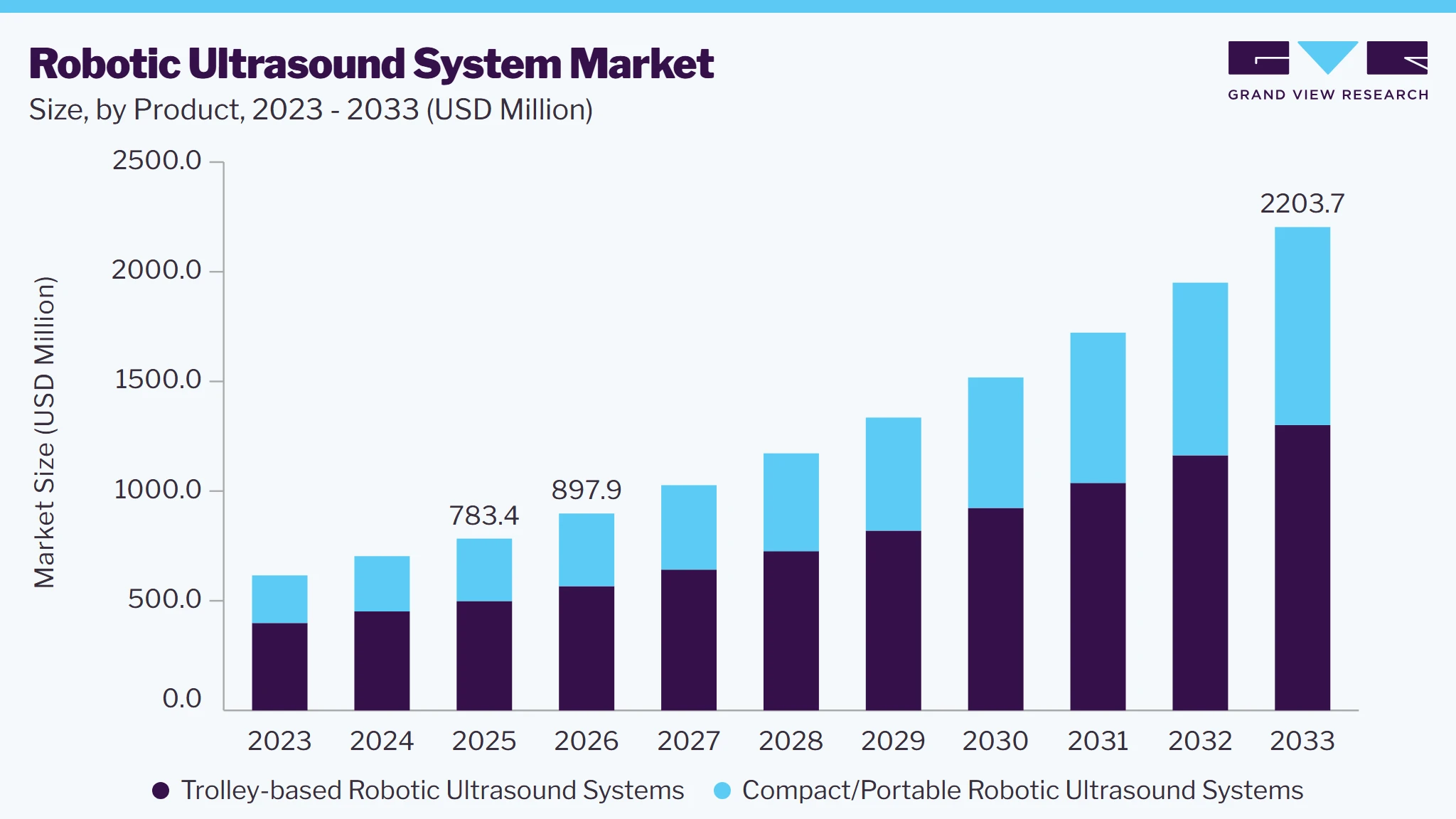 To learn more about this report, Download Free Sample Report
These platforms improve the consistency of examinations, expand access to specialists, reduce operator dependence, and support ultrasound delivery in underserved healthcare facilities.Market Dynamic
The global robotic ultrasound system industry is driven by the increasing integration of AI, which enables automated probe positioning and image acquisition while reducing operator dependence. The expansion of remote and tele-robotic ultrasound is creating opportunities to extend specialist imaging services to rural and underserved areas. However, adoption remains constrained by the lack of large-scale, multicenter clinical evidence validating the reliability and effectiveness of these systems. Further clinical validation is therefore required to support broader physician acceptance and commercialization.
The increasing integration of AI into robotic ultrasound systems is driving market growth by enabling automated probe positioning, standardized image acquisition, and reduced operator dependency, thereby improving diagnostic consistency and workflow efficiency. For instance, the August 2025 publication of UltraBot in Nature Communications, where researchers from The Chinese University of Hong Kong developed an AI-powered autonomous robotic carotid ultrasound system trained on 247,000 expert demonstration samples. The system achieved over 90% scanning success and delivered up to 5.5× higher reproducibility than conventional manual ultrasound examinations, demonstrating the growing clinical potential of AI-enabled robotic ultrasound technologies to address sonographer shortages and improve imaging quality.
Case Study Published in September 2025, By IEEE Explore: AI-Powered Robotic Ultrasound - Electronic Hardware, Algorithms, and Applications
- Objective:
To explore how AI and robotic technologies can automate ultrasound probe manipulation and improve the consistency, repeatability, and accessibility of ultrasound examinations.
- Problem Identified:
Conventional ultrasound is highly operator-dependent, requiring manual probe positioning, orientation, pressure control, and image acquisition. This can result in variability in image quality and limit access to skilled operators.
- Key Challenges:
- Accurate probe positioning and orientation
- Maintaining appropriate probe pressure
- Variations in patient anatomy and movement
- Obtaining consistent, high-quality images
- Limited AI training datasets
- Need for clinical validation and regulatory approval
- Proposed Solution:
The study proposed integrating robotic hardware, ultrasound imaging, sensors, and AI algorithms to automate or assist probe movement and image acquisition.
- Technology Developed:
The system incorporates a robotic arm, ultrasound probe, force sensors, imaging/vision systems, computing hardware, and AI-based control algorithms.
- AI-Based Approach:
AI is used for anatomical recognition, probe navigation, image-quality assessment, and movement optimization. Machine learning, deep learning, computer vision, reinforcement learning, and learning-from-demonstration approaches are examined.
- How the System Works:
Detect anatomy → Position probe → Control pressure → Acquire image → Assess image quality → Adjust probe → Repeat
- Applications:
The technology has been investigated for cardiac, lung, vascular, renal, thyroid, breast, obstetric, and other ultrasound examinations.
- Key Benefits:
- Reduces operator dependency
- Improves scanning repeatability
- Supports standardized image acquisition
- Reduces sonographer workload
- Enables potential remote/tele-operated ultrasound
- Can improve access to ultrasound in underserved locations
- Remaining Challenges:
Further development is required to address patient variability, AI reliability, limited datasets, system costs, clinical validation, regulatory requirements, and healthcare professionals' acceptance.
- Future Scope:
The technology is expected to progress from robot-assisted → semi-autonomous → increasingly autonomous ultrasound, supported by improvements in AI, robotics, sensing, and clinical datasets.
- Conclusion:
The case study demonstrates that combining AI with robotic ultrasound can address key limitations of conventional operator-dependent ultrasound and has the potential to enable more consistent, automated, and remotely accessible imaging.
The robotic ultrasound system industry is restrained by the limited availability of large-scale, multicenter clinical evidence demonstrating the reliability and effectiveness of these systems across diverse patient populations and clinical settings. Although early studies have reported promising image quality, diagnostic consistency, and patient acceptance, healthcare providers require broader clinical validation before adopting robotic ultrasound systems for routine examinations. For instance, a prospective pilot study published in August 2025 involving 127 participants found that 88.1% of required images were considered adequate, while nearly 86% of patients were willing to undergo another telerobotic ultrasound examination. However, the researchers noted that the study involved a limited patient population and concluded that larger studies across multiple centers are needed to further validate the technology. This evidence gap may slow clinical acceptance, procurement decisions, and large-scale commercialization of robotic ultrasound systems.
The shortage and uneven distribution of skilled sonographers in rural, remote, and underserved areas is creating an opportunity for telerobotic ultrasound systems, which enable off-site sonographers or cardiologists to remotely control a robotic arm and ultrasound probe and perform diagnostic examinations without being physically present at the patient's location. For instance, a clinical study published by the National Center for Biotechnology Information (NCBI) in October 2025, conducted in rural northern Sweden, approximately 135 miles from the nearest hospital, compared robot-assisted remote echocardiography with the standard referral pathway. The study found that telerobotic echocardiography reduced the time required to obtain a diagnostic examination, specialist consultation, and management decision from 114 days to 26 days. Moreover, 95% of patients reported receiving faster care, with the elimination of travel and faster diagnosis and treatment identified among the key benefits of the approach.
AdEchoTech’s MELODY Tele-Operated Robotic Ultrasound
MELODY, developed by the French medical technology company AdEchoTech, is a teleoperated robotic ultrasound system that enables specialists to perform ultrasound examinations remotely. The system combines a robotic arm, standard ultrasound equipment, real-time connectivity, and a remote physician-control interface, allowing the specialist to control the ultrasound probe as if they were physically present with the patient.
The system consists of two connected components:
- MELODY Expert: Located at the specialist's site, where the radiologist, sonographer, or physician controls a "twin" probe. The specialist receives real-time ultrasound images and can control parameters such as gain, focus, Doppler, freeze, measurements, images, and video clips.
- MELODY Patient: Located at the patient's facility, where a trained healthcare professional positions the robotic arm and ultrasound probe on the patient's body. The robot then reproduces the remote specialist's probe movements in real time.
Key Product Features
Features
MELODY capability
Robotic control
Real-time remote control of the ultrasound probe
Probe compatibility
Supports standard convex, linear, and cardiac probes
Ultrasound control
Remote adjustment of gain, focus, Doppler, and other settings
Connectivity
Designed to operate through ADSL, fiber, 3G+, 4G, 5G, radio, and satellite connections
Communication
Integrated video conferencing between the specialist, patient, and local operator
Ultrasound equipment
Designed to work with existing ultrasound equipment
Local operator
Requires a trained healthcare professional at the patient site
Clinical applications
General imaging, cardiology, obstetrics, pediatrics, vascular/Doppler, and urology
Deployment
Hospitals, nursing homes, health centers, prisons, and medically underserved areas
Clinical Validation:
AdEchoTech reports that MELODY has undergone clinical evaluation comparing remote robotic ultrasound with conventional examinations. The company's reported studies include an adult study involving 18 patients, which reported 92% concordance between remote and conventional examinations, and a pediatric study involving 80 children aged 1-10 years, which reported comparable findings for lung and cardiac examinations.
Market Concentration & Characteristics
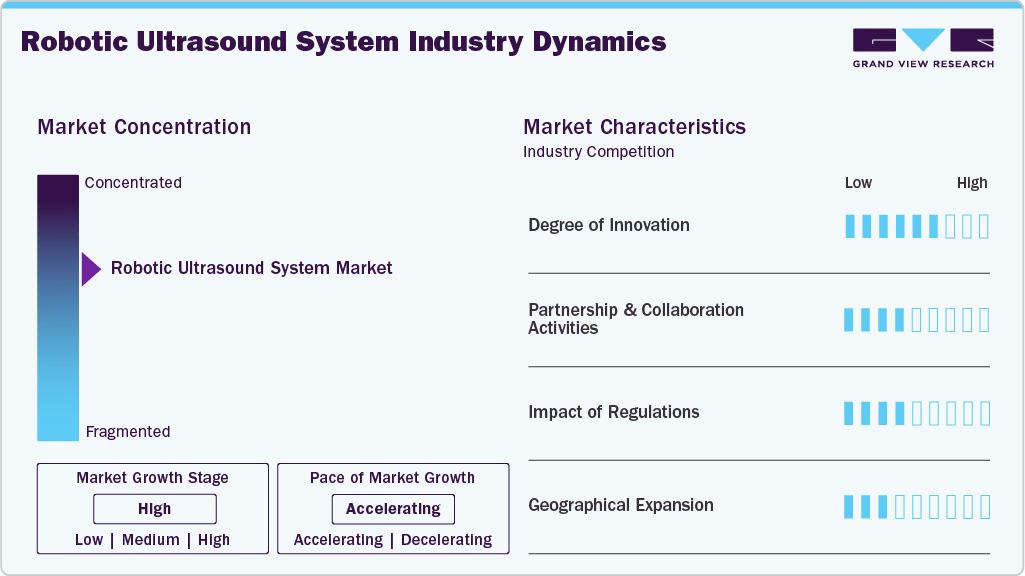
The robotic ultrasound industry is witnessing rapid innovation through autonomous scanning technologies. In May 2025, a study published in Frontiers in Robotics and AI introduced an autonomous robotic ultrasound scanning system (auto-RUSS) that combines a 7-degree-of-freedom robotic arm, force control, and ultrasound visualization, thereby improving scan reproducibility and reducing operator variability compared with both junior and senior physicians. This advancement highlights the growing role of AI and robotics in standardizing ultrasound imaging.
Strategic collaborations remain a key driver of growth as companies combine expertise in imaging, robotics, AI, and digital healthcare. For instance, in March 2025, GE HealthCare announced a collaboration with NVIDIA to advance AI-driven autonomous diagnostic imaging solutions, including autonomous ultrasound applications. The collaboration aimed to leverage NVIDIA’s AI and accelerated computing technologies alongside GE HealthCare’s ultrasound expertise to develop AI-enabled systems for image capture and analysis. The companies planned to use platforms including NVIDIA Isaac for Healthcare, Omniverse, and Cosmos to support robotic simulation, synthetic data generation, and AI development.
 To learn more about this report, Download Free Sample Report
Regulatory requirements have a moderate impact on the market because these systems integrate medical imaging, robotics, software, and, increasingly, AI, requiring manufacturers to demonstrate safety and effectiveness before commercialization. The FDA evaluates AI-enabled medical devices against applicable premarket requirements, while AI-based systems also face additional considerations related to software updates, performance, and real-world validation. These requirements can increase development time and costs, although established regulatory pathways such as 510(k) and De Novo support commercialization.
Manufacturers are expanding their robotic ultrasound portfolios by introducing new clinical applications for remote diagnostics and broader clinical applications. For instance, in October 2025, AdEchoTech expanded its MELODY robotic ultrasound platform through a collaboration with the Virtual Health Hub (VHH), establishing a Center of Excellence for Robotic Ultrasonography to deploy robotic ultrasound services in rural and Indigenous communities. This expansion demonstrates how companies are extending robotic ultrasound products into new geographic markets and healthcare applications, supporting wider commercial adoption.
Analyst Perspective
The robotic ultrasound system market is witnessing significant growth, driven by the increasing adoption of automation and artificial intelligence in diagnostic imaging. Healthcare providers are investing in robotic ultrasound technologies to improve scan consistency, reduce operator dependency, and expand access to high-quality imaging in remote and underserved areas through tele-ultrasound. The growing prevalence of chronic diseases, rising demand for minimally invasive diagnostic procedures, and ongoing advancements in robotic-assisted imaging platforms are further supporting market expansion. In addition, increasing investments in healthcare digitalization, favorable research initiatives, and the commercialization of next-generation robotic ultrasound systems are expected to accelerate adoption across hospitals, diagnostic imaging centers, and specialty clinics over the forecast period.
Product Insights
The trolley-based robotic ultrasound systems segment led the market with the largest revenue share of 63.7% in 2025, supported by the availability of commercially developed systems that offer greater flexibility in integrating robotic arms with conventional ultrasound equipment and multiple probe types. Various companies have developed trolley- or cart-based robotic ultrasound solutions; for instance, AdEchoTech’s MELODY integrates a teleoperable robotic arm with standard ultrasound equipment and supports convex, linear, and cardiac probes. In addition, ROPCA ApS’s ARTHUR provides robotic ultrasound capabilities for musculoskeletal imaging. The development of such systems across multiple clinical applications is supporting the adoption and revenue contribution of trolley/cart-based platforms.
The compact/portable robotic ultrasound systems segment is expected to grow at the fastest CAGR during the forecast period, supported by their portability, smaller footprint, and suitability for point-of-care and remote examinations. For instance, Clarius Mobile Health’s HD3 platform includes compact wireless scanners such as the L20 HD3 and L15 HD3, combining portability with AI-powered imaging and automated workflows. This growing availability of compact, AI-enabled ultrasound platforms is expected to support their integration into robotic and remote scanning applications, particularly in ambulatory, rural, and point-of-care settings.
Clinical Application Insights
The cardiology segment led the market with the largest revenue share of 53.0% in 2025. The segment growth is supported by the substantial cardiovascular disease burden and the resulting demand for cardiac imaging and echocardiography. According to the American Heart Association’s 2025 Heart Disease and Stroke Statistics Update, heart disease remained the leading cause of death in the U.S., with nearly 2,500 people dying from cardiovascular disease every day. In addition, according to a CDC report published in October 2024, 919,032 people died from cardiovascular disease in 2023, equivalent to approximately one in every three deaths. This persistent disease burden is expected to sustain demand for cardiac ultrasound examinations and to support the adoption of robotic ultrasound systems for standardized, remotely accessible echocardiography.
The lung & thoracic imaging segment is anticipated to grow at the fastest CAGR of 17.0% over the forecast period. The growth is driven by the rising burden of chronic respiratory diseases and the need for accessible, timely respiratory imaging. According to a WHO and European Respiratory Society report published in June 2025, more than 80 million people in the WHO European Region are affected by chronic respiratory diseases, while many additional cases remain undiagnosed. The high disease burden and diagnostic gap are expected to increase demand for lung ultrasound, particularly in point-of-care and remote settings, supporting the adoption of robotic ultrasound systems for lung and thoracic examinations.
End-Use Insights
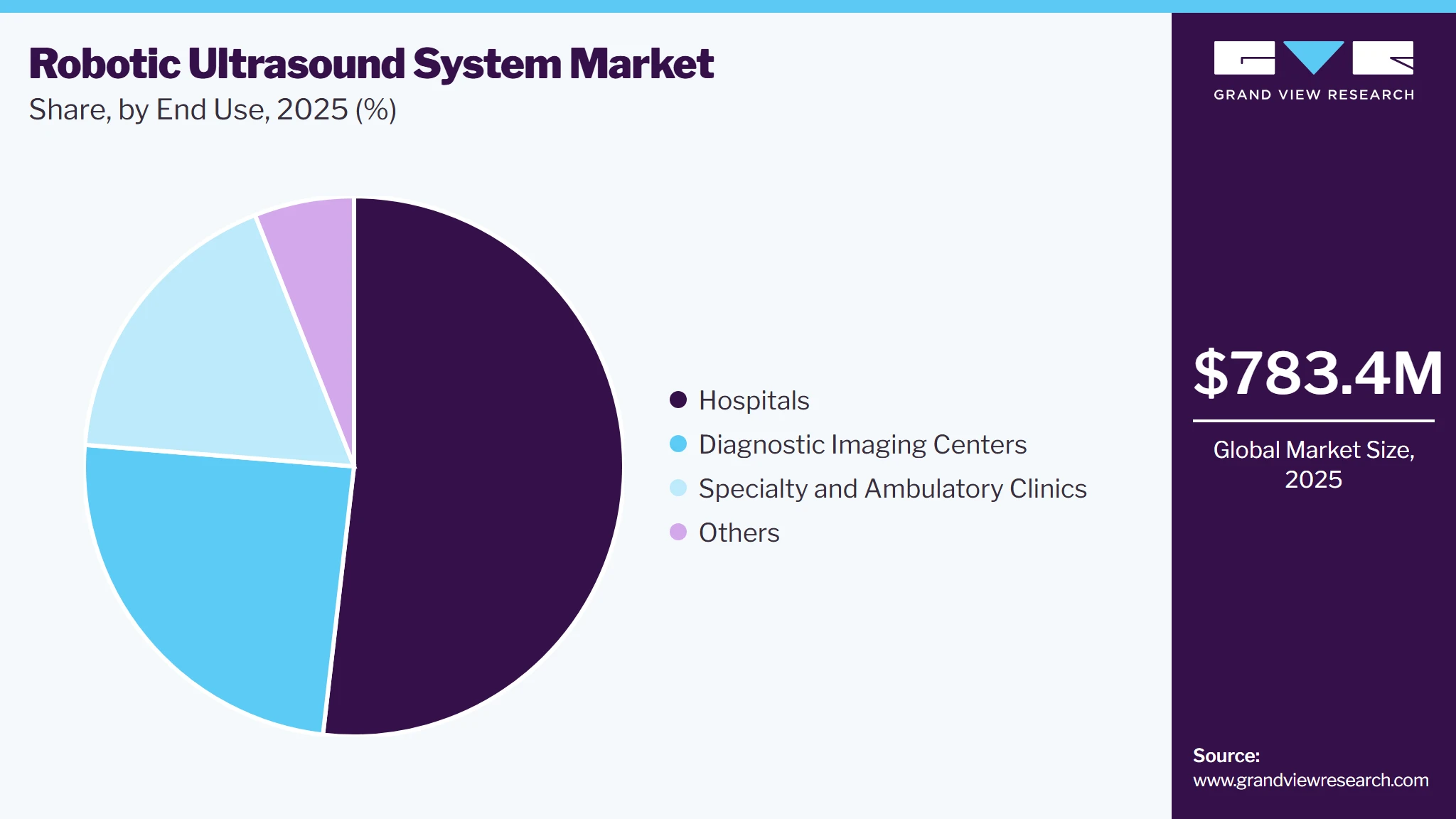
The hospitals segment led the market with the largest revenue share of 51.8% in 2025, supported by their high diagnostic imaging volumes, greater availability of ultrasound infrastructure, and concentration of specialist expertise. Hospitals are also increasingly adopting robotic ultrasound to address shortages of trained sonographers, reduce patient transfers, improve specialist utilization, and extend diagnostic services to locations without on-site experts. In addition, robotic systems can support remote examinations while allowing specialists to retain control over probe movement and ultrasound settings, making them particularly relevant for hospitals serving rural and underserved populations.
 To learn more about this report, Download Free Sample Report
The specialty and ambulatory clinics segment is expected to grow at the fastest CAGR of 17.8% during the forecast period. Growth is driven by the increasing shift toward outpatient care, rising demand for point-of-care ultrasound, and growing adoption of compact robotic ultrasound systems. These facilities are increasingly investing in advanced imaging technologies to improve diagnostic efficiency, reduce procedure time, and expand access to high-quality ultrasound services.
Regional Insights
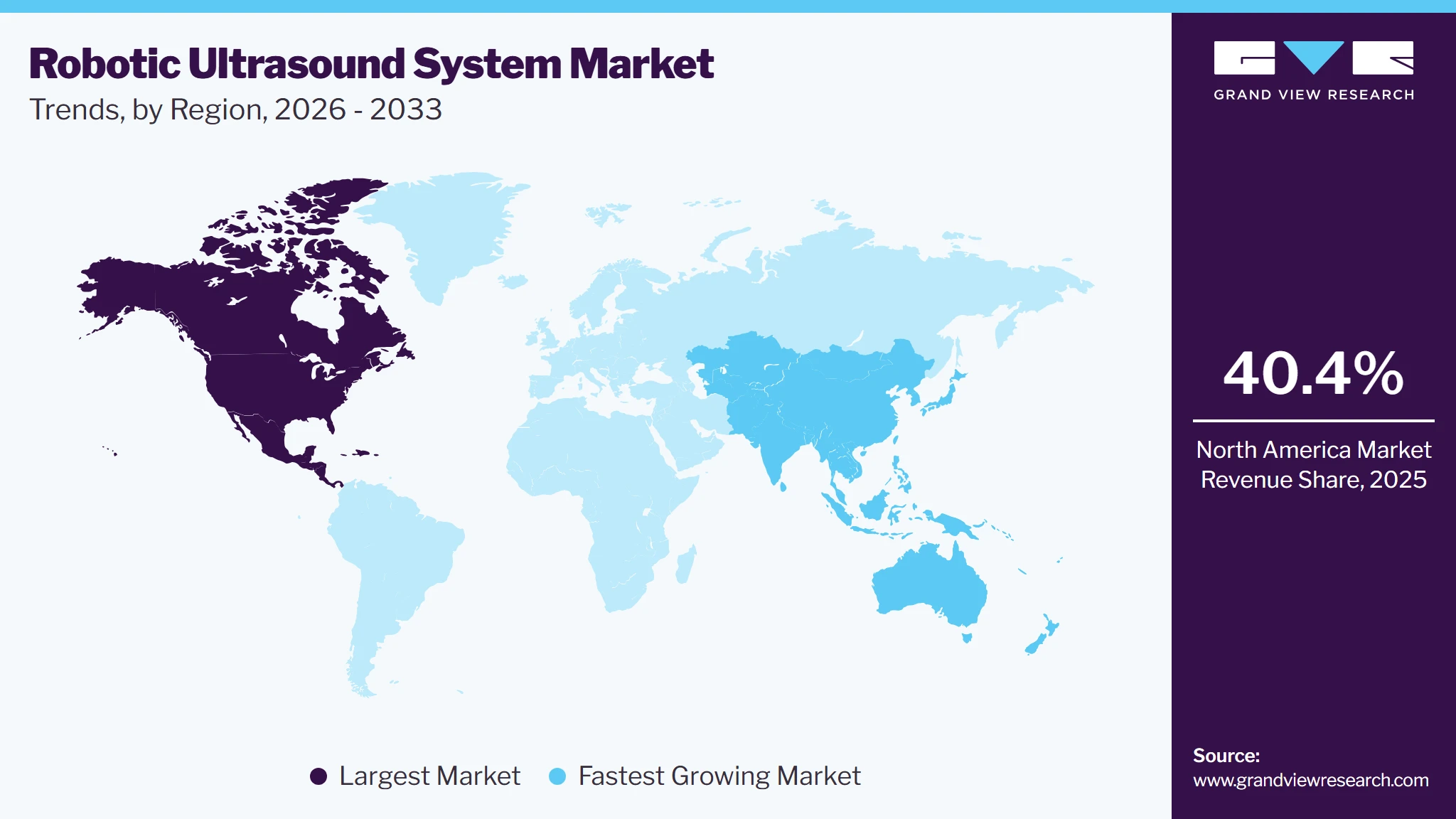
North America dominated the global robotic ultrasound system market with the largest revenue share of 40.4% in 2025. Market growth is driven by advanced healthcare infrastructure, early adoption of robotic imaging technologies, increasing investments in AI-enabled diagnostic systems, and the presence of leading medical device manufacturers. Rising demand for automated and remote ultrasound examinations is also supporting regional market growth.
 To learn more about this report, Download Free Sample Report
U.S. Robotic Ultrasound System Market Insights
The robotic ultrasound system market in the U.S. accounted for the largest market revenue share in North America in 2025. Growth is supported by high healthcare spending, strong R&D activities, and rapid adoption of robotic-assisted imaging technologies. For instance, in May 2025, researchers introduced US Pilot, an AI-powered robotic ultrasound assistant capable of semi-autonomous ultrasound examinations, highlighting continued innovation in robotic ultrasound technology.
Asia Pacific Robotic Ultrasound System Market Insights
The robotic ultrasound system market in the Asia Pacific is anticipated to grow at the fastest CAGR of 16.2% over the forecast period, driven by increasing healthcare investments, expanding access to diagnostic imaging, and rising adoption of AI-enabled and robotic medical technologies. Growing government support for healthcare modernization and the increasing burden of chronic diseases are further accelerating the demand for robotic ultrasound systems.
The China robotic ultrasound system market held a significant share of the Asia Pacific in 2025. Growth is driven by the expansion of AI-enabled remote diagnostics, the growing adoption of robotic ultrasound technology, and increasing collaboration between healthcare institutions and medical technology companies. For instance, in March 2025, Luohu Hospital Group and MGI Tech launched the International Remote Ultrasound Diagnosis and Global Remote Ultrasound Training Center in Shenzhen, where Chinese medical experts used MGI Tech’s MGIUS-R3 robotic ultrasound system to conduct real-time examinations of patients in Indonesia and remote regions of China.
The robotic ultrasound system market in India is witnessing steady growth, supported by increasing focus on AI-enabled medical devices, remote diagnostics, and improving access to specialist imaging services in underserved areas. For instance, Plebc Innovations’ AI-enabled Tele-Operated Robotic Ultrasound System, funded by BIRAC under the Department of Biotechnology, features a 7-degree-of-freedom robotic arm that enables radiologists to conduct ultrasound examinations remotely without repositioning the patient. The technology is specifically intended to provide ultrasound services in remote locations lacking specialists and to improve access to a wider pool of radiologists.
Europe Robotic Ultrasound System Market Trends
The robotic ultrasound system market in Europe is expected to grow significantly during the forecast period. The region is witnessing increasing adoption of robotic-assisted imaging technologies driven by rising demand for minimally invasive diagnostics, expanding telemedicine services, and growing investments in AI-enabled healthcare infrastructure. Favorable government initiatives supporting digital health, increasing research collaborations, and the presence of leading medical imaging companies are further accelerating market growth. In addition, the rising need to address shortages of skilled sonographers and improve access to diagnostic imaging is encouraging healthcare providers to adopt robotic ultrasound systems across hospitals and specialty care centers.
The UK robotic ultrasound system market is expected to grow at a significant CAGR over the forecast period, due to increasing adoption of AI-enabled imaging technologies across the National Health Service (NHS). Growing investments in digital healthcare, remote diagnostics, and robotic technologies are supporting market growth. The country's focus on improving diagnostic efficiency and expanding access to specialist imaging services is expected to accelerate the adoption of robotic ultrasound systems. For instance, in June 2025, NHS England announced plans to significantly expand the use of robotic technologies across the healthcare system to improve patient care and reduce waiting times, reflecting the country's broader commitment to adopting robotic healthcare.
The robotic ultrasound system market in Germany is expected to grow substantially during the forecast period, driven by the country’s advanced healthcare infrastructure and increasing focus on robotic-assisted imaging and healthcare automation. In addition, growing research and development activities in robotic ultrasound are supporting technological advancements in probe reachability and clinical workflow optimization. For instance, in December 2024, researchers involved in a German Research Foundation (DFG)-funded project reported advancements in robotic ultrasound technology aimed at improving robotic reachability and optimizing workflows for clinical applications, highlighting Germany’s continued investment in the development of robotic ultrasound solutions.
Latin America Robotic Ultrasound System Market Trends
The robotic ultrasound system market in Latin America is expected to grow rapidly during the forecast period. The rising burden of chronic diseases and digitalization of healthcare are driving the adoption of robotic imaging across hospitals, diagnostic centers, and specialty clinics. For instance, according to data published by the State University of Campinas in May 2025, 45% of Brazilians aged 18 years and older suffer from chronic noncommunicable diseases, highlighting the substantial need for accessible diagnostic imaging. In addition, Brazil’s advancement in robotic and remote healthcare technologies is expected to support the region’s future adoption of robotic ultrasound systems.
Middle East & Africa Robotic Ultrasound System Market Trends
The robotic ultrasound system market in the Middle East & Africa is expected to grow steadily during the forecast period, driven by increasing investments in healthcare infrastructure, rising adoption of digital health technologies, and growing demand for advanced diagnostic imaging. Governments across the region are focusing on expanding access to quality healthcare through telemedicine, AI-enabled diagnostics, and smart hospital initiatives. In addition, advances in healthcare, improvements in medical infrastructure, and the growing need to address shortages of skilled imaging professionals are expected to support the adoption of robotic ultrasound systems across hospitals, diagnostic imaging centers, and specialty clinics.
Key Robotic Ultrasound System Company Insights
Market players are involved in business activities, such as strategic collaborations and regional expansion, as emerging countries are still in the process of adopting the robotic ultrasound system industry. These strategic initiatives are expected to create future growth opportunities for this market.
Key Robotic Ultrasound System Companies
The following key companies have been profiled for this study on the global robotic ultrasound system market:
-
MGI Tech Co., Ltd.
-
AdEchoTech.
-
GE Healthcare
-
Wuhan Cobot Technology (COBOT)
-
Life Science Robotics
-
ROPCA ApS
-
Mendaera, Inc.
-
ArcScan, Inc.
-
Infinite Imaging
-
Apricity Robotics
-
Dopl Technologies Inc.
Competitive Benchmarking
Category
Operating Strategies
Competitive Edge
Weakness
Established Players (e.g., GE HealthCare, MGI Tech Co., Ltd., AdEchoTech)
- Focus on expanding robotic ultrasound platforms with AI-enabled imaging, remote tele-ultrasound capabilities, and integration with hospital imaging workflows.
- Invest in strategic partnerships, regulatory approvals, and global commercialization to strengthen market presence.
- Strong brand recognition, established distribution networks, and extensive expertise in diagnostic imaging.
- Robust R&D capabilities and broad clinical validation accelerate adoption across hospitals and diagnostic centers.
- High product development and regulatory compliance costs.
- Larger systems often involve significant capital investment and longer procurement cycles, limiting adoption among smaller healthcare facilities.
Emerging Players (e.g., Mendaera, Inc., Life Science Robotics, Apricity Robotics)
- Develop compact, AI-assisted robotic ultrasound systems focused on point-of-care imaging, automation, and minimally invasive workflows. Emphasize innovation, pilot collaborations with healthcare providers, and niche clinical applications to gain market traction.
- High innovation agility, faster product development, and strong focus on next-generation robotic imaging technologies. Flexible solutions address emerging needs such as remote imaging, portable diagnostics, and workflow automation.
- Limited commercial footprint and distribution networks compared to established manufacturers.
- Dependence on funding, regulatory approvals, and clinical validation may slow large-scale market expansion and global adoption.
Recent Development
-
In January 2026, Theraclion announced key regulatory and commercial milestones for its Sonovein robotic high-intensity focused ultrasound (HIFU) platform, including progress in the U.S., Europe, and China. The company also highlighted growing commercial adoption of its non-invasive robotic ultrasound technology through its pay-per-use business model.
-
In July 2026, U.S.-based medical technology company Dopl Technologies raised USD 6.3 million in seed funding to advance its remote robotic ultrasound platform and pursue U.S. FDA clearance. The funding is expected to support regulatory advancement and platform development, while the technology aims to address sonographer shortages and improve access to ultrasound imaging in rural and underserved areas by reducing geographic barriers and delays in care.
-
In April 2026, researchers at Concordia University developed an AI-powered robotic ultrasound system capable of autonomously performing cardiac ultrasound examinations without direct guidance from a sonographer. The system uses an AI agent to control a robotic arm holding the ultrasound probe and automatically identify standard cardiac imaging views. The technology is designed to improve scan consistency, reduce operator fatigue, and expand access to cardiac imaging, particularly in remote and underserved areas.
Robotic Ultrasound System Market Report Scope
Report Attribute
Details
Market size in 2025
USD 783.4 million
Estimated market size in 2026
USD 897.8 million
Projected market size by 2033
USD 2,203.7 million
Growth rate
CAGR of 13.7% from 2026 to 2033
Base year for estimation
2025
Historical data
2021 - 2024
Forecast period
2026 - 2033
Quantitative units
Revenue in USD million/billion, and CAGR from 2026 to 2033
Report coverage
Revenue forecast, company ranking, competitive landscape, growth factors, and trends
Segments covered
Clinical application, product, end-use, region
Regional scope
North America; Europe; Asia Pacific; Latin America; MEA
Country scope
U.S.; Canada; Mexico; UK; Germany; France; Italy; Spain; Denmark; Norway; Sweden; China; Japan; India; Australia; South Korea; Thailand; Brazil; Argentina; South Africa; Saudi Arabia; UAE; Kuwait
Key companies profiled
MGI Tech Co., Ltd.; AdEchoTech; GE HealthCare; Wuhan Cobot Technology (COBOT); Life Science Robotics; ROPCA ApS; Mendaera, Inc.; ArcScan, Inc.; Infinite Imaging; Apricity Robotics; Dopl Technologies Inc.
Customization scope
Free report customization (equivalent to 8 analysts working days) with purchase. Addition or alteration to country, regional & segment scope
Pricing and purchase options
Avail customized purchase options to meet your exact research needs. Explore purchase options
Global Robotic Ultrasound System Market Report Segmentation
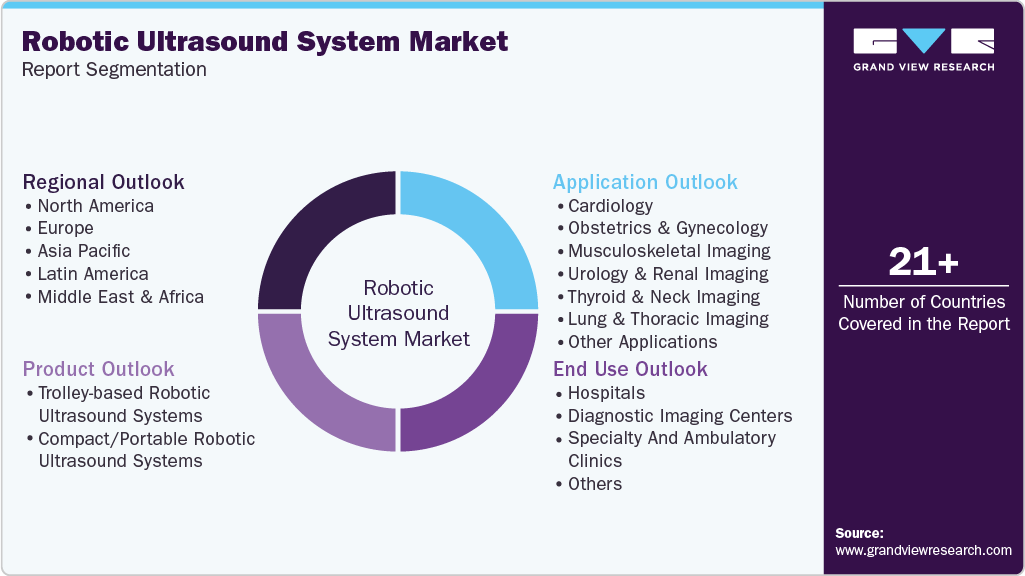
This report forecasts revenue growth at the global, regional, & country levels and provides an analysis of industry trends in each sub-segment from 2021 to 2033. For this study, Grand View Research has segmented the global robotic ultrasound system market report based on the product, clinical application, end-use, and region:
 To learn more about this report, Download Free Sample Report
-
Product Outlook (Revenue, USD Million, 2021 - 2033)
-
Trolley-based Robotic Ultrasound Systems
-
Compact/Portable Robotic Ultrasound Systems
-
-
Clinical Application Outlook (Revenue, USD Million, 2021 - 2033)
-
Cardiology
-
Obstetrics & Gynecology
-
Musculoskeletal Imaging
-
Urology & Renal Imaging
-
Thyroid & Neck Imaging
-
Lung & Thoracic Imaging
-
Other Applications
-
-
End-Use Outlook (Revenue, USD Million, 2021 - 2033)
-
Hospitals
-
Diagnostic Imaging Centers
-
Specialty and Ambulatory Clinics
-
Others
-
-
Regional Outlook (Revenue, USD Million, 2021 - 2033)
-
North America
-
U.S.
-
Canada
-
Mexico
-
-
Europe
-
UK
-
Germany
-
France
-
Italy
-
Spain
-
Denmark
-
Sweden
-
Norway
-
-
Asia Pacific
-
Japan
-
China
-
Australia
-
India
-
South Korea
-
Thailand
-
-
Latin America
-
Brazil
-
Argentina
-
-
Middle East & Africa
-
South Africa
-
Saudi Arabia
-
UAE
-
Kuwait
-
-
Research Methodology
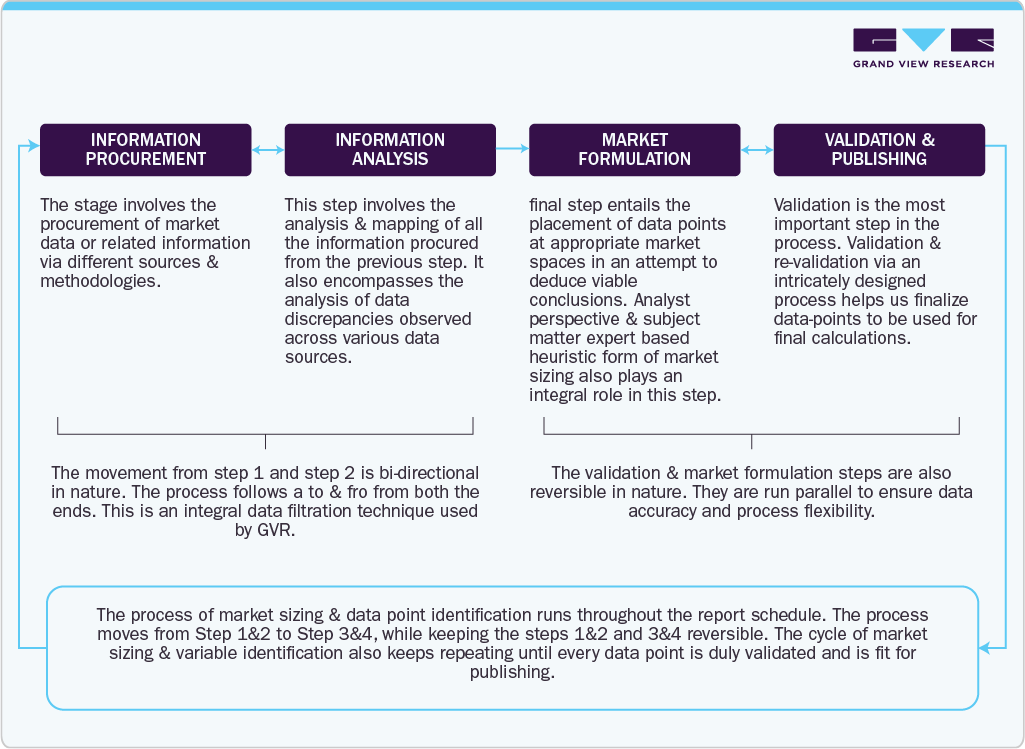
The robotic ultrasound system market figures in this report are based on a proven research process that combines executive interviews with secondary research from proprietary databases, company filings, and recognized regulatory and institutional sources. Market size is built through value-chain sizing-reconciling supply-side and demand-side estimates-and triangulated with bottom-up and top-down approaches. Every estimate passes multiple levels of expert validation before publication, with eachrobotic ultrasound system segment quantified using the revenue-capture definitions in the table below.
Segment Definition
Segment
Revenue capture definition
Trolley-based Robotic Ultrasound Systems
Robotic ultrasound systems mounted on a wheeled/trolley platform that integrate robotic probe positioning with conventional ultrasound imaging equipment. These systems are primarily designed for hospital and clinical environments requiring stable, repeatable, and remotely controlled examinations.
Compact/Portable Robotic Ultrasound Systems
Smaller and mobile robotic ultrasound platforms are designed for flexible deployment across different clinical locations and point-of-care environments. These systems emphasize portability, rapid setup, remote operation, and use in settings with limited access to conventional ultrasound infrastructure.
Cardiology
Robotic ultrasound systems used to acquire and support imaging of the heart and cardiovascular structures, including echocardiographic examinations. They enable standardized probe positioning and image acquisition for cardiac assessment.
Obstetrics & Gynecology
Robotic ultrasound systems used for imaging during pregnancy and for evaluating female reproductive organs. Applications include fetal monitoring, obstetric examinations, and assessment of the uterus and ovaries.
Musculoskeletal Imaging
Robotic ultrasound systems used to examine muscles, tendons, ligaments, joints, and other soft-tissue structures. They support imaging for injury assessment, inflammatory conditions, and musculoskeletal diagnosis.
Urology & Renal Imaging
Robotic ultrasound systems used to visualize the kidneys, urinary bladder, prostate, and other structures within the urinary system. They support assessment of conditions such as renal abnormalities, urinary obstruction, and prostate-related disorders.
Thyroid & Neck Imaging
Robotic ultrasound systems used to examine the thyroid gland and surrounding neck structures, including cervical soft tissues and lymph nodes. These systems support detection and monitoring of nodules, enlargement, and other structural abnormalities.
Lung & Thoracic Imaging
Robotic ultrasound systems used to perform ultrasound-based assessment of the lungs, pleural space, and other accessible thoracic structures. They support applications such as pleural assessment, fluid detection, and point-of-care thoracic imaging.
Other Applications
Includes robotic ultrasound applications outside the major clinical categories, such as abdominal, vascular, breast, emergency, and general diagnostic imaging. The segment covers emerging or specialized applications where robotic probe manipulation provides clinical or operational benefits.
Hospitals
Includes public and private hospitals using robotic ultrasound systems across diagnostic, procedural, and specialty departments. Demand is supported by the need for advanced imaging capabilities, standardized examinations, and remote or automated workflows.
Diagnostic Imaging Centers
Includes standalone and hospital-affiliated imaging centers that provide ultrasound and other diagnostic imaging services. Robotic systems are used to improve the consistency of examinations, workflow efficiency, and access to specialized ultrasound expertise.
Specialty and Ambulatory Clinics
Includes outpatient clinics, specialty practices, and ambulatory healthcare facilities using robotic ultrasound for targeted diagnostic examinations. These facilities typically prioritize compact systems, workflow flexibility, and access to imaging without hospital-based infrastructure.
Others
Includes research institutions, academic medical centers, mobile healthcare units, military/remote healthcare facilities, and other healthcare organizations using robotic ultrasound systems. These users generally adopt the technology for specialized imaging, research, training, or remote-care applications.
Estimation Model
 To learn more about this report, Download Free Sample Report
Market-Specific Research Models:
Consensus-Based Estimates & Forecasting
The robotic ultrasound system market presents emerging to dominant opportunities, featuring global key players such as MGI Tech Co., Ltd., AdEchoTech, GE HealthCare, Wuhan Cobot Technology (COBOT), Life Science Robotics, ROPCA ApS, Mendaera, Inc., ArcScan, Inc., Infinite Imaging, Apricity Robotics, and Dopl Technologies Inc.
To ensure a holistic approach, the GVR research team adopted a comprehensive methodology, considering multiple companies worldwide and using various variables to improve data accuracy.
Our Methodology Included:
-
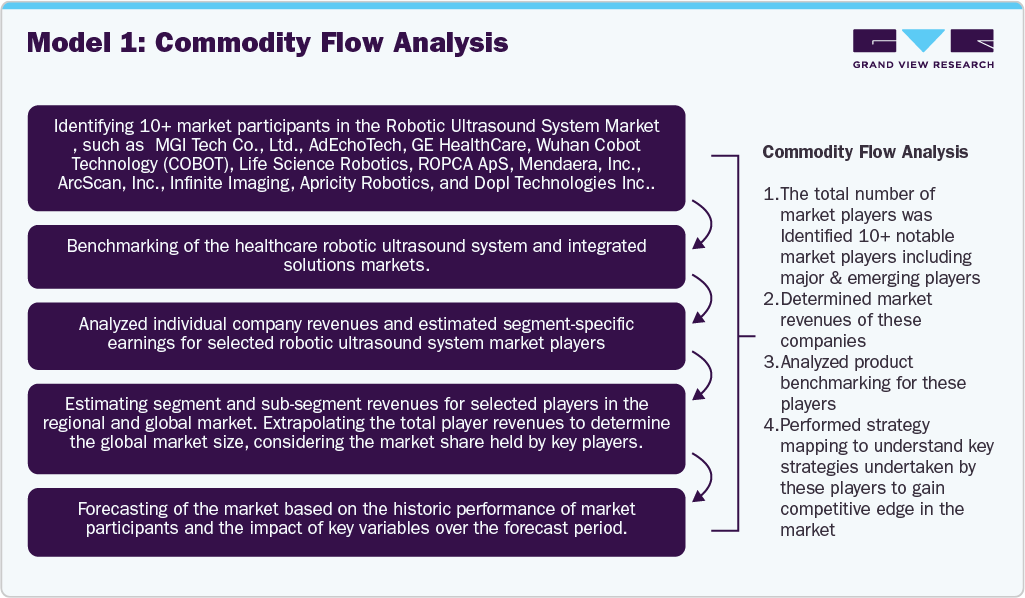
Model 1: Commodity Flow Analysis - For public players, annual reports were used as references. For private players, premium paid data sources such as S&P Global were used to obtain the latest revenue insights.
-
Model 2: Parent Market Analysis
-
Model 3: Country-level Multivariate Analysis Assumptions
-
Model 4: Segment-level Multivariate Analysis Assumptions
-
Model 5: Robotic Ultrasound System Market CAGR Calculations
Model 1: Commodity Flow Analysis
 To learn more about this report, Download Free Sample Report
Commodity flow analysis was employed to track the movement of the robotic ultrasound system through the value chain, from technology providers to end users. This analysis provided insights into demand generation points, intermediary roles, and ultimate consumption patterns.
Delivered Customizations
This report has been delivered with the following In-depth customizations
Client Request
Customization Delivered
Value Adds
Robotic ultrasound device volume
Estimated the annual volume of robotic ultrasound systems/units deployed across key countries and regions, segmented by individual product/system, year, and application area. The analysis considers the number of systems installed in hospitals, diagnostic centers, specialty clinics, and other relevant healthcare facilities, providing a physical-unit perspective alongside market revenue estimates.
Quantifies the actual physical demand for robotic ultrasound equipment, enabling manufacturers and investors to assess unit penetration, deployment potential, and future equipment requirements beyond revenue-based market sizing.
Remote vs. autonomous opportunity assessment
Segmented the robotic ultrasound market into remote/tele-operated systems and autonomous or AI-enabled robotic systems based on the level of operator involvement. The assessment evaluates systems controlled remotely by sonographers/physicians separately from systems capable of automated probe positioning, image acquisition, scanning protocols, and AI-assisted or autonomous assessment.
Clarifies the technology-specific market opportunity by identifying where demand is shifting from remotely controlled robotic procedures toward increasingly autonomous ultrasound workflows. This supports technology benchmarking, product positioning, and investment prioritization.
Replacement & installed-base analysis
Developed an installed-base and replacement-cycle assessment covering new system installations, replacement of aging equipment, system upgrades, and expansion of existing robotic ultrasound fleets. The analysis considers the existing installed base, estimated useful life/replacement cycles, technological obsolescence, upgrade requirements, and incremental demand from new healthcare facilities.
Captures recurring equipment demand that may not be visible through new-installation estimates alone. This helps quantify the replacement opportunity, identify future upgrade cycles, and distinguish between market growth generated by new deployments versus replacement and modernization demand.
Frequently Asked Questions About This Report
The global robotic ultrasound system market size was valued at USD 783.4 million in 2025 and is estimated at USD 897.8 million for 2026.
The global robotic ultrasound system market is expected to grow at a CAGR of 13.7% from 2026 to 2033, reaching USD 2,203.7 million by 2033.
North America dominated with a 40.4% revenue share in 2025.
Rising demand for standardized diagnostic imaging, and increasing adoption of remote healthcare are accelerating robotic ultrasound system deployment. These platforms improve examination consistency, expand specialist access, reduce operator dependency, and support ultrasound delivery across underserved healthcare facilities.
Some of the key players operating in the robotic ultrasound system market include MGI Tech Co., Ltd., AdEchoTech, GE HealthCare, Wuhan Cobot Technology (COBOT), Life Science Robotics, ROPCA ApS, Mendaera, Inc., ArcScan, Inc., Infinite Imaging, Apricity Robotics, and Dopl Technologies Inc.
Asia Pacific is the fastest-growing region over the forecast period.
The trolley-based robotic segment led with a 63.1% revenue share in 2025, while the compact/portable robotic ultrasound systems segment is the fastest-growing segment.
The cardiology segment led with a 53.0% revenue share in 2025, while the lung & thoracic imaging segment is expected to be the fastest-growing market.
The hospitals segment led the market with the largest revenue share of 51.8% in 2025, supported by their high diagnostic imaging volumes, greater availability of ultrasound infrastructure, and concentration of specialist expertise.
About the Author(s)
Medical Devices Research Team
Healthcare · Medical DevicesThis report was authored by the medical devices research team at Grand View Research - comprising two research analysts, one senior research analyst, and one industry expert - with specialized expertise in the medical devices segment of the healthcare industry. All findings are based on proprietary healthcare databases, executive interviews, and regulatory analysis, subject to internal peer review prior to publication.
Last Updated:
Speak to Analyst

Customize this report to your needs - add regions, segments, or data points, with 20% free customization.
Or view our licence options:


ISO 9001:2015 & 27001:2022 Certified
We are GDPR and CCPA compliant! Your transaction & personal information is safe and secure. For more details, please read our privacy policy.


