
- Home
- »
- Advanced Interior Materials
- »
-
Rubber Gloves Market Size & Share Report, 2026-2033GVR Report cover
![Rubber Gloves Market (2026 - 2033)Report]()
Rubber Gloves Market (2026 - 2033)
Size, Share & Trends Analysis Report By Material (Latex, Nitrile), By Distribution Channel, By Type (Powdered, Powder Free), By Product (Disposable), By End Use(Medical & Healthcare, Automotive), By Region, And Segment Forecasts
Market Size, 2025
$14.8BMarket Estimate, 2026
$16.0BMarket Forecast, 2033
$27.5BCAGR, 2026–2033
8.1%Rubber Gloves Market Summary
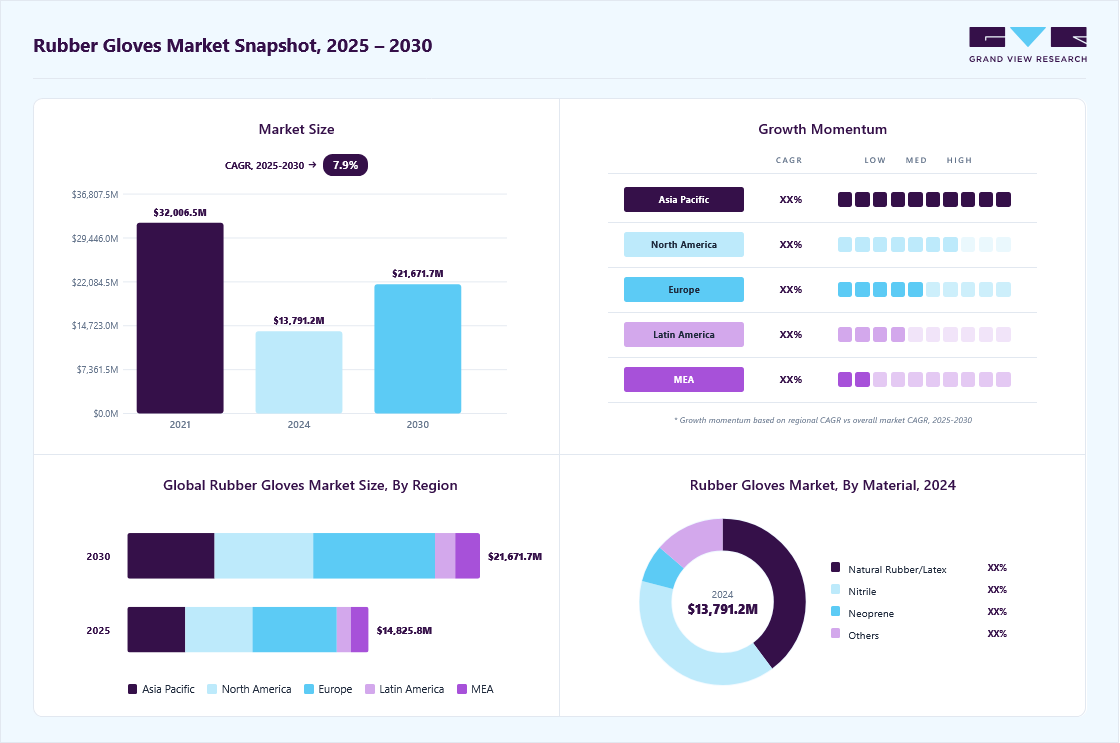
The global rubber gloves market size was valued at USD 14.8 billion in 2025 and is projected to grow from USD 16.0 billion in 2026 to USD 27.5 billion by 2033, at a CAGR of 8.1% from 2026 to 2033. Europe dominated the market, accounting for a revenue share of 34.9% in 2025. Stringent regulations, high costs related to workplace hazards, and increasing awareness of worker safety and security are expected to drive industry growth during the forecast period.
Key Market Trends & Insights
- By material: Nitrile segment led the market with the largest revenue share of 40.2% in 2025.
- By distribution channel: Physical segment led the market with the largest revenue share of 65.8% in 2025.
- By type: Powder free segment led the market with the largest revenue share of 71.9% in 2025.
- By product: Disposable segment led the market with the largest revenue share of 72.3% in 2025.
- By end use: Medical & healthcare segment led the market with the largest revenue share of 78.2% in 2025.
Regional Highlights
- Largest regional market: Europe (34.9% revenue share, 2025)
- By country: The Germany held the largest market share in 2025.
Market Size & Forecast
- Market size in 2025: USD 14.8 Billion
- Estimated market size in 2026: USD 16.0 Billion
- Projected market size by 2033: USD 27.5 Billion
- CAGR (2026-2033): 8.1%
They are often more affordable than specialized gloves, providing a balance of protection and value. In addition, rubber gloves are being used in many heavy-duty industries, such as construction, chemicals, automotive, oil and gas, and waste management. These gloves also provide a better grip and ease of use than bare hands, which is another benefit. Rubber gloves, available in materials like latex, nitrile, and vinyl, offer versatility to suit various needs. Nitrile gloves, in particular, are favored for their resistance to chemicals and long-lasting strength. The growing emphasis on workplace safety and strict regulations imposed by governments globally are contributing to the rising demand and market expansion.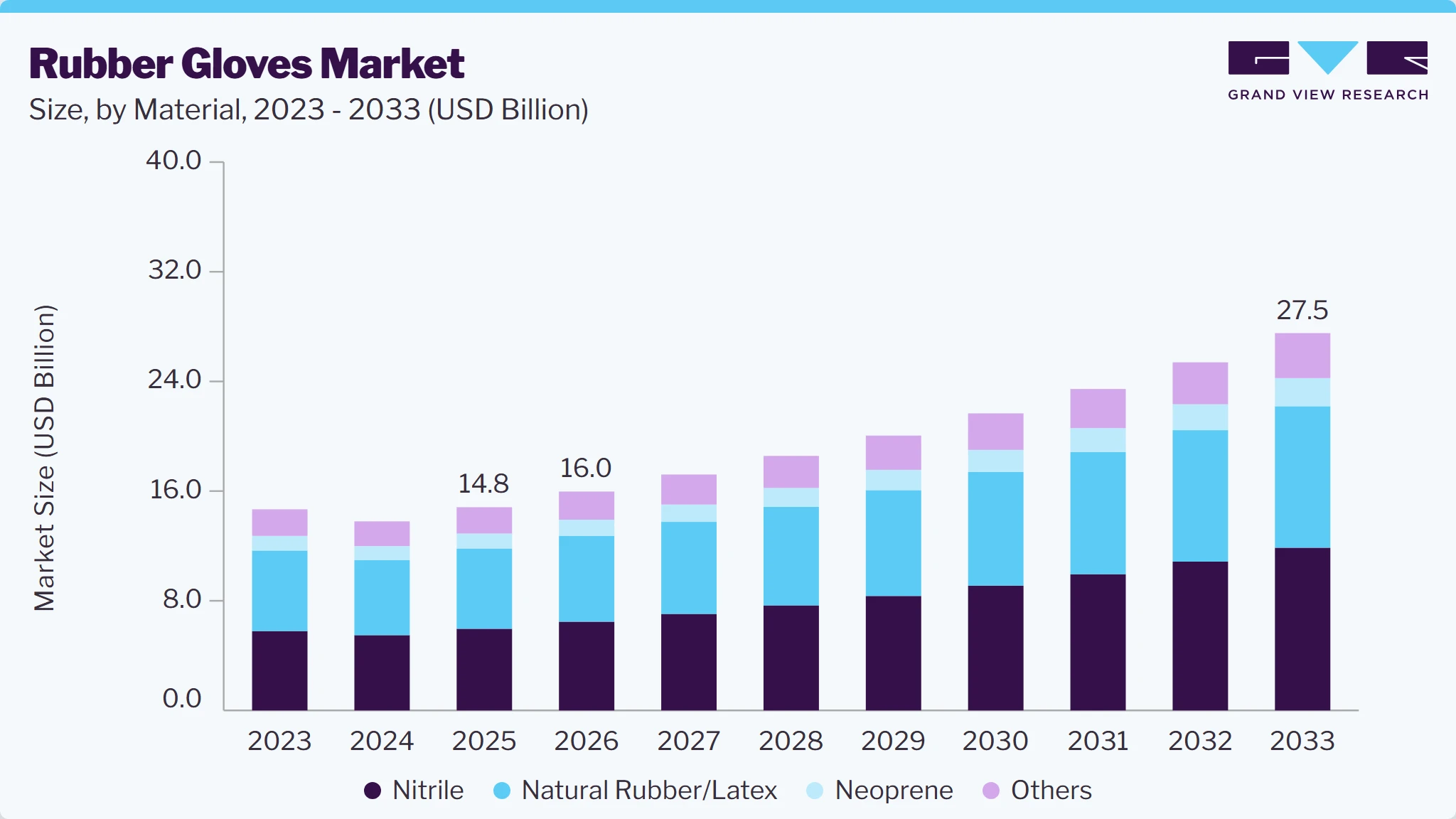
The demand was further accelerated by the COVID-19 pandemic, which highlighted the crucial role of personal protective equipment (PPE). The growth of healthcare services, medical treatments, and diagnostics, along with expanding research and biotechnology sectors, drives the ongoing demand for gloves in hospitals, clinics, labs, and research environments to ensure safety when handling chemicals, biological materials, and pharmaceuticals. Disposable gloves eliminate the need for cleaning or sanitizing reusable gloves, offering a more efficient and hygienic solution.
Market Dynamics
The rubber gloves market is shaped by a combination of healthcare, industrial, regulatory, technological, and economic factors that influence demand and purchasing patterns across end-use sectors. Stringent workplace safety regulations, infection control standards, and hygiene requirements drive the adoption of protective gloves in healthcare, manufacturing, food processing, laboratories, and chemical handling applications. Demand is further influenced by the growth of healthcare services, increasing awareness of occupational safety, and the expansion of industrial activities worldwide. Material selection preferences, including natural rubber latex, nitrile, neoprene, and other synthetic alternatives, play a key role in product adoption based on performance, comfort, durability, and allergen considerations. Additionally, raw material availability and pricing, supply chain stability, labor costs, trade policies, and broader economic conditions affect market profitability and investment decisions.
The increasing emphasis on workplace safety, hygiene, and infection prevention is a major factor driving growth in the rubber gloves market. Across industries such as healthcare, manufacturing, food processing, pharmaceuticals, chemicals, and laboratories, organizations are prioritizing the protection of workers from contamination, hazardous substances, and infectious agents. Stringent government regulations and occupational safety standards requiring the use of personal protective equipment (PPE) have further accelerated glove adoption.
In healthcare settings, the need to prevent cross-contamination and healthcare-associated infections continues to support high consumption of disposable rubber gloves. Growing awareness of employee health and safety, combined with stricter compliance requirements, has encouraged employers to implement comprehensive workplace protection measures. Additionally, increased preparedness for infectious disease outbreaks and heightened hygiene practices across public and private sectors are contributing to sustained demand.
Fluctuations in the prices of key raw materials, including natural rubber latex, nitrile butadiene rubber (NBR), and other synthetic compounds, remain a significant restraint for the rubber gloves market. Price instability can increase manufacturing costs, compress profit margins, and create challenges in maintaining competitive pricing. Additionally, supply chain disruptions and variations in raw material availability may affect production planning and procurement strategies, particularly for manufacturers operating in cost-sensitive markets.
The growing demand for environmentally responsible products presents a significant opportunity for the rubber gloves market. Manufacturers are increasingly investing in biodegradable materials, sustainable production processes, and recyclable packaging solutions to address evolving environmental concerns and regulatory expectations. As healthcare providers, industrial users, and corporate buyers place greater emphasis on sustainability initiatives, the adoption of eco-friendly rubber gloves is expected to create new growth avenues and strengthen market competitiveness.
Analyst Perspective
The rubber gloves market continues to be driven by the growing importance of workplace safety, infection prevention, and hygiene standards across healthcare and industrial sectors. While healthcare remains the largest consumer of rubber gloves, demand is increasingly expanding into food processing, pharmaceuticals, chemicals, electronics, and manufacturing industries where worker protection and contamination control are critical. The market is also witnessing a gradual shift toward higher-performance and synthetic glove materials, particularly nitrile gloves, due to their superior chemical resistance and reduced allergy concerns. Industries continue to prioritize worker safety and operational compliance, and manufacturers offering durable, comfortable, and application-specific glove solutions are expected to benefit from sustained market expansion.
Material Insights
Based on material, the nitrile segment led the market with the largest revenue share of 40.2% in 2025. These gloves are known for their excellent elasticity, comfort, and superior fit. Their high tactile sensitivity makes them ideal for medical and dental procedures that require precision. They also offer effective protection against biological hazards like viruses and bacteria, making them widely used in healthcare. Disposable rubber/latex gloves, are relatively inexpensive, making them a cost-effective choice for various industries needing protection at scale.
The nitrile segment is expected to grow significantly at a CAGR of 8.9% over the forecast period. Nitrile gloves are preferred by individuals with latex allergies, boosting demand in healthcare and other sectors. Their resistance to chemicals, oils, and solvents makes them ideal for pharmaceuticals, automotive, and cleaning industries. Known for durability and puncture resistance, nitrile gloves are essential in medical, laboratory, and industrial settings. Increasing workplace safety standards and hygiene regulations further drive their adoption.
Distribution Channel Insights
Based on distribution channel, the physical segment led the market with the largest revenue share of 65.8% in 2025. These channels provide convenient supply chain management, where gloves are made and delivered to end customers through wholesalers and retailers. Online deliveries might be prolonged due to insufficient availability or a remote delivery address, which further boosts the demand for physical channels. Many offline retailers provide bulk buying options, offering cost savings for businesses requiring large quantities. Customers often favor established offline retailers due to the trust and credibility they have built over time.
The online distribution channel is expected to grow at the fastest CAGR of 9.4% over the forecast period, fueled by the COVID-19 pandemic, where governments in many different nations instituted stringent lockdowns and customers refrained from going outdoors. During the pandemic, online businesses heavily invested in expanding their supply chains, keeping shipping costs low, and obtaining economies of scale which drove consumers toward online platforms. Online platforms break down geographical barriers, allowing customers worldwide to access rubber gloves, thus expanding the market beyond local or regional suppliers.
Type Insights
Based on type, the powder free segment led the market with the largest revenue share of 71.9% in 2025, as they are typically double-chlorinated and simple to put on. These gloves have high demand in medical, food processing, and chemical industries as they have a textured surface that enhances grip. Powder-free gloves prevent residue from transferring onto surfaces, equipment, or skin, ensuring a cleaner environment. Therefore, salons and beauty settings use these gloves to avoid the transfer of powder on clients' skin or products.
The powdered gloves market is expected to grow significantly at a CAGR of 6.7% over the forecast period. The powder aids in easy donning and removal, improves grip, and reduces perspiration and moisture within the gloves. Cornstarch and calcium carbonate are the two most common powders utilized in these gloves. Due to their low cost and easy availability, they continue to be in demand for applications such as laboratory studies in schools and colleges and daily use among the general public.
Product Insights
Based on product, the disposable segment led the market with the largest revenue share of 72.3% in 2025. Workers in the medical and food processing industries are predicted to strongly demand disposable gloves, as they use multiple pairs of gloves for different procedures. Disposable gloves are designed for single use and are cost-effective. Disposable gloves are simple to use and discard after one use, removing the need for cleaning or sanitizing, which saves both time and effort. Each pair offers a fresh layer of protection, reducing contamination risks from reuse.
The durable gloves segment is estimated to grow significantly at a CAGR of 7.0% over the forecast period, as these gloves are intended for usage in harsh environments, such as oil and gas, construction, chemicals, and automobiles. They can be reused numerous times and have high durability, strength, reduced waste output, and other environmental benefits. Furthermore, these gloves are thicker than disposable ones, provide superior tear resistance, and assure better hand protection. Their extended lifespan makes them cost-effective for industries needing reliable hand protection.
End Use Insights
Based on end use, the medical & healthcare segment led the market with the largest revenue share of 78.2% in 2025, owing to their common use by doctors and patients to prevent cross-contamination and the transmission of pathogens during medical tests and procedures. Furthermore, the COVID-19 pandemic boosted the demand for examination gloves among healthcare personnel for testing and examination. Rubber gloves are essential for tasks like administering injections, dressing wounds, conducting physical exams, ensuring cleanliness, and infection prevention. They are a key component of personal protective equipment (PPE), helping healthcare settings meet strict safety and hygiene regulations.
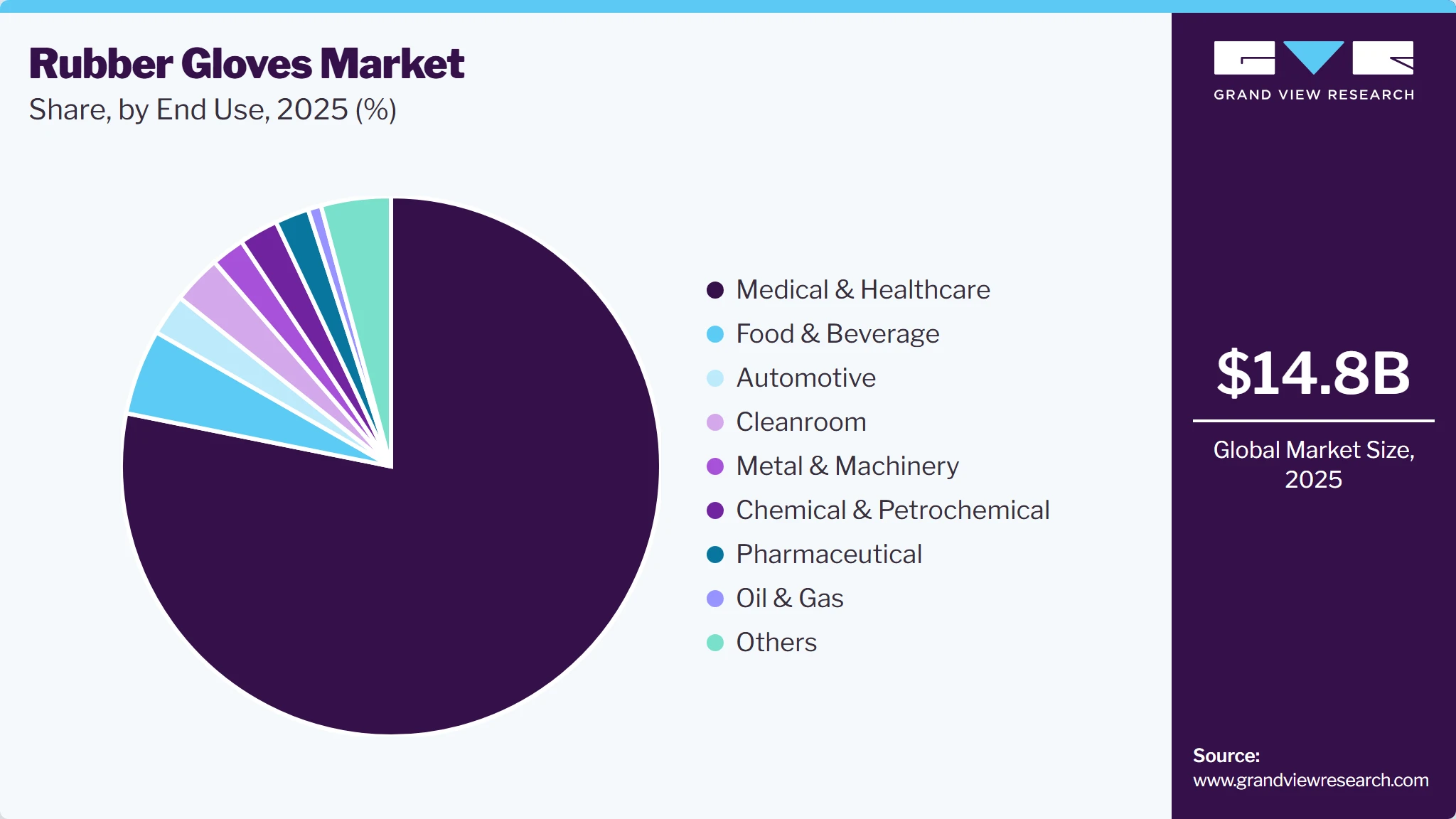
The pharmaceutical industry’s demand for rubber gloves is expected to grow significantly at the CAGR of 8.0% over the forecast period. Breakthroughs in medical research, biotechnology, and personalized medicine have led to new treatments and therapies, further increasing the demand for the industry. Rubber gloves act as a barrier, preventing contamination of drugs, chemicals, and pharmaceutical products during manufacturing. During formulation and testing, they protect workers from hazardous substances like toxic chemicals and active pharmaceutical ingredients (APIs).
Regional Insights
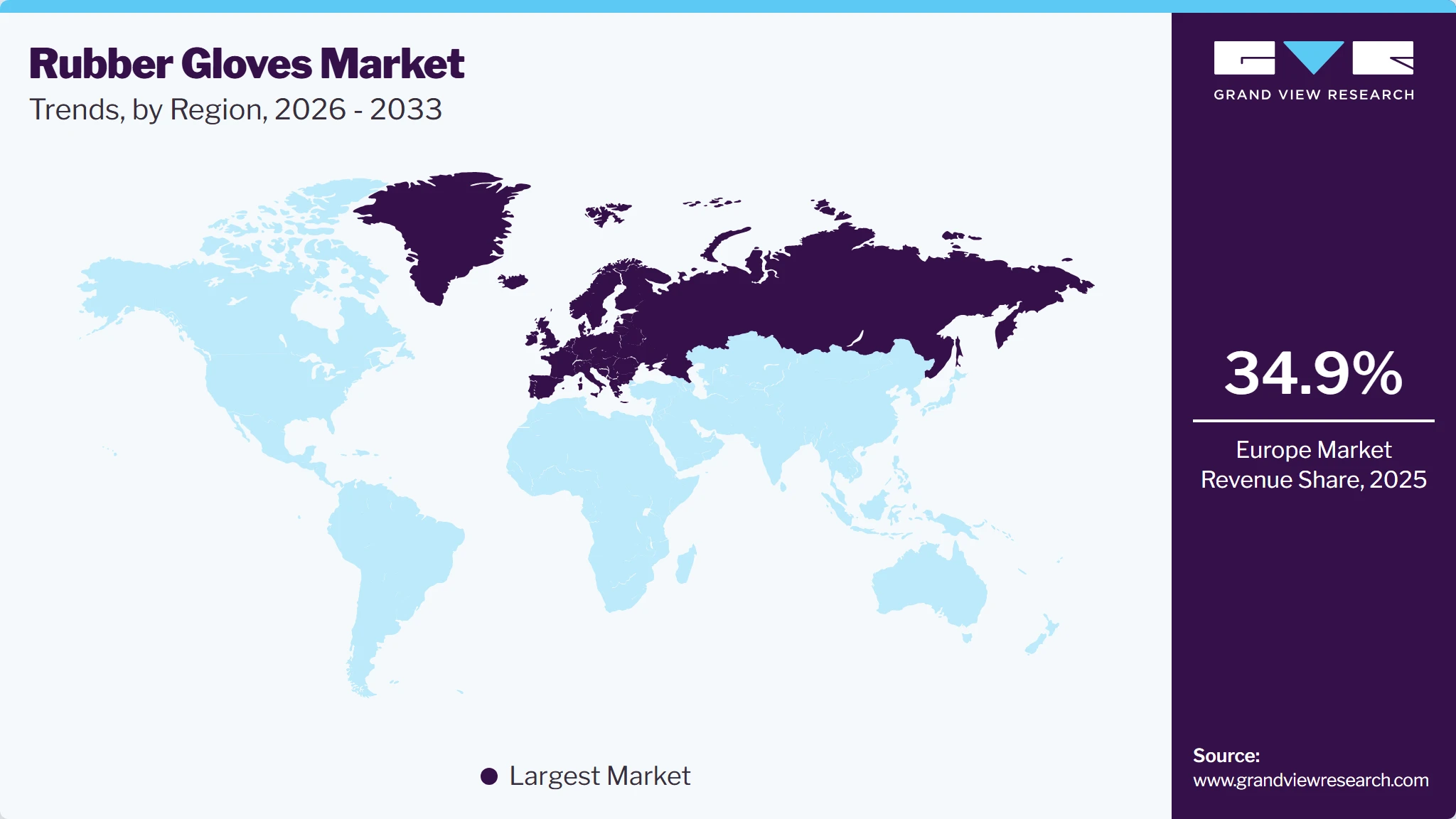
Europe dominated the rubber gloves market with the largest revenue share of 34.9% in 2025. Rubber gloves are in high demand in the region due to the rising need for protective gloves in food & beverage, metal production, oil & gas, automotive, and chemical sectors. The rise in medical and healthcare spending can be ascribed to greater public awareness about the importance of prevention of infection and communicable diseases. As environmental awareness grows, rising demand for sustainable, eco-friendly gloves and increased hygiene and safety awareness in workplaces such as factories, labs, and schools drives the market growth.
Germany Rubber Gloves Market Trends
The rubber gloves market in Germany held the largest share in the Europe region in 2025. Germany's growing healthcare spending, driven by an aging population, medical advancements, and higher hygiene standards, is boosting demand for hand protection. The country’s industrial sector, particularly in the automotive, chemicals, machinery, and electrical industries, is also driving this demand. Additionally, increased electricity generation and solar installations require specialized safety equipment. To meet these needs, manufacturers are expanding through acquisitions, mergers, new products, and geographic growth to address evolving technological and application demands.
Asia Pacific Rubber Gloves Market Trends
The rubber gloves market in Asia Pacific is estimated to grow at the highest CAGR of 8.5% over the forecast period. This can be linked to government expenditures in emerging countries, such as India, South Korea, Thailand, and the Philippines, to support the medical business and encourage medical tourism to gain foreign currency. Governments in major economies such as China and India are investing heavily in the creation of medical supply chains, such as gloves, masks, and sanitizers.
China's rubber gloves market held the Asia Pacific market with the highest revenue share in 2024. This increase is driven not only by the demands created by the pandemic but also by strong manufacturing capabilities, strategic investments, and shifting global trade dynamics. As China’s healthcare system grows to support its large population, the demand for rubber gloves in medical facilities for infection control and patient care has increased. Additionally, as a key producer of rubber gloves, China’s global demand boosts domestic consumption. Stricter workplace safety regulations across various sectors further drive the adoption of protective gloves in industries throughout the country.
North America Rubber Gloves Market Trends
North America rubber gloves market held a substantial market share in 2024. The rise in medical and healthcare spending in North America can be ascribed to greater public awareness about the importance of preventing infection and communicable diseases. Stringent health and safety regulations in North America, especially within healthcare, food handling, and industrial sectors, mandate the regular use of rubber gloves to maintain hygiene and safety standards. Additionally, the pandemic has significantly increased the demand for personal protective equipment (PPE), including rubber gloves, across both healthcare and non-healthcare industries, such as retail, manufacturing, and food services.
The rubber gloves market in the U.S. dominated the North America market with the highest revenue share in 2024. The COVID-19 pandemic accelerated the adoption of personal protective equipment (PPE), including rubber gloves, a trend that continues due to heightened awareness of hygiene and infection control. U.S. industries such as automotive, pharmaceuticals, and chemicals rely on gloves to protect workers and maintain safety standards. Additionally, as the U.S. is one of the world's largest economies and a key producer of rubber gloves, the U.S. benefits from rising global demand, further boosting the strength of its domestic market.
Key Rubber Gloves Company Insights
Key companies in the global rubber gloves market include Ansell Ltd., Top Glove Corporation Bhd, Hartalega Holdings Berhad, and Unigloves (UK) Limited. Companies stay competitive by developing innovative gloves, expanding global distribution, investing in advanced technology and automation, and ensuring compliance with stringent regulations. This allows them to meet growing demand, maintain high-quality standards, and cater to industries like healthcare, pharmaceuticals, and food processing.
-
Ansell Ltd. is headquartered in Melbourne, Australia. Its rubber gloves are widely used in the medical, industrial, and food sectors, offering protection against chemicals, infections, and hazards. The company offers a variety of gloves, such as nitrile gloves, latex gloves, vinyl gloves, cut-resistant gloves, and others.
-
Top Glove Corporation Bhd, based in Shah Alam, Malaysia, produces a wide range of disposable gloves, including latex, nitrile, and vinyl gloves, primarily for healthcare, medical, industrial, and food industries. The company serves customers globally, offering gloves for infection control, protection against chemicals, and general-purpose use.
Key Rubber Gloves Companies:
The following key companies have been profiled for this study on the rubber gloves market.
- Ansell Ltd.
- Top Glove Corporation Bhd
- Hartalega Holdings Berhad
- Unigloves (UK) Limited
- The Glove
- Newell Co
- Adenna LLC
- MCR Safety
- Atlantic Safety Products
- Globus
Market Participant Categorization
Category
Operating Strategies
Competitive Edge
Weakness
Established Players (e.g., Ansell Ltd., Top Glove Corporation Bhd, Hartalega Holdings Berhad, Supermax Corporation Berhad, Kossan Rubber Industries Bhd.)
- Focus on large-scale manufacturing and global distribution expansion.
- Invest in automation, product innovation, and production efficiency improvements.
- Strengthen market position through strategic partnerships, quality certifications, and long-term customer relationships.
- Strong brand recognition and established customer base across healthcare and industrial sectors.
- Extensive manufacturing capacity and well-developed global supply chains.
- Financial strength supports continuous R&D investment and international expansion initiatives.
- Agile business models enable faster adaptation to changing customer requirements.
- Competitive pricing helps attract cost-conscious customers.
- Specialized expertise supports differentiation in selected end-use markets.
Emerging & Regional Players (e.g., Unigloves (UK) Limited, MAPA Professional, Adenna LLC, MCR Safety, Atlantic Safety Products, Globus, Ammex Corporation, Sempermed USA, Inc., The Glove, Newell Co, regional players)
- Focus on niche applications and customer-specific glove solutions.
- Emphasize flexible sourcing strategies and responsive customer service.
- Pursue growth through regional expansion and targeted industry specialization.
- Agile opeating models enable faster adaptation to changing customer requirements.
- Competitive pricing helps attract cost-conscious customers.
- Specialized expertise supports differentiation in selected end-use markets.
- Limited manufacturing scale and narrower geographic reach compared to market leaders.
- Lower financial resources may restrict investment and expansion capabilities.
- Reduced market visibility and distribution coverage can limit participation in large-scale global procurement opportunities.
Recent Developments
-
In November 2024, Ecore International, a global leader in circularity known for converting reclaimed rubber into sustainable, high-performance products, secured a minority growth investment from General Atlantic, a prominent global growth investor, through its BeyondNetZero climate growth fund. Ecore plans to utilize this investment and partnership to drive both organic and inorganic growth, enhance its operational and technological infrastructure, and accelerate its progress towards circularity and reaching net-zero objectives.
-
In February 2024, to mark its 130th anniversary, Ansell introduces the MICROFLEX Mega Texture 93-256, a durable, high-visibility nitrile glove designed for industrial and auto shop workers. It features enhanced grip, tear resistance, and protection from hazards and boosts dry grip strength by 50%.
Rubber Gloves Market Report Scope
Report Attribute
Details
Market size in 2025
USD 14.8 billion
Estimated market size in 2026
USD 16.0 billion
Projected market size by 2033
USD 27.5 billion
Growth rate
CAGR of 8.1% from 2026 to 2033
Base year for estimation
2025
Historical data
2021 - 2024
Forecast period
2026 - 2033
Quantitative units
Revenue in USD billion and CAGR from 2026 to 2033
Report coverage
Revenue forecast, company ranking, competitive landscape, growth factors, and trends
Segments covered
Material, distribution channel, type, product, end use, and region.
Regional scope
North America; Europe; Asia Pacific; Latin America; Middle East & Africa
Country scope
U.S., Canada, Mexico, Germany, UK, France, Russia, Italy, Spain, China, India, Japan, South Korea, Indonesia, Australia, Thailand, Malaysia, Brazil, Argentina, Saudi Arabia, UAE, and South Africa.
Key companies profiled
Ansell Ltd., Top Glove Corporation Bhd, Hartalega Holdings Berhad, Unigloves (UK) Limited, The Glove, Newell Co, MAPA Professional, Adenna LLC, MCR Safety, Atlantic Safety Products, Globus, Supermax Corporation Berhad, Kossan Rubber Industries Bhd, Ammex Corporation and Sempermed USA, Inc.
Customization scope
Free report customization (equivalent up to 8 analysts' working days) with purchase. Addition or alteration to country, regional & segment scope.
Pricing and purchase options
Avail customized purchase options to meet your exact research needs. Explore purchase options
Global Rubber Gloves Market Report Segmentation
This report forecasts revenue growth at global, regional, and country levels and analyzes the latest industry trends in each sub-segment from 2021 to 2033. For this study, Grand View Research has segmented the global rubber gloves market report based on material, distribution channel, type, product, end use, and region.
-
Material Outlook (Revenue, USD Million; 2021 - 2033)
-
Natural Rubber/Latex
-
Nitrile
-
Neoprene
-
Others
-
-
Distribution Channel Outlook (Revenue, USD Million; 2021 - 2033)
-
Online
-
Physical
-
-
Type Outlook (Revenue, USD Million; 2021 - 2033)
-
Powdered
-
Powder Free
-
-
Product Outlook (Revenue, USD Million; 2021 - 2033)
-
Disposable
-
Durable
-
-
End Use Outlook (Revenue, USD Million; 2021 - 2033)
-
Medical & Healthcare
-
Automotive
-
Oil & Gas
-
Food & Beverage
-
Metal & Machinery
-
Chemical & Petrochemical
-
Pharmaceutical
-
Cleanroom
-
Others
-
-
Regional Outlook (Revenue, USD Million; 2021 - 2033)
-
North America
-
U.S.
-
Canada
-
Mexico
-
-
Europe
-
Germany
-
UK
-
France
-
Russia
-
Italy
-
Spain
-
-
Asia Pacific
-
China
-
India
-
Japan
-
South Korea
-
Indonesia
-
Australia
-
Thailand
-
Malaysia
-
-
Latin America
-
Brazil
-
Argentina
-
-
Middle East & Africa
-
Saudi Arabia
-
UAE
-
South Africa
-
-
Research Methodology
The rubber gloves market figures in this report are based on a proven research process that combines executive interviews with secondary research from proprietary databases, company filings, and recognized regulatory and institutional sources. Market size is built through value-chain sizing - reconciling supply-side and demand-side estimates - and triangulated with bottom-up and top-down approaches. Every estimate passes multiple levels of expert validation before publication, with each rubber gloves segment quantified using the revenue-capture definitions in the table below.
Segment Definition
Segment - Material
Revenue Capture Definition
Natural Rubber/Latex
Captures revenue from the sale of gloves manufactured from natural rubber latex, serving applications that require high elasticity, comfort, and tactile sensitivity.
Nitrile
Includes revenue generated by nitrile rubber gloves used in environments demanding enhanced puncture resistance, chemical protection, and latex-free performance.
Neoprene
Represents revenue associated with neoprene-based gloves designed for specialized applications involving exposure to chemicals, oils, and harsh operating conditions.
Others
Covers revenue from gloves produced using alternative materials such as vinyl, polyisoprene, and other specialty synthetic compounds.
Segment - Distribution Channel
Revenue Capture Definition
Online
Measures revenue obtained through digital commerce channels, including e-commerce marketplaces, manufacturer portals, and online distributors.
Physical
Encompasses revenue generated through offline sales networks, including distributors, wholesalers, retailers, medical suppliers, and industrial safety equipment providers.
Segment - Type
Revenue Capture Definition
Powdered
Reflects revenue from gloves incorporating powder coatings that facilitate ease of wear and removal in designated applications.
Powder Free
Captures revenue generated by powder-free gloves preferred in environments where contamination control, cleanliness, and user safety are critical.
Segment - Product
Revenue Capture Definition
Disposable
Includes revenue from single-use gloves purchased for applications requiring frequent replacement to maintain hygiene and safety standards.
Durable
Represents revenue derived from reusable gloves engineered for prolonged service life in industrial, maintenance, and chemical handling operations.
Segment - End Use
Revenue Capture Definition
Medical & Healthcare
This segment captures revenue generated from the sale of rubber gloves to hospitals, clinics, diagnostic laboratories, ambulatory care centers, and other healthcare facilities for examination, surgical, and patient care applications.
Automotive
This segment captures revenue generated from the sale of rubber gloves to the automotive industry, including passenger vehicle, commercial vehicle, and electric vehicle manufacturing, as well as vehicle maintenance, repair, and component production activities.
Oil & Gas
This segment captures revenue generated from the sale of rubber gloves to the oil and gas industry for use in exploration, drilling, refining, transportation, maintenance, and hazardous material handling operations.
Food & Beverage
This segment captures revenue generated from the sale of rubber gloves to food processing, packaging, preparation, catering, and food service establishments to support hygiene and food safety requirements.
Metal & Machinery
This segment captures revenue generated from the sale of rubber gloves to metal fabrication, machinery manufacturing, industrial assembly, maintenance, and material handling operations requiring worker protection.
Chemical & Petrochemical
This segment captures revenue generated from the sale of rubber gloves to chemical and petrochemical facilities for handling chemicals, solvents, hazardous substances, and manufacturing processes.
Pharmaceutical
This segment captures revenue generated from the sale of rubber gloves to pharmaceutical manufacturers, research laboratories, and packaging facilities to maintain product integrity and contamination control.
Cleanroom
This segment captures revenue generated from the sale of rubber gloves to cleanroom environments, including semiconductor manufacturing, biotechnology facilities, electronics production, and precision engineering applications.
Others
This segment captures revenue generated from the sale of rubber gloves to various end-use sectors, including agriculture, janitorial services, beauty and personal care, education, household applications, and other commercial industries.
Estimation Model
Layer Name
Key Question
Description
End-User Consumption Base Layer
Where is rubber glove demand generated?
Analyze glove consumption across key end-use industries including healthcare, food processing, pharmaceuticals, chemicals, manufacturing, laboratories, and cleanroom environments.
Usage & Compliance Requirement Layer
Which end users require rubber gloves and to what extent?
Assess glove utilization rates based on workplace safety regulations, hygiene protocols, infection prevention standards, contamination control requirements, and hazardous material handling practices. Incorporate regional regulatory frameworks, industry-specific compliance mandates, and occupational safety requirements.
Product Adoption & Mix Layer
What types of rubber gloves are utilized across end-use sectors?
Estimate the adoption of disposable and durable gloves across industries, while evaluating material preferences such as natural rubber/latex, nitrile, neoprene, and other specialty materials. Account for application-specific requirements, performance characteristics, allergy considerations, and purchasing preferences by geography and industry.
Revenue Conversion Layer
How is market revenue generated from glove consumption?
Estimate annual glove consumption volumes by material type, application, and region. Quantify market revenues based on product mix, industry demand patterns, and procurement activity across healthcare and industrial sectors.
Delivered Customizations
This report has been delivered with the following In-depth customizations
Client Request
Customization Delivered
Value Adds
Competitive Benchmarking
Evaluated rubber glove manufacturers based on product diversification, manufacturing scale, material specialization, quality accreditations, distribution capabilities, geographic footprint, and strategic positioning, while differentiating established industry leaders from emerging participants.
Delivered actionable insights into the competitive structure of the industry, supporting strategic decision-making related to positioning, differentiation, partnership evaluation, and competitive intelligence.
Regional Segmentation
Enhanced regional assessment by analyzing healthcare spending patterns, workplace safety regulations, industrial activity, healthcare infrastructure expansion, and glove consumption dynamics across North America, Europe, Asia Pacific, and Middle East & Africa.
Highlighted regions with favorable demand fundamentals, accelerating consumption trends, and strong commercial potential, enabling more effective resource allocation and expansion planning.
Opportunity assessment
Examined emerging demand areas across healthcare services, pharmaceutical production, food processing, cleanroom operations, industrial safety applications, environmentally sustainable gloves, and advanced nitrile product categories.
Identified high-potential revenue streams and strategic investment themes, helping prioritize business development initiatives aligned with evolving customer requirements and industry trends.
Frequently Asked Questions About This Report
Some of the key players operating in the rubber gloves market include Ansell Ltd., Top Glove Corporation Bhd, Hartalega Holdings Berhad, Unigloves (UK) Limited, The Glove Company., and MAPA Professional.
Key factors include increasing awareness of workplace safety and hygiene, rising healthcare expenditure, growing demand for personal protective equipment (PPE), stringent occupational safety regulations, and expanding use of gloves across healthcare, food processing, and industrial sectors.
Asia Pacific is anticipated to be the fastest-growing regional market over the forecast period, driven by expanding healthcare infrastructure, growing industrialization, and increasing adoption of protective equipment.
The nitrile segment led the market with the largest revenue share of 40.2% in 2025.
The powder-free segment led the market with the largest revenue share of 71.9% in 2025.
The medical & healthcare segment led the market with the largest revenue share of 78.2% in 2025.
The global rubber gloves market, in terms of revenue, is expected to grow at a compound annual growth rate of 8.1% from 2026 to 2033 to reach USD 27.5 billion by 2033.
Europe dominated the rubber gloves market with the largest revenue share of 34.9% in 2025.
The global rubber gloves market size was valued at USD 14.8 billion in 2025 and is expected to be USD 16.0 billion in 2026.
About the Author(s)
Advanced Interior Materials Research Team
Advanced Materials · Advanced Interior MaterialsThis report was authored by the advanced interior materials research team at Grand View Research - comprising two research analysts, one senior research analyst, and one industry expert - with specialized expertise in the advanced interior materials segment of the advanced materials industry. All findings are based on proprietary advanced materials databases, executive interviews, and regulatory analysis, subject to internal peer review prior to publication.
Last Updated:
Speak to Analyst


Customize this report to your needs — add regions, segments, or data points, with 20% free customization.
Or view our licence options:


ISO 9001:2015 & 27001:2022 Certified
We are GDPR and CCPA compliant! Your transaction & personal information is safe and secure. For more details, please read our privacy policy.


