
- Home
- »
- Medical Devices
- »
-
Scar Treatment Market Size And Share Report, 2026-2033GVR Report cover

Scar Treatment Market (2026 - 2033)
Size, Share & Trends Analysis Report By Product (Topical, Laser, Injectables), By Scar Type (Atrophic Scars, Hypertrophic & Keloid Scars), By End Use (Homecare, Clinics), By Region, And Segment Forecasts
Market Size, 2025
$2.9BMarket Estimate, 2026
$3.2BMarket Forecast, 2033
$6.5BCAGR, 2026–2033
10.6%Scar Treatment Market Summary
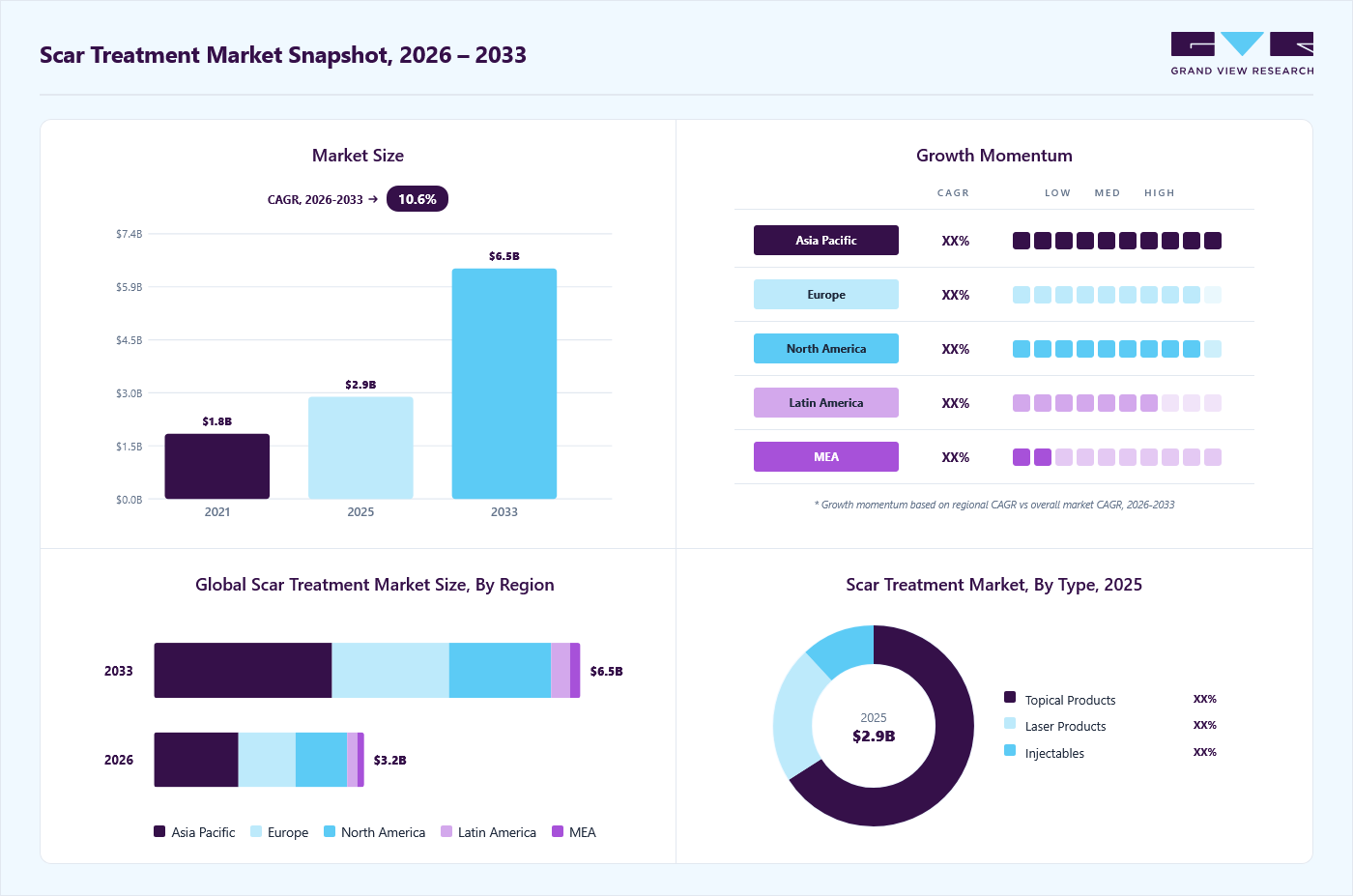
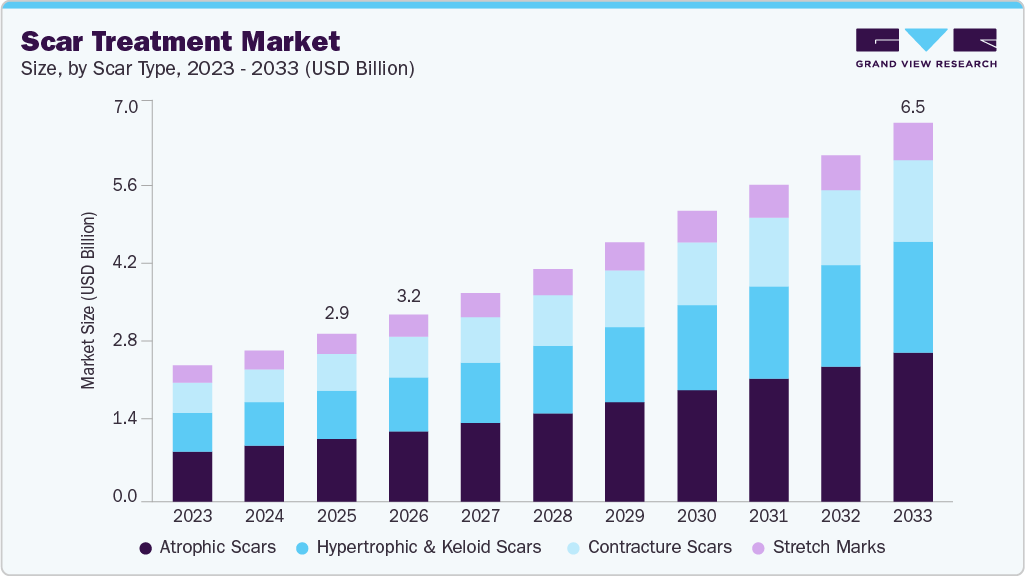
The global scar treatment market size was valued at USD 2.9 billion in 2025 and is projected to grow from USD 3.2 billion in 2026 to USD 6.5 billion by 2033, at a CAGR of 10.6% from 2026 to 2033. Asia Pacific dominated the global market, accounting for 39.9% of revenue in 2025. The market is expected to grow due to several factors, including the growing concern among people regarding their aesthetic appearance, the increasing number of road accidents and burn injuries, and technological advancements that supplement new device launches.
 Source: Grand View Research, IR Documents, Primary Interviews, Paid DatabasesTo learn more about this report,
 Download Free Sample Report
 Key Market Trends & Insights
- By product: Topical scar treatment segment held the largest market share of 65.9% in 2025.
- By scar type: Atrophic scars segment held the largest market share of 37.3% in 2025.
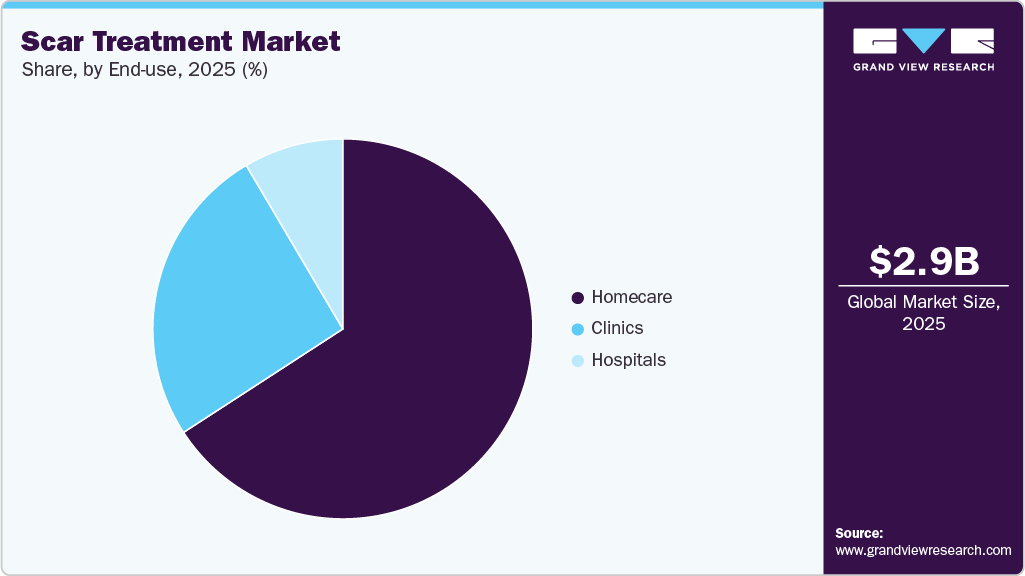
- By end use: Home care segment held the largest market share of 65.9% in 2025.
Regional Highlights
- Largest regional market: Asia Pacific (39.9% revenue share, 2025)
- By country: Japan held the largest market share in 2025
Market Size & Forecast
- Market size in 2025: USD 2.9 Billion
- Estimated market size in 2026: USD 3.2 Billion
- Projected market size by 2033: USD 6.5 Billion
- CAGR (2026-2033): 10.6%
Three ways to get this report
Buy it, customize it, or ask a question.Ask an Analyst
Analyst response in 1 business day
- AccessReport author, directly
- Reply timeWithin 1 working day
- No sales callDirect answer only
- FormatEmail reply
- CostFree, no cost
Get the Full Report
What the study covers
- FormatsPDF · Excel · Dashboard
- Timeline2026–2033 annual, 2025 base
- Coverage20+ countries, 5 regions
- Companies10+ key players profiled
Customize the Report
20% free customization
- IncludeCountries, segments, points
- TailorTo your product definition
- ExtendDeeper competitor detail
- OrA fully bespoke study
- Turnaround5–10 working days
The rise in elective cosmetic surgeries and minimally invasive procedures has also increased the demand for effective post-procedural scar management. Moreover, the expansion of healthcare access in emerging economies, the influence of social media on beauty standards, and the increasing availability of over-the-counter scar care formulations further contribute to the market’s growth.One of the major factors driving the market, particularly across topical and laser scar treatment product segments, is the increasing number of cosmetic and reconstructive procedures performed globally. For instance, according to the American Society of Plastic Surgeons (ASPS), in 2024, approximately 1.6 million cosmetic surgical procedures were performed worldwide. Patients are increasingly seeking post-procedure care options, such as silicone gels, scar creams, and laser therapies, to minimize visible scarring and improve skin texture. Furthermore, laser-based scar revision procedures, including CO2 and pulsed-dye laser treatments, are gaining popularity in dermatology clinics due to their precision and faster healing profiles. This growing procedural volume and higher consumer preference for minimally invasive skin correction and at-home care options propel product demand across clinical and home care end use settings.
 To learn more about this report, Download Free Sample Report
 Telemedicine is a valuable resource in the management of scar wounds, facilitating the assessment, monitoring, and management of surgical and injury-related scarring remotely. Through teledermatology platforms and mobile applications, patients can upload high-resolution images of their scars or wounds and receive an assessment from a trained clinician with minimal face-to-face visits to the clinic. This strategy enhances access for patients in rural or underserved communities who lack proximate access to either a dermatologist or a plastic surgeon. For instance, an Italian-based study titled "Telemonitoring Wound Recovery with a Smartphone” concluded that a smartphone visit could produce similar outcomes to an in-person visit, while providing an enormous benefit by significantly reducing travel costs and time away from work and family that a face-to-face consultation creates.
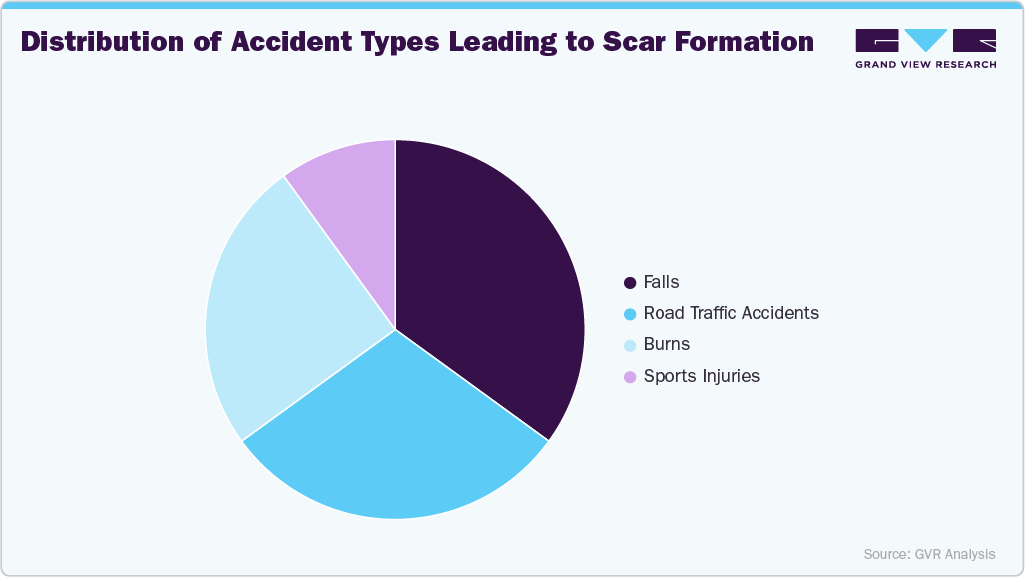
The growing number of road accidents is one of the key factors, furthering the demand for scar treatment products. According to the Population Reference Bureau, around 50 million people are injured due to road accidents every year, which frequently leads to the occurrence of scars requiring surgical treatment. Patients who undergo such surgeries develop surgical scars and are provided with topical products to improve and reduce their appearance. Hence, the rising number of road accidents and an increasing number of cosmetic surgeries are expected to propel the need for topical scar treatments.
 To learn more about this report, Download Free Sample Report
 The high prevalence of burn injuries is another key driver of the market's growth. According to the CDC, in the U.S., 1.1 million burn injuries require medical attention every year, and around 50,000 of these people require hospitalization. Burn injuries leave noticeable hypertrophic burn marks, which distort the victim's appearance. Scar removal products are crucial for such injuries. Moreover, post-burn marks disrupt victims' daily lives. Plastic surgery or laser resurfacing is commonly performed to remove these marks, accelerating the growth of scar removal treatment products.
The market is experiencing immense technological developments with the introduction of laser therapy, for instance, MedLite C6, a Q-switched laser-based instrument developed for treating acne. Laser instruments help destroy scar tissue, thereby driving the scar treatment product market. Treatment with laser products involves both surgical and nonsurgical procedures. Plastic and reconstructive surgery is also a part of the surgical laser treatment process. For instance, in April 2025, AVAVA received the U.S. Food and Drug Administration (FDA) 510(k) approval for the treatment of acne scarring across all Fitzpatrick skin types (I-VI). This approval addresses the long-standing challenge of safely treating acne scars in individuals with darker skin tones, expanding access to effective laser therapies, and further driving the acne scar treatment market.
Market Concentration & Characteristics
The scar treatment industry is moderately concentrated, with several established competitors, such as MediTox Inc., Allergan Aesthetics, and Lumenis Ltd., among the key players. These companies maintain their market dominance by providing various products, including topical scar treatments, laser treatments, injectable products, and distribution networks that span the globe. A steady increase in demand for scar treatment is expected to be one of the market drivers, besides a rising number of scars caused by trauma and surgeries. It raises the pressing question of growing consumer awareness of the use of technology in the appearance, treatment, and management of scars. Among the new technologies, the high-tech laser devices, AI-assisted evaluation products, and silicone-based products that will be used for treatment are expected to result in faster recovery periods and patient outcome improvements.
The market is witnessing moderate innovation, driven by product formulations and advancements in device technologies. New topical treatments, such as silicone gels impregnated with growth factors, bioactive peptides, and stem cell derivatives that heal scars represent a significant technological advancement in scar treatments, while also reducing side effects. Various laser-based instruments, such as fractional and pulsed-dye lasers, CO₂ lasers, and combination laser platforms, are being introduced to increase accuracy, reduce recovery time, and facilitate the treatment of different scar and skin tone types. Furthermore, AI-based imaging and teledermatology tools enable more accurate scar evaluation and follow-up, which is crucial for optimizing treatment in each patient. Such a breakthrough gradually turns the industry towards more effective, less invasive, and patient-friendly solutions.
 To learn more about this report, Download Free Sample Report
 Strategic partnerships and collaborations are essential for advancing scar treatment solutions. Companies often work with research institutions, hospitals, and biotech firms to develop new formulations, delivery systems, and laser tech. For instance, the mutual relationships between medical device companies and regenerative medicine enterprises have led to merging stem-cell therapies and laser treatments for hypertrophic and keloid scars. Besides accelerating product development, these alliances also allow companies to extend their clinical validation and regulatory approval processes, strengthening their market position.
Regulatory frameworks are crucial in shaping the scar treatment industry, particularly for new topical therapies, injectables, and laser devices. In the U.S., lasers and biologically active formulations must receive FDA approval or clearance. In the EU, CE marking allows the products to be reviewed to confirm their adherence to safety standards. Regulatory oversight and legal frameworks exist to ensure that products demonstrate efficacy, safety, and quality (which is imperative for protecting patients). However, this may result in a delayed time to market and additional cost. Biological or combination therapies are subject to more regulations, which could pose problems for new or mid-cap companies. Established companies with experience with regulations may have a competitive advantage.
Scar treatment alternatives face competition from alternative products and procedures, including over-the-counter cosmetic creams, natural remedies, and non-invasive skincare regimens. While these products may appeal to some consumers because of their price, there is limited evidence supporting their effectiveness in treating deep or complex scars compared with medical-grade topical products, laser treatments, and injectables. Additionally, soon-to-be-released treatments, such as microneedling, radiofrequency (RF) devices, and regenerative options, may serve as substitutes or be incorporated alongside traditional scar treatments, depending on the type and severity of the scar. The availability of alternative therapies may encourage innovation and serve as a basis for suppliers to develop differentiated products.
Regional expansion is a significant growth strategy in the scar treatment market, as demand varies geographically due to differences in healthcare systems, consumer awareness, and the prevalence of scars, among other factors. The most lucrative markets are North America and Europe, driven by high levels of reimbursement support, extensive consumer awareness, and advanced dermatological practices. Emerging markets, such as the Asia Pacific region and Latin America, exhibit rapid growth driven by rising disposable incomes, urbanization, and increasing aesthetic awareness, alongside advanced scar treatment technologies and drugs. The companies are leveraging partnerships with local distributors, clinics, and e-commerce sites to introduce products in these markets and tailor them for the region.
Product Insights
The topical scar treatment segment held the largest market share, accounting for 65.9% in 2025. The availability of topical creams, gels, and silicone sheets as over-the-counter (OTC) products allows people to use them to treat scars. Laser products are widely used because they offer a non-invasive, painless option for treating scars with minimal discomfort. Topical products are applied directly to the skin's surface. These items are silicone sheets, creams, gels, and others. These products are frequently purchased as they are easily accessible to consumers, just like OTC products.
The laser products segment is experiencing significant growth, with a CAGR of 11.3% during the forecast period. This growth is attributed to increasing demand for precise, minimally invasive, and effective scar management solutions. Lasers (CO₂, pulsed-dye, and erbium-based systems) are highly effective in treating many scars, including hypertrophic, keloid, and post-surgical scars. These lasers are effective because they stimulate collagen remodeling and improve skin texture. Moreover, lasers can provide localized, controlled energy to a specific body area while limiting energy delivered to the surrounding tissues. Laser technology and the devices have improved with technological advancements, reducing recovery time and enhancing patient comfort, thereby supporting growth in the scar treatment market.
Scar Type Insights
The atrophic scars segment held the largest market share of 37.3% in 2025 due to the rising prevalence of acne scars. Topical creams and gels are commonly used to treat these scars. The keloid and hypertrophic scars are expected to grow significantly over the forecast period due to the prevalence among people with wound injuries. Atrophic scars are commonly caused by muscle and fat loss in the body over an area of injury. Atrophic scars form when the skin fails to produce sufficient collagen to heal the infected site. This type of scar resembles a pit and is typically caused by staphylococcus infections, acne, chickenpox, or surgery.
The hypertrophic and keloid scars segment is anticipated to witness significant growth during the forecast period. This is attributable to the increasing incidence of traumatic injuries, burns, and surgical procedures that frequently result in these kinds of aberrant scar formation. In contrast to atrophic scars, hypertrophic and keloid scars are elevated, thickened, and can be uncomfortable/or lead to limited movement; therefore, they are treated first. Improvements in treatment options, including targeted laser therapies, corticosteroid injections, silicone-based products, and combination treatments, have led to better clinical outcomes and patient satisfaction, driving market demand.
End Use Insights
The home care segment dominated the market with a 65.9% share in 2025, driven by the use of sophisticated infrastructure and the availability of technologically advanced scar-treatment products in these settings. The growth is due to the increasing consumer preference for easy-to-use, over-the-counter scar-care products such as silicone gels, creams, and sheets that patients can apply at home, avoiding frequent clinical visits. This shift is driven by rising aesthetic awareness, more people seeking acne- or surgery-related scar solutions, and the wider availability of retail and e-commerce channels, which offer ease and convenience. Similarly, the demand for topical scar-care products has surged as they are non-invasive, affordable, and accessible, making them a preferred solution among individuals with minor scars or acne scar challenges. These factors are contributing to the growth of the segment in the global landscape.
 To learn more about this report, Download Free Sample Report
 The clinics segment is expected to witness lucrative growth during the forecast period. Clinics are vital in the scar treatment industry, providing specialty and individualized care for patients seeking to correct or remove a scar. Hospitals primarily address acute/emergency care. In contrast, clinics offer aesthetic and dermatological treatments that address physical and functional concerns, typically for recent and longstanding scars. Clinics can routinely provide a range of minimally invasive and more advanced procedures, including laser treatment, microneedling, chemical peels, injectables, and topical products such as silicone gels or corticosteroid creams. Clinics may also offer modern laser platforms and diagnostic imaging to assist in treatment planning for dermatology and aesthetics, and improve cosmetic outcomes. The increased availability of skilled dermatologists and aesthetic specialists, shorter recovery periods, and patients' greater flexibility in appointment options have made clinics the preferred point of care for patients seeking effective, prompt treatment for scars.
Regional Insights
The North America scar treatment industry is driven by growing awareness and acceptance of various scar management solutions. Technological advancements in treatments like laser resurfacing have made these options more accessible and affordable. As the standard of living in North America rises, more people are seeking cosmetic and dermatological treatments to enhance their skin health and appearance, thereby contributing to the market’s growth. In June 2024, several groundbreaking acne scarring treatments, including advances in laser and ultrasound technologies, were showcased at ASLMS 2024.
U.S. Scar Treatment Market Trends
The U.S. scar treatment industry is experiencing robust growth, driven by the significant role it plays in adopting both surgical and nonsurgical scar treatment options. Scar treatment for burn injuries is covered by government reimbursement policies in the U.S. Scar revision, both surgical and nonsurgical procedures, continues to evolve to improve outcomes for individuals affected by scars. In June 2023, an article published in Stat Pearls highlighted various surgical and nonsurgical techniques for improving scar appearance and function. The article covered methods such as laser resurfacing, dermabrasion, and soft tissue fillers. It emphasized the importance of an interprofessional approach to enhance patient outcomes and address scars-related physical and emotional concerns.
Europe Scar Treatment Market Trends
The scar treatment industry in Europe is experiencing substantial growth primarily due to favorable reimbursement policies. The European Commission (EC) allows for substantial coverage of 85% to 100% for scar treatments following serious illnesses, accidents, or deformities. Furthermore, the increasing disposable income and healthcare spending in Europe fuel the demand for aesthetic treatments. Efforts from organizations such as the European Association of Plastic Surgeons further bolster this trend. Digital conferences and webinars promoting standardized regulations for plastic surgery procedures are expected to contribute to market expansion.
The UK scar treatment industry is expanding due to several factors. The UK is a major contributor to regional market. According to the British Association of Plastic, Reconstructive, and Aesthetic Surgeons (BAPRAS), the demand for aesthetic plastic surgeries & scar treatments is bolstered by the rising number of NHS plastic surgery units and centers in the UK. Furthermore, car accidents are still the most common cause of scars. According to a study conducted by the UK government, 29,643 Killed or Seriously Injured (KSI) casualties and 132,063 casualties of all severities were reported in 2023. Moreover, the country’s population is developing a high level of aesthetic awareness, which may boost the demand for scar revision procedures.
The scar treatment industry in Germany is witnessing significant growth, driven by the growing urban population, increasing lifestyle changes, advancements in noninvasive procedures, and the availability of skilled professionals. Furthermore, factors such as rising adoption & awareness of aesthetic procedures, technological advancements, growing product collaborations, and an increase in beauty-conscious individuals are expected to drive market growth in the country.
The France scar treatment industry is witnessing significant growth, led by the country’s high aesthetic and fashion consciousness. France is among the top 10 countries for cosmetic procedures, accounting for 2.2% of all procedures performed worldwide. According to the High Authority of Health’s report in France, the incidence of hypertrophic scars was 39% to 68% of patients after undergoing surgery; 33% to 91% reported hypertrophic scars post-burn injuries. Furthermore, a significant number of burn injuries are reported yearly in the country, propelling the adoption of scar treatment products.
Asia Pacific Scar Treatment Market Trends
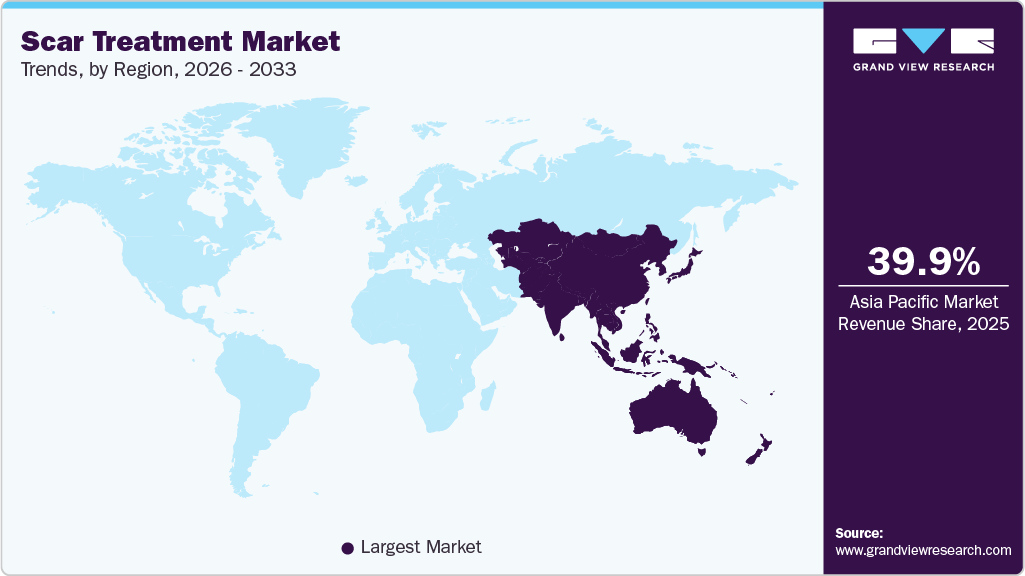
The Asia Pacific scar treatment accounted for the largest revenue share of 39.9% in 2025. The scar treatment industry in the Asia Pacific region is experiencing significant growth, with India and China emerging as regional leaders. Key companies, advancing the development of novel, customized scar treatment solutions to meet patient needs, can attribute market growth to major R&D investments. In October 2024, a retrospective study published in Clinical, Cosmetic and Investigational Dermatology assessed the effectiveness of Korean medicine subcision therapies for scar treatment.
 To learn more about this report, Download Free Sample Report
 The Japan scar treatment industry is driven by factors such as growing emphasis on aesthetic appearance, an aging population in Japan, and advancements in scar treatment technologies. Japan is the second-largest market for aesthetic products and procedures in APAC. Culturally, people in the country are typically obsessed with beauty & physical appearance and are not discreet about their body awareness agendas. Another key driver of the aesthetic industry in Japan is medical tourism (mainly from China), as the country offers superior treatments at relatively low costs. Many key players in the aesthetic market consider Japan a lucrative investment opportunity and a promising area for expansion, given the high demand for aesthetic procedures.
The scar treatment industry in India is growing steadily due to the rising prevalence of skin conditions, awareness and aesthetic concerns, advancements in treatment technologies, increasing disposable incomes, and expanding healthcare infrastructure. Indian millennials are demonstrating a growing awareness and adopting healthier lifestyles as the influence of social platforms continues to increase. India’s cosmetics industry is one of the country’s fastest-growing sectors due to increasing coverage for related healthcare services and rising expenditure by public & private players. According to the India Brand Equity Foundation (IBEF), the cost of aesthetic procedures in India is about one-tenth of that in Western countries.
Latin America Scar Treatment Market Trends
The scar treatment industry in Latin America is emerging on the back of the availability of procedures such as laser resurfacing and scar revision at lower costs than in North America or Europe. Moreover, investments from international players, rising disposable income, increased aesthetic procedures, a growing middle-aged population, and clinical advancements will likely further drive the market. This region has many hospitals & clinics that offer treatment for atrophic, hypertrophic, and keloid scars. Individuals in this region often suffer from hyperpigmentation and usually tend to treat this condition with the help of topical creams & gels and opt for laser treatments for severe cases.
The Brazil scar treatment industry is expanding rapidly with increasing demand for scar treatment products, growing emphasis on aesthetic appearance, and rising medical tourism. Brazil’s medical tourism sector is booming, with affordable treatment costs for aesthetic procedures and plastic surgeries. Scar treatment continues to evolve as technological advancements and treatment methods gain traction in clinical settings. New approaches are often explored to improve the outcomes for patients dealing with scarring, particularly in challenging cases such as post-burn hypertrophic scars.
Middle East and Africa Scar Treatment Market Trends
The scar treatment industry in the Middle East and Africa is steadily expanding, fueled by the high spending capacity & living standards, well-established medical infrastructure, and increasing aesthetic consciousness among the younger demographics in countries such as the UAE and the Kingdom of Saudi Arabia. A March 2024 study in Aesthetic Plastic Surgery analyzed the effects of Ablative 10600 nm and non-Ablative 1570 nm hybrid laser treatment on hypertrophic and keloid scars. The study found a significant improvement in scar characteristics, with a 62% reduction in Vancouver Scar Scale scores for hypertrophic scars and 58% for keloid scars. The treatment was deemed safe and effective, with minimal adverse events.
The Saudi Arabia scar treatment industry is growing steadily due to a younger, more accepting population, rising beauty and health consciousness, a well-established healthcare infrastructure, and increasing disposable income. Saudi Arabia has very high living standards and is strongly influenced by Western culture. The market is growing rapidly, largely due to the widespread acceptance of aesthetic procedures among individuals seeking to conform to Western beauty standards.
The scar treatment industry in the UAE is expanding due to its well-established infrastructure, increasing number of hospitals, booming medical tourism market, availability of advanced medical services, high rate of urbanization, high Western influence leading to adoption of aesthetic procedures, and high demand for reconstructive, elective, and nonsurgical procedures. According to Gulf News, 70% to 75% of burn incidents in the country occur at home every year, and the most common scar treatment is the use of topical creams or gels. In addition, nearly 3 of 10 victims are children. Alternative methods to scar revision are gaining popularity in the country.
Key Scar Treatment Company Insights
The global market is highly competitive, with key players such as Smith & Nephew plc, Lumenis, and Mölnlycke Health Care AB holding significant positions. The major companies undertake various organic and inorganic strategies such as product introduction, collaborations, and regional expansion, to serve the unmet needs of their customers.
Key Scar Treatment Companies:
The following are the leading companies in the scar treatment market. These companies are among the key participants in the scar treatment market.
- Smith & Nephew PLC
- Lumenis
- Merz Pharmaceuticals, LLC
- Sonoma Pharmaceuticals, Inc.
- Cynosure
- CCA Industries, Inc.
- Newmedical Technology Inc.
- Mölnlycke Health Care AB
- Suneva Medical
- Scar Heal Inc.
- Pacific World Corporation
- Perrigo Company plc
- Enaltus LLC
Recent Developments
-
In January 2026, Newmedical Technology completed the acquisition of Derma Made, a professional skincare brand, strengthening its dermatology and aesthetics portfolio. The acquisition expanded Newmedical’s presence across clinical recovery, post-procedure care, aesthetic skin health, and professional skincare, complementing its scar-management portfolio, including Silagen and MyNewGel+.
-
In October 2025, Sonoma Pharmaceuticals entered the UK market after securing MHRA registration for its manufacturing facility and five Microcyn-based products, including wound-care and scar-management solutions, expanding its dermatology and wound-care presence in the region.
-
In October 2024, Mölnlycke Health Care AB announced a research collaboration with Transdiagen (TDG) to advance innovation in chronic wound care. The partnership will leverage TDG's novel wound gene signatures to explore the effectiveness of Mölnlycke products.
-
In May 2024, Nuance Medical acquired the Biocorneum brand, a silicone gel treatment for scars, from Sientra, Inc. The acquisition expands Nuance's range of silicone-based scar management products, bolstering its position in the professional healthcare market and reinforcing its commitment to innovation in scar care.
-
In August 2023, Sofwave Medical Ltd received approval from the FDA for its Precise SUPERB Applicator to treat acne scars. Similarly, in July 2022, Secret Duo of ilooda Co., Ltd. received approval from the FDA for its product, Secret Duo, a 1540 nm laser to treat scars post monkeypox infection.
Scar Treatment Market Report Scope
Report Attribute
Details
Market size in 2025
USD 2.9 billion
Estimated market size in 2026
USD 3.2 billion
Projected market size by 2033
USD 6.5 billion
Growth rate
CAGR of 10.6% from 2026 to 2033
Base year for estimation
2025
Historical data
2021 - 2024
Forecast period
2026 - 2033
Market representation
Revenue in USD million/billion & CAGR from 2026 to 2033
Regional scope
North America, Europe, Asia Pacific, Latin America, Middle East and Africa
Report coverage
Revenue forecast, company share, competitive landscape, growth factors, trends
Segments covered
Product, scar type, end use, region
Country Scope
U.S.; Canada; Mexico; Germany; UK.; France; Italy; Spain; Russia; Denmark; Sweden; Norway; China; India; Japan; South Korea; Australia; Thailand; Brazil; Argentina; South Africa; Saudi Arabia; UAE; Kuwait
Key companies profiled
Smith & Nephew PLC; Lumenis; Merz Pharmaceuticals, LLC; Sonoma Pharmaceuticals, Inc.; Cynosure; CCA Industries, Inc.; Newmedical Technology Inc.; Mölnlycke Health Care AB; Suneva Medical; Scar Heal Inc.; Pacific World Corporation; Perrigo Company plc; Enaltus LLC
Customization scope
Free report customization (equivalent to 8 analyst working days) with purchase. Addition or alteration to the country, regional, and segment scope.
Pricing and purchase options
Avail customized purchase options to meet your exact research needs. Explore purchase options
Global Scar Treatment Market Report Segmentation
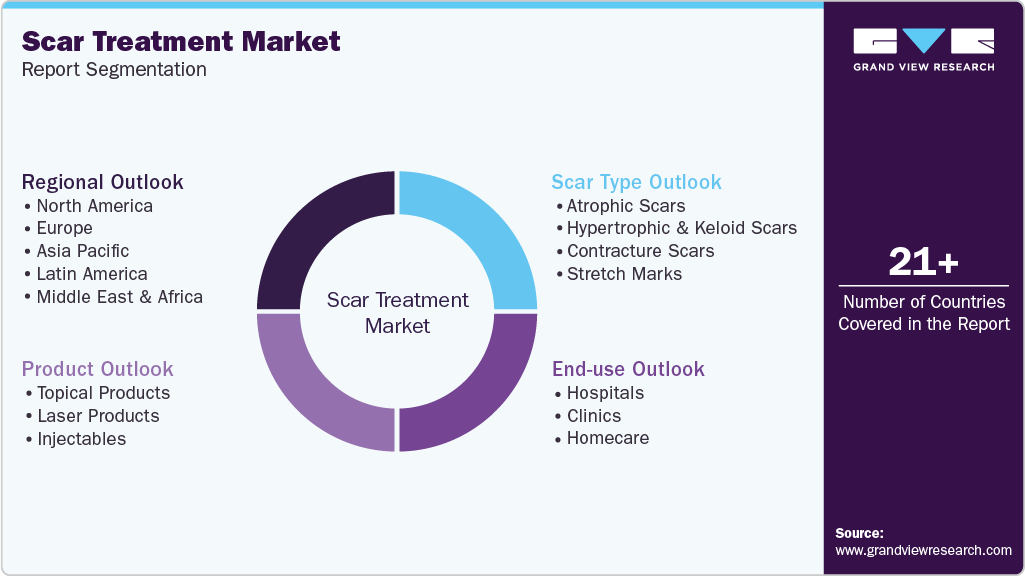
This report forecasts revenue growth at global, regional, and country levels and analyzes the latest industry trends and opportunities in each sub-segment from 2021 - 2033. For this study, Grand View Research has segmented the global scar treatment market report based on product, scar type, end use, and region:
 To learn more about this report, Download Free Sample Report
 -
Product Outlook (Revenue, USD Million, 2021 - 2033)
-
Topical Products
-
By Product Type
-
Creams
-
Gels
-
Silicone Sheets
-
Others
-
-
By Distribution Channel
-
Hospital Pharmacies
-
Retail Pharmacies
-
Online
-
Hypermarkets/ Supermarkets
-
-
-
Laser Products
-
CO2 Laser
-
Pulse-dye Laser
-
Others
-
-
Injectables
-
-
Scar Type Outlook (Revenue, USD Million, 2021 - 2033)
-
Atrophic Scars
-
Hypertrophic & Keloid Scars
-
Contracture Scars
-
Stretch Marks
-
-
End Use Outlook (Revenue, USD Million, 2021 - 2033)
-
Hospitals
-
Clinics
-
Homecare
-
-
Regional Outlook (Revenue, USD Million, 2021 - 2033)
-
North America
-
U.S.
-
Canada
-
Mexico
-
-
Europe
-
Germany
-
UK
-
Spain
-
France
-
Italy
-
Russia
-
Denmark
-
Norway
-
Sweden
-
-
Asia Pacific
-
China
-
India
-
Japan
-
South Korea
-
Australia
-
Thailand
-
-
Latin America
-
Brazil
-
Argentina
-
-
Middle East and Africa
-
South Africa
-
Saudi Arabia
-
UAE
-
Kuwait
-
-
Frequently Asked Questions About This Report
The global scar treatment market size was valued at USD 2.9 billion in 2025 and is estimated at USD 3.2 billion in 2026.
The global scar treatment market is expected to grow at a CAGR of 10.6% from 2026 to 2033, reaching USD 6.5 billion by 2033.
Asia Pacific dominated with a 39.9% revenue share in 2025.
Key factors that are driving the scar treatment market growth include growing demand for aesthetics, increasing number of road accidents and burn cases, and growing technological advancements.
Topical scar treatment segment led with a 65.9% revenue share in 2025.
Home care segment led with a 65.9% revenue share in 2025.
Key players include Smith & Nephew PLC, Lumenis, Merz Pharmaceuticals, LLC, Sonoma Pharmaceuticals, Inc., Cynosure, CCA Industries, Inc., Newmedical Technology Inc., Mölnlycke Health Care AB, Suneva Medical, Scar Heal Inc., Pacific World Corporation, Perrigo Company plc, and Enaltus LLC.
Atrophic scars held the largest share of 37.3% in 2025.
About the Author(s)
Medical Devices Research Team
Healthcare · Medical DevicesThis report was authored by the medical devices research team at Grand View Research - comprising two research analysts, one senior research analyst, and one industry expert - with specialized expertise in the medical devices segment of the healthcare industry. All findings are based on proprietary healthcare databases, executive interviews, and regulatory analysis, subject to internal peer review prior to publication.
Last Updated:
Speak to Analyst

Customize this report to your needs - add regions, segments, or data points, with 20% free customization.
Or view our licence options:


ISO 9001:2015 & 27001:2022 Certified
We are GDPR and CCPA compliant! Your transaction & personal information is safe and secure. For more details, please read our privacy policy.


