
- Home
- »
- Plastics, Polymers & Resins
- »
-
Seed Packaging Market Size, Share & Trends Report, 2033GVR Report cover

Seed Packaging Market (2026 - 2033)
Size, Share & Trends Analysis Report By Material (Paper & Paperboard, Plastic, Jute, Fabric), By Product (Pouches, Containers, Bags, Bottles & Jars), By End-use, By Region, And Segment Forecasts
Market Size, 2025
$682.7MMarket Estimate, 2026
$714.9MMarket Forecast, 2033
$974.8MCAGR, 2026–2033
4.5%Seed Packaging Market Summary
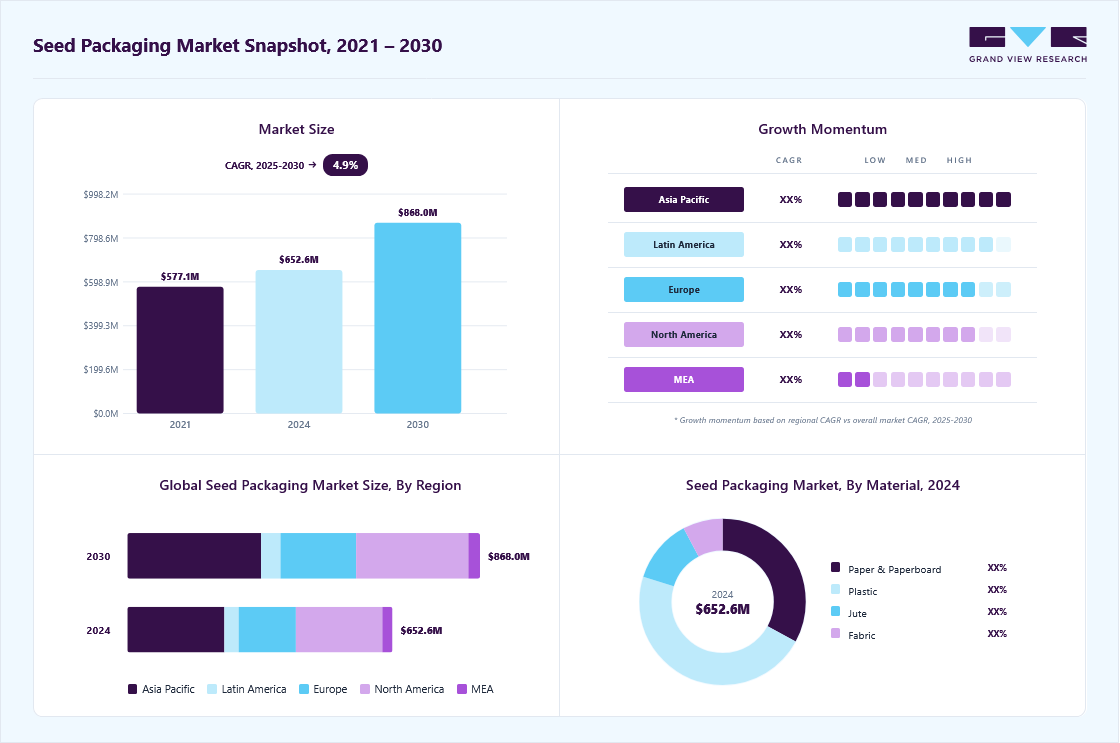
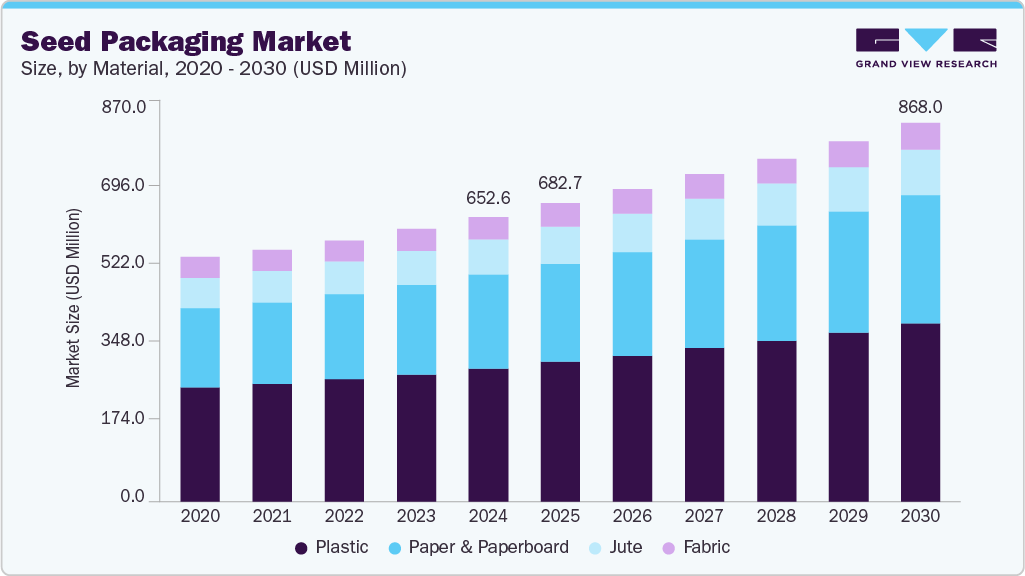
The global seed packaging market size was valued at USD 682.7 million in 2025 and is projected to grow from USD 714.9 million in 2026 to USD 974.8 million by 2033, at a CAGR of 4.5% from 2026 to 2033. Asia Pacific dominated the market, accounting for a revenue share of 36.8% in 2025. The market is driven by rising demand for high-quality, protected seeds to ensure better crop yield and the increasing adoption of sustainable and moisture-resistant packaging solutions.
 Source: Grand View Research, IR Documents, Primary Interviews, Paid DatabasesTo learn more about this report,
 Download Free Sample Report
Key Market Trends & Insights
- By material: Plastic segment led the market with the largest revenue share of 46.9% in 2025.
- By product: Bags segment led the market with the largest revenue share of 45.1% in 2025.
- By end-use: Agriculture segment led the market with the largest revenue share of 60.2% in 2025.
Regional Highlights
- Largest regional market: Asia Pacific (36.8% revenue share, 2025)
- By country: China held the largest market share in 2025.
Market Size & Forecast
- Market size in 2025: USD 682.7 Million
- Estimated market size in 2026: USD 714.9 Million
- Projected market size by 2033: USD 974.8 Million
- CAGR (2026-2033): 4.5%
Prism AI by Grand View Research Free to tryAsk a question about the seed packaging marketTry asking✓Every figure cited from GVR research Prefer the report? Download free sample →
Growing awareness among farmers about seed quality and brand authenticity also fuels market growth. As the world population expands, farmers increasingly seek hybrid and genetically modified (GM) seeds that offer higher yields, disease resistance, and climate adaptability. Seed packaging plays a vital role in preserving seed viability, ensuring accurate labeling, and preventing contamination. Key players invest in packaging solutions to maintain seed integrity during storage and transport, especially in harsh climates.Another key driver is the stringent regulatory environment governing seed quality and traceability. Governments and international bodies, such as the International Seed Testing Association (ISTA), mandate strict packaging standards to prevent counterfeit seeds and ensure genetic purity. For instance, in India, the Protection of Plant Varieties and Farmers' Rights Authority (PPV&FRA) requires certified seed packaging with QR codes for authentication. Such regulations push seed producers to adopt tamper-proof and moisture-resistant packaging, boosting demand for innovative materials such as multi-layer films and biodegradable pouches.
 To learn more about this report, Download Free Sample Report
Another key driver is the stringent regulatory environment governing seed quality and traceability. Governments and international bodies, such as the International Seed Testing Association (ISTA), mandate strict packaging standards to prevent counterfeit seeds and ensure genetic purity. For instance, in India, the Protection of Plant Varieties and Farmers' Rights Authority (PPV&FRA) requires certified seed packaging with QR codes for authentication. Such regulations push seed producers to adopt tamper-proof and moisture-resistant packaging, boosting demand for innovative materials such as multi-layer films and biodegradable pouches.
Sustainability trends are also reshaping the seed packaging industry, with a growing preference for eco-friendly materials. Traditional plastic packaging is being replaced by biodegradable, compostable, and recycled materials to reduce environmental impact. For example, Biogreen Bags are developing plant-based seed bags that decompose after use. Additionally, seed giants such as Corteva Agriscience are adopting recyclable paper-based packaging to align with corporate sustainability goals and consumer expectations for greener agricultural practices.
Market Dynamics
The seed packaging market is experiencing steady growth, driven by increasing global demand for high-quality seeds, advancements in agricultural practices, and the need to preserve seed viability throughout storage and transportation. As commercial farming, hybrid seed adoption, and international seed trade continue to expand, packaging has become an essential component of the seed value chain, ensuring product protection, traceability, and regulatory compliance. Packaging manufacturers are increasingly focusing on durable, moisture-resistant, and sustainable solutions to meet the evolving needs of seed producers, distributors, and farmers.
The increasing adoption of high-quality and certified seeds is a key driver of the seed packaging market. Farmers are increasingly using hybrid and improved seed varieties to achieve higher crop yields, better disease resistance, and improved productivity. Since these seeds are highly sensitive to moisture, contamination, and physical damage, effective packaging is essential to preserve their quality, germination capacity, and shelf life during storage and transportation.
In addition, the expansion of commercial agriculture and organized seed distribution has increased the need for durable and standardized packaging solutions. Seed packaging not only protects the product but also provides important information such as seed variety, treatment details, and usage instructions while ensuring regulatory compliance and product traceability. As demand for certified seeds continues to grow globally, the need for reliable seed packaging is expected to rise alongside it.
Fluctuating prices of raw materials such as polyethylene, polypropylene, paper, and aluminum continue to be a major restraint for the seed packaging market. Changes in crude oil prices, supply chain disruptions, inflation, and geopolitical uncertainties significantly affect the cost of manufacturing packaging materials. Since seed packaging requires durable, moisture-resistant, and high-barrier materials to maintain seed quality, rising input costs increase overall production expenses and reduce manufacturers' profit margins. These higher costs are often transferred to seed producers and distributors, making premium packaging solutions less affordable, particularly in developing and price-sensitive agricultural markets. As a result, maintaining cost competitiveness while ensuring packaging performance remains a persistent challenge for industry participants..
The rising emphasis on sustainability is creating significant growth opportunities for the seed packaging market. Governments, agricultural companies, and consumers are increasingly encouraging the use of environmentally friendly packaging materials to reduce plastic waste and lower carbon emissions. This trend is driving investments in recyclable, biodegradable, compostable, and paper-based packaging solutions that can provide adequate protection while minimizing environmental impact. In addition, advancements in sustainable barrier materials and mono-material flexible packaging are enabling manufacturers to develop eco-friendly products without compromising seed quality and shelf life. As sustainability becomes an important purchasing criterion across the agricultural sector, companies offering innovative and compliant green packaging solutions are expected to gain a competitive advantage and expand their market presence.
Market Concentration & Characteristics
The seed packaging industry is highly seasonal, closely tied to planting and harvesting cycles in various regions. This dependence on agricultural timelines influences demand fluctuations, with peak packaging production occurring ahead of major sowing seasons. For example, in North America and Europe, demand spikes during spring and autumn, while tropical regions may see more staggered cycles depending on local cropping patterns.
A defining characteristic of the industry is the requirement for protective packaging solutions that can withstand harsh environments. Seeds must be protected from humidity, pests, mechanical damage, and UV exposure. Therefore, the industry heavily emphasizes materials science, often using multi-layer films, laminated pouches, and vacuum-sealed bags to preserve seed viability. The packaging must also be strong enough for long-distance transport, especially in global seed trade.
 To learn more about this report, Download Free Sample Report
Seed packaging serves a strategic role beyond its functional utility, acting as a critical tool for brand positioning and market differentiation. Companies allocate resources toward developing customized packaging solutions that incorporate visually compelling designs, distinctive brand elements, and comprehensive labeling to strengthen market presence and foster customer confidence. In highly competitive markets, where purchasing decisions are significantly influenced by brand reputation and demonstrated seed performance, effective packaging design serves as a crucial factor in customer acquisition and retention.
Analyst Perspective
The seed packaging market has evolved from relying primarily on basic woven bags and conventional plastic packaging for storage and transportation to adopting advanced packaging solutions that prioritize seed protection, traceability, branding, and sustainability. Growth has been supported by the increasing use of certified and hybrid seeds, expansion of commercial agriculture, rising global seed trade, and stricter quality standards, driving demand for durable and high-barrier packaging formats. Looking ahead, the market is expected to witness steady growth, fueled by increasing investments in precision agriculture, growing demand for sustainable and recyclable packaging materials, and continued agricultural modernization in emerging economies. Technological advancements in smart packaging and eco-friendly materials are also expected to create new opportunities, supporting long-term market expansion.
Material Insights
Based on material, the plastic segment led the market with the largest revenue share of 46.93% in 2025. Plastic seed packaging offers excellent moisture resistance, durability, and flexibility. It is widely used for both small retail packets and bulk agricultural seed packaging. Plastics such as polyethylene (PE), polypropylene (PP), and laminated films are used to ensure seed integrity during transportation and storage. The convenience of resealable closures, longer shelf life, and lightweight characteristics make it a preferred choice among commercial seed producers.
The paper & paperboard segment is expected to grow at the fastest CAGR of 5.3% during the forecast period. The growing demand for sustainable and environmentally friendly packaging is a major driver for the paper & paperboard segment. Increasing regulatory pressures to reduce plastic use, coupled with consumer preference for compostable and recyclable materials, further push the adoption of paper-based seed packaging. Additionally, advancements in moisture-resistant coatings for paper packaging are enhancing its utility in humid environments.
Product Insights
Based on product, the bags segment led the market with the largest revenue share of 45.11% in 2025. Bags are the most traditional and widely used packaging format in the seed industry, available in woven polypropylene, jute, or paper variants. These are ideal for bulk storage and transportation of seeds, particularly for high-volume crops such as wheat, corn, rice, and soybeans. Bags offer moderate protection and are cost-effective for large-scale agricultural applications. High demand for bulk packaging solutions and cost-effectiveness are key drivers for bags. Additionally, advancements in printing and branding on bag surfaces support marketing efforts in rural and semi-urban regions.
The pouches segment is expected to grow at the fastest CAGR of 5.3% during the forecast period. Pouches are lightweight, flexible packaging options made primarily from plastic films or laminated materials. They are commonly used in the seed industry due to their resealability, moisture resistance, and efficient storage capabilities. The rising demand for user-friendly, compact, and portable packaging in the agricultural retail sector is a key driver for pouches. Additionally, the growth of e-commerce seed sales has favored flexible packaging such as pouches due to their lower shipping costs and reduced material usage.
End Use Insights
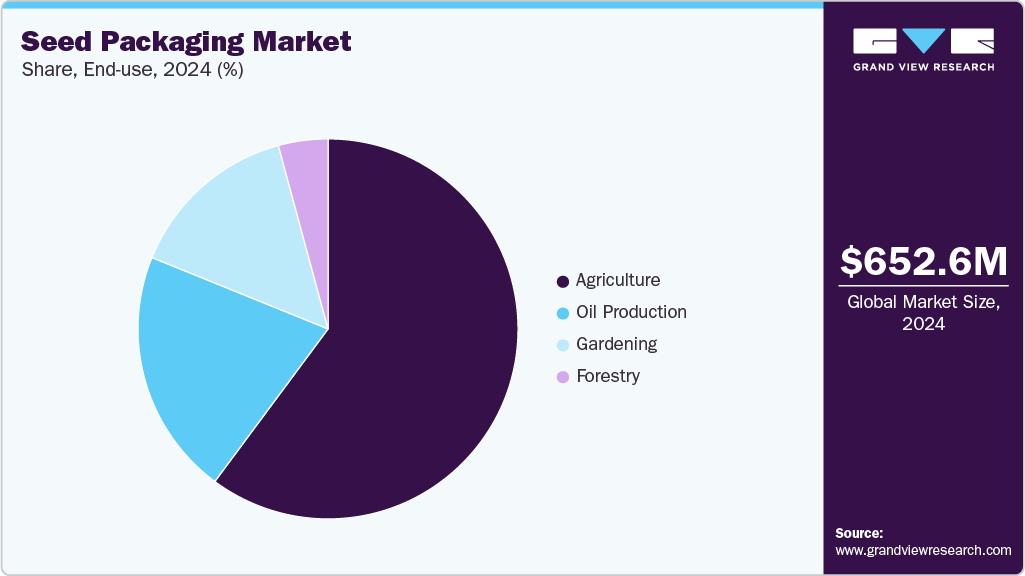
Based on end-use, agriculture segment led the market with the largest revenue share of 60.22% in 2025. It includes commercial-scale farming operations involving crops such as wheat, corn, rice, soybean, and cotton. High-quality seed packaging ensures preservation of germination rates, moisture protection, and prolonged shelf life, especially during long storage or transportation. The demand for increased agricultural productivity due to a rising global population is a primary driver. In addition, the adoption of hybrid and genetically modified (GM) seeds requires more secure and durable packaging to maintain seed integrity. Government subsidies, global food security initiatives, and climate-resilient farming practices are also fueling demand for high-performance seed packaging in agriculture.
 To learn more about this report, Download Free Sample Report
The gardening segment is projected to grow at the fastest CAGR of 5.2% during the forecast period. The gardening segment targets home gardeners, nurseries, and urban farming communities. Packaging in this segment is often smaller in volume but emphasizes branding, resealability, and visual appeal to attract end consumers. The packaging may also include informative labels for planting instructions and organic certifications. The growing interest in home gardening, especially post-COVID-19, and the surge in organic and sustainable living trends are significant drivers. Increased participation in hobby gardening and urban agriculture in pushing manufacturers to produce user-friendly and informative seed packaging. Online retailing of garden supplies has also expanded the market reach for packaged seeds.
Region Insights
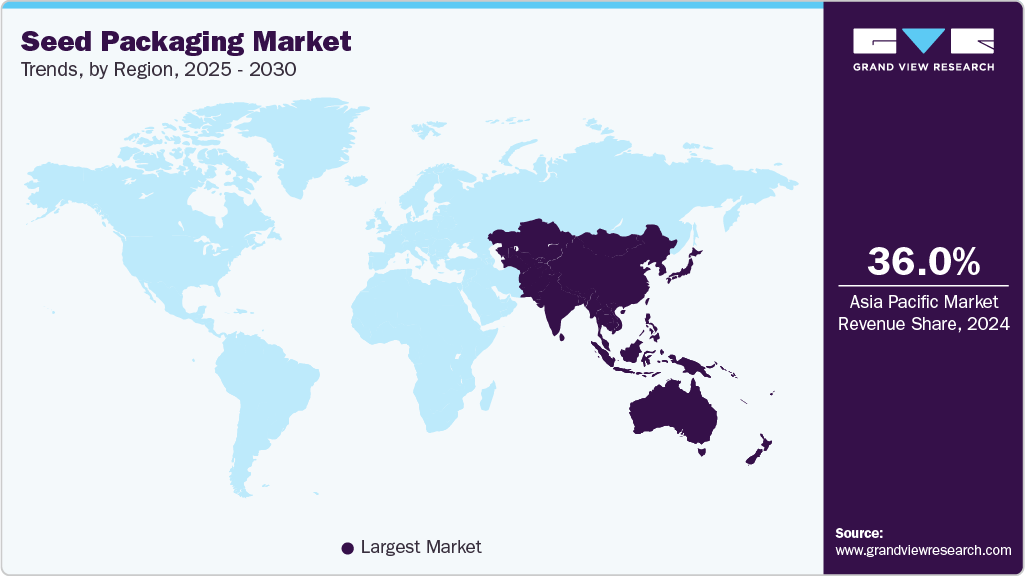
Asia Pacific dominated the seed packaging market with the largest revenue share of 36.8% in 2025 and is expected to grow at the fastest CAGR of 5.5% over the forecast period. This positive outlook is due to its rapidly expanding agricultural sector, increasing adoption of hybrid and genetically modified seeds, and government initiatives supporting food security. Countries such as India and China are investing heavily in high-yield seed varieties to meet the demands of their large populations, boosting the need for durable and efficient seed packaging. For example, India’s "Seed Village Program" promotes quality seed distribution, requiring advanced packaging solutions to maintain seed viability. Additionally, the rise of contract farming and precision agriculture in countries such as Australia and Japan is driving demand for specialized seed packaging that ensures protection from moisture and pests during storage and transport.
 To learn more about this report, Download Free Sample Report
China Seed Packaging Market Trends
The seed packaging market in China held the largest share in the Asia Pacific region in 2025. China seed packaging market dominates the in Asia Pacific region due to its massive agricultural output and government focus on seed self-sufficiency. The country is the world’s largest producer of rice and vegetables, requiring high-quality packaging to protect seeds during storage and distribution. Hybrid rice seeds are often packed in aluminum foil bags to prevent moisture damage. The Chinese government’s push for "green agriculture" has also increased demand for sustainable seed packaging. Additionally, China’s growing seed export industry, particularly for crops such as soybeans and corn-necessitates durable, pest-resistant packaging that meets international phytosanitary standards.
North America Seed Packaging Market Trends
North America’s growth in the seed packaging market is due to its advanced agricultural technologies, high mechanization, and strong presence of global seed companies such as Corteva Agriscience, Bayer, Sakata Seed, Baker Creek, and BASF Agricultural Solutions. The U.S. and Canada are major producers of genetically modified (GM) seeds, particularly for corn, soybeans, and canola, which require high-barrier packaging to maintain genetic purity and prevent contamination. Precision farming and seed treatment technologies further drive demand for customized packaging with features such as UV protection and anti-counterfeiting labels.
The region also emphasizes sustainable packaging, with companies shifting toward bio-based plastics and paper-based solutions to meet environmental regulations. For instance, in Canada, seed packaging must comply with strict guidelines on biodegradability, pushing innovations in compostable seed bags. Additionally, the growing home gardening trend in the U.S. has increased demand for small, user-friendly seed packets. The combination of large-scale farming and retail gardening ensures North America remains a key market for diverse seed packaging solutions.
Europe Seed Packaging Market Trends
Europe’s seed packaging market is driven by stringent regulatory standards, high-quality seed production, and increasing demand for organic and non-GMO seeds. The European Union’s strict seed certification laws require tamper-proof and traceable packaging to ensure compliance with phytosanitary regulations. Countries such as France and the Netherlands, which are major seed exporters, use advanced packaging with QR codes and RFID tags for supply chain transparency. For example, Dutch companies such as Rijk Zwaan utilize smart packaging to track seed batches from production to planting.
Sustainability is a key trend, with the EU’s Circular Economy Action Plan pushing for recyclable and biodegradable seed packaging. Germany and the UK are seeing a rise in paper-based seed packets, particularly for organic and heirloom seeds sold in retail markets. Additionally, the growing popularity of urban farming and home gardening in countries such as Italy and Spain has increased demand for aesthetically appealing, resealable seed pouches.
Key Seed Packaging Company Insights
The competitive environment of the seed packaging market is characterized by a mix of global and regional players vying for market share through innovation, sustainability, and strategic partnerships. Key companies compete by offering advanced packaging solutions that ensure seed protection, extended shelf life, and improved handling efficiency. The market is witnessing a shift toward eco-friendly and biodegradable materials, driven by growing environmental concerns and regulatory pressures. Intense competition is also fueled by the need for product differentiation, efficient distribution networks, and customization to meet the specific needs of agricultural sectors across different regions.
Key Seed Packaging Companies:
The following key companies have been profiled for this study on the seed packaging market.
-
SÜDPACK
-
XIFA Group
-
Amcor plc
-
Berry Global Inc.
-
ProAmpac
-
Jam Jams Group
-
Dune Packaging Limited
-
J&C Packaging
-
NNZ
-
Advanced Industries Packaging
-
GT Packers
-
JBM Packaging
-
Giriraj Flexipack
-
Marudhar Industries Limited
Competitive Benchmarking
Category
Operating Strategies
Competitive Edge
Weakness
Established Players (Amcor plc; Berry Global Inc.; ProAmpac; SÜDPACK; NNZ; XIFA Group; Marudhar Industries Limited)
- Focus on expanding seed packaging portfolios through investments in high-barrier flexible packaging, woven polypropylene bags, sustainable materials, and customized packaging formats for agricultural applications. Invest in automation, digital printing, smart packaging technologies, and global manufacturing capabilities while strengthening partnerships with seed producers, agricultural distributors, and agribusiness companies to meet evolving quality, traceability, and sustainability requirements.
- Strong global or regional manufacturing capabilities, diversified product portfolios, established distribution networks, and long-term relationships with leading seed companies support recurring business and large-volume production. Continuous investments in R&D, sustainable packaging materials, product customization, and regulatory compliance strengthen their competitive positioning across domestic and international markets.
- High capital investment requirements for manufacturing modernization, sustainable material development, and compliance with evolving environmental regulations can increase operating costs. Dependence on fluctuating prices of plastic resins, paper, and other raw materials, along with increasing sustainability pressures, may impact profitability and pricing competitiveness.
Emerging Players (Jam Jams Group; Dune Packaging Limited; J&C Packaging; Advanced Industries Packaging; GT Packers; JBM Packaging; Giriraj Flexipack)
- Focus on customized seed packaging solutions, flexible production capabilities, and cost-effective packaging formats for regional seed manufacturers and agricultural businesses. Expand market presence by offering printed pouches, woven bags, small-batch production, and customer-specific packaging while gradually incorporating recyclable and eco-friendly materials to address growing sustainability demand.
- Greater operational flexibility enables quick customization, shorter production lead times, and efficient servicing of small- and medium-sized seed companies. Competitive pricing, personalized customer support, and strong regional market knowledge help these companies build long-term relationships with local distributors and agricultural businesses.
- Limited manufacturing scale, restricted international presence, and lower financial resources constrain expansion into large-volume global contracts. Lower brand recognition, fewer investments in advanced packaging technologies, and limited R&D capabilities may reduce competitiveness against established multinational packaging manufacturers.
Recent Developments
-
In September 2024, SÜDPACK’s debut at “Seed meets Technology” represents a strategic initiative to strengthen its presence in the global seed technology and packaging market. By participating in this leading international event, SÜDPACK showcased its innovative packaging solutions directly to key industry stakeholders, fostered collaborations with seed technology leaders, and gained insights into emerging trends and customer needs. This move positions SÜDPACK to expand its network, enhance brand visibility, and accelerate the adoption of its advanced packaging technologies within the horticultural sector.
-
In February 2021, Chia Tai Company Limited, a major agricultural innovator in Thailand, launched new Chia Tai Home Garden seed packaging under the “Easy and Unique Planting Concept” to make home gardening more accessible and enjoyable, especially for urban dwellers. The revamped “Easy Package” features a modern design and provides comprehensive, easy-to-understand planting instructions, techniques, and useful information on both sides of the package, addressing frequent customer requests for clearer guidance.
Seed Packaging Market Report Scope
Report Attribute
Details
Market size in 2025
USD 682.6 million
Estimated market size in 2026
USD 714.9 million
Projected market size by 2033
USD 974.8 billion
Growth rate
CAGR of 4.5% from 2026 to 2033
Base year for estimation
2025
Historical data
2021 - 2024
Forecast period
2026 - 2033
Quantitative units
Revenue in USD million/billion and CAGR from 2026 to 2033
Report coverage
Revenue forecast, company ranking, competitive landscape, growth factors, and trends
Segments covered
Material, product, end-use, region
Regional scope
North America; Europe; Asia Pacific; Latin America; MEA
Country scope
U.S.; Canada; Mexico; Germany; France; UK; Italy; Spain; China; India; Japan; South Korea; Australia; Brazil; Argentina; South Africa; Saudi Arabia; UAE
Key companies profiled
SÜDPACK, XIFA Group, Amcor plc, Berry Global Inc., ProAmpac, Jam Jams Group, Dune Packaging Limited, J&C Packaging, NNZ, Advanced Industries Packaging, GT Packers, JBM Packaging, Giriraj Flexipack, Marudhar Industries Limited
Customization scope
Free report customization (equivalent up to 8 analysts' working days) with purchase. Addition or alteration to country, regional & segment scope.
Pricing and purchase options
Avail customized purchase options to meet your exact research needs. Explore purchase options
Global Seed Packaging Market Report Segmentation
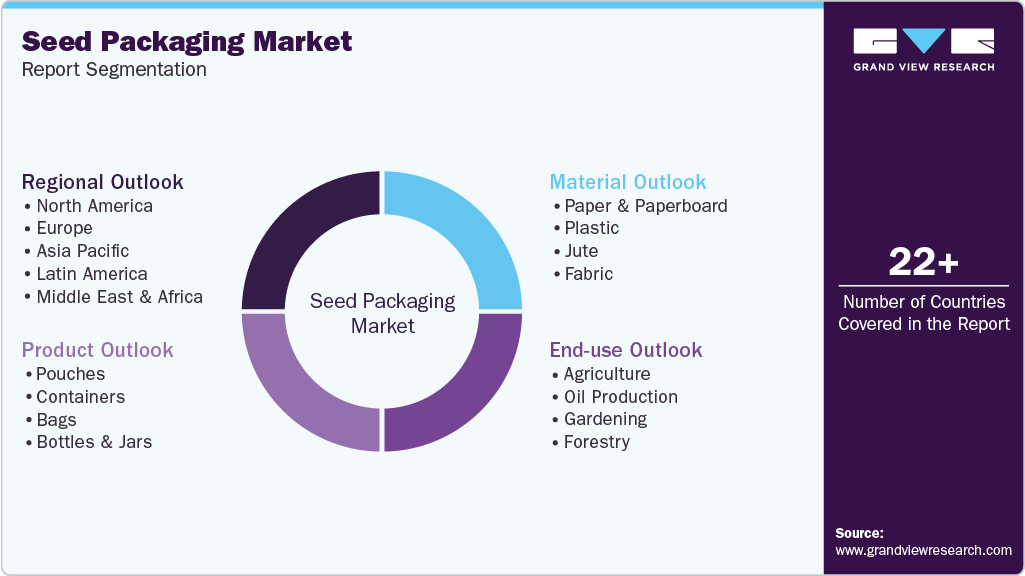
This report forecasts revenue growth at a global level and provides an analysis of the latest industry trends in each of the sub-segments from 2021 to 2033. For this study, Grand View Research has segmented the global seed packaging market report based on material, product, end use, and region:
 To learn more about this report, Download Free Sample Report
-
Material Outlook (Revenue, USD Million, 2021 - 2033)
-
Paper & Paperboard
-
Plastic
-
Jute
-
Fabric
-
-
Product Outlook (Revenue, USD Million, 2021 - 2033)
-
Pouches
-
Containers
-
Bags
-
Bottles & Jars
-
-
End Use Outlook (Revenue, USD Million, 2021 - 2033)
-
Agriculture
-
Oil Production
-
Gardening
-
Forestry
-
-
Region Outlook (Revenue, USD Million, 2021 - 2033)
-
North America
-
U.S.
-
Canada
-
Mexico
-
-
Europe
-
Germany
-
France
-
UK
-
Italy
-
Spain
-
-
Asia Pacific
-
China
-
India
-
Japan
-
Australia
-
South Korea
-
-
Latin America
-
Brazil
-
Argentina
-
-
Middle East & Africa
-
South Africa
-
Saudi Arabia
-
UAE
-
-
Research Methodology
The seed packaging market figures in this report are based on a proven research process that combines executive interviews with secondary research from proprietary databases, company filings, and recognized regulatory and institutional sources. Market size is built through value-chain sizing—reconciling supply-side and demand-side estimates—and triangulated with bottom-up and top-down approaches. Every estimate passes multiple levels of expert validation before publication, with each seed packaging segment quantified using the revenue-capture definitions in the table below.
Segment Definition
Segment - Material
Revenue capture definition
Paper & Paperboard
Revenue is generated from the production and sale of seed packaging made from paper and paperboard materials, including kraft paper bags, multiwall paper sacks, laminated paper pouches, cartons, and paper-based packaging with barrier coatings. This segment includes packaging used for vegetable, cereal, grain, and horticultural seeds, where recyclability, printability, and sustainability are key purchasing factors.
Plastic
Revenue is derived from the manufacture and sale of plastic-based seed packaging, including polyethylene (PE), polypropylene (PP), laminated plastic pouches, woven polypropylene bags, vacuum bags, and multilayer flexible packaging. The segment covers packaging designed to provide superior moisture resistance, durability, and protection during storage and transportation for both retail and bulk seed distribution.
Jute
Revenue is generated from the sale of seed packaging manufactured using natural jute fibers, including woven jute sacks and bags primarily used for bulk agricultural seed storage and transportation. This segment includes biodegradable and reusable packaging solutions favored in regions promoting sustainable agricultural practices and for crops where breathability and strength are important.
Fabric
Revenue is captured from the production and sale of fabric-based seed packaging, including woven and non-woven textile bags made from natural or synthetic fibers. These packaging solutions are commonly used for bulk seed handling, storage, and transportation due to their durability, reusability, and resistance to tearing, particularly in commercial agricultural supply chains.
Segment - Product
Revenue capture definition
Pouches
Revenue is generated from the production and sale of flexible seed packaging pouches, including stand-up pouches, flat pouches, laminated pouches, zip-lock pouches, and vacuum-sealed pouches. This segment covers packaging used for retail and commercial seed distribution, offering moisture resistance, extended shelf life, product visibility, and ease of handling.
Containers
Revenue is derived from the manufacture and sale of rigid seed containers, including plastic bins, metal containers, composite containers, and specialized storage containers designed for bulk seed storage and transportation. These products are used to protect seeds from moisture, contamination, pests, and physical damage while ensuring safe handling throughout the supply chain.
Bags
Revenue is captured from the sale of seed packaging bags, including woven polypropylene bags, paper sacks, jute bags, fabric bags, and multiwall bags used for both bulk and retail seed packaging. This segment includes durable packaging solutions that facilitate efficient storage, transportation, and distribution while preserving seed quality and germination potential.
Bottles & Jars
Revenue is generated from the production and sale of bottles and jars used for packaging vegetable, flower, horticultural, and specialty seeds. These rigid packaging formats, made from plastic or glass, provide excellent protection against moisture and contamination while offering convenient storage, resealability, and premium product presentation for retail markets.
Segment – End-Use
Revenue capture definition
Agriculture
Revenue is generated from the sale of seed packaging solutions used for agricultural crops, including cereals, grains, pulses, vegetables, fruits, and cash crops. This segment includes packaging designed for both retail and bulk distribution, ensuring seed protection, quality preservation, regulatory compliance, and efficient handling throughout the agricultural supply chain.
Oil Production
Revenue is derived from seed packaging used for oilseed crops such as soybean, sunflower, canola, mustard, sesame, flax, and other oil-producing seeds. The segment includes packaging solutions that protect seed quality during storage and transportation while supporting commercial cultivation and large-scale oilseed production.
Gardening
Revenue is captured from the production and sale of seed packaging intended for home gardening, landscaping, ornamental plants, flowers, herbs, and vegetable gardens. This segment primarily includes small-sized retail pouches, packets, bottles, and containers featuring attractive designs, clear labeling, and resealable formats to enhance consumer convenience and product appeal.
Forestry
Revenue is generated from seed packaging solutions used for tree seeds and forestry applications, including reforestation, afforestation, commercial plantations, and ecological restoration projects. This segment covers durable packaging designed to preserve seed viability during long-term storage, transportation, and distribution under varying environmental conditions.
Estimation Model
Layer Name
Key Question
Description
Seed Production Demand Base Layer
What forms the demand base?
Identify the global production and consumption of agricultural, horticultural, oilseed, forage, and forestry seeds across commercial farming and retail gardening sectors. This layer establishes the total addressable demand for seed packaging based on increasing agricultural production, growing adoption of certified and hybrid seeds, expansion of commercial farming, and rising demand for quality seed storage and distribution.
Seed Packaging Adoption Layer
Where is seed packaging utilized?
Estimate the adoption of seed packaging across agriculture, oil production, gardening, and forestry applications. Assess the penetration of paper & paperboard, plastic, jute, and fabric packaging materials across retail and bulk seed distribution channels based on seed type, storage requirements, transportation conditions, and regional agricultural practices.
Packaging Consumption Intensity Layer
How much packaging volume is utilized for seeds?
Analyze the volume of packaging consumed based on annual seed production, packaging formats, distribution channels, seed treatment requirements, storage duration, and export activities. Packaging intensity is influenced by seed sensitivity to moisture and contamination, shelf-life requirements, packaging size, regulatory labeling standards, and the growing adoption of sustainable and high-barrier packaging materials.
Revenue Layer
How is market revenue generated?
Market revenue is quantified through the sale of seed packaging products, including pouches, bags, containers, bottles, and jars manufactured from paper & paperboard, plastic, jute, and fabric materials. Revenue is generated from recurring demand by seed producers, processors, distributors, and retailers for packaging solutions that ensure seed protection, preserve germination quality, enhance traceability, facilitate transportation, and comply with regulatory labeling and sustainability requirements.
Delivered Customizations
This report has been delivered with the following In-depth customizations
Client Request
Customization Delivered
Value Adds
Regional Segmentation Analysis
Detailed analysis of the seed packaging market across key regions and countries, covering demand patterns, agricultural production trends, regulatory frameworks, competitive landscape, distribution networks, and growth opportunities by end-use sector.
Enables identification of high-growth regional markets, supports market entry and expansion strategies, and improves investment prioritization.
Competitive Benchmarking
Comprehensive benchmarking of leading seed packaging manufacturers based on product portfolio, packaging formats, material capabilities, production capacity, sustainability initiatives, technological advancements, pricing strategies, and recent strategic developments.
Helps assess competitive positioning, identify market gaps, support strategic decision-making, and strengthen long-term business planning.
Trade Assessment
Detailed assessment of global seed packaging trade dynamics, including import-export analysis, key trading countries, supply chain structure, tariff and regulatory impact, sourcing trends, and trade flow patterns for packaging materials and finished products.
Supports supply chain optimization, identifies sourcing and export opportunities, evaluates trade-related risks, and enables informed procurement and international expansion strategies.
Frequently Asked Questions About This Report
Asia Pacific market dominated, with a revenue share of 36.8% in 2025.
Agriculture segment led the market with the largest revenue share of 60.22% in 2025.
The key players in the seed packaging market include SÜDPACK, XIFA Group, Amcor plc, Berry Global Inc., ProAmpac, Jam Jams Group, Dune Packaging Limited, J&C Packaging, NNZ, Advanced Industries Packaging, GT Packers, JBM Packaging, Giriraj Flexipack, and Marudhar Industries Limited.
The seed packaging market is primarily driven by the increasing adoption of certified and hybrid seeds, expansion of commercial agriculture, rising global seed trade, growing demand for sustainable packaging solutions, and advancements in high-barrier and smart packaging technologies that improve seed protection and traceability.
Plastic segment led the market with the largest revenue share of 46.9% in 2025.
The global seed packaging market size was valued at USD 682.7 million in 2025 and is estimated at USD 714.9 million in 2026.
The global seed packaging market is expected to grow at a CAGR of 4.5% from 2026 to 2033, reaching USD 974.8 million by 2033.
Bags segment led the market with the largest revenue share of 45.11% in 2025.
About the Author(s)
Plastics, Polymers & Resins Research Team
Bulk Chemicals · Plastics, Polymers & ResinsThis report was authored by the plastics, polymers & resins research team at Grand View Research - comprising two research analysts, one senior research analyst, and one industry expert - with specialized expertise in the plastics, polymers & resins segment of the bulk chemicals industry. All findings are based on proprietary bulk chemicals databases, executive interviews, and regulatory analysis, subject to internal peer review prior to publication.
Last Updated:
Speak to Analyst

Customize this report to your needs - add regions, segments, or data points, with 20% free customization.
Or view our licence options:


ISO 9001:2015 & 27001:2022 Certified
We are GDPR and CCPA compliant! Your transaction & personal information is safe and secure. For more details, please read our privacy policy.


