
- Home
- »
- Clinical Diagnostics
- »
-
Serology Testing Market Size & Share Report, 2026-2033GVR Report cover

Serology Testing Market (2026 - 2033)
Size, Share & Trends Analysis Report By Product (Reagents and Consumables, Instruments, Software and Services), By Testing Services, By Test Format, By Technology, By End User, By Region, And Segment Forecasts
Market Size, 2025
$17.7BMarket Estimate, 2026
$18.8BMarket Forecast, 2033
$30.0BCAGR, 2026–2033
6.9%Serology Testing Market Summary
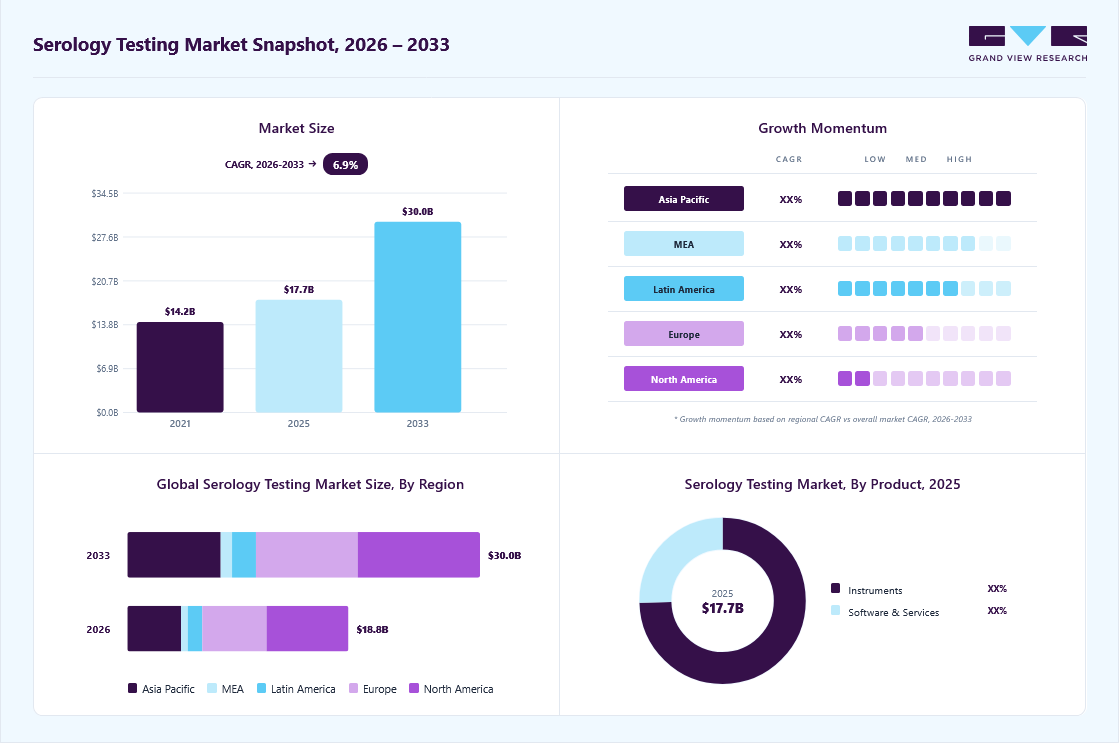
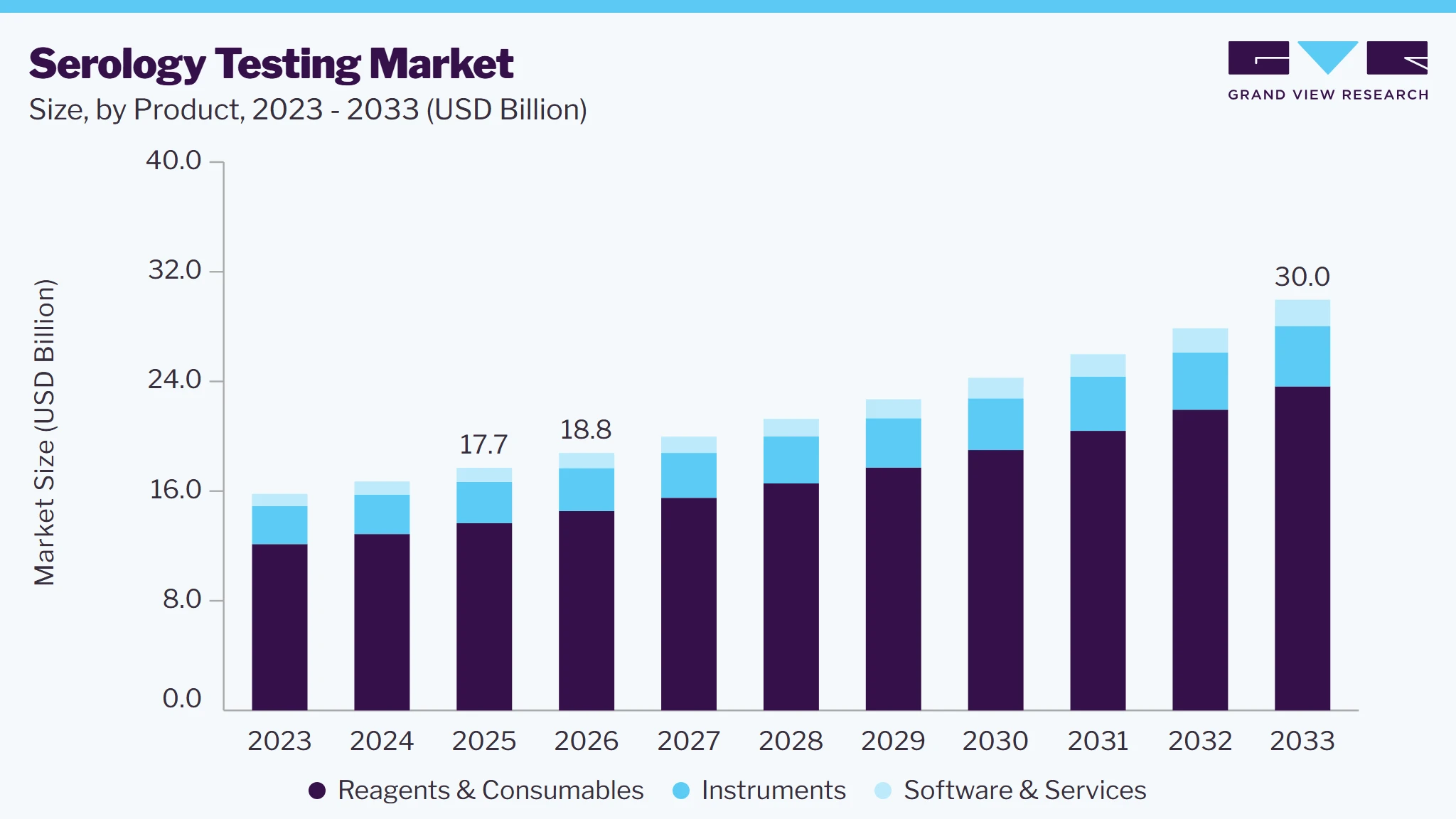
The global serology testing market size was valued at USD 17.7 billion in 2025 and is projected to grow from USD 18.8 billion in 2026 to USD 30.0 billion by 2033, at a CAGR of 6.9% from 2026 to 2033. North America dominated the market accounting for a revenue share of 37.4% in 2025. The market growth is primarily driven by the rising burden of infectious diseases and the expansion of routine serological screening, disease-surveillance, antenatal-testing, and blood-donor-screening programs worldwide.
 Source: Grand View Research, IR Documents, Primary Interviews, Paid DatabasesTo learn more about this report,
 Download Free Sample Report
 Key Market Trends & Insights
- By product: Reagents & consumables held the largest revenue share of 77.2% in 2025.
- By testing services: Infectious disease segment led the market with the largest revenue share of 40.4% in 2025.
- By technology: Chemiluminescent immunoassay led the market with a share of 28.0% in 2025.
- By test format: Laboratory-based serology testing dominated the market with a share of 83.7% in 2025.
- By end user: Hospitals & hospital-based laboratories held the largest revenue share of 40.6% in 2025.
Regional Highlights
- Largest regional market: North America (37.4% revenue share, 2025)
- Fastest-growing regional market: Asia Pacific (highest CAGR, 2026-2033)
- By country: The U.S. held the largest market share in 2025.
Market Size & Forecast
- Market size in 2025: USD 17.7 Billion
- Estimated market size in 2026: USD 18.8 Billion
- Projected market size by 2033: USD 30.0 Billion
- CAGR (2026-2033): 6.9%
Three ways to get this report
Buy it, customize it, or ask a question.Ask an Analyst
A direct answer, usually in 1 working day
- AccessReport author, directly
- Reply timeWithin 1 working day
- No sales callDirect answer only
- FormatEmail reply
- CostFree, no cost
Get the Full Report
What the study covers
- FormatsPDF · Excel · Dashboard
- Timeline2026–2033 annual, 2025 base
- Coverage20+ countries, 5 regions
- Companies10+ key players profiled
Customize the Report
20% free customization
- IncludeCountries, segments, points
- TailorTo your product definition
- ExtendDeeper competitor detail
- OrA fully bespoke study
- Turnaround5–10 working days
 To learn more about this report, Download Free Sample Report
 Market Dynamics
The persistent burden and recurring outbreaks of infectious diseases are increasing demand for routine serological screening, diagnostic confirmation, immunity assessment, antenatal testing, and epidemiological surveillance. The World Health Organization (WHO) reported that approximately 41.0 billion people were living with HIV at the end of 2025, while 88% were aware of their HIV status, indicating substantial testing activity alongside a continuing diagnostic gap. Serological assays remain integral to detecting HIV antibodies and antigens, hepatitis markers, syphilis antibodies, and immune responses associated with vaccine-preventable and vector-borne diseases. Consequently, the expansion of government-supported screening and surveillance programs is increasing the utilization of serology reagents, rapid test kits, quality controls, consumables, and automated immunoassay platforms.
Recurring infectious-disease outbreaks are also reinforcing the importance of laboratory-based surveillance and immunity assessment. The UK Health Security Agency reported 960 laboratory-confirmed measles cases in England during 2025, including 655 cases, or 68%, among children aged 10 years or younger. Confirmed infections were distributed across 101 upper-tier local authorities, illustrating the geographically dispersed requirement for diagnostic and surveillance testing. UKHSA recognizes IgM and IgG antibody detection as part of the laboratory approach used to confirm recent measles infection. Rising case notifications and continued outbreak monitoring are therefore supporting demand for infectious-disease serology across reference laboratories, hospitals, public-health institutions, and diagnostic centers, particularly for high-throughput assays capable of supporting large-scale surveillance programs.
The expansion of integrated antenatal screening is accelerating the adoption of multiplex serological testing in high-burden and resource-constrained settings. For instance, in July 2025, the World Health Organization prequalified Abbott’s Determine Antenatal Care Panel, the first WHO-prequalified bundled rapid-testing panel for simultaneously screening pregnant women for HIV, hepatitis B, and syphilis. Using capillary whole blood collected through a finger prick, the panel detects HIV-1/2 antibodies and HIV-1 p24 antigen, hepatitis B surface antigen, and antibodies against Treponema pallidum. As WHO recommends testing every pregnant woman for all three infections at least once and as early as possible during pregnancy, the prequalification is expected to facilitate wider procurement and adoption of integrated rapid serology solutions, supporting the growth of the serology testing market.
Diagnostic limitations related to window periods, cross-reactivity, and variable immune responses represent a major restraint for the serology testing market. After exposure to an infectious agent, the body may require several days or weeks to produce detectable antibody concentrations, creating a period during which infected individuals can receive false-negative results. Conversely, antibodies generated against closely related pathogens or nonspecific immune components may bind to assay targets and produce false-positive findings. Test performance can also vary according to disease stage, vaccination history, immune status, specimen quality, and assay design. These limitations reduce confidence in serology as a standalone diagnostic method, particularly when rapid and definitive clinical decisions are required in emergency, antenatal, blood-screening, and infectious-disease surveillance settings across global healthcare systems.
The inability of some serological assays to distinguish active infection from previous exposure, resolved disease, or vaccine-induced immunity further constrains their clinical utility. Healthcare providers may need repeat testing, confirmatory molecular assays, immunoblot analysis, culture, or additional clinical evaluation before establishing a diagnosis. This multi-step pathway increases laboratory expenditure, extends turnaround times, and raises the operational burden on hospitals, diagnostic laboratories, and public-health programs. In resource-constrained markets, limited access to confirmatory technologies and trained personnel can further restrict adoption. Manufacturers must therefore invest in improved antigen selection, assay specificity, quality controls, and clinical validation, which increases development costs and regulatory complexity. Collectively, these factors can slow purchasing decisions, limit reimbursement, and moderate market growth despite rising screening demand across healthcare settings.
The growing adoption of dried blood spot sampling creates a significant opportunity for the serology testing market by extending testing beyond conventional laboratory-based venous blood collection. Dried blood spot specimens require only a small volume of capillary blood collected through a finger prick and can offer easier handling, transportation, and storage than traditional serum or plasma samples. This approach can improve access to infectious-disease screening, immunity assessment, epidemiological surveillance, and clinical research in remote and resource-constrained areas. It can also support home-based sample collection and centralized laboratory analysis, reducing dependence on phlebotomy infrastructure. Manufacturers can capitalize on this opportunity by developing validated serology assays, collection kits, automated processing solutions, and logistics services designed specifically for dried blood spot workflows.
Commercial validation of dried blood spot assays is expanding the addressable market for decentralized serological screening. For instance, in March 2025, Revvity’s EUROIMMUN launched the CE-marked Anti-Measles Virus ELISA 2.0 (IgG), which supports measles infection assessment and determination of immune status using dried blood spots in addition to serum and plasma. The assay can be processed manually or through EUROIMMUN’s automated ELISA systems, enabling laboratories to incorporate minimally invasive specimens into established workflows. According to the company, an evaluation of 185 paired dried blood spot and serum samples demonstrated 100% result agreement. The product illustrates how validated alternative sampling can expand serological testing across surveillance programs, decentralized collection networks, clinical studies, and regions with limited laboratory infrastructure.
DBS collection requires only a small blood volume, simplifies transportation, and can reduce dependence on cold-chain infrastructure, trained phlebotomists, and same-day laboratory access. These advantages can support broader screening for measles, rubella, HIV, hepatitis, and other antibody-based indications while enabling manufacturers to expand assay menus across surveillance, prenatal care, and population health programs. Commercial gains likely to depend on validated sample stability, standardized extraction procedures, regulatory acceptance, and integration with automated ELISA workflows. Companies offering complete DBS collection, transport, processing, and testing solutions can strengthen laboratory adoption and generate recurring demand for kits, consumables, controls, and automation services globally.
Market Concentration & Characteristics
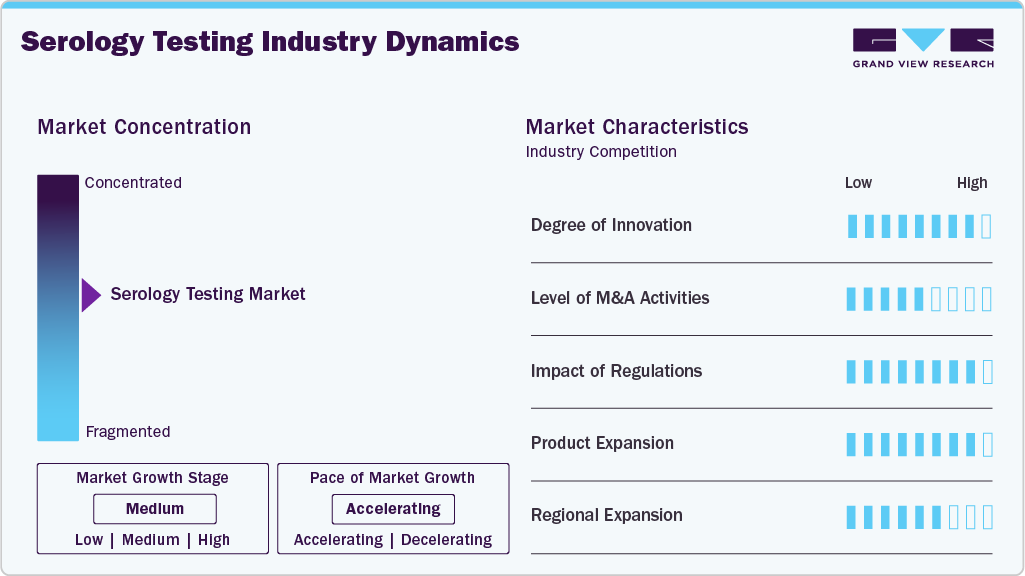
The degree of innovation in the serology testing market is high, supported by chemiluminescence, automated random-access platforms, multiplex assays, alternative sampling methods, and improved analytical sensitivity. Innovation increasingly focuses on replacing manual specialty testing with standardized, high-throughput laboratory workflows. Automated disease-specific assays are expanding serology into underserved diagnostic areas while improving laboratory efficiency and result standardization. For instance, in January 2026, DiaSorin announced the U.S. authorization of its LIAISON XL MUREX Anti-HDV assay. The chemiluminescence immunoassay qualitatively detects total antibodies against hepatitis D virus in serum or plasma and operates on the fully automated LIAISON XL Analyzer. It is intended to support the presumptive diagnosis of HDV infection among hepatitis B surface antigen-positive individuals at risk of coinfection. The FDA granted De Novo authorization under DEN250032 on December 23, 2025. This development introduced an automated alternative to labor-intensive HDV serology methods, enabling standardized processing, improved laboratory throughput, and broader access to regulated anti-HDV testing.
The level of merger and acquisition activity in the Serology Testing Market is moderate, with transactions primarily focused on acquiring specialized assay portfolios, manufacturing capabilities, regulatory assets, and established distribution channels. Large-scale corporate acquisitions remain limited compared with targeted product-line transactions. Selective asset acquisitions are enabling diagnostic companies to expand specialty-serology portfolios and internalize assay manufacturing. For instance, in April 2025, Tecan agreed to acquire assets and manufacturing processes associated with four ELISA products from Revvity subsidiary Cisbio Bioassays. The portfolio included two CE-marked clinical assays and two research-use-only products. The transaction was intended to strengthen Tecan subsidiary IBL International’s specialty-diagnostics portfolio and transfer manufacturing, distribution, and regulatory responsibilities to the company. Financial terms were not disclosed.
 To learn more about this report, Download Free Sample Report
 The impact of regulations on the serology testing market is high as manufacturers must demonstrate analytical performance, clinical validity, product quality, labeling compliance, and post-market safety before commercialization. Regulatory requirements strengthen user confidence but increase development costs and approval timelines. The harmonization of quality-management requirements is raising compliance expectations for serology-test manufacturers operating in the U.S. For instance, in February 2026, the U.S. FDA’s Quality Management System Regulation became effective, aligning device-manufacturing requirements more closely with ISO 13485:2016. Serology assay and analyzer manufacturers must consequently maintain stronger risk-management, documentation, supplier-control, and lifecycle-quality processes. Although compliance may create operational burdens, it supports consistent product quality and facilitates international regulatory alignment.
Product expansion in the serology testing market is driven by manufacturers introducing established assays into new geographic markets and extending multiplex testing across clinical and community settings. Geographic launches of rapid multiplex assays are broadening access to combined infectious-disease screening. For instance, in March 2025, bioLytical Laboratories launched its INSTI Multiplex HIV-1/2 Syphilis Antibody Test for professional use across Australia following its inclusion in the Australian Register of Therapeutic Goods under ARTG 482706. The portable, shelf-stable flow-through immunoassay simultaneously detects HIV-1/2 and Treponema pallidum antibodies from a single fingerstick blood sample and provides separate results within approximately 60 seconds. The expansion strengthened bioLytical’s Australian portfolio and increased access to dual screening across hospitals, clinics, and outreach programs.
Regional expansion in the Serology Testing Market is supported by diagnostic companies introducing specialized infectious-disease and autoimmune assays into high-growth emerging markets. India represents an attractive expansion destination owing to its large patient population, expanding laboratory networks, and improving access to advanced antibody testing. Collaborations with established diagnostic-service providers are accelerating the regional availability of specialized serology assays. For instance, in July 2025, Agilus Diagnostics, in collaboration with Sebia, launched the Anti-MCV antibody test in India. The serum-based assay detects autoantibodies against mutated citrullinated vimentin and supports earlier rheumatoid arthritis identification, particularly among patients who test negative for anti-CCP antibodies and rheumatoid factor. The launch expanded access to specialized autoimmune serology through Agilus’ diagnostic network.
Analyst Perspective
The serology testing market is positioned for sustained growth as infectious-disease screening, autoimmune diagnostics, and antenatal testing generate recurring demand for assays and reagents. Automated chemiluminescence platforms should gain adoption in high-volume laboratories, while rapid tests can extend access in decentralized settings. Multiplex assays and alternative sample-collection methods offer opportunities to broaden testing reach. However, antibody window periods, cross-reactivity, and the need for confirmatory testing limit the suitability of some assays as standalone diagnostics. Manufacturers that combine reliable test performance with efficient workflows, regulatory compliance, dependable reagent supply, and competitive pricing are likely to strengthen their market positions.
Product Insights
The reagents and consumables segment accounted for the largest revenue share of 77.2% in 2025. Its position reflects the recurring purchase of assay kits, test strips, calibrators, and quality controls as testing volumes increase. Laboratories also require disease-specific reagents to expand their serology menus, creating demand beyond the initial purchase of an instrument. New antibody test kits are broadening the range of conditions served by this segment. For instance, in June 2025, the U.S. FDA cleared the iDart Lyme IgM ImmunoBlot Kit, a reagent-based test for detecting antibodies associated with Lyme disease. The clearance illustrates continued investment in specialized serology kits.
The Software & Services segment is expected to exhibit the fastest growth over the forecast period, supported by increasing adoption of automated serology platforms and demand for integrated laboratory workflows. Laboratories are investing in software that connects analyzers with laboratory information systems, manages results, monitors quality control, and supports traceable reporting. As assay menus and testing volumes expand, these capabilities reduce manual work and improve operational efficiency. Demand for installation, maintenance, training, and technical support is also expected to rise alongside the installed base of serology instruments, creating recurring service revenue for manufacturers and diagnostic solution providers.
Testing Services Insights
The infectious disease serology segment accounted for the largest revenue share of 40.4% in 2025, supported by routine testing for HIV, hepatitis, syphilis, and other infections. Hospitals, diagnostic laboratories, blood centres, and public-health programs use antibody and blood-based antigen assays for screening, diagnosis, and surveillance. Recurring antenatal and donor-screening requirements sustain testing volumes, while outbreaks create additional demand. Segment revenue is captured through laboratory-performed serology tests and related diagnostic services. For instance, in August 2026, Labcorp launched a hepatitis D reflex testing option for patients who test positive for hepatitis B surface antigen. The service allows clinicians to request follow-up testing using the original blood sample, streamlining the diagnostic pathway and reducing the need for another collection. This development supports demand for integrated laboratory testing services.
The allergy serology segment is expected to exhibit the fastest growth over the forecast period, supported by demand for blood-based testing that identifies sensitization to specific allergens. Clinicians use allergen-specific IgE results alongside patient history to investigate suspected food, environmental, and other allergies. Expanding assay menus and laboratory automation are expected to increase testing capacity and support revenue from laboratory-performed allergy tests. Automation is improving laboratories’ ability to process specialty allergy assays at scale. For instance, in May 2025, Revvity’s EUROIMMUN launched the IDS i20, a random-access chemiluminescence platform designed to automate specialty testing, including allergy assays. The launch supports more efficient processing of allergy serology within laboratories offering multiple diagnostic specialties.
Technology Insights
The Chemiluminescent Immunoassay segment dominated the market, accounting for 28.0% of revenue in 2025. Its leading position is supported by the use of automated platforms in hospitals and reference laboratories, where high testing volumes require consistent results and efficient processing. Chemiluminescent assays support antibody and blood-based antigen testing across infectious-disease and autoimmune applications. Their random-access capability allows laboratories to run different assays as samples arrive, reducing reliance on batch workflows. Continued demand for disease-specific assay reagents, together with the installed base of compatible analyzers, supports recurring revenue in this segment.
The Multiplex Bead & Array-Based Immunoassay segment is expected to demonstrate the fastest growth over the forecast period, supported by demand for testing multiple antibodies from a single patient sample. These platforms are particularly useful in autoimmune and allergy serology, where clinicians may need results for several markers or allergens to inform an assessment. Consolidating tests into one workflow can reduce sample requirements and laboratory handling while expanding the information available from each order. Broader clinical adoption is expected to depend on assay validation, clear result interpretation, and the cost of multiplex testing relative to ordering individual assays.
Test Format Insights
The laboratory-based serology testing segment is expected to account for the largest revenue share of 83.7% in 2025, supported by the broad range of antibody and blood-based antigen assays performed in hospitals and diagnostic laboratories. Established laboratory workflows enable confirmatory testing, quality control, and processing of large sample volumes across infectious-disease, autoimmune, and allergy applications. New disease-specific assays are expanding laboratory serology menus. For instance, in February 2026, EUROIMMUN announced the launch in Brazil of ANVISA-approved Anti-Oropouche Virus ELISA tests for detecting IgM and IgG antibodies. The addition gives laboratories a commercial serology option to support diagnosis of an emerging infection.
The rapid point-of-care serology testing segment is expected to record the fastest growth over the forecast period, supported by demand for antibody screening in clinics, community programs, and other settings with limited laboratory access. Tests performed near the patient can shorten the time to an initial result and assist providers reach people who may not return for a laboratory appointment. Regulatory approvals are expanding the range of rapid serology tests available to frontline providers. For instance, in August 2025, Health Canada approved MedMira’s Reveal Rapid TP Syphilis Antibody Test, adding a rapid screening option for syphilis in Canada.
End User Insights
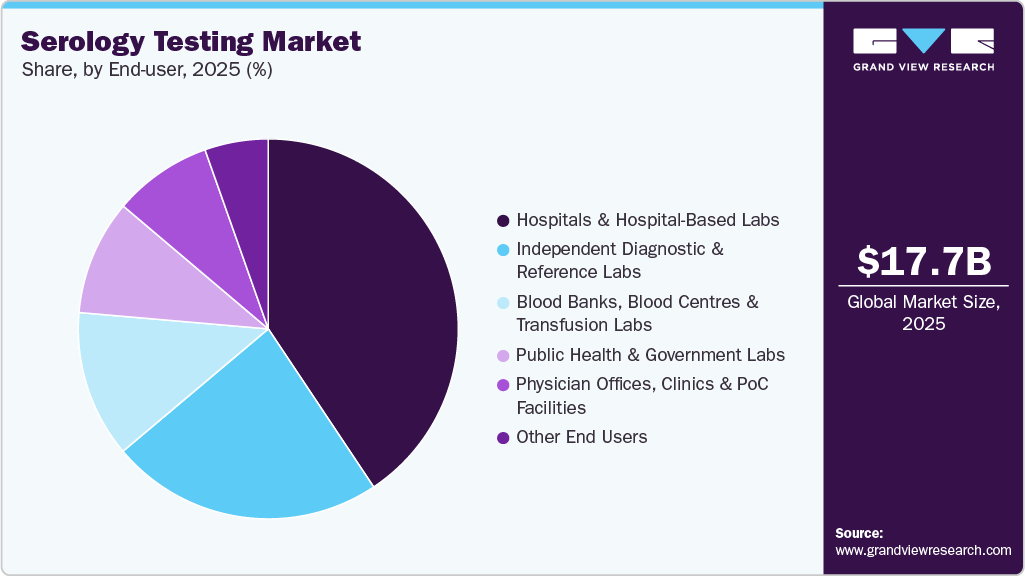
The hospitals & hospital-based laboratories segment held the largest revenue share of 40.6% in 2025, supported by routine inpatient and outpatient testing, antenatal screening, and the investigation of infectious and autoimmune diseases. Hospitals use serological assays across multiple departments and require timely results to guide diagnosis, treatment, and patient referral. Their laboratories also purchase reagents and consumables at scale and invest in automated immunoassay platforms to manage testing volumes and maintain consistent quality. Established specimen-collection networks and access to specialist clinicians further support the segment’s leading position.
 To learn more about this report, Download Free Sample Report
 The physician offices, clinics & point-of-care facilities segment is expected to register the fastest CAGR over the forecast period, supported by growing demand for accessible infectious-disease screening outside centralized laboratories. Rapid serology tests allow clinicians to obtain preliminary results during a patient visit, supporting timely counselling, follow-up, and referral. Adoption is particularly relevant to sexual-health clinics, antenatal services, and community outreach programs, where fingerstick sampling and short turnaround times can reduce barriers to testing. Expanding availability of professional-use antibody tests and integrated screening programs is expected to increase test-kit consumption across these facilities.
Regional Insights
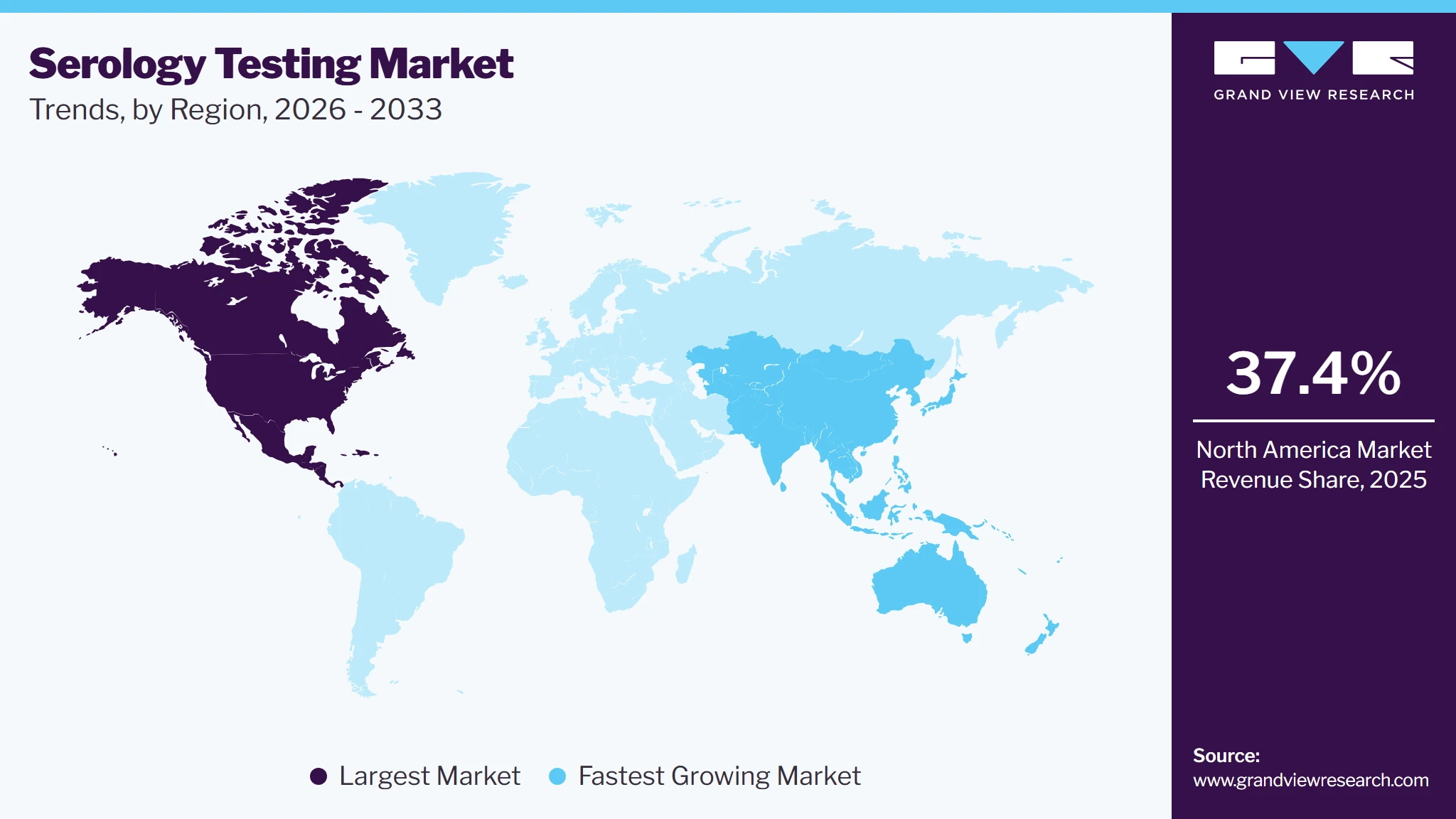
North America serology testing market dominated the global market, accounting for the largest revenue share of 37.4%% in 2025. This leadership is attributable to the region’s advanced diagnostic infrastructure, substantial infectious-disease and autoimmune testing volumes, established reimbursement mechanisms, and widespread adoption of automated immunoassay systems. Strong public-health surveillance, stringent laboratory-quality standards, and the presence of leading diagnostic manufacturers further support market growth. Regional demand is increasingly shifting toward multiplex, high-throughput, and point-of-care assays that improve workflow efficiency and extend testing beyond centralized laboratories. Regulatory authorization of rapid disease-specific assays is strengthening access to decentralized serological screening across North America. For instance, in July 2025, Health Canada authorized bioLytical Laboratories’ iStatis Syphilis Test for professional use. The portable immunochromatographic assay detects antibodies against Treponema pallidum and generates results in approximately 15 minutes, supporting timely syphilis screening across hospitals, clinics, and community-based healthcare settings.
 To learn more about this report, Download Free Sample Report
 U.S. Serology Testing Market Trends
The serology testing market in the U.S. benefits from substantial testing volumes, advanced clinical laboratory infrastructure, widespread deployment of automated immunoassay platforms, and sustained public-health investment in infectious-disease screening. Hospitals and reference laboratories increasingly favor high-throughput systems that provide broad assay menus, standardized processing, laboratory-information-system connectivity, and shorter turnaround times. Concurrently, decentralized and self-administered antibody testing is gaining commercial significance as healthcare programs seek to address geographic, socioeconomic, and stigma-related barriers to conventional screening. Public-private initiatives are extending serological testing beyond traditional healthcare settings and supporting broader population access. For instance, in April 2026, bioLytical Laboratories partnered with the CDC-funded Together TakeMeHome program to distribute its fingerstick-based INSTI HIV Self-Test free of charge through a nationwide U.S. mail-order service. The antibody test provides results within approximately 60 seconds, facilitating private screening and timely referral for confirmatory testing and clinical care.
Europe Serology Testing Market Trends
The serology testing market in Europe is supported by established public-health systems, extensive infectious-disease surveillance, and substantial adoption of automated immunoassay platforms across hospitals and diagnostic laboratories. Demand remains strong for serological testing associated with HIV, viral hepatitis, syphilis, measles, tick-borne infections, and autoimmune disorders. Regional laboratories are increasingly adopting chemiluminescence immunoassays, multiplex antibody panels, and automated ELISA workflows to improve throughput, analytical consistency, and turnaround time. The implementation of the European Union In Vitro Diagnostic Medical Devices Regulation is also reshaping competition by requiring stronger performance evaluation, clinical evidence, traceability, post-market surveillance, and notified-body oversight. These requirements favor manufacturers with established regulatory capabilities while increasing compliance costs for smaller suppliers. Continued disease-surveillance investment, laboratory consolidation, and demand for IVDR-compliant assays are expected to sustain regional market growth.
The UK serology testing market is supported by centralized public-health programs, established NHS laboratory networks, and routine testing for infectious diseases, immunity assessment, antenatal screening, and autoimmune conditions. Demand is increasingly influenced by surveillance requirements and the adoption of alternative sampling approaches that improve testing access and specimen return rates. Automated immunoassays remain important across hospital and reference laboratories, while dried blood spot testing is gaining relevance in targeted national programs. Government-supported dried blood spot services are extending serological monitoring beyond conventional laboratory collection pathways. For instance, in December 2025, the UK Health Security Agency reported that post-vaccination serological testing for infants born to mothers living with hepatitis B was primarily delivered through its free national dried blood spot service. The program evaluates whether mother-to-child transmission has been prevented and supports timely referral of infants requiring specialist care, thereby sustaining demand for validated serology workflows and associated consumables.
Serology testing market in Germany is supported by a well-established healthcare system, extensive statutory health-insurance coverage, advanced laboratory infrastructure, and strong adoption of automated immunoassay technologies. Hospitals, private laboratory networks, and university medical centres routinely use serological testing for infectious diseases, autoimmune disorders, allergy assessment, immunity evaluation, and blood-donor screening. Demand is increasingly shifting toward chemiluminescence immunoassays, automated ELISA platforms, multiplex antibody panels, and laboratory-integrated software that improve throughput and result standardization. Germany’s compliance with the European Union In Vitro Diagnostic Medical Devices Regulation is also encouraging laboratories to prioritize clinically validated and IVDR-compliant assays. The domestic presence of established diagnostic manufacturers, including EUROIMMUN and other specialized immunodiagnostic companies, further supports product availability, technical expertise, and innovation. Continued infectious-disease surveillance and expansion of autoimmune testing are expected to sustain market growth.
Asia Pacific Serology Testing Market Trends
The APAC serology testing market is experiencing strong growth, supported by a substantial infectious-disease burden, expanding autoimmune-disease diagnosis, improving laboratory infrastructure, and increasing healthcare expenditure. China, Japan, India, South Korea, and Australia are strengthening automated immunoassay capabilities, while rapid antibody tests remain important across decentralized and resource-constrained settings. Regional demand is also shifting toward specialized serological biomarkers that support earlier diagnosis and more individualized clinical management. Recognition of novel autoantibody tests is expanding the clinical application of serology across specialized reproductive healthcare. For instance, in June 2025, Japan’s Ministry of Health, Labour and Welfare recognized AOI Biosciences’ β2GPI Neoself Antibody Test as advanced medical care for recurrent pregnancy loss. The blood-based test detects β2GPI/HLA-DR autoantibodies associated with infertility and recurrent pregnancy loss, supporting broader clinical evaluation of previously unexplained reproductive disorders and strengthening demand for specialized autoimmune serology.
Serology testing market in China represents a high-potential market in the region for serology testing, supported by its large patient population, expanding hospital and diagnostic-laboratory network, government-led infectious-disease screening, and growing domestic IVD manufacturing capabilities. Demand is shifting toward automated chemiluminescence platforms, multiplex assays, rapid tests, and locally manufactured reagents that enable laboratories to increase throughput while controlling testing costs. Domestic suppliers are also strengthening competition through broader assay menus and improved access across lower-tier cities. China’s expanding IVD ecosystem is accelerating the commercialization and adoption of advanced immunodiagnostic technologies. For instance, in March 2026, the China International In Vitro Diagnostics Expo brought together 1,208 exhibitors and 38,310 professional visitors from 55 countries and regions, while overseas attendance increased by 25.9%. The event featured immunodiagnostics, point-of-care testing, automation, and laboratory equipment, demonstrating the scale of China’s diagnostic supply chain and its capacity to support continued serology-market expansion.
Japan serology testing market is an important market for serology testing, supported by its aging population, advanced hospital and laboratory infrastructure, universal health coverage, and established demand for infectious-disease and autoimmune antibody testing. Diagnostic laboratories are increasingly adopting automated chemiluminescence platforms that provide standardized results, high throughput, and efficient processing of specialized assays. The presence of domestic IVD manufacturers also supports continuous reagent development, dependable supply, and technology adoption. The expansion of domestic diagnostic capabilities is strengthening Japan’s capacity to develop and commercialize advanced testing solutions. For instance, in July 2025, Nagase Diagnostics commenced operations following the transfer of Asahi Kasei Pharma’s diagnostics business to the NAGASE Group. The newly established company assumed diagnostic-reagent operations and related technical capabilities, supporting continuity in domestic product development, manufacturing, and commercialization. This development strengthens Japan’s broader diagnostics supply chain and provides a foundation for expanding specialized immunodiagnostic and serological testing portfolios.
Latin America Serology Testing Market Trends
Latin America represents an emerging market for serology testing, supported by the high incidence of dengue, HIV, hepatitis, syphilis, Chagas disease, and vaccine-preventable infections. Expanding public-health screening, antenatal programs, blood-donor testing, and disease-surveillance initiatives are increasing demand for ELISA kits, rapid antibody tests, reagents, and automated immunoassay platforms. Brazil, Mexico, Argentina, and Colombia represent key markets, although unequal laboratory access and constrained healthcare budgets continue to influence adoption. Recurring infectious-disease outbreaks are strengthening the requirement for laboratory surveillance and confirmatory serological testing. For instance, in February 2026, the Pan American Health Organization called for intensified measles surveillance and laboratory testing following a substantial regional increase in infections. PAHO recorded 14,891 confirmed measles cases and 29 deaths across the Americas during 2025, with Mexico among the significantly affected markets. This epidemiological pressure is expected to support demand for measles IgM and IgG assays, laboratory consumables, and surveillance-testing services across Latin America.
Middle East and Africa Serology Testing Market Trends
The Middle East and Africa serology testing market is expected to develop gradually, supported by expanding infectious-disease screening, improving laboratory infrastructure, and increasing investment in maternal-health and blood-safety programs. Gulf countries are adopting automated immunoassay platforms across advanced hospital networks, while African markets increasingly require affordable rapid tests for HIV, hepatitis, syphilis, malaria, and other endemic infections. Nevertheless, limited laboratory capacity, funding constraints, and uneven access to trained personnel continue to restrict adoption in several countries. Country-level implementation of integrated antenatal screening is expanding access to multiplex serology in underserved African populations. For instance, in June 2026, Seychelles and Eritrea adopted Abbott’s Determine Antenatal Care Panel to support simultaneous screening for HIV, hepatitis B, and syphilis during pregnancy. The panel uses a finger-prick blood sample and combines three rapid assays, enabling healthcare providers to screen for multiple maternal infections during a single visit. This rollout strengthens demand for decentralized serology products across African antenatal-care programs.
Key Serology Testing Company Insights
The Serology Testing Market demonstrates a moderately concentrated competitive landscape, with companies competing through broad assay portfolios, established immunoassay platforms, regulatory approvals, analytical performance, disease coverage, and relationships with hospitals, diagnostic laboratories, blood banks, and public-health organizations. F. Hoffmann-La Roche Ltd, Abbott Laboratories, Danaher Corporation, QuidelOrtho Corporation, Bio-Rad Laboratories, Inc., Grifols, S.A., Siemens Healthineers AG, bioMérieux SA, DiaSorin S.p.A., and Thermo Fisher Scientific Inc. are among the key companies shaping the competitive environment. Market positioning is influenced by assay sensitivity and specificity, testing throughput, automation, turnaround time, multiplexing capabilities, reagent availability, technical support, pricing, and geographic reach. Companies are strengthening their positions through automated chemiluminescence systems, rapid immunochromatographic tests, ELISA and immunoblot portfolios, strategic partnerships, regulatory approvals, acquisitions, and geographic expansion. Overall, competition centers on technological differentiation, workflow efficiency, product breadth, clinical reliability, regulatory compliance, and cost-effectiveness.
Key Serology Testing Companies
The following key companies have been profiled for this study on the serology testing market.
-
Abbott Laboratories
-
bioMérieux SA
-
Bio-Rad Laboratories, Inc.
-
Danaher Corporation
-
DiaSorin S.p.A.
-
F. Hoffmann-La Roche Ltd
-
Grifols, S.A.
-
QuidelOrtho Corporation
-
Siemens Healthineers AG
-
Thermo Fisher Scientific Inc.
Competitive Benchmarking
Operating Strategies
Competitive Edge
Weaknesses
Established Players: F. Hoffmann-La Roche Ltd.
- Leverage large automated immunoassay platforms and broad reagent portfolios to secure recurring consumables revenue. Expand infectious-disease and autoimmune assay menus through internal R&D, regulatory approvals, partnerships, and acquisitions. Strengthen laboratory connectivity, workflow automation, and integrated diagnostic solutions to increase customer retention. Utilize global distribution networks and installed instrument bases to support product commercialization across developed and emerging markets.
- Extensive global commercial presence and relationships with hospitals, reference laboratories, blood banks, and public-health organizations. Large installed bases support recurring demand for proprietary reagents, calibrators, controls, and consumables. Strong R&D investment, regulatory experience, manufacturing scale, technical support, and platform-integration capabilities strengthen competitive positioning.
- High instrument-acquisition and implementation costs may restrict adoption among smaller laboratories and resource-constrained facilities. Large organizational structures can slow responses to specialized or emerging testing requirements. Dependence on centralized laboratory infrastructure and proprietary platforms may limit penetration in decentralized settings. Broad portfolios can also reduce focus on niche serology applications.
Emerging Players: QuidelOrtho Corporation
- Focus on specialized infectious-disease, autoimmune, donor-screening, rapid, and disease-specific serology assays. Expand assay menus and geographic coverage through targeted product launches, regulatory approvals, partnerships, and selected acquisitions. Differentiate through multiplex assays, rapid testing, immunoblotting, ELISA, chemiluminescence, and specialty-testing capabilities. Develop solutions for laboratory, blood-bank, and point-of-care applications.
- Specialized expertise across serology technologies and disease areas supports strong positions in selected clinical niches. Established assay brands, disease-specific menus, and flexible testing formats address diverse laboratory requirements. Faster portfolio specialization and targeted innovation can support entry into underserved applications. Relationships with specialty laboratories and blood-screening organizations provide additional commercial advantages.
- Smaller installed bases and narrower portfolios than diversified global competitors may limit cross-selling opportunities. Dependence on selected disease areas, platforms, or geographic markets can increase commercial risk. Lower financial scale may constrain large acquisitions, extensive clinical trials, and simultaneous regulatory submissions. Some companies face strong pricing competition from large manufacturers and lower-cost regional suppliers.
Recent Developments:
-
In January 2026, DiaSorin announced U.S. FDA De Novo authorization for its LIAISON XL MUREX Anti-HDV assay. The automated assay detects antibodies to hepatitis D virus, adding a regulated option for laboratory-based HDV serology. The FDA decision occurred on December 23, 2025, before the company’s announcement.
-
In July 2025, WHO prequalified Abbott’s Determine Antenatal Care Panel, a bundled set of three rapid tests for HIV, hepatitis B, and syphilis. Designed for use by trained providers with finger-prick blood, it enables integrated screening during an antenatal visit and may facilitate procurement in resource-constrained settings.
-
In March 2025, bioLytical launched its INSTI Multiplex HIV-1/2 Syphilis Antibody Test in Australia. The professional-use test detects both infections from one finger-prick sample in approximately 60 seconds. Its portability supports screening in clinics and outreach programs, where rapid results can help connect patients to follow-up care.
-
In March 2025, Revvity’s EUROIMMUN launched the CE-marked Anti-Measles Virus ELISA 2.0 (IgG). The assay accepts dried blood spots alongside serum and plasma, allowing finger-prick samples to be sent to laboratories for immunity assessment. It expands access to serology where venous collection is difficult.
Serology Testing Market Report Scope
Report Attribute
Details
Market size in 2025
USD 17.7 billion
Market size value in 2026
USD 18.8 billion
Revenue forecast in 2033
USD 30.0 billion
Growth rate
CAGR of 6.9% from 2026 to 2033
Actual data
2021 - 2025
Forecast period
2026 - 2033
Quantitative units
Revenue in USD billion and CAGR from 2026 to 2033
Report coverage
Revenue forecast, company ranking, competitive landscape, growth factors, and trends
Segments covered
Product, testing services, technology, test format, end user, region
Regional scope
North America; Europe; Asia Pacific; Latin America; MEA
Country scope
U.S.; Canada; Mexico; UK; Germany; France; Italy; Spain; Netherlands; Denmark; Sweden; China; Japan; India; Australia; Thailand; South Korea; Brazil; Argentina; South Africa; Saudi Arabia; UAE; Kuwait
Key companies profiled
F. Hoffmann-La Roche Ltd; Abbott Laboratories; Danaher Corporation; QuidelOrtho Corporation; Bio-Rad Laboratories, Inc.; Grifols S.A.; Siemens Healthineers AG; bioMérieux SA; DiaSorin S.p.A.; Thermo Fisher Scientific Inc.
Customization scope
Free report customization (equivalent up to 8 analyst working days) with purchase. Addition or alteration to country, regional & segment scope.
Pricing and purchase options
Avail customized purchase options to meet your exact research needs. Explore purchase options
Global Serology Testing Market Report Segmentation
This report forecasts revenue growth at global, region, and country levels and provides an analysis on the latest industry trends and opportunities in each of the sub-segments from 2021 to 2033. For this study, Grand View Single-target Tests has segmented the Serology Testing Market report based on product, testing services, technology, test format , end user and region.
-
Product Outlook (Revenue, USD Billion, 2021 - 2033)
-
Reagents & Consumables
-
Instruments
-
Software & Services
-
-
Testing Services Outlook (Revenue, USD Billion, 2021 - 2033)
-
Infectious Disease Serology
-
Autoimmune Disease Serology
-
Allergy Serology
-
Immunohematology Serology
-
Transplantation & Histocompatibility Serology
-
Other Clinical Serology Testing
-
-
Test Format Outlook (Revenue, USD Billion, 2021 - 2033)
-
Laboratory-Based Serology Testing
-
Rapid Point-of-Care Serology Testing
-
-
Technology Outlook (Revenue, USD Billion, 2021 - 2033)
-
Chemiluminescent Immunoassay
-
Enzyme Immunoassay
-
Fluorescence-Based Immunoassay
-
Immunofluorescence Assay
-
Rapid Immunochromatographic Assay
-
Agglutination-Based Assay
-
Immunoblot & Line Immunoassay
-
Multiplex Bead & Array-Based Immunoassay
-
Other Commercial Serological Technologies
-
-
End Use Outlook (Revenue, USD Billion, 2021 - 2033)
-
Hospitals & Hospital-Based Laboratories
-
Independent Diagnostic & Reference Laboratories
-
Blood Banks, Blood Centres & Transfusion Laboratories
-
Public Health & Government Laboratories
-
Physician Offices, Clinics & Point-of-Care Facilities
-
Other End Users
-
-
Regional Outlook (Revenue, USD Billion; 2021 - 2033)
-
North America
-
U.S.
-
Canada
-
Mexico
-
-
Europe
-
UK
-
Germany
-
France
-
Italy
-
Spain
-
Norway
-
Denmark
-
Sweden
-
-
Asia Pacific
-
Japan
-
China
-
India
-
Australia
-
South Korea
-
Thailand
-
-
Latin America
-
Brazil
-
Argentina
-
-
Middle East & Africa
-
South Africa
-
Saudi Arabia
-
UAE
-
Kuwait
-
-
Research Methodology
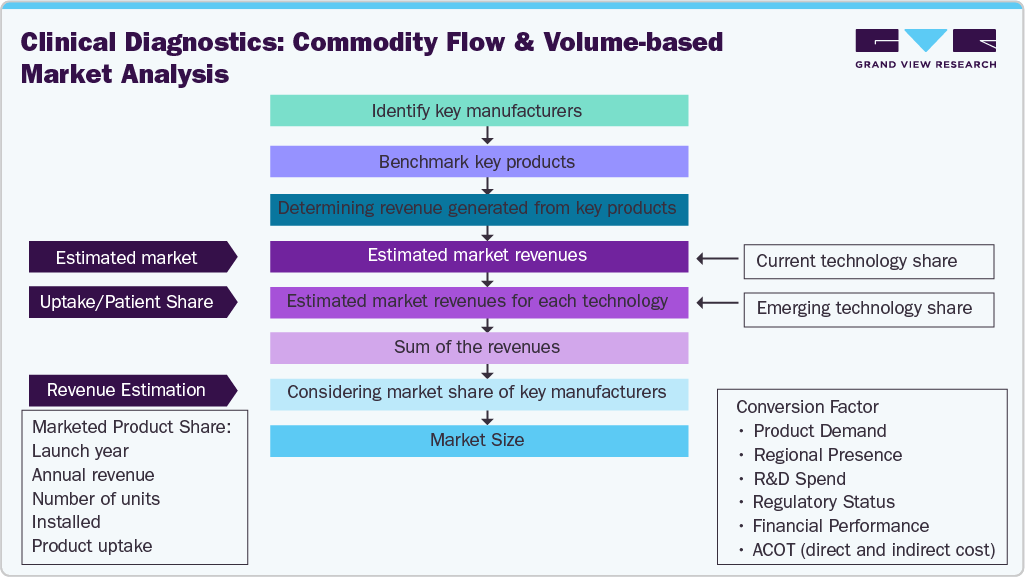
The study identified leading serology manufacturers and benchmarked their assays, instruments, and services by technology, application, and geography. Market estimates combined attributable product revenues with testing volumes and utilization data, then cross-checked results against company disclosures to minimize double counting.
Segment Definition
Product
Revenue capture definition
Reagents & Consumables
Includes qualifying antibody and antigen assay kits, reagents, calibrators, controls, cartridges, strips, and assay-specific disposables. Revenue flows from their sale for covered serology tests; excludes general-purpose laboratory supplies.
Instruments
Includes analyzers, readers, and dedicated processing systems sold or leased for covered serology assays. Capture instrument value attributable to qualifying test utilization, rather than the full value of multipurpose platforms.
Software & Services
Includes separately priced serology-related software, instrument maintenance, assay implementation, and technical support. Capture identifiable contract or license payments; exclude testing fees and services already bundled into instrument or reagent prices.
Testing Services
Revenue capture definition
Infectious Disease Serology
Covers blood-based antibody and pathogen-antigen assays for infections such as HIV, hepatitis, syphilis, and dengue. Assign qualifying product sales to the infectious-disease assays performed; exclude molecular tests.
Autoimmune Disease Serology
Covers assays detecting autoantibodies or related immune markers used to assess autoimmune disorders. Value is attributed to disease-specific kits and the corresponding share of instruments and support.
Allergy Serology
Covers blood-based total or allergen-specific IgE assays used in allergy assessment. Capture qualifying assay-product sales and allocated platform value; exclude skin-prick testing and unrelated respiratory allergy products.
Immunohematology Serology
Covers blood-group antigen typing, red-cell antibody screening and identification, and serological compatibility testing. Count associated reagents and allocated systems here; exclude infectious-disease donor screening and molecular blood-group typing.
Transplantation &
Histocompatibility Serology
Covers serum-based detection and characterization of transplant-relevant antibodies, including HLA antibodies. Allocate qualifying assay and platform sales here; exclude molecular HLA typing and tissue-based testing.
Other Clinical Serology Testing
Includes qualifying antibody or antigen tests with a clinical purpose outside the five categories above. Count only identifiable assay-related sales; exclude routine hormone, cardiac, and metabolic immunoassays.
Technology
Revenue capture definition
Chemiluminescent Immunoassay
Includes qualifying assays using chemiluminescent or electrochemiluminescent signal detection. Capture reagent sales and the attributable value of analyzers and support used for those assays.
Enzyme Immunoassay
Includes plate-based ELISA and other enzyme-labelled assays using colorimetric or comparable non-chemiluminescent detection. Allocate associated kits, readers, processors, and support to this technology.
Fluorescence-Based Immunoassay
Includes assays that quantify fluorescence signals without microscopic interpretation, such as fluorescent immunoassay cartridges. Capture associated consumables and readers; exclude indirect immunofluorescence assays.
Immunofluorescence Assay
Includes microscopy-based direct and indirect immunofluorescence tests, including selected autoimmune antibody assays. Allocate slides, reagents, imaging instruments, and related support to this category.
Rapid Immunochromatographic
Assay
Includes lateral-flow and comparable strip-based blood tests read at or near the point of care. Capture test-unit and dedicated reader sales; exclude rapid tests assigned to another primary technology.
Agglutination-Based Assay
Includes qualifying assays identified by visible particle, cell, or latex agglutination. Count assay-specific reagents and equipment here; distinguish red-cell testing by technology from its immunohematology application.
Immunoblot & Line Immunoassay
Includes antibody tests identified by binding patterns on immunoblot or line-assay strips. Capture strips, reagents, dedicated processing equipment, and interpretation software.
Multiplex Bead & Array-Based
Immunoassay
Includes assays measuring multiple targets through bead sets or array surfaces in one analytical run. Assign panel sales and attributable platform value here, regardless of the individual disease targets.
Other Serological Technologies
Includes qualifying techniques not classified above, such as selected flow-through or alternative binding-assay formats. Count only identifiable sales and document the included methods to prevent overlap.
Test Format
Revenue capture definition
Laboratory-Based Serology Testing
Covers qualifying assays intended for central, hospital, or reference-laboratory workflows, including tests on automated platforms. Attribute their product sales and related systems to this format.
Rapid Point-of-Care Serology Testing
Covers qualifying assays intended for near-patient use in clinics, outreach programs, or comparable settings. Capture associated rapid tests and readers; classify by intended format, even when a laboratory purchases them.
End User
Revenue capture definition
Hospitals & Hospital-Based
Laboratories
Includes qualifying products purchased or leased by hospitals and their in-house laboratories for patient testing. Attribute sales to the purchasing hospital entity, including its internal blood bank.
Independent Diagnostic &
Reference Laboratories
Includes products supplied to independently operated clinical or reference laboratories performing serology for external customers. Capture their purchases, including tests performed under hospital outsourcing contracts.
Blood Banks, Blood Centres &
Transfusion Laboratories
Includes products purchased by standalone blood establishments and transfusion laboratories for donor screening or immunohematology. Exclude hospital-operated units already counted under hospitals.
Public Health & Government
Laboratories
Includes qualifying products procured by government-operated laboratories for surveillance, screening, or confirmatory testing. Classify by purchasing laboratory, regardless of the program funding the tests.
Physician Offices, Clinics &
Point-of-Care Facilities
Includes serology products purchased by outpatient practices, community clinics, and dedicated near-patient facilities. Count sales to these operators, including rapid tests used in outreach.
Other End Users
Includes qualifying purchases by customers outside the listed groups, such as academic clinical-testing facilities. Exclude research-use-only purchases and reallocate purchases when the actual testing operator is identifiable.
Estimation Model
The Serology Testing Market is estimated using a bottom-up revenue approach, beginning with identification of key manufacturers and benchmarking their relevant products. Revenue contributions from key NAT products are assessed and aggregated to estimate technology-level revenues. The estimated revenues are then adjusted for market share and existing market uptake, with technology-specific revenues summed to derive the overall market size. This approach incorporates manufacturer-level revenue estimation and market-share analysis to establish the final market value.
 To learn more about this report, Download Free Sample Report
 Customization Table
Client Request
Customization Delivered
Value Adds
Serology Testing Market Competitive Landscape & Technology Assessment
Assessed the competitive landscape across serology reagents, assay kits, consumables, instruments, software, and associated services. Evaluated major manufacturers based on product portfolios, disease coverage, technologies such as ELISA, CLIA, immunofluorescence, immunoblotting, agglutination, and rapid immunochromatography, as well as regulatory approvals, installed base, partnerships, and geographic presence.
Enabled the client to benchmark leading serology-testing companies, understand competitive positioning, identify technology and disease-coverage gaps, and evaluate strategic opportunities across product development, partnerships, acquisitions, and geographic expansion.
Serology Testing Market Product, Technology & Disease-Target Benchmarking Analysis
Conducted detailed benchmarking of serology assays across infectious diseases, autoimmune disorders, allergies, and other clinical applications. Compared assay sensitivity and specificity, sample requirements, turnaround time, automation, throughput, regulatory status, test format, clinical utility, and compatibility with laboratory and point-of-care platforms.
Helped the client identify product and application gaps, compare assay performance and positioning, and prioritize opportunities involving multiplex testing, automated immunoassays, rapid serology, alternative sampling methods, and disease-specific portfolio expansion.
Serology Testing Market Entry & Commercialization Assessment
Evaluated market-entry strategies, regulatory pathways such as U.S. FDA, EU IVDR, and country-specific IVD requirements, reimbursement and procurement structures, laboratory infrastructure, distribution networks, and adoption barriers across key regions. Assessed demand among hospitals, diagnostic laboratories, blood banks, public-health institutions, and academic and research organizations.
Supported market-entry planning by identifying high-potential regions and end users, assessing regulatory and funding environments, understanding local blood-screening practices, and developing tailored commercialization strategies for NAT products and solutions.
About the Author(s)
Clinical Diagnostics Research Team
Healthcare · Clinical DiagnosticsThis report was authored by the clinical diagnostics research team at Grand View Research - comprising two research analysts, one senior research analyst, and one industry expert - with specialized expertise in the clinical diagnostics segment of the healthcare industry. All findings are based on proprietary healthcare databases, executive interviews, and regulatory analysis, subject to internal peer review prior to publication.
Last Updated:
Speak to Analyst

Customize this report to your needs - add regions, segments, or data points, with 20% free customization.
Or view our licence options:


ISO 9001:2015 & 27001:2022 Certified
We are GDPR and CCPA compliant! Your transaction & personal information is safe and secure. For more details, please read our privacy policy.


