
- Home
- »
- Medical Devices
- »
-
Sleep Aids Market Size, Share & Growth Report, 2026-2033GVR Report cover
![Sleep Aids Market (2026 - 2033)Report]()
Sleep Aids Market (2026 - 2033)
Size, Share & Trends Analysis Report By Product (Medications, Sleep Therapy Devices), By Disorder (Insomnia, Obstructive Sleep Apnea, Narcolepsy, Parasomnias), By Distribution Channel, By Region, And Segment Forecasts
Market Size, 2025
$49.1BMarket Estimate, 2026
$53.0BMarket Forecast, 2033
$95.2BCAGR, 2026–2033
8.7%Sleep Aids Market Summary
The global sleep aids market size was valued at USD 49.1 billion in 2025 and is projected to grow from USD 53.0 billion in 2026 to USD 95.2 billion by 2033, at a CAGR of 8.7% from 2026 to 2033. The North America market held the largest share of 36.4% of the global market in 2025. The increasing incidence of sleep disorders, including insomnia, sleep apnea, and restless leg syndrome, is a key factor driving the growth of the industry.

Key Market Trends & Insights
- By product: The medications segment accounted for the largest revenue share of 36.4% in 2025.
- By disorder: The insomnia segment held the largest market share of 32.5% in 2025
- By distribution channel: The hospital pharmacies accounted for the largest share in the market.
Regional Highlights
- Largest regional market: North America (36.4% revenue share, 2025)
- By country: The U.S. held the largest market share in 2025.
Market Size & Forecast
- Market size in 2025: USD 49.1 Billion
- Estimated market size in 2026: USD 53.0 Billion
- Projected market size by 2033: USD 95.2 Billion
- CAGR (2026-2033): 8.7%
According to an article published in June 2025, under the National Center for Biotechnology Information, approximately 852 million adults globally suffer from insomnia, accounting for a global prevalence of around 16.2%, these data highlight the substantial patient population requiring diagnosis and treatment.
Insomnia remains the most common disorder, driven by factors such as anxiety, depression, and irregular sleep cycles. In addition, the growing prevalence of sleep apnea, closely linked to obesity and cardiovascular diseases, is increasing the demand for medical devices such as CPAP systems. As diagnosis rates improve and awareness increases, more patients are seeking treatment, thereby driving demand across pharmaceuticals, devices, and sleep-support products. This high disease prevalence, combined with its association with chronic conditions such as cardiovascular diseases and mental health disorders, is driving demand for:
-
Prescription sleep medications
-
CPAP and sleep apnea devices
-
Diagnostic and monitoring solutions
In addition, modern lifestyle patterns, characterized by high stress, long working hours, and excessive screen exposure, are significantly contributing to poor sleep quality. Rapid urbanization and digitalization have disrupted circadian rhythms, leading to delayed sleep onset and reduced sleep duration. The widespread use of smartphones and digital devices before bedtime suppresses melatonin production, further aggravating sleep disorders. Therefore, a growing number of consumers are actively seeking solutions such as sleep medications, supplements, and wearable sleep technologies. This shift toward proactive sleep management is accelerating the adoption of both clinical and consumer sleep aids, thereby supporting sustained market growth.
Market Concentration & Characteristics
The sleep aids market is characterized by a high degree of innovation, particularly driven by advancements in digital health and AI-based sleep technologies. Companies are increasingly developing wearable devices, smart mattresses, and AI-enabled monitoring systems to provide personalized sleep insights and therapy. For instance, in January, 2025, VIV Health introduced an AI-powered smart ring capable of generating sleep-enhancing soundscapes based on physiological data. This advanced device extends beyond conventional biometric monitoring and is poised to transform personal health management.
The industry is characterized by a high level of mergers and acquisitions (M&A), mainly within the pharmaceutical companies, aiming to expand their CNS and sleep disorder portfolios. For instance, in March 2026, Eli Lilly and Company announced the acquisition of Centessa Pharmaceuticals plc to expand its neuroscience portfolio, particularly in sleep medicine, leveraging Centessa’s OX2R agonist pipeline targeting sleep-wake disorders. Such a strategic acquisition highlights the industry's growing interest in next-generation treatments, such as orexin-based therapies, indicating strong future competition and pipeline expansion.
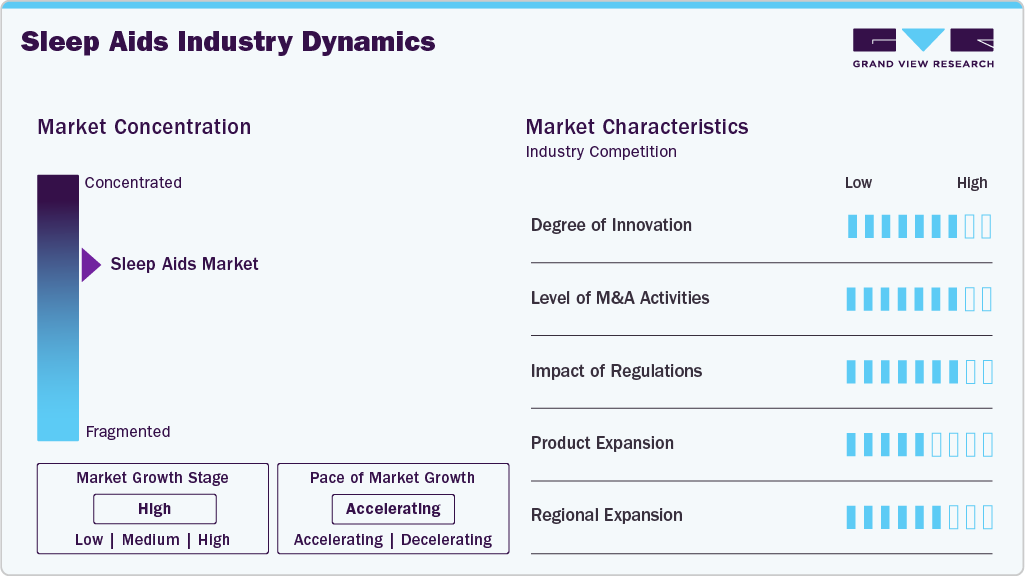
Regulatory frameworks have a high impact on the market, particularly for prescription drugs and medical devices. Agencies such as the FDA have imposed stricter warnings on sleep medications due to risks of dependency and side effects. At the same time, regulatory approvals are facilitating the commercialization of innovative technologies, thereby balancing safety concerns with innovation. For instance, in February 2025, PranaQ received FDA 510(k) clearance for TipTraQ, a compact home sleep apnea testing wearable that leverages advanced biosensors and AI algorithms to detect sleep apnea events and assess sleep architecture with clinical-grade accuracy.
The industry is experiencing regional expansion, particularly in the Asia-Pacific, driven by urbanization, rising stress levels, and increasing awareness of sleep health. North America remains the dominant region due to high diagnosis rates and advanced healthcare infrastructure, while emerging markets are witnessing rapid adoption of consumer sleep technologies. Furthermore, companies are expanding globally through digital platforms and telehealth solutions, improving accessibility to sleep disorder diagnosis and treatment across underserved regions.
Product Insights
The medications segment accounted for the largest revenue share of 36.4% in 2025 in the sleep aids market, driven by the increasing prevalence of insomnia and high reliance on pharmacological treatments for immediate symptom relief. Prescription drugs such as sedative-hypnotics and orexin receptor antagonists, along with over-the-counter (OTC) products such as melatonin supplements, are widely used across both developed and emerging markets. In addition, the continuous development of safer and non-addictive formulations further drives the segment growth. However, concerns about dependency and side effects remain a key challenge for long-term use.
The sleep laboratory & diagnostic services segment is expected to grow at the significant CAGR over the forecast period, driven by the rising prevalence of sleep disorders such as insomnia and sleep apnea. Rising awareness regarding the importance of early diagnosis and treatment is encouraging more patients to undergo sleep studies. In addition, advancements in diagnostic technologies, including polysomnography and home sleep testing devices, are improving accessibility and accuracy. The growing geriatric population, which is more prone to sleep-related conditions, further supports demand. The expansion of specialized sleep centers and their integration with hospital services are also key growth drivers. Moreover, favorable reimbursement policies in developed markets are enhancing patient adoption of diagnostic services.
Disorder Insights
The insomnia segment held the largest market share of 32.5% in 2025 and is expected to grow the fastest over the forecast period from 2026 to 2033. This is driven by its high prevalence and strong link to lifestyle factors such as stress and anxiety. An article published by the National Library of Medicine in 2025 reports epidemiological evidence from a 2024 meta-analysis, showing a global prevalence of insomnia between 12.4% and 16.3%. This highlights a substantial patient pool needing treatment. In addition, the Centers for Disease Control and Prevention reported that about one-third of adults experience insufficient sleep, increasing demand for sleep aids. The segment growth is due to the high awareness, easy diagnosis, and widespread use of both prescription and OTC therapies. Rising mental health concerns and digital lifestyle patterns further support sustained demand.
The parasomnias segment is expected to experience the second-fastest growth over the forecast period, driven by the increasing prevalence of disorders such as sleepwalking, night terrors, and REM sleep behavior disorder (RBD). Rising awareness and improved diagnosis rates, mainly for RBD, which is strongly associated with neurodegenerative diseases such as Parkinson’s, are further accelerating demand. In addition, increasing mental health issues, stress, and irregular sleep patterns are contributing to higher incidence rates. The technological advancement in sleep monitoring and the expansion of sleep laboratory infrastructure are improving diagnosis and treatment outcomes. Moreover, growing clinical research and a stronger focus on neurological sleep disorders are expected to drive sustained segment growth over the forecast period.
Distribution Channel Insights
Based on the distribution channel, the hospital pharmacies accounted for the largest share in the market, driven by the high volume of prescriptions for the disorders such as insomnia and sleep apnea. These settings serve as the primary point of access for prescription medications, particularly for patients undergoing diagnosis and treatment in clinical environments, supported by strong physician direction and established treatment guidelines ensuring appropriate drug selection and dosage. The rising prevalence of sleep-related disorders has further increased hospital visits and prescription demand, while the availability of advanced diagnostic facilities drives the growth.
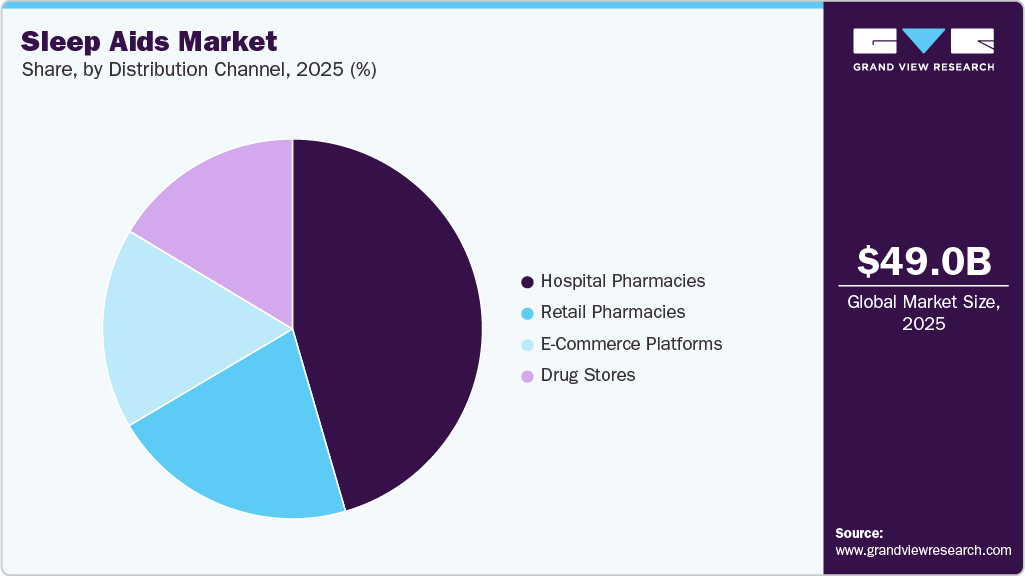
The retail pharmacies segment is expected to grow at the fastest CAGR of 9.6% over the forecast period from 2026 to 2033. This is driven by increasing consumer demand for convenient, immediate access to sleep aids. Retail pharmacies serve as a key distribution channel for OTC products, including melatonin supplements and herbal formulations, which are widely used for managing mild to moderate sleep disorders. The growing trend toward self-medication, coupled with rising awareness of sleep health, is further supporting segment expansion. In addition, the widespread presence of retail pharmacy chains and their accessibility in both urban and semi-urban areas enhances product availability. Pharmacist guidance at the point of sale also plays a crucial role in influencing product selection, particularly for first-time users. Moreover, ongoing product innovations and expanding shelf space for sleep-related products are expected to drive the market growth.
Regional Insights
The North America sleep aids industry contributed 36.4% revenue share towards the global market in 2025. The growth is driven by a high prevalence rate of insomnia and sleep apnea, along with a well-established healthcare infrastructure, strong awareness levels, early diagnosis, and high adoption of both prescription therapies and OTC sleep product. The U.S. remains the key market, supported by increasing lifestyle-related sleep disorders and rising healthcare expenditure. The rising product innovation and technological advancement in the devices drive the significant growth in the industry. For instance, in April 2024, Philips Inc. actively addressed regulatory actions and product recalls related to its CPAP devices, leading to increased scrutiny and improvements in device safety standards across the industry. This has encouraged manufacturers to invest in safer and more advanced sleep therapy solutions. Overall, the market is driven by continuous innovation, regulatory evolution, and increasing demand for effective solutions for sleep disorders.

U.S. Sleep Aids Market Trends
The sleep aids industry in the U.S. represents the largest revenue share in the North America market, due to the prevalence of insomnia and sleep apnea disorder. The advanced healthcare infrastructure, strong awareness, and high diagnosis rates supporting widespread adoption of both prescription and OTC sleep aids. Increasing stress levels, sedentary lifestyles, and excessive screen time are further contributing to rising sleep-related issues. In addition, the presence of key players such as Pfizer Inc. and Merck & Co., Inc. supports continuous innovation and product availability. Overall, the market is driven by growing demand for effective and technologically advanced sleep solutions.
Europe Sleep Aids Market Trends
The sleep aids industry in Europe holds a significant share, driven by the rising prevalence of sleep disorders, along with increasing awareness and improving diagnosis rates across countries such as Germany, the UK, and France. The market is further supported by strong healthcare systems and growing adoption of home-based sleep solutions and advanced diagnostic technologies. In addition, rising demand for connected and wearable sleep devices is driving market expansion.
Asia Pacific sleep aids Market Trends
The sleep aids industry in the Asia Pacific is the fastest-growing region, driven by the increasing prevalence of sleep disorders due to urbanization, high stress levels, and changing lifestyle patterns. Rising geriatric population, obesity rates, and expanding healthcare infrastructure across countries such as China, India, and Japan are further accelerating demand for sleep therapies and devices. In addition, growing awareness of sleep health and increasing adoption of home-based sleep monitoring solutions are supporting market growth. For instance, at CES 2026, Stareep showcased its AI-powered SmartSleep ecosystem, featuring a smart mattress and sleep system that can adapt in real time to physiological changes. The innovation highlights a shift from passive sleep tracking to active, AI-driven sleep optimization, supporting the growing demand for personalized and connected sleep solutions in the market.
Key Sleep Aids Company Insights
Market players utilize innovative product development strategies, partnerships, mergers, and acquisitions to expand their presence in response to the increasing demand for early and accurate disease detection, cost containment, and providing value-based care.
Key Sleep Aids Companies:
The following key companies have been profiled for this study on the sleep aids market.
- Merck & Co., Inc.
- Pfizer Inc.
- Sanofi S.A.
- GSK plc.
- Takeda Pharmaceutical Company Limited
- Teva Pharmaceutical Industries Ltd.
- Koninklijke Philips N.V.
- ResMed Inc.
- Fisher & Paykel Healthcare Corporation Limited
- Drive DeVilbiss Healthcare LLC
- Compumedics Limited
- Cadwell Industries, Inc.
- Tempur World, LLC
Recent Developments
-
In February 2026, Dong-A Pharmaceutical introduced EasyQuil Night Act, a liquid sleep aid formulated with diphenhydramine hydrochloride, a first-generation antihistamine used to relieve allergies and support short-term sleep improvement.
-
In October 2025, Alkermes announced the acquisition of Avadel Pharmaceuticals, gaining access to its narcolepsy drug Lumryz and strengthening its entry into the sleep medicine market to accelerate innovation and leadership in the development of treatments for sleep and neurological disorders.
“With the close of this acquisition, Alkermes achieved an important milestone in the continued advancement of our strategy, accelerating our entry into the commercial sleep medicine market at a pivotal moment as we work to initiate the planned phase 3 program for alixorexton in narcolepsy this quarter. Avadel’s commercial and R&D portfolio, established commercial infrastructure, and talented team strengthen our organization and expand our capabilities in this important therapeutic area. Supported by our strong balance sheet, this all‑cash acquisition is expected to enhance our revenue growth profile and underscores our ongoing commitment to creating long‑term value for shareholders.”
- Richard Pops, Chief Executive Officer of Alkermes
- In March 2026, Eli Lilly and Company announced a definitive agreement to acquire Centessa Pharmaceuticals to strengthen its portfolio in sleep-wake disorders. The acquisition provides Lilly access to Centessa’s orexin receptor agonist pipeline, including lead candidate cleminorexton, aimed at treating conditions such as narcolepsy and excessive daytime sleepiness.
"Orexin receptor biology represents one of the most compelling mechanistic opportunities in neuroscience as a direct intervention on the master switch of the sleep-wake cycle. Centessa has assembled a portfolio with the breadth and depth to improve wakefulness across a broad array of indications. Joining forces with Centessa colleagues means we can now pursue that potential at the speed and scale it deserves."
- Carole Ho, executive vice president and president, Lilly Neuroscience.
Sleep Aids Market Report Scope
Report Attribute
Details
Market size in 2025
USD 49.1 billion
Estimated market size in 2026
USD 53.0 billion
Projected market size by 2033
USD 95.2 billion
Growth rate
CAGR of 8.7% from 2026 to 2033
Actual data
2021 - 2025
Forecast period
2026 - 2033
Quantitative units
Revenue in USD million/billion & CAGR from 2026 to 2033
Report coverage
Revenue forecast, company ranking, competitive landscape, growth factors, and trends
Segments covered
Product, disorder, distribution channel, region
Regions covered
North America; Europe; Asia Pacific; Latin America; Middle East and Africa
Country Scope
U.S.; Canada; Mexico: UK; Germany; France; Spain; Italy; Norway; Sweden; Denmark; Japan; China; India; Australia; Thailand; South Korea; Brazil; Argentina; South Africa; Saudi Arabia; UAE; Kuwait
Key companies profiled
Merck & Co., Inc.; Pfizer Inc.; Sanofi S.A.; GSK plc.; Takeda Pharmaceutical Company Limited; Teva Pharmaceutical Industries Ltd.; Koninklijke Philips N.V.; ResMed Inc.; Fisher & Paykel Healthcare Corporation Limited; Drive DeVilbiss Healthcare LLC; Compumedics Limited; Cadwell Industries, Inc.; Tempur World, LLC
Customization scope
Free report customization (equivalent up to 8 analysts’ working days) with purchase. Addition or alteration to country, regional & segment scope.
Pricing and purchase options
Avail customized purchase options to meet your exact research needs. Explore purchase options
Global Sleep Aids Market Report Segmentation
This report forecasts revenue growth at the global, regional & country levels and provides an analysis of the latest trends and opportunities in each of the sub-segments from 2021 to 2033. For this report, Grand View Research has segmented the global sleep aids market report on the basis of product, disorder, distribution channel, and region:

-
Product Outlook (Revenue, USD Million, 2021 - 2033)
-
Medications
-
Sleep Therapy Devices
-
Positive Airway Pressure (PAP) Devices
-
Oral Appliances
-
Wearable Sleep Trackers
-
-
Sleep Environment Products
-
Sleep Laboratory & Diagnostic Services
-
-
Disorder Outlook (Revenue, USD Million, 2021 - 2033)
-
Insomnia
-
Obstructive Sleep Apnea (OSA)
-
Narcolepsy
-
Parasomnias (e.g., Sleepwalking, Night Terrors)
-
Restless Legs Syndrome (RLS)
-
Other Sleep Disorders
-
-
Distribution Channel Outlook (Revenue, USD Million, 2021 - 2033)
-
Hospital Pharmacies
-
Retail Pharmacies
-
E-Commerce Platforms
-
Drug Stores
-
-
Regional Outlook (Revenue, USD Million, 2021 - 2033)
-
North America
-
U.S.
-
Canada
-
Mexico
-
-
Europe
-
Germany
-
UK
-
France
-
Spain
-
Italy
-
Norway
-
Denmark
-
Sweden
-
-
Asia Pacific
-
China
-
India
-
Japan
-
Australia
-
South Korea
-
Thailand
-
-
Latin America
-
Brazil
-
Argentina
-
-
MEA
-
South Africa
-
Saudi Arabia
-
UAE
-
Kuwait
-
-
Frequently Asked Questions About This Report
The medications segment led with a 36.4% revenue share in 2025, while sleep laboratory & diagnostic services is growing significantly.
The insomnia segment held the highest market share of 32.5% in 2025.
The hospital pharmacies segment held the highest market share in 2025, while retail pharmacies is the fastest-growing segment.
The global sleep aids market is expected to grow at a compound annual growth rate of 8.7% from 2026 to 2033 to reach USD 95.2 billion by 2033.
The global sleep aids market size was estimated at USD 49.1 billion in 2025 and is expected to reach USD 53.0 billion in 2026.
North America dominated the sleep aids market with a share of 36.4% in 2025.
Some key players operating in the sleep aids market include Merck & Co., Inc., Pfizer Inc., Sanofi S.A., GSK plc., Takeda Pharmaceutical Company Limited, Teva Pharmaceutical Industries Ltd., Koninklijke Philips N.V., ResMed Inc., Fisher & Paykel Healthcare Corporation Limited, Drive DeVilbiss Healthcare LLC, Compumedics Limited, Cadwell Industries, Inc., Tempur World, LLC
Key factors include increasing incidence of sleep disorders, including insomnia, sleep apnea, restless leg syndrome, high reliance on pharmacological treatments for immediate symptom relief, rising awareness regarding the importance of early diagnosis and treatment, and increasing consumer preference for convenient and immediate access to sleep aids.
About the Author(s)
Medical Devices Research Team
Healthcare · Medical DevicesThis report was authored by the medical devices research team at Grand View Research - comprising two research analysts, one senior research analyst, and one industry expert - with specialized expertise in the medical devices segment of the healthcare industry. All findings are based on proprietary healthcare databases, executive interviews, and regulatory analysis, subject to internal peer review prior to publication.
Last Updated:
Speak to Analyst


Customize this report to your needs — add regions, segments, or data points, with 20% free customization.
Or view our licence options:


ISO 9001:2015 & 27001:2022 Certified
We are GDPR and CCPA compliant! Your transaction & personal information is safe and secure. For more details, please read our privacy policy.


