
- Home
- »
- Medical Devices
- »
-
Slit Lamps Market Size, Share & Trends Report, 2026-2033GVR Report cover
![Slit Lamps Market (2026 - 2033)Report]()
Slit Lamps Market (2026 - 2033)
Size, Share & Trends Analysis Report By Modality, By Type (Analog, Digital), By Application (Cataract, Dry Eye Syndrome), By End-use (Hospitals & Clinics, Ophthalmic centers), By Region, And Segment Forecasts
Market Size, 2025
$735.5MMarket Estimate, 2026
$770.9MMarket Forecast, 2033
$1,029.1MCAGR, 2026–2033
4.2%Slit Lamps Market Summary
The slit lamps market size was valued at USD 735.5 million in 2025 and is projected to grow from USD 770.9 million in 2026 to USD 1,029.1 million by 2033, at a CAGR of 4.2% from 2026 to 2033. North America dominated the market, accounting for the largest share of 40.9% in 2025. The slit lamp market is a crucial segment within the ophthalmic diagnostic equipment industry, experiencing steady growth due to the rising global prevalence of eye disorders such as cataracts, glaucoma, and macular degeneration.

Key Market Trends & Insights
- By type: Analog segment led the market with the largest revenue share of 62.9% in 2025.
- By modality: Portable segment led the market with the largest revenue share of 72.1% in 2025.
- By application: Cataract segment dominated the market, with a revenue share of 35.6% in 2025.
- By end use: Hospitals & clinics accounted for the largest revenue share of 47.9% in 2025.
Regional Highlights
- Largest regional market: North America (40.9% revenue share, 2025)
- Fastest-growing regional market: Asia Pacific (highest CAGR, 2026-2033)
- By country: The U.S. held the largest share of North America in 2025.
Market Size & Forecast
- Market Size in 2025: USD 735.5 Million
- Estimated Market Size in 2026: USD 770.9 Million
- Projected Market Size by 2033: USD 1,029.1 Million
- CAGR (2026-2033): 4.2%
The aging population is a significant driver of this market, as older individuals are more susceptible to these conditions, requiring regular eye examinations and advanced diagnostic tools. Technological advancements have led to the development of more sophisticated slit lamps, integrating features such as digital imaging, enhanced illumination systems, and improved ergonomics. For instance, an article by Healio published in January 2022 mentioned that some companies are developing 3D slit lamps, which will offer enhanced ergonomics.
These innovations enhance diagnostic accuracy and patient comfort, making slit lamps indispensable in both routine eye exams and specialized ophthalmic procedures. In addition, the rising prevalence of vision loss, due to conditions such as glaucoma and age-related macular degeneration, underscores the importance of slit lamps in the market. These devices are crucial for early detection and management, driving demand for advanced diagnostic tools in ophthalmology.
Projected Change in Vision Loss 2020 to 2050 (in millions):
Category
2020
2050
Male
497
780
Female
609
978
Total
1,106
1,758
Geographically, North America and Europe dominate the market due to well-established healthcare infrastructures and high awareness of eye health. However, the Asia Pacific region is emerging as a lucrative market, driven by increasing healthcare investments, growing awareness, and a large patient pool. Nearly two-thirds of patients with moderate-to-severe vision impairment are from East, South, and Central Asia, despite these regions making up only 51% of the global population. High-income countries in the Asia Pacific have the highest myopia rates at 53.4%, with Singapore having one of the world's highest myopia rates. By 2050, 80% to 90% of Singaporean adults over 18 may be myopic, and 15% to 25% could have high myopia. Despite a large population needing eye care, this demand remains unmet in the Asia Pacific. In Southeast Asia, only 4 out of 10 countries meet the target ophthalmologist-population ratio (1:100,000), with most ophthalmologists concentrated in urban areas.
Governments and private sectors are increasing investments in advanced ophthalmic equipment and infrastructure. For example, India's NPCBVI program has received significant funding to improve eye care services and reduce blindness. China's "Healthy China 2030" initiative includes public awareness campaigns, free eye screenings, and educational programs to promote regular eye check-ups and early disease detection. Non-profits such as the Fred Hollows Foundation are also active, organizing cataract surgery camps and distributing glasses to underserved communities. These efforts are enhancing eye care access and encouraging regular eye health maintenance. Thus, expanding the market for slit lamps.
Market Dynamics
The slit lamps market is gaining significant traction as ophthalmology clinics, eye hospitals, optometry centers, ambulatory surgical centers, and academic medical institutions increasingly adopt advanced ophthalmic diagnostic technologies to evaluate and manage a wide range of anterior and posterior segment eye disorders. These devices encompass a broad range of products and technologies, including conventional slit lamps, digital slit lamps, LED-based slit lamps, imaging-integrated slit lamp systems, portable slit lamps, and slit lamps equipped with advanced documentation and teleophthalmology capabilities.
These diagnostic systems enable eye care professionals to achieve enhanced visualization of ocular structures, improved diagnostic accuracy, earlier disease detection, and more effective patient management. Slit lamps help healthcare providers diagnose and monitor conditions such as cataracts, glaucoma, corneal disorders, dry eye disease, diabetic retinopathy, retinal abnormalities, conjunctival diseases, and other ophthalmic conditions. Increasing emphasis on preventive eye care, comprehensive ophthalmic examinations, digital imaging integration, and early detection of vision-threatening diseases is driving the adoption of advanced slit lamp technologies across healthcare settings.
The slit lamps market is expanding rapidly due to the increasing prevalence of ophthalmic disorders and the growing demand for routine eye examinations worldwide. Aging populations, rising rates of diabetes, increasing screen exposure, environmental pollution, and changing lifestyles are contributing to a growing burden of visual impairment and eye diseases globally. Conditions such as cataracts, glaucoma, age-related macular degeneration, diabetic retinopathy, dry eye syndrome, and corneal disorders require regular ophthalmic evaluations, creating substantial demand for slit lamp examinations.
Furthermore, growing awareness regarding eye health and the importance of early disease detection is increasing the number of patients seeking preventive ophthalmic care. Eye care professionals increasingly rely on slit lamp systems because they provide high-magnification visualization of ocular tissues, enabling accurate diagnosis and treatment planning. Technological advancements such as digital imaging, high-resolution cameras, LED illumination systems, electronic documentation, and teleophthalmology integration are further improving clinical efficiency and diagnostic capabilities. As healthcare systems continue emphasizing early intervention and vision preservation, demand for advanced slit lamp systems is expected to grow substantially.
Despite strong growth potential, the slit lamps market faces challenges associated with high equipment costs and limited access to advanced ophthalmic diagnostic technologies in certain regions. Modern digital slit lamps with integrated imaging systems, software platforms, and advanced visualization capabilities often require substantial capital investment, making adoption difficult for smaller clinics and healthcare facilities with limited budgets.
Additionally, many low-resource regions face shortages of trained ophthalmologists, optometrists, and eye care specialists, limiting the effective utilization of advanced slit lamp technologies. Maintenance costs, calibration requirements, software upgrades, and staff training needs can further increase the total cost of ownership. In developing countries, inadequate eye care infrastructure, limited healthcare funding, and unequal access to specialized ophthalmic services may restrict market penetration. Furthermore, reimbursement limitations for certain diagnostic procedures and budget constraints within healthcare systems can delay equipment upgrades and replacement cycles. These factors may slow adoption rates despite the critical role of slit lamps in comprehensive ophthalmic diagnosis and patient care.
Market Concentration & Characteristics
The slit lamps market is characterized by a high level of industry concentration, dominated by a few key players such as Haag-Streit, Topcon Corporation, and Carl Zeiss Meditec. These companies lead in technological innovation and market share. The market is driven by increasing demand for advanced diagnostic tools, fueled by the rising prevalence of eye disorders and an aging population. Technological advancements, such as digital imaging and enhanced ergonomics, are crucial features.
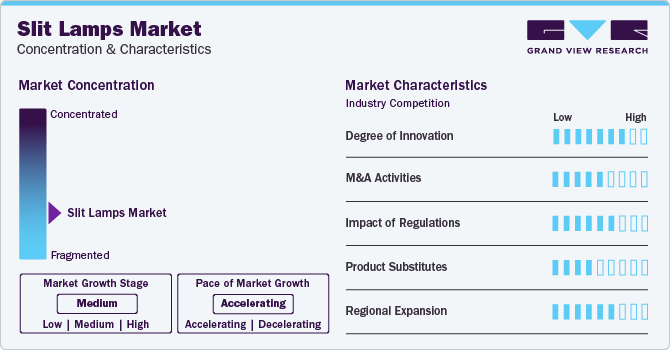
The slit lamps industry exhibits a notable degree of innovation, with companies continuously introducing advanced features to enhance diagnostic accuracy and patient comfort. According to the Indian Journal of Ophthalmology, in March 2022, slit lamp‑based intraocular lens microscope (SLIM) transforms the slit lamp into a microscope for swift screening and treatment of pathogens in clinics. This DIY setup saves time and costs, empowering medical staff to rapidly diagnose and treat infections.
Regulations play a significant role in shaping the slit lamp industry, ensuring product safety, efficacy, and quality standards. Compliance with regulatory requirements, such as FDA approvals in the U.S. and CE markings in the European Union, is essential for market entry. Stringent regulations also influence product development, innovation, and manufacturing practices to meet established standards. In addition, regulatory changes and updates impact market dynamics, affecting market players' strategies and investments. Overall, adherence to regulations fosters consumer trust promotes market transparency and drives continuous improvement in slit lamp technology and practices.
Mergers and acquisitions in the slit lamps industry are rising due to the need for research and development, reflecting the industry's dynamic nature. Companies are leveraging M&A activities to innovate and offer advanced solutions that meet the evolving needs of healthcare professionals. For instance, in November 2022, Advancing Eyecare, a leading provider of ophthalmic instruments in North America, announced its acquisition of Veatch Ophthalmic Instruments, a prominent U.S. distributor of ophthalmic equipment.
In the slit lamps industry, potential substitutes include handheld ophthalmoscopes and portable fundus cameras. Handheld ophthalmoscopes, while less advanced, offer basic eye examination capabilities and are more affordable and portable. Portable fundus cameras provide high-resolution imaging of the retina, making them suitable alternatives for specific diagnostic needs, especially in remote or mobile settings. In May 2024, the FDA approved Aurora AEye, the first handheld AI fundus camera. This device can instantly detect diabetic retinopathy with a single image of each eye. However, these substitutes often lack the comprehensive diagnostic capabilities and versatility of slit lamps. Despite these alternatives, slit lamps remain the preferred choice for detailed anterior and posterior segment examinations due to their superior imaging quality and functionality in clinical practice.
In the slit lamps industry, regional expansion is driven by the growing demand for advanced ophthalmic diagnostic tools and services. Market players are strategically expanding their presence into new geographic regions to capitalize on emerging opportunities and meet the evolving needs of healthcare providers and patients. Topcon Corporation's 2025 mid-term business plan aims to boost production capacity for business expansion and enhance production efficiency via digitalization and automation, with a planned investment of 10 million yen. By expanding their reach, companies aim to tap into underserved markets, increase brand visibility, and drive revenue growth while contributing to improved eye care access and outcomes on a global scale.
Analyst Perspective
The slit lamps market is driven by the rising prevalence of eye diseases, growing aging populations, increasing awareness of preventive eye care, and advancements in ophthalmic diagnostic technologies. The adoption of digital slit lamps with high-resolution imaging, teleophthalmology integration, and AI-assisted diagnostics is improving clinical efficiency and diagnostic accuracy. As healthcare providers continue to prioritize early detection and expand access to specialized eye care, the market is expected to witness steady growth across hospitals, ophthalmic centers, and optometry practices worldwide.
Type Insights
Based on type, the analog segment led the market with the largest revenue share of 62.9% in 2025. This significant market share is attributed to the reliability, cost-effectiveness, and widespread adoption of analog slit lamps in various clinical settings. Despite advancements in digital technology, many healthcare providers prefer analog devices for their simplicity and proven performance. The ongoing demand for analog diagnostic tools, coupled with continuous improvements in analog slit lamp design and functionality, drives the robust growth of this segment in the slit lamps market.
Digital segment held substantial market share in 2025. Digital slit lamps offer features such as adjustable magnification, filters, and image enhancement capabilities. These features enable ophthalmologists to examine specific structures of the eye in greater detail, providing a more comprehensive picture of eye health.
End-use Insights
Based on end use, the hospitals & clinics segment led the market with the largest revenue share of 47.9% in 2025. Slit lamps are essential diagnostic tools utilized by ophthalmologists and optometrists for comprehensive eye examinations, including assessments of anterior and posterior segments, aiding in the diagnosis and management of various eye conditions. These devices play a critical role in routine eye care, pre-operative evaluations, and post-operative follow-ups, contributing to improved patient outcomes and vision health. The hospitals and clinics segment represents a significant market opportunity driven by increasing demand for advanced ophthalmic diagnostics and treatments.

Ophthalmic centers segment held significant market share in 2025. Ophthalmic centers offer a wider range of eye care services compared to optometrists' offices. This necessitates a broader range of diagnostic tools, including slit lamps for detailed examinations of the eye's anterior and posterior segments. Ophthalmic centers often specialize in treating complex eye conditions such as glaucoma, retinal diseases, and corneal disorders. Slit lamps are essential for diagnosing and monitoring these conditions effectively, thereby fostering the market growth.
Modality Insights
Based on modality, the portable segment led the market with the largest revenue share of 72.1% in 2025. These portable slit lamps offer convenience, flexibility, and ease of transportation, enabling on-the-go eye examinations and screenings. For instance, the LED lamp employed in the SL-150 Portable Slit Lamp boasts a 20,000-hour lifespan at full power, nearly ten times longer than a typical Halogen lamp. Its energy efficiency allows the SL-150 to operate for extended periods without requiring battery replacements. They are particularly beneficial for outreach programs, mobile clinics, and telemedicine initiatives, extending eye care access to underserved populations and remote regions. With advancements in battery technology and lightweight designs, portable slit lamps provide reliable and efficient diagnostic capabilities, contributing to improved eye health outcomes and increased healthcare accessibility worldwide.
Tabletop segment is anticipated to foster remarkable CAGR during the forecast period. They offer a wider range of functionalities compared to portable models. These features, such as adjustable illumination, high magnification, and various filters, enable detailed examinations of the anterior and posterior segments of the eye, crucial for comprehensive eye care in ophthalmic centers. Advanced tabletop slit lamps provide high-resolution digital imaging capabilities. This allows for better visualization of eye structures, facilitates documentation for patient records.
Application Insights
Based on application, the cataract segment led the market with the largest revenue share of 35.6% in 2025. Slit lamps equipped with specialized lenses and imaging capabilities enable precise evaluation of cataract severity, aiding in treatment planning and surgical decision-making. These devices facilitate detailed examination of the anterior segment of the eye, including the lens, cornea, and anterior chamber, allowing ophthalmologists to monitor cataract progression and assess post-operative outcomes. The cataract segment plays a vital role in improving patient care and visual outcomes through accurate diagnosis and tailored treatment approaches.
Macular degeneration segment witnessed considerable CAGR during the forecast period. Age-related macular degeneration is a leading cause of vision loss in people over 50. As the global population ages, the prevalence of AMD is expected to increase significantly, driving the demand for diagnostic tools such as slit lamps. The medical community increasingly emphasizes early intervention for AMD to preserve vision. Slit lamps are a critical tool for this approach.
Regional Insights
North America dominated the slit lamps market with the largest revenue share of 40.9% in 2025. Some key factors contributing to the growth include the high prevalence of eye disorders, an aging population, and increasing healthcare expenditure. Technological advancements, including digital imaging and integration with electronic health records, are enhancing diagnostic accuracy and efficiency, further fueling market demand. Government initiatives and programs aimed at improving vision health, alongside a strong focus on preventive eye care, also contribute to market growth. In addition, the presence of leading medical device manufacturers and continuous innovation in ophthalmic equipment bolster the expansion of the slit lamps market in North America.

U.S. Slit Lamps Market Trends
The slit lamp market in U.S. held the largest share in the North America region in 2025, driven by factors such as aging population, rising prevalence of eye diseases, and advancements in diagnostic technology. According to CDC, in December 2023, around 1.8 million Americans aged 40+ have AMD, with another 7.3 million at high risk due to large drusen. AMD is the leading cause of permanent vision impairment for reading and close-up tasks in those aged 65 and older.
Europe Slit Lamps Market Trends
The European slit lamps market is witnessing growth fueled by technological advancements, the quality of healthcare infrastructure, and the rising awareness of eye health and early disease detection. With well-established healthcare systems across European countries, there is a notable demand for advanced and high-quality medical equipment, which is expected to increase the demand for these devices in the European market. Increasing demand for advanced eye care solutions and preventive measures are key trends shaping the slit lamps market in Europe.
In the UK the slit lamps market is witnessing significant growth driven by several factors. These include an aging population with increasing prevalence of age-related eye conditions, such as cataracts and glaucoma. For instance, according to The Royal College of Ophthalmologists, in the UK, over 700,000 individuals have glaucoma, with half unaware of their condition. Glaucoma UK's urging for eye tests comes as the number of people with glaucoma is projected to rise by nearly a third between 2020 and 2035.
The slit lamps market in France is witnessing growth, driven by increased healthcare investments and initiatives like L'OCCITANE France's support for Helen Keller Europe's "Plan Vue" program in 2023-2024. Inspired by the ChildSight initiative, this project aims to raise awareness and screen, treat, and monitor visual impairments among schoolchildren in priority areas of Nanterre and Aubervilliers. Such programs enhance the demand for advanced diagnostic tools, including slit lamps, by emphasizing early detection and treatment of eye conditions. Additionally, the aging population and a strong focus on preventive eye care further fuel the market growth in France.
The Germany slit lamps market is experiencing notable growth, driven by the country's advanced healthcare infrastructure and high prevalence of eye disorders. Increasing demand for precision diagnostic tools and technological advancements, such as digital imaging and integration with electronic health records, are key trends. Germany's aging population and a strong focus on preventive eye care contribute to the rising need for slit lamps. According to AARP, Germany's population aged 65 and older is expected to increase by 41 percent, reaching 24 million by 2050, which will represent almost one-third of the country's total population.
Asia Pacific Slit Lamps Market Trends
The slit lamps market in Asia Pacific region is expected to grow at the fastest growth rate during the forecast period. China and Japan are poised to lead the Asia Pacific market in the upcoming period. Moreover, the availability of trained professionals and the presence of developing healthcare facilities are expected to drive market growth over the forecast period.
The slit lamps market in Japan is projected to grow rapidly. According to the Organization for Economic Cooperation & Development, Japan's healthcare spending, which accounted for 9.8% of its GDP in 2022, is expected to drive this market expansion during the forecast period. Increasing investments in healthcare infrastructure and advanced diagnostic tools further bolster this growth.
The China slit lamps market is expected to grow in the Asia Pacific in 2023. The expanding healthcare infrastructure, growing healthcare workforce, and well-established medical facilities in China are anticipated to drive market expansion in the future. For instance, according to CEIC data from 2022, the number of hospitals in China increased to 36,976 units from the previous figure of 36,570 units in 2021.
The slit lamps market in India is expanding rapidly, driven by a growing prevalence of eye disorders, increased healthcare spending, and advancements in ophthalmic technology. Factors such as an aging population, rising diabetes rates, and heightened awareness of eye health contribute to the demand for sophisticated diagnostic tools such as slit lamps. Sightsavers India launched the Vidyajyoti School Eye Health Programme to ensure optimal eye health for school children, screening students in government schools to prevent eye diseases and vision impairments. The growth of private eye care centers, along with the adoption of digital slit lamps and telemedicine, enhances diagnostic capabilities, making India a key market for slit lamp devices.
Latin America Slit Lamps Market Trends
The slit lamps market in Latin America is driven by rise in healthcare spending, and infrastructural investments. Furthermore, expanding ophthalmic services and the adoption of advanced diagnostic tools are driving demand in the region.
Middle East and Africa (MEA) Slit Lamp Market Trends
The Middle East and Africa (MEA) slit lamp market creates wide opportunities with rising healthcare investments, growing disposable incomes, and increasing eye disease prevalence. However, limited infrastructure, skilled personnel shortages, and affordability concerns create challenges.
The Saudi Arabia slit lamps market is anticipated to expand in the forecast period. The rise in healthcare spending, projected at USD 50.4 billion for 2023 according to a report by the International Trade Administration and the U.S. Department of Commerce, is expected to drive this expansion. Additionally, the increasing presence of hospitals and healthcare professionals stands as a key factor fueling market growth.
The slit lamps market in Kuwait is expected to witness moderate growth due to increasing investments in healthcare infrastructure and rising awareness of eye health. Kuwait is experiencing an increase in eye diseases such as diabetes-related eye problems, cataracts, and age-related macular degeneration (AMD). This growing awareness necessitates accessible and advanced diagnostic tools like slit lamps for early detection and treatment.
Key Slit Lamps Company Insights
The competitive scenario in the slit lamps market is highly competitive, with key players such as NIDEK CO., LTD; Takagi Seiko Co., Ltd; and Haag Streit holding significant positions.
The major companies are undertaking various organic as well as inorganic strategies such as new product development, collaborations, acquisitions, mergers, and regional expansion for serving the unmet needs of their customers.
Key Slit Lamps Companies:
The following key companies have been profiled for this study on the slit lamps market.
-
NIDEK CO., LTD
-
Inami & CO., Ltd
-
Veatch, Ophthalmic Instruments
-
Takagi Seiko Co., Ltd
-
TOPCON CORPORATION
-
Essilor Instruments USA
-
Keeler
-
Haag Streit
-
Reichert, Inc.
-
HEINE Optotechnik GmbH & Co. KG
Competitive Benchmarking
Category
Operating Strategies
Competitive Edge
Weakness
Established Players (NIDEK CO., LTD, Inami & CO., Ltd, Veatch, Ophthalmic Instruments, Takagi Seiko Co., Ltd., TOPCON CORPORATION)
- Focus on expanding comprehensive slit lamp portfolios including analog slit lamps, digital slit lamps, tabletop slit lamps, portable slit lamps, imaging-integrated systems, LED illumination technologies, and anterior segment documentation solutions. Strengthen strategic partnerships with ophthalmologists, optometrists, hospitals, ophthalmic centers, academic institutions, and eye care networks to enhance technology adoption and long-term market penetration. Invest heavily in product innovation, clinical validation, practitioner training programs, advanced imaging capabilities, and digital ophthalmology solutions to support growing demand for comprehensive eye examinations and early disease detection.
- Strong brand recognition, extensive installed bases across hospitals, ophthalmology clinics, and vision care centers support market leadership. Large-scale clinical experience, robust optical engineering expertise, established regulatory capabilities, and long-standing relationships with eye care professionals provide significant competitive advantages. Broad ophthalmic diagnostic portfolios covering slit lamp examinations, retinal imaging, refraction systems, and surgical visualization technologies facilitate cross-selling opportunities and strengthen customer loyalty.
- Large organizations often experience slower innovation cycles due to extensive product validation, regulatory compliance, and portfolio management requirements. Premium pricing strategies may limit adoption in budget-constrained healthcare settings and emerging markets. Dependence on capital equipment procurement cycles, healthcare infrastructure investments, and evolving reimbursement environments can constrain market expansion in certain regions.
Emerging Players (Essilor Instruments USA, Keeler, Haag Streit, Reichert, Inc., HEINE Optotechnik GmbH & Co. KG)
- Focus on specialized slit lamp innovations including portable ophthalmic examination systems, digital imaging integration, teleophthalmology-compatible platforms, advanced LED illumination technologies, ergonomic designs, and workflow-enhancing diagnostic solutions. Develop cost-effective alternatives to traditional slit lamp systems while emphasizing image documentation, connectivity features, practitioner convenience, and improved diagnostic efficiency. Support market growth through targeted product development, practitioner education initiatives, strategic partnerships, and expansion into underserved ophthalmic and optometric markets.
- Faster innovation cycles and greater operational flexibility enable rapid development of next-generation slit lamp technologies and digital diagnostic solutions. Specialized expertise in optical engineering, portable diagnostics, imaging systems, and clinician-focused product design provides differentiation. Their ability to address niche clinical requirements, improve examination workflows, and offer technologically advanced solutions supports targeted market positioning and customer satisfaction.
- Limited financial resources, narrower product portfolios, and smaller commercial infrastructures compared with large multinational ophthalmic equipment manufacturers may restrict large-scale commercialization efforts. Lower brand awareness in some regions, dependence on distributor networks, and limited economies of scale can impact competitiveness. Regulatory approval requirements, pricing pressures, and intense competition from established ophthalmic device companies may further challenge long-term growth and market penetration.
Recent Developments
-
In March 2024, Haag-Streit is thrilled to announce the return of its "Slit Lamp Imaging Competition" for the sixth year. This contest allows eye care professionals to display their slit lamp imaging abilities, with judging focused on image quality, technical skill, and the relevance of the disease captured.
-
In January 2024, CSO, a prominent company in ophthalmological instruments, is excited to announce the official release of the SL99K Elite, the highly anticipated technological upgrade of the famous Elite SL9900 model.
-
In June 2022, Takagi Seiko Co., Ltd. globally launched the 2ZL BG Slit Lamp Microscope and Flat Base for OM-6.
Slit Lamps Market Report Scope
Report Attribute
Details
Market size value in 2025
USD 735.5 million
Market size value in 2026
USD 770.9 million
Revenue forecast in 2033
USD 1,029.1 million
Growth rate
CAGR of 4.2% from 2026 to 2033
Historical data
2021 - 2024
Forecast period
2026 - 2033
Quantitative units
Revenue in USD million/billion and CAGR from 2026 to 2033
Report coverage
Revenue forecast, company ranking, competitive landscape, growth factors, and trends
Segments covered
Type, modality, application, end-use, region
Regional scope
North America; Europe; Asia Pacific; Latin America; MEA
Country scope
U.S.; Canada; Mexico; UK; Germany; France; Italy; Spain; Denmark; Sweden; Norway: Japan; China India; Australia; Thailand; South Korea; Brazil; Argentina; South Africa; Saudi Arabia; UAE; Kuwait
Key companies profiled
NIDEK CO., LTD, Inami & CO., Ltd, Veatch, Ophthalmic Instruments, Takagi Seiko Co., Ltd., TOPCON CORPORATION, Essilor Instruments USA, Keeler, Haag Streit, Reichert, Inc., HEINE Optotechnik GmbH & Co. KG
Customization scope
Free report customization (equivalent up to 8 analysts' working days) with purchase. Addition or alteration to country, regional & segment scope.
Pricing and purchase options
Avail customized purchase options to meet your exact research needs. Explore purchase options
Global Slit Lamps Market Report Segmentation
This report forecasts revenue growth at country levels and provides an analysis on the latest industry trends and opportunities in each of the sub-segments from 2021 to 2033. For the purpose of this study, Grand View Research has segmented the global slit lamps market report on the basis of modality, type, application, end-use and region:
-
Modality Outlook (Revenue, USD Million, 2021 - 2033)
-
Portable
-
Tabletop
-
-
Type Outlook (Revenue, USD Million, 2021 - 2033)
-
Analog
-
Digital
-
-
Application Outlook (Revenue, USD Million, 2021 - 2033)
-
Cataract
-
Dry eye syndrome
-
Macular degeneration
-
Glaucoma
-
Others
-
-
End-Use Outlook (Revenue, USD Million, 2021 - 2033)
-
Hospitals & Clinics
-
Ophthalmic centers
-
Others
-
-
Region Outlook (Revenue, USD Million, 2021 - 2033)
-
North America
-
U.S.
-
Canada
-
Mexico
-
-
Europe
-
UK
-
Germany
-
France
-
Italy
-
Spain
-
Denmark
-
Sweden
-
Norway
-
-
Asia Pacific
-
Japan
-
China
-
India
-
Australia
-
South Korea
-
Thailand
-
-
Latin America
-
Brazil
-
Argentina
-
-
Middle East & Africa
-
South Africa
-
Saudi Arabia
-
UAE
-
Kuwait
-
-
Research Methodology
The slit lamps market figures in this report are based on a proven research process that combines executive interviews with secondary research from proprietary databases, company filings, and recognized regulatory and institutional sources. Market size is built through value-chain sizing - reconciling supply-side and demand-side estimates - and triangulated with bottom-up and top-down approaches. Every estimate passes multiple levels of expert validation before publication, with each slit lamps segment quantified using the revenue-capture definitions in the table below.
Segment Definition
Segment - Type
Revenue capture definition
Analog
Revenue generated from traditional optical slit lamp systems that utilize manual controls and direct binocular observation for examination of the anterior and posterior segments of the eye. This segment includes standalone analog slit lamps, accessories, replacement components, and related service revenues.
Digital
Revenue generated from digital slit lamp systems equipped with integrated cameras, imaging software, electronic documentation capabilities, video recording functions, and teleophthalmology connectivity. This segment includes hardware, software platforms, imaging modules, and associated service contracts.
Segment - Modality
Revenue capture definition
Portable
Revenue generated from compact and portable slit lamp devices designed for mobile ophthalmic examinations, outreach programs, bedside assessments, emergency care, military healthcare, and remote healthcare settings. This includes handheld and battery-operated slit lamp systems and related accessories.
Tabletop
Revenue generated from conventional tabletop slit lamp systems installed in ophthalmology clinics, hospitals, optometry practices, and eye care centers for routine eye examinations, diagnosis, and patient monitoring. This segment includes complete systems, upgrades, and maintenance services.
Segment - Application
Revenue capture definition
Cataract
Revenue generated from slit lamp systems and associated diagnostic procedures used in the detection, evaluation, surgical planning, and postoperative monitoring of cataracts. This segment captures equipment utilization and purchasing associated with cataract diagnosis and management.
Dry Eye Syndrome
Revenue generated from slit lamp systems used to diagnose, assess, and monitor dry eye syndrome and related ocular surface disorders. This includes examinations of tear film quality, corneal integrity, eyelid conditions, and treatment follow-up evaluations.
Macular Degeneration
Revenue generated from slit lamp systems utilized in the assessment and monitoring of age-related macular degeneration (AMD) and other retinal disorders, often through slit lamp biomicroscopy with specialized diagnostic lenses.
Glaucoma
Revenue generated from slit lamp systems used in glaucoma diagnosis, anterior chamber evaluation, optic nerve assessment, gonioscopy procedures, and ongoing disease monitoring. This segment includes equipment utilization associated with glaucoma management workflows.
Others
Revenue generated from slit lamp applications for the diagnosis and monitoring of other ophthalmic conditions, including corneal diseases, conjunctival disorders, diabetic retinopathy, uveitis, ocular trauma, refractive surgery evaluations, contact lens assessments, and other eye-related disorders.
Segment - End-use
Revenue capture definition
Hospitals & Clinics
Revenue generated from slit lamp systems, imaging modules, software solutions, maintenance contracts, and accessories purchased and utilized by hospitals, multispecialty clinics, ophthalmology departments, and general healthcare facilities providing eye care services.
Ophthalmic Centers
Revenue generated from slit lamp systems utilized by specialized ophthalmology centers, eye hospitals, vision care institutes, refractive surgery centers, and dedicated eye care practices performing comprehensive ophthalmic examinations and treatments.
Others
Revenue generated from slit lamp systems utilized in optometry practices, academic and research institutions, ambulatory surgical centers, military healthcare facilities, community eye screening programs, mobile eye care units, and other healthcare environments not categorized above.
Estimation Model
Scope Definition
Build the Product Base
Estimate Penetration
Revenue Conversion
What we do?
How do we do it? (Methodology)
What we do to finalize the numbers & analyze the market?
How does the volume become market revenue?
Process Steps-
1. Define the key product categories.
2. Segment the market.
3. Establish geographic boundaries (Global, North America, Europe, Asia-Pacific, Latin America, and MEA).
4. Align estimates with a forecast horizon (2026-2033).
Process Steps-
1. Assess the prevalence of disease, risk factors, diabetic neuropathy, dry eye disease, etc.
2. Evaluate the number of ophthalmology clinics, eye hospitals, optical centers, and ambulatory eye care facilities globally.
3. Estimate adoption rates of advanced digital and imaging-enabled diagnostic systems.
4. Forecast future demand based on aging populations and prevalence of ocular diseases.
Process Steps-
1. Analyze installation rates across hospitals, ophthalmology clinics, optometry practices, ambulatory surgical centers, etc.
2. Assess regional differences in eye care infrastructure and technology adoption.
3. Examine replacement demand and growth trends across end users.
4. Validate estimates through expert interviews, facility surveys, and manufacturer sales data.
Data Sources: Primary interviews, company filings, end-user surveys.
Process Steps-
1. Collect average selling prices of treatment, imaging modules, software platforms, and services.
2. Assess recurring revenue generated through maintenance services, upgrades, and replacement parts.
3. Estimate manufacturer market shares and pricing trends.
4. Triangulate and validate results.
Data Sources: Industry publications, healthcare association reports.
Data Sources: Hospital registries, imaging center databases, regulatory bodies, annual company reports.
Data Sources: Primary interviews, company filings, end-user surveys.
Data Sources: Financial statements, tender archives, distributor pricing sheets, import/export databases.
Delivered Customizations
This report has been delivered with the following In-depth customizations
CLIENT REQUEST
CUSTOMIZATION DELIVERED
VALUE ADDS
Competitive Landscape Analysis
Conducted a comprehensive competitive landscape assessment for the slit lamps market, covering conventional slit lamps, digital slit lamps, imaging-integrated systems, portable slit lamps, and advanced ophthalmic diagnostic platforms. The study evaluated company positioning, product portfolio differentiation, technological innovations, imaging capabilities, regulatory approvals, manufacturing strengths, strategic partnerships, distribution networks, mergers and acquisitions, and geographic expansion initiatives. It benchmarked leading ophthalmic equipment manufacturers and emerging diagnostic technology providers to identify market share dynamics, innovation trends, pricing strategies, and competitive factors influencing adoption.
Enables stakeholders to understand the competitive dynamics of the slit lamps market, benchmark technological capabilities, evaluate product differentiation strategies, identify partnership and acquisition opportunities, and strengthen market positioning within the ophthalmic diagnostics industry.
Segment by Product Analysis
Conducted a detailed segment-level analysis across conventional slit lamps, digital slit lamps, LED slit lamps, portable slit lamps, and imaging-enabled diagnostic systems. The study assessed demand patterns, clinical utilization rates, pricing trends, physician preferences, technology adoption rates, and product innovation across key market segments. It further evaluated emerging developments such as AI-assisted imaging, teleophthalmology integration, digital documentation systems, and advanced anterior segment imaging technologies influencing future market growth.
Enables stakeholders to identify high-growth product categories, understand evolving ophthalmologist and optometrist preferences, evaluate innovation opportunities, assess competitive intensity within individual segments, and align product development and commercialization strategies with emerging clinical requirements.
Macroeconomic Analysis
Conducted an in-depth assessment of macroeconomic, demographic, healthcare, and regulatory factors influencing the slit lamps market, including aging populations, prevalence of ophthalmic diseases, healthcare expenditure, eye care infrastructure expansion, vision screening programs, and adoption of advanced diagnostic technologies. The study analyzed reimbursement policies, regulatory developments, supply chain dynamics, technological advancements, and investment trends affecting market growth. Additionally, it evaluated the impact of increasing cataract surgeries, diabetic eye disease screening programs, and expanding ophthalmology services on equipment demand.
Enables stakeholders to understand the key healthcare, economic, demographic, and regulatory factors driving or restraining market growth. The analysis supports strategic planning, investment prioritization, pricing optimization, market entry decisions, risk assessment, and long-term growth strategies across regional and global slit lamps markets.
Frequently Asked Questions About This Report
The global slit lamps market size was estimated at USD 735.5 million in 2025 and is expected to reach USD 770.9 million in 2026.
The global slit lamps market is expected to grow at a compound annual growth rate of 4.2% from 2026 to 2033 to reach USD 1,029.1 million by 2033.
Some key players operating in the slit lamps market include NIDEK CO., LTD, Inami & CO.,Ltd, Veatch, Ophthalmic Instruments, Takagi Seiko Co., Ltd., TOPCON CORPORATION, Essilor Instruments USA, Keeler, Haag Streit, Reichert, Inc., HEINE Optotechnik GmbH & Co. KG
Key factors that are driving the slit lamps market growth include the rising prevalence of eye diseases, technological advancements, and government initiatives for increasing awareness regarding visual impairment.
Asia Pacific is the fastest-growing region over the forecast period.
Based on type, the analog segment led the market with the largest revenue share of 62.9% in 2025.
Based on application, the cataract segment led the market with the largest revenue share of 35.6% in 2025.
North America dominated the slit lamps market with a share of 40.9% in 2025. This is attributable to advancements in slit lamps, and rising aging population.
About the Author(s)
Medical Devices Research Team
Healthcare · Medical DevicesThis report was authored by the medical devices research team at Grand View Research - comprising two research analysts, one senior research analyst, and one industry expert - with specialized expertise in the medical devices segment of the healthcare industry. All findings are based on proprietary healthcare databases, executive interviews, and regulatory analysis, subject to internal peer review prior to publication.
Last Updated:
Speak to Analyst


Customize this report to your needs — add regions, segments, or data points, with 20% free customization.
Or view our licence options:


ISO 9001:2015 & 27001:2022 Certified
We are GDPR and CCPA compliant! Your transaction & personal information is safe and secure. For more details, please read our privacy policy.


