
- Home
- »
- Medical Devices
- »
-
Small Molecule CDMO Market Size, Share Report 2026-2033GVR Report cover
![Small Molecule CDMO Market (2026 - 2033)Report]()
Small Molecule CDMO Market (2026 - 2033)
Size, Share & Trends Analysis Report By Product (APIs, Finished Drug Products), By Drug Type (Generics, Innovators), By Application (Oncology, CVD, CNS Conditions, Autoimmune), By Region, And Segment Forecasts
Market Size, 2025
$75.1BMarket Estimate, 2026
$79.3BMarket Forecast, 2033
$126.2BCAGR, 2026–2033
6.9%Small Molecule CDMO Market Summary
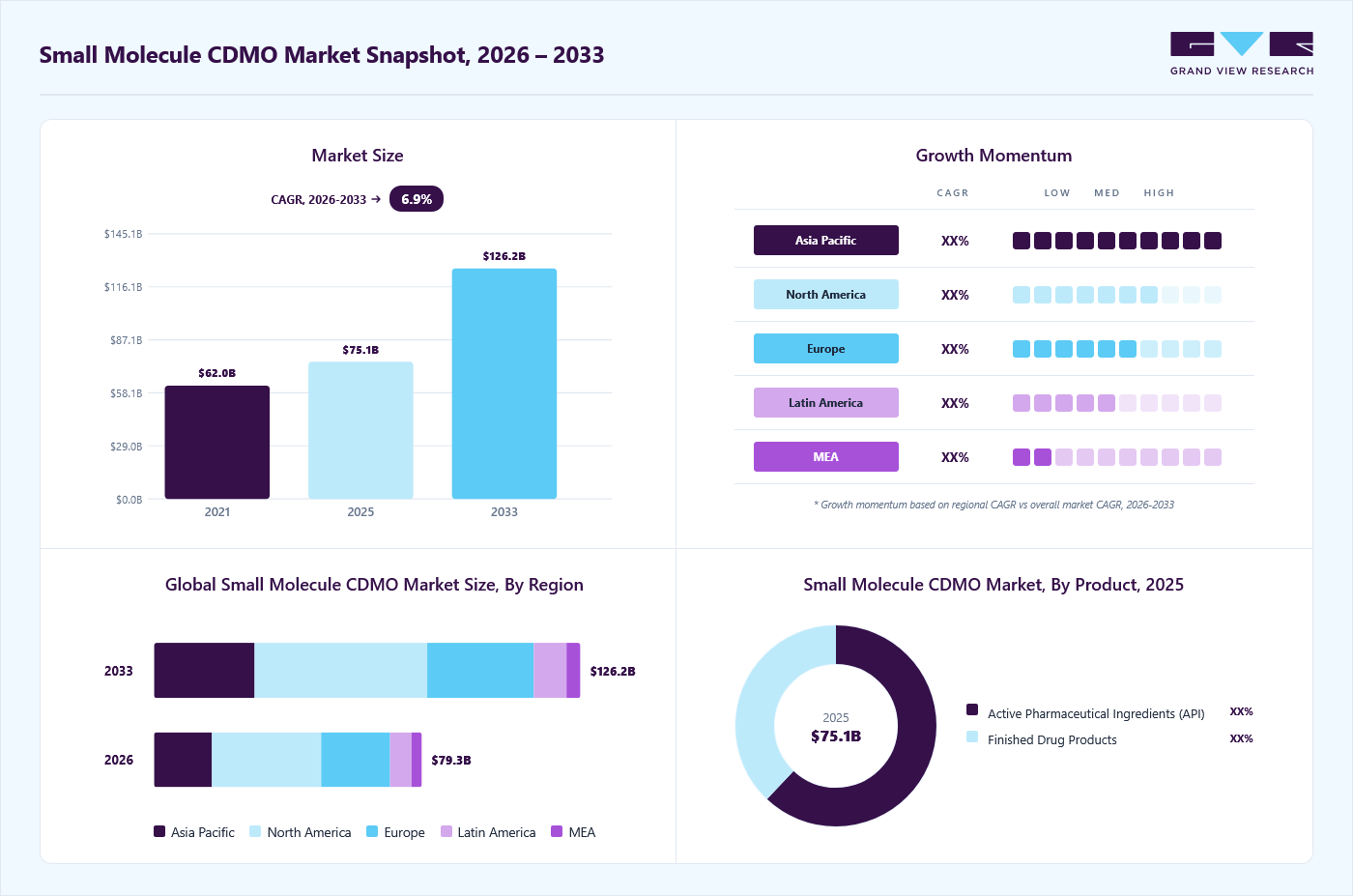
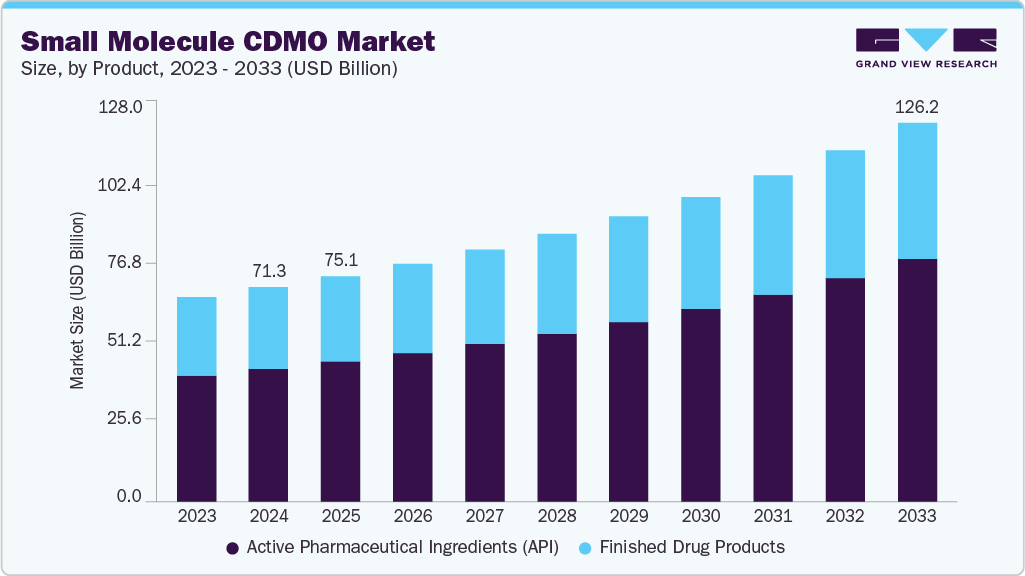
The global small molecule CDMO market size was valued at USD 75.1 billion in 2025 and is projected to grow from USD 79.3 billion in 2026 to USD 126.2 billion by 2033, at a CAGR of 6.9% from 2026 to 2033. North America dominated the global market with the largest revenue share of 40.8% in 2025. The growth of the market is due to a convergence of strategic outsourcing trends, robust pharmaceutical pipelines, and global manufacturing shifts.
Key Market Trends & Insights
- By product: Active pharmaceutical ingredients (API) segment led the market with the largest revenue share of 62.0% in 2025.
- By drug type: Innovators segment led the market with the largest revenue share of 57.6% in 2025.
- By application: Oncology segment led the market with the largest revenue share of 34.7% in 2025.
Regional Highlights
- Largest regional market: North America (40.8% revenue share, 2025)
- Fastest growing regional market: Asia Pacific (highest CAGR, 2026-2033)
- By country: The small molecule CDMO market in the U.S. held the largest share in the North America region in 2025.
Market Size & Forecast
- Market size in 2025: USD 75.1 Billion
- Estimated market size in 2026: USD 79.3 Billion
- Projected market size by 2033: USD 126.2 Billion
- CAGR (2026-2033): 6.9%
Three ways to get this report
Buy it, customize it, or ask a question.Ask an Analyst
A direct answer, usually in 1 working day
- AccessReport author, directly
- Reply timeWithin 1 working day
- No sales callDirect answer only
- FormatEmail reply
- CostFree, no cost
Get the Full Report
What the study covers
- FormatsPDF · Excel · Dashboard
- Timeline2026–2033 annual, 2025 base
- Coverage20+ countries, 5 regions
- Companies10+ key players profiled
Customize the Report
20% free customization
- IncludeCountries, segments, points
- TailorTo your product definition
- ExtendDeeper competitor detail
- OrA fully bespoke study
- Turnaround5–10 working days
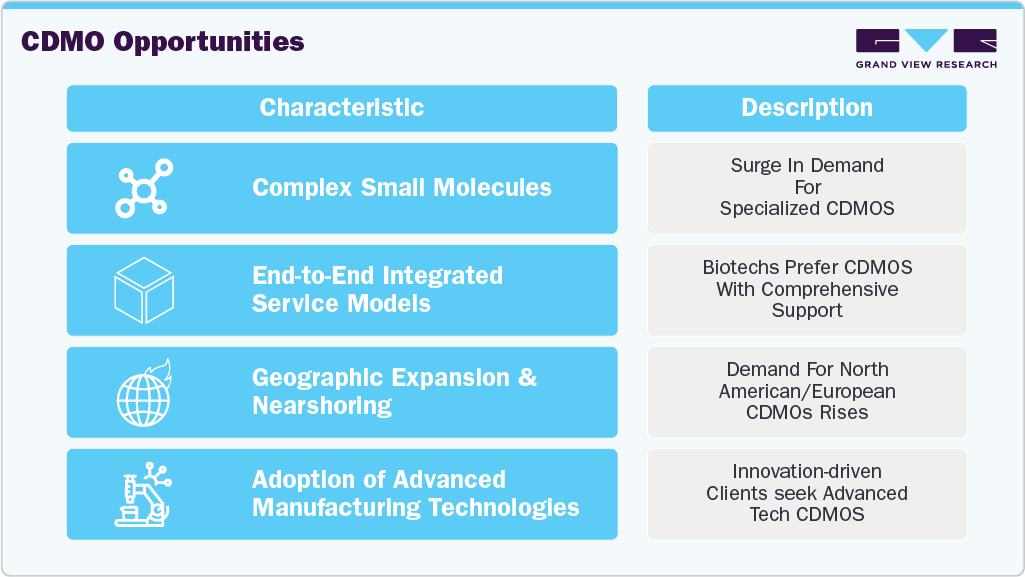
Pharmaceutical and biotech companies increasingly rely on CDMOs to streamline R&D costs, accelerate time-to-market, and access specialized capabilities, particularly for highly potent APIs and complex chemistries. The consistent approval of small molecule drugs, especially in therapeutic areas such as oncology, infectious diseases, and cardiology, sustains strong demand for both clinical and commercial-scale manufacturing.The market is driven by the evolving nature of pharmaceutical innovation and the changing economic landscape of drug development. The emergence of biotech firms and virtual pharma companies, which often lack in-house infrastructure for R&D, scale up, or GMP manufacturing, is driving the market growth. These companies are turning to CDMOs not just as suppliers but as strategic collaborators to bring their molecules to market quickly and compliantly. Unlike in the past where outsourcing was cost-driven, today’s engagements are increasingly innovation-driven-relying on CDMOs for specialized process chemistry, formulation science, and regulatory knowledge. This shift is particularly evident in the development of high-value small molecules such as antibody-drug conjugates (ADCs), HPAPIs, and targeted oncology drugs, where manufacturing complexity and containment needs are high.
Moreover, the growing trend towards digitalization and advanced manufacturing technologies within the CDMO ecosystem is also contributing to market growth. AI-driven predictive modeling, continuous flow processing, and real-time release testing (RTRT) are transforming the cost-efficiency and flexibility of small molecule production. These innovations allow CDMOs to differentiate their offerings, improve batch yields, and meet quality requirements in a faster, more data-rich environment. In addition, large pharmaceutical companies are seeking sustainability in their supply chains, and CDMOs with green chemistry capabilities or low-carbon production practices are becoming more attractive partners. The market is also benefiting from regional shifts in supply chain strategy due to geopolitical instability and drug shortages-prompting Western pharma firms to diversify their supplier base and seek CDMOs in North America and Europe with redundant capacity.
Market Dynamics
The small molecule contract development and manufacturing organization (CDMO) market is experiencing substantial growth, driven by pharmaceutical and biotechnology companies outsourcing drug development and manufacturing activities. Rising demand for cost-efficient production, growing complexity of drug development processes, and the need to accelerate time-to-market are encouraging companies to partner with specialized CDMOs. The expanding pipeline of small molecule therapeutics across oncology, cardiovascular, infectious diseases, and central nervous system disorders is further supporting market growth. In addition, increasing generic drug development, patent expirations of branded drugs, and growing demand for high-potency active pharmaceutical ingredients (HPAPIs) are creating significant opportunities for contract manufacturers. Technological advancements in process chemistry, continuous manufacturing, analytical testing, and scale-up capabilities are enhancing operational efficiency and enabling CDMOs to provide integrated end-to-end services across the drug development lifecycle.
The growing trend of outsourcing pharmaceutical development and manufacturing operations is a major driver of the small molecule CDMO market. Pharmaceutical and biotechnology companies are increasingly relying on CDMOs to access specialized expertise, advanced manufacturing infrastructure, and regulatory support while reducing capital expenditures and operational costs. Outsourcing allows drug developers to focus on core competencies such as research, innovation, and commercialization while leveraging external partners for process development, API manufacturing, formulation development, and commercial production. Furthermore, the growing number of small and virtual biotech firms with limited in-house manufacturing capabilities is driving demand for flexible, scalable CDMO services. As drug pipelines continue to expand globally, outsourcing partnerships are expected to remain a critical growth catalyst for the market.
Stringent regulatory standards and quality compliance requirements pose significant challenges for the small molecule CDMO market. CDMOs must comply with Good Manufacturing Practice (GMP) regulations, regulatory inspections, documentation requirements, data integrity standards, and evolving global quality guidelines throughout the manufacturing process. Failure to meet regulatory expectations can result in warning letters, production delays, product recalls, or loss of client contracts. In addition, maintaining validated facilities, sophisticated analytical testing capabilities, and highly trained personnel requires substantial investments. Regulatory variations across different regions further increase operational complexity for CDMOs serving global pharmaceutical clients. These compliance-related challenges can increase operating costs and create barriers for smaller contract manufacturers seeking to expand into new markets.
The increasing development of high-potency small-molecule drugs presents significant opportunities for the small-molecule CDMO market. The growing focus on targeted therapies, particularly in oncology and rare diseases, is driving demand for specialized manufacturing capabilities for highly potent compounds that require advanced containment systems and dedicated production facilities. Many pharmaceutical companies prefer outsourcing HPAPI development and manufacturing to experienced CDMOs with established expertise and regulatory compliance capabilities. In addition, the growing adoption of continuous manufacturing technologies, complex formulations, and integrated development services is creating opportunities for service differentiation. The expansion of pharmaceutical research activities and increased drug development investments in emerging markets are expected to further support long-term demand for specialized small-molecule CDMO services worldwide.
Analyst Perspective
The small molecule CDMO market is experiencing strong growth, driven by the expanding pipeline of innovative and generic small molecule therapeutics advancing through clinical development and into commercial production. From a cross-sectional perspective, increasing outsourcing by pharmaceutical and biotechnology companies is accelerating demand for specialized capabilities in API development, process optimization, formulation development, analytical testing, scale-up, and GMP manufacturing. The growing complexity of synthetic chemistry processes, high-potency active pharmaceutical ingredient (HPAPI) production, and regulatory requirements are prompting drug developers to partner with experienced CDMOs that possess established manufacturing infrastructure and regulatory expertise. Simultaneously, rising expectations regarding product quality, process efficiency, supply chain resilience, and regulatory compliance are encouraging manufacturers to invest in continuous manufacturing technologies, advanced process analytics, automation, and digital quality management systems. The growing demand for cost-effective drug development solutions, coupled with increasing investments in manufacturing capacity expansion across North America, Europe, and the Asia Pacific, is creating new opportunities for service providers. Companies with strong expertise in small molecule development, integrated development-to-commercialization capabilities, and global manufacturing networks are expected to capture a larger share of future outsourcing demand. Such factors are expected to drive market growth.
Technological Advancements
The technological landscape in the small molecule CDMO market is rapidly evolving, driven by the need for faster, safer, and more cost-effective drug development. CDMOs are increasingly adopting continuous manufacturing, flow chemistry, and process intensification technologies to improve scalability, reduce waste, and meet regulatory expectations for quality and efficiency. Automation and digital process control systems, including PAT (Process Analytical Technology) and real-time release testing (RTRT), are enhancing batch consistency and reducing manual interventions.
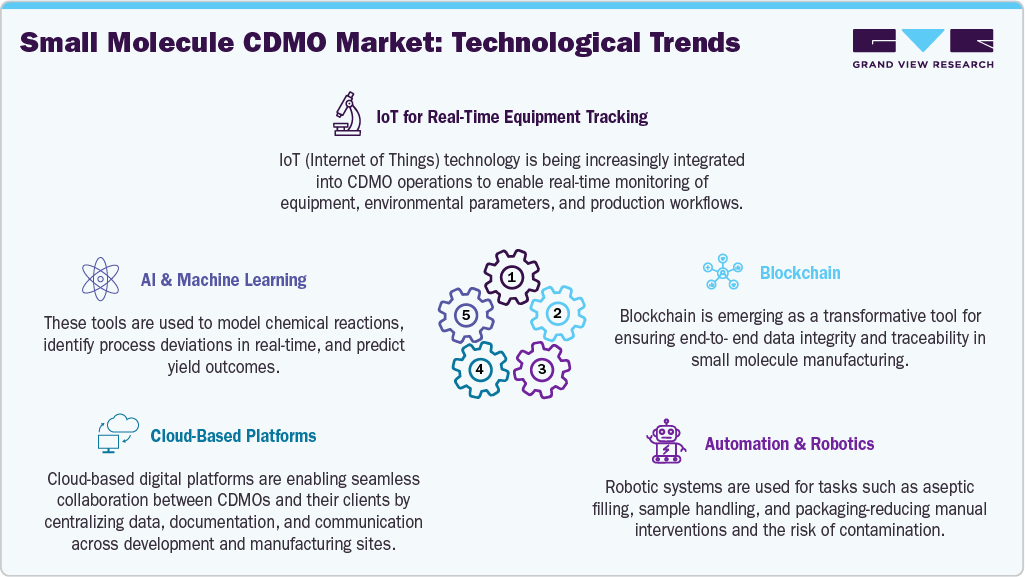
Advanced data analytics, AI-driven modeling, and digital twins are being used to optimize process parameters, predict yield variations, and accelerate tech transfer. Moreover, demand for sustainable production has led to investments in green chemistry techniques, such as solvent recycling and bio-catalysis. These technological advancements are not only enabling faster time-to-market but also allowing CDMOs to serve as innovation partners, particularly for clients developing complex APIs, personalized medicine, and fast-track therapeutics.
Pricing Analysis
A pricing analysis model in the small molecule CDMO market typically incorporates multiple cost-driving variables, including molecule complexity, development phase, volume requirements, regulatory compliance needs, and service depth (e.g., standalone API manufacturing vs. full end-to-end development). For early-phase projects, pricing often follows a milestone-based model with fixed fees for preclinical development, formulation, and initial GMP batch production. In later phases, cost-plus or FTE (full-time equivalent)-based pricing models become more common, especially when long-term partnerships are involved. High-potency APIs, specialized containment, or accelerated timelines command premium pricing due to higher operational and compliance burdens. In addition, geographic location, manufacturing capacity utilization, and quality track record influence a CDMO’s ability to price competitively. CDMOs that offer integrated services and digital transparency often justify higher rates by reducing total time-to-market and minimizing tech transfer risks.
Product Insights
Based on product, the active pharmaceutical ingredients (API) segment led the market with the largest revenue share of 62.0% in 2025. The growth of the segment is due to the increasing demand for complex and high-potency small molecule therapies across a range of therapeutic areas, particularly oncology, infectious diseases, and cardiovascular disorders. As pharmaceutical pipelines become more innovation-focused, drug developers are outsourcing API manufacturing to CDMOs with advanced synthetic capabilities, containment infrastructure for HPAPIs, and proven regulatory track records.
The finished drug products segment is anticipated to grow at a considerable CAGR during the forecast period. The segment growth is driven due to increasing pharmaceutical industry trends toward outsourcing formulation development, aseptic filling, and packaging to specialized CDMOs. Rising complexity in drug delivery systems, such as controlled-release formulations, biologics combination products, and personalized medicines, requires advanced expertise and state-of-the-art manufacturing facilities that many pharma companies prefer to access via outsourcing.
Drug Type Insights
Based on drug type, the innovators segment led the market with the largest revenue share of 57.6% in 2025, due to the increasing focus of pharmaceutical companies on developing novel small molecule drugs with unique mechanisms of action, particularly in high-value therapeutic areas such as oncology, immunology, and rare diseases. Innovator companies typically require extensive R&D support, specialized manufacturing capabilities, and stringent regulatory compliance, which drive significant demand for advanced CDMO services.
The generics segment is anticipated to grow at the fastest CAGR over the forecast period. The growth is attributed to the increasing demand for affordable and accessible medications worldwide as healthcare systems focus on cost containment and expanding patient access. Patent expirations of several blockbuster small molecule drugs are creating significant opportunities for generic manufacturers to enter the market, driving a surge in outsourcing needs for large-scale, cost-efficient API and finished product manufacturing.
Application Insights
Based on application, the oncology segment led the market with the largest revenue share of 34.7% in 2025, due to the rapidly growing global prevalence of cancer and the continuous introduction of novel targeted therapies and small molecule anticancer drugs. The high unmet medical need for effective and personalized cancer treatments has driven significant investment in oncology drug development, resulting in a robust pipeline of innovative molecules requiring specialized CDMO services.

The autoimmune/inflammation segment is anticipated to grow at a considerable CAGR over the forecast period. The growth of the segment is due to the rising global prevalence of autoimmune disorders such as rheumatoid arthritis, psoriasis, and inflammatory bowel disease, which are driving increased demand for effective small molecule therapies. Advances in the understanding of immune system pathways have led to the development of novel targeted drugs that require specialized manufacturing processes, including complex synthesis and formulation techniques, making outsourcing to experienced CDMOs essential.
Regional Insights
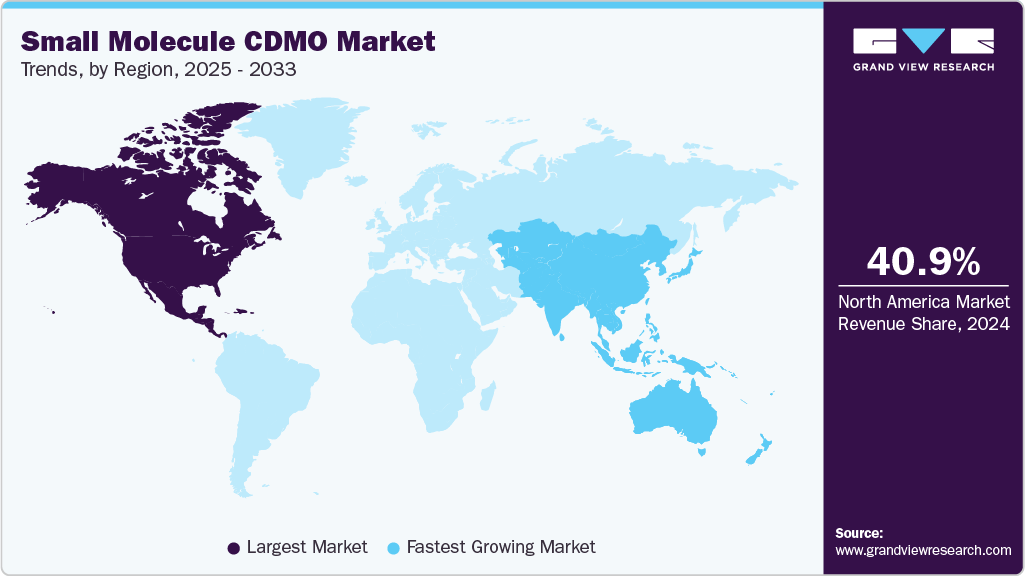
North America dominated the small molecule CDMO market with the largest revenue share of 40.8% in 2025, owing to the increased R&D investments, the presence of global players, and rising efforts to come up with newer patents. In addition, the increasing number of clinical trials is also fueling market growth.
U.S. Small Molecule CDMO Market Trends
The small molecule CDMO market in the U.S. held the largest share in the North America region in 2025. This is attributed to the increasing number of clinical trials in the U.S. For instance, according to the National Clinical Trials Registry (NCT), around 12,326 clinical trials studies were underway across various phases for the treatment of cancer in 2022.
Europe Small Molecule CDMO Market Trends
The small molecule CDMO market in Europe is expected to grow significantly due to rising focus on clinical trial studies, favorable government initiatives and policies, compliance with the Good Clinical Practice (GCP) standards, larger patient pools and rising number of clinical trials are some of the key factors fueling the market growth.
The small molecule CDMO market in Germany is driven by factors such as advanced medical expertise and easy access to patients, low rate of saturation of competing trials, and high number of participants contributing to the clinical research studies.
UK small molecule CDMO market is driven by factors such as rising government spending on clinical research and rising number of clinical trial studies in the region. According to the National Institute for Health Research (NIHR), UK, clinical research is worth USD 3.74 billion each year and includes USD 2.07 billion from commercial sources, which supports around 47,000 jobs.
Asia Pacific Small Molecule CDMO Market Trends
Asia Pacific is expected to be the fastest growing market due togrowing investment by developed countries in the regions and various amendments made by the regulatory agencies to facilitate local manufacturing & contract services.
The small molecule CDMO market in China held the largest share in 2024. The growth is attributed to the government initiatives to regulate the clinical trials as per the global standards and better infrastructure, which includes 4,000 hospital beds. Initially in China, Centre of Drug Evaluation (CDE) was responsible was regulating the clinical trials
Japan small molecule CDMO market is expected to grow over the forecast period. The regulatory process is supportive of faster clinical trial approval. For instance, clinical trials can be started once the probable benefits are demonstrated by carrying out a relatively smaller number of clinical trials.
The small molecule CDMO market in India is anticipated to grow at the lucrative CAGR over the forecast period. This can be attributed to the increasing government funds. The government of India focuses on expanding affordable healthcare facilities in the country. This propelled the growth of clinical trials sector in India. In addition, local Indian players such as Vitas Pharma (Hyderabad) and Bugworks (Bengaluru) ventured into drug development activities.
Key Small Molecule CDMO Company Insights
Several key players are acquiring various strategic initiatives to strengthen their market position offering diverse services to customers. The prominent strategies adopted by companies are service launches, mergers & acquisitions/joint ventures merger, partnership & agreements, expansions, and others to increase market presence & revenue and gain a competitive edge drives the market growth.
Key Small Molecule CDMO Companies
The following key companies have been profiled for this study on the small molecule CDMO market.
-
Lonza
-
Catalent, Inc.
-
Thermo Fisher Scientific Inc.
-
Cambrex Corporation
-
Bellen Chemistry
-
Siegfried Holding AG
-
Recipharm AB
-
Eurofins Scientific
-
Aurigene Pharmaceutical Services Ltd.
-
CordenPharma International
Competitive Benchmarking
Category
Operating Strategies
Competitive Edge
Weakness
Established Players (Lonza Group AG, Catalent, Inc.)
- Mature players in the small molecule CDMO market focus on expanding large-scale API and finished dosage manufacturing capacity, strengthening integrated development-to-commercialization service offerings, and enhancing global manufacturing networks.
- These companies actively pursue acquisitions, strategic partnerships, and investments in high-potency APIs (HPAPIs), continuous manufacturing technologies, and advanced process development platforms.
- They emphasize regulatory compliance, operational excellence, and long-term partnerships with pharmaceutical and biotechnology companies.
- Mature players possess strong competitive advantages through extensive global infrastructure, broad service portfolios, and established regulatory expertise.
- Their advanced manufacturing technologies, diversified customer base, robust supply chains, and large-scale commercial production capabilities enable efficient project execution, reliable product supply, and accelerated market entry for both innovator and generic small molecule drugs.
- Mature players may face challenges associated with high operating costs, complex organizational structures, and longer decision-making timelines.
- Large-scale manufacturing facilities require substantial capital investments, ongoing maintenance expenditures, and continuous regulatory compliance efforts.
- In addition, integrating acquisitions and managing global operations can create operational complexities.
Emerging Players (Aurigene Pharmaceutical Services Ltd.)
- Emerging players in the small molecule CDMO market primarily focus on niche specialization, flexible manufacturing models, and rapid expansion of development and manufacturing capabilities.
- Many companies emphasize specialized services such as HPAPI manufacturing, complex chemistry, early-phase development, and customized client support.
- Strategic collaborations with biotech companies, targeted capacity expansions, and investments in advanced process technologies help strengthen their market position.
- Emerging players gain competitive advantages through operational flexibility, specialized technical expertise, and personalized customer engagement.
- Their ability to offer customized solutions, faster project turnaround times, and focused investments in niche manufacturing segments enables them to effectively support small and mid-sized pharmaceutical and biotechnology companies.
- Emerging players often face limitations related to smaller manufacturing scale, limited global footprint, and comparatively lower financial resources.
- Many lack extensive commercial-scale production capacity, broad service integration, and established regulatory experience across multiple international markets.
- In addition, competing with larger CDMOs that offer end-to-end services and global supply chain capabilities remains a significant challenge.
Recent Developments
-
In October 2024, Thermo Fisher launched its Accelerator Drug Development offerings designed to support both emerging biotech firms and major pharmaceutical companies. This comprehensive suite encompasses manufacturing, clinical research, and supply chain services across various modalities-including small molecules, biologics, and cell and gene therapies-covering the entire journey from preclinical stages through to commercial launch.
-
In June 2024, Siegfried plans to acquire an early-phase CDMO site in Wisconsin, U.S., specializing in highly potent APIs. The site will serve as a hub for early-phase development and manufacturing services, strengthening Siegfried's global capabilities.
Small Molecule CDMO Market Report Scope
Report Attribute
Details
Market size in 2025
USD 75.1 billion
Estimated market size in 2026
USD 79.3 billion
Projected market size by 2033
USD 126.2 billion
Growth rate
CAGR of 6.9% from 2026 to 2033
Historical data
2021 - 2024
Forecast period
2026 - 2033
Quantitative units
Revenue in USD million/billion and CAGR from 2026 to 2033
Report coverage
Revenue forecast, company ranking, competitive landscape, growth factors, and trends
Segments covered
Product, drug type, application, region
Regional scope
North America; Europe; Asia Pacific; Latin America; MEA
Country scope
U.S.; Canada; Mexico; Germany; UK; France; Italy; Spain; Norway; Denmark; Sweden; China; Japan; India; South Korea; Australia; Thailand; Brazil; Argentina; Saudi Arabia; South Africa; UAE; Kuwait; Oman; Qatar.
Key companies profiled
Lonza; Catalent, Inc.; Catalent, Inc.; Thermo Fisher Scientific Inc.; Cambrex Corporation; Bellen Chemistry; Siegfried Holding AG; Recipharm AB; Eurofins Scientific; Aurigene Pharmaceutical Services Ltd.; CordenPharma International
Customization scope
Free report customization (equivalent up to 8 analysts' working days) with purchase. Addition or alteration to country, regional & segment scope.
Pricing and purchase options
Avail customized purchase options to meet your exact research needs. Explore purchase options
Global Small Molecule CDMO Market Report Segmentation
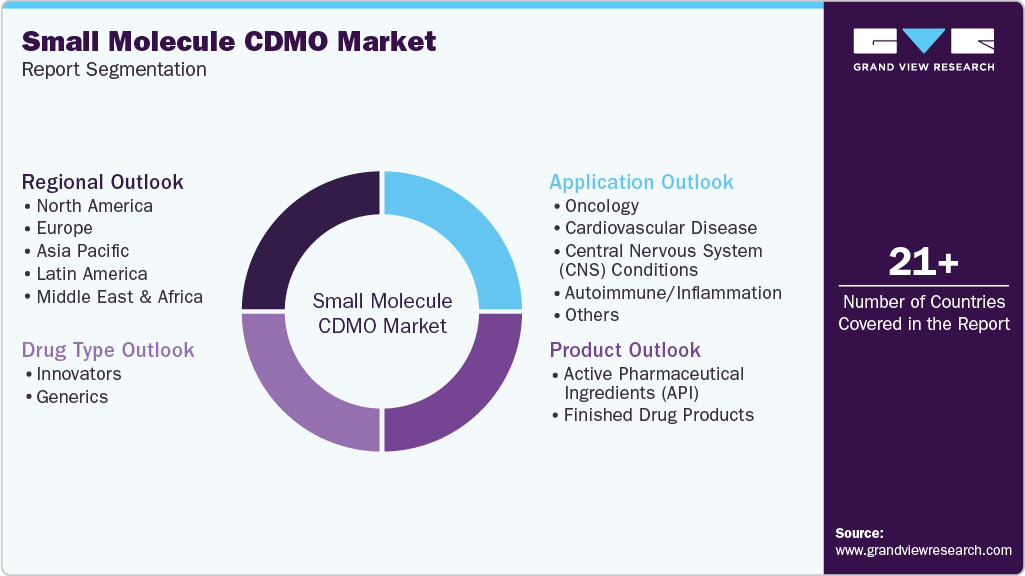
This report forecasts revenue growth at global, regional, and country levels and provides an analysis of the latest industry trends in each of the sub-segments from 2021 to 2033. For this study, Grand View Research has segmented the global small molecule CDMO market report based on product, drug type, application, and region:
-
Product Outlook (Revenue, USD Million, 2021 - 2033)
-
Active Pharmaceutical Ingredients (API)
-
Finished Drug Products
-
-
Drug Type Outlook (Revenue, USD Million, 2021 - 2033)
-
Innovators
-
Generics
-
-
Application Outlook (Revenue, USD Million, 2021 - 2033)
-
Oncology
-
Cardiovascular Disease
-
Central Nervous System (CNS) Conditions
-
Autoimmune/Inflammation
-
Others
-
-
Regional Outlook (Revenue, USD Million, 2021 - 2033)
-
North America
-
U.S.
-
Canada
-
Mexico
-
-
Europe
-
UK
-
Germany
-
France
-
Italy
-
Spain
-
Denmark
-
Norway
-
Sweden
-
-
Asia Pacific
-
Japan
-
China
-
India
-
Australia
-
South Korea
-
Thailand
-
-
Latin America
-
Brazil
-
Argentina
-
-
Middle East and Africa (MEA)
-
South Africa
-
Saudi Arabia
-
UAE
-
Kuwait
-
-
Research Methodology
The small molecule CDMO market figures in this report are based on a proven research process that combines executive interviews with secondary research from proprietary databases, company filings, and recognized regulatory and institutional sources. Market size is built through value-chain sizing - reconciling supply-side and demand-side estimates - and triangulated with bottom-up and top-down approaches. Every estimate passes multiple levels of expert validation before publication, with each small molecule CDMO segment quantified using the revenue-capture definitions in the table below.
Segment Definition
Segment - Product
Revenue capture definition
Active Pharmaceutical
Ingredients (API)
This segment captures revenue generated by contract development and manufacturing services for small molecule active pharmaceutical ingredients (APIs). It includes process development, route scouting, process optimization, scale-up, custom synthesis, GMP manufacturing, high-potency API (HPAPI) production, analytical testing, validation, and commercial API supply.
Finished Drug Products
This segment captures revenue generated by contract development and manufacturing of finished small molecule drug products for pharmaceutical and biotechnology companies. It includes formulation development, dosage form manufacturing, fill-finish operations, packaging, labeling, stability testing, regulatory support, and commercial drug product manufacturing for oral, injectable, topical, and other formulations.
Segment - Drug Type
Revenue capture definition
Innovators
This segment captures revenue generated from CDMO services provided for proprietary and branded small molecule drugs under development or commercialization by innovator pharmaceutical and biotechnology companies. It includes clinical and commercial manufacturing, process development, formulation development, analytical services, technology transfer, and lifecycle management support for novel therapeutics.
Generics
This segment captures revenue generated from CDMO services provided for generic small molecule drugs following patent expiration of branded products. It includes API manufacturing, reverse-engineering support, formulation development, bioequivalence-related manufacturing, scale-up, regulatory filing support, and the commercial production of generic pharmaceutical products.
Segment - Application
Revenue capture definition
Oncology
This segment captures revenue generated from small molecule CDMO services supporting the development and manufacturing of therapeutics for cancer treatment. It includes APIs and finished drug products for targeted therapies, kinase inhibitors, cytotoxic agents, hormone therapies, precision oncology drugs, and other anticancer treatments.
Cardiovascular Disease
This segment captures revenue generated from small molecule CDMO services supporting drugs used for the prevention and treatment of cardiovascular disorders. It includes the manufacturing of APIs and finished formulations for antihypertensives, anticoagulants, antiplatelet agents, lipid-lowering drugs, antiarrhythmics, and heart failure therapies.
Central Nervous System
(CNS) Conditions
This segment captures revenue generated from small molecule CDMO services supporting therapeutics for neurological and psychiatric disorders. It includes manufacturing services for drugs targeting depression, anxiety, schizophrenia, epilepsy, Parkinson’s disease, Alzheimer’s disease, multiple sclerosis, and other CNS-related conditions.
Autoimmune/Inflammation
This segment captures revenue generated from small molecule CDMO services supporting therapies used to treat autoimmune and inflammatory disorders. It includes the development and manufacturing of drugs for rheumatoid arthritis, psoriasis, inflammatory bowel disease, lupus, ankylosing spondylitis, and other immune-mediated conditions.
Others
This segment captures revenue generated from small molecule CDMO services supporting therapeutic areas not covered under oncology, cardiovascular, CNS, or autoimmune indications. It includes drugs for infectious diseases, respiratory disorders, gastrointestinal conditions, metabolic diseases, dermatology, rare diseases, endocrinology, and other specialty therapeutic applications.
Estimation Model
Model
Description / Methodology
Bottom-Up Revenue Model
Market size is estimated by identifying leading global and regional CDMOs engaged in small molecule drug development, API manufacturing, formulation development, analytical testing, and commercial manufacturing services.
Revenue attributable to small molecule contract development and manufacturing operations is derived from annual reports, investor presentations, regulatory filings, company disclosures, and management commentary.
Individual company revenues generated from small molecule-related services are aggregated and validated through capacity utilization rates, client portfolios, service offerings, and regional market presence to estimate the overall market size.
Pharmaceutical Outsourcing Spending Model
Market value is estimated by evaluating total pharmaceutical spending on outsourced development and manufacturing activities across the small molecule value chain.
Average outsourcing expenditure is assessed across API development, manufacturing, formulation development, analytical testing, clinical manufacturing, and commercial production activities.
The outsourcing expenditure opportunity is calculated by applying outsourcing penetration rates to overall small molecule drug development and manufacturing expenditures across major pharmaceutical markets.
Small Molecule Drug Pipeline Model
Market size is estimated by analyzing the number of small molecule drug candidates progressing through preclinical, clinical, and commercial stages globally.
Parameters including average development costs, manufacturing requirements by phase, outsourcing rate, and commercial production demand are evaluated across therapeutic areas.
Revenue potential generated from contract development and manufacturing services is estimated based on the volume of outsourced projects and validated through industry benchmarks and historical CDMO engagement rates.
Clinical and Commercial Manufacturing Demand Model
Market value is estimated by assessing demand for outsourced manufacturing services across clinical trial supplies and commercial drug production.
The model evaluates the number of active clinical programs, product launches, lifecycle management projects, and commercial manufacturing agreements requiring external production support.
Revenue is calculated by applying average contract values across development phases and manufacturing scales, generating the overall addressable market opportunity for small molecule CDMOs.
Delivered Customizations
This report has been delivered with the following In-depth customizations
Client Request
Customization Delivered
Value Adds
Regional Expansion & Market Entry Strategy
Developed a region-specific opportunity assessment across North America, Europe, Asia Pacific, and emerging pharmaceutical manufacturing hubs. The analysis included evaluation of pharmaceutical production output, small molecule drug pipelines, outsourcing penetration rates, regulatory frameworks, labor availability, manufacturing costs, and API supply chain infrastructure. Recommended priority markets and entry strategies based on growth potential, customer concentration, and competitive intensity.
Helps identify the most attractive regions for facility expansion, strategic partnerships, acquisitions, and contract manufacturing investments while minimizing operational, regulatory, and supply chain risks.
Industry Outlook, Value Chain & Business Model Assessment
Conducted a comprehensive evaluation of the small molecule CDMO ecosystem, covering raw material suppliers, API manufacturers, formulation development providers, analytical testing laboratories, contract manufacturers, packaging providers, and pharmaceutical sponsors. Assessed prevailing business models, outsourcing trends, revenue streams, pricing dynamics, and value creation opportunities across drug development, clinical manufacturing, and commercial production stages.
Provides a holistic understanding of industry structure, profit areas, outsourcing dynamics, and key success factors, enabling stakeholders to identify high-value opportunities across the pharmaceutical value chain.
Competitive Benchmarking
Performed detailed benchmarking of key small molecule CDMOs based on API manufacturing capacity, HPAPI capabilities, formulation development expertise, regulatory track record, technology platforms, geographic footprint, service integration, commercial-scale manufacturing readiness, and strategic partnerships. Included comparative positioning of global CDMOs and emerging specialty manufacturers.
Enables identification of competitive gaps, differentiation opportunities, partnership targets, and acquisition candidates while supporting strategic decision-making and long-term market positioning.
Frequently Asked Questions About This Report
North America dominated with a 40.8% revenue share in 2025.
Asia Pacific is the fastest-growing region over the forecast period.
Key players include Lonza, Catalent, Inc.; Thermo Fisher Scientific Inc.; Cambrex Corporation; Bellen Chemistry; Siegfried Holding AG; Recipharm AB; Eurofins Scientific; Aurigene Pharmaceutical Services Ltd.; CordenPharma International are some of the dominant players operating in the small molecule CDMO market.
Key factors that are driving the market growth include ia convergence of strategic outsourcing trends, robust pharmaceutical pipelines, and global manufacturing shifts. Pharmaceutical and biotech companies increasingly rely on CDMOs to streamline R&D costs, accelerate time-to-market, and access specialized capabilities, particularly for highly potent APIs and complex chemistries.
Innovators segment led the market with the largest revenue share of 57.6% in 2025, while generics segment is fastest growing drug type.
Oncology segment held the largest share of 34.7% in 2025, while autoimmune/inflammation segment is fastest growing application.
The global small molecule CDMO market size was estimated at USD 75.1 billion in 2025 and is expected to reach USD 79.3 billion in 2026.
The global small molecule CDMO market is expected to grow at a compound annual growth rate of 6.9% from 2026 to 2033 to reach USD 126.2 billion by 2033.
Active pharmaceutical ingredients (API) segment led the market with the largest revenue share of 62.0% in 2025.
About the Author(s)
Medical Devices Research Team
Healthcare · Medical DevicesThis report was authored by the medical devices research team at Grand View Research - comprising two research analysts, one senior research analyst, and one industry expert - with specialized expertise in the medical devices segment of the healthcare industry. All findings are based on proprietary healthcare databases, executive interviews, and regulatory analysis, subject to internal peer review prior to publication.
Last Updated:
Speak to Analyst


Customize this report to your needs - add regions, segments, or data points, with 20% free customization.
Or view our licence options:


ISO 9001:2015 & 27001:2022 Certified
We are GDPR and CCPA compliant! Your transaction & personal information is safe and secure. For more details, please read our privacy policy.


