
- Home
- »
- Consumer F&B
- »
-
Smoothies Market Size, Share & Trends Report, 2026-2033GVR Report cover

Smoothies Market (2026 - 2033)
Size, Share & Trends Analysis Report By Product (Fruit-based, Dairy-based), By Distribution Channel (Restaurants, Smoothie Bars, Supermarkets & Convenience Stores), By Region, And Segment Forecasts
Market Size, 2025
$14.7BMarket Estimate, 2026
$16.1BMarket Forecast, 2033
$30.9BCAGR, 2026–2033
9.8%Smoothies Market Summary
The global smoothies market size was valued at USD 14.7 billion in 2025 and is projected to grow from USD 16.1 billion in 2026 to USD 30.9 billion by 2033, at a CAGR of 9.8 % from 2026 to 2033. North America market dominated the market, accounting for a revenue share of 44.0% in 2025. The market has experienced significant growth in recent years, driven by increasing consumer awareness of health and wellness.
 Source: Grand View Research, IR Documents, Primary Interviews, Paid DatabasesTo learn more about this report,
 Download Free Sample Report
Key Market Trends & Insights
- By product: Fruit-based segment led the market with the largest revenue share of 50.5% in 2025.
- By distribution channel: Smoothie bars segment led the market with the largest revenue share of 45.1% in 2025.
Regional Highlights
- Largest regional market: North America (44.0% revenue share, 2025).
- Fastest-growing regional market: Asia Pacific (highest CAGR, 2026–2033).
- By country: The U.S. held the largest market share in 2025.
Market Size & Forecast
- Market size in 2025: USD 14.7 Billion
- Estimated market size in 2026: USD 16.1 Billion
- Projected market size by 2033: USD 30.9 Billion
- CAGR (2026–2033): 9.8%
Three ways to get this report
Buy it, customize it, or ask a question.Ask an Analyst
Analyst response in 1 business day
- AccessReport author, directly
- Reply timeWithin 1 working day
- No sales callDirect answer only
- FormatEmail reply
- CostFree, no cost
Get the Full Report
What the study covers
- FormatsPDF · Excel · Dashboard
- Timeline2026–2033 annual, 2025 base
- Coverage20+ countries, 5 regions
- Companies10+ key players profiled
Customize the Report
20% free customization
- IncludeCountries, segments, points
- TailorTo your product definition
- ExtendDeeper competitor detail
- OrA fully bespoke study
- Turnaround5–10 working days
As people become more conscious of their dietary choices, the demand for nutritious and convenient food and beverage options has risen. Smoothies, with their blend of fruits, vegetables, and often added supplements, cater to this demand by offering a quick and tasty way to consume essential nutrients. The penetration of smoothies into mainstream consumer preferences is evident, as they are now commonly found in cafes, juice bars, and even as pre-packaged products in grocery stores.With the growing concern about the adverse impact of fast food, there is a rising trend toward healthier meal options such as smoothies. For example, Tropical Smoothie Cafe, a chain with over 500 locations, has introduced a new menu featuring smoothies designed to be consumed as complete meals. One example is the Chia Banana Boost with peanut butter, a breakfast shake made from roasted banana, whole-grain oats, chia seeds, coconut, and strawberries. Another option is the Detox Island Green smoothie, which contains five whole vegetables and fruits-mango, spinach, kale, banana, and pineapple. It is now widely accepted that a smoothie is a convenient option and can be a substantial meal since it comprises vegetables, fruits, and grains.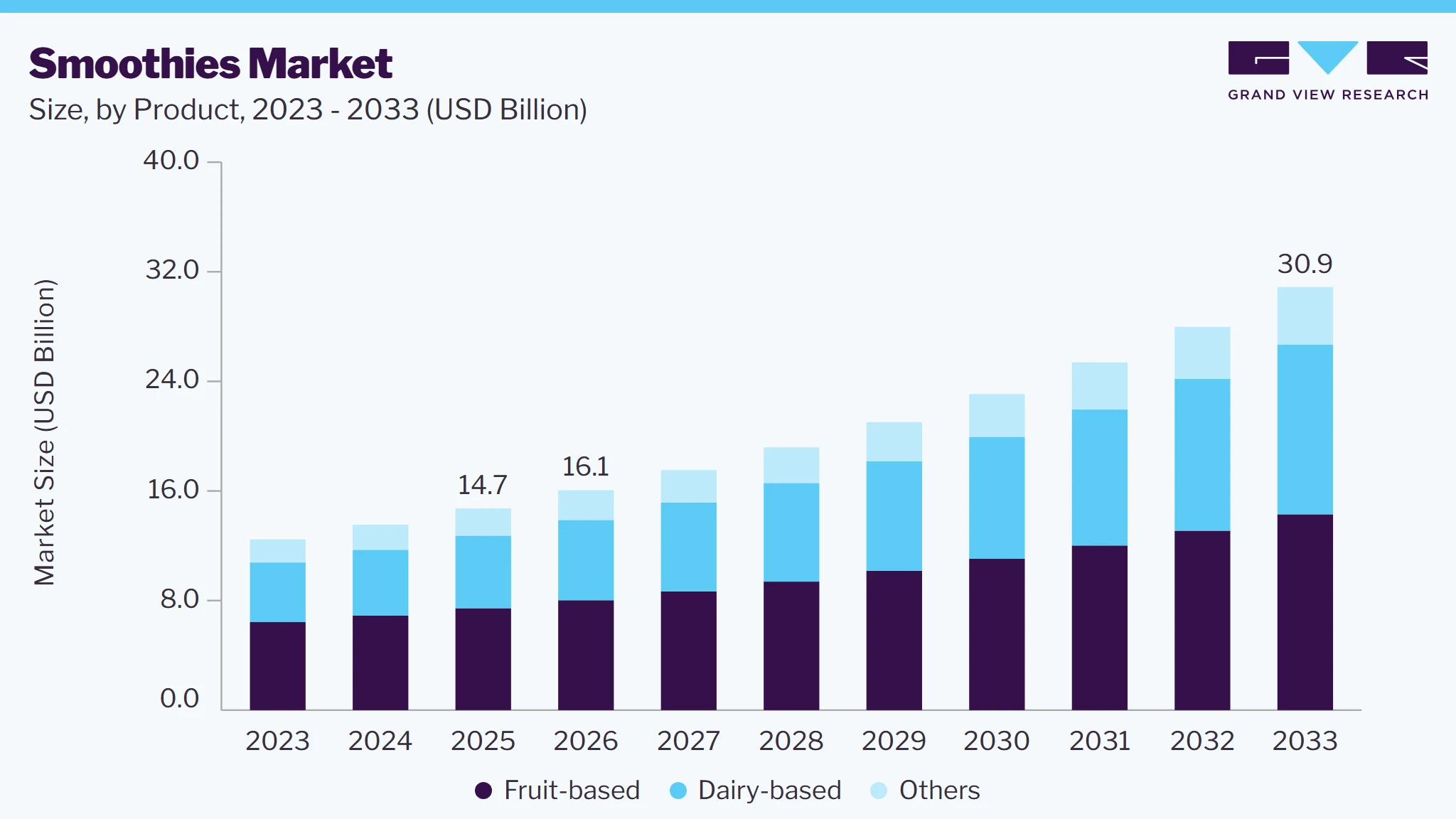 To learn more about this report, Download Free Sample Report
In addition, social media and the wellness movement have played a significant role in popularizing smoothies. Platforms like Instagram and Pinterest have become hubs for sharing visually appealing and health-focused content, including vibrant images of colorful smoothie bowls and creative recipes. This online presence has increased awareness and created a sense of community around the idea of embracing a healthy lifestyle, with smoothies at the forefront.
For instance, Innocent Smoothies, a renowned smoothie company, has effectively utilized social media to build a following of several hundred thousand individuals and generate annual sales exceeding USD 100 million. Their distinct strategy involves leveraging humor, wit, and an engaging social media presence to connect with their audience. The brand's dedicated representatives ensure consistent and authentic communication with their audience on platforms like Twitter.
Market Dynamics
The global smoothie market is experiencing sustained growth, supported by increasing consumer preference for nutritious, convenient, and functional beverages. Rising health consciousness, busy lifestyles, and growing demand for clean-label products are encouraging consumers to incorporate smoothies into their daily dietary routines. Manufacturers are expanding product portfolios with fruit- and vegetable-based blends, protein-enriched formulations, and plant-based ingredients to address evolving nutritional preferences. Additionally, product innovation, wider retail distribution, and the growing popularity of on-the-go consumption are expected to drive market expansion throughout the forecast period.
Growing awareness of balanced nutrition and preventive wellness is driving demand for smoothies as a convenient source of vitamins, minerals, fiber, and functional ingredients. Consumers are increasingly seeking beverages that support energy, digestive health, immunity, and overall well-being without compromising convenience. This trend has encouraged manufacturers to introduce nutrient-rich formulations containing fruits, vegetables, proteins, probiotics, and superfoods. The increasing adoption of healthy lifestyle choices and demand for ready-to-drink nutritional beverages continue to strengthen the growth of the global smoothie market.
The smoothie market faces operational challenges due to the perishable nature of fresh ingredients and limited product shelf life. Maintaining product quality requires efficient cold chain infrastructure throughout storage, transportation, and retail distribution, increasing operational costs for manufacturers. In addition, fluctuations in the availability and pricing of fruits and vegetables, along with seasonal supply variations, can affect production consistency and profit margins. These factors may limit market expansion, particularly in regions with underdeveloped refrigerated logistics networks.
The market presents substantial opportunities through the development of premium and value-added smoothie products tailored to changing consumer preferences. Manufacturers are increasingly introducing plant-based, organic, protein-rich, low-sugar, and functional smoothies containing probiotics, adaptogens, collagen, and superfoods to differentiate their product portfolios. Furthermore, innovations in sustainable packaging, extended shelf-life technologies, and personalized nutrition solutions are enhancing product appeal. Growing consumer willingness to invest in health-focused and premium beverage options is expected to create significant opportunities for product innovation, brand differentiation, and long-term revenue growth.
Market Concentration & Characteristics
The appeal of smoothies extends beyond their nutritional value to include factors such as flavor innovation and customization. As consumers become more adventurous in their taste preferences, the market has responded with a wide variety of smoothie options, ranging from classic fruit blends to exotic combinations that cater to diverse palates. This variety not only enhances the overall consumer experience but also contributes to the sustained market growth.
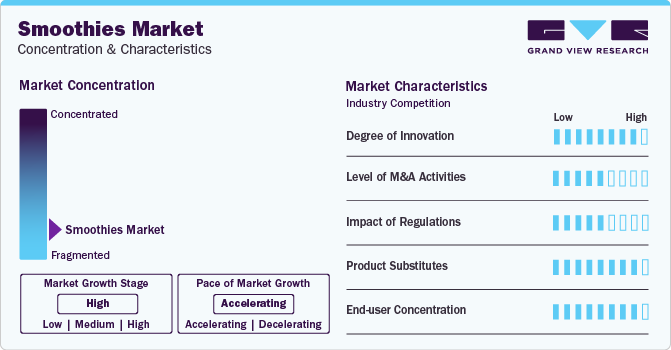
The global smoothie market exhibits high fragmentation, attributed to significant regional and domestic players across various countries. Leading companies employ key strategies, including mergers, expansions, acquisitions, partnerships, and product development, to enhance brand visibility among consumers.
 To learn more about this report, Download Free Sample Report
The regulations play a critical role in shaping the smoothie market by ensuring product safety, transparency, and compliance with health and environmental standards. As consumer demands and regulatory landscapes continue to evolve, the impact of regulations on the smoothie market is likely to remain a focal point for industry stakeholders and consumers alike. Substitutes in the smoothie market primarily include other ready-to-drink beverages or meal replacement options that offer similar health benefits, convenience, and nutritional value.
Analyst Perspective
The global smoothie market is positioned for steady growth, supported by evolving consumer preferences for convenient and nutritious beverage options. Product innovation, ingredient diversification, and expanding distribution networks continue to strengthen market competitiveness. Manufacturers are increasingly focusing on premium offerings, clean-label formulations, and functional ingredients to address changing consumption patterns. In addition, the growing presence of organized retail, foodservice outlets, and e-commerce platforms is improving product accessibility. As demand for healthier beverage alternatives continues to evolve, strategic investments in innovation, branding, and market expansion are expected to support long-term industry growth.
Product Insights
Based on product, the Fruit-based segment led the market with the largest revenue share of 50.5% in 2025. Fruits are widely recognized for their nutritional content, including essential vitamins, minerals, and antioxidants. This has led consumers to often associate fruit-based smoothies with health and wellness. Furthermore, fruits have natural sweetness, and those with high water content, such as berries and watermelon, contribute to the hydrating and refreshing nature of smoothies. All these factors have significantly contributed to the market dominance of fruit-based smoothies worldwide.
The dairy-based smoothies segment is expected to grow at a CAGR of 10.9% from 2024 to 2033. Dairy-based smoothies are valued for their rich and creamy texture, often derived from ingredients like milk, yogurt, or kefir. This contributes to a satisfying and indulgent beverage experience, which resonates with consumers seeking a more substantial and fulfilling drink. Dairy ingredients add a source of high-quality protein and essential nutrients like calcium and vitamin D, enhancing the nutritional profile of the smoothie.As consumers look for diverse and enjoyable options that combine taste with nutritional value, the appeal of dairy-based smoothies continues to rise.
Distribution Channel Insights
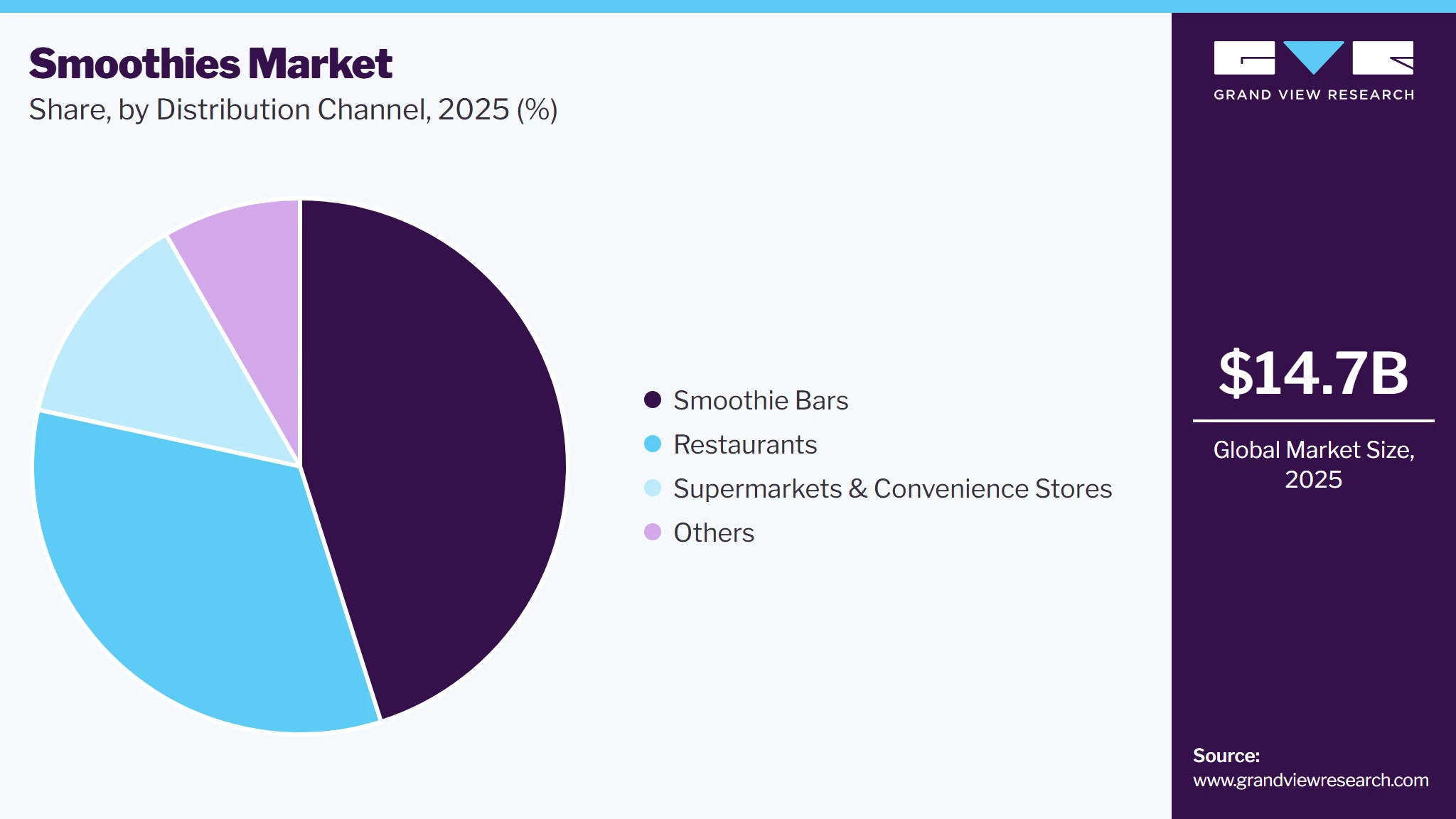
Based on distribution channel, the smoothie bars segment led the market with the largest revenue share of 45.1% in 2025. Smoothie bars offer consumers the option to customize their drinks by choosing specific fruits, vegetables, bases, and add-ins. Furthermore, smoothie bars offer a diverse menu with a wide array of flavors and ingredient combinations. Moreover, many companies in the smoothie market are expanding their businesses by opening bars owing to the high demand for smoothies. As a result, smoothie bars will continue to be the dominant sales platform for the smoothie market during the forecast period.
 To learn more about this report, Download Free Sample Report
Smoothie sales through restaurants are expected to register a CAGR of 9.7% from 2024 to 2033. Restaurants are expanding their beverage menus to offer a diverse range of options, including smoothies. Restaurants are the most convenient and easily accessible channel for smoothies, particularly in developing countries, which is expected to drive the sales of smoothies through restaurants. Quick-service restaurants (QSRs) offering smoothies are adapting their menus to cater to evolving consumer preferences, focusing on less sweetness and incorporating healthy, plant-based ingredients, herbs, and spices. Despite the move toward healthier options, the emphasis remains on creating smoothies that not only contribute to well-being but also taste good. The challenge for QSRs is to strike a balance between customization and a streamlined ordering process
Regional Insights
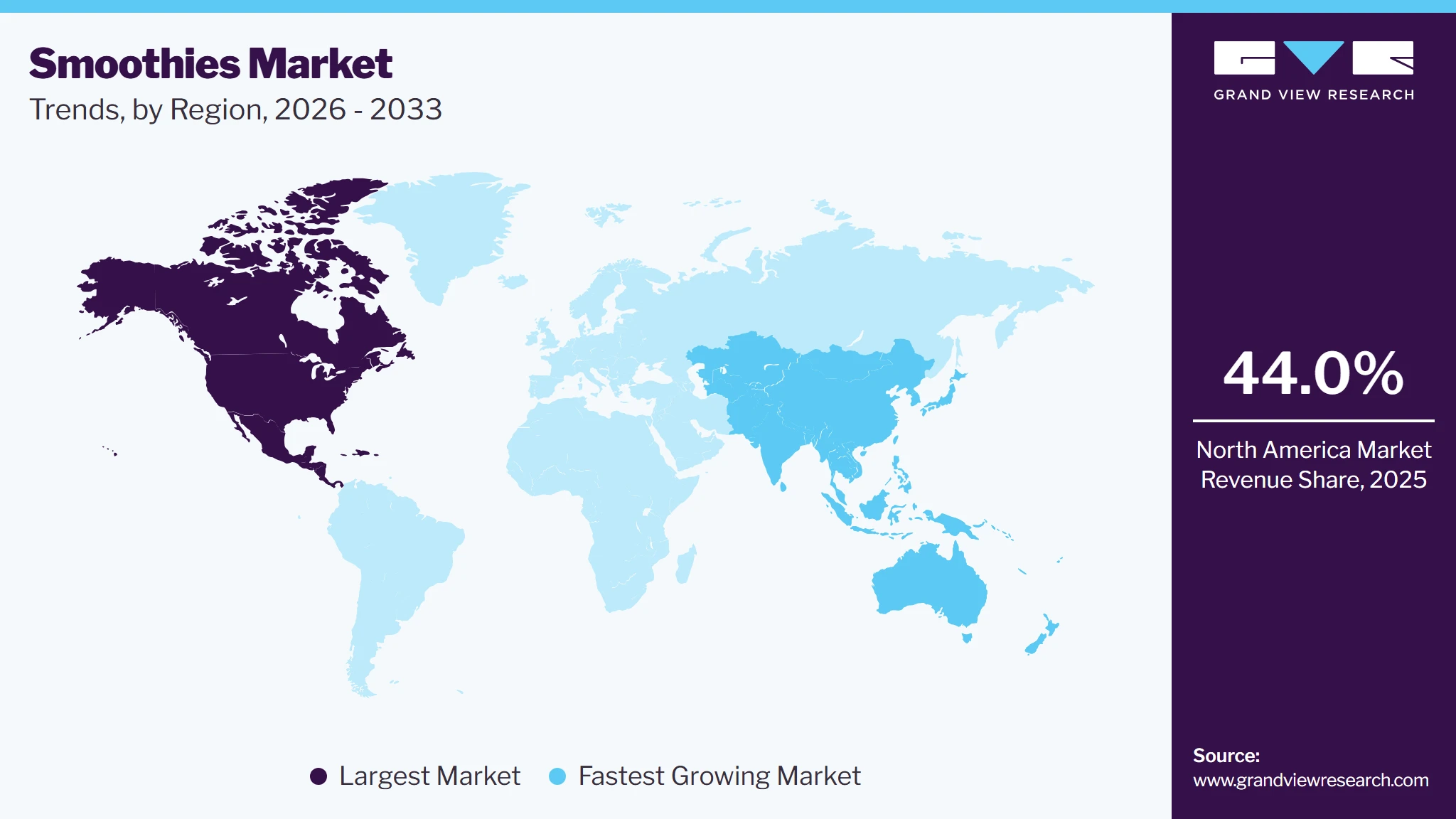
North America dominated the smoothie market with the largest revenue share of 44.0% in 2025. The increasing popularity of healthy beverages in North America is significantly contributing to this growth. Smoothies, which are typically blended concoctions of fruits, vegetables, nuts, and dairy products, are often included in health-conscious diets, contributing to their popularity among consumers. Moreover, the shift in lifestyle choices toward healthier food options, driven by growing health awareness among consumers, is fueling the market's expansion. The smoothie market in the U.S. held the largest share in the North America region in 2025.
 To learn more about this report, Download Free Sample Report
Asia Pacific is expected to grow at a CAGR of 12.3% from 2024 to 2033. The influence of Western dietary patterns and the popularity of fitness and wellness trends are driving the regional popularity and consumption of smoothies. The consumption of fruit-based smoothies has experienced a significant surge in popularity across Asia Pacific in recent years. This trend can be attributed to various factors that appeal to the diverse preferences and health-conscious mindset of the population. One key factor driving the high consumption of fruit-based smoothies in Asia Pacific is the growing awareness of health and wellness. As people become more conscious of their lifestyles and dietary choices, there is an increasing inclination toward nutritious and wholesome options.
Key Companies & Market Share Insights
The global smoothie market exhibits high fragmentation, attributed to significant regional and domestic players across various countries. Leading companies employ key strategies, including mergers, expansions, acquisitions, partnerships, and product development, to enhance brand visibility among consumers.
Some of the key developments and strategic initiatives carried out by leading manufacturers are listed below:
-
In April 2023, Smoothie King strengthened its position as the country's premier Smoothie Bowl destination by introducing six enticing Smoothie Bowls at over 1,100 locations in the U.S. The Smoothie Bowls are a delicious combination of premium ingredients in attaining an active and balanced lifestyle. The Acai bowls include PB Swizzle, Berry Gogi Getaway, and Go-Go Goji Crunch, while the Pitaya bowls include Be Berry Stings, High Five, and PB Delight
-
In November 2022, Barfresh Food Group introduced a line of environmentally conscious 7.6oz Smoothie Cartons. Beyond its economic and ecological benefits, the ready-to-drink packaging was designed to yield higher profit margins compared to the company's earlier bottle format. Specifically tailored for schools, it is ideal for larger school districts and those without access to single-use plastics.
-
In November 2021, Bolthouse Farms partnered with two agencies to strengthen its marketing and communications initiatives. The Many was appointed as the advertising agency of record, while FINN Partners was selected as the Public Relations agency of record. This strategic move was geared toward strengthening the company's marketing and sales efforts, with a particular focus on beverages and functional mixes, including smoothies.
Key Smoothies Companies
The following key companies have been profiled for this study on the smoothies market.
-
Barfresh Food Group, Inc.
-
Bolthouse Farms
-
Ella’s Kitchen Ltd
-
innocent ltd
-
Jamba Juice LLC
-
Maui Wowi Hawaiian Coffees & Smoothies
-
Smoothie King
-
Suja Juice
-
Tropical Smoothie Café
-
The Smoothie Company
Competitive Benchmarking
Category
Operating Strategies
Competitive Edge
Weakness
Established Players (Bolthouse Farms; innocent ltd.; Jamba Juice LLC; Smoothie King; Suja Juice; Tropical Smoothie Café)
- Expand product portfolios with functional, organic, and clean-label smoothie offerings.
- Strengthen market presence through franchise expansion, retail distribution, and strategic partnerships.
- Strong brand recognition and established consumer trust across multiple regional and international markets.
- Large-scale manufacturing capabilities and well-developed distribution infrastructure enabling broad market reach.
- High operational and supply chain costs associated with large-scale production and distribution management.
- Slower adaptability to rapidly changing consumer preferences compared to smaller niche competitors.
Emerging Players (Barfresh Food Group, Inc.; Ella's Kitchen Ltd.; Maui Wowi Hawaiian Coffees & Smoothies; The Smoothie Company)
- Focus on niche offerings such as ready-to-blend, organic, and premium smoothie products.
- Expand brand visibility through foodservice partnerships and regional market expansion.
- Ability to quickly respond to evolving consumer preferences and emerging market trends.
- Greater flexibility in product innovation and customization compared to larger competitors.
- Limited financial resources and lower brand visibility relative to established market leaders.
- Restricted distribution networks and smaller production capacities, limiting market penetration.
Smoothies Market Report Scope
Report Attribute
Details
Market size value in 2025
USD 14.7 billion
Estimated market size in 2026
USD 16.1 billion
Projected market size by 2033
USD 30.9 billion
Growth rate
CAGR of 9.8% from 2026 to 2033
Base year for estimation
2025
Historical data
2021 - 2024
Forecast period
2026 - 2033
Quantitative units
Revenue in USD million/billion and CAGR from 2026 to 2033
Report coverage
Revenue forecast, company ranking, competitive landscape, growth factors, and trends
Segments covered
Product, distribution channel, region
Regional scope
North America; Europe; Asia Pacific; Central & South America and Middle East & Africa.
Country scope
U.S.; Canada; Mexico; Germany; France; UK; Russia; Italy; China; Japan; India; Australia; Brazil; Argentina, Saudi Arabia and South Africa
Key companies profiled
Barfresh Food Group, Inc.; Bolthouse Farms; Ella’s Kitchen Ltd.; innocent ltd.; Jamba Juice LLC; Maui Wowi Hawaiian Coffees & Smoothies; Smoothie King; Suja Juice; Tropical Smoothie Café; The Smoothie Company
Customization scope
Free report customization (equivalent up to 8 analysts' working days) with purchase. Addition or alteration to country, regional & segment scope.
Pricing and purchase options
Avail customized purchase options to meet your exact research needs. Explore purchase options
Global Smoothies Market Report Segmentation
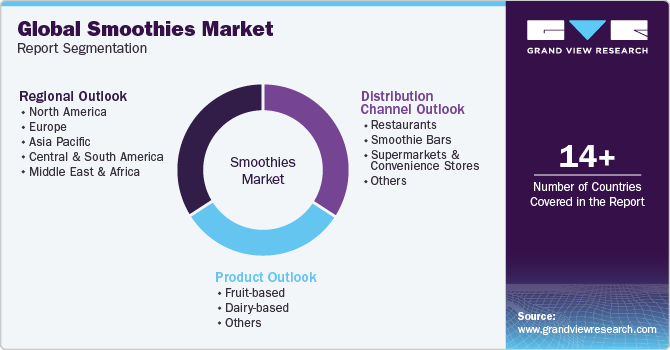
This report forecasts growth at global, regional, and country levels and provides an analysis of the latest industry trends in each of the sub-segment from 2021 to 2033. For this study, Grand View Research has segmented the global smoothies market report based on product, distribution channel, and region:
 To learn more about this report, Download Free Sample Report
-
Product Outlook (Revenue, USD Million, 2021 - 2033)
-
Fruit-based
-
Dairy-based
-
Others
-
-
Distribution Channel Outlook (Revenue, USD Million, 2021 - 2033)
-
Restaurants
-
Smoothie Bars
-
Supermarkets & Convenience Stores
-
Others
-
-
Regional Outlook (Revenue, USD Million, 2021 - 2033)
-
North America
-
U.S.
-
Canada
-
Mexico
-
-
Europe
-
UK
-
Germany
-
Italy
-
France
-
Russia
-
-
Asia Pacific
-
China
-
Japan
-
India
-
Australia
-
-
Central & South America
-
Brazil
-
Argentina
-
-
Middle East & Africa
-
South Africa
-
Saudi Arabia
-
-
Research Methodology
The smoothies market figures in this report are based on a proven research process that combines executive interviews with secondary research from proprietary databases, company filings, and recognized regulatory and institutional sources. Market size is built through value-chain sizing - reconciling supply-side and demand-side estimates - and triangulated with bottom-up and top-down approaches. Every estimate passes multiple levels of expert validation before publication, with each smoothies segment quantified using the revenue-capture definitions in the table below.
Segment Definition
Segment - Product
Revenue capture definition
Fruit-based
This segment includes the sales of smoothies made primarily from fruits such as banana, mango, strawberries, blueberries, apple, and mixed berries, delivering natural flavor and nutritional value.
Dairy-based
This segment includes the sales of smoothies prepared with dairy ingredients such as milk, yogurt, kefir, and cream, offering a rich texture along with protein and calcium.
Others
This segment includes the sales of smoothies formulated with plant-based milk, vegetables, protein blends, seeds, oats, and other functional ingredients to address diverse consumer preferences.
Estimation Model
No.
Layer
Key Question
Description
01
Target Consumer Layer
Who are the potential smoothie consumers?
Identify health-conscious individuals, fitness enthusiasts, working professionals, students, and consumers seeking convenient, nutrient-rich beverage options.
02
Market Accessibility Layer
Who can readily access smoothie products?
Evaluate retail presence across supermarkets, cafés, quick-service restaurants, juice bars, convenience stores, and online delivery platforms to estimate the addressable consumer base.
03
Consumption Layer
Who actively purchases smoothies?
Estimate active buyers based on health awareness, lifestyle preferences, flavor demand, meal replacement trends, and frequency of smoothie consumption.
04
Revenue Generation Layer
How is market revenue estimated?
Multiply the active consumer base by average annual spending across fresh, packaged, and functional smoothie products to estimate total market revenue.
Delivered Customizations
This report has been delivered with the following In-depth customizations
Client Request
Customization Delivered
Value Adds
Cross-Segmentation Analysis for Smoothies Products Across Distribution Channels
Detailed assessment of smoothie products across fruit-based, dairy-based, and other categories, evaluated through restaurants, smoothie bars, supermarkets & convenience stores, and other distribution channels.
Identifies high-growth product-channel combinations, supports portfolio optimization, and highlights evolving consumer purchasing preferences and distribution opportunities.
Value Chain Analysis
Comprehensive evaluation of the smoothie value chain covering ingredient sourcing, manufacturing, processing, packaging, cold chain logistics, distribution, retail operations, and end-user consumption. Analysis assesses operational efficiencies, cost structures, supply chain integration, and key value creation points.
Supports supply chain optimization, improves operational efficiency, identifies cost-saving opportunities, strengthens distribution strategies, and enhances market competitiveness through effective value chain management.
Company Share Analysis
Detailed assessment of key market participants, including market share, product portfolio strength, distribution network, manufacturing capabilities, and competitive positioning within the smoothie market.
Enables competitive benchmarking, identifies market leaders, supports strategic planning, and provides insights for market positioning and expansion decisions.
Frequently Asked Questions About This Report
The smoothies market has experienced significant growth in recent years, driven by increasing consumer awareness of health and wellness. As people become more conscious of their dietary choices, the demand for nutritious and convenient food and beverage options has risen.
The global smoothies market size was valued at USD 14.7 billion in 2025 and is estimated at USD 16.1 billion for 2026.
The global smoothies market is expected to grow at a CAGR of 9.8% from 2026 to 2033, reaching USD 30.9 billion by 2033.
Asia Pacific is the fastest growing regional market.
Fruit-based segment led the smoothie market with a 50.5% share in 2025, while dairy based is the fastest growing segment.
Smoothie bars segment led the market with the largest revenue share of 45.1% in 2025.
North America market dominated the market, accounting for a revenue share of 44.0% in 2025.
Key players include Barfresh Food Group, Inc.; Bolthouse Farms; Ella’s Kitchen Ltd.; innocent ltd.; Jamba Juice LLC; Maui Wowi Hawaiian Coffees & Smoothies; Smoothie King; Suja Juice; Tropical Smoothie Café; The Smoothie Company
About the Author(s)
Consumer F&B Research Team
Consumer Goods · Consumer F&BThis report was authored by the consumer f&b research team at Grand View Research - comprising two research analysts, one senior research analyst, and one industry expert - with specialized expertise in the consumer f&b segment of the consumer goods industry. All findings are based on proprietary consumer goods databases, executive interviews, and regulatory analysis, subject to internal peer review prior to publication.
Last Updated:
Speak to Analyst

Customize this report to your needs - add regions, segments, or data points, with 20% free customization.
Or view our licence options:


ISO 9001:2015 & 27001:2022 Certified
We are GDPR and CCPA compliant! Your transaction & personal information is safe and secure. For more details, please read our privacy policy.


