South Africa Traditional & Complementary Medicine Market Summary
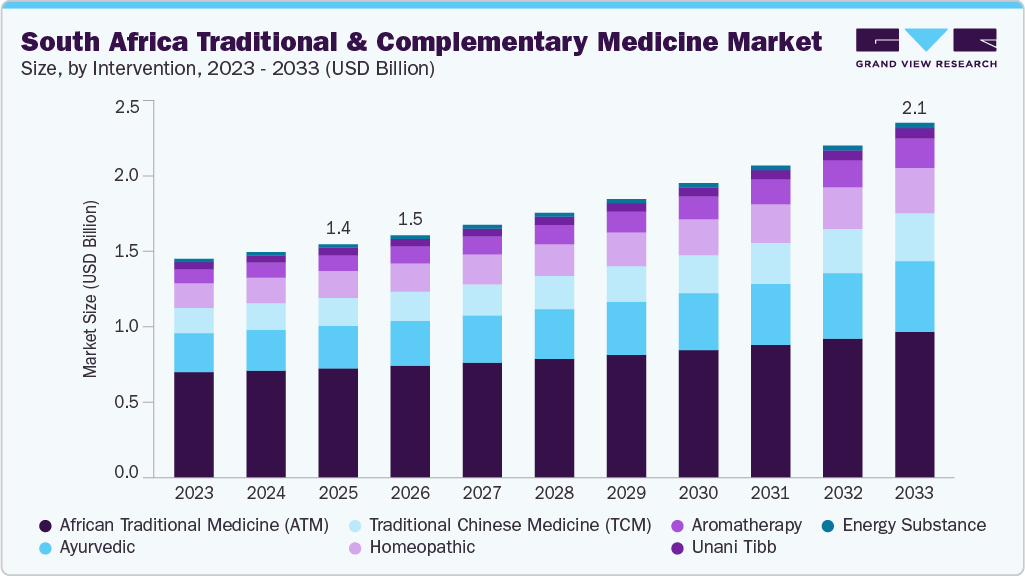
The South Africa traditional & complementary medicine market size was estimated at USD 1.40 billion in 2025 and is projected to reach USD 2.13 billion by 2033, growing at a CAGR of 5.6% from 2026 to 2033. The market represents a mature, system-driven healthcare segment characterized by widespread underlying usage and a controlled degree of monetization.
One of the primary drivers of the South African traditional and complementary medicinal products market is the growing consumer preference for natural, plant-based healthcare solutions. Consumers are increasingly shifting away from synthetic pharmaceuticals toward botanical products perceived as safer and more sustainable. This trend has fueled strong demand for herbal supplements, botanical extracts, and nutraceuticals across the country.
Demand for natural health products is substantial, as complementary and traditional medicine remains deeply embedded in the country’s healthcare practices. Industry estimates suggest that a significant proportion of South African consumers regularly use natural health products, including herbal remedies, sports supplements, and homeopathic medicines, while traditional African medicinal practices are widely utilized for primary healthcare management. This cultural reliance on traditional medicine has supported the expansion of a formal commercial market for herbal supplements, botanical extracts, and wellness products.
Recent regulatory and industry developments have also contributed to market growth. In 2024, SAHPRA hosted stakeholder engagement programs to strengthen regulatory oversight and industry compliance for complementary medicines, highlighting the increasing formalization of the sector. In addition, the government and regulatory agencies launched initiatives to strengthen medicine quality and safety systems, including the 2025 National Action Plan addressing substandard and falsified medical products, which aims to improve supply chain transparency and regulatory monitoring across pharmaceutical and complementary medicine markets. These regulatory developments are expected to increase consumer confidence and encourage greater industry participation.
The market is also witnessing innovation in plant-based nutraceuticals and wellness products targeting immunity, digestive health, and stress management. Increasing consumer awareness of holistic health and lifestyle diseases has encouraged manufacturers to expand product portfolios with herbal formulations, functional supplements, and plant-derived extracts. As a result, the industry is transitioning from an informal herbal trade to a regulated wellness market characterized by product standardization, improved pharmacovigilance, and growing integration with modern healthcare systems.
Technological innovation in herbal extraction and supply chain traceability is another emerging trend influencing the market. Manufacturers are increasingly adopting advanced extraction technologies-such as supercritical fluid extraction and standardized botanical processing to improve the potency, purity, and consistency of herbal ingredients used in complementary medicinal products. In addition, suppliers are implementing digital traceability tools such as QR-coded packaging and blockchain-enabled supply chain systems to enhance transparency and authenticity verification for herbal products. These innovations help companies meet stringent international quality standards and improve consumer trust in botanical medicines.
Market Concentration & Characteristics
The degree of innovation in the South Africa traditional & complementary medicine industry is moderate to high, driven by increasing consumer demand for plant-based healthcare products and the commercialization of indigenous medicinal plants. Innovation in this market is primarily focused on standardized botanical formulations, plant-derived nutraceuticals, and convenient dosage forms such as gummies, herbal syrups, and capsules. Recent product launches illustrate the growing innovation across the sector. In 2025, wellness companies introduced herbal cough and cold remedies containing ivy leaf and elderberry extracts, which were marketed as natural alternatives to conventional respiratory medicines.
The South Africa traditional & complementary medicine industry is characterized by a moderate level of merger and acquisition (M&A) activity. Strategic collaborations, investments in botanical supply chains, and product portfolio expansions are shaping competitive dynamics in the South African complementary medicine market. Companies are increasingly focusing on partnerships with botanical ingredient suppliers, research institutions, and local farming communities to secure sustainable sources of medicinal plants and expand their product offerings. For example, in 2025, botanical ingredient companies expanded sourcing and processing operations for indigenous medicinal plants such as Devil’s Claw and rooibos, which are widely used in anti-inflammatory and wellness formulations
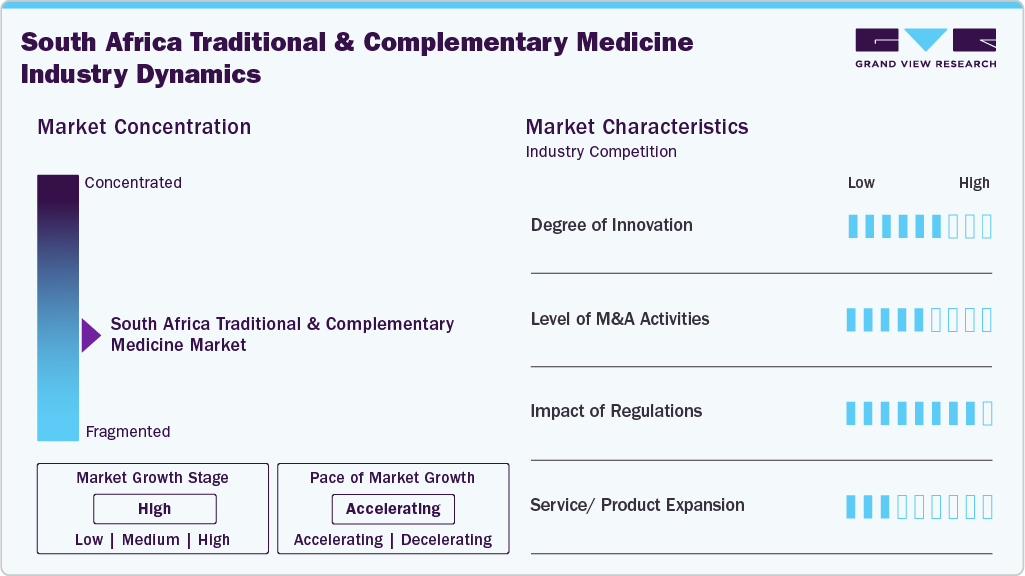
The regulatory environment for TCM in South Africa remains fragmented and evolving. The implementation of stricter regulatory requirements has gradually formalized the industry and encouraged the transition from informal herbal medicine trade toward a regulated nutraceutical and wellness sector. In 2024, SAHPRA conducted stakeholder engagement workshops with industry participants to strengthen regulatory compliance and clarify requirements for complementary medicine registration.
Substitute products in the TCM market include conventional pharmaceutical drugs, over-the-counter (OTC) medicines, and functional food products. Despite the availability of these substitutes, the strong cultural acceptance of traditional medicine and the increasing consumer preference for natural health solutions continue to support the demand for complementary medicinal products in South Africa.
Intervention Insights
The African traditional alternative medicine (ATM) segment dominated the market with a share of 46.93% in 2025. The demand for ATM is driven by increasing consumer preference for natural, culturally aligned remedies to address chronic conditions such as diabetes, hypertension, and HIV/AIDS. This trend is further supported by the growing integration of traditional and modern medicine in healthcare practices. Popular ATM products, such as Muti and Imbawula, are consistently used across various demographics, positioning ATM as a core alternative for self-care and wellness. The market continues to benefit from a preference for accessible, cost-effective solutions outside the formal healthcare system, especially in underserved regions.
The ATM segment is further categorized into herbal preparations (roots, barks, powders), polyherbal decoctions & traditional mixtures, topical remedies (salves, oils), and others (e.g., functional wellness tonics). Herbal Preparations subsegment is witnessing growing demand as consumers increasingly turn to natural remedies for chronic conditions like digestive issues, respiratory health, and immune system support. Herbs such as Moringa and Devil’s Claw are highly popular, with Moringa being used for its anti-inflammatory properties and Devil’s Claw for its pain relief benefits. These preparations are viewed as affordable and effective alternatives to pharmaceutical solutions, particularly in rural areas with limited access to conventional healthcare. The demand for plant-based remedies is also rising in urban communities, where consumers are seeking holistic, preventative care aligned with natural wellness trends.
Traditional Chinese medicine (TCM) segment is expected to grow at the fastest rate over the forecast period. TCM’s popularity has surged, particularly for chronic conditions such as arthritis, digestive issues, and stress-related disorders, where conventional treatments often have limited efficacy. The approach of preventive care and the use of therapies like acupuncture, herbal remedies, and moxibustion are appealing to consumers seeking non-invasive, natural alternatives. In addition, the growing interest in integrative health practices, which combine Eastern and Western medicine, is boosting TCM’s adoption. Cultural acceptance is also expanding, with increasing numbers of South Africans incorporating TCM practices into their routine healthcare, especially in urban areas with higher exposure to global wellness trends.
Classical Herbal Formulas (Granules, Powders) subsegment within the Traditional Chinese Medicine (TCM) market in South Africa is seeing growing consumer interest, driven by the convenience and efficiency of these formats. Granules and powders are increasingly favored for their ability to treat a wide range of conditions, including digestive disorders, stress, and immune system support. Products featuring herbs like Ginseng, Astragalus, and Licorice are particularly popular due to their proven effectiveness in boosting vitality, enhancing energy levels, and supporting overall well-being. As consumers seek more natural and efficient healthcare solutions, these herbal preparations align with modern wellness trends focused on preventative care and holistic health.
Distribution Method Insights
The direct sales segment dominated the market with a share of 55.17% in 2025. The dominance of this segment can be attributed to the strong role of practitioner-led recommendations, wellness consultants, and multi-level marketing networks in the distribution of herbal supplements and nutraceutical products. Direct selling enables companies to educate consumers on product benefits, build trust in natural remedies, and provide personalized health guidance, which is particularly important for complementary medicines that rely heavily on consumer awareness and practitioner endorsement.
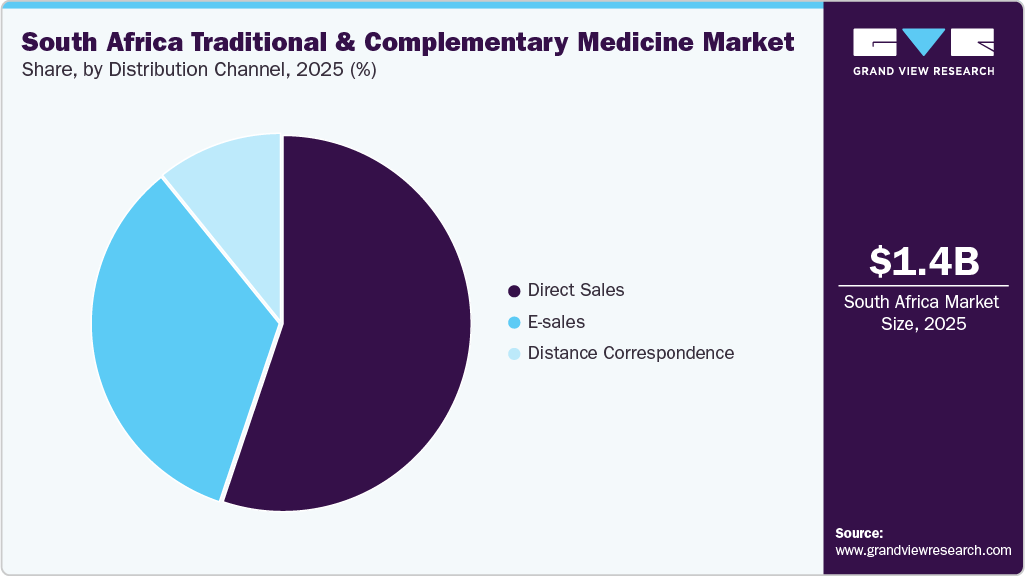
The e-sales segment is expected to grow at the fastest CAGR over the forecast period, driven by increasing digitalization of retail channels, rising internet penetration, and growing consumer preference for convenient purchasing options. Online platforms allow consumers to access a wide variety of herbal supplements, nutraceutical products, and natural wellness remedies without geographic limitations, significantly expanding market reach for manufacturers. In addition, digital wellness trends such as personalized nutrition and telehealth-enabled supplement recommendations are supporting the growth of e-sales. Online health assessments and virtual consultations are increasingly being integrated with supplement purchasing platforms, allowing consumers to access tailored herbal and nutraceutical formulations. These developments are expected to significantly accelerate the growth of online distribution in the complementary medicinal products market.
Key South Africa Traditional & Complementary Medicine Company Insights
The South Africa market is moderately fragmented, with the presence of multinational nutraceutical companies, regional supplement manufacturers, and local botanical ingredient suppliers. Major companies operating in the market leverage extensive distribution networks, including direct sales, retail pharmacies, and online platforms, to strengthen their market presence. Local producers are investing in sustainable sourcing, extraction technologies, and value-added herbal formulations to compete with global nutraceutical brands.
Key South Africa Traditional & Complementary Medicine Companies:
- Vital Health Foods
- Phytomed Herbal Supplements
- Herbal Solutions
- APDOC Health & Herb Pharmaceuticals
- Wings Herbal Synergy
- Sabinsa Corporation
- CorVia Vitality
- Natural Herbs Centre
- Herbal Balance
- Western Herbal Medicine Group
South Africa Traditional & Complementary Medicine Market Report Scope
|
Report Attribute
|
Details
|
|
Market size in 2026
|
USD 1.46 billion
|
|
Revenue forecast in 2033
|
USD 2.13 billion
|
|
Growth rate
|
CAGR 5.6% from 2026 to 2033
|
|
Historical data
|
2021 - 2025
|
|
Forecast period
|
2026 - 2033
|
|
Quantitative units
|
Revenue in USD million/billion and CAGR from 2026 to 2033
|
|
Report coverage
|
Revenue forecast, company ranking, competitive landscape, growth factors, trends
|
|
Segments covered
|
Intervention, distribution method
|
|
Key company profiled
|
Vital Health Foods; Phytomed Herbal Supplements; Herbal Solutions; APDOC Health & Herb Pharmaceuticals; Wings Herbal Synergy; Sabinsa Corporation; CorVia Vitality; Natural Herbs Centre; Herbal Balance; Western Herbal Medicine Group
|
|
Customization scope
|
Free report customization (equivalent up to 8 analysts working days) with purchase. Addition or alteration to country, regional & segment scope.
|
|
Pricing and purchase options
|
Avail customized purchase options to meet your exact research needs. Explore purchase options
|
South Africa Traditional & Complementary Medicine Market Report Segmentation
This report forecasts revenue growth at the country level and provides an analysis of the industry trends in each of the sub-segments from 2021 to 2033. For this study, Grand View Research has segmented the South Africa Traditional & Complementary Medicine Market report based on intervention and distribution method:
-
Intervention Outlook (Revenue, USD Million, 2021 - 2033)
-
Distribution Method Outlook (Revenue, USD Million, 2021 - 2033)
-
Direct Sales
-
E-sales
-
Distance Correspondence

 Download Sample Report
















