
- Home
- »
- Consumer F&B
- »
-
Sparkling Coffee Market Size And Share Report, 2026-2033GVR Report cover
![Sparkling Coffee Market (2026 - 2033)Report]()
Sparkling Coffee Market (2026 - 2033)
Size, Share, And Trends Analysis Report By Product (Caffeinated, Decaffeinated), By Distribution Channel (Hypermarket & Supermarket, Convenience Stores, Online), By Region, And Segment Forecasts
Market Size, 2025
$959.8MMarket Estimate, 2026
$1,085.0MMarket Forecast, 2033
$2,578.9MCAGR, 2026–2033
13.2%Sparkling Coffee Market Summary
The global sparkling coffee market size was valued at USD 959.8 million in 2025 and is projected to grow from USD 1,085.0 million in 2026 to USD 2,578.9 million by 2033, at a CAGR of 13.2% from 2026 to 2033. The North America held the largest share of 37.5% of the global market in 2025. The growing popularity of coffee culture, especially among younger generations and urban dwellers, has significantly increased consumption.

Key Market Trends & Insights
- By product: Caffeinated sparkling coffee segment held the largest market share of 81.8%% in 2025.
- By distribution channel: Convenience stores segment held the largest market share of 27.2%% in 2025.
Regional Highlights
- Largest regional market: North America (37.5%% revenue share, 2025)
- Fastest-growing regional market: Asia Pacific (highest CAGR, 2026-2033)
- By country: The U.S. held the largest market share in 2025
Market Size & Forecast
- Market size in 2025: USD 959.8 Million
- Estimated market size in 2026: USD 1,085.0 Million
- Projected market size by 2033: USD 2,578.9 Million
- CAGR (2026-2033): 13.2%
As consumers view coffee not just as a functional beverage but as part of their daily ritual or social experience, demand has surged across various formats, including ready-to-drink (RTD) options. Additionally, growing health consciousness has led to a preference for natural sources of caffeine, like coffee, over traditional sugary sodas and energy drinks.The demand for sparkling coffee, a newer innovation in the coffee beverage market, is being driven by several trends. Consumers, particularly millennials and Gen Z, are increasingly seeking novel and refreshing beverage experiences. Sparkling coffee offers a unique combination of the energy boost from caffeine with the refreshing qualities of carbonation, positioning it as an attractive alternative to traditional sodas and energy drinks. This product innovation appeals to younger, health-conscious consumers who prefer drinks that combine convenience with lower sugar and calorie content.

Sparkling coffee is also benefiting from the broader trend of functional beverages. Many consumers are gravitating toward products that not only provide energy but also offer additional benefits, such as being low in sugar and containing natural ingredients. As sparkling coffee often positions itself as a healthier alternative to sugary soft drinks, it meets the growing consumer demand for drinks that are both enjoyable and functional.
Moreover, the convenience factor is also playing a crucial role in driving the demand for caffeinated coffee. As more consumers lead busy, on-the-go lifestyles, the preference for ready-to-drink coffee beverages, which offer quick caffeine access, has grown. The availability of coffee in various formats, such as cold brew, bottled, and instant coffees, is expanding its reach to diverse demographics, further fueling market growth. For instance, in December 2024, emart24 and ZUS Coffee partnered to launch K-FIZZ, a line of sparkling RTD coffees using ZUS’s COFFIZZ base in three flavors: Lemon, Lemon Strawberry, and Strawberry Aloe Vera. Emart24 is also introducing a Kunafa-inspired Pistachio Fudge Sundae in chocolate and vanilla, and a Dalgona Honeycomb Latte timed with the release of Netflix’s Squid Game 2.
Consumer Insights
Modern consumers are increasingly attracted to RTD beverages due to their ease of consumption, offering a quick, portable option that fits seamlessly into busy lifestyles. Sparkling coffee, in particular, offers an intriguing combination of carbonation and coffee flavors, making it a refreshing, light alternative to traditional coffee. This trend is part of a broader movement in which coffee culture is evolving beyond traditional formats, with consumers seeking new experiences that blend convenience with quality.

The rise of flavored, carbonated, and functional coffee drinks has been driven by younger generations, such as millennials and Gen Z, who are more likely to experiment with new and unconventional flavors. These consumers are seeking beverages that not only provide caffeine but also offer additional sensory experiences and align with their health-conscious and on-the-go lifestyles. As a result, beverages like sparkling coffee, which blend the energizing effects of coffee with the refreshing qualities of carbonated drinks, are gaining traction in the market.
Global coffee consumption has shown a steady increase over the past decade, with consistent demand in traditional consumer markets such as Europe and North America, alongside a growing upward trend in emerging markets across Asia and Africa.

This growth is further bolstered by the access these markets have to local coffee production and the investments being made in manufacturing facilities. This presents an opportunity the develop and expand both local consumption and export-oriented value-added coffee products, including finished goods such as sparkling coffee. Sparkling coffee, with its unique fusion of carbonation and coffee flavors, could serve as a gateway for introducing more innovative coffee experiences to these markets, where demand for new and novel beverage formats is rising. This evolution is driven by consumers' desire for variety and new taste experiences. Sparkling coffee is a prime example of this innovation, offering a fresh take on a familiar beverage by blending the fizziness of carbonated drinks with the robust aroma and flavor profile of coffee.
Additionally, coffee drinkers are increasingly seeking customization in their beverages, opting for drinks that reflect their individual tastes, preferences, and dietary needs. Flavored variants, such as vanilla, caramel, or citrus-infused sparkling coffee, allow brands to cater to a broader audience by offering more than just traditional black coffee, thereby attracting a wider consumer base. This customization trend is closely tied to the broader consumer demand for personalized and health-conscious choices.
Product Insights
Caffeinated sparkling coffee accounted for a dominant share of 81.8% of the global revenue in 2025, owing to the growing demand for unique, functional beverages that offer both refreshment and an energy boost. Caffeinated coffee provides the well-known benefits of increased alertness, improved focus, and enhanced physical performance, making it a popular choice for consumers seeking an energizing drink. The sparkling twist offers a refreshing, lighter alternative to traditional coffee, appealing to those who want the benefits of caffeine without the heaviness of regular coffee. As consumers continue to prioritize convenience and healthier options, this innovative beverage offers a perfect balance of taste and functionality, fueling its popularity.

Decaffeinated sparkling coffee is expected to grow at a CAGR of 13.6% from 2026 to 2033. The market for decaffeinated sparkling coffee is rising as consumers increasingly seek the taste and benefits of coffee without the stimulating effects of caffeine. Decaffeinated coffee offers many of the same antioxidants and health benefits as its caffeinated counterpart, including improved metabolism and a reduced risk of certain diseases. With growing awareness of the need to reduce caffeine intake, especially in the evening, decaffeinated sparkling coffee provides a refreshing, flavorful alternative, offering the enjoyment of coffee’s complex flavors and health benefits while supporting a more balanced lifestyle.
Distribution Channel Insights
Sales of sparkling coffee through convenience stores accounted for a revenue share of 27.2% in 2025. The market for sparkling coffee is gaining momentum in convenience stores as consumers increasingly demand ready-to‑drink beverages that combine coffee’s energy boost with the convenience of a grab‑and‑go format. As health consciousness grows and many people look to reduce sugary sodas and energy drinks, sparkling coffee offers a refreshing, caffeinated alternative, often with lower sugar or more natural formulations, making it attractive to younger and urban consumers. At the same time, convenience‑store footprints continue to evolve, with more emphasis on beverages and on-the-go consumption, which helps increase visibility, accessibility, and impulse purchases of sparkling‑coffee drinks.
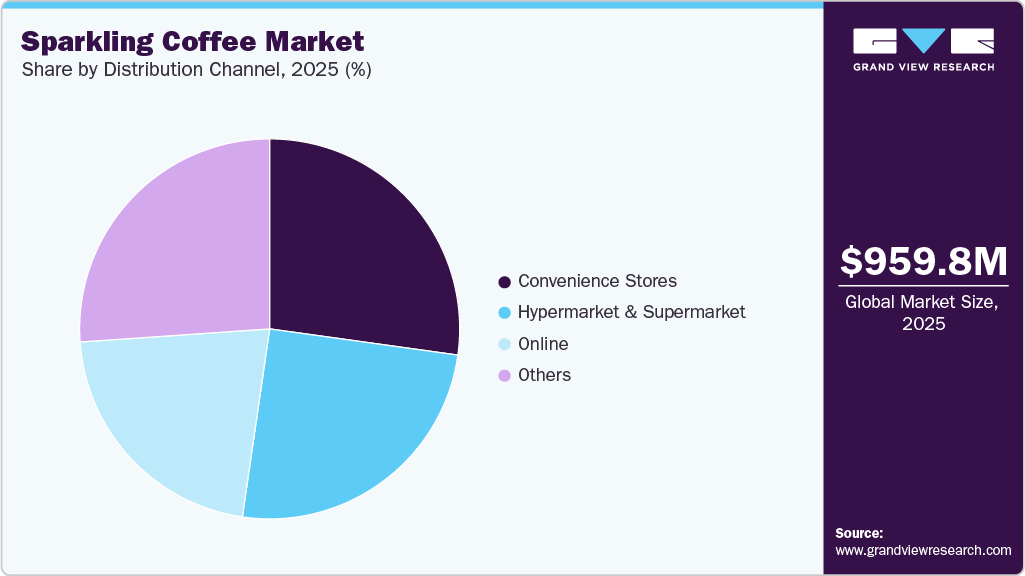
Sales of sparkling coffee through online channels are expected to grow at a CAGR of 14.2% from 2026 to 2033. The market for sparkling coffee is gaining strong momentum through online channels because e‑commerce lowers access barriers, and consumers can conveniently discover and order niche, premium, or newly launched sparkling‑coffee products that are often not available in supermarkets or conventional cafés. Moreover, the ready‑to‑drink format aligns with busy, on‑the‑go lifestyles, and online retail combined with subscription and D2C models enhances convenience and repeat purchases, fueling demand growth.
Regional Insights
North America made the largest contribution to the market in 2025, with 37.5% of the revenue share. The rise of sparkling coffee in North America reflects more than just existing coffee habits it taps into a broader shift where consumers want the familiar energy kick of coffee fused with the sensory appeal of a fizzy, sparkling drink. In a region where plain carbonated soft drinks and energy drinks are losing favor due to health and sugar concerns, sparkling coffee offers a middle path: a caffeinated beverage that feels more premium and contemporary than soft drinks, but still delivers the functional boost coffee drinkers expect.

U.S. Sparkling Coffee Market Trends
The sparkling coffee market in the U.S. is projected to grow at a CAGR of 12.7% from 2026 to 2033. Americans are increasingly consuming sparkling coffee as it blends two fast-growing preferences in the U.S. beverage landscape: functional caffeine and refreshing, low-calorie drinks. Consumers who are shifting away from sugary sodas and heavy lattes are drawn to sparkling coffee because it offers a crisp, light, and energizing alternative without compromising on flavor or caffeine content. The rise of on-the-go lifestyles, demand for clean-label ingredients, and growing experimentation with RTD craft beverages have accelerated adoption, especially among Millennials and Gen Z.
Europe Sparkling Coffee Market Trends
The sparkling coffee market in Europe is projected to grow at a CAGR of 13.4% from 2026 to 2033. The market for sparkling coffee in Europe is rising as consumers are increasingly gravitating toward ready‑to‑drink (RTD) coffee formats driven by fast‑paced urban lifestyles, convenience, and evolving taste preferences. A growing share of European coffee drinkers, especially among millennials and Gen Z, view RTD and sparkling coffee as a refreshing, portable alternative to traditional hot‑brew, combining caffeine with soda‑like refreshment, thus tapping into the broader shift toward indulgent and “on‑the‑go” beverage formats. At the same time, the broader European coffee market is shifting toward specialty, premium, and innovative format coffees, with consumers willing to pay more for novelty, variety, and convenience rather than just conventional ground or capsule coffee.
The sparkling coffee market in the UK led the European market and held the largest revenue share of 30.4% in 2025. In the UK, the sparkling coffee market is driven by a strong culture of premium and specialty beverages, where consumers actively seek artisanal and craft drink experiences. The shift away from sugary carbonated drinks has created openness to healthier, caffeine-based alternatives. A well-established café culture also encourages experimentation with new formats like sparkling coffee. Additionally, sustainability awareness influences choices, with buyers favoring eco-conscious brands and packaging.
Asia Pacific Sparkling Coffee Market Trends
The sparkling coffee market in the Asia Pacific is projected to grow at the fastest CAGR of 14.0% from 2026 to 2033, driven by the increasing consumer demand for healthier, refreshing alternatives to traditional sugary soft drinks. As urbanization and rising disposable incomes continue to shape consumer behaviors, ready-to-drink beverages, including sparkling coffee, are becoming more popular due to their convenience and portability. Furthermore, as health and wellness become increasingly important, consumers are shifting away from high-sugar options and toward functional drinks with lower sugar content.
The sparkling coffee market in China led the Asia Pacific market and held the largest revenue share of 30.4% in 2025. In China, rapid urbanization and exposure to global lifestyle trends are key drivers of sparkling coffee adoption. Younger consumers are highly influenced by social media and are drawn to visually appealing, novel beverages. The market benefits from a growing coffee culture in major cities, where Western-style drinks are seen as modern and aspirational. Demand is also supported by interest in convenient, ready-to-drink options suited to fast-paced urban life.
Central & South America Sparkling Coffee Market Trends
The sparkling coffee market in Central & South America is expected to grow at a CAGR of 12.3% during the forecast period. Across Central and South America, the presence of strong coffee-growing traditions supports familiarity with coffee, enabling easier acceptance of new formats like sparkling variants. Rising urban middle classes are exploring diversified consumption beyond traditional brewing methods. In warm climates, demand for refreshing, chilled beverages increases, making sparkling coffee an appealing cooling option. Local innovation and regional flavors further encourage consumer curiosity and trial.
Middle East & Africa Sparkling Coffee Market Trends
The sparkling coffee market in the Middle East & Africa is expected to grow at a CAGR of 12.7% during the forecast period. In the Middle East and Africa, a youthful population and increasing exposure to international food and beverage trends are key growth drivers. Expanding retail infrastructure and modern cafés introduce consumers to unconventional formats such as sparkling coffee. Climate conditions favor cold, refreshing drinks, boosting the relevance of carbonated coffee options. Additionally, a gradual shift toward lifestyle-oriented consumption supports demand for unique and premium beverage experiences.
Key Sparkling Coffee Company Insights
The sparkling coffee industry is highly fragmented, with the presence of several regional and global players. Companies, especially smaller brands, are connecting with consumers through storytelling around their hand-crafted products while positioning sparkling brewed beverages as refreshing alternatives to traditional sugary drinks. They are also incorporating new flavors and ingredients to attract a wider consumer base and encourage experimentation.
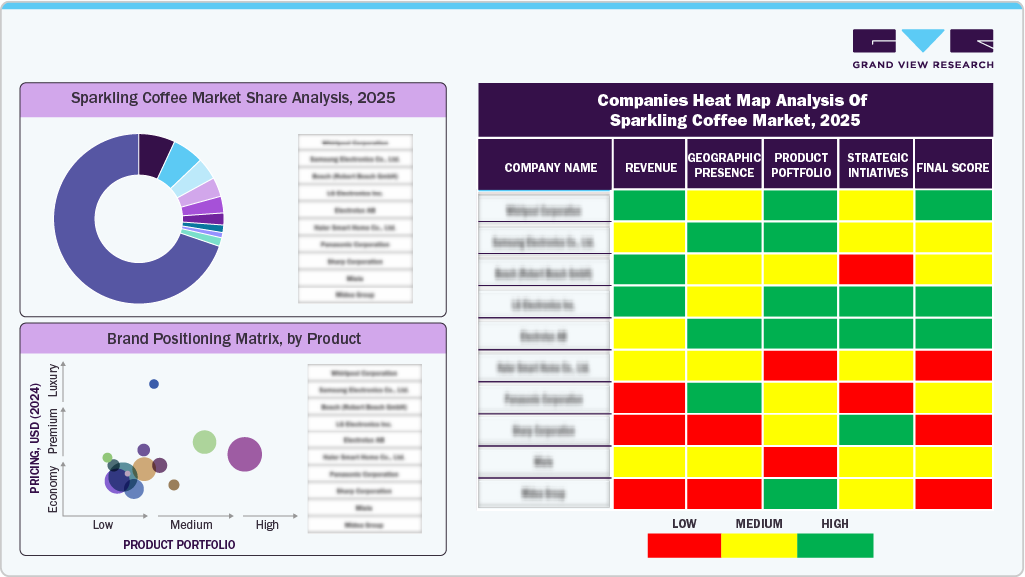
In addition, the sparkling coffee industry is witnessing increased experimentation in product formats and branding strategies to stand out in a competitive landscape. Companies are focusing on premium positioning, functional benefits, and unique flavor pairings to appeal to evolving consumer preferences. Collaborations with cafés and lifestyle brands are also helping improve visibility and trial. This continuous innovation is enabling brands to differentiate themselves while expanding their reach among younger, trend-driven consumers.
Key Sparkling Coffee Companies:
The following key companies have been profiled for this study on the sparkling coffee market.
- DrinkVIVIC
- MATCHLESS COFFEE SODA
- Keepers Sparkling Coffee
- Upruit
- Union Coffee
- Paulig
- Slingshot Coffee Co.
- Nongfu Spring
- Stumptown Coffee Roasters
- Manhattan Special
Recent Developments
-
In January 2025, Ginseng Up Corporation launched Bean Sparkling Coffee, a new low‑calorie sparkling coffee soda that combines brewed coffee with carbonation and natural ingredients to offer a lighter, more refreshing alternative to traditional ready‑to‑drink coffee or sugary sodas. It is positioned as a clean‑label beverage with fewer calories and less sugar, targeting consumers who want the flavor and caffeine of coffee in a fizzy, easy‑to‑drink format.
-
In February 2024, ZUS Coffee launched COFFIZZ, marketed as Malaysia’s first halal ready-to-drink canned sparkling coffee and the inaugural product under its new FMCG and lifestyle vertical, “ZUS Everywhere.” Positioned as a light, fizzy “coffee refresher” with soft-drink-like caffeine levels, COFFIZZ targets consumers seeking an easy-to-drink coffee alternative.
Sparkling Coffee Market Report Scope
Report Attribute
Details
Market size in 2025
USD 959.8 million
Estimated market size in 2026
USD 1,085.0 million
Projected market size by 2033
USD 2,578.9 million
Growth rate
CAGR of 13.2% from 2026 to 2033
Actual data
2021 - 2025
Forecast period
2026 - 2033
Quantitative units
Revenue in USD million and CAGR from 2026 to 2033
Report coverage
Revenue forecast, company ranking, competitive landscape, growth factors, and trends
Segments covered
Product, distribution channel, region
Regional scope
North America; Europe; Asia Pacific; Central & South America; Middle East & Africa
Country scope
U.S.; Canada; Mexico; Germany; UK; France; Italy; Spain: China; Japan; India; South Korea: Australia & New Zealand; Brazil; South Africa
Key companies profiled
DrinkVIVIC; MATCHLESS COFFEE SODA; Keepers Sparkling Coffee; Upruit; Union Coffee; Paulig; Slingshot Coffee Co.; Nongfu Spring; Stumptown Coffee Roasters; Manhattan Special
Customization scope
Free report customization (equivalent up to 8 analysts’ working days) with purchase. Addition or alteration to country, regional & segment scope.
Pricing and purchase options
Avail customized purchase options to meet your exact research needs. Explore purchase options
Global Sparkling Coffee Market Report Segmentation
This report forecasts revenue growth at global, regional & country levels and provides an analysis of the latest trends and opportunities in each of the sub-segment from 2021 to 2033. For this study, Grand View Research has segmented the global sparkling coffee market report on the basis of product, distribution channel, and region:

-
Product Outlook (Revenue, USD Million, 2021 - 2033)
-
Caffeinated
-
Decaffeinated
-
-
Distribution Channel Outlook (Revenue, USD Million, 2021 - 2033)
-
Hypermarket & Supermarket
-
Convenience Stores
-
Online
-
Others
-
-
Regional Outlook (Revenue, USD Million, 2021 - 2033)
-
North America
-
U.S.
-
Canada
-
Mexico
-
-
Europe
-
Germany
-
UK
-
France
-
Italy
-
Spain
-
-
Asia Pacific
-
China
-
Japan
-
India
-
South Korea
-
Australia & New Zealand
-
-
Central & South America
-
Brazil
-
-
Middle East & Africa
-
South Africa
-
-
Frequently Asked Questions About This Report
The global sparkling coffee market size was estimated at USD 959.8 million in 2025 and is expected to reach USD 1,085.0 million in 2026.
The global sparkling coffee market is expected to grow at a compound annual growth rate of 13.2% from 2026 to 2033 to reach USD 2,578.9 million by 2033.
Sales of sparkling coffee through convenience stores accounted for a revenue share of 27.2% in 2025. The market for sparkling coffee is gaining momentum in convenience stores as consumers increasingly demand ready-to‑drink beverages that combine coffee’s energy boost with the convenience of a grab‑and‑go format.
North America made the largest contribution to the market in 2025, with 37.5% of the revenue share. The rise of sparkling coffee in North America reflects more than just existing coffee habits it taps into a broader shift where consumers want the familiar energy kick of coffee fused with the sensory appeal of a fizzy, sparkling drink.
Caffeinated sparkling coffee accounted for a dominant share of 81.8% of the global revenue in 2025, owing to the growing demand for unique, functional beverages that offer both refreshment and an energy boost. Caffeinated coffee provides the well-known benefits of increased alertness, improved focus, and enhanced physical performance, making it a popular choice for consumers seeking an energizing drink.
Some key players operating in the sparkling coffee market include DrinkVIVIC, MATCHLESS COFFEE SODA, Keepers Sparkling Coffee, Upruit, Union Coffee, Paulig, Slingshot Coffee Co., Nongfu Spring, Stumptown Coffee Roasters, and Manhattan Special.
Key factors that are driving the sparkling coffee market include the rising demand for refreshing sparkling coffee products, along with the increasing demand for convenient, ready-to-drink beverages across the globe.
Asia Pacific is the fastest-growing region over the forecast period.
About the Author(s)
Consumer F&B Research Team
Consumer Goods · Consumer F&BThis report was authored by the consumer f&b research team at Grand View Research - comprising two research analysts, one senior research analyst, and one industry expert - with specialized expertise in the consumer f&b segment of the consumer goods industry. All findings are based on proprietary consumer goods databases, executive interviews, and regulatory analysis, subject to internal peer review prior to publication.
Last Updated:
Speak to Analyst

Need a Tailored Report?
Customize this report to your needs — add regions, segments, or data points, with 20% free customization.
Or view our licence options:


ISO 9001:2015 & 27001:2022 Certified
We are GDPR and CCPA compliant! Your transaction & personal information is safe and secure. For more details, please read our privacy policy.












