
- Home
- »
- Renewable Chemicals
- »
-
Sustainable Chemical Manufacturing Market Report, 2033GVR Report cover

Sustainable Chemical Manufacturing Market (2026 - 2033)
Size, Share & Trends Analysis Report By Technology (Carbon Management, Circular Chemical Manufacturing), By Feedstock (Co2, Green Hydrogen), By Product, By End-use, By Region, Forecasts
Market Size, 2025
$142.3BMarket Estimate, 2026
$156.0BMarket Forecast, 2033
$311.1BCAGR, 2026–2033
10.4%Sustainable Chemical Manufacturing Market Summary
The global sustainable chemical manufacturing market size was valued at USD 142.3 billion in 2025 and is projected to grow from USD 156.0 billion in 2026 to USD 311.1 billion by 2033, at a CAGR of 10.4% from 2026 to 2033. Asia Pacific dominated the market, accounting for the largest revenue share of 38.2% in 2025. The global market is driven by increasing adoption of renewable and recycled feedstocks, energy-efficient production technologies, carbon-reduction initiatives, and growing demand for sustainable chemicals across diverse end use industries.
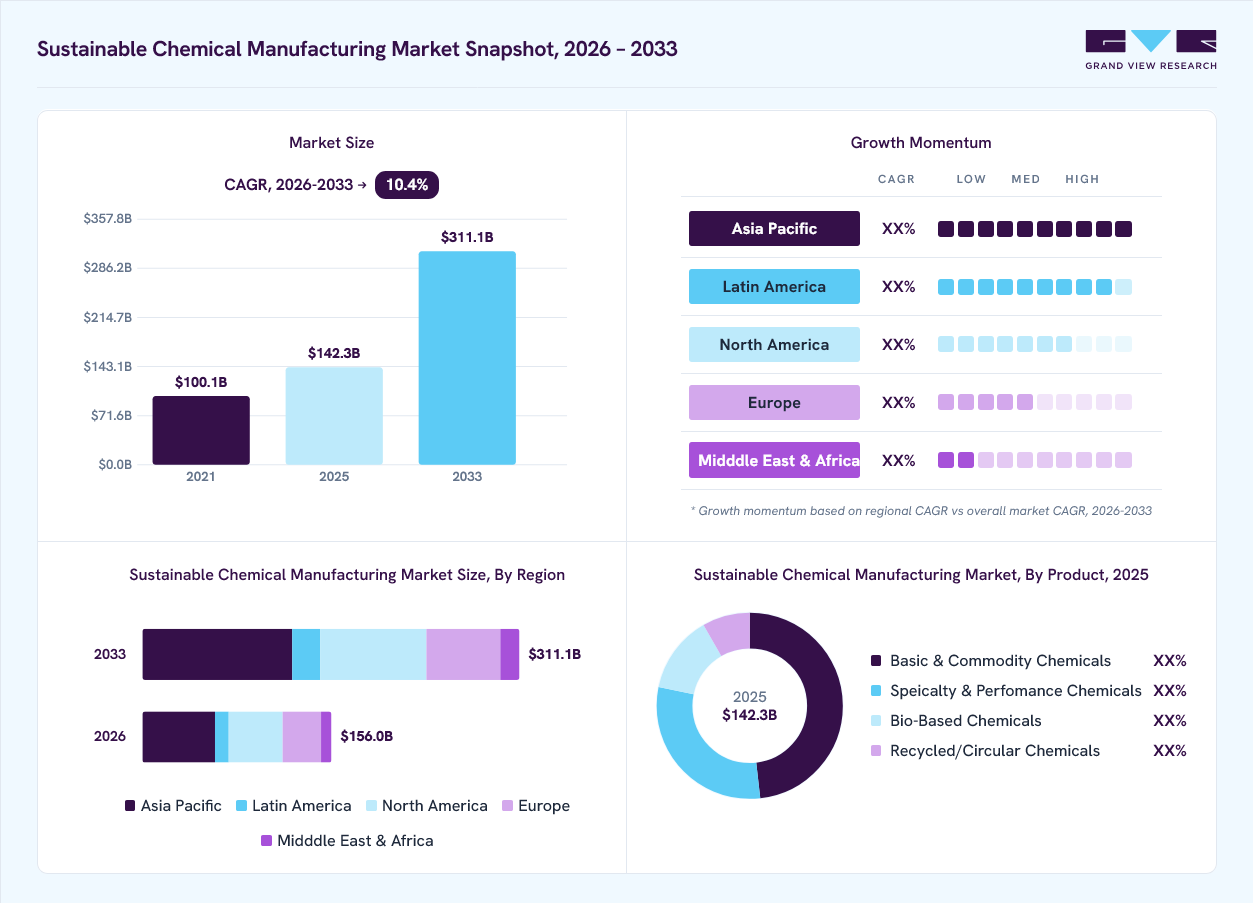 Source: Grand View Research, IR Documents, Primary Interviews, Paid DatabasesTo learn more about this report,
 Download Free Sample Report
Key Market Trends & Insights
- By technology: Green chemistry & process optimization segment held the largest revenue share of 31.8% in 2025.
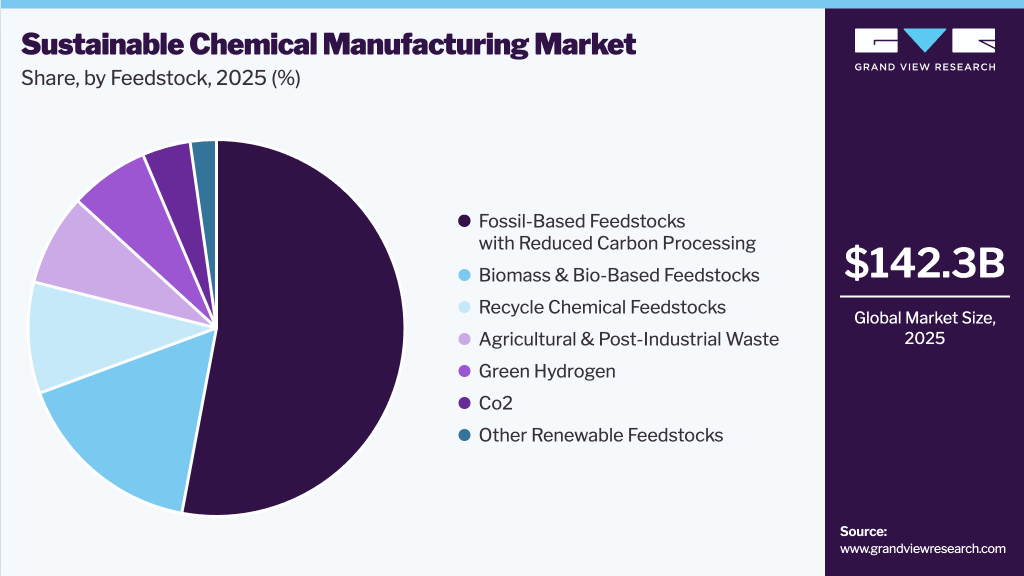
- By feedstock: Fossil-based feedstocks with reduced carbon processing segment dominated the market with a share of 53.0% in 2025.
- By product: Basic & commodity chemicals segment dominated with a revenue share of 48.2% in 2025.
- By end use: Chemicals & petrochemicals segment accounted for the largest revenue share of 37.8% in 2025.
Regional Highlights
- Largest regional market: Asia Pacific (38.2% revenue share, 2025)
- By country: China held the largest market share in 2025.
Market Size & Forecast
- Market size in 2025: USD 142.3 Billion
- Estimated market size in 2026: USD 156.0 Billion
- Projected market size by 2033: USD 311.1 Billion
- CAGR (2026-2033): 10.4%
GVR research-powered AIAsk Prism AI about the sustainable chemical manufacturing marketGet cited answers from GVR research on market growth, segments, regulations and forecasts.Start with✓ Source-linked answers ✓ Market-specific context ✓ Traceable figuresExplore Prism AI ↗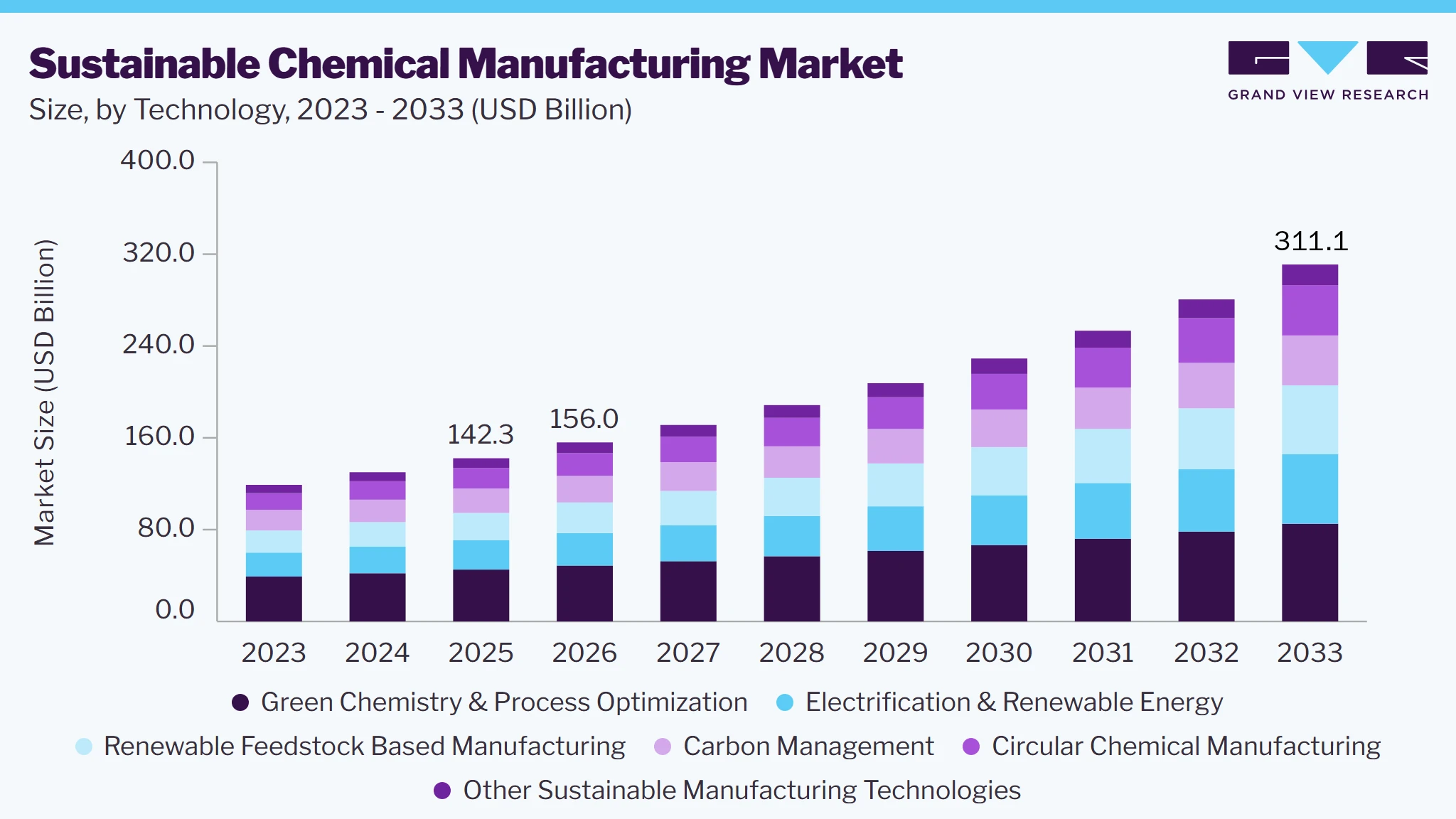 To learn more about this report, Download Free Sample Report
Market Dynamics
The industry is undergoing a significant transformation as manufacturers prioritize lower-carbon production, resource efficiency, and resilient raw-material sourcing. Rising regulatory pressure on greenhouse-gas emissions, hazardous waste, and industrial energy consumption is encouraging companies to invest in cleaner processes, electrification, carbon management, and circular production models. At the same time, growing demand from pharmaceuticals, agriculture, food and beverages, automotive, electronics, and consumer goods is creating opportunities for chemicals produced with renewable, recycled, or waste-derived inputs. Feedstock diversification is becoming increasingly important as manufacturers seek to reduce dependence on conventional fossil resources while improving supply-chain resilience. Technological advancements in green chemistry, process optimization, carbon utilization, advanced recycling, and renewable-energy integration are further improving the commercial viability of sustainable production. However, high capital requirements, technology deployment costs, limited availability of suitable renewable feedstocks, and differences in regional regulations continue to constrain adoption.
Governments and regulatory bodies are strengthening environmental standards related to greenhouse-gas emissions, energy consumption, industrial waste, and the use of hazardous substances, encouraging chemical manufacturers to transition toward cleaner production models. Carbon-reduction targets are prompting companies to improve process efficiency, integrate renewable electricity, adopt lower-carbon feedstocks, and invest in technologies such as electrification, carbon capture, and process optimization. These measures are increasingly becoming strategic priorities rather than standalone environmental initiatives, as manufacturers seek to reduce regulatory exposure, improve operational efficiency, and align production facilities with evolving sustainability requirements.
The regulatory shift is also influencing investment decisions across the chemical value chain. Manufacturers are allocating greater capital toward modernizing production assets, developing low-emission processes, and incorporating circular production practices to meet increasingly stringent environmental expectations. In addition, customers in industries such as automotive, electronics, pharmaceuticals, and consumer goods are placing greater emphasis on the environmental footprint of their chemical inputs.
The transition from conventional chemical manufacturing to more sustainable production systems requires substantial upfront investment, creating a major barrier to adoption, particularly for facilities operating with older infrastructure. Producers may need to upgrade reactors, production lines, energy systems, waste-treatment facilities, and material-handling infrastructure while simultaneously investing in renewable-energy integration, carbon-management systems, advanced recycling, or alternative-feedstock processing. These investments can significantly increase project costs before the resulting environmental and operational benefits are fully realized. Retrofitting existing facilities can be particularly challenging because new technologies must be integrated without disrupting established production processes, supply commitments, or product quality.
The increasing availability and commercialization of alternative feedstocks presents a significant opportunity for chemical producers to diversify their raw-material base. Biomass, agricultural and post-industrial waste, recycled chemical inputs, captured CO₂, and green hydrogen can help reduce reliance on conventional fossil resources while supporting the production of lower-carbon chemicals. Advances in feedstock conversion, purification, chemical recycling, and process integration are improving the feasibility of incorporating these materials into established manufacturing systems. Companies capable of securing reliable supplies and developing scalable conversion technologies can strengthen their competitive position while responding to growing demand for products with improved sustainability credentials.
This transition also creates opportunities to develop differentiated product portfolios and establish new revenue streams. Bio-based chemicals, recycled chemicals, and circular materials can command greater attention from customers seeking to reduce the environmental footprint of their products and meet corporate sustainability commitments. Partnerships between chemical producers, waste-management companies, agricultural businesses, technology providers, and energy suppliers can further improve feedstock availability and supply-chain efficiency.
Market Concentration & Characteristics
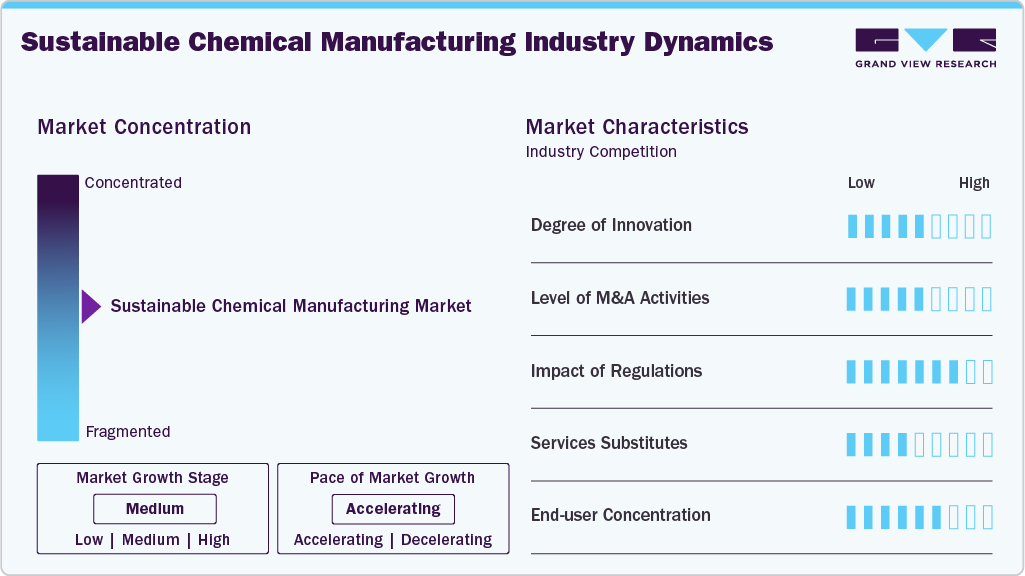
The market is moderately consolidated, with competition centered on sustainable production technologies, feedstock diversification, process efficiency, carbon reduction capabilities, circular manufacturing expertise, and the ability to deliver chemicals with lower environmental footprints. Leading manufacturers are expanding their bio-based, recycled, low-carbon, and specialty chemicals while integrating renewable feedstocks and energy-efficient processes into established production systems. Investments in green chemistry, electrification, carbon management, advanced recycling, and process optimization have become important competitive differentiators as customers increasingly evaluate the sustainability credentials of chemical suppliers alongside product performance and cost.
 To learn more about this report, Download Free Sample Report
Participants are also strengthening their market positions through strategic partnerships, technology collaborations, acquisitions, capacity expansions, and investments in regional manufacturing infrastructure. Companies are developing integrated production platforms that combine alternative feedstocks, renewable energy, waste recovery, and carbon-reduction technologies to improve resource efficiency and strengthen supply-chain resilience. In addition, collaboration with technology providers, raw-material suppliers, recyclers, and downstream industries is enabling manufacturers to commercialize circular and low-carbon solutions at scale. Companies with strong R&D capabilities, global production networks, diversified feedstock access, and established customer relationships are better positioned to capture emerging opportunities across sustainable chemical applications.
Analyst Perspective
The industry is entering a more execution-focused phase, with sustainability increasingly being linked to operational efficiency and long-term competitiveness. Manufacturers are gradually diversifying beyond fossil resources by adopting bio-based, recycled, waste-derived, and CO₂-based feedstocks. Electrification, renewable energy, process optimization, and circular production are expected to become important levers for reducing emissions while improving resource utilization. However, the pace of adoption will vary depending on technology maturity, feedstock availability, infrastructure requirements, and overall project economics. Companies that can combine sustainable production with cost efficiency and consistent product performance are likely to gain stronger customer acceptance.
Technology Insights
The green chemistry & process optimization segment held the largest revenue share of 31.8% in 2025, reflecting the chemical industry's preference for improving the sustainability of existing production systems while maintaining commercial efficiency. Manufacturers are increasingly optimizing reaction conditions, improving catalyst performance, reducing energy and water consumption, minimizing by-products, and improving material yields. This approach allows producers to reduce environmental impact without necessarily requiring a complete replacement of established manufacturing infrastructure. Process optimization is particularly attractive because it can generate sustainability benefits alongside lower operating costs and improved production efficiency.
Renewable feedstock based manufacturing is expected to be the fastest-growing product type segment, with a CAGR of 12.2% from 2026 to 2033. Increasing efforts to reduce dependence on finite fossil resources are encouraging manufacturers to incorporate biomass, bio-derived materials, agricultural residues, and other renewable inputs into chemical production. Improvements in biomass conversion, fermentation, biorefining, and related processing technologies are making renewable feedstocks increasingly suitable for commercial chemical applications.
Product Insights
The basic & commodity chemicals segment held the largest revenue share of 48.2% in 2025, supported by their extensive use as building blocks across multiple industrial value chains. Products such as olefins, aromatics, alcohols, acids, and other chemical intermediates are essential inputs for polymers, coatings, solvents, fertilizers, pharmaceuticals, and numerous industrial applications. Their large production volumes create substantial opportunities for manufacturers to achieve measurable sustainability improvements through process efficiency, lower-carbon energy, alternative feedstocks, carbon management, and waste reduction. As decarbonization efforts increasingly extend to high-volume chemical production, improvements in the environmental performance of commodity chemicals can generate significant cumulative impact across downstream industries.
Bio-based chemicals are expected to grow at a CAGR of 13.1% during the forecast period, supported by the shift toward renewable carbon sources and increasing interest in replacing petroleum-derived chemicals with products based on biological or renewable resources. Biomass, agricultural residues, plant-derived materials, and other renewable resources can serve as starting materials for producing chemical intermediates and finished products. Advances in biotechnology, fermentation, catalysis, and biomass conversion are broadening the range of commercially viable bio-based chemical applications.
End Use Insights
The chemicals & petrochemicals segment accounted for the largest revenue share of 37.8% in 2025, reflecting the industry's position as both a major producer and consumer of chemical feedstocks and intermediates. The sector is increasingly investing in energy-efficient production, emissions reduction, feedstock diversification, advanced recycling, and carbon-management solutions to address the environmental intensity associated with large-scale chemical operations. Its extensive manufacturing infrastructure also provides opportunities to integrate sustainable technologies into existing facilities and production networks. The continued demand for polymers, intermediates, solvents, and other chemical building blocks further supports investment in lower-carbon manufacturing pathways, particularly as producers seek to balance sustainability targets with cost, scale, and supply reliability.
The electronic & semiconductor segment is expected to be the fastest growing segment at a CAGR of 12.1% from 2026 to 2033. Continued expansion of semiconductor manufacturing, advanced electronics, data infrastructure, electric vehicles, and high-performance computing is increasing demand for specialized chemical materials used throughout electronics production. At the same time, the semiconductor manufacturers are placing greater emphasis on resource efficiency, chemical management, waste reduction, and lower-impact production practices, creating additional demand for sustainable chemical solutions.
Feedstock Insights
The fossil-based feedstocks with reduced carbon processing segment held the largest revenue share of 53.0% in 2025, demonstrating the continued importance of conventional hydrocarbons within global chemical production. Despite the shift toward renewable and circular inputs, existing chemical plants remain heavily integrated with established fossil-based supply chains, production assets, and downstream applications. Manufacturers are therefore focusing on reducing the carbon intensity of conventional production through energy-efficiency improvements, process optimization, electrification, emissions-control systems, and carbon-management technologies. This pathway provides producers with a transitional route toward lower-emission manufacturing while maintaining compatibility with existing infrastructure and product portfolios.
 To learn more about this report, Download Free Sample Report
The recycle chemical feedstocks segment is expected to be the fastest-growing segment, with a CAGR of 12.4% from 2026 to 2033, Growing emphasis on resource circularity is encouraging manufacturers to recover carbon-containing materials from waste streams and return them to chemical production rather than relying exclusively on virgin fossil resources. Chemical recycling and advanced recovery technologies are expanding the potential to convert difficult-to-recycle waste into usable feedstocks for new chemical products.
Regional Insights
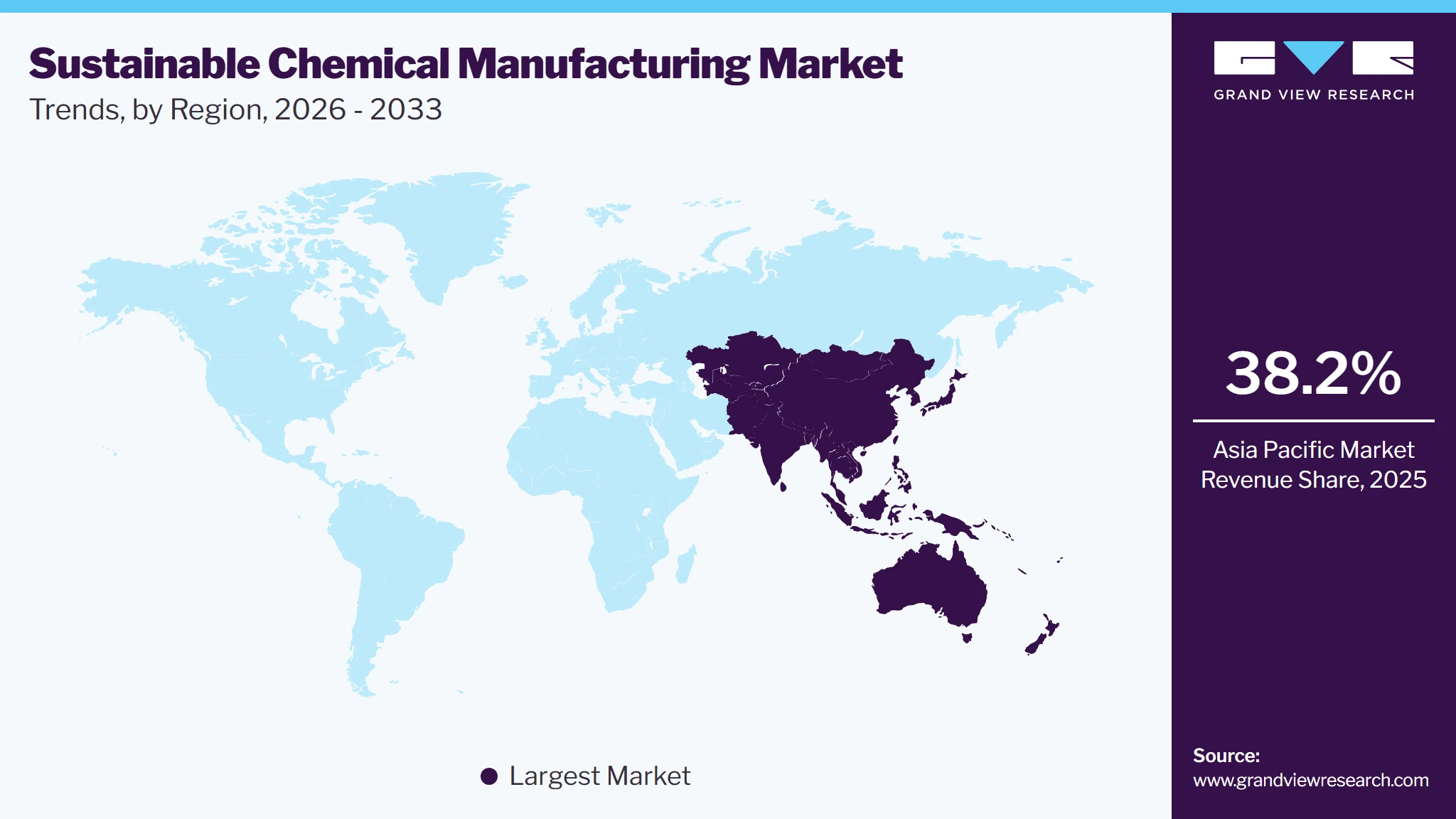
Asia Pacific sustainable chemical manufacturing industry represented 38.2% of revenue in 2025, supported by its extensive chemical manufacturing base, expanding industrial production, and strong presence across petrochemicals, polymers, specialty chemicals, electronics, and pharmaceutical supply chains. The region's large-scale manufacturing infrastructure provides a substantial base for adopting process optimization, energy-efficiency measures, alternative feedstocks, recycling, and other lower-carbon production technologies. Rapid industrialization and growing demand for chemicals across downstream industries are also encouraging producers to expand capacity while improving resource and energy efficiency. China's emergence as a major global chemical producer further strengthens the region's position, while countries such as Japan, South Korea, and India are contributing through investments in advanced manufacturing and cleaner technologies.
 To learn more about this report, Download Free Sample Report
China Sustainable Chemical Manufacturing Market Trends
China sustainable chemical manufacturing industry represents a key market within Asia Pacific because of its enormous chemical production capacity, extensive industrial ecosystem, and strong demand from manufacturing-intensive sectors. Its large petrochemical, polymer, electronics, automotive, and consumer-goods industries create substantial opportunities for more efficient and lower-emission chemical production. The country's scale also supports investment in renewable energy integration, recycling, alternative feedstocks, and process improvements. China's growing importance in global chemical production is also reflected in European policy discussions, which identify China as one of the regions that has gained significant competitive strength in chemicals.
North America Sustainable Chemical Manufacturing Market Trends
North America sustainable chemical manufacturing industry led with a revenue share of 28.6% in 2025 supported by its mature chemical manufacturing infrastructure, strong technological capabilities, abundant industrial feedstock resources, and substantial investment capacity. The region benefits particularly from the United States' large chemicals and petrochemicals sector, which supplies critical inputs to agriculture, healthcare, energy, automotive, electronics, and advanced manufacturing. At the same time, manufacturers are investing in technologies that can improve energy efficiency, introduce alternative carbon sources, and reduce emissions. U.S. government initiatives have specifically supported research and development involving CO₂, biomass, recycled materials, and waste-derived feedstocks for chemical production.
The U.S. sustainable chemical manufacturing industry represents the principal demand center within North America, benefiting from a large and diversified chemical industry, established production infrastructure, extensive R&D capabilities, and access to significant energy and feedstock resources. Sustainable manufacturing initiatives are increasingly focused on improving process efficiency, reducing industrial emissions, and developing alternative sources of carbon for chemical production. The country's chemical sector also serves strategically important industries such as healthcare, agriculture, semiconductors, energy, and advanced manufacturing, creating a broad customer base for lower-carbon chemical solutions.
Europe Sustainable Chemical Manufacturing Market Trends
Europe sustainable chemical manufacturing industry remains an important market due to its strong chemical manufacturing heritage and comparatively advanced sustainability framework. The region has established extensive initiatives supporting the transition toward safer, cleaner, and more circular chemical production, including greater use of renewable energy, sustainable feedstocks, recycling, and low-carbon technologies. The European Commission's chemical-industry strategy specifically emphasizes decarbonization, circularity, innovation, resilient supply chains, and access to cleaner energy. However, high energy and feedstock costs are creating competitive pressure on regional producers and influencing the pace and economics of investment.
Germany sustainable chemical manufacturing industry is a major European market because of its highly developed chemical industry and strong industrial R&D capabilities. The country has a large concentration of chemical producers and integrated manufacturing sites, creating significant opportunities for process optimization, electrification, hydrogen, carbon utilization, recycling, and renewable feedstock adoption. Germany's chemical-industry transition planning includes substantial future requirements for renewable electricity, hydrogen, CO₂-based feedstocks, recycling, and biomass, demonstrating the scale of the transformation being considered.
Middle East & Africa Sustainable Chemical Manufacturing Market Trends
The Middle East & Africa sustainable chemical manufacturing industry is gaining importance through its established petrochemical base, competitive energy resources, and increasing investment in lower-carbon chemical production. Particularly in the Gulf countries, chemical producers are leveraging existing hydrocarbon infrastructure while gradually expanding into circularity, carbon management, renewable energy, and alternative production pathways. The Gulf Cooperation Council's chemical industry continued expanding capacity in 2025, with significant investment directed toward new production assets. This combination of established chemical infrastructure and growing sustainability investment provides a foundation for transitioning conventional production toward lower-carbon models.
Latin America Sustainable Chemical Manufacturing Market Trends
Latin America sustainable chemical manufacturing industry offers considerable long-term potential due to its availability of biomass, agricultural residues, renewable energy resources, and established chemical and petrochemical industries. These characteristics create favorable conditions for renewable feedstock-based manufacturing and the development of bio-based chemicals. Brazil is particularly relevant because of its large agricultural sector, established bioeconomy, and experience with biomass-derived industrial products. Across the region, greater use of renewable electricity and locally available biological resources can help chemical manufacturers diversify feedstocks while reducing dependence on conventional fossil-based inputs. The region's opportunity is therefore closely linked to its ability to convert abundant renewable resources into commercially competitive chemical feedstocks and products.
Key Sustainable Chemical Manufacturing Company Insights
Companies are strengthening their market positions by investing in renewable and recycled feedstocks, electrification, carbon-management technologies, and circular production systems, while improving the efficiency of existing manufacturing assets. They are also pursuing strategic partnerships, long-term feedstock agreements, technology collaborations, capacity expansion, and targeted acquisitions to secure sustainable raw materials, accelerate commercialization, and strengthen their presence across high-growth applications.
-
Covestro AG is strengthening its position by focusing on circular and lower-carbon materials, with alternative raw materials and reduced-carbon production forming key elements of its sustainability strategy. The company is increasing the use of waste- and biomass-derived feedstocks, renewable energy, and recycling technologies while improving the energy efficiency of its manufacturing operations. Its strategy also emphasizes collaboration with customers and partners to commercialize circular solutions across applications such as automotive, electronics, construction, and healthcare, helping differentiate its materials through sustainability performance without compromising functionality.
-
SABIC is reinforcing its competitive position through investments in circularity, renewable feedstocks, carbon management, and sustainable product development. Its TRUCIRCLE™ portfolio includes mechanically recycled products, chemically recycled materials, and products based on certified renewable feedstocks, while the company is also improving feedstock flexibility and process efficiency across its operations. SABIC is further using carbon-footprint assessment, technology development, and value-chain partnerships to expand low-carbon solutions and support customers across industries such as electronics, automotive, packaging, and consumer products.
Key Sustainable Chemical Manufacturing Companies:
The following key companies have been profiled for the study on the sustainable chemical manufacturing market.
-
BASF SE
-
Dow Inc.
-
SABIC
-
Evonik Industries AG
-
Covestro AG
-
LyondellBasell Industries N.V.
-
INEOS Group
-
Mitsubishi Chemical Group Corporation
-
Braskem S.A.
-
Eastman Chemical Company
Company Categorization
Operating Strategies
Competitive Edge
Weaknesses
Mature Players: BASF SE; Dow Inc.; SABIC; Evonik Industries AG; Covestro AG; LyondellBasell Industries N.V.; INEOS Group; Mitsubishi Chemical Group Corporation
- Portfolio diversification: Maintain broad chemical portfolios spanning specialty, commodity, performance, and sustainable solutions to serve multiple downstream industries.
- Sustainability integration: Embed renewable feedstocks, circularity, energy efficiency, and carbon-reduction initiatives into existing manufacturing operations.
- Global manufacturing footprint: Operate geographically diversified production and R&D networks to remain close to major customers and secure regional supply.
- Customer-led innovation: Work closely with downstream customers to develop application-specific formulations and sustainable alternatives.
- Global scale and infrastructure: Extensive production networks provide stronger capacity, supply reliability, and geographic reach.
- Strong R&D capabilities: Significant technical resources support development of higher-performance and lower-impact chemical solutions.
- Established customer relationships: Long-standing relationships with multinational customers create high switching costs and recurring demand.
- Broad sustainability capabilities: Mature players can combine process optimization, renewable inputs, circular manufacturing, and product innovation within integrated production systems.
- High operating complexity: Large, diversified organizations can face slower decision-making and greater organizational complexity.
- Legacy assets: Existing large-scale plants may require substantial capital expenditure to transition toward lower-carbon technologies.
- Higher cost base: Global infrastructure, compliance requirements, and extensive R&D programs can increase operating costs.
- Transition risk: Moving established high-volume businesses toward sustainable feedstocks and technologies can create significant execution and profitability challenges.
Emerging Players: Braskem S.A.; Eastman Chemical Company
- Niche specialization: Focus on specific sustainable chemistry applications rather than competing across the entire chemical portfolio.
- Bio-based innovation: Develop renewable, plant-derived, recycled, or other lower-impact alternatives to conventional chemical inputs.
- Flexible manufacturing: Use specialized production and external manufacturing partnerships to scale new technologies without replicating the asset intensity of large chemical groups.
- Customer co-development: Work closely with formulators and downstream customers to tailor sustainable products to specific performance and regulatory requirements.
- Agility and faster innovation: Smaller organizational structures can enable quicker product development and commercialization.
- Strong sustainability positioning: Differentiate through bio-based chemistry and green-chemistry-oriented manufacturing approaches.
- Specialized expertise: Concentration on targeted applications enables deeper technical expertise and differentiated product performance.
- Customer responsiveness: Greater flexibility allows emerging companies to respond rapidly to niche formulation requirements and changing customer preferences.
- Limited production scale: Smaller manufacturing capacities can restrict their ability to serve large-volume customers consistently.
- Restricted financial resources: Lower access to capital can make large-scale capacity expansion and technology commercialization more difficult.
- Feedstock and supply-chain constraints: Dependence on specialized renewable or recycled inputs can expose companies to availability and pricing fluctuations.
- Limited global reach: Compared with established chemical groups, emerging players generally have fewer manufacturing sites, sales offices, and established distribution channels.
Recent Developments
-
In May 2025, Braskem highlighted the 37% expansion of its green ethylene production capacity at its Triunfo facility in Brazil, taking capacity to 275,000 tons per year. The expansion strengthens its ability to supply bio-based polyethylene produced from renewable feedstock and supports growing demand for lower-carbon materials.
-
In March 2025, Dow announced a strategic investment supporting Xycle's first commercial-scale advanced recycling facility at the Port of Rotterdam. The facility is expected to process approximately 21 kilotons of plastic waste annually, providing Dow with greater access to circular feedstocks for chemical production.
Sustainable Chemical Manufacturing Market Report Scope
Report Attribute
Details
Market size value in 2025
USD 142.3 billion
Market size value in 2026
USD 156.0 billion
Revenue forecast in 2033
USD 311.1 billion
Growth rate
CAGR of 10.4% from 2026 to 2033
Base year for estimation
2025
Historical data
2021 - 2024
Forecast period
2026 - 2033
Quantitative units
Revenue in USD billion/billion and CAGR from 2026 to 2033
Report coverage
Revenue forecast, volume forecast, company ranking, competitive landscape, growth factors, and trends
Segments covered
Technology, feedstock, product, end use, region
Regional Scope
North America; Europe; Asia Pacific; Latin America; Middle East & Africa
Country scope
U.S.; Canada; Mexico; Germany; UK; France; Italy; Spain; China; India; Japan; South Korea; Brazil; Argentina; Saudi Arabia; South Africa.
Key companies profiled
BASF SE; Dow Inc.; SABIC; Evonik Industries AG; Covestro AG; LyondellBasell Industries N.V.; INEOS Group; Mitsubishi Chemical Group Corporation; Braskem S.A.; Eastman Chemical Company
Customization scope
Free report customization (equivalent up to 8 analysts’ working days) with purchase. Addition or alteration to country, regional & segment scope.
Pricing and purchase options
Avail customized purchase options to meet your exact research needs. Explore purchase options
Global Sustainable Chemical Manufacturing Market Report Segmentation
This report forecasts volume & revenue growth at regional and country levels and provides an analysis of the latest industry trends in each of the sub-segments from 2021 to 2033. For this study, Grand View Research has segmented the global sustainable chemical manufacturing market report based on technology, feedstock, product, end use, and region:
-
Technology Outlook (Revenue, USD Billion, 2021 - 2033)
-
Organic Preservatives
-
Green Chemistry & Process Optimization
-
Renewable Feedstock Based Manufacturing
-
Electrification & Renewable Energy
-
Carbon Management
-
Circular Chemical Manufacturing
-
Other Sustainable Manufacturing Technologies
-
-
Feedstock Outlook (Revenue, USD Billion, 2021 - 2033)
-
Fossil-Based Feedstocks with Reduced Carbon Processing
-
Biomass & Bio-Based Feedstocks
-
Agricultural & Post-Industrial Waste
-
Recycle Chemical Feedstocks
-
Co2
-
Green Hydrogen
-
Other Renewable Feedstocks
-
-
Product Outlook (Revenue, USD Billion, 2021 - 2033)
-
Basic & Commodity Chemicals
-
Specialty & Performance Chemicals
-
Bio-Based Chemicals
-
Recycled/Circular Chemicals
-
-
End Use Outlook (Revenue, USD Billion, 2021 - 2033)
-
Chemicals & Petrochemicals
-
Pharmaceuticals
-
Agrochemicals
-
F&B
-
Personal Care & Cosmetics
-
Automotive
-
Electronic & Semiconductor
-
Other End Use
-
-
Regional Outlook (Revenue, USD Billion, 2021 - 2033)
-
North America
-
U.S.
-
Canada
-
Mexico
-
-
Europe
-
UK
-
Germany
-
France
-
Italy
-
Spain
-
-
Asia Pacific
-
China
-
Japan
-
India
-
South Korea
-
-
Latin America
-
Brazil
-
Argentina
-
-
Middle East and Africa (MEA)
-
South Africa
-
Saudi Arabia
-
-
Research Methodology
The sustainable chemical manufacturing market figures in this report are based on a proven research process that combines executive interviews with secondary research from proprietary databases, company filings, and recognized regulatory and institutional sources. Market size is built through value-chain sizing—reconciling supply-side and demand-side estimates—and triangulated with bottom-up and top-down approaches. Every estimate passes multiple levels of expert validation before publication, with each sustainable chemical manufacturing segment quantified using the revenue-capture definitions in the table below.
Segment Definition
Segment - Technology
Revenue capture definition
Green Chemistry & Process Optimization
Commercial demand is generated by technologies that improve reaction efficiency, reduce material losses, minimize hazardous by-products, optimize catalyst utilization, and lower energy and water consumption across chemical production processes.
Renewable Feedstock-Based Manufacturing
Revenue generation is supported by production systems that convert biomass, bio-derived materials, and other renewable carbon sources into chemicals, enabling manufacturers to reduce reliance on conventional fossil resources and develop lower-carbon product portfolios.
Electrification & Renewable Energy
Value creation is driven by the integration of renewable electricity, electrified heating, electric process equipment, and other low-carbon energy solutions that reduce fossil-fuel consumption and emissions from energy-intensive chemical operations.
Carbon Management
Market revenues are supported by technologies for capturing, utilizing, storing, or reducing industrial carbon emissions, including CO₂ utilization pathways that convert captured carbon into chemical intermediates and other commercially valuable products.
Circular Chemical Manufacturing
Commercial activity is derived from systems that recover, recycle, and reprocess chemical materials and waste streams into usable feedstocks, reducing dependence on virgin resources and supporting closed-loop production models.
Other Sustainable Manufacturing Technologies
Revenue is captured through emerging production solutions such as biocatalysis, process intensification, water-recovery systems, advanced separation, and other technologies that improve environmental performance and resource productivity.
Segment - Feedstock
Revenue capture definition
Fossil-Based Feedstocks with Reduced Carbon Processing
Industry demand is centered on conventional oil and gas-derived inputs processed through energy-efficient operations, carbon-reduction technologies, improved catalysts, and other measures that lower the emissions intensity of established chemical production.
Biomass & Bio-Based Feedstocks
Business expansion is supported by plant-derived oils, sugars, starches, cellulose, lignocellulosic materials, and other biological resources used as renewable carbon sources for chemical and material production.
Agricultural & Post-Industrial Waste
Market momentum is driven by the conversion of crop residues, food-processing by-products, industrial waste streams, and other discarded materials into valuable chemical inputs, supporting resource recovery and waste reduction.
Recycle Chemical Feedstocks
Revenue generation arises from recovered plastics, solvents, chemical intermediates, and other previously used materials that undergo mechanical, chemical, or advanced recycling before being reintroduced into manufacturing processes.
Co2
Commercial opportunities are created through the utilization of captured carbon dioxide as a carbon source for producing fuels, polymers, chemicals, mineral products, and other value-added materials, particularly where low-carbon energy is available.
Green Hydrogen
Industry adoption is supported by hydrogen produced using renewable electricity, which serves as a low-carbon input for ammonia, methanol, synthetic fuels, hydrogenated chemicals, and other chemical processes requiring hydrogen.
Other Renewable Feedstocks
Market activity encompasses alternative renewable carbon sources, including algae-derived materials, renewable gases, forestry residues, and other non-fossil inputs used to manufacture lower-impact chemical products.
Segment - Product
Revenue capture definition
Basic & Commodity Chemicals
Industry consumption is driven by the production of high-volume chemical building blocks and intermediates using lower-carbon energy, alternative feedstocks, resource-efficient processes, and other sustainable manufacturing approaches.
Specialty & Performance Chemicals
Commercial adoption is supported by higher-value chemicals designed for specific functional requirements, with manufacturers increasingly incorporating renewable inputs, efficient production routes, reduced-emission processing, and circular materials into specialty product portfolios.
Bio-Based Chemicals
Business activity is fueled by chemicals derived wholly or partly from renewable biological resources, providing alternatives to selected petroleum-based products across industrial, consumer, agricultural, and specialty applications.
Recycled/Circular Chemicals
Demand is generated by chemicals manufactured from recovered materials and secondary feedstocks, enabling downstream users to incorporate recycled carbon and materials while reducing dependence on virgin resources.
Segment - Product
Revenue capture definition
Chemicals & Petrochemicals
Market adoption is strengthened by the industry's extensive use of sustainable production technologies to reduce emissions, improve energy efficiency, diversify feedstocks, and lower the environmental footprint of high-volume chemical and petrochemical operations.
Pharmaceuticals
Industry utilization is supported by cleaner synthesis routes, bio-based inputs, efficient processing, solvent recovery, waste minimization, and other sustainable manufacturing practices applied across pharmaceutical ingredient and intermediate production.
Agrochemicals
Demand is supported by the development and production of fertilizers, crop-protection chemicals, and related inputs through resource-efficient processes, renewable feedstocks, lower-emission technologies, and improved waste-management practices.
F&B
Commercial opportunities arise from sustainable production of food-grade chemicals, processing aids, ingredients, packaging-related materials, and other chemical inputs manufactured using renewable resources, efficient processes, or circular feedstocks.
Personal Care & Cosmetics
Sector demand is driven by increasing incorporation of bio-derived, recycled, and lower-impact chemical ingredients, together with manufacturing processes that improve resource efficiency and reduce the environmental burden of personal care formulations.
Automotive
Market revenues are supported by sustainable polymers, coatings, adhesives, additives, specialty materials, and other chemical inputs produced through lower-carbon processes and circular or renewable feedstock pathways for vehicle manufacturing.
Electronic & Semiconductor
Industry growth is underpinned by demand for high-purity chemicals, solvents, specialty materials, and process inputs produced with improved resource efficiency, waste recovery, and lower-emission manufacturing technologies for increasingly complex electronic components.
Other End Use
Revenue capture extends to construction, textiles, packaging, energy, water treatment, consumer goods, and other industries adopting lower-carbon chemical inputs and resource-efficient manufacturing solutions to meet operational and sustainability objectives.
Estimation Model
Layer No.
Layer Name
Key Question
Description
01
Raw Material & Production Layer
What forms the supply base?
Assess the feedstock and production foundation, including fossil-based inputs processed with lower emissions, biomass, bio-based resources, agricultural and post-industrial waste, recycled chemical streams, captured CO₂, green hydrogen, and other renewable inputs. Examine feedstock availability, sourcing networks, conversion technologies, renewable-power integration, manufacturing efficiency, production capacity, recycling infrastructure, and geographic concentration of chemical production assets.
02
Application Adoption Layer
Where is sustainable chemical manufacturing utilized?
Evaluate the integration of sustainably manufactured chemicals across chemicals and petrochemicals, pharmaceuticals, agrochemicals, food and beverages, personal care and cosmetics, automotive, electronics and semiconductors, and other industrial applications. Adoption is shaped by corporate decarbonization objectives, environmental regulations, customer sustainability requirements, circularity targets, renewable-content expectations, and demand for products with reduced environmental footprints.
03
Consumption Intensity Layer
How extensively is sustainable chemical manufacturing consumed?
Examine the scale and depth of adoption by assessing the consumption of basic and commodity chemicals, specialty and performance chemicals, bio-based chemicals, and recycled or circular chemicals across key industries. The analysis considers production volumes, substitution levels, sustainable-content requirements, purchasing practices, technological compatibility, application-specific performance needs, and the availability and competitiveness of alternatives to conventional chemical inputs.
04
Revenue Layer
How is market revenue generated?
Market value is captured through the manufacture and commercialization of chemicals produced using improved process efficiency, renewable and recycled feedstocks, electrified operations, carbon-management systems, and circular production models. Revenue expansion is influenced by investments in sustainable production capacity, development of differentiated chemical portfolios, commercialization of emerging technologies, strategic partnerships, alternative-feedstock procurement, and increasing downstream demand for lower-impact chemical products.
Delivered Customizations
This report has been delivered with the following In-depth customizations
Client Request
Customization Delivered
Value Adds
Regional segmentation
The assessment provides country-level market sizing and forecasts, supported by analysis of demand across technology, feedstock, product, and end-use categories. It evaluates the adoption of sustainable manufacturing technologies and lower-impact chemical products across chemicals and petrochemicals, pharmaceuticals, agrochemicals, food and beverages, personal care and cosmetics, automotive, electronics and semiconductors, and other industries. The analysis also covers feedstock availability, domestic production capabilities, import-export patterns, manufacturing capacity, regulatory frameworks, infrastructure development, competitive activity, and investment trends within individual countries.
Supports geographic expansion, sourcing decisions, manufacturing footprint planning, and capital allocation by identifying countries with favorable feedstock conditions, supportive policies, expanding production infrastructure, and strong downstream demand.
Opportunity Assessment
Provides an in-depth assessment of growth opportunities associated with green chemistry, renewable feedstock-based manufacturing, electrification, renewable energy integration, carbon management, circular production, recycled chemical feedstocks, and other sustainable technologies. The analysis considers technological maturity, feedstock economics, corporate sustainability commitments, regulatory developments, infrastructure availability, and demand from major consuming industries.
Helps organizations identify commercially attractive technologies, applications, and investment themes by assessing evolving production economics, resource availability, regulatory priorities, and customer requirements. The findings can guide portfolio diversification, technology deployment, capacity expansion, partnership development, and market-entry strategies.
Competitive Benchmarking
Compares leading manufacturers based on sustainable product offerings, alternative-feedstock capabilities, production technologies, manufacturing scale, decarbonization initiatives, R&D strength, geographic presence, circularity programs, strategic alliances, investments, and capacity additions. The assessment also reviews vertical integration, supply-chain resilience, operational capabilities, commercialization progress, customer reach, and the ability to compete with conventional chemical production on performance and economics.
Enables companies to understand their position relative to competitors by highlighting capability advantages, technology gaps, portfolio opportunities, and areas requiring strategic investment. The insights support decisions concerning product development, technology adoption, acquisitions, partnerships, facility modernization, and long-term market positioning.
Frequently Asked Questions About This Report
The sustainable chemical manufacturing market size was estimated at USD 142.3 billion in 2025 and is expected to reach USD156.0 billion in 2026
The sustainable chemical manufacturing market is expected to grow at a compound annual growth rate of 10.4% from 2026 to 2033 to reach USD 311.1 billion by 2033.
Fossil-based feedstocks with reduced carbon processing accounted for the largest share of the sustainable chemical manufacturing market in 2025, representing 53.0% of total revenue, supported by the continued reliance on established fossil-based chemical production infrastructure.
Asia Pacific represented 38.2% of revenue in 2025, supported by its extensive chemical manufacturing base, expanding industrial production, and strong presence across petrochemicals, polymers, specialty chemicals, electronics, and pharmaceutical supply chains.
Key factors include stricter carbon-emission regulations, corporate decarbonization targets, and growing demand for renewable and recycled feedstocks across chemical production. Increasing investments in green chemistry, electrification, carbon management, and circular manufacturing are further accelerating the shift toward lower-impact production.
Some of the key players operating in the sustainable chemical manufacturing market include BASF SE; Dow Inc.; SABIC; Evonik Industries AG; Covestro AG; LyondellBasell Industries N.V.; INEOS Group; Mitsubishi Chemical Group Corporation; Braskem S.A.; Eastman Chemical Company.
Green chemistry & process optimization held the largest revenue share of 31.8% in 2025, reflecting the chemical industry's preference for improving the sustainability of existing production systems while maintaining commercial efficiency.
Basic & commodity chemicals held the largest revenue share of 48.2% in 2025, supported by their extensive use as building blocks across multiple industrial value chains.
Chemicals & petrochemicals accounted for the largest revenue share of 37.8% in 2025, reflecting the industry's position as both a major producer and consumer of chemical feedstocks and intermediates.
About the Author(s)
Renewable Chemicals Research Team
Specialty & Fine Chemicals · Renewable ChemicalsThis report was authored by the renewable chemicals research team at Grand View Research - comprising two research analysts, one senior research analyst, and one industry expert - with specialized expertise in the renewable chemicals segment of the specialty & fine chemicals industry. All findings are based on proprietary specialty & fine chemicals databases, executive interviews, and regulatory analysis, subject to internal peer review prior to publication.
Last Updated:
Speak to Analyst

Customize this report to your needs - add regions, segments, or data points, with 20% free customization.
Or view our licence options:


ISO 9001:2015 & 27001:2022 Certified
We are GDPR and CCPA compliant! Your transaction & personal information is safe and secure. For more details, please read our privacy policy.


