
- Home
- »
- Agrochemicals & Fertilizers
- »
-
Tertiary Amines Market Size And Share Report, 2026-2033GVR Report cover

Tertiary Amines Market (2026 - 2033)
Size, Share & Trends Analysis Report By Product (C-8 TA, C-10 TA, C-12 TA, C-14 TA, C-16 TA), By Application (Personal Care, Oilfield Chemicals, Water Treatment), By End-use, By Region, And Segment Forecasts
Market Size, 2025
$4.6BMarket Estimate, 2026
$4.8BMarket Forecast, 2033
$7.2BCAGR, 2026–2033
5.9%Tertiary Amines Market Size & Trends
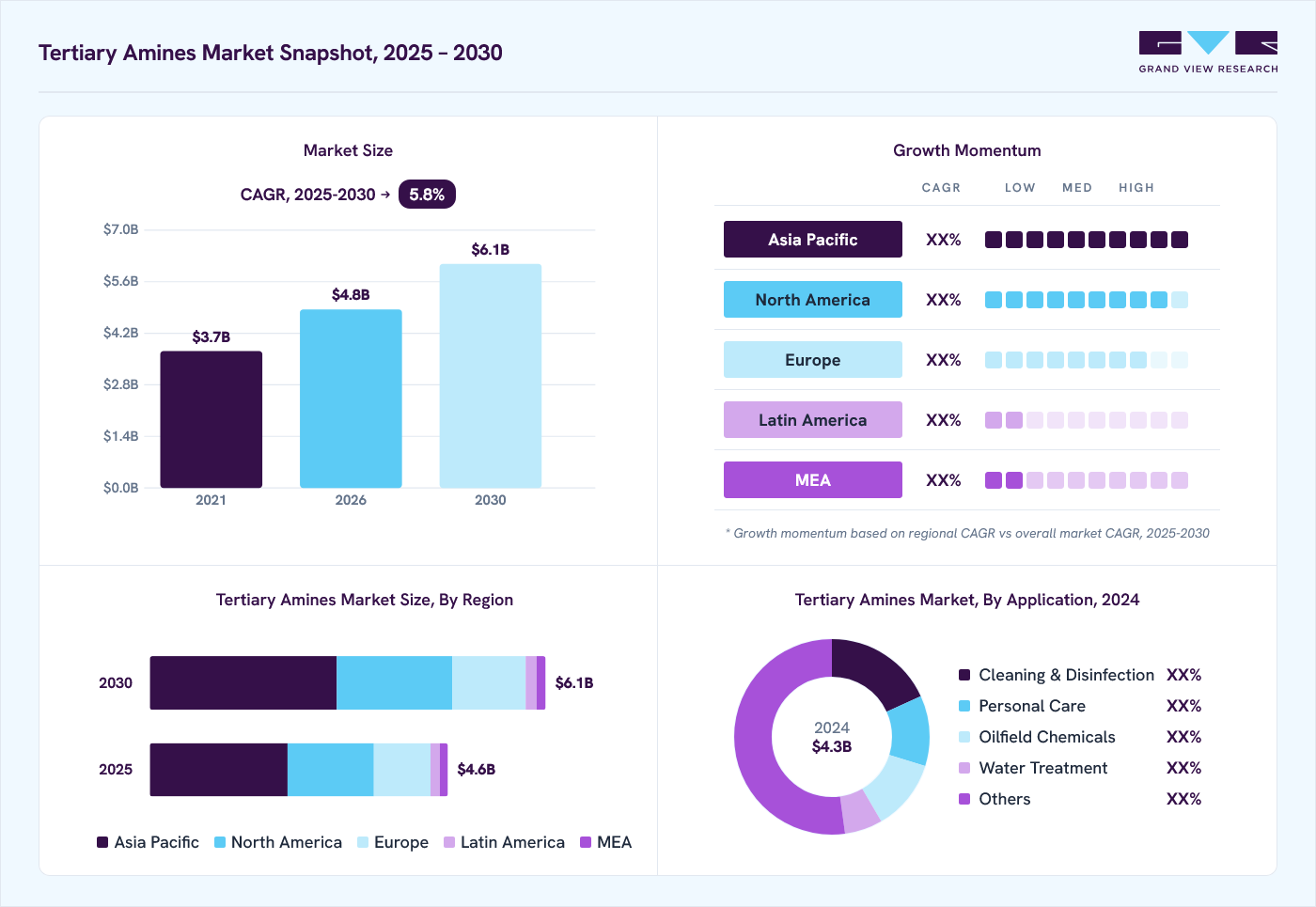
The global tertiary amines market size was valued at USD 4.6 billion in 2025 and is projected to grow from USD 4.8 billion in 2026 to USD 7.2 billion by 2033, at a CAGR of 5.9% from 2026 to 2033. Asia Pacific dominated the market, accounting for the largest revenue share of 46.2% in 2025. Tertiary amines are widely used in the formulation of surfactants, which are essential in personal care items like shampoos, conditioners, and detergents.
 Source: Grand View Research, IR Documents, Primary Interviews, Paid DatabasesTo learn more about this report,
 Download Free Sample Report
 Key Market Trends & Insights
- By product: C-14 TA segment led the market with the largest revenue share of 26.5% in 2025.
- By application: Cleaning & disinfection segment led the market with the largest revenue share of 18.2% in 2025.
- By end use: Cleaning products segment led the market with the largest revenue share of 19.3% in 2025.
Regional Highlights
- Largest regional market: Asia Pacific (46.2% revenue share, 2025)
- By country: China held the largest share of Asia Pacific in 2025.
Market Size & Forecast
- Market Size in 2025: USD 4.6 Billion
- Estimated Market Size in 2026: USD 4.8 Billion
- Projected Market Size by 2033: USD 7.2 Billion
- CAGR (2026-2033): 5.9%
GVR research-powered AIAsk Prism AI about the tertiary amines marketGet cited answers from GVR research on market growth, segments, regulations and forecasts.Start with✓ Source-linked answers ✓ Market-specific context ✓ Traceable figuresExplore Prism AI ↗
With increased consumer spending on hygiene and grooming, especially in emerging markets, the demand for the market is rising. Tertiary amines are critical intermediates in synthesizing drugs and other healthcare products. The global increase in healthcare spending and pharmaceutical innovations fuels demand for these amines, as they are essential in producing various drugs and therapeutic agents.Tertiary amines are used to produce herbicides, fungicides, and pesticides, which support the agriculture industry. As the global population grows and food demand increases, there is an ongoing need for agricultural productivity, driving demand for agrochemical inputs, including product. The use of market in industrial cleaning products is increasing, especially with heightened hygiene awareness in workplaces and institutions. These compounds help create cleaning agents and disinfectants, which are increasingly used in commercial and industrial facilities.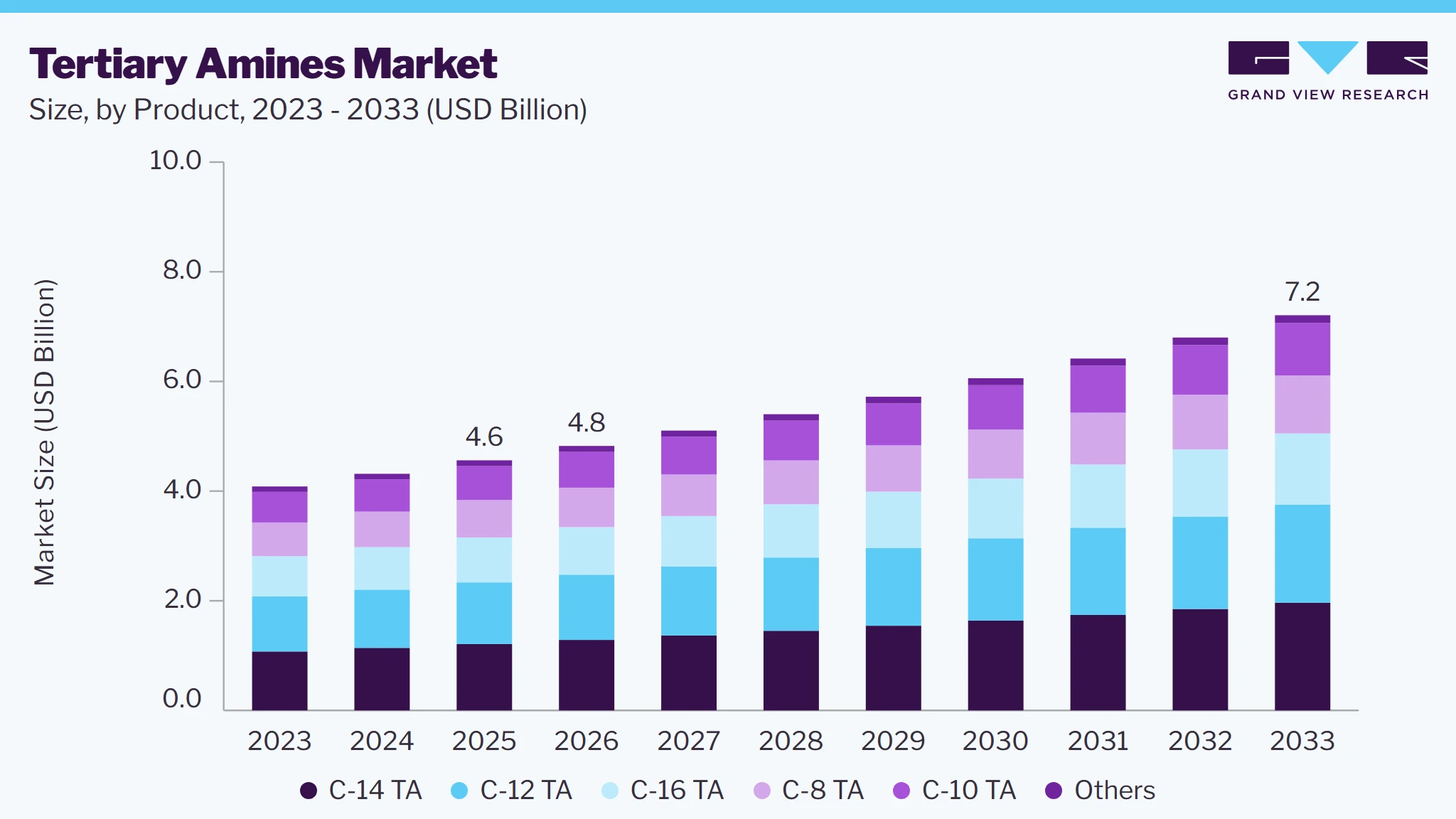 To learn more about this report, Download Free Sample Report
 The market are utilized in the water treatment industry as they help in the removal of impurities and control of microorganisms. Rising global concerns about clean water availability and stricter regulations around water treatment bolster the demand for these chemicals. Innovations in the production of tertiary amines, such as bio-based alternatives and more efficient synthetic methods, are helping reduce costs and increase product quality. This opens up new applications and enhances adoption across industries, supporting market growth.
Market Dynamics
The tertiary amines market is driven by expanding demand from the cleaning, personal care, water treatment, and oilfield chemical industries. Tertiary amines act as key intermediates in the production of quaternary ammonium compounds, surfactants, fabric softeners, disinfectants, and corrosion inhibitors, making them vital parts of many industrial and consumer applications. Rising hygiene awareness, increasing consumption of household and institutional cleaning products, and growing demand for effective disinfection solutions are supporting market expansion globally. The rapid growth of the personal care industry, particularly in emerging economies, is boosting the use of tertiary amines in hair conditioners, emulsifiers, and specialty cosmetic formulations.
The increasing emphasis on hygiene, sanitation, and infection control across residential, commercial, and institutional sectors is a major factor driving the tertiary amines market. Tertiary amines are widely used as intermediates in the production of quaternary ammonium compounds, which serve as active ingredients in disinfectants, sanitizers, and cleaning formulations. Rising awareness regarding health and cleanliness standards, coupled with growing investments in sanitation infrastructure, has led to higher consumption of cleaning products worldwide. As a result, manufacturers are witnessing sustained demand for tertiary amines from formulators of household cleaners, industrial detergents, and surface disinfectants.
The expansion of commercial facilities, healthcare establishments, hospitality services, and food processing industries is contributing to increased usage of specialized cleaning chemicals. Regulatory requirements concerning workplace hygiene and public health protection are encouraging the adoption of effective disinfection solutions, thereby strengthening demand for tertiary amine-based products. The continuous development of advanced cleaning formulations with enhanced antimicrobial performance is expected to further support market growth over the coming years.
One of the primary challenges facing the tertiary amines market is the volatility of raw material prices and the increasing complexity of environmental regulations. The production of tertiary amines relies on feedstocks such as fatty alcohols, ammonia, and petrochemical derivatives, which are susceptible to fluctuations in global supply-demand dynamics, energy costs, and geopolitical factors. These variations can significantly affect manufacturing costs and profit margins, particularly for producers operating in highly competitive markets. Stringent regulations related to chemical handling, emissions, waste management, and product safety require continuous investments in compliance measures and process improvements. The combined impact of rising regulatory obligations and feedstock cost uncertainty may constrain market growth and create operational challenges for manufacturers.
The industry's transition toward sustainable chemical solutions is creating promising opportunities for the development of bio-based and high-performance tertiary amines. Growing environmental awareness and increasing regulatory scrutiny are encouraging manufacturers to invest in renewable feedstocks and environmentally responsible production technologies. Bio-based tertiary amines derived from natural fatty alcohols offer an attractive alternative to conventional petrochemical-based products, helping companies align with sustainability objectives while meeting evolving customer preferences. Demand for customized specialty amines is increasing across personal care, agrochemicals, oilfield chemicals, and advanced industrial applications.
Analyst Perspective
The tertiary amines market is supported by rising demand from cleaning & disinfection, personal care, water treatment, and oilfield chemical applications. Increasing consumption of quaternary ammonium compounds, surfactants, and specialty chemical intermediates continues to drive market expansion across both developed and emerging economies. Manufacturers are focusing on capacity expansions, product innovation, and sustainable production processes to enhance competitiveness and address evolving regulatory requirements. Asia Pacific remains a key growth region due to rapid industrialization, expanding consumer goods production, and increasing investments in water infrastructure. While feedstock price volatility and environmental regulations present challenges, growing demand for specialty and bio-based amine solutions is expected to create attractive long-term opportunities for market participants.
Product Insights
Based on product, the C-14 TA segment accounted for the highest market share, representing 26.5% of total revenue in 2025. C-14 tertiary amines are commonly used as end use in the production of conditioning agents for personal care products such as hair conditioners and skin creams. Their antistatic and conditioning properties are highly valued in personal grooming and hygiene products, driving demand in line with the growth of the personal care and cosmetics industry.
C-16 TA is expected to grow significantly at a CAGR of 5.9% over the forecast period. It is highly effective in softening fabrics and reducing static cling, making it a popular ingredient in fabric conditioners and softeners. The demand for convenience in laundry products, combined with the rise in urbanization and busy lifestyles, is supporting growth in this segment.
End Use Insights
By end use, cleaning products held a dominant position, contributing 19.3% of total revenue in 2025. With a shift toward natural and organic products, there is a demand for tertiary amines derived from bio-based sources or used in eco-friendly formulations. It contribute to the effectiveness and stability of these products, meeting the growing demand for sustainable and "green" personal care items. They are critical in haircare products such as shampoos and conditioners due to their emulsifying and anti-static properties. As the market for premium haircare products expands, driven by increasing awareness of hair health and care routines, the demand for product rises.
Pharmaceuticals is expected to grow at fastest CAGR of 6.6% over the forecast period. Advances in pharmaceutical synthesis technology, including green chemistry methods and more efficient synthetic pathways, make it easier to incorporate tertiary amines in drug manufacturing processes. These advancements reduce production costs, enhance product purity, increase the efficiency of tertiary amines, further fueling demand.
Application Insights
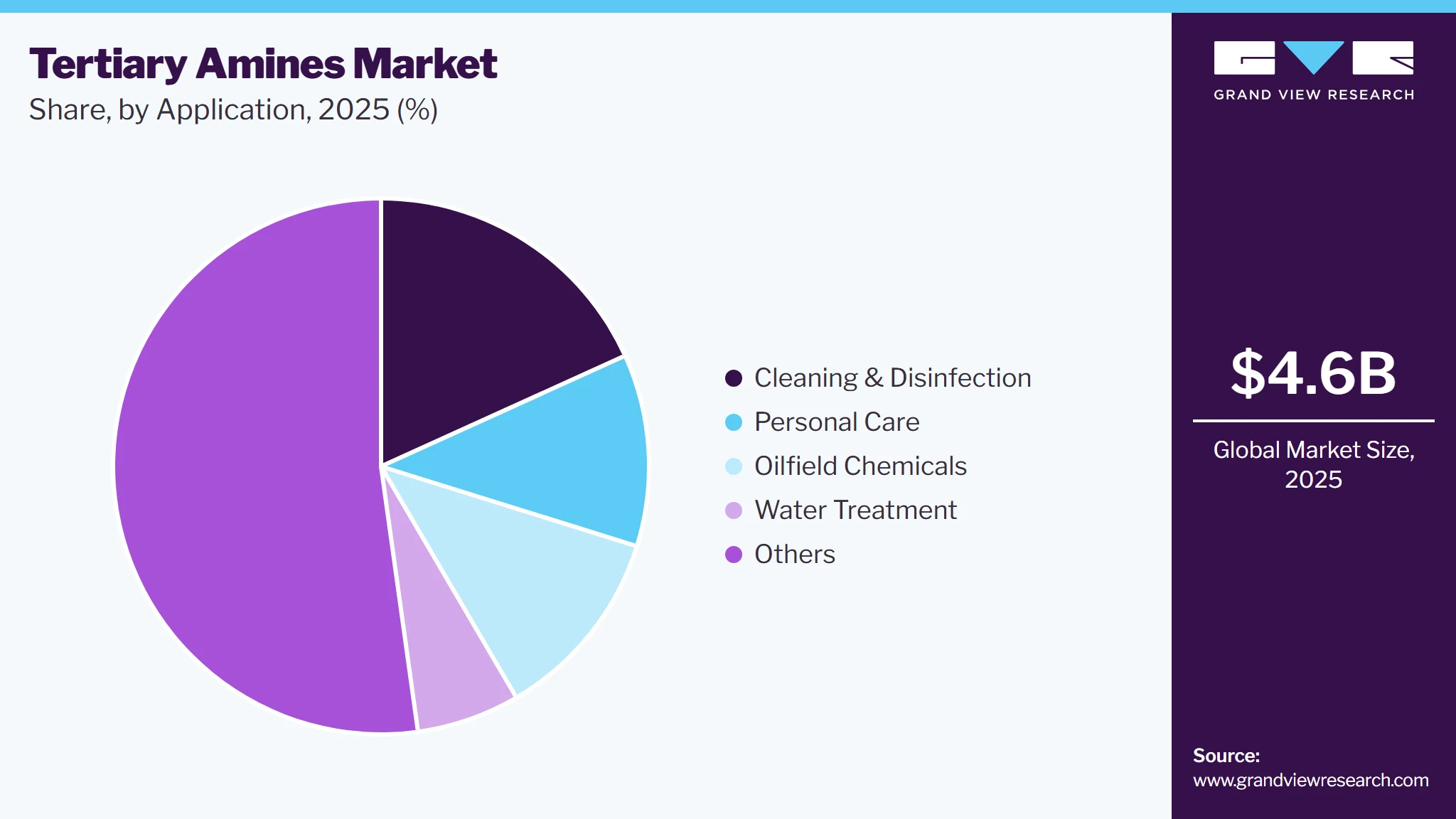
By application, cleaning & disinfection held a dominant position, contributing 18.2% of total revenue in 2025. Growing urbanization, rising income levels, and increased awareness of hygiene in homes and commercial establishments drive the need for cleaning products. Tertiary amines contribute to high-performance disinfectant formulations, allowing companies to meet the rising demand for effective household cleaners.
 To learn more about this report, Download Free Sample Report
 Oilfield chemicals is expected to grow at the fastest CAGR of 6.0% over the forecast period. Growing global energy demand has led to an increase in oil and gas exploration, particularly in offshore and unconventional reserves. Tertiary amines are essential in producing various oilfield chemicals like corrosion inhibitors, drilling fluids, and surfactants, which are critical for efficient and safe operations. New technologies, such as horizontal drilling and hydraulic fracturing, require specialized chemicals for wellbore stabilization and smooth drilling operations. Tertiary amines play a key role in producing these specialty chemicals, particularly in lubricants and emulsifiers for stable and efficient drilling in complex geological formations.
Regional Insights
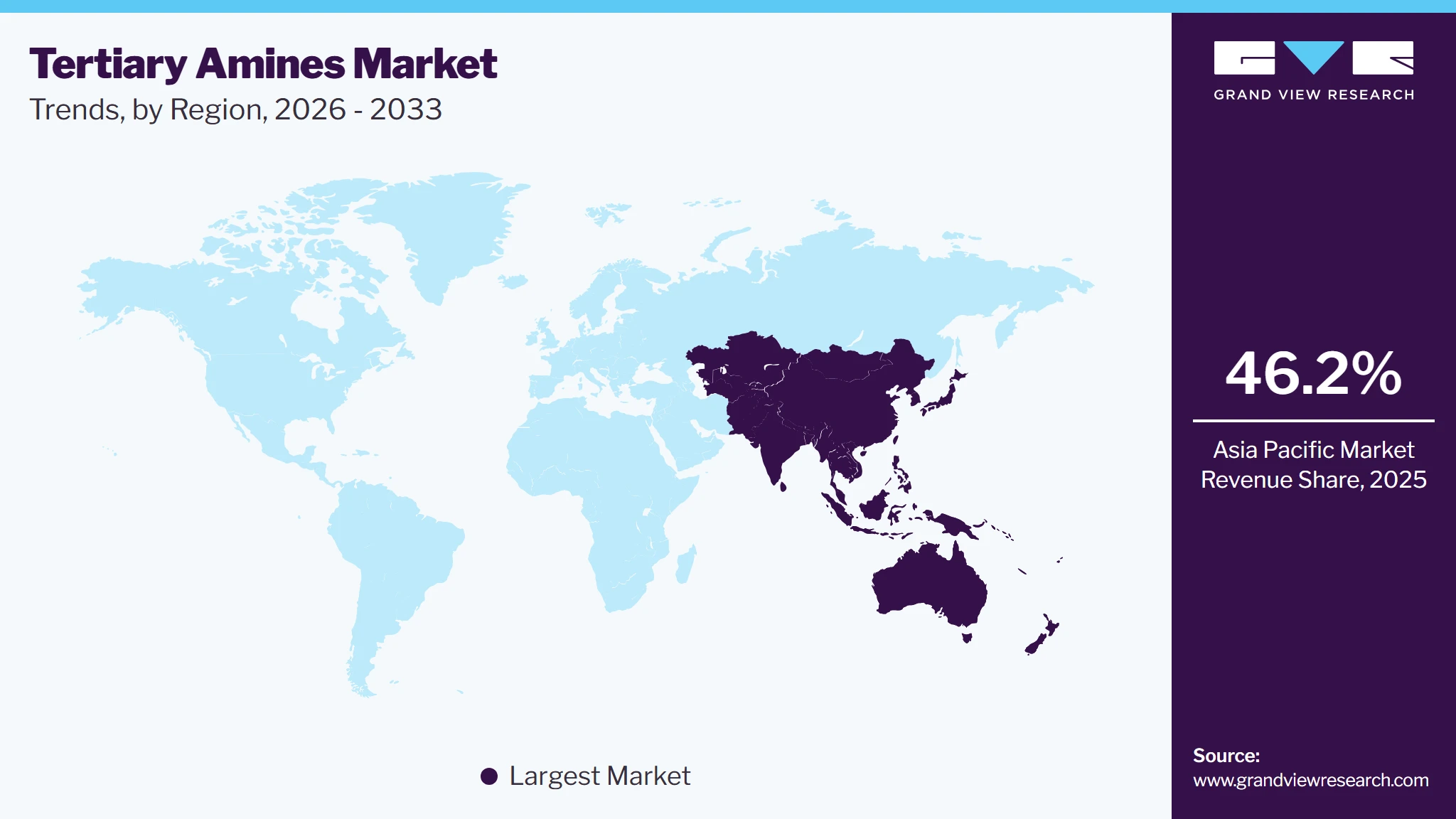
Asia Pacific dominated the tertiary amines market with the highest revenue share of 46.2% in 2025. Tertiary amines are integral to manufacturing herbicides, pesticides, and fungicides. With agriculture being a critical industry in the Asia Pacific region, especially in China, India, and Southeast Asia, the need for agrochemicals continues to rise. The drive to increase crop yields to meet the food demands of a growing population supports this trend.
 To learn more about this report, Download Free Sample Report
 China Tertiary Amines Market Trends
China accounted for 61.0% of the Asia Pacific tertiary amines market in 2025. China’s growing middle class and rising disposable incomes have led to an increased demand for personal care and cosmetic products. It is used in products such as shampoos, conditioners, and lotions, which are seeing higher demand as a result of this consumer trend. China is one of the largest and fastest-growing pharmaceutical markets globally. They are used in synthesizing various active pharmaceutical ingredients (APIs) and in formulations for numerous drugs. The ongoing expansion of pharmaceutical manufacturing, coupled with government efforts to make healthcare more accessible, supports the demand for tertiary amines.
North America Tertiary Amines Market Trends
The North American water treatment industry is expanding due to increasing concerns about water quality, pollution, and regulatory standards. Tertiary amines are commonly used in water treatment chemicals, and with rising infrastructure investment in the U.S. and Canada, demand for these compounds is expected to grow.
The product is used to create herbicides, fungicides, and other agrochemicals that support large-scale farming. In the U.S., where agricultural productivity is a priority, the demand for efficient crop protection solutions is strong. This supports the use of tertiary amines in producing agrochemicals that enhance crop yields and pest control.
Europe Tertiary Amines Market Trends
European Union (EU) regulations governing water quality and treatment are stringent, driving the demand for tertiary amines in the water treatment industry. These chemicals are used for purifying water and controlling microorganisms, aligning with the EU’s goals of maintaining high water quality standards.
The UK’s agricultural sector is increasingly adopting sustainable practices, with an emphasis on productivity and environmental responsibility. Tertiary amines are used in herbicides, pesticides, and fungicides, which support these goals. As agricultural regulations become stricter, tertiary amines' role in eco-friendly crop protection solutions is growing.Tertiary amines are used in water treatment chemicals to control microbial growth and remove contaminants. In the UK, with its strong focus on clean water initiatives and environmental standards, tertiary amines play a key role in municipal and industrial water treatment systems.
Key Tertiary Amines Company Insights
Some of the key players operating in the market are Albemarle Corporation,KLK Oleo:
-
In the tertiary amines market, Albemarle provides a range of high-quality amines used across various industries, including personal care, water treatment, and agriculture. Their product offerings include fatty amines, methyl amines, and a broad spectrum of custom amine solutions tailored to meet specific industrial needs.
-
KLK Oleo’s product offerings include tertiary amines, fatty acids, fatty alcohols, glycerine, and specialty esters. In the product segment, KLK Oleo supplies products tailored for use in personal care, home care, industrial applications, and agrochemical formulations.
Key Tertiary Amines Companies
The following are the leading companies in the tertiary amines market.
-
Kao Corporation
-
Eastman Chemical Company
-
Arkema
-
Balaji Amines
-
Temix Oleo Srl
-
Indo Amines Ltd.
-
Dow Chemical
-
Solvay
-
BASF SE
-
Lonza
-
Albemarle Corporation
-
KLK Oleo
Competitive Benchmarking
Category
Operating Strategies
Competitive Edge
Weakness
Established Players (Kao Corporation, Eastman Chemical Company, Arkema, Dow Chemical, Solvay, BASF SE, Lonza)
- Focus on vertically integrated production to ensure feedstock security and cost optimization.
- Invest heavily in R&D to develop high-performance and specialty tertiary amine derivatives.
- Expand global manufacturing and distribution networks to serve multinational customers
- Pursue strategic partnerships, acquisitions, and sustainability initiatives to strengthen market presence.
- Strong global brand recognition and long-standing customer relationships.
- Extensive product portfolios covering multiple amine grades and downstream derivatives.
- Advanced technological capabilities and large-scale production facilities enabling economies of scale.
- Strong regulatory expertise and ability to meet stringent environmental and product quality standards worldwide.
- Higher operational and compliance costs due to complex global operations.
- Slower decision-making processes result from large organizational structures.
- Greater exposure to regulatory scrutiny and sustainability-related obligations.
- Limited flexibility in serving highly customized or small-volume niche market requirements.
Emerging Players (Balaji Amines, Temix Oleo Srl, Indo Amines Ltd.)
- Focus on regional market expansion and targeted customer acquisition strategies.
- Invest in capacity additions to strengthen presence in specialty amines and derivative markets.
- Emphasize cost-efficient manufacturing and operational flexibility.
- Develop customized formulations and application-specific products to address niche market requirements.
- Greater agility in responding to changing customer demands and market trends.
- Competitive pricing supported by lean organizational structures and lower operating costs.
- Strong regional market knowledge and established relationships with local customers.
- Ability to serve specialized applications requiring customized technical support and product modifications.
- Limited global footprint and distribution capabilities compared to multinational competitors.
- Smaller R&D budgets may constrain innovation and new product development.
- Higher vulnerability to raw material price fluctuations and supply chain disruptions.
- Lower production capacities, which can restrict participation in large-scale global supply contracts.
Tertiary Amines Market Report Scope
Report Attribute
Details
Market size in 2025
USD 4.6 billion
Estimated Market size in 2026
USD 4.8 billion
Projected Market size by 2033
USD 7.2 billion
Growth rate
CAGR of 5.9% from 2026 to 2033
Base year for estimation
2025
Historical data
2021 - 2024
Forecast period
2026 - 2033
Quantitative units
Revenue in USD million/million, Volume in Kilotons and CAGR from 2026 to 2033
Report coverage
Revenue forecast, company ranking, competitive landscape, growth factors, and trends
Segments covered
Product, Application, End Use and Region
Regional scope
North America; Europe; Asia Pacific; Latin America; MEA
Country scope
U.S.; Canada; Mexico; Germany; UK; France; Italy; China; Japan; India; South Korea; Brazil; Argentina; South Africa; Saudi Arabia; UAE
Key companies profiled
Kao Corporation; Eastman Chemical Company; Arkema; Balaji Amines; Temix Oleo Srl; Indo Amines Ltd.; Dow Chemical; Solvay; BASF SE; Lonza
Customization scope
Free report customization (equivalent up to 8 analysts' working days) with purchase. Addition or alteration to country, regional & segment scope.
Pricing and purchase options
Avail customized purchase options to meet your exact research needs. Explore purchase options
Global Tertiary Amines Market Report Segmentation
This report forecasts revenue growth at regional & country levels and provides an analysis of the industry trends in each of the segments from 2021 to 2033. For the purpose of this study, Grand View Research has segmented the tertiary amines market on the basis of application, product, end use and region:
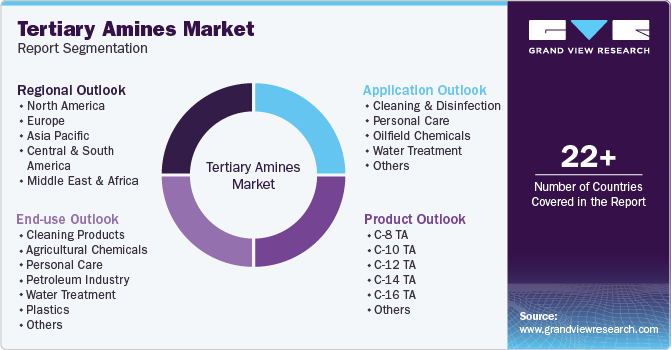 To learn more about this report, Download Free Sample Report
 -
Product Outlook (Volume, Kilotons; Revenue, USD Million, 2021 - 2033)
-
C-8 TA
-
C-10 TA
-
C-12 TA
-
C-14 TA
-
C-16 TA
-
-
Application Outlook (Volume, Kilotons; Revenue, USD Million, 2021 - 2033)
-
Cleaning & Disinfection
-
Personal Care
-
Oilfield Chemicals
-
Water Treatment
-
Others
-
-
End Use Outlook (Volume, Kilotons; Revenue, USD Million, 2021 - 2033)
-
Cleaning Products
-
Agricultural Chemicals
-
Personal Care
-
Petroleum Industry
-
Water Treatment
-
Plastics
-
Pharmaceuticals
-
Textiles & Fibers
-
Others
-
-
Regional Outlook (Volume, Kilotons; Revenue, USD Million, 2021 - 2033)
-
North America
-
U.S.
-
Canada
-
Mexico
-
-
Europe
-
Germany
-
UK
-
France
-
Italy
-
Spain
-
-
Asia Pacific
-
China
-
Japan
-
India
-
South Korea
-
-
Central & South America
-
Brazil
-
Argentina
-
-
Middle East & Africa
-
Research Methodology
The tertiary amines market figures in this report are based on a proven research process that combines executive interviews with secondary research from proprietary databases, company filings, and recognized regulatory and institutional sources. Market size is built through value-chain sizing - reconciling supply-side and demand-side estimates - and triangulated with bottom-up and top-down approaches. Every estimate passes multiple levels of expert validation before publication, with each tertiary amines segment quantified using the revenue-capture definitions in the table below.
Segment Definition
Segment - Product
Revenue capture definition
C-8 TA
Revenue is generated through the production and sale of C-8 tertiary amines used as intermediates in specialty surfactants, flotation agents, corrosion inhibitors, and chemical processing applications. Demand is supported by their effectiveness in industrial formulations requiring shorter-chain amine compounds.
C-10 TA
Revenue is derived from the sale of C-10 tertiary amines utilized in agrochemical formulations, emulsifiers, and specialty surfactants. Growth is driven by increasing demand for performance-enhancing additives across industrial and agricultural applications.
C-12 TA
Revenue is generated through the supply of C-12 tertiary amines used extensively in the manufacture of quaternary ammonium compounds, disinfectants, fabric softeners, and surfactants. Strong demand from cleaning and personal care industries supports segment growth.
C-14 TA
Revenue is generated from the sale of C-14 tertiary amines employed in personal care formulations, textile auxiliaries, flotation chemicals, and specialty surfactants. Their excellent conditioning and emulsification properties contribute to expanding adoption.
C-16 TA
Revenue capture is supported by the utilization of C-16 tertiary amines in cosmetics, water treatment chemicals, antistatic agents, and industrial formulations. Growing demand for premium personal care products and specialty chemicals drives market expansion.
Segment - Application
Revenue capture definition
Cleaning & Disinfection
Revenue is generated using tertiary amines as key intermediates in the production of quaternary ammonium compounds, disinfectants, sanitizers, and industrial cleaning formulations. Rising hygiene standards and sanitation requirements support demand growth.
Personal Care
Revenue is derived from tertiary amines used in hair conditioners, emulsifiers, antistatic agents, and skin care formulations. Increasing consumption of personal grooming and cosmetic products contributes to segment expansion.
Oilfield Chemicals
Revenue is supported by the application of tertiary amines in corrosion inhibitors, demulsifiers, drilling fluids, and enhanced oil recovery chemicals. Expanding upstream and downstream petroleum activities drive demand within this segment.
Water Treatment
Revenue is generated through the incorporation of tertiary amines into water treatment chemicals, including biocides, flocculants, and scale-control agents. Growing investments in industrial and municipal water treatment infrastructure support market growth.
Other Applications
Revenue capture is driven by the use of tertiary amines in mining chemicals, textile auxiliaries, flotation agents, coatings, adhesives, and specialty chemical intermediates. Product diversification and emerging industrial applications continue to create growth opportunities.
Segment - End-use
Revenue capture definition
Cleaning Products
Revenue is generated through the utilization of tertiary amines in household cleaners, industrial detergents, disinfectants, fabric softeners, and sanitation products. Growing awareness of hygiene and cleanliness supports sustained demand.
Agricultural Chemicals
Revenue is derived from the use of tertiary amines as intermediates and formulation aids in herbicides, pesticides, fungicides, and crop protection products. Increasing agricultural productivity requirements contribute to market expansion.
Personal Care
Revenue is generated through the incorporation of tertiary amines in hair care products, skin care formulations, cosmetics, and toiletries. Demand is supported by rising consumer spending on premium and multifunctional personal care products.
Petroleum Industry
Revenue is supported by the use of tertiary amines in oilfield chemicals, refinery operations, corrosion control solutions, and hydrocarbon processing applications. Continued investments in energy production activities drive segment growth.
Water Treatment
Revenue capture is driven by the adoption of tertiary amines in municipal and industrial water treatment operations requiring biocides, scale inhibitors, and process treatment chemicals. Increasing environmental compliance requirements support demand.
Plastics
Revenue is generated using tertiary amines as antistatic agents, polymer additives, catalysts, and processing aids in plastic manufacturing. Growth in packaging, automotive, and consumer goods industries supports segment development.
Pharmaceuticals
Revenue is derived from tertiary amines utilized as chemical intermediates and formulation components in pharmaceutical manufacturing processes. Increasing demand for specialty chemicals and active pharmaceutical ingredient production contributes to growth.
Textiles & Fibers
Revenue is generated through the application of tertiary amines in textile softeners, dyeing auxiliaries, antistatic agents, and fiber treatment formulations. Expanding textile production and demand for performance-enhancing chemicals support market growth.
Other End-uses
Revenue capture is supported by the utilization of tertiary amines across mining, pulp & paper, coatings, adhesives, metalworking fluids, and other specialty industrial applications. Ongoing product innovation continues to expand opportunities in niche markets.
Estimation Model
Layer Name
Key Question
Description
Raw Material & Production Layer
What forms the supply base?
Identify the global production of tertiary amines manufactured through the reaction of fatty alcohols or alkyl feedstocks with ammonia and other amine intermediates. Evaluate the availability of key raw materials including C8-C16 fatty alcohols, ammonia, methanol, petrochemical derivatives, and natural oleochemical feedstocks required for tertiary amine production. Assess manufacturing technologies, alkylation and amination processes, production capacities, feedstock integration, supply chain dynamics, and major production hubs supporting the supply of tertiary amines for cleaning & disinfection, personal care, oilfield chemicals, water treatment, and industrial applications.
Application Adoption Layer
Where are tertiary amines consumed?
Assess the allocation of tertiary amines across major application areas including cleaning & disinfection, personal care, oilfield chemicals, water treatment, and other industrial applications. Demand patterns are influenced by rising hygiene standards, growing consumption of personal care products, increasing water treatment requirements, expansion of oil & gas operations, and the growing need for specialty surfactants, corrosion inhibitors, and quaternary ammonium compound intermediates.
Consumption Intensity Layer
How much tertiary amines are utilized?
Analyze tertiary amines consumption volumes across end-use industries by evaluating formulation loading rates, production volumes, process requirements, and application-specific performance characteristics. This includes household and industrial cleaners, disinfectants, fabric softeners, hair conditioners, cosmetic formulations, oilfield chemicals, water treatment chemicals, agricultural chemicals, plastics additives, pharmaceutical intermediates, and textile processing chemicals. The layer determines annual demand intensity across product categories, end-use sectors, and regional markets.
Revenue Layer
How is market revenue generated?
Market revenue is generated through the production and sale of C-8, C-10, C-12, C-14, and C-16 tertiary amines, as well as downstream derivatives including quaternary ammonium compounds, surfactants, emulsifiers, corrosion inhibitors, antistatic agents, flotation chemicals, and specialty chemical intermediates. Revenue growth is influenced by feedstock availability, product performance, regulatory compliance, technological advancements, capacity expansions, and increasing demand from cleaning products, personal care, petroleum, water treatment, agricultural chemicals, plastics, pharmaceuticals, textiles, and other industrial sectors.
Delivered Customizations
This report has been delivered with the following In-depth customizations
Client Request
Customization Delivered
Value Adds
Regional Segmentation
The study delivers detailed country-level analysis across major tertiary amines production and consumption markets including Australia, New Zealand, China, India, Japan, South Korea, the U.S., Germany, Brazil, and other key regions. The assessment covers tertiary amines production capacities, feedstock availability (fatty alcohols, ammonia, and oleochemical derivatives), trade dynamics, regulatory frameworks, manufacturing footprints, and demand outlook across cleaning & disinfection, personal care, oilfield chemicals, water treatment, agricultural chemicals, plastics, pharmaceuticals, textiles, and other industrial sectors.
Enables stakeholders to identify high-growth regional markets, evaluate supply-demand dynamics, assess feedstock availability and manufacturing competitiveness, understand regional regulatory environments, and prioritize investments in countries experiencing strong growth in specialty chemicals, personal care products, water treatment solutions, and industrial applications.
Trade Assessment
The report delivers comprehensive historical trade analysis covering tertiary amines and tertiary amines derivative imports, exports, major producing and consuming countries, trade flows, supply chain networks, pricing trends, and evolving global market developments influencing product availability and competitiveness. The assessment further evaluates feedstock sourcing patterns, regional production concentration, import dependence, and cross-border supply chain dynamics across key markets.
Provides valuable insights into sourcing strategies, export opportunities, procurement risks, pricing movements, and international trade patterns, enabling companies to optimize supply chains, strengthen market positioning, diversify sourcing networks, and mitigate risks associated with feedstock volatility, logistics disruptions, and changing trade regulations.
Opportunity Assessment
The study delivers detailed assessment of growth opportunities across cleaning & disinfection, personal care, oilfield chemicals, water treatment, agricultural chemicals, plastics, pharmaceuticals, textiles, and emerging specialty chemical applications. The analysis further evaluates opportunities arising from increasing demand for quaternary ammonium compounds, growing hygiene awareness, expansion of water treatment infrastructure, rising personal care consumption, industrial growth in emerging economies, and the development of sustainable and bio-based amine technologies.
Helps companies identify high-potential investment areas, assess long-term demand prospects, align product development and capacity expansion strategies with evolving industry requirements, and capitalize on emerging opportunities across consumer, industrial, environmental, and specialty chemical markets.
Frequently Asked Questions About This Report
The global tertiary amines market size was estimated at USD 4.6 billion in 2025 and is expected to reach USD 4.8 billion in 2026.
Based on product, the C-14 TA segment accounted for the highest market share, representing 26.5% of total revenue in 2025. This is due to its widespread use in personal care formulations, specialty surfactants, and industrial applications where superior emulsification and conditioning properties are required.
By application, cleaning & disinfection held a dominant position, contributing 18.2% of total revenue in 2025. Strong demand for disinfectants, sanitizers, and quaternary ammonium compound-based cleaning products across residential, commercial, and institutional sectors supported the segment's growth.
The global tertiary amines market is expected to grow at a compound annual growth rate (CAGR) of 5.9% from 2026 to 2033 to reach USD 7.2 billion by 2033.
Pharmaceuticals segment registered the fastest CAGR of 6.6% during the review period. Advances in pharmaceutical synthesis technology, including green chemistry methods and more efficient synthetic pathways, make it easier to incorporate tertiary amines in drug manufacturing processes.
Key players in the tertiary amines market are Kao Corporation; Eastman Chemical Company; Arkema; Balaji Amines; Temix Oleo Srl; Indo Amines Ltd.; Dow Chemical; Solvay; BASF SE; Lonza.
The tertiary amines market is primarily driven by increasing demand for cleaning and disinfection products, expanding personal care applications, growing water treatment requirements, and rising consumption of specialty chemicals across industrial sectors.
Cleaning products end use held the largest share of 19.5% in the tertiary amines market in 2025, driven by the extensive use of tertiary amines as key intermediates in the production of surfactants, fabric softeners, and disinfectant formulations used in household and industrial cleaning applications.
Asia Pacific led the market with highest revenue share of 46.2% in 2025. The region's dominance was driven by strong chemical manufacturing capabilities, expanding personal care and cleaning products industries, rapid industrialization, and increasing demand from water treatment and agricultural sectors, particularly in China and India.
About the Author(s)
Agrochemicals & Fertilizers Research Team
Bulk Chemicals · Agrochemicals & FertilizersThis report was authored by the agrochemicals & fertilizers research team at Grand View Research - comprising two research analysts, one senior research analyst, and one industry expert - with specialized expertise in the agrochemicals & fertilizers segment of the bulk chemicals industry. All findings are based on proprietary bulk chemicals databases, executive interviews, and regulatory analysis, subject to internal peer review prior to publication.
Last Updated:
Speak to Analyst

Customize this report to your needs - add regions, segments, or data points, with 20% free customization.
Or view our licence options:


ISO 9001:2015 & 27001:2022 Certified
We are GDPR and CCPA compliant! Your transaction & personal information is safe and secure. For more details, please read our privacy policy.


