
- Home
- »
- Biotechnology
- »
-
Tissue Sectioning Market Size, Share & Trends Report, 2033GVR Report cover

Tissue Sectioning Market (2026 - 2033)
Size, Share & Trends Analysis Report By Product (Instruments, Accessories & Consumables, Services), By Technology, By Application, By End Use, By Region, And Segment Forecasts
Market Size, 2025
$717.9MMarket Estimate, 2026
$755.3MMarket Forecast, 2033
$1,145.3MCAGR, 2026–2033
6.1%Tissue Sectioning Market Summary
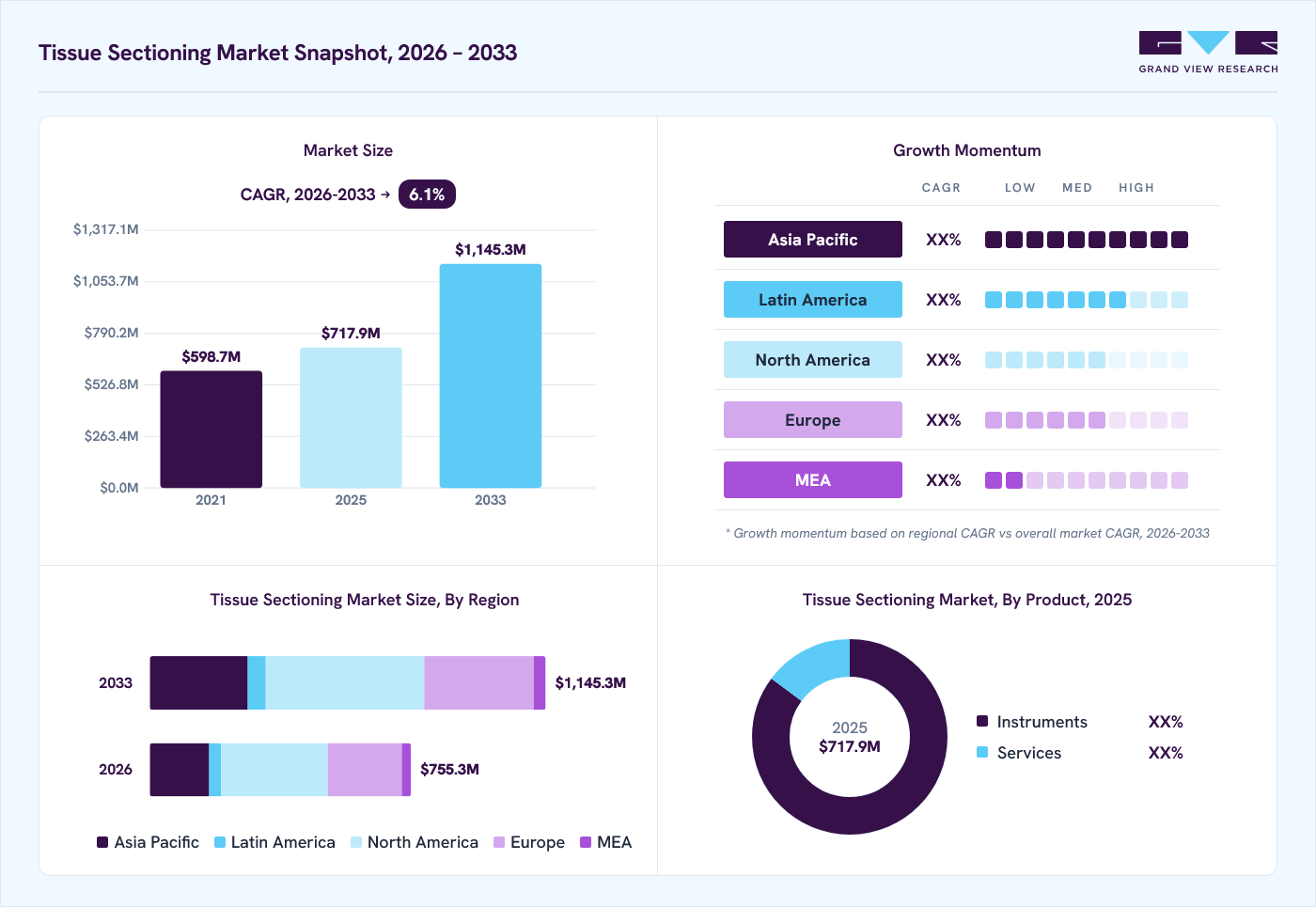
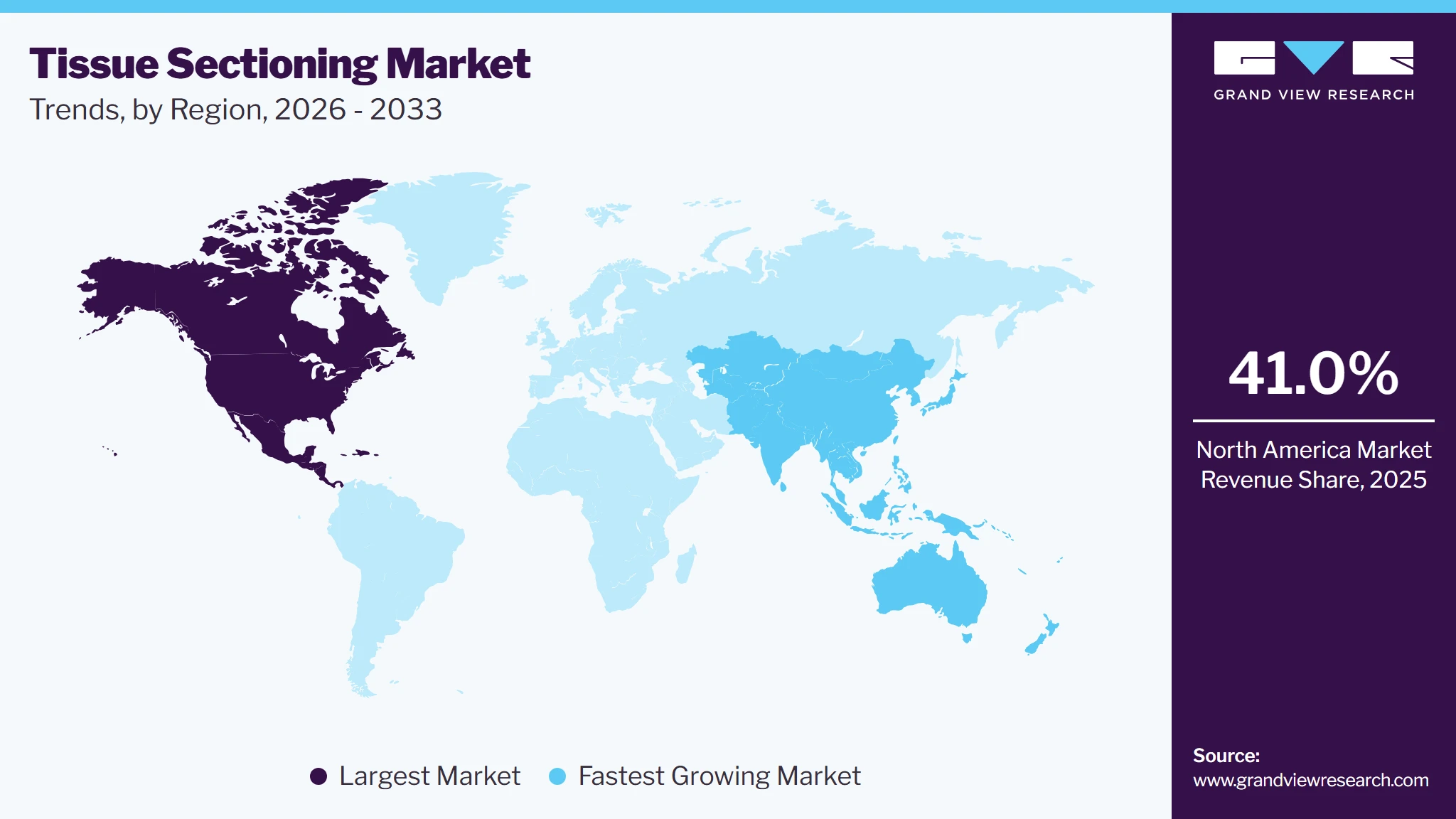
The global tissue sectioning market size was valued at USD 717.9 million in 2025 and is projected to grow from USD 755.3 million in 2026 to USD 1,145.3 million by 2033, at a CAGR of 6.1% from 2026 to 2033. North America dominated the market, accounting for the largest revenue share of 41.0% in 2025. The market growth is driven by the rising number of cancer cases and biopsies that must be sectioned for diagnosis, the growing number of IHC, molecular, and spatial biology tests performed on each tissue block, and shortages of histotechnologists and pathologists that are pushing laboratories toward automated microtomes and cryostats.
 Source: Grand View Research, IR Documents, Primary Interviews, Paid DatabasesTo learn more about this report,
 Download Free Sample Report
Key Market Trends & Insights
- By product: Instruments segment held the highest market share of 54.1% in 2025.
- By technology: Fully automated segment held the highest market share of 48.0% in 2025.
- By application: Disease diagnosis segment held the highest market share of 59.7% in 2025.
- By end use: Hospitals segment held the highest market revenue share of 38.0% in 2025.
Regional Highlights
- Largest regional market: North America (41.0% revenue share, 2025)
- Fastest-growing regional market: Asia Pacific (highest CAGR, 2026-2033)
- By country: The U.S. held the largest market share in 2025.
Market Size & Forecast
- Market size in 2025: USD 717.9 Million
- Estimated market size in 2026: USD 755.3 Million
- Projected market size by 2033: USD 1,145.3 Million
- CAGR (2026-2033): 6.1%
Prism AI by Grand View Research Free to tryAsk a question about the tissue sectioning marketTry asking✓Every figure cited from GVR research Prefer the report? Download free sample →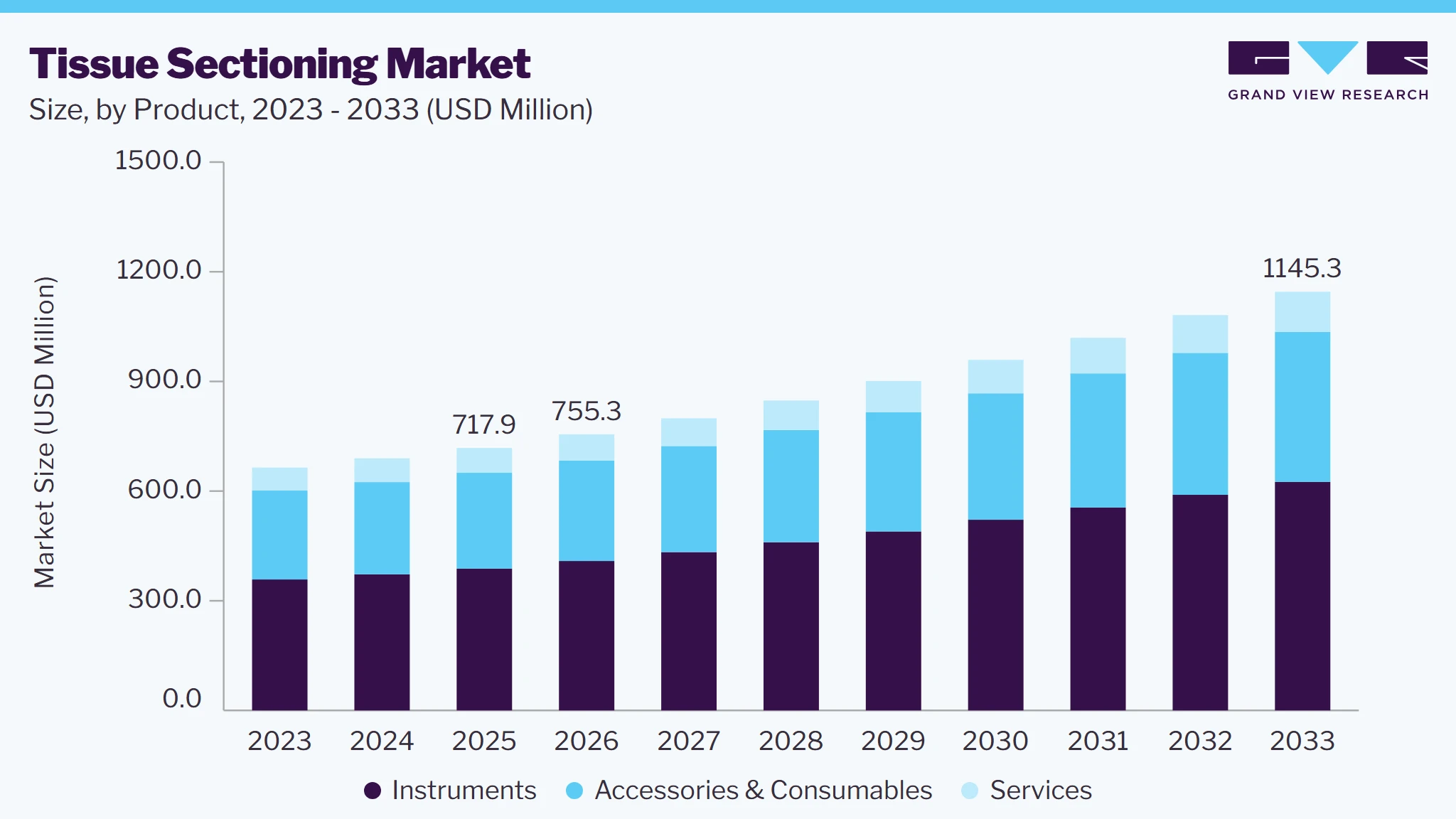 To learn more about this report, Download Free Sample Report
Market Dynamics
The tissue sectioning market is growing steadily, as every tissue biopsy and surgical specimen examined under the microscope must first be cut into thin sections on a microtome or cryostat. The volume of such specimens is rising with the global cancer burden. According to Global Cancer Statistics 2026, published by the American Cancer Society and the International Agency for Research on Cancer in July 2026, nearly 21 million people were diagnosed with cancer and 9.8 million died from the disease worldwide in 2024, and new cases are projected to reach 34 million by 2050. Each cancer diagnosis typically generates several tissue blocks and many sections for H&E, special stains, and biomarker testing.
The growing number of tests performed on each tissue block is a key driver of the tissue sectioning market. In addition to routine H&E slides, pathologists now order immunohistochemistry (IHC) panels, in situ hybridization, and molecular tests to guide targeted therapies, and each of these requires additional serial sections. According to Grand View Research, the global immunohistochemistry market was estimated at USD 2.5 billion in 2025 and is expected to grow at a CAGR of 7.3% from 2026 to 2033, which is anticipated to propel demand for microtomes, cryostats, and blades.
In addition, shortages of trained histotechnologists and pathologists are encouraging laboratories to adopt automated and ergonomic sectioning instruments. According to the Royal College of Pathologists workforce census published in July 2025, 47% of UK pathologists are aged 50 or over, 23% have brought forward their retirement plans, and only 5% of respondents reported that all clinical demand is met within contracted hours. A comparison of manual, semi-automated, and fully automated sectioning highlights differences in throughput, section consistency, and operator strain.
Comparison of manual, semi-automated, and fully automated tissue sectioning
Feature
Manual Microtomes / Cryostats
Semi-Automated Systems
Fully Automated / Robotic Systems
Section advance and cutting
Hand wheel for cutting and trimming
Motorized advance or cutting, with manual control of the other step
Motorized cutting and advance; robotic systems also transfer sections to slides
Throughput
Depends on operator skill and fatigue
Moderate; faster trimming and recuts
High and steady; suited to high-volume histology laboratories
Section consistency
Variable thickness between operators
Improved
Uniform thickness and orientation; supports digital pathology and AI analysis
Operator strain
High risk of repetitive strain injuries
Reduced
Lowest; staff focus on loading, checking, and review
Cost
Lowest instrument cost (about USD 17,000-22,000 for a new manual rotary microtome)
Moderate
Highest capital cost; robotic systems are quoted per laboratory
Source: Company Press Releases, Journal Articles, Secondary Research, Grand View Research Analysis
High instrument costs and long replacement cycles may restrain the tissue sectioning market, particularly for small hospital laboratories and research groups. Microtomes and cryostats are typically used for 7 to 10 years, and an active secondary market offers lower-cost alternatives to new systems. For instance, in 2026, a used Leica HistoCore AUTOCUT automated rotary microtome (manufactured in 2021) was offered by a U.S. reseller at about USD 11,900, and a used Leica CM1950 cryostat at about USD 9,500, compared with about USD 21,600 for a new manual HistoCore BIOCUT microtome from a distributor. Budget constraints in public laboratories in emerging economies further delay instrument upgrades.
The rapid growth of spatial biology is creating significant opportunities for the tissue sectioning market. Spatial transcriptomics and multiplex imaging platforms require high-quality fresh-frozen or FFPE sections of controlled thickness that are placed precisely on capture slides, which increases the value of precise cryostats, automated microtomes, and premium blades. For instance, in January 2026, 10x Genomics reported that its spatial consumables revenue grew 19% to about USD 144.0 million in 2025, which is anticipated to propel demand for tissue sectioning products in research laboratories.
Market Concentration & Characteristics
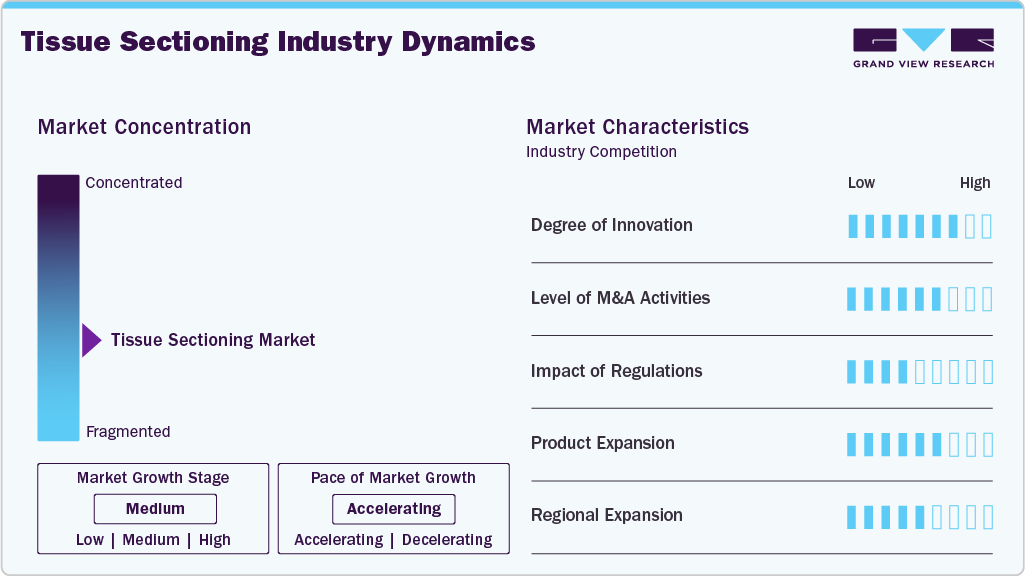
The degree of innovation in the tissue sectioning market is moderate to high, driven by motorized and robotic microtomy, ergonomic cryostats, and sectioning workflows designed for digital pathology. For instance, in April 2024, Clarapath formed a strategic collaboration with Mayo Clinic to advance SectionStar, an automated tissue sectioning, transfer, and quality control system that combines robotics, computational AI, and histopathology workflows, and Mayo Clinic's chair of anatomic pathology joined Clarapath's Board of Directors.
The tissue sectioning market is experiencing moderate M&A activity as leading histology suppliers broaden their workflow portfolios. For instance, in July 2026, Leica Biosystems, a Danaher company, signed a definitive agreement to acquire StatLab Medical Products, a developer and manufacturer of anatomic pathology products that owns the microtome maker Diapath, from Linden Capital Partners and Audax Private Equity, with closing expected by the end of 2026.
“We look forward to welcoming this talented team to Leica Biosystems.”
- Gustavo Perez Fernandez, Group Executive, Danaher Diagnostics, and President, Leica Biosystems
 To learn more about this report, Download Free Sample Report
Regulations have a moderate impact on the tissue sectioning market. In the U.S., microtomes, cryostats, and ultramicrotomes are regulated under 21 CFR 864.3010 as Class I devices that are exempt from premarket notification, which lowers the barriers to launching new instruments. In Europe, instruments intended for diagnostic use must carry CE marking under the In Vitro Diagnostic Regulation (IVDR), and laboratories accredited to ISO 15189 must document the validation and maintenance of sectioning equipment.
The tissue sectioning market is witnessing product expansion as companies introduce new instruments into new geographies. For instance, in September 2025, StatLab launched Diapath histology instruments in the U.S., including the Galileo Series 2 precision microtome with the PRO System for higher throughput, at the National Society for Histotechnology Annual Convention.
“When we acquired Diapath, our vision was clear: to expand access to the most innovative histology instrumentation worldwide.”
- Dae Hong, CEO, StatLab
The tissue sectioning market is witnessing regional expansion as companies shift manufacturing closer to growing markets. For instance, according to PHC Holdings' Integrated Report 2026, Epredia moved its pathology production from the UK to Indonesia and expanded its pathology facility in China to strengthen supply in Asia Pacific.
Analyst Perspective
The tissue sectioning market is expected to witness steady growth, supported by the rising number of cancer cases and biopsies, more IHC, molecular, and spatial biology tests per tissue block, growth in preclinical pathology, and shortages of histotechnologists and pathologists. Instruments remain the largest revenue source, as laboratories need several microtomes and cryostats and replace them every 7 to 10 years, while blades and other consumables provide recurring revenue. Fully automated and robotic sectioning systems continue to gain share as laboratories seek consistent sections for digital pathology and AI-based analysis. Market participants are focusing on automated and robotic microtomy, ergonomic and energy-efficient cryostats, acquisitions, and expansion of distribution and manufacturing networks.
Product Insights
The instruments segment accounted for the largest revenue share of 54.1% in 2025, as hospitals, reference laboratories, and research institutes need several rotary microtomes and cryostats per laboratory and replace them every 7 to 10 years. Among instruments, rotary microtomes held the largest share of 41.3% in 2025, while vibratomes are projected to grow the fastest at a CAGR of 6.5%. Public buyers continue to procure advanced cryostats; for instance, in April 2026, the U.S. Department of Veterans Affairs issued a solicitation for an Epredia HM525 NX UV cryostat for the research service of the Central Arkansas Veterans Health Care System.
The accessories & consumables segment is expected to grow at a CAGR of 5.9% over the forecast period, supported by recurring demand for disposable blades, which accounted for 64.1% of the segment in 2025. Laboratories replace blades many times a day; for instance, low-profile disposable blades from Leica and Feather were listed at USD 200-278 per box of 50 by a U.S. distributor in 2026. The services segment is expected to grow at a CAGR of 6.3%, as pharmaceutical companies and research institutes outsource sectioning and histology to contract laboratories.
Technology Insights
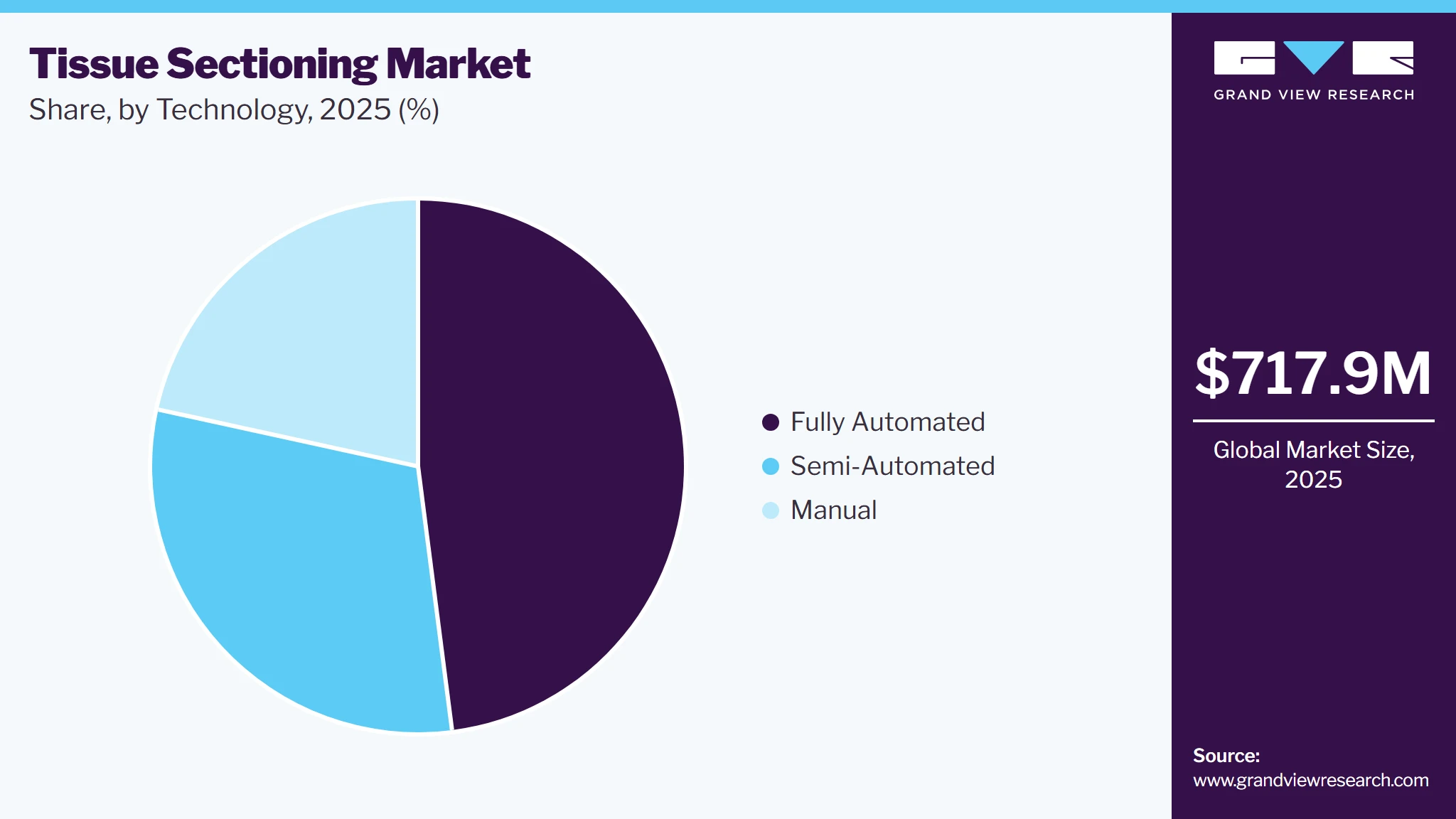
The fully automated segment accounted for the largest revenue share of 48.0% in 2025 and is expected to grow at the fastest CAGR of 6.4% over the forecast period, as high-volume laboratories adopt motorized microtomes and cryostats, such as Leica HistoCore AUTOCUT and Sakura Tissue-Tek AutoSection, to improve section consistency and reduce repetitive strain injuries among histotechnologists.
 To learn more about this report, Download Free Sample Report
The semi-automated segment is expected to grow at a CAGR of 6.0% during 2026-2033, as mid-sized laboratories choose instruments with motorized section advance and manual cutting that offer a balance of control and cost. The manual segment is expected to grow at a CAGR of 5.8%, supported by demand from teaching laboratories and small laboratories in emerging markets.
Application Insights
The disease diagnosis segment accounted for the largest revenue share of 59.7% in 2025, driven by high volumes of biopsies and surgical resections that are sectioned in hospital and reference pathology laboratories, as well as intraoperative frozen sections and Mohs surgery performed on cryostats.
The drug discovery & preclinical toxicology segment is projected to grow at the fastest CAGR of 6.5% during 2026-2033, supported by growing outsourcing of histopathology in preclinical studies. For instance, in May 2024, HistoWiz added Good Laboratory Practice (GLP) compliant routine histology, IHC, and pathology consultation services to support customers whose research is moving toward FDA submission. The research segment is expected to grow at a CAGR of 6.5%, supported by neuroscience, spatial biology, and electron microscopy studies.
End Use Insights
The hospitals segment accounted for the largest revenue share of 38.0% in 2025, as hospital pathology departments section most biopsies and surgical specimens and perform frozen sections during surgery.
The pharmaceutical & biotechnology companies and CROs segment is expected to grow at the fastest CAGR of 6.5% over the forecast period, driven by preclinical pathology, biomarker, and spatial biology studies. The diagnostic & pathology laboratories segment is expected to grow at a CAGR of 6.3%, as specialized reference laboratories consolidate histology volumes, and the academic & research institutes segment at a CAGR of 6.4%.
Regional Insights
North America dominated the tissue sectioning market, accounting for the largest revenue share of 41.0% in 2025, supported by high cancer testing volumes, a large number of hospital and reference pathology laboratories, early adoption of automated and robotic sectioning, and the presence of leading companies such as Leica Biosystems, Epredia, StatLab, and Clarapath.
 To learn more about this report, Download Free Sample Report
U.S. Tissue Sectioning Market Trends
The U.S. tissue sectioning market is expected to grow over the forecast period, supported by a high and rising number of cancer diagnoses that require tissue sections. According to Cancer Statistics, 2026, published by the American Cancer Society in January 2026, an estimated 2,114,850 new cancer cases and 626,140 cancer deaths are projected in the U.S. in 2026, which is anticipated to propel demand for microtomes, cryostats, and blades in pathology laboratories.
Europe Tissue Sectioning Market Trends
The Europe tissue sectioning market is anticipated to grow significantly over the forecast period, supported by a strong base of pathology laboratories and local manufacturers of sectioning instruments, including Leica Biosystems in Nussloch, MEDITE and SLEE medical in Germany, and Diapath and Histo-Line in Italy. Large cancer screening programs and the adoption of digital pathology are increasing the number of high-quality sections required per case.
The UK tissue sectioning market is expected to grow over the forecast period, supported by stronger distribution of sectioning products to research laboratories. For instance, in September 2025, Leica Biosystems and Scientific Laboratory Supplies (SLS) signed a strategic distribution agreement under which SLS sells Leica Biosystems' life science portfolio for tissue-based research to customers in the UK and Ireland.
The tissue sectioning market in Germany is anticipated to grow significantly over the forecast period, supported by a large cancer burden and an ageing population. According to the 15th edition of "Krebs in Deutschland", published by the Robert Koch Institute in December 2025, about 517,800 people in Germany were newly diagnosed with cancer in 2023, which is anticipated to propel demand for tissue sectioning in pathology laboratories.
Asia Pacific Tissue Sectioning Market Trends
Asia Pacific is expected to grow at the fastest CAGR of 7.4% during the forecast period, supported by expanding hospital and pathology laboratory capacity and a rising cancer burden. In India, a study based on the National Cancer Registry Programme, published in the Indian Journal of Medical and Paediatric Oncology in February 2025, projected about 1.57 million new cancer cases in 2025, up 27.7% from 2015.
China's tissue sectioning market is expected to grow over the forecast period, supported by the country's large number of cancer cases and growing domestic production of microtomes and cryostats. According to the National Cancer Center of China, published in the Journal of the National Cancer Center in February 2024, China recorded about 4.82 million new cancer cases and 2.57 million cancer deaths in 2022, which is anticipated to propel demand for histopathology and tissue sectioning.
The Japan tissue sectioning market is expected to grow steadily, supported by an ageing population and the presence of domestic suppliers such as Sakura Finetek. According to the National Cancer Center Japan, about 1,023,100 new cancer cases and 395,500 cancer deaths were projected in Japan in 2025, with colorectal, lung, and stomach cancers the most common.
Latin America Tissue Sectioning Market Trends
The Latin America tissue sectioning market is expected to grow steadily over the forecast period, supported by rising cancer incidence in Brazil. In February 2026, the Brazilian National Cancer Institute (INCA) estimated about 781,000 new cancer cases per year in Brazil for 2026-2028, or about 518,000 excluding non-melanoma skin cancer, which is anticipated to propel demand for histopathology services and sectioning products.
MEA Tissue Sectioning Market Trends
The Middle East & Africa tissue sectioning market is growing steadily, supported by investment in advanced pathology services in Gulf countries. For instance, in November 2024, King Faisal Specialist Hospital & Research Centre (KFSHRC) launched a virtual pathology service at its Madinah branch that reduces diagnostic turnaround time from over a week to one day, which is anticipated to propel demand for high-quality tissue sections for digital review.
Key Tissue Sectioning Company Insights
The tissue sectioning market is moderately consolidated, with a few global leaders and a large number of specialized and regional suppliers. Leading players include Danaher Corporation (Leica Biosystems), PHC Holdings Corporation (Epredia), Sakura Finetek Japan Co., Ltd., StatLab Medical Products (Diapath S.p.A.), MEDITE Medical GmbH, SLEE medical GmbH, Amos Scientific Pty. Ltd., Bright Instruments Ltd., Boeckeler Instruments, Inc., Precisionary Instruments LLC, Diatome AG, RWD Life Science Co., Ltd., Histo-Line Laboratories S.r.l., Clarapath, Inc., and Charles River Laboratories International, Inc. These companies focus on automated and robotic microtomy, ergonomic and energy-efficient cryostats, premium blades, acquisitions, and expansion of distribution and manufacturing networks.
Key Tissue Sectioning Companies
The following key companies have been profiled for this study on the tissue sectioning market.
-
Danaher Corporation (Leica Biosystems)
-
PHC Holdings Corporation (Epredia)
-
Sakura Finetek Japan Co., Ltd.
-
StatLab Medical Products (Diapath S.p.A.)
-
MEDITE Medical GmbH
-
SLEE medical GmbH
-
Amos Scientific Pty. Ltd.
-
Bright Instruments Ltd.
-
Boeckeler Instruments, Inc.
-
Precisionary Instruments LLC
-
Diatome AG
-
RWD Life Science Co., Ltd.
-
Histo-Line Laboratories S.r.l.
-
Clarapath, Inc.
-
Charles River Laboratories International, Inc.
Competitive Benchmarking
Category
Operating Strategies
Competitive Edge
Weakness
Established Players (Danaher Corporation (Leica Biosystems), PHC Holdings Corporation (Epredia), Sakura Finetek Japan Co., Ltd., StatLab Medical Products (Diapath S.p.A.), Charles River Laboratories International, Inc.)
- Renewing microtome and cryostat platforms, adding automation and connectivity, bundling blades and consumables, and acquiring complementary histology businesses.
- Large installed bases, broad histology workflow portfolios, global sales and service networks, and recurring blade revenue.
- Exposure to hospital capital budget cycles, tariffs, and competition from refurbished instruments.
Emerging Players (MEDITE Medical GmbH, SLEE medical GmbH, Amos Scientific Pty. Ltd., Bright Instruments Ltd., Boeckeler Instruments, Inc., Precisionary Instruments LLC, Diatome AG, RWD Life Science Co., Ltd., Histo-Line Laboratories S.r.l., Clarapath, Inc.)
- Focusing on niche instruments (ultramicrotomes, vibratomes, diamond knives), robotic sectioning, and cost-competitive systems for regional markets.
- Specialized technologies, flexible customization, and strong positions in research or regional markets.
- Smaller scale and service networks; dependence on distributors.
Recent Developments
-
In April 2026, Clarapath released the latest version of its SectionStar platform, an FDA-registered robotic microtomy system for clinical histology laboratories, with enhancements across hardware, software, and user experience. The system was showcased at the USCAP 115th Annual Meeting in March 2026, and installations are underway at qualifying customer sites.
“Automation in histology isn't about replacing expertise-it's about supporting it.”
- Matthew Claster, Chief Business Officer, Clarapath
-
In February 2026, Leica Biosystems launched the Leica CM1950 cryostat with DualEcoTec cooling system, which cools specimens up to three times faster, reaches -50 °C, uses a next-generation refrigerant with near-zero global warming potential, and consumes up to 50% less energy than previous models.
“The result is faster turnaround, greater confidence in results, and more efficient workflows.”
- Naveen Chandra, Vice President and General Manager, Digital Pathology & Innovation, Leica Biosystems
-
In August 2024, StatLab Medical Products signed a definitive agreement to acquire Diapath, an Italian manufacturer of histology instruments, including microtomes, tissue processors, and embedding centers, to expand its presence in Europe and its instrument portfolio.
“The decision to join StatLab is driven by our shared commitment to growth and innovation to meet customer needs.”
- Vladimiro Bergamini, Founder, Diapath
Tissue Sectioning Market Report Scope
Report Attribute
Details
Market size in 2025
USD 717.9 million
Estimated market size in 2026
USD 755.3 million
Projected market size by 2033
USD 1,145.3 million
Growth rate
CAGR of 6.1% from 2026 to 2033
Historical data
2021 - 2025
Forecast period
2026 - 2033
Quantitative units
Revenue in USD million, and CAGR from 2026 to 2033
Report coverage
Revenue forecast, company ranking, competitive landscape, growth factors, and trends
Segments covered
Product, technology, application, end use, region
Regional scope
North America; Europe; Asia Pacific; Latin America; MEA
Country scope
U.S.; Canada; Mexico; Germany; UK; France; Italy; Spain; Denmark; Sweden; Norway; Japan; China; India; South Korea; Australia; Thailand; Brazil; Argentina; Saudi Arabia; South Africa; UAE; Kuwait
Key companies profiled
Danaher Corporation (Leica Biosystems); PHC Holdings Corporation (Epredia); Sakura Finetek Japan Co., Ltd.; StatLab Medical Products (Diapath S.p.A.); MEDITE Medical GmbH; SLEE medical GmbH; Amos Scientific Pty. Ltd.; Bright Instruments Ltd.; Boeckeler Instruments, Inc.; Precisionary Instruments LLC; Diatome AG; RWD Life Science Co., Ltd.; Histo-Line Laboratories S.r.l.; Clarapath, Inc.; Charles River Laboratories International, Inc.
Customization scope
Free report customization (equivalent up to 8 analysts' working days) with purchase. Addition or alteration to country, regional & segment scope.
Pricing and purchase options
Avail customized purchase options to meet your exact research needs. Explore purchase options
Global Tissue Sectioning Market Report Segmentation
This report forecasts revenue growth and provides an analysis on the latest trends in each of the sub-segments from 2021 to 2033. For the purpose of this report, Grand View Research has segmented the global tissue sectioning market on the basis of product, technology, application, end use, and region:
-
Product Outlook (Revenue, USD Million, 2021 - 2033)
-
Instruments
-
Rotary Microtomes
-
Cryostats
-
Ultramicrotomes
-
Vibratomes
-
Others
-
-
Accessories & Consumables
-
Blades & Knives
-
Cryo-Embedding Media
-
Specimen Holders & Chucks
-
Others
-
-
Services
-
-
Technology Outlook (Revenue, USD Million, 2021 - 2033)
-
Fully Automated
-
Semi-Automated
-
Manual
-
-
Application Outlook (Revenue, USD Million, 2021 - 2033)
-
Disease Diagnosis
-
Research
-
Drug Discovery & Preclinical Toxicology
-
Others
-
-
End Use Outlook (Revenue, USD Million, 2021 - 2033)
-
Hospitals
-
Diagnostic & Pathology Laboratories
-
Academic & Research Institutes
-
Pharmaceutical & Biotechnology Companies and CROs
-
Others
-
-
Regional Outlook (Revenue, USD Million, 2021 - 2033)
-
North America
-
U.S.
-
Canada
-
Mexico
-
-
Europe
-
Germany
-
UK
-
France
-
Italy
-
Spain
-
Denmark
-
Sweden
-
Norway
-
-
Asia Pacific
-
Japan
-
China
-
India
-
South Korea
-
Australia
-
Thailand
-
-
Latin America
-
Brazil
-
Argentina
-
-
Middle East and Africa (MEA)
-
Saudi Arabia
-
South Africa
-
UAE
-
Kuwait
-
-
Research Methodology
The tissue sectioning market figures in this report are based on a proven research process that combines executive interviews with secondary research from proprietary databases, company filings, and recognized regulatory and institutional sources. Market size is built through value-chain sizing - reconciling supply-side and demand-side estimates - and triangulated with bottom-up and top-down approaches. Every estimate passes multiple levels of expert validation before publication, with each tissue sectioning segment quantified using the revenue-capture definitions in the table below.
Segment Definition
Segment- Product
Revenue Capture Definition
Instruments
This segment includes revenues generated by the sale of tissue sectioning instruments, such as rotary microtomes, cryostats, ultramicrotomes, vibratomes and sliding microtomes.
Accessories & Consumables
This segment includes revenues generated by the sale of accessories and consumables used for sectioning, such as disposable blades, knives, cryo-embedding media, specimen holders and chucks.
Services
This segment includes revenues generated by outsourced tissue sectioning services provided by contract histology laboratories and CROs.
Segment- Instruments
Revenue Capture Definition
Rotary Microtomes
This segment includes revenues generated by the sale of rotary microtomes used to cut paraffin-embedded tissue blocks for routine histology.
Cryostats
This segment includes revenues generated by the sale of cryostats used to cut frozen tissue for intraoperative frozen sections, Mohs surgery and research.
Ultramicrotomes
This segment includes revenues generated by the sale of ultramicrotomes used to cut ultrathin sections for electron microscopy.
Vibratomes
This segment includes revenues generated by the sale of vibratomes (vibrating blade microtomes) used to cut fresh or fixed tissue without embedding, mainly in neuroscience and precision-cut tissue slices.
Others
This segment includes revenues generated by the sale of other sectioning instruments, such as sliding, laser and tissue-slicing microtomes.
Segment- Accessories & Consumables
Revenue Capture Definition
Blades & Knives
This segment includes revenues generated by the sale of disposable microtome and cryostat blades and reusable steel, glass and diamond knives.
Cryo-Embedding Media
This segment includes revenues generated by the sale of cryo-embedding media, such as O.C.T. compound, used to mount tissue for frozen sectioning.
Specimen Holders & Chucks
This segment includes revenues generated by the sale of specimen holders, cassette clamps, cryostat chucks and specimen discs.
Others
This segment includes revenues generated by the sale of other sectioning accessories, such as section transfer tools, brushes, water baths and anti-roll plates.
Segment- Technology
Revenue Capture Definition
Fully Automated
This segment includes revenues generated by the sale of fully automated (motorized) microtomes and cryostats, robotic sectioning systems and the consumables and services used with them.
Semi-Automated
This segment includes revenues generated by the sale of semi-automated microtomes and cryostats (motorized advance with manual cutting, or vice versa) and the consumables and services used with them.
Manual
This segment includes revenues generated by the sale of manual microtomes and cryostats and the consumables and services used with them.
Segment- Application
Revenue Capture Definition
Disease Diagnosis
This segment includes revenues generated by the sale of tissue sectioning products and services used to diagnose disease, mainly cancer, in hospital and reference pathology laboratories.
Research
This segment includes revenues generated by the sale of tissue sectioning products and services used in academic, translational and spatial biology research.
Drug Discovery & Preclinical Toxicology
This segment includes revenues generated by the sale of tissue sectioning products and services used in drug discovery, preclinical toxicology and biomarker studies.
Others
This segment includes revenues generated by the sale of tissue sectioning products and services used in other applications, such as forensic, veterinary and educational pathology.
Segment- End Use
Revenue Capture Definition
Hospitals
This segment includes revenues generated by the sale of tissue sectioning products and services to hospital pathology laboratories.
Diagnostic & Pathology Laboratories
This segment includes revenues generated by the sale of tissue sectioning products and services to independent diagnostic and pathology reference laboratories.
Academic & Research Institutes
This segment includes revenues generated by the sale of tissue sectioning products and services to universities, research institutes and government laboratories.
Pharmaceutical & Biotechnology Companies and CROs
This segment includes revenues generated by the sale of tissue sectioning products and services to pharmaceutical and biotechnology companies and contract research organizations.
Others
This segment includes revenues generated by the sale of tissue sectioning products and services to other customers, such as clinics, forensic and veterinary laboratories.
Estimation Model
Top-Down
Benchmark
Segmentation
Commodity Flow
Parent Market, Company Share & Installed Base Benchmarking
Country-level Segment Share Modeling
Market value was estimated by assessing revenues of leading suppliers from rotary microtomes, cryostats, ultramicrotomes, vibratomes, microtome blades and sectioning consumables, and outsourced sectioning services. Company financials, segment disclosures, installed base, and public price points were analyzed to quantify revenue across product, technology, application, and end use.
The market was benchmarked against the GVR Immunohistochemistry market, the earlier GVR Tissue Sectioning and Microtome reports, company share analysis of leading suppliers, and an installed base and blade consumption build-up. Published estimates were reviewed and normalized to a common base year and scope.
Country-level shares were estimated using company regional sales mixes, cancer incidence, number of hospital and reference pathology laboratories, healthcare spending, and research funding. Differences in automation adoption, pricing, and the use of refurbished instruments were incorporated to determine country and regional distributions across all segments.
Validation
Forecasting
Data Triangulation & Validation Model
Forecasting & CAGR Modeling
Market estimates were reconciled using company revenues, the GVR parent market, the installed base and consumables build-up, and published secondary estimates. The results were cross-checked across product, technology, application, end use, country, and region to ensure consistency between supply-side and demand-side calculations.
Future demand was projected using cancer incidence and biopsy volumes, the number of IHC, molecular, and spatial tests per tissue block, histotechnologist shortages, adoption of automated and robotic microtomy, and growth in preclinical pathology. Instrument replacement cycles and stable blade prices were incorporated into segment-level growth assumptions.
Delivered Customizations
This report has been delivered with the following In-depth customizations
Client Request
Customization Delivered
Value Adds
Installed Base & Replacement Analysis
Estimation of the installed base of rotary microtomes, cryostats, and ultramicrotomes by country, age, and replacement cycle.
Helps clients size instrument opportunities and plan sales coverage.
Blade & Consumables Pull-Through Modeling
Modeling of blade, embedding media, and accessory consumption per instrument and per case volume by end use.
Helps clients forecast recurring revenue and evaluate pricing strategies.
Competitive Benchmarking
Comparison of leading microtomes, cryostats, and robotic sectioning systems by automation level, throughput, ergonomics, and price.
Helps clients position products and identify gaps in their portfolios.
Frequently Asked Questions About This Report
The global tissue sectioning market size was estimated at USD 717.9 million in 2025 and is expected to reach USD 755.3 million in 2026.
The global tissue sectioning market is expected to grow at a compound annual growth rate of 6.1% from 2026 to 2033 to reach USD 1,145.3 million by 2033.
North America dominated the tissue sectioning market with a share of 41.0% in 2025. This is attributable to the presence of advanced healthcare infrastructure, increasing investment by the public and private sectors in tissue diagnostics, and high adoption of technologically advanced fully automated products in the region.
Some key players operating in the tissue sectioning market include Danaher Corporation (Leica Biosystems); PHC Holdings Corporation (Epredia); Sakura Finetek Japan Co., Ltd.; StatLab Medical Products (Diapath S.p.A.); MEDITE Medical GmbH; SLEE medical GmbH; Amos Scientific Pty. Ltd.; Bright Instruments Ltd.; Boeckeler Instruments, Inc.; Precisionary Instruments LLC; Diatome AG; RWD Life Science Co., Ltd.; Histo-Line Laboratories S.r.l.; Clarapath, Inc.; Charles River Laboratories International, Inc.
Key factors that are driving the market growth include increasing demand for histopathology tests in the diagnosis of cancer and other diseases, growth of personalized therapeutics and diagnostics, and an increase in awareness programs for cancer screening.
Instruments segment held the highest market share of 54.1% in 2025.
Fully automated segment held the highest market share of 48.0% in 2025.
Disease diagnosis segment held the highest market share of 59.7% in 2025.
Hospitals segment held the highest market revenue share of 38.0% in 2025.
About the Author(s)
Biotechnology Research Team
Industry · BiotechnologyThis report was authored by the biotechnology research team at Grand View Research - comprising two research analysts, one senior research analyst, and one industry expert - with specialized expertise in the biotechnology segment of the industry industry. All findings are based on proprietary industry databases, executive interviews, and regulatory analysis, subject to internal peer review prior to publication.
Last Updated:
Speak to Analyst

Customize this report to your needs - add regions, segments, or data points, with 20% free customization.
Or view our licence options:


ISO 9001:2015 & 27001:2022 Certified
We are GDPR and CCPA compliant! Your transaction & personal information is safe and secure. For more details, please read our privacy policy.


