
- Home
- »
- Electronic & Electrical
- »
-
Trail Camera Market Size And Share, Industry Report, 2033GVR Report cover
![Trail Camera Market Size, Share & Trends Report]()
Trail Camera Market (2026 - 2033) Size, Share & Trends Analysis Report By Pixel Size (Below 8 MP, 8 To 12 MP, Above 12 MP), By Application (Wildlife Monitoring & Research, Security), By Region, And Segment Forecasts
- Report ID: GVR-3-68038-191-7
- Number of Report Pages: 90
- Format: PDF
- Historical Range: 2021 - 2024
- Forecast Period: 2026 - 2033
- Industry: Consumer Goods
- Report Summary
- Table of Contents
- Segmentation
- Methodology
- Download FREE Sample
-
 Download Sample Report
Trail Camera Market Summary
The global trail camera market size was valued at USD 125.7 million in 2025 and is expected to reach USD 211.3 million by 2033, growing at a CAGR of 6.7% from 2026 to 2033. The demand for trail cameras has grown rapidly in recent years due to a combination of technological advancements, expanding use cases, and rising interest in outdoor monitoring.
Key Market Trends & Insights
- By region, North America led the market with a share of 30.7% in 2025.
- By pixel size, 8 to 12 MP led the market and accounted for a share of 57.5% in 2025.
- By application, wildlife monitoring & research led the market and accounted for a share of 61.6% in 2025.
Market Size & Forecast
- 2025 Market Size: USD 125.7 Million
- 2033 Projected Market Size: USD 211.3 Million
- CAGR (2026-2033): 6.7%
- North America: Largest market in 2025
What was once a niche tool for hunters has now become a mainstream device used for wildlife observation, property surveillance, and environmental research. Consumers, homeowners, conservationists, and commercial users are adopting these cameras because they offer reliable, motion-activated, remote monitoring without the need for constant manual oversight. As trail cameras become more affordable, more durable, and more technologically advanced, their appeal continues to broaden.Many consumers, especially those living in rural or semi-rural areas, now use trail cameras as cost-effective security tools. These cameras can operate without Wi-Fi or power and are easy to install, making them ideal for monitoring large properties, farms, backyards, and construction sites. Modern models equipped with infrared night vision, motion sensors, and cellular connectivity provide real-time alerts and video footage directly to smartphones. For homeowners looking for reliable off-grid surveillance, trail cameras serve as an affordable alternative to traditional CCTV systems.
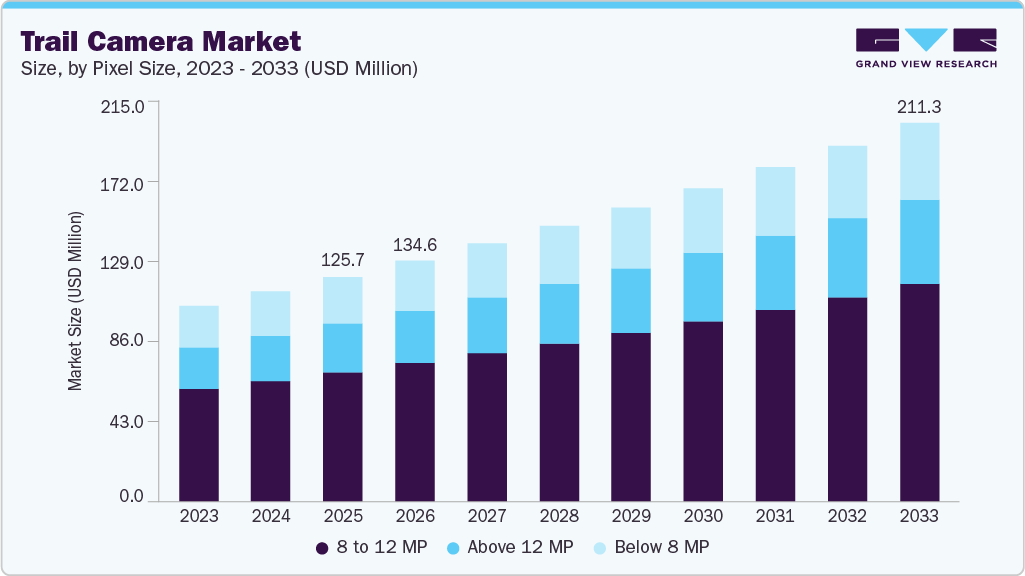
Technological advancements are playing an equally important role in accelerating market growth. Improvements in resolution, battery life, night-vision capability, and sensor accuracy have greatly enhanced the performance of trail cameras, while the introduction of 4G/5G connectivity and solar-powered designs has expanded their use cases. Some advanced models now support artificial intelligence for species recognition, cloud storage, and instant mobile notifications. These features have made trail cameras far more appealing to both first-time buyers and experienced users who value automation, precision, and low-maintenance monitoring.
The rise in environmental awareness and conservation efforts also contributes significantly to the market's expansion. Governments, universities, and wildlife organizations increasingly rely on trail cameras for species monitoring, anti-poaching initiatives, ecosystem research, and habitat assessment. Since trail cameras provide continuous monitoring without disturbing the environment, they have become indispensable tools in conservation projects around the world. As public interest in biodiversity and sustainability grows, so does the investment in technologies that support these goals.
Buyer Insights
The demand for trail cameras among hikers, trekkers, wildlife enthusiasts, and outdoor travellers has been rising rapidly due to several converging consumer trends. One of the biggest drivers is the growing preference for hands-free, “set-and-forget” recording. As more consumers venture into nature for trekking, camping, and long-distance hiking, they prefer cameras that can automatically capture movement, scenery, wildlife, and time-lapses without requiring manual operation. Trail cameras fulfil this need by offering passive capture; hikers can mount them on trees, backpacks, or nearby structures and allow the device to independently record key moments while they focus on the experience.
At the same time, interest in wildlife observation and eco-tourism is growing across all age groups, especially among millennials and Gen-Z, who are increasingly drawn to outdoor activities post-COVID. Trail cameras allow hikers to safely document wildlife encounters, including nocturnal animals that cannot be captured using handheld cameras or smartphones. This aligns with the rising popularity of birdwatching, nature photography, and biodiversity awareness. For many consumers, part of the appeal lies in being able to record footage of animals without disturbing their natural behavior, something that trail cameras are uniquely suited for.
Platforms like YouTube, Instagram Reels, and TikTok have transformed hiking and adventure travel into highly visual experiences where filming plays a central role. Many hikers now look to create cinematic trail videos, wildlife compilations, or behind-the-scenes footage for social media. Trail cameras offer a unique vantage point by automatically shooting wildlife visits, nighttime campsite activity, and extended time-lapses of changing landscapes. As adventure vloggers grow in number, consumers increasingly seek creative ways to capture perspective-rich content that complements footage from smartphones or action cameras.
Trail cameras are also rising in popularity due to safety considerations. Solo hikers, campers, and female trekkers use them as a tool to monitor activity around campsites, detect approaching animals, and ensure gear security when they are away from their tents. The ability of trail cameras to record nighttime activity with infrared and motion sensors provides reassurance and additional situational awareness.
Additionally, trail cameras have become more affordable. Increased competition, especially from Asian manufacturers, has pushed prices down while improving features. Shoppers can now find high-performing models at low to mid-range price points, making them accessible to casual hikers and weekend adventurers who previously relied only on smartphones.
Pixel Size Insights
8 to 12 MP trail cameras dominated the market with a share of 57.5% in 2025. The market for 8-12 MP trail cameras is increasing because this pixel range offers the ideal balance between image clarity, battery efficiency, storage optimization, and price-performance. Consumers, especially wildlife enthusiasts, hunters, and property owners, are realizing that ultra-high megapixels (20 MP+) often produce oversized files without delivering proportionate improvements in real-world outdoor imaging. In contrast, 8-12 MP sensors capture sharp, detailed photos and reliable night imagery, while maintaining faster trigger speeds, better low-light performance, and longer battery life. This “sweet spot” resolution has become the standard for dependable outdoor monitoring, driving strong demand as users prioritize quality, practicality, and cost-efficiency over purely high-megapixel marketing claims.
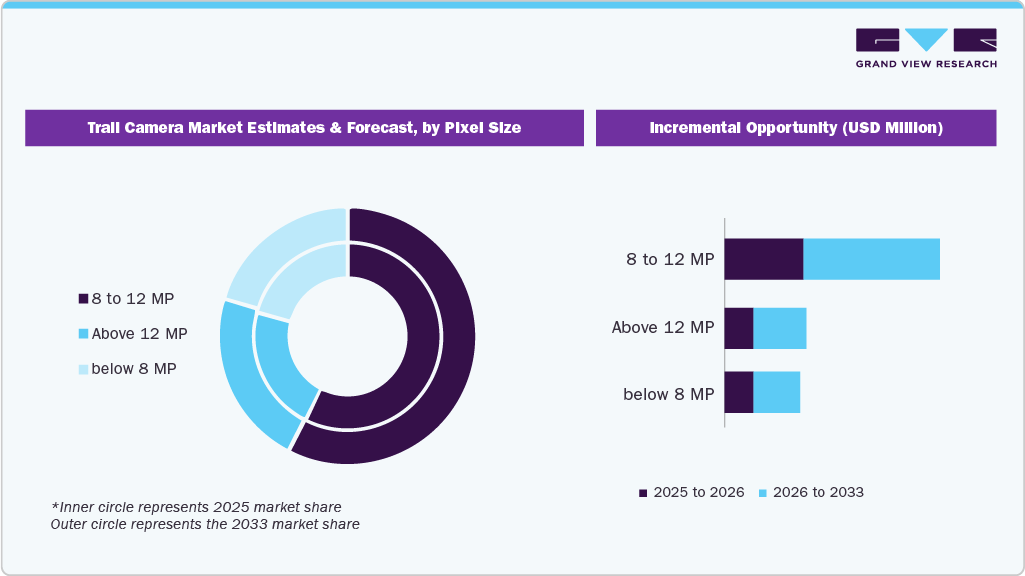
Below 8 MP trail cameras are predicted to show a CAGR of 6.2% from 2026 to 2033. The market for trail cameras with pixel sizes below 8 MP is growing primarily because this category meets the core needs of wildlife monitoring and outdoor security at a much lower cost, making it highly attractive to hobbyists, farmers, and first-time users. Sub-8 MP cameras still deliver reliable image clarity for tracking animal movement, detecting intruders, and monitoring remote areas, while offering longer battery life, faster trigger speeds, simpler storage requirements, and lower data consumption compared to higher-resolution models.
Application Insights
Trail cameras for wildlife monitoring & research accounted for a share of 61.6% in 2025. The market for trail cameras in wildlife monitoring and research is rising quickly because these devices offer a non-invasive, cost-effective, and highly reliable way to observe animals in their natural habitats without human disturbance. Advances in camera technology-such as high-resolution night vision, motion sensors, longer battery life, and cloud-based data retrieval-are enabling researchers to capture continuous behavioral data at scale, even in remote or difficult terrain. As biodiversity conservation, anti-poaching initiatives, and ecological research gain global priority, organizations increasingly rely on trail cameras for population tracking, habitat analysis, and species documentation, driving strong and sustained market demand.
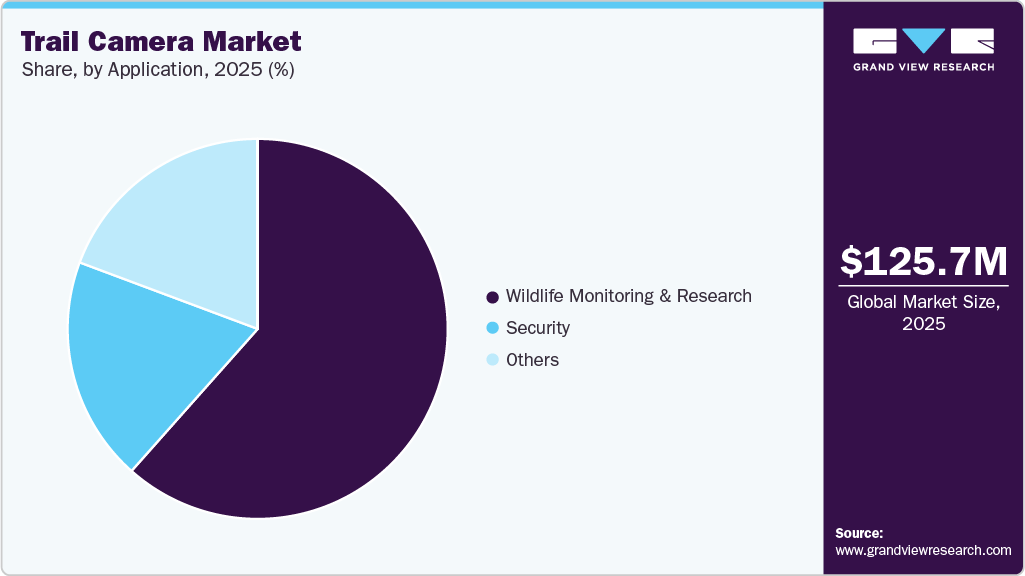
Trail cameras for security applications are expected to grow at a CAGR of 6.7% over the forecast period. The market for trail cameras used in security is increasing because they offer a low-cost, low-maintenance, and highly reliable way to monitor remote or vulnerable areas where traditional CCTV systems are difficult or expensive to install. Their motion-activated, battery-powered design allows them to operate for months without a power supply, making them ideal for farms, construction sites, rural properties, warehouses, and wildlife-prone zones. Advancements such as night vision, 4G/5G connectivity, cloud alerts, and high-resolution imaging have made trail cameras effective for deterring theft, monitoring trespassing, and providing real-time evidence.
Regional Insights
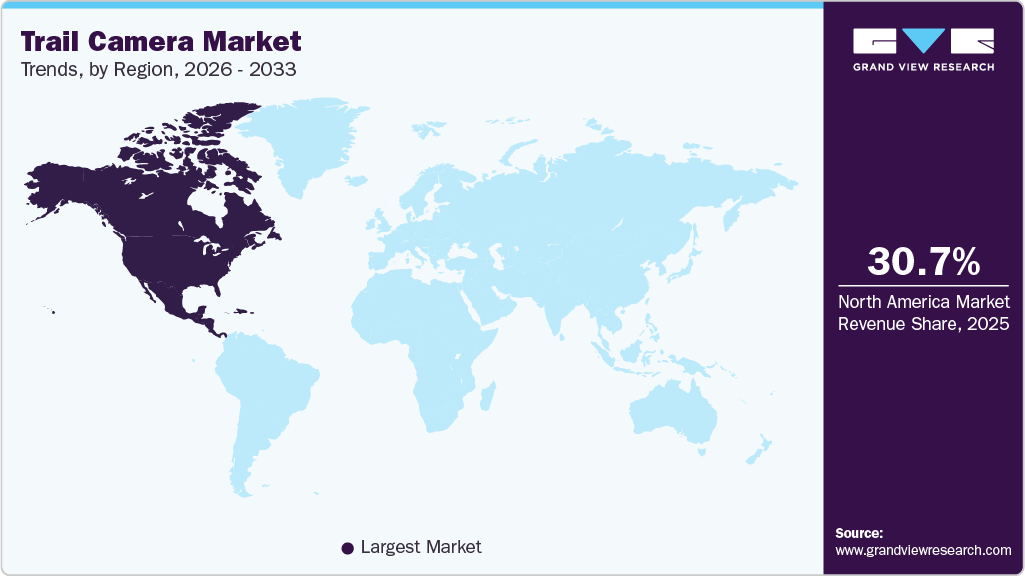
North America trail camera market accounted for a share of 30.7% in 2025. The market in North America is driven by the growing interest in outdoor recreation, wildlife observation, and hunting, combined with the rising popularity of nature photography and content creation. North American consumers, especially in the U.S. and Canada, are increasingly using trail cameras not only for scouting wildlife but also for home security, farm monitoring, and property surveillance, expanding the category beyond traditional hunting use. Advancements in technology, including higher-resolution imaging, improved night vision, cellular connectivity, and long battery performance, have made trail cameras more reliable and easier to use.
U.S. Trail Camera Market Trends
The trail camera market in the U.S. is growing as consumers increasingly use trail cameras not only for traditional game tracking but also for home security, livestock monitoring, and identifying nuisance animals. Advancements such as cellular connectivity, longer battery life, AI-enabled image detection, and higher-resolution night vision have made these devices more reliable and easier to use, which has boosted demand. Additionally, the rise of hobbyist wildlife photography and social-media sharing of wildlife sightings has further accelerated interest in trail cameras across both recreational and practical user groups.
Europe Trail Camera Market Trends
The trail camera market in Europe is expected to grow at a CAGR of 6.8% from 2026 to 2033. Growing biodiversity conservation efforts across EU countries, supported by government-funded projects and environmental NGOs, have significantly boosted the adoption of trail cameras for tracking animal populations and habitat changes. At the same time, farmers, rural landowners, and security-conscious households are turning to these devices as cost-effective tools for monitoring livestock, preventing trespassing, and deterring theft. The surge in outdoor hobbies such as hiking, hunting, and nature photography, combined with technological improvements like better night vision, longer battery life, and 4G/5G connectivity, has further strengthened demand across the region.
Asia Pacific Trail Camera Market Trends
Asia Pacific is expected to register the highest CAGR of 7.1% from 2026 to 2033, owing to rising wildlife conservation efforts, expanding ecotourism, and growing government investment in biodiversity monitoring across countries like India, China, Australia, and Southeast Asia. Forest departments, research institutions, and environmental agencies are adopting trail cameras for species tracking, anti-poaching activities, and habitat assessment as human-wildlife conflict rises. Additionally, outdoor recreation, adventure sports, and the popularity of nature photography among consumers are boosting retail demand. The improving affordability of high-resolution, motion-sensor, and night-vision cameras, combined with wider online availability, is further accelerating adoption across both professional and consumer segments in the region.
Key Trail Camera Company Insights
The presence of a few established players and new entrants characterizes the market. Many big players are increasing their focus on the growing trend of the trail camera market. Players in the market are diversifying their service offerings in order to maintain market share.
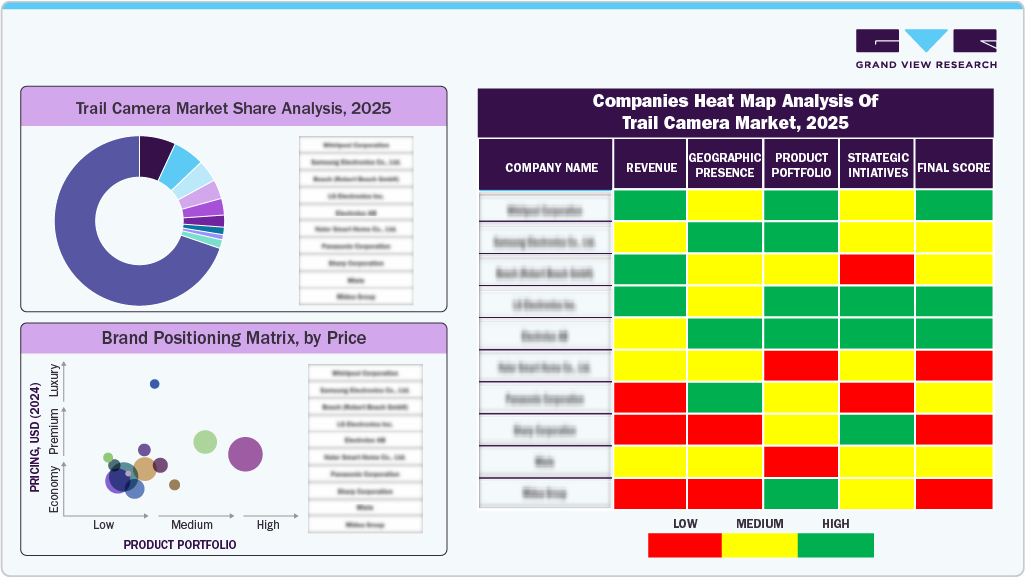
Key Trail Camera Companies:
The following key companies have been profiled for this study on the trail camera market
- Wildgame Innovations (Good Sportsman Marketing, LLC)
- Browning Trail Cameras
- Vista Outdoor Operations LLC
- SPYPOINT
- Boly Media Communications Inc.
- Covert Scouting Cameras, Inc.
- Reconyx Inc.
- Cuddeback
- Easy Storage Technologies Co., Ltd.
- MINOX GmbH.
Recent Developments
-
In February 2025, SPYPOINT launched three new trail cameras for 2025, each designed to deliver faster performance and improved stealth for hunters and wildlife observers. The updated lineup features quicker trigger speeds, enhanced detection, and advanced “no-glow” or “low-glow” LED technology to reduce visibility at night while still capturing clear images. These cameras focus on reliability, concealment, and upgraded imaging capabilities, reflecting SPYPOINT’s effort to offer more efficient, high-performance scouting tools for the upcoming hunting season.
-
In May 2024, Moultrie Mobile was announced as the official trail camera partner for MeatEater, offering a special line of cellular trail cameras through MeatEater’s platforms and flagship store. The partnership includes Moultrie Mobile as the presenting sponsor for upcoming MeatEater content and educational series, focusing on effective use of cellular trail cameras and the Moultrie Mobile App for hunting.
Trail Camera Market Report Scope
Report Attribute
Details
Market size value in 2026
USD 134.6 million
Revenue forecast in 2033
USD 211.3 million
Growth rate
CAGR of 6.7% from 2026 to 2033
Base year for estimation
2025
Historical data
2021 - 2024
Forecast period
2026 - 2033
Quantitative units
Revenue in USD million/billion and CAGR from 2026 to 2033
Report coverage
Revenue forecast, company ranking, competitive landscape, growth factors, and trends
Segments covered
Pixel size, application, region
Regional scope
North America; Europe; Asia Pacific; Central & South America; Middle East & Africa
Country scope
U.S.; Canada; Mexico; UK; Germany; France; Italy; Spain; China; Japan; India; South Korea; Australia & New Zealand; Brazil; South Africa
Key companies profiled
Wildgame Innovations LLC; Browning Trail Cameras; Vista Outdoor Inc.; SPYPOINT; Boly Media Communications Inc.; Covert Scouting Cameras, Inc.; Reconyx, Inc.; Cuddeback; Easy Storage Technologies Co., Ltd.; MINOX GmbH
Customization scope
Free report customization (equivalent up to 8 analysts working days) with purchase. Addition or alteration to country, regional & segment scope.
Pricing and purchase options
Avail customized purchase options to meet your exact research needs. Explore purchase options
Global Trail Camera Market Report Segmentation
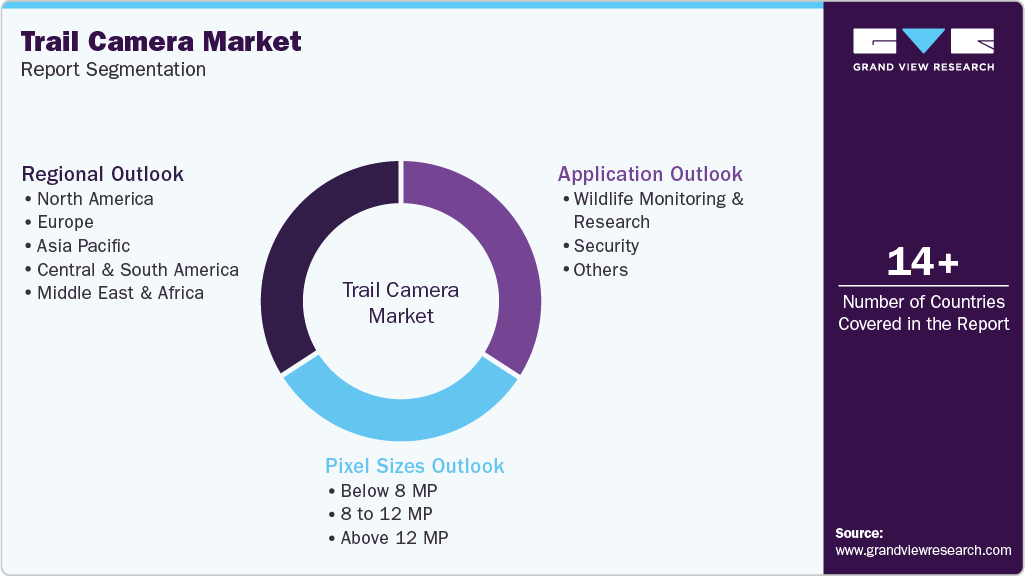
This report forecasts revenue growth at global, regional & country levels and provides an analysis of the latest trends and opportunities in each of the sub-segments from 2021 to 2033. For this study, Grand View Research has segmented the global trail camera market report on the basis of pixel sizes, application, and region.
-
Pixel Sizes Outlook (Revenue, USD Million, 2021 - 2033)
-
Below 8 MP
-
8 to 12 MP
-
Above 12 MP
-
-
Application Outlook (Revenue, USD Million, 2021 - 2033)
-
Wildlife Monitoring & Research
-
Security
-
Others
-
-
Regional Outlook (Revenue, USD Million, 2021 - 2033)
-
North America
-
U.S.
-
Canada
-
Mexico
-
-
Europe
-
UK
-
Germany
-
France
-
Italy
-
Spain
-
-
Asia Pacific
-
China
-
India
-
Japan
-
Australia & New Zealand
-
South Korea
-
-
Central & South America
-
Brazil
-
-
Middle East & Africa (MEA)
-
South Africa
-
-
Frequently Asked Questions About This Report
b. The global trail camera market size was estimated at USD 125.7 million in 2025 and is expected to reach USD 134.6 million in 2026.
b. Some key players operating in the trail camera market include Browning Trail Cameras; Wildgame Innovations LLC; Vista Outdoor, Inc.; and GG Telecom
b. Key factors that are driving the market growth include increasing spending on wildlife research and monitoring along with increasing scope of application in the outdoor security and usage of this product for research activities by zoologists and biologists.
b. The global trail camera market is expected to grow at a compound annual growth rate of 6.7% from 2026 to 2033 to reach USD 211.3 million by 2033.
b. The 8 to 12 MP trail camera dominated the trail camera pixel sizes market with a share of 57.5% in 2025. The market for 8-12 MP trail cameras is increasing because this pixel range offers the ideal balance between image clarity, battery efficiency, storage optimization, and price-performance.


Share this report with your colleague or friend.
Need a Tailored Report?
Customize this report to your needs — add regions, segments, or data points, with 20% free customization.


ISO 9001:2015 & 27001:2022 Certified
We are GDPR and CCPA compliant! Your transaction & personal information is safe and secure. For more details, please read our privacy policy.
Trusted market insights - try a free sample
See how our reports are structured and why industry leaders rely on Grand View Research. Get a free sample or ask us to tailor this report to your needs.













