
- Home
- »
- Food Additives & Nutricosmetics
- »
-
Curcumin Market Size, Share And Trends Report, 2033GVR Report cover

Curcumin Market (2026 - 2033)
Size, Share & Trends Analysis Report By Application (Pharmaceutical, Food, Cosmetics), By Region (North America, Europe, Asia Pacific, Latin America, Middle East & Africa), And Segment Forecasts
Market Size, 2025
$113.8MMarket Estimate, 2026
$135.3MMarket Forecast, 2033
$210.5MCAGR, 2026–2033
3.7%Curcumin Market Summary
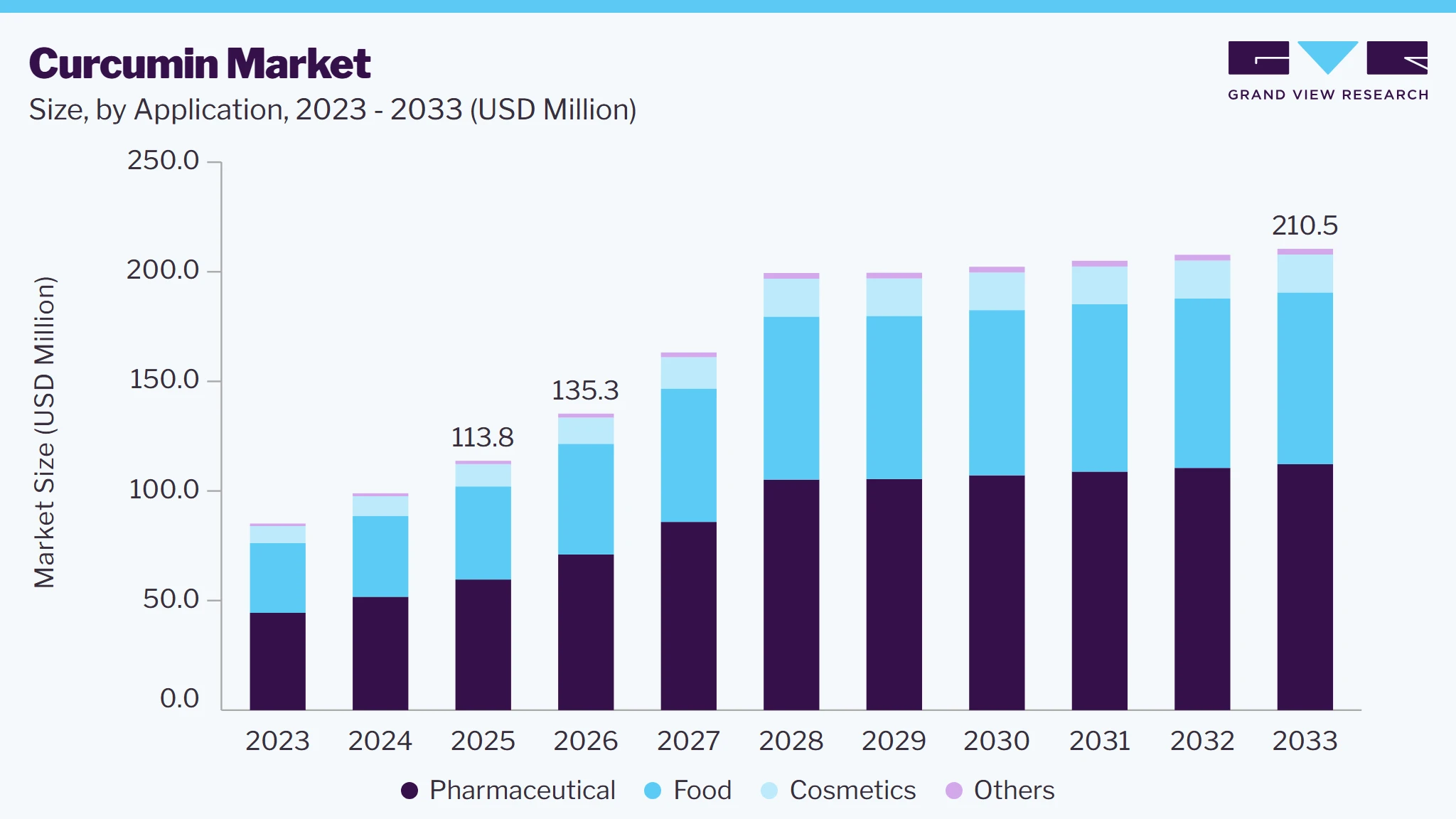
The global curcumin market size was valued at USD 113.8 million in 2025 and is projected to grow from USD 135.3 million in 2026 to USD 210.5 million by 2033, at a CAGR of 3.7% from 2026 to 2033. North America dominated the market, accounting for a revenue share of 50.5% in 2025. The market growth is attributed to the inherent properties of the product, such as anti-cancer, antioxidant, and anti-inflammatory properties. Curcumin is also widely used across skin-care applications, including the prevention of ringworms, eye infection, leech bites, sore skin, bruising, and swelling, among others, which, in turn, is expected to drive the growth of this market over the forecast period.
 Source: Grand View Research, IR Documents, Primary Interviews, Paid DatabasesTo learn more about this report,
 Download Free Sample Report
Key Market Trends & Insights
- By application: Pharmaceutical segment dominated the product segment with a market share of 52.4% in 2025.
Regional Highlights
- Largest regional market: North America (50.5% revenue share, 2025)
- Fastest-growing regional market: Asia Pacific (highest CAGR, 2026-2033)
- By country: The U.S. held the largest market share in 2025.
Market Size & Forecast
- Market size in 2025: USD 113.8 Million
- Estimated market size in 2026: USD 135.3 Million
- Projected market size by 2033: USD 210.5 Million
- CAGR (2026-2033): 3.7%
Three ways to get this report
Buy it, customize it, or ask a question.Ask an Analyst
Analyst response in 1 business day
- AccessReport author, directly
- Reply timeWithin 1 working day
- No sales callDirect answer only
- FormatEmail reply
- CostFree, no cost
Get the Full Report
What the study covers
- FormatsPDF · Excel · Dashboard
- Timeline2026–2033 annual, 2025 base
- Coverage20+ countries, 5 regions
- Companies10+ key players profiled
Customize the Report
20% free customization
- IncludeCountries, segments, points
- TailorTo your product definition
- ExtendDeeper competitor detail
- OrA fully bespoke study
- Turnaround5–10 working days
Curcumin is also widely used across skin-care applications, including the prevention of ringworms, eye infection, leech bites, sore skin, bruising, and swelling, among others, which, in turn, is expected to drive the growth of this market over the forecast period. Curcumin is an active ingredient commonly extracted from turmeric and ginger. Turmeric is widely consumed in Southeast Asian countries in both food and medical products due to its therapeutic properties.Increasing awareness among consumers about curcumin's health benefits and medicinal values is driving product demand worldwide. Shifts observed in consumer trends and rising awareness about the benefits of using organic and natural ingredients in medical, cosmetics, and food applications will also augment the curcumin industry during the forecast period.
 To learn more about this report, Download Free Sample Report
Curcumin is hydrophobic and lipophilic, and its application in the pharmaceutical industry is driven largely by its traditional therapeutic use. Various research is also underway to use different nanoparticles, such as dendrimers, polymeric nanoparticles, and nano gels, as carriers to deliver curcumin in the treatment of cancer and therapy of various neurological diseases. It is proven to have significant health benefits along with the potential to prevent various diseases, including Alzheimer’s, coronary heart disease, and cancer. Such R&D activities and use across pharmaceutical and nutraceutical applications are encouraging the growth of the curcumin industry.
The U.S. has witnessed a rise in product demand over the past few years owing to the growing awareness among consumers about its medicinal properties and health benefits. The product also has significant usage in tissue engineering, and companies are increasingly focused on investing in its research to extrapolate its application in the pharmaceutical industry, mainly due to its non-toxicity. Consumers in developed economies are well aware of these research findings and hence high demands can be anticipated from the countries including the U.S., Denmark, and Germany.
Market Dynamics
The curcumin market is experiencing strong growth, driven by increasing consumer preference for natural ingredients and the expanding application of curcumin across the food & beverage, pharmaceutical, nutraceutical, cosmetics, and personal care industries. Curcumin, the primary bioactive compound extracted from turmeric, is widely recognized for its antioxidant, anti-inflammatory, antimicrobial, and therapeutic properties. Rising health awareness, growing demand for plant-based supplements, and increasing use of natural food colorants are supporting market expansion. Continuous advancements in extraction technologies, enhanced bioavailability formulations, and growing investments in functional foods and dietary supplements are further creating new opportunities for the curcumin market.
The increasing consumer focus on preventive healthcare and wellness is a key driver of the curcumin market. Curcumin is extensively used in dietary supplements, functional foods, and beverages due to its scientifically supported health benefits, including anti-inflammatory and antioxidant effects. The rising prevalence of lifestyle-related disorders such as arthritis, cardiovascular diseases, obesity, and diabetes has accelerated demand for natural ingredients that support overall health and immunity. Consumers are increasingly preferring herbal and plant-based products over synthetic alternatives, further boosting curcumin consumption.
The expanding functional food and nutraceutical industries are also contributing significantly to market growth. Food manufacturers are incorporating curcumin into fortified beverages, dairy products, nutritional bars, and dietary supplements to enhance nutritional value and meet evolving consumer preferences. In addition, the growing popularity of clean-label products and natural food ingredients is encouraging manufacturers to utilize curcumin as a natural colorant and functional ingredient across multiple applications.
One of the major challenges for the curcumin market is its naturally low bioavailability, which limits absorption and therapeutic effectiveness in the human body. Manufacturers often need to develop advanced formulations, such as nano-curcumin, liposomal curcumin, or curcumin-phospholipid complexes, to improve absorption. These technologies increase production complexity and manufacturing costs, making premium formulations more expensive for consumers.
Fluctuations in turmeric production caused by changing climatic conditions, agricultural uncertainties, and supply chain disruptions can impact raw material availability and pricing. Variations in turmeric quality and curcumin content further create challenges in maintaining consistent product quality, increasing procurement and processing costs for manufacturers.
Growing research into the therapeutic potential of curcumin presents significant opportunities for market growth. Ongoing clinical studies are evaluating curcumin for applications in cancer management, neurodegenerative disorders, cardiovascular diseases, metabolic disorders, and inflammatory conditions. Increasing pharmaceutical research and development activities are expected to expand the commercialization of curcumin-based formulations in the coming years.
Advancements in delivery technologies, including nanoparticle-based systems, encapsulation, and sustained-release formulations, are creating new opportunities by improving curcumin's stability and bioavailability. Furthermore, rising demand for personalized nutrition, botanical medicines, and natural healthcare products across emerging economies is expected to support long-term market growth, encouraging manufacturers to invest in innovative, high-purity, and clinically validated curcumin products.
Analyst Perspective
The global curcumin market is positioned for steady growth, driven by increasing demand for natural ingredients across the pharmaceutical, nutraceutical, food & beverage, and cosmetics industries. Curcumin is widely recognized for its antioxidant, anti-inflammatory, antimicrobial, and therapeutic properties, making it a key ingredient in dietary supplements, functional foods, herbal medicines, and personal care products. High-purity curcumin extracts remain the largest product segment due to their extensive use in nutraceutical and pharmaceutical formulations. Growing consumer preference for plant-based wellness products, increasing adoption of clean-label ingredients, continuous advancements in bioavailability-enhancing technologies, and expanding research into curcumin's therapeutic applications are expected to support the long-term growth of the global curcumin market.
Application Insights
Pharmaceutical segment dominated the product segment with a market share of 52.4% in 2025. The segment is estimated to expand further at the fastest CAGR of 12.5% from 2025 to 2030. For centuries, curcumin has been widely used in traditional Asian herbal medicines to treat infections and inflammation. Besides, modern allopathic medicines and nutraceutical companies are also incorporating curcumin on a considerable scale in their products. All such factors are boosting the demand for curcumin for pharmaceutical applications.
The cosmetics application segment is estimated to grow significantly over the forecast period. The product’s applicability in cosmetic applications can be largely attributed to its antioxidant, anti-inflammatory, and antiaging properties. Exposure to UV radiation causes the formation of free radical species, which react with protein, DNA, and fatty acids, further irritating the epidermis. These free radicals also damage the skin, causing visible photo-aging effects, such as hyperpigmentation, wrinkles, and loss of skin firmness. Curcumin-infused products can reduce these effects. Thus, brand owners in the personal care and cosmetic verticals are increasingly incorporating it as an additive. Rising consumer awareness regarding the product benefits, along with consumer inclination for organically produced products, will bolster the curcumin industry growth during the forecast period.
Regional Insights
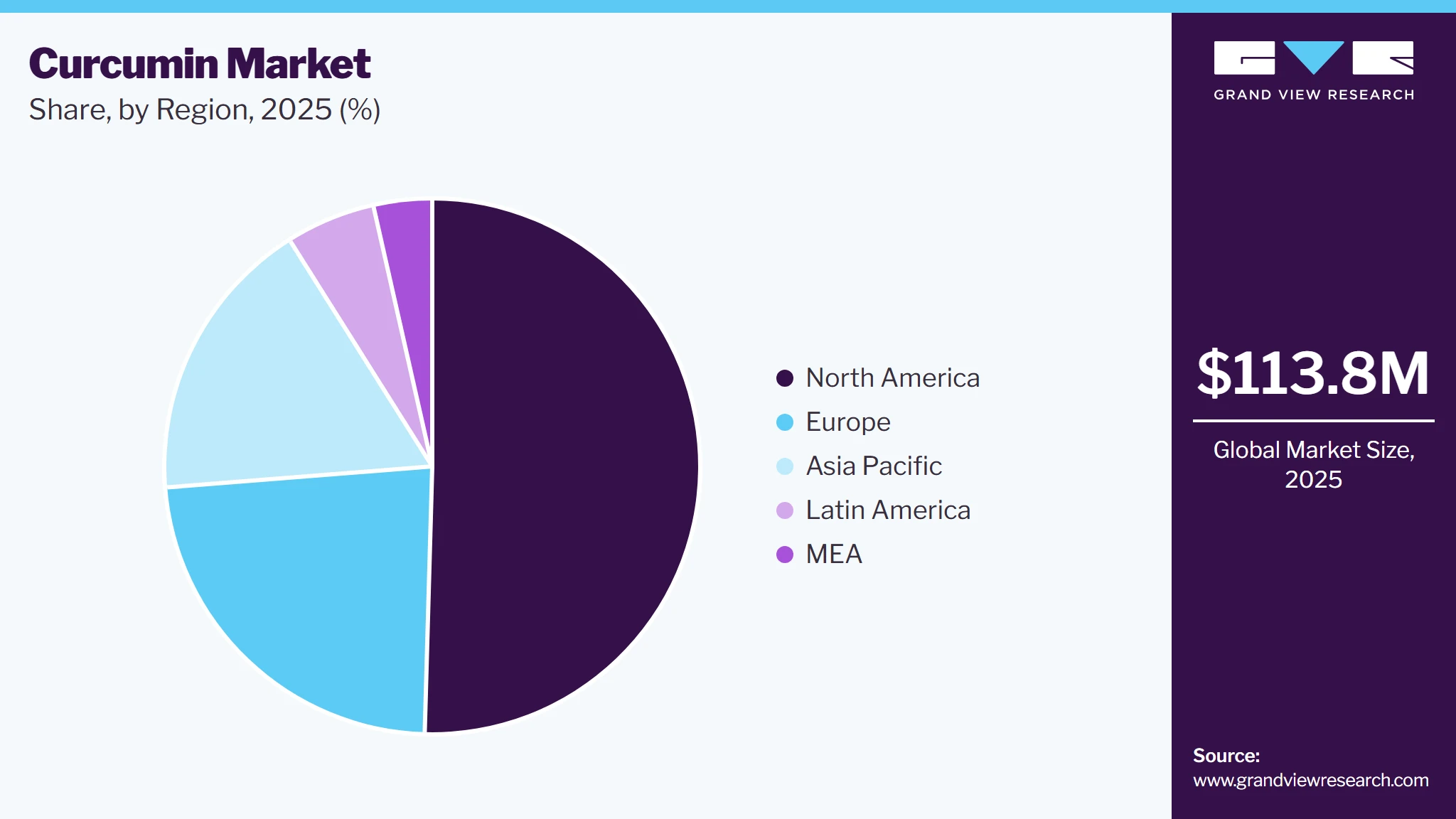
North America accounted for 50.5% of the curcumin market revenue in 2025, making it the largest regional market. The high revenue share is attributed to the high product demand in food and nutritional supplements. North America is also the home of numerous premium cosmetic and nutraceutical brands, and these companies are increasingly inclined towards incorporating organic ingredients such as curcumin in their products, which, in turn, provides growth opportunities to the regional curcumin industry.
 To learn more about this report, Download Free Sample Report
U.S. Curcumin Market Trends
U.S. held the highest market revenue share in North America in 2025 due to its significant and growing population that is increasingly focused on health and wellness. This drives demand for natural products and dietary supplements with perceived health benefits, such as curcumin. The food and beverage industry in the U.S. is increasingly utilizing curcumin as a natural coloring and flavoring agent and incorporating it into functional foods and beverages to cater to health-conscious consumers.
Europe Curcumin Market Trends
Europe is expected to register the fastest CAGR of 12.5% during the forecast period. A major factor driving the regional market is the well-established personal care & cosmetics industry in Western European countries, including Italy, Germany, and Spain. Besides, growing awareness of the health benefits of curcumin among consumers and subsequently, growing use of curcumin across food and dietary supplements are expected to promote the demand for the curcumin market in Europe.
The German curcumin market held the largest regional market share in 2024, demonstrating its leading position in the European curcumin market; Germany also accounted for the highest volume consumption in 2024. The large market share in the country is attributed to the fact that consumers are becoming increasingly knowledgeable about curcumin's potential health benefits, particularly its anti-inflammatory and antioxidant properties. The country has a considerable aging population, which is susceptible to age-related health issues, including arthritis and cardiovascular diseases. Curcumin's potential role in managing these conditions is expected to drive demand and propel the curcumin market in the country.
Asia Pacific Curcumin Market Trends
The Asia Pacific curcumin market is anticipated to grow at a considerable CAGR during the forecast period. This growth is attributed to significantly increasing investments in curcumin R&D across the region. Turmeric is a fundamental spice in many South and Southeast Asian cuisines. This widespread culinary use provides a natural familiarity and acceptance of curcumin as a food ingredient.
In 2024, India led the APAC curcumin market with the largest share, accounting for 21.5% of the regional market. This dominant position highlights the country's strong production capabilities and growing demand for curcumin-based products. As a result, India remains the key driver of the curcumin industry in the Asia-Pacific region.
Key Curcumin Company Insights
The global market is highly competitive & fragmented, and is primarily driven by its applicability in the nutraceuticals and cosmetics industry. This product is extracted from turmeric and ginger. Hence, production plants need to be in the vicinity of the raw material source, which lowers the cost of the final product and removes the strains observed in logistics.
-
WackerChemie AG operates across key industries, such as pharmaceuticals, cosmetics, food, agriculture, and many more. WackerChemie AG has developed innovative solutions to improve the bioavailability and stability of curcumin (the active compound in turmeric) using its CAVAMAX cyclodextrin technology.
-
Arjuna Natural Extracts Ltd offers a range of patented ingredients, including BCM-95 (Curcugreen), Shoden, Oxystorm, and Rhuleave-K, each backed by clinical research to support various health benefits such as immunity, joint health, and cognitive function.
Key Curcumin Companies:
The following key companies have been profiled for this study on the curcumin market.
- WackerChemie AG
- BioMaxLifesciences Ltd.
- Synthite Industries Ltd.
- Hindustan Mint & Agro Products Pvt. Ltd.
- Arjuna Natural Extracts Ltd.
- SV Agrofood
- Star Hi Herbs Pvt. Ltd.
- Herboveda India Pvt. Ltd.
- Helmigs Prima Sehejtera P.T.
- Javaplant
- Konark Herbals & Healthcare Pvt. Ltd.
- Rosun Natural Products Pvt. Ltd.
- Sabinsa Corporation
Competitive Benchmarking
Category
Operating Strategies
Competitive Edge
Weakness
Established Players (Wacker Chemie AG; Sabinsa Corporation; Arjuna Natural Extracts Ltd.; Synthite Industries Ltd.)
- Invest in R&D to develop high-bioavailability curcumin formulations for pharmaceutical and nutraceutical applications.
- Expand global manufacturing capacity and strengthen distribution through strategic partnerships and regional expansions.
- Focus on standardized, high-purity curcumin extracts supported by clinical validation and regulatory compliance.
- Diversify application portfolio across pharmaceuticals, dietary supplements, functional foods, cosmetics, and personal care products.
- Strong global presence with established manufacturing and distribution networks.
- Extensive R&D capabilities and intellectual property in advanced curcumin delivery technologies.
- Strong regulatory expertise with certifications such as GMP, ISO, US FDA, and EU compliance.
- Well-established relationships with global pharmaceutical, nutraceutical, and food manufacturers.
- • High production and R&D costs associated with advanced formulations.
- • Exposure to fluctuations in turmeric raw material prices and agricultural supply.
- • Stringent global regulatory requirements increase compliance costs and product approval timelines.
- • Premium product pricing may limit penetration in cost-sensitive markets.
Emerging & Regional Players (BioMax Lifesciences Ltd.; Hindustan Mint & Agro Products Pvt. Ltd.; SV Agrofood; Star Hi Herbs Pvt. Ltd.; Herboveda India Pvt. Ltd.; Helmigs Prima Sejahtera P.T.; Javaplant; Konark Herbals & Healthcare; Rosun Natural Products Pvt. Ltd.)
- Expand production of standardized turmeric and curcumin extracts through cost-efficient manufacturing.
- Focus on customized formulations for regional nutraceutical, food, and cosmetic manufacturers.
- Strengthen exports through contract manufacturing, private labeling, and distributor partnerships.
- Increase investments in quality certifications and sustainable sourcing of turmeric to access international markets.
- Competitive manufacturing costs are supported by proximity to turmeric cultivation regions.
- Flexibility in offering customized formulations and private-label manufacturing services.
- Strong regional supplier relationships and growing export capabilities.
- Ability to respond quickly to changing customer requirements and niche market demand.
- Limited global brand recognition compared to multinational competitors.
- Smaller production capacities and lower R&D investments for advanced bioavailability technologies.
- Greater dependence on regional demand and export markets.
- Limited financial resources for global expansion, acquisitions, and large-scale clinical research.
Recent Developments
-
In September 2023, NutriOriginal, in collaboration with Star-Hi Herbs Pvt. Ltd, introduced TurmiMax Bio, a turmeric-based supplement featuring enhanced absorption and water solubility using the patented OptiBio Assurance process.
-
In February 2022, Sabinsa Corporation introduced CurCousina turmeric-derived ingredient featuring Calebin A, shown to support healthy weight, cholesterol, and blood sugar levels.
Curcumin Market Report Scope
Report Attribute
Details
Market size in 2025
USD 113.8 Million
Estimated market size in 2026
USD 135.3 Million
Projected market size by 2033
USD 210.5 Million
Growth rate
CAGR of 3.7% from 2026 to 2033
Base year for estimation
2025
Historical data
2021 - 2024
Forecast period
2026 - 2033
Quantitative units
Volume in Kilotons, Revenue in USD Billion, and CAGR from 2026 to 2033
Report coverage
Revenue forecast, company ranking, competitive landscape, growth factors, and trends
Segments covered
Application, region
Regional scope
North America; Europe; Asia Pacific; Latin America; MEA
Country scope
U.S., Canada, Mexico, Germany, UK, France, Germany, Italy, Spain, Poland, Russia, Denmark, China, Japan, India, South Korea, Malaysia, Australia, Indonesia, Thailand, Vietnam, Brazil, Argentina, Saudi Arabia, UAE, South Africa
Key companies profiled
WackerChemie AG; BioMaxLifesciences Ltd.; Synthite Industries Ltd.; Hindustan Mint & Agro Products Pvt. Ltd.; Arjuna Natural Extracts Ltd.; SV Agrofood; Star Hi Herbs Pvt. Ltd.; Herboveda India Pvt. Ltd.; Helmigs Prima Sehejtera P.T.; Javaplant; Konark Herbals & Healthcare; Rosun Natural Products Pvt. Ltd.; Sabinsa Corporation.
Customization scope
Free report customization (equivalent up to 8 analysts' working days) with purchase. Addition or alteration to country, regional & segment scope.
Pricing and purchase options
Avail customized purchase options to meet your exact research needs. Explore purchase options
Global Curcumin Market Report Segmentation
This report forecasts revenue growth at global levels and provides an analysis of the latest industry trends in each of the sub-segments from 2021 to 2033. For this study, Grand View Research has segmented the global curcumin market report based on application, and region:
 To learn more about this report, Download Free Sample Report
-
Application Outlook (Revenue, USD Million, 2021 - 2033)
-
Pharmaceutical
-
Food
-
Cosmetics
-
Others
-
-
Regional Outlook (Revenue, USD Million, 2021 - 2033)
-
North America
-
U.S.
-
Canada
-
Mexico
-
-
Europe
-
Germany
-
UK
-
France
-
Italy
-
Spain
-
Poland
-
Russia
-
Denmark
-
-
Asia Pacific
-
China
-
India
-
Japan
-
Australia
-
Malaysia
-
Indonesia
-
Thailand
-
South Korea
-
Vietnam
-
-
Latin America
-
Brazil
-
Argentina
-
-
Middle East and Africa
-
UAE
-
South Africa
-
South Arabia
-
-
Research Methodology
The curcumin market figures in this report are based on a proven research process that combines executive interviews with secondary research from proprietary databases, company filings, and recognized regulatory and institutional sources. Market size is built through value-chain sizing - reconciling supply-side and demand-side estimates - and triangulated with bottom-up and top-down approaches. Every estimate passes multiple levels of expert validation before publication, with each curcumin segment quantified using the revenue-capture definitions in the table below.
Segment Definition
Segment - Application
Revenue capture definition
Pharmaceutical
Captures revenue generated from curcumin used in pharmaceutical formulations, including capsules, tablets, syrups, topical creams, and advanced drug delivery systems, owing to its anti-inflammatory, antioxidant, antimicrobial, and therapeutic properties.
Food
Represents revenue from curcumin used as a natural food colorant and functional ingredient in processed foods, beverages, dairy products, bakery, confectionery, and dietary supplements to enhance nutritional value and product appeal.
Cosmetics
Accounts for revenue associated with curcumin incorporated into skincare, haircare, and personal care products for its antioxidant, anti-inflammatory, brightening, and anti-aging benefits, supporting natural and herbal cosmetic formulations.
Others
Captures revenue generated from curcumin used in nutraceuticals, animal feed, research applications, and other industrial uses, including botanical extracts and specialty formulations developed for health, wellness, and functional ingredient applications.
Estimation Model
Layer Name
Key Question
Description
Curcumin Production Layer
What forms is the supply base?
Identify the global production estimation of curcumin by evaluating turmeric cultivation, curcumin extraction, purification, and formulation processes. The analysis includes raw material availability, extraction technologies, production capacities, purity grades, and key manufacturing facilities, establishing the global supply base for food, pharmaceutical, nutraceutical, and cosmetic applications.
Application Adoption Layer
Where are curcumin utilized?
Estimate the distribution of curcumin consumption across major application sectors, including pharmaceuticals, food & beverages, cosmetics & personal care, nutraceuticals, and other industrial uses, by analyzing product demand, formulation trends, regulatory approvals, and end-use adoption.
Consumption Intensity Layer
How much curcumin are consumed?
Assess curcumin consumption across end-use industries by evaluating production volumes of dietary supplements, functional foods, pharmaceutical formulations, cosmetic products, and natural food colorants to estimate annual demand across major regional markets.
Revenue Layer
How is market revenue generated?
Market revenue is generated through the sale of curcumin extracts, standardized curcumin powders, high-purity curcuminoids, and bioavailability-enhanced formulations to pharmaceutical companies, nutraceutical manufacturers, food & beverage producers, cosmetic brands, and ingredient suppliers. Revenue is derived through direct sales, distributors, contract manufacturing, and integrated supply chains supporting health, nutrition, and personal care applications.
Delivered Customizations
This report has been delivered with the following In-depth customizations
Client Request
Customization Delivered
Value Adds
Regional Segmentation
Expanded regional assessment covering additional high-potential markets such as Vietnam, South Africa, and Colombia, including country-level demand patterns, consumption outlook, regulatory environment, and end-use industry adoption beyond the standard market scope.
Enables identification of untapped geographic opportunities, supports regional expansion planning, and improves market prioritization by highlighting emerging demand centers and country-specific growth drivers.
Competitive Benchmarking
Comparative evaluation of leading curcumin manufacturers based on product portfolio, production capacity, extraction technologies, raw material sourcing, bioavailability technologies, regulatory certifications, geographic presence, sustainability initiatives, and recent strategic developments across major regional markets.
Assists competitive intelligence and strategic decision-making by providing insights into market positioning, operational strengths, technological capabilities, innovation focus, and competitive advantages across global and regional players.
Opportunity Assessment
Comprehensive assessment of emerging opportunities across high-growth applications such as nutraceuticals, functional foods & beverages, pharmaceuticals, cosmetics & personal care, and advanced bioavailability formulations, including increasing demand for natural, clean-label, and plant-based ingredients across key regional markets.
Helps identify high-growth application areas, innovative formulation technologies, and regional investment opportunities, supporting product development, capacity expansion, market entry strategies, and long-term revenue growth.
Frequently Asked Questions About This Report
The demand is due to the increasing demand for curcumin in the pharmaceuticals, especially in the Asiatic countries.
Asia Pacific is the fastest-growing region over the forecast period.
The global curcumin market size was valued at USD 113.8 million in 2025 and is estimated at USD 135.3 million for 2026.
The global curcumin market is expected to grow at a CAGR of 3.7% from 2026 to 2033, reaching USD 210.5 million by 2033.
Some of the key players in the curcumin market are Wacker Chemie AG, BioMax Lifesciences Ltd., Synthite Industries Ltd., Hindustan Mint & Agro Products Pvt. Ltd., Arjuna Natural Extracts Ltd., SV Agrofood, Star Hi Herbs Pvt. Ltd., Herboveda India Pvt. Ltd., Helmigs Prima Sehejtera P.T., Tri Rahardja PT/Javaplant, Konark Herbals & Healthcare, Rosun Natural Products Pvt. Ltd., and Sabinsa Corporation.
The pharmaceutical segment dominated the curcumin market in 2025, accounting for 52.4% of global revenue, driven by the increasing use of curcumin in dietary supplements, anti-inflammatory formulations, and therapeutic products, supported by growing consumer demand for natural healthcare ingredients.
North America dominated the global curcumin market in 2025, capturing 50.5% of the market revenue, owing to the strong presence of nutraceutical and pharmaceutical manufacturers, high consumer awareness of preventive healthcare, and increasing demand for natural dietary supplements and functional ingredients.
U.S. accounted for the largest share of the global curcumin market, driven by strong demand for dietary supplements, functional foods, and natural healthcare products. Rising consumer preference for clean-label ingredients, growing wellness awareness, and established nutraceutical industries further strengthened market leadership.
About the Author(s)
Food Additives & Nutricosmetics Research Team
Specialty & Chemicals · Food Additives & NutricosmeticsThis report was authored by the food additives & nutricosmetics research team at Grand View Research - comprising two research analysts, one senior research analyst, and one industry expert - with specialized expertise in the food additives & nutricosmetics segment of the specialty & chemicals industry. All findings are based on proprietary specialty & chemicals databases, executive interviews, and regulatory analysis, subject to internal peer review prior to publication.
Last Updated:
Speak to Analyst

Customize this report to your needs - add regions, segments, or data points, with 20% free customization.
Or view our licence options:


ISO 9001:2015 & 27001:2022 Certified
We are GDPR and CCPA compliant! Your transaction & personal information is safe and secure. For more details, please read our privacy policy.


