
- Home
- »
- Advanced Interior Materials
- »
-
Underbalanced Drilling Market Size, Industry Report, 2030GVR Report cover

Underbalanced Drilling Market (2025 - 2030) Size, Share & Trends Analysis Report By Technology (Gas Injection, Foam Injection, Aerated Fluid Injection, Mist Drilling), By Application (Onshore, Offshore), By Region (North America, Europe, APAC), And Segment Forecasts
Market Size, 2024
$4.1BMarket Estimate, 2026
$4.3BMarket Forecast, 2030
$5.8BCAGR, 2025–2030
6.2%Underbalanced Drilling Market Size & Trends
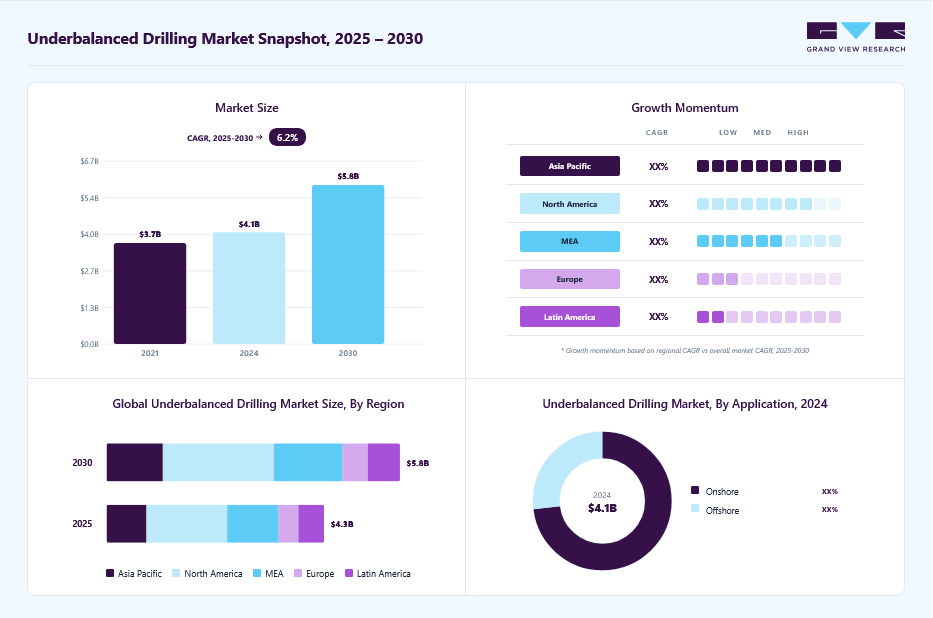
The global underbalanced drilling market size was estimated at USD 4.10 billion in 2024 and is projected to grow at a CAGR of 6.2% from 2025 to 2030. Underbalanced drilling (UBD) is a technique where wellbore pressure is likely to be lower than formation pressure to minimize reservoir damage. It is anticipated to enhance hydrocarbon recovery, especially in depleted or low-pressure reservoirs. The method is expected to reduce drilling-related issues like differential sticking and lost circulation. Advancements in managed pressure drilling (MPD) technologies are likely to drive wider adoption of UBD.
 Source: Grand View Research, IR Documents, Primary Interviews, Paid DatabasesTo learn more about this report,
 Download Free Sample Report
 Underbalanced drilling (UBD) is a technique where the pressure in the wellbore is intentionally maintained below the formation pressure. This approach is designed to prevent formation damage, enhance drilling efficiency, and improve hydrocarbon recovery rates. By allowing the reservoir fluids to enter the wellbore during drilling, UBD minimizes the risk of invasive damage to the formation, which is a common issue in conventional overbalanced drilling methods. This growth is driven by the increasing demand for efficient drilling techniques that can enhance oil and gas recovery while minimizing environmental impact.
 To learn more about this report, Download Free Sample Report
 Drivers, Opportunities & Restraints
The primary driver for the UBD market is the escalating global energy demand, which necessitates the exploration of mature and depleted reservoirs. UBD is anticipated to be particularly beneficial in these scenarios, as it reduces formation damage and increases hydrocarbon recovery rates. For instance, the U.S. has seen a rise in underbalanced drilling applications due to its effectiveness in horizontal wells, leading to increased investments in exploration and production activities.
Technological advancements in managed pressure drilling (MPD) systems present significant opportunities for the UBD market. Innovations such as real-time pressure monitoring and automated control systems are expected to enhance the safety and efficiency of underbalanced drilling operations. These developments are likely to make UBD more accessible and cost-effective, encouraging its adoption in regions with complex geological formations.
Despite its advantages, the adoption of UBD is constrained by the high initial investment and operational costs associated with the technique. Additionally, the complexity of UBD operations requires specialized equipment and skilled personnel, which can be a barrier for smaller operators. Economic factors, such as fluctuating oil prices, can also impact the feasibility of investing in underbalanced drilling projects.
Technology Insights
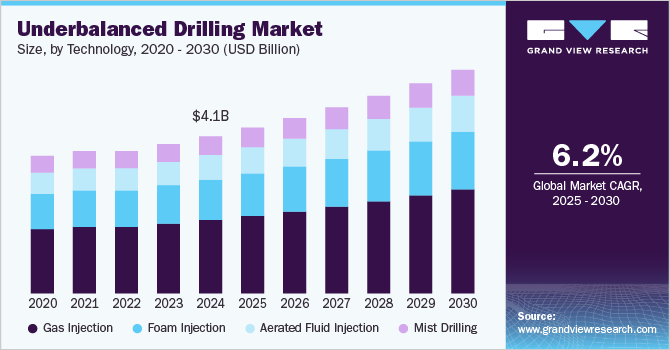
Gas injection in underbalanced drilling involves introducing gases like nitrogen or natural gas into the drilling fluid to reduce its density, thereby lowering bottom-hole pressure below formation pressure. This technique is anticipated to enhance drilling efficiency by minimizing formation damage and increasing the rate of penetration. For instance, nitrogen injection has been effectively utilized to maintain underbalanced conditions in various drilling operations.
Aerated fluid injection combines liquid drilling fluids with gases such as air or nitrogen to create a lower-density mixture, reducing hydrostatic pressure in the wellbore. This method is expected to be particularly beneficial in managing lost circulation and preventing differential sticking in depleted or low-pressure reservoirs. A case study demonstrated that proper design of air, gas, and foam injection rates in aerated drilling can mitigate issues like lost circulation and stuck pipe, highlighting the importance of optimized parameters in such operations.
Application Insights
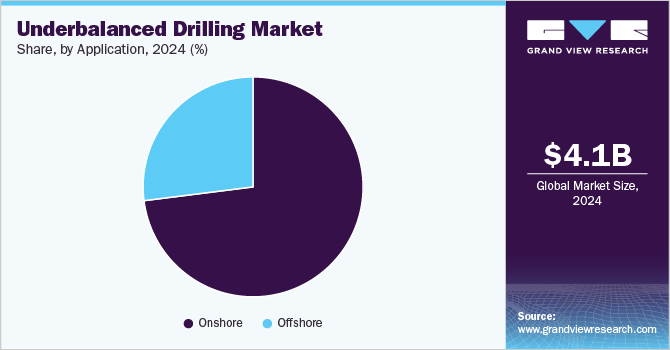
Underbalanced drilling (UBD) is anticipated to be extensively utilized in onshore operations, particularly in tight gas and shale formations. In these reservoirs, traditional overbalanced drilling methods can cause significant formation damage by forcing drilling fluids into the formation, thereby hindering hydrocarbon flow. By maintaining wellbore pressure below formation pressure, UBD preserves natural fractures and microfractures, facilitating greater production flow. This approach is expected to enhance drilling efficiency and hydrocarbon recovery in onshore fields.
 To learn more about this report, Download Free Sample Report
 In offshore drilling, UBD is projected to offer solutions for challenges such as narrow pressure margins and depleted reservoirs. The application of UBD offshore is anticipated to minimize formation damage and improve drilling efficiency. For example, offshore fields in Norway have successfully implemented UBD techniques to enhance drilling performance
Regional Insights
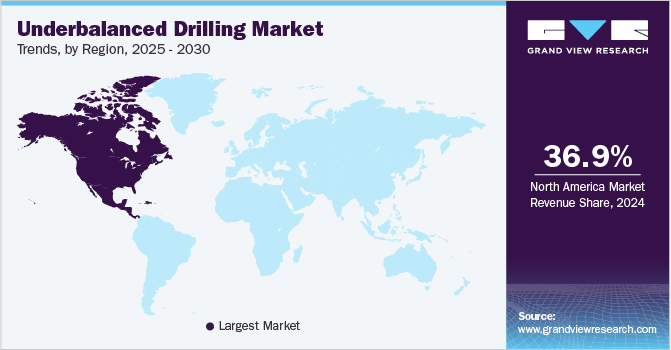
North America underbalanced drilling market is anticipated to maintain a significant share in the underbalanced drilling (UBD) market, driven by advanced drilling technologies and increased exploration activities. The region's market size was valued at approximately USD 1.51 billion in 2024 and is projected to grow at a CAGR of 6.6% over the forecast period.
 To learn more about this report, Download Free Sample Report
 U.S. Underbalanced Drilling Market Trends
In the U.S., the adoption of UBD techniques is expected to rise due to the need to reduce formation damage in horizontal wells. The country's focus on enhancing drilling efficiency and minimizing environmental impact is likely to drive the demand for UBD services.
Asia Pacific Underbalanced Drilling Market Trends
The Asia Pacific region is projected to experience substantial growth in the UBD market, attributed to increasing exploration activities. For instance, underbalanced operations for wells SED-3 and SED-4 have been planned to improve reservoir productivity and enable fracture identification.
Europe Underbalanced Drilling Market Trends
Europe is anticipated to witness a growing acceptance of UBD methods, owing to their advantages in minimizing formation damage and enhancing drilling efficiency. The region's focus on sustainable and efficient extraction techniques is expected to bolster the adoption of UBD services.
Russia underbalanced drilling market is growingdue to Russia's vast hydrocarbon reserves present significant opportunities for UBD applications. The country's efforts to optimize oil and gas recovery in challenging formations are likely to drive the adoption of UBD techniques, aiming to enhance drilling performance and reservoir management.
Saudi Arabia underbalanced drilling market is witnessing growth due toSaudi Arabia’s emphasis on maximizing hydrocarbon extraction while minimizing environmental impact is expected to promote the use of UBD methods. The nation's investment in advanced drilling technologies aligns with the anticipated growth in UBD applications to improve well productivity and reduce formation damage.
Key Underbalanced Drilling Company Insights
Some of the key players operating in the market include Viking Services, Weatherford, and Halliburton.
-
Viking Services has been one of the leading companies in underbalanced drilling (UBD) technology since the mid-1980s, particularly in air drilling. The company recognized the need for UBD techniques while operating in the West Texas Overthrust and has since completed hundreds of successful UBD wells.
-
Weatherford International offers underbalanced drilling services aimed at minimizing near-wellbore damage and enhancing well productivity. Their approach integrates a vast array of surface and downhole UBD equipment with reservoir analysis techniques, fluid systems, and well engineering expertise.
Key Underbalanced Drilling Companies:
The following are the leading companies in the underbalanced drilling market. These companies collectively hold the largest market share and dictate industry trends.
- Viking Services
- Reform Energy Services
- Halliburton
- International Snubbing Services
- Air Drilling Associates
- Strata Energy Services Inc.
- Blade Energy Partners, Ltd
- Menicon Co., Ltd.
- Weatherford
Three ways to get this report
Buy it, customize it, or ask a question.Ask an Analyst
A direct answer, usually in 1 working day
- AccessReport author, directly
- Reply timeWithin 1 working day
- No sales callDirect answer only
- FormatEmail reply
- CostFree, no cost
Get the Full Report
What the study covers
- FormatsPDF · Excel · Dashboard
- Timeline2025–2030 annual, 2024 base
- Coverage20+ countries, 5 regions
- Companies10+ key players profiled
Customize the Report
20% free customization
- IncludeCountries, segments, points
- TailorTo your product definition
- ExtendDeeper competitor detail
- OrA fully bespoke study
- Turnaround5–10 working days
Underbalanced Drilling Market Report Scope
Report Attribute
Details
Market size value in 2025
USD 4.32 billion
Revenue forecast in 2030
USD 5.83 billion
Growth rate
CAGR of 6.2% from 2025 to 2030
Base year for estimation
2024
Historical data
2018 - 2023
Forecast period
2025 - 2030
Quantitative units
Revenue in USD million, and CAGR from 2025 to 2030
Report coverage
Revenue forecast, competitive landscape, growth factors, and trends
Segments covered
Technology, application, region
Regional scope
North America; Europe; Asia Pacific; Central & South America; Middle East & Africa
Country scope
U.S.; Canada; Mexico; Germany; Italy; Spain; China; India; Japan; Brazil; Saudi Arabia; UAE
Key companies profiled
Weatherford; Halliburton; International Snubbing Services; Air Drilling Associates; Strata Energy Services Inc.; Reform Energy Services; Blade Energy Partners Ltd; Viking Services;
Customization scope
Free report customization (equivalent up to 8 analysts working days) with purchase. Addition or alteration to country, regional & segment scope.
Pricing and purchase options
Avail customized purchase options to meet your exact research needs. Explore purchase options
Global Underbalanced Drilling Market Report Segmentation
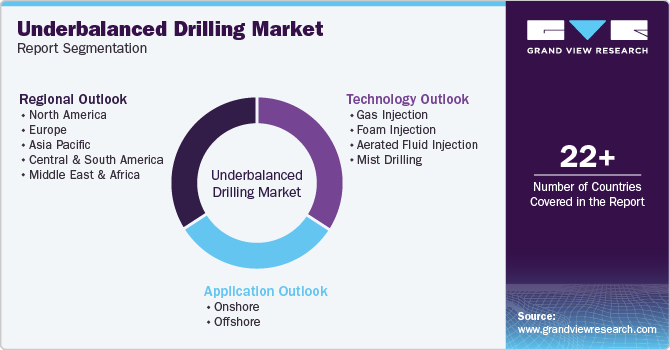
This report forecasts revenue growth at global, regional, and country levels and provides an analysis of the latest industry trends in each of the sub-segments from 2018 to 2030. For this study, Grand View Research has segmented the global underbalanced drilling market report based on technology, application, and region.
 To learn more about this report, Download Free Sample Report
 -
Technology Outlook (Revenue, USD Million, 2018 - 2030)
-
Gas Injection
-
Foam Injection
-
Aerated Fluid Injection
-
Mist Drilling
-
-
Application Outlook (Revenue, USD Million, 2018 - 2030)
-
Onshore
-
Offshore
-
-
Regional Outlook (Revenue, USD Million, 2018 - 2030)
-
North America
-
U.S.
-
Canada
-
Mexico
-
-
Europe
-
Germany
-
UK
-
-
Asia Pacific
-
China
-
India
-
Japan
-
-
Central & South America
-
Brazil
-
-
Middle East & Africa
-
Saudi Arabia
-
UAE
-
-
Frequently Asked Questions About This Report
The global underbalanced drilling market size was estimated at USD 4.10 billion in 2024 and is expected to reach USD 4.33 billion in 2025.
The global underbalanced drilling market is expected to grow at a compound annual growth rate of 6.2% from 2025 to 2030 to reach USD 5.83 billion by 2030.
Based on the technology segment, the Gas injection segment held a revenue share of 46% in 2024. Gas injection in underbalanced drilling involves introducing gases like nitrogen or natural gas into the drilling fluid to reduce its density, thereby lowering bottom-hole pressure below formation pressure.
Some of the key vendors of the global underbalanced drilling market areViking Services, Weatherford, and Halliburton, among others.
The primary driver for the UBD market is the escalating global energy demand, which necessitates the exploration of mature and depleted reservoirs.
About the Author(s)
Advanced Interior Materials Research Team
Advanced Materials · Advanced Interior MaterialsThis report was authored by the advanced interior materials research team at Grand View Research - comprising two research analysts, one senior research analyst, and one industry expert - with specialized expertise in the advanced interior materials segment of the advanced materials industry. All findings are based on proprietary advanced materials databases, executive interviews, and regulatory analysis, subject to internal peer review prior to publication.
Last Updated:
Speak to Analyst -

Customize this report to your needs - add regions, segments, or data points, with 20% free customization.
Or view our licence options:


ISO 9001:2015 & 27001:2022 Certified
We are GDPR and CCPA compliant! Your transaction & personal information is safe and secure. For more details, please read our privacy policy.


