
- Home
- »
- Medical Devices
- »
-
U.S. Assisted Living Facility Market Size Report, 2026-2033GVR Report cover

U.S. Assisted Living Facility Market (2026 - 2033) Size, Share & Trends Analysis Report By Age (More Than 85, 75-84, 65-74, Less Than 65), By Region (West, Southeast, Southwest, Midwest, Northeast), And Segment Forecasts
U.S. Assisted Living Facility Market Summary
The U.S. assisted living facility market size was valued at USD 48.0 billion in 2025 and is projected to grow from USD 52.0 billion in 2026 to USD 93.5 billion by 2033, at a CAGR of 8.7% from 2026 to 2033. This growth is driven by the increasing life expectancy and the baby boomer generation which is driving the demand for ALF.
Key Market Trends & Insights
- By age, the more than 85 years segment dominated the market in 2025 with a market share of 50.2%.
- By region, the West region dominated the U.S. market for assisted living facility with the largest market share of 36.7% in 2025.
Market Size & Forecast
- 2025 Market Size: USD 48.0 Billion
- 2026 Market Size: USD 52.0 Billion
- 2033 Projected Market Size: USD 93.5 Billion
- CAGR (2026-2033): 8.7%
Three ways to get this report
Buy it, customize it, or ask a question.Ask an Analyst
A direct answer, usually in 1 working day
- AccessReport author, directly
- Reply timeWithin 1 working day
- No sales callDirect answer only
- FormatEmail reply
- CostFree, no cost
Get the Full Report
What the study covers
- FormatsPDF · Excel · Dashboard
- Timeline2026–2033 annual, 2025 base
- Coverage20+ countries, 5 regions
- Companies10+ key players profiled
Customize the Report
20% free customization
- IncludeCountries, segments, points
- TailorTo your product definition
- ExtendDeeper competitor detail
- OrA fully bespoke study
- Turnaround5–10 working days
Moreover, the growing geriatric population seeking companionship, security, & assistance with daily activities and patients suffering from neurological & other chronic disorders are expected to drive the market growth. As per the data published by the Population Reference Bureau in January 2024, the number of Americans aged 65 and above is projected to reach 95 million by 2060.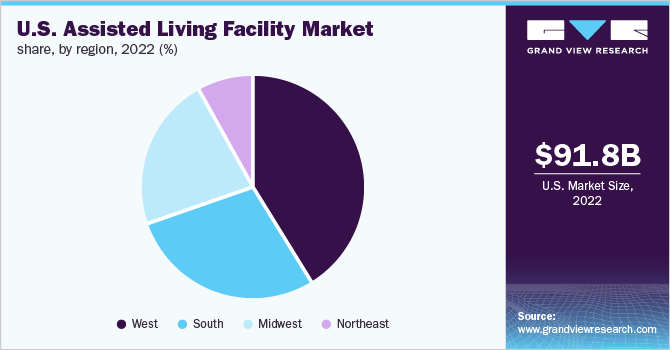 Source: Grand View Research, IR Documents, Primary Interviews, Paid DatabasesTo learn more about this report,
 Download Free Sample Report
 The section below outlines the key factors driving the growth of the market, including the rising aging population, increasing prevalence of chronic diseases and cognitive disorders, and growing demand for long-term and personalized senior care services. It also highlights increasing preference for community-based assisted living, expanding memory care services, adoption of digital health technologies, and rising investments in senior care infrastructure supporting market growth.
Market Dynamics
As the U.S. population of seniors continues to grow, the demand for ALF is becoming increasingly pressing. According to the RubyHome article published in February 2026, approximately 1.2 million Americans reside in nursing homes, with over 15,000 nursing facilities nationwide. Similarly, according to the American Health Care Association (AHCA), currently, there are 32,231 assisted living communities catering primarily to older adults, as half of all facility residents are 85 or older. The financial implications of these arrangements are significant, with the median monthly cost for assisted living averaging USD 5,900. In contrast, a private room in a nursing home can cost around USD 10,646/month, nearly double the assisted living rate. Notably, California, Wisconsin, and Michigan, leading the nation in assisted living communities, with 13,473, 4,156, and 4,133, respectively.
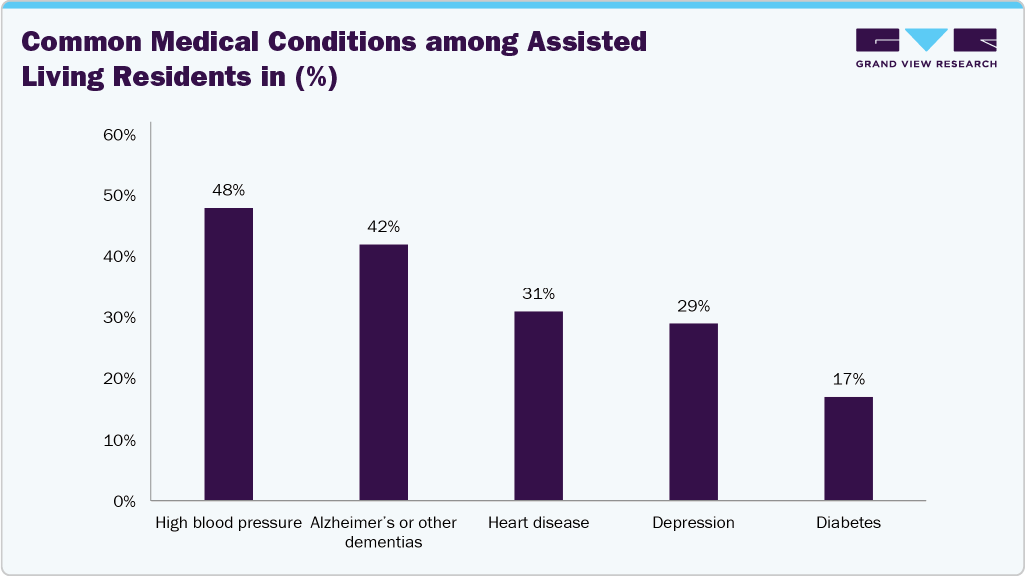
Furthermore, the growing need for assistance with daily activities and the high prevalence of chronic health conditions among older adults are key factors driving the growth of the ALF market in the U.S. While most residents in these facilities require only limited help with tasks such as bathing, dressing, or medication management, the consistent availability of professional support enhances their quality of life and safety. The presence of chronic conditions such as high blood pressure, Alzheimer’s and other dementias, heart disease, depression, and diabetes underscores the demand for specialized care services within these settings. These health needs necessitate a structured environment that can offer both medical oversight and personal care, making ALF an increasingly attractive option for aging adults and their families.
 To learn more about this report, Download Free Sample Report
 Common Daily Activities Requiring Help
Typically, residents require help with only a few activities and do not need round-the-clock assistance, though staff members are always generally present. Below are the common daily activities residents may need with them:
 To learn more about this report, Download Free Sample Report
 Growing Investments and Franchises
There is a surge in investments and franchising of ALF, propelled by a growing demand for quality senior care. Real estate investment trusts (REITs), private equity firms, and institutional investors are investing capital into the sector, recognizing the long-term growth potential of senior housing. As the industry evolves, established operators expand their footprint through partnerships, acquisitions, and franchise models. The rise of franchised ALF and adult care facilities has provided investors with scalable business opportunities, allowing for brand consistency, standardized care protocols, and operational efficiencies.
Franchising is a popular option for entrepreneurs entering the assisted living and adult care market, providing advantages such as marketing support, a proven business model, and regulatory guidance. Major brands, such as Brookdale Senior Living, Ventas, and Welltower, dominate the market, with 56% of ALF being chain-owned and typically serving over 100 patients each. In addition, there are numerous local providers of varying sizes across the country.
In October 2024, National Health Investors, Inc. acquired 10 memory care and ALF, which included 522 units, for about USD 120 million in North Carolina. The communities acquired by NIH are as follows:
• Spring Arbor of Apex, 41 units
• Spring Arbor of Albemarle, with 45 units
• Spring Arbor of Greensboro, 74 units
• Spring Arbor of Cary, 68 units
• Spring Arbor of Kinston, 44 units
• Spring Arbor of Greenville, 42 units
• Spring Arbor of Rocky Mount, 52 units
• Spring Arbor of Outer Banks, 69 units
• Spring Arbor of Wilson, 45 units
• Spring Arbor of Wilmington, 42 units
Assisted living communities rely heavily on skilled nurses, caregivers, therapists, medication aides, and support staff to provide continuous resident care and maintain operational efficiency. For instance, according to the data published by the American Association of Colleges of Nursing (AACN), federal authorities project a shortage of 78,610 full-time registered nurses (RNs) in 2025 and 63,720 in 2030. However, the industry continues to experience persistent staffing shortages driven by an aging healthcare workforce, rising demand for long-term care services, and limited availability of trained professionals.
High employee turnover rates further intensify staffing challenges, forcing operators to spend heavily on recruitment, onboarding, retention programs, and temporary staffing support. In addition, competition from hospitals, home healthcare providers, and skilled nursing facilities for qualified healthcare workers is increasing wage pressure across the senior care industry. Rising labor costs, employee benefits, overtime payments, and mandatory staffing requirements significantly increase operational expenditure for assisted living operators. These financial pressures are challenging for small and mid-sized facilities with limited budgets and lower occupancy margins.
The integration of digital health technologies and personalized care models is creating significant opportunities within the U.S. market. Providers are increasingly adopting telehealth platforms, remote patient monitoring systems, electronic medication management, and AI-enabled care coordination tools to improve resident outcomes and operational efficiency. Demand for customized wellness programs, rehabilitation services, mental health support, and memory care solutions is also increasing among senior populations. For instance, in September 2025, GardenView at Moorings Park opened in Naples as the area’s first AI-built assisted living community. It uses smart watches, lighting, and sensors to monitor movement, sleep, and fall risks, enhancing resident safety, privacy, and independence while giving caregivers early alerts and support. Technology-enabled care models help facilities improve access to healthcare, reduce hospital readmissions, and enhance resident engagement. These innovations are supporting the development of modern assisted living communities focused on preventive care, safety, and quality-of-life enhancement.
Monthly expenses for housing, personal care assistance, medication management, and specialized memory care services continue to increase due to inflation, higher operational costs, and growing demand for quality senior care. Many older adults and their families face financial difficulties in covering long-term assisted living expenses, especially since these services are often not fully covered by traditional Medicare programs. This creates accessibility challenges for middle-income seniors who may not qualify for Medicaid assistance but also cannot comfortably afford private-pay assisted living facilities. As a result, affordability concerns can restrict occupancy growth and create pressure on facility operators to balance service quality, staffing, and pricing competitiveness.
Market Concentration & Characteristics
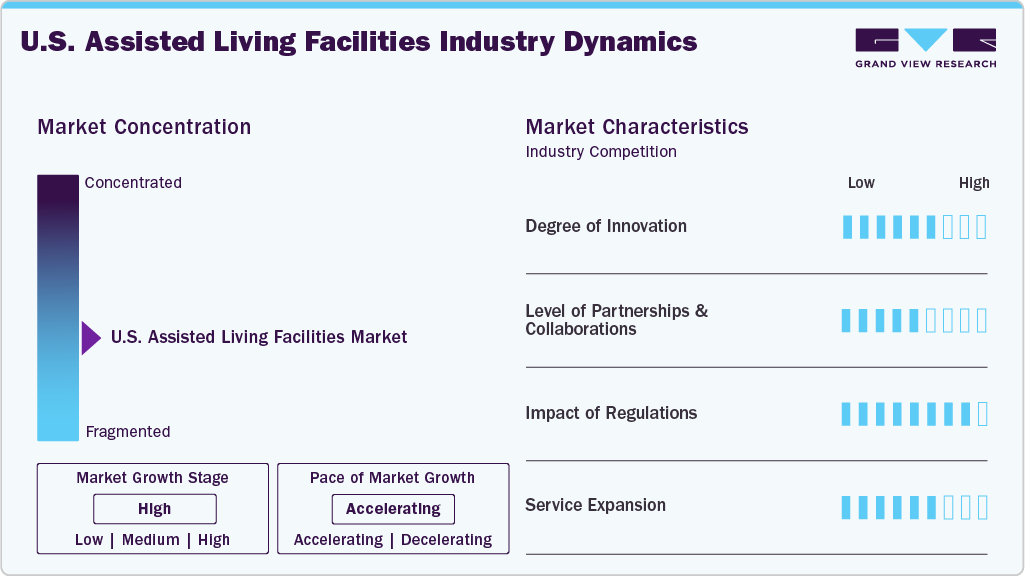
The market is fragmented, with many small players entering the market and launching new innovative products. The degree of innovation is medium, and the level of partnerships & collaboration activities is medium. The impact of regulations on the market is high, and service expansion of players is medium.
Innovations include enhancing resident care, improving operational efficiency, and differentiating their services. For instance, facilities are adopting smart home technologies, such as voice-activated assistants, automated lighting, and smart thermostats, allowing residents greater autonomy in managing their environments. Another major innovation is the development of community-centered living spaces that promote engagement, mental wellness, and socialization, moving away from the institutional model. On the administrative side, automation of business operations, such as compliance tracking and billing, helps streamline workflows.
 To learn more about this report, Download Free Sample Report
 The market saw notable consolidations as larger companies are aiming to expand their reach and capabilities. For instance, in March 2025, Ballad Health and Ahava Healthcare officially announced the partnership and joint venture to operate four Ballad Health long‑term care and ALF. The facilities included in the collaboration are:
-
Francis Marion Manor, Marion, Virginia
-
Wexford House, Kingsport, Tennessee
-
Laughlin Healthcare Center, Greeneville, Tennessee
-
Madison House (assistive‑living), Kingsport, Tennessee
“We are honored to continue the legacy of excellence in long-term care that Ballad Health has built. Our goal is to ensure our partnership expands resources and support for residents, families and team members. Ahava Healthcare and Ballad Health are committed to fostering a loving, welcoming and encouraging environment where residents can reach their highest potential in physical, emotional and social well-being.”
- Chief operating officer of Ahava Healthcare
Regulations play a crucial role in the market, dictating operational standards and care delivery. Unlike nursing homes, these facilities are primarily governed by state laws, leading to differences in licensing, staffing, and quality standards. For instance, California has strict guidelines for resident agreements and staff training, while Florida requires regular inspections for memory care units. These variations impact market entry, operational costs, and scalability for providers across states.
The market is expanding due to an aging population, evolving care preferences, and demand for personalized services. As baby boomers seek supportive environments that allow for independence, operators are modernizing and expanding facilities. For instance, companies such as Brookdale and Atria are investing in upgrades and new developments, including smart-enabled units. There is also a rise in regional players in underserved suburban and rural areas. Mixed-use senior living developments are becoming popular, combining healthcare with hospitality and retail. Partnerships with healthcare providers are enhancing on-site services, reflecting a shift toward integrated and lifestyle-oriented care models.
Age Insights
The more than 85 years segment dominated the market in 2025 with a market share of 50.2%. and it is expected to grow at the fastest CAGR during the forecast period. Increasing life expectancy is the major factor contributing to the growth of the segment. According to the National Association of Real Estate Investment Trusts (NAREIT), the average age of assisted living residents is 87 years old. Moreover, more than half (52%) of the residents in these communities are 85 years old or older. These statistics demonstrate the need for specialized care for seniors who require assistance in daily activities. In addition, as per the ACL Administration for Community Living. The number of people aged 85 and above is expected to grow to 14.4 million in 2040. More ALF are needed in the region, as the rapidly aging population grows. This is likely to raise the demand for professional caregivers as well as new ALF that provide daily living activities.
The less than 65 years segment is anticipated to grow at a significant CAGR during the forecast period, owing to the rising prevalence of early-onset chronic diseases, such as multiple sclerosis, Parkinson’s disease, traumatic brain injuries, and diabetes-related complications, which limit individuals’ ability to live independently and require supportive care. In addition, the increase in disabilities due to accidents, congenital conditions, and mental health disorders has prompted a need for residential care settings that provide medical supervision, personal assistance, and rehabilitative support. Many in this age group seek environments that offer both autonomy and tailored care, which ALF are increasingly able to provide through personalized care plans, remote health monitoring, and supportive infrastructure.
Regional Insights
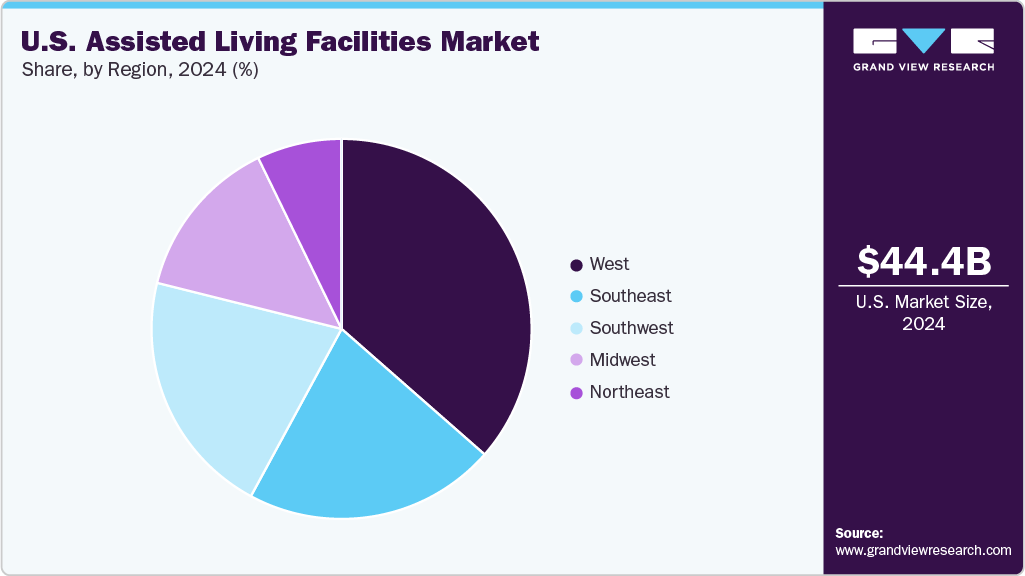
The West region dominated the U.S. market for assisted living facility with the largest market share of 36.7% in 2025. In addition, this region is expected to grow at the fastest CAGR during the forecast period. The west region of the U.S., including states such as Oregon, California, Arizona, and Washington, which have a significant older population, has resulted in a highly competitive market for ALF operators. The U.S. Census Bureau's 2023 population estimates show that Oregon’s 19.6% of the population is 65 or above, Arizona’s 19.3% is 65 or above, and Washington’s 17.1% of population is 65 or above. SeniorHomes.com reports that there are 1,057 ALF in Arizona, 584 in Colorado, and over 3,588 in California. This is expected to contribute to the growth of the West region. Factors such as the rapidly aging population, increasing demand for senior care services, changes in healthcare policy are driving market growth
 To learn more about this report, Download Free Sample Report
 The Southeast market for assisted living facility in the U.S. is expected to witness significant growth, owing to the growing aging population in states such as Florida, Texas, and Georgia boosts demand for senior care services, especially assisted living, due to their warm climates and tax-friendly policies. The South's lower cost of living makes it appealing for retirees seeking affordable care. In addition, increased investment in healthcare infrastructure and state-level incentives, including Medicaid waiver programs, are supporting the expansion of assisted living services in the region.
Key U.S. Assisted Living Facility Company Insights
The U.S. assisted living facility market is consolidated with a presence of a few large and various medium & small service providers. Sunrise Senior Living, Brookdale Senior Living, and Kindred Healthcare, LLC are some of the established ALF providers in the U.S. Service providers are taking initiatives such as the construction of new facilities to strengthen their market presence.
Key U.S. Assisted Living Facility Companies:
-
Kindred Healthcare, LLC
-
Brookdale Senior Living Inc.
-
Sunrise Senior Living, LLC
-
Atria Senior Living, Inc.
-
Five Star Senior Living
-
Capital Senior Living
-
Merrill Gardens
-
Integral Senior Living (ISL)
-
Belmont Village, L.P.
-
Gardant Management Solutions
Competitive Benchmarking
Operating Strategies
Competitive Edge
Weaknesses
Mature Players: Sunrise Senior Living
- Expansion through acquisitions, partnerships, and development of multi-state assisted living and memory care communities.
- Investment in healthcare integration, workforce training, and technology-enabled resident care management systems.
- Advanced healthcare integration capabilities, including rehabilitation services, memory care, wellness programs, and technology-enabled care delivery.
- Greater financial strength to support acquisitions, facility modernization, workforce development, and expansion of premium assisted living communities.
- Large operational networks result in high fixed costs related to staffing, facility maintenance, regulatory compliance, and healthcare integration.
- Increasing exposure to occupancy fluctuations, labor shortages, and rising resident acquisition costs in competitive senior care markets.
Emerging Players: Sonida Senior Living
- Focus on niche care models such as memory care, wellness-focused senior living, and personalized resident engagement services.
- Adoption of digital health technologies, telehealth platforms, and remote monitoring systems to improve operational efficiency and resident care.
- Greater operational flexibility and ability to implement personalized resident care models and niche senior wellness programs.
- Strong focus on community-based care, resident engagement, and specialized memory care offerings to differentiate services.
- Limited geographic presence and smaller facility networks compared to large national assisted living operators.
- Limited financial flexibility for large-scale infrastructure expansion, technology integration, and premium care service development.
Recent Developments
-
In March 2026, BeeHive Homes of Crownridge in Northwest San Antonio is expanding to nearly double its capacity. The family-owned senior living facility is adding a new 24-bed assisted living building with private rooms, shared dining, wide hallways, and barrier-free design. The expansion is expected to open in June or early July.
-
In February 2026, a former Yakima hospital building was sold and is set to become a new 115-bed assisted living facility focused on behavioral health needs. The project is expected to begin construction soon and aims to serve Eastern Washington residents who need specialized long-term support and care.
-
In January 2026, a new assisted living facility, Family Crest Living, was opened in Escanaba, Michigan. The family-run home on South 10th Street offers private rooms, meals, medication support, activities, and a more personal atmosphere.
-
In December 2024, Morgan Stanley Investment Management, via its private real estate arm Morgan Stanley Real Estate Investing (MSREI), completed the acquisition of a portfolio of eight premium senior housing communities originally developed by Brightview Senior Living and previously held by Harrison Street. This portfolio comprises approximately 1,186 units spread across major metropolitan markets in Baltimore, Philadelphia, Providence (RI), and Boston, and is predominantly independent living residences.
U.S. Assisted Living Facility Market Report Scope
Report Attribute
Details
Revenue forecast in 2025
USD 48.0 billion
Revenue forecast in 2026
USD 52.0 billion
Revenue forecast in 2033
USD 93.5 billion
Growth rate
CAGR of 8.7% from 2026 to 2033
Actual data
2021 - 2025
Forecast data
2026 - 2033
Quantitative units
Revenue in USD million/billion and CAGR from 2026 to 2033
Report coverage
Revenue forecast, company ranking, competitive landscape, growth factors, and trends
Segments covered
Age, region
Country scope
U.S.
Key companies profiled
Kindred Healthcare, LLC; Brookdale Senior Living Inc.; Sunrise Senior Living, LLC; Atria Senior Living, Inc.; Five Star Senior Living; Capital Senior Living; Merrill Gardens; Integral Senior Living (ISL); Belmont Village, L.P.; Gardant Management Solutions
Customization scope
Free report customization (equivalent up to 8 analysts working days) with purchase. Addition or alteration to country, regional & segment scope.
Pricing and purchase options
Avail customized purchase options to meet your exact research needs. Explore purchase options
U.S. Assisted Living Facility Market Report Segmentation
This report forecasts revenue growth, country level and provides an analysis of the latest industry trends in each of the sub-segments from 2021 to 2033. For this study, Grand View Research has segmented the U.S. assisted living facility market report based on age and region:
-
Age Outlook (Revenue, USD Billion, 2021 - 2033)
-
More than 85
-
75-84
-
65-74
-
Less than 65
-
-
Regional Outlook (Revenue, USD Billion, 2021 - 2033)
-
West
-
Southeast
-
Southwest
-
Midwest
-
Northeast
-
Delivered Customizations
This report has been delivered with the following In-depth customizations
Client Request
Customization Delivered
Value Adds
Assisted Living Infrastructure & Senior Care Adoption Analysis
Developed a tailored analysis of the market focused on senior housing infrastructure, resident admission trends, occupancy rates, and adoption of supportive care services across assisted living communities. The study incorporated assessment of aging population trends, chronic disease prevalence, healthcare expenditure, reimbursement dynamics, and regulatory frameworks influencing assisted living demand and operational expansion.
Enables stakeholders to understand the evolving senior care ecosystem, identify high-growth assisted living service segments, assess infrastructure readiness and regulatory compliance, and evaluate the impact of demographic and healthcare trends on long-term market expansion and resident care delivery.
Resident Care Preferences & Assisted Living Utilization Trends
Delivered a customized evaluation of resident utilization patterns across assisted living facilities, including analysis of long-term care demand, memory care adoption, daily living assistance requirements, and preferences for wellness-focused and technology-enabled senior care services. The study also assessed factors influencing occupancy growth, family decision-making, and transition trends from independent living to assisted care environments.
Provides actionable insights into changing resident care preferences, emerging senior living trends, and occupancy demand hotspots, helping clients identify commercially attractive care models and align operational strategies with evolving resident expectations and healthcare support needs.
Healthcare Integration & Assisted Living Operational Assessment
Conducted a focused assessment of healthcare integration within assisted living facilities, including telehealth adoption, medication management systems, staffing requirements, rehabilitation support services, and partnerships with healthcare providers. The analysis also evaluated operational efficiency challenges, workforce shortages, regulatory compliance requirements, and investment trends across the U.S. assisted living ecosystem.
Supports strategic planning for assisted living expansion, healthcare integration, and operational modernization by quantifying market demand, identifying underserved senior populations, evaluating revenue opportunities from value-added care services, and strengthening long-term growth and investment strategies.
Frequently Asked Questions About This Report
Some key players operating in the U.S. assisted living facility market include Kindred Healthcare, Inc.; Atria Senior Living, Inc.; Integral Senior Living; Brookdale Senior Living Solutions; Five Star Senior Living; Sunrise Senior Living, Inc.; Capital Senior Living; Merrill Gardens; and Belmont Village Senior Houston.
Key factors that are driving the U.S. assisted living facility market growth include increasing awareness and desire of consumers to age in home-based services and lower cost of assisted living facilities (ALFs) as compared to nursing homes.
The west region dominated the regional segment of the U.S. assisted living facility market with a share of 36.7% in 2025. This is attributable to the presence of the highest number of ALFs in the region.
The U.S. assisted living facility market size was estimated at USD 48.0 billion in 2025.
The U.S. assisted living facility market is expected to grow at a compound annual growth rate of 8.7% from 2026 to 2033 to reach USD 93.5 billion by 2033.
More than 85 years segment dominated the market in 2025 with a market share of 50.2%. Increasing life expectancy is the major factors contributing to the growth of the segment.
About the Author(s)
Medical Devices Research Team
Healthcare · Medical DevicesThis report was authored by the medical devices research team at Grand View Research - comprising two research analysts, one senior research analyst, and one industry expert - with specialized expertise in the medical devices segment of the healthcare industry. All findings are based on proprietary healthcare databases, executive interviews, and regulatory analysis, subject to internal peer review prior to publication.
Last Updated:
Speak to Analyst

Customize this report to your needs - add regions, segments, or data points, with 20% free customization.
Or view our licence options:


ISO 9001:2015 & 27001:2022 Certified
We are GDPR and CCPA compliant! Your transaction & personal information is safe and secure. For more details, please read our privacy policy.


