
- Home
- »
- Medical Devices
- »
-
U.S. Cataract Surgery Site-of-Care Market Size Report, 2033GVR Report cover

U.S. Cataract Surgery Site-of-Care Market (2026 - 2033)
Size, Share & Trends Analysis Report By Product (IOLs, Surgical Systems & Visualization, Instruments & Disposables, OVDs, Others), By CPT Codes, By Payer, By End Use, And Segment Forecasts
Market Size, 2025
$18.0BMarket Estimate, 2026
$18.7BMarket Forecast, 2033
$24.2BCAGR, 2026–2033
3.7%U.S. Cataract Surgery Site-of-Care Market Summary
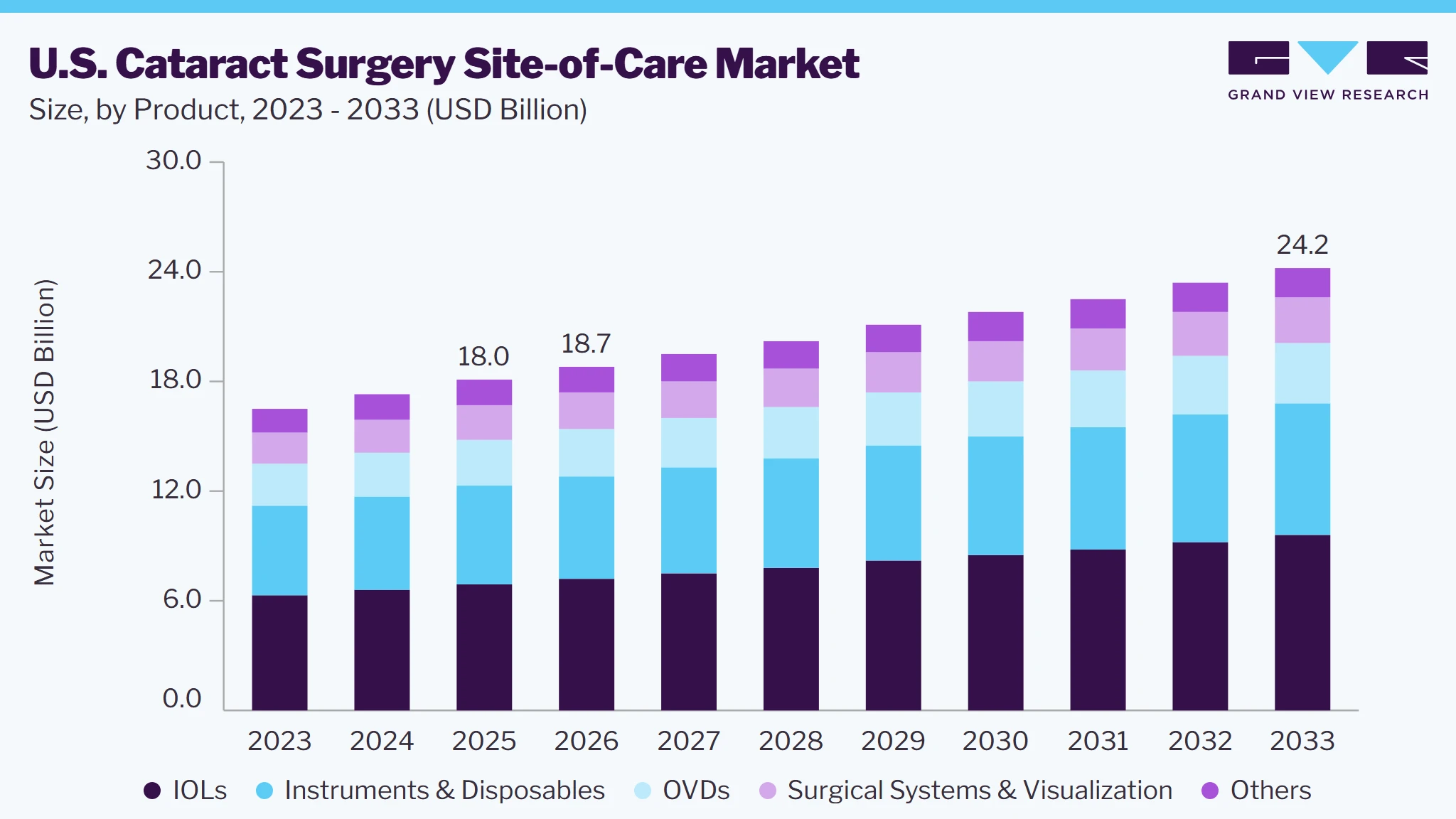
The U.S. cataract surgery site-of-care market size was valued at USD 18.0 billion in 2025 and is projected to grow from USD 18.7 billion in 2026 to USD 24.2 billion by 2033, at a CAGR of 3.7% from 2026 to 2033. The U.S. cataract surgery site-of-care market is supported by the high prevalence of cataracts, an aging population, and the growing need for surgical treatment to maintain vision and quality of life. Cataracts develop when the natural lens of the eye becomes cloudy, leading to blurred vision, glare, and difficulty performing daily activities.
Key Market Trends & Insights
- By product: The IOLs segment held the highest market share of 38.2% in 2025.
- By CPT codes: The 66984 (routine cataract surgeries) segment held a leading market share of 86.9% in 2025.
- By payer: The medicare segment held a leading market share of 61.2% in 2025.
- By end use: The ambulatory surgery centers (ASCs) segment held a leading market share of 71.1% in 2025.
Market Size & Forecast
- Market size in 2025: USD 18.0 Billion
- Estimated market size in 2026: USD 18.7 Billion
- Projected market size by 2033: USD 24.2 Billion
- CAGR (2026-2033): 3.7%
Prism AI by Grand View Research Free to tryAsk a question about the U.S. cataract surgery Site-of-Care marketTry asking✓Every figure cited from GVR research Prefer the report? Download free sample →According to the American Academy of Ophthalmology (AAO), almost 4 million Americans have gone through cataract surgery every year. Moreover, the AAO estimates that the number of people in the U.S. who will develop cataracts will rise from 24.4 million to 50 million by 2050, which means there will be significantly more cataract procedures. Therefore, hospitals, ambulatory surgery centers (ASCs), and eye surgery facilities can benefit from the growing demand for cataract surgeries.
 Source: Grand View Research, IR Documents, Primary Interviews, Paid DatabasesTo learn more about this report,
 Download Free Sample Report
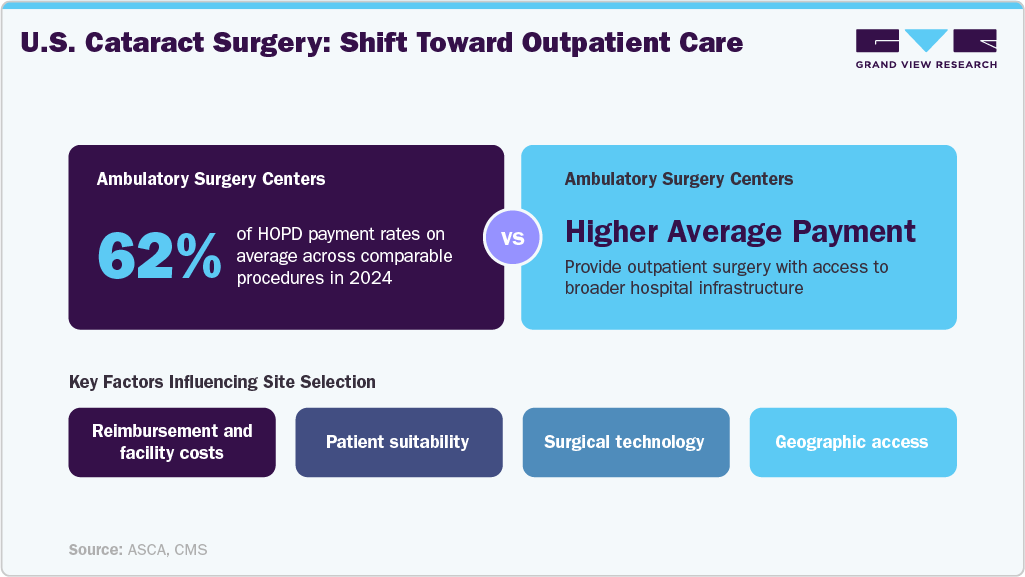
The most frequent type of cataract surgery is inpatient, but some procedures can also be outpatient, making such facilities critical to meet the expanding need for the service. Surgeries can often be completed on an outpatient basis, making them more accessible to patients and less costly to insurers. ASCs can help eye surgeons complete such procedures while providing a controlled environment for post-surgery recovery. Moreover, ASCs may report paying roughly 62% of the HOPD rates for the same procedures, according to an analysis of Medicare data conducted by ASCA and released in May 2026. The report also stated that eye surgery is among the most common types of surgery performed in ASCs. Thus, a less expensive alternative to traditional hospitals is a compelling choice for payers, physicians, and patients, but specific cases will dictate whether a procedure will be performed in an inpatient or outpatient setting.
 To learn more about this report, Download Free Sample Report
Medicare reimbursement policies and regulations are also significant external factors that may affect the market. Specifically, CMS’s payment rules and policies for services rendered in ASCs and HOPDs create a financial basis for determining the viability of providing services in these settings. On November 21, 2025, CMS published its 2026 outpatient payment rule, which includes a 2.6 percent payment update for certified ASCs and HOPDs. According to ASCA, the final rule will increase Medicare reimbursement for CPT 66984 code (“Cataract removal with intraocular lens implantation, with intraoperative microscope”), a common procedure for treating cataracts, by 3.4 percent compared to 2025. The stability of reimbursements and their payment updates are two crucial factors for healthcare facilities, dictating their development plans and influencing the choice between HOPD and ASC. Nevertheless, reimbursement growth is not the sole determinant of the market’s development and healthcare providers’ choices, as an organization should consider multiple costs associated with care delivery, including personnel, equipment, and quality of care, among others, and analyze the competitive landscape.
Technological advances to eye surgery equipment are further shaping provider investment and service trends. Modern phacoemulsification devices, sophisticated intraocular lenses, enhanced surgical instruments, and digital planning solutions contribute to ophthalmologists’ ability to design procedures and address a variety of patient needs. In April 2025, the ZEISS Medical Technology announced that more than 2 million cataract procedures in the United States have been digitally planned using its VERACITY Surgery Planner, illustrating the adoption of digital solutions by the eye surgery sector. Similarly, in June 2025, Alcon launched its Unity cataract surgery platform at a U.S. clinic, representing another step in the industry’s commitment to investing into leading-edge surgical equipment. The developments in question are expected to increase productivity and differentiate providers within the setting of an ambulatory surgery center (ASC) or a hospital’s outpatient department. That said, the cost of embracing the progress may challenge some smaller facilities, while the selection of a specific technology will depend on the needs of a given site and the scope of its projected surgical volume.
Market Dynamics
The U.S. cataract surgery site-of-care market is driven by the increasing demand for cataract procedures among the aging population, advancements in ophthalmic surgical technologies, and the growing preference for efficient outpatient care. The market encompasses facilities where cataract surgery is performed, primarily ambulatory surgery centers (ASCs) and hospital outpatient departments (HOPDs), with certain procedures also performed in other eligible outpatient settings. Cataract surgery involves the removal of the clouded natural lens and its replacement with an artificial intraocular lens (IOL) to restore vision. Site-of-care selection is influenced by patient complexity, surgeon preference, facility capabilities, insurance coverage, and reimbursement policies.
The growing US population aged 65 years and older is driving demand for cataract diagnosis and surgical treatment, as the risk of developing a cataract increases with age. This is encouraging providers to expand surgical capacity, optimize operating room utilization rates, and invest in specialized ophthalmic infrastructure in order to meet the demand. A study published in the American Journal of Ophthalmology in January 2026 found that cataract prevalence and surgical trends, as well as economic burden, were analyzed for United States Medicare beneficiaries aged 65 years and older. The study found that cataract surgeries have reached a plateau at around 1.4 million annually, while the prevalence of cataracts among the aging population continues to climb. This shows the need for both improved access to surgical procedures as well as increased surgical capacity to manage the growing burden of age-related cataracts. In addition, according to the Ambulatory Surgery Center Association, as of May 2026, facilities in this category performed approximately 18% of all Medicare cataract surgeries in 2024. This demonstrates the established role of ASCs in facilitating outpatient cataract surgeries. Overall, such demographic trends will drive demand for cataract surgery facilities, but the actual growth potential for the market will be dependent on surgical access, reimbursement rates, and the migration of procedures between different settings.
Establishing and operating cataract surgery facilities in the U.S. requires substantial investment in specialized infrastructure, including operating rooms, phacoemulsification systems, ophthalmic surgical microscopes, sterilization equipment, optical biometry devices, and intraocular lens inventory. In addition to initial capital expenditure, ASCs and hospital outpatient departments (HOPDs) must manage recurring expenses associated with skilled surgical personnel, equipment maintenance, disposable instruments, ophthalmic viscosurgical devices (OVDs), utilities, and regulatory compliance. These costs can place financial pressure on independent facilities and smaller ophthalmology practices, particularly when procedure volumes are insufficient to achieve economies of scale. Furthermore, reimbursement rates and payer contract terms may not increase in line with facility operating costs, limiting providers' ability to recover investments in advanced surgical technologies and expand capacity. Consequently, high upfront investment, ongoing operating expenses, and uncertainty surrounding cost recovery can delay the establishment of new facilities, restrict upgrades to existing infrastructure, and constrain the expansion of cataract surgery services in cost-sensitive or underserved markets.
Market Concentration & Characteristics
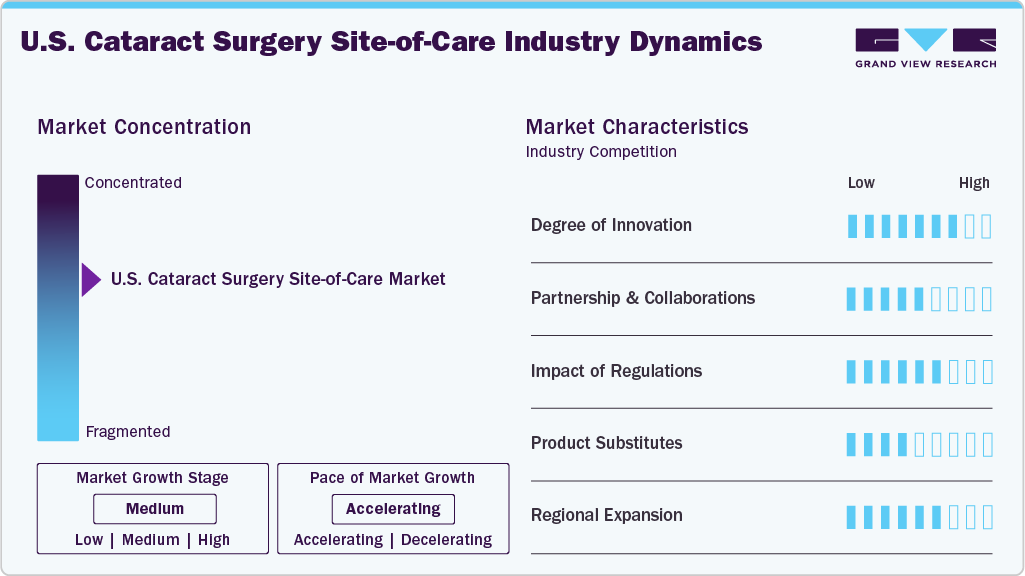
The U.S. cataract surgery site-of-care market is distinguished by competition among hospital outpatient departments (HOPDs), ambulatory surgery centers (ASCs), and ophthalmology practices with surgical capabilities, with market participants competing on process efficiency, cost-effectiveness, patient access, and quality of care. Key participants include Surgery Partners, SCA Health, EyeCare Partners, and US Eye, alongside independent ophthalmology groups and physician-owned ASCs. Industry players are concentrating on expanding surgical capacity, optimizing operating room utilization, funding advanced cataract surgical systems and intraocular lens technologies, and streamlining preoperative and postoperative care workflows.
The U.S. cataract surgery site-of-care market is characterized by continuous technological innovation, driven by advancements in phacoemulsification systems, femtosecond laser-assisted cataract surgery, image-guided surgical platforms, artificial intelligence (AI)-enabled treatment planning, and digital workflow integration. Healthcare providers and surgical centers are increasingly adopting advanced surgical technologies designed to improve procedural precision, streamline operating-room workflows, reduce surgical complexity, and support consistent patient outcomes. For instance, in April 2026, ZEISS Medical Technology announced new developments in connected cataract workflows, including updated intraocular lens calculation capabilities and digital surgical planning solutions intended to enhance procedural efficiency and support clinical decision-making. Such innovations are expected to influence technology adoption and investment decisions among hospitals, ASCs, and ophthalmic surgery providers, although their impact on site-of-care selection will also depend on capital costs, reimbursement policies, patient suitability, and the availability of trained surgical personnel.
 To learn more about this report, Download Free Sample Report
The U.S. cataract surgery site-of-care market is witnessing strategic collaborations among ophthalmic medical device manufacturers, eye care providers, surgical centers, and digital health technology companies to improve surgical efficiency, strengthen clinical capabilities, and expand access to advanced cataract procedures. These collaborations focus on integrating surgical equipment with digital planning platforms, improving intraocular lens (IOL) calculation and selection, standardizing preoperative and postoperative workflows, and providing clinical training and technical support to ophthalmologists. In April 2025, ZEISS reported that more than 2 million cataract procedures in the U.S. had been digitally planned using its VERACITY Surgery Planner, highlighting the growing adoption of connected digital solutions among cataract surgeons. In addition, the company's Center of Excellence program facilitates collaboration with selected ophthalmic clinics through clinical study opportunities, professional knowledge exchange, and access to emerging technologies.
The U.S. cataract surgery site-of-care market operates under a regulatory framework shaped by the U.S. Food and Drug Administration (FDA), the Centers for Medicare & Medicaid Services (CMS), and state-level healthcare facility requirements. The FDA regulates cataract surgery devices, including intraocular lenses (IOLs) and other ophthalmic surgical equipment, through applicable premarket authorization or clearance pathways, manufacturing quality requirements, labeling, and post-market safety monitoring. Meanwhile, CMS establishes Medicare participation requirements, coverage policies, and payment rates for eligible cataract procedures performed in ambulatory surgery centers (ASCs) and hospital outpatient departments (HOPDs). These regulatory and reimbursement requirements influence provider operating costs, technology adoption, and the economic feasibility of delivering cataract surgery across different outpatient settings.
The U.S. cataract surgery site-of-care market faces competition from alternative treatment approaches and care delivery options that may influence the timing and location of surgical intervention. For patients with early-stage cataracts and relatively mild visual impairment, updated eyeglass or contact lens prescriptions and low-vision aids may help manage symptoms and delay surgery, reducing immediate demand for surgical services. However, these approaches do not remove cataracts and are not substitutes for surgery when the condition significantly interferes with daily activities. Within the surgical market, traditional phacoemulsification and femtosecond laser-assisted cataract surgery represent alternative procedural approaches, while ambulatory surgery centers (ASCs) and hospital outpatient departments (HOPDs) compete to provide eligible outpatient procedures. Differences in facility costs, reimbursement, clinical infrastructure, patient complexity, and access to specialized services influence provider and patient preferences.
The U.S. cataract surgery site-of-care market is experiencing continued expansion of outpatient surgical capacity as ophthalmology practices, ambulatory surgery center (ASC) operators, and integrated healthcare systems seek to improve access to cataract procedures and optimize service delivery. The growth of community-based surgical facilities, increasing preference for outpatient care, and efforts to manage procedural costs are encouraging providers to strengthen their presence across metropolitan, suburban, and selected regional markets. Multi-location healthcare networks and ophthalmology-focused surgical centers are investing in facility development, technology upgrades, and partnerships to expand their geographic reach and accommodate demand from aging populations. For instance, in June 2025, Ascension announced an agreement to acquire AMSURG, a network of more than 250 ambulatory surgery centers across 34 states, including facilities providing ophthalmology services.
Analyst Perspective
The U.S. cataract surgery site-of-care market is evolving as healthcare providers increasingly focus on improving surgical efficiency, managing procedure costs, and expanding access to outpatient ophthalmic care. Market development is supported by the growing demand for cataract surgery among the aging population, advances in surgical techniques, and the continued role of ambulatory surgery centers (ASCs) and hospital outpatient departments (HOPDs) in delivering cataract procedures. The site-of-care landscape is also being shaped by differences in facility reimbursement, physician preferences, payer policies, and the availability of specialized ophthalmic infrastructure. Providers are investing in advanced phacoemulsification systems, improved intraocular lens technologies, digital surgical planning, and streamlined preoperative and postoperative workflows to enhance operating room utilization, support predictable clinical outcomes, and improve patient convenience.
Product Insights
The IOLs segment dominated the market and accounted for the largest share of 38.2% in 2025 and is expected to witness the fastest growth of 4.2% over the forecast period. The growth is supported by the essential role of lens implantation in cataract surgery, as the cloudy natural lens is generally removed and replaced with an artificial lens to restore vision. Demand is supported by the large number of cataract procedures performed in the U.S. and the availability of conventional monofocal, toric, and advanced presbyopia-correcting lens options. Continued innovation is also expanding treatment choices for eligible patients. For instance, in March 2026, Johnson & Johnson announced FDA approval of its TECNIS PureSee extended depth-of-focus IOL, adding another lens option for patients undergoing cataract surgery. This development illustrates ongoing innovation in IOL technology and the importance of lens implantation within cataract surgery.
The instruments & disposables segment is expected to witness the significant CAGR over the forecast period. The growth is driven by the growing volume of cataract surgeries, continued use of single-use surgical supplies, and demand for specialized instruments that support safe and efficient procedures. Cataract surgery requires a range of products, including phacoemulsification tips, surgical blades, cannulas, viscoelastic materials, irrigation and aspiration supplies, and other procedure-specific consumables. As surgical facilities perform more procedures, they require a consistent supply of these products, supporting recurring demand from ambulatory surgical centers (ASCs), hospital outpatient departments, and independent surgical facilities. In addition, the adoption of advanced intraocular lenses and minimally invasive glaucoma surgery (MIGS) performed alongside cataract surgery increases the need for specialized instruments and procedure-specific supplies.
CPT Code Insights
The 66984 (routine cataract surgeries) segment dominated the market in 2025. The growt is attributed to the use for routine cataract removal with intraocular lens implantation using manual or mechanical techniques, including phacoemulsification. The procedure is widely used for patients requiring standard cataract extraction without the additional complexity associated with procedures billed under CPT 66982. Its established clinical use and Medicare coverage for medically necessary cataract surgery support demand across ASCs and hospital outpatient departments. A relevant recent development occurred in November 2025, when the Ambulatory Surgery Center Association reported that CMS's finalized 2026 payment rule would increase the Medicare ASC payment rate for CPT 66984 by approximately 3.4% compared with 2025, after an initially proposed reduction was corrected. This reimbursement update supports the continued economic importance of routine cataract surgery within outpatient surgical services.
The 66991, 66989 (cataracts with MIGS) segment is expected to witness fastest CAGR over the forecast period, driven by increasing demand for procedures that address cataracts and coexisting glaucoma during the same surgical session. These codes cover cataract removal combined with the insertion of an aqueous drainage device, with code 66989 applying to complex cataract surgery and code 66991 to routine cataract surgery. For eligible patients with both conditions, combining the procedures can reduce the need for separate surgical interventions and support more comprehensive treatment. Growing awareness of glaucoma management, the availability of minimally invasive glaucoma devices, and the potential to reduce dependence on pressure-lowering medication may encourage the adoption of combined procedures. This trend can also increase demand for specialized surgical instruments, drainage implants, and related supplies, contributing to revenue growth across surgical facilities and device suppliers.
Payer Insights
The medicare segment dominated the market and held the largest revenue share in 2025, reflecting the importance of coverage for cataract surgery among older adults, who account for a substantial proportion of patients requiring treatment. Medicare Part B covers medically necessary cataract surgery with conventional IOL implantation, including eligible facility and physician services, helping beneficiaries access treatment in ASCs and hospital outpatient departments. Coverage reduces the financial burden of eligible procedures, although beneficiaries remain responsible for applicable deductibles and coinsurance. In June 2026, CMS published an updated Medicare Vision Services fact sheet confirming coverage of conventional IOLs and the associated services required for implantation during cataract surgery. This reinforces Medicare's role in supporting demand for cataract surgery and related site-of-care services across the U.S.
The medicaid segment is expected to witness the significant CAGR over the forecast period, supported by continued demand for medically necessary cataract treatment among eligible low-income adults, people with disabilities, and other qualifying beneficiaries. Cataracts can affect daily activities, mobility, and independence, making timely surgical treatment important for eligible patients experiencing vision impairment. Medicaid coverage can help reduce financial barriers to surgery and support demand for ophthalmology services across participating hospitals, outpatient departments, and surgical facilities. For example, North Carolina Medicaid explicitly lists cataract surgery among its covered vision care services, while its 2026 ophthalmology policy also addresses preoperative ophthalmic biometry when medically necessary for cataract surgery. Such state-level coverage policies support access to treatment and contribute to procedural demand.
End Use Insights
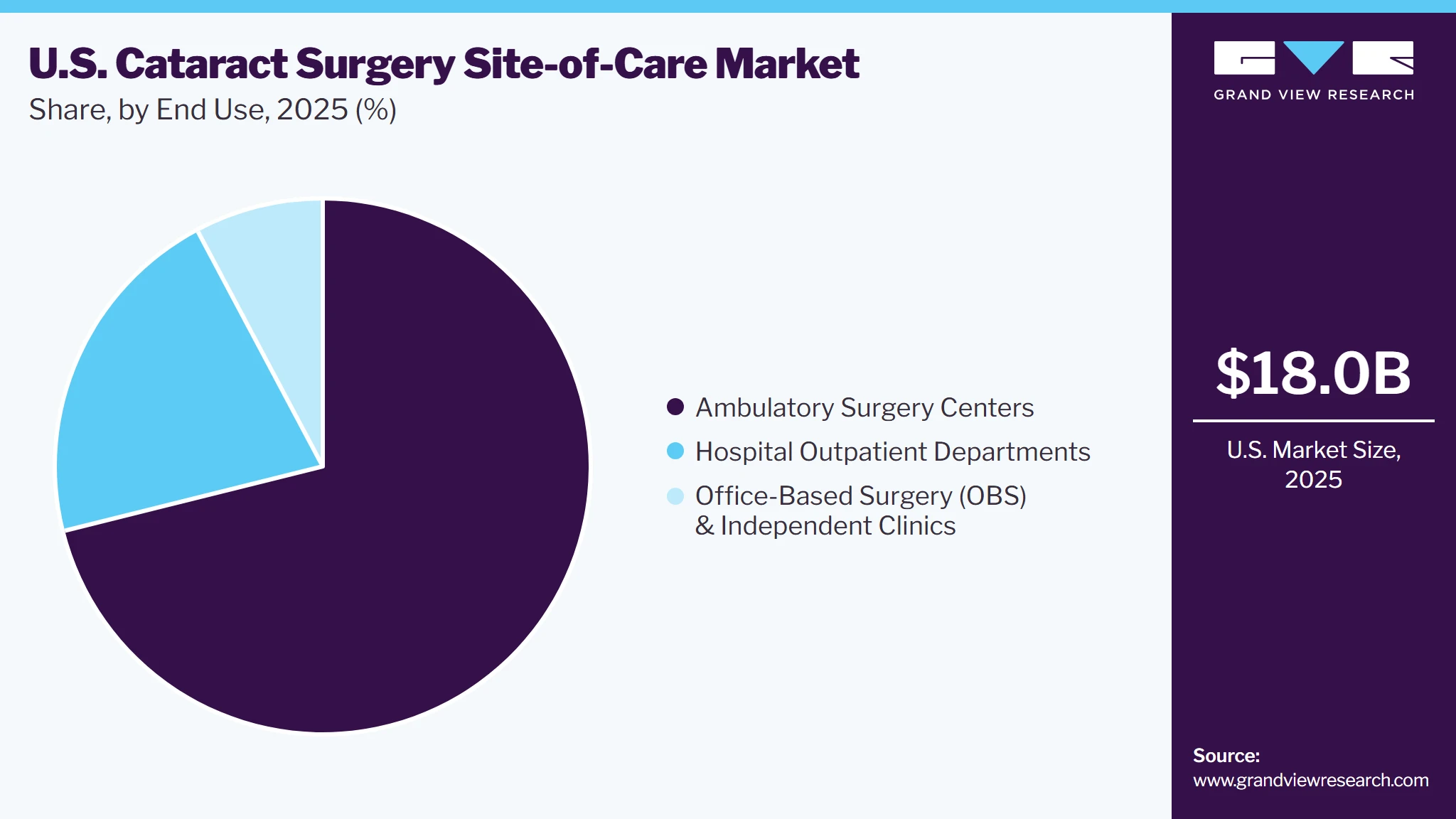
The ambulatory surgery centers (ASCs) segment dominated the U.S. cataract surgery site-of-care market in 2025. The growth is supported by the suitability of routine cataract procedures for outpatient treatment, specialized ophthalmic surgical workflows, and the potential for lower facility costs than hospital outpatient departments. ASCs allow eligible patients to undergo cataract removal and IOL implantation without an overnight hospital stay, while dedicated facilities can organize surgical schedules around high-volume procedures. A relevant development occurred in November 2025, when CMS finalized its 2026 ASC and hospital outpatient payment rule, with ASCA reporting an approximately 3.4% increase in the Medicare ASC payment rate for routine cataract surgery code CPT 66984 compared with 2025. This provides a supportive reimbursement environment for facilities performing routine cataract procedures. However, the choice of setting depends on patient suitability, clinical complexity, local access, and facility capabilities.
 To learn more about this report, Download Free Sample Report
The office-based surgery (OBS) & independent clinics segment is anticipated to grow at significant rate over the forecast period. The growth is driven by improvements in surgical technology, streamlined outpatient workflows, and growing interest among ophthalmologists in performing selected cataract procedures in dedicated office-based surgical suites. These settings can offer greater control over scheduling, equipment selection, staffing, and patient flow, while potentially reducing dependence on hospital-based infrastructure for appropriate cases. The trend may also support the expansion of independent ophthalmology practices seeking greater operational flexibility and more convenient access for patients. A relevant industry development was reported by EyeWorld in its Winter 2025 coverage of the 2025 ASCRS Clinical Survey: 6% of respondents performed surgery in an in-office surgical suite, with this share increasing by two percentage points compared with 2024.
Key U.S. Cataract Surgery Site-of-Care Company Insights
The U.S. cataract surgery site-of-care market is highly competitive, characterized by the presence of hospitals, ambulatory surgery centers (ASCs), and ophthalmology-owned surgical facilities competing to attract patients and expand procedural volumes. Market participants are increasingly focused on improving operational efficiency, optimizing surgical workflows, and expanding outpatient surgical capacity to strengthen their market presence. Investments in advanced phacoemulsification systems, premium intraocular lenses (IOLs), image-guided surgical technologies, and digital patient management solutions are supporting improvements in surgical precision, procedural efficiency, and patient outcomes.
Key U.S. Cataract Surgery Site-of-Care Companies
-
SCA Health
-
USPI (Tenet)
-
EyeSouth Partners
-
Unifeye Vision Partners
-
Bascom Palmer Eye Institute (Univ. of Miami)
-
Wills Eye Hospital
-
Cole Eye Institute (Cleveland Clinic)
-
Massachusetts Eye and Ear
-
EyeCare Partners
-
Eye Health America
Competitive Benchmarking
Category
Operating Strategies
Competitive Edge
Weakness
Established Players (SCA Health, USPI (Tenet), EyeSouth Partners, Unifeye Vision Partners)
- Expand cataract surgery capacity across established ASCs and hospital outpatient departments to accommodate growing procedure volumes.
- Invest in advanced phacoemulsification systems, premium intraocular lens (IOL) offerings, standardized surgical workflows, and surgeon recruitment to improve throughput and patient outcomes.
- Established physician referral networks, experienced ophthalmic teams, high procedure volumes, and strong relationships with payers support market access.
- Greater purchasing power, established infrastructure, and optimized scheduling enable operational efficiencies and improved utilization of operating rooms.
- High facility operating costs, staffing expenses, equipment investments, and regulatory compliance requirements can pressure margins.
- Dependence on reimbursement rates, payer contracts, and surgeon availability can limit profitability and expansion flexibility.
Emerging Players (Cole Eye Institute (Cleveland Clinic), Massachusetts Eye and Ear, EyeCare Partners)
- Focus on developing or acquiring specialized ophthalmic ASCs and expanding into underserved or high-growth local markets.
- Prioritize cost-efficient surgical models, streamlined patient pathways, flexible scheduling, and partnerships with ophthalmologists to increase procedure volumes.
- Specialized cataract surgery facilities can offer focused clinical operations, shorter patient pathways, and efficient use of surgical capacity.
- Leaner operating structures and localized physician partnerships can support responsive service delivery and targeted market expansion.
- Limited financial resources, smaller patient referral networks, and lower purchasing power can constrain initial market penetration.
- Establishing surgeon relationships, securing payer contracts, financing surgical equipment, and meeting accreditation requirements can delay expansion.
Recent Development
-
In April 2026, Alcon announced the U.S. launch of its Clareon TruPlus enhanced-design monofocal and toric intraocular lenses (IOLs) at the ASCRS 2026 Annual Meeting. The lenses are designed to extend depth of focus while maintaining distance vision quality, with the toric version also addressing pre-existing corneal astigmatism.
-
In February 2026, BVI announced the first successful U.S. implantations of its FDA-approved FINEVISION HP hydrophobic trifocal intraocular lens (IOL), following regulatory approval in October 2025. The lens features an advanced diffractive optical design intended to provide vision across near, intermediate, and distance ranges while minimizing visual disturbances.
U.S. Cataract Surgery Site-Of-Care Market Report Scope
Report Attribute
Details
Market size in 2025
USD 18.0 billion
Estimated market size in 2026
USD 18.7 billion
Projected market size by 2033
USD 24.2 billion
Growth rate
CAGR of 3.7 % from 2026 to 2033
Base year for estimation
2025
Historical data
2021 - 2024
Forecast period
2026 - 2033
Quantitative units
Revenue in USD million and CAGR from 2026 to 2033
Report coverage
Revenue forecast, company ranking, competitive landscape, growth factors, and trends
Segments covered
Product, CPT code, payer, end use
Key companies profiled
SCA Health; USPI (Tenet); EyeSouth Partners; Unifeye Vision Partners; Bascom Palmer Eye Institute (Univ. of Miami); Wills Eye Hospital; Cole Eye Institute (Cleveland Clinic); Massachusetts Eye and Ear; EyeCare Partners; Eye Health America
Customization scope
Free report customization (equivalent up to 8 analyst’s working days) with purchase. Addition or alteration to country, regional, and segment scope
Pricing and purchase options
Avail customized purchase options to meet your exact research needs. Explore purchase options
U.S. Cataract Surgery Site-of-Care Market Report Segmentation
This report forecasts revenue growth and provides an analysis of the latest industry trends in each of the sub-segments from 2021 to 2033. For the purpose of this study, Grand View Research has segmented the U.S. cataract surgery site-of-care market report based on product, CPT code, payer, end use:
-
Product Outlook (Revenue, USD Unit, 2021 - 2033)
-
IOLs
-
Surgical Systems & Visualization
-
Instruments & Disposables
-
OVDs
-
Others
-
-
CPT Code Outlook (Revenue, USD Unit, 2021 - 2033)
-
66982 (complex cataract surgeries)
-
66984 (routine cataract surgeries)
-
66991, 66989 (cataracts with MIGS)
-
Others
-
-
Payer Outlook (Revenue, USD Unit, 2021 - 2033)
-
Medicare
-
Medicaid
-
Commercial Insurance
-
Others (self pay, VA and etc)
-
-
End Use Outlook (Revenue, USD Unit, 2021 - 2033)
-
Hospital Outpatient Departments (HOPDs)
-
Ambulatory Surgery Centers (ASCs)
-
Office-Based Surgery (OBS) & independent clinics
-
Research Methodology
The U.S. cataract surgery site-of-care market figures in this report are based on a proven research process that combines executive interviews with secondary research from proprietary databases, company filings, and recognized regulatory and institutional sources. Market size is built through value-chain sizing-reconciling supply-side and demand-side estimates-and triangulated with bottom-up and top-down approaches. Every estimate passes multiple levels of expert validation before publication, with each U.S. cataract surgery site-of-care segment quantified using the revenue-capture definitions in the table below.
Segment Definition
Segment - Product
Revenue capture definition
IOLs
Revenue is generated through the commercialization of Intraocular Lenses (IOLs) implanted during phacoemulsification or laser-assisted cataract procedures. Manufacturers capture baseline revenue from standard monofocal lenses fully covered by insurance, alongside premium, out-of-pocket cash-pay revenue streams from Advanced Technology IOLs (ATIOLs) including toric, extended depth of focus (EDOF), and multifocal lens designs.
Surgical Systems & Visualization
Revenue flows from the capital sales and leasing of specialized anterior segment operating hardware, including phacoemulsification consoles, femtosecond cataract lasers (FLACS), surgical microscopes, and 3D heads-up digital visualization platforms. Market participants capture initial equipment revenue supplemented by recurring software license fees, annual service maintenance agreements (AMCs), and hardware upgrade packages.
Instruments & Disposables
Revenue is captured through the high-volume supply of procedure-specific single-use and reusable surgical tools required to execute lens extraction. Income is driven by a highly repeatable, procedure-volume-linked "razor-and-blade" commercial model, capturing recurring sales of phaco tips, sleeve tubing sets, fluidic cassettes, custom surgical drapes, micro-incisional keratomes, and disposable forceps.
OVDs
Revenue is derived from the production and clinical distribution of Ophthalmic Viscoelastic Devices (OVDs) utilized to maintain anterior chamber depth, protect corneal endothelial cells, and facilitate IOL delivery. Manufacturers generate steady, high-margin consumable income via pre-filled sterile syringes across cohesive, dispersive, and combination viscoelastic formulation categories.
Others
Revenue encompasses auxiliary surgical supplies and pharmaceutical adjunctive products, including intraoperative mydriatic and anesthetic solutions, post-operative antibiotic/anti-inflammatory eye drops, IOL delivery injectors/cartridges, and specialized patient drape kits.
Segment - CPT Code
Revenue capture definition
66982 (complex cataract surgeries)
Revenue is captured through higher-tier professional and facility reimbursement billing for complicated cataract extractions requiring specialized devices or techniques (such as iris expansion rings, capsular tension rings, or intraoperative suturing). Facilities and ophthalmic surgeons realize elevated Medicare and commercial insurance payout rates due to the increased clinical risk, extended operative duration, and specialized supply utilization.
66984 (routine cataract surgeries)
Revenue represents the primary, high-volume financial engine of the site-of-care market, generated via standard extracapsular cataract removal with IOL insertion. Income is characterized by predictable, high-throughput facility fee claims and professional fee reimbursements set under established Medicare Physician Fee Schedule (MPFS) and Ambulatory Surgical Center (ASC) payment systems.
66991, 66989 (cataracts with MIGS)
Revenue is generated through bundled combination procedure billing where cataract extraction is performed concurrently with the insertion of a Micro-Invasive Glaucoma Surgery (MIGS) stent or aqueous drainage device. Facilities and surgeons capture enhanced dual-procedure reimbursement codes that monetize both lens removal and intraocular pressure reduction within a single surgical session.
Others
Revenue encompasses secondary or unlisted anterior segment billing codes, including secondary IOL implantations (CPT 66985), IOL exchange procedures (CPT 66986), yttrium-aluminum-garnet (YAG) capsulotomies for posterior capsule opacification (CPT 66821), and modifier-driven bilateral surgical billing structures.
Segment - Payer
Revenue capture definition
Medicare
Revenue is captured through federal government-administered Fee-for-Service (FFS) Medicare and private Medicare Advantage (Part C) plan reimbursements. Value is driven by rigid, annually updated CMS payment systems—specifically the Outpatient Prospective Payment System (OPPS) for hospitals and the ASC Payment System—providing predictable, large-scale procedural coverage for the primary elderly cataract demographic.
Medicaid
Revenue flows from state and federal safety-net coverage programs for low-income populations. Income in this segment is characterized by lower fixed reimbursement yields per procedure, requiring strict operational cost management by facilities and reliance on standardized, non-premium medical consumables and monofocal IOL options.
Commercial Insurance
Revenue is derived from private employer-sponsored and individual healthcare plans (such as PPOs and HMOs). Facilities capture higher negotiated facility fee rates and broader coverage allowances for diagnostic imaging compared to public payers, alongside structured co-pay and deductible collections from covered patients.
Others
Revenue encompasses direct out-of-pocket patient cash payments (specifically for premium ATIOL upgrades, FLACS laser surcharges, and non-covered diagnostic tests), Veterans Health Administration (VHA) military health coverage, workers' compensation programs, and self-pay uninsured arrangements.
Segment - End Use
Revenue capture definition
Hospital Outpatient Departments (HOPDs)
Revenue is captured through hospital system-based surgical suites handling higher-acuity, complex patient cases. Facilities monetize higher CMS facility fee reimbursement rates under the OPPS framework, using large-scale institutional purchasing power to secure bulk capital hardware and pharmaceutical supply contracts across multi-site hospital networks.
Ambulatory Surgery Centers (ASCs)
Revenue flows through high-efficiency, physician-owned or corporate-partnered outpatient surgical centers. ASCs maximize profitability by capitalizing on streamlined surgical turnover times, lower per-case overhead costs, and specialized procedure-driven consumable supply chains, capturing steady facility fees under the CMS ASC payment fee schedule.
Office-Based Surgery (OBS) & independent clinics
Revenue is generated through in-office surgical suites equipped for minor or routine lens procedures, bypassing traditional facility registration frameworks. Providers capture both the professional service fee and a direct facility/practice site reimbursement allowance, maximizing profit margins through reduced overhead, localized cash-pay premium IOL marketing, and immediate practice-level billing control.
Estimation Model
Step
Guiding Question
Process Steps
Data Sources
Scope Definition
Which care settings are included in the U.S. cataract surgery market?
1. Define cataract surgery site-of-care categories.
2. Segment the market by products, CPT codes, and other relevant settings.
3. Establish the scope of facility and procedure-related revenues.
4. Define U.S. coverage, base year, and forecast period.CMS, Medicare claims and payment data, CDC, ophthalmology associations, hospital and ASC data
Build the Product Base
How many cataract surgeries are performed across U.S. care settings?
1. Estimate annual cataract surgery volumes across care settings.
2. Analyze procedure distribution between end-use facilities.
3. Assess patient demographics, surgical demand, and utilization trends.
4. Forecast procedure volumes using demographic and utilization trends.CMS Medicare claims, CDC, ophthalmology associations, healthcare utilization databases, hospital and ASC records
Estimate Penetration
What factors influence where cataract surgeries are performed?
1. Assess shifts in procedures from HOPDs to ASCs.
2. Compare site-of-care adoption across states and payer groups.
3. Evaluate the impact of reimbursement and facility economics.
4. Forecast future site-of-care distribution and utilization.CMS reimbursement policies, Medicare claims commercial payer policies, ASC databases, hospital reports, industry interviews
Revenue Conversion
How does cataract surgery volume translate into site-of-care revenue?
1. Collect facility reimbursement and procedure cost data by setting.
2. Estimate revenue per procedure across end-use settings.
3. Calculate site-level revenue using procedure volumes and average revenue.
4. Validate estimates against CMS payments and facility financial disclosures.CMS APC/HOPD rates, hospital outpatient payment data, Medicare claims, payer fee schedules
Delivered Customizations
This report has been delivered with the following In-depth customizations
CLIENT REQUEST
CUSTOMIZATION DELIVERED
VALUE ADDS
Porter Analysis
Conducted a detailed Porter’s Five Forces analysis of the U.S. cataract surgery site-of-care market, evaluating competitive rivalry among hospitals, ambulatory surgery centers (ASCs), and ophthalmology-owned surgical facilities; threat of new entrants; bargaining power of suppliers of intraocular lenses, surgical equipment, and ophthalmic devices; bargaining power of buyers, including healthcare providers, payers, and patients; and threat of substitutes across surgical settings. The analysis considered the impact of Medicare and commercial insurance reimbursement, facility payment rates, physician ownership models, consolidation among ophthalmology groups, capital investment requirements, and access to advanced surgical technologies. It also assessed the influence of labor costs, inflation, supply-chain expenses, and changing payer-provider contracting arrangements on facility economics and competition.
Enables stakeholders to assess competitive intensity, market entry barriers, and profitability across hospitals, ASCs, and other cataract surgery facilities. The analysis supports strategic decisions related to facility expansion, partnerships, pricing, technology investments, and competitive positioning. It also helps stakeholders understand how reimbursement policies, operating expenses, supplier relationships, and payer negotiations influence site-of-care preferences, procedure volumes, and the long-term financial sustainability of cataract surgery facilities in the U.S.
CPT Codes Analysis
Conducted a detailed analysis of relevant Current Procedural Terminology (CPT) codes associated with cataract surgery and related services in the U.S. The assessment covered CPT 66984 for routine extracapsular cataract removal with intraocular lens insertion and CPT 66982 for complex cataract surgery, along with relevant additional codes where applicable to the scope of the study. The analysis examined procedure utilization, coding distinctions, physician and facility reimbursement, Medicare Physician Fee Schedule and Hospital Outpatient Prospective Payment System/ASC payment arrangements, commercial payer coverage, and variations in reimbursement by site of care. It also evaluated how coding and payment policies influence procedure economics, billing practices, patient out-of-pocket expenses, and the allocation of cataract surgeries between hospital outpatient departments and ASCs.
Enables stakeholders to understand the relationship between procedure coding, reimbursement structures, and site-of-care economics in the U.S. cataract surgery market. The analysis supports evaluation of payment differences across ASCs and hospital outpatient departments, assessment of revenue opportunities by procedure type, and identification of reimbursement-related barriers to shifting procedures toward lower-cost settings. It also helps providers and investors evaluate facility economics, optimize billing and reimbursement strategies, and understand how changes in Medicare and commercial payer policies may affect procedure volumes and profitability.
Market Dynamics Analysis
Conducted a comprehensive assessment of the key drivers, restraints, opportunities, and challenges influencing the U.S. cataract surgery site-of-care market. The analysis evaluated increasing cataract prevalence associated with population aging, rising demand for surgical treatment, growing preference for outpatient procedures, expansion of ASCs, improvements in surgical techniques, and advancements in intraocular lenses and ophthalmic equipment. Key restraints and challenges assessed included reimbursement pressures, high initial investments in surgical infrastructure, shortages of ophthalmologists and skilled clinical personnel, staffing and operating costs, and differences in payer coverage. The study also examined opportunities arising from the migration of eligible cataract procedures from hospital outpatient departments to ASCs, physician-led facility ownership, consolidation of ophthalmology practices, and adoption of efficient surgical workflows.
Enables stakeholders to understand the factors driving or limiting growth across different cataract surgery settings in the U.S. The analysis supports strategic planning by identifying demand drivers, reimbursement-related constraints, emerging opportunities, and operational challenges. It also helps healthcare providers, investors, and medical device manufacturers assess the economic feasibility of ASC expansion, evaluate the potential for site-of-care migration, anticipate changes in operating margins, and prioritize investments in surgical infrastructure and technologies. These insights support informed decisions regarding capacity expansion, cost optimization, service delivery models, and long-term market positioning.
Frequently Asked Questions About This Report
The medicare segment held a leading market share of 61.2% in 2025.
The U.S. cataract surgery site-of-care market size was valued at USD 18.0 billion in 2025 and is estimated at USD 18.7 billion for 2026.
The U.S. cataract surgery site-of-care market is expected to grow at a CAGR of 3.7% from 2026 to 2033, reaching USD 24.2 billion by 2033.
By product, the IOLs segment held the highest market share of 38.2% in 2025.
By end use, the ambulatory surgery centers (ASCs) segment held a leading market share of 71.1% in 2025.
Key factors driving the growth of the U.S. cataract surgery site-of-care market include the rising prevalence of cataracts among the aging population, increasing preference for outpatient surgical settings such as ambulatory surgery centers (ASCs), advancements in surgical technologies, and the growing focus on cost-effective cataract care.
Some key players operating in the U.S. cataract surgery site-of-care market include SCA Health; USPI (Tenet); EyeSouth Partners; Unifeye Vision Partners; Bascom Palmer Eye Institute (Univ. of Miami); Wills Eye Hospital; Cole Eye Institute (Cleveland Clinic); Massachusetts Eye and Ear; EyeCare Partners; Eye Health America.
By CPT codes, the 66984 (routine cataract surgeries) segment held the highest market share of 86.9% in 2025.
About the Author(s)
Medical Devices Research Team
Healthcare · Medical DevicesThis report was authored by the medical devices research team at Grand View Research - comprising two research analysts, one senior research analyst, and one industry expert - with specialized expertise in the medical devices segment of the healthcare industry. All findings are based on proprietary healthcare databases, executive interviews, and regulatory analysis, subject to internal peer review prior to publication.
Last Updated:
Speak to Analyst

Customize this report to your needs - add regions, segments, or data points, with 20% free customization.
Or view our licence options:


ISO 9001:2015 & 27001:2022 Certified
We are GDPR and CCPA compliant! Your transaction & personal information is safe and secure. For more details, please read our privacy policy.


