
- Home
- »
- Homecare & Decor
- »
-
U.S. Comic Books Market Size, Share, Industry Report, 2033GVR Report cover

U.S. Comic Books Market (2025 - 2033) Size, Share & Trends Analysis Report By Type (Digital, Non-Digital), By Format (Hard Copy, E-Books, AudioBooks), By Genre (Science-Fiction, Manga, Superhero, Non-Fiction), And Segment Forecasts
U.S. Comic Books Market Summary
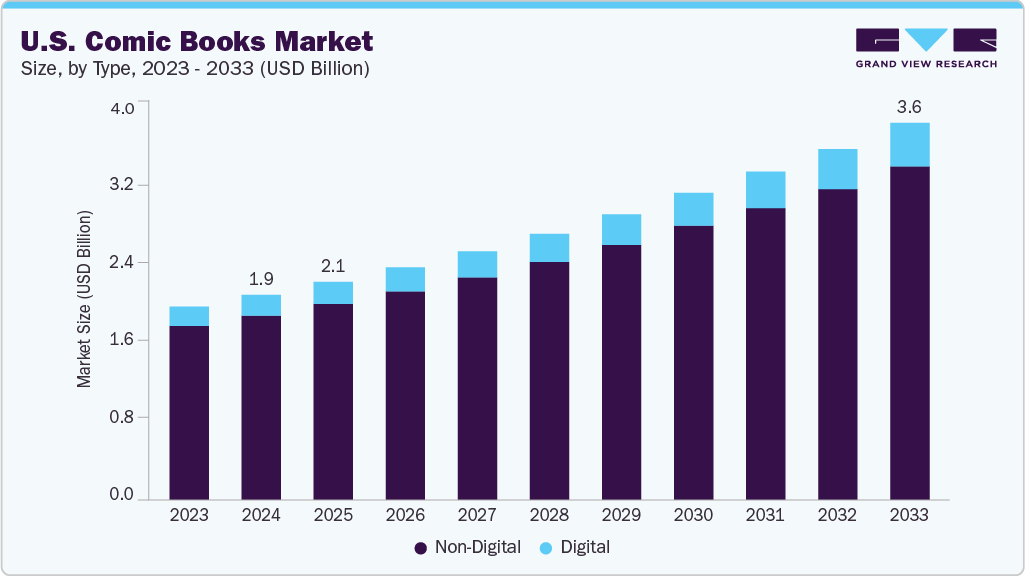
The U.S. comic books market size was valued at USD 1,953.3 million in 2024 and is projected to reach USD 3,592.5 million by 2033, growing at a CAGR of 7.1% from 2025 to 2033. The growth is attributed to the increasing demand for diverse storytelling and inclusive representation within comic Books. Publishers have been investing heavily in creating narratives that resonate with varied demographics, including stories featuring multicultural characters, themes of social justice, and voices from underrepresented groups. For instance, the success of comics like Ms. Marvel and Black Panther demonstrates the strong market appetite for stories that celebrate diversity and cultural depth, attracting both new and long-standing readers.
 Source: Grand View Research, IR Documents, Primary Interviews, Paid DatabasesTo learn more about this report,
 Download Free Sample Report
 The use of comic IP in movie universes has greatly fueled this growth. Marvel Studios and DC Entertainment have consistently made billions in box office sales, strengthening their brand and increasing engagement across different media. For example, the success of films like Spider-Man: No Way Home and The Batman has directly impacted back-issue sales and boosted interest in specific character titles.
The industry has seen a strong revival in recent years. It has become a lively and varied part of the larger entertainment and publishing world. This growth comes from several factors. These include a wider range of content, a shift to digital platforms, and a growing acceptance of comic-based intellectual property (IP) in film, television, and gaming.
The shift to digital platforms has become an important factor. Digital comics make reading easier. They allow fans to explore different titles and find new genres. Subscription services like Marvel Unlimited give readers affordable access to large collections of comics. This has introduced young readers to comics and encouraged ongoing engagement among current fans.
Furthermore, the rise of independent publishers and creator-owned titles has introduced greater narrative diversity and artistic innovation into the market. Publishers such as Image Comics, Boom! Studios and Dark Horse Comics have generated substantial market share by offering alternative content to traditional superhero fare. The critical and commercial success of titles like Saga (Image Comics) and Something Is Killing the Children (Boom! Studios) underscores this shift in consumer preference toward more nuanced and mature storytelling.
Digital distribution has also become a pivotal growth vector. Platforms like ComiXology (an Amazon subsidiary) have enabled wider accessibility, allowing readers to engage with content across devices and geographies. The pandemic notably accelerated digital adoption, further legitimizing the format as a mainstream consumption channel.
Comic Books franchises' growing significance in popular entertainment. Comic Books have become much more well-known and visible as a result of their adaptation into movies, television series, and streaming content. For instance, the DC Extended Universe (DCEU) and Marvel Cinematic Universe (MCU) have increased sales and engagement on a variety of platforms due to the tremendous public interest in their original comic Books counterparts. The consumer base is expanded by these adaptations, which frequently act as entry points for audiences who are not familiar with comics.
The technological shift toward digital platforms is also a notable driver. Digital comics have made the medium more accessible, allowing fans to explore titles and discover new genres easily. The availability of subscription-based services such as Marvel Unlimited and ComiXology Unlimited provides readers with affordable access to vast collections of comics. This has introduced younger, tech-savvy readers to the world of comics and encouraged consistent engagement among existing fans. For instance, digital sales surged during the pandemic as readers turned to online platforms for their comic Books consumption.
Fan conventions and events continue to be strong contributors to market growth. Comic-Con International and similar events are vibrant hubs for fan engagement, merchandise sales, and exclusive previews of upcoming releases. Such events foster community and excitement around comics, solidifying their cultural relevance and driving sales. For example, unveiling exclusive comic editions or collectibles at conventions often results in heightened demand and media buzz.
The lasting charm of printed comic Books is important. Collectors and fans appreciate the hands-on experience and the artistry of physical copies. Special editions, signed prints, and limited-release variants are still very popular and bring in significant revenue. Events like the auctioning of rare comic Books for record amounts highlight the importance of the physical comic Books market.
Consumer Insights
For years, certain segments of the comic Books industry faced challenges due to misconceptions about their audience; many assumed these stories only appealed to specific groups. However, as publishers expanded into a wider variety of genres and themes, they began attracting readers across different age groups and interests. Today, the popularity of graphic novels like Heartstopper and The Sandman Universe, boosted by adaptations on streaming platforms such as Netflix and HBO Max, has helped these stories reach a much broader audience. This increased visibility mirrors earlier trends in superhero franchises but reflects a growing appetite for inclusive and emotionally resonant narratives. Meanwhile, wider distribution through Bookstores, comic shops, online retailers, and libraries, along with the convenience of digital platforms, has made it easier for consumers to discover, access, and purchase content, further strengthening the market’s reach.
Type Insights
Non-digital comic Books accounted for a revenue share of 89.93% in 2024, driven by factors such as nostalgia, collectability, and the unique experience of physical comics. Despite the rise of digital formats, print comics appeal to a dedicated and passionate fan base. A key driver is nostalgia, as many readers associate print comics with their childhood or a long-standing hobby. The rise of superhero movies and TV shows based on popular comic characters has also helped fuel interest in print comics. With franchises such as Marvel and DC dominating the entertainment landscape, many new fans are introduced to the original comic Books and seek to explore the stories in their original format.
 To learn more about this report, Download Free Sample Report
 The digital segment is expected to grow at a CAGR of 8.8% from 2025 to 2033, driven by the rise of smartphones, tablets, and digital platforms. Digital comics allow readers to access vast libraries instantly, without needing physical storage space. This on-demand access especially appeals to readers who may not easily access comic Books stores or prefer digital device portability.
Genre Insights
Science-fiction comic Books accounted for a revenue share of 38.64% in 2024. There has been a resurgence of interest in speculative fiction and the rise of streaming services adapting sci-fi properties into films and TV shows. This growth is driven by the increasing popularity of sci-fi themes in mainstream culture, from space exploration to dystopian futures, and the demand for visually stunning, immersive stories.
As the genre grows, more independent creators and smaller publishers enter the market, contributing to a broader range of narratives and perspectives. This diversification attracts a wider audience, including fans of traditional sci-fi and younger readers discovering the genre through digital comics on platforms such as Webtoon, ComiXology, and Tapas. The genre's ability to explore complex, thought-provoking issues, such as artificial intelligence, climate change, and societal evolution, makes it particularly appealing to modern readers seeking entertainment and intellectual stimulation.
Demand for manga comic Books in the U.S. is expected to grow at a CAGR of 8.0% from 2025 to 2033. The rising influence of Japanese pop culture, including anime, gaming, and music, has drawn significant attention to manga as its literary counterpart. Manga’s distinctive storytelling style, diverse genres, and relatable characters resonate deeply with readers across different age groups. Additionally, the accessibility provided by online platforms offering translated and localized versions of manga has broadened its reach, making it more convenient for fans to explore and enjoy. Social media and fan communities also play a pivotal role in increasing visibility and enthusiasm for manga, fostering a vibrant ecosystem of discussion and recommendations.
Format Insights
Hard-copy comic Books accounted for a revenue share of 89.93% in 2024. Collectors and enthusiasts deeply value the physical format for its nostalgic appeal and its tangible connection to the artwork and storytelling. Limited editions, special covers, and signed prints add an exclusive dimension, turning them into cherished collectibles. Physical comic Books often evoke a sense of authenticity and tradition, making them a preferred choice for long-time fans. Additionally, comic Books stores and events like conventions are pivotal in driving sales, offering spaces where fans can interact with creators and connect with fellow enthusiasts.
 To learn more about this report, Download Free Sample Report
 The demand for e-Books is expected to grow at a CAGR of 9.0% from 2025 to 2033. Digital platforms have made comics more accessible and convenient, appealing especially to younger, tech-savvy readers who prefer consuming content on mobile devices and tablets. The ability to instantly download comics, access vast libraries, and explore exclusive digital-only releases has significantly contributed to the rise of e-Books. Moreover, digital comics often have interactive features such as sound effects and animations, enhancing the reading experience and attracting new audiences. Environmental consciousness among readers also plays a role, as e-Books eliminate the need for paper and printing, aligning with sustainable practices.
Key U.S. Comic Books Company Insights
Key players operating in the U.S. comic Books market are undertaking various initiatives to strengthen their presence and increase the reach of their products and services. Strategies such as expansion activities and partnerships are key in propelling the market growth.
Key U.S. Comic Books Companies:
- Disney
- Image Comics
- IDW Publishing
- Dark Horse Comic
- TOKYOPOP
- DC Comics
- Archie Comics
- DMG Entertainment
- Shogakukan Inc.
- KODANSHA USA PUBLISHING
Three ways to get this report
Buy it, customize it, or ask a question.Ask an Analyst
Analyst response in 1 business day
- AccessReport author, directly
- Reply timeWithin 1 working day
- No sales callDirect answer only
- FormatEmail reply
- CostFree, no cost
Get the Full Report
What the study covers
- FormatsPDF · Excel · Dashboard
- Timeline2025–2033 annual, 2024 base
- Coverage20+ countries, 5 regions
- Companies10+ key players profiled
Customize the Report
20% free customization
- IncludeCountries, segments, points
- TailorTo your product definition
- ExtendDeeper competitor detail
- OrA fully bespoke study
- Turnaround5–10 working days
Recent Developments
-
In March 2025, IDW Publishing announced the release of three new limited comic series, expanding the Star Trek universe. Star Trek: Red Shirts will focus on the often-overlooked red-shirted crew members following their mission on the U.S.S. Warren. Star Trek: Strange New Worlds - The Seeds of Destruction will explore Captain Pike and the crew of the U.S.S. Enterprise as they face a new threat to a distant colony.
-
In January 2025, Tokyopop and Mattel partnered to create manga-style graphic novels featuring Barbie and Hot Wheels. These middle-grade graphic novels, targeted at readers aged 8 to 12, will launch in 2026.
U.S. Comic Books Market Report Scope
Report Attribute
Details
Market size value in 2025
USD 2,078.0 million
Revenue forecast in 2033
USD 3,592.5 million
Growth rate (revenue)
CAGR of 7.1% from 2025 to 2033
Actuals
2021 - 2024
Forecast period
2025 - 2033
Quantitative units
Revenue in USD million/billion, and CAGR from 2025 to 2033
Report coverage
Revenue forecast, company ranking, competitive landscape, growth factors, and trends
Segments covered
Type, format, genre
Country scope
U.S.
Key companies profiled
Disney; Image Comics; IDW Publishing; Dark Horse Comic; TOKYOPOP; DC Comics; Archie Comics; DMG Entertainment; Shogakukan Inc.; KODANSHA USA PUBLISHING
Customization
Free report customization (equivalent up to 8 analysts working days) with purchase. Addition or alteration to country, regional & segment scope.
Pricing and purchase options
Avail customized purchase options to meet your exact research needs. Explore purchase options
U.S. Comic Books Market Report Segmentation
This report forecasts revenue growth at the country level and provides an analysis of the latest industry trends and opportunities in each of the sub-segments from 2021 to 2033. For this study, Grand View Research has segmented the U.S. comic Books market report based on type, format and genre:
-
Type Outlook (Revenue, USD Million, 2021 - 2033)
-
Digital
-
Non-Digital
-
-
Format Outlook (Revenue, USD Million, 2021 - 2033)
-
Hard Copy
-
E-Books
-
AudioBooks
-
-
Genre Outlook (Revenue, USD Million, 2021 - 2033)
-
Science-Fiction
-
Manga
-
Superhero
-
Non-fiction
-
Others (Fantasy, Horror, Slice of Life, Romance)
-
Frequently Asked Questions About This Report
The U.S. comic books market was estimated at USD 1,953.3 million in 2024 and is expected to reach USD 2,078.0 million in 2025.
The U.S. comic books market is expected to grow at a compound annual growth rate of 7.1% from 2025 to 2033, reaching USD 3,592.5 million by 2033.
Non-digital comic books accounted for a revenue share of 89.93% in the U.S. comic book industry in 2024, driven by factors such as nostalgia, collectability, and the unique experience of physical comics.
Some of the key players operating in the U.S. comic book market include Disney; Image Comics; IDW Publishing; Dark Horse Comic; TOKYOPOP; DC Comics; Archie Comics; DMG Entertainment; Shogakukan Inc.; KODANSHA USA PUBLISHING.
The growth of U.S. comic books market is attributed to the increasing demand for diverse storytelling and inclusive representation within comic books.
About the Author(s)
Homecare & Decor Research Team
Consumer Goods · Homecare & DecorThis report was authored by the homecare & decor research team at Grand View Research - comprising two research analysts, one senior research analyst, and one industry expert - with specialized expertise in the homecare & decor segment of the consumer goods industry. All findings are based on proprietary consumer goods databases, executive interviews, and regulatory analysis, subject to internal peer review prior to publication.
Last Updated:
Speak to Analyst

Customize this report to your needs - add regions, segments, or data points, with 20% free customization.
Or view our licence options:


ISO 9001:2015 & 27001:2022 Certified
We are GDPR and CCPA compliant! Your transaction & personal information is safe and secure. For more details, please read our privacy policy.


