
- Home
- »
- Medical Devices
- »
-
U.S. Electronic Drug Delivery Devices Market Report, 2030GVR Report cover

U.S. Electronic Drug Delivery Devices Market (2025 - 2030) Size, Share & Trends Analysis Report By Product (Smart Infusion Pumps, Smart Transdermal Patches), By Application (Diabetes, Oncology), And Segment Forecasts
Market Size & Trends
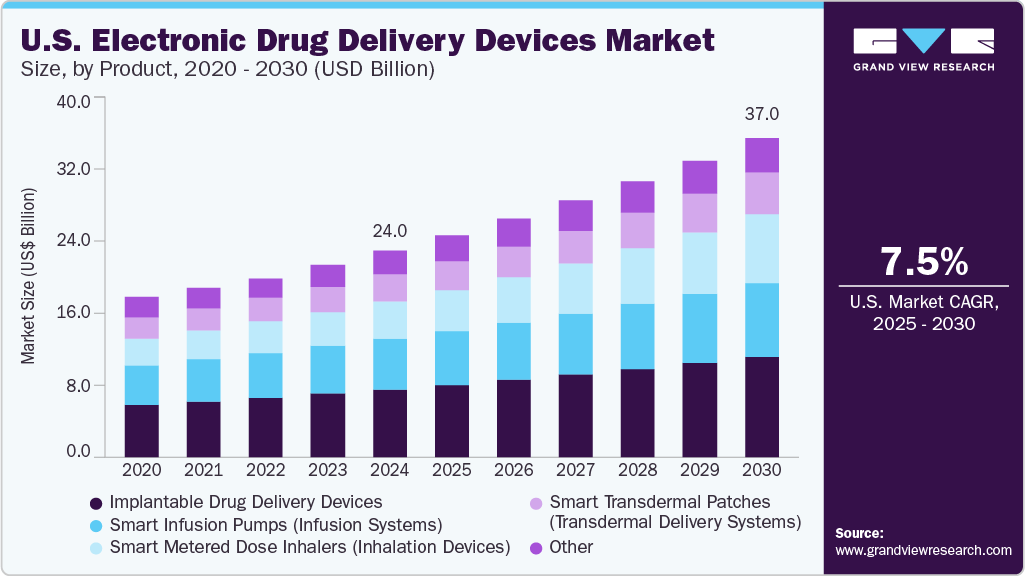
The U.S. electronic drug delivery devices market size was estimated at USD 24.0 billion in 2024 and is expected to grow at a CAGR of 7.5% from 2025 to 2030. The growing geriatric population, increasing prevalence of chronic diseases, rising preference for home healthcare, and the integration of digital technologies are the factors propelling the market growth. These devices offer a controlled drug delivery method that is more convenient and less painful, while also minimizing side effects. They help maintain drug concentration within a specific functional range known as the therapeutic window.
 Source: Grand View Research, IR Documents, Primary Interviews, Paid DatabasesTo learn more about this report,
 Download Free Sample Report
 The increasing prevalence of chronic diseases is contributing to the growth of the drug delivery devices market. Chronic diseases such as cancer, diabetes, and cardiovascular diseases require long-term management, frequently involving regular drug administration to prevent complications, manage symptoms, and improve quality of life. Some of the devices that can be used for this include insulin pumps, inhalers, patches, implantable devices, and continuous glucose monitors.
The National Cancer Institute estimated that approximately 2,001,140 new cancer cases would be diagnosed in the U.S. in 2024. Furthermore, breast cancer is the most commonly diagnosed cancer among women in the U.S. In 2022, there were 272,454 new cases reported. The American Cancer Society projects that approximately 316,950 women in the U.S. will be diagnosed with invasive breast cancer in 2025. In addition, in 2021, it was estimated that 38.4 million people of all ages, representing 11.6% of the total population in the U.S., were living with diabetes.
Major hospitals, such as IU Health Methodist Hospital, Northside Hospital Atlanta, UAB Hospital, and Christiana Hospital, use EDDD to treat chronic diseases and relieve pain. Furthermore, electronically enabled, wirelessly connected, smart drug-delivery devices are well suited to home and on-the-go use. A study by the USC Schaeffer Center found that many Americans view hospital-level care at home as appealing due to its convenience, comfort, and effectiveness. Using a sample from the Understanding America Study, researchers surveyed approximately 1,100 individuals about their care preferences. The results showed that 47% of respondents considered hospital-at-home care an acceptable alternative to traditional inpatient care.
Product Insights
The Implantable Drug Delivery Devices (IDDD) dominated the U.S. electronic drug delivery devices industry, accounting for the largest revenue share of 33.0% in 2024. These devices allow for drug administration ranging from once daily to monthly, eliminating the need for frequent dosing and checkups. Ideal for busy individuals, they offer continuous, controlled delivery, such as insulin, reducing the need for repeated injections. Implanted under the skin, they deliver medication directly into the bloodstream. These devices can be used to treat various medical conditions, including cancer, chronic pain, hormonal imbalances, and neurological disorders. Their ability to provide localized treatment, ensure direct delivery of drugs to the target tissue, reduce the risk of side effects, and improve therapeutic outcomes are some of the advantages of these devices. Some implantable devices include pumps, microchips, biodegradable devices, and implantable reservoir systems.
The Smart Metered Dose Inhalers (SMDIs) segment is expected to grow at the fastest CAGR of 11.0% over the forecast period. The demand is driven by its use in treating respiratory diseases such as COPD and asthma, which are on the rise in the U.S. In 2022, adult asthma rates in the U.S. ranged from 7.9% in Texas to 13.3% in Rhode Island, while rates among children varied from 4.5% in Illinois to 10.2% in Massachusetts. SMDIs help patients manage their medication by sending alerts for missed or repeated doses, providing reminders for timely use, improving inhaler technique, and potentially reducing drug waste. Smart MDIs address these limitations by incorporating sensors, Bluetooth functionality, and data-monitoring capabilities. These features enable real-time usage tracking, patient feedback, and remote monitoring.
Application Insights
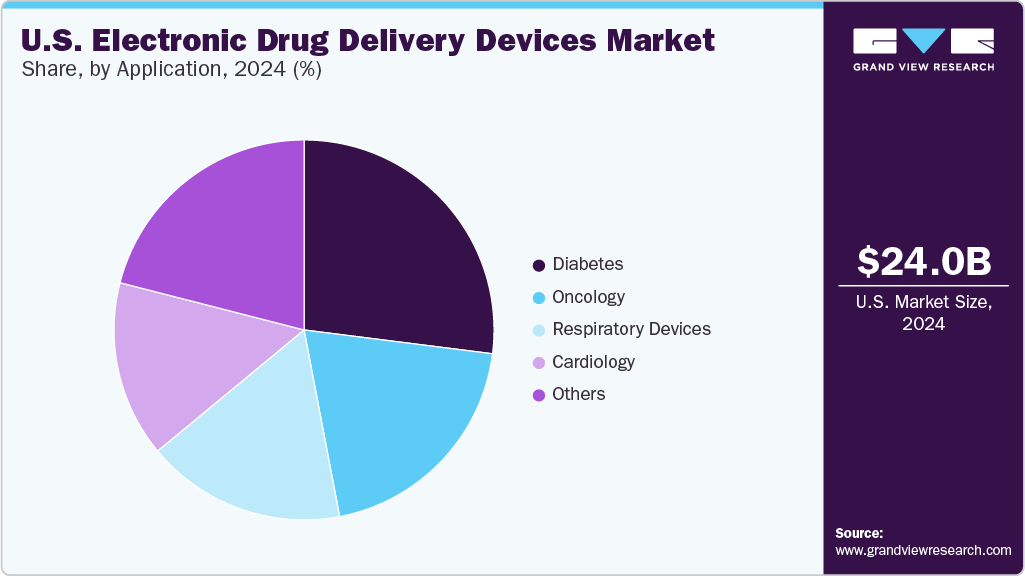
The diabetes segment dominated the electronic drug delivery devices industry with the largest revenue share in 2024. Type 2 diabetes is increasing rapidly in the U.S. , largely due to factors such as poor diet, physical inactivity, and genetic predisposition. Electronic drug delivery devices, such as insulin pens and pumps, provide several advantages over traditional injections, such as improved convenience, dosing accuracy, and enhanced patient comfort. They also support better treatment adherence and may help reduce overall healthcare costs.
 To learn more about this report, Download Free Sample Report
 The oncology segment is expected to grow at the largest CAGR over the forecast period. The growth is driven by the increasing number of cancer cases in the U.S. In 2025, around 2 million people in the U.S. are estimated to be diagnosed with cancer. Prostate cancer, with 313,780 cases, is the most common among men, and lung and bronchus cancer will have an estimated 226,650 new cases. Therefore, the device is a better alternative to injections as it has revolutionized drug delivery by greatly enhancing the bioavailability and precise targeting of therapeutic agents to cancerous tissues. By leveraging the Enhanced Permeability and Retention (EPR) effect, they increase localized drug concentration at tumor sites while reducing systemic exposure.
Key U.S. Electronic Drug Delivery Devices Company Insights
Some of the major companies in the U.S. electronic drug delivery devices industry are Medtronic, BD, Insulet Corporation, and Tandem Diabetes Care, Inc. These companies invest in research and development, focusing on innovation and improving device functionality. They also prioritize patient-centered solutions, ensuring ease of use and enhanced treatment adherence. Strategic partnerships, regulatory approvals, and continuous technological advancements like wireless control and precision dosing help maintain market leadership.
-
Medtronic is a healthcare company that develops and manufactures medical devices, therapies, and services. It specializes in various areas, including cardiovascular, diabetes, neurological, and surgical care. Medtronic helps improve patient outcomes through innovative technologies and solutions.
-
BD, a medical technology company, manufactures, develops, and sells various medical devices, instrument systems, and reagents. It focuses on improving patient care and advancing medical innovation, with diagnostics, medication management, and infection prevention expertise.
Key U.S. Electronic Drug Delivery Devices Companies:
- Medtronic
- BD
- Insulet Corporation
- Tandem Diabetes Care, Inc.
- Eli Lilly and Company
- Novo Nordisk A/S
- Johnson & Johnson Services, Inc.
- United Therapeutics Corporation
- Abbott
- AstraZeneca
Three ways to get this report
Buy it, customize it, or ask a question.Ask an Analyst
A direct answer, usually in 1 working day
- AccessReport author, directly
- Reply timeWithin 1 working day
- No sales callDirect answer only
- FormatEmail reply
- CostFree, no cost
Get the Full Report
What the study covers
- FormatsPDF · Excel · Dashboard
- Timeline2025–2030 annual, 2024 base
- Coverage20+ countries, 5 regions
- Companies10+ key players profiled
Customize the Report
20% free customization
- IncludeCountries, segments, points
- TailorTo your product definition
- ExtendDeeper competitor detail
- OrA fully bespoke study
- Turnaround5–10 working days
Recent Developments
-
In April 2025, Medtronic submitted 510(k) applications to the FDA for its MiniMed 780G insulin pump and SmartGuard algorithm, aiming for clearance as interoperable electronic drug delivery devices. The approval would enable integration with Abbott’s latest CGM platform, enhancing automated insulin delivery.
U.S. Electronic Drug Delivery Devices Market Report Scope
Report Attribute
Details
Market size value in 2025
USD 25.8 billion
Revenue forecast in 2030
USD 37.1 billion
Growth rate
CAGR of 7.5% from 2025 to 2030
Base year for estimation
2024
Historical data
2018 - 2023
Forecast period
2025 - 2030
Quantitative units
Revenue in USD million/billion and CAGR from 2025 to 2030
Report coverage
Revenue forecast, company ranking, competitive landscape, growth factors, and trends
Segments covered
Product, application
Country scope
U.S.
Key companies profiled
Medtronic; BD; Insulet Corporation; Tandem Diabetes Care, Inc.; Eli Lilly and Company; Novo Nordisk A/S; Johnson & Johnson Services, Inc.; United Therapeutics Corporation; Abbott; AstraZeneca.
Customization scope
Free report customization (equivalent up to 8 analysts working days) with purchase. Addition or alteration to country, regional & segment scope.
Pricing and purchase options
Avail customized purchase options to meet your exact research needs. Explore purchase options
U.S. Electronic Drug Delivery Devices Market Report Segmentation
This report forecasts revenue growth at the country level and provides an analysis of the latest industry trends in each of the sub-segments from 2018 to 2030. For this study, Grand View Research has segmented the U.S. electronic drug delivery devices market report based on product and application:
-
Product Outlook (Revenue, USD Million, 2018 - 2030)
-
Smart Infusion Pumps (Infusion Systems)
-
Non-Biologic Smart Infusion Systems
-
Biologic Smart Infusion Systems
-
Smart Infusion Insulin Pumps
-
Other
-
-
-
Smart Metered Dose Inhalers (Inhalation Devices)
-
Implantable Drug Delivery Devices
-
Biologic Implantable Drug Delivery Devices
-
Non-Biologic Implantable Drug Delivery Devices
-
-
Smart Transdermal Patches (Transdermal Delivery Systems)
-
Other
-
-
Application Outlook (Revenue, USD Million, 2018 - 2030)
-
Diabetes
-
Respiratory Devices
-
Oncology
-
Cardiology
-
About the Author(s)
Medical Devices Research Team
Healthcare · Medical DevicesThis report was authored by the medical devices research team at Grand View Research - comprising two research analysts, one senior research analyst, and one industry expert - with specialized expertise in the medical devices segment of the healthcare industry. All findings are based on proprietary healthcare databases, executive interviews, and regulatory analysis, subject to internal peer review prior to publication.
Last Updated:
Speak to Analyst -

Customize this report to your needs - add regions, segments, or data points, with 20% free customization.
Or view our licence options:


ISO 9001:2015 & 27001:2022 Certified
We are GDPR and CCPA compliant! Your transaction & personal information is safe and secure. For more details, please read our privacy policy.


