
- Home
- »
- Medical Devices
- »
-
U.S. Fetal And Neonatal Care Equipment Market Report 2035GVR Report cover

U.S. Fetal And Neonatal Care Equipment Market (2027 - 2035)
Size, Share & Trends Analysis Report By Product (Fetal Care Equipment, Neonatal Care Equipment), By End-use (Hospitals, Clinics), By Region (Midwest, West, Southeast, Southwest, Northeast), And Segment Forecasts
Market Size, 2026
$2.5BMarket Estimate, 2027
$2.7BMarket Forecast, 2035
$3.9BCAGR, 2027–2035
4.9%U.S. Fetal And Neonatal Care Equipment Market Summary
The U.S. fetal and neonatal care equipment market size was valued at USD 2.5 billion in 2026 and is projected to grow from USD 2.7 billion in 2027 to USD 3.9 billion by 2035, at a CAGR of 4.9% from 2027 to 2035. This growth is driven by the increasing prevalence of high-risk pregnancies and preterm births, rising demand for advanced fetal monitoring and neonatal intensive care equipment, and growing adoption of minimally invasive and continuous monitoring technologies.
Key Market Trends & Insights
- By product: Fetal care equipment segment held the highest market share of 65.3% in 2026.
- By end-use: Hospitals segment held the highest market share of 58.5% in 2026.
Market Size & Forecast
- Market size in 2026: USD 2.5 Billion
- Estimated market size in 2027: USD 2.7 Billion
- Projected market size by 2035: USD 3.9 Billion
- CAGR (2027-2035): 4.9%
Prism AI by Grand View Research Free to tryAsk a question about the U.S. fetal and neonatal care equipment marketTry asking✓Every figure cited from GVR research Prefer the report? Download free sample →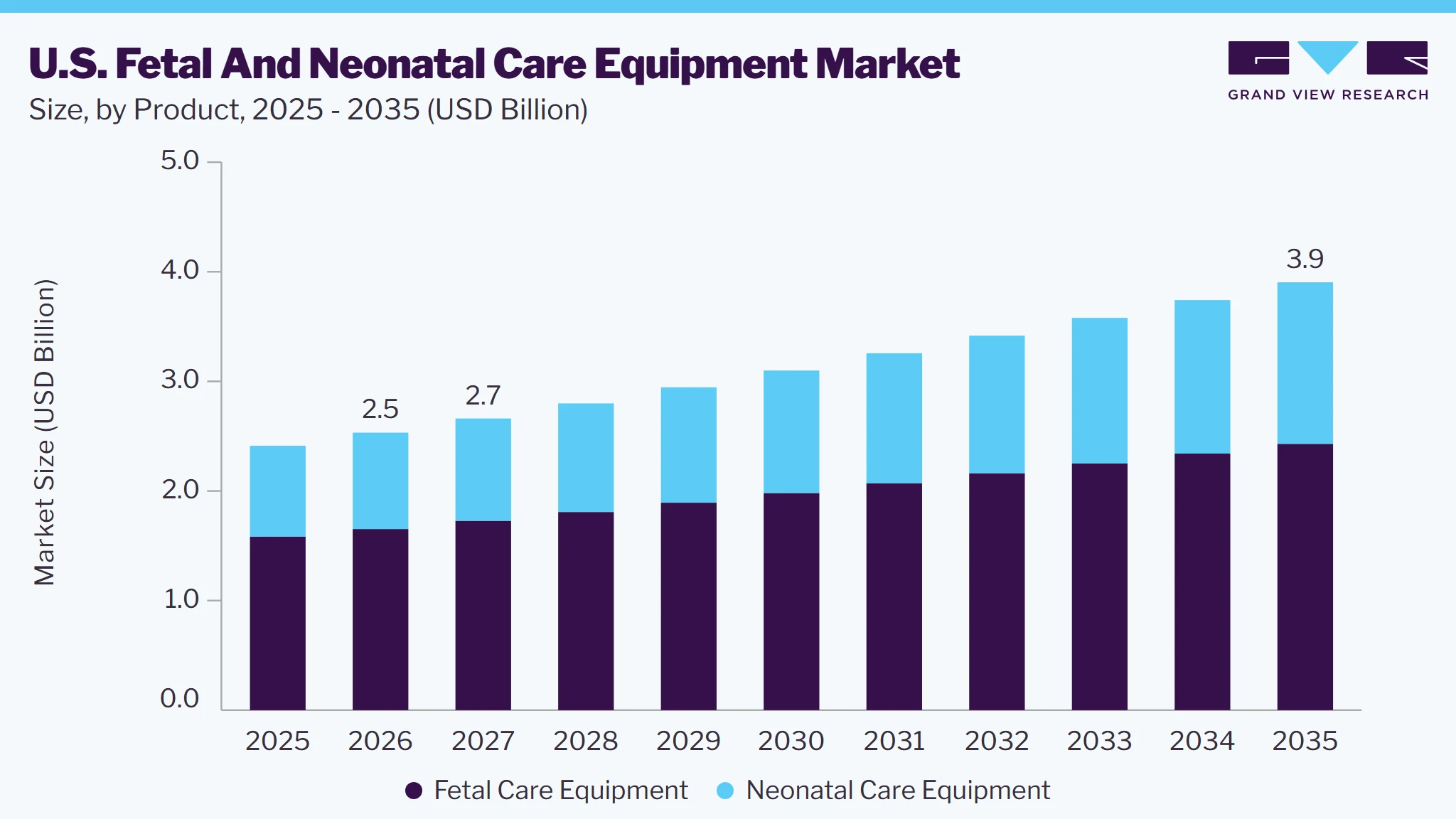 Source: Grand View Research, IR Documents, Primary Interviews, Paid DatabasesTo learn more about this report,
 Download Free Sample Report
Market Dynamics
The market is supported by the continued need to monitor fetal health, manage high-risk pregnancies, and provide specialized care for premature and critically ill newborns. Demand is shaped by the prevalence of preterm births, low-birth-weight deliveries, congenital conditions, and neonatal respiratory complications, which increase the need for fetal monitors, ultrasound systems, infant incubators, radiant warmers, phototherapy devices, respiratory support equipment, and multiparameter monitoring systems. Technological advances in non-invasive monitoring, neonatal ventilation, thermoregulation, and integrated bedside systems are also influencing product development and hospital procurement.
The persistent burden of preterm and low-birthweight births, combined with increasing NICU utilization, is creating a sustained clinical requirement for fetal and neonatal care equipment in the U.S. As per March of Dimes report 2025, 10.4% of U.S. live births were preterm in 2024, marking the third consecutive year at this level, while 8.5% of infants were classified as low birthweight. Low-birthweight and premature infants are more likely to require temperature regulation, respiratory support, oxygen monitoring, phototherapy, and continuous physiological monitoring.
In addition, in April 2026, the U.S. CDC, NCHS reported that the number of births in the U.S. declined by 1% in 2025 to 3,606,400, while the general fertility rate decreased slightly to 53.1 births per 1,000 females aged 15-44. At the same time, the cesarean delivery rate increased to 32.5%, the highest level since 2013, while the low-risk cesarean rate rose to 26.9%, its highest level since 2012. The preterm birth rate remained unchanged at 10.41%, with early preterm births declining by 1% and late preterm births remaining stable. The teenage birth rate also declined by 7% to 11.7 births per 1,000 females aged 15-19, reaching another record low.
Supply-chain vulnerability is a significant restraint for the market as neonatal care depends on highly specialized, size-specific devices that cannot always be readily substituted with standard pediatric or adult products. The FDA has specifically identified neonatal breathing tubes and other pediatric devices as vulnerable to shortages as many are niche products manufactured in relatively limited volumes and have few appropriately sized alternatives. Supply disruptions can result from limited manufacturing capacity, manufacturing or quality problems, natural disasters, sterilization-capacity constraints, recalls, and product discontinuations.
The market has an opportunity to benefit from the development of newborn-specific medical devices designed around the unique physiological characteristics, small body size, and rapidly changing condition of neonates. The FDA notes that newborns require specialized device considerations because their physiology changes substantially during the first 28 days of life, while premature and critically ill infants have particularly narrow safety margins. This creates demand for equipment that can provide precise, low-volume, and appropriately scaled care across respiratory support, thermoregulation, monitoring, infusion, and diagnostic applications.
The opportunities for advanced incubators, infant warmers, temperature-monitoring systems, and integrated thermoregulation platforms that can maintain a controlled environment while minimizing unnecessary handling of fragile infants. For instance, in August 2025 the FDA cleared mOm’s Essential Incubator (ME1) as a neonatal incubator. The clearance provides an example of continued development of equipment specifically designed to provide controlled environmental conditions for newborns instead of relying solely on generalized hospital equipment.
Market Concentration & Characteristics
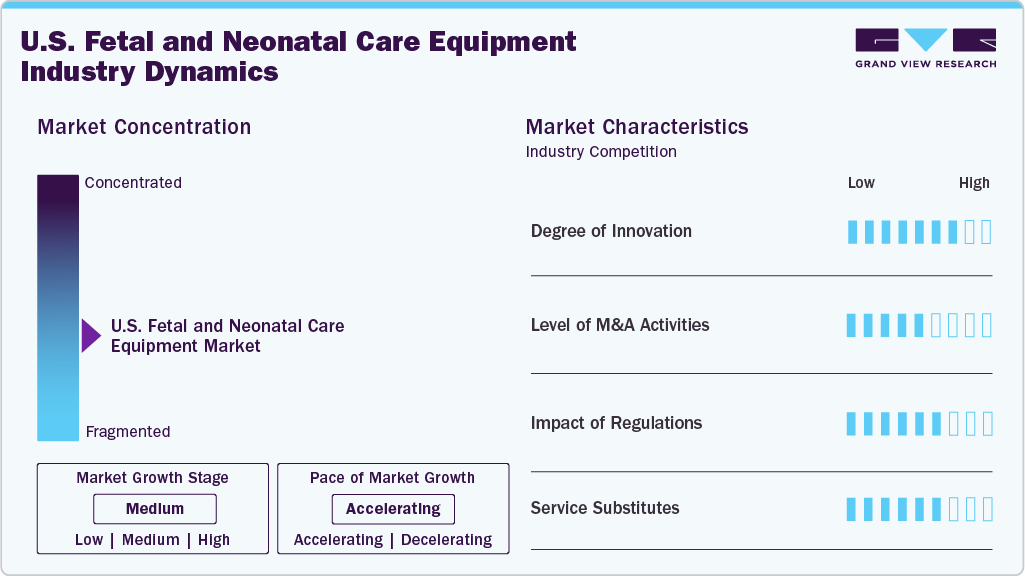
The U.S. fetal and neonatal care equipment market is experiencing innovation in AI-enabled fetal imaging, wireless maternal-fetal monitoring, neonatal brain-function monitoring, and specialized respiratory support. Manufacturers are incorporating advanced sensing and data-analysis capabilities into equipment to improve the availability of clinical information during pregnancy and neonatal intensive care. For instance, in February 2026, GE HealthCare announced a collaboration with Diagnoly to integrate its Fetoly artificial intelligence solution into the Voluson ultrasound portfolio. The solution supports real-time fetal cardiac and brain analysis and is available in the U.S. and Europe through the Voluson Solution Store.
M&A activity reflects efforts by established neonatal care and medical technology companies to expand their portfolios through the acquisition of specialized technologies. For instance, in February 2026, Natus Sensory acquired Michigan-based TheraB Medical, a developer of wearable phototherapy technology for neonatal jaundice. The acquisition adds TheraB's SnugLit wearable phototherapy system to Natus Sensory's newborn-care portfolio. SnugLit is designed to deliver phototherapy in a swaddle-style format, supporting treatment while allowing greater parent-infant interaction.
 To learn more about this report, Download Free Sample Report
Regulatory requirements significantly influence the U.S. fetal and neonatal care equipment market because manufacturers must demonstrate device safety, performance, and reliability before marketing products. The FDA applies device-specific classification and premarket requirements, including 510(k) notification for many fetal and neonatal monitoring, respiratory, and thermal-care devices. Post-market safety communication and device-use recommendations also influence manufacturers and healthcare providers. For instance, in January 2025, the FDA updated its evaluation of potential airborne chemical exposure from neonatal incubators.
Product expansion is supported by the development of equipment and accessories designed to address the specific physiological requirements of premature and critically ill newborns. Manufacturers are extending existing platforms to accommodate smaller and more vulnerable patient populations, particularly in neonatal respiratory care. For instance, in October 2026, Getinge received FDA 510(k) clearance for its 6Fr/48 cm Edi catheter, designed for premature infants weighing between 500 and 1,000 grams. Used with Getinge's Neurally Adjusted Ventilatory Assist (NAVA) technology, the catheter measures the electrical activity of the diaphragm to synchronize ventilator support with the infant's own breathing efforts.
Analyst Perspective
The market presents opportunities in improving early detection of fetal complications, expanding specialized newborn care, and addressing the clinical needs of premature and high-risk infants. A key white space lies in developing integrated monitoring and diagnostic solutions that support continuous assessment of fetal health during pregnancy and neonatal health after birth. Further opportunities exist in advanced fetal monitoring systems, neonatal respiratory support equipment, portable incubators, and technologies designed for extremely low birth weight infants. The growing use of telehealth and remote monitoring also creates scope for extending specialist support to community hospitals and facilities with limited neonatal intensive care capabilities. In addition, artificial intelligence-enabled imaging, connected monitoring devices, and automated clinical systems offer opportunities to improve clinical assessment and workflow efficiency. Companies focusing on equipment interoperability, non-invasive monitoring, specialized neonatal technologies, and solutions suited to different levels of maternal and newborn care are better positioned to address unmet clinical requirements across the market.
Product Insights
The fetal care equipment segment held the largest revenue share in 2026. The clinical use of fetal monitoring and imaging technologies throughout pregnancy, particularly for assessing fetal growth, heart rate, blood flow, and potential complications in high-risk pregnancies. Continued development of wearable and non-invasive monitoring technologies is also expanding the range of fetal surveillance approaches. For instance, in May 2026, Stanford Medicine researchers developed a wearable ultrasound patch designed to continuously monitor blood flow in the fetus and umbilical cord. The development highlights research into continuous fetal surveillance and wearable ultrasound technologies that support the assessment of fetal circulation.
The neonatal care equipment segment is expected to register the fastest growth during the forecast period. Growth is supported by the need to provide specialized care for premature and critically ill newborns, including thermal regulation, respiratory assistance, phototherapy, and continuous physiological monitoring. Increasing investment in neonatal intensive care infrastructure is also strengthening demand for incubators, infant warmers, neonatal ventilators, monitoring systems, and related equipment. For instance, in November 2024, Cook Children's announced a 10-year master plan to expand its Fort Worth medical center, including a new 700,000-square-foot medical tower and an additional 37 NICU beds. The expansion also includes increased capacity for pediatric intensive care, operating rooms, and imaging services.
End-use Insights
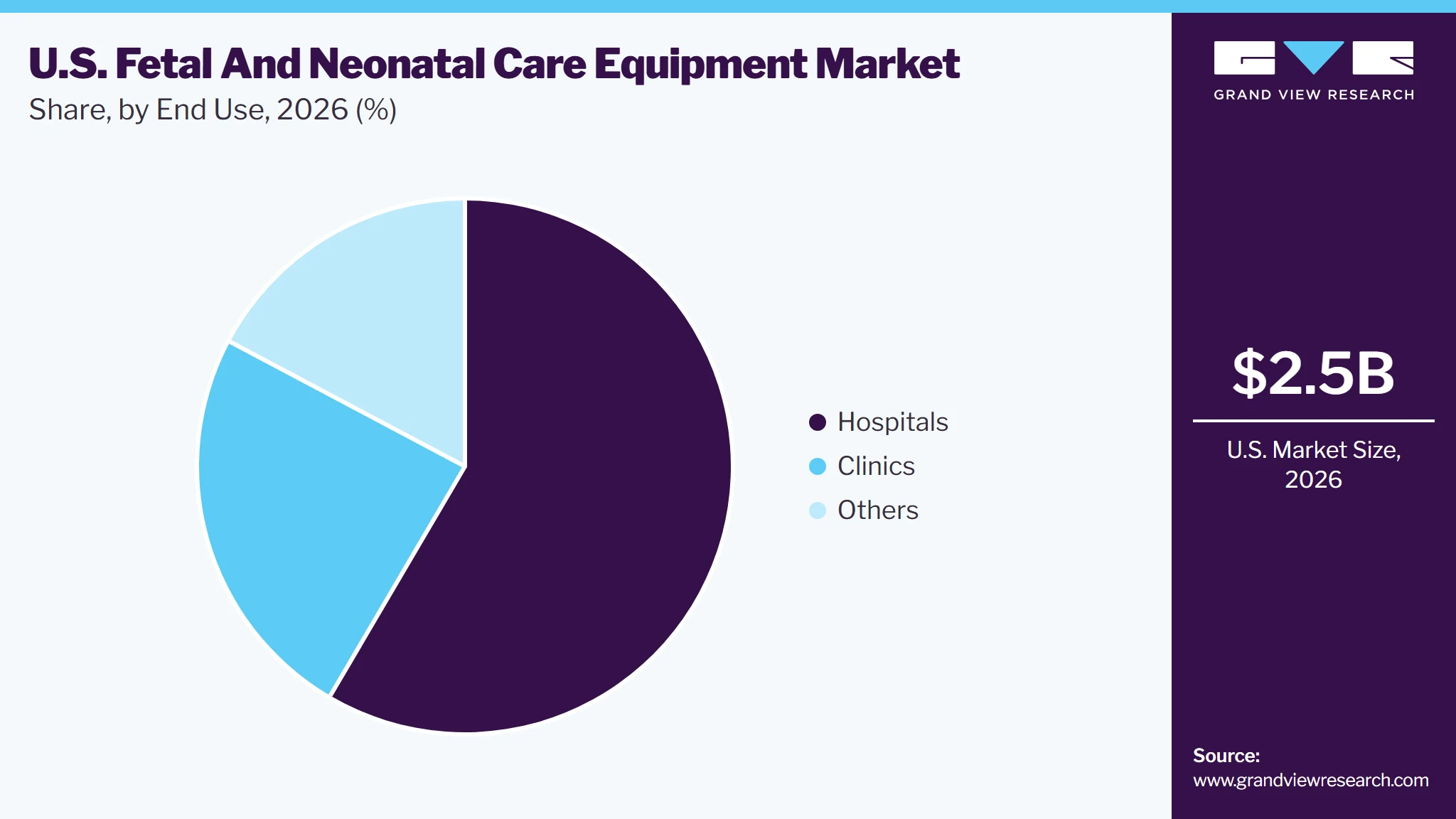
The hospitals segment held the largest revenue share of 58.5% in 2026 and is expected to register the fastest growth during the forecast period. Hospitals account for a substantial proportion of fetal and neonatal care equipment demand because they provide comprehensive obstetric, maternal-fetal medicine, labor and delivery, and neonatal intensive care services. Their requirements span fetal monitors, ultrasound systems, neonatal incubators, infant warmers, respiratory support devices, phototherapy systems, and integrated physiological monitoring equipment. For instance, in January 2025, the University of Maryland Medical System (UMMS) launched NEST, a centralized remote fetal monitoring center connected to every UMMS hospital with a labor and delivery unit. The center continuously monitors fetal heart rate and uterine contraction patterns, providing an additional layer of surveillance alongside bedside clinical teams.
 To learn more about this report, Download Free Sample Report
The clinics segment is expected to register significant growth during the forecast period, supported by the increasing role of specialized maternal-fetal medicine practices in managing high-risk pregnancies and conducting advanced prenatal assessments. These facilities require specialized ultrasound systems with advanced imaging and measurement capabilities to evaluate fetal anatomy, growth, and development. For instance, in October 2025, Samsung Healthcare announced a strategic partnership with High-Risk Pregnancy Center (HRPC), a maternal-fetal medicine practice in Nevada, under which HRPC planned to deploy Samsung's Z20 ultrasound systems across its practices in Las Vegas, Henderson, and Reno. Designed for advanced maternal-fetal medicine and complex obstetric imaging, the Z20 incorporates AI-powered functions for automated view identification, anatomical labeling, and fetal measurements. HRPC planned to standardize the systems across its locations to support imaging services for high-risk pregnancies.
Country Insights
Southwest Fetal And Neonatal Care Market Trends
The Southwest region dominated the fetal and neonatal care equipment market in 2026. Regional demand is supported by investments in maternal and neonatal healthcare infrastructure, the presence of large hospital networks, and the need to expand specialized care for high-risk pregnancies and premature newborns. Hospitals and maternal-fetal medicine centers require fetal ultrasound systems, fetal monitors, neonatal incubators, respiratory support devices, and monitoring equipment to manage complex obstetric and neonatal cases. For instance, in August 2026, Texas Children’s in Austin announced a USD 39 million expansion of its Level IV neonatal intensive care unit, increasing capacity from 14 to 31 rooms. The hospital cited growing demand for specialized neonatal services across Central Texas and surrounding areas, including West Texas. The expansion also follows the hospital's Level II Maternal Care designation and growth in its maternal-fetal medicine services.
West Fetal And Neonatal Care Market Trends
The West region is expected to register significant growth during the forecast period. Growth is supported by investments in advanced maternity and neonatal facilities, expansion of specialized maternal-fetal medicine services, and increasing emphasis on providing complex newborn care within regional hospital networks. Healthcare providers are expanding NICU capacity and introducing specialized programs that require advanced neonatal monitoring, respiratory support, thermoregulation, and imaging equipment. For instance, in June 2026, Hoag announced the opening of its new Women’s Hospital in Irvine, California, featuring a 17-bed NICU, expanded birthing facilities, and additional maternal-fetal medicine services. Hoag also outlined plans for a further NICU expansion at its Newport Beach hospital, which would bring its combined NICU capacity across the two locations to 50 beds. The expansion includes an infant cooling program for newborns with brain injuries associated with oxygen deprivation during delivery.
Key U.S. Fetal And Neonatal Care Equipment Company Insights
The U.S. fetal & neonatal care equipment market players are focusing on devising innovative business growth strategies in the form of product portfolio expansions, partnerships & collaborations, mergers & acquisitions, and business footprint expansions.
Key U.S. Fetal And Neonatal Care Equipment Companies
-
Cardinal Health.
-
Drägerwerk AG & Co. KGaA.
-
Koninklijke Philips N.V.
-
GE Healthcare
-
Medtronic.
-
Vyaire
-
BD
-
Utah Medical Products, Inc.
-
Ambu A/S
-
Inspiration Healthcare Group plc
-
Atom Medical Corp.
-
Fisher & Paykel Healthcare Limited
-
Masimo
-
Phoenix Medical Systems (P) Ltd.
Competitive Benchmarking
Market Players
Operating Strategies
Competitive Edge
Weakness
Mature players: Cardinal Health, Drägerwerk AG & Co. KGaA, Koninklijke Philips N.V., GE HealthCare, Medtronic, BD, Fisher & Paykel Healthcare Limited, Masimo, ZOLL Medical Corporation
- Established players are focused on expanding fetal and neonatal care equipment portfolios covering fetal monitoring, obstetric ultrasound, neonatal ventilation, infant warming, pulse oximetry, respiratory support, and other critical-care applications across the U.S.
- Companies are strengthening neonatal respiratory-care capabilities, advanced fetal monitoring, AI-enabled imaging and monitoring, connected-care technologies, and clinical support infrastructure to address evolving maternal and neonatal care requirements.
- Established players benefit from strong brand recognition, broad hospital relationships, extensive distribution networks, diversified product portfolios, regulatory capabilities, and established presence across U.S. maternal and neonatal care facilities.
- Broad product coverage across fetal monitoring, ultrasound, neonatal ventilation, warming, respiratory support, and physiological monitoring supports integrated equipment offerings for labor and delivery units, NICUs, and maternal-fetal medicine centers.
- Mature players face high R&D, regulatory, manufacturing, and service costs associated with maintaining technologically advanced fetal and neonatal equipment portfolios and supporting complex hospital environments.
- Maintaining consistent product performance, interoperability, clinical support, and regulatory compliance across broad U.S. hospital networks requires continuous investment in technology, training, and service infrastructure.
Emerging Players: Utah Medical Products, Inc., Ambu A/S, Inspiration Healthcare Group plc, ATOM MEDICAL Corp., Phoenix Medical Systems (P) Ltd.
- Emerging and specialized players are focusing on targeted fetal and neonatal care applications, including neonatal ventilation, infant warming, resuscitation, monitoring, obstetric care, and specialized medical devices.
- Companies are strengthening specialized product capabilities, technology development, regulatory approvals, distributor networks, and customer support to expand their presence across targeted U.S. maternal and neonatal care settings..
- These players benefit from specialized product portfolios, focused technology development, application-specific expertise, and flexibility in addressing selected fetal and neonatal care requirements.
- Focused portfolios and specialized capabilities provide opportunities to serve specific NICU, labor-and-delivery, neonatal respiratory, warming, and fetal-monitoring requirements alongside broader equipment suppliers.
- Smaller or more specialized players generally have more limited geographic coverage, hospital relationships, distribution infrastructure, and financial resources compared with large multinational medical-device companies.
- Comparatively smaller operational scale may constrain extensive clinical evidence generation, regulatory expansion, large-scale manufacturing, and broad after-sales service coverage across the U.S. market.
Recent Developments
-
In September 2026, Marani Health announced that the U.S. FDA had granted 510(k) clearance to its Mcare System (MW-20), which includes the Mwrap wearable. The system captures fetal and maternal heart signals through a wearable abdominal device and transmits monitoring data to healthcare providers through a remote portal.
-
In January 2026, the FDA granted 510(k) clearance to TheraB Medical's SnugLit Wearable Phototherapy System (SNGL-01-US), a device classified under neonatal phototherapy. The wearable system is designed to deliver light therapy for newborns with jaundice in a swaddle-style format.
-
In January 2026, Eyas Medical Imaging received FDA 510(k) clearance for its Ascent3T Neonatal Magnetic Resonance Imaging System. The dedicated 3T MRI system is designed for imaging neonatal and infant anatomy, including the brain, lungs, heart, abdomen, and extremities.
-
In October 2025, GE HealthCare announced the launch of CareIntellect for Perinatal, a cloud-based software application developed in collaboration with HCA Healthcare. The platform consolidates maternal and fetal vital information, including uterine activity, blood pressure, fetal heart rate, and maternal oxygen saturation, into a unified chronological view.
U.S. Fetal And Neonatal Care Equipment Market Report Scope
Report Attribute
Details
Market size in 2026
USD 2.5 billion
Market size value in 2027
USD 2.7 billion
Projected market size by 2035
USD 3.9 billion
Growth rate
CAGR of 4.9% from 2027 to 2035
Actual data
2023 - 2026
Forecast period
2027 - 2035
Quantitative units
Revenue in USD million and CAGR from 2027 to 2035
Report coverage
Revenue forecast, company ranking, competitive landscape, growth factors, and trends
Segments covered
Product, end-use, region
Regional scope
Midwest, west, southeast, southwest, northeast
Country scope
U.S.
Key companies profiled
Cardinal Health., Drägerwerk AG & Co. KGaA., Koninklijke Philips N.V., GE Healthcare, Medtronic., Vyaire, BD, Utah Medical Products, Inc., Ambu A/S, Inspiration Healthcare Group plc, Atom Medical Corp., Fisher & Paykel Healthcare Limited, Masimo, Phoenix Medical Systems (P) Ltd.
Customization scope
Free report customization (equivalent up to 8 analyst working days) with purchase. Addition or alteration to country, regional & segment scope.
Pricing and purchase options
Avail customized purchase options to meet your exact research needs. Explore purchase options
U.S. Fetal And Neonatal Care Equipment Market Report Segmentation
This report forecasts revenue growth and provides an analysis of the latest trends in each of the sub-segments from 2023 to 2035. For the purpose of this report, Grand View Research has segmented the U.S. fetal and neonatal care equipment market on the basis of product, end use, region
-
Product Outlook (Revenue, USD Million, 2023 - 2035)
-
Fetal Care Equipment
-
Ultrasound Devices
-
Fetal MRI Systems
-
Fetal Monitors
-
Fetal Pulse Oximeters
-
-
Neonatal Care Equipment
-
Thermoregulation Equipment
-
Infant Warmers
-
Incubators
-
-
Respiratory Devices
-
Neonatal Ventilators
-
Continuous Positive Airway Pressure (CPAP) Devices
-
Oxygen Analyzers and Monitors
-
Resuscitators
-
Others
-
-
Neonatal Monitoring Devices
-
Blood Pressure Monitors
-
Cardiac Monitors
-
Pulse Oximeters
-
Capnographs
-
Integrated Monitoring Devices
-
-
Others
-
-
-
End-use Outlook (Revenue, USD Million, 2023 - 2035)
-
Hospitals
-
Clinics
-
Others
-
-
Regional Outlook (Revenue, USD Million, 2023 - 2035)
-
Midwest
-
West
-
Southeast
-
Southwest
-
Northeast
-
Research Methodology
The U.S. fetal and neonatal care equipment market figures in this report are based on a proven research process that combines executive interviews with secondary research from proprietary databases, company filings, and recognized regulatory and institutional sources. Market size is built through value-chain sizing-reconciling supply-side and demand-side estimates-and triangulated with bottom-up and top-down approaches. Every estimate passes multiple levels of expert validation before publication, with each U.S. fetal and neonatal care equipment segment quantified using the revenue-capture definitions in the table below.
Segment Definition
Segment- Product
Revenue Capture Definition
Fetal Care Equipment
Medical equipment used for the assessment, monitoring, diagnosis, and management of fetal health and development during pregnancy. These systems support clinicians in identifying fetal abnormalities, evaluating fetal well-being, and guiding prenatal and perinatal care.
Ultrasound Devices
Imaging systems that use high-frequency sound waves to generate real-time images of the fetus and surrounding maternal structures. These devices are used for fetal anatomical assessment, growth evaluation, detection of abnormalities, and monitoring of fetal development during pregnancy.
Fetal MRI Systems
Magnetic resonance imaging systems are specifically used to obtain detailed images of the fetal anatomy and maternal-fetal structures. These systems provide high-resolution, multiplanar imaging that supports the evaluation of complex fetal abnormalities, particularly when ultrasound findings require further characterization.
Fetal Monitors
Devices used to continuously or intermittently monitor fetal heart rate and uterine activity during pregnancy and labor. These systems support the assessment of fetal well-being and help clinicians identify patterns associated with potential fetal distress.
Fetal Pulse Oximeters
Monitoring devices designed to assess fetal oxygen saturation by measuring oxygen levels in fetal blood. These systems support evaluation of fetal oxygenation when additional information on fetal condition is required beyond conventional heart-rate monitoring.
Neonatal Care Equipment
Medical equipment used to support the care, stabilization, monitoring, diagnosis, and treatment of newborns, particularly premature and critically ill infants. These products address key neonatal needs including thermoregulation, respiratory support, physiological monitoring, and management of complications following birth.
Thermoregulation Equipment
Equipment is used to maintain and control the body temperature of newborns, particularly preterm and low-birth-weight infants who have limited ability to regulate body temperature.
Infant Warmers
Open-bed neonatal devices that provide controlled radiant heat to maintain an infant’s body temperature during routine care, procedures, stabilization, and resuscitation.
Incubators
Enclosed neonatal devices that provide a controlled thermal environment by regulating temperature and, in some systems, humidity and oxygen levels to support the care of premature, low-birthweight, or critically ill newborns.
Phototherapy Equipment
Devices that use controlled light exposure to reduce elevated bilirubin levels in newborns and treat neonatal hyperbilirubinemia (jaundice).
Neonatal Monitoring Devices
Monitoring equipment used to continuously or periodically assess physiological parameters of newborns, including cardiovascular, respiratory, oxygenation, and other vital signs.
Blood Pressure Monitors
Devices used to measure neonatal blood pressure, typically through noninvasive cuffs or invasive arterial monitoring in critically ill infants, to assess cardiovascular status and support clinical management.
Cardiac Monitors
Devices that continuously monitor neonatal cardiac electrical activity and heart rate to identify abnormalities such as arrhythmias, bradycardia, or tachycardia.
Pulse Oximeters
Non-invasive devices that measure peripheral oxygen saturation and pulse rate to assess the oxygenation status of newborns, particularly those with respiratory or cardiovascular conditions.
Capnographs
Monitoring devices that measure and display carbon dioxide levels in exhaled air, supporting assessment of ventilation and respiratory status in neonates, particularly during mechanical ventilation or resuscitation.
Integrated Monitoring Devices
Multi-parameter neonatal monitoring systems that combine several physiological measurements, such as heart rate, respiratory rate, blood pressure, oxygen saturation, and temperature, into a single monitoring platform.
Respiratory Devices
Equipment is used to support, manage, or monitor respiration in newborns who have immature lungs, respiratory distress, apnea, or other conditions affecting adequate breathing and oxygenation.
Neonatal Ventilators
Mechanical ventilation devices are designed to provide controlled respiratory support to newborns who cannot maintain adequate spontaneous breathing or gas exchange.
Continuous Positive Airway Pressure (CPAP) Devices
Noninvasive respiratory support devices that deliver a continuous level of positive airway pressure to help maintain airway and alveolar opening and improve oxygenation in spontaneously breathing neonates.
Oxygen Analyzers and Monitors
Devices used to measure, monitor, or regulate oxygen concentration delivered to neonates and/or assess oxygen levels in respiratory gases to support safe oxygen therapy.
Resuscitators
Devices used to provide positive-pressure ventilation to newborns who require respiratory support during birth or emergency situations, including infants who are not breathing adequately.
Other Neonatal Respiratory Equipments
It consists of ventilators, CPAP devices, oxygen analyzers and monitors, including specialized devices used for respiratory support or airway management.
Others
Other neonatal care equipment includes laryngoscopes, resuscitation bags & masks, syringe pumps, infusion pumps, blood gas analyzers, glucose meters; bilirubinometers, transcutaneous bilirubin meters, neonatal cooling system, and apnea monitors.
Segment- End Use
Revenue Capture Definition
Hospitals
Healthcare facilities providing inpatient and specialized maternal, fetal, and neonatal care, including labor and delivery services, neonatal intensive care units (NICUs), high-risk pregnancy management, fetal diagnostics, and newborn stabilization and treatment. These facilities use fetal and neonatal care equipment across routine, specialized, and critical care settings.
Clinics
Outpatient healthcare facilities and specialized maternal-fetal or neonatal care centers that provide diagnostic, monitoring, consultation, and treatment services without requiring prolonged inpatient hospitalization. These settings use fetal and neonatal care equipment primarily for prenatal assessment, fetal monitoring, diagnostic evaluation, and selected newborn care services.
Others
This includes freestanding birthing centers, home-based maternity and newborn care, community-based maternal and newborn care facilities, and other non-hospital settings providing fetal assessment, newborn monitoring, resuscitation, feeding support, or post-discharge neonatal care
Estimation Model
Section
Key Summary
1.1 Research Approach
A hybrid research approach combines secondary and primary research to assess the U.S. fetal and neonatal care equipment market. Secondary research covers annual birth volumes, preterm and low-birthweight birth rates, high-risk pregnancy trends, neonatal morbidity, NICU admission rates, neonatal mortality, maternal and fetal health indicators, clinical guidelines, equipment utilization, product portfolios, FDA clearances and approvals, clinical studies, company financial disclosures, hospital infrastructure, procurement trends, and healthcare expenditure. Primary research inputs are obtained from obstetricians, maternal-fetal medicine specialists, neonatologists, NICU directors, pediatricians, hospital procurement teams, biomedical engineers, medical-device manufacturers, distributors, healthcare administrators, and other relevant industry participants.
1.2 Market Estimation Framework
Market size is estimated using three complementary approaches: (1) equipment-based bottom-up demand modeling, (2) manufacturer-level revenue and product-flow analysis, and (3) parent-market benchmarking. The model develops estimates for the U.S. market across fetal care equipment, neonatal care equipment, and end-use segments. These approaches are triangulated to validate total market revenue and maintain consistency across product categories and healthcare settings. The model distinguishes equipment specifically attributable to fetal and neonatal care from broader diagnostic imaging, general patient monitoring, adult respiratory care, pediatric medical equipment, and other medical-device markets.
1.2.1 Demand Model
Equipment demand is estimated using annual birth volumes, preterm and low-birthweight births, high-risk pregnancy populations, neonatal intensive care admissions, relevant clinical indications, equipment utilization rates, installed equipment base, replacement cycles, and procurement requirements. The model evaluates demand across fetal care equipment, including ultrasound devices, fetal MRI systems, fetal monitors, and fetal pulse oximeters. Neonatal care equipment demand is assessed across infant warmers, including incubators, convertible warmers and incubators, and phototherapy systems; respiratory devices, including neonatal ventilators, CPAP devices, oxygen analyzers and monitors, and resuscitators; and monitoring equipment, including blood pressure monitors, cardiac monitors, pulse oximeters, capnographs, and integrated monitoring systems. Demand estimates also account for differences in equipment requirements between routine maternity services, high-risk pregnancy units, delivery rooms, special care nurseries, and NICUs.
1.2.2 Revenue Model
Market revenue is calculated by multiplying the number of U.S. fetal and neonatal care equipment units sold by country- and product-specific average selling prices (ASPs), according to the defined market scope. For directly marketed equipment, the model considers manufacturer sales volumes, realized selling prices, product configurations, and applicable distribution margins. For products sold through distributors or hospital procurement channels, estimates account for relevant transaction structures and manufacturer-level revenue recognition to avoid double counting. Revenue estimates also incorporate equipment replacement demand, new hospital installations, NICU capacity additions, technology upgrades, and the adoption of advanced monitoring and respiratory-support systems. Where product-level sales information is limited, estimates are developed using installed equipment bases, procurement volumes, utilization rates, and relevant ASP assumptions.
1.2.3 Vendor / Commodity Flow Model
Bottom-up market estimates are cross-checked against manufacturer revenues, product portfolios, U.S. commercial presence, FDA clearances and approvals, distribution agreements, clinical adoption, company financial disclosures, and available hospital procurement information. Company revenues are allocated to fetal and neonatal care equipment using product-level disclosures, market intelligence, geographic sales information, and relevant demand-side estimates. Where manufacturers report combined revenues for diagnostic imaging, patient monitoring, respiratory care, or broader medical-device portfolios, the U.S. fetal and neonatal care equipment contribution is isolated using relevant product information, intended patient populations, sales disclosures, and equipment demand estimates. The analysis also considers the presence of specialized fetal imaging manufacturers, neonatal respiratory equipment suppliers, infant-care equipment manufacturers, and diversified medical-device companies.
1.3 Forecast Development
Market forecasts incorporate changes in annual birth volumes, preterm and low-birthweight birth rates, high-risk pregnancy trends, neonatal complications, NICU admission rates, and demand for specialized maternal and newborn care. Additional factors include hospital and NICU infrastructure expansion, equipment replacement cycles, clinical adoption of advanced fetal imaging, non-invasive maternal-fetal monitoring, neonatal respiratory support, thermoregulation technologies, phototherapy systems, and integrated physiological monitoring platforms. Forecast assumptions also account for FDA regulatory clearances, product commercialization, technological advancements, manufacturing capacity, specialist availability, hospital procurement budgets, healthcare expenditure, reimbursement conditions, and the expansion of specialized maternal-fetal medicine and neonatal services. U.S.-specific assumptions consider regional differences in birth trends, healthcare infrastructure, hospital capacity, access to specialized care, and investment in maternal and neonatal healthcare facilities.
1.4 Segmentation Method
Segments the market according to fetal care equipment, neonatal care equipment, and end use, maintaining alignment with the defined product taxonomy and avoiding overlap between equipment categories.
Delivered Customizations
This report has been delivered with the following In-depth customizations
Client Request
Customization Delivered
Value Adds
U.S. Fetal and Neonatal Care Equipment Market Demand and Utilization Analysis by Equipment Type, End Use, and Clinical Application
Developed a comprehensive assessment of demand for fetal and neonatal care equipment across fetal ultrasound devices, fetal MRI systems, fetal monitors, fetal pulse oximeters, infant incubators, convertible warmers and incubators, phototherapy equipment, neonatal ventilators, CPAP devices, oxygen analyzers and monitors, resuscitators, and neonatal monitoring systems. The study evaluates equipment utilization, eligible patient populations, clinical applications, technology adoption, product availability, regulatory status, installed equipment base, replacement requirements, and regional differences in access to specialized care.
Enables stakeholders to assess demand across fetal and neonatal equipment categories, identify high-utilization product segments, evaluate technology adoption and replacement requirements, prioritize product development, refine commercialization strategies, and identify geographic opportunities for market expansion.
Patient Journey and Fetal-Neonatal Care Pathway Analysis
Conducted a patient-centric assessment of fetal and neonatal care pathways, covering prenatal screening, routine and high-risk pregnancy assessment, fetal imaging and monitoring, identification of fetal complications, delivery planning, neonatal assessment, NICU admission, respiratory support, thermoregulation, phototherapy, and continuous physiological monitoring. The study examines equipment requirements and clinical decision-making based on gestational age, fetal growth, pregnancy risk, prematurity, birthweight, respiratory distress, neonatal jaundice, congenital conditions, and the clinical stability of newborns.
Supports a deeper understanding of equipment requirements across the maternal-fetal and neonatal care continuum, helping stakeholders identify clinical and operational gaps, assess factors influencing equipment adoption, understand the need for specialized neonatal support, and evaluate opportunities to improve access to appropriate fetal assessment and neonatal care technologies.
Hospital Capability, NICU Infrastructure, Referral Network, and Geographic Demand Analysis
Assessed referral pathways and care coordination among obstetricians, maternal-fetal medicine specialists, neonatologists, pediatricians, radiologists, NICU teams, and other relevant healthcare professionals, alongside provider capabilities, fetal imaging infrastructure, neonatal intensive care capacity, equipment availability, specialist workforce, procurement practices, and geographic patient catchment areas. The study evaluates regional differences in demand for fetal and neonatal care equipment, access to high-risk pregnancy services and specialized NICUs, hospital-level equipment requirements, replacement and upgrade cycles, reimbursement conditions, and regulatory requirements.
Helps identify underserved markets and potential expansion opportunities, strengthen relationships with hospitals and clinical stakeholders, support distribution and market-entry planning, and prioritize regions according to birth and preterm birth volumes, NICU capacity, specialist availability, fetal imaging infrastructure, neonatal equipment requirements, procurement conditions, and adoption of advanced fetal and neonatal care technologies.
Frequently Asked Questions About This Report
The fetal care equipment segment held the highest market share of 65.3% in 2026, while neonatal care equipment is the fastest-growing segment.
Key players include Cardinal Health, Drägerwerk AG & Co. KGaA, Koninklijke Philips N.V, GE Healthcare, Medtronic, Vyaire, BD, Utah Medical Products, Inc., Natus Medical Incorporated, Ambu A/S, Inspiration Healthcare Group plc, Atom Medical Corp, Fisher & Paykel Healthcare Limited, Masimo, Phoenix Medical Systems (P) Ltd.
The hospitals segment held the largest revenue share of 58.5% in 2026 and is the fastest-growing end-use.
The U.S. fetal and neonatal care equipment market size was valued at USD 2.5 billion in 2026 and is estimated at USD 2.7 billion in 2027.
The U.S. fetal and neonatal care equipment market is expected to grow at a CAGR of 4.9% from 2027 to 2035, reaching USD 3.9 billion in 2035.
Key factors include increasing awareness about fetal & neonatal care paired with many (NICU) Neonatal Intensive Care Unit admissions are significantly driving the market growth in the country.
About the Author(s)
Medical Devices Research Team
Healthcare · Medical DevicesThis report was authored by the medical devices research team at Grand View Research - comprising two research analysts, one senior research analyst, and one industry expert - with specialized expertise in the medical devices segment of the healthcare industry. All findings are based on proprietary healthcare databases, executive interviews, and regulatory analysis, subject to internal peer review prior to publication.
Last Updated:
Speak to Analyst

Customize this report to your needs - add regions, segments, or data points, with 20% free customization.
Or view our licence options:


ISO 9001:2015 & 27001:2022 Certified
We are GDPR and CCPA compliant! Your transaction & personal information is safe and secure. For more details, please read our privacy policy.


