
- Home
- »
- Consumer F&B
- »
-
U.S. Fortified Breakfast Spreads Market Report, 2026-2033GVR Report cover

U.S. Fortified Breakfast Spreads Market (2026 - 2033)
Size, Share & Trend Analysis Report By Product (Jams & Preserves, Nut Spreads & Butters), By Distribution Channel (Supermarkets & Hypermarkets, Convenience Stores), By Region, And Segment Forecasts
Market Size, 2025
$812.4MMarket Estimate, 2026
$837.6MMarket Forecast, 2033
$1,106.7MCAGR, 2026–2033
4.1%U.S. Fortified Breakfast Spreads Market Summary
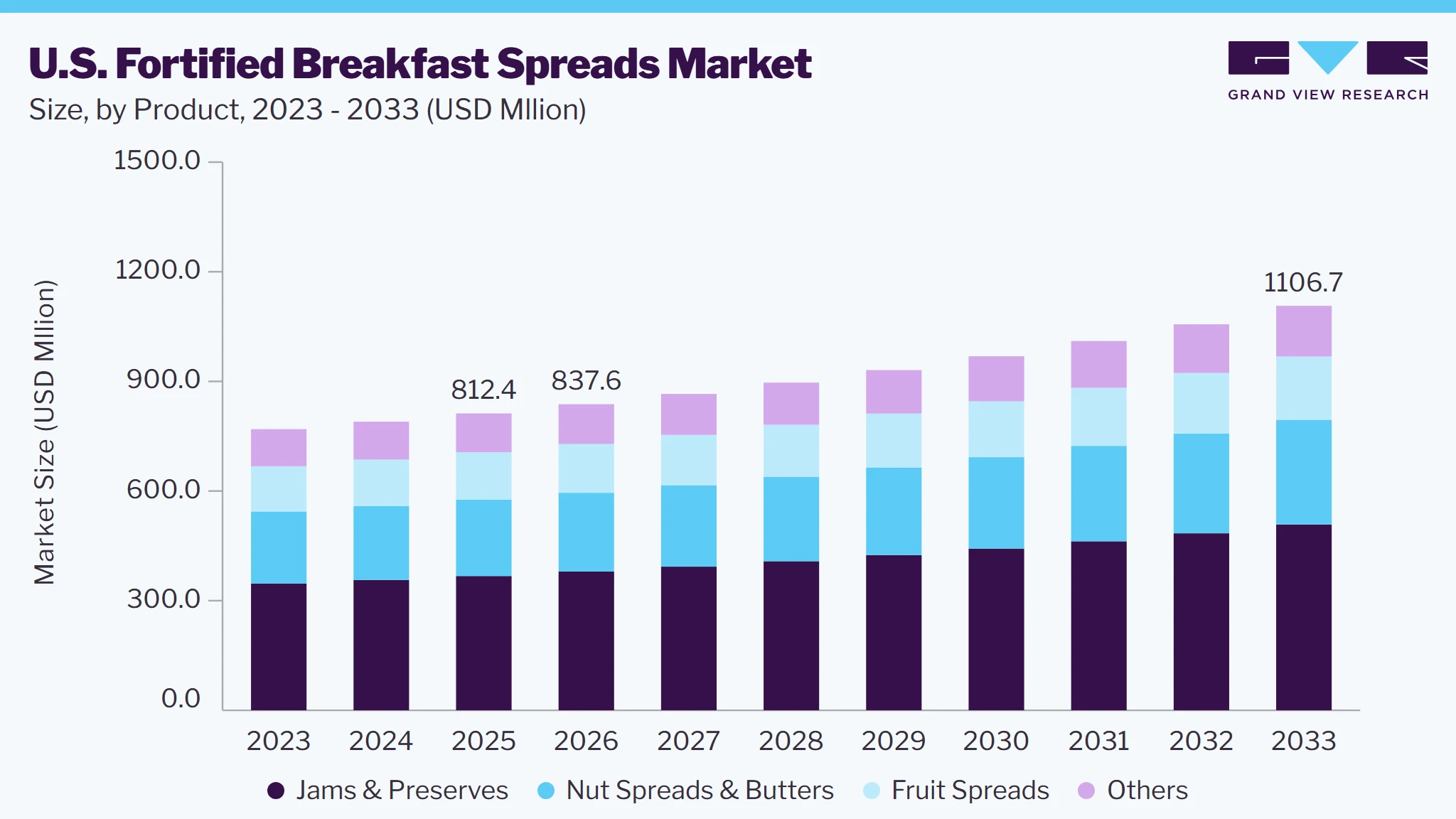
The U.S. fortified breakfast spreads market size was valued at USD 812.4 million in 2025 and is projected to grow from USD 837.6 million in 2026 to USD 1,106.7 million by 2033 at a CAGR of 4.1% from 2026 to 2033. The U.S. fortified breakfast spreads market is primarily driven by growing consumer demand for nutrient-rich and functional breakfast products. Increasing health consciousness, convenience-oriented lifestyles, and awareness of fortified foods are encouraging consumers to choose spreads enriched with vitamins, minerals, and other essential nutrients.
Key Market Trends & Insights
- By product: Jams & preserves market held the largest share of 45.2% in 2025.
- By distribution channel: Supermarkets & hypermarkets channel held the largest share of 61.9% in 2025.
Key Market Trends & Insights
- Market size in 2025: USD 812.4 Million
- Estimated market size in 2026: USD 837.6 Million
- Projected market size by 2033: USD 1,106.7 Million
- CAGR (2026-2033): 4.1%
Prism AI by Grand View Research Free to tryAsk a question about the U.S. fortified breakfast spreads marketTry asking✓Every figure cited from GVR research Prefer the report? Download free sample →Moreover, expanding retail distribution through supermarkets, hypermarkets, convenience stores, and e-commerce platforms is improving product accessibility nationwide. Premiumization and the introduction of diverse flavors and formulations are attracting consumers seeking more variety in their breakfast choices. Companies such as BetterBody Foods offer peanut butter spreads that contain 42% more protein than traditional peanut butter.
 Source: Grand View Research, IR Documents, Primary Interviews, Paid DatabasesTo learn more about this report,
 Download Free Sample Report
Furthermore, rising demand for convenient on-the-go breakfast solutions is creating opportunities for single-serve and easy-to-use spread formats. Growing interest in personalized nutrition is encouraging manufacturers to develop products tailored to specific dietary preferences and nutritional needs. According to the 2025 IFIC Food & Health Survey conducted among 3,000 Americans, approximately 31% reported that the presence of nutrients such as potassium and vitamin D is a criterion they use to define a healthy food. Increasing collaborations with foodservice providers and private-label expansion are also contributing to broader product penetration and competitive growth.
Market Dynamics
Increasing awareness of the link between diet and long-term health is encouraging U.S. consumers to make more health-conscious food choices. Consumers are increasingly seeking breakfast products that can complement balanced diets and support everyday nutritional needs. In January 2026, new U.S. dietary guidelines emphasized whole foods, protein, fresh produce, and healthier eating while urging Americans to reduce highly processed foods and added sugars. Greater attention to immunity, energy, and overall well-being is also influencing purchasing decisions. As a result, health-oriented consumption patterns are supporting sustained demand for fortified breakfast spreads.
Fortified breakfast spread manufacturers must comply with detailed requirements governing ingredient declarations, nutrient claims, and product labeling. Meeting these standards can increase compliance costs and require additional testing, documentation, and quality-control procedures. Regulatory requirements may also limit how companies communicate the health benefits associated with fortified ingredients. Smaller manufacturers can face greater difficulty managing these requirements due to limited regulatory resources. Such factors can slow product launches and increase the operational complexity of entering or expanding within the market.
Growing consumer interest in recognizable ingredients creates opportunities for manufacturers to develop spreads using naturally sourced nutritional components. Products featuring simpler ingredient lists can appeal to consumers who carefully evaluate food labels before purchasing. Manufacturers can differentiate their offerings by using ingredients such as nuts, seeds, fruits, and other naturally nutrient-dense components. The growing preference for plant-based diets also creates opportunities for spreads formulated with plant-derived ingredients and fortified with essential nutrients. In July 2026, Once Again launched High-Protein Spread Packets, offering 8g of plant-based protein per single-serve packet in convenient peanut, almond, and sunflower varieties.
Analyst Perspective
The U.S. fortified breakfast spreads market is being shaped by demand for higher-value, nutrition-focused breakfast choices that fit busy household routines. Brands are increasingly differentiating through protein enrichment, micronutrient fortification, lower-calorie profiles, and allergen-conscious formulations. Premiumization is also gaining relevance as consumers show interest in specialty ingredients, distinctive flavor combinations, and better-for-you positioning. Strong penetration of supermarkets, club stores, and e-commerce is enabling brands to expand household reach while supporting trial, product discovery, and repeat purchasing.
Consumer Insights
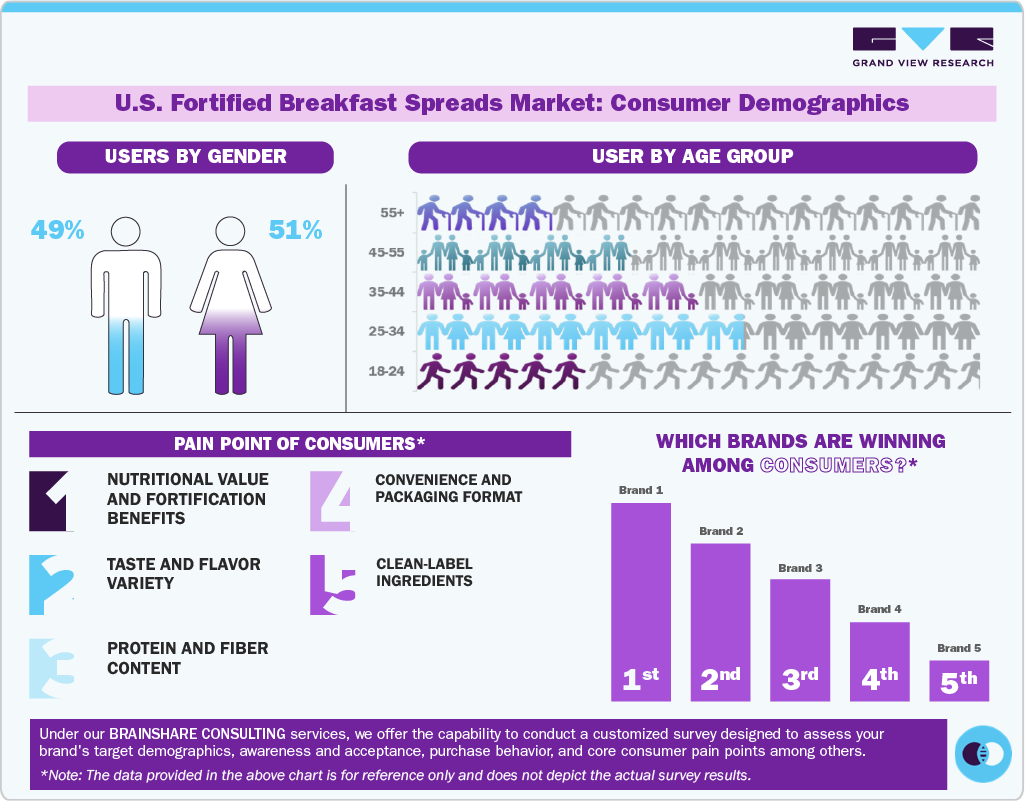
U.S. consumers are increasingly looking for breakfast spreads that provide added nutritional value without compromising taste or convenience. Interest is growing in products with protein, fiber, vitamins, minerals, and naturally sourced ingredients that complement everyday breakfast choices. Consumers are also paying greater attention to ingredient lists, sugar content, and recognizable components when selecting spreads. Flavor variety, smooth texture, portability, and easy serving formats are influencing purchasing decisions, particularly among busy households. Brand trust, product transparency, and perceived health benefits are becoming important factors in encouraging repeat purchases.
 To learn more about this report, Download Free Sample Report
Product Insights
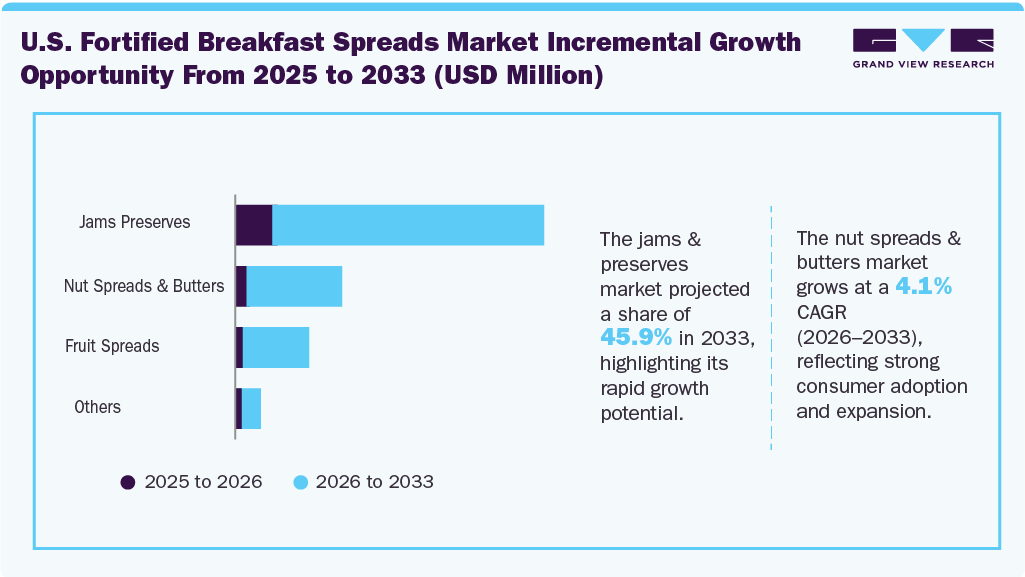
The jams & preserves market accounted for the largest share of 45.2% of the revenue in 2025. The jams and preserves segment is supported by the broad use of fruit-based spreads in everyday breakfast meals across U.S. households. Consumer interest in fruit-forward flavors is encouraging manufacturers to introduce varieties incorporating functional ingredients such as vitamins, minerals, and fiber. Growing demand for premium fruit formulations, reduced-sugar options, and distinctive flavor combinations is also creating scope for product differentiation. The versatility of jams and preserves as toppings for toast, pastries, yogurt, and other foods further supports regular consumption.
 To learn more about this report, Download Free Sample Report
The nut spreads & butters market is projected to grow significantly at a CAGR of 4.1% from 2026 to 2033. The nut spreads and butters segment benefits from the nutritional profile of nuts, which naturally provide protein, healthy fats, and other nutrients. Increasing interest in protein-containing breakfast foods is supporting the use of nut-based spreads as part of balanced meals and snacks. Product innovation around almonds, peanuts, cashews, and mixed-nut formulations is expanding consumer choice within the category. The segment is also benefiting from demand for formulations designed around specific dietary preferences, including reduced-sugar and plant-based options.
Distribution Channel Insights
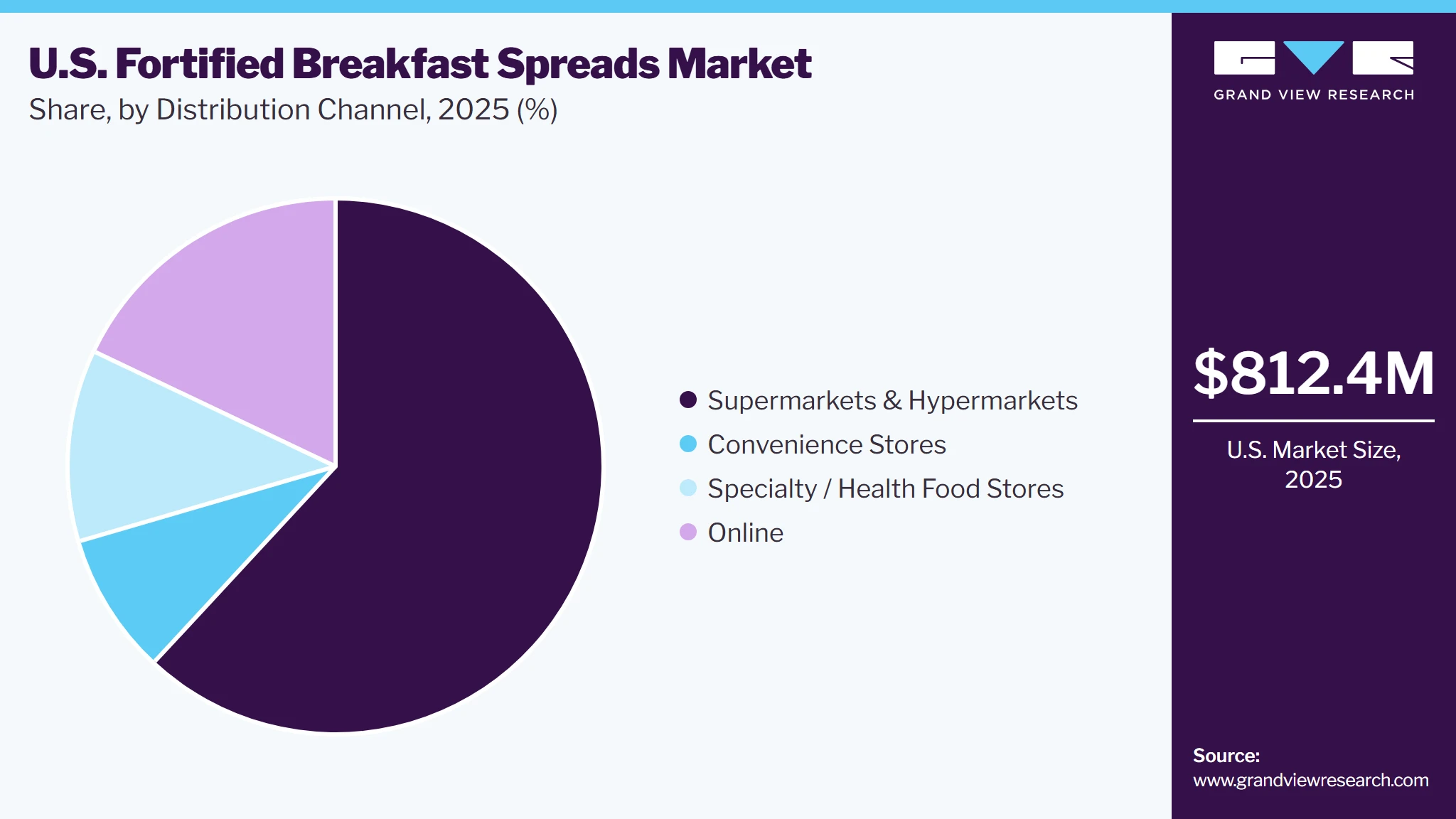
The sale of fortified breakfast spreads through the supermarket and hypermarket channels accounted for the largest share of 61.9% of the revenue in 2025. Supermarkets and hypermarkets remain an important distribution channel because they provide consumers with a wide assortment of fortified breakfast spreads in a single shopping location. In-store product visibility allows brands to attract attention through shelf placement, promotional displays, and packaging differentiation. Frequent grocery shopping also enables consumers to purchase breakfast spreads as part of their regular household food basket. Retailers can further support category growth through discounts, loyalty programs, and multipack offerings.
 To learn more about this report, Download Free Sample Report
The online channel in the U.S. fortified breakfast spreads market is projected to grow at the fastest CAGR of 4.5% from 2026 to 2033. Online distribution is gaining traction as consumers increasingly use digital platforms for routine grocery purchases and specialty food discovery. E-commerce enables fortified breakfast spread brands to reach consumers beyond their immediate retail catchment areas. Detailed product descriptions, nutritional information, customer reviews, and comparison features can support more informed purchasing decisions.
Key U.S. Fortified Breakfast Spreads Company Insights
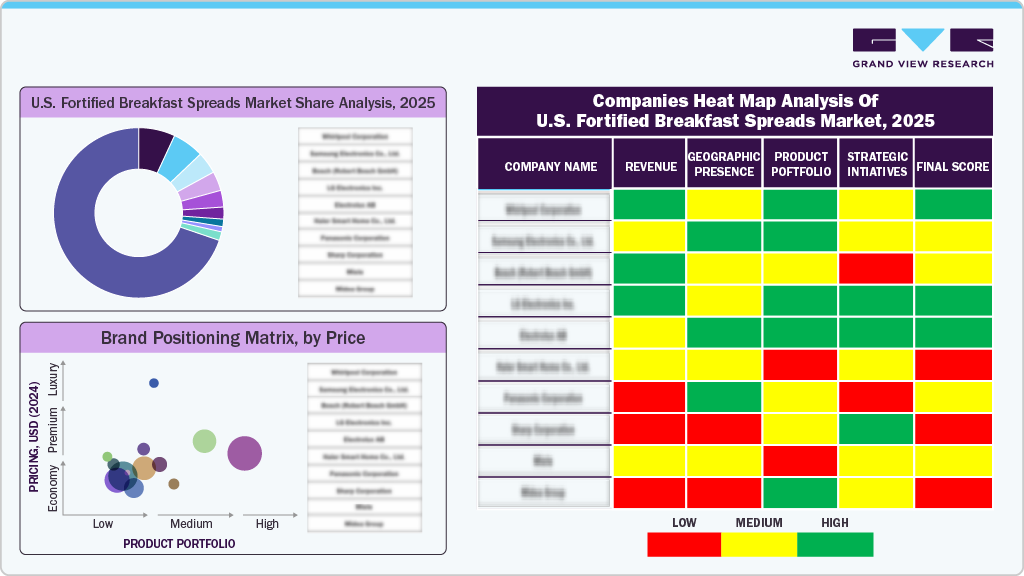
The U.S. fortified breakfast spreads industry is characterized by the presence of established food manufacturers alongside emerging brands focusing on health-oriented product differentiation. Key companies compete through product innovation, nutritional positioning, brand recognition, and expansion across multiple distribution channels. Market share remains influenced by the ability of companies to build consumer trust while offering diverse formulations and flavor profiles. Private-label products also contribute to competitive dynamics by providing consumers with alternative price points and product choices. Overall, the industry reflects a moderately competitive landscape, with companies increasingly emphasizing innovation and portfolio expansion to strengthen their market positions.
 To learn more about this report, Download Free Sample Report
Key U.S. Fortified Breakfast Spreads Companies
-
BetterBody Foods
-
Nuts ‘N More
-
Once Again
-
NuttZo
-
Hormel Foods Corporation
-
POST HOLDINGS, INC.
-
The Hain Celestial Group, Inc.
-
Peanut Butter & Co.
-
B&G Foods, Inc.
-
Flora Food Group
Recent Developments
-
In July 2026, Once Again launched High-Protein Spread Packets, offering 8g of plant-based protein per single-serve packet in convenient peanut, almond, and sunflower varieties. The portable spreads are designed to support energy, recovery, and wellness, and are now available at Whole Foods Market and through select online retailers.
-
In September 2024, Flora Food Group broadened its U.S. production capabilities through the acquisition of a facility in Hugoton, Kansas, supporting the expansion of its creams and cream-cheese portfolio in the Americas. Meanwhile, its New Century, Kansas site will continue to handle the company’s U.S. butter and spread manufacturing activities.
U.S. Fortified Breakfast Spreads Market Report Scope
Report Attribute
Details
Market size in 2025
USD 812.4 million
Estimated market size in 2026
USD 837.6 million
Projected market size by 2033
USD 1,106.7 million
Growth rate (Revenue)
CAGR of 4.1% from 2026 to 2033
Actuals
2021 - 2025
Forecast period
2026 - 2033
Quantitative (Revenue) units
Revenue in USD million, and CAGR from 2026 to 2033
Report coverage
Revenue forecast, company ranking, competitive landscape, growth factors, and trends
Segments covered
Product, distribution channel
Country scope
U.S.
Key companies profiled
BetterBody Foods, Nuts ‘N More, Once Again, NuttZo, Hormel Foods Corporation, POST HOLDINGS, INC., The Hain Celestial Group, Inc., Peanut Butter & Co., B&G Foods, Inc., Flora Food Group
Customization scope
Free report customization (equivalent up to 8 analysts’ working days) with purchase. Addition or alteration to country, regional & segment scope.
Pricing and purchase options
Avail customized purchase options to meet your exact research needs. Explore purchase options
U.S. Fortified Breakfast Spreads Market Report Segmentation
This report forecasts revenue growth at the regional and country levels and provides an analysis of the latest industry trends and opportunities in each of the sub-segments from 2021 to 2033. For the purpose of this study, Grand View Research has segmented the U.S. fortified breakfast spreads market report on the basis of product and distribution channel.
-
Product Outlook (Revenue, USD Million, 2021 - 2033)
-
Jams & Preserves
-
Nut Spreads & Butters
-
Fruit Spreads
-
Others
-
-
Distribution Channel Outlook (Revenue, USD Million, 2021 - 2033)
-
Supermarkets & Hypermarkets
-
Convenience Stores
-
Specialty / Health Food Stores
-
Online
-
Segment Definition
Product
Revenue capture definition
Jams & Preserves
Fortified jams and preserves generate revenue through consumer purchases of fruit-based spreads enhanced with vitamins, minerals, or other nutritional ingredients. Revenue is captured across conventional and premium formulations, with variations in fruit content, sweetness, texture, and nutritional positioning supporting different price points. Branded products can capture additional value through health-oriented claims and differentiated formulations.
Nut Spreads & Butters
Fortified nut spreads and butters generate revenue through products that combine nuts or nut-derived ingredients with added nutritional components. Revenue is captured through variants such as fortified peanut, almond, cashew, and mixed-nut spreads, including formulations emphasizing protein, vitamins, minerals, or other functional attributes. Premium ingredients and specialized nutritional profiles can support higher-value purchases.
Fruit Spreads
Fortified fruit spreads generate revenue through products formulated primarily from fruit ingredients and enhanced with selected nutrients or functional components. Revenue is captured through differentiated formulations based on fruit varieties, nutritional content, reduced-sugar positioning, and clean-label attributes. Products targeting health-conscious consumers can support premium pricing and broaden consumption occasions.
Others
Other fortified breakfast spreads generate revenue through specialized spread formats that do not fall within jams, preserves, nut spreads, butters, or conventional fruit spreads. Revenue is captured through differentiated formulations incorporating alternative ingredients, functional components, or emerging nutritional concepts. Product innovation and targeted health or dietary positioning can create additional value and support premium market opportunities.
Estimation Model
Layer No.
Layer Name
Key Question
Description
01
Consumption Profile Layer
Who consumes fortified breakfast spreads?
Focuses on households seeking convenient spreads with added nutritional value, including family and wellness-oriented consumption occasions.
02
Market Reach Layer
Where do consumers access fortified breakfast spreads?
Maps product availability across major retail, specialty, and digital purchasing environments to define reachable demand.
03
Purchase & Retention Layer
What drives trial, repeat purchase, and brand switching?
Assesses the role of flavor appeal, nutritional proposition, affordability, convenience, and product satisfaction in driving repeat purchases.
04
Value Generation Layer
Where can brands unlock incremental value?
Identifies opportunities from premium formulations, functional nutrition, differentiated ingredients, pack architecture, and targeted consumer positioning.
Delivered Customizations
This report has been delivered with the following In-depth customizations
Client Request
Customization Delivered
Value Adds
U.S. fortified breakfast spreads Consumer & Usage Assessment
Analyzed consumer usage occasions, breakfast routines, household profiles, dietary priorities, and motivations for choosing fortified spreads, including energy, immunity, protein, and wellness benefits.
Identifies high-potential consumer segments and consumption occasions, supporting targeted positioning and portfolio development.
U.S. fortified breakfast spreads Competitive & Brand Assessment
Evaluated leading and emerging brands based on product claims, nutritional profiles, pricing architecture, packaging cues, promotional strategies, and points of differentiation within the US market.
Reveals competitive white spaces, supports benchmarking, and guides opportunities for stronger brand differentiation and market positioning.
U.S. fortified breakfast spreads Nutrition & Health Claims Assessment
Investigated consumer response to fortification attributes such as protein, fiber, vitamins, minerals, probiotics, omega-3s, and other wellness-oriented claims, along with preferred claim communication.
Helps prioritize relevant nutritional benefits, refine product claims, and develop formulations aligned with evolving US health and wellness expectations.
About the Author(s)
Consumer F&B Research Team
Consumer Goods · Consumer F&BThis report was authored by the consumer f&b research team at Grand View Research - comprising two research analysts, one senior research analyst, and one industry expert - with specialized expertise in the consumer f&b segment of the consumer goods industry. All findings are based on proprietary consumer goods databases, executive interviews, and regulatory analysis, subject to internal peer review prior to publication.
Last Updated:
Speak to Analyst

Customize this report to your needs - add regions, segments, or data points, with 20% free customization.
Or view our licence options:


ISO 9001:2015 & 27001:2022 Certified
We are GDPR and CCPA compliant! Your transaction & personal information is safe and secure. For more details, please read our privacy policy.


