
- Home
- »
- Consumer F&B
- »
-
U.S. Frozen Vegetables Market Size, Industry Report, 2033GVR Report cover
![U.S. Frozen Vegetables Market Size, Share & Trends Report]()
U.S. Frozen Vegetables Market (2026 - 2033) Size, Share & Trends Analysis Report By Product (Mixed Vegetables, Broccoli, Beans), By Distribution Channel (Traditional Grocery Stores, Hypermarkets & Supermarkets), By Region, And Segment Forecasts
- Report ID: GVR-4-68040-877-8
- Number of Report Pages: 109
- Format: PDF
- Historical Range: 2021 - 2025
- Forecast Period: 2022 - 2033
- Industry: Consumer Goods
- Report Summary
- Table of Contents
- Segmentation
- Methodology
- Download FREE Sample
-
 Download Sample Report
U.S. Frozen Vegetables Market Summary
The U.S. frozen vegetables market size was estimated at USD 7,113.3 million in 2025 and is expected to reach USD 12,003.2 million by 2033, growing at a CAGR of 6.7% from 2026 to 2033. Market growth is largely driven by changing consumer lifestyles that prioritize convenience while maintaining nutritional value.
Key Market Trends & Insights
- The Northeast U.S. frozen vegetables market accounted for the largest revenue share of 16.06% in 2025.
- The South Central U.S. frozen vegetables industry is expected to grow at the fastest CAGR of 9.4% from 2026 to 2033.
- Based on product, the frozen mixed vegetables segment held the largest revenue share of 30.39% in 2025.
- Based on distribution channel, the U.S. frozen desserts sold through the online channel is expected to grow at a CAGR of 10.9% from 2026 to 2033.
Market Size & Forecast
- 2025 Market Size: USD 7,113.3 Million
- 2033 Projected Market Size: USD 12,003.2 Million
- CAGR (2026-2033): 6.7%
- Northeast U.S.: Largest market in 2025
- South Central U.S.: Fastest growing market
Frozen vegetables offer longer shelf life, minimal preparation time, and reduced food waste, making them an attractive option for busy households and foodservice operators. In addition, rising consumer interest in healthy eating, plant-based diets, and home-cooked meals is increasing the adoption of frozen vegetable products such as broccoli, peas, corn, and mixed vegetable blends. Advances in freezing technologies that help preserve nutrients, taste, and texture are further supporting the growing demand across the U.S. market.With busy schedules and a growing share of dual-income households, more Americans are seeking food options that require minimal preparation yet deliver perceived health benefits. Frozen vegetables meet this need by offering ready-to-use produce that can be quickly incorporated into meals, catering especially to millennial and Gen Z consumers who value both speed and quality.
According to recent U.S. cold storage data, inventories of frozen vegetable stocks illustrate consistent utilization and turnover within the supply chain, underscoring regular household consumption patterns rather than seasonal hoarding, with total frozen vegetable stocks in November 2025 down 8% from the prior year but reflecting ongoing market circulation rather than stagnation.
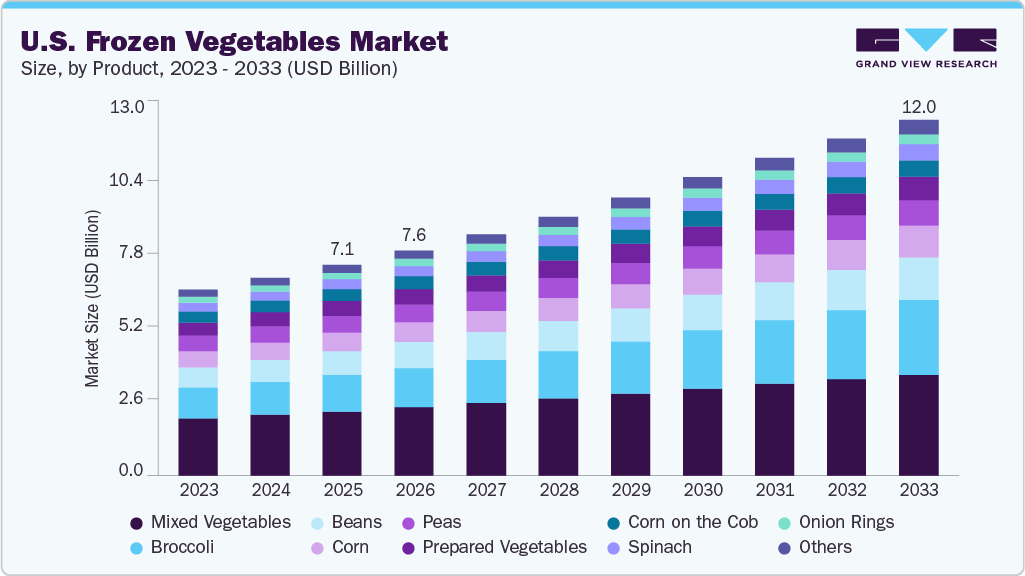
Technological progress is a core trend boosting consumer confidence and expanding applications for frozen vegetables. Individual Quick Freezing (IQF) and related technologies help preserve texture, cellular integrity, and nutrient content, narrowing the quality gap with fresh produce. These freezing methods also support a broader range of product formats, including ready-to-cook mixes and premium specialty blends that appeal to time-pressed consumers looking for both convenience and quality nutrition. Preservation technology improvements have been integrated widely across processing facilities, making frozen vegetables nutritionally comparable to fresh alternatives in many cooking applications.
The breadth of distribution channels is a significant growth driver, particularly in retail supermarkets, hypermarkets, and online platforms. Supermarkets and hypermarkets currently account for a significant share of industry distribution, leveraging deep cold-chain infrastructure and strong product assortment to maintain category visibility. Simultaneously, e-commerce is transforming consumer access: the broader U.S. grocery e-commerce market is projected to experience strong growth, with online grocery penetration still underdeveloped relative to total food sales. This dynamic presents a major opportunity for frozen vegetables, enabling retailers to tap into digital direct-to-consumer demand, facilitate subscription orders, and support impulse sales through digital recommendation engines.
Manufacturers are responding to demand shifts by expanding frozen vegetable offerings beyond basic packs to include mixed blends, value-added sauces, and ready-to-heat solutions. For example, leading brands are rolling out new product lines featuring creative flavor profiles and meal-style packaging, which attract both everyday shoppers and culinary enthusiasts. Diversification into “vegetable side dishes” and fusion cuisines helps drive incremental sales by appealing to consumers searching for convenience without compromising culinary variety. These innovations also support premium pricing strategies, contributing to the broader value growth of the market.
Consumer Insights for the U.S. Frozen Vegetables Market
Health and wellness considerations continue to elevate demand for frozen vegetables that emphasize nutrition, clean-label credentials, and organic positioning. U.S. consumers are increasingly aware that modern freezing techniques preserve key nutrients, contributing to the perception of frozen produce as a healthier, shelf-stable alternative to fresh items that may spoil quickly.
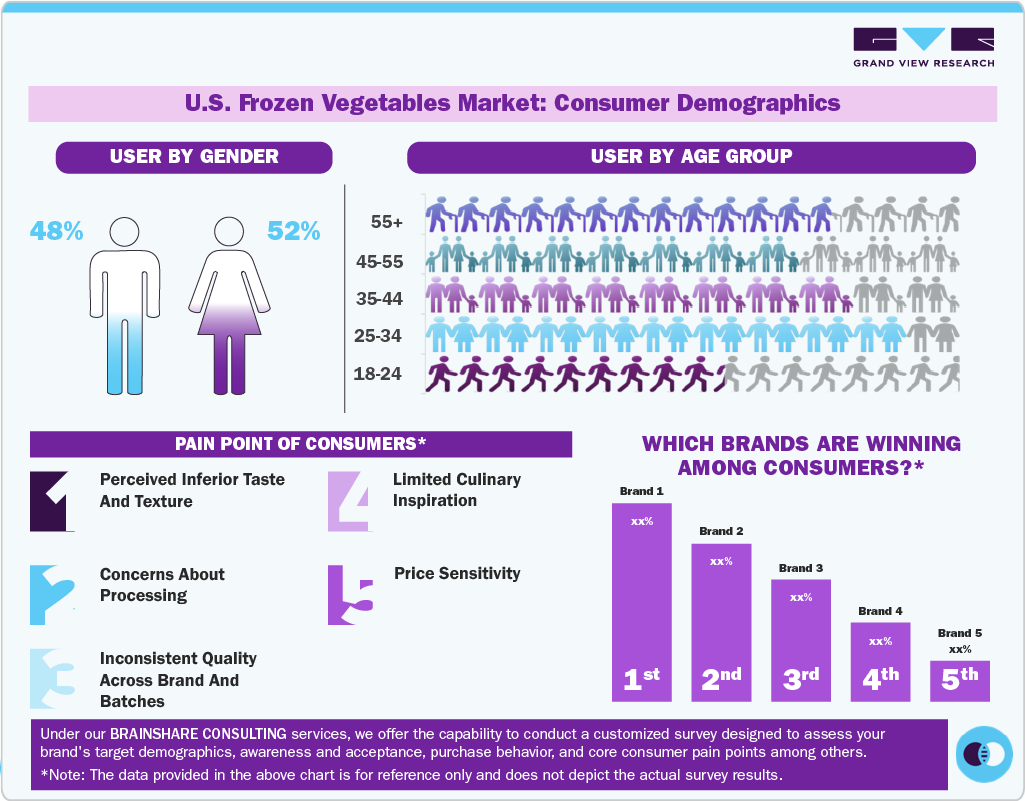
This trend dovetails with growing interest in plant-forward diets and cleaner ingredient lists, spurring manufacturers to reformulate offerings with minimal additives and to promote traceability in organic certification. As a result, frozen vegetables are gaining acceptance not just as a pantry staple but also as part of health-oriented meal solutions.
Product Insights
The frozen mixed vegetables market accounted for a share of 30.39% of the U.S. revenue in 2025 due to evolving consumer preferences for multi-vegetable convenience solutions that streamline home cooking. Mixed blends of peas, carrots, corn, green beans, and other vegetables address everyday meal preparation needs while offering balanced nutrition without the need for multiple separate purchases, a compelling value proposition for time-pressed households. Retailers and manufacturers are responding with expanded SKU assortments that appeal to both traditional cooks and those seeking globally inspired flavors and meal pairings. Furthermore, expansion of mixed vegetable offerings in retail freezer aisles and online catalogs enhances product visibility and accessibility, reinforcing habitual purchase behavior.
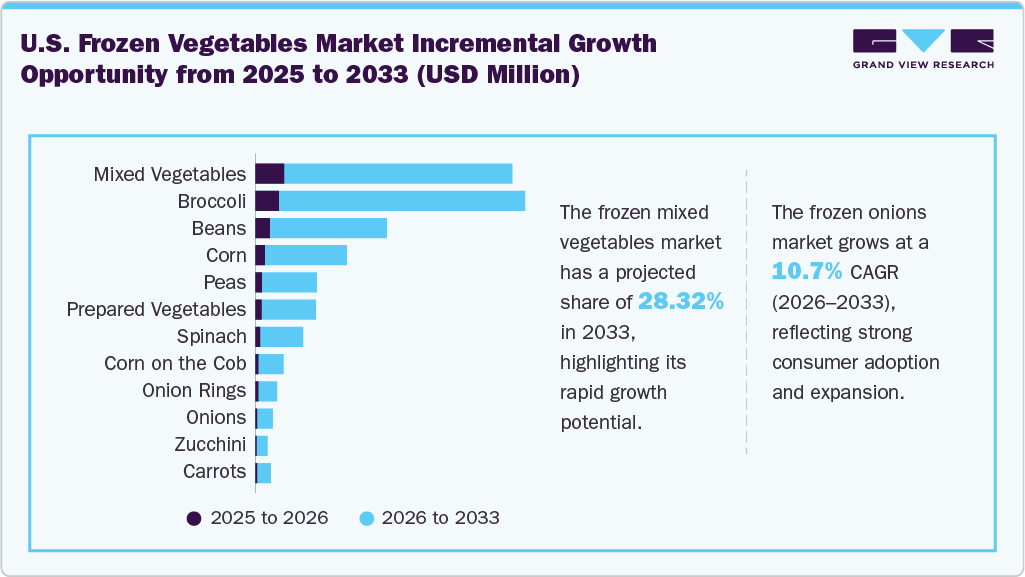
The frozen onions market segment is projected to grow at a CAGR of 10.7% from 2026 to 2033. This reflects shifting consumption patterns toward pre-prepared ingredients that reduce meal preparation time and align with flavor-intensive cuisine trends. Onions are a foundational ingredient in a wide array of culinary applications, from stir-fries and soups to sauces and ready-to-heat entrées, making them essential across both household and foodservice menus. The time savings associated with pre-chopped, frozen onions resonate strongly with younger and multi-worker households that seek efficient meal solutions without sacrificing taste. Improved harvesting, blanching, and freezing technologies have enhanced the texture and flavor retention of frozen onion products, narrowing the gap with fresh alternatives and encouraging repeat purchase.
Distribution Channel Insights
Sales of traditional grocery stores accounted for a revenue share of 38.21% in 2025, primarily because these outlets enable deep category exposure and habitual purchasing behavior. Large freezer sections allow extensive assortments of frozen vegetables, from core staples like peas and corn to premium mixed blends and organic variants. Their established cold chain infrastructure ensures product quality and safety, an important consideration for frozen produce where texture and nutrient retention are key competitive attributes. Traditional grocery stores also benefit from high foot traffic and seasonal promotions that draw repeated shopper visits, reinforcing frozen vegetable sales alongside fresh produce and prepared meals. They are historically trusted sources for food purchases, especially among older and value-oriented consumers who prefer in-person product selection.
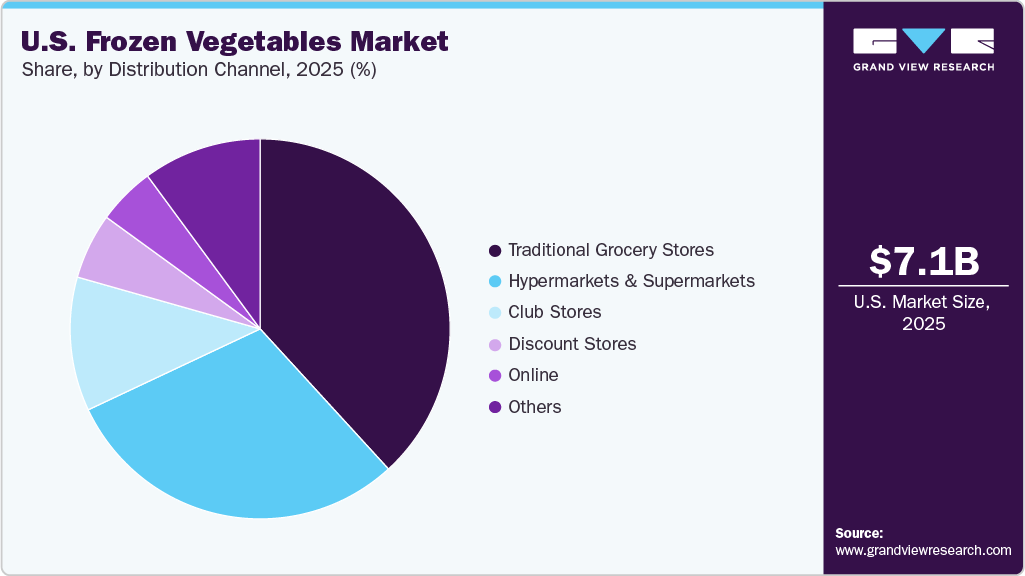
Sales of frozen vegetables through online channels are expected to grow at a significant CAGR of 10.9% over the forecast period due to the rapid adoption of e-commerce and digital grocery platforms. Consumer comfort with buying perishable and frozen goods online has increased markedly since the pandemic, with more than 80% of online grocery shoppers purchasing frozen products in recent years, a clear indicator of growing confidence in cold-chain delivery solutions and order-to-doorstep reliability. Online retail enables expanded assortment beyond physical store limitations, allowing consumers to access both core frozen vegetable SKUs and niche or premium products such as organic, clean-label, or innovative mixed blends. Detailed product information and digital recommendations further aid purchase decisions, especially among younger, digital-native shoppers.
Regional Insights
Northeast U.S. Frozen Vegetables Market Trends
The Northeast U.S. frozen vegetables industry accounted for a revenue share of 16.06% in 2025. Urban consumers increasingly view frozen vegetables as nutritious, time-saving meal components, especially in mixed dishes, soups, and quick sautéed vegetable sides that align with modern meal preparation habits. This preference is reinforced by seasonal climate constraints: long, cold winters limit fresh produce availability and encourage frozen alternatives for year-round vegetable intake, reducing reliance on imported fresh produce during winter months. Additionally, the Northeast’s well-developed cold chain logistics and retail networks ensure consistent product availability in supermarkets, grocery chains, and institutional foodservice outlets, strengthening both visibility and repeat purchases.
South Central U.S. Frozen Vegetables Market Trends
The South Central U.S. frozen vegetables industry is projected to grow at a CAGR of 9.4% from 2026 to 2033, driven by distinctive socio-economic and market dynamics. This growth trajectory is propelled by rapid population expansion and rising urbanization in key South Central metropolitan zones, which elevate overall food consumption and diversified dietary preferences, including a shift toward convenience and ready-to-prepare foods. Expanding cold chain infrastructure and food processing capacity in the region reduces logistical barriers to delivering frozen vegetables, encouraging greater retailer and foodservice penetration. Local economic growth also enhances disposable incomes, enabling more households to include value-added frozen products in regular meal planning. Furthermore, this region has seen increasing restaurant and institutional demand, especially from casual dining and quick service restaurants that rely on consistent, scalable ingredient supplies, which drives bulk purchases of frozen vegetables.
Key U.S. Frozen Vegetables Company Insights
The U.S. frozen vegetables market features a moderately consolidated competitive landscape, with both large multinational food processors and established domestic food conglomerates exerting significant influence through scale, brand equity, and distribution reach. Leading players include Conagra Brands (Birds Eye), General Mills (Green Giant), McCain Foods Limited, Bonduelle Group, and Dole Food Company, each with strong retail and foodservice penetration and diversified portfolios across core vegetable categories. These firms leverage extensive supply chains, advanced freezing technology, and established retail partnerships to maintain category leadership and meet broad consumer needs across price tiers.
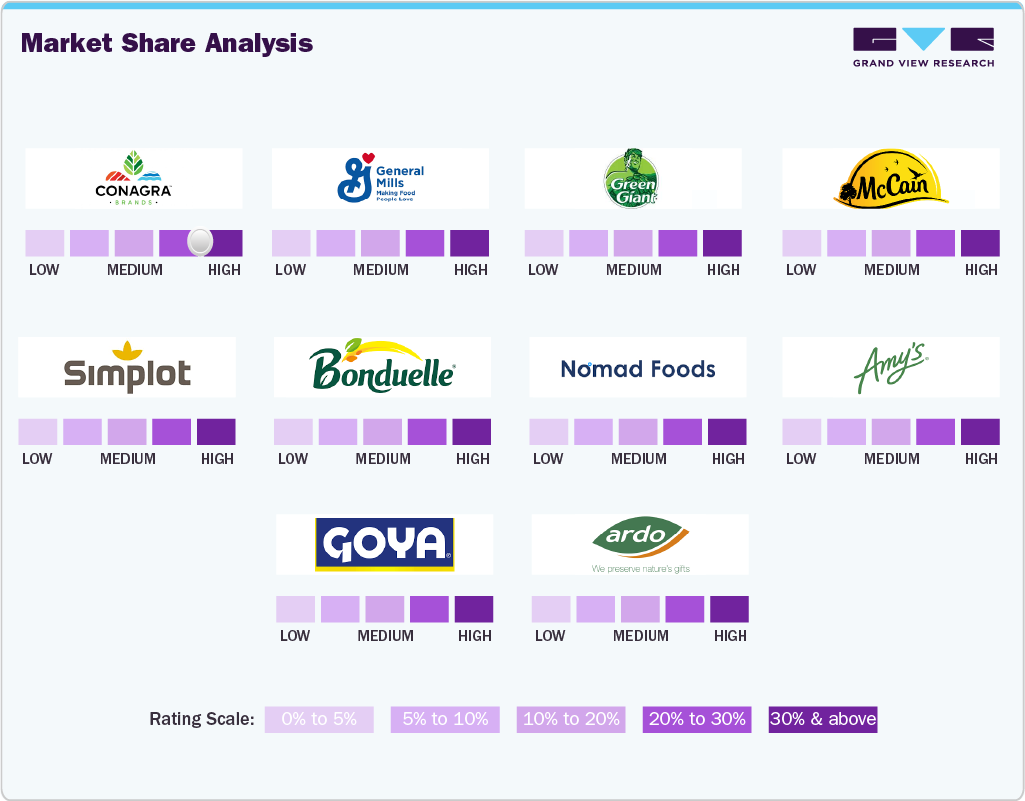
Key U.S. Frozen Vegetables Companies:
- Conagra Brands, Inc.
- General Mills Inc.
- B&G Foods (Green Giant)
- McCain Foods Ltd.
- J.R. Simplot Company
- Bonduelle Group
- Nomad Foods (via Iglo/Findus brands)
- Amy’s Kitchen, Inc.
- Goya Foods, Inc.
- Ardo N.V.
Recent Developments
-
In June 2025, Conagra Brands introduced more than 50 new frozen products across its portfolio, including vegetable side dishes and plant-based meals designed for convenience and flavor. Within this slate, several new vegetables-forward options such as Birds Eye Ultimate Cheesy Sauced Broccoli Florets and other vegetable sides were launched alongside single-serve and multi-serve frozen entrées, gluten-free options, and plant-based meals, reinforcing Conagra’s innovation in the frozen vegetables and sides category.
-
In May 2025, Birds Eye Deli partnered with OMD Create and Good Food to launch a premium frozen vegetable range targeting consumers seeking elevated midweek meal experiences with convenient, flavor-driven vegetable offerings. This range was designed to bring higher-quality frozen vegetables with chef-inspired profiles to the freezer aisle.
U.S. Frozen Vegetables Market Report Scope
Report Attribute
Details
Market value size in 2026
USD 7,599.2 million
Revenue forecast in 2033
USD 12,003.2 million
Growth rate
CAGR of 6.7% from 2026 to 2033
Actuals
2021 - 2025
Forecast period
2026 - 2033
Quantitative units
Revenue in USD million/billion and CAGR from 2026 to 2033
Report coverage
Revenue forecast, company ranking, competitive landscape, growth factors, and trends
Segments covered
Product, distribution channel, and region
Regional Scope
Southeast; Northeast; Great Lakes; Mid-South; South Central; West; California; Plains
Country scope
U.S.
Key companies profiled
Conagra Brands, Inc.; General Mills Inc.; B&G Foods (Green Giant); McCain Foods Ltd.; J.R. Simplot Company; Bonduelle Group; Nomad Foods (via Iglo/Findus brands); Amy’s Kitchen, Inc.; Goya Foods, Inc.; Ardo N.V.
Customization scope
Free report customization (equivalent up to 8 analysts’ working days) with purchase. Addition or alteration to country, regional & segment scope.
Pricing and purchase options
Avail customized purchase options to meet your exact research needs. Explore purchase options
U.S. Frozen Vegetables Market Report Segmentation
This report forecasts revenue growth at the regional and country levels and provides an analysis of the latest industry trends and opportunities in each of the sub-segments from 2021 to 2033. For this study, Grand View Research has segmented the U.S. frozen vegetables market report based on product, distribution channel, and region:
-
Product Outlook (Revenue, USD Million, 2021 - 2033)
-
Mixed Vegetables
-
Broccoli
-
Beans
-
Corn
-
Peas
-
Prepared Vegetables
-
Corn on the Cob
-
Spinach
-
Onion Rings
-
Zucchini
-
Carrots
-
Onions
-
-
Distribution Channel Outlook (Revenue, USD Million, 2021 - 2033)
-
Traditional Grocery Stores
-
Hypermarkets & Supermarkets
-
Club Stores
-
Discount Stores
-
Online
-
Others
-
-
Regional Outlook (Revenue, USD Million, 2021 - 2033)
-
Southeast
-
Northeast
-
Great Lakes
-
Mid-South
-
South Central
-
West
-
California
-
Plains
-
Frequently Asked Questions About This Report
b. The U.S. frozen vegetables market was valued at USD 7,113.3 million in 2025 and is expected to reach USD 7,599.2 million by 2026.
b. The U.S. frozen vegetables market is expected to reach USD 12,003.2 million by 2033, growing at a compound annual growth rate (CAGR) of 6.7% from 2026 to 2033.
b. The frozen mixed vegetables segment accounted for a share of 30.39% of the U.S. revenue in 2025 due to evolving consumer preferences for multi-vegetable convenience solutions that streamline home cooking.
b. Conagra Brands, Inc.; General Mills Inc.; B&G Foods (Green Giant); McCain Foods Ltd.; J.R. Simplot Company; Bonduelle Group; Nomad Foods (via Iglo/Findus brands); Amy’s Kitchen, Inc.; Goya Foods, Inc.; Ardo N.V.
b. The U.S. frozen vegetables market has been fundamentally shaped by evolving consumer lifestyles that prioritize convenience without sacrificing nutrition. With busy schedules and a growing share of dual-income households, more Americans are seeking food options that require minimal preparation yet deliver perceived health benefits.


Share this report with your colleague or friend.
Need a Tailored Report?
Customize this report to your needs — add regions, segments, or data points, with 20% free customization.


ISO 9001:2015 & 27001:2022 Certified
We are GDPR and CCPA compliant! Your transaction & personal information is safe and secure. For more details, please read our privacy policy.
Trusted market insights - try a free sample
See how our reports are structured and why industry leaders rely on Grand View Research. Get a free sample or ask us to tailor this report to your needs.













