
- Home
- »
- Consumer F&B
- »
-
U.S. Frozen Yogurt Market Size & Share Report, 2026-2033GVR Report cover

U.S. Frozen Yogurt Market (2026 - 2033)
Size, Share & Trends Analysis Report By Product (Plain Frozen Yogurt, Flavored Frozen Yogurt), By Flavor (Vanilla, Chocolate), By Distribution Channel (Supermarkets & Hypermarkets, Convenience Stores), And Segment Forecasts
Market Size, 2025
$2.5BMarket Estimate, 2026
$2.6BMarket Forecast, 2033
$3.6BCAGR, 2026–2033
4.9%U.S. Frozen Yogurt Market Summary
The U.S. frozen yogurt market size was valued at USD 2.5 billion in 2025, and is projected to grow from USD 2.6 billion in 2026 to USD 3.6 billion by 2033, growing at a CAGR of 4.9% from 2025 to 2033. The U.S. frozen yogurt market is driven by increasing consumer demand for healthier dessert alternatives, as frozen yogurt is perceived as a low-fat and probiotic-rich option compared to traditional ice cream.
Key Market Trends & Insights
- By product: Plain frozen yogurt led the market and accounted for a share of 45.1% in 2025.
- By flavor: Vanilla flavored frozen yogurt accounted for the largest share of 28.2% of the revenue in 2025.
- By distribution channel: Specialty frozen yogurt shops led the market and accounted for a share of 38.4% in 2025.
Market Size & Forecast
- Market Size in 2025: USD 2.5 Billion
- Estimated market size in 2026: USD 2.6 Billion
- 2033 Projected Size: USD 3.6 Billion
- CAGR (2026-2033): 4.9%
Prism AI by Grand View Research Free to tryAsk a question about the U.S. frozen yogurt marketTry asking✓Every figure cited from GVR research Prefer the report? Download free sample →
The market is also supported by rising interest in customizable flavors, toppings, and innovative product offerings. In addition, growing awareness of wellness trends and the expansion of frozen yogurt shops contribute to market growth. The availability of diverse flavors, convenient retail flavors, and premium product options further attracts a wider range of consumers. Moreover, increasing investments by key market players in product innovation and marketing strategies are strengthening the competitive landscape. According to the data published in August 2026, Gen Z is driving a frozen yogurt comeback by favoring protein-rich, healthier options with premium toppings such as pistachio cream, mochi, and fruit. The trend blends wellness, customization, and social experiences, turning fro-yo shops into popular lifestyle hangouts rather than just dessert stops.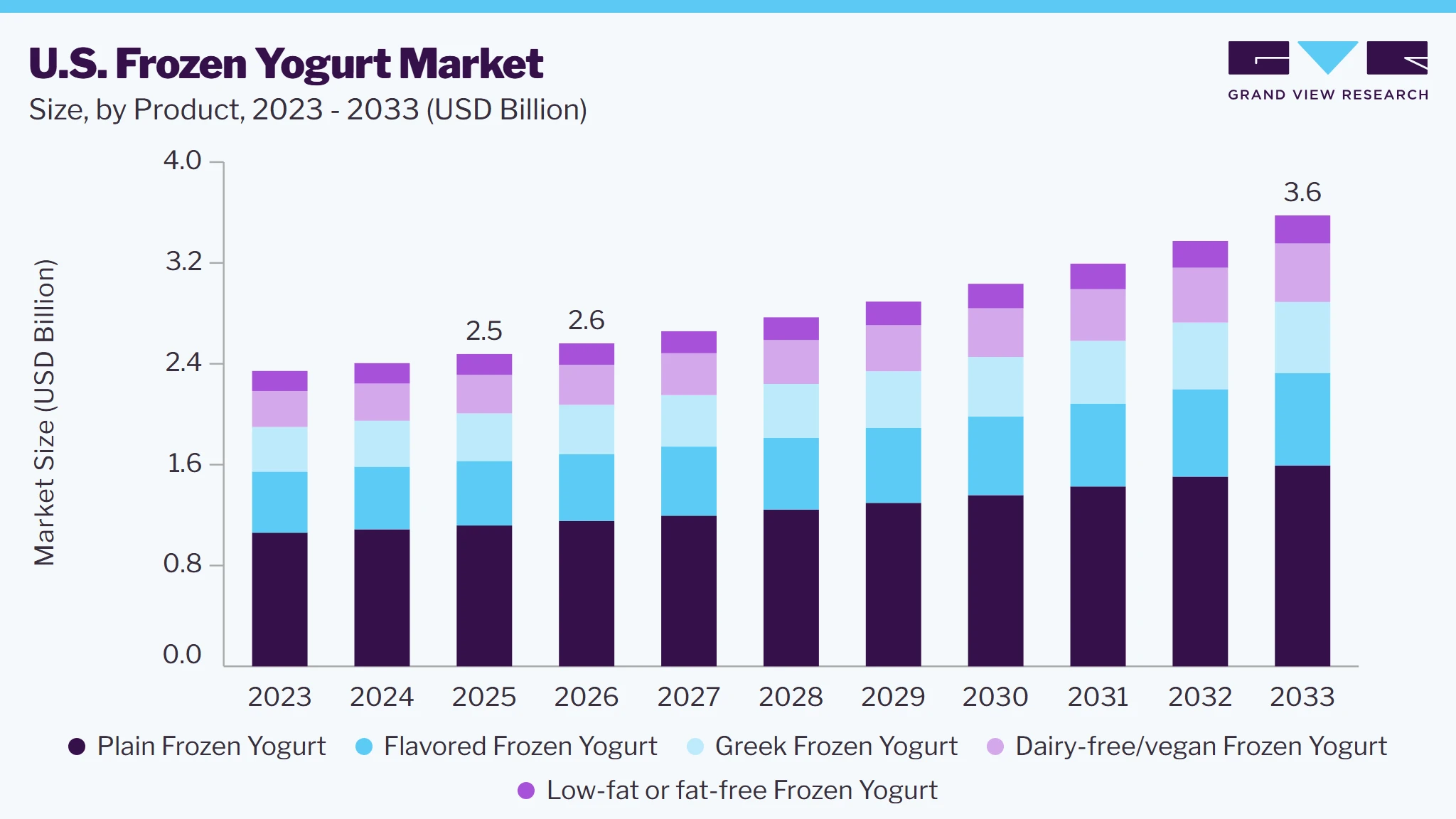 Source: Grand View Research, IR Documents, Primary Interviews, Paid DatabasesTo learn more about this report,
 Download Free Sample Report
The U.S. frozen yogurt market is also influenced by changing lifestyles, with consumers seeking convenient snack options that align with their dietary preferences. Furthermore, seasonal promotions and brand collaborations help companies attract new customers and maintain market demand. The rise of online delivery platforms and retail availability has improved product accessibility across different regions. In October 2025, Grubhub partnered with Instacart to bring groceries from over 1,000 retailers directly into the Grubhub app and website, expanding beyond restaurant delivery. Instacart will handle grocery fulfillment and delivery, giving Grubhub customers more shopping options, real-time tracking, and access to everyday essentials.
The market is supported by advancements in product formulations, including the introduction of dairy-free and reduced-sugar variants to meet evolving consumer needs. Increasing adoption of frozen yogurt in foodservice outlets, cafes, and restaurants is creating new growth opportunities. According to the International Frozen Yogurt Association data published in December 2024, frozen yogurt chains launched 53 new frozen yogurt and frozen yogurt alternative flavors during 2024, including a growing range of vegan and non-dairy options. In addition, strong distribution networks and improved cold-chain infrastructure are helping brands expand their presence nationwide.
Market Dynamics
Consumers are increasingly seeking food products that offer better nutritional value while satisfying their cravings for sweet treats. Frozen yogurt benefits from this shift due to its association with lighter and more balanced dessert choices. Changing dietary habits and a greater focus on mindful eating are encouraging consumers to explore alternative dessert options. Brands are responding by introducing products that align with evolving lifestyle preferences. In July 2026, Nova Froyo opened in Chicago’s West Loop, highlighting the growing popularity of Greek frozen yogurt as consumers seek desserts that combine indulgence with better nutritional value, including higher protein and lighter profiles. The brand’s customizable offerings and premium toppings align with rising demand for mindful, balanced sweet treats and evolving lifestyle preferences. This trend continues to create new opportunities for growth in the U.S. frozen yogurt market.
The U.S. frozen yogurt market faces strong competition from established frozen dessert segments with widespread consumer acceptance and brand loyalty. Traditional products such as ice cream often benefit from extensive availability, diverse product ranges, and long-standing market presence. Competing categories continuously introduce new flavors, premium offerings, and promotional strategies to attract customers. This competitive environment can make it challenging for frozen yogurt brands to differentiate themselves. As a result, companies need to focus on innovation and effective positioning to maintain market share.
The U.S. frozen yogurt market has an opportunity to capitalize on rising consumer interest in premium and differentiated frozen dessert experiences. Manufacturers can develop premium frozen yogurt products featuring high-quality ingredients, unique flavors, fruit inclusions, and innovative toppings to attract consumers seeking greater variety. There is also scope for limited-edition and seasonal offerings that create excitement and encourage repeat purchases. Customizable formats, including self-serve combinations and personalized toppings, can further enhance consumer engagement. These strategies can help brands differentiate themselves in a competitive market while supporting higher-value product positioning.
Analyst Perspective
The U.S. frozen yogurt market is witnessing steady growth, supported by increasing consumer demand for healthier indulgent desserts and greater interest in low-sugar, high-protein, probiotic, and functional offerings. Manufacturers are increasingly focusing on product innovation to improve taste, texture, nutritional value, and overall consumer appeal. Growing adoption of premium, plant-based, lactose-free, and naturally formulated frozen yogurt products is further strengthening market development. Expansion of innovative flavors, customizable toppings, and differentiated retail concepts is also creating new opportunities across the U.S. frozen yogurt market.
Product Insights
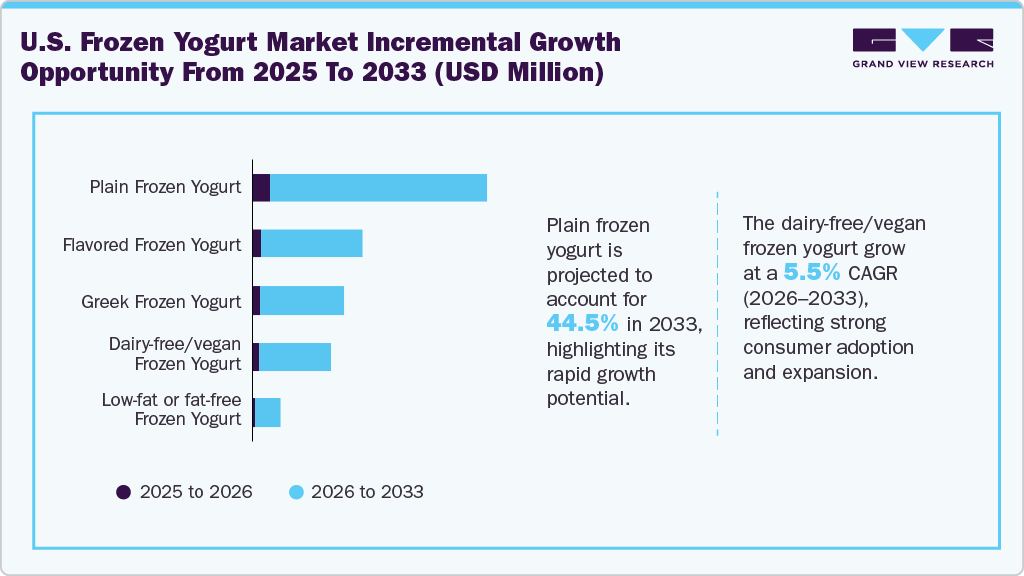
The plain frozen yogurt market accounted for the largest share, accounting for around 45.1% of the U.S. frozen yogurt industry in 2025. Plain frozen yogurt remains a significant segment due to its versatility and ability to serve as a base for various flavors and toppings. Its neutral taste allows consumers to personalize their desserts according to individual preferences. Foodservice providers and frozen yogurt shops often use plain varieties to create customized offerings. The segment benefits from consistent demand among consumers seeking simple and traditional dessert choices. In addition, its compatibility with different ingredients supports menu diversification across retail and hospitality channels.
 To learn more about this report, Download Free Sample Report
The dairy-free/vegan frozen yogurt market is projected to grow at the fastest CAGR of 5.5% from 2026 to 2033. Dairy-free and vegan frozen yogurt is gaining traction due to the growing adoption of plant-based lifestyles among consumers. The segment attracts individuals with dietary restrictions, lactose sensitivity, or preferences for alternative ingredients. Advances in plant-based formulations have improved taste, texture, and overall product quality. Increased availability of coconut, almond, oat, and other plant-derived options is expanding consumer choices. The segment is further supported by growing interest in sustainable and environmentally conscious food products.
Flavor Insights
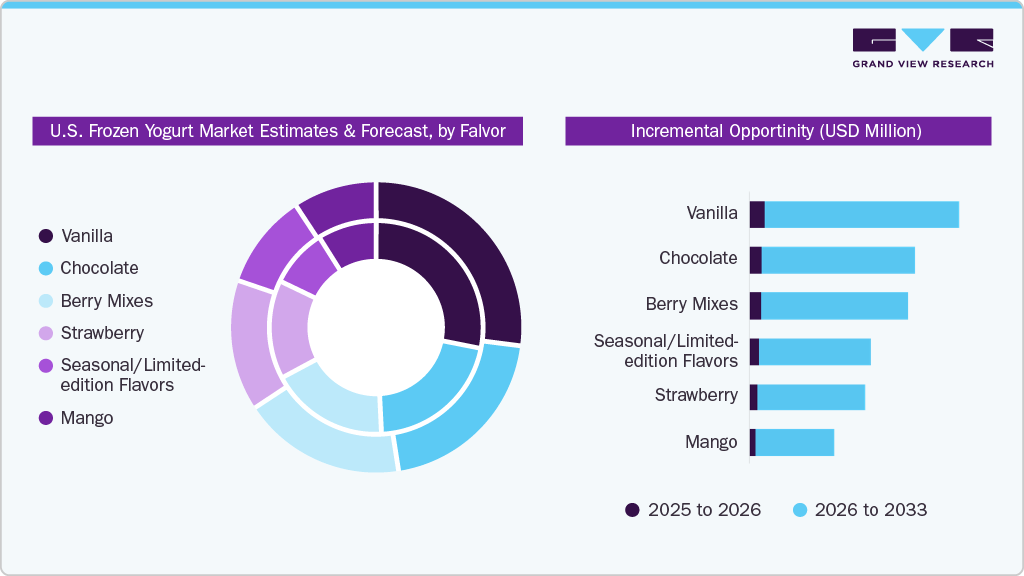
The vanilla flavored frozen yogurt accounted for the largest share of 28.2% of the revenue in 2025. Vanilla frozen yogurt maintains strong demand due to its broad consumer appeal and ability to complement a wide range of toppings and mix-ins. Its familiar taste makes it a preferred choice among consumers of different age groups. The flavor is widely adopted by frozen yogurt retailers because of its versatility in customized dessert creations. Its consistent popularity supports regular menu availability across various sales channels. In addition, vanilla serves as a foundation for innovative combinations with fruits, sauces, and other flavor enhancements.
 To learn more about this report, Download Free Sample Report
The mango-flavored frozen yogurt is projected to grow at a CAGR of 6.3% from 2026 to 2033 in U.S. frozen yogurt market. Mango frozen yogurt is gaining popularity due to increasing consumer interest in fruit-based and refreshing dessert flavors. Its tropical profile appeals to customers looking for distinctive taste experiences beyond traditional options. The flavor benefits from seasonal demand and the popularity of exotic fruit-inspired products in the dessert market. Mango varieties also attract consumers seeking naturally flavored options with a vibrant taste profile. Growing experimentation with global flavors is further supporting the expansion of mango frozen yogurt offerings.
Distribution Channel Insights
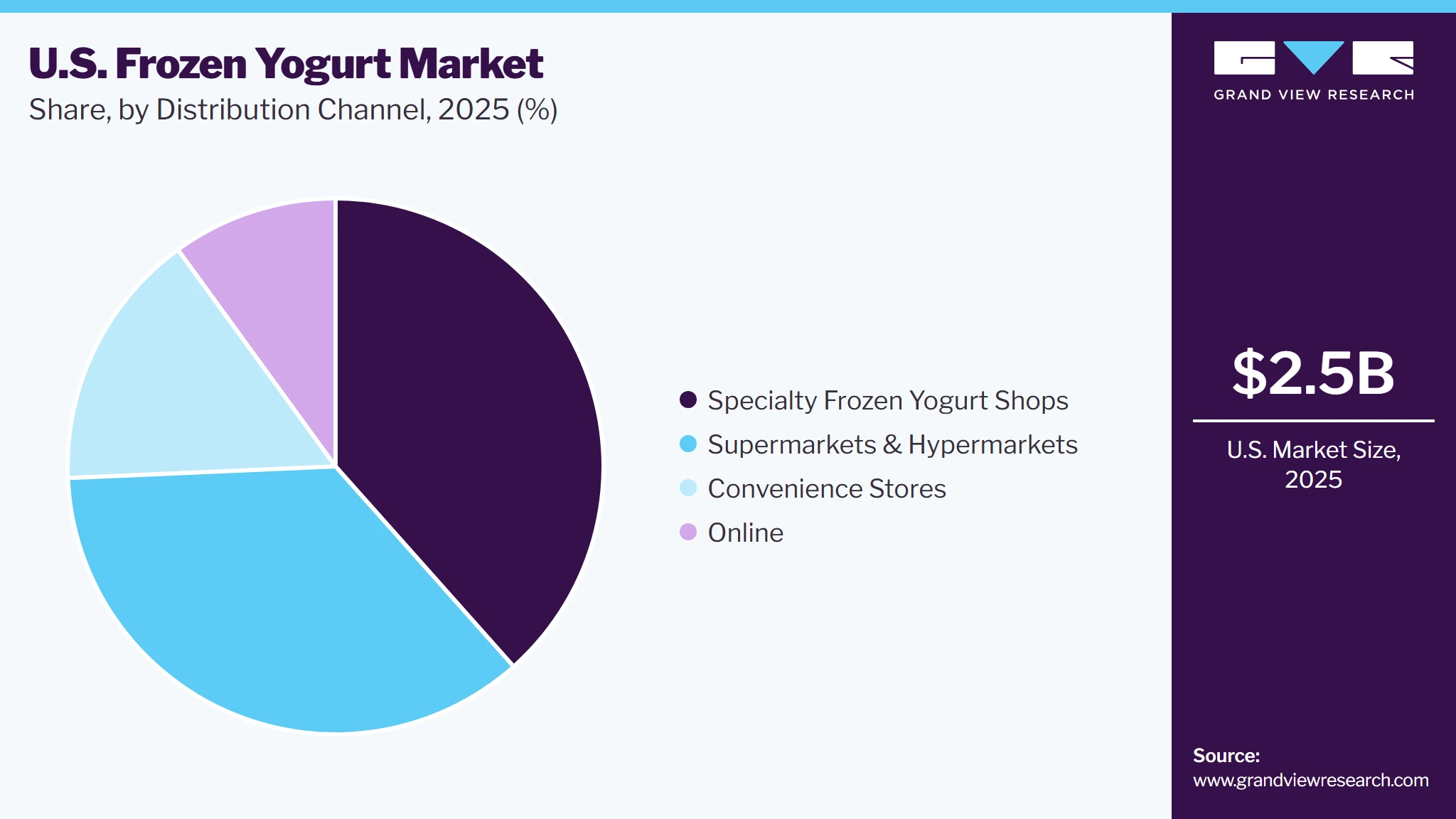
The specialty frozen yogurt shops accounted for the largest share of 38.4% of the revenue in 2025. Specialty frozen yogurt shops continue to drive market growth by offering interactive dessert experiences and personalized product selections. These outlets allow customers to choose flavors, portion sizes, and toppings, creating a customized purchasing experience. Their focus on product variety and in-store engagement helps strengthen customer retention. Many shops also introduce seasonal menus and limited-time offerings to attract repeat visitors. The presence of dedicated frozen yogurt outlets supports brand visibility and direct consumer engagement.
 To learn more about this report, Download Free Sample Report
The online distribution channel is projected to grow at a CAGR of 5.3% from 2026 to 2033 in U.S. frozen yogurt market. Online distribution is expanding due to the increasing adoption of digital ordering and home delivery services. Consumers benefit from convenient access to frozen yogurt products without visiting physical locations. Partnerships with delivery platforms enable brands to reach a broader customer base and improve order accessibility. Digital channels also support targeted promotions, loyalty programs, and personalized marketing efforts. The growth of e-commerce and mobile-based purchasing continues to create new opportunities for market expansion.
Key U.S. Frozen Yogurt Company Insights
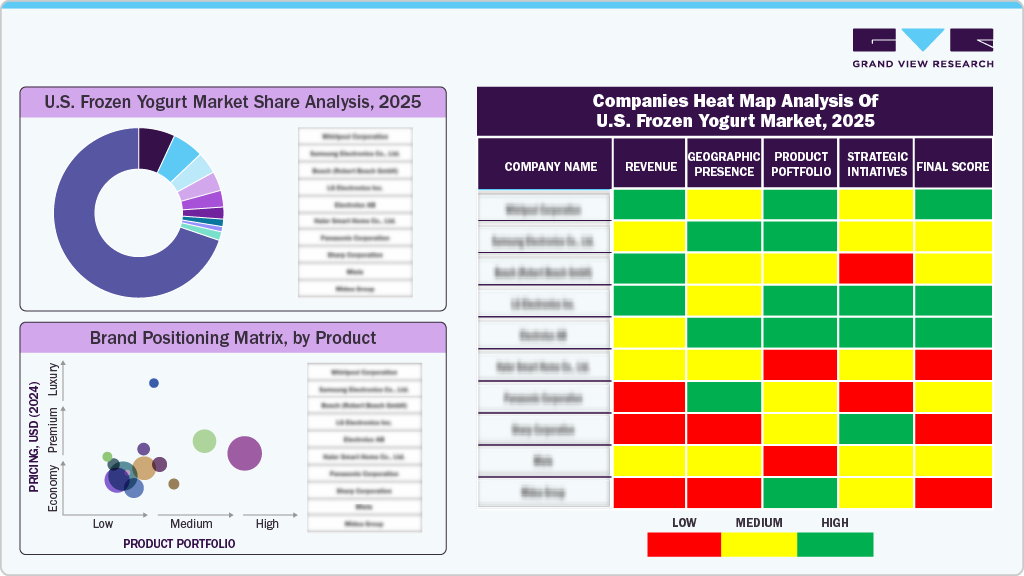
The U.S. frozen yogurt industry is characterized by the presence of both established brands and regional players competing through product differentiation and customer-focused strategies. Companies are investing in menu innovation, unique flavor combinations, and enhanced service experiences to strengthen their market position.
The industry also reflects a mix of standalone frozen yogurt outlets, retail brands, and foodservice operators catering to diverse consumer segments. Market participants are focusing on expanding their geographic reach and improving brand visibility to capture a larger customer base. Strategic partnerships, new product launches, and digital engagement initiatives continue to influence competitive positioning within the market.
 To learn more about this report, Download Free Sample Report
Key U.S. Frozen Yogurt Companies
-
Yogurtland
-
Menchie’s
-
Pinkberry
-
Red Mango, LLC
-
TCBY
-
16 Handles
-
sweetFrog Premium Frozen Yogurt
-
Orange Leaf, LLC
-
Yogurt Mountain
-
Forever Yogurt
Market Participant Categorization
Category
Operating Strategies
Competitive Edge
Weakness
Established Players (Yogurtland, Menchie’s, Pinkberry)
- Leverage established retail footprints, strong brand recognition, franchise networks, broad flavor portfolios, and customer loyalty programs to serve consumers across multiple locations.
- Strong brand awareness, extensive store networks, established franchise infrastructure, high consumer familiarity, and the ability to offer customized frozen yogurt experiences at scale.
- High operating and store-maintenance costs, dependence on retail foot traffic, intense competition from ice cream and other frozen desserts, and challenges in maintaining consistent product quality across locations.
Emerging Players (Forever Yogurt, Yogurt Mountain)
- Focus on differentiated flavors, premium ingredients, healthier formulations, local sourcing, plant-based or reduced-sugar options, and personalized customer experiences.
- Greater flexibility in product development, faster response to changing consumer preferences, ability to target specific dietary and lifestyle trends, and opportunities to create distinctive local or premium brand identities.
- Limited financial resources, smaller distribution and store networks, lower brand recognition, limited purchasing power, and greater challenges in competing with established chains on marketing and operational scale.
Recent Developments
-
In March 2026, Menchie’s Frozen Yogurt expanded into New Braunfels, Texas, bringing its self-serve froyo concept with rotating flavors and a wide variety of toppings to a growing retail area. The new location highlights continued demand for customizable frozen desserts and renewed momentum in the frozen yogurt category as consumers seek fun, personalized treat experiences.
-
In July 2026, Nova Froyo opened in Chicago’s West Loop, highlighting the growing popularity of Greek frozen yogurt as consumers seek desserts that combine indulgence with better nutritional value, including higher protein and lighter profiles. The brand’s customizable offerings and premium toppings align with rising demand for mindful, balanced sweet treats and evolving lifestyle preferences.
U.S. Frozen Yogurt Market Report Scope
Report Attribute
Details
Market value in 2025
USD 2.5 billion
Estimated market value in 2026
USD 2.6 billion
Projected market size by 2033
USD 3.6 billion
Growth rate (Revenue)
CAGR of 4.9% from 2025 to 2033
Actuals
2021 - 2025
Forecast period
2026 - 2033
Quantitative units
Revenue in USD million/billion, and CAGR from 2025 to 2033
Report coverage
Revenue forecast, company ranking, competitive landscape, growth factors, and trends
Segments covered
Product, flavor, distribution channel
Key companies profiled
Yogurtland, Menchie’s, Pinkberry, Red Mango, LLC, TCBY, 16 Handles, sweetFrog Premium Frozen Yogurt, Orange Leaf, LLC, Yogurt Mountain, and Forever Yogurt
Customization scope
Free report customization (equivalent up to 8 analysts’ working days) with purchase. Addition or alteration to country, regional & segment scope. Pricing and purchase options
Avail customized purchase options to meet your exact research needs. Explore purchase options U.S. Frozen Yogurt Market Report Segmentation
This report forecasts revenue growth at the country level and provides an analysis of the latest industry trends and opportunities in each of the sub-segments from 2021-2033. For this study, Grand View Research has segmented the U.S. frozen yogurt market report on the basis of product, flavor, and distribution channel.
-
Product Outlook (Revenue, USD Million, 2021 - 2033)
-
Plain Frozen Yogurt
-
Flavored Frozen Yogurt
-
Greek Frozen Yogurt
-
Dairy-free/Vegan Frozen Yogurt
-
Low-fat Or Fat-Free Frozen Yogurt
-
-
Flavor Outlook (Revenue, USD Million, 2021 - 2033)
-
Vanilla
-
Chocolate
-
Strawberry
-
Mango
-
Berry mixes
-
Seasonal/Limited-edition Flavors
-
-
Distribution Channel Outlook (Revenue, USD Million, 2021 - 2033)
-
Supermarkets & Hypermarkets
-
Convenience Stores
-
Specialty Frozen Yogurt Shops
-
Online
-
Research Methodology
The U.S. frozen yogurt market figures in this report are based on a proven research process that combines executive interviews with secondary research from proprietary databases, company filings, and recognized regulatory and institutional sources. Market size is built through value-chain sizing-reconciling supply-side and demand-side estimates-and triangulated with bottom-up and top-down approaches. Every estimate passes multiple levels of expert validation before publication, with each U.S. frozen yogurt segment quantified using the revenue-capture definitions in the table below.
Segment Definition
Segment - Distribution Channel
Revenue capture definition
Supermarkets & hypermarkets
Supermarkets and hypermarkets include large-format grocery retailers that offer frozen yogurt through dedicated frozen dessert sections, refrigerated aisles, and private-label product ranges. Revenue is primarily captured through packaged frozen yogurt sales, multipacks, family-size formats, and premium or specialty products sold through retail chains.
Convenience stores
Convenience stores include small-format retail outlets that provide frozen yogurt and related frozen dessert products for immediate consumption or takeaway. Revenue is primarily generated through single-serve cups, tubs, bars, and other convenient formats positioned for impulse purchases and on-the-go consumption.
Specialty frozen yogurt shops
Specialty frozen yogurt shops are dedicated outlets offering freshly dispensed or prepared frozen yogurt, typically supported by a variety of flavors, toppings, sauces, and customization options. Revenue is primarily captured through per-serving sales, self-serve offerings, premium toppings, customized combinations, and seasonal or specialty products.
Online
Online distribution includes e-commerce platforms, grocery delivery services, and direct-to-consumer channels through which frozen yogurt products are purchased digitally. Revenue is primarily generated through packaged frozen yogurt, subscription or recurring orders, multipacks, and home-delivery sales, supported by increasing consumer adoption of online grocery and food delivery services.
Estimation Model
Layer Name
Key Question
Description
Consumption Universe Layer
Who consumes frozen yogurt globally?
Represents U.S. consumers who eat frozen yogurt as a dessert or snack, including health-conscious consumers seeking a lighter alternative to ice cream.
Access & Availability Layer
Who can access frozen yogurt?
Includes consumers who can easily purchase frozen yogurt through specialty shops, supermarkets, convenience stores, and online channels.
Purchase & Usage Layer
Who regularly purchases frozen yogurt?
Covers consumers who actively purchase frozen yogurt as an occasional treat, snack, or social dessert experience.
Revenue Conversion Layer
How is revenue generated from frozen yogurt consumers?
Represents monetization through frozen yogurt cups, pints, toppings, premium flavors, beverages, and multi-item purchases.
Delivered Customizations
This report has been delivered with the following In-depth customizations
Client Request
Customization Delivered
Value Adds
U.S. Frozen Yogurt Consumer & Demographic Analysis
Assessed consumption patterns across key consumer groups based on age, lifestyle, household characteristics, health consciousness, and purchasing motivations, with emphasis on factors influencing frozen yogurt selection and frequency of consumption.
Helps identify priority consumer segments, refine targeting strategies, and align product and marketing initiatives with evolving consumer preferences.
U.S. Frozen Yogurt Pricing & Premiumization Analysis
Evaluated pricing structures across standard, premium, functional, and specialty frozen yogurt offerings, including factors influencing price positioning such as ingredients, portion sizes, toppings, customization, and brand positioning.
Supports pricing strategy development, premiumization opportunities, margin optimization, and assessment of consumers' willingness to pay.
U.S. Frozen Yogurt Geographic & Regional Opportunity Analysis
Evaluated market potential across major U.S. regions and states based on population characteristics, consumer spending patterns, retail presence, climate-related demand factors, and concentration of frozen dessert outlets.
Supports geographic prioritization, expansion planning, location strategy, and identification of high-potential regional markets.
Frequently Asked Questions About This Report
The global U.S. frozen yogurt market size was valued at USD 2.5 billion in 2025 and is estimated at USD 2.6 billion for 2026.
The global U.S. frozen yogurt market is expected to grow at a CAGR of 4.9% from 2026 to 2033, reaching USD 3.6 billion.
The U.S. frozen yogurt market is primarily driven by growing health and wellness consciousness, as consumers increasingly seek lower-fat, lower-calorie, reduced-sugar, and probiotic-rich alternatives.
The plain frozen yogurt segment led with a 45.1% revenue share in 2025.
The dairy-free/vegan frozen yogurt market is projected to grow at the fastest CAGR of 5.5% from 2026 to 2033.
The vanilla flavor segment led with a 28.2% revenue share in 2025.
The specialty frozen yogurt shops accounted for the largest share of 38.4% of the revenue in 2025.
The online channel is projected to grow at a CAGR of 5.3% from 2026 to 2033.
Key players include Yogurtland, Menchie’s, Pinkberry, Red Mango, LLC, TCBY, 16 Handles, sweetFrog Premium Frozen Yogurt, Orange Leaf, LLC, Yogurt Mountain, and Forever Yogurt.
About the Author(s)
Consumer F&B Research Team
Consumer Goods · Consumer F&BThis report was authored by the consumer f&b research team at Grand View Research - comprising two research analysts, one senior research analyst, and one industry expert - with specialized expertise in the consumer f&b segment of the consumer goods industry. All findings are based on proprietary consumer goods databases, executive interviews, and regulatory analysis, subject to internal peer review prior to publication.
Last Updated:
Speak to Analyst

Customize this report to your needs - add regions, segments, or data points, with 20% free customization.
Or view our licence options:


ISO 9001:2015 & 27001:2022 Certified
We are GDPR and CCPA compliant! Your transaction & personal information is safe and secure. For more details, please read our privacy policy.


